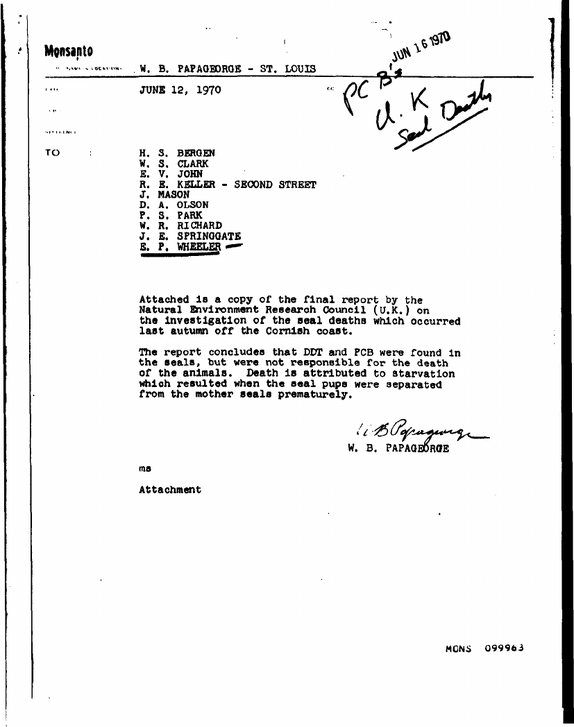
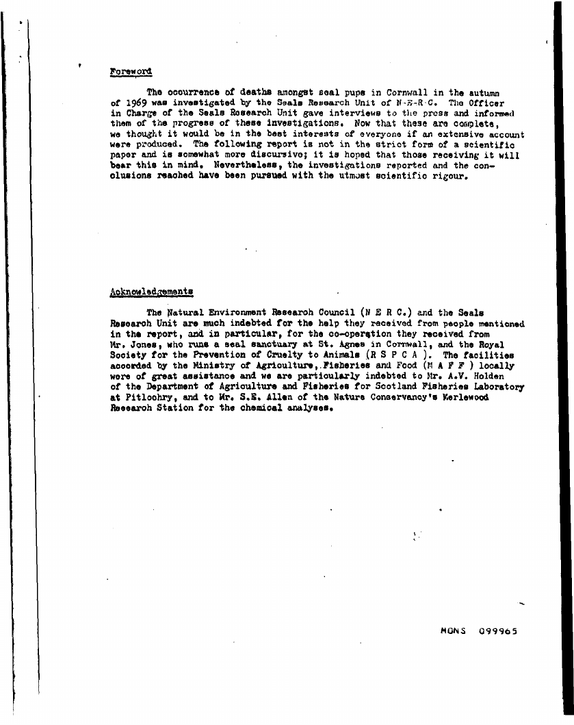
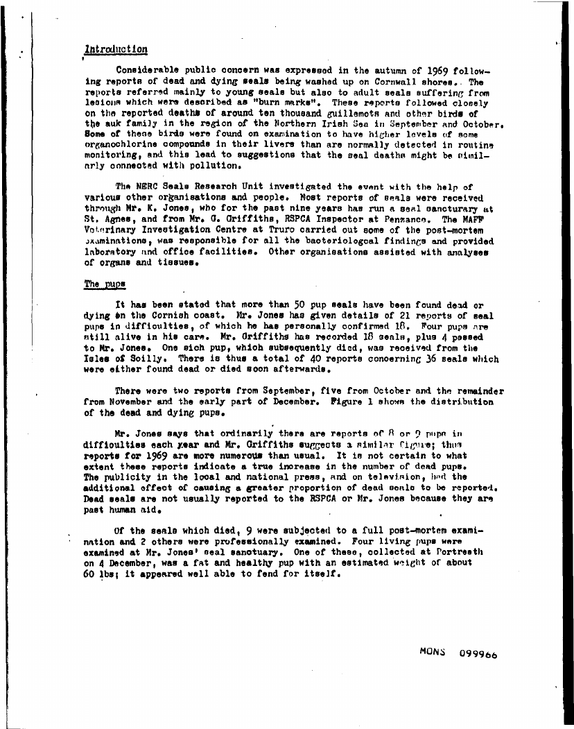
Sanl Deaths In Cornwall Autumn 1969 HONS 063136 Tho ocourronce of deaths amonCBt seal pups in Cornwall it. tho Butin.m of 1969 woo invoutigatod by thy Seals hoiiourah Unit of H 3-ll-C.
refid# GKjzmN7vgV0MZGp9E20wYQ1Gv22 pages
Similar findings in fresh water and marine fishes were reported by Zitko (3) and Jensen, et al., (26).
refid# ExO3DbGx0NXxYaG534JVrZgJj31 pages
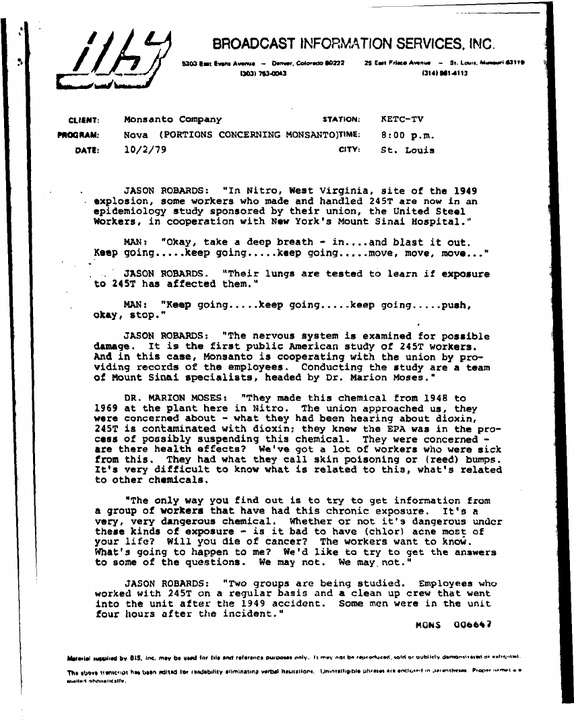
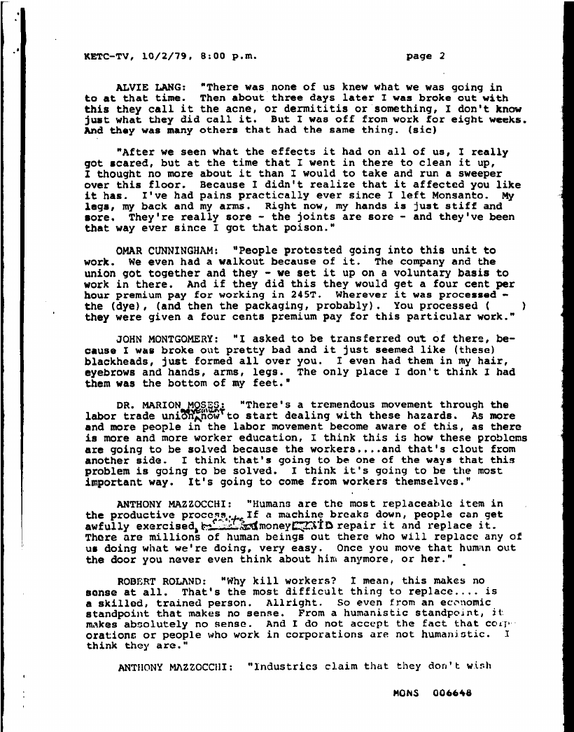
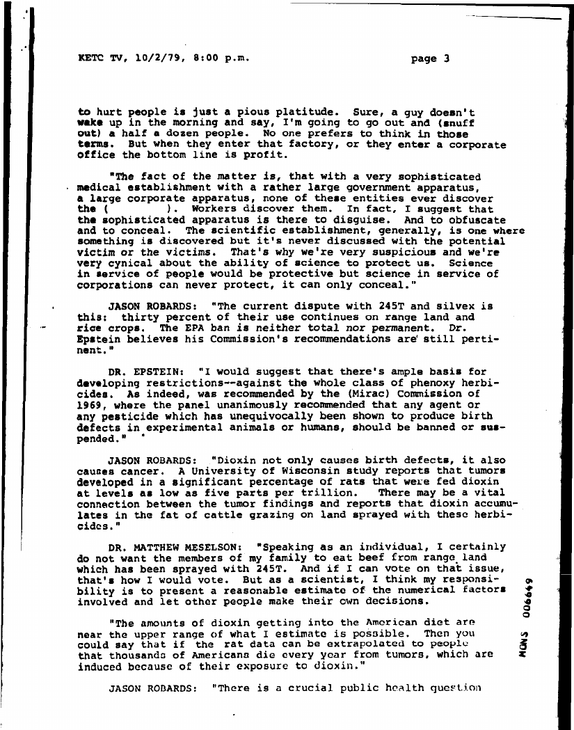
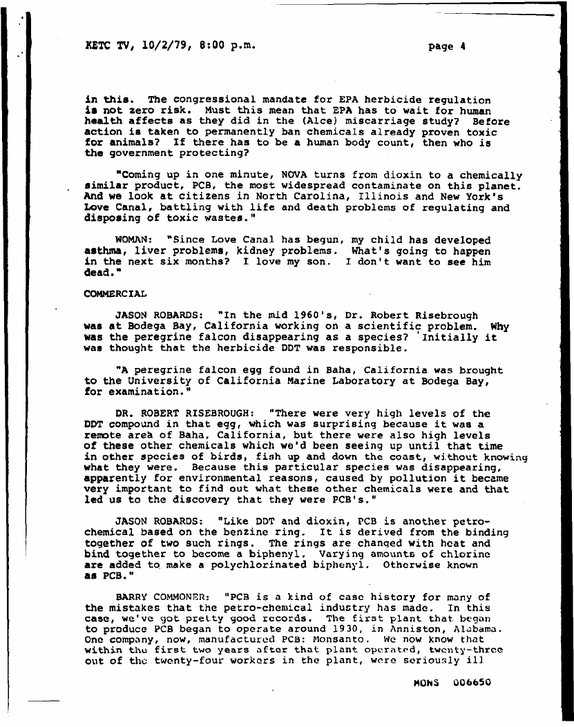
BROADCAST INFORMATION SERVICES, INC. 6303 Eat Emi Avwmm - Dftv*r.
refid# g2v2E99Jm0orD8rejkRR7RXMV14 pages
SUPPLEMENT TO IBB FINAL ENVIRONMENTAL IMPACT STATEMENT KOLB MAKING OH POLYCHLORINATED BIPHENYLS Pood and Drug Administration i Dapartmant of Haalth, Education, and Welfare Sam D.
refid# QMyX5jjRK13jnGJNYXe06kgG630 pages
Koeman et al, (1969) reported the presence of PCBs in fish and birds from the Rhine and the Netherlands coastal areas.
refid# xjwX727dG0yqwM8rQYw64QYOy29 pages
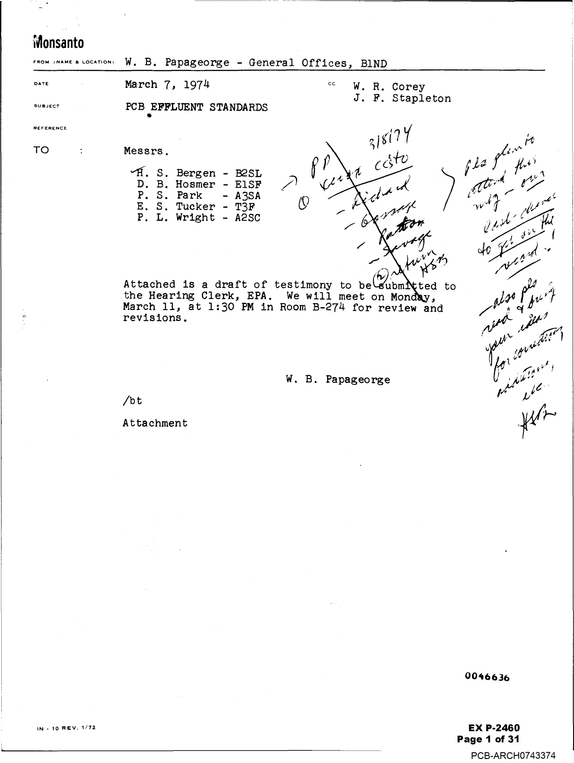
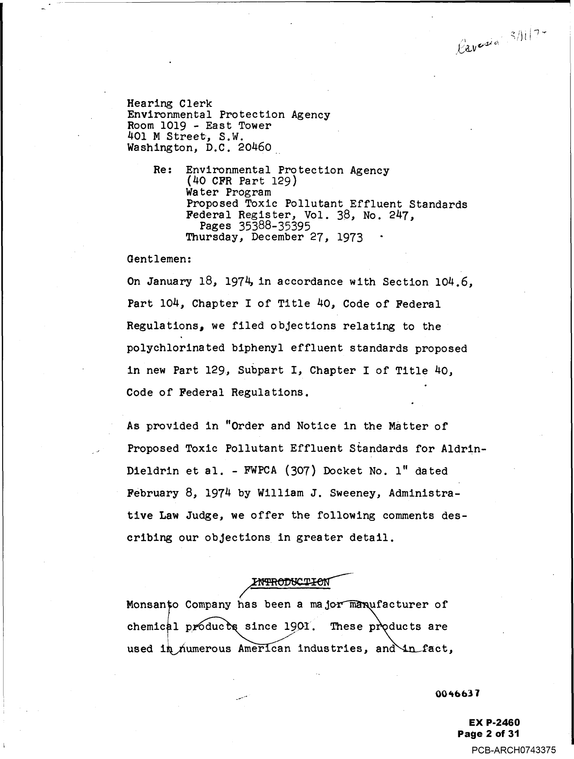
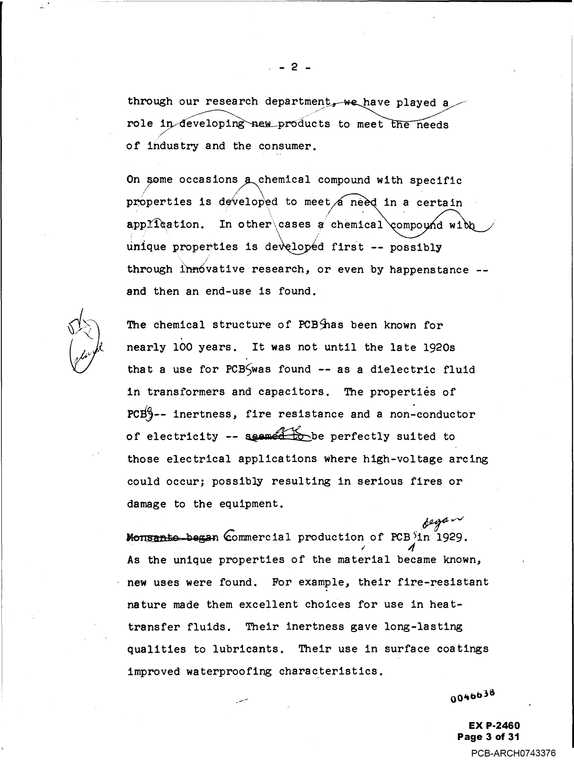
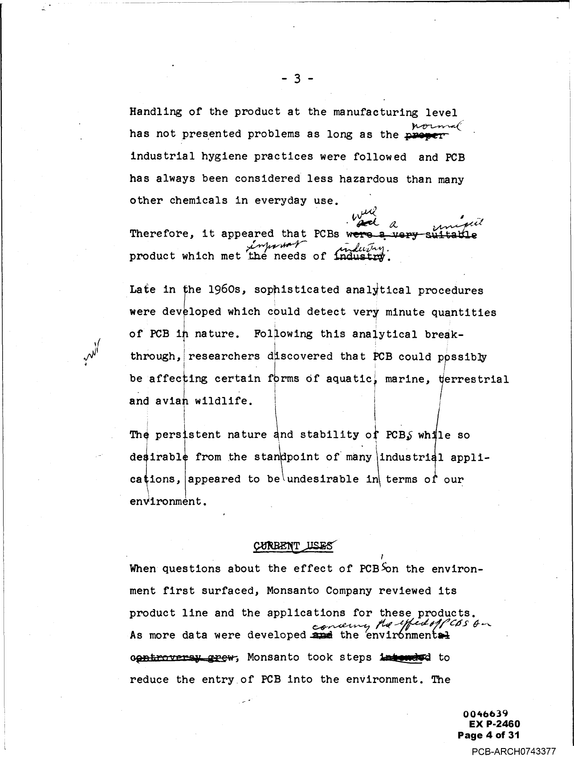
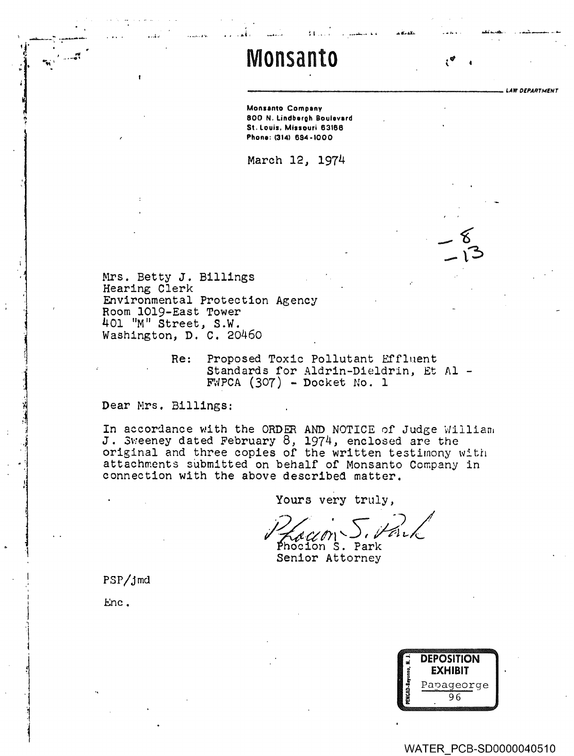
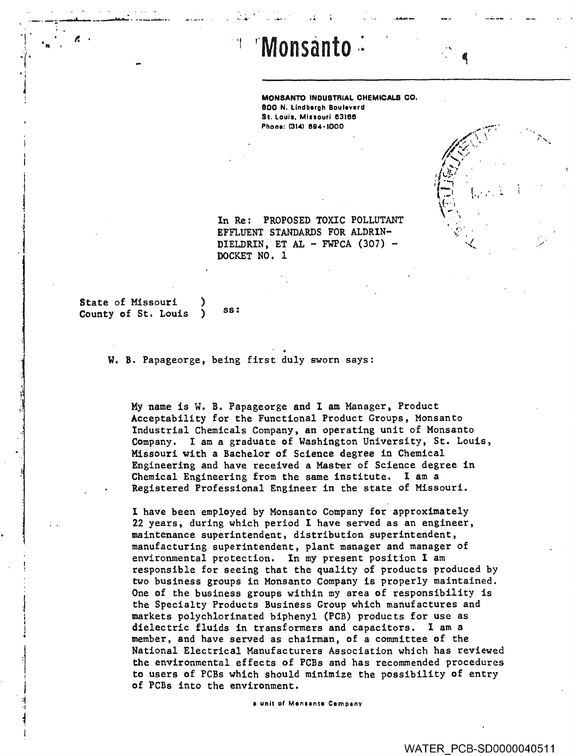
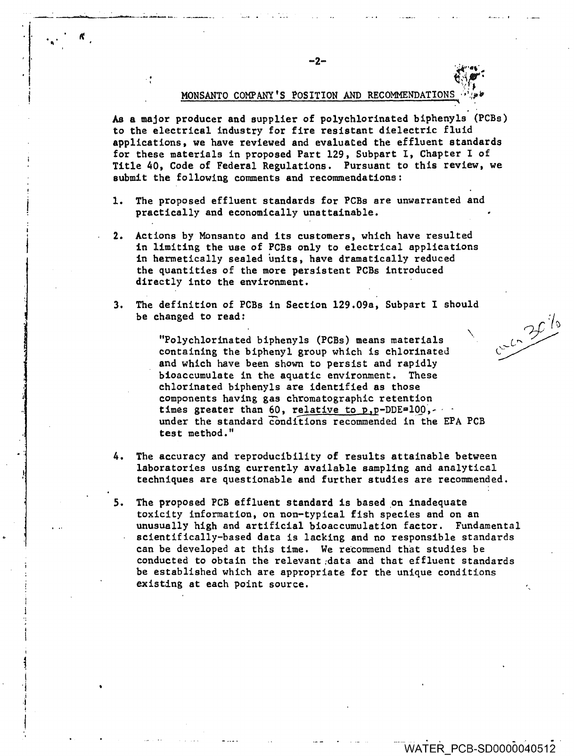
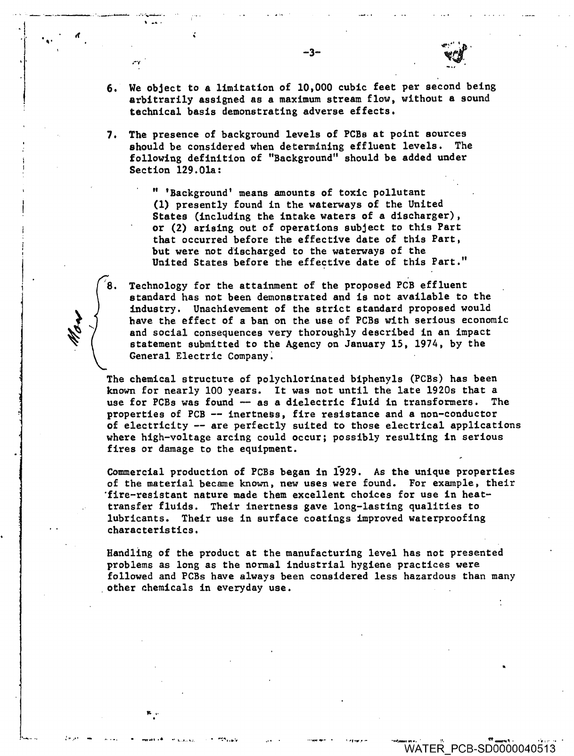
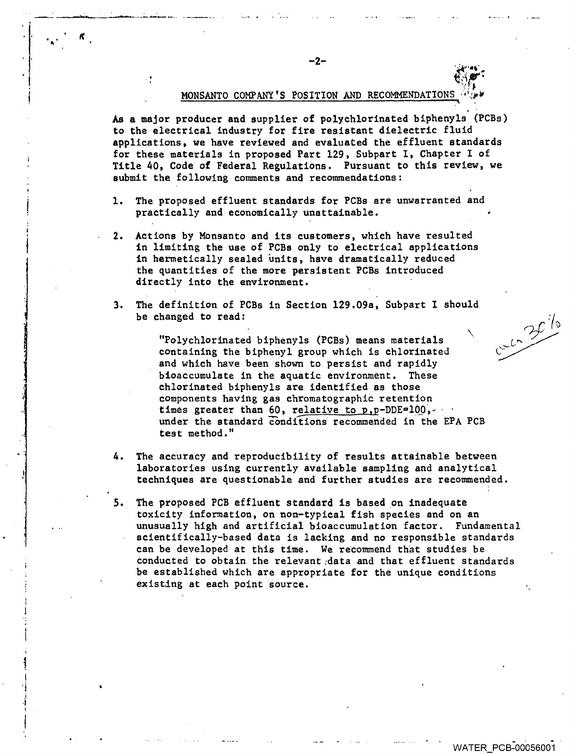
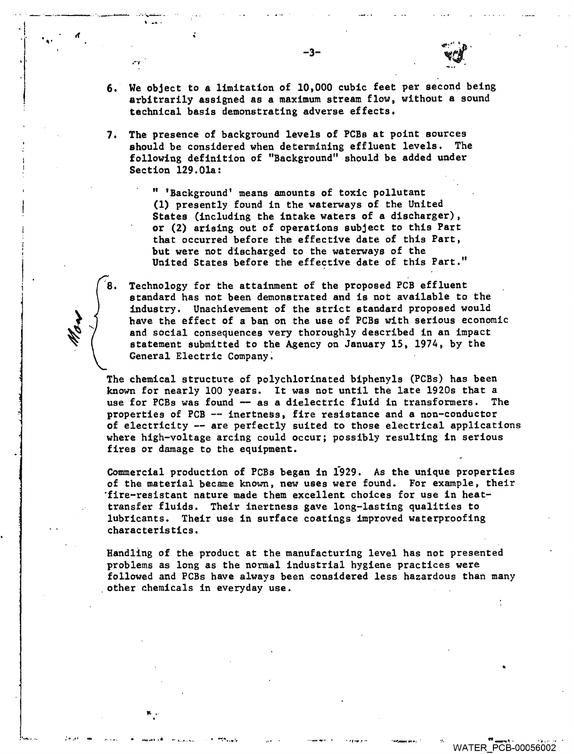
The proposed PCB effluent standard is based on inadequate toxicity information, on non-typical fish species and on an unusually high and artificial bioaccumulation factor.
refid# mB6kgE55BgyLpeQaQZ5NXm6gQ19 pages
Monsanto W.
refid# RJ6R6Z9omrBRyKoQeNGyREMwk23 pages
Fig. 7) Hydroxylated products, however,,could not be isolated from fish treated with chlorobiphenyls (S3). a ANALA IS RESEARCH NOTES, VOL IS, NO. t, JULY, Iffl MONS 064052 RECORDER RESPONSE AROCLOR (248 0^ !
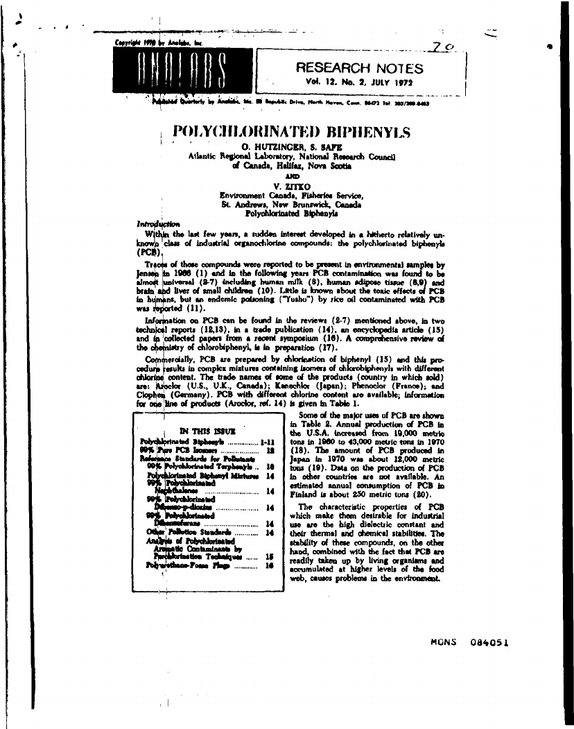
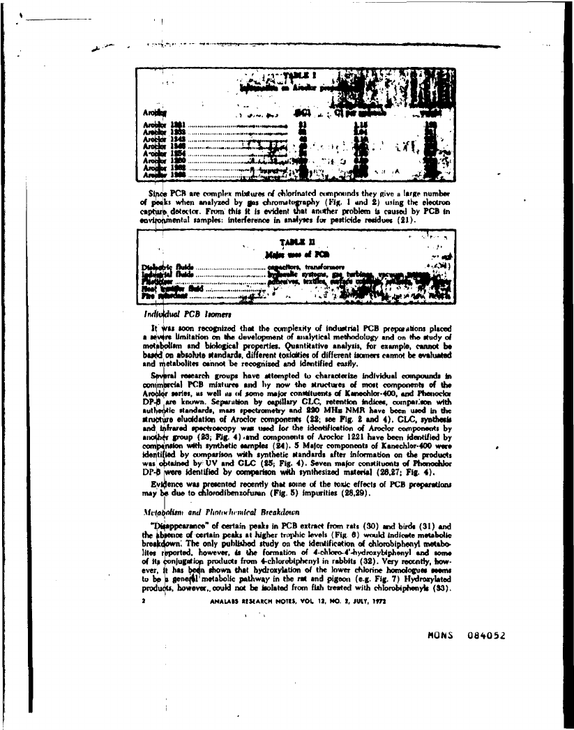
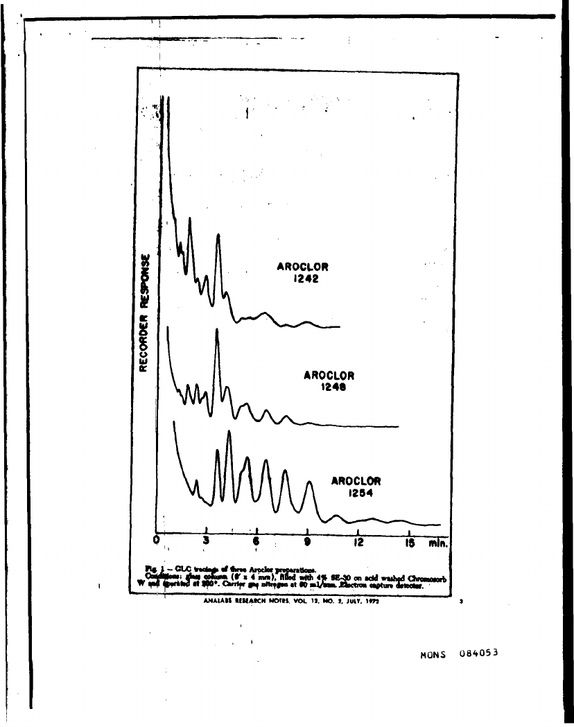
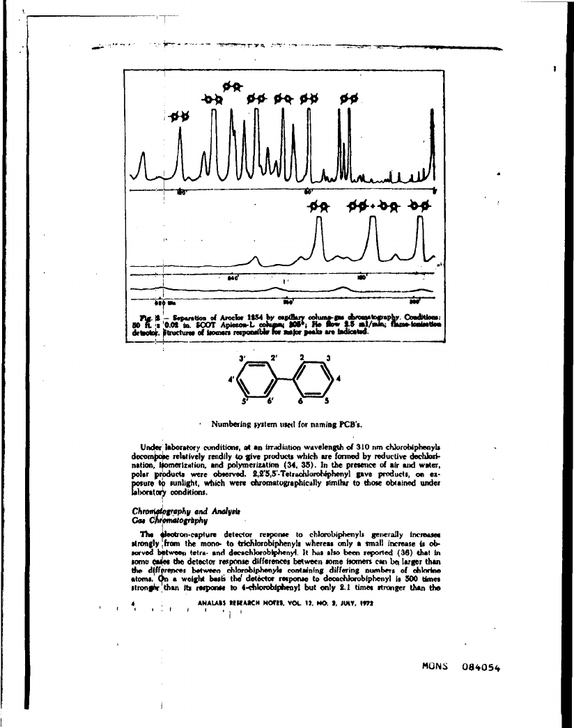
refid# 0qBrovOZ6OJRLdqKY7bRk4wOO16 pages
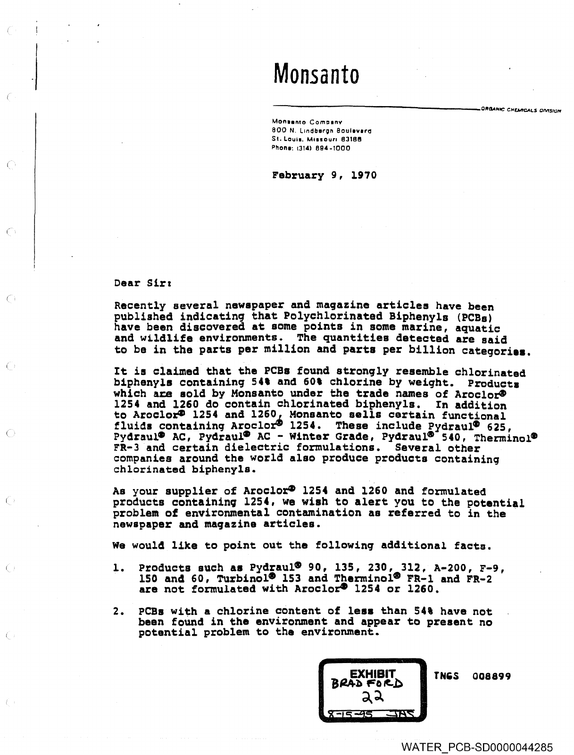
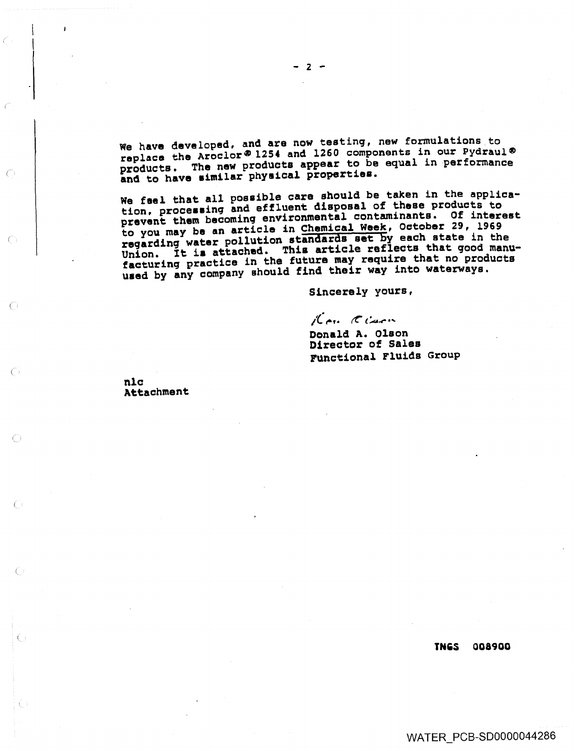
Monsanto Mof>in,o Coratmv 900 N.
refid# da9Kwgpjb9YYMgdbr3N97rOz58 pages
fish was not increased'hy increasing the concentration of solvent up " to 100 times (0.1 to 10.0 mg/z) (Hansen, unpublished data)
refid# rx41kEwjLKaQxxqVYJrK2aB6r32 pages
The proposed PCB effluent standard is based on inadequate toxicity information, on non-typical fish species and on an unusually high and artificial bioaccumulation factor.
refid# gDNE7NMEMYmgrjJw95NKLnqQq19 pages
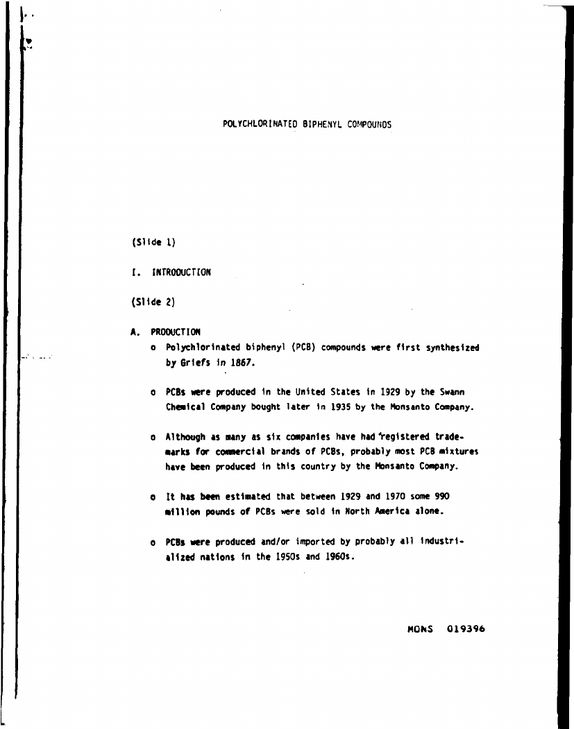
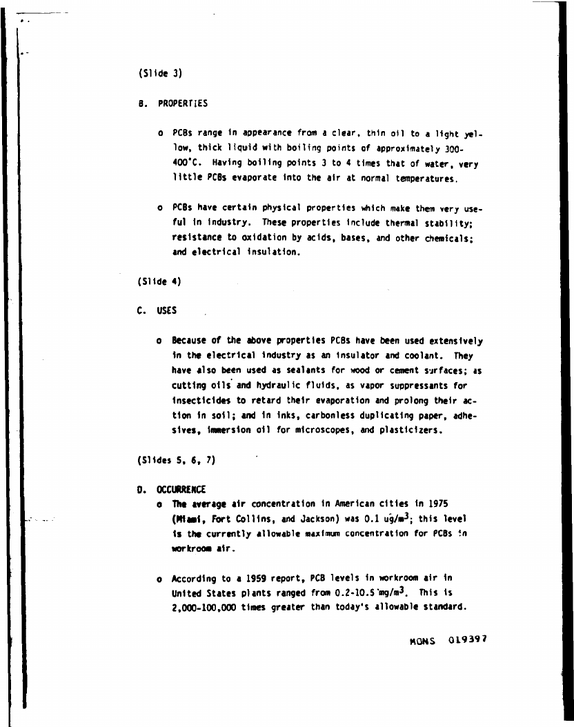
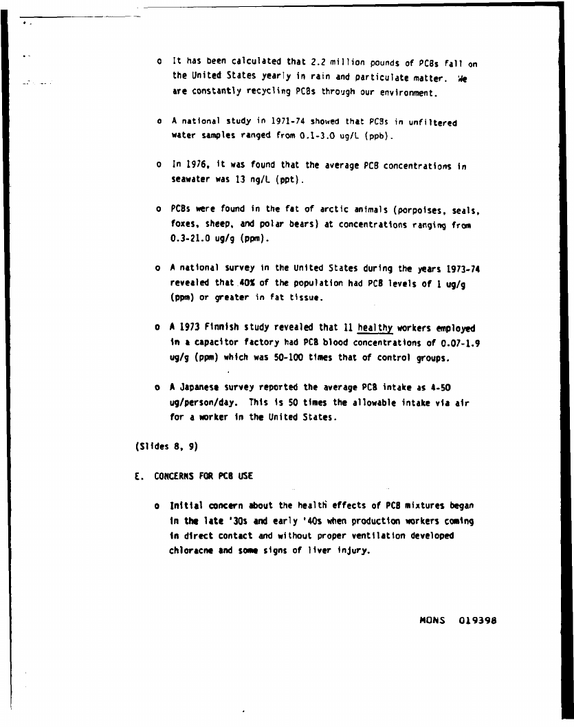
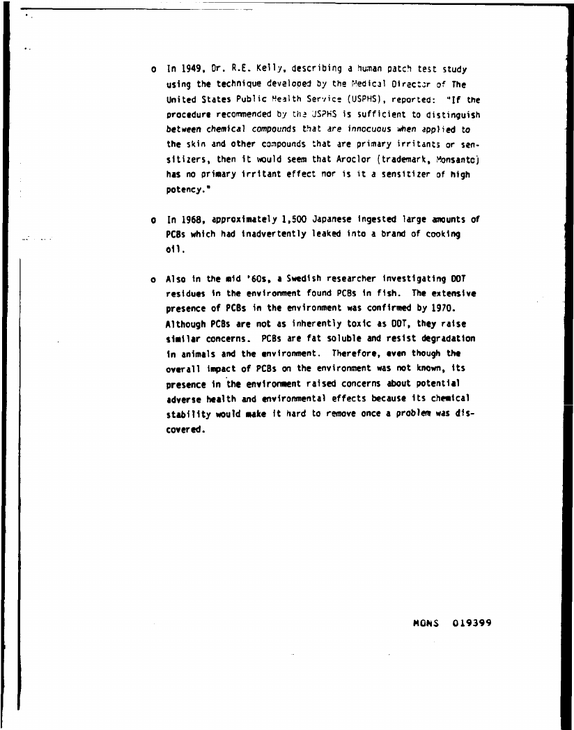
FOA REGULATIONS The following are the allowable limits of PCBs as regulated by the Food and Crug Administration. 2.5 ppn in dairy products (on at fat basis-whole mtU-3.25X fat) 5.0 ppm in poultry (on a X fat basis) 0.5 ppm in eggs 2.0 ppm in fish and shellfish 0.2 ppm in infant food 10.0 ppm in paper packaging materials e Therefore, under federal regulations we can Ingest and accumu late more PCBs through our food than in the workplace. 0.
refid# kaQ3kMvkJBjmkoOpVxYkeEJZE43 pages
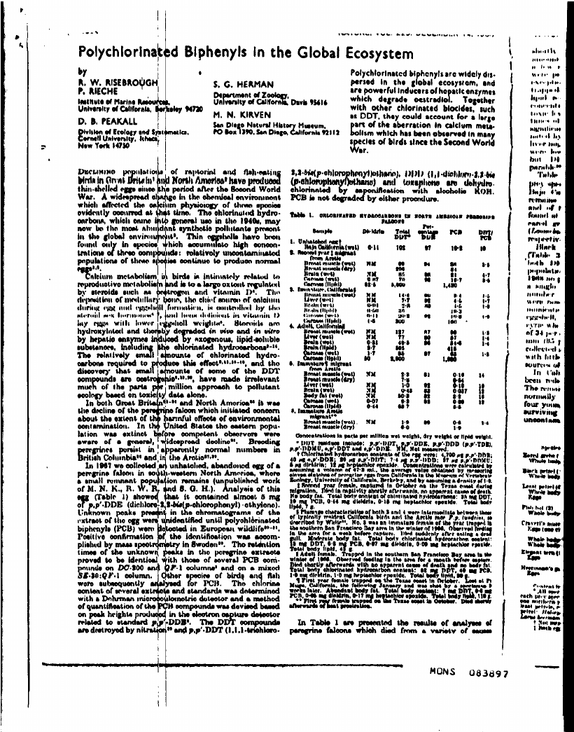
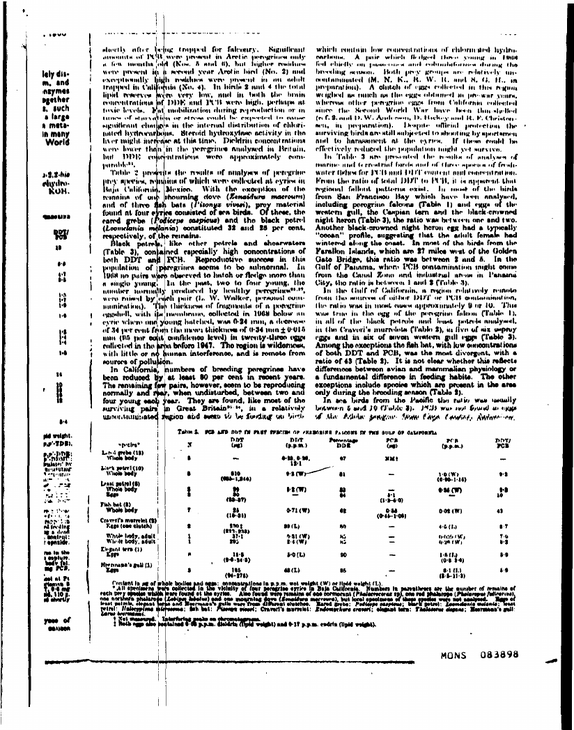
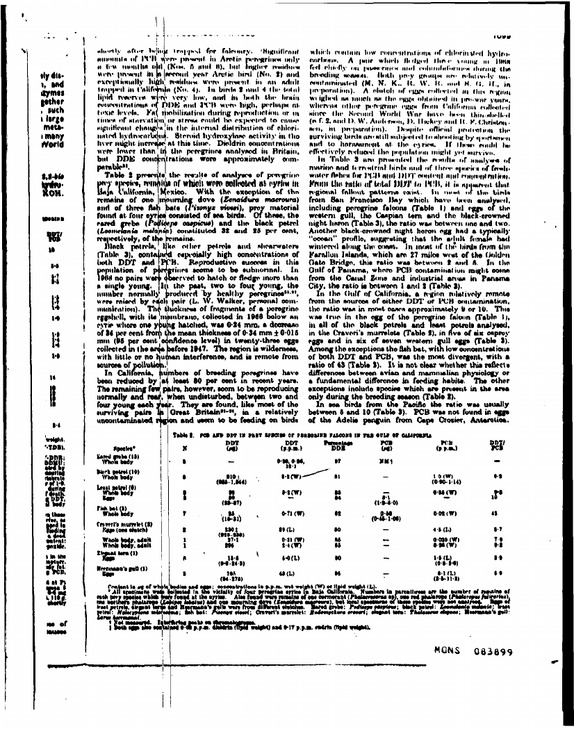
Qther species of bird| and fish wore subsequently a dysed for PCB.
refid# GVXnn4qGbZ76Yzo1gv9GpO6N6 pages
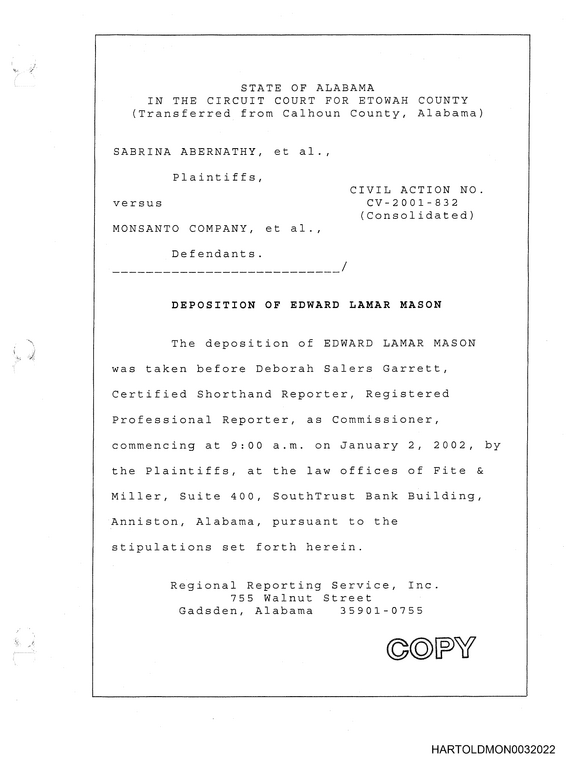
STATE OF ALABAMA IN THE CIRCUIT COURT FOR ETOWAH (Transferred from Calhoun County, COUNTY Alabama) SABRINA ABERNATHY, et al., Plaintiffs, ve rsus MONSANTO COMPANY, et al..
refid# 2qgeEEXKekQmBmMypRLbO9zv642 pages
The above Tables I and II show that upon proceeding from Aroclor 1016/1242 to 1248 to 1254 to 1260 there were sizeable increases in chronic toxicities to fish and water-to-fish bioaccumulation factors, respectively.
refid# VjdE0jZVQGoEaqyLRom8K7wYq24 pages