Among the adverse environmental and resulting economic ef fects of PCBs is contamination of fish, which in the Great Lakes alone, has threat ened to shut down commercial fishing - a $95 million industry - and the area's $350 million sportfishing industry
refid# baLg2rMEj6341bbjgpVXmam0g4 pages
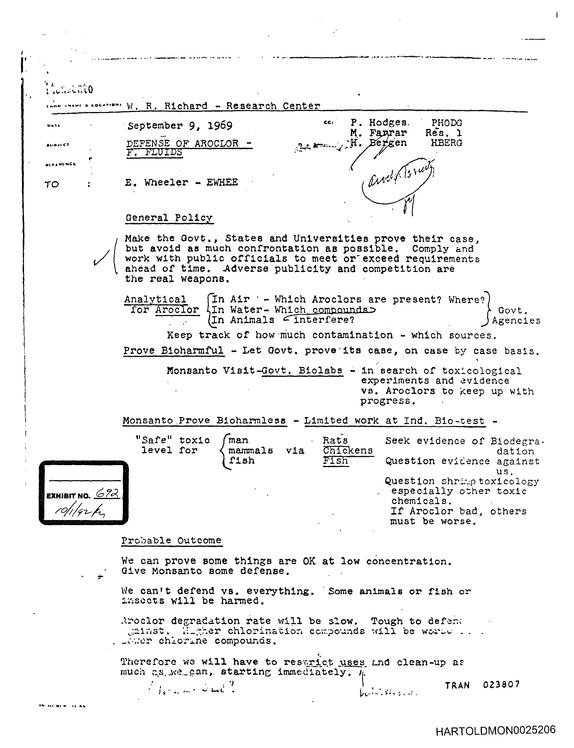
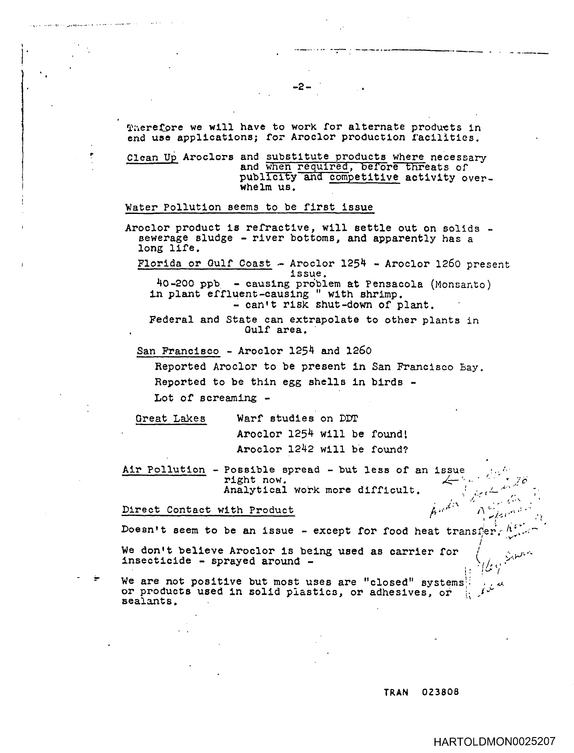
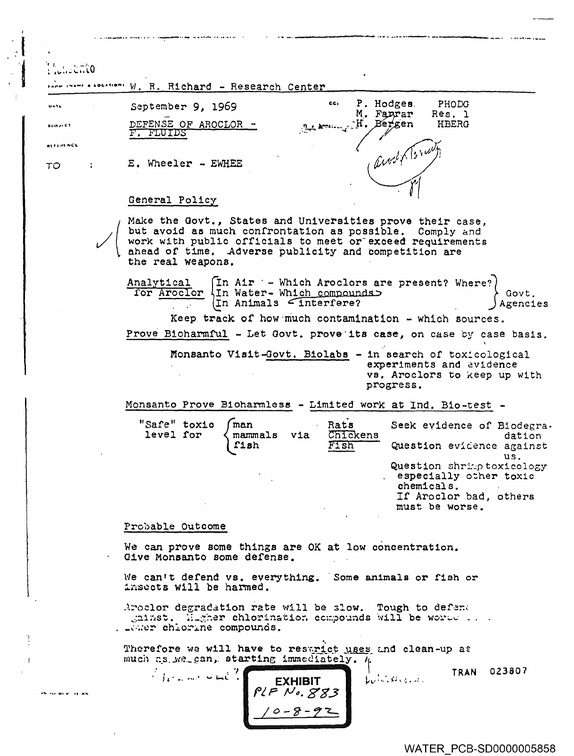
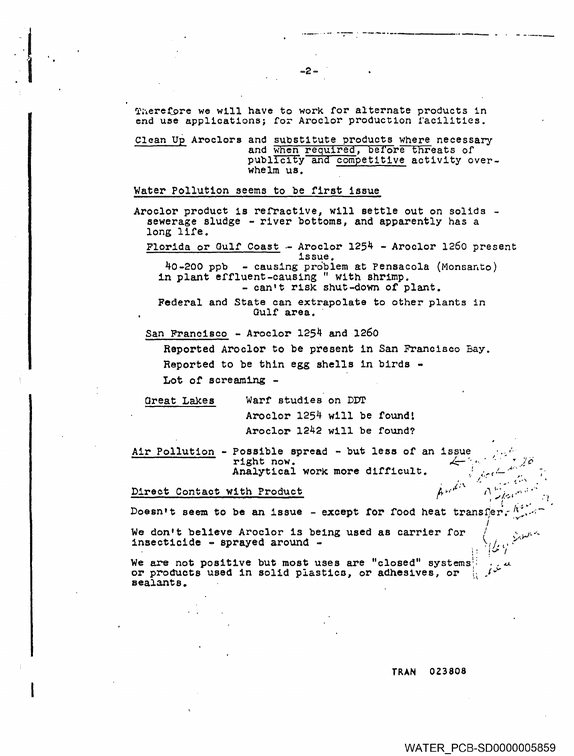
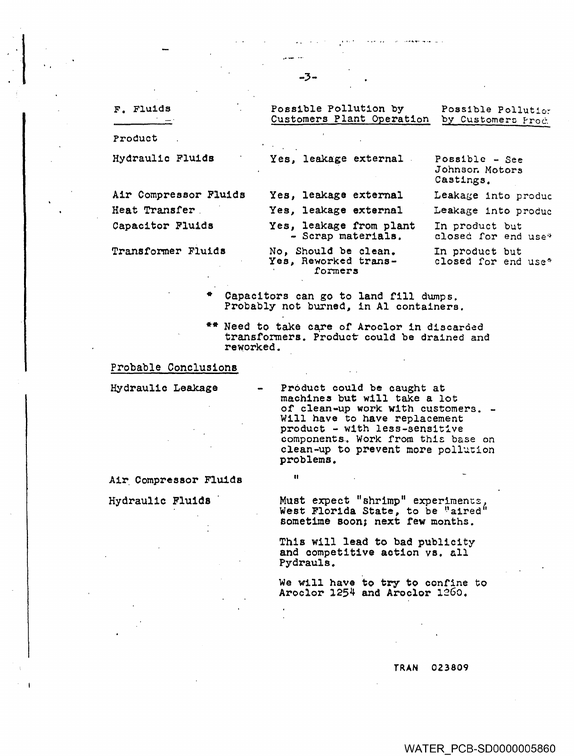
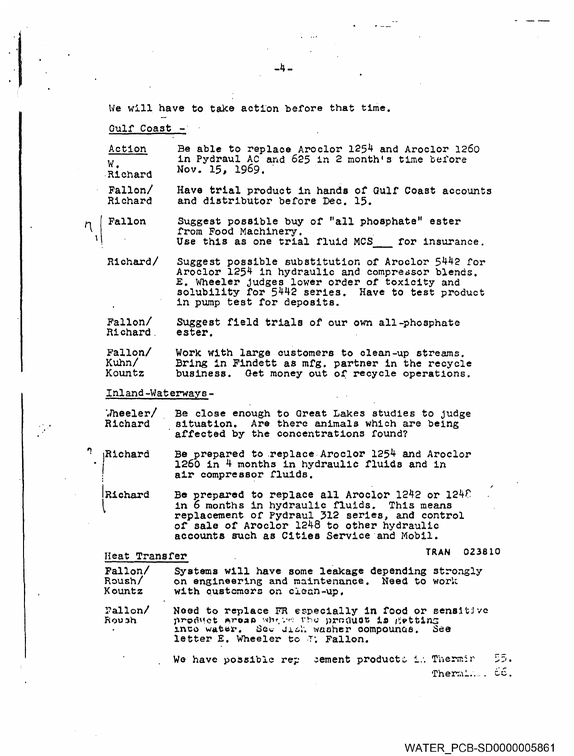
Some animals or fish or insects will be harmed.
refid# LJbG6Y1bmbzk1pXmZN8gnqVrb8 pages
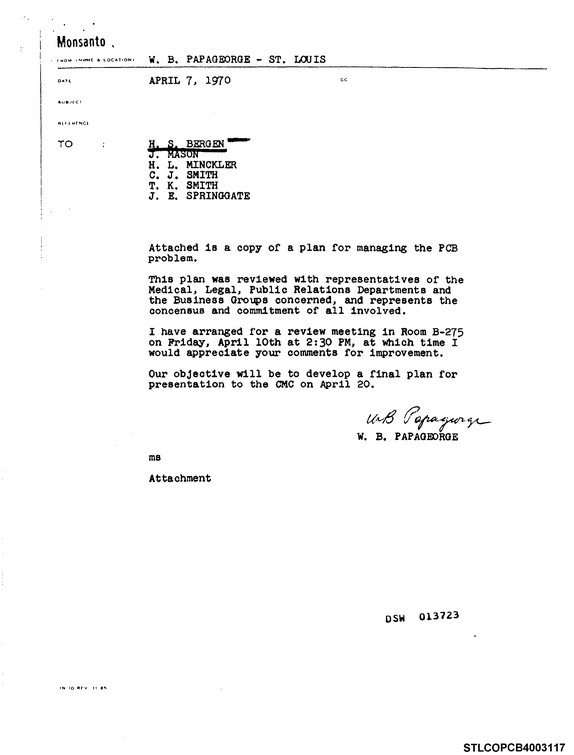
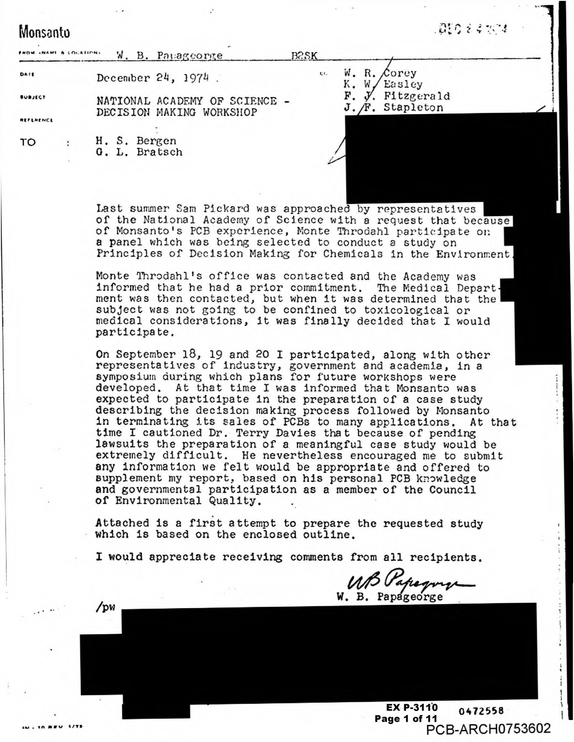
Monsanto FROM (NAME A LOCATION I VJ.
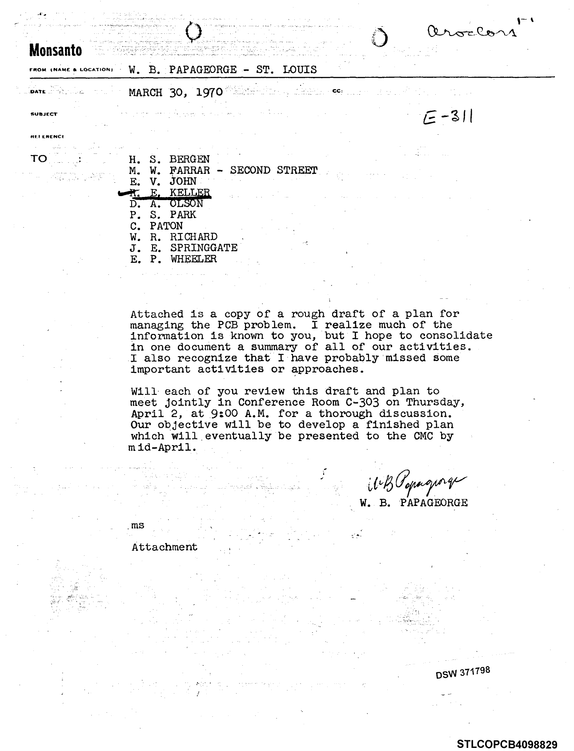
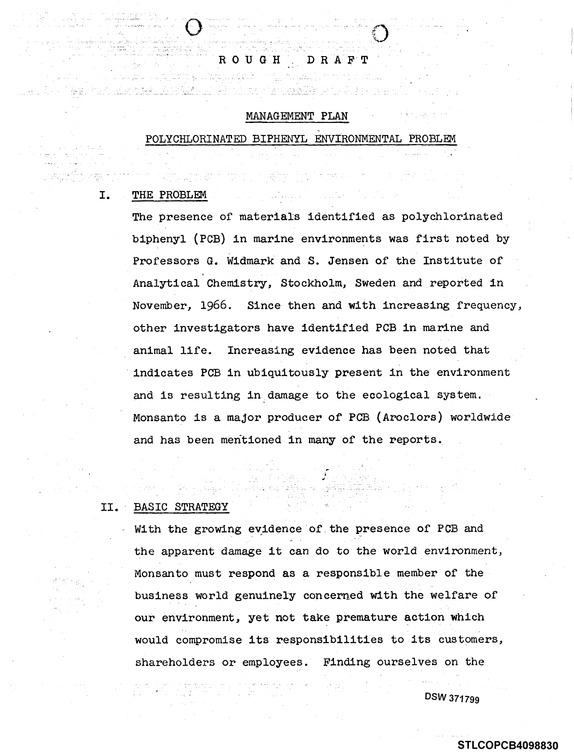
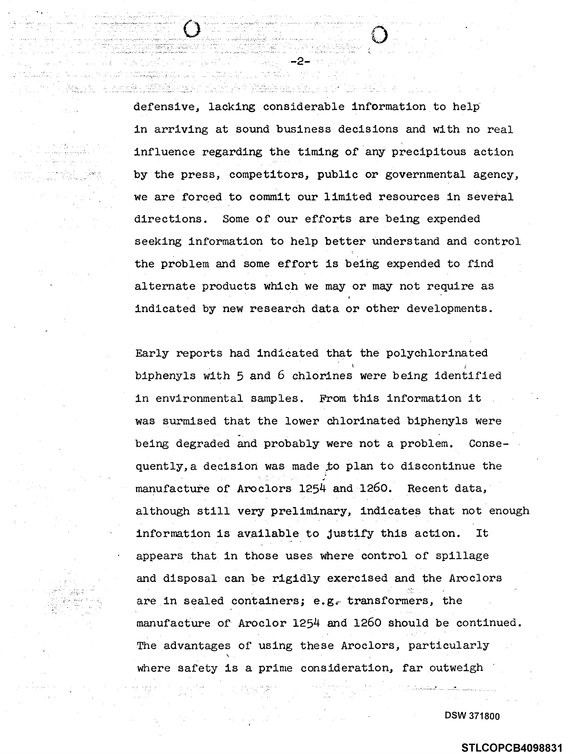
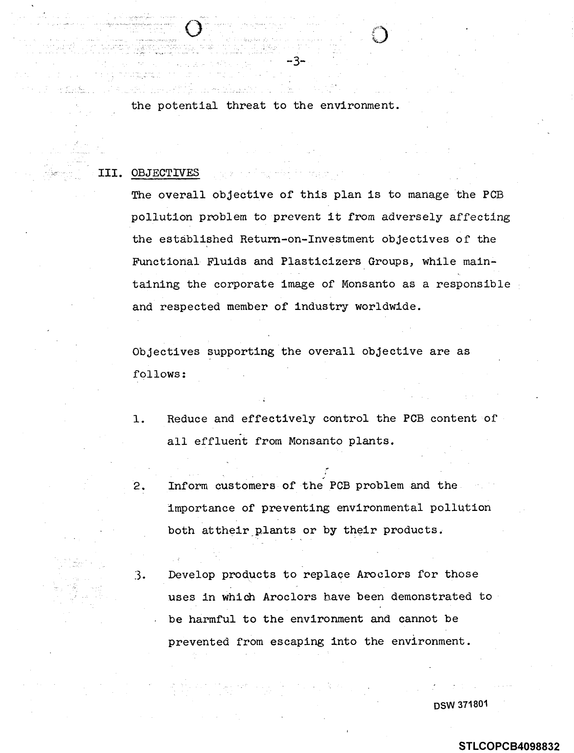
refid# oeo20nJdGryyL61jakMqK5JYo15 pages
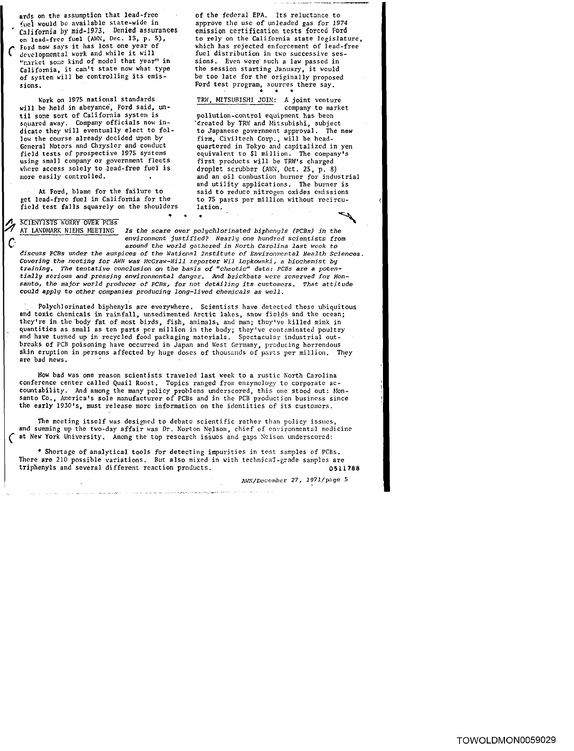
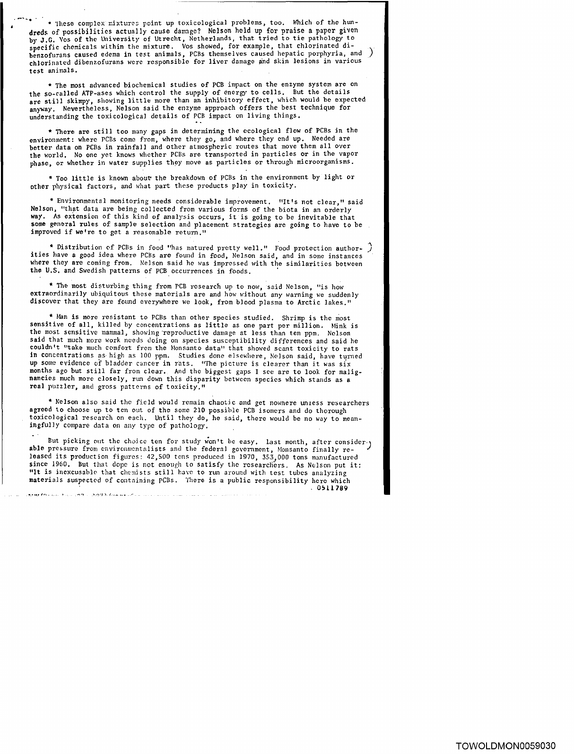
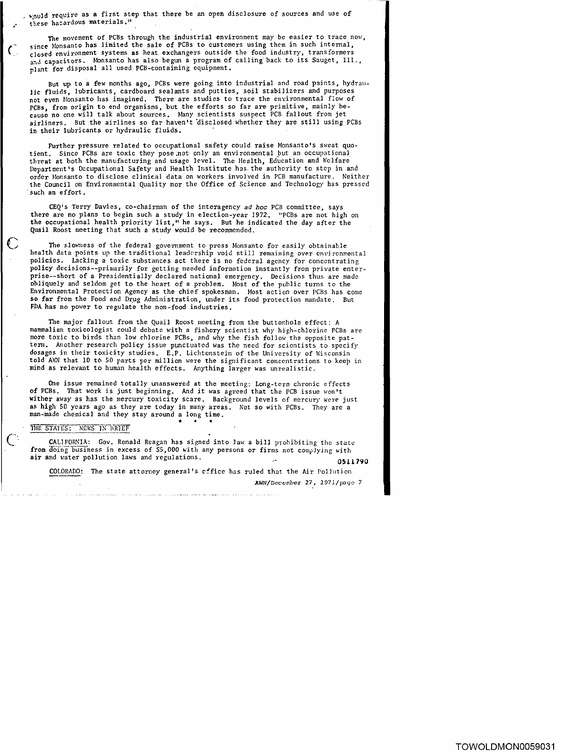
Scientists have detected these ubiquitous and toxic chemicals in rainfall, unsedimented Arctic lakes, snow fields and the ocean; they're in the body fat of most birds, fish, animals-, and man; they've killed mink in quantities as small as ten parts per million in the body; they've contaminated poultry and have turned up in recycled food packaging materials.
refid# aJLBvQpm4JDEKK0OaBn4BxrvX3 pages
Monsanto , , 'N""1 * locat.on, y, B.
refid# pevdNOKGmrv0w7XV6w3KR3eqE10 pages
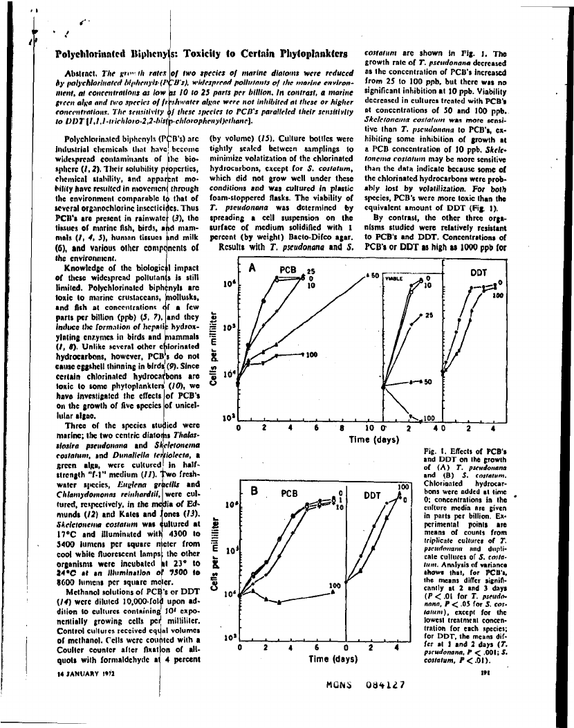
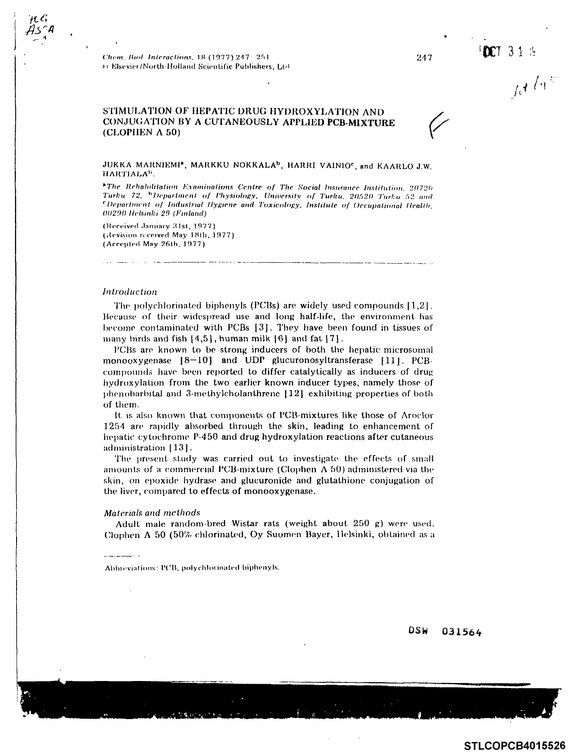
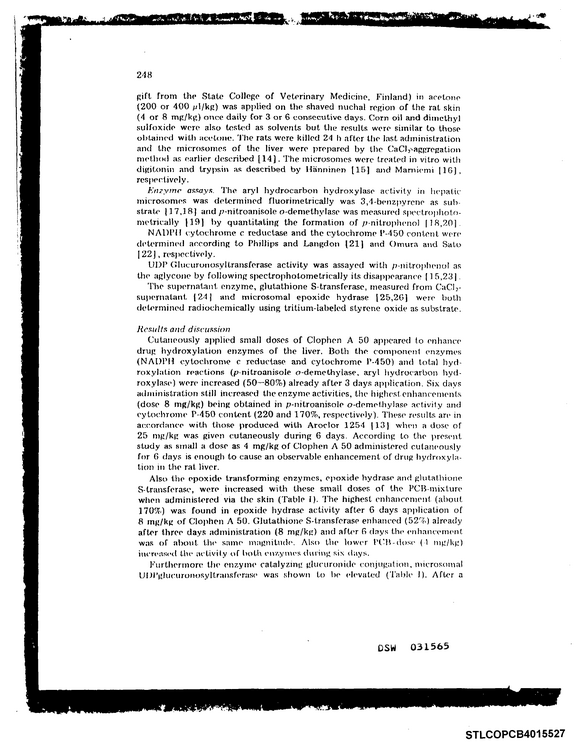
Thus PCII't are present in rainwatc| (3), the tissues of marine fish, birds, and mam mals (/, 4, 5), human tissues knd milk (6), and various other components of (he environment.
refid# Rpya4ZzokQMrnzwevo7Z0qJDX2 pages
However, the Ynclden t involving the contaminated fish meal highlighted the magni ude of the effort required to assure that all units are ac able.
refid# 8RzOrxBGvLrVMzVrm17KprLpk11 pages
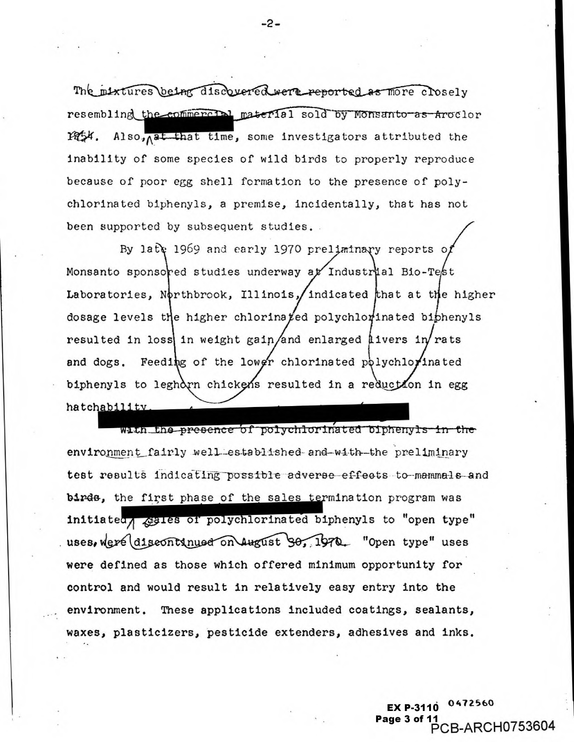
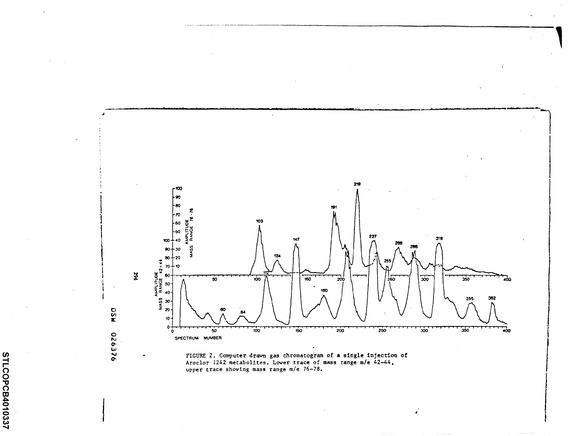
Residual mixtures of the higher chlorinated isomers, 1e. trichloro- to octachlorobiphenyls can be traced in many species of fishes (HANSEN et.al., 1971; DAVIS et.al., 1972) and in fish eating birds within the American and European continents (COOKF., 1973), as well as across the Atlantic (BOGAN and BOURNE, 1972).
refid# q8MdRDEqn0ba77x5263y4NEk6 pages
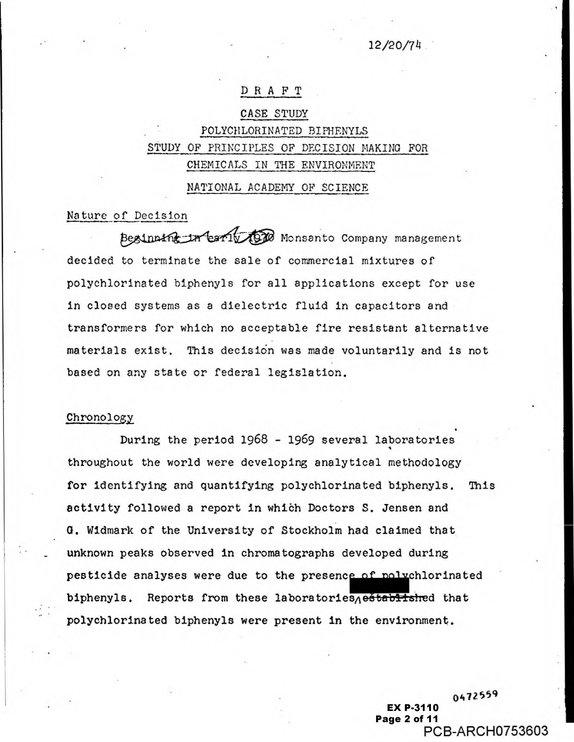
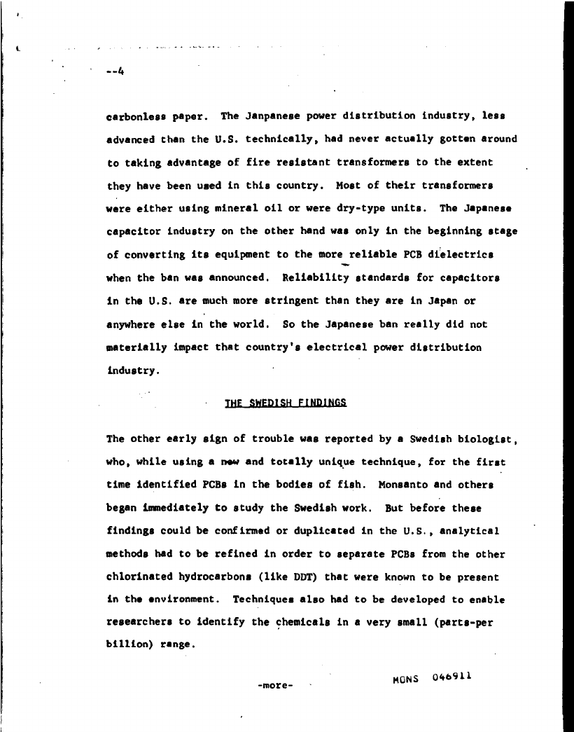
THE SWEDISH FINDINGS The other early sign of trouble was reported by a Swedish biologist, who, while using a new and totally unique technique, for the first time identified PCBs in the bodies of fish.
refid# g2d5g4raVEOLJ1e51mY95vd1e13 pages
Some animals or fish or insects will be harmed.
refid# rpz69RGvXZBBxozzQ58LJjOba8 pages
He Brauw and T.II. dr Vos, Chlorinated biphenyls in fish, mussels and birds from the river Rhine and the Netherlands coastal area, Nature (London). 221 (19G9) 1 126.
refid# pp2yXvbM8de9GdJn3gnGnaY375 pages
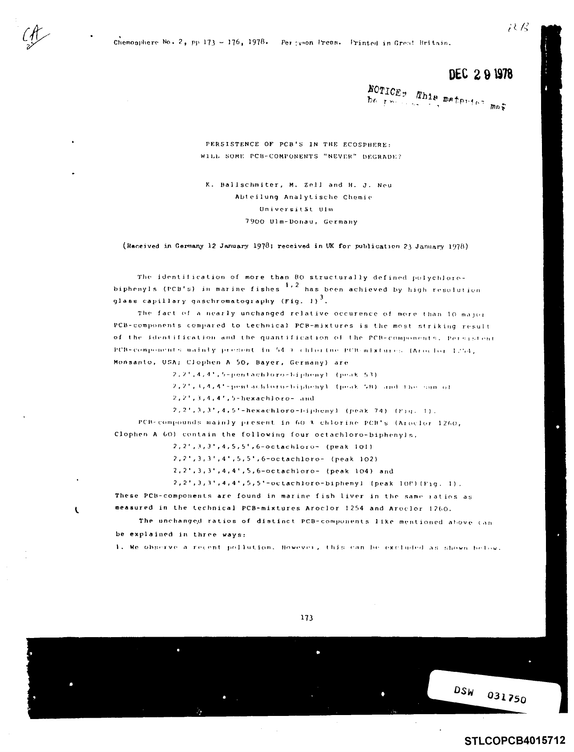
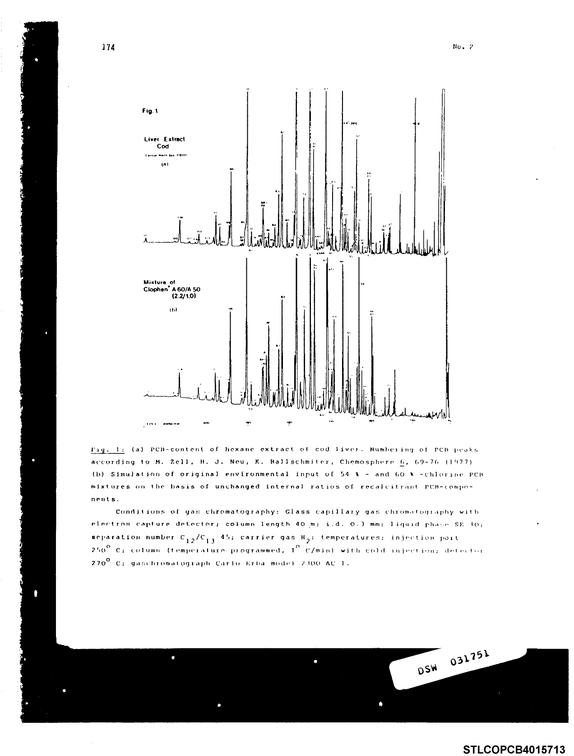
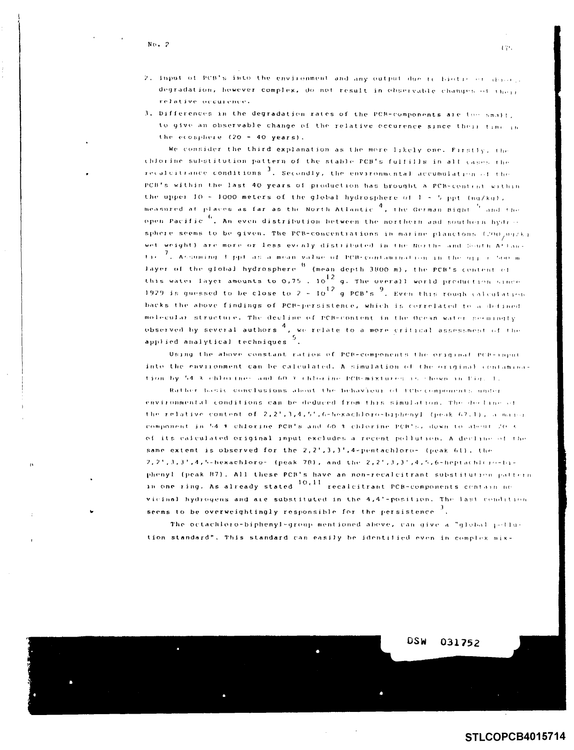
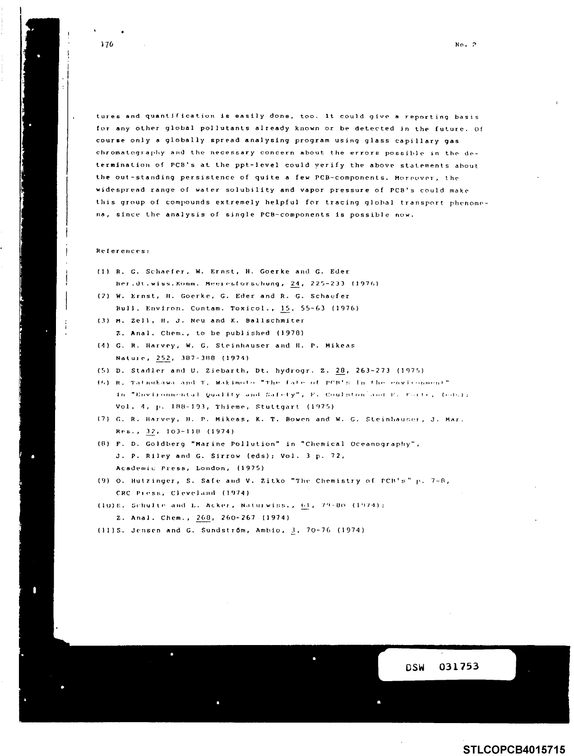
These PC It-components are found in marine fish liver in the same xatios as measured in the technical PCB-mixtures Aroelor 1254 and Arcelor 1?
refid# VxD4Vw7rGO4zO0RkMZ47Zm1p4 pages
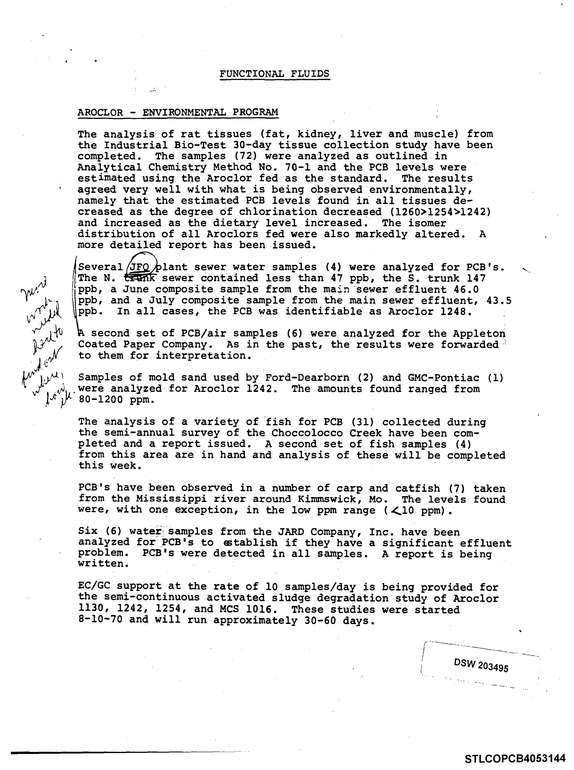
A second set of fish samples (4) from this area are in hand and analysis of these will be completed this week.
refid# pmKNE72gdzjdOp3rzKG1rBLX7 pages
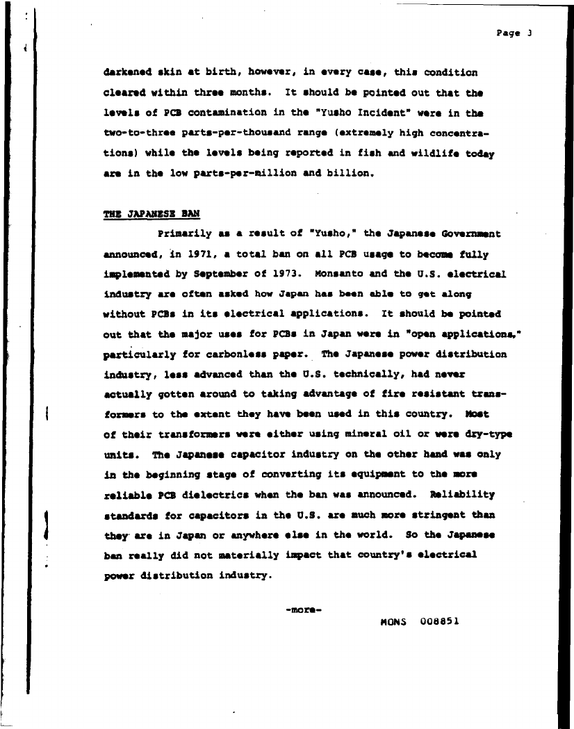
-more- MONS 008851 Page 4 THE SWEDISH FINDINGS The other early sign of trouble waa reported by a Swedish biologist, who, while using a new and totally unique technique, for the first tine suggested the presence of PCBs in the bodies of fish.
refid# 2qkzQvJaYBB1k0gaj8Dbqea612 pages
Thus the highest levels of PCBs have been found in fish-eating birds and in marine mammals, v*-/ w) Net nil PCBs are found in wild-life; the chromatograms usually reported suggest that homologucs containing chlorine atoms are the most common, r-' li is often claimed that the closest match for the chromatograms of wild-life extracts is that obtained from commercial products corresponding to 50-5*i .
refid# 0ooJzZE2N2vEEQa9qzbRmRqm8 pages