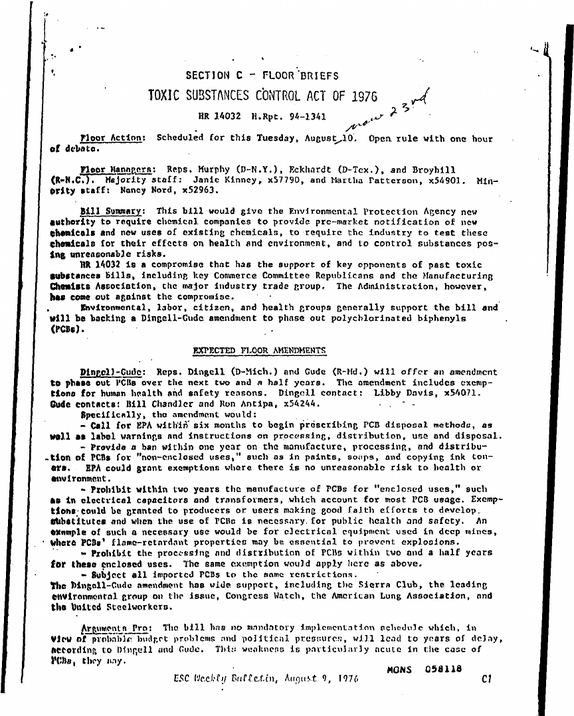
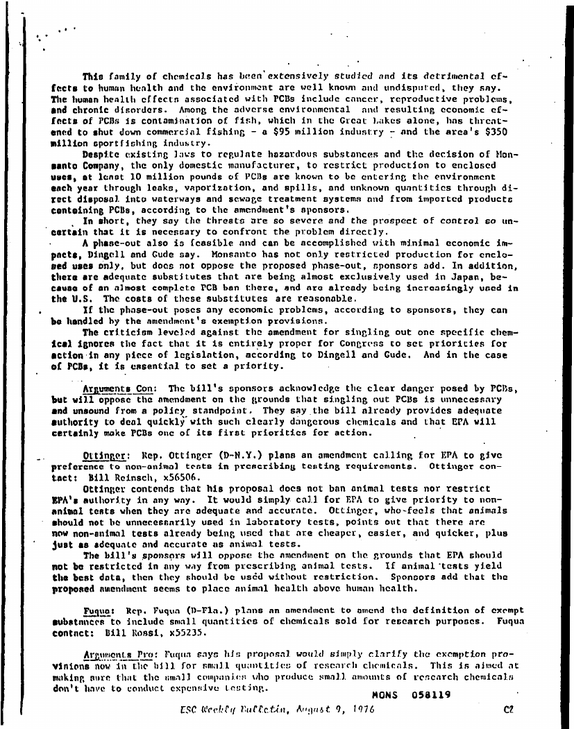
Among the adverse environmental and resulting economic ef fects of PCBs is contamination of fish, which in the Great hakes alone, has threat ened to shut down commercial fishing - a $95 million industry - and the area's $350 million sportfishing industry.
refid# rx7anQ4dRZeG3oQO6JRmeZnGV4 pages
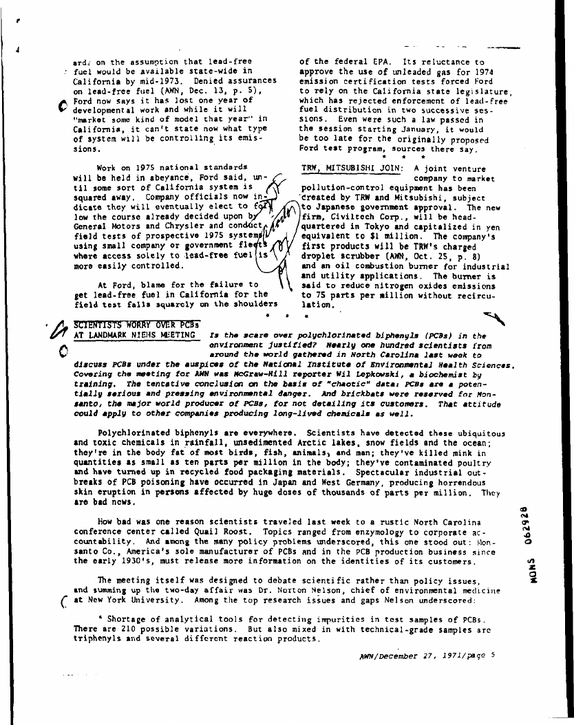
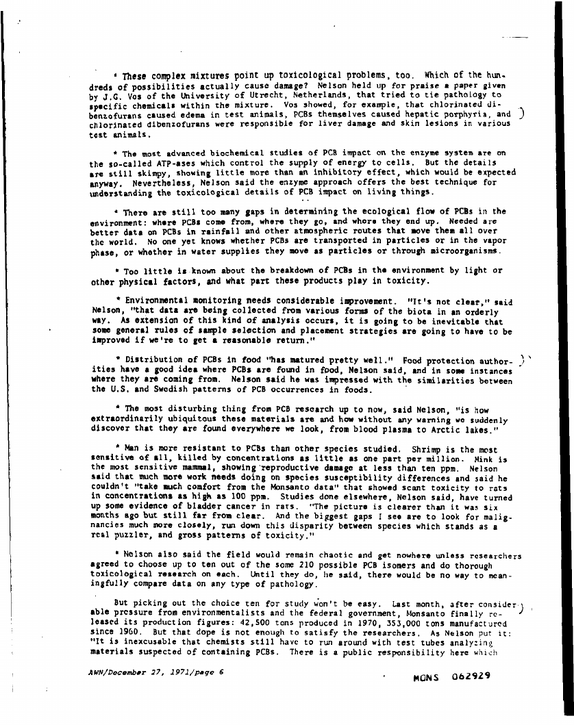
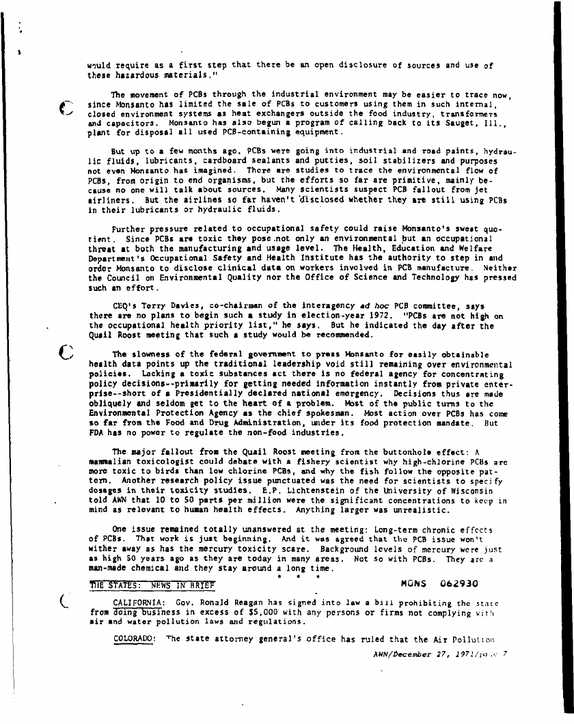
Scientists have detected these ubiquitous and toxic chemicals in rainfall, unsedimented Arctic lakes, snow fields and the ocean; they're in the body fat of most birds, fish, animals^ and man; they've killed mink in quantities as small as ten parts per million in the body; they've contaminated poultry and have turned up in recycled food packaging materials.
refid# 9eeznaX5rkvLx298XmnGDVRD3 pages
Among the adverse environmental and resulting economic ef fects of PCDs is contamination of fish, which in the Crcat bakes alone, has threat ened to chut down commercial fishing - a $95 million industry - and the area's $350 million oportfishing industry.
refid# xz7R02R0mJRgqN9N8m7OQ8J3J4 pages
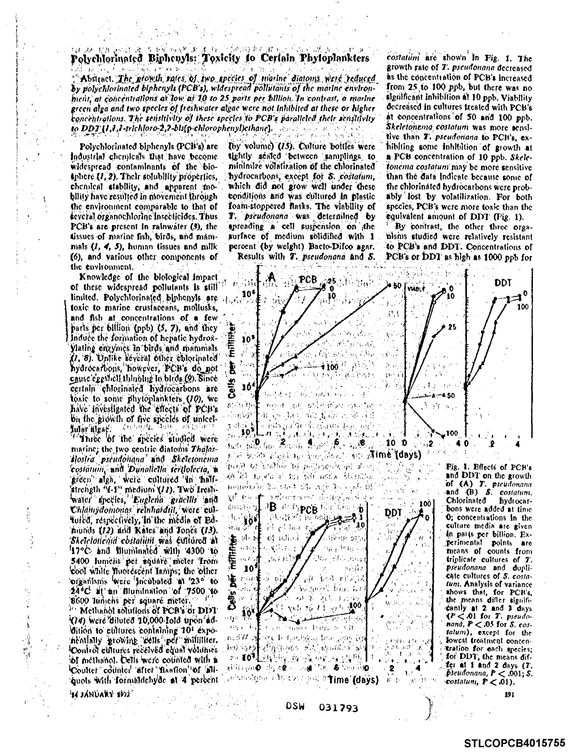
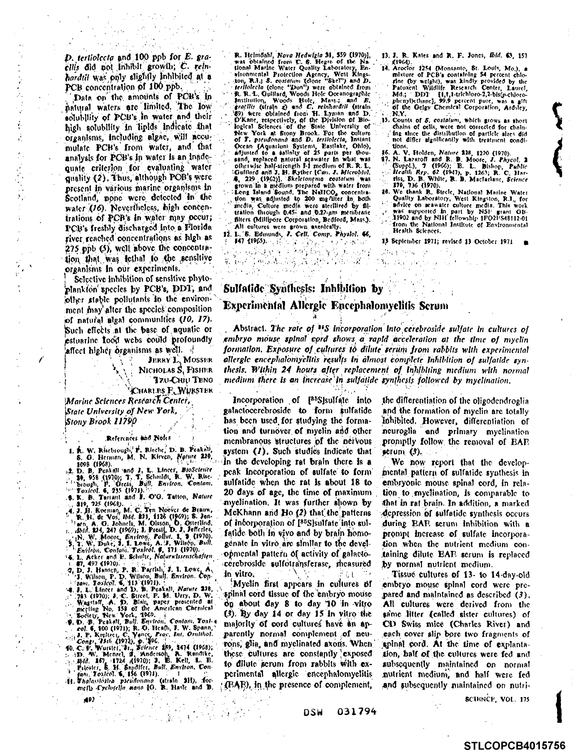
PCB's are present In rainwater (t), the spreading a cell suspension on ,the tissues of marine fish, birds, and mAm- surface of medium sblidificd with 1 mats (1, 4, 5), human (issues and milk percent (by weight) Bacto-Difco agar, (6), and various other components of Results with T. pseudonana And S.
refid# RjBZ0Jnge0MEjBk2Lw9xkeop72 pages
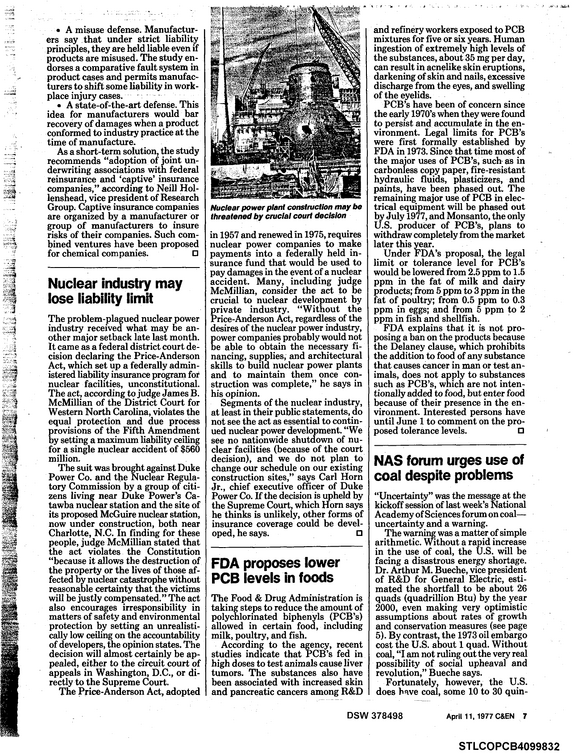
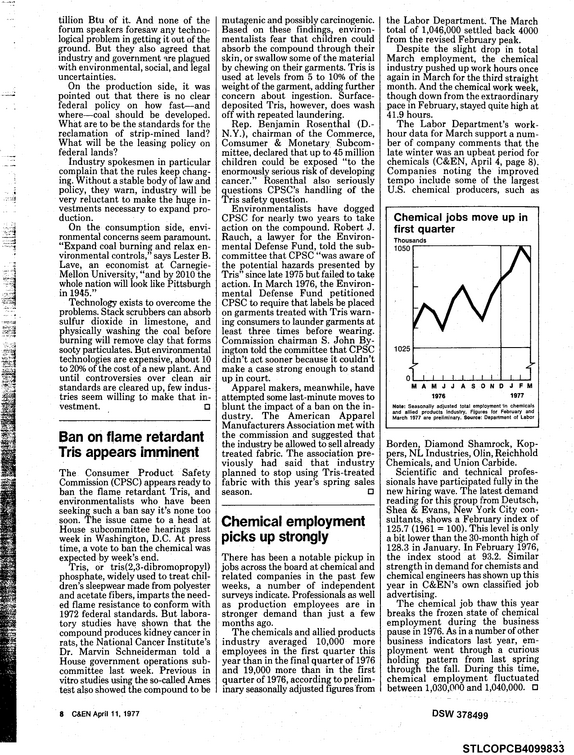
FDA proposes lower PCB levels in foods The Food & Drug Administration is taking steps to reduce the amount of polychlorinated biphenyls (PCB's) allowed in certain food, including milk, poultry, and fish.
refid# JBbyV0xemxqaz7KXmjXZ9ggX2 pages
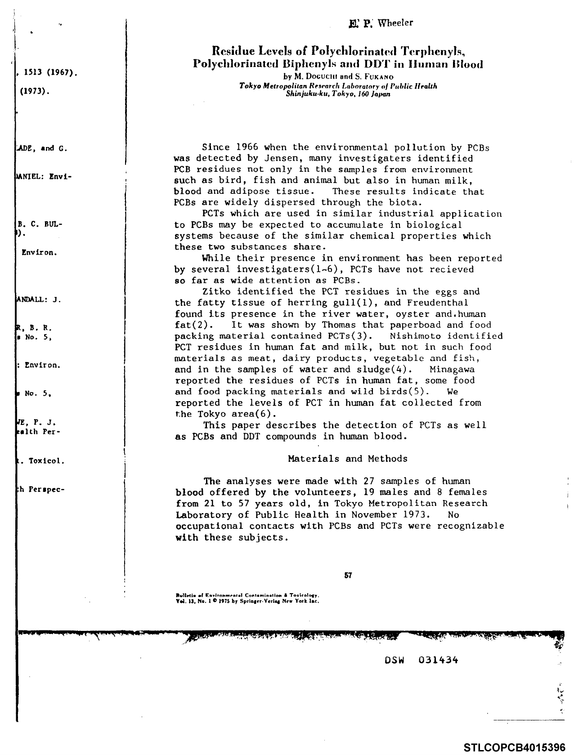
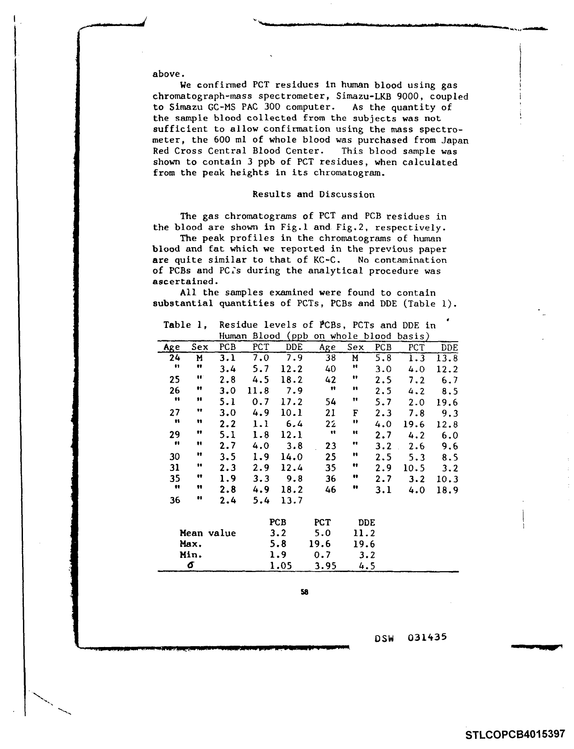
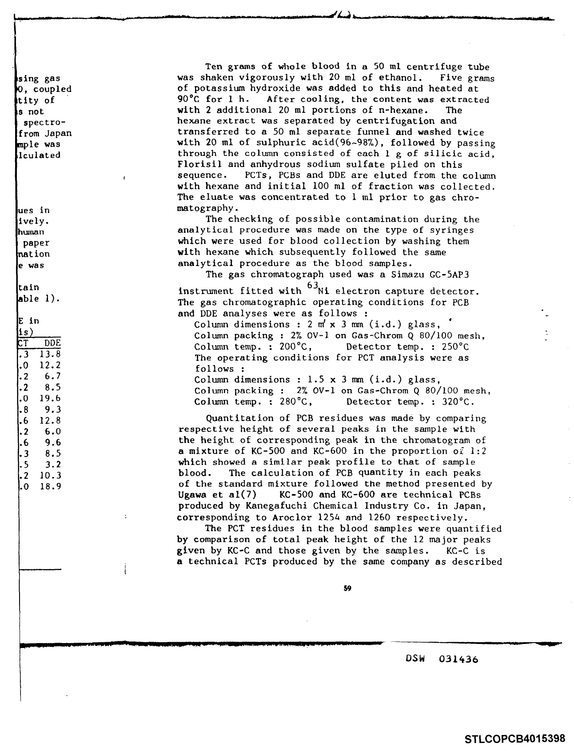
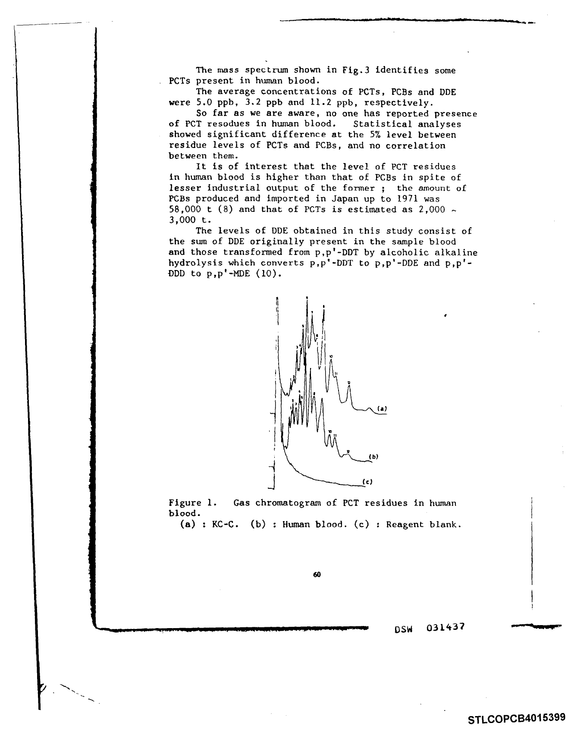
Nishimoto identified PCT residues in human fat and milk, but not in such food materials as meat, dairy products, vegetable and fish, and in the samples of water and sludge(4).
refid# pmjwx141gnyXy7mGOqzzD26EE7 pages
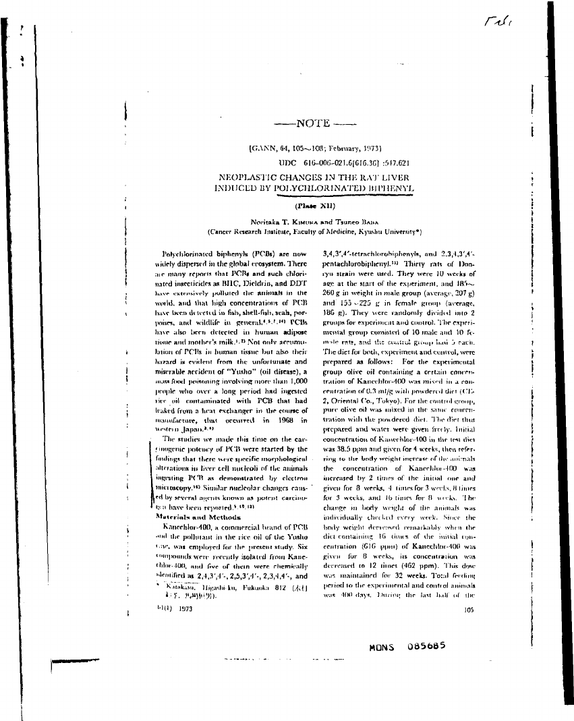
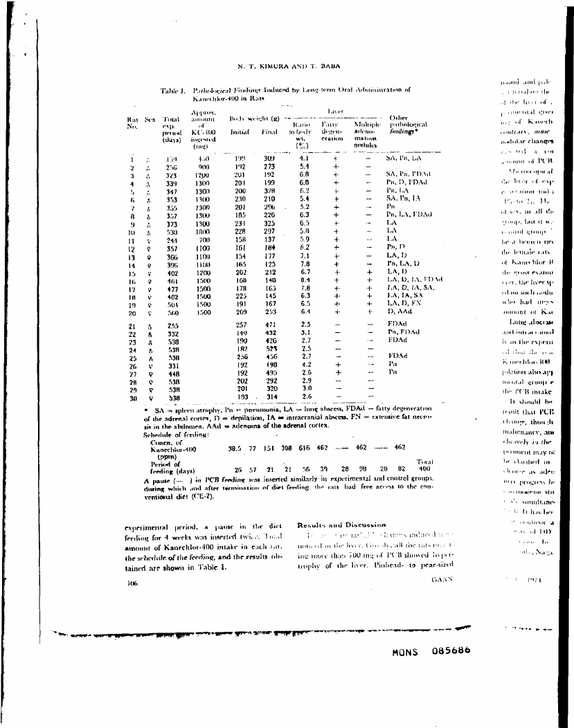
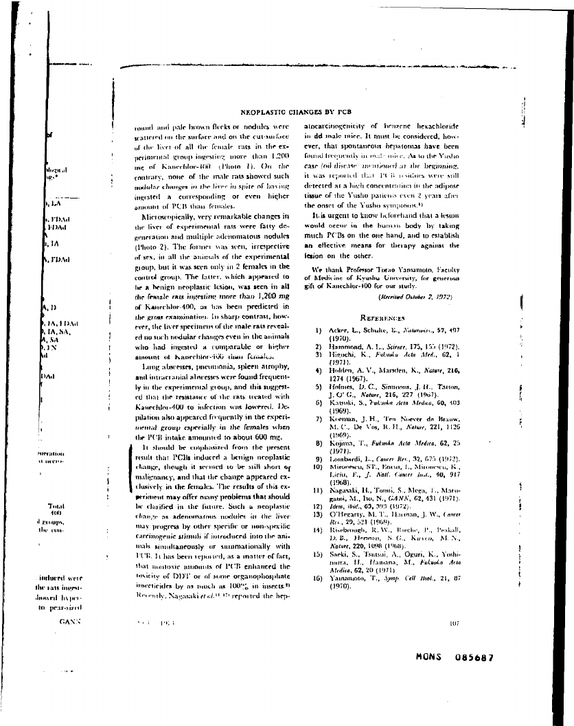
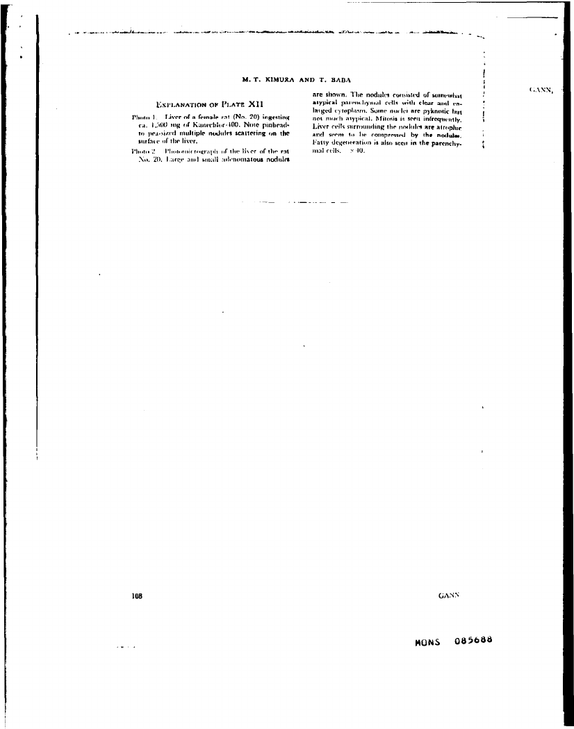
There ;iic many rcjKirts that i'ORs and such chlori nated insecticide* ns BI1C, Dicldrin, and DDT have extensively polluted die animals in die world, and that high concentration* of PCB have been detected in fish, shell-fish, seals, por poises, and wildlife in general.1r *** TCBs have also been detected in human adipose tissue and mother's milk.1*1 Not only accumu lation of PC'Hs in human tissue but also their harard is evident from the unfortunate and miserable accident of "Yusho" (oil disease), a mass food poisoning involving more dian 1,000 people who over a long period had ingested lire oil contaminated with PCD that had leaked from a heat exchanger in the course of manufacture, that occurred in 1968 in wrxtri n Japan.* ** The studies we made this time on the carlinogcnic potency of FOB were started by the findings that there were specific morphological durations in liver cell nucleoli of the animals ingesting PGR as demonstrated by electron inintwcopy.*** Similar nucleolar changes caus ed by several agents known a* potent carcino* U< n have liven reported* `. *> Mairrinls am!
refid# 2qer756aBDd94Q9wBVzyr7LQL5 pages
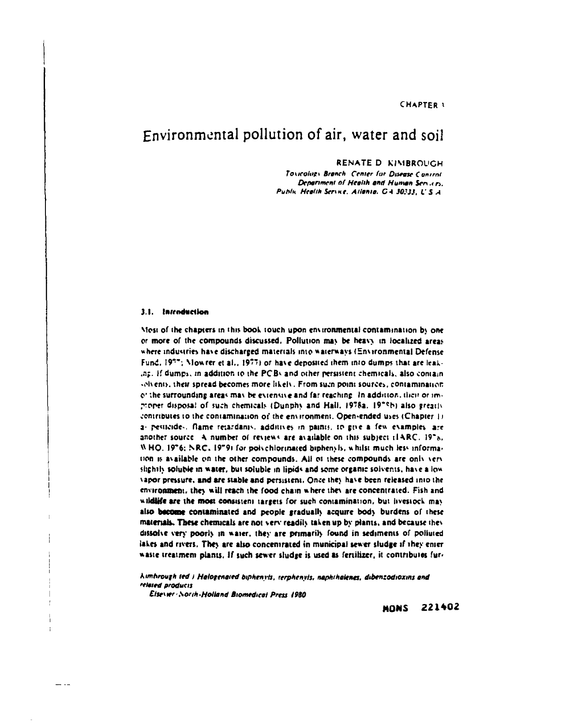
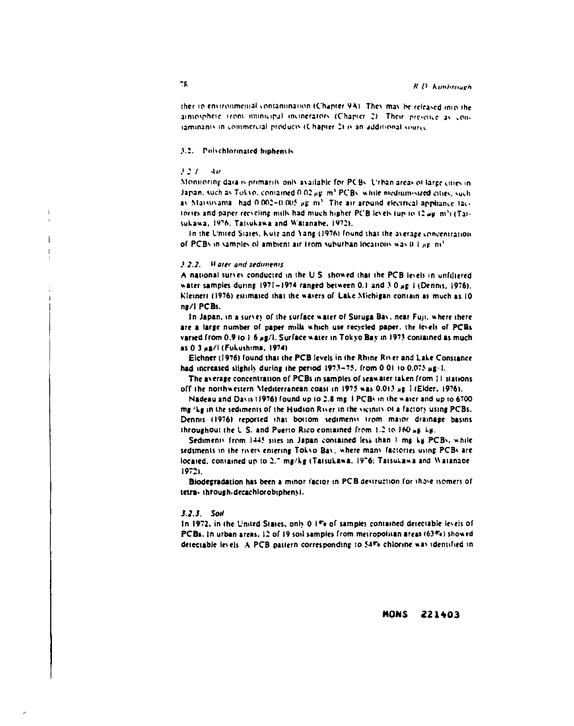
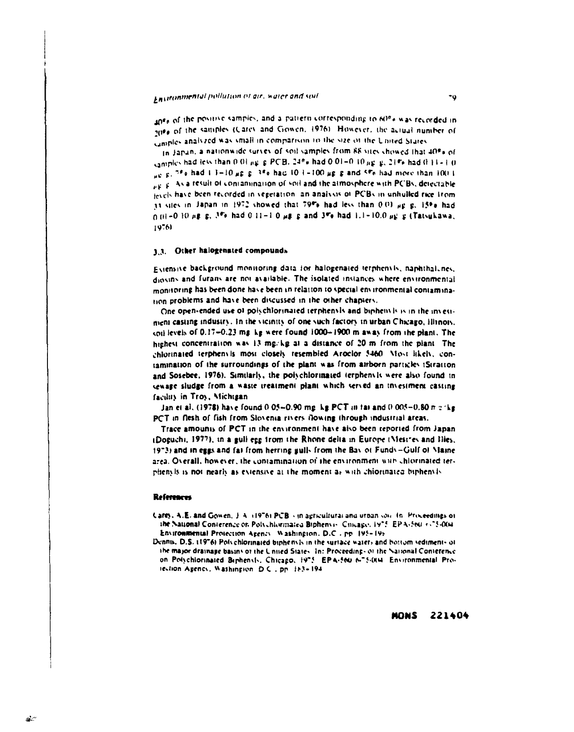
Fish and wildlife are the most consistent targets for such contamination, but livestock may also become contaminated and people gradually acquire body burdens of these materials.
refid# x6MDneNoy5K4Ywwx7dZ97pOE5 pages
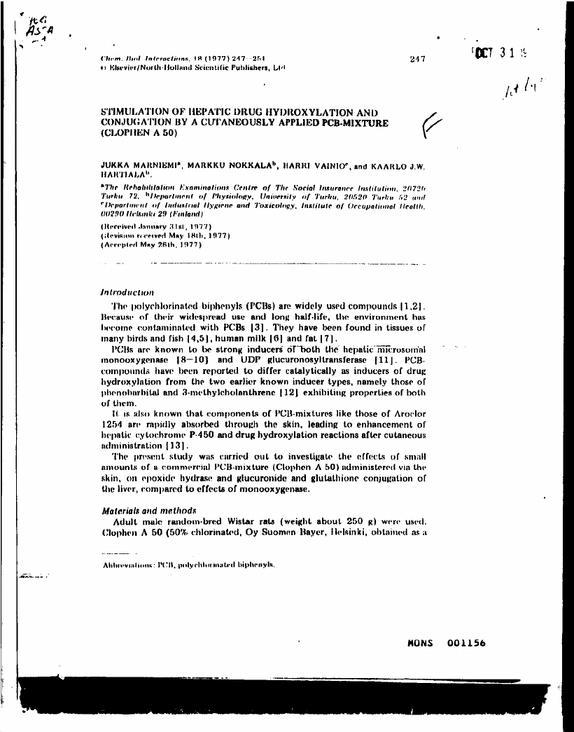
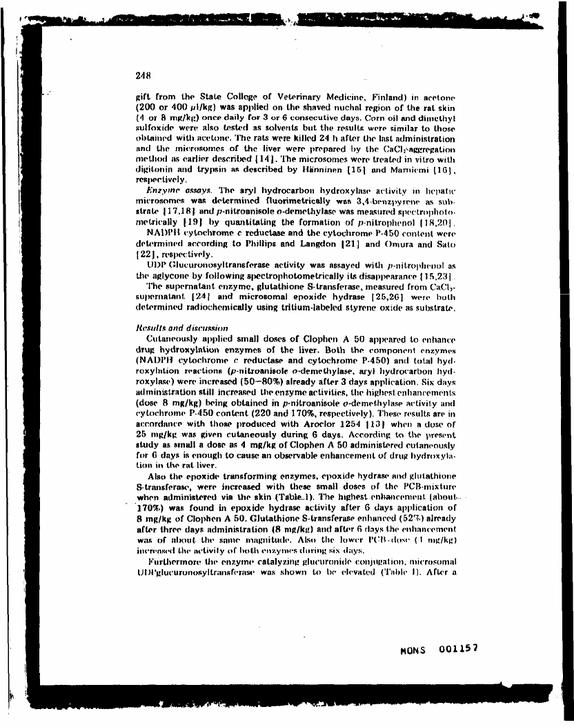
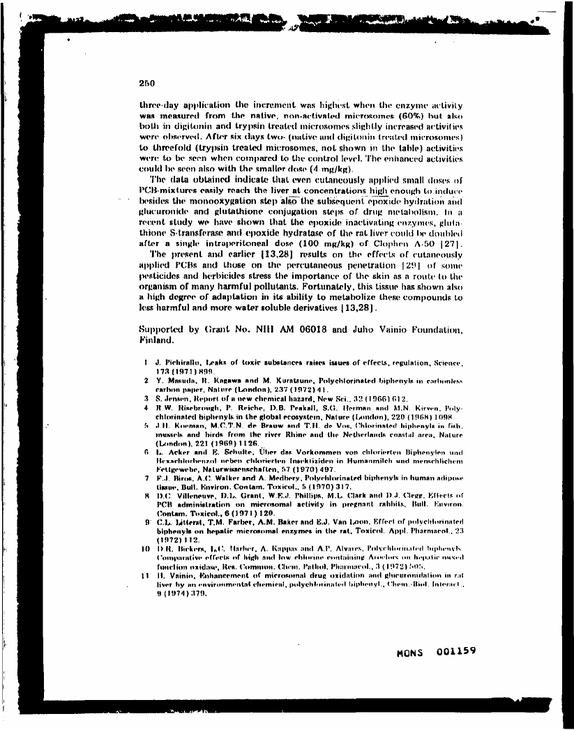
They have been found in tissues of many birds and fish (1,5), human milk 16] and fat 17 ].
refid# pmr9kVG8KV4rQdweO5G644vmE5 pages
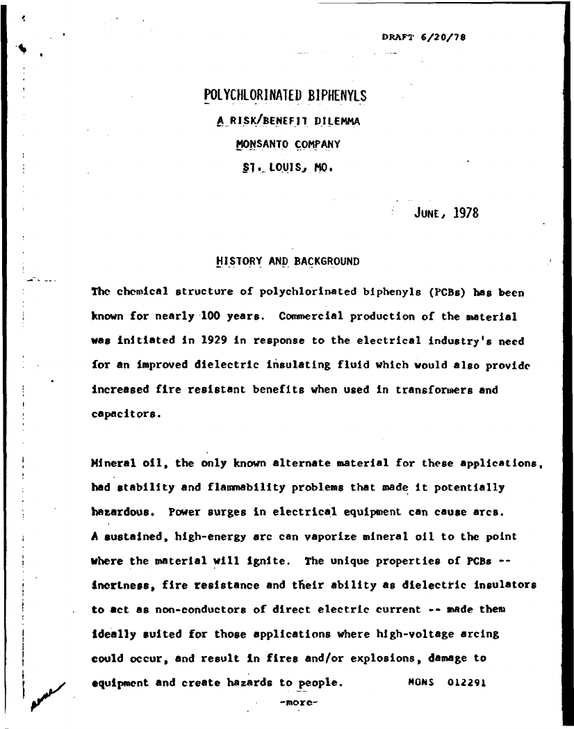
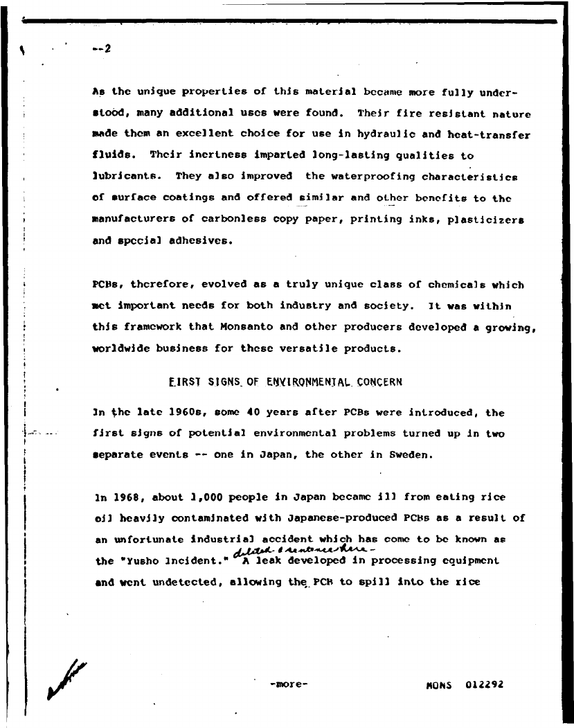
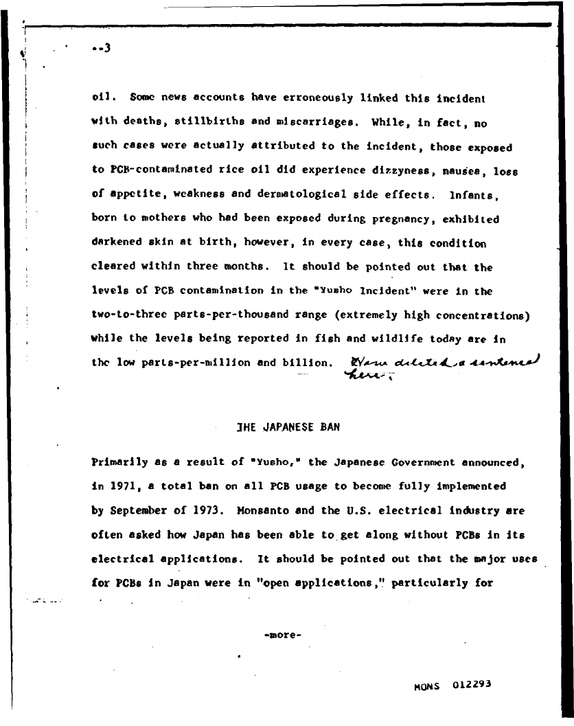
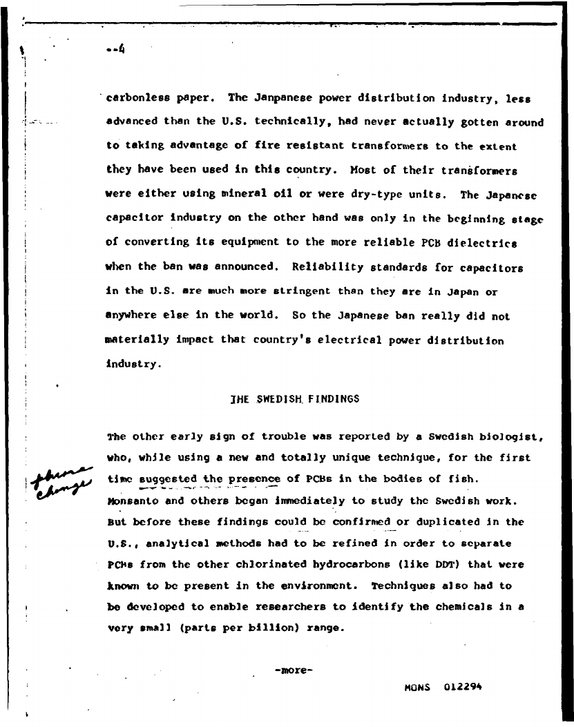
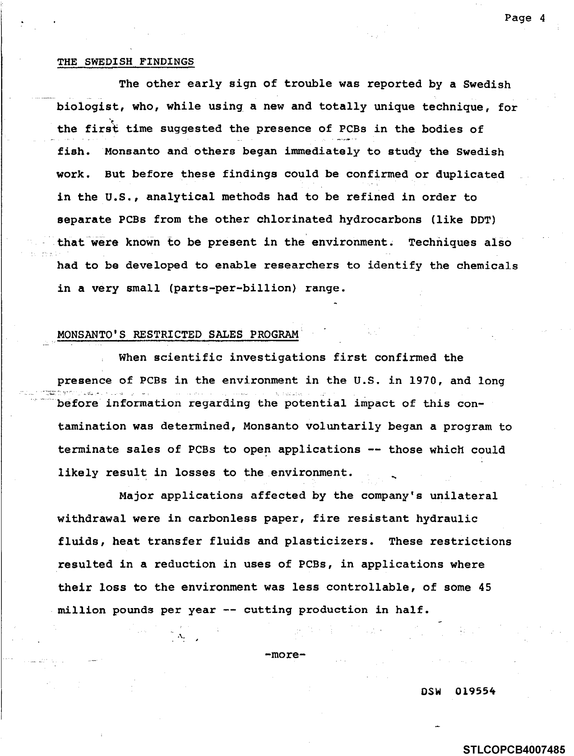
IHE SWEDISH FINDINGS The other early sign of trouble was reported by a Swedish biologist, who, while using a new and totally unique technique, for the first time suggested the presence of PCBs in the bodies of fish.
refid# 0gkEyxGQEyo8860mZo89B2QJR13 pages
Jan ct aJ, (I97|| have found 0.05-0.90 mg- kg PCT in fat and 0.005-0,10 mg'kg PCT in flesh of fish from Slovenia risers flowing through industrial areas.
refid# ZBGEzMpp4pjxJDvG6gEwndgrO6 pages
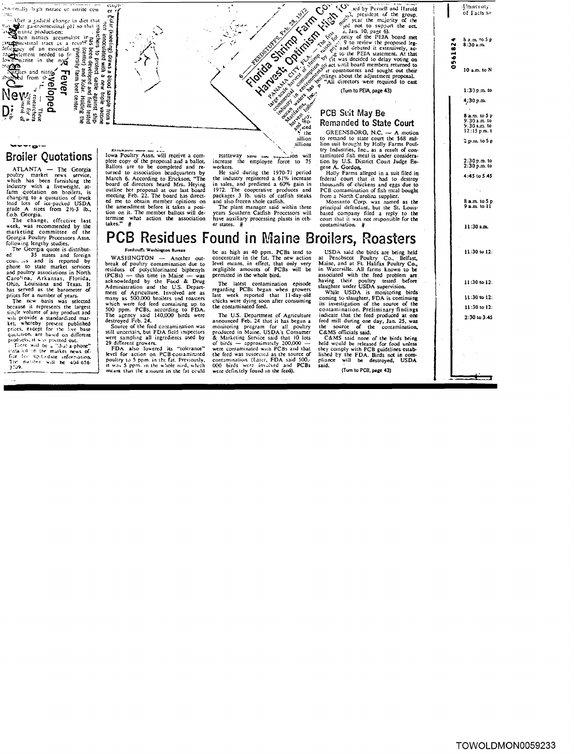
., as a result of con taminated fish meal is under considera tion by U.S.
refid# ExrbEBX5MozdGDyx0Z2M549eR2 pages
Mortsanio . ____ . . ....
refid# 7QnzD6n1QLMvbxZpxeo659Za10 pages
A.. * -more- DSW 019553 STLCOPCB4007484 Page 4 THE SWEDISH FINDINGS The other early sign of trouble was reported by a Swedish biologist, who, while using a new and totally unique technique, for the first time suggested the presence of PCBs in the bodies of fish.
refid# 4QbMro8B7ODe122ZL7k6XrBpx10 pages
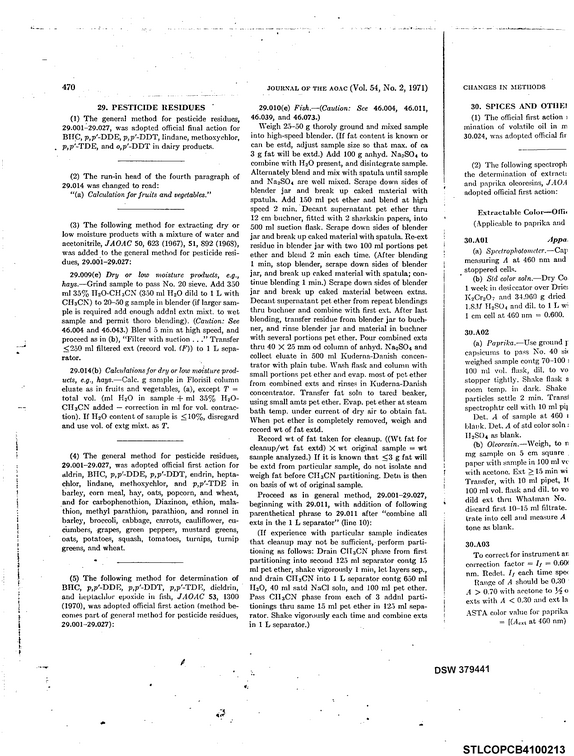
If H20 content of sample is <10%, disregard and use vol. of extg mixt. as T. (4) The general method for pesticide residues, 29.001-29.027, was adopted official first action for aldrin, BIIC, p,p'-DDE, p,p'-DDT, endrin, heptachlor, lindane, methoxychlor, and p,p'-TDE in barley, corn meal, hay, oats, popcorn, and wheat, and for carbophenothion, Diazinon, ethion, malathion, methyl parathion, parathion, and ronnel in barley, broccoli, cabbage, carrots, cauliflower, cu cumbers, grapes, green peppers, mustard greens, oats, potatoes, squash, tomatoes, turnips, turnip greens, and wheat. (5) The following method for determination of BIIC, p,p'-DDE, p,p'-DDT, p,p'-TDE, dieldrin, and heptachlur epoxide in fish, JAOAC 53, 1300 (1970), was adopted official first action (method be comes part of general method for pesticide residues, 29.001-29.027): 29.010(e) Fish.
refid# ZJnk53VwxwVpoZkwz4vaxLNoJ3 pages