('S )/ " ) The Cosmetic,Toiletry and Fragrance Association, Inc.
refid# MJmNEJNyvOk6y0E9G1x73mNzk5 pages
The Cosmetic, Toiletry and Fragrance Association, Inc. 113515th STREET; N.W., WASHINGTON, D.C. 20005 202/331-1770 *TELEX 8^-2673 Jame H.
refid# 8naxy8n9xQ6DoJJja0VeM36d6 pages
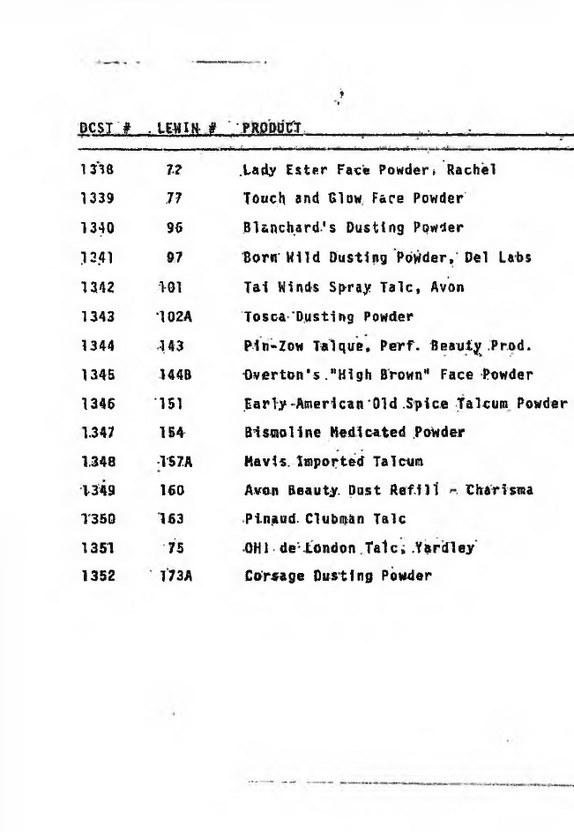
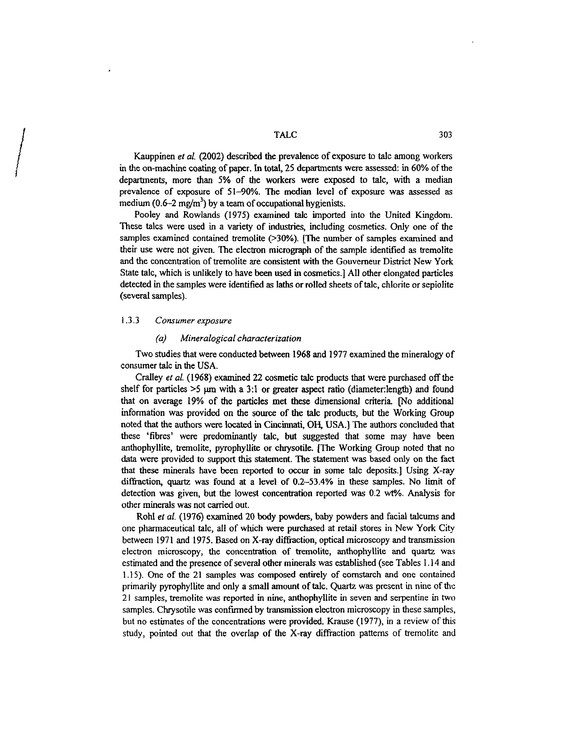
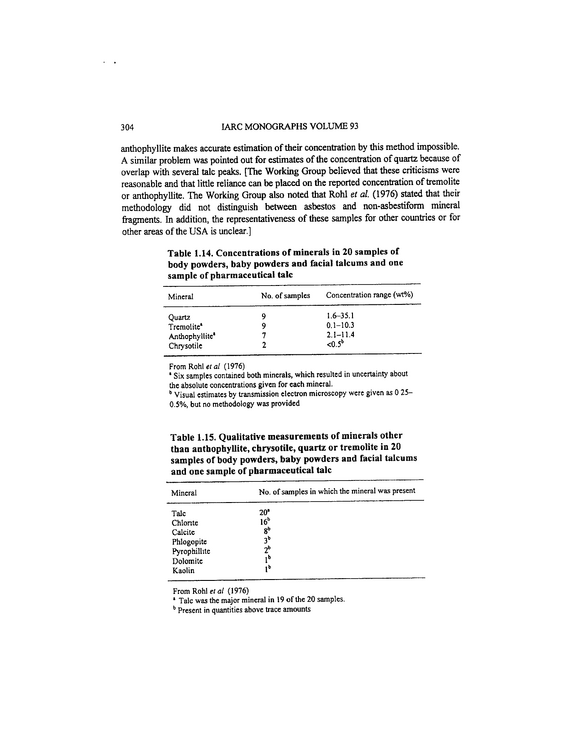
Sixty samples were analysed using atomic absorption techniques ray diffraction polarized light microscopy and scanning electron microscopy and the presence of asbestiform chrysotile both asbestiform and asbestiform tremolite and anthophyllite was identified Asbestiform varieties of tremolite and anthophyllite were uncommon while chrysotile was common Respirable quartz was also identified in most 80 of the samples Some products listed by the Cosmetic and Toiletries Formulations Database are shown in Table 1.7 Listing is voluntary and may not be representative of products that are on the market Tables 1.16 and 1.17 present the average mineral composition of commercial products that were sold under the name of talc in North America and Europe respectively in the late 1980s b Use of talc forfeminine hygiene The use of body powder for feminine hygiene can be estimated from the prevalence reported for controls in control studies that investigated the association between the use of cosmetic tale for feminine hygiene and the risk for ovarian cancer The prevalence of ever use in these studies is summarized in Table 1.18 Higher prevalences were generally reported in studies from Canada the United Kingdom and the USA up to 59 whereas the lowest prevalences were generally reported in studies conducted in other countries including China Greece and Israel 2.2 5.6 Studies with high prevalences also reported doses in terms of frequency duration of use age at first use or cumulative doses Frequency of use may vary from a few times per month to more than once a day and a large proportion of use is more or less daily Duration of use ranges up to more than 40 years The cumulative exposure to talc by perineal dusting was over 10 000 days in % of the users in one study Cook et al 1997 The use of talcum powder for feminine hygiene is acquired in young adulthood since % of women who use body powder start before the age of 25 years Harlow & Weiss 1989 The types of application also vary Body powder can be applied perineally on napkins or on underwear Dusting of the perineum after bathing appears to be the most frequent single type of application but simultaneous uses have also been reported Alternatively exposure may occur as a result of storing a diaphram in body powder or contamination from the male partner who has used body powder One study in the USA reported that the use of deodorant spray had a prevalence of 24 Cook et al 1997 In several of the studies in Table 1.18 the interviews on powder use occurred before 1988 Of these all but one were conducted in the USA Information on the composition TALC 309 of baby powder body powder facial powder and pharmaceutical talcum powder on the market in New York City before 1976 suggests that many of these products were impure and contained anthophyllite carbonate chlorite chrysotile phlogopite pyrophyllite quartz and tremolite Cralley et al 1968 Rohl et al 1976 After 1976 these powders probably did not contain anthophyllite chrysotile or tremolite but may have contained up to % of other minerals including carbonate chlorite and quartz Grexa & Parmentier 1979 In 1994 baby talcum powder available in the USA typically contained 99 talc body powder typically contained 65 7t0 alc and the remaining material was cornstarch sodium bicarbonate and fragrance Zazenski et al 1995 c Other uses of cosmetic talc Russell et al 1979 and Aylott et al 1979 reported exposure to respirable dust during the use of talcum powders on the face body and babies Russell et al 1979 took 48 measurements during baby dusting operations and 44 measurements during the application of powders to adult bodies Adult exposure was assessed during normal body powdering practices by placing cyclone samplers on shelves at an appropriate height or by positioning a cyclone attached to a headband near the nose i.e. in the breathing zone Exposure to respirable dust was 2.03 mg during adult application and was estimated to be 0.19 mg for babies The estimated duration of the application was 1.23 minute for adults and 0.52 minute for babies Aylott et al 1979 measured levels of exposure to respirable dust during the application of loose face powder 24 measurements adult dusting powder 43 measurements and baby dusting powder 32 measurements In the study of baby dusting powder a doll was used The exposure to respirable dust during face powdering ranged from 0.1 to 1.7 mg duration 10-25 seconds that for adult dusting powder ranged from 0.2 to 3.3 mg duration 15-80 seconds and that for baby powders ranged from 0.1 to 0.9 mg duration 15-60 seconds d Other exp
refid# LJQ6GZv6XbRRK2qzDGpR9eQk36 pages
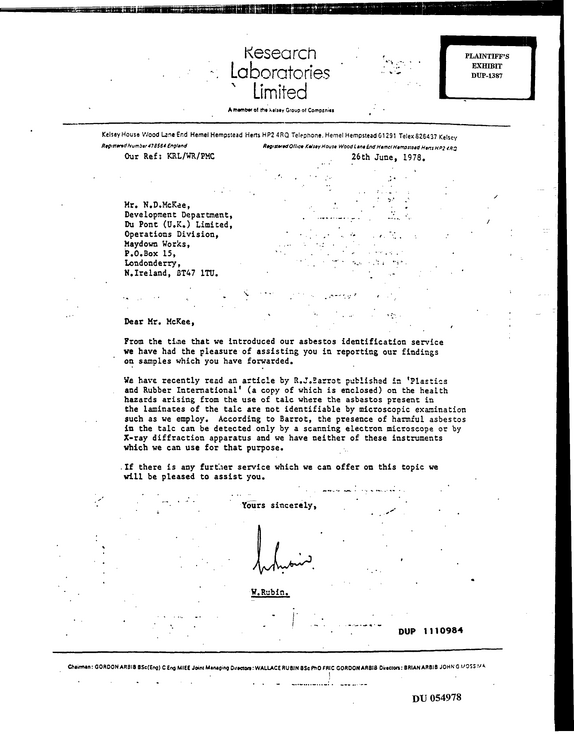
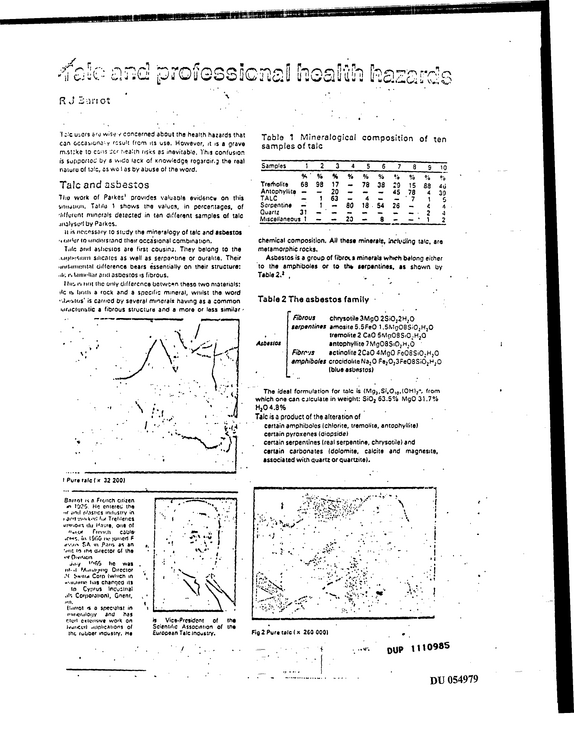
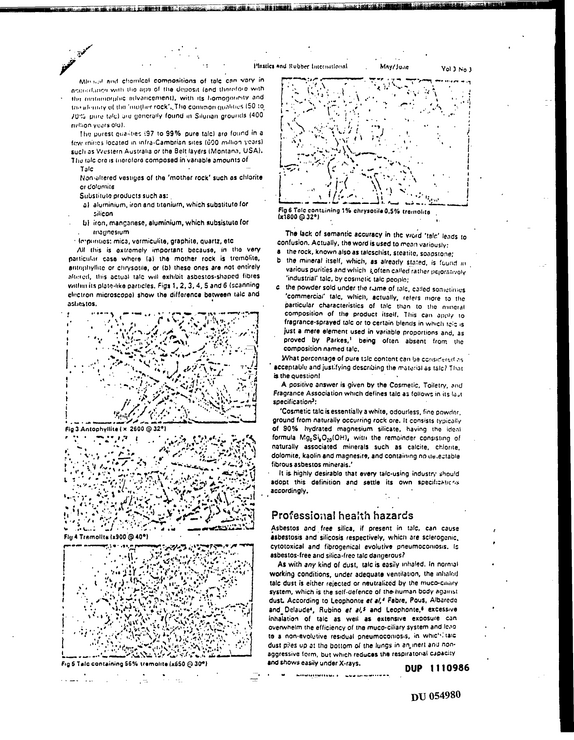
A positive answer is given by the Cosmetic, Toiletry, and Fragrance Association which defines talc as follows in its Ui.t specification3: Fig 3 AntophyHitt ( * 2600 (H> 32) 'Cosmetic talc is essentially a white, odourless, fine oowrinr, ground from naturally occurring rock ore.
refid# ODva7xRr65Xook51xvYV6o2p5 pages
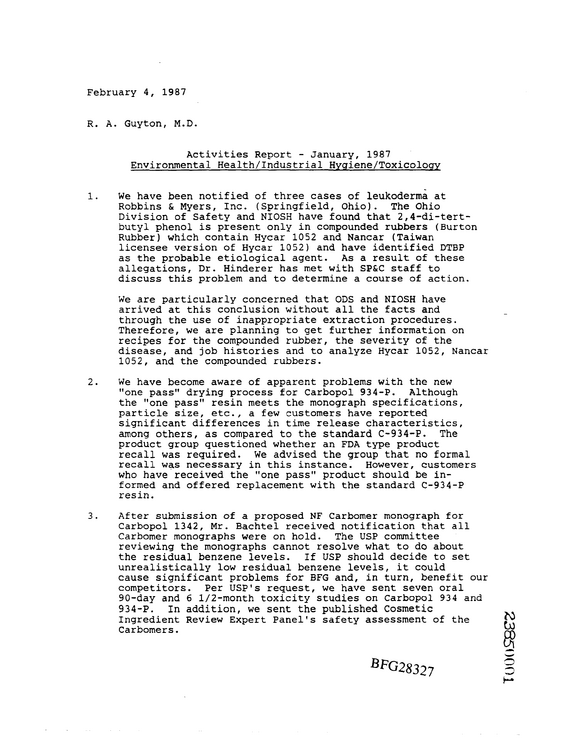
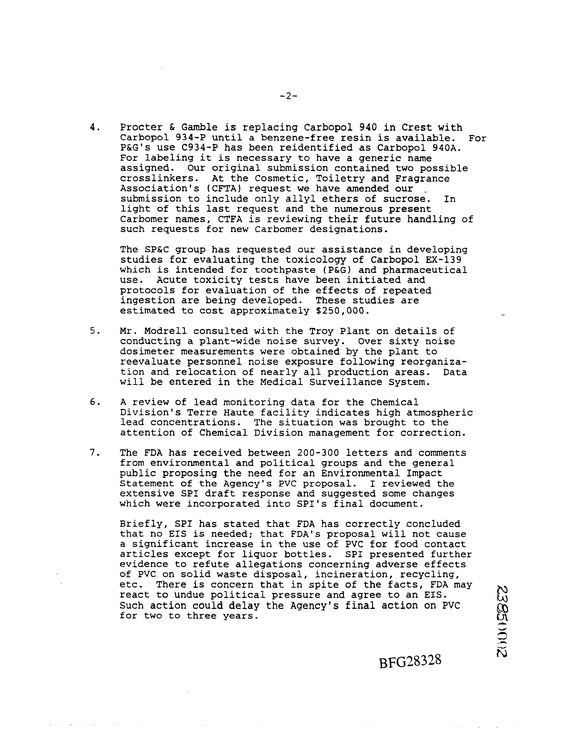
At the Cosmetic, Toiletry and Fragrance Association's (CFTA) request we have amended our submission to include only allyl ethers of sucrose.
refid# a4OeQ07bXK59Vz3wNkNz2md5b3 pages
The Cosmetic, Toiletry and Fragrance Association has finally issued an adopted name for Carbopol 1342.
refid# 82Eo183gBp5NzOBgbxb3j3bya4 pages
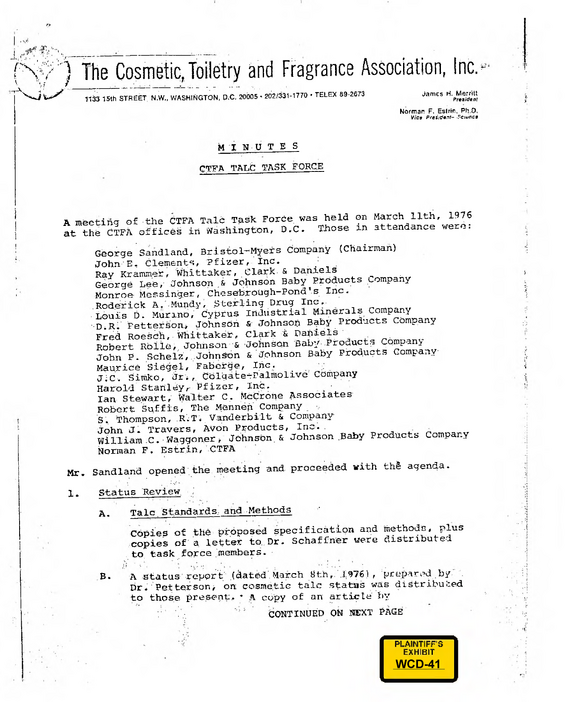
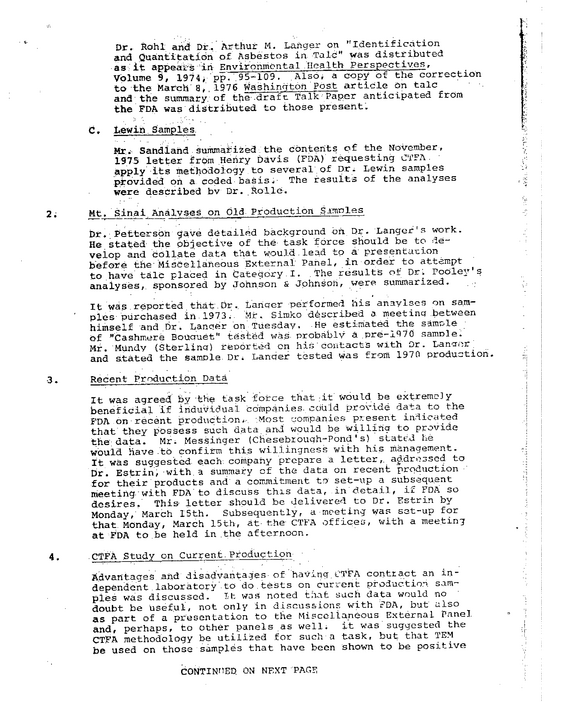
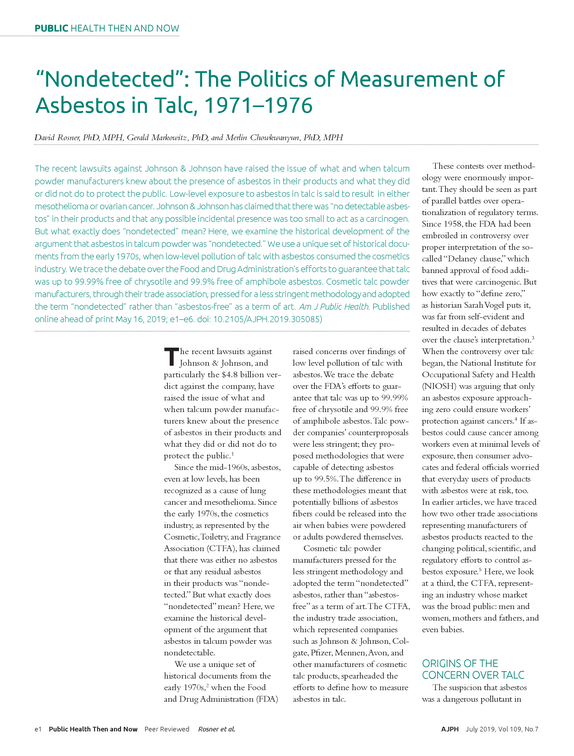
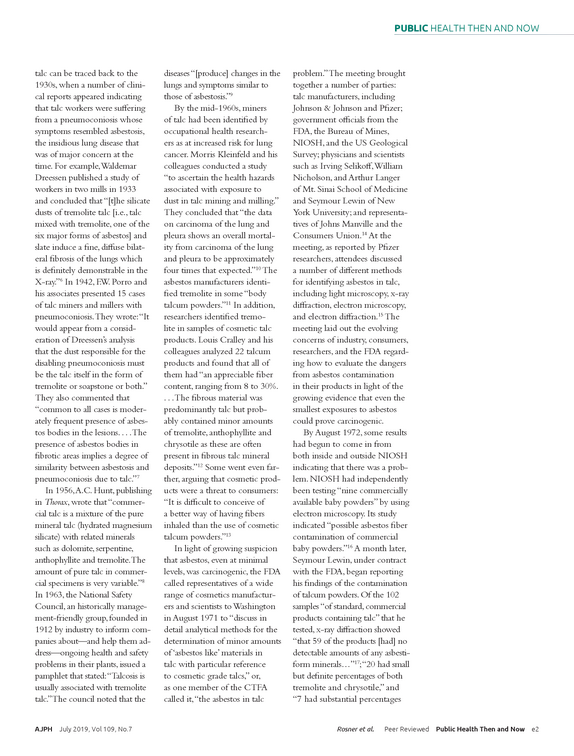
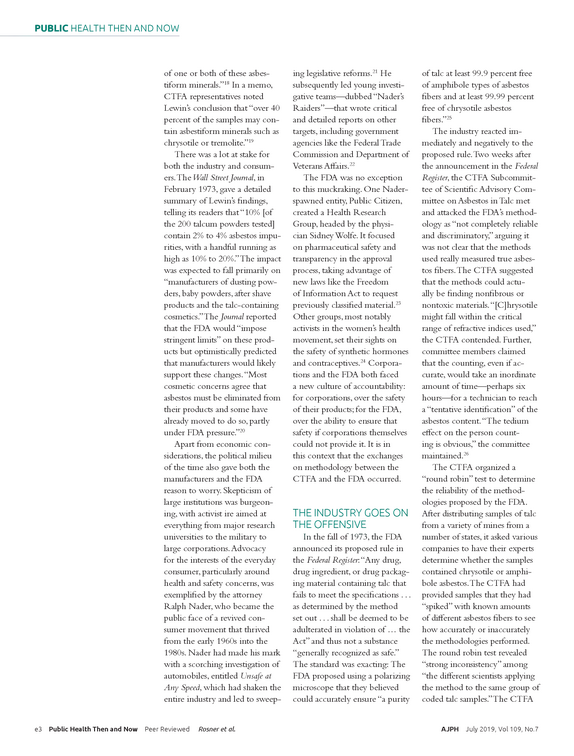
FILE NAME Talc TALC DATE 2019 July DOC TALC187 DOCUMENT DESCRIPTION Public Health Then and Now Article - Nondetected- The Politics of Measurement of Asbestos in Talc 1971-1976 PUBLIC HEALTH THEN AND NOW Nondetected The Politics of Measurement of Asbestos in Talc 1971-1976 David Rosner PhD MPH Gerald Markowitz PhD and Merlin Chowkwanyun PhD MPH The recent lawsuits against Johnson & Johnson have raised the issue of what and when talcum powder manufacturers knew about the presence of asbestos in their products and what they did or did not do to protect the public level exposure to asbestos in talc is said to result in either mesothelioma or ovarian cancer Johnson & Johnson has claimed that there was no detectable asbestos in their products and that any possible incidental presence was too small to act as a carcinogen But what exactly does nondetected mean Here we examine the historical development of the argument that asbestos in talcum powder was nondetected We use a unique set of historical documents from the early 1970s when level pollution of talc with asbestos consumed the cosmetics industry We trace the debate over the Food and Drug Administration's efforts to guarantee that talc was up to 99.99 free of chrysotile and 99.9 free of amphibole asbestos Cosmetic talc powder manufacturers through their trade association pressed for a less stringent methodology and adopted the term nondetected rather than asbestos as a term of art Am J Public Health Published online ahead of print May 16 2019 e6 doi AJPH.2019.305085 "herecent lawsuits against Johnson & Johnson and particularly the 4.8 billion verdict against the company have raised the issue of what and when talcum powder manufac- turers knew about the presence of asbestos in their products and what they did or did not do to protect the public.,, Since the 1960s asbestos even at low levels has been recognized as a cause of lung cancer and mesothelioma Since the early 1970s the cosmetics industry as represented by the Cosmetic Toiletry and Fragrance Association CTFA has claimed that there was either no asbestos or that any residual asbestos in their products was nondetected But what exactly does nondetected mean Here we examine the historical devel- opment of the argument that asbestos in talcum powder was nondetectable We use a unique set of historical documents from the early 1970s when the Food and Drug Administration FDA raised concerns over findings of low level pollution of talc with asbestoWse trace the debate over the FDA's efforts to guarantee that talc was up to 99.99 free of chrysotile and 99.9 free of amphibole asbestos Talc pow- der companies counterproposals were less stringent they proposed methodologies that were capable of detecting asbestos up to 99.5 The difference in these methodologies meant that potentially billions of asbestos fibers could be released into the air when babies were powdered or adults powdered themselves Cosmetic talc powder manufacturers pressed for the less stringent methodology and adopted the term nondetected asbestos rather than asbestos- free as a term of art The CTFA the industry trade association which represented companies such as Johnson & Johnson Col- gate Pfizer Mennen Avon and other manufacturers of cosmetic talc products spearheaded the efforts to define how to measure asbestos in talc These contests over method- ology were enormously important They should be seen as part of parallel battles over operationalization of regulatory terms Since 1958 the FDA had been embroiled in controversy over proper interpretation of the so- called Delaney clause which banned approval of food additives that were carcinogenic But how exactly to define zero as historian Sarah Vogel puts it was far from evident and resulted in decades of debates over the clause's interpretation.
refid# XvO2YvjmDVqXrp1035xkn9pg7 pages
Since potentially billions of asbestos the early 1970s, the cosmetics fibers could be released into the industry, as represented by the air when babies were powdered Cosmetic,Toiletry, and Fragrance or adults powdered themselves.
refid# 1geYw2DDXVDY4Gw592kXeKyEd7 pages
Since the early 1970s, the cosmetics industry, as represented by the Cosmetic, Toiletry, and Fragrance Association (CTFA), has claimed that there was either no asbestos or that any residual asbestos in their products was "nonde tected."
refid# 5kL3wLNZ515vLdZNGEQ4ryYDD7 pages
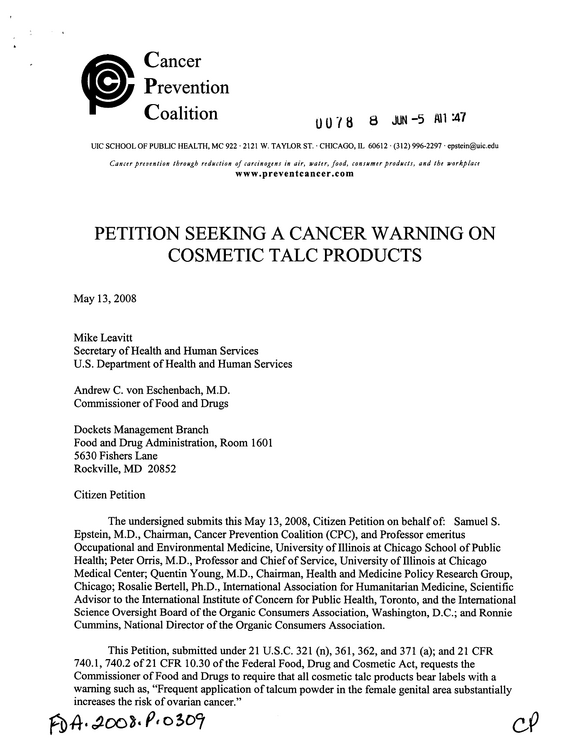
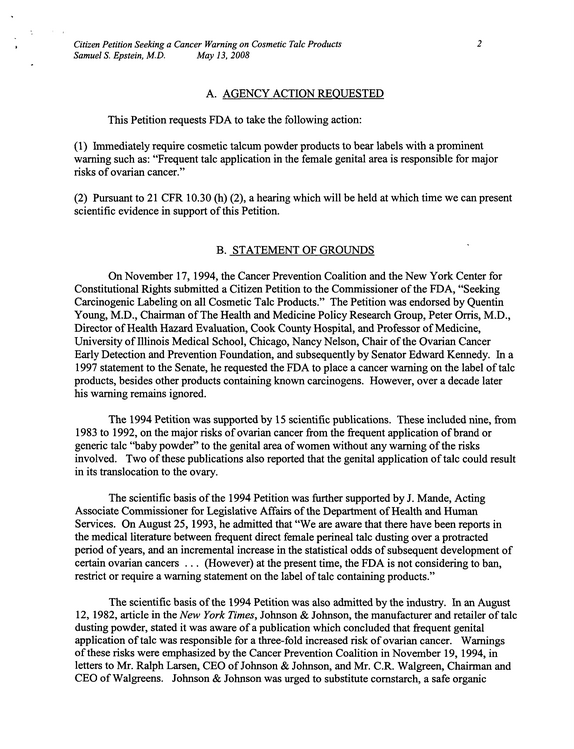
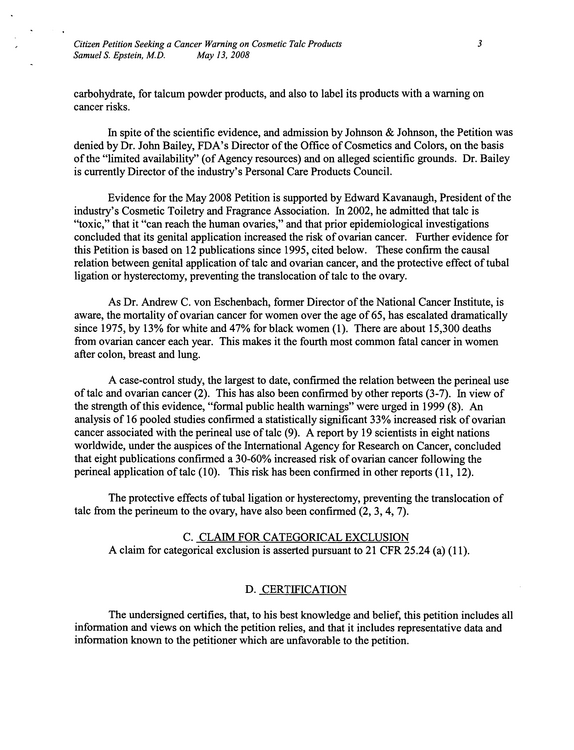
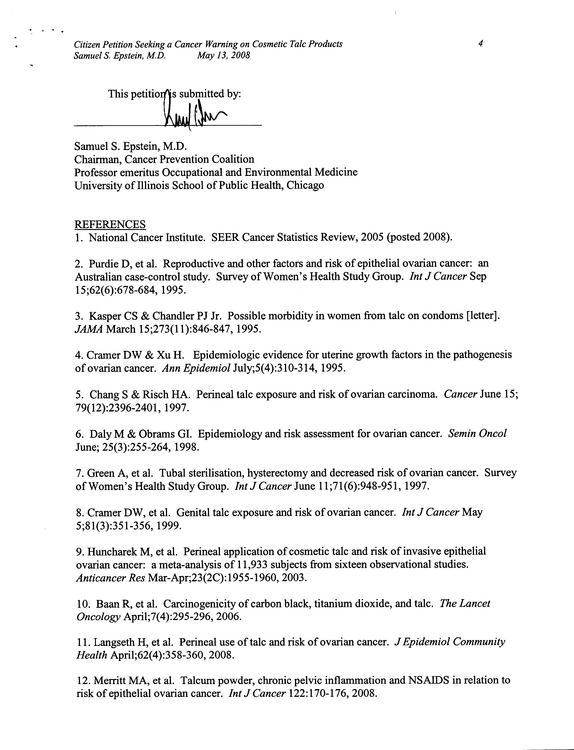
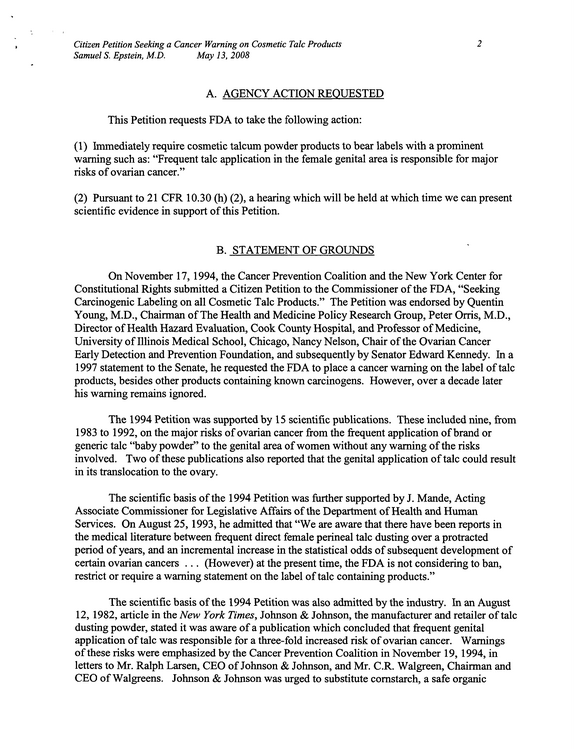
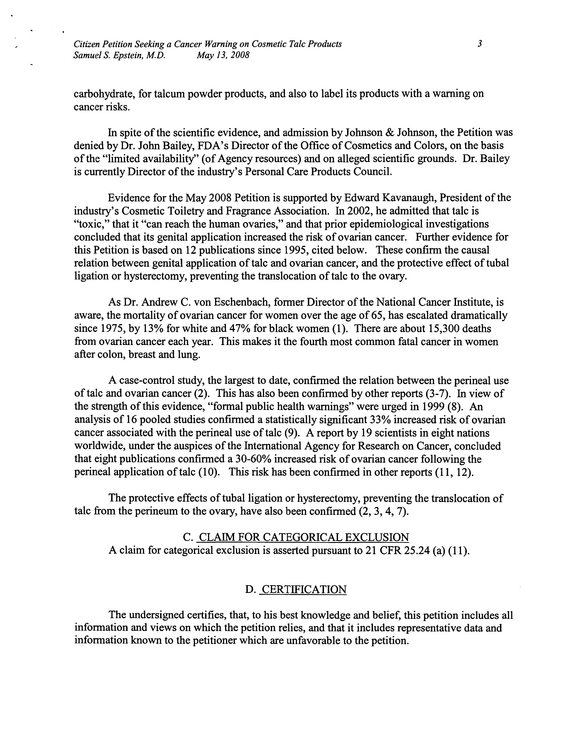
Evidence for the May 2008 Petition is supported by Edward Kavanaugh, President of the industry's Cosmetic Toiletry and Fragrance Association.
refid# nk3ber6kLZZYQYZyoGzLYvQMR6 pages
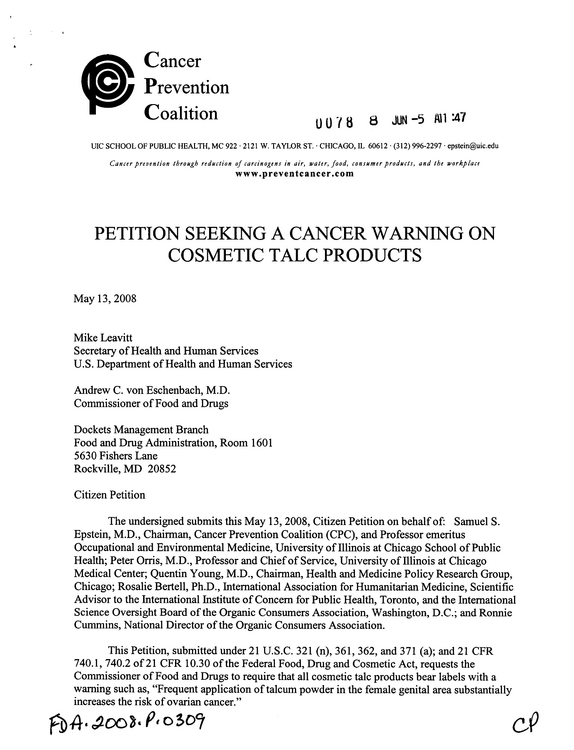
Evidence for the May 2008 Petition is supported by Edward Kavanaugh, President of the industry's Cosmetic Toiletry and Fragrance Association.
refid# jyKqZJjyQX4XywoXwgDGp5OGQ6 pages
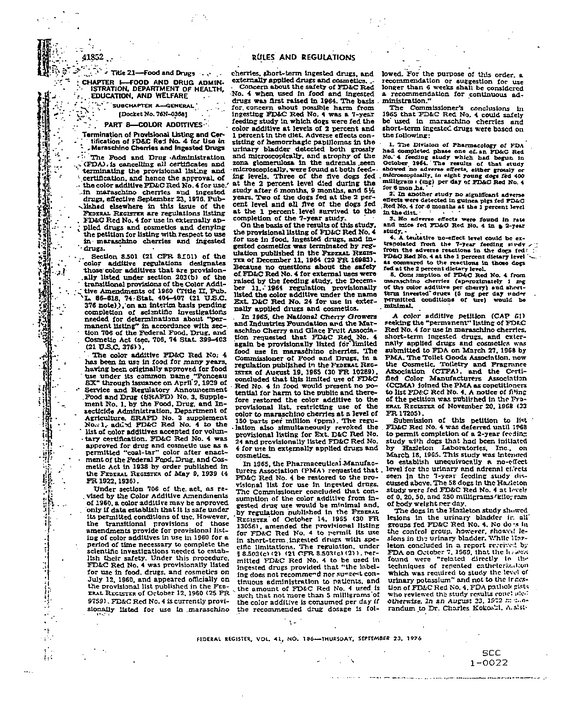
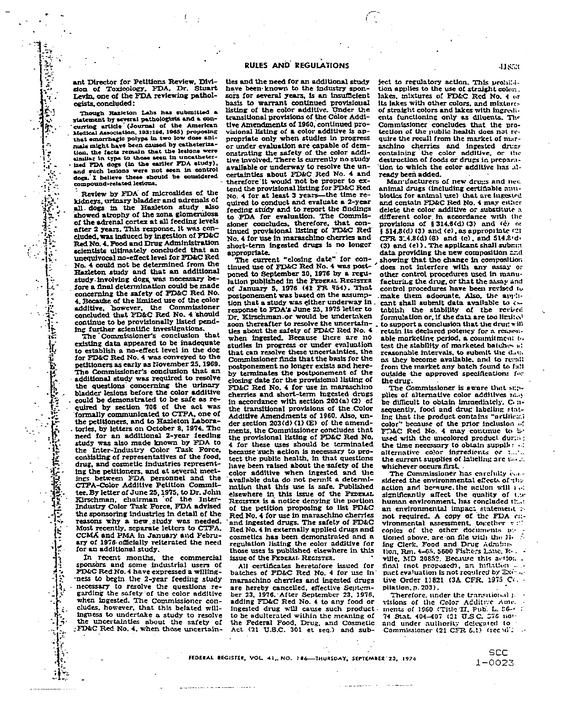
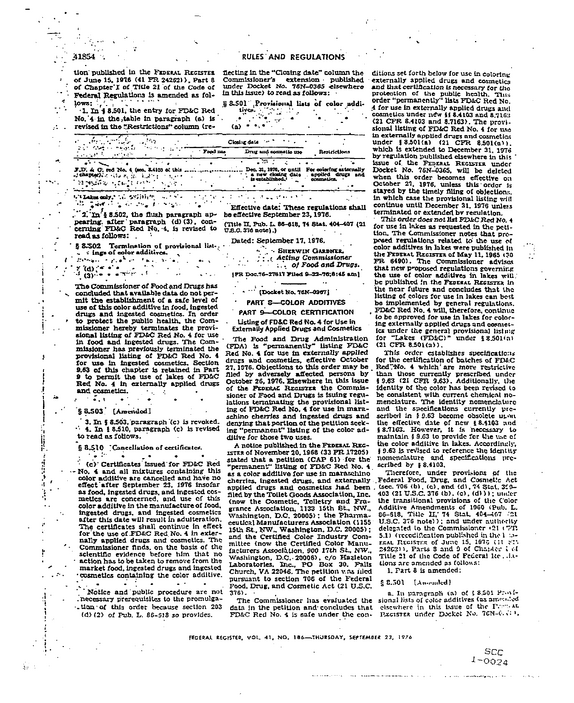
Toiletry and Fragrance Association (CTFA). and the Certi fied Color Manufacturers Association (CCMA) joined the PMA as copetitioners to list FD&C Red No. 4.
refid# OERBkg0bmEp0Yve5kjKnK6Mjj18 pages
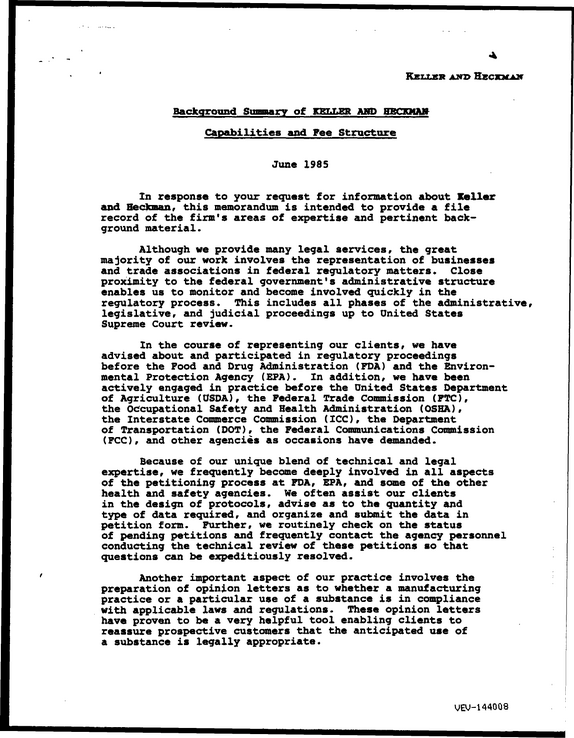
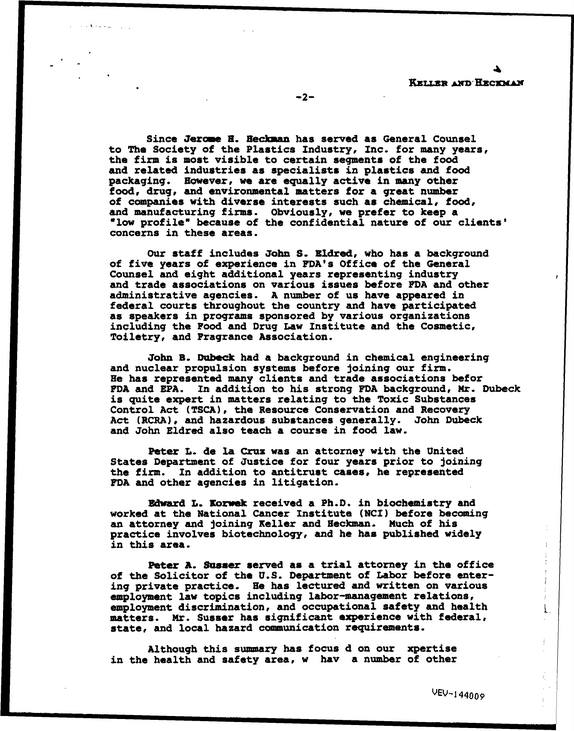
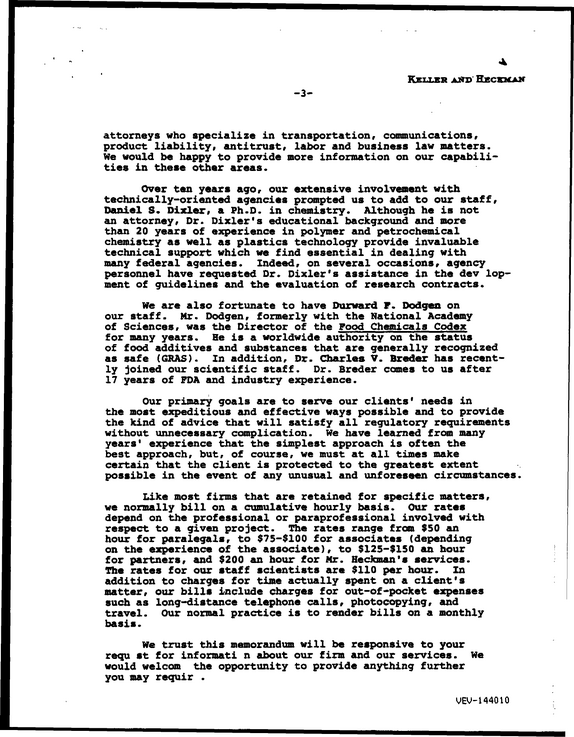
A number of us have appeared in federal courts throughout the country and have participated as speakers in programs sponsored by various organizations including the Food and Drug Daw Institute and the Cosmetic, Toiletry, and Fragrance Association.
refid# k65N63OgMdDanBQ8M700Nbjdb3 pages
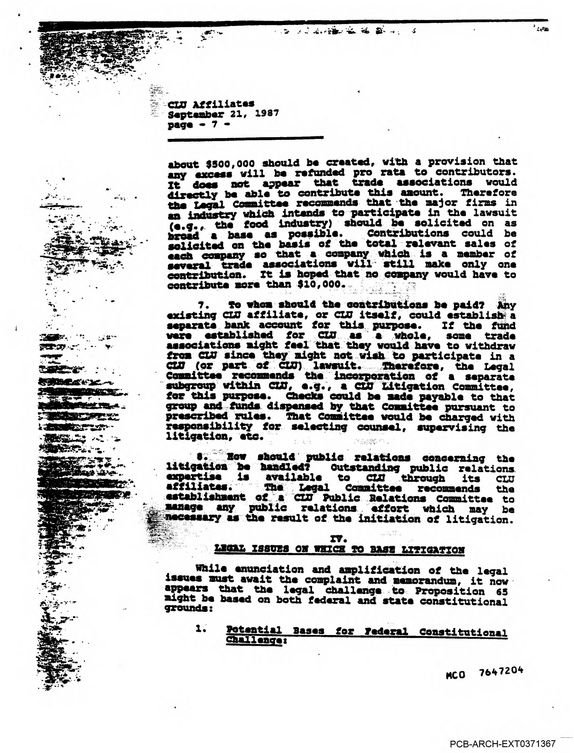
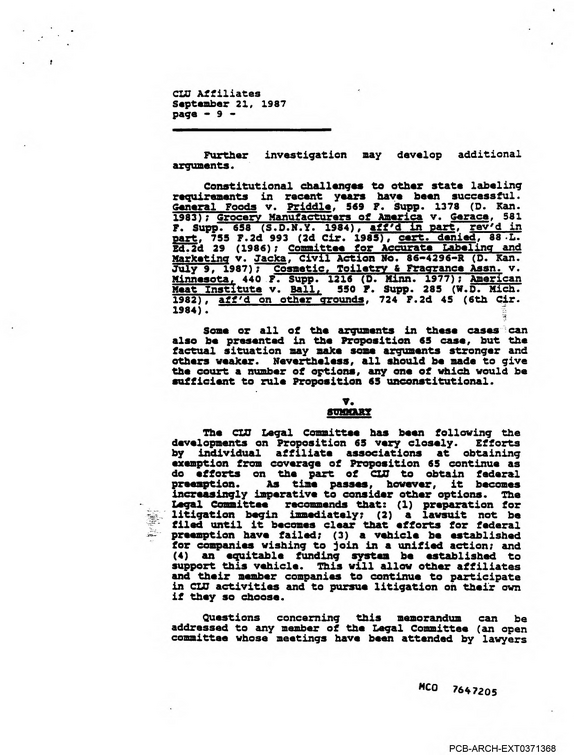
July 9, 1987); Cosmetic, Toiletry & Fragrance Assn, v.
refid# yrKD71kGvwqO174EN43GDK3Ln4 pages
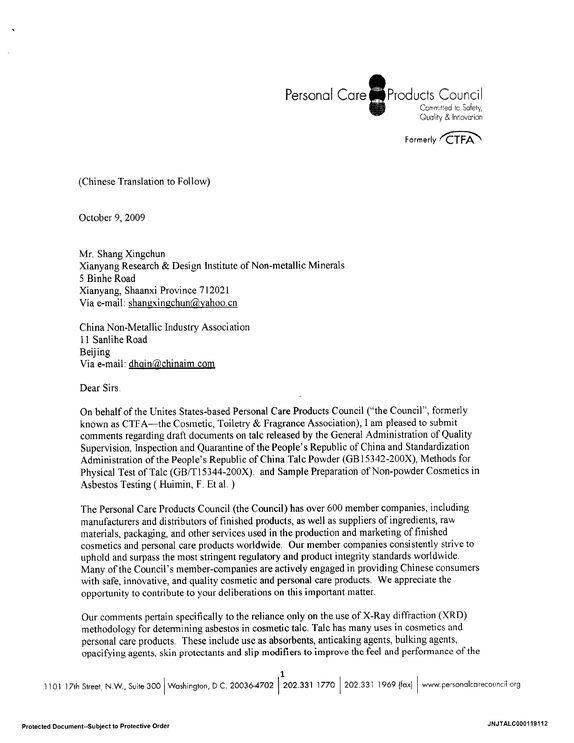
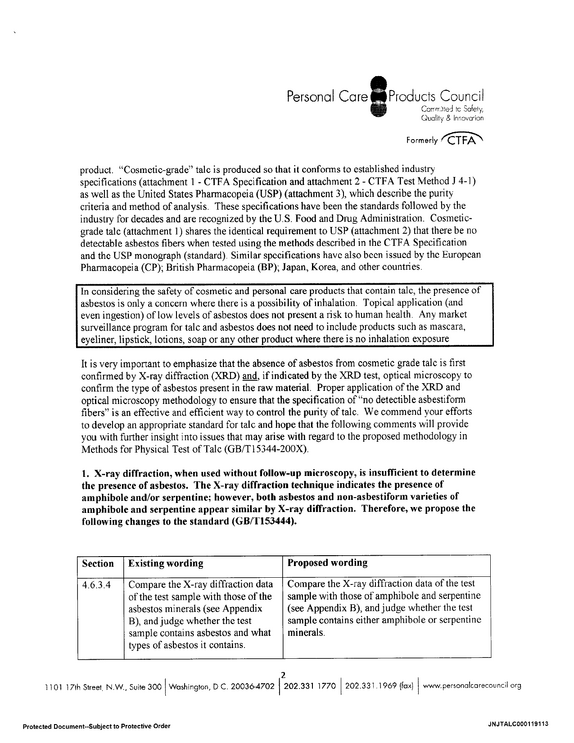
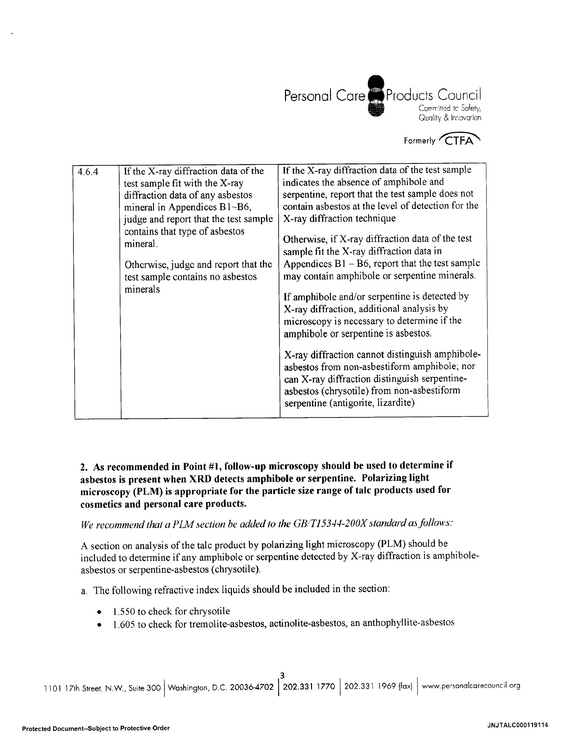
Shang Xingchun Xianyang Research & Design Institute of metallic Minerals 5 Binhe Road Xianyang Shaanxi Province 712021 V^>amail shangxingchun@yahoo.cn China Metallic Industry Association 11 Sanlihe Road Beijing Via mail dhqin@chinaim.com Dear Sirs On behalf of the Unites States Personal Care Products Council the Council formerly known as CTFA Cosmetic Toiletry & Fragrance Association I am pleased to submit comments regarding draft documents on talc released by the General Administration of Quality Supervision Inspection and Quarantine of the People's Republic of China and Standardization Administration of the People's Republic of China Talc Powder GB15342-200X Methods for Physical Test of Talc T15344-200X and Sample Preparation of powder Cosmetics in Asbestos Testing ( Huimin F.
refid# 6BakZjJzbr6GrxgjkjY2RDEZd8 pages