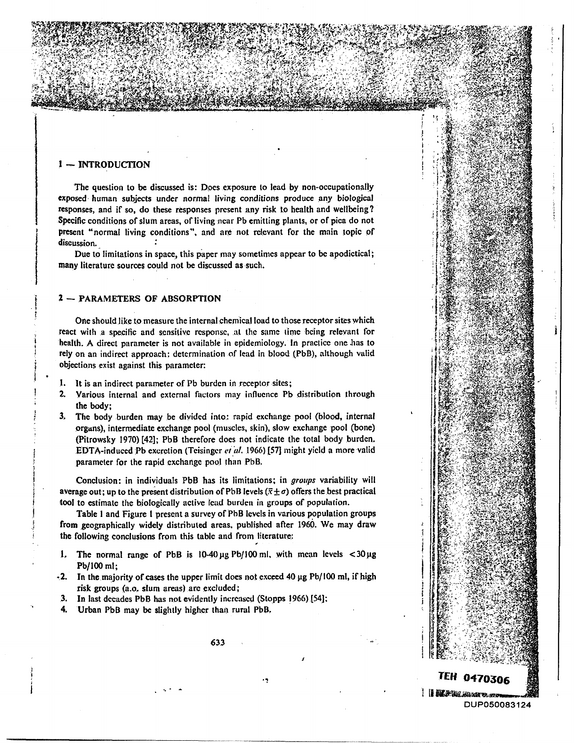
Sweden USA. 196 80 30 27 IS 746 children Fig. 1 -- PbB levels; 3e2<r (--|--) or range {----) in various countries, published after 1960, The question to be discussed may now be rephrased as follows: Does an internal chemical load as indicated by PbB levels up to 40 pg Pb/100 ml present any risk to public health?
refid# EvJZwdrz2ZZnrbeXLGde96yZV24 pages
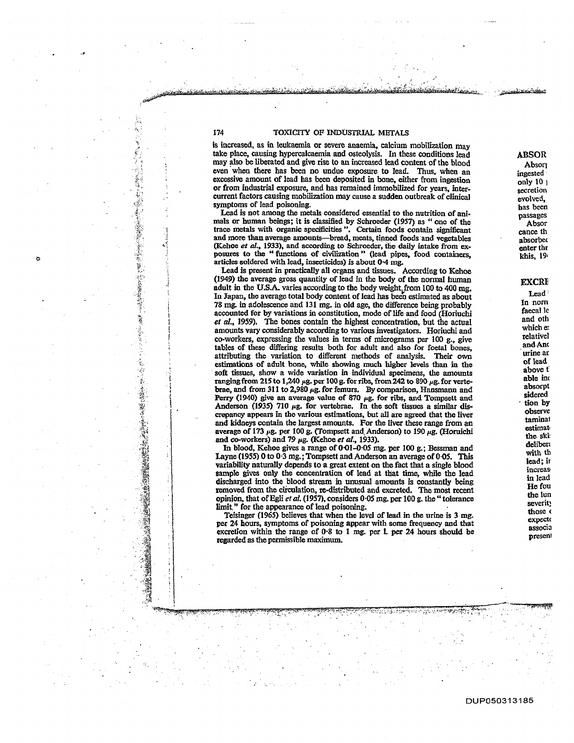
(Kehoe et al., 1933).
refid# YG79BRxYb6jGDge1D4Gwv1K1D29 pages
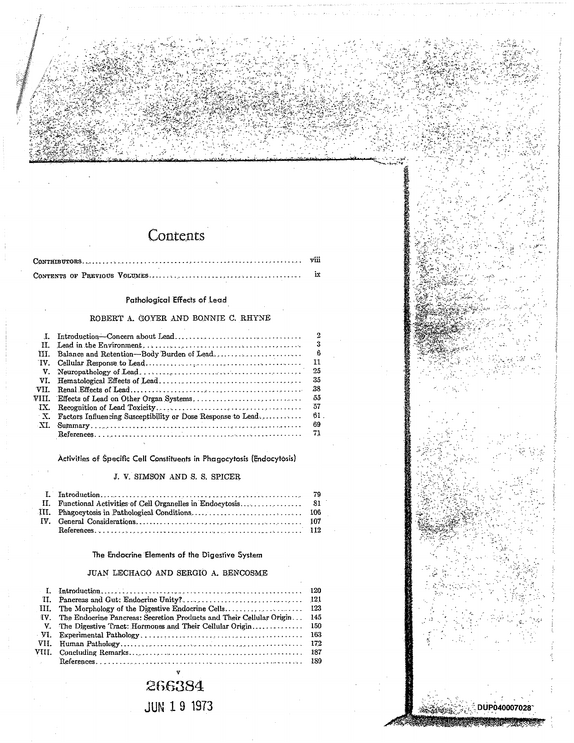
BIOLOGICAL EFFECTS OF LEAD EXPOSURE...................................................................................... 12.1 INTRODUCTION....................................................................................................................... 12.2 SUBCELLULAR EFFECTS OF LEAD IN HUMANS ANDEXPERIMENTAL ANIMALS ......................... 12.2.1 Effects of Lead on the Mitochondrion......................................................... 12.2.1.1 Effects of Lead on Mitochondrial Structure .......................... 12.2.1.2 Effects of Lead on Mitochondrial Function ............................ 12.2.1.3 In Vivo Studies............................................................................. 12.2.1.4 In Vitro Studies ............................................................................ 12.2.2 Effects of Lead on the Nucleus ............................................. 12.2.3 Effects of Lead on Membranes......................................................................... 12.2.4 Other Organellar Effects of Lead................................................................ 12.2.5 Summary of Subcellular Effects of Lead.................................................... 12.3 EFFECTS OF LEAD ON HEME BIOSYNTHESIS AND ERYTHROPOIESIS/ERYTHROCYTE PHYSIOLOGY IN HUMANS AND ANIMALS ................................................................................ 12.3.1 Effects of Lead on Heme Biosynthesis ......................................................... 12.3.1.1 Effects of Lead on 6-Aminolevulinic Acid Synthetase ......... 12.3.1.2 Effects of Lead on 6-Aminolevulinic Acid Dehydrase and ALA Accumulation/Excretion ......................................................... 12.3.1.3 Effects of Lead on Heme Formation from Protoporphyrin ... 12.3.1.4 Effects of Lead on Coproporhyrin................ 12.3.2 Effects of Lead on Erythropoiesis and Erythrocyte Physiology .......... 12.3.2.1 Effects of Lead on Hemoglobin Production .............................. 12.3.2.2 Effects of Lead on Erythrocyte Morphology and Survival .. 12.3.2.3 Effects of Lead on Pyrimidine-51-Nucleotidase Activity and Erythropoietic Pyrimidine Metabolism........................ 12.3.3 Effects of Alkyl Lead on Heme Synthesis and Erythopoiesis ................ 12.3.4 The Interrelationship of Lead Effects on Heme Synthesis and the Nervous System.......................................................................................... 12.3.5 Interference with Vitamin D Metabolism and Associated Physiological Processes ................................................ 12.3.5.1 Relevant Clinical Studies ........................................................... 12.3.5.2 Experimental Studies...................................................................... 12.3.5.3 Implications of Lead Effects on Vitamin D Metabolism .... 12.3.6 Summary and Overview............................................. ....... ................................... 12.3.6.1 Lead Effects on Heme Biosynthesis ........................................... 12.3.6.2 Lead Effects on Erythropoiesis and Erythrocyte Physiology ................................................................. 12.3.6.3 Effects of Lead on Erythropoietic Pyrimidine Metabolism........................................................................................ 12.3.6.4 Effects of Alkyl Lead Compounds on Heme Biosynthesis and Erythropoiesis ........................................................................ 12.3.6.5 Relationships of Lead Effects on Heme Synthesis and Neurotoxicity ......... 12.3.6.6 Summary of Effects of Lead on Vitamin D Metabolism .......... 12.4 NEUROTOXIC EFFECTS OF LEAD............................................................................................ 12.4.1 Introduction ....................................................................................................... 12.4.2 Human Studies ........................................... 12.4.2.1 Neurotoxic Effects of Lead Exposure in Adults ................... 12.4.2.2 Neurotoxic Effects of Lead Exposure in Children ................ v m ix ix 12-1 12-1 12-3 12-4 12-4 12-5 12-5 12-7 12-8 12-9 12-10 12-10 12-13 12-13 12-14 12-15 12-20 12-27 12-28 12-28 12-29 12-31 12-33 12-34 12-37 12-38 12-39 12-40 12-43 12-43 12-48 12-48 12-49 12-49 12-50 12-52 12-52 12-53 12-56 12-68 TEH 0410771 DUP050452822 TABLE OF CONTENTS (continued). 12.5 12.6 12.4.3 Animal Studies ............. 12.4.3.1 Behavioral Toxicity: Critical Periods for Exposure and Expression of Effects ................................................................... 12.4.3.2 Morphological Effects .................................................................. 12.4.3.3 Electrophysiological Effects ..................................................... 12.4.3.4 Biochemical Alterations ...................................... 12.4.3.5 Accumulation and Retention of Lead in the Brain ................ 12.4.4 Integrative Summary of Human and Animal Studies of Neurotoxicity .. 12.4.4.1 Internal Exposure Levels at Which Adverse Neurobehavioral Effects Occur ................................................... 12.4.4.2 The Question of Irreversibility ............................................... 12.4.4.3 Early Development and the Susceptibility to Neural Damage .................................................................................. 12.4.4.4 Utility of Animal Studies in Drawing Parallels to the Human Condition ................................................................
refid# 9pYm9p9z4QJ1eb8x1100VNDR454 pages
Subsequently, aminoaciduria in children with acute lead poisoning was observed by Marsden and 'Wilson (1955) in England, and Chisolm (1962) found that 9 of 23 children with lead encephalopathy had aminoaciduria, glycosuria, and hypophosphatemia.
refid# xdxegZONY4L9JjJ9br3ge54R026 pages
In 1986 in Baltimore the average cost per hospitalization of children with lead paint poisoning was over $10,000 and many of these children had multi ple recurrences with multiple hospital admissions.6 In 1984 Maryland spent over $3.9 million for treatment and special education of children with lead poisoning.7 In the United States a?
refid# npZaqKzwanQeDgB3NZ2w9bK7X37 pages
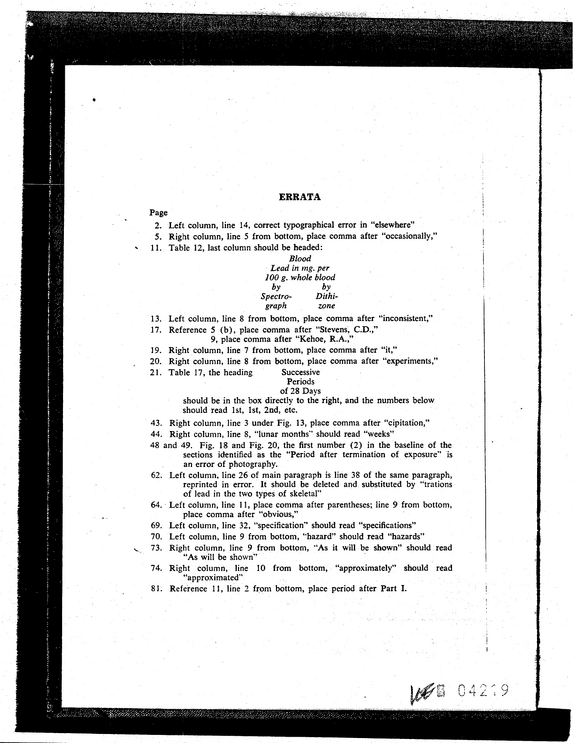
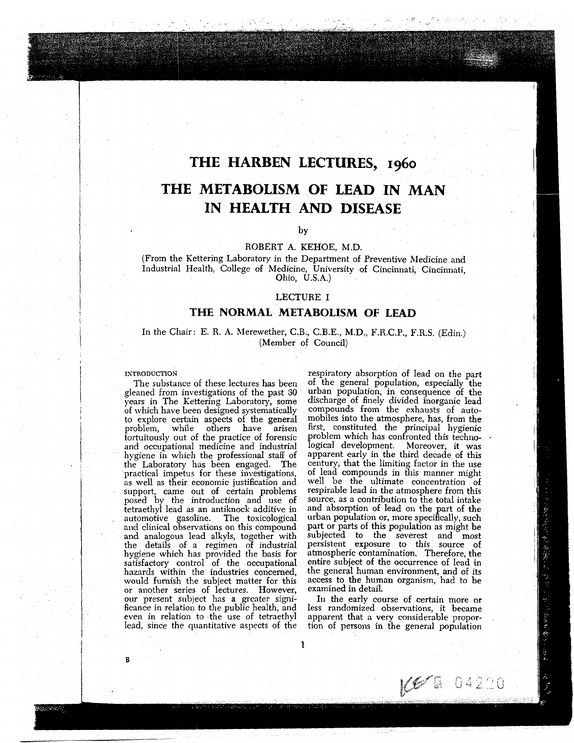
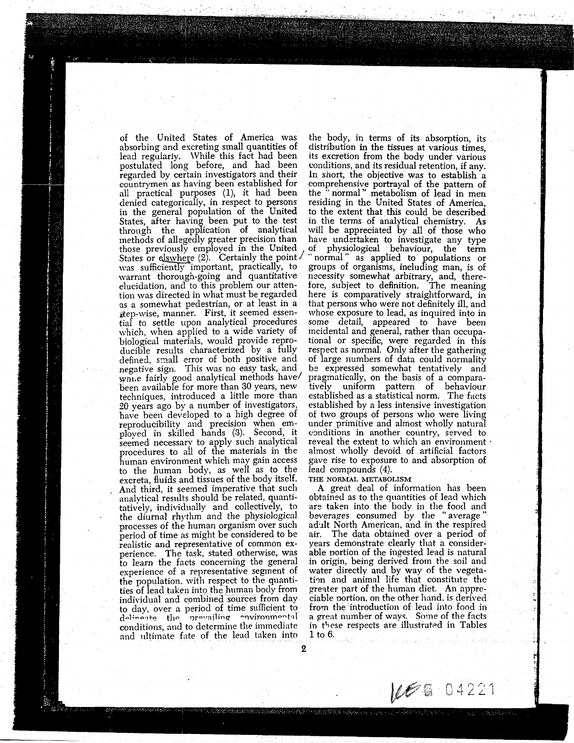
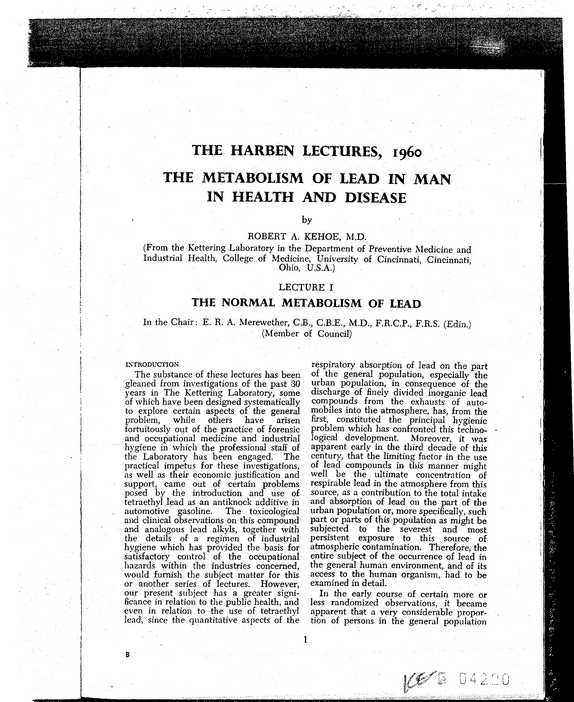
KEHOE, M.D.
refid# dYmg1mEKKyxDqeYjxOraK5pO081 pages
KEHOE, M .D .
refid# mpqZ0ZOY545gqzBE3oEd35Vm081 pages
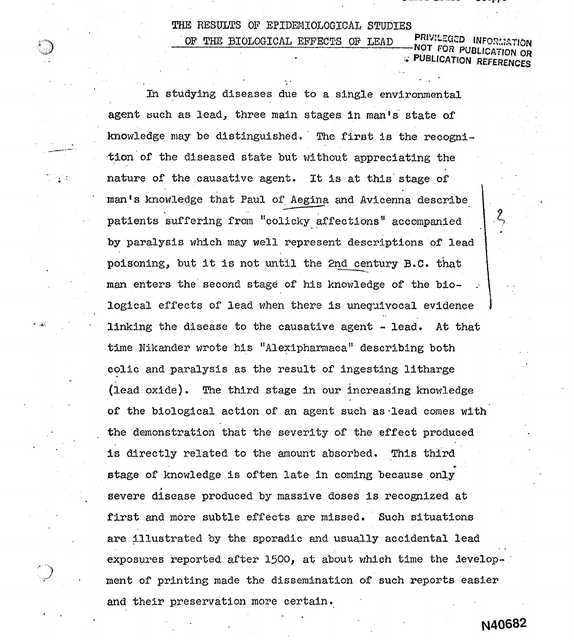
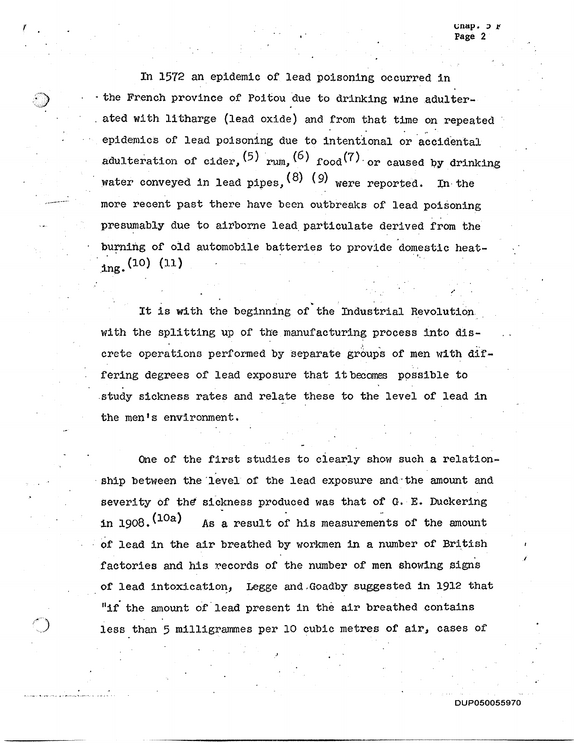
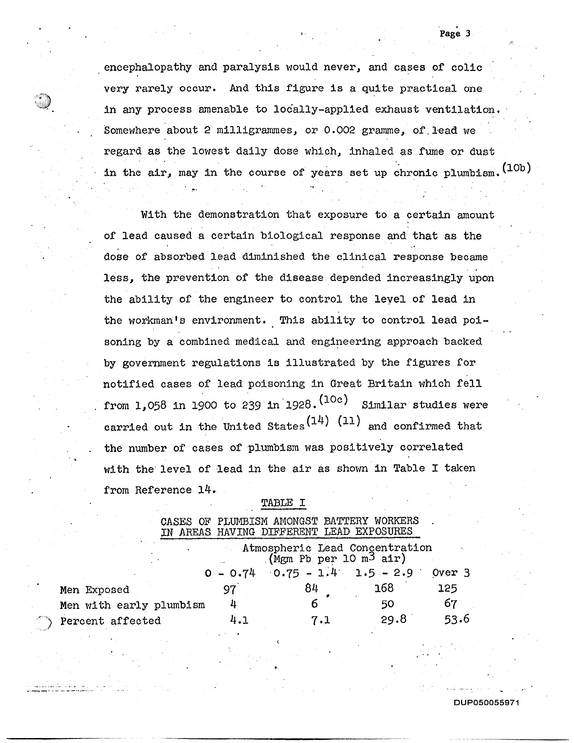
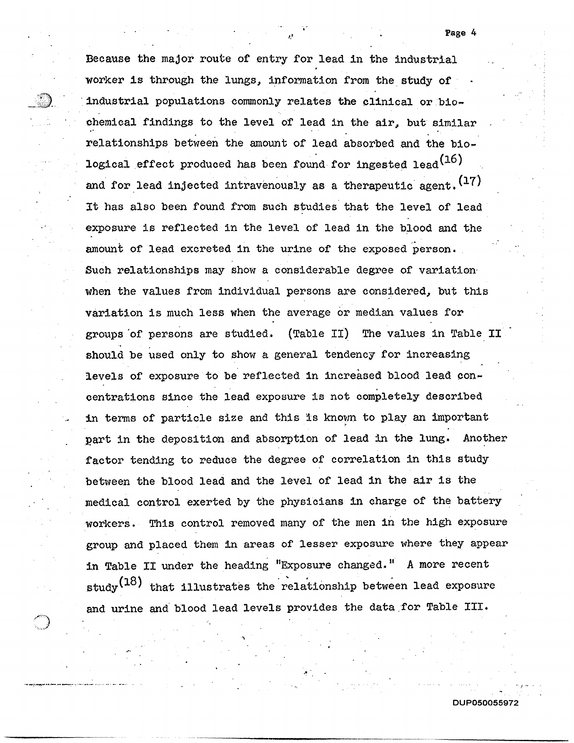
First Draft - Stepps THE RESULTS OP EPIDEMIOLOGICAL STUDIES OF THE BIOLOGICAL EFFECTS OF LEAD INFORMATION ... ........ ......' ....... - ' ------------------ ------ ---------------- K, JP PUBLICATION OR * p u b l ic a t io n REFERENCES In studying diseases due to a single environmental agent such as lead, three main stages in man's state of knowledge may he distinguished.
refid# 9Q42x6OeBG321bqYnNXx7G3p36 pages
CHILDREN BY LEAD SOURCE A.

refid# 65j2oR9wb1vgYRwVpMbJgeXvo540 pages
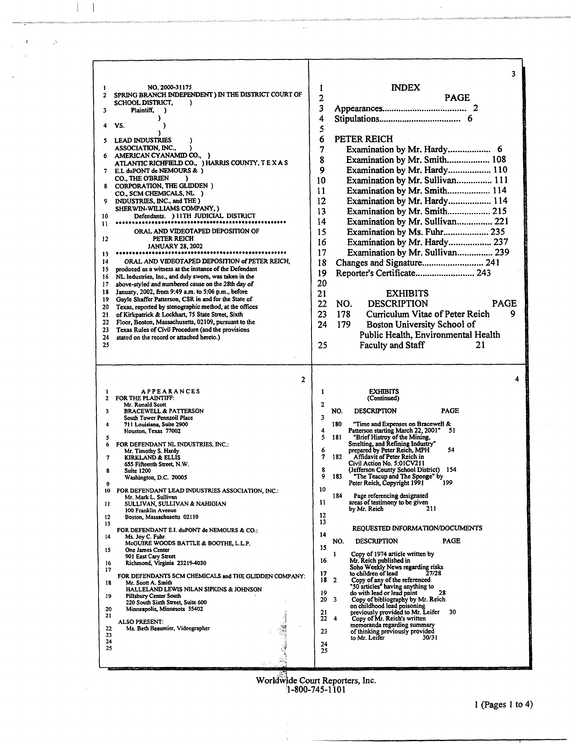
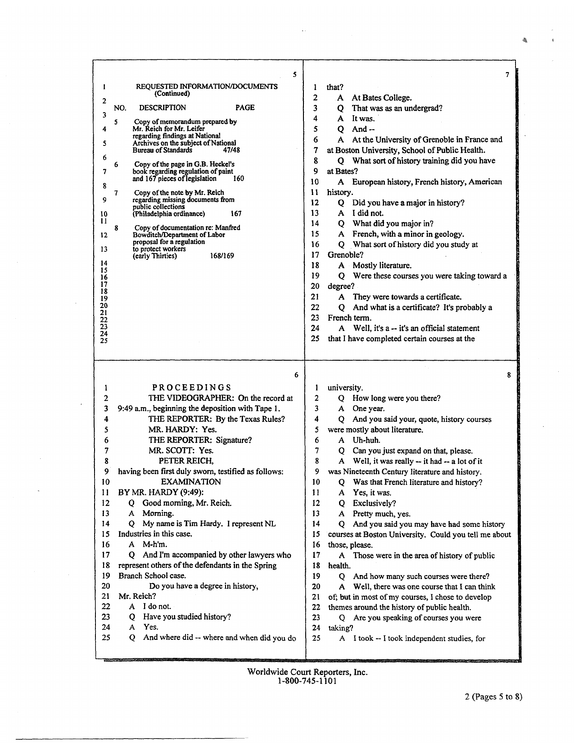
Reich published in Soho Weekly News regarding risks 17 to children of lead 27/28 18 2 Copy of any of the referenced "50 articles" having anything to 19 do with lead or lead paint 28 20 3 Copy ofbibliography by Mr.

refid# v1QRQJewdbK6xZZRm9jpeBLKb84 pages
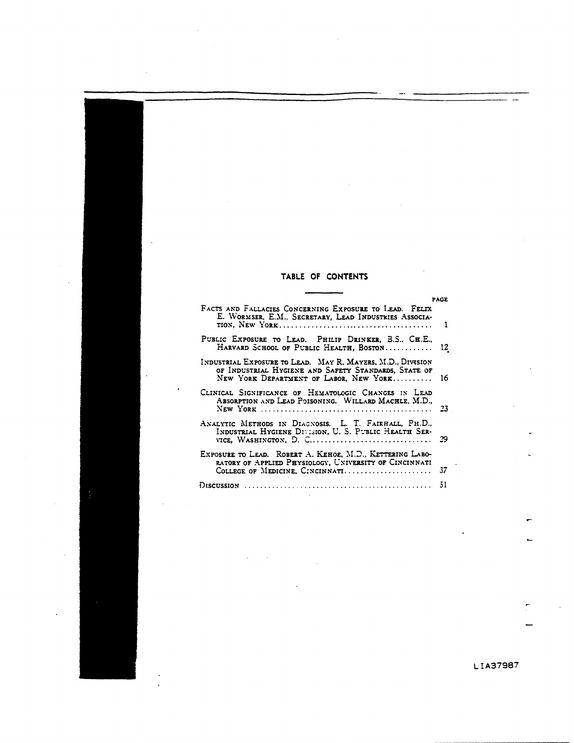
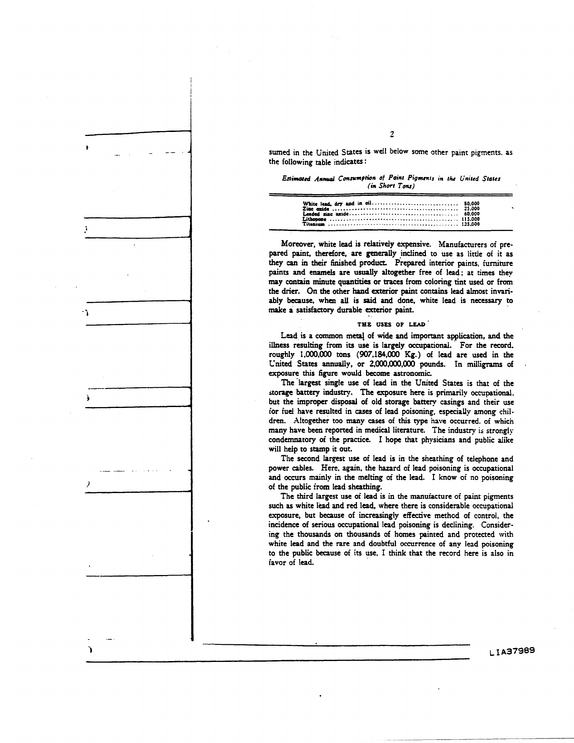
TABLE OF CONTENTS PAGE Fa c t s a n d Fa l l a c ies Co n c e r n in g Ex p o s u r e t o I-e a d .

refid# NeoN6JKQd8pQ3og1Koj23JdBb56 pages
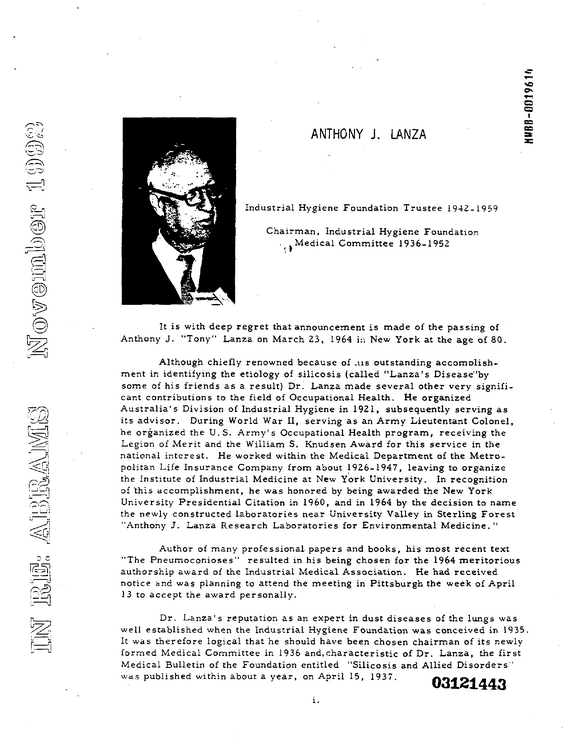
HWBB-0019612 S-n L--J Industrial Hygiene Digest INDUSTRIAL HEALTH NEWS <6 LITERATURE ABSTRACTS 5 MEDICAL ENGINEERING CHEMICAL TOXICOLOGICAL LEGAL MAY, 1964 (VoL 28, No. 5) INDUSTRIAL HYGIENE FOUNDATION MELLON INSTITUTE 4400 FIFTH AVENUE PITTSBURGH, PA. 15213 03121440 il U I- j !
refid# RpD259yaLbmgxNwV85MOdLbYz45 pages
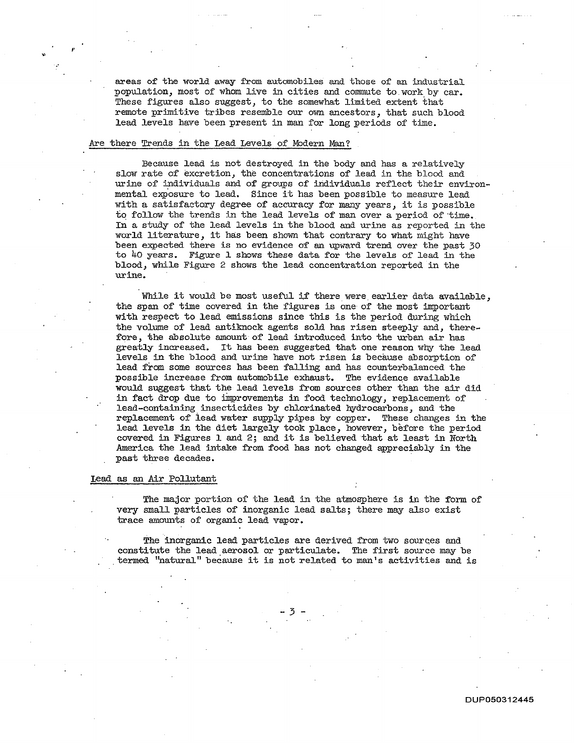
Memorandum Compiled for Hearing Before the California Legislature Assembly Committee on Transportation Subcommittee on Air Pollution , i Compiled byi Dr.
refid# LwvynnR2aR1gzXNrVrDdOra321 pages
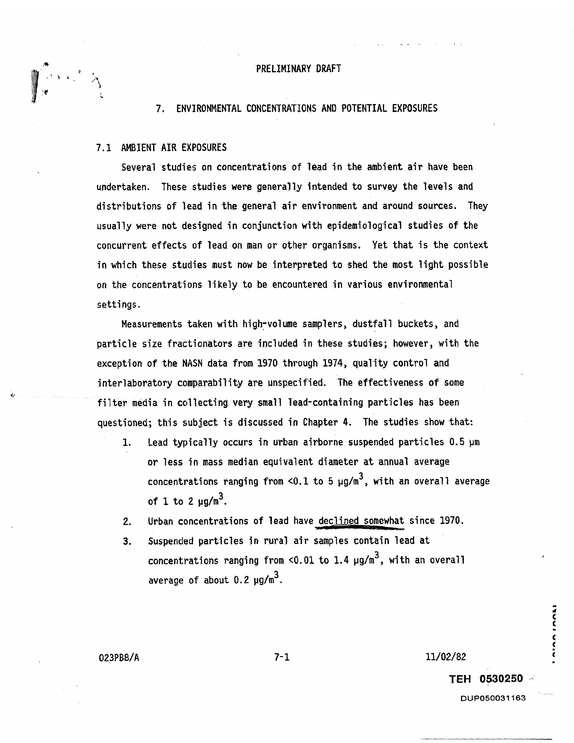
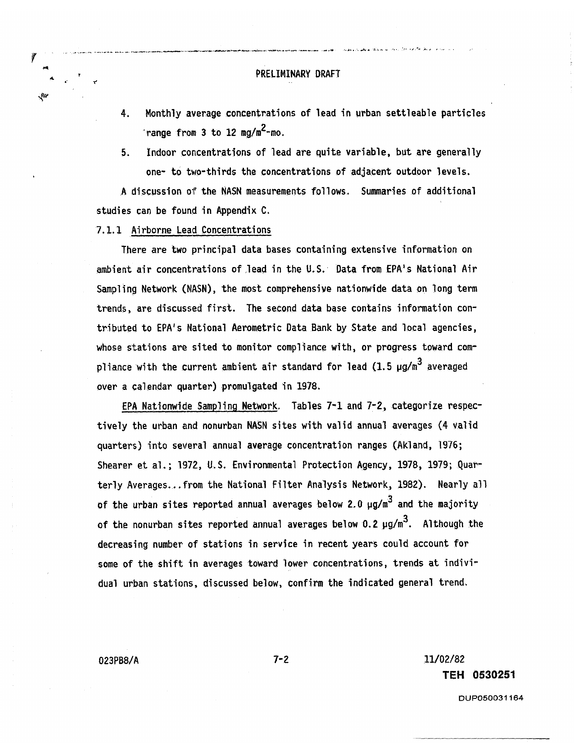
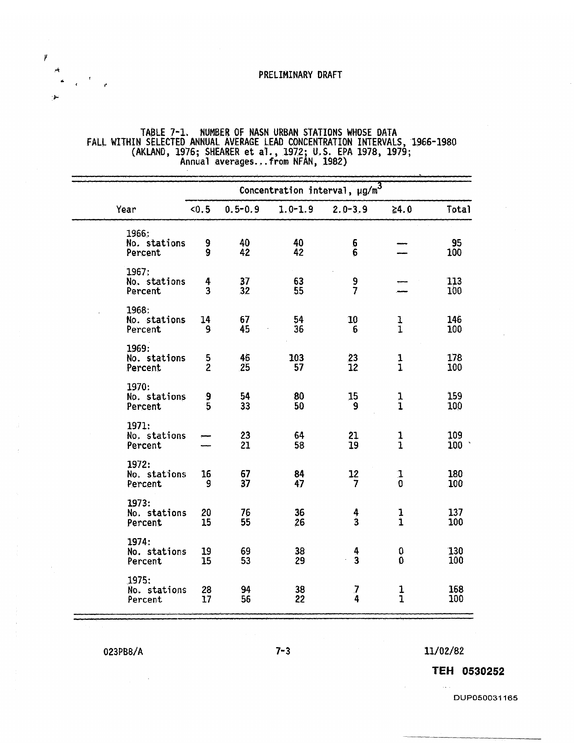
N33756 PRELIMINARY DRAFT \ 7, ENVIRONMENTAL CONCENTRATIONS AND POTENTIAL EXPOSURES 7.1 AMBIENT AIR EXPOSURES Several studies on concentrations of lead in the ambient air have been undertaken.

refid# DMapaxgQm7v5jBq6gzOx2yqmO96 pages
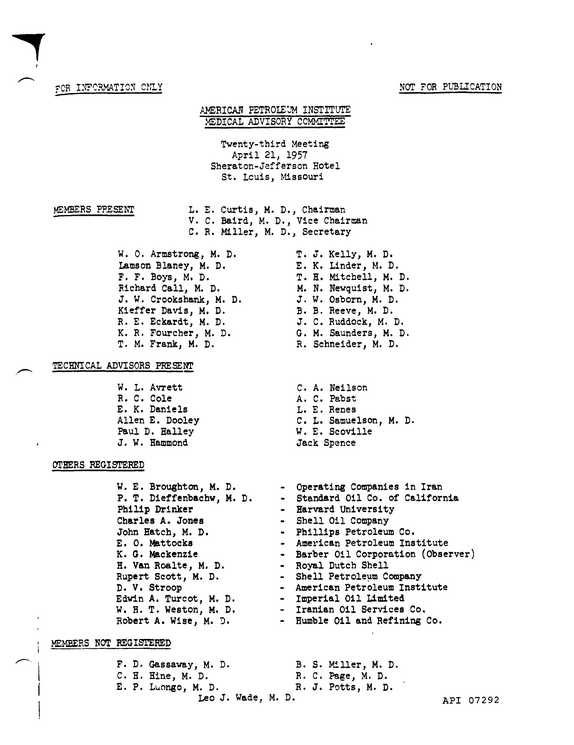
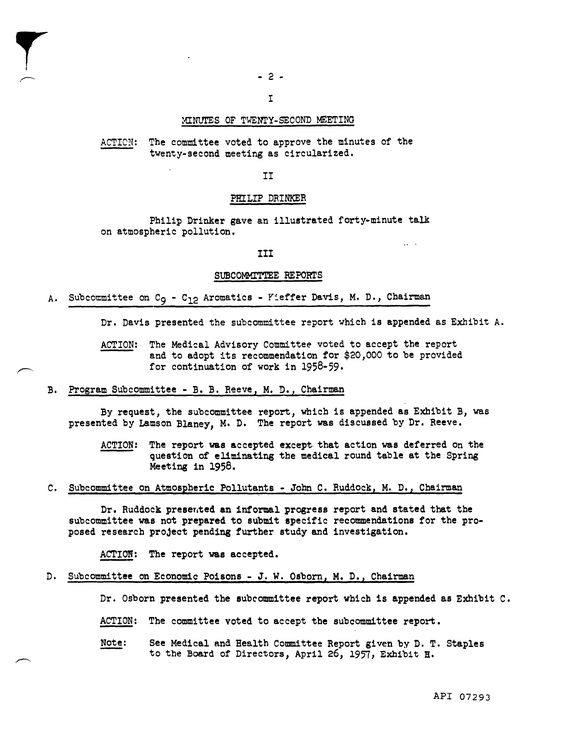
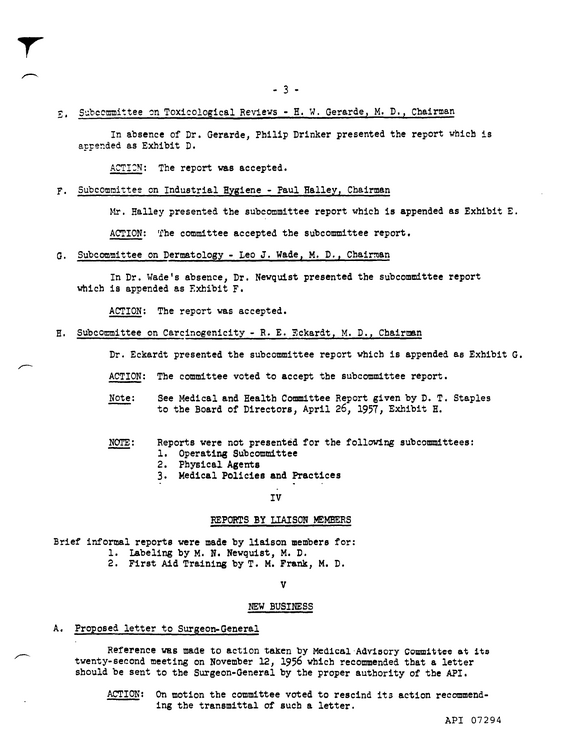
FILE NAME: Oil Industry and American Petroleum Institute (API) DATE: 1957 Apr 21 DOC#: API038 DOCUMENT DESCRIPTION: Minutes from API Medical Advisory Meeting with Attachments 'CR INFORMATION CNIY AMERICAN PETROLEUM INSTITUTE MEDICAL ADVISORY COMMITTEE Twenty-third Meeting April 21, 1957 Sheraton-Jefferson Hotel St.
refid# 9944rYgx4vLYGmpYVxeb2Eyk321 pages