Refine
Estimated Years UndatedClear
34,161 results foundRefine Search
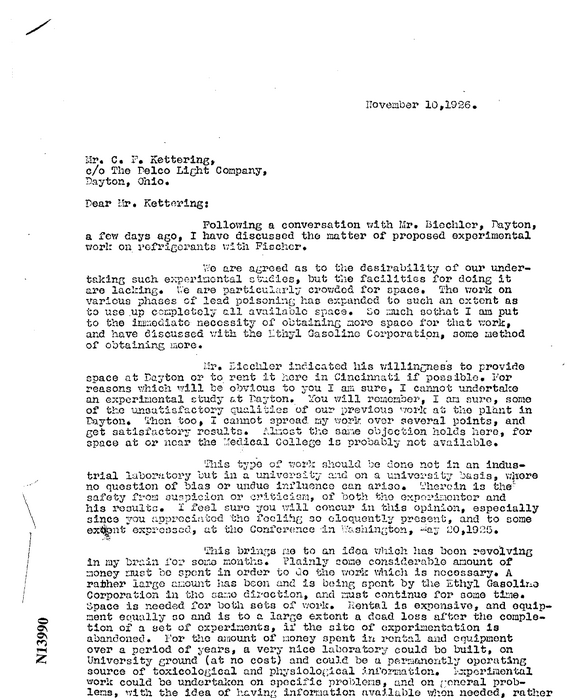
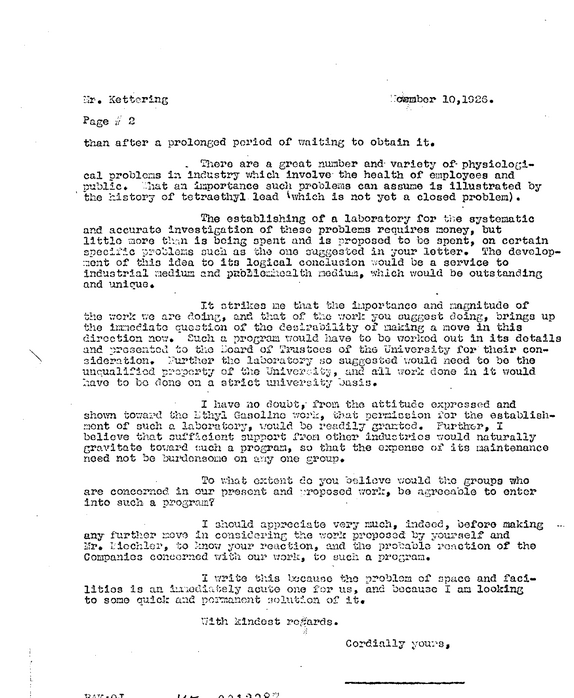
There are a great number and- variety of- physiologi cal problems in industry which Involve the health of employees and public* hat an importance such problems can assume is illustrated by the history of tetraethyl lead W h i c h is not yet a closed problem).
refid# 2jy7VM4QxVDG98aRneqbzgoD52 pages
Because its con tinuous research, high engineering stand ards and exclusive specialization have been consistently maintained, AAF equipment is used by leading companies in nearly every industry and is specified by leading architects and engineers for use in commercial and industrial air conditioning.

refid# 446OGOOVMYYBEJx24yz37EmeR1 page
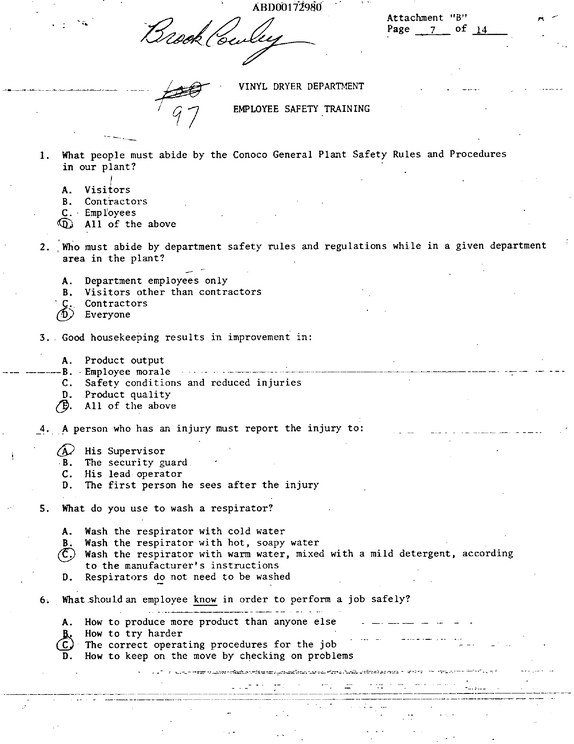
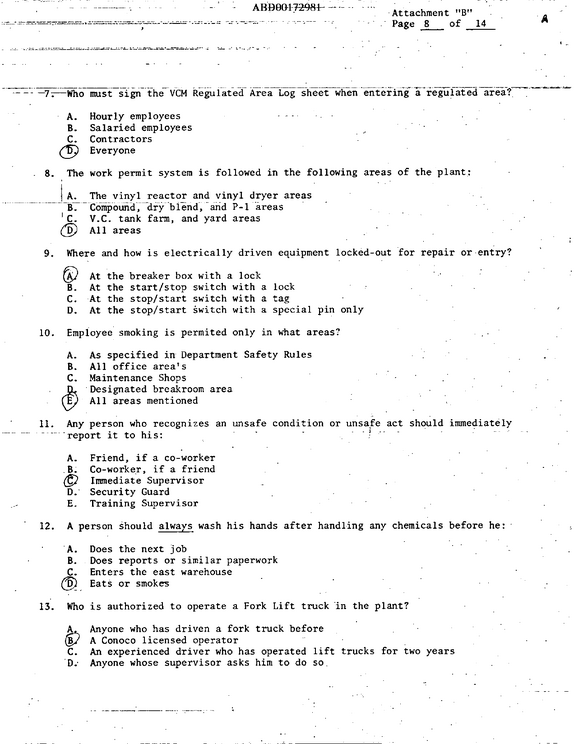
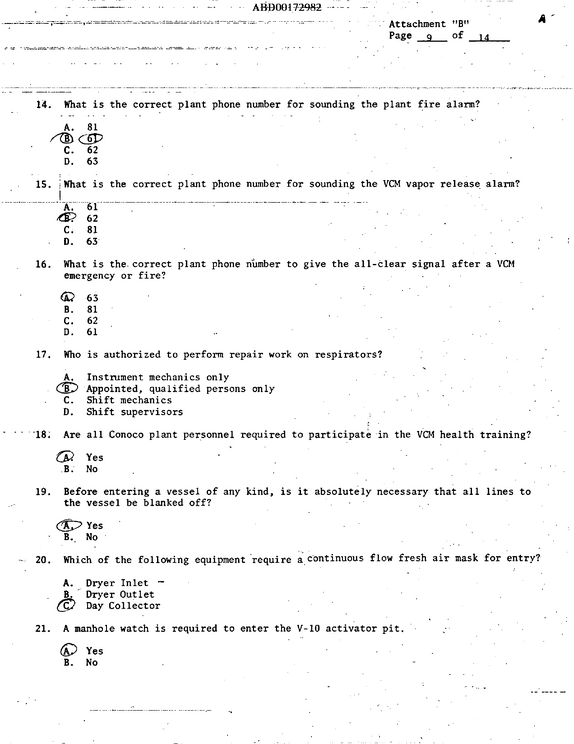
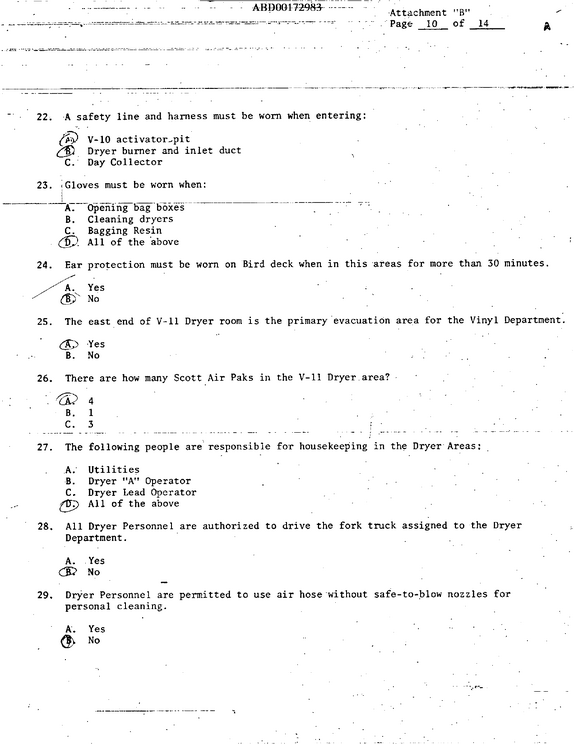
D7) Utilities Dryer "A" Operator Dryer Lead Operator All of the above 28.
refid# b5xRVwoaEqY2B9mG6xQeBbq364 pages
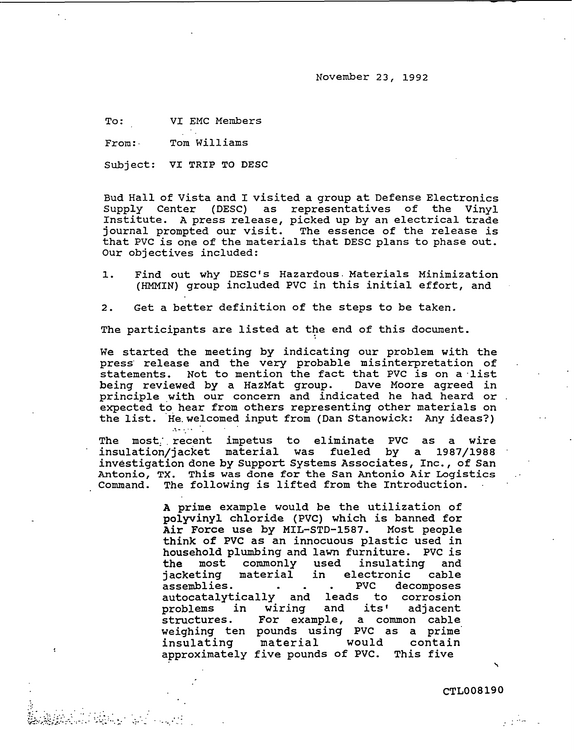
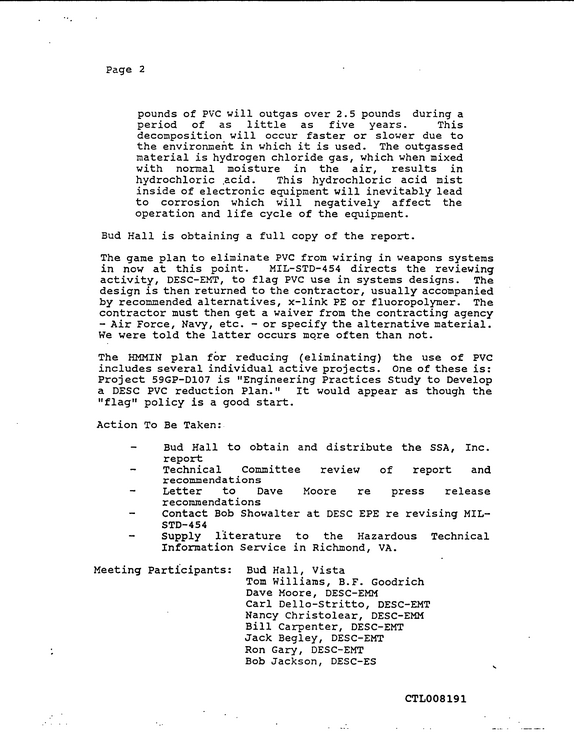
PVC decomposes autocatalytically and leads to corrosion problems in wiring and its' adjacent structures.
refid# n9kYYGrpa9NyvvQDp9zJYyxkz3 pages
Explosives should not be exposed to the direct rays of the sun Storage should be arranged so that the oldest explosives will be used first Ammonium nitrate requires special precau tions including stacking limitations, air space, and ventilation No oils or hydrocarbons are to be permitted near ammonium nitrate Packages of explosives should always be opened at least 50 ft from the magazine Only wood wedges and wood, fiber, rawhide, zinc, babbitt metal, or rubber mallets should be used to open cases of explosives Blasting caps or detonators of any kind should never be kept in the same magazine with other explosives Explosives and blasting supplies should al ways be kept in the magazines, never in any place where animals, unauthorized persons, or children can get at them Many children have been killed or crippled because they have obtained detonators from unwatched or unguarded sources Shipping and Receiving The supervisor of the shipping and re ceiving room must be aware of Department of Transportation (DOT) Regulations and labels Hazardous or flammable materials must be properly labeled and identified Bills of lading or shipping must identify the item Floors, ramps, and aisles Floors m warehouses, storerooms, and ship ping rooms must be level Unevenness of floors may lead to the toppling of piles of stored materials Safe floor load capacities and maximum heights to which specific materials may be piled should be posted conspicuously Where bulk material, boxes, or cartons of the same weight are regularly stored, it is good practice to paint a horizontal line on the wall indi cating the maximum height to which the ma terial may be piled The strength of floors should be checked before the use of power trucks is adopted.
refid# dYvvQKJBYGLV74E3oxB6Mzd301 page
When collecting dust from metalliz ing, it is sometimes necessary to provide wet dust arrester units back of the metal lizing booth Fume control for electric welding Movable exhaust hoods are needed for most indoor welding applications, and are a must when welding potentially toxic mate rials such as lead-containing or lead-painted metals, and beryllium alloys Except for production spot welding done at some sort of fixed jig, a welder usually travels over a wide area and this necessitates some ar rangement of flexible or movable piping The hood itself can have a rectangular face with a flared section to which the duct is connected, thus giving a streamlined air flow.
refid# gbD4L80yaXdx0zjwBZ9oLZkG1 page
Abuse of the cables for resistance weld ing is severe The producbon requirements demand the utmost of the cable materials used, and even the best cables need frequent replacement during a producbon year The cables are subjected to electrical pulsation, bending, and twisting Electncal pulses at the rate of 3,600 per minute cause a con tinuous whipping of the two cables which leads to fatigue and eventual breakdown.
refid# G68gr3xEE0b0emGp7kpezr2jV1 page
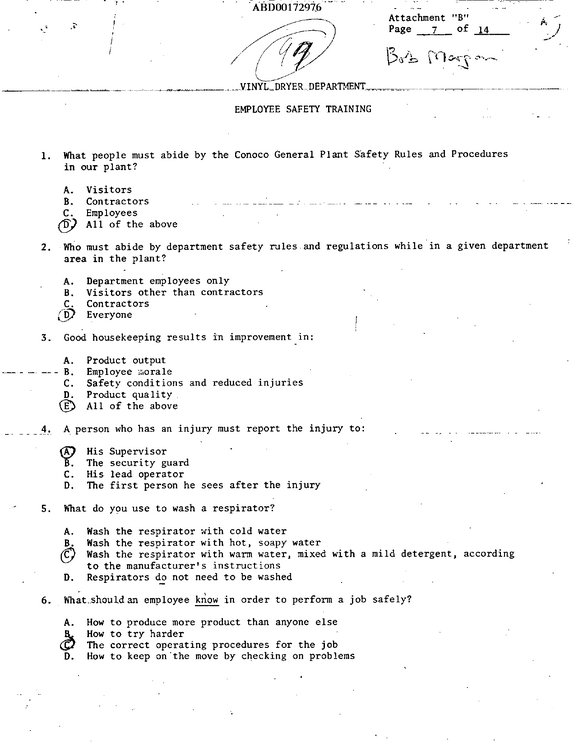
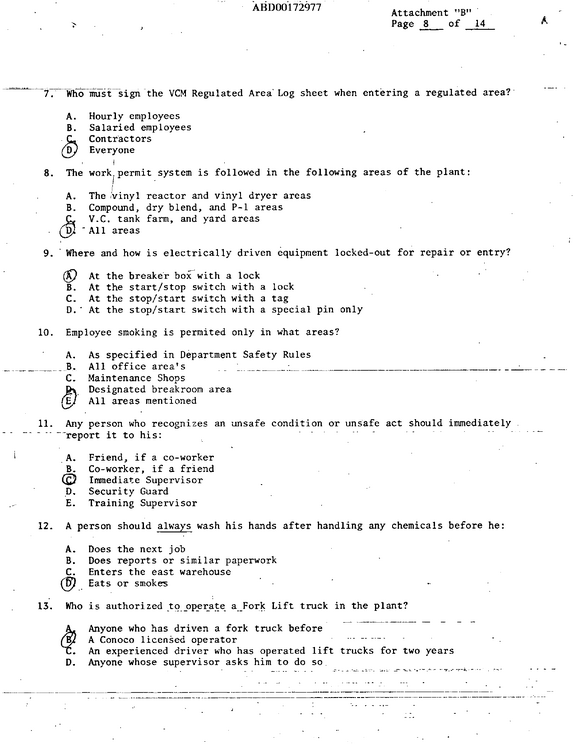
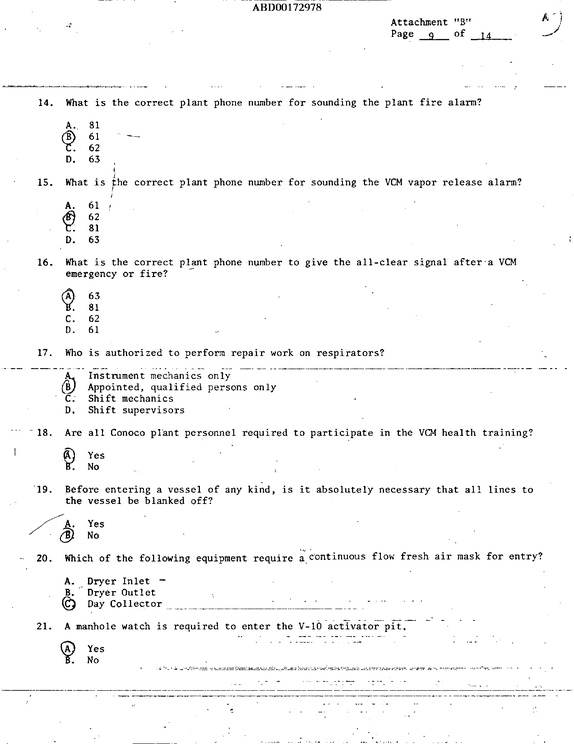
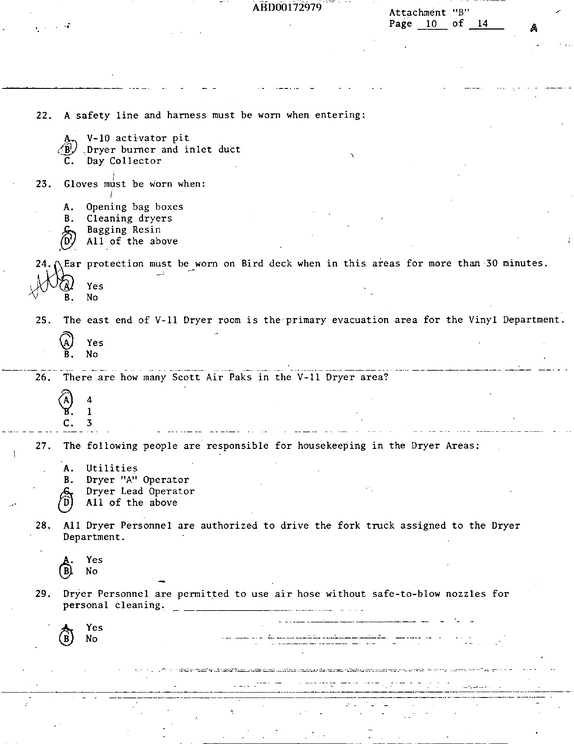
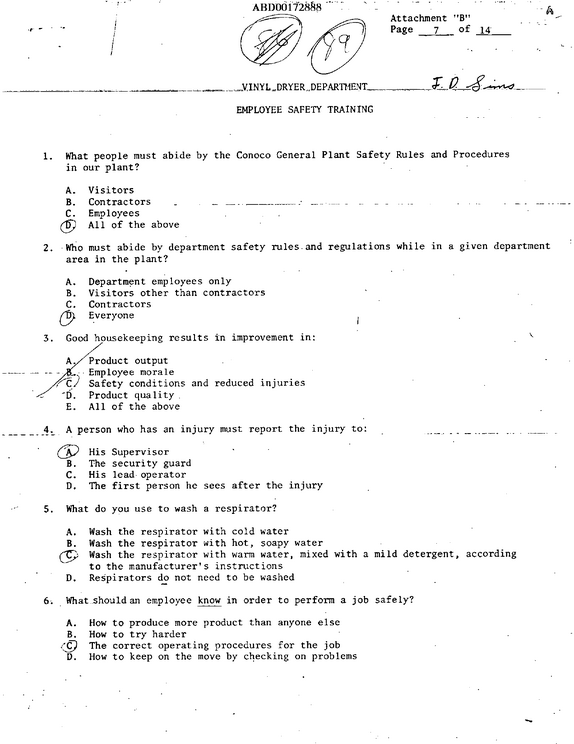
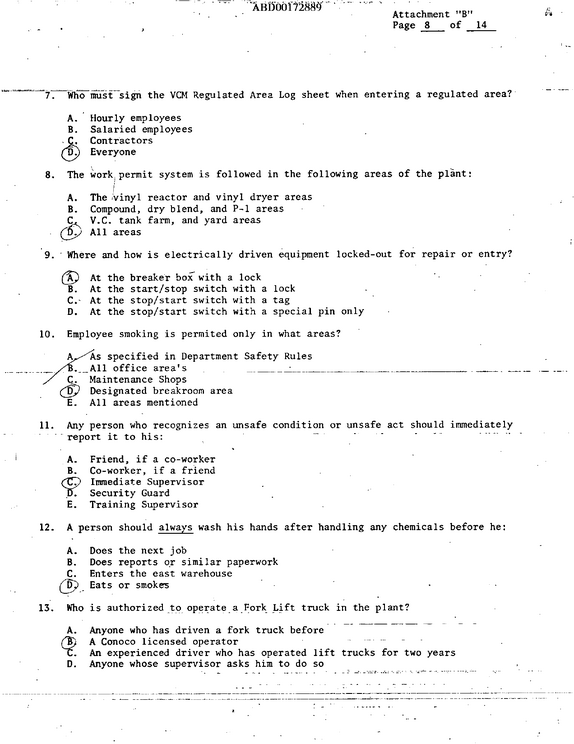
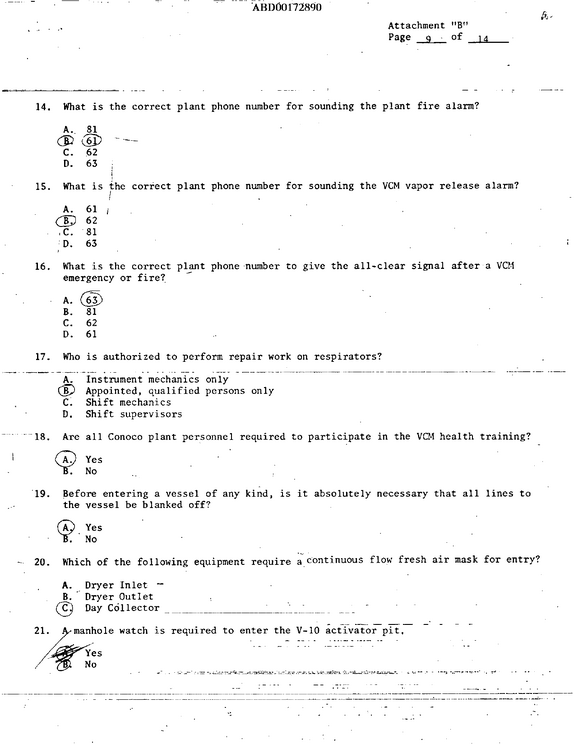
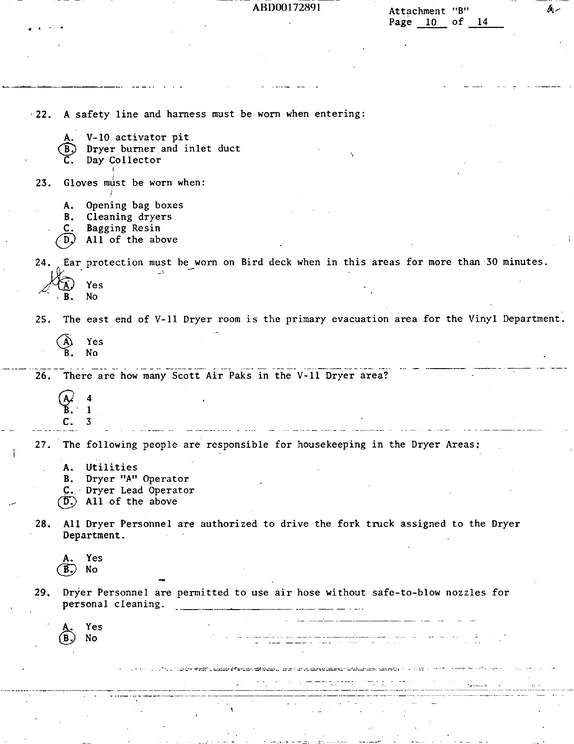
The following people are responsible for housekeeping in the Dryer Areas: Utilities Dryer "A" Operator Dryer Lead Operator All of the above 28.
refid# 93MMYq64NxLoKkgReaxwgaY8V4 pages
See why art increasing number of Amer ica's leading plants are standardizing on Nicholson traps.

refid# mBrbzvaVqN8krwoJQQa7rDp9Z1 page
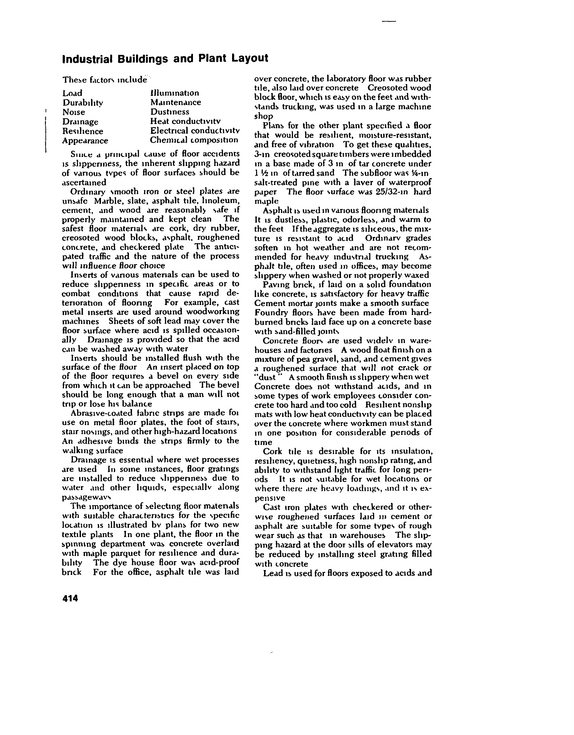
Industrial Buildings and Plant Layout These factors include over concrete, the laboratory floor was rubber Load Durability I Noise Drainage Resilience Appearance Illumination Maintenance Dustiness Heat conductivity Electrical conductivity Chemical composition tile, also laid over concrete Creosoted wood block floor, which is easy on the feet and with stands trucking, was used in a large machine shop Plans for the other plant specified a floor that would be resilient, moisture-resistant, and free of vibration To get these qualities, Since a principal cause of floor accidents 3-in creosoted square timbers were imbedded is slipperiness, the inherent slipping hazard in a base made of 3 in of tar concrete under of various tvpes of floor surfaces should be I xh in of tarred sand The subfloor was Vn-in ascertained salt-treated pine with a layer of waterproof Ordinary smooth iron or steel plates are paper The floor surface was 25/32-m hard unsafe Marble, slate, asphalt tile, linoleum, maple cement, and wood are reasonably safe if Asphalt is used in various flooring materials properly maintained and kept clean The It is dustless, plastic, odorless, and warm to safest floor materials are cork, dry' rubber, the feet Ifthe aggregate is siliceous, the mix creosoted wood blocks, asphalt, roughened ture is resistant to acid Ordinary grades concrete, and checkered plate The antici soften in hot weather and are not recom pated traffic and the nature of the process mended for heavy industrial trucking As will influence floor choice phalt tile, often used in offices, may become Inserts of various materials can be used to slippery when washed or not properly waxed reduce slippenness m specific areas or to Paving brick, if laid on a solid foundation combat conditions that cause rapid de like concrete, is satisfactory' for heavy traffic terioration of flooring For example, cast Cement mortar joints make a smooth surface metal inserts are used around woodworking Foundry floors have been made from hard- machines Sheets of soft lead may cover the burned bncks laid face up on a concrete base floor surface where acid is spilled occasion with sand-filled joints ally Drainage is provided so that the acid Concrete floors are used widely in ware can be washed away with water houses and factories A wood float finish on a Inserts should be installed flush with the mixture of pea gravel, sand, and cement gives surface of the floor An insert placed on top of the floor requires a bevel on every side a roughened surface that will not crack or "dust " A smooth finish is slippery when wet from which it can be approached The bevel Concrete does not withstand acids, and in should be long enough that a man will not some types of work employees consider con trip or lose his balance crete too hard and too cold Resilient nonslip Abrasive-coated labnc strips are made foi mats with low heat conductivity can be placed use on metal floor plates, the foot of stairs, over the concrete where workmen must stand stair nosings, and other high-hazard locations in one position for considerable periods of An adhesive binds the strips firmly to the time walking surface Cork tile is desirable for its insulation, Drainage is essential where wet processes resiliency, quietness, high nonslip rating, and are used In some instances, floor gratings ability to withstand light traffic for long peri are installed to reduce slippenness due to ods It is not suitable for wet locations or water and other liquids, especially along where there are heavy loadings, and it is ex passagewavs pensive The importance of selecting floor matenals Cast iron plates with checkered or other with suitable characteristics for the specific wise roughened surfaces laid tit cement or location is illustrated bv plans for two new asphalt are suitable for some tvpes of rough textile plants In one plant, the floor in the wear such as that in warehouses The slip spinning department was concrete overlaid ping hazard at the door sills of elevators may with maple parquet for resilience and dura be reduced by installing steel grating filled bility The dye house floor was acid-proof with concrete bnck For the office, asphalt tile was laid Lead is used for floors exposed to acids and 414
refid# oMB40K7709a0y9nYm1Q52yG9R1 page
Long-term medical studies of A occupationally exposed workers show that low to moderate levels of exposure to asbestos do not lead to an increased rate of dis ease.


refid# 14Z2G0LwVpLz2RLj6rMybppd3 pages
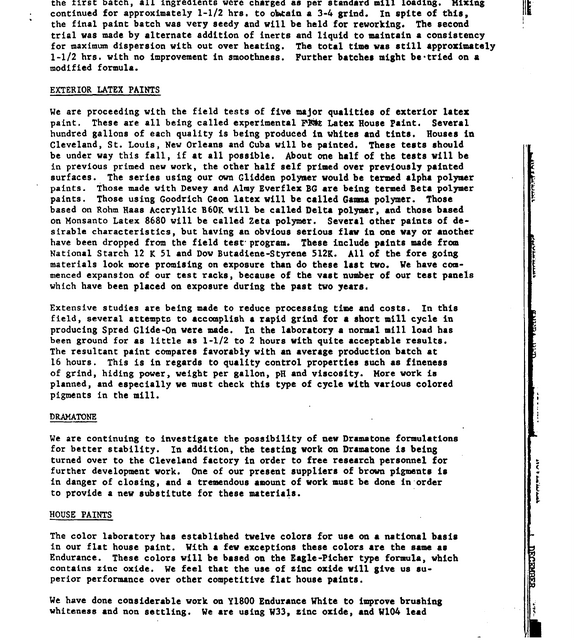
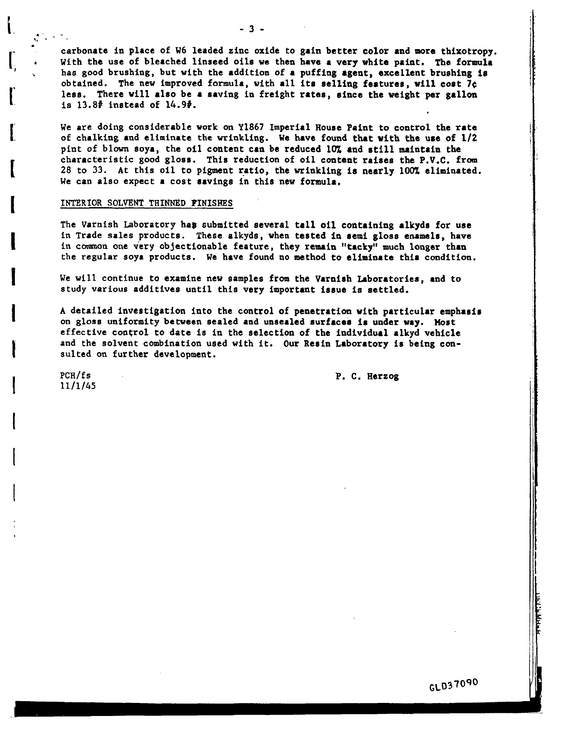
We are using W33, zinc oxide, and W104 lead [ 3- - r. carbonate in place of V6 leaded zinc oxide to gain better color and more thixotropy.
refid# 2ZQR9gqexVOBpeN6j19YpL7p2 pages
(IT) Utilities Dryer "A" Operator Dryer Lead Operator All of the above 28.
refid# ymgL20ymXpRVQRa8dnmQk2N934 pages
42--Flammable and Combustible Liquids monoxide, benzene, hydrogen sulfide, and tetraethyl lead hazards (This last instrument is available from suppliers of tetraethyl lead ) Loading and Unloading Tank Cars Only framed employees should load or un load tank cars containing flammable liquids These men should understand the danger of possible fire and explosion and of asphyxia tion from breathing flammable vapors As an added precaution, unloading and pumping operations should be discontinued during electrical storms Invoices and shipping papers on incoming tank cars should be checked closely for corre spondence with actual tank car numbers and, in doubtful cases, contents should be tested in order to prevent accidental mixture of flam mable liquids in plant tanks See Fig 42--7 for typical tank car construction details Spotting cars A car movei should be used, if it is neces sary to hand spot a car The worker should stand with the handle of the bar to one side of the hack rail and face the car with his feet well apait so that he cannot be overbalanced easily After the cai is spotted, with the dome out let opposite the loading or unloading line, the brakes should be set and the car wheels blocked The "blue flag" stop sign (at least 12 by 15 in , with words such as Stop--Tank Cab Connected or Stop--Men at Wobk) should be set before loading lines are con nected or woik is done on the car The sign should be located about 25 ft ahead of the car toward the main line, so train crews cannot come onto the track without seeing it (Full details are given in Chapter 28, "Elevators and Plant Railways ") The siding should be bonded and grounded for protection from stray electrical currents (Fig 42-8) Usually, the spur tiack installa tion would be made or supervised by the serving railroad For applicable specifica tions, the reader is referred to the Association of American Railroads Signal Manual of Rec ommended Practice (See "References ") The relative location of electric power fines to the tank car unloading position is an im portant matter discussed in the AAR Bureau of Explosives Circular No 17-E, Recom mended Practice for the Prevention of Electric Sparks That May Cause Fires in Tanks or Tank Cars Containing Flammable Liquids or Flammable Compressed Gases, Due to Prox imity of Wire Lines Its pertinent provisions include the following (A) Ceneral 1 Where any electric power fine is within 20 ft of the tank opening, the use of a me tallic gaging rod is prohibited (B) Location of Tanks or Tank Cabs 1 Wheiever possible, stationaiy tanks shall not be located under or near any electric power lines 2 When the contents are being gaged oi tiansfened, tank cars, wherever possible, shall not be located iindet or near any eleetuc power lines 3 Wheie tanks or tank cars (the contents of which aie being gaged or transferred) are necessarilv located under or near power lines having a span length of 150 ft or less and operating at a voltage not exceeding 550 volts between conductors, the follow ing rules shall be observed a Where power lines pass overhead, there shall be a minimum vertical clearance of 8 ft at 60 F between the wues and the tank b Where power lines pass neaiby and do not have the minimum vertical clear ance specified in paiagiaph 3-a, theie shall be a minimum horizontal clearance of 8 ft between the wne lines and the tank c Openings m tanks shall be at least 6 ft distant, measured horizontally from any overhead power lines 4 Where tanks or tank cais (the contents of which are being gaged or transfeired) are located under or near power lines having a span length m excess of 150 ft or operating at a voltage in excess of 550 volts between conductors, it is recommended that special studies be made by qualified persons and such additional clearance provided as is necessary to give adequate protection 1298
refid# 0LkbZ0m1r0j5O4VLznGVyNXVm1 page
fu T U'- K,' i r-'*>- -a"- SPECIFICATIONS fir the use of WHITE-LEAD PAINT tr; V.-1 *h rt^.v ] `-"V* National Lead Company < Jf?
refid# np6DDYDrkrRRk5xD4b9VqODoG20 pages