Refine
Estimated Years UndatedClear
92,592 results foundRefine Search
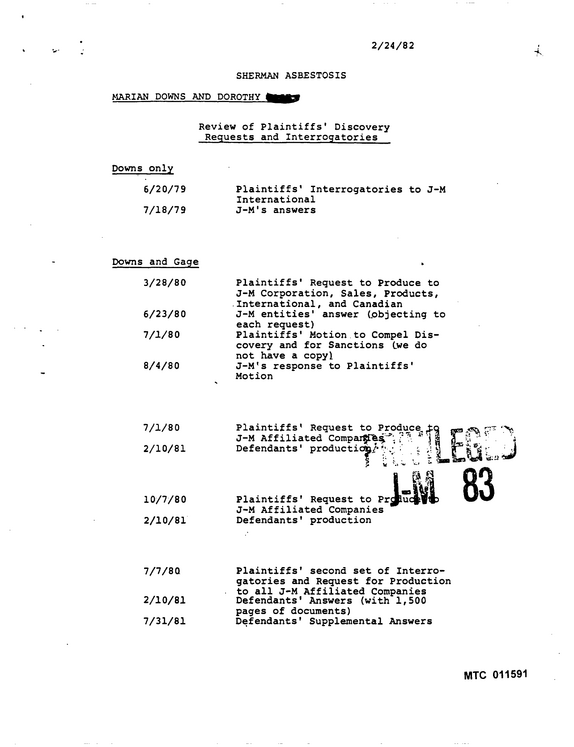
MTC 011589 COVER SHEET FOR B-LEVEL DOCUMENTS REMOVED IN PRIVILEGE REVIEW ORIGINAL B-LEVEL BOX NO.___________ PRODUCTION BOX NO._ F1X.E NC._ 3___________________________ FILE NAME ${\A4-pl ^_____________ _ MTC 011590 2/24/82 SHERMAN ASBESTOSIS MARIAN DOWNS AND DOROTHY Review of Plaintiffs' Discovery Requests and Interrogatories Downs only 6/20/79 7/18/79 Plaintiffs' Interrogatories to J-M International J-M's answers fv Downs and Gage 3/28/80 6/23/80 7/1/80 8/4/80 Plaintiffs' Request to Produce to J-M Corporation, Sales, Products, International, and Canadian J-M entities' answer (.objecting to each request) Plaintiffs' Motion to Compel Dis covery and for Sanctions (we do not have a copy!
refid# ByNrVwYn3grGddzjwwJDaLynk7 pages
isS^sfiSiSS c. e o^t^T/roI- ^K' -;A--' BOX NUMBER r& SEGMENT NO.
refid# BvGMO8xjxE3eeoOV6LGoNo8KE2 pages
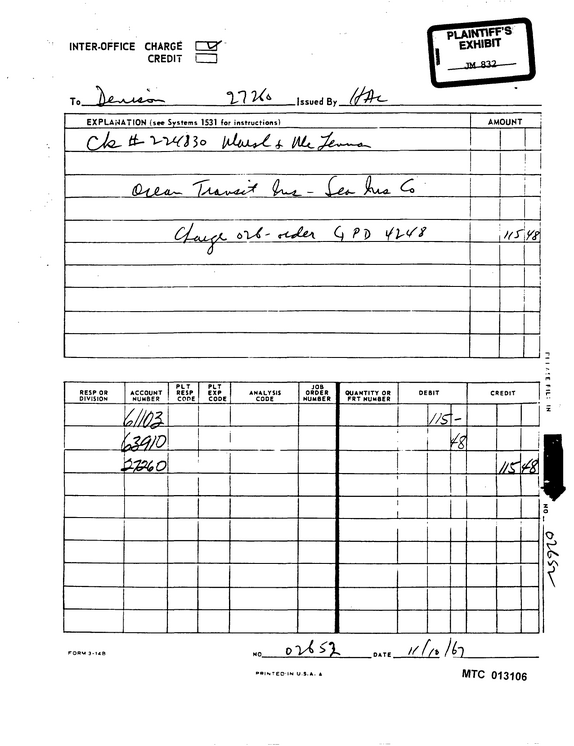
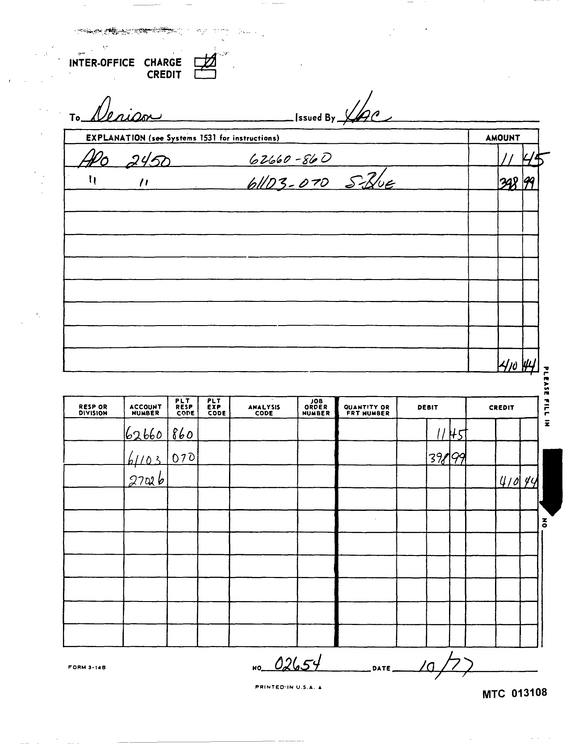
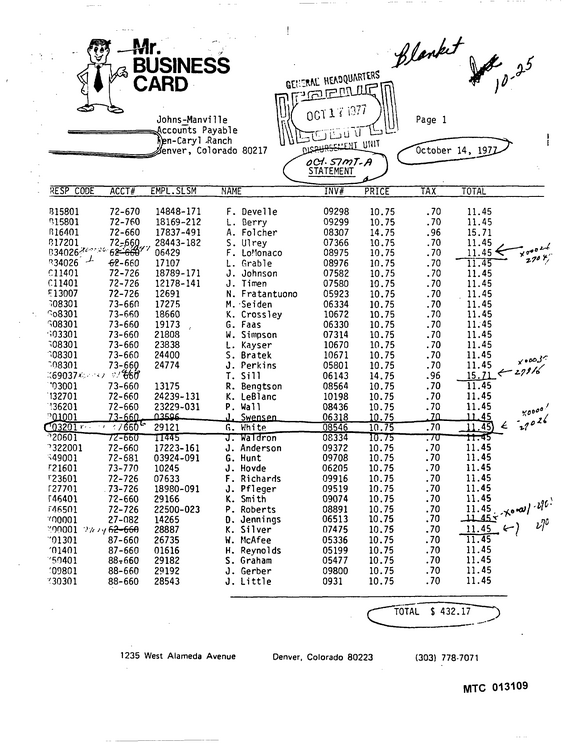
csr-INTER-OFFICE CHARGE CREDIT To. [^2-------------- Y12A .Issued By. /</&- EXPLANATION (see Systems 1531 for instructions) Cjz- ti- vvr'JSo l/(U3e~~^ (QsfJLs<Ls~~ Ol-tUsfA* oV^' Cj P d AMOUNT !
refid# Z4qM5p4qgwpD8Qw8ykKYwJXw05 pages
COVER SHEET FOR B-LEVEL DOCUMENTS REMOVED IN PRIVILEGE REVIEW ORIGINAL B-LEVEL BOX NO.

refid# 4D0M5jj8o47p6yL8w8qZVwYe31 pages
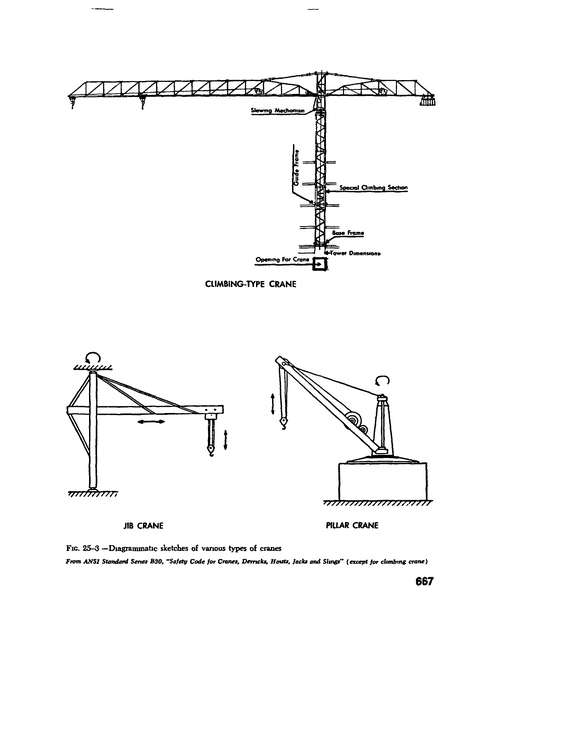
o Opening For Crona CLIMBING-TYPE CRANE JIB CRANE Fic. 25-3 --Diagrammatic sketches of various types of cranes From ANSI Standard Senes B30, "Safety Code for Crones, Derricks, Hoists, Jacks and Sltngs" (except for clmtbmg crane) 667
refid# a19ZX56jO11RYqqZoR4QXgRxM1 page
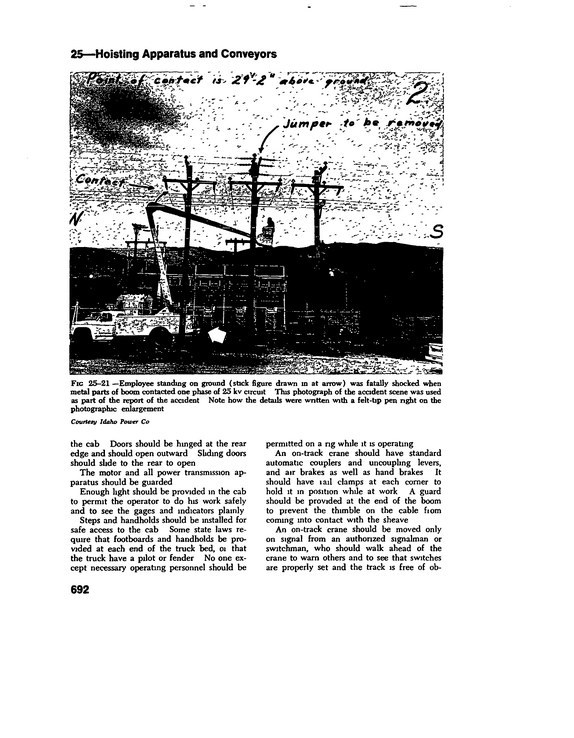
25--Hoisting Apparatus and Conveyors Fic 25-21 --Employee standing on ground (stick figure drawn in at arrow) was fatally shocked when metal parts of boom contacted one phase of 25 kv circuit This photograph of the accident scene was used as part of the report of the accident Note how the details were written with a felt-bp pen nght on the photographic enlargement Courtesy Idaho Power Co the cab Doors should be hinged at the rear edge and should open outward Sliding doors should slide to the rear to open The motor and all power transmission ap paratus should be guarded Enough light should be provided m the cab to permit the operator to do his work safely and to see the gages and indicators plainly Steps and handholds should be installed for safe access to the cab Some state laws re quire that footboards and handholds be pro vided at each end of the truck bed, oi that the truck have a pilot or fender No one ex cept necessary operating personnel should be permitted on a ng while it is operating An on-track crane should have standard automatic couplers and uncoupling levers, and air brakes as well as hand brakes It should have lad clamps at each comer to hold it in position while at work A guard should be provided at the end of the boom to prevent the thimble on the cable fiom coming into contact with the sheave An on-track crane should be moved only on signal from an authorized signalman or switchman, who should walk ahead of the crane to warn others and to see that switches are properly set and the track is free of ob- 692
refid# BRjJqbeajD3po6wOb4GaNGDb81 page
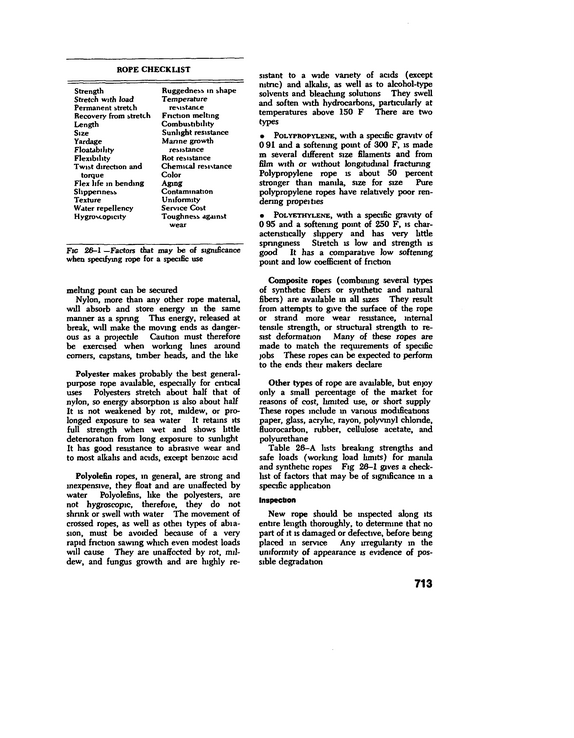
ROPE CHECKLIST Strength Stretch with load Permanent stretch Recovery from stretch Length Size Yardage Floatability Flexibility Twist direction and torque Flex life in bending Slippenness Texture Water repellency Hygroscopicity Ruggedness in shape Temperature resistance Friction melting Combustibility Sunlight resistance Marine growth resistance Rot resistance Chemical resistance Color Aging Contamination Uniformity Service Cost Toughness against wear Fic 26-1 --Factors that may be of significance when specifying rope for a specific use melting point can be secured Nylon, more than any other rope material, will absorb and store energy in the same manner as a spring This energy, released at break, will make the moving ends as danger ous as a projectile Caution must therefore be exercised when working lines around corners, capstans, timber heads, and the like Polyester makes probably the best generalpurpose rope available, especially for critical uses Polyesters stretch about half that of nylon, so energy absorption is also about half It is not weakened by rot, mildew, or pro longed exposure to sea water It retains its full strength when wet and shows bttle deterioration from long exposure to sunlight It has good resistance to abrasive wear and to most alkalis and acids, except benzoic acid Polyolefin ropes, in general, are strong and inexpensive, they float and are unaffected by water Polyolefins, like the polyesters, are not hygroscopic, therefoie, they do not shrink or swell with water The movement of crossed ropes, as well as othei types of abiasion, must be avoided because of a very rapid friction sawing which even modest loads will cause They are unaffected by rot, mil dew, and fungus growth and are highly re sistant to a wide variety of acids (except nitnc) and alkalis, as well as to alcohol-type solvents and bleaching solutions They swell and soften with hydrocarbons, particularly at temperatures above 150 F There are two types Polypropylene, with a specific gravitv of 0 91 and a softening point of 300 F, is made m several different size filaments and from film with or without longitudinal fracturing Polypropylene rope is about 50 percent stronger than mamla, size for size Pure polypropylene ropes have relatively poor ren dering properties Polyethylene, with a specific gravity of 0 95 and a softening point of 250 F, is char acteristically slippery and has very little springiness Stretch is low and strength is good It has a comparative low softening point and low coefficient of friction Composite ropes (combining several types of synthetic fibers or synthetic and natural fibers) are available in all sizes They result from attempts to give the surface of the rope or strand more wear resistance, internal tensile strength, or structural strength to re sist deformation Many of these ropes are made to match the requirements of specific jobs These ropes can be expected to perform to the ends their makers declare Other types of rope are available, but enjoy only a small percentage of the market for reasons of cost, limited use, or short supply These ropes include in various modifications paper, glass, acrylic, rayon, polyvinyl chlonde, fluorocarbon, rubber, cellulose acetate, and polyurethane Table 26-A lists breaking strengths and safe loads (working load limits) for mamla and synthetic ropes Fig 26-1 gives a check list of factors that may be of significance m a specific application Inspection New rope should be inspected along its entire length thoroughly, to determine that no part of it is damaged or defective, before being placed in service Any irregularity in the uniformity of appearance is evidence of pos sible degradation 713
refid# 3QLbaVbxnebwBvpRYqDQqzooJ1 page
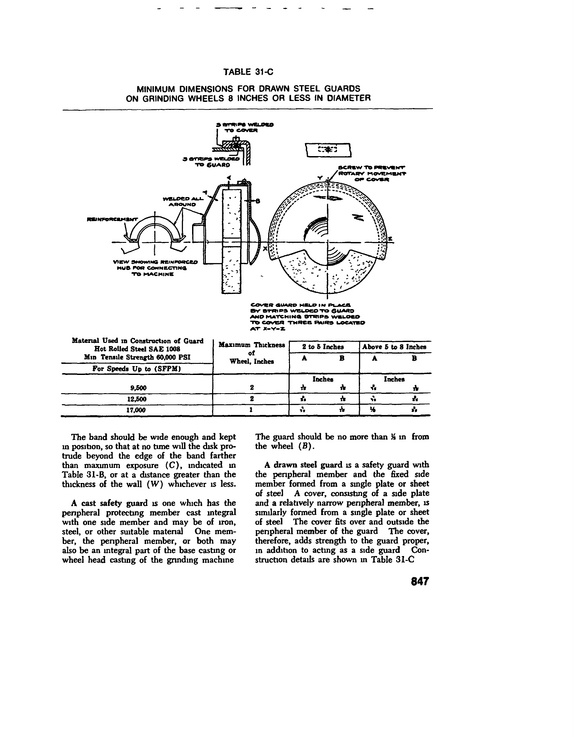
TABLE 31-C MINIMUM DIMENSIONS FOR DRAWN STEEL GUARDS ON GRINDING WHEELS 8 INCHES OR LESS IN DIAMETER Material Used in Construction of Guard Hot Rolled Steel SAE 1008 Mm Tensile Strength 60,000 PSI For Speeds Up to (SFPM) 9,500 12,600 17,000 AT X-V-Z Maximum Thickness of Wheel, Inches 2 to 5 Inches AB Inches 2 AA 2 it A 1 it A Above 5 to 8 Inches AB Inches AA i.
refid# 8R00kLqg6EdoQ6Z45948NKk8a1 page
refid# zQ8j9aZbYRE0bxKMyb2LyxDnB1 page
MTC 013657 MTC 013658 COVER SHEET FOR B-LEVEL DOCUMENTS REMOVED IN PRIVILEGE REVIEW ORIGINAL B-LEVEL BOX NO./,<?

refid# NEevm97nzbDQERk4DqkQOKgVg18 pages
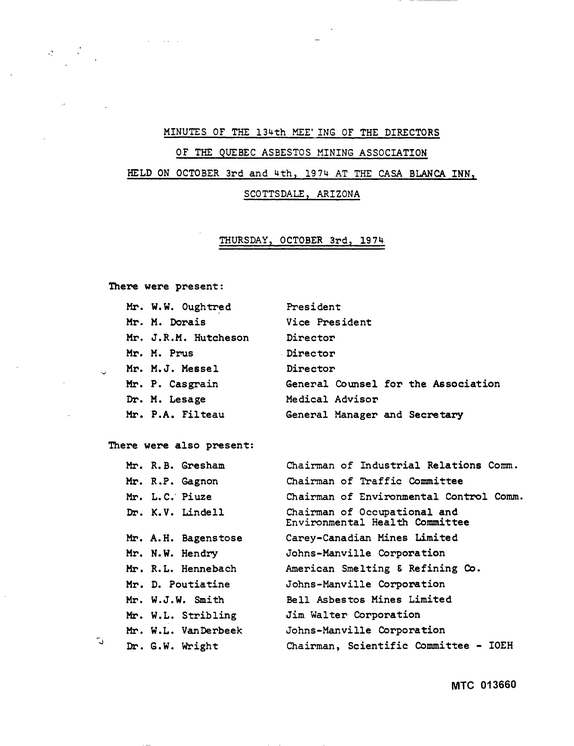
37--Industrial Hygiene Wet or vacuum clean- cubic meter of air sampling pump on A READY-REFERENCE CHART OF TH E FIVE TAR G ET HEALTH HAZARDS 9 < CD ooCM a E O $o slolCD o *^co CO O) r~ j C SiSl < Qi-S 9 0*0 5CD c 1 Is| oc O n Sg l!
refid# dnXK0bQy1Z99qgEKN4qJer7Y61 page
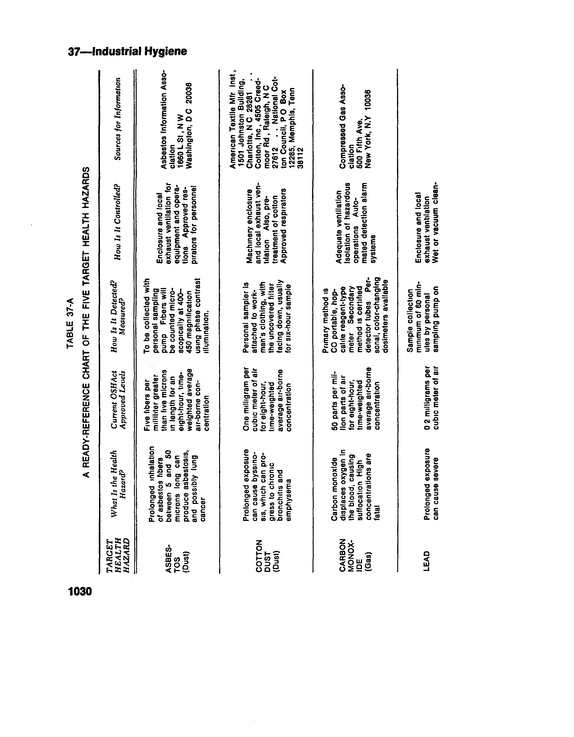
37--Industrial Hygiene single color or wavelength and frequency, in contrast to conventional light sources, which produce random, disordered light wave mixtures of various frequencies The laser (Light Amplification by Stimulated Emission of Radiation) is made up of light waves that are nearly parallel to each other, all traveling m the same direction Light-emitting atoms are "pumped" full of energy and stimulated to fall to a lower energy level, giving off light waves that are directed to produce the co herent laser beam The maser, the laser's predecessor, emits microwaves instead of light Some compa nies call their lasers "optical masers " Pro posed uses for the laser include machining and cutting of metals, welding of microscopic parts, and systems for high-capacity com munications Since the laser is highly collimated (has a small divergence angle), it can have a large energy density in a narrow beam Direct viewing of the laser should therefore be avoided The work area should contain no reflective surfaces (such as mirrors or highly polished furniture) for even a reflected laser beam can be hazardous Suitable shielding to contain the laser beam should be provided Potential laser hazards.
refid# 105RwxyyjNNV8OmLXDEV0N1xa1 page
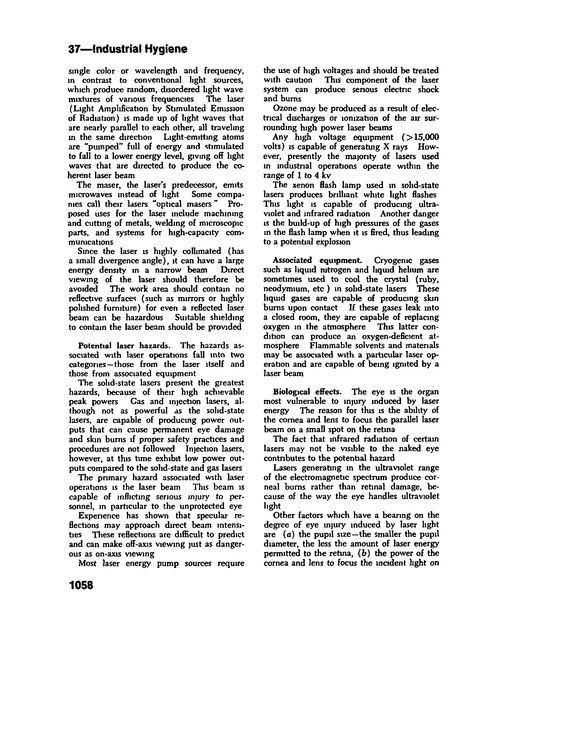
39-- Chemical Hazards 1220 Substance Ethyl silicate Ethylene Ethylene chlorohydrin Ethj lene-diamine Ethylene dichlonde Eth> lene glj co) Ethylene imine Ethylene oxide FerroBilicon Fluorides Fluorine Formaldehyde TABLE OF CHEMICAL HAZARDS (Continued) 1 2 3 4 5 67 Flash Point (deg F) Flammable or Explostu limits (% by volume) Loiter Upper Vapor Volume Icuft Seicrity anti Type fiat) of Hazard Precau- Action Oral Take Toxicit t bkm 8 NFPA > Q * .23 1!
refid# rpnB9vQp1d8rdb8MbXk4JpZYE1 page
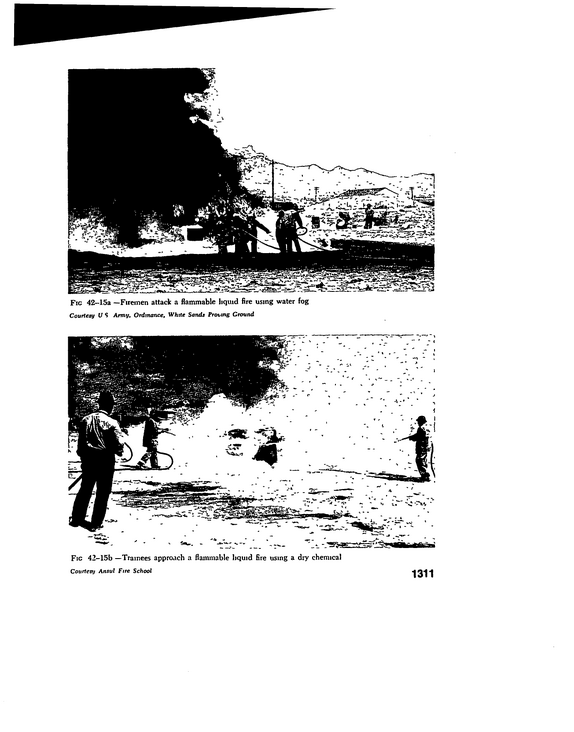
Fic 42-15b --Trainees approach a flammable liquid Ere using a dry chemical Courtesy Ansul Fire School
refid# 3QogQxr2r8oQbqy1K6NB8N7My1 page
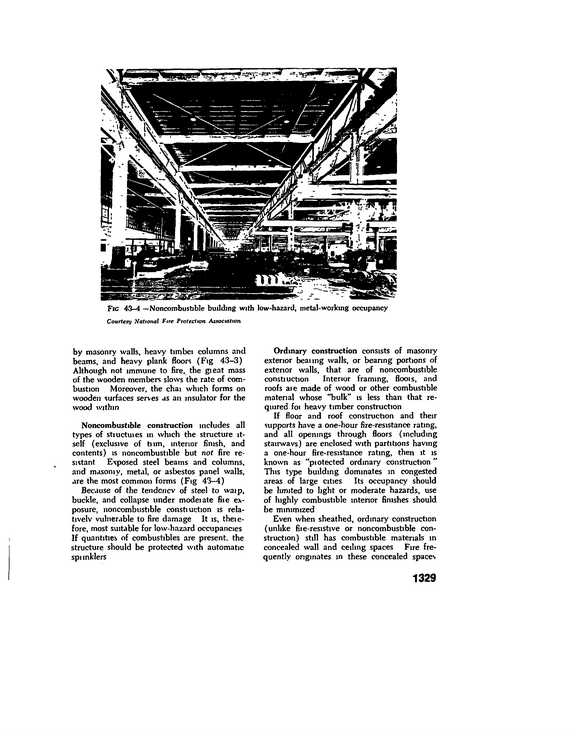
Fic 43--4 --Noncombusbble building with low-hazard, metal-working occupancy Courtesy National Fire Protection Association by masonry walls, heavy timbei columns and beams, and heavy plank floors (Fig 43-3) Although not immune to fire, the gieat mass of the wooden members slows the rate of com bustion Moreover, the chai which forms on wooden surfaces serves as an insulator for the wood within Noncombustible construction includes all types of stiuctuies m which the structure it self (exclusive of turn, interior finish, and contents) is noncombustible but not fire re sistant Exposed steel beams and columns, and masoniv, metal, or asbestos panel walls, are the most common forms (Fig 43-4) Because of the tendency of steel to waip, buckle, and collapse under modeiate file ex posure, noncombustible constiuction is rela tively vulnerable to fire damage It is, theiefore, most suitable for low-hazard occupancies If quantities of combustibles are present, the structure should be protected with automatic spi inklers Ordinary construction consists of masonry exterior beating walls, or bearing portions of exterior walls, that are of noncombustible constiuction Interior framing, floois, and roofs aie made of wood or other combustible material whose "bulk" is less than that re quired foi heavy timber construction If floor and roof construction and their supports have a one-hour fire-resistance rating, and all openings through floors (including stairways) are enclosed with partitions having a one-hour fire-resistance rating, then it is known as "piotected ordinary construction" This type building dominates m congested areas of large cities Its occupancy should be limited to light or moderate hazards, use of highly combustible intenor finishes should be minimized Even when sheathed, ordinary construction (unlike fiie-resistive or noncombusbble con struction) still has combustible materials in concealed wall and ceiling spaces Fire fre quently originates m these concealed spaces 1329
refid# zbGaK4Og5rMVNKaXm6ewoeVZ31 page