Refine
Estimated Years UndatedClear
34,161 results foundRefine Search
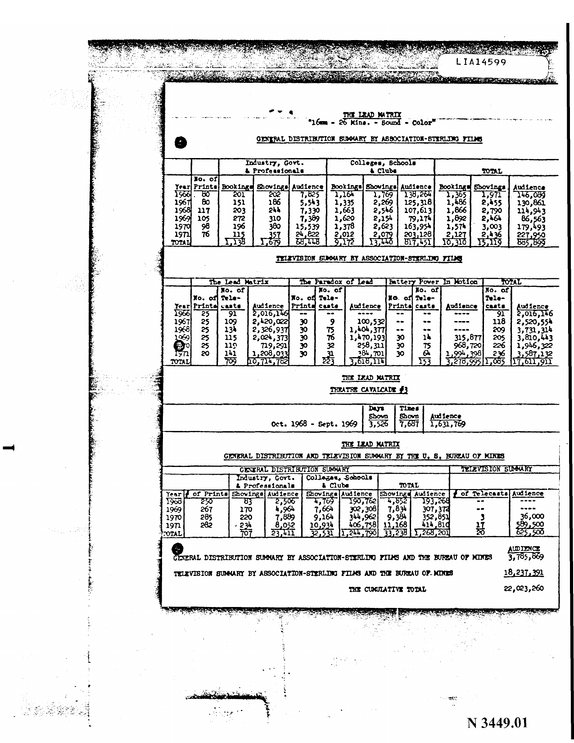
7 2,436 16,31o j s b 227,950 TDZVXSIOH SUMMARY BT ASSOCIATIOH-B7ERLD*3 TVMS The Lead Matrix The Paradox of Lead Battery l1over In Motion !
refid# BR45qpKdOQ6DznJQ2k53KxXjL2 pages
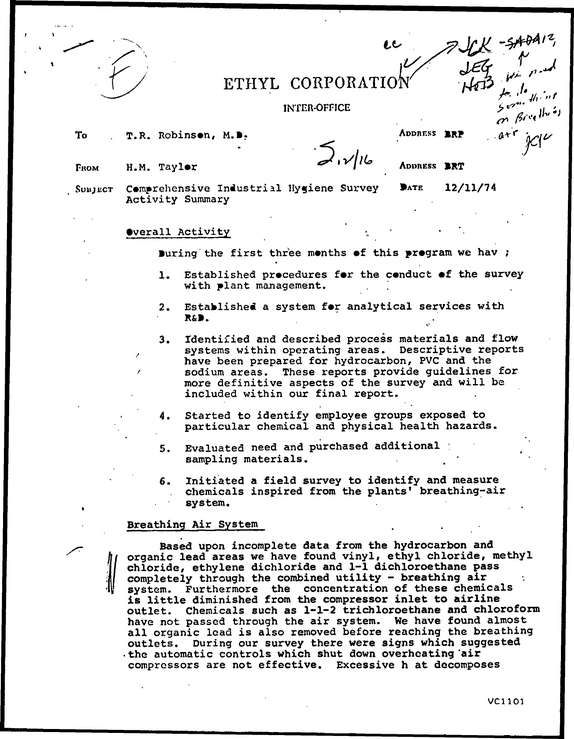
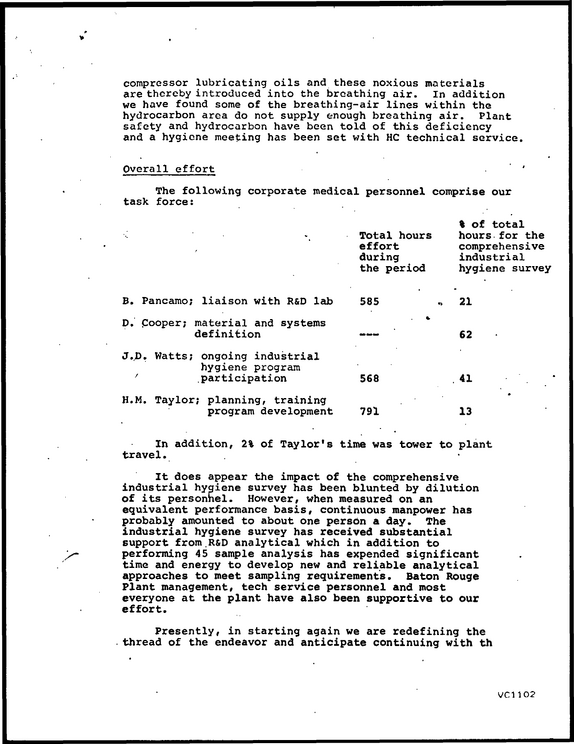
We have found almost all organic lead is also removed before reaching the breathing outlets.
refid# ykbzNJDn9vZdG81YMZ9JJN65n3 pages
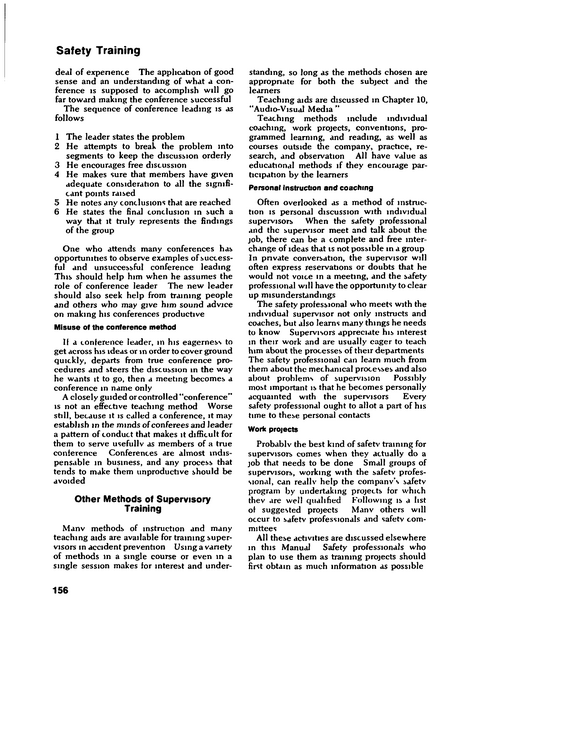
Safety Training deal of experience The application of good sense and an understanding of what a con ference is supposed to accomplish will go far toward making the conference successful The sequence of conference leading is as follows 1 The leader states the problem 2 He attempts to break the problem into segments to keep the discussion orderly 3 He encourages free discussion 4 He makes sure that members have given adequate consideration to all the signifi cant points raised 5 He notes any conclusions that are reached 6 He states the final conclusion in such a way that it truly represents the findings of the group One who attends many conferences has opportunities to observe examples of success ful and unsuccessful conference leading This should help him when he assumes the role of conference leader The new leader should also seek help from training people and others who may give him sound advice on making his conferences productive Misuse of the conference method II a conference leader, in his eagerness to get across his ideas or m order to cover ground quickly, departs from true conference pro cedures and steers the discussion in the way he wants it to go, then a meeting becomes a conference in name only A closely guided or controlled "conference" is not an effective teaching method Worse still, because it is called a conference, it may establish m the minds of conferees and leader a pattern of conduct that makes it difficult for them to serve usefully as members of a true conference Conferences are almost indis pensable in business, and any process that tends to make them unproductive should be avoided Other Methods of Supervisory Training Manv methods of instruction and many teaching aids are available for training super visors in accident prevention Using a variety of methods in a single course or even m a single session makes for interest and under standing, so long as the methods chosen are appropriate for both the subject and the learners Teaching aids are discussed m Chapter 10, "Audio-Visual Media " Teaching methods include individual coaching, work projects, conventions, pro grammed learning, and reading, as well as courses outside the company, practice, re search, and observation All have value as educational methods if they encourage par ticipation by the learners Personal instruction and coaching Often overlooked as a method of instruc tion is personal discussion with individual supervisors When the safety professional and the supervisor meet and talk about the job, there can be a complete and free inter change of ideas that is not possible in a group In private conversation, the supervisor will often express reservations or doubts that he would not voice in a meeting, and the safety professional will have the opportunity to clear up misunderstandings The safety professional who meets with the individual supervisor not only instructs and coaches, but also learns many things he needs to know Supervisors appreciate his interest in their work and are usually eager to teach him about the processes of their departments The safety professional can learn much from them about the mechanical processes and also about problems of supervision Possibly most important is that he becomes personally acquainted with the supervisors Every safety professional ought to allot a part of his time to these personal contacts Work projects Probablv the best kind of safety training for supervisors comes when they actually do a job that needs to be done Small groups of supervisors, working with the safety profes sional, can reallv help the company's safety program by undertaking projects for which they are well qualified Following is a list of suggested projects Manv others will occur to safetv professionals and safety com mittees All these activities are discussed elsewhere in this Manual Safety professionals who plan to use them as training projects should first obtain as much information as possible 156
refid# MzJjVK3bpey3NBmBNBG2RoMx1 page
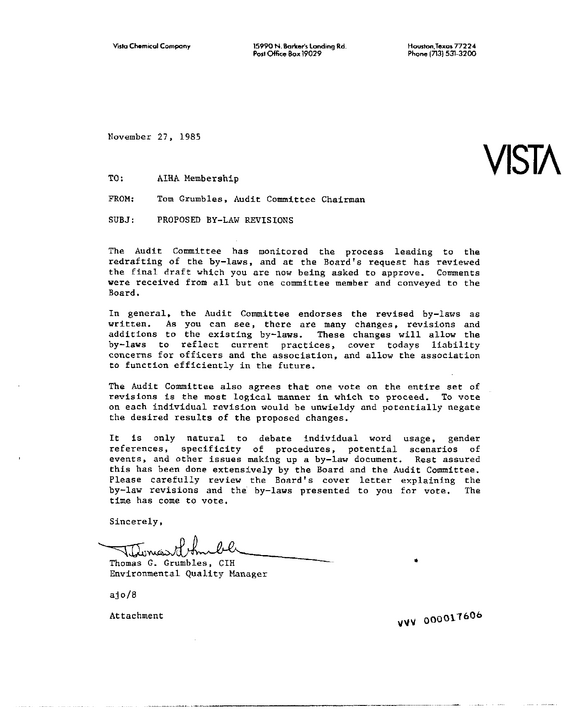
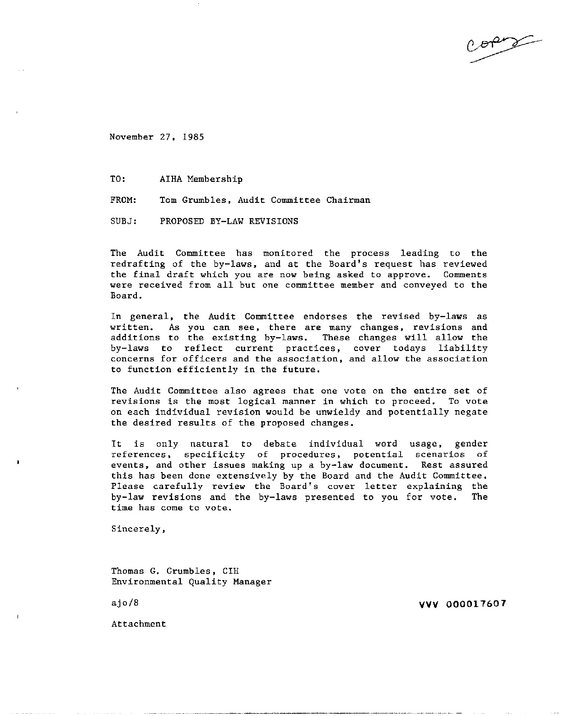
Post Office Box 19029 Houston.Texo* 77224 Phone (713) 531-3200 November 27, 1985 TO: FROM: SUBJ: AIHA Membership Tom Grumbles, Audit Committee Chairman PROPOSED BY-LAWREVISIONS VISTA The Audit Committee has monitored the process leading to the redrafting of the by-laws, and at the BoardTs request has reviewed the final draft which you are now being asked to approve.
refid# 4QVke3djBz47aoVMkMB8vyQxN4 pages
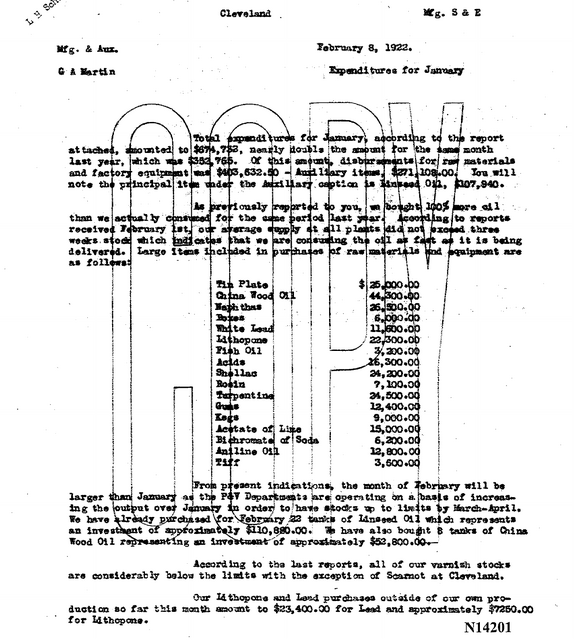
, Ch na Wood Oil Ha fctha 1 He tee - j lh ,te Lead?
refid# 7b0n5xabbnbwppj8b0J16yyV2 pages
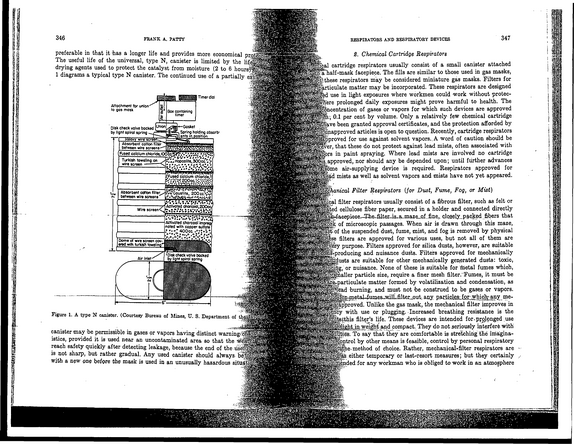
A word of caution should be ver, that these do not protect against lead mists, often associated with ||fj|||jjiDor8 in paint spraying.
refid# JNQyKNv5jQ4mm7yNbOnBDYxMv1 page
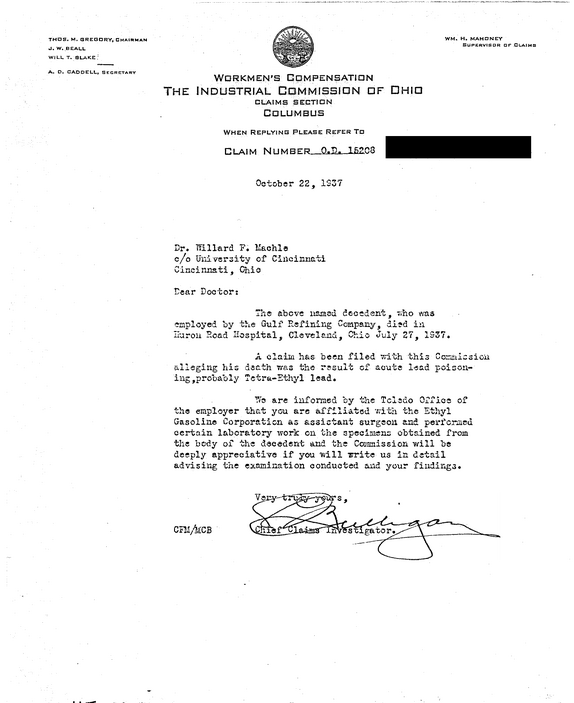
A claim has been f ile d w ith th is Corniission a lle g in g h is death was th e r e s u l t o f acu te lead p o ison ing,probably T ctra-E thyl lead. .
refid# 715d0bvgxKVV6xkd6orgge5G61 page
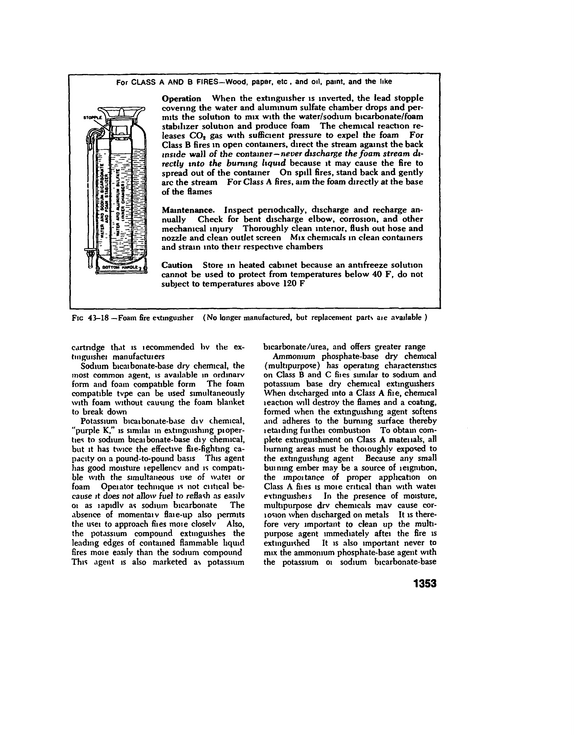
For CLASS A AND B FIRES--Wood, paper, etc, and oil, paint, and the like Operation When the extinguisher is inverted, the lead stopple covering the water and aluminum sulfate chamber drops and per mits the solution to mix with the water/sodium bicarbonate/foam stabilizer solution and produce foam The chemical reaction re leases COj gas with sufficient pressure to expel the foam For Class B fires in open containers, direct the stream against the back inside wall of the container--never discharge the foam stream di rectly into the burning liquid because it may cause the fire to spread out of the container On spill fires, stand back and gently arc the stream For Class A fires, aim the foam directly at the base of the flames Maintenance.
refid# jwna4epE1vm8R2254Z8rDm091 page
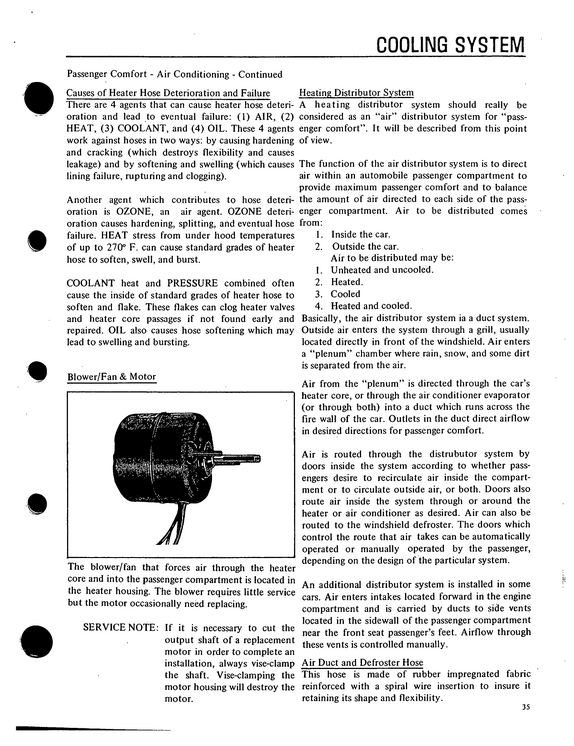
OIL also causes hose softening which may Outside air enters the system through a grill, usually lead to swelling and bursting.
refid# NGJdN8NDZbOLeLZprvp0gRo0g1 page
Tanks, see Septic tanks and Storage tanks Tanks, open surface, exhaust, 881, 891, 1603 Tar, 1374, 1429 Taipaulins, 1058, 1107 Tape recorders, 239-240 Tapping, metal, 955 Tapping out cupola, 811-812 open hearth furnaces, 815 Task performance, 74-77 Tasks allocation, 105-107 analysis, 106-107 Teflon, toxicology, 1375 Telephone alerting system, 1129 Teleprompters, 229 Television, 238-239 during emergencies, 1139 publicity, 207-210 radiation hazard, 1468 training, 157 Tellurium, 1375 Temperature autoignition, 1011, 1387 table of, 1395-1421 conversion tables, 1580-1581 definitions, 1253 effective, 909, 1253, 1263-1264 measurement in air, 907-909 Tempering tools, 951-952 Temporary total disability, 256-258 Tenosynovitis, 1325 TEPP, 1375 Terrain, building site, 393-394 Testing driver, 627, 631, 1548-1549 electrical equipment, 996-1000 medical, 1229 nondestructive, 826-829 psychological, 1547-1548 Tests, see Inspection Tetany, 1325 Tetrachloroethane, 1350-1351, 1375 Tetrachloroethylene, 1350-1351, 1375 Tetrachloroethylene, 1375, 1350-1351 Tetraethyl lead, see Lead Tetrahydrofuran, 1376 Tetryl, 1376 Texture of control, 117 Thallium, 1376 Thermal environment, 1263-1264 Thermometers globe, 908 wet and dry bulb, 907,1253 Thermonuclear reaction, 1440 Thermoplastic, definition, 1429 Thermosetting, definition, 1429 THERP, 76 Thiocyanates, 1376 Third party liability, 295-296 Thorium, 1440 Three E's of safety, 6-7 Threshold, hearing, 1521,1525 audiometry, 1512-1513 limit values, 1532-1535 Threshold limit values, 1253, 1284-1286, 1306-1322 calculations, 1317-1321, 1386 chemical substances, 1172-1173,1308-1321,1614 noise. 1513,1528-1529 damage risk criteria, 1270 sinusoidal vibration, 1617 Thulium-170, shielding, 1476-1479 Tilt table saws, 786-787 Tienng hoists, 565 Timbers construction, 1049-1051, 1072 inspection, 454 ram prop dimensions, 837 stresses (table), 1574-1576 tower dimensions, 450, 1575-1576 Tinnitus, 1521 Tires, vehicle, inflation, 1553-1554 Titanium, toxicity, 1376 Titanium dioxide, 1376 Titanium tetrachloride, 1376 Toeboards, see Railings and toeboards Toilet facilities, 1216-1217 Tolerance, 1325 Toluene, 1377, 1429 Toluene 2,4-dnsocyanate, 1377 Tone deafness, 1521 simple (pure), 1520 Tongs, 961 pipe, 960 Tools, hand, see Hand tools Tools, machine, see Machine tools Tools, power, see Power tools, portable Torches blow, 1043, 1058 during construction, 433 welding and cutting, 929-930 Tornados, planning for, 1114-1115 Torsion tools, 959-962 Total disability temporary, 260 total, 259-260 "Total safety" concept, 25 Tours, plant, 201 Towers dimensions, 450, 1575-1576 maintenance, 458 Towing bulldozers, 1568 trucks, 1562 Toxaphene, 1377 Toxemia, 1325 Toxicity chemical, 1106-1107,1300-1306,1446 1651
refid# NeY39L1ZX3QqV1KYzjyX2mXoQ1 page
Asbestos Personal Injury Cases; Abrams Lead & copied to Richard F.
refid# dQ36wXpqBQRymwvKwpx5VzYLe3 pages
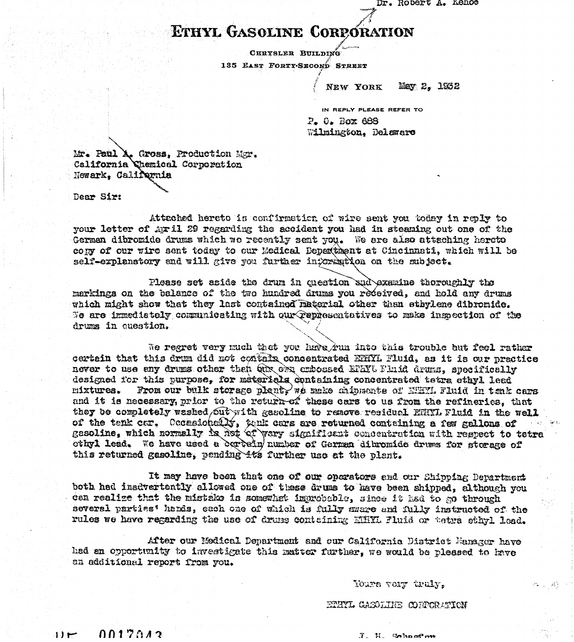
w& are toECdiately.eosEaiaicstlag with ottr<^p$eamiaiiTes- to make inspection of the drums ia Question, V\S/ / .Vo regret rery Each the* you ht&sjnm into this trouble hut feel rather certain that this drum did sot contain concentrated 22SYL Fluid, as it is our practice aerer to nso any drums. other theft buK.o^k^erdso-ssed -USSl, Plaid drams, specifically designed for this purpose, for isMorlala, ebatsiaing concentrated tetra ethyl lead mixtures.
refid# 2qEzqeYNewvzxoE1860zwEEop1 page
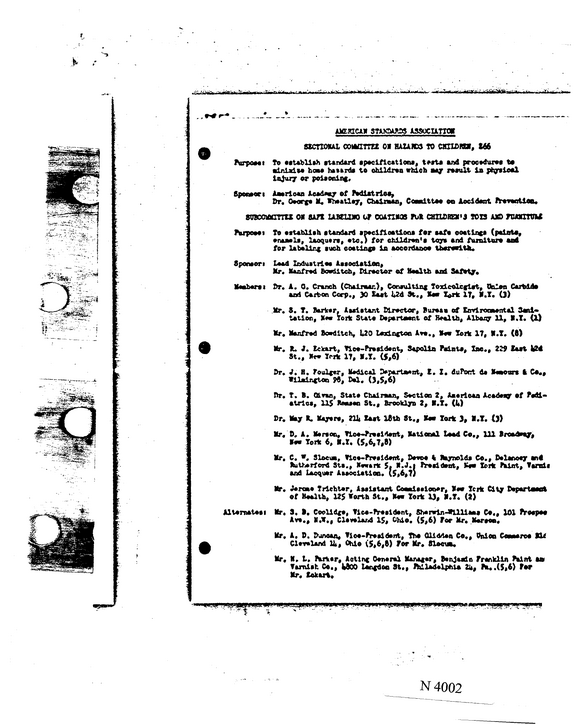
Maroon, Tleo-Frooidont, Hatlcnal Lead Co,, 111 Broedty, Hoa Tort 6, M.T. (5,6,7,8) Mr.
refid# EG8JpQ5KkBEpwRONx2OY895L2 pages
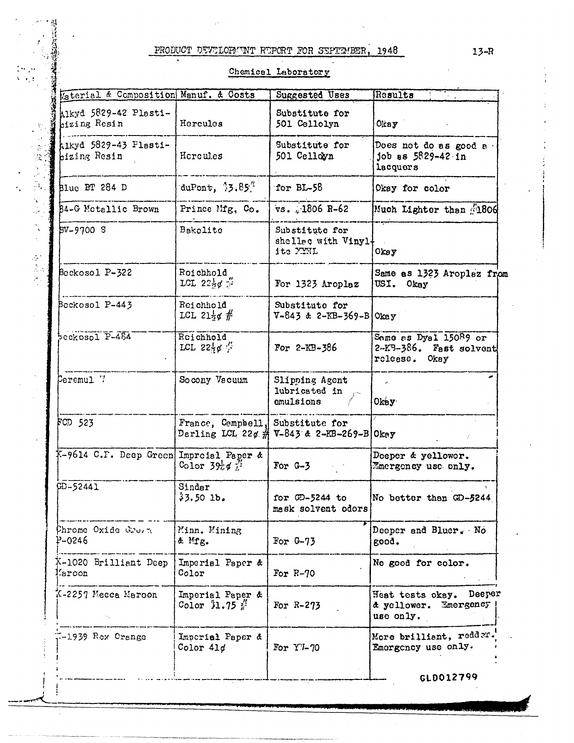
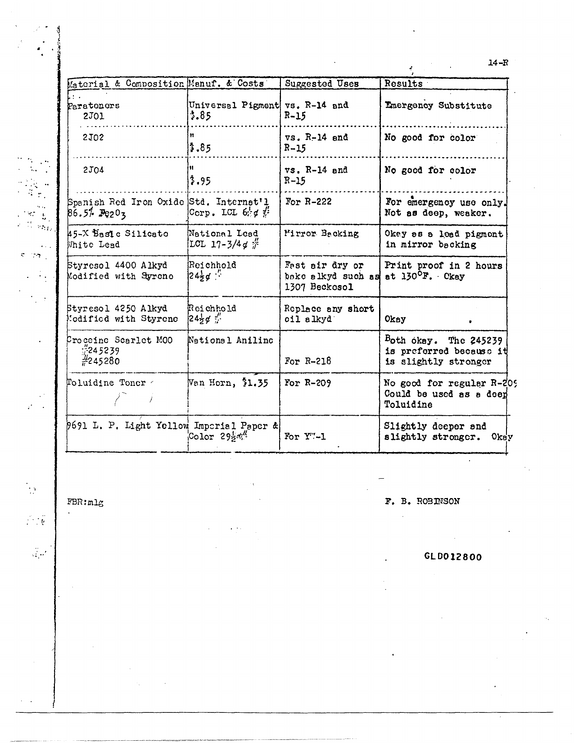
*5-* $aslc Silicate Uhito lead National Lead LCL 17-3M f Mirror Becking Okey as a load pigmont in mirror backing Styresol 4400 Alkyd Reichhold Modified with Syreno 2 4g i], ' ' Fast sir dry or Print proof in 2 hours boke alkyd such as at 130F.

refid# X7XaG3x602LpommeMxZ2qB5Gx3 pages
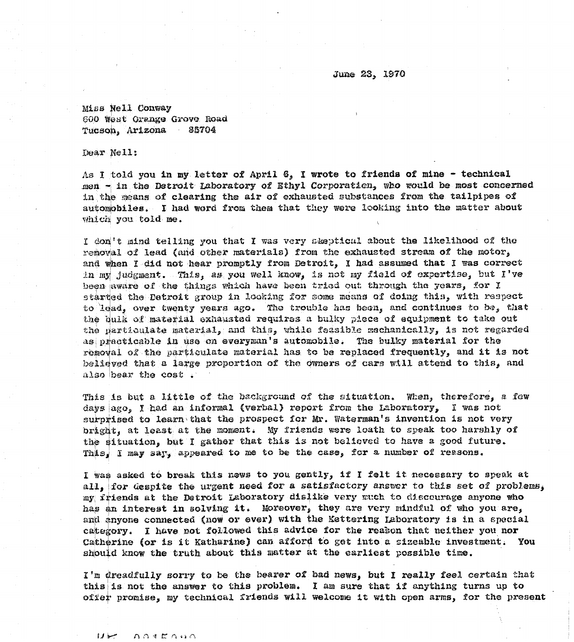
This, as you well know, is not lay field of expertise, but I've been aware of th things which have been tried out through the years, for I started the Detroit group in looking for some means of doing this, with respect to lead, over twenty years ago.
refid# 70DoozxZ56yvQe6K4RoXgq09a2 pages