Refine
Estimated Years UndatedClear
34,161 results foundRefine Search
- Contents I.
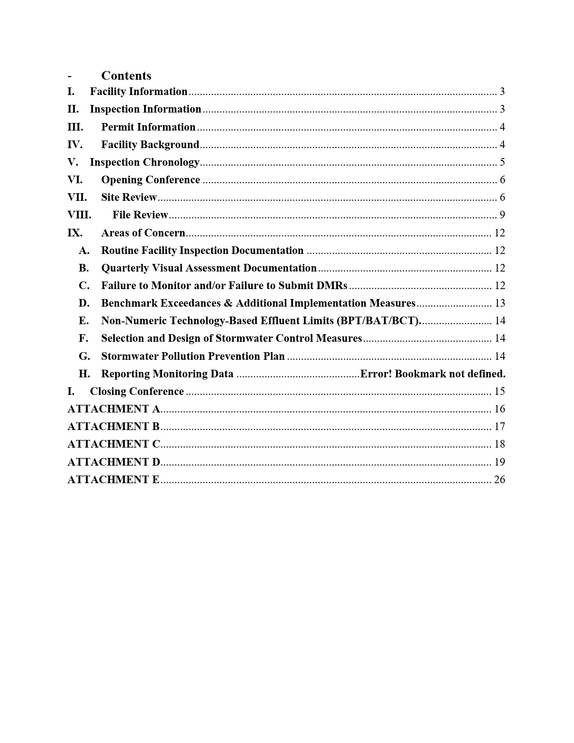
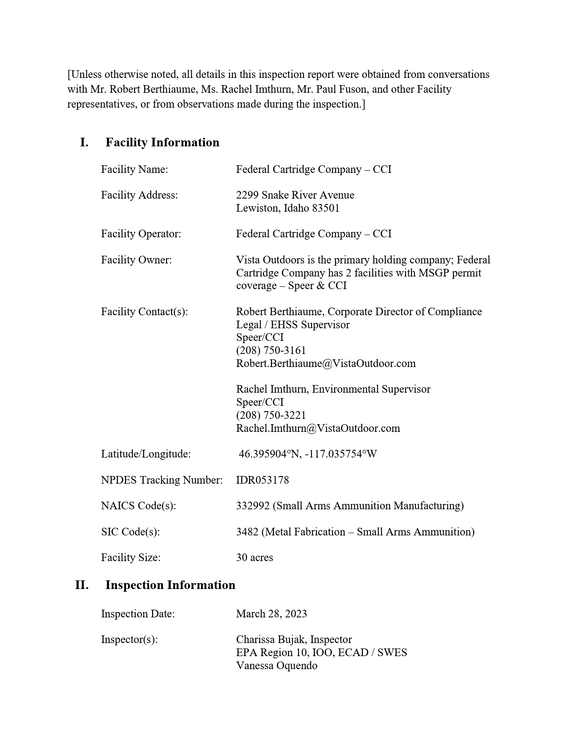
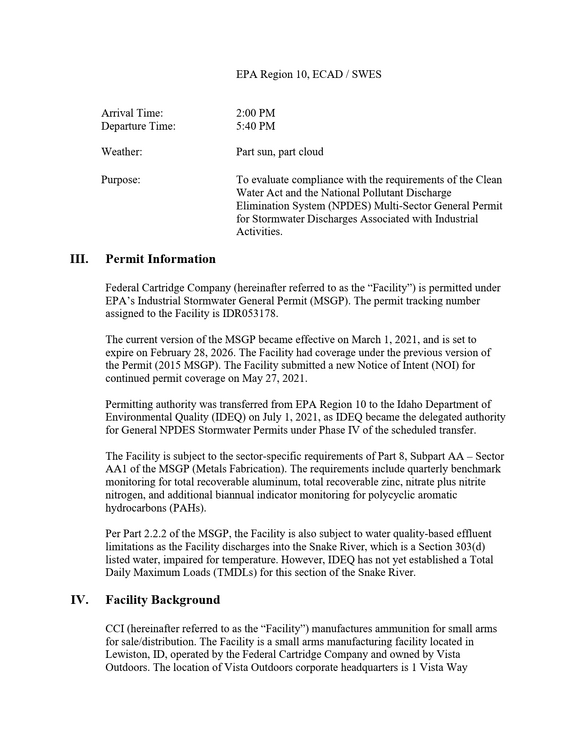
refid# EdkV7Y2doYwjqazBwjLgVoNG476 pages
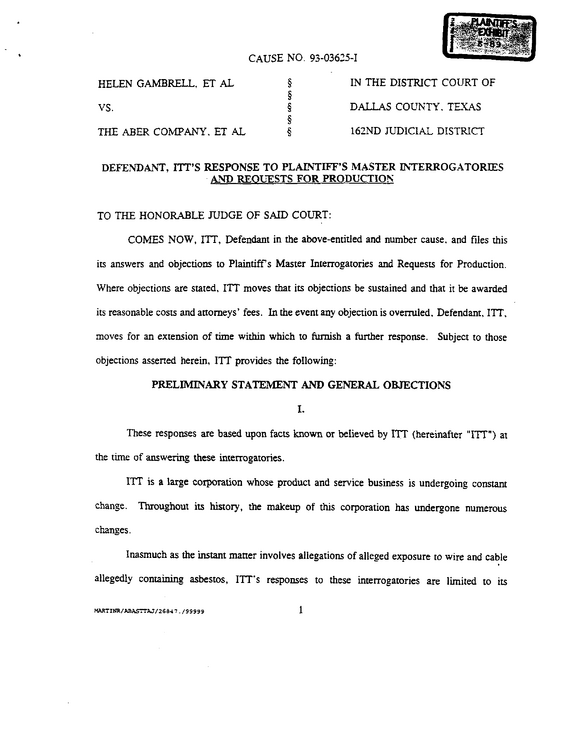
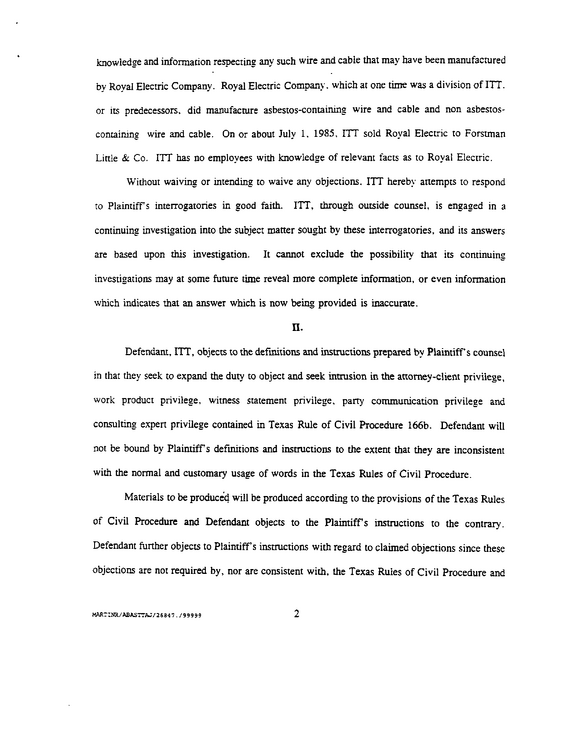
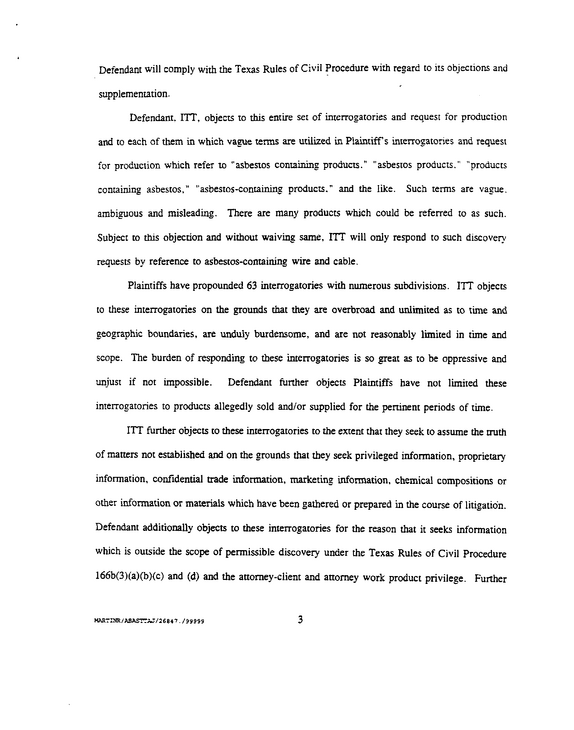
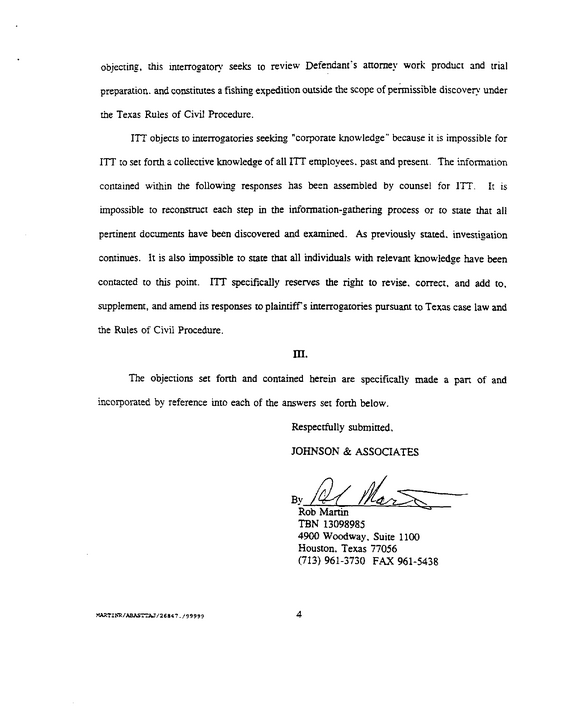
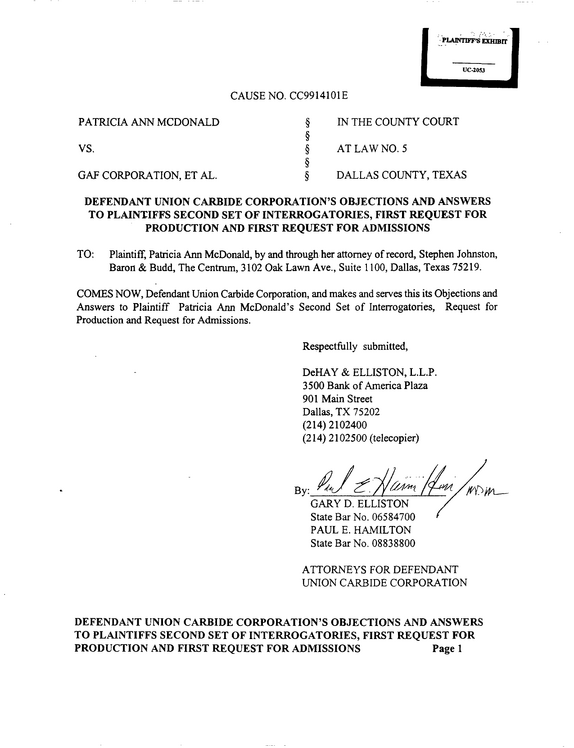
ITT objects that Interrogatory No. 4 is overbroad, unduly burdensome, unlimited in time and scope, and is not reasonably calculated to lead to the discovery of admissible evidence as required under Rule 166b.
refid# gEa64jD6d4daVBJpg9M7qjm1341 pages
It seeks matters that are not relevant to the subject matter ofthis lawsuit or reasonably calculated to lead to the discovery of admissible evidence; 3.
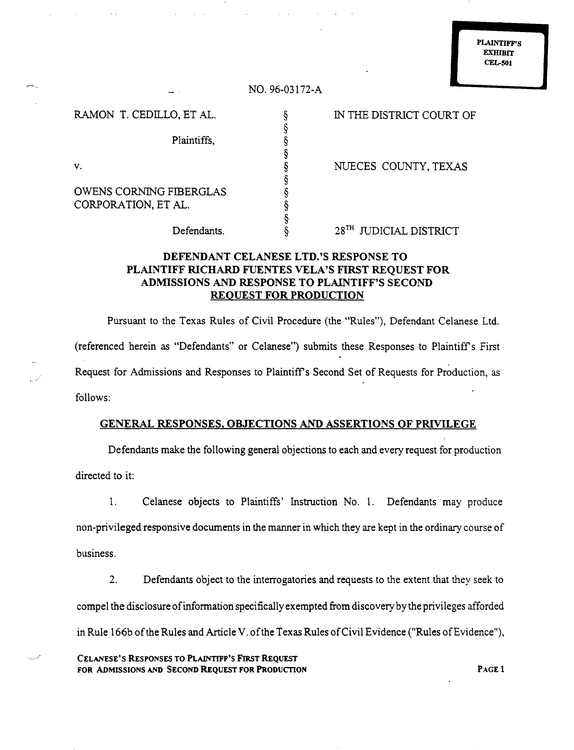
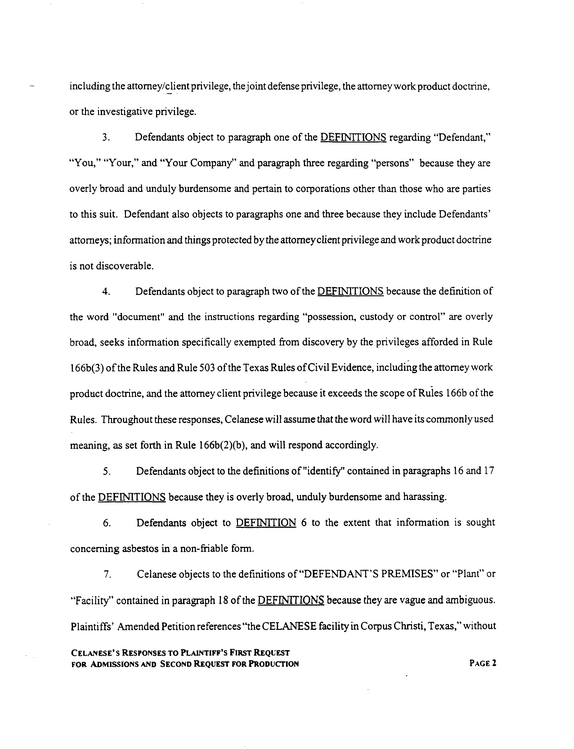
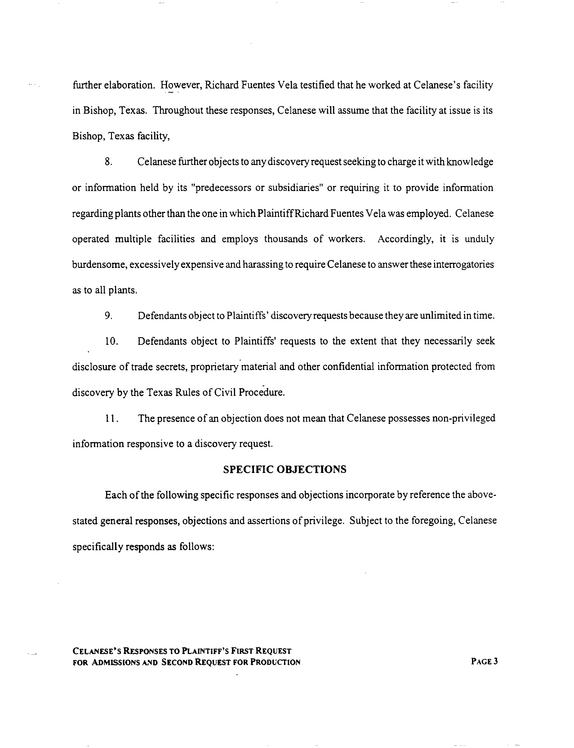
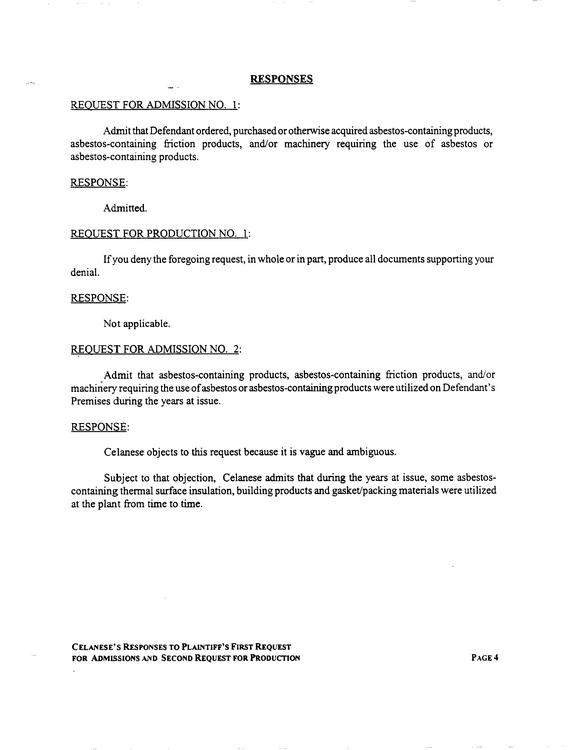
refid# qa7mB9enGmpnEYbZNg50EpB3R54 pages
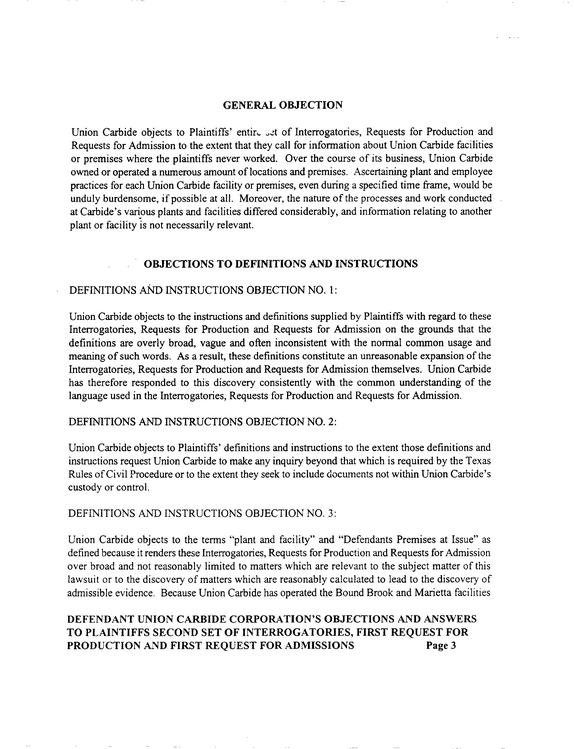
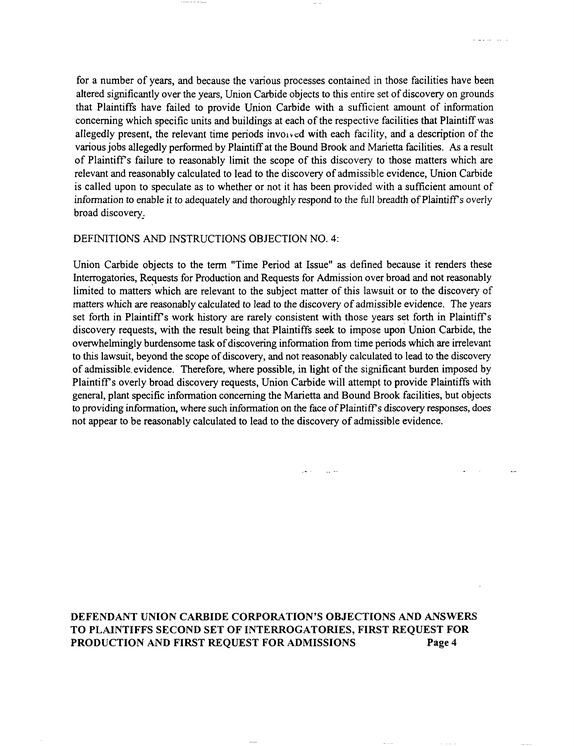
As a result of Plaintiffs failure to reasonably limit the scope of this discovery to those matters which are relevant and reasonably calculated to lead to the discovery of admissible evidence, Union Carbide is called upon to speculate as to whether or not it has been provided with a sufficient amount of information to enable it to adequately and thoroughly respond to the full breadth of Plaintiffs overly broad discovery.
refid# npbq5OQMOqBXG68eD4111R8m152 pages
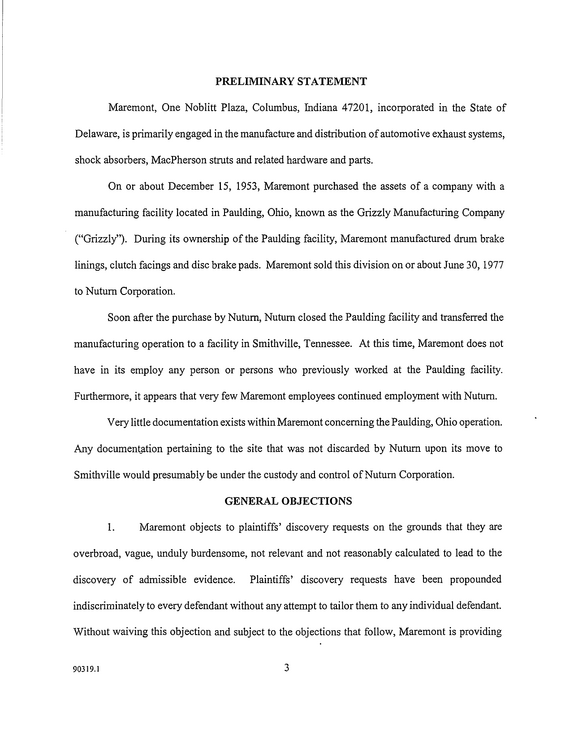
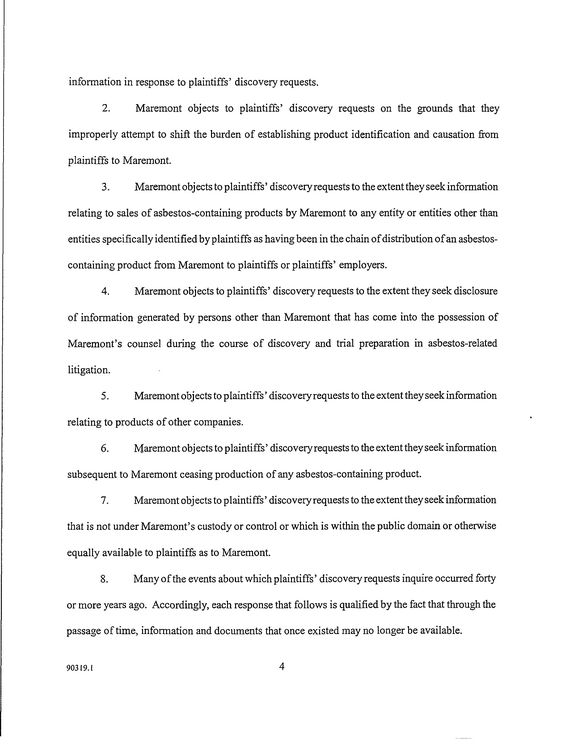
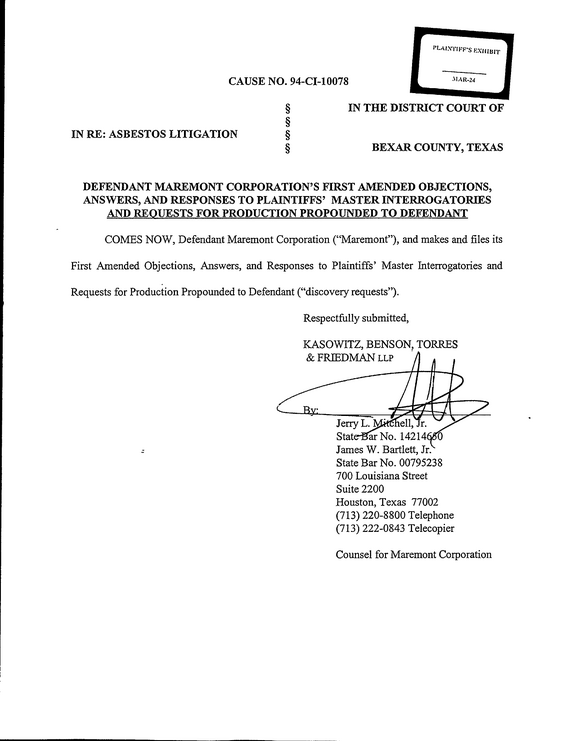
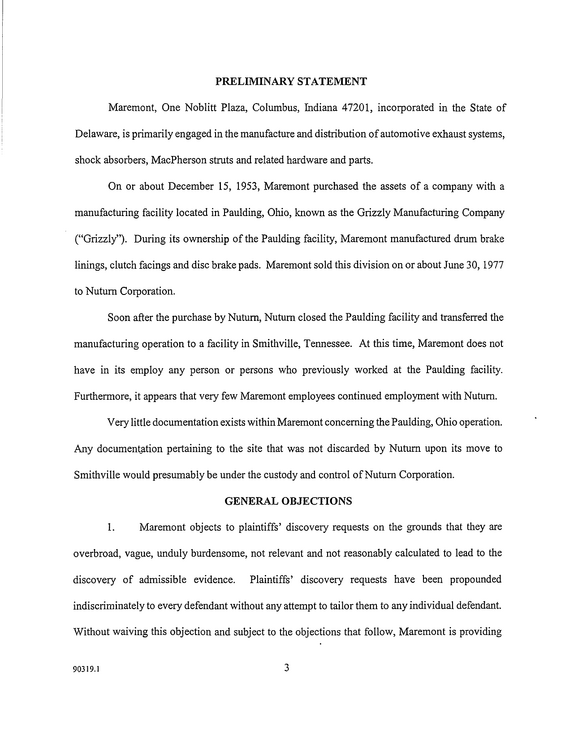
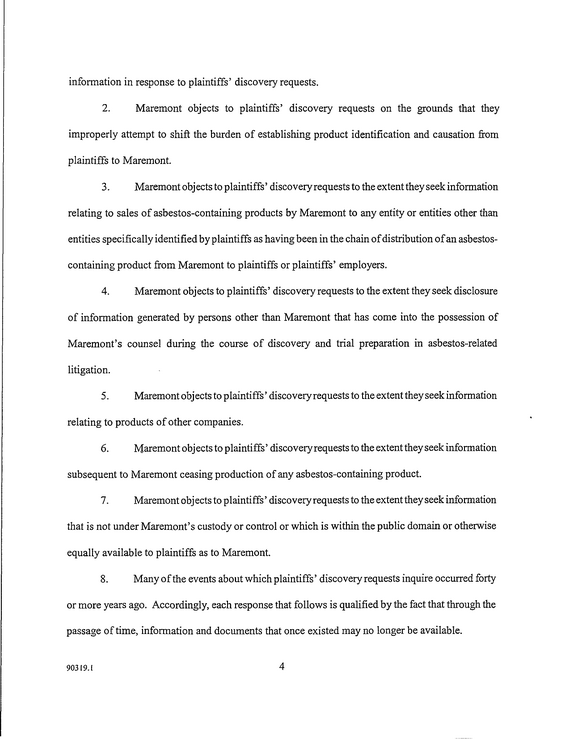
Maremont also objects on the grounds that it is overbroad and unduly burdensome, vague and ambiguous, not relevant and not calculated to lead to the discovery of admissible evidence.
refid# mB83VNa66OqvxZ1Ye72J74bdJ158 pages
Maremont also objects on the grounds that it is overbroad and unduly burdensome, vague and ambiguous, not relevant and not calculated to lead to the discovery of admissible evidence.
refid# peb8J82bMYkogxgXDgLpN8JX7158 pages
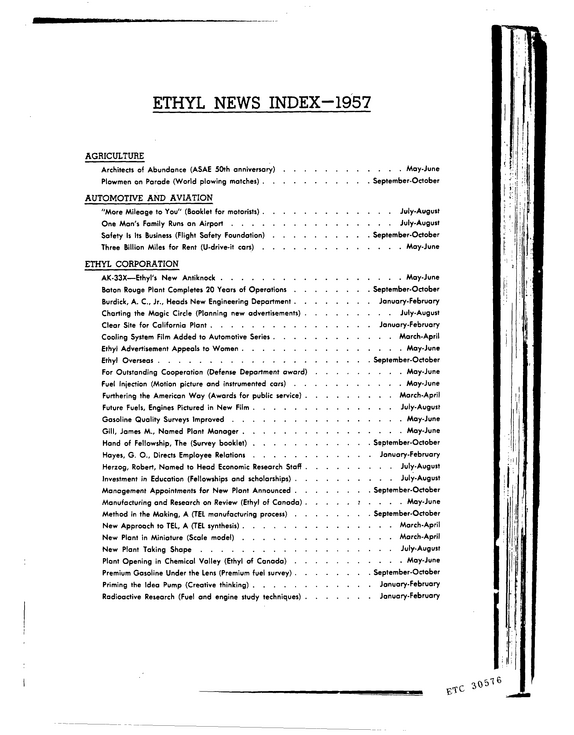
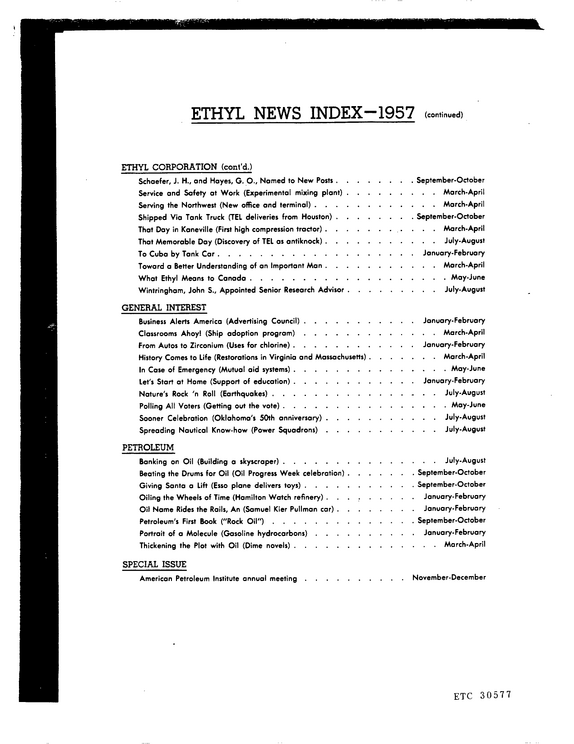
r ETHYL NEWS INDEX-1957 AGRICULTURE Architects of Abundance (ASAE 50th anniversary) Plowmen on Parade (World plowing matches).....................
refid# k6BgqkxM0Ynoe6bwDKJydKJ5D202 pages
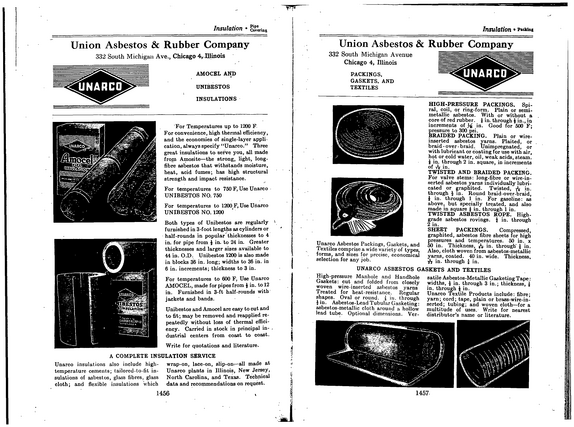
Asbestos-Lead Tubular Gasketing: asbestos-metallic cloth around a hollow lead tube.
refid# MGjJpMXZeNjeYY5w1g0dVx14V1 page
Industrial Hygiene Specific agents responsible for indu trial skin diseases can be classified accordi g to how they act upon the skin The relative im portance of these causative factors vanes from one industry to another, depending upon the matenals and processes used The determi nation of specific causative factors in cases of industrial skin disease is, of course, a problem for the dermatologist Causative factors are listed as follows Detergents and keratin solvents remove the natural oils from the skm or react with the oils of the skm to increase susceptibility to reactions from chemicals which ordinarily do not affect the skin Matenals which remove the natural oils include alkalies, soaps, and turpentine Typical matenals which increase susceptibility are cottonseed and olive oils, alcohol, phenylene bases, and several of the aromatic hydrocarbons Dessicators, hygroscopic agents, and anhydndes take water out of the skin and gen erate heat Examples are sulfur dioxide and tnoxide, phosphorus pentoxide, strong acids such as sulfunc, and strong alkalis such as potash Protein precipitants tend to coagulate or callous the outer layers of the skin They in clude all the heavy metallic salts and those which form alkaline albuminates on combin ing with the skin, such as mercunc and feme chlonde Alcohol, tannic acid, formaldehyde, picric acid, phenol, and intense ultraviolet rays are other examples Hydrolytic matenals unite with water of the skin and thus form lmtatmg compounds or dissociate into lmtatmg elements when in contact with water Heat is liberated on the skin during the reaction Examples of such substances are mustard gas, ammonium ni trate, and hexamethylenetetramine Oxidizers unite with hydrogen and lib erate nascent oxygen on the skm Such mate nals include nitrates, chlonne, iodine, bro mine, hypochlontes, feme chlonde, hydro gen peroxide, chromic acid, permanganates, and ozone Solvents extract essential skin constit uents Examples are ketones, aliphatic and aromatic hydrocarbons, halogenated hydro carbons, ethers, esters, and certain nitro com pounds Keratogenic and neoplastic agents act by stimulating abnormal growth in the outer layer of the skm and may cause either malignant or benign tumors Examples are arsenic, coal tar products, petroleum and shale, and some coal tar bases such as 3, 4-Benzpyrene (Ani line does not cause cancer) Biotic agents are microorganisms and parasites (vegetable and animal) which act on the skm to produce dermatitis, such as athlete's foot Allergic or anaphylactic proteins stimu late the production of antibodies which cause skm reactions in sensitive persons The sources of these antigens are usually cereals, flour, and pollens, but may include feathers, scales, flesh, fur, and other emanations Reducers react with water on the skm and, if the solution is strong, causes shedding of the horny layers Examples are photographic developers, tar, phenols and naphthols, aro matic and aliphatic hydrocarbons, salts of titanium and hydroqumone, resorcinol, formalin, paraldehyde, and salicylic, formic, and oxalic acids Mechanical causes of skin irritation include friction, pressure, and trauma, which produce cuts, which may become infected with either bacteria or fungi, and callosities If the homy layers of the skin become softened by high temperatures and excessive perspiration, the development of friction (for example, be tween the buttocks) then leads to dermatitis Other examples of mechanical causes are ab rasions Physical agents which lead to occupational dermatitis include heat, cold, water, sunlight, X rays, ionizing radiation, and electricity Hot water softens the skm so that substances more readily attack it, as typified bv derma toses occurring among laundry workers and dish washers X rays and other ionizing ra diation may cause dermatitis, severe bums, and even cancer Prolonged exposure to sun light produces skin changes which may cause dangerous body alterations Frostbite pro duces chilblains 1276
refid# OJro1yxzx8rN1v6KOynJEdDX1 page
Changes in manner of storing gasoline N9793 (1) Larger proportion of leaded gasoline in storage (2) Different containers - #large dump of cans and drums (a) Terne plate for tin ' .a O ) Wider range of climatic conditions - especially with respect to cold II.
refid# 7RabaEm1v7bMMabpJ6rVYLm62 pages
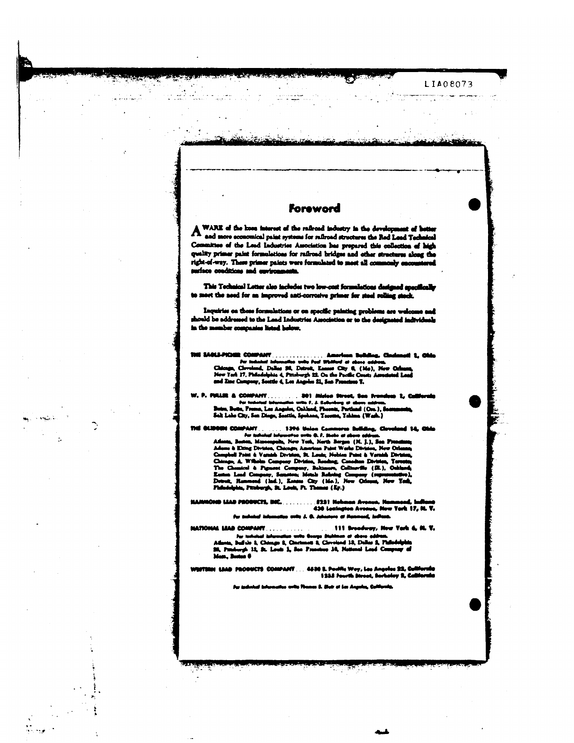
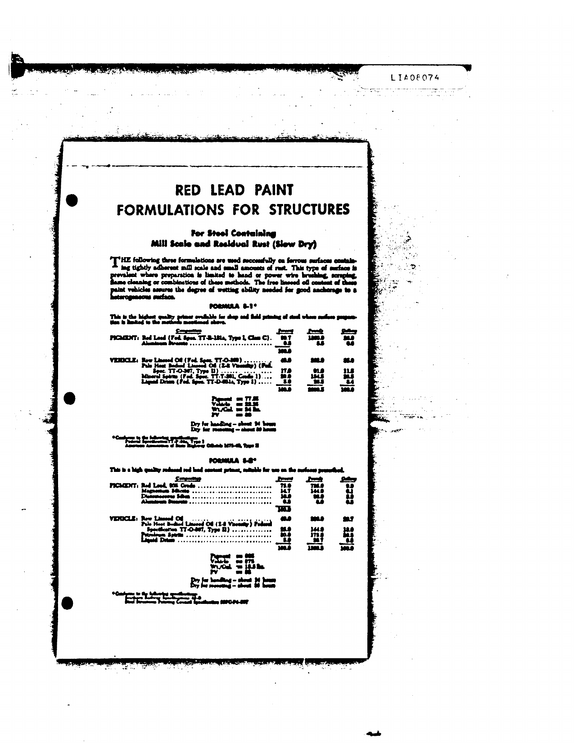
i' -V r' LEAD INDUSTRIES ASSOCIATION 4M UDUnOTOX AVKMUt HW VOW 17, M.
refid# OJ3Dgm2eMwKEOVMqMoyy6ZprL2 pages
.- 1 r LEAD INDUSTRIES ASSOCIATION 4SI LUMtTON AVIVM MMVOMtt.fif
refid# JNKGj5m043VpdBV3xa5LvpwBO8 pages
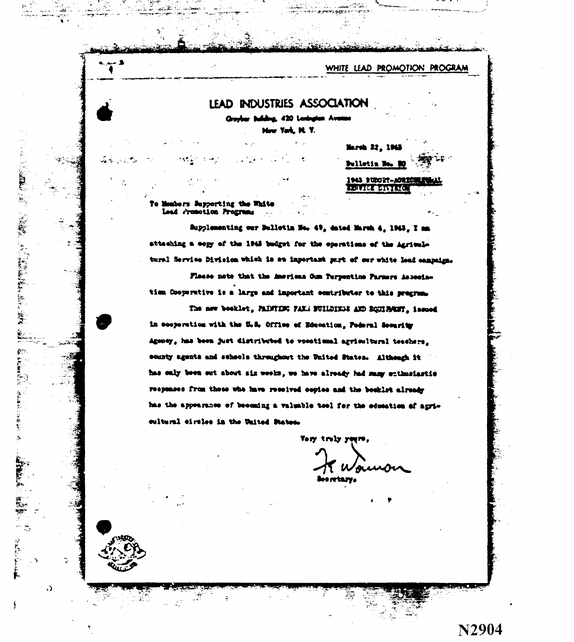
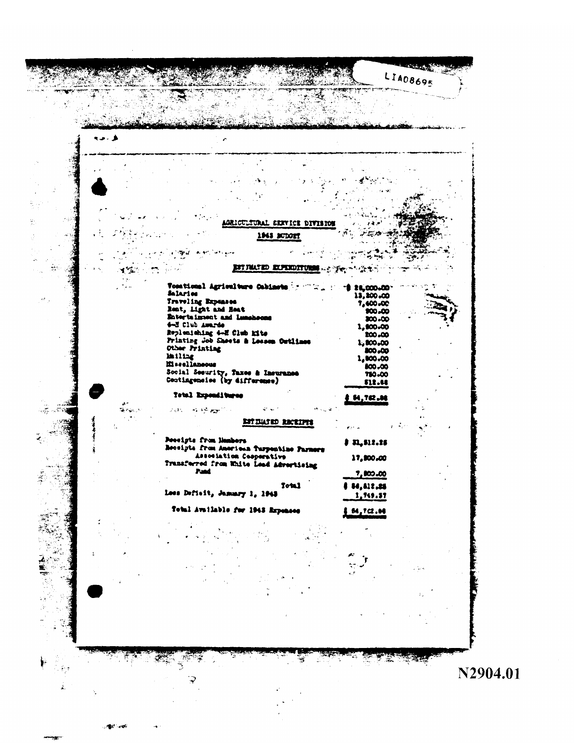
i :- rV. l WHITE LEAD PROMOTION PROGRAM r LEAD INDUSTRIES ASSOCIATION OrnW MJhi 410 lM#oo Ao o h o o NmHHT.
refid# jyN2OQ71yMDK7Ld00yO5ywb8y2 pages
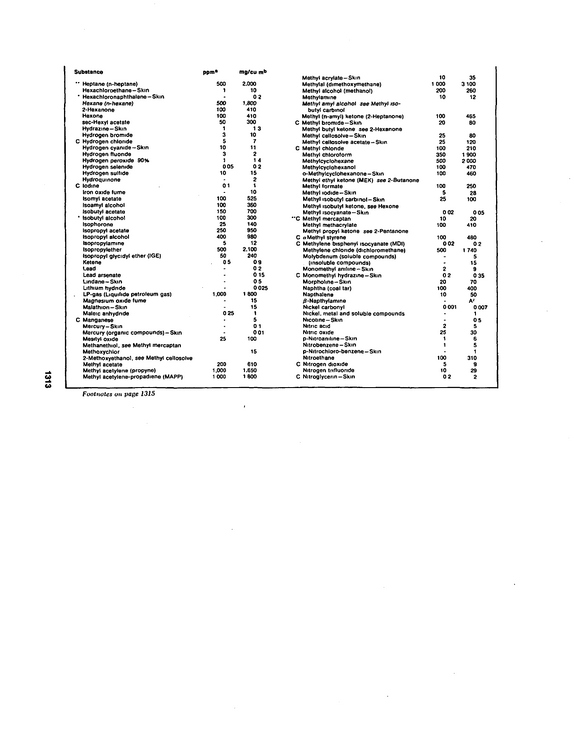
ether (IGE) Ketene Lead Lead arsenate Lindane--Skin Lithium hydnde LP-gas (Liquifide petroleum gas) Magnesium oxide fume Malathion-Skm Maleic anhydride C Manganese Mercury-Skin Mercury (organic compounds)-Skin Mesityl oxide Methanethiol, see Methyl mercaptan Methoxychlor 2-Methoxyethanol, see Methyl cellosolve Methyl acetate Methyl acetylene (propyne) Methyl acetylene-propadiene (MAPP) ppm1 mg/eu mb 500 1 - 500 too 100 50 1 3 5 10 3 1 005 10 * 01 - 100 100 150 100 25 250 400 5 500 50 05 - * 1.000 0 25 25 2.000 10 02 1.800 410 410 300 13 10 7 11 2 14 02 15 2 1 10 525 360 700 300 140 950 980 12 2.100 240 09 02 015 05 0 025 1 800 15 15 1 5 01 001 100 15 200 1.000 1 000 610 1.650 1 800 Footnotes on page 1315 Methyl acrylate --Skin Methylal (dimethoxymethane) Methyl alcohol (methanol) Methyiamine Methyl amyl alcohol see Methyl iso- butyl carbtnof Methyl (n-amyl) ketone (2-Heptanone) C Methyl bromide--Skin Methyl butyl ketone see 2-Hexanone Methyl cellosolve--Skin Methyl cellosolve acetate-Skin C Methyl chlonde Methyl chloroform Methylcyclohexene Methylcyclohexanol o-Methylcyclohexanone - Skin Methyl ethyl ketone (MEK) see 2-Butanone Methyl formate Methyl iodide--Skin Methyl isobutyl carbinol-Skm Methyl isobutyl ketone, see Hexone Methyl isocyanate--Skm *'C Methyl mercaptan Methyl methacrylate Methyl propyl ketone see 2-Pentanone C o Methyl styrene C Methylene bisphenyi isocyanate (MDI) Methylene chloride (dichloromethane) Molybdenum (soluble compounds) (insoluble compounds) Monomethyl aniline-Skin C Monomethyl hydrazine--Skin Morpholine-Skm Naphtha (coal tar) Napthalene j9-Napthylamine Nickel carbonyl Nickel, metal and soluble compounds Nicotine--Skm Nitric acid Nitric oxide p'Nitroaniline--Skin Nitrobenzene - Skin p-Nitrochloro-benzene - Skm Nitroethane C Nitrogen dioxide Nitrogen trifluoride C Nitroglycerin--Skin 10 1 000 200 10 35 3 100 260 12 100 465 20 BO 25 80 25 120 100 210 350 1 900 500 2 000 100 470 100 460 100 250 $ 28 25 100 0 02 10 100 0 05 20 410 100 0 02 500 - - 2 02 20 100 10 - 0 001 - - 2 25 1 1 100 5 10 02 480 02 1 740 5 15 9 0 35 70 400 50 A* 0 007 1 05 5 30 6 5 1 310 9 29 2
refid# LpezBoOEQx4OBJVe2BeQV7GL71 page
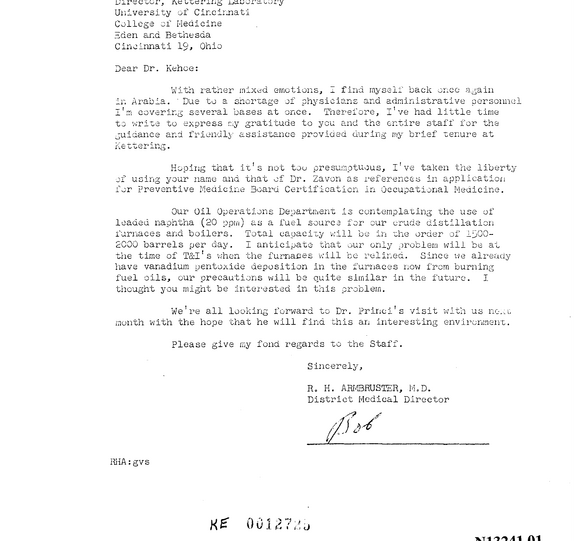
Our Oil Operations Department is contemplating the use of leaded naphtha (20 ppm) as a fuel source for our crude distillation furnaces and boilers.

refid# K61oQnVaw23B5OZqb2abYZ3p63 pages