Refine
Estimated Years UndatedClear
1,309 results foundRefine Search
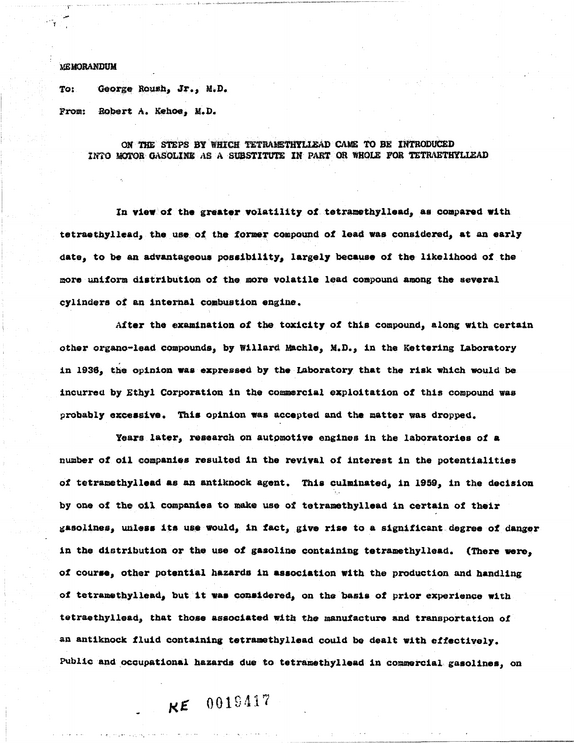
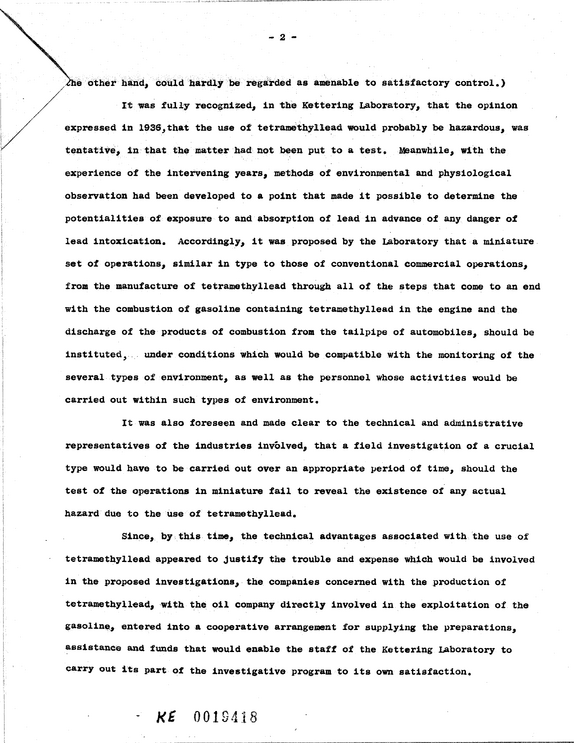
In May of 1959, the preliminary experiment involving the use of tetrainethyllead was initiated in San Francisco, California and was completed some months later, as described in detail in a Report of the Kettering Laboratory, dated November 10, 1959 and entitled "An Investigation of the Potential Hazards of Exposure to Lead Associated with the Handling and Use of Gasoline Containing an .Antiknock Fluid in Which Tetramethyl lead is Substituted for Tetraethyl Lead."
refid# YjwRJ17gaQEnKbnea1vZkpq9y7 pages
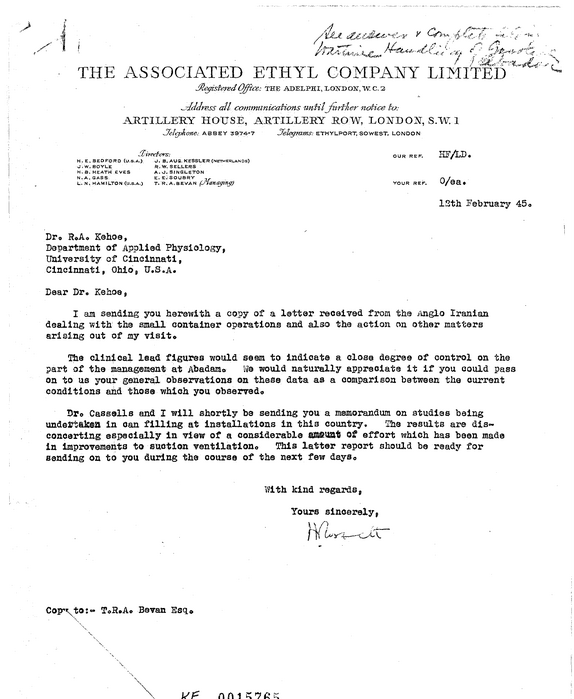
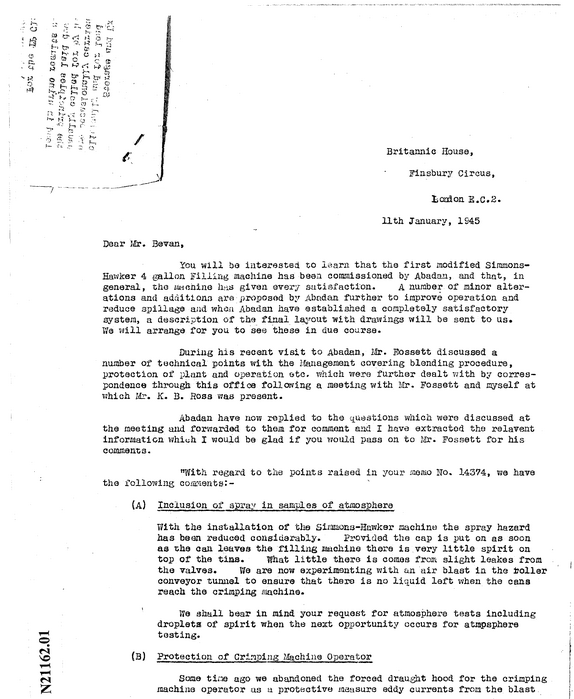
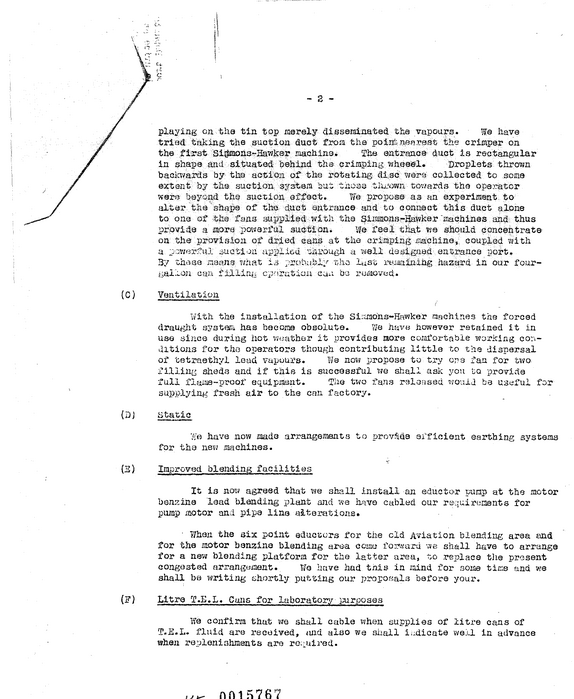
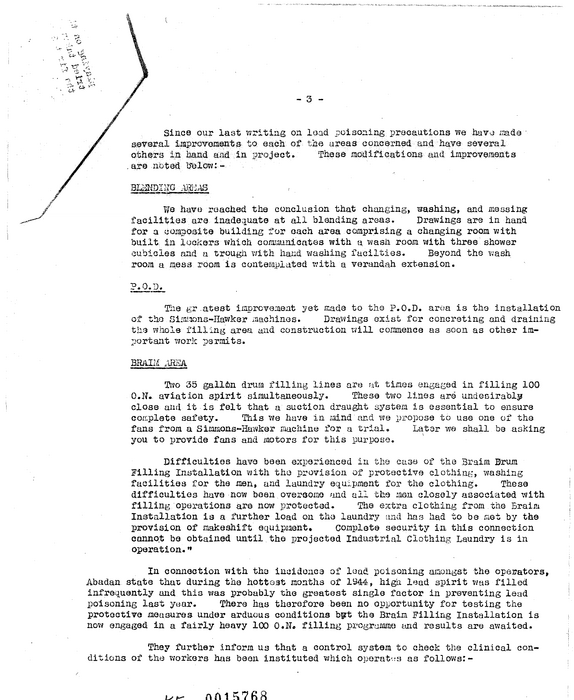
We have however retained it in use since during hot weather it provides sore comfortable working con ditions for the operators though contributing little to the dispersal of tetraethyl lead vapours.
refid# dQZrGyDrRb6q6kwMGYRoLOrQQ5 pages
Whether the breathing of the ftuaes of gasoline that contains lead would give him lead poison. 2.
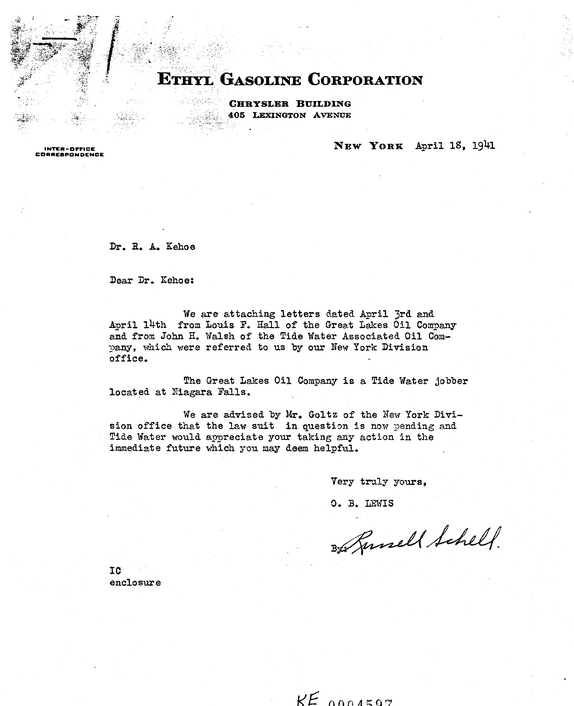
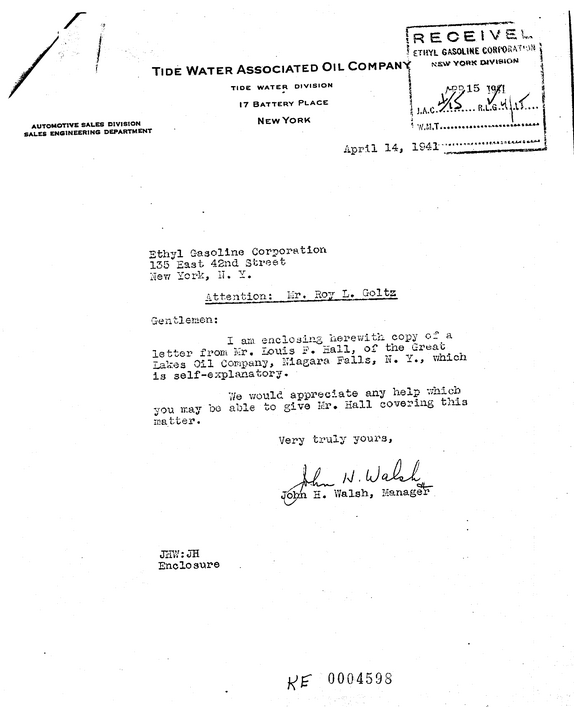
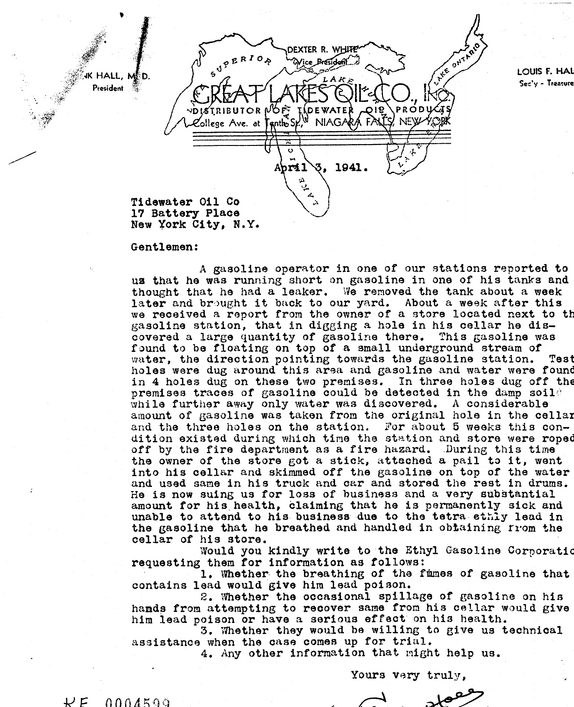
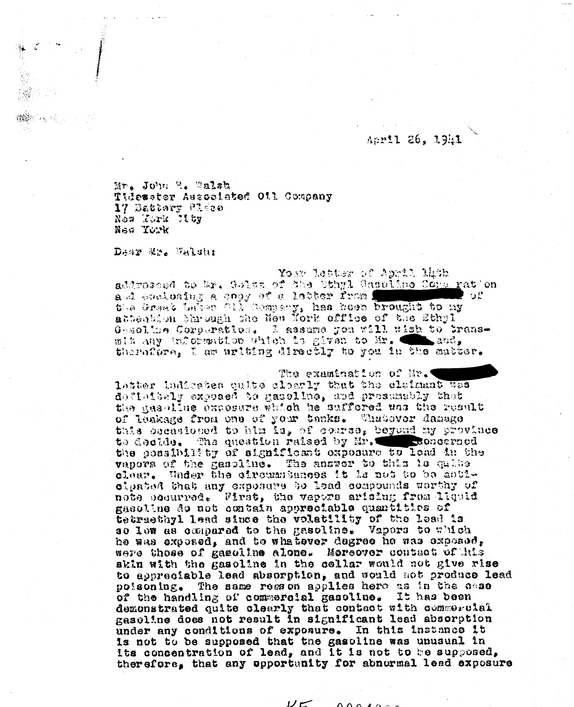
refid# x1b9ZX56BO0aw8Kg0goMQzxky5 pages
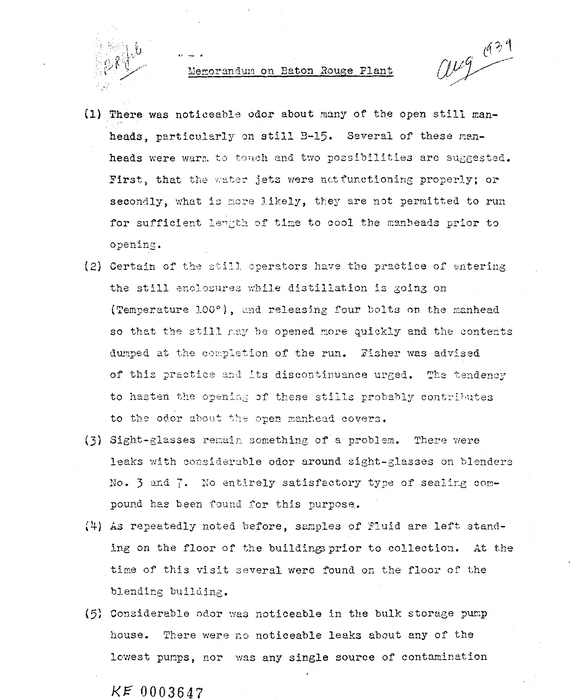
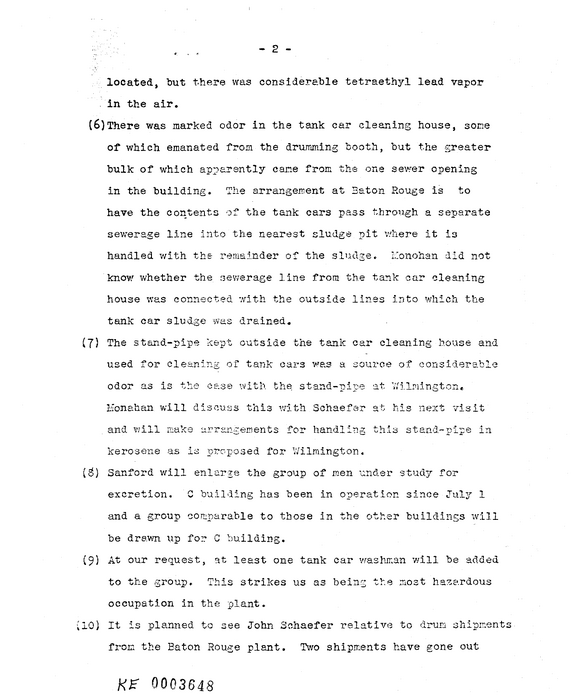
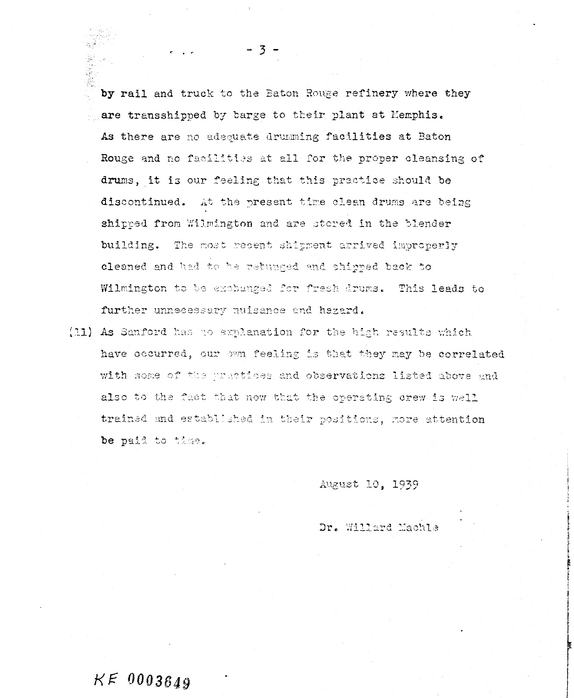
r -2 located, but there was considerable tetraethyl lead vapor in the air
refid# DD358vNmdyZk5ynDbqB4Zx2n43 pages
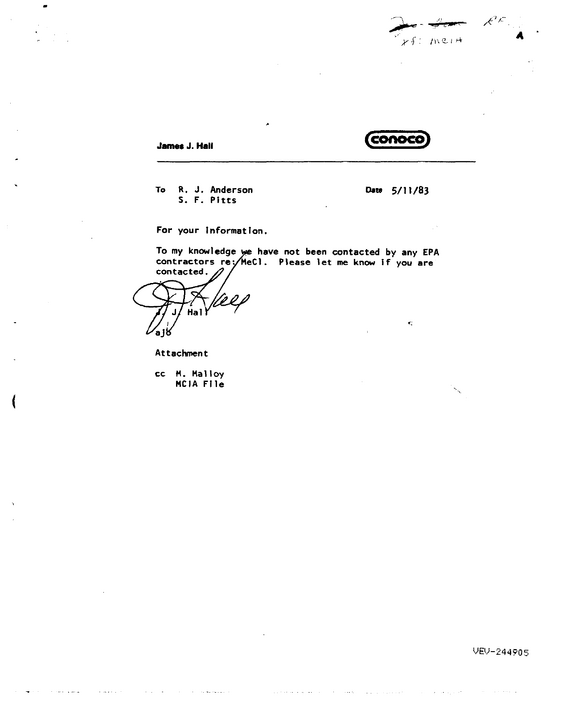
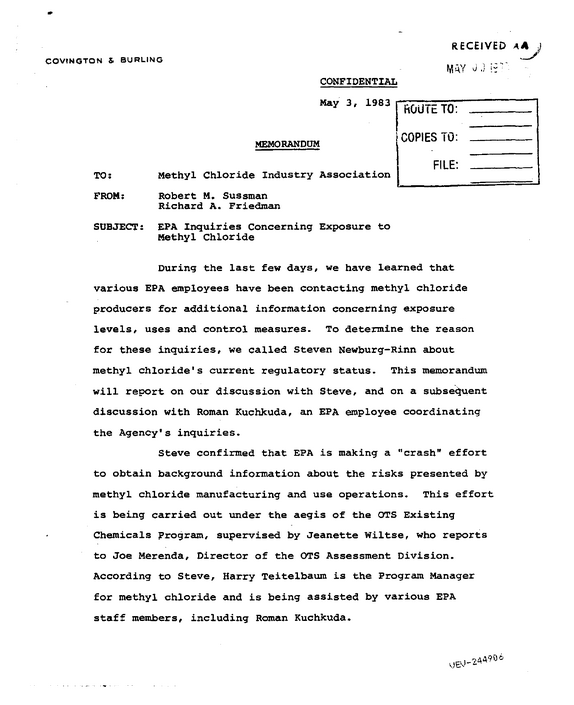
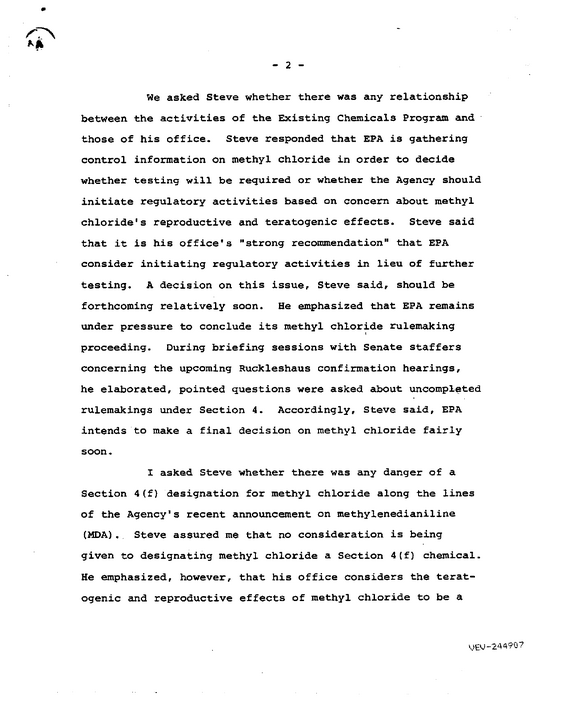
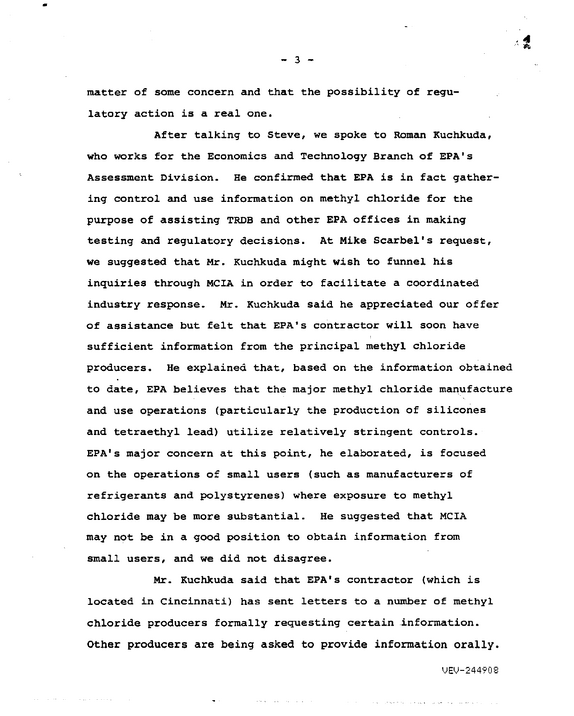
He explained that, based on the information obtained to date, EPA believes that the major methyl chloride manufacture and use operations (particularly the production of silicones and tetraethyl lead) utilize relatively stringent controls.
refid# JqMkzdwL5XNY32yyppdZgraB5 pages
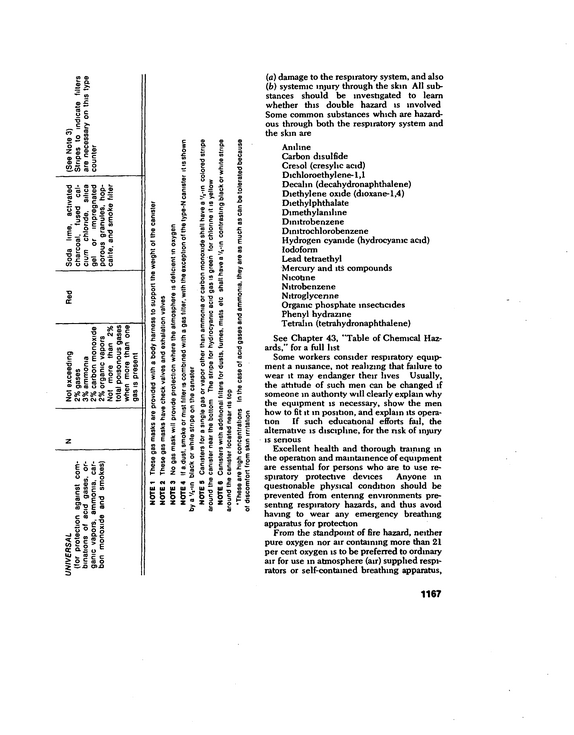
Oca z z z Z O z o t" (a) damage to the respiratory system, and also (b) systemic injury through the skin All sub stances should be investigated to leam whether this double hazard is involved Some common substances which are hazard ous through both the respiratory system and the skin are Aniline Carbon disulfide Cresol (cresylic acid) Dichloroethylene-1,1 Decalin (decahydronaphthalene) Diethylene oxide (dioxane-1,4) Diethylphthalate Dimethylaniline Dinitrobenzene Dinitrochlorobenzene Hydrogen cyanide (hydrocyanic acid) Iodoform Lead tetraethyl Mercury and its compounds Nicotine Nitrobenzene Nitroglycerine Organic phosphate insecticides Phenyl hydrazine Tetralin (tetrahydronaphthalene) See Chapter 43, "Table of Chemical Haz ards," for a full list Some workers consider respiratory equip ment a nuisance, not realizing that failure to wear it may endanger their lives Usually, the attitude of such men can be changed if someone m authority will clearly explain why the equipment is necessary, show the men how to fit it in position, and explain its opera tion If such educational efforts fail, the alternative is discipline, for the nsk of injury is senous Excellent health and thorough training m the operation and maintainence of equipment are essential for persons who are to use re spiratory protective devices Anyone m questionable physical condition should be prevented from entering environments pre senting respiratory hazards, and thus avoid having to wear any emergency breathing apparatus for protection From the standpoint of fire hazard, neither pure oxygen nor air containing more than 21 per cent oxygen is to be preferred to ordinary air for use m atmosphere (air) supplied respi rators or self-contained breathing apparatus. 1167
refid# rpr35dRboZ64dJEraMd3rMp5q1 page
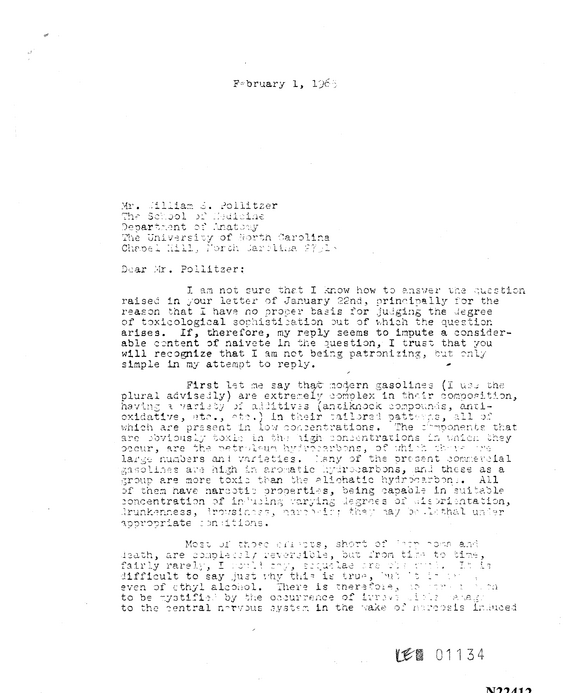
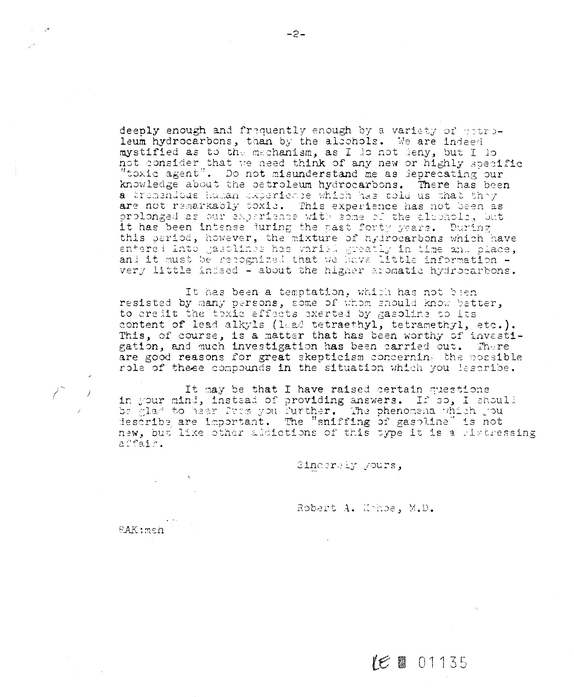
It has been a temptation, which has not ene resisted by many persons, some of whom snould know be tter, to credit the toxic effects exerted by gasoline so it 3 content of lead alkyls (1ah tetraethyl, tetram.ethyl, e t c .).
refid# GmEzYz40L76g3XjxO6j9kRanm2 pages
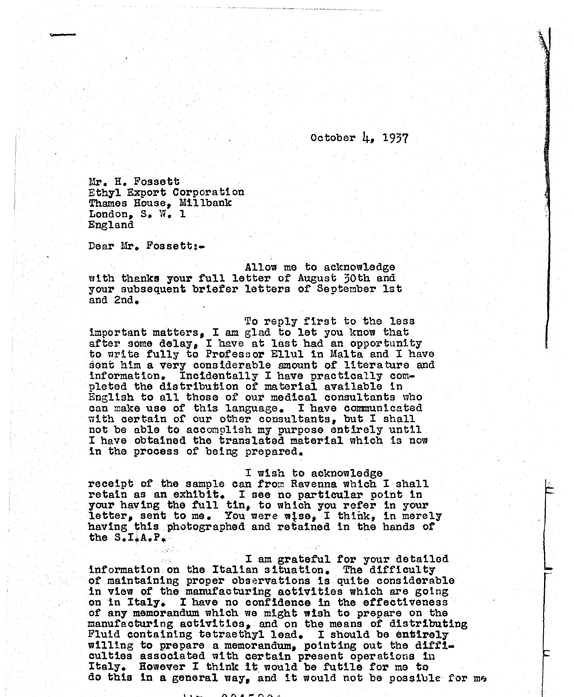
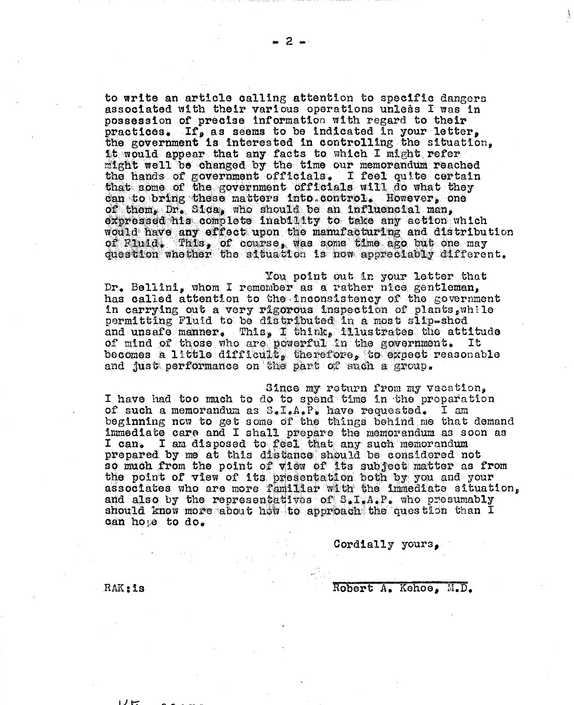
You were w|se, I think, in merely having this photographed and retained in the hands of the S.I.A.P* ' > I am grateful for your detailed information on the Italian situation The difficulty of maintaining proper observations is quite considerable in view of the manufacturing activities which are going on in Italy* I have no confidence In the effectiveness of any memorandum which we might wish to prepare on the manufacturing activities, and on the means of distributing Fluid containing tetraethyl lead* I should be entirely willing to prepare a memorandum, pointing out the diffi culties associated with certain present operations in Italy However I think It would be futile for me to do this In a general way, and it would not be possible for me 2 to write an article calling attention to specific dangers associated with their various operations unless I was in possession of precise information with regard to their practices.
refid# vB5X6BpR0q1aEoyK443X4g1KZ2 pages
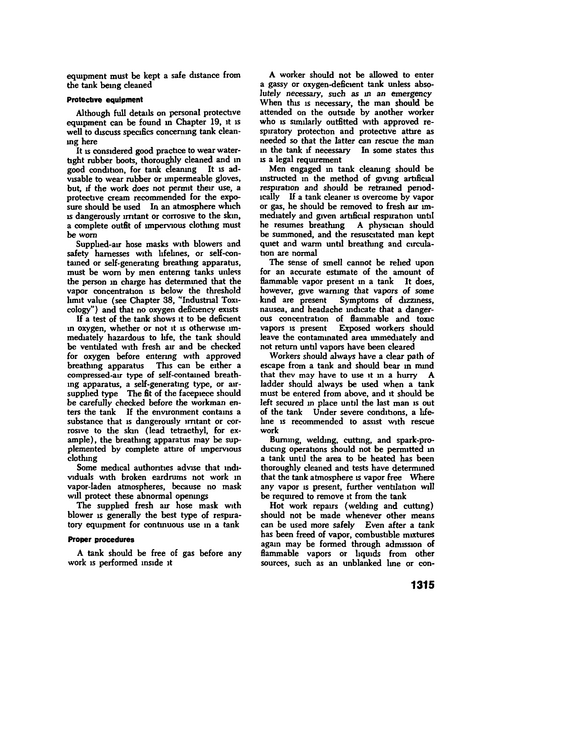
equipment must be kept a safe distance from the tank being cleaned Protective equipment Although full details on personal protective equipment can be found in Chapter 19, it is well to discuss specifics concerning tank clean ing here It is considered good practice to wear water tight rubber boots, thoroughly cleaned and m good condition, for tank cleaning It is ad visable to wear rubber or impermeable gloves, but, if the work does not permit their use, a protective cream recommended for the expo sure should be used In an atmosphere which is dangerously untant or corrosive to the skin, a complete outfit of impervious clothing must be worn Supphed-air hose masks with blowers and safety harnesses with lifelines, or self-contamed or self-generating breathing apparatus, must be wom by men entering tanks unless the person m charge has determined that the vapor concentration is below the threshold limit value (see Chapter 38, "Industrial Toxi cology") and that no oxygen deficiency exists If a test of the tank shows it to be deficient in oxygen, whether or not it is otherwise im mediately hazardous to life, the tank should be ventilated with fresh air and be checked for oxygen before entering with approved breathing apparatus This can be either a compressed-air type of self-contained breath ing apparatus, a self-generating type, or airsupplied type The fit of the facepiece should be carefully checked before the workman en ters the tank If the environment contains a substance that is dangerously irritant or cor rosive to the skin (lead tetraethyl, for ex ample), the breathing apparatus may be sup plemented by complete attire of impervious clothing Some medical authorities advise that indi viduals with broken eardrums not work in vapor-laden atmospheres, because no mask will protect these abnormal openings The supplied fresh air hose mask with blower is generally the best type of respira tory equipment for continuous use in a tank Proper procedures A tank should be free of gas before any work is performed inside it A worker should not be allowed to enter a gassy or oxygen-deficient tank unless abso lutely necessary, such as in an emergency When this is necessary, the man should be attended on the outside by another worker who is similarly outfitted with approved re spiratory protection and protective attire as needed so that the latter can rescue the man in the tank if necessary In some states this is a legal requirement Men engaged in tank cleaning should be instructed m the method of giving artificial respiration and should be retrained period ically If a tank cleaner is overcome by vapor or gas, he should be removed to fresh air im mediately and given artificial respiration until he resumes breathing A physician should be summoned, and the resuscitated man kept quiet and warm until breathing and circula tion are normal The sense of smell cannot be relied upon for an accurate estimate of the amount of flammable vapor present in a tank It does, however, give warning that vapors of some kind are present Symptoms of dizziness, nausea, and headache indicate that a danger ous concentration of flammable and toxic vapors is present Exposed workers should leave the contaminated area immediately and not return until vapors have been cleared Workers should always have a clear path of escape from a tank and should bear in mind that thev may have to use it m a hurry A ladder should always be used when a tank must be entered from above, and it should be left secured in place until the last man is out of the tank Under severe conditions, a life line is recommended to assist with rescue work Burning, welding, cutting, and spark-pro ducing operations should not be permitted in a tank until the area to be heated has been thoroughly cleaned and tests have determined that the tank atmosphere is vapor free Where any vapor is present, further ventilation will be required to remove it from the tank Hot work repairs (welding and cutting) should not be made whenever other means can be used more safely Even after a tank has been freed of vapor, combustible mixtures again may be formed through admission of flammable vapors or liquids from other sources, such as an unblanked line or con- 1315
refid# 1gnjYknB8Q5eeeEKO32kq3wpj1 page
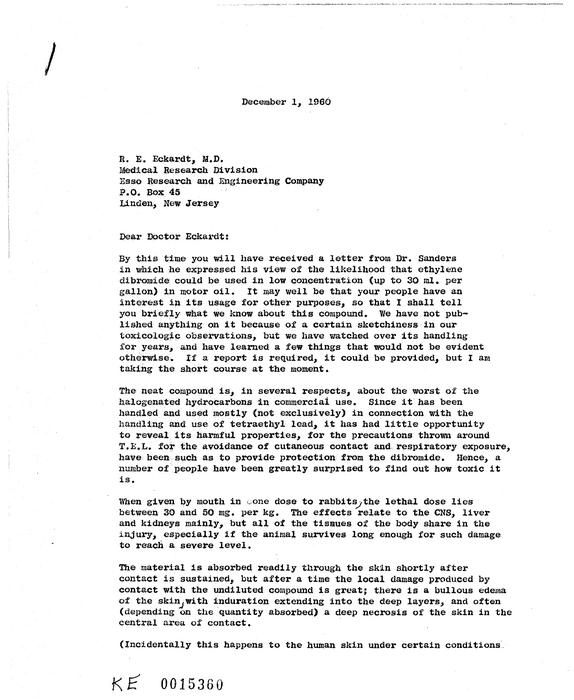
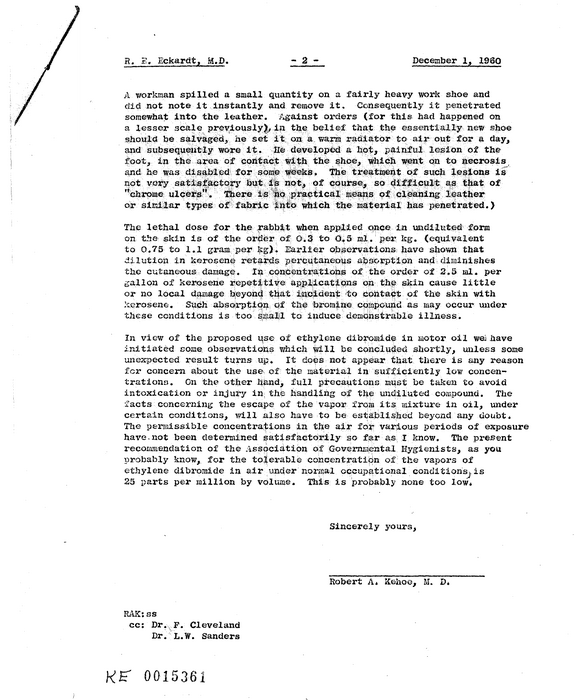
Since it has been handled and used mostly (not exclusively) in connection with the handling and use of tetraethyl lead, it has had little opportunity to reveal its harmful properties, for the precautions thrown around T.E.L. for the avoidance of cutaneous contact and respiratory exposure, have been such as to provide protection from the dibromide.
refid# DJ01EZ0oDVZ5LqMreqq2Qk4Q2 pages
Jjprt* J !'
refid# rBLYga8DM4rawGnY414v6LvXG41 pages
Jjprt* J !'
refid# NGx145247JMa1XBeBQ8jKnLaE41 pages
Jjprt* J !'
refid# x5qxzpkB2geKn0KdVY0KwzdRb41 pages
Jjprt* J !'
refid# OmRRp9q0ZKkzJw851KxyM5yX41 pages
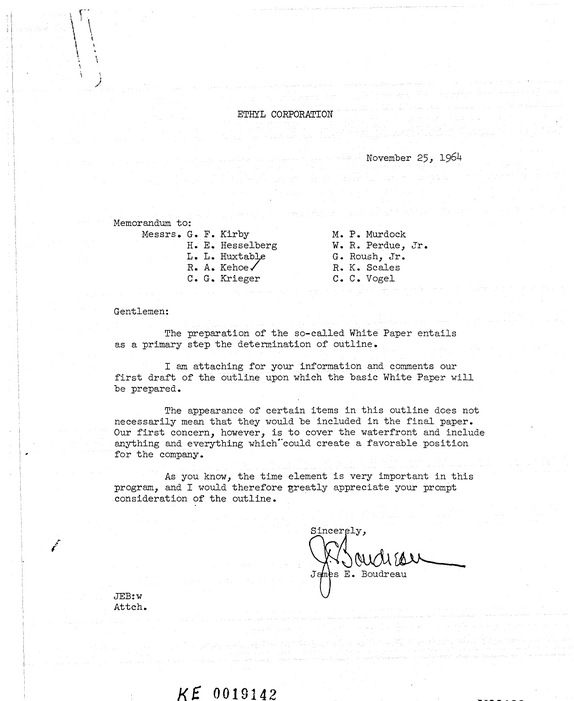
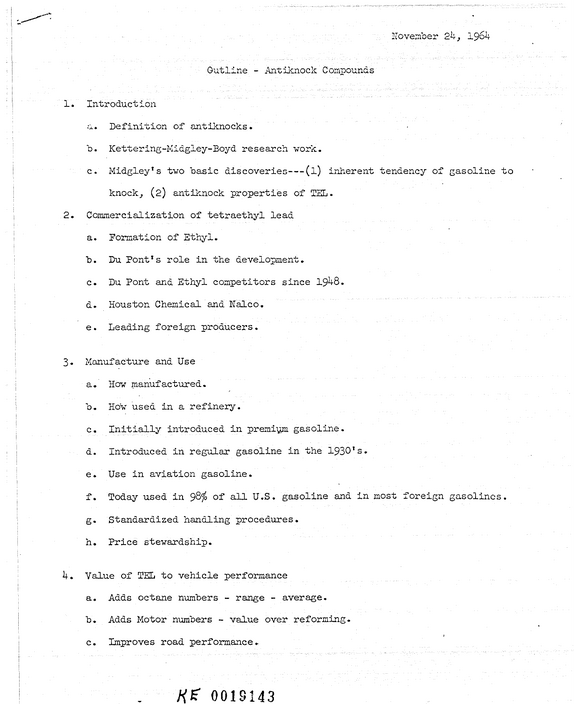
Commercialization of tetraethyl lead a.
refid# 6BXOqy30pxyamNQk7MYe62joo9 pages