Refine
Estimated Years UndatedClear
92,592 results foundRefine Search
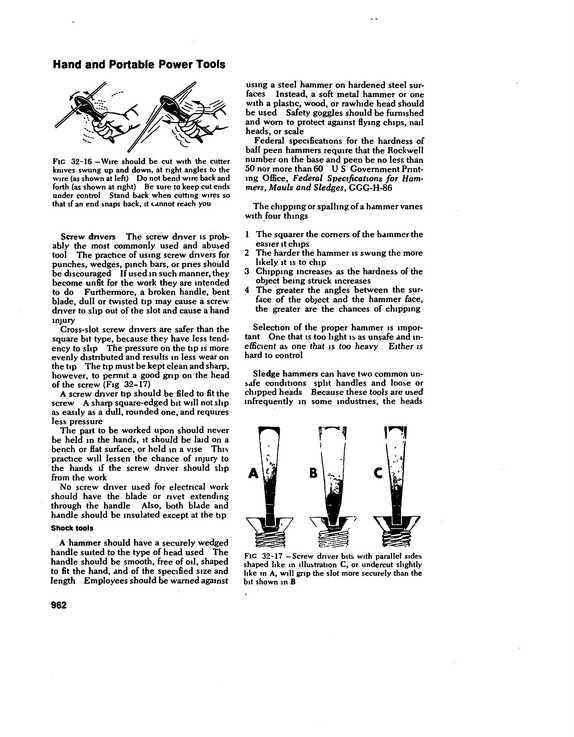
Hand and Portable Power Tools Fig 32-16 -- Wire should be cut with the cutter knives swung up and down, at nght angles to the wire (as shown at left) Do not bend wire back and forth (as shown at right) Be sure to keep cut ends under control Stand back when cutting wires so that if an end snaps back, it cannot reach you using a steel hammer on hardened steel sur faces Instead, a soft metal hammer or one with a plastic, wood, or rawhide head should be used Safety goggles should be furnished and worn to protect against flying chips, nail heads, or scale Federal specifications for the hardness of ball peen hammers require that the Rockwell number on the base and peen be no less than 50 nor more than 60 US Government Print ing Office, Federal Specifications for Ham mers, Mauls and Sledges, GGG-H-86 The chipping or spalling of a hammer vanes with four things Screw drivers The screw dnver is prob ably the most commonly used and abused tool The practice of using screw drivers for punches, wedges, pinch bars, or pries should be discouraged if used m such manner, they become unfit for the work they are intended to do Furthermore, a broken handle, bent blade, dull or twisted tip may cause a screw dnver to slip out of the slot and cause a hand injury Cross-slot screw drivers are safer than the square bit type, because they have less tend ency to slip The pressure on the tip is more evenly distnbuted and results m less wear on the tip The tip must be kept clean and sharp, however, to permit a good gnp on the head of the screw (Fig 32-17) A screw dnver tip should be filed to fit the screw A sharp square-edged bit will not slip as easily as a dull, rounded one, and requires less pressure The part to be worked upon should never be held in the hands, it should be laid on a bench or flat surface, or held in a vise This practice will lessen the chance of injury to the hands if the screw dnver should slip from the work No screw driver used for electncal work should have the blade or rivet extending through the handle Also, both blade and handle should be insulated except at the tip Shock tools A hammer should have a securely wedged handle suited to the type of head used The handle should be smooth, free of oil, shaped to fit the hand, and of the specified size and length Employees should be warned against 1 The squarer the comers of the hammer the easier it chips 2 The harder the hammer is swung the more likely it is to chip 3 Chipping increases as the hardness of the object being struck increases 4 The greater the angles between the sur face of the object and the hammer face, the greater are the chances of chipping Selection of the proper hammer is impor tant One that is too light is as unsafe and in efficient as one that is too heavy Either is hard to control Sledge hammers can have two common un safe conditions split handles and loose or chipped heads Because these tools are used infrequently in some industries, the heads FlC 32-17 --Screw driver bits with parallel sides shaped like in illustration C, or undercut slightly like in A, will gnp the slot more securely than the bit shown in B 962
refid# OEO2w2689ey7OJEEog28LQQnX1 page
may become loose or chipped and the defect not be noticed Some companies place a steel band around the head and bolt it to the handle to prevent the head from flying off The heads should be dressed wheneverthey start to check or mush room A hammer so light that it bounces off the work is hazardous, likewise, one too heavy and hard to control may cause body strain Riveting hammers, often used by sheet metal workers, should have the same kind of use and care as ball peen hammers and should be watched closely for checked or chipped faces Carpenter's or claw hammers are designed primarily for driving and drawing nails Their shape, depth of face, and balance make them unsuitable for striking heavier objects, such as cold chisels Federal specifications for the hardness of claw hammers require the Rockwell C num ber of the face to be not less than 50 nor more than 60, and the Rockwell C number of the claw to be not less than 40 nor more than 55 The faces should be kept well dressed at all times to reduce the hazard of nails flying while they are being started into a piece of wood A checker-faced head is sometimes used to reduce this hazard Some companies have found eye protection advisable for all men working close together, as in a shipping room, when some are using these hammers When a nail is to be drawn from a piece of wood, a block of wood may be used under the head to increase the leverage and reduce the strain on the handle Spark-resistant tools So-called spark-resistant tools of nonferrous materials are sometimes advised for use where flammable gases, highly volatile liq uids, and other explosive substances are stored or used The intensified sparks from steel tools are capable of igniting substances such as gunpowder, lint, TNT, carbon di sulfide, and ethyl ether (See U S Depart ment of Commerce, Office of Technical Serv ices Sparking Characteristics and Safety Hazards of Metallic Materials, Technical Report No NGF-T-1-57, PB 131131) In certain circumstances, steel coated with aluminum paint can emit sparks when struck with a metal striker (steel, brass, or sparkresistant alloys), and such sparks may ignite mixtures of flammable gases or vapors m air The sparks are due to the thermite reaction between iron oxide and aluminum and are, therefore, produced only in the presence of iron oxide The extent of this hazard depends on the nature of the surface covered and the nature of the paint, and it is increased if the painted steel is subjected to heat (For further information, see McMahan, E C and R T Wray Aluminum Paint on Hot Surfaces, Aluminum Research Laboratories, New Kensington, Pa) Nonferrous tools reduce the hazard from sparking but do not eliminate it They need inspection before each use to be certain that they have not picked up foreign particles which could produce friction sparks, thereby obviating the value of these special tools Portable Power Tools Portable power tools are divided into four primary groups according to the power source electnc, pneumatic, gasoline, and explosive (powder actuated) Several types of tools, such as saws, drills, and grinders, are common to the first three groups, whereas explosive tools are used exclusively for penetration work and cutting A portable power tool presents similar hazards as a stationary machine of the same kind, in addition to the nsks of handling Typical injuries caused by portable power tools are bums, cuts, and strains Sources of injury include electnc shock, particles in the eyes, fires, falls, explosion of gases, and falling tools The power line should always be discon nected before accessones on a portable tool are changed, and guards should be replaced or put in correct adjustment before the tool is used again A tool should not be left in an overhead place where there is a chance that the line, if pulled, will cause the tool to fall The line and the tool may be suspended by counterweighted rope or stnng which keeps the line out of the operator's way and also coun terbalances some of the weight of the tool and the line Lines on the floor create a 963
refid# k6q5qp85xkVNqoKLdpmMbxZrn1 page
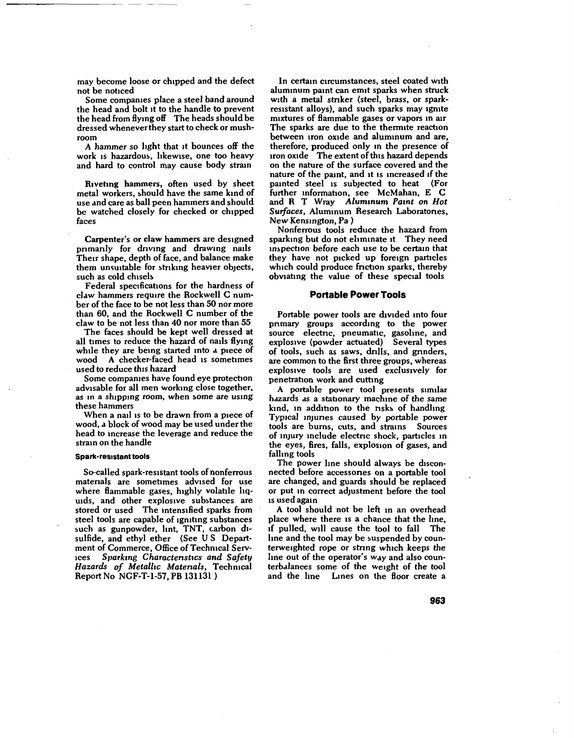
Hand and Portable Power Tools tncal equipment designed for this exposure should be used to minimize the explosion hazard Fire extinguishers approved for elec trical or Class C fires should be available, and employees should be told what to do in case of fire Soldering irons are the source of bums and of illness resulting from inhalation of fumes Insulated, noncombustible holders will prac tically eliminate the fire hazard and the dan ger of bums from accidental contact Ordi nary metal covering on wood tables is not sufficient because the metal conducts heat and may ignite the wood below Holders should be designed so that em ployees cannot accidentally touch the hot irons if they reach for them without looking The best holder completely encloses the heated surface and is inclined so that the weight of the iron prevents it from falling out (Fig 32-23) Also see N SC Data Sheet 445, Hand Soldenng and Brazing Harmful quantities of fumes from lead sol dering should not be allowed to accumulate Local regulations may require exhaust facili ties if much lead soldenng is done Even if lead fumes are not present m harmful quanti ties, it may be desirable to exhaust the nui sance fumes and smoke Air samples should be taken to venfy that the amount of lead m the air is not harmful Lead solder particles should not be allowed to accumulate on the floor and on work tables If the operation is such that the solder or flux may spatter, employees should wear face shields or do the work under a transparent shield Air power tools Air hose.
refid# K68xqxpXBge0rqXmy9ydBZk2Q1 page
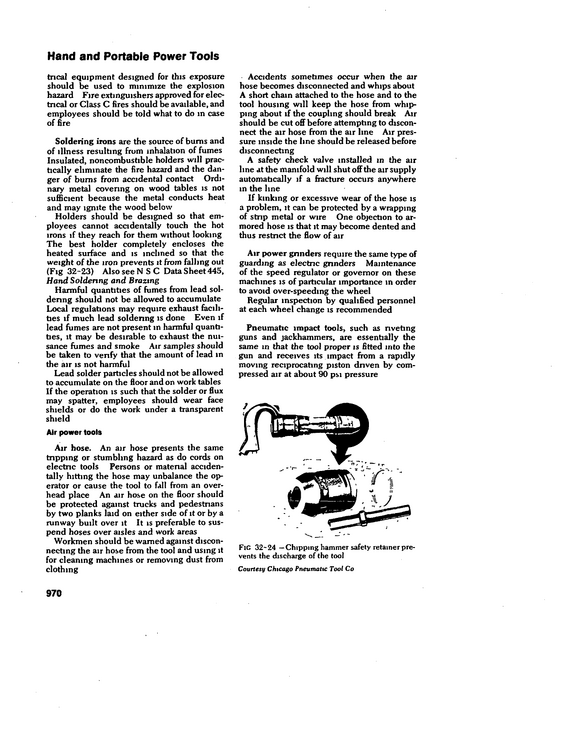
HALF-OCTAVE PASS BANDS IN CYCLES PER SECOND 100 1000 FREQUENCY IN CYCLES PER SECOND FlC 38-8b -- Attenuation charactensties of cup or muff type ear protectors.
refid# Z4bj15GbDjMDYdEze2rLr8K3Y1 page
Personal Protective Equipment apply to women as well as to men Cold weather clothing In recent years thermal insulating under wear has become popular among outdoor workers because of its light-weight protection from the cold Two tvpes are generally avail able One is a thermal knit cotton (Fig 38-54) patterned after regular underwear The other consists of quilted matenals (Fig 38-55) Dacron quilted between nylon is a common type of construction While this material does not catch fire any easier than cotton, once it starts burning, the nylon and Dacron melt, forming a hot plastic mass, not unlike hot pitch, which will adhere to skin and cause serious bums Quilted in sulating underwear is now available that has been made fire retardant to combat this dan ger A nylon material (called "Nomex"), that chars at a relatively high temperature and does not melt, is available Glass fiber material is also available for special uses (Fig 38-47) Special clothing Safety experts have been very ingenious in developing many highly specialized types of clothing for protection against special hazards A partial list includes such items as High visibility and night hazard clothing for construction, utility, maintenance workers, police and firemen whose work expose them to traffic hazards Disposable clothing made of plastic (Fig 38-51) or reinforced paper is available for exposure to low level nuclear radiation, or for use in the drug and electronic industries where contamination may be a problem Leaded clothing of lead glass fiber cloth, leaded rubber or leaded plastic for laboratory workers and other personnel exposed to X ravs or gamma radiation Electromagnetic radiation suit, which pro vides protection from the harmful biological effects of electromagnetic radiation found m high level radar fields and similar hazardous areas Conductive clothing, made of a conductive cloth, is available for use by linemen doing bare-hand work on extra-high voltage con ductors Such clothing keeps the worker at the proper potential For special applications, manufacturers have a vast number of matenals they can draw upon to meet specific hazards Acknowledgment The following companies and sources co operated in furnishing illustrations ofpersonal protective equipment for use in this chapter Acme Protective Equipment Co American Industrial Hvgicne Assn American Optical Co Armco Steel Corp Bausch & Lomb, Inc E D Bullard Co Caterpillar Tractor Co Chicago Eyeshield Co David Clark Co Detroit, Mich , Division of Instruction E I du Pont de Nemours and Co , Inc Eastern Safety Equipment Co , Inc Ellwood Safety Appliance Co Encon Manufacturing Co Factory Stores Ford Motor Co Humble Oil & Refining Co International Shoe Co Jackson Products Co Kennedy Ingalls, Inc Midwest Glove Co Mine Safety Appliance Co NASA, Mississippi Test Facility Owens-Coming Fiberglas Raybestos-Manhattan, Inc Redwing Shoe Co Rose Manufacturing Co Scott Aviation Corp Sigma Engineering Co Standard Saletv Equipment Co Universal Safetv Equipment Co Welsh Manufacturing Co Western Electric Co Inc Westinghouse Electric Corp Wheeler Protective Apparel, Inc Willson Products Dis , ESB Inc U S Industrial Chemicals Co U S Navy Electronics Laboratory 1202
refid# 85GrBLx45nV9Nb4X2yOONnVRa1 page
Industrial Hygiene protective equipment Some processes mav require special con trol For example, it is possible to reduce exposure by lowering the temperature of the process and decreasing the air motion around the operation (Under some conditions, how ever, decreased air motion may promote rather than reduce exposure It should be kept well m mind, therefore, that eveiy ex posure mav require special study ) Hygienic measures Careful supervison of the personal clean liness of workers exposed to skin irritants is essential to the prevention of dermatitis Supervision is most successful where enough convenient and efficient washing facilities are available to serve all the employees ex posed Workers should be told where, how, and when to wash, and should be advised that they will be rated on this part of their job per formance They should be required to change their clothing and take a shower before leav ing the plant at the end of the shift For many exposures, frequent washing alone is a successful preventive measure, par ticularly where the dermatitis is caused by mechanical plugging of the pores, such as from dust In all cases, however, the use of large quantities of water on the skin following exposure to irritants is necessary It mav be advisable in some instances to use neutralizing solutions after a thorough flushing with water However, since some neutralizing solutions are themselves irri tants, thev should be applied onlv upon the advice of a doctor The type of soap used is important, even a generally good soap may cause irritation on certain types of skins The choice of a good soap is best left to the medical depart ment or other qualified department In par ticular, soap should 1 Be freeh soluble m hard or soft, cold or hot vs ater 2 Remove fats, oils, and other soil without harming the skin 3 Leave the natural tats and oils in the skin 4 Contain no harsh abrasives or irritant scrubbers 5 Be handv to use if in cake form or flow easily through soap dispensers if in gran ulated or powder form 6 Stay insect-free 7 Retain its properties in use A large number of cases of industrial der matitis are reported to be caused not bv sub stances used in processes, but bv materials used to remove those substances An un trained worker mav wash his hands in those cleaning agents which are most available and work the fastest --often dermatitis-pro ducing solvents To combat this practice, a sufficient number of conveniently located waterless hand cleaning stations containing properly selected cleansing agents should be installed in on-the-job washing areas and in shower rooms Where soap-dispensing units are furnished, workers should be required to use them Sometimes it will also be necessary to use emollient cream to replace natural oils and fats removed from the skin Measuring the Hazard To determine exposure levels to atmos pheric contaminants, as well as to measure physical energy stresses, the industrial hy gienist uses either direct-reading instructions or laboratory analytical methods The particular exposure can be evaluated bv chemical analyses of air samples, and a step-bv-step analysis of the operations must be made to find the areas where employees are exposed to hazardous amounts of the mate rial The operational analysis also should determine how the material becomes air borne and is dispersed The type and extent of controls will depend upon the evaluation made of the exposure, and the operation that disperses the contami nant The extensive controls needed for lead oxide dust, for example, would not be needed for limestone dust, since much greater quan tities of limestone dust can be tolerated The limitations and applications of the var ious instruments and techniques used to mea sure environmental stresses are discussed in this section, which is adapted from a paper presented by H F Schulte at the National Safety Congress (see "References") 1278
refid# RpXXrwgXL7wwaOvjr80L7gqBB1 page
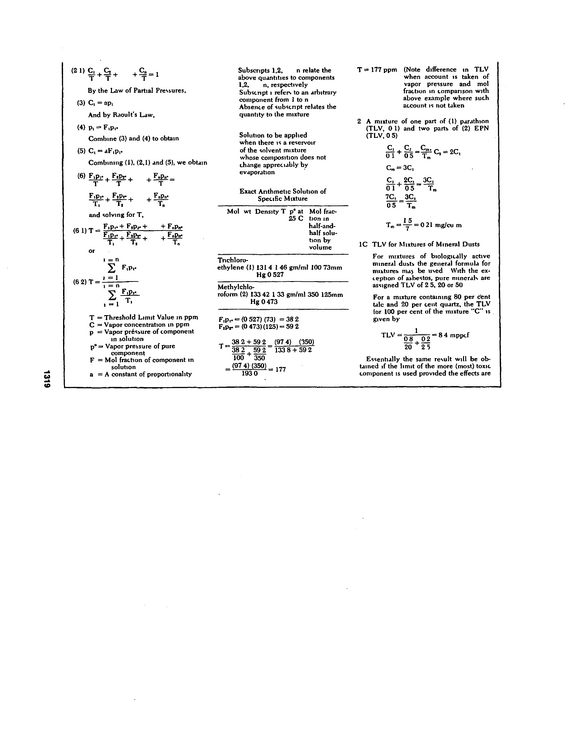
1319 (2 1) C, C, TT =1 T By the Law of Partial Pressures, (3) C, = op, And by Raoult's Law, (4) p, = F,Pf Combine (3) and (4) to obtain (5) C, = aF,p,.
refid# wD8L6mBM5KQjRmEoxnG4ZyQyJ1 page
Industrial Noise has stimulated an interest m automatic audiometry, which allows the subject to operate the only manual control of the test instrument required during the test When the test is started the intensity of the signal tone increases automatically The subject has been instructed to press a button when he first hears the signal This button operates a switch which reverses the direction of the signal intensity, thus decreasing the signal strength When the subject no longer hears the signal he releases the button and the sig nal again increases in intensity The pro cedure is continued for a set interval dunng which the subject may "cross" his own thresh old as many as ten or fifteen times When the proper time has elapsed the audiometer output automatically shifts to the next fre quency and the procedure is repeated The test continues until an arbitrarily chosen number of frequencies has been tested A record of the test may be made with any of several devices which record the continu ous change m output level of the signal as it crosses and recrosses the subject's threshold level Automatic audiometers have been variously adapted to record the test on specially designed cards, on IBM cards, by automatic typewriter, or by an adding ma chine In principle all automatic audiometers are much the same the intensity of the out put signal is regulated through a switch which is controlled by the subject Its va lidity has been well established The usefulness of automatic audiometry depends upon the conditions under which it is to be used As far as the subject is con cerned, automatic audiometry does not save time as most automatic instruments run for six to ten minutes to complete a test, about the time required to complete a test with a manual instrument As far as the tester is concerned, however, the instrument makes audiometry less tedious and it does save a significant amount of time When large num bers of audiograms must be made, two, three, or perhaps four automatic audiometers can be operated by one technician who has only to load and start each instrument, the rest of the test being completed automatically It is possible for one technician to keep several instruments m continuous operation Automatic audiometry has been very suc cessfully used in several large industrial plants It is not, however, a general solution to the problem of hearing tests in industry Its success depends strictly upon the exist ence of the proper conditions, and before a decision is made to install automatic audi ometers several things should be considered Perhaps the principal consideration is the higher cost of the instrument If seveial automatic audiometers can be used at one time, the most efficient use of the technician's time may compensate for the excessive cost If tests are to be made with several automatic audiometers, a test booth is required for each instrument because tests cannot be performed m groups except with special equipment Automatic audiometers do offer the attrac tive possibility of using less well trained personnel When automatic instruments are used, the operators need only be instructed for a few minutes about the mechanical op eration of the instrument itself, and training m threshold or screening techniques is not necessary What Is Noise?
refid# pp0YY3DbDZdn43n1rj5GOJa7B1 page
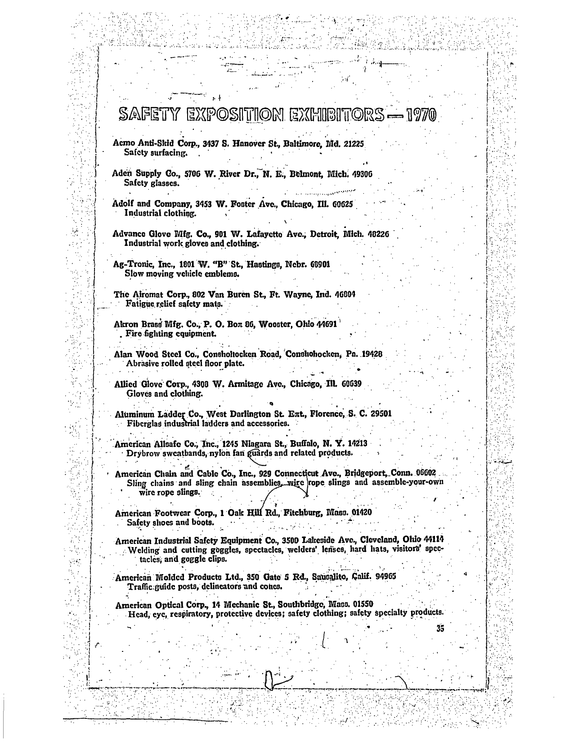
+ Acmo Anti-Skid Corp., 3137 S.
refid# MoXjEZdR6bxb40NX12ERY5E8L1 page
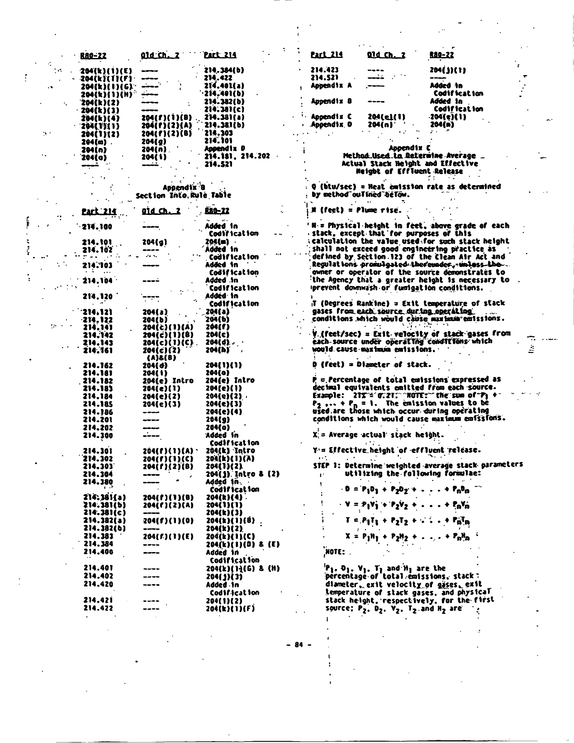
RflQ-22 .
refid# V3e56Z3ebGME2E392e5wyOkjo1 page
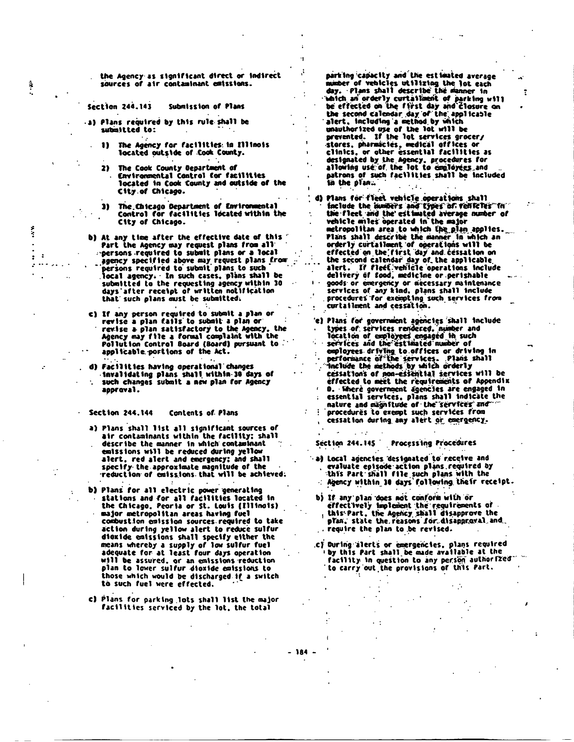
I the Agency-as significant direct or Indirect sources of air contaminant emissions.
refid# yrY5dXmGaZG278neKzBk9KZ1d1 page
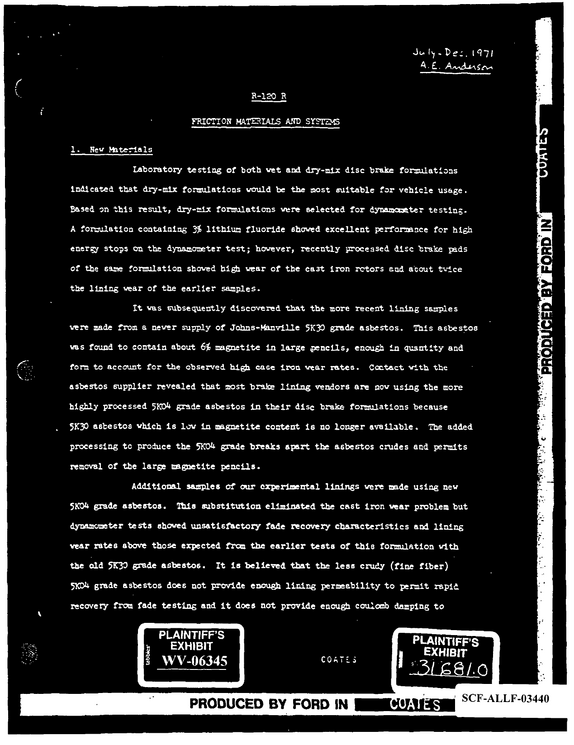
>], .Ju I Vsc. 197/ A..
refid# onz98roDLkYQ8bdLOn0z4XO31 page
8- - 508.

refid# baqw43KjVMoba7GojNepwaX7g1 page
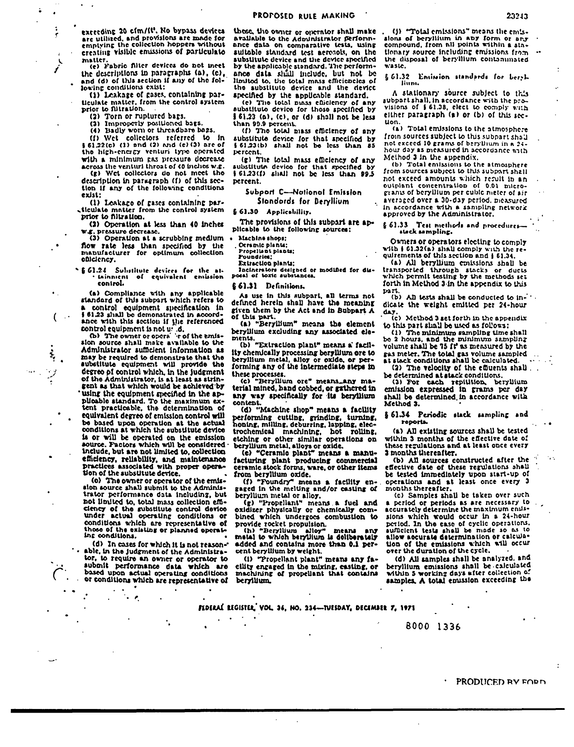
PROPOSED RULE MAKING 23243 exceeding 20 ofm/(t\ No bypass devices those, tho owner or oiicrator shall mske .
refid# zdvDeD0MKLMZ8L5E3R24L2Ke31 page
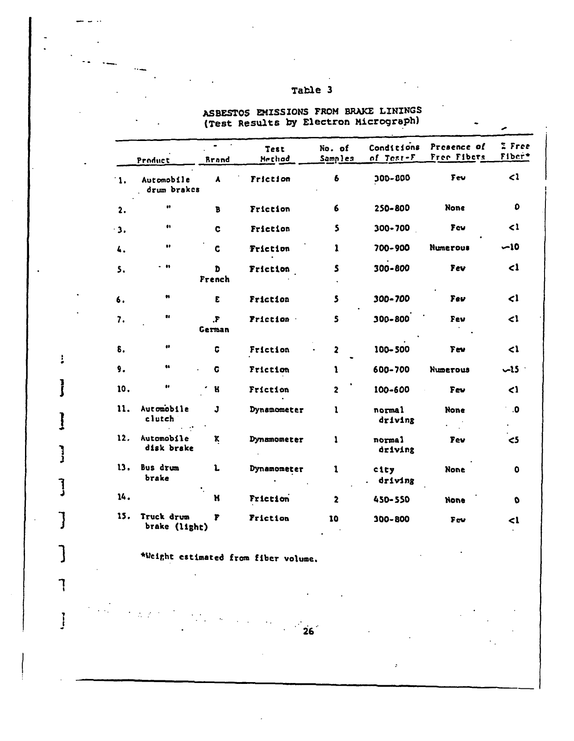
Table 3 ASBESTOS EMISSIONS FROM BRAKE LININGS (Test Results by Electron Micrograph) Product Brand 1.
refid# QgEkY7dZVjwY2OYMpj4RRykK81 page