Refine
Estimated Years UndatedClear
92,592 results foundRefine Search
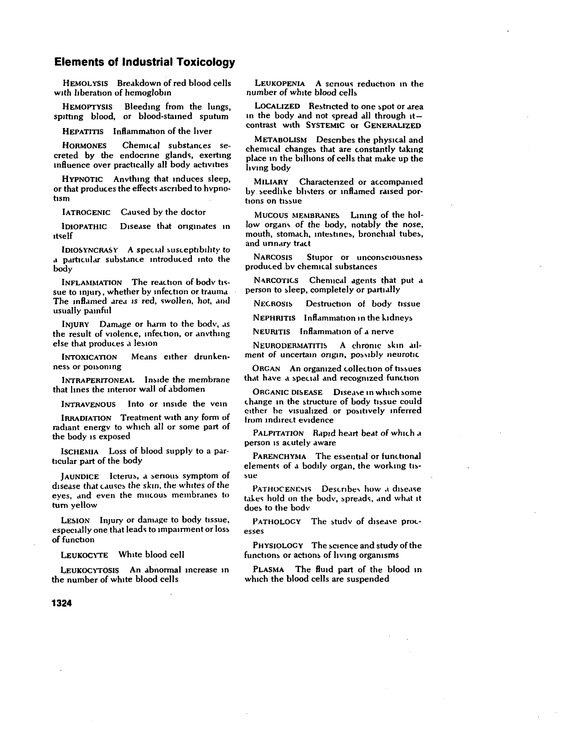
Elements of Industrial Toxicology Hemolysis Breakdown of red blood cells with liberation of hemoglobin Hemoptysis Bleeding from the lungs, spitting blood, or blood-stained sputum Hepatitis Inflammation of the liver Hormones Chemical substances se creted by the endocrine glands, exerting influence over practically all body activities Hypnotic Anything that induces sleep, or that produces the effects ascribed to hypno tism Iatrogenic Caused by the doctor Idiopathic Disease that originates in itself Idiosyncrasy A special susceptibility to a particular substance introduced into the body Inflammation The reaction of bodv tis sue to mjur>, whether by infection or trauma The inflamed area is red, swollen, hot, and usually painful Injury Damage or harm to the bodv, as the result of violence, infection, or anything else that produces a lesion Intoxication Means either drunken ness or poisoning IntraperitOneal Inside the membrane that lines the interior wall of abdomen Intravenous Into or inside the vein Irradiation Treatment with any form of radiant energy to which all or some part of the body is exposed Ischemia Loss of blood supply to a par ticular part of the body Jaundice Icterus, a senous symptom of disease that causes the skin, the whites of the eyes, and even the mucous membranes to turn yellow Lesion Injury or damage to body tissue, especially one that leads to impairment or loss of function Leukocyte White blood cell Leukocytosis An abnormal increase in the number of white blood cells Leukopenia A senous reduction in the number of white blood cells Localized Restncted to one spot or area in the body and not spread all through it-- contrast with Systemic or Generalized Metabolism Descnbes the physical and chemical changes that are constantly taking place in the billions of cells that make up the living body Miliary Characterized or accompanied by seedlike blisters or inflamed raised por tions on tissue Mucous membranes Lining of the hol low organs of the body, notably the nose, mouth, stomach, intestines, bronchial tubes, and urinary tract Narcosis Stupor or unconsciousness produced bv chemical substances Narcotics Chemical agents that put a person to sleep, completely or partially Necrosis Destruction of body tissue Nephritis Inflammation in the kidneys Neuritis Inflammation of a nerve Neurodermatitis A chronic skin ail ment of uncertain origin, possibly neurotic Organ An organized collection of tissues th.t have a special and recognized function Organic disease Disease m which some change in the structure of body tissue could cither be visualized or positively inferred from indirect evidence Palpitation Rapid heart beat of which a person is acutely aware Parenchyma The essential or functional elements of a bodily organ, the working tis sue PathoCenesis Describes how a disease takes hold on the bodv, spreads, and what it does to the bodv Pathology The studv of disease proc esses Physiolocy The science and study of the functions or actions of living organisms Plasma The fluid part of the blood m which the blood cells are suspended 1324
refid# B8Qx7VDe3dzYxYY9pwzn4O63k1 page
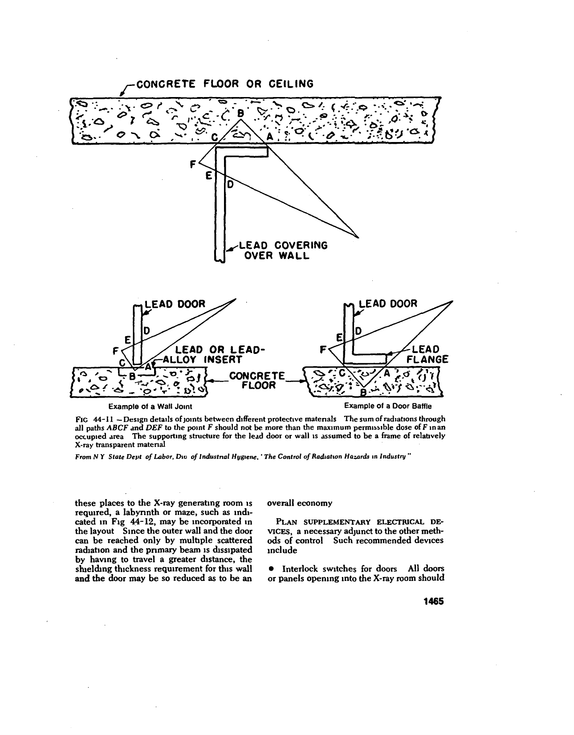
Example of a Wall Joint Example of a Door Baffle FlG 44-11 --Design details ofjoints between different protective materials The sum of radiations through all paths ABCF and DEF to the point F should not be more than the maximum permissible dose of F man occupied area The supporting structure for the lead door or wall is assumed to be a frame of relatively X-ray transparent material From N Y State Dept of Labor, Dio of Industrial Hygiene, ` The Control of Radiation Hazards m Industry " these places to the X-ray generating room is required, a labyrinth or maze, such as indi cated in Fig 44-12, may be incorporated in the layout Since the outer wall and the door can be reached only by multiple scattered radiation and the primary beam is dissipated by having to travel a greater distance, the shielding thickness requirement for this wall and the door may be so reduced as to be an overall economy Plan supplementary electrical de vices, a necessary adjunct to the other meth ods of control Such recommended devices include Interlock switches for doors All doors or panels opening into the X-ray room should 1465
refid# qaL8Xk14M0ekLX18NzjwBz44G1 page
New York University Center for Safety Education, Washington Square, New York, N Y 10003 Publications list Ohio Department of Highways, 240 Parsons Ave, Columbus, Ohio 43205 "The Flagman's Guide " Porto Clinic Instruments Co , 405 Lexington Ave , New York, N Y 10017 Catalog of dnvertestmg and training equipment U S Department of Defense, Department of the Army, Washington, D C 20310 Dnoer Selection and Training, TM 21-300 Drivers' Manual, TM 21-305 General Safety Requirements, EM 385-1-1, U S Army Corps of Engineers "Methods of Teaching " Motor Transportation, Operations, FM 25-10 U S Department of the Intenor, Bureau of Mines, Washington, D C 20240 Minerals Yearbook Also vanous handbooks, miners' circulars, and processed publications U S Department of Transportation, Federal Highway Administration, 8th and D Sts SW , Wash ington, D C 20591 Manual on Uniform Traffic Control Devices for Streets and Highways (Also identified as Amencan Standard D6 1) The Motor Carrier Safety Regulations 1571
refid# qkm6ekme7DgMkrwG1x7OOaqQn1 page
`i . 1 .V7 :ii 7 ' 771 'V; M "'v 1 1 I: MffiiffSoini)!]
refid# 70K9vVpOD7prwz2B0bEJrZwVE1 page
)E-NEW YORKER up and scrutinized it carefully, jt halfway up its side, I saw some iulins billowing in the wind.
refid# reZ3poMGmDME8QmDqJKpoMnLv1 page
Pu , /\"\r `^ fjvmj Gm V r.....

refid# aJ6MRjOkaKaDpE4azVMbykK8N1 page
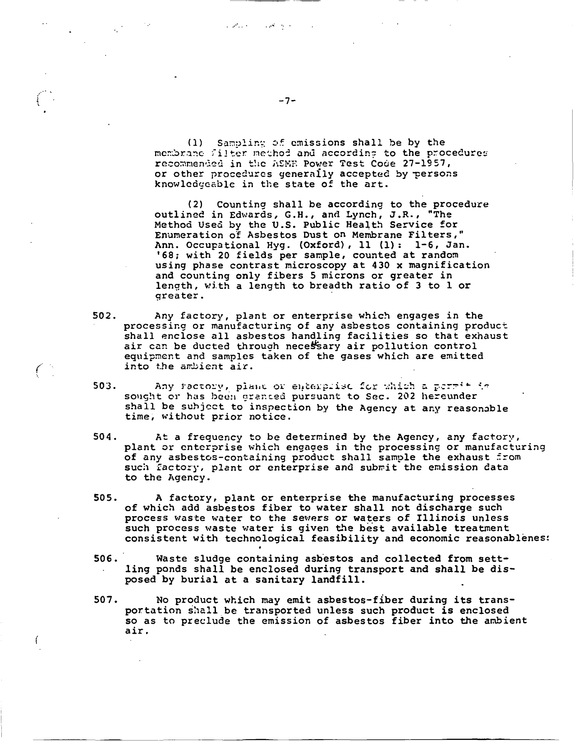
-7- (1) Sampling of emissions shall be by the membrane filter method and according to the procedures recommended in the ASNF.
refid# wDXg4yXry33vwyqj2O1ENGRXd1 page
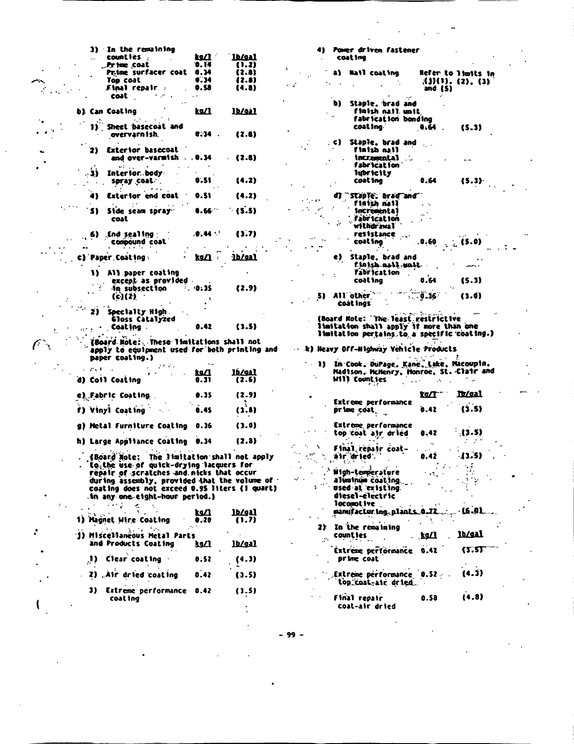
3) In the remaining counties : ..Prime .coat ksl 0.14 - Pr-lme surfacer coat Q.14 Top coal 0.34 Pinal repair .
refid# 93pona5vkVwLRpEjEpodaDawp1 page
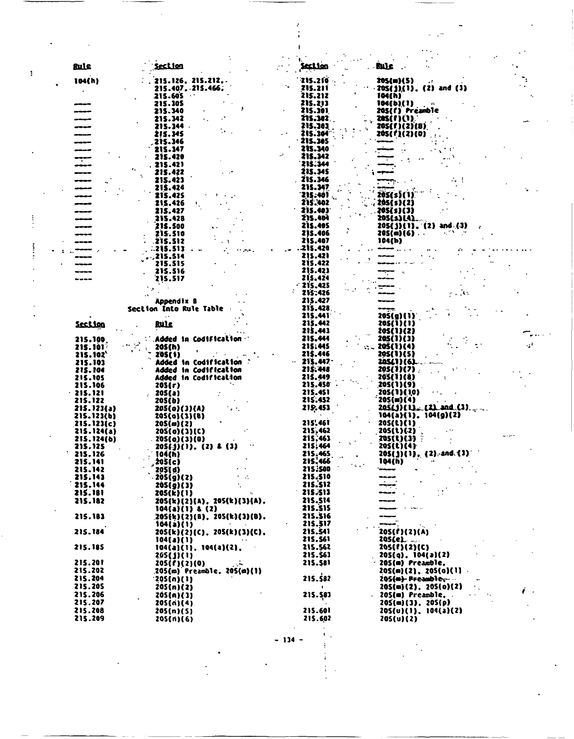
Hale 104(h) -- Jl--[ --* 1 ,r---- ir`, ,,, -- i-- -r - ~r---- ------
refid# Ra07xko8nqmM4EoV7wgbmM4Yv1 page
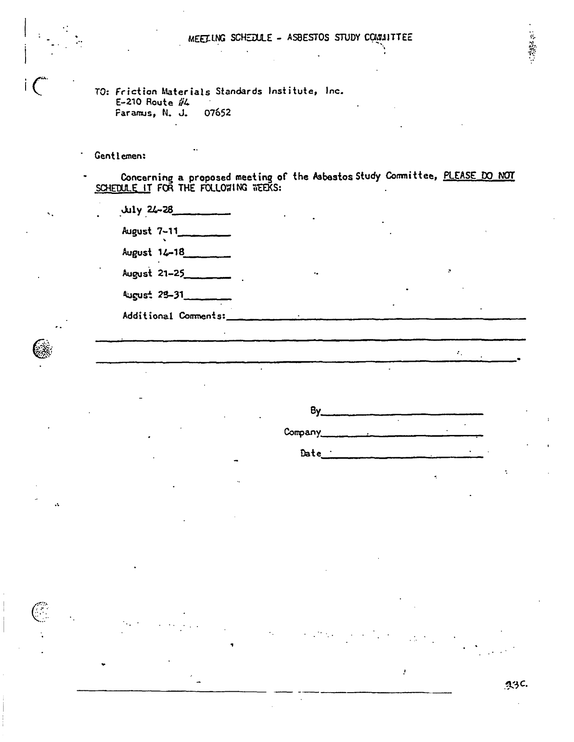
iC MEETING SCHEDULE - AS0ESTOS STUDY COMMITTEE TO: Friction Materials Standards Institute, Inc.
refid# RoQbq838wp30JyYNnY7Gq85z1 page
X" ' ; -/ ~Y r ^ - -- :.Vr::
refid# DG5wO0qaBrjm5pGXmkGoKzx7B1 page
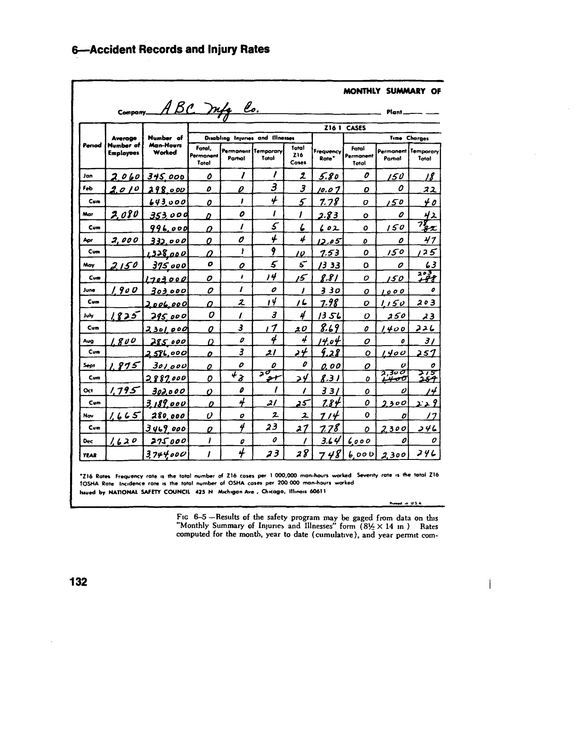
6--Accident Records and Injury Rates AB<LCompany.
refid# VGgYLV9pBqva5EBJmBKN3b5zj1 page
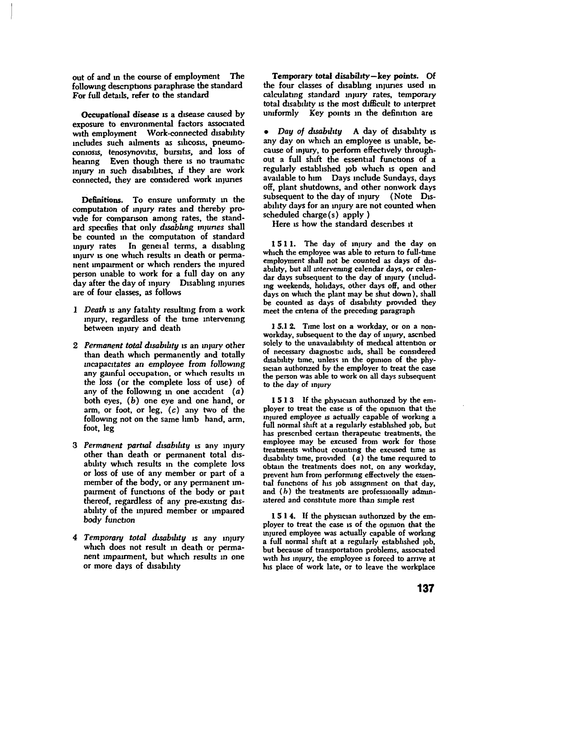
out of and in the course of employment The following descriptions paraphrase the standard For full details, refer to the standard Occupational disease is a disease caused by exposure to environmental factors associated with employment Work-connected disability includes such ailments as sihcosis, pneumo coniosis, tenosynovitis, bursitis, and loss of hearing Even though there is no traumatic injury m such disabilities, if they are work connected, they are considered work injuries Definitions.
refid# zd7E3D0EgO9KBOOVo5v438mya1 page
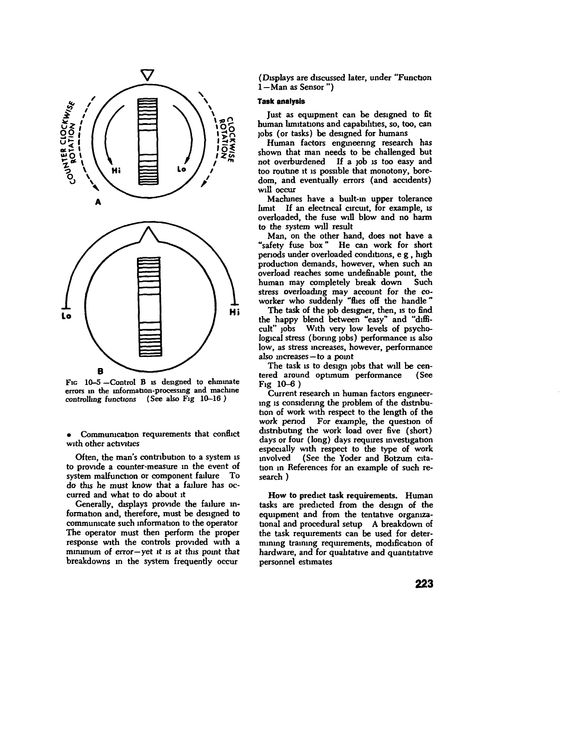
V Fig 10-5 --Control B is designed to eliminate errors in die information-processing and machine controlling functions (See also Fig 10-16 ) Communication requirements that conflict with other activities Often, the man's contribution to a system is to provide a counter-measure in the event of system malfunction or component failure To do this he must know that a failure has oc curred and what to do about it Generally, displays provide the failure in formation and, therefore, must be designed to communicate such information to the operator The operator must then perform the proper response with the controls provided with a minimum of error--yet it is at this point that breakdowns in the system frequently occur (Displays are discussed later, under "Function 1--Man as Sensor ") Task analysis Just as equipment can be designed to fit human limitations and capabilities, so, too, can jobs (or tasks) be designed for humans Human factors engineering research has shown that man needs to be challenged but not overburdened If a job is too easy and too routine it is possible that monotony, bore dom, and eventually errors (and accidents) will occur Machines have a built-in upper tolerance limit If an electrical circuit, for example, is overloaded, the fuse will blow and no harm to the system will result Man, on the other hand, does not have a "safety fuse box " He can work for short periods under overloaded conditions, e g, high production demands, however, when such an overload reaches some undefinable point, the human may completely break down Such stress overloading may account for the co worker who suddenly "flies off the handle " The task of the job designer, then, is to find the happy blend between "easy" and "diffi cult" jobs With very low levels of psycho logical stress (boring jobs) performance is also low, as stress increases, however, performance also increases--to a point The task is to design jobs that will be cen tered around optimum performance (See Fig 10-6 ) Current research in human factors engineer ing is considering the problem of the distribu tion of work with respect to the length of the work period For example, the question of distributing the work load over five (short) days or four (long) days requires investigation especially with respect to the type of work involved (See the Yoder and Botzum cita tion in References for an example of such re search ) How to predict task requirements.
refid# qdG80kDw9v27MryzGqxZgoQLG1 page
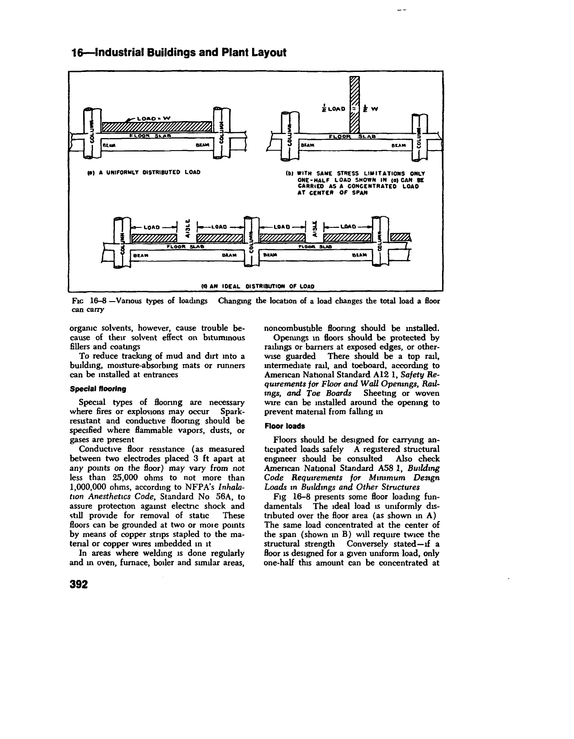
16--industrial Buildings and Plant Layout Fic 16-6 --Various types of loadings Changing the location of a load changes the total load a floor can carry organic solvents, however, cause trouble be cause of their solvent effect on bituminous fillers and coatings To reduce tracking of mud and dirt into a building, moisture-absorbing mats or runners can be installed at entrances Special flooring Special types of flooring are necessary where fires or explosions may occur Sparkresistant and conductive flooring should be specified where flammable vapors, dusts, or gases are present Conductive floor resistance (as measured between two electrodes placed 3 ft apart at any points on the floor) may vary from not less than 25,000 ohms to not more than 1,000,000 ohms, according to NFPA's Inhala tion Anesthetics Code, Standard No 56A, to assure protection against electric shock and still provide for removal of static These floors can be grounded at two or moie points by means of copper strips stapled to the ma terial or copper wires imbedded in it In areas where welding is done regularly and in oven, furnace, boiler and similar areas, noncombustible flooring should be installed.
refid# QgXm9jxbok760DqvYMzQbJmJ61 page