Refine
Estimated Years 2000-2009Clear
6,589 results foundRefine Search
(b) Specifications for paper or burlap bags, or other packaging to be used for the transport and/or storage of asbestos cement; (c) Warning or caution labels to be applied to asbestos products and/or their packaging, cartons, containers, or boxes; (d) Methods of dissemination of public relations information to defendant's purchasers, advertisers, distributors, factory workers, contractors, insulators, users, consumers of asbestos products and/or the general public; (e) Safety equipment and/or protective clothing to be utilized while handling defendant's asbestos products; (1) Medical programs to be offered or sponsored by defendant.

refid# 2Vw61EGxnrjBJgLkRM7EOE8r1 page
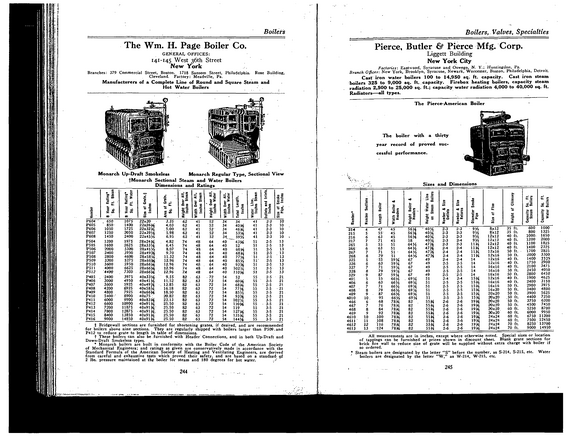
Boilers The Wm.
refid# gbR5R3JQ6gDp3bn6BYgELeG8a1 page
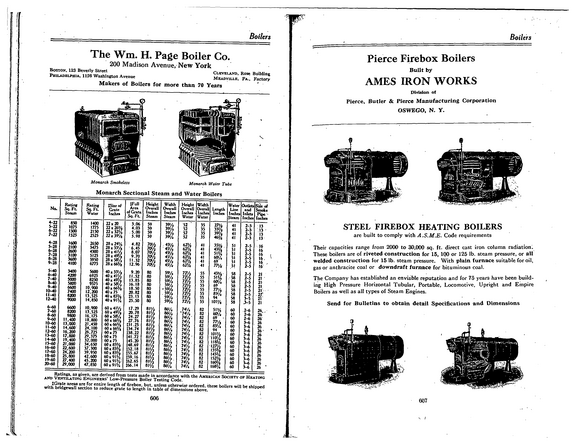
Boilers The Wm.
refid# zzg2rG3ZxL4RnvR8B5eaow1rn1 page
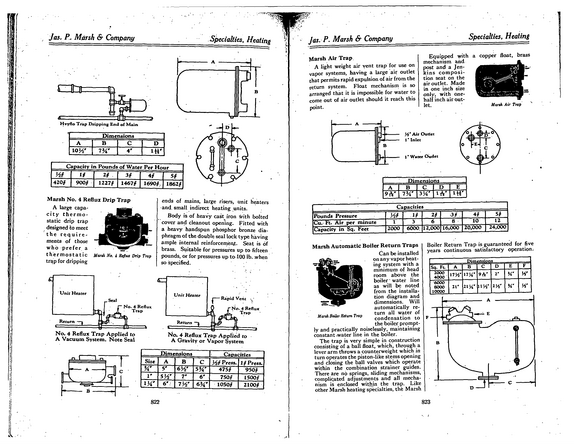
jus.
refid# by856aDxMZ45jKrpwKL2ZN4NO1 page
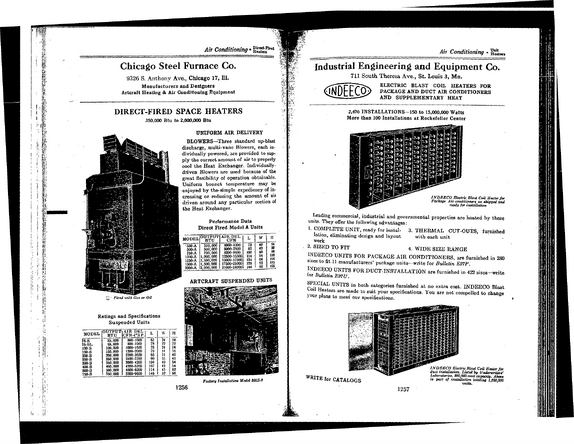
Air Conditioning ieSmirt4 Chicago Steel Furnace Co. 9326 S.
refid# EdRjdRJ3NDoyX4r3eavJX1mQb1 page
X (!'"
refid# mq7NzpKN6znrrEkwwXQXnKz7Z32 pages
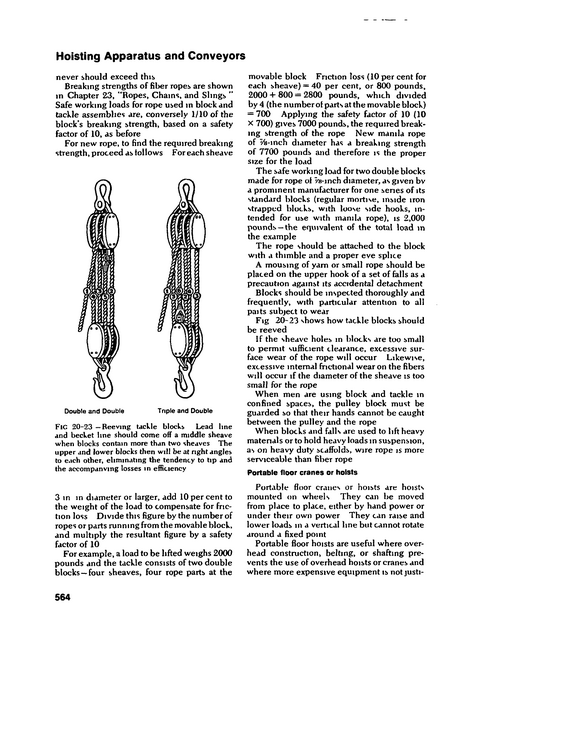
Hoisting Apparatus and Conveyors never should exceed this Breaking strengths of fiber ropes are shown in Chapter 23, "Ropes, Chains, and Slings " Safe working loads for rope used in block and tackle assemblies are, conversely 1/10 of the block's breaking strength, based on a safety factor of 10, as before For new rope, to find the required breaking strength, proceed as follows For each sheave Double and Double Triple and Double FlC 20-23 --Reeving tackle blocks Lead line and kecket line should come off a middle sheave when blocks contain more than two sheaves The upper and lower blocks then will be at right angles to each other, eliminating the tendency to tip and the accompanying losses in efficiency 3 in in diameter or larger, add 10 per cent to the weight of the load to compensate for fric tion loss Divide this figure by the number of ropes or parts running from the movable block, and multiply the resultant figure by a safety factor of 10 For example, a load to be lifted weighs 2000 pounds and the tackle consists of two double blocks --four sheaves, four rope parts at the movable block Friction loss (10 per cent for each sheave) = 40 per cent, or 800 pounds, 2000 + 800 = 2800 pounds, which divided by 4 (the number of parts at the movable block) = 700 Applying the safety factor of 10 (10 X 700) gives 7000 pounds, the required break ing strength of the rope New manila rope of 7-inch diameter has a breaking strength of 7700 pounds and therefore is the proper size for the load The safe working load for two double blocks made for rope of va-inch diameter, as given bv a prominent manufacturer for one senes of its standard blocks (regular mortise, inside iron strapped blocks, with loose side hooks, in tended for use with manila rope), is 2,000 pounds --the equivalent of the total load in the example The rope should be attached to the block with a thimble and a proper eve splice A mousing of yam or small rope should be placed on the upper hook of a set of falls as a precaution against its accidental detachment Blocks should be inspected thoroughly and frequently, with particular attention to all parts subject to wear Fig 20-23 shows how tackle blocks should be reeved If the sheave holes m blocks are too small to permit sufficient clearance, excessive sur face wear of the rope will occur Likewise, excessive internal frictional wear on the fibers will occur if the diameter of the sheave is too small for the rope When men are using block and tackle in confined spaces, the pulley block must be guarded so that their hands cannot be caught between the pulley and the rope When blocks and falls are used to lift heavy materials or to hold heavy loads in suspension, as on heavy duty scaffolds, wire rope is more serviceable than fiber rope Portable floor cranes or hoists Portable floor cranes or hoists are hoists mounted on wheels They can be moved from place to place, either by hand power or under their own power They can raise and lower loads m a vertical line but cannot rotate around a fixed point Portable floor hoists are useful where over head construction, belting, or shafting pre vents the use of overhead hoists or cranes and where more expensive equipment is not justi- 564
refid# BVpdqgxRNvm24mvy2O8KXkQ41 page
tics, and dyes Its odor is not pronounced enough to serve as a warning Its health hazard for acute and repeated exposures is high In one case, death was reported after several days' inhalation of an average con centration of 470 ppm Death was accom panied by central nervous system damage, bronchopneumonia, and severe liver and kid ney injury Liquid dioxane may be absorbed through the skin to produce injury Diphenyl.
refid# RJNQXDDKvL1v39p26M2QQd4B1 page
46--Safety Engineering Tables graph), shall be made in order to ensure that the audiometer displays no evidence of distor tion, unwanted sound, or other technical prob lems (e) The general function of the audi ometer shall be checked, particularly m the case of a self-recording audiometer (m) An exhaustive calibration shall be per formed at least every five years This shall include testing at all settings for both ear phones The test results must prove un equivocally that the audiometer meets for the following parameters the specific requirements stated in the applicable sections of ANS S3 6 as noted m parenthesis (a) Accuracy of decibel level settings of test tones (Sections 4 14 1 and 4 14 3), (b) Accuracy of test tone frequencies (Section 412), (c) Harmonic distortion of test tones (Section 4 13), (d) Tone-envelope characteristics, i e, rise and de cay times, overshoot, "off" level (Section 4 5), (e) Sound from second earphone (Section 4 4 2), (/) Sound from test earphone (Sec tion 4 41), (g) Other unwanted sound (Sec tion 4 4 8) (iv) A record shall be made of each audi ometer calibration, and shall include the re sults of all measurements obtained (h) Hearing protector reduction factor "R."
refid# D46MenGo3vmbBRm1akxqDLKQ1 page
.
refid# BML2aRvBqrdX1vQDok1rwezo2 pages
SEP. 13.2004 2:57PM RWDM LAW FIRM Multi-PageTM NO. 653 P. 2 CIRCUIT COURT THIRD.
refid# bOVEn3DbNbB0mDn1EmQe6wmvg12 pages
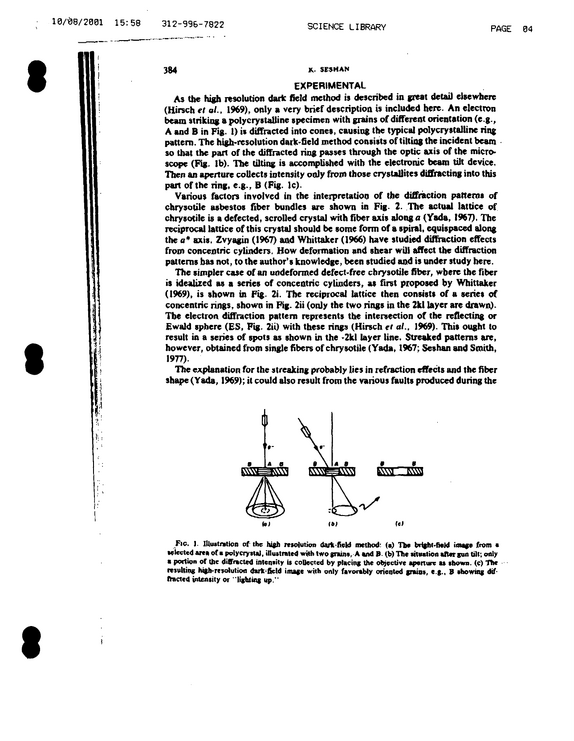
10/'08/2001 15:58 312-996-7822 SCIENCE LIBRARY PAGE 04 384 K- SESHAN EXPERIMENTAL As the high resolution dark field method is described in great detail elsewhere (Hirsch et al., 1969), only a very brief description is included here.
refid# 6Bj5XwkY010GLbG90gJmaJNQR1 page
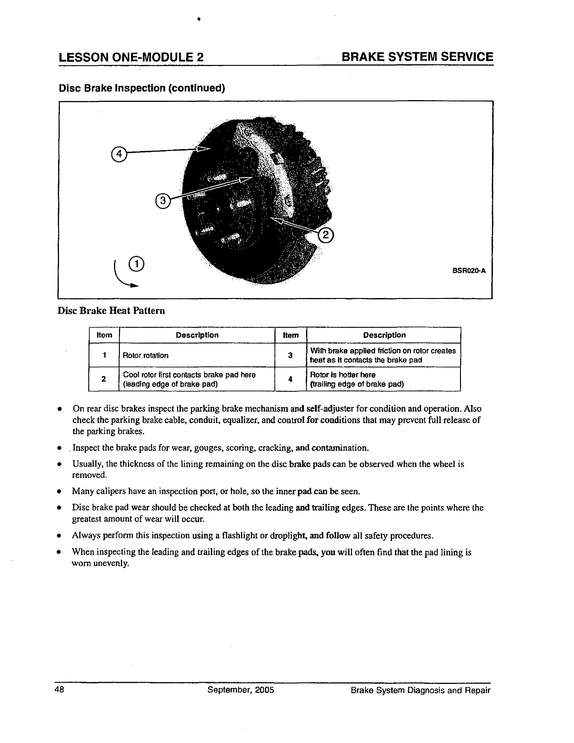
LESSON ONE-MODULE 2 Disc Brake Inspection (continued) BRAKE SYSTEM SERVICE Disc Brake Heat Pattern Item Description 1 Rotor rotation 2 Cool rotor first contacts brake pad here (leading edge of brake pad) Item Description 3 With brake applied friction on rotor creates heat as it contacts the brake pad 4 Rotor is hotter here (trailing edge of brake pad) On rear disc brakes inspect the parking brake mechanism and self-adjuster for condition and operation.
refid# v6BB8k0DowOLdnwbdGQerKVGR1 page
REPLACEMENT BRAKE COMPONENTS TECHNICALLY SPEAKING Let's compare the professions of two neighbors.
refid# bB424Dz9pM9wpnpGBZYzdnO5O1 page
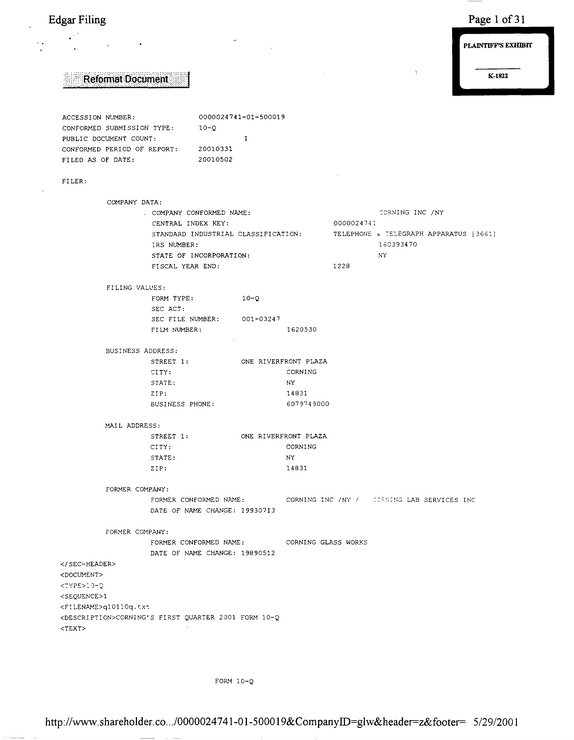
Edgar Filing Reformat Document Page 1 of 31 PLAINTIFF'S EXHIBIT K-1822 ACCESSION NUMBER: CONFORMED SUBMISSION TYPE: PUBLIC DOCUMENT COUNT: CONFORMED PERIOD OF REPORT: FILED AS OF DATE: 0000024741-01-500019 10-Q 1 20010331 20010502 FILER: COMPANY DATA: .
refid# XO549XNkLrEaRBVEqxg7vzke431 pages