Refine
Estimated Years 2000-2009Clear
3,232 results foundRefine Search
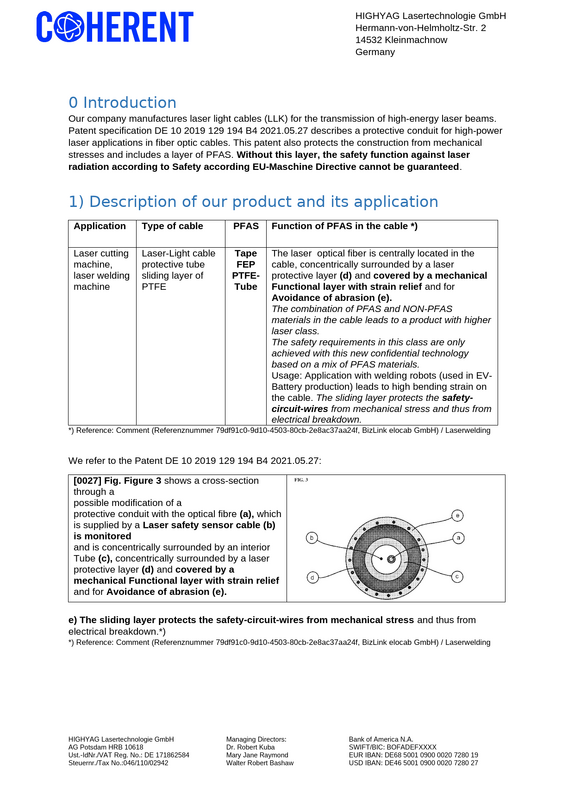
The combination of PFAS and NON-PFAS materials in the cable leads to a product with higher laser class.
refid# bap0RyEQGErpG7ZjXy1ndwdag4 pages
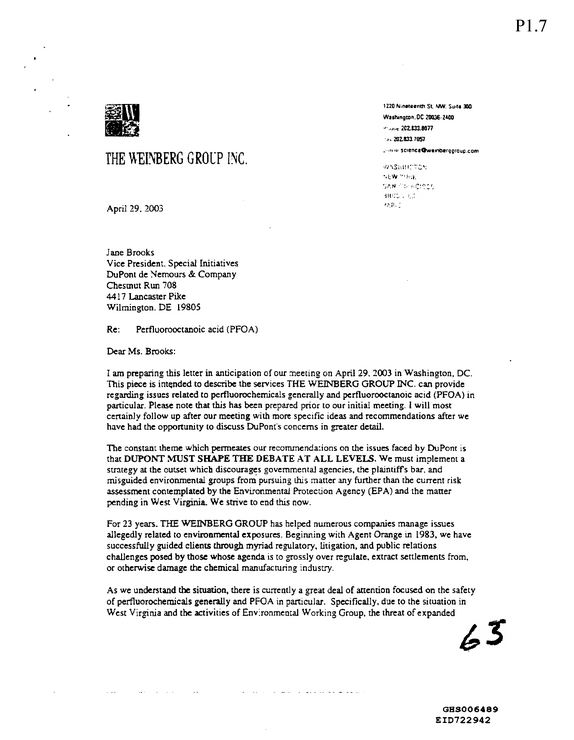
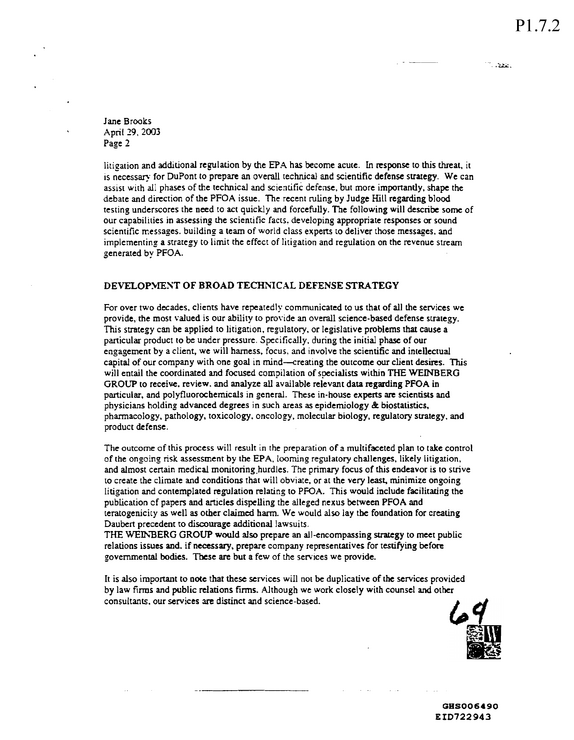
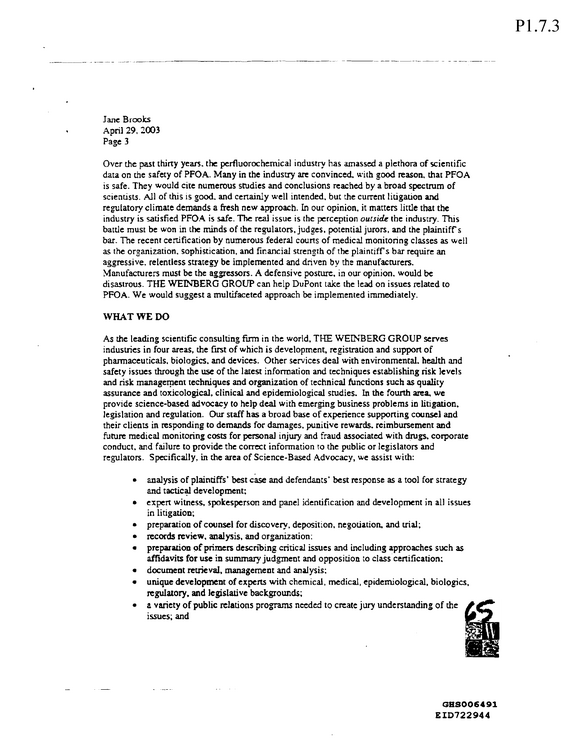
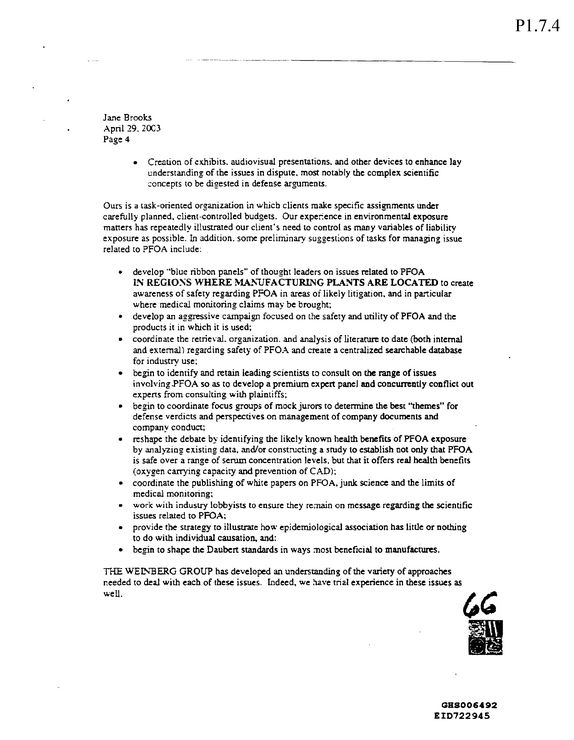
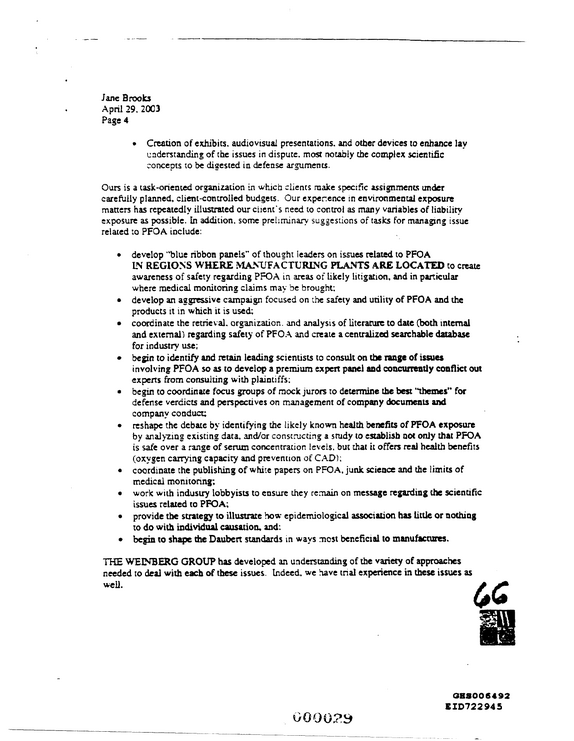
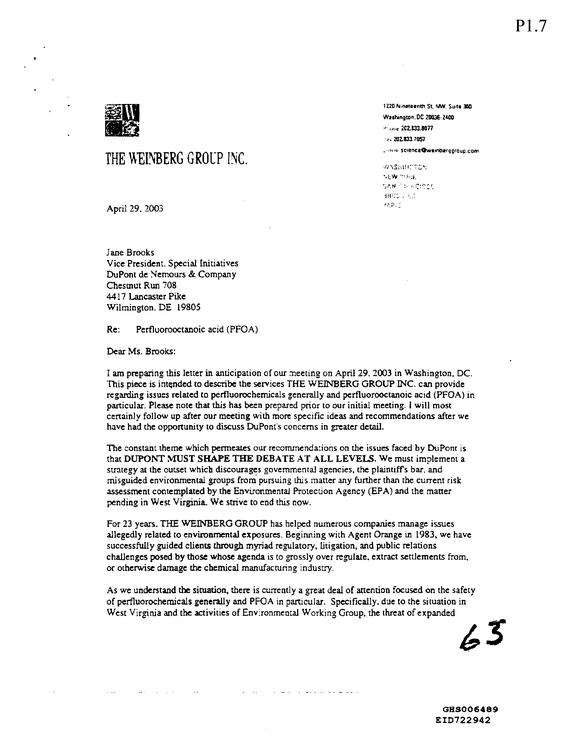
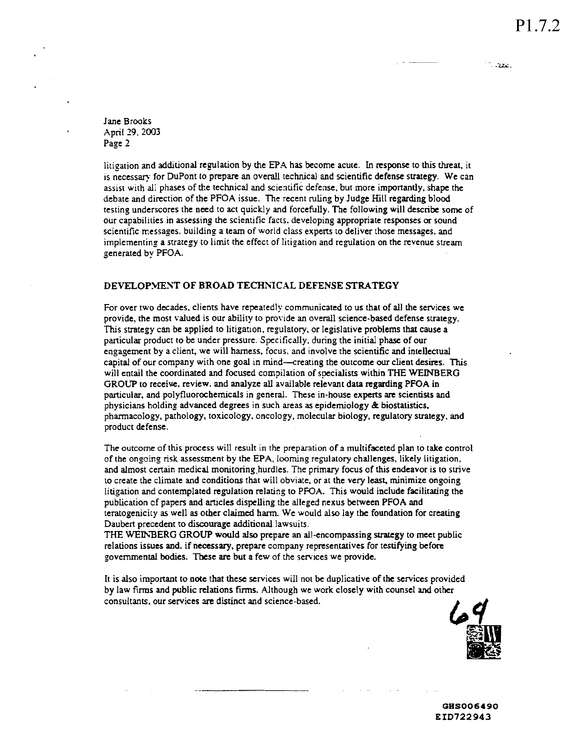
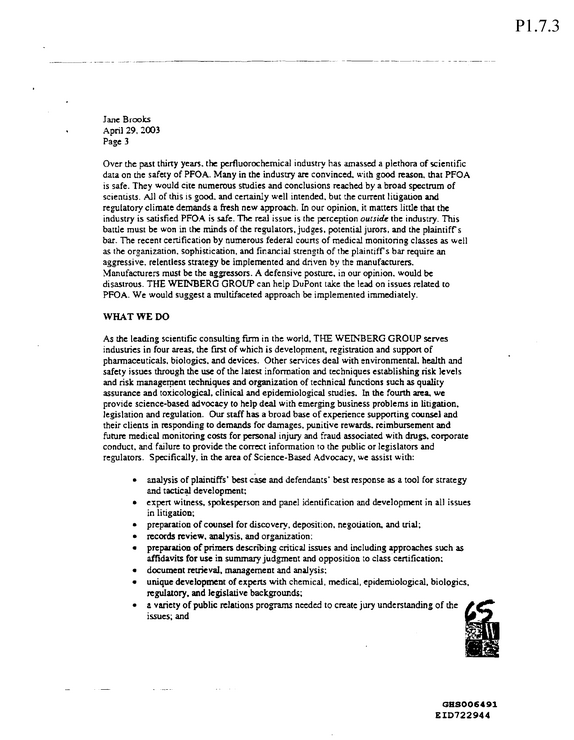
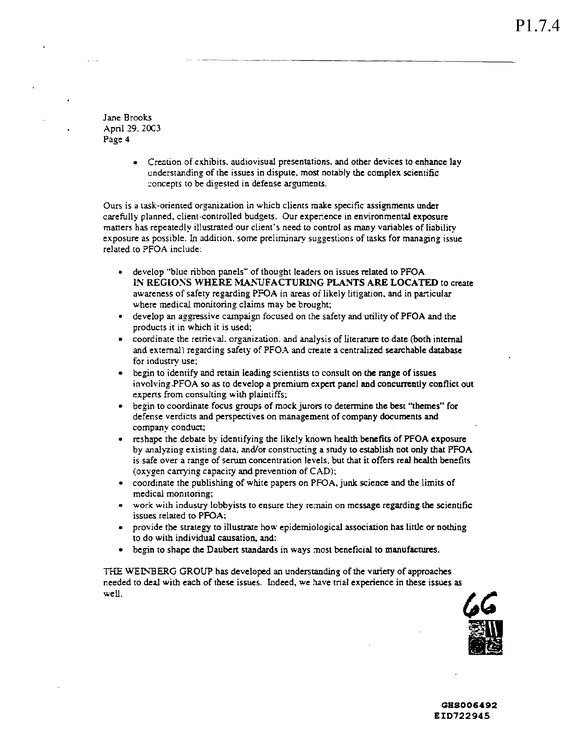
THE WEINBERG GROUP can help DuPont take the lead on issues related to PFOA.
refid# QXnogko6Eaqd8wNkE3Mj7rvRo5 pages
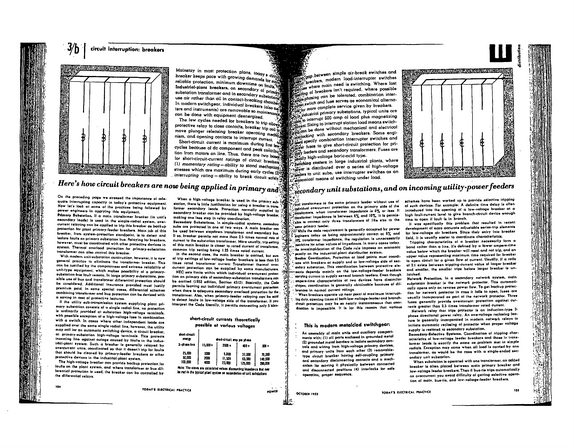
II a main transformer broader {in unit's secondary leads) Is used in the simple-radial system, over current relaying eon be applied to trip thto breaker os backup protection (or plant primary-feeder breakers.
refid# gax62M40jY0kvoMLZbeDKBJjq1 page
THE WEINBERG GROUP can help DuPont take the lead on issues related to PFOA.We would suggest a multifaceted approach be trnplemented immediately WHATWEDO As the leading scientific consulting fm in the world.
refid# 7MjkpGgawMKG8mnM7J3mqMk0j5 pages
THE WEINBERG GROUP can help DuPont take the lead on issues related to PFOA.
refid# YGQ1Bn35VOE5G7D4yMbeNRJ005 pages
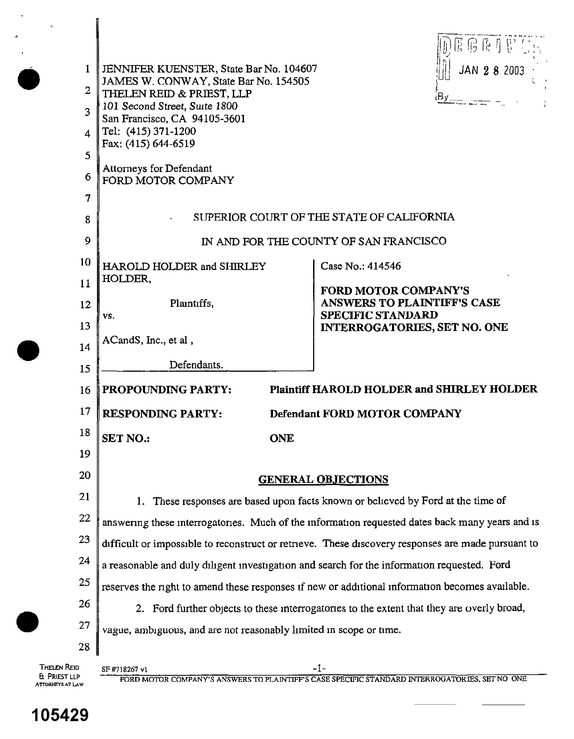
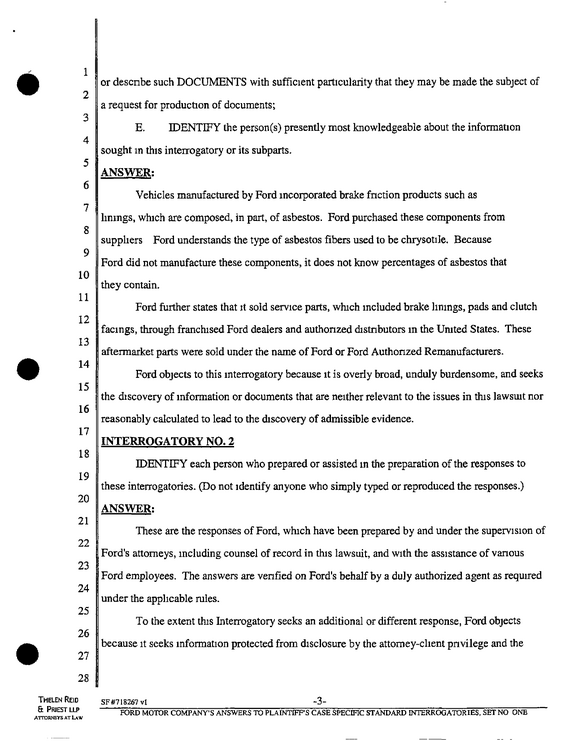
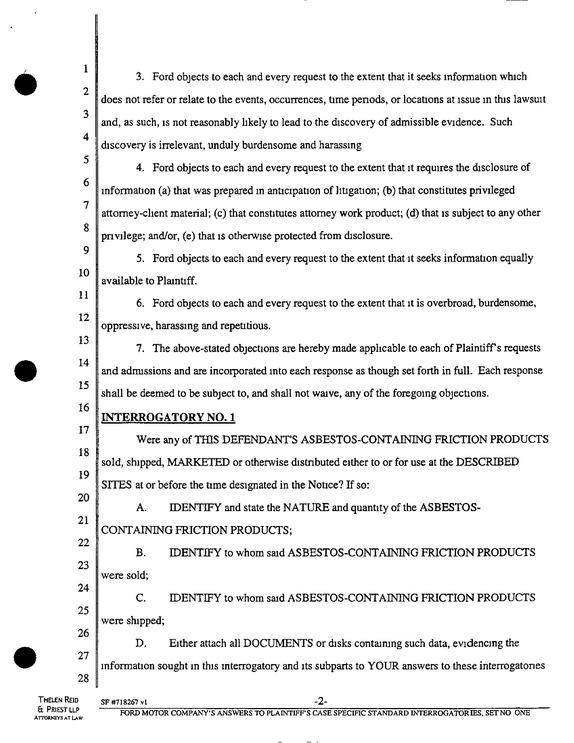
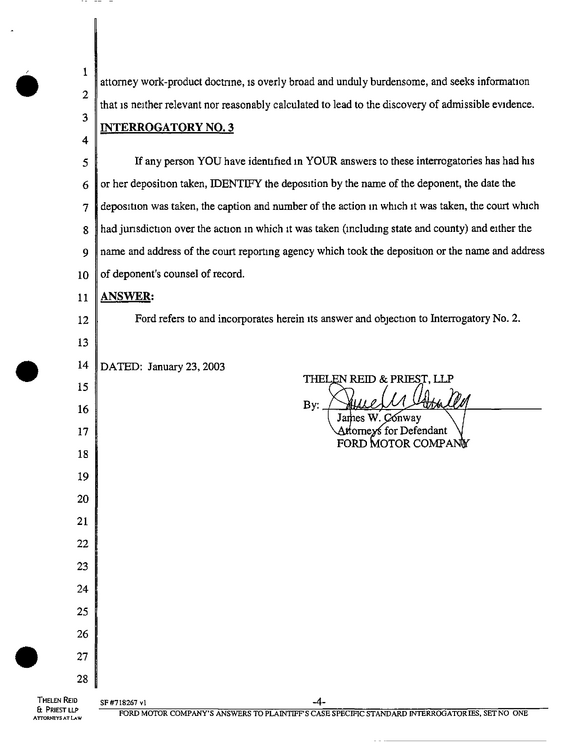
Ford objects to each and every request to the extent that it seeks information which 2 does not refer or relate to the events, occurrences, time periods, or locations at issue in this lawsuit 3 and, as such, is not reasonably likely to lead to the discovery of admissible evidence.
refid# 10Jm79B3M0DEY7BRj8BmjLjKm6 pages
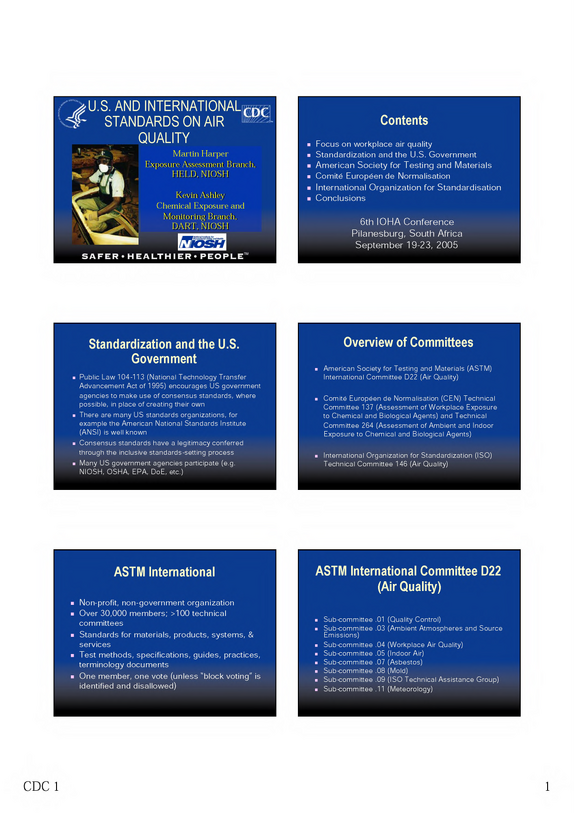
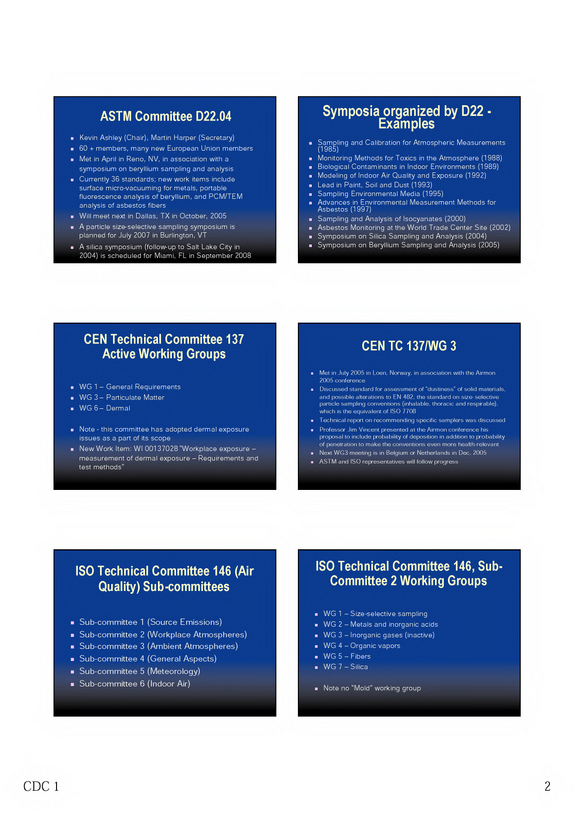
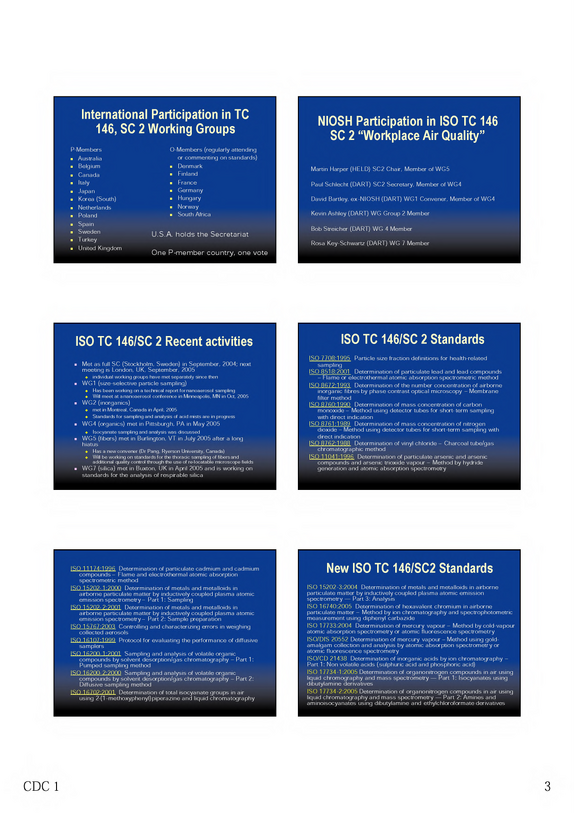
Overview of Committees American Society for Testing and Materials (ASTM) International Committee D22 (Air Quality) Comite Europeen de Normalisation (CEN) Technical Committee 137 (Assessment of Workplace Exposure to Chemical and Biological Agents) and Technical Committee 264 (Assessment of Ambient and Indoor Exposure to Chemical and Biological Agents) International Organization for Standardization (ISO) Technical Committee 146 (Air Quality) ASTM International Non-profit, non-government organization Over 30,000 members; >100 technical committees Standards for materials, products, systems, & services Test methods, specifications, guides, practices, terminology documents One member, one vote (unless "block voting" is identified and disallowed) ASTM International Committee D22 (Air Quality) Sub-committee .01 (Quality Control) Sub-committee .03 (Ambient Atmospheres and Source Emissions) Sub-committee .04 (Workplace Air Quality) Sub-committee .05 (Indoor Air) Sub-committee .07 (Asbestos) Sub-committee .08 (Mold) Sub-committee .09 (ISO Technical Assistance Group) Sub-committee .11 (Meteorology) CDC 1 1 ASTM Committee D22.04 Kevin Ashley (Chair), Martin Harper (Secretary) 60 + members, many new European Union members Met in April in Reno, NV, in association with a symposium on beryllium sampling and analysis Currently 36 standards; new work items include surface micro-vacuuming for metals, portable fluorescence analysis of beryllium, and PCM/TEM analysis of asbestos fibers Will meet next in Dallas, TX in October, 2005 A particle size-selective sampling symposium is planned for July 2007 in Burlington, VT A silica symposium (follow-up to Salt Lake City in 2004) is scheduled for Miami, FL in September 2008 Symposia organized by D22 Examples Sampling and Calibration for Atmospheric Measurements (1985) Monitoring Methods for Toxics in the Atmosphere (1988) Biological Contaminants in Indoor Environments (1989) Modeling of Indoor Air Quality and Exposure (1992) Lead in Paint, Soil and Dust (1993) Sampling Environmental Media (1995) Advances in Environmental Measurement Methods for Asbestos (1997) Sampling and Analysis of Isocyanates (2000) Asbestos Monitoring at the World Trade Center Site (2002) Symposium on Silica Sampling and Analysis (2004) Symposium on Beryllium Sampling and Analysis (2005) CEN Technical Committee 137 Active Working Groups WG 1 - General Requirements WG 3- Particulate Matter WG 6- Dermal Note - this committee has adopted dermal exposure issues as a part of its scope New Work Item: WI 00137028 "Workplace exposure measurement of dermal exposure - Requirements and test methods" CEN TC 137/WG 3 Met in July 2005 in Loen, Norway, in association with the Airmon 2005 conference Discussed standard for assessment of "dustiness" of solid materials, and possible alterations to EN 482, the standard on size- selective particle sampling conventions (inhalable, thoracic and respirable), which is the equivalent of ISO 7708 Technical report on recommending specific samplers was discussed Professor Jim Vincent presented at the Airmon conference his proposal to include probability of deposition in addition to probability of penetration to make the conventions even more health-relevant Next WG3 meeting is in Belgium or Netherlands in Dec, 2005 ASTM and ISO representatives will follow progress ISO Technical Committee 146 (Air Quality) Sub-committees Sub-committee 1 (Source Emissions) Sub-committee 2 (Workplace Atmospheres) Sub-committee 3 (Ambient Atmospheres) Sub-committee 4 (General Aspects) Sub-committee 5 (Meteorology) Sub-committee 6 (Indoor Air) ISO Technical Committee 146, Sub Committee 2 Working Groups WG 1 - Size-selective sampling WG 2 - Metals and inorganic acids WG 3 - Inorganic gases (inactive) WG 4 - Organic vapors WG 5 - Fibers WG 7 - Silica Note no "Mold" working group CDC 1 2 International Participation in TC 146, SC 2 Working Groups P-Members Australia Belgium Canada Italy Japan Korea (South) Netherlands Poland Spain Sweden T urkey United Kingdom O-Members (regularly attending or commenting on standards) Denmark Finland France Germany Hungary Norway South Africa U.S.A. holds the Secretariat One P-member country, one vote NIOSH Participation in ISO TC 146 SC 2 "Workplace Air Quality" Martin Harper (HELD) SC2 Chair, Member of WG5 Paul Schlecht (DART) SC2 Secretary, Member of WG4 David Bartley, ex-NIOSH (DART) WG1 Convener, Member of WG4 Kevin Ashley (DART) WG Group 2 Member Bob Streicher (DART) WG 4 Member Rosa Key-Schwartz (DART) WG 7 Member ISO TC 146/SC 2 Recent activities Met as full SC (Stockholm, Sweden) in September, 2004; next meeting is London, UK, September, 2005 individual working groups have met separately since then WG1 (size-selective particle sampling) Has been working on a technical report fornanoaerosol sampling Will meet at a nanoaerosol conference in Minneapolis, MN in Oct, 2005 WG2 (inorganics) met in Montreal, Canada in April, 2005 Standards for sampling and analysis of acid mists are in progress WG4 (organics) met in Pittsburgh, PA in May 2005 Isocyanate sampling and analysis was discussed WG5 (fibers) met in Burlington, VT in July 2005 after a long hiatus Has a newconvener (Dr Pang, Ryerson University, Canada) Will be working on standards for the thoracic sampling of fibers and additional quality control through the use of re-locatable microscope fields WG7 (silica) met in Buxton, UK in April 2005 and is working on ^--standards for the analysis of respirable silica ISO TC 146/SC 2 Standards ISO 7708:1995 Particle size fraction definitions for health-related sampling ISO 8518:2001 Determination of particulate lead and lead compounds - Flame or electrothermal atomic absorption spectrometric method ISO 8672:1993 Determination of the number concentration of airborne inorganic fibres by phase contrast optical microscopy - Membrane filter method ISO 8760:1990 Determination of mass concentration of carbon monoxide - Method using detector tubes for short-term sampling with direct indication ISO 8761: 1989 Determination of mass concentration of nitrogen dioxide - Method using detector tubes for short-term sampling with direct indication ISO 8762:1988 Determination of vinyl chloride - Charcoal tube/gas chromatographic method ISO 11041: 1996 Determination of particulate arsenic and arsenic compounds and arsenic trioxide vapour - Method by hydride generation and atomic absorption spectrometry ISO 11174:1996 Determination of particulate cadmium and cadmium compounds - Flame and electrothermal atomic absorption spectrometric method ISO 1 5202-1:2000 Determination of metals and metalloids in airborne particulate matter by inductively coupled plasma atomic emission spectrometry- Part 1: Sampling ISO 1 5202- 2:2001 Determination of metals and metalloids in airborne particulate matter by inductively coupled plasma atomic emission spectrometry- Part 2: Sample preparation ISO 1 5767:2003 Controlling and characterizing errors in weighing collected aerosols ISO 1 6107:1999 Protocol for evaluating the performance of diffusive samplers ISO 1 6200-1:2001 Sampling and analysis of volatile organic compounds by solvent desorption/gas chromatography - Part 1: Pumped sampling method ISO 1 6200- 2:2000 Sampling and analysis of volatile organic compounds by solvent desorption/gas chromatography - Part 2: Diffusive sampling method ISO 1 6702:2001 Determination of total isocyanate groups in air using 2-(1 -methoxyphenyl)piperazine and liquid chromatography New ISO TC 146/SC2 Standards ISO 1 5202-3:2004 Determination of metals and metalloids in airborne particulate matter by inductively coupled plasma atomic emission spectrometry -- Part 3: Analysis ISO 1 6740:2005 Determination of hexavalent chromium in airborne particulate matter - Method by ion chromatography and spectrophotometric measurement using diphenyl carbazide ISO 1 7733:2004 Determination of mercury vapour - Method by cold-vapour atomic absorption spectrometry or atomic fluorescence spectrometry ISO/DIS 20552 Determination of mercury vapour - Method using goldamalgam collection and analysis by atomic absorption spectrometry or atomic fluorescence spectrometry ISO/CD 21438 Determination of inorganic acids by ion chromatography Part 1: Non volatile acids (sulphuric acid and phosphoric acid) ISO 1 7734-1:2005 Determination of organonitroqen compounds in air using liquid chromography and mass spectrometry--Part 1: Isocyanates using dibutylamine derivatives ISO 17734-2:2005 Determination of organonitrogen compounds in air using liquid chromatography and mass spectrometry -- Part 2: Amines and aminoisocyanates using dibutylamine and ethylchloroformatederivatives CDC 1 3 Other ISO TC146 SC2 work-items Approved New Work Item: Guidelines for ensuring the quality of respirable crystalline silica measurements CD 1 7735 Determination of isocya

refid# XmXmn6JmwvZJd2xE4oZOd6LB4 pages
THE WEINBERG GROUP can help DuPont take the lead on issues related to PFOA.
refid# bxKy2bnj0yrYJ94YjyaMmRvZ5 pages
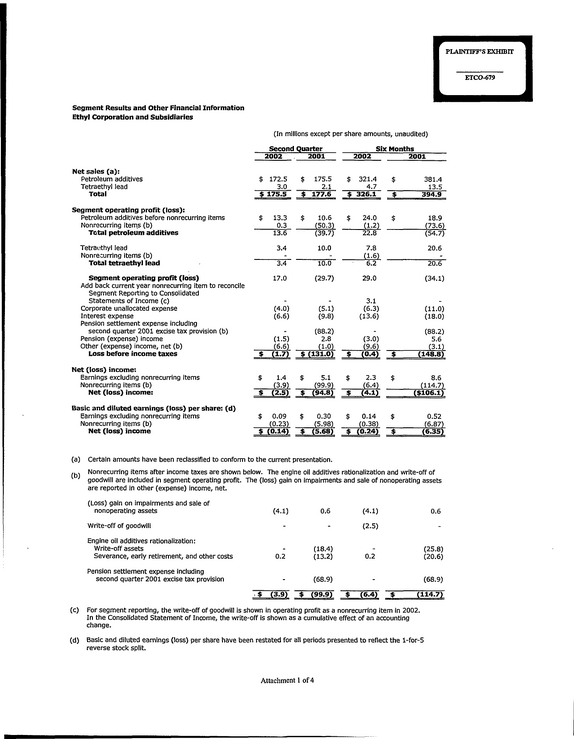
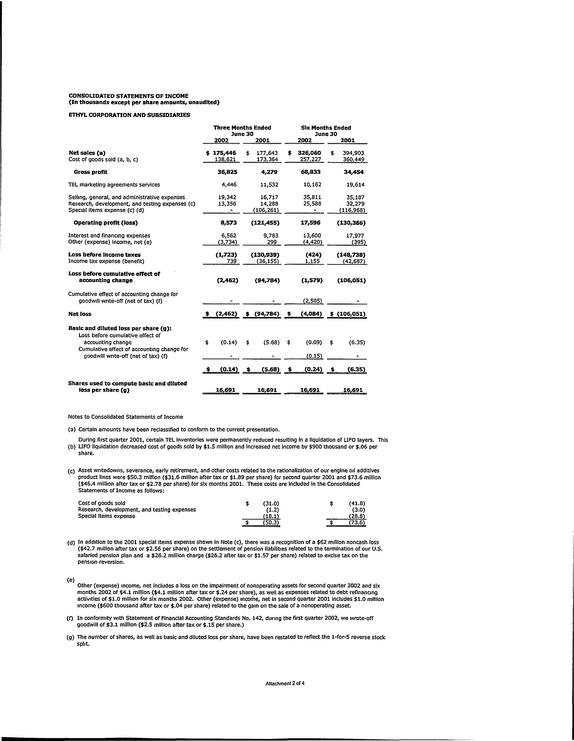
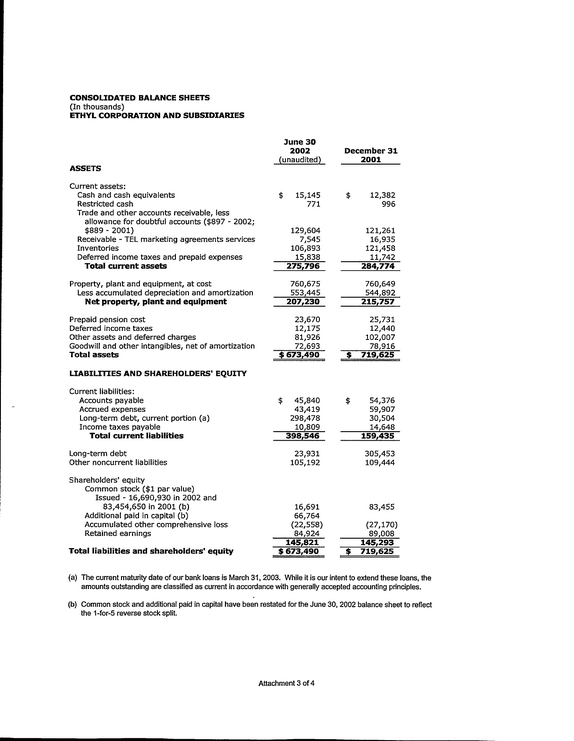
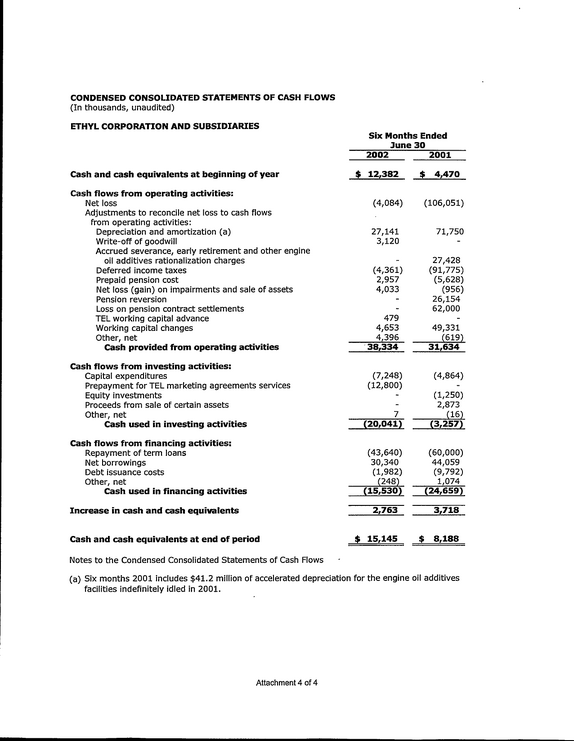
Segment Results and Other Financial Information Ethyl Corporation and Subsidiaries Net sales (a): Petroleum additives Tetraethyl lead Total Segment operating profit (toss): Petroleum additives before nonrecurring items Nonrecurring items (b) Total petroleum additives Tetraethyl lead Nonrecurring items (b) Total tetraethyl lead Segment operating profit (loss) Add back current year nonrecurring item to reconcile Segment Reporting to Consolidated Statements of Income (c) Corporate unallocated expense Interest expense Pension settlement expense including second quarter 2001 excise tax provision (b) Pension (expense) income Other (expense) income, net (b) Loss before income taxes Net (loss) income: Earnings excluding nonrecurring items Nonrecurring items (b) Net (loss) income: Basic and diluted earnings (loss) per share: (d) Earnings excluding nonrecurring items Nonrecurring items (b) Net (loss) income (In millions except per share amounts, unaudited) Second Quarter 2002 2001 ___________Six Months 2002 2001 $ 172.5 3.0 $ 175.5 $ 175.5 2.1 $ 177.6 $ 321.4 4.7 f 326.1 $ $ 381.4 13.5 394.9 $ 13.3 0.3 13.6 3.4 - 3.4 17.0 $ 10.6 (50.3) (39.7) 10.0 - 10.0 (29.7) $ 24.0 $ (1.2) 22.8 7.8 (1.6) 6.2 29.0 . (4.0) (6.6) - (1.5) (6.6) $ (1.7> . (5.1) (9.8) (88.2) 2.8 (1.0) $ (131.0) 3.1 (6.3) (13.6) (3.0) (9.6) $ (0.4) $ 18.9 (73.6) (54.7) 20.6 - 20.6 (34.1) (11.0) (18.0) (88.2) 5.6 (3.1) (148.8) $ 1.4 (3.9) (2.5) $ 5.1 (99.9) $ (94.8) $ 2.3 (6.4) * (4.1) $ 8.6 (114.7) ($106.1) $ 0.09 (0.23) $ (0.14) $ 0.30 (5.98) $ (5.68) $ 0.14 (0.38) $ (0.24) $ $ 0.52 (6.87) (6.35) (a) Certain amounts have been reclassified to conform to the current presentation. ...
refid# oeboJJmL4VJRm4gmnn6K1520R4 pages
The new air dispersion model, coupled with the additional soil samples, should lead to a more accurate model of dioxin deposition in the vicinity of the Dow incinerator in Midland.
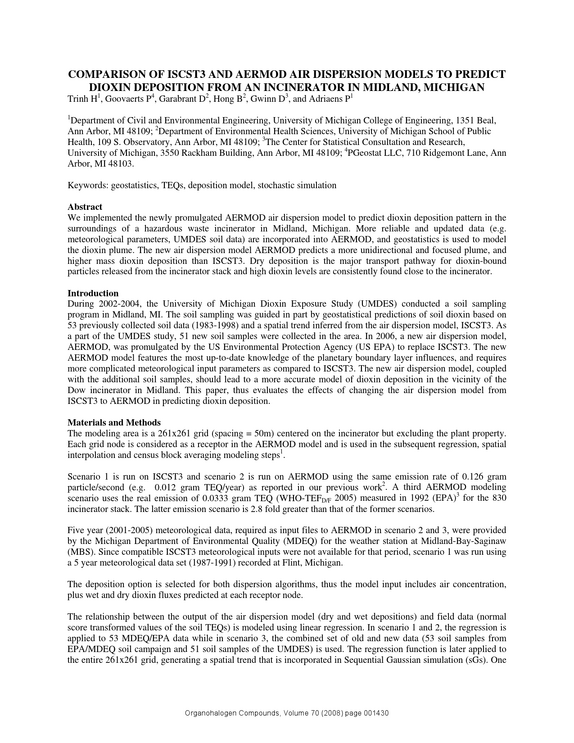
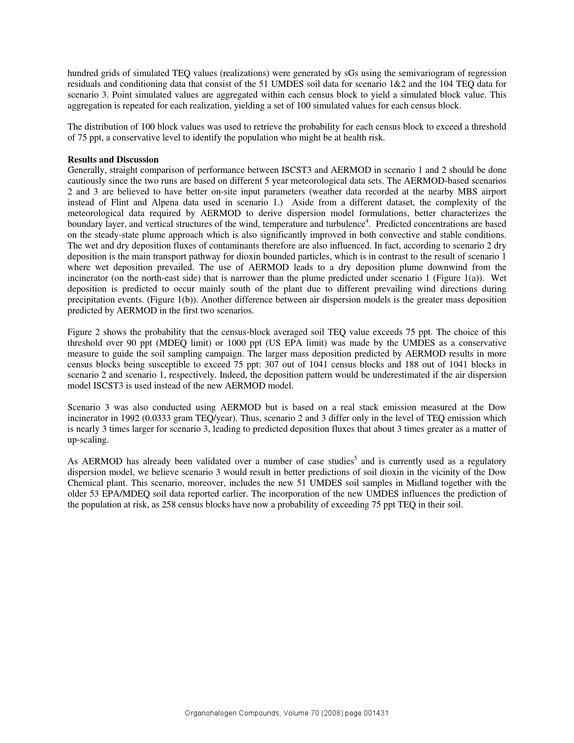
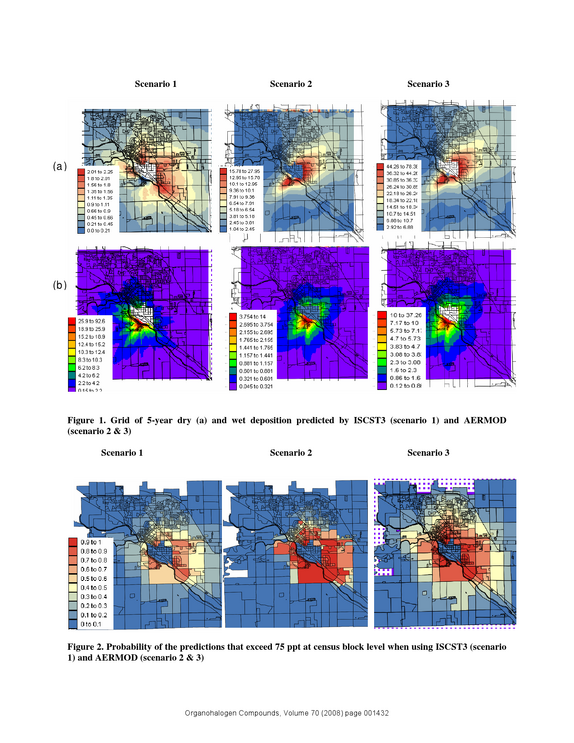
refid# e73JM80oYy2rOqkRnv9kLeMje4 pages
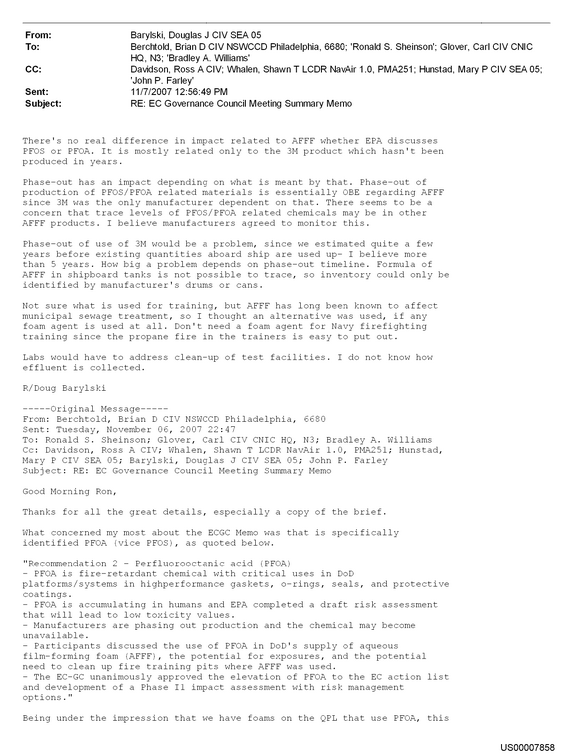
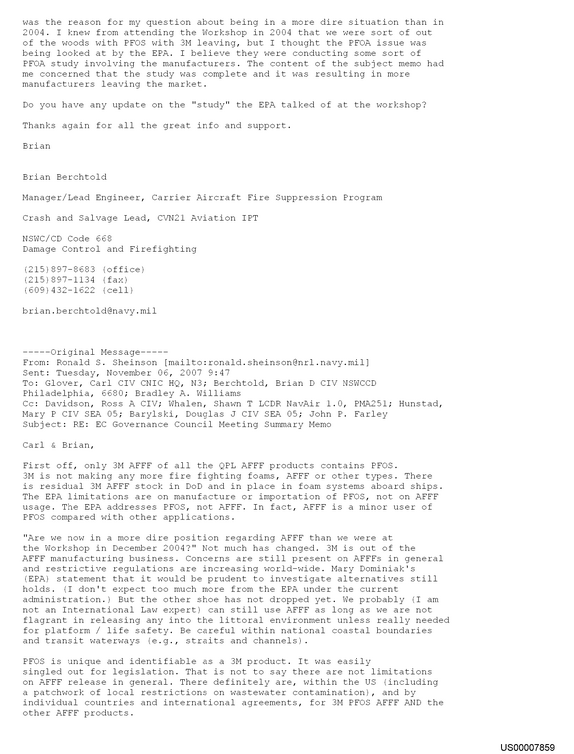
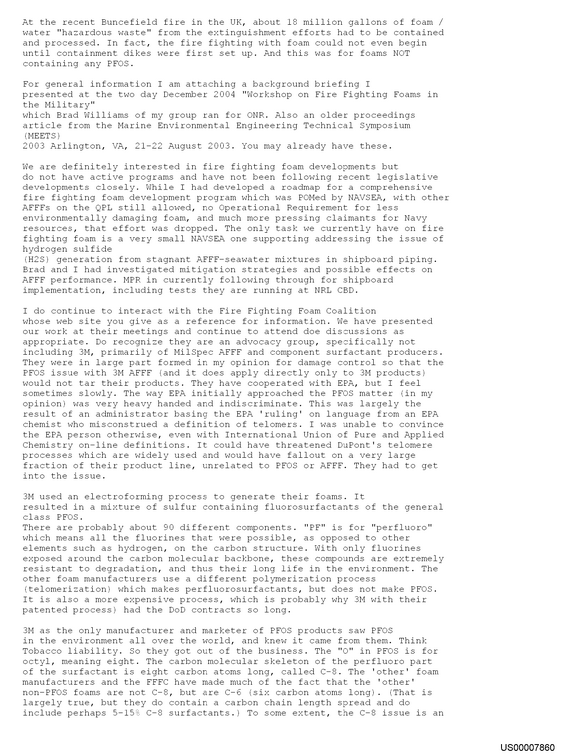
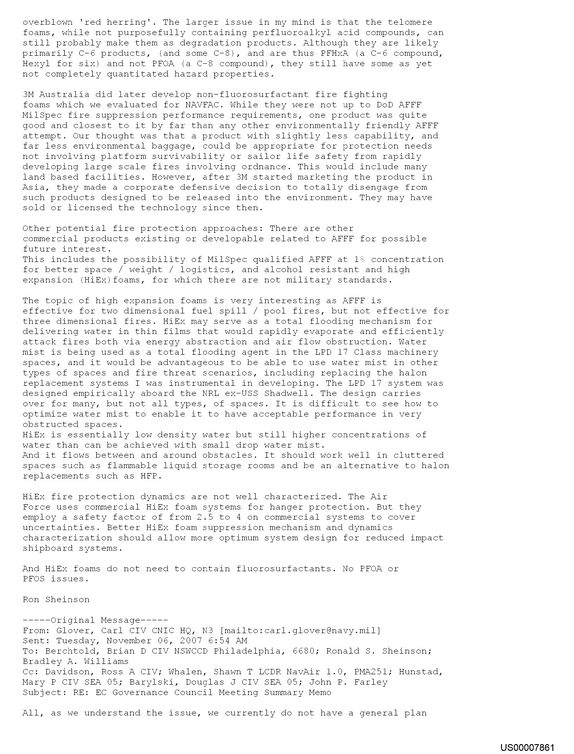
Brian Brian Berchtold Manager/Lead Engineer, Carrier Aircraft Fire Suppression Program Crash and Salvage Lead, CVN21 Aviation IPT NSWC/CD Code 668 Damage Control and Firefighting (215)897-8683 (office) (215)897-1134 (fax) (609)432-1622 (cell) brian.berchtoid0navy.mil ---- Original Message---From: Ronald S.
refid# jBmJwg1Yppnx7YbkgX2XeNr27 pages
Increasing temperature from 483 K to 523 K at constant pressure leads to an increase in the production of alkanes and a decrease in high molecul
refid# nNrOjJY4aD538rdO8XOoYmaOz4 pages
LEAD-BASED PAINT LEGISLATION On November 27, 1970 the membership was advised that two legislative proposals (H.R. 19172 and S. 3216) dealing with the elimination of lead-based paints were pending before the Senate Committee on Labor and fVibiic Welfare.


refid# B5Rd8zy1NXZ7x9xGYkjVKk2Ek8 pages
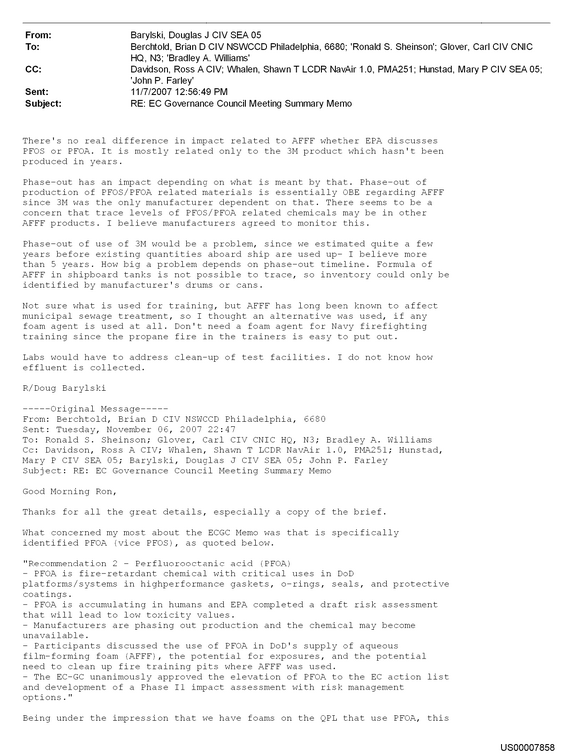
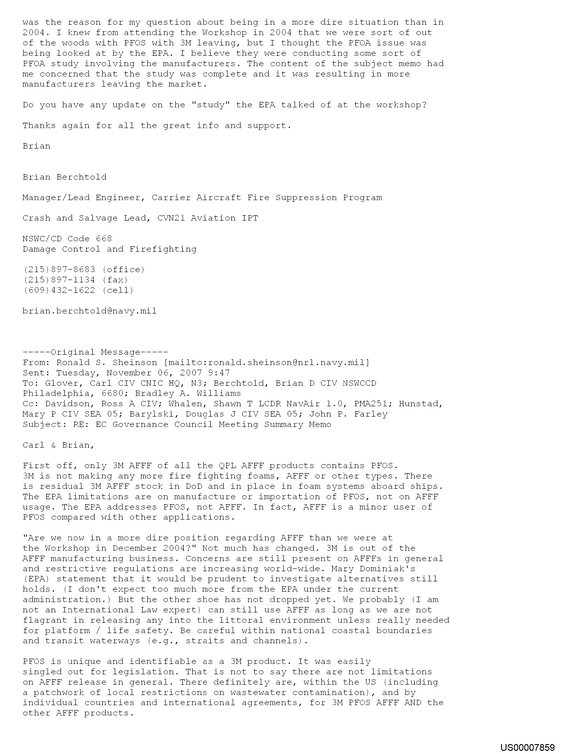
Brian Brian Berchtold Manager/Lead Engineer, Carrier Aircraft Fire Suppression Program Crash and Salvage Lead, CVN21 Aviation IPT NSWC/CD Code 668 Damage Control and Firefighting (215)897-8683 (office) (215)897-1134 (fax) (609)432-1622 (cell) brian.berchtoid0navy.mil ---- Original Message---From: Ronald S.
refid# 3NRwoqBzBzZmdX5DL6Nzxgrq37 pages
Increasing temperature from 483 K to 523 K at constant pressure leads to an increase in the production of alkanes and a decrease in high molecul
refid# 0q7M84dw4yjpk4B2aOBG9207V4 pages