Refine
Estimated Years 2000-2009Clear
3,232 results foundRefine Search
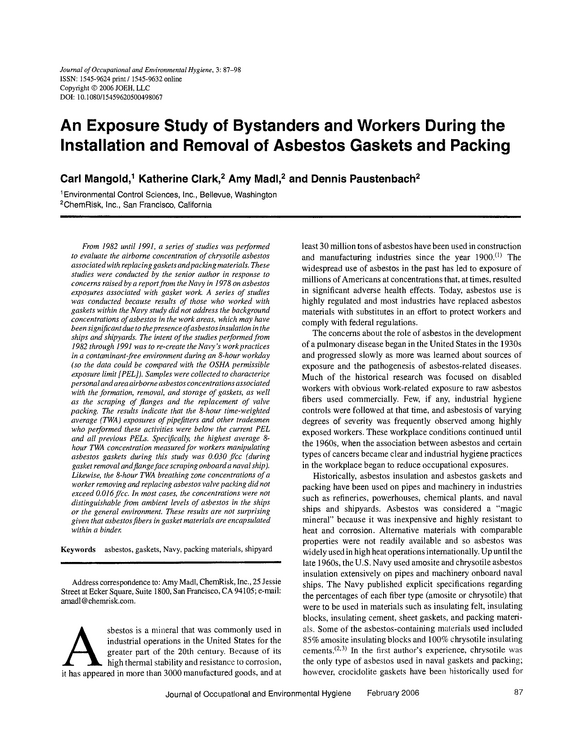
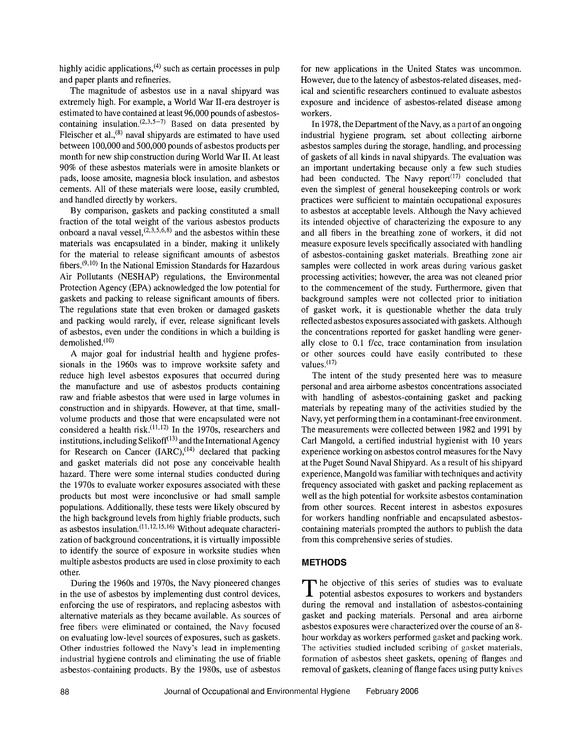
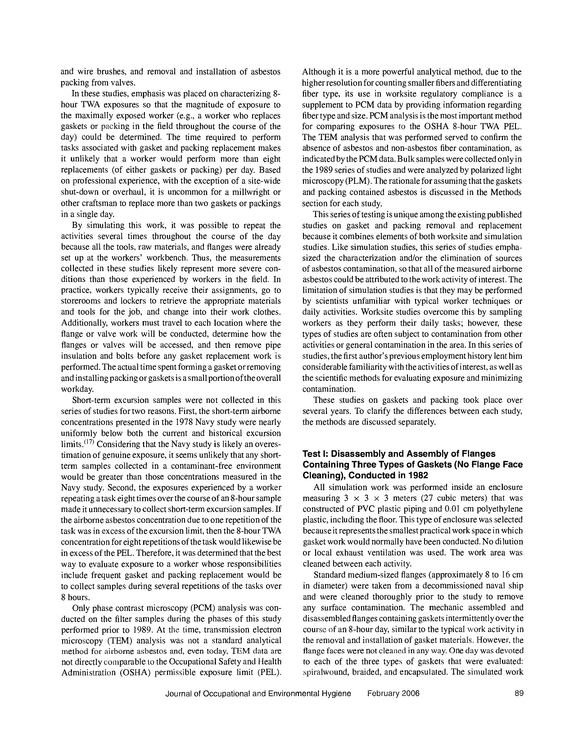
Navy used amosite and chrysotile asbestos insulation extensively on pipes and machinery onboard naval ships The Navy published explicit specifications regarding the percentages of each fiber type amosite or chrysotile that were to be used in materials such as insulating felt insulating blocks insulating cement sheet gaskets and packing materials Some of the containing materials used included 85 amosite insulating blocks and 100 chrysotile insulating cements In the first author's experience chrysotile was the only type of asbestos used in naval gaskets and packing however crocidolite gaskets have been historically used for Journal of Occupational and Environmental Hygiene February 2006 87 highly acidic applications such as certain processes in pulp and paper plants and refineries The magnitude of asbestos use in a naval shipyard was extremely high For example a World War era destroyer is estimated to have contained at least 96,000 pounds of asbestoscontaining insulation Based on data presented by Fleischer et al naval shipyards are estimated to have used between 100,000 and 500,000 pounds of asbestos products per month for new ship construction during World War II At least 90 of these asbestos materials were in amosite blankets or pads loose amosite magnesia block insulation and asbestos cements All of these materials were loose easily crumbled and handled directly by workers By comparison gaskets and packing constituted a small fraction of the total weight of the various asbestos products onboard a naval 2,3,5,6,8 and the asbestos within these materials was encapsulated in a binder making it unlikely for the material to release significant amounts of asbestos fibers In the National Emission Standards for Hazardous Air Pollutants NESHAP regulations the Environmental Protection Agency EPA acknowledged the low potential for gaskets and packing to release significant amounts of fibers The regulations state that even broken or damaged gaskets and packing would rarely if ever release significant levels of asbestos even under the conditions in which a building is demolished A major goal for industrial health and hygiene professionals in the 1960s was to improve worksite safety and reduce high level asbestos exposures that occurred during the manufacture and use of asbestos products containing raw and friable asbestos that were used in large volumes in construction and in shipyards However at that time smallvolume products and those that were encapsulated were not considered a health 11,12 In the 1970s researchers and institutions including Selikoff and the International Agency for Research on Cancer IARC declared that packing and gasket materials did not pose any conceivable health hazard There were some internal studies conducted during the 1970s to evaluate worker exposures associated with these products but most were inconclusive or had small sample populations Additionally these tests were likely obscured by the high background levels from highly friable products such as asbestos insulation Without adequate characterization of background concentrations it is virtually impossible to identify the source of exposure in worksite studies when multiple asbestos products are used in close proximity to each other During the 1960s and 1970s the Navy pioneered changes in the use of asbestos by implementing dust control devices enforcing the use of respirators and replacing asbestos with alternative materials as they became available As sources of free fibers were eliminated or contained the Navy focused on evaluating level sources of exposures such as gaskets Other industries followed the Navy's lead in implementing industrial hygiene controls and eliminating the use of friable containing products By the 1980s use of asbestos for new applications in the United States was uncommon However due to the latency of asbestos diseases med- ical and scientific researchers continued to evaluate asbestos exposure and incidence of asbestos disease among workers In 1978 the Department of the Navy as a part of an ongoing industrial hygiene program set about collecting airborne asbestos samples during the storage handling and processing of gaskets of all kinds in naval shipyards The evaluation was an important undertaking because only a few such studies had been conducted The Navy report concluded that even the simplest of general housekeeping controls or work practices were sufficient to maintain occupational exposures to asbestos at acceptable levels Although the Navy achieved its intended objective of characterizing the exposure to any and all fibers in the breathing zone of workers it did not measure exposure levels specifically associated with handling of containing gasket materials Breathing zone air samples were collected in work areas during various gasket processing activities however the area was not cleaned prior to the commencement of the study Furthermore given that background samples were not collected prior to initiation of gasket work it is questionable whether the data truly reflected asbestos exposures associated with gaskets Although the concentrations reported for gasket handling were generally close to 0.1 cc trace contamination from insulation or other sources could have easily contributed to these values The intent of the study presented here was to measure personal and area airborne asbest
refid# ByGox5XVgG2o16zXEZ3RmyY0413 pages
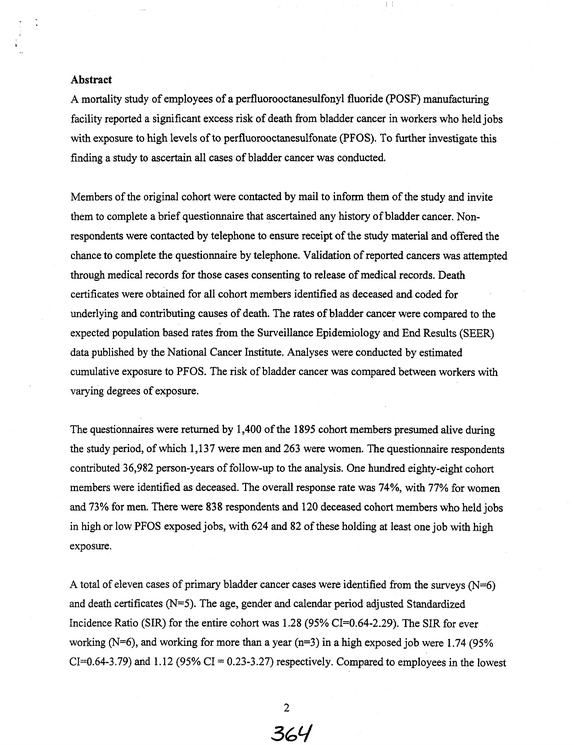
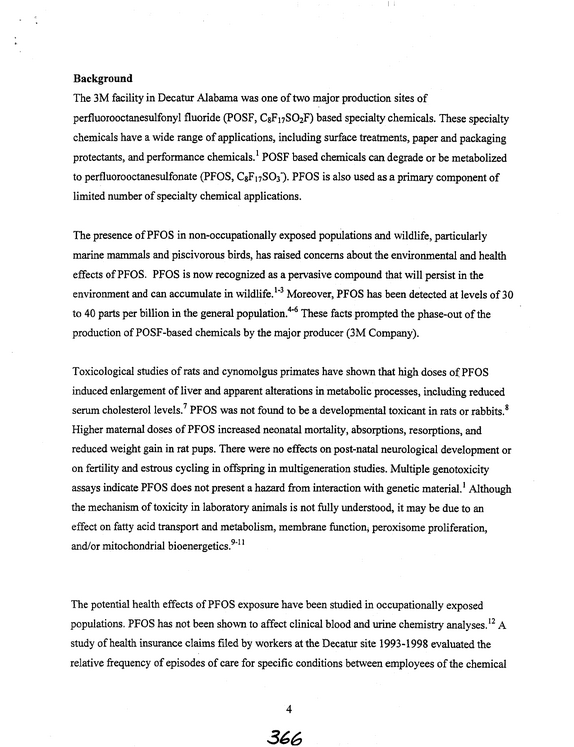
AtL22rtf(>8 Bladder Cancer in Perfluorooctanesulfonyl Fluoride Manufacturing Workers Final Report Bruce H.
refid# 3NoJBz0N4VBx06anm4x1JoGVy29 pages
They must also ensure that the funds allocated to MINAS to support implementation of the IPP will lead to expansion and improvement of the work already accomplished by FEDEC.
refid# bap608xz6YoMz3ny2GDJjjjn620 pages
Geological Society of America 3300 Penrose Place P.O.
refid# MM09nZgxK4a9Njk5zg9wm488j25 pages
T_ c"21o 0 3 oola.
refid# 6BN67aqqRk51Ny0d3Ge8qywng37 pages
The mechanisms and pathways leading to the presence of PFOS in human blood are not well characterized but likely involve environmental exposure to PFOS or its precursor molecules and residual levels of PFOS or PFOS precursors in industrial and commercial i .., 3M Company EPb0011 Page 5 of 42 products.
refid# xjbpELrOB1zZ74v6YRmOGnpZG42 pages
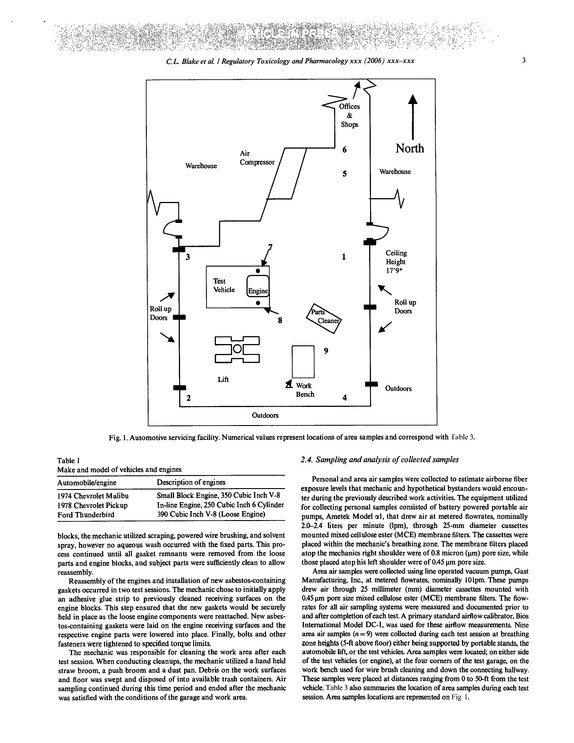
The north wall of this garage angled into a hallway that lead to offices and the main shops located to the north Barriers and isolation devices were not utilized to seal the test area from this section of the service facility due to its distance from the actual test area and to aid in maintaining standard environmental conditions Area samples were collected from midway between the two shop areas which showed an absence of airborne fiber migration from shop A warehouse used for storage purposes was located adjacent to the north wall of the garage Existing materials and equipment were left inside the automotive service facility and the connecting hallway during the testing This included but is not limited to parts bins used tires compressed gas bottles trash receptacles a tire inflation safety cage and two fully functional hydraulically operated automobile lifts Vehicles receiving service entered from the west side and exited from the east side or vice versa The ventilation system located within the bay automotive service garage was shut down during the three days of testing Testing was performed in an unventilated facility to facilitate a worse case scenario Also the rollup vehicle doors remained closed during each test session The four rollup doors were opened between test sessions to remove airborne particles generated during the previous test sessions 2.2 Test vehicles Vintage vehicles utilized in this experiment were selected based on ) the likelihood of encountering containing gaskets and 2 the availability of new replacement containing engine gaskets The tested vehicles included a 1974 Chevrolet Malibu 1978 Chevrolet pickup truck and a Ford 390 cubic inch V engine Table 1 contains a brief description of the vehicles and engines utilized in this study 2.3 Mechanic's activities equipment and tasks The professional automotive mechanic was Automobile Service Excellence ASE certified and was instructed to perform gasket removals or installations using his standard operating procedures SOP Thus he was allowed to select all tools and equipment to ensure limited interference with his job practices Tools utilized during this experiment included wrenches screwdrivers scrapers and hammers in addition to pneumatic powered ratchets for the removal of bolts and nuts The mechanic was directed to wear a normal work uniform to further ensure realism and avoid use of cumbersome or uncomfortable garments which would have interfered with his normal activities or work habitats Five individual test sessions were conducted to assess the levels of air- borne asbestos fiber generated during the servicing and handling of asbescontaining gaskets Three test sessions focused on the partial disassembly of engines and the removal of gasket remnants from engine receiving surfaces and loose parts The two remaining test sessions involved engine reassembly and included installatio
refid# 2B48Dedno2J6XEB2MD5QE7qa10 pages
NATIONAL INSTITUTE FOR OCCUPATIONAL HEALTH Pathology Division Surveillance Report: Demographic Data and Disease Rates for January to December 2004 Ntombizodwa Ndlovu Jill Murray Geoff Candy Gill Nelson NIOH Report 7/2005 PO Box 4788 JOHANNESBURG 2000 e-mail: jill.murray@nioh.nhls.ac.za NATIONAL HEALTH LABORATORY SERVICE ACKNOWLEDGEMENTS We thank the following staff members of the NIOH Pathology Department, for their invaluable contribution to the autopsy service: Anna Khumalo Goodman Rani Jay Vallabh Jemima Cantrell Johanna Dibedi Johannes Makoena Joseph Mukhovi Julienne Mkhize Juliet Buthelezi Martha Rikhotso May Humby Nora Ngutshane Patrick Mbhontsi Phyllis Back Rosinah Soko Simon Seopela Wilson Mashele Thanks also to Michelle Kotze and Thomas Msiza (IT Directorate, National Department of Health) for upgrading and maintaining the PATHAUT system.
refid# jgkjjrMBXB3OK216MZ7G2011p32 pages
ELSEVIER Available online at www.sciencedirect.com ScienceDirect Science of the Total Environment 377 (2007) 296-307 Science of the Total Environment A V*M< www.elsevier.com/locate/scitotenv Towards a global historical emission inventory for selected PCB congeners -- A mass balance approach 3.
refid# nm2OpBZxj7B5md1n6Q8rY28xX12 pages
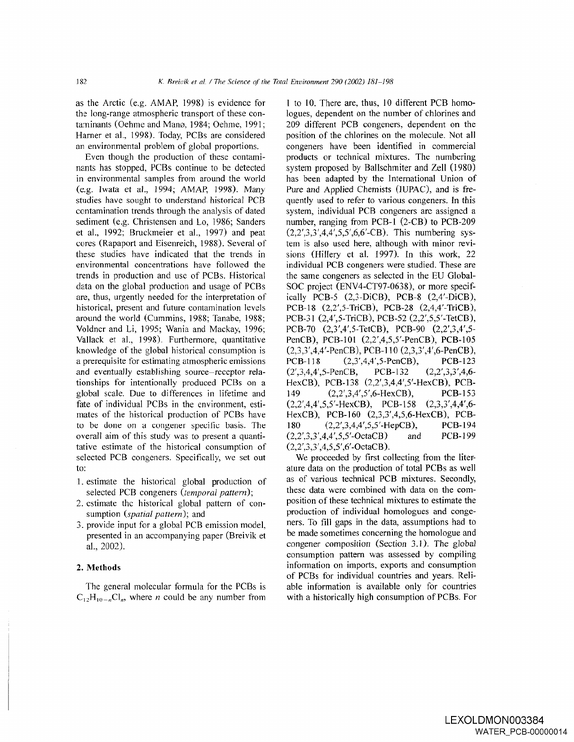
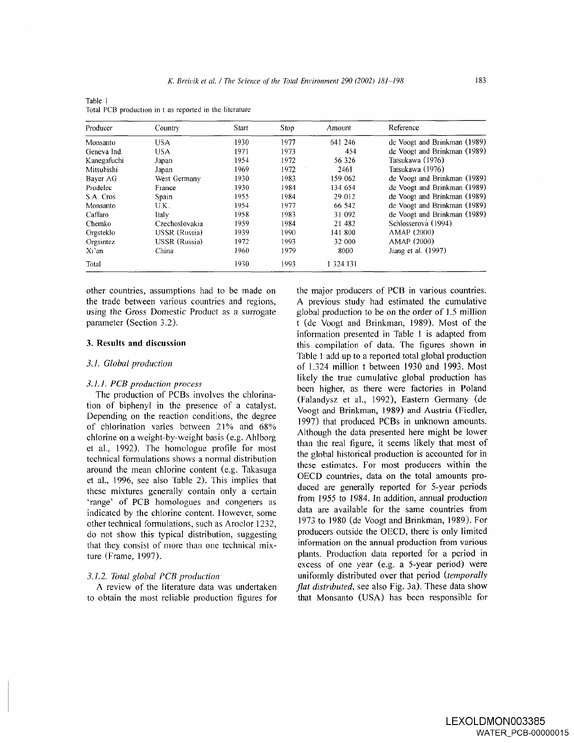
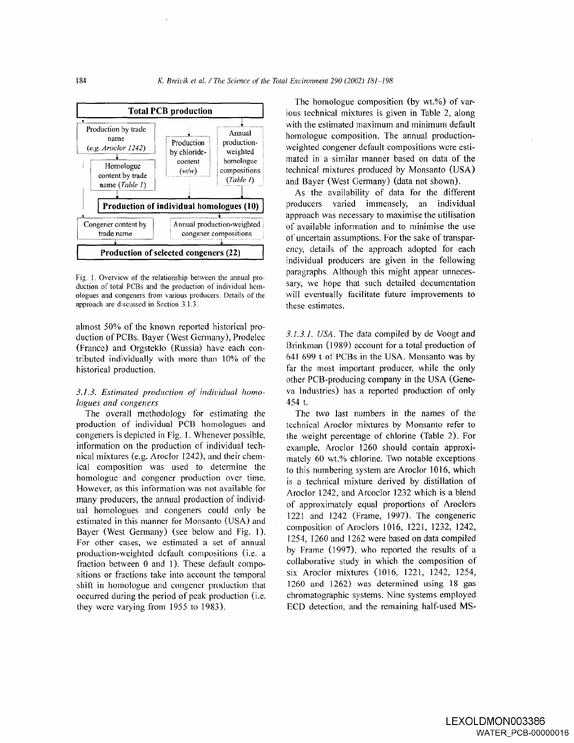
ELSEVIER The Science of the Total Environment 290 (2002) 181-198 the Science ofthe total Environment All InlermtOoml Ju'inial fir .Sitr.illfk Kntanh into Iht EnvIroBBfnl and lit Rclaliamhlp "Oh Man www.elsevier.com/locate/scitotenv Towards a global historical emission inventory for selected PCB congeners -- a mass balance approach 1.
refid# y8E5mZxg2JMZR2eVm8zMnDXD18 pages
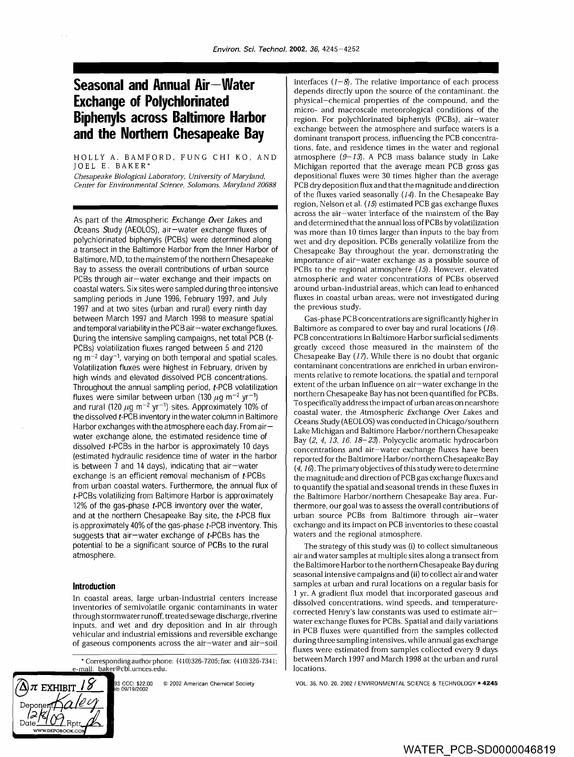
However, elevated atmospheric and water concentrations of PCBs observed around urban-industrial areas, which can lead to enhanced fluxes in coastal urban areas, were not investigated during the previous study.
refid# JZM5aymZLGOoQBe7891Z73BK8 pages
Journal of Exposure Science and Environmental Epidemiology (2010) 20, 7989 r 2010 Nature Publishing Group All rights reserved 1559-0631/10/$32.00 www.nature.com/jes Paraoxonase status and plasma butyrylcholinesterase activity in chlorpyrifos manufacturing workers JAMES W.
refid# 8VQB3Qnvzwx7E6GKy0pZqyVrZ11 pages
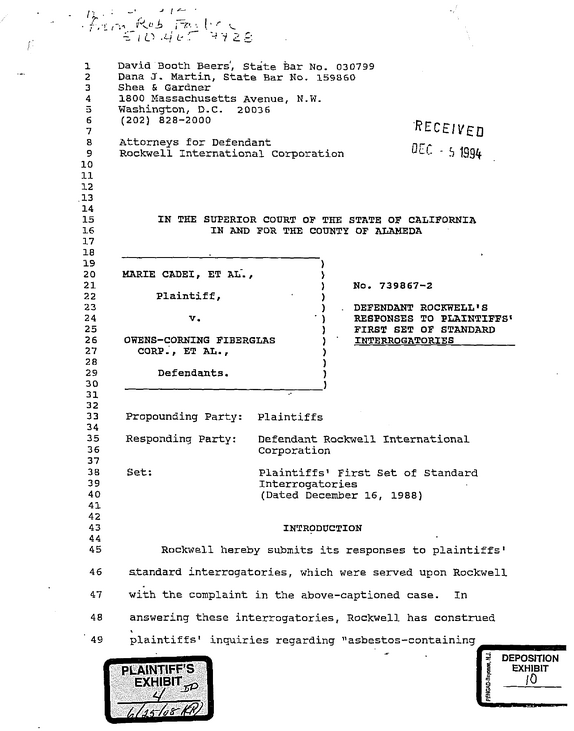
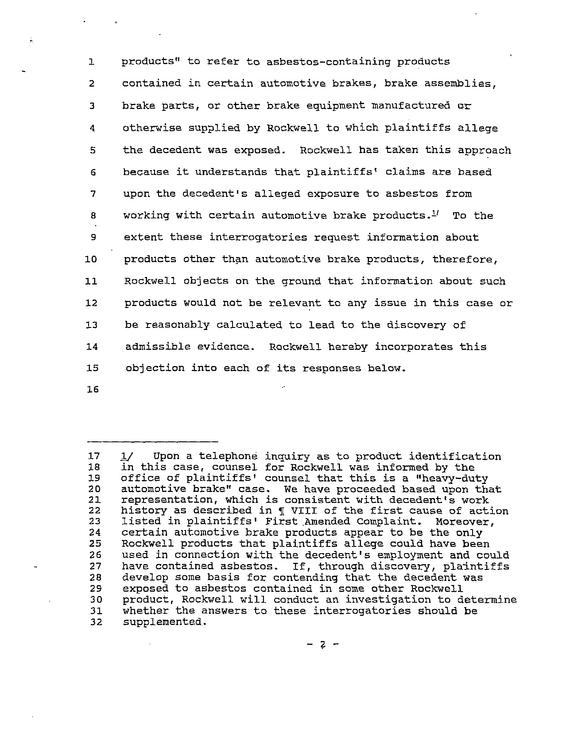
Rockwell has taken this approach 6 because it understands that plaintiffs* claims are based 7 upon the decedent's alleged exposure to asbestos from 8 working with certain automotive brake products, i' To the 9 extent these interrogatories request information about 10 products other than automotive brake products, therefore, 11 Rockwell objects on the ground that information about such 12 products would not be relevant to any issue in this case or 13 be reasonably calculated to lead to the discovery of 14 admissible evidence.
refid# b58L1RMjOM1aN6jJX1eKzgG5o34 pages
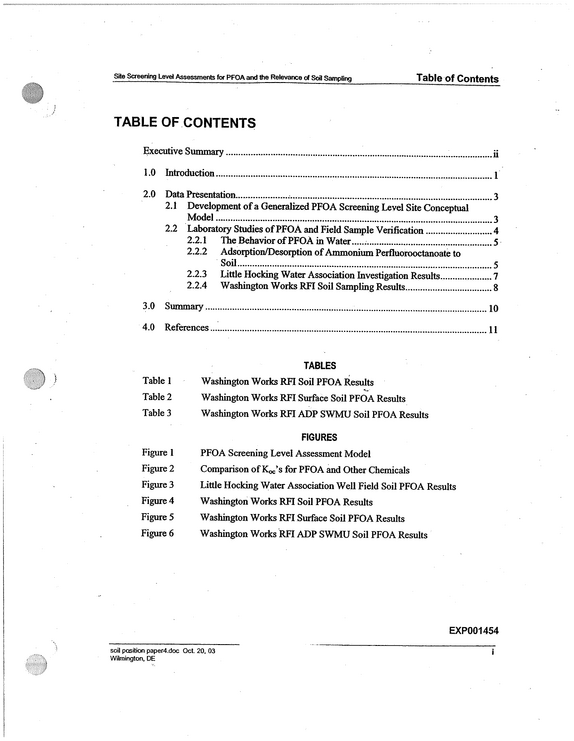
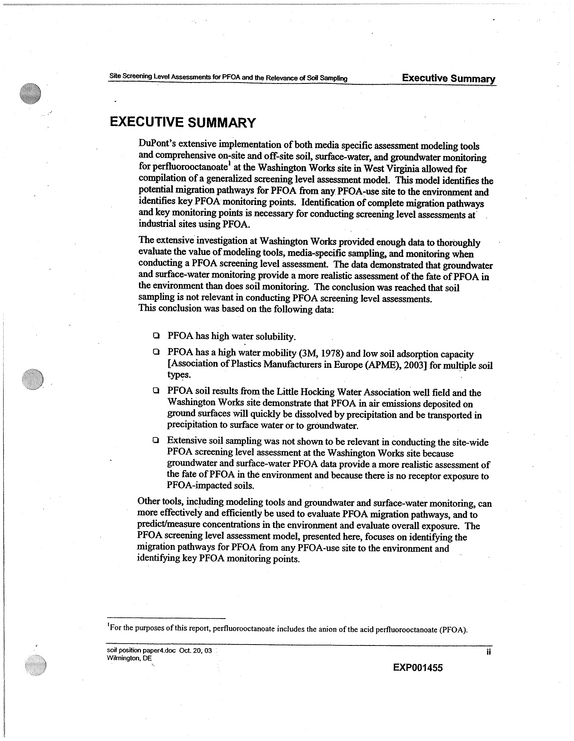
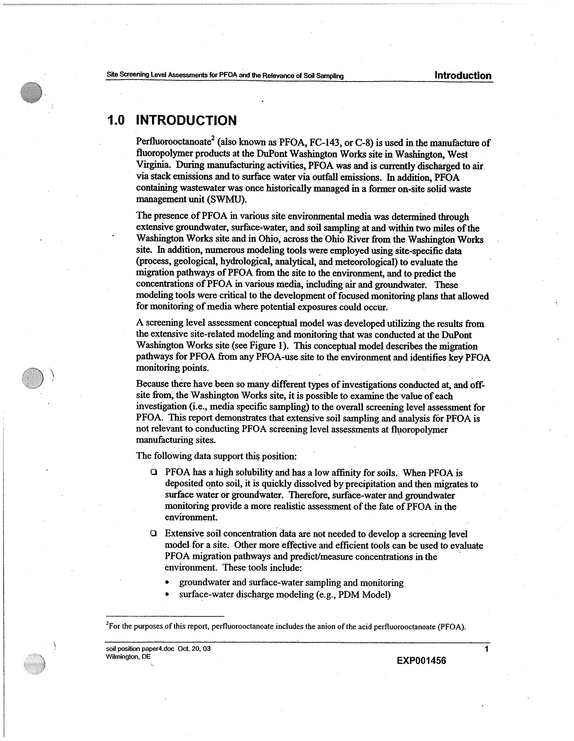
SITE SCREENING LEVEL ASSESSMENTS FOR PFOA AND THE RELEVANCE OF SOIL SAMPLING Date: OctobertO, 2003 Project No,; 18983753.00034 ^ CORPORATE REMEDIATION GROUP An Alliance between DuPont and URS Diamond Barley Mill Plaza, Building 27 Wilmington, Delaware 19805 EXP001453 SHe Screera'ng Level Assessments for PFOA and the Relevance of Soa Sampling Table of Contents TABLE OF CONTENTS Executive Summary. 1.0 Introduction ..... 2.0 Data Presentation................................................................................................ 2.1 Development of a Generalized PFOA Screening Level Site Conceptual Model...............,................................................................................................3 2.2 Laboratory Studies of PFOA and Field Sample Verification........................... 4 2.2.1 The Behavior of PFOA in Water......................................................... 5 2.2.2 Adsorption/Desorption of Ammonium Perfluorooctanoate to 2.2.3 2.2.4 Soil.......................................................................................................5 Little Hocking Water Association Investigation Results..................... 7 Washington Works RFI Soil Sampling Results................................... 8 3.0 Summary... .10 4.0 References. .11 Table I Table 2 Table 3 Figure 1 Figure 2 Figure 3 Figure 4 Figure 5 Figure 6 TABLES Washington Works RFI Soil PFOA Results '-- Washington Works RFI Surface Soil PFOA Results Washington Works RFI ADP SWMU Soil PFOA Results FIGURES PFOA Screening Level Assessment Model Comparison of K^s for PFOA and Other Chemicals Little Hocking Water Association Well Field Soil PFOA Results Washington Works RFI Soil PFOA Results Washington Works RFI Surface Soil PFOA Results Washington Works RFI ADP SWMU Soil PFOA Results soil position paper4.doc Oct. 20, 03 Wilmington, DE EXP001454 Site Screening Level Assessments for PTOA and the Relevance of SoB Sampling _____EXCCUtlVe Summary EXECUTIVE SUMMARY DuPont's extensive implementation of both media specific assessment modeling tools and comprehensive on-site and off-site soil, surface-water, and groundwater monitoring for perfluorooctanoate1at the Washington Works site in West Virginia allowed for compilation of a generalized screening level assessment model.
refid# dDOOKvzR83wbqBv39yyQqjgLR32 pages
Toxicogenomics | Article Mechanisms of Benzene-Induced Hematotoxicity and Leukemogenicity: cDNA Microarray Analyses Using Mouse Bone Marrow Tissue Byung-IL Yoon,1 Guang-Xun Li,1 Kunio Kitada,2 Yasushi Kawasaki,1 Katsuhide Igarashi,1 Yukio Kodama,1 Tomoaki Inoue,2 Kazuko Kobayashi,2 Jun Kanno,1 Dae-Yong Kim,3 Tohru Inoue,4 and Yoko Hirabayashi1 1Division of Cellular and Molecular Toxicology, National Institute of Health Sciences, Tokyo, Japan; 2Kamakura Research Labs, Chugai Pharmaceutical, Co., Ltd., Kamakura, Japan; 3Department of Veterinary Pathology, College of Veterinary Medicine and Agricultural Biotechnology, Seoul National University, Seoul, Republic of Korea; 4Biological Safety and Research Center, National Institute of Health Sciences, Tokyo, Japan Although the mechanisms underlying benzene-induced toxicity and leukemogenicity are not yet fully understood, they are likely to be complicated by various pathways, including those of metabolism, growth factor regulation, oxidative stress, DNA damage, cell cycle regulation, and programmed cell death.
refid# bzq8Gp3gQqLyb2ENdGepwZr310 pages