Refine
Estimated Years 2000-2009Clear
3,232 results foundRefine Search
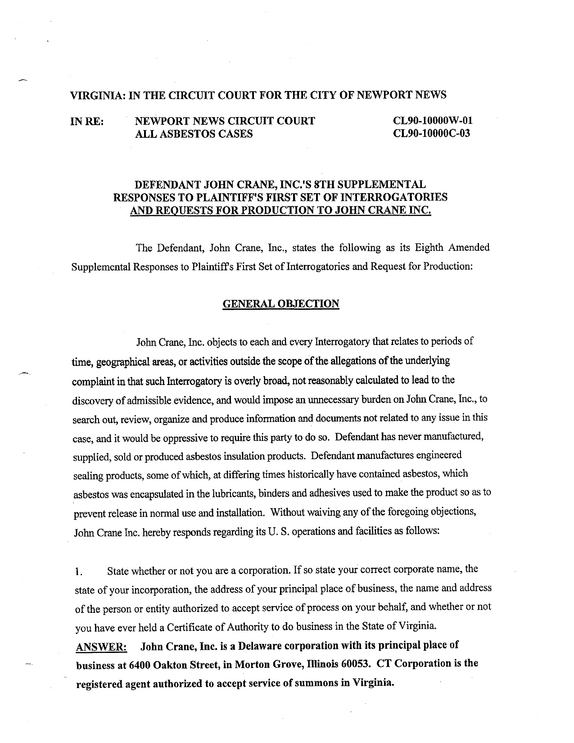
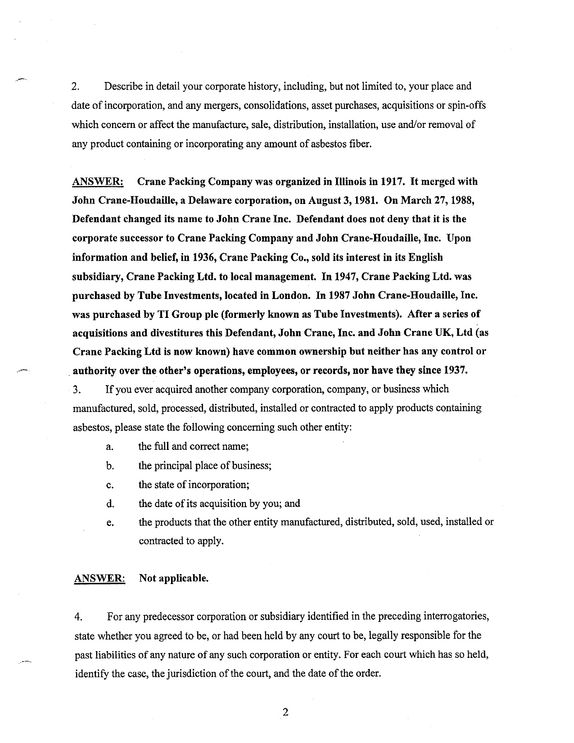
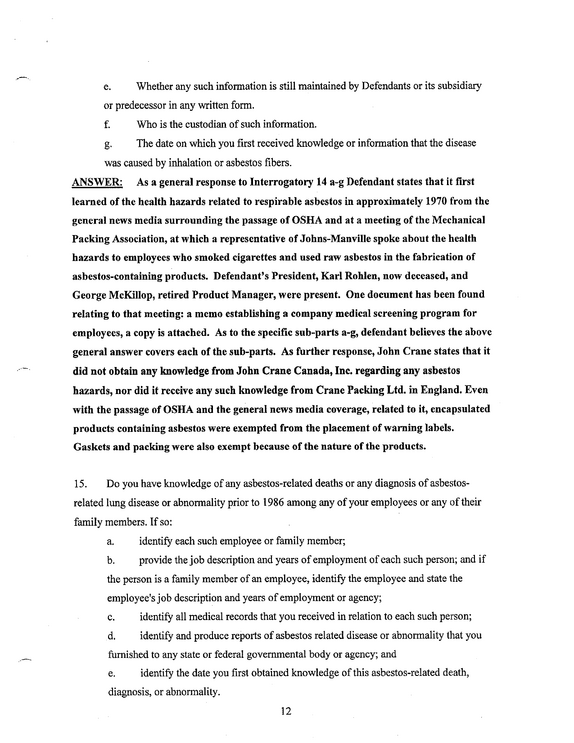
S 8TH SUPPLEMENTAL RESPONSES TO PLAINTIFF'S FIRST SET OF INTERROGATORIES AND REQUESTS FOR PRODUCTION TO JOHN CRANE INC The Defendant John Crane Inc. states the following as its Eighth Amended Supplemental Responses to Plaintiff's First Set of Interrogatories and Request for Production GENERAL OBJECTION John Crane Inc. objects to each and every Interrogatory that relates to periods of time geographical areas or activities outside the scope of the allegations of the underlying complaint in that such Interrogatory is overly broad not reasonably calculated to lead to the discovery of admissible evidence and would impose an unnecessary burden on John Crane Inc. to search out review organize and produce information and documents not related to any issue in this case and it would be oppressive to require this party to do so Defendant has never manufactured supplied sold or produced asbestos insulation products Defendant manufactures engineered sealing products some of which at differing times historically have contained asbestos which asbestos was encapsulated in the lubricants binders and adhesives used to make the product so as to prevent release in normal use and installation Without waiving any of the foregoing objections objections John Crane Inc. hereby responds regarding its U.
refid# g21remGjQRZ1RGV9O25yq6jwG9 pages
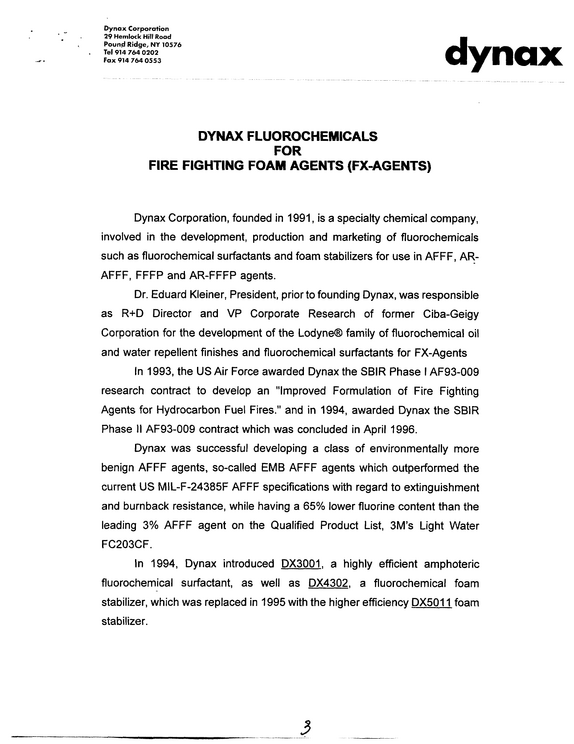
Dynax was successful developing a class of environmentally more benign AFFF agents, so-called EMB AFFF agents which outperformed the current US M IL-F-24385F AFFF specifications with regard to extinguishment and burnback resistance, while having a 65% lower fluorine content than the leading 3% AFFF agent on the Qualified Product List, 3M 's Light Water FC203CF.
refid# EvnwXGKzkdnKDvnk5vYgE36eg6 pages
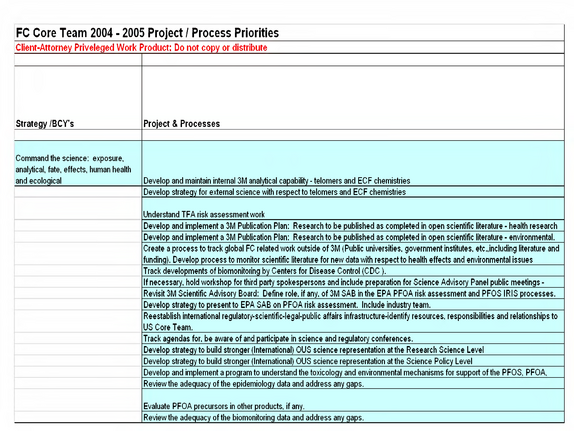
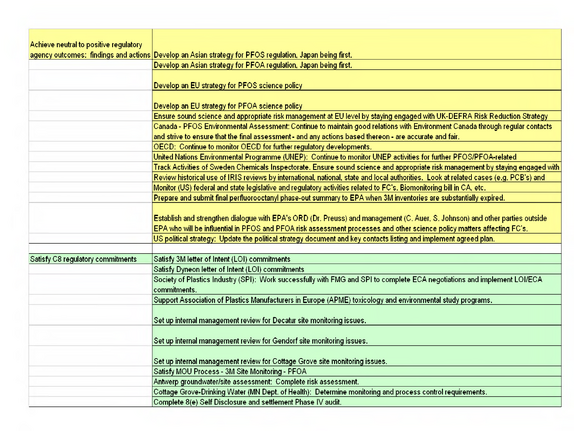
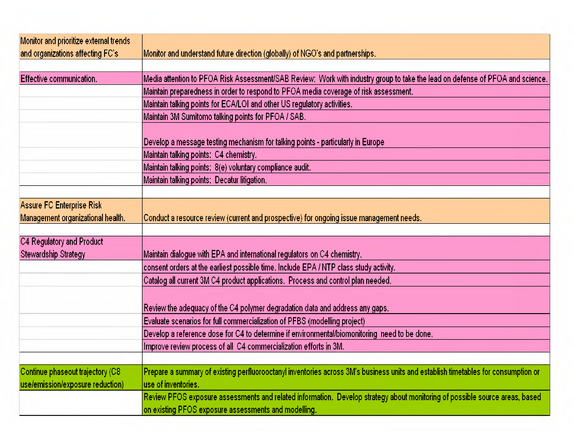
Media attention to PFOA Risk Assessm ent/SAB Review: W ork with industry group to take the lead on defense o f PFO A and science.
refid# 3eg2JXd4eJKQZYYNMGMvdZ18J3 pages
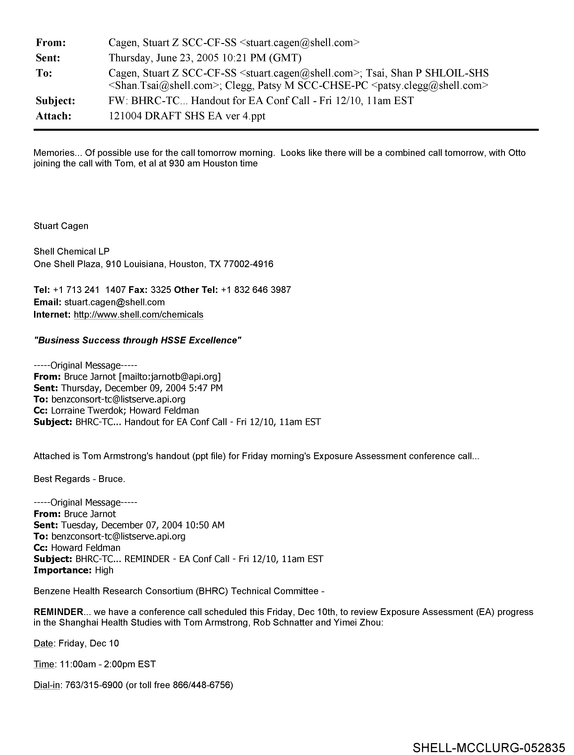
From: Sent: To: Subject: Attach: Cagen, Stuart Z SCC-CF-SS <stuart.cagen@shell.com> Thursday, June 23,2005 10:21 PM (GMT) Cagen, Stuart Z SCC-CF-SS <stuart.cagen@shell.com>; Tsai, Shan P SHLOIL-SHS <Shan.Tsai@shell.com>; Clegg, Patsy M SCC-CHSE-PC <patsy.c1egg@shell.com> FW: BHRC-TC...

refid# zQN8NKj7mBmo3kj59O30OvBy020 pages
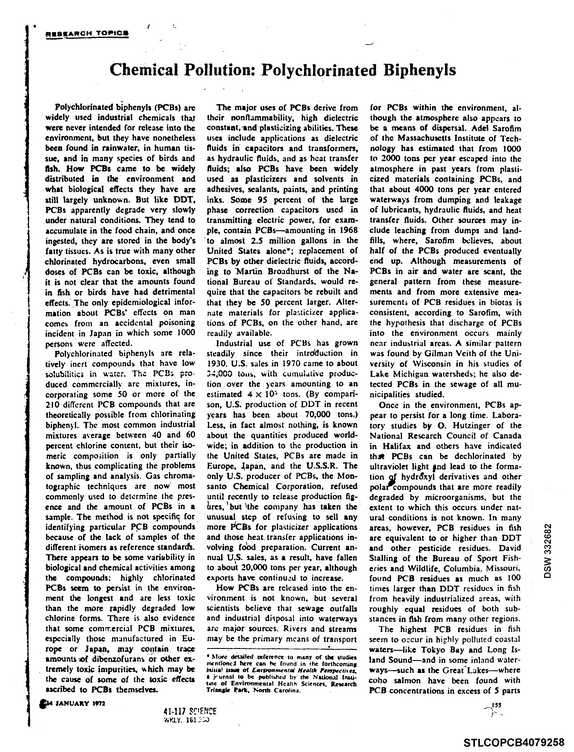
The ultraviolet light Jtnd lead to the forma : of sampling and analysis.
refid# bBbv2RKDMbXKVDrKryZ4Q46n12 pages
An nf-reere m drawn as to a key Importance of hypothalamic dysfuncimn n the |nm<i- gcoests of the disease, this dysfunction Civing nse to neurdtn*<iral and neurovascular troubles leading to th development of dystrophic p-o- tttKi In the boos tissue.
refid# KJoO1OZ5J8G5041L4RDg4Ejw61 page
As specified in the Haskell Laboratory animal health and environmental monitoring program, the following procedures are performed periodically to ensure that contaminant levels are below those that would be expected to impact the scientific integrity of the study: Water samples are analyzed for total bacterial counts, and the presence ofcoliforms, lead, and other contaminants.
refid# 913z62dxR64QRyMzOJ76mpQYe13 pages
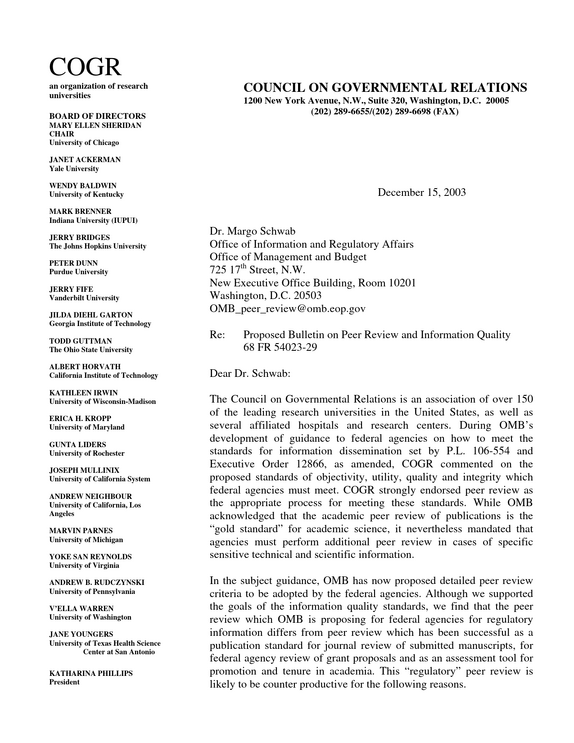
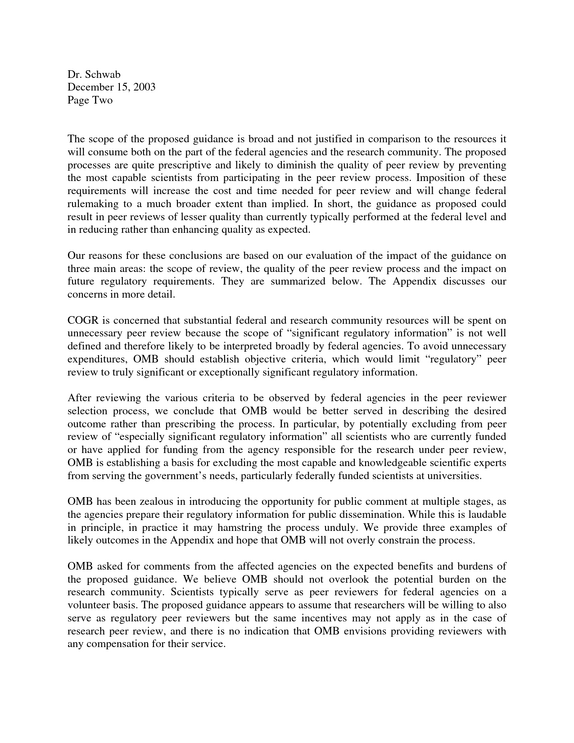
Schwab: The Council on Governmental Relations is an association of over 150 of the leading research universities in the United States, as well as several affiliated hospitals and research centers.
refid# zdkE7zKNy6xDZb4baz7KNayBB7 pages
This will lead to more food and income for them and ultimately, to food security and improved economies for their countries.
refid# zdMVLyzBXZ8Qk8N3ZbmO9QYEn5 pages
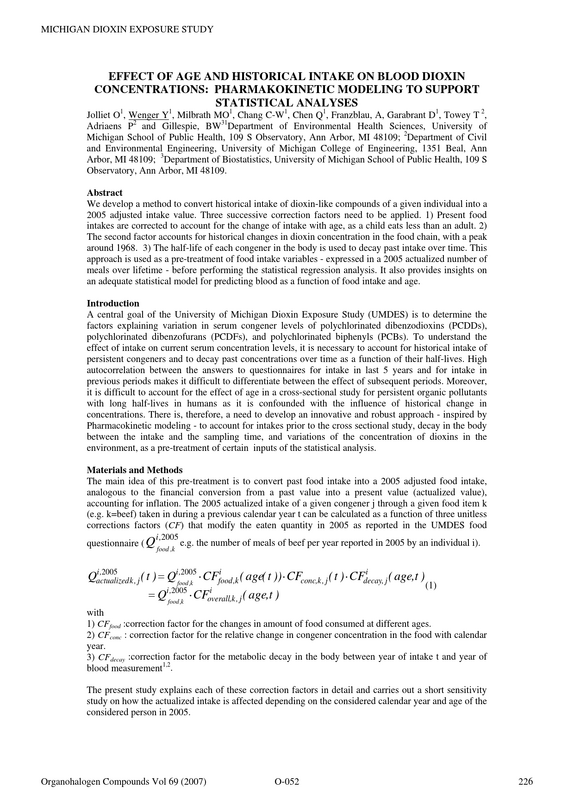
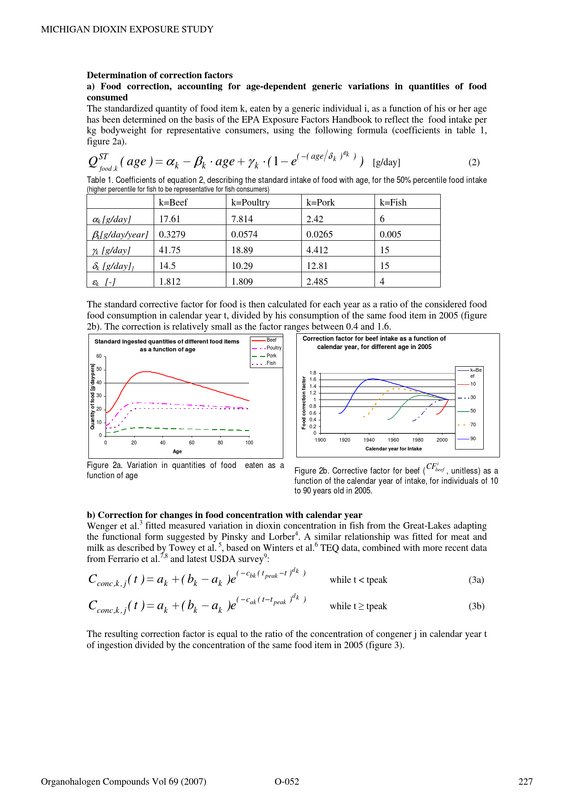
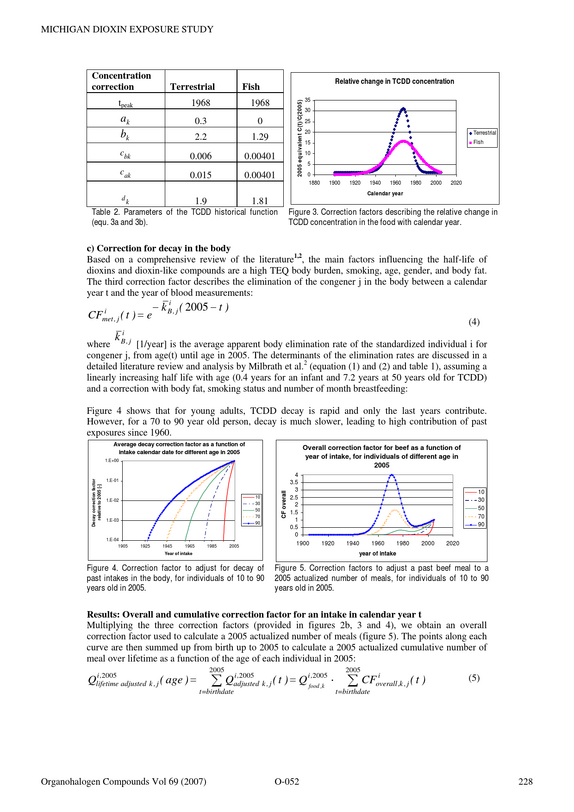
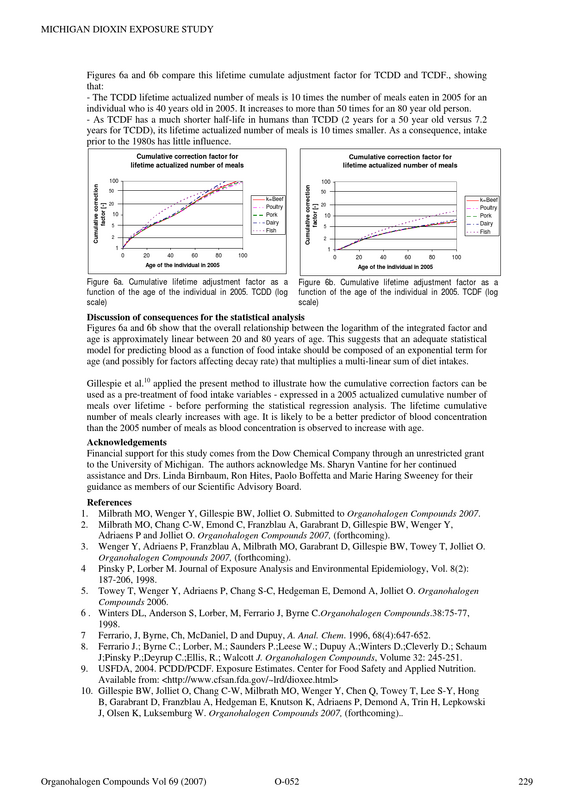
However, for a 70 to 90 year old person, decay is much slower, leading to high contribution of past exposures since 1960.
refid# wreozrpG68jo3OKqBM2O4yrzD4 pages
*fn9 Where the statutory text is unambiguous. we adopt a construction supported by the statute's plain language. unless that construction would lead to an absurd result.
refid# Gm18Zmm12JmobzLEj4rQp0z7x5 pages
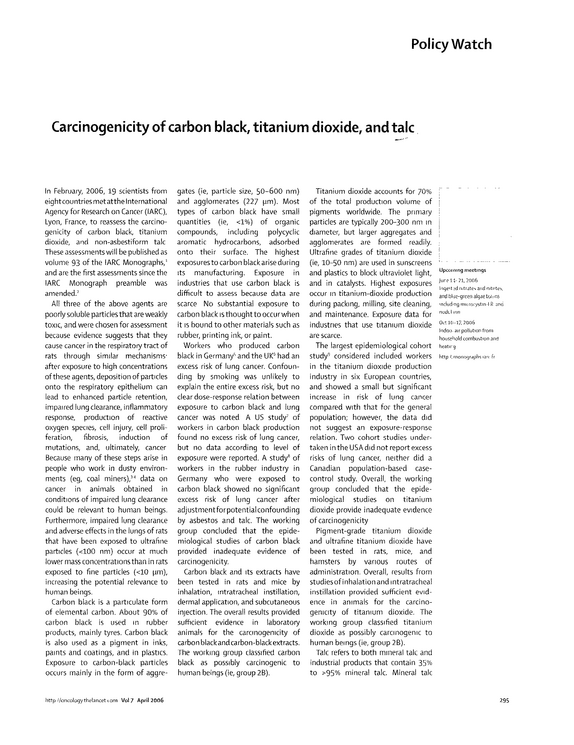
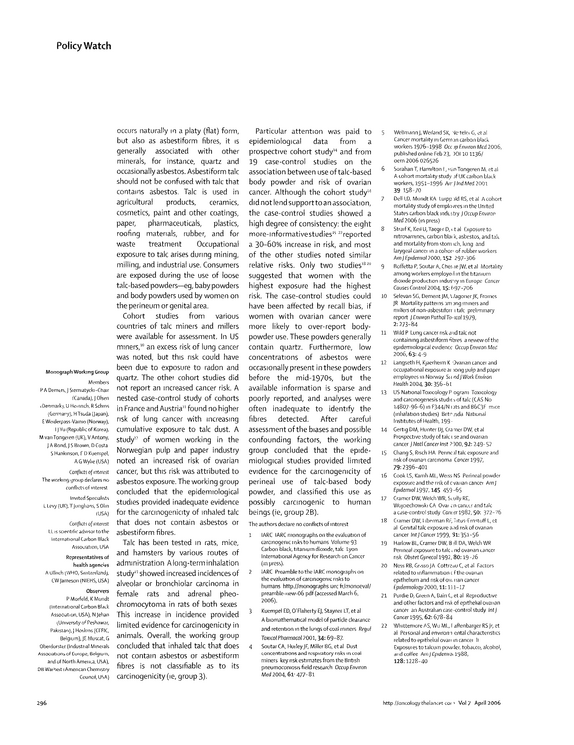
FILE NAME: Talc (TALC) DATE: 2006 Apr DOC#: TALC057 DOCUMENT DESCRIPTION: Journal Article - Carcinogenicity of Carbon Black, Titanium Dioxide, and Talc Policy Watch Carcinogenicity of carbon black, titanium dioxide, and talc In February, 2006, 19 scientists from eight countries met atthe International Agency for Research on Cancer (IARC), Lyon, France, to reassess the carcino genicity of carbon black, titanium dioxide, and non-asbestiform talc These assessments will be published as volume 93 of the IARC Monographs,1 and are the first assessments since the IARC Monograph preamble was amended.2 All three of the above agents are poorly soluble particles that are weakly toxic, and were chosen for assessment because evidence suggests that they cause cancer in the respiratory tract of rats through similar mechanismsafter exposure to high concentrations of these agents, deposition of particles onto the respiratory epithelium can lead to enhanced particle retention, impaired lung clearance, inflammatory response, production of reactive oxygen species, cell injury, cell proli feration, fibrosis, induction of mutations, and, ultimately, cancer Because many of these steps arise in people who work In dusty environ ments (eg, coal miners),34 data on cancer in animals obtained in conditions of impaired lung clearance could be relevant to human beings.
refid# jMQy8wyjxMMa9Xvp6LY2pmnQ3 pages
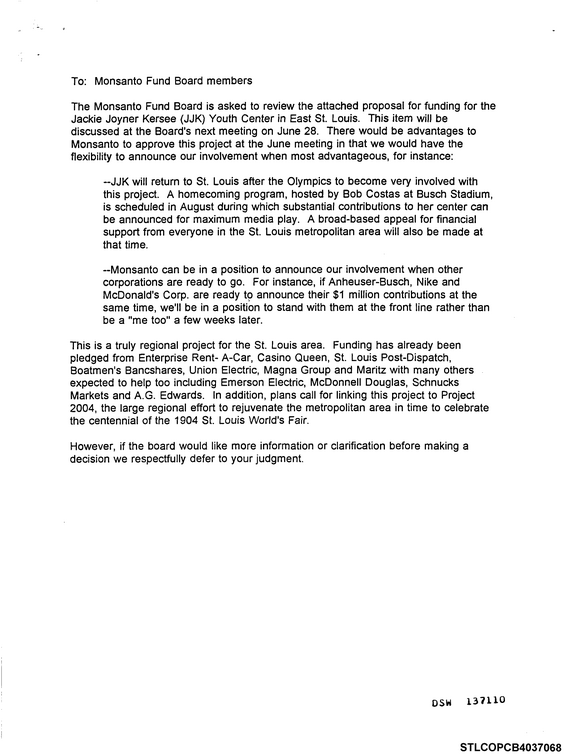
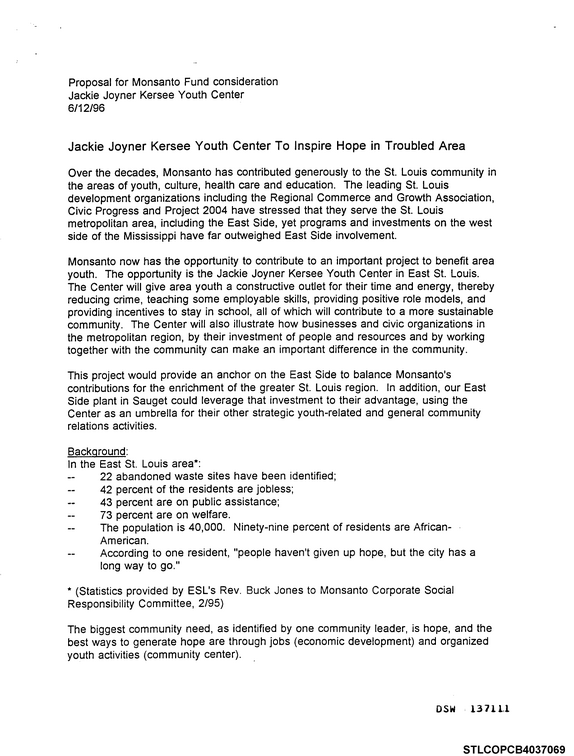
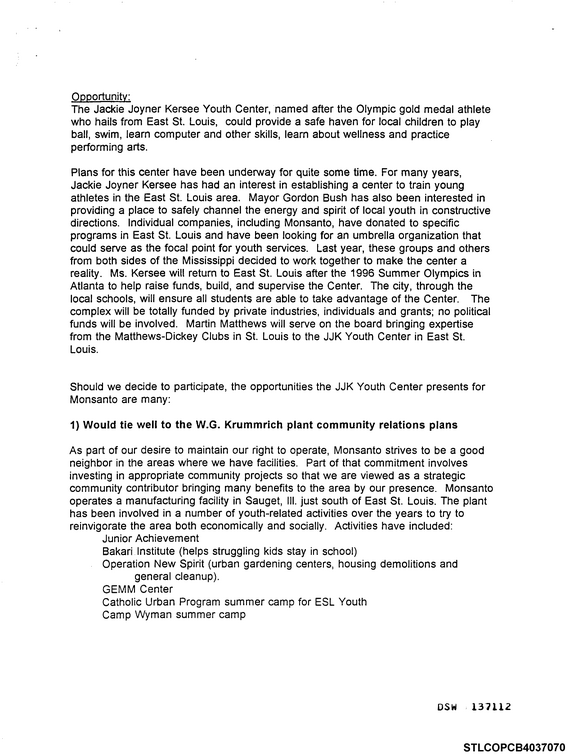
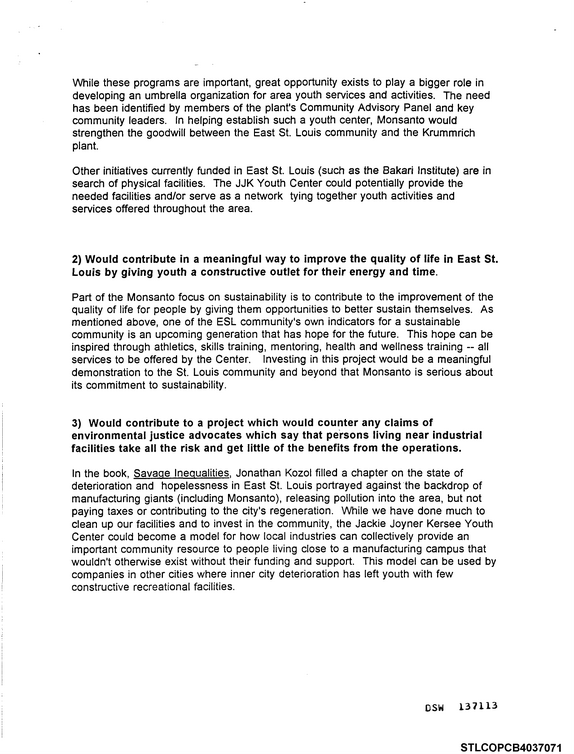
The leading St.
refid# e5pB4yX5Q4RKzYxd97O9v0Oee6 pages
EFFECTS-HUMAN EALTH 42920 ccntralion or dose, was linear on a logarithmic scale.
refid# BvQ3ZbZZ67r6KYRnRz39dxnO43 pages
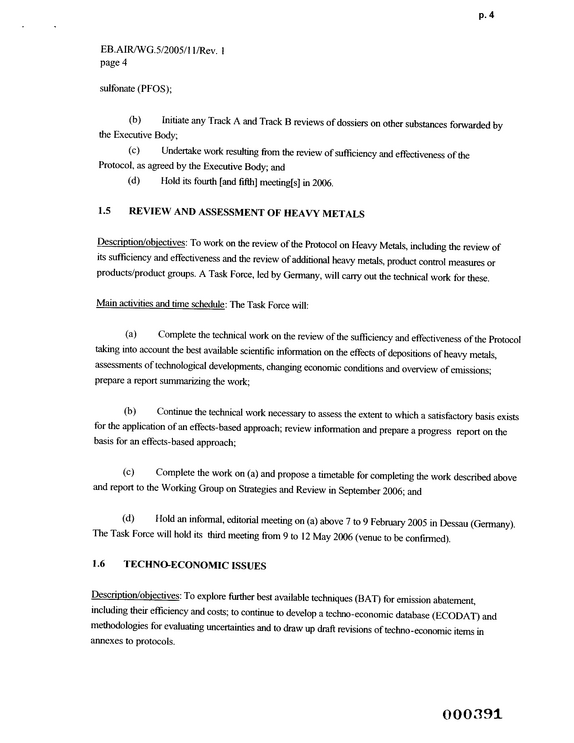
I page 5 Main activities and time schedule : The Expe rt Group on Techno-economic Issues, with Fran ce as lead count ry, will: (a) Continue to collect and store techno-economic data on emission control options and abatement techniques in selected sectors, their costs and ranges of uncertainties; data will be collected according to the nomenclature for report ing ( NFR) provided in the Guidelines for Estimating an d Reporting Emission Data; (b) Provide data on reference installations and control technologies, investment and operational costs, to the Centre for Integrated Assessment Modelling (CLAM) following consultations with national experts ; (c) Make data available for future consideration of revision of technical annexes to protocols ; (d) Provide the Working Group with summaries of background information on sectors covered by ECODAT ; (e) Make efforts to assess emerging technologies and their abatement efficiencies ; (f) Organize training sessions for experts to increase understanding of the needs and aims of the Expert Group ; (g) Publish regularly a newsletter on the work of the Expert Group and its outcomes; and (h) Hold its ninth and tenth meetings in 2006 . 1 .7 EXCHANGE OF INFORMATION AND TECHNOLOG Y Descri ption/obiectives : To create favourable conditions for implementing technology-related obligations of the Convention and its protocols, to facilitate the implementation of existing protocols and the accession of non-Parties, particularly countries with economies in tran sition; to e
refid# np0YarL9XLypwOwGDko6LpMM86 pages