Refine
Estimated Years 1990-1999Clear
321 results foundRefine Search
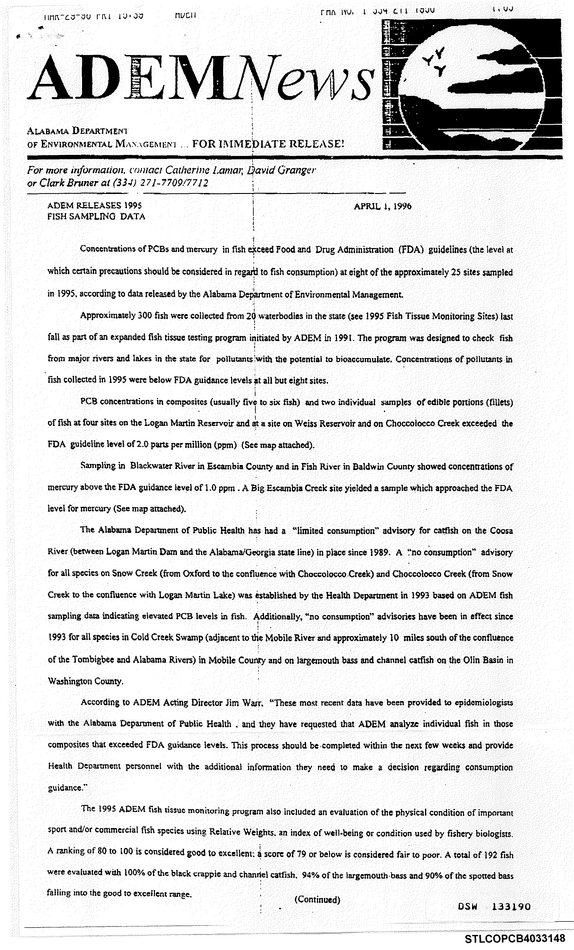
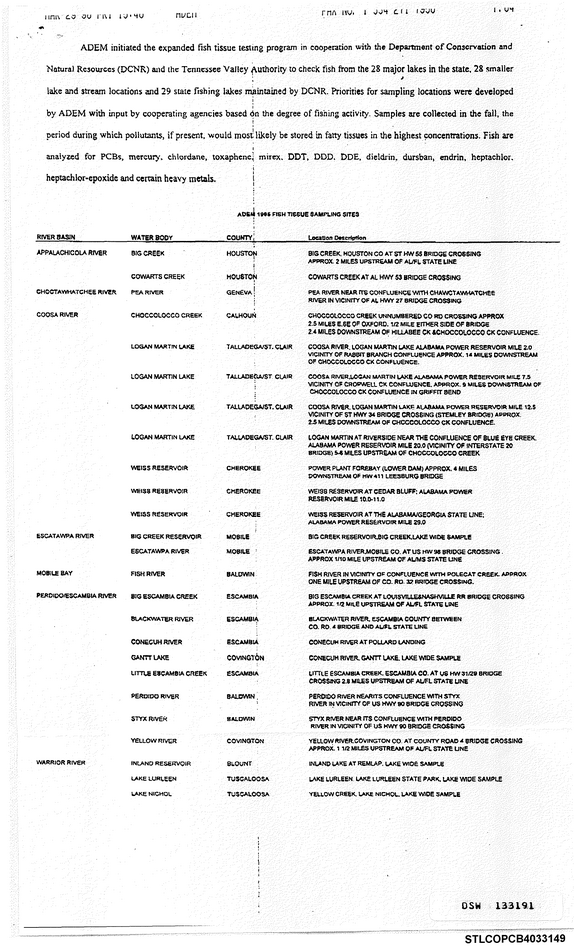
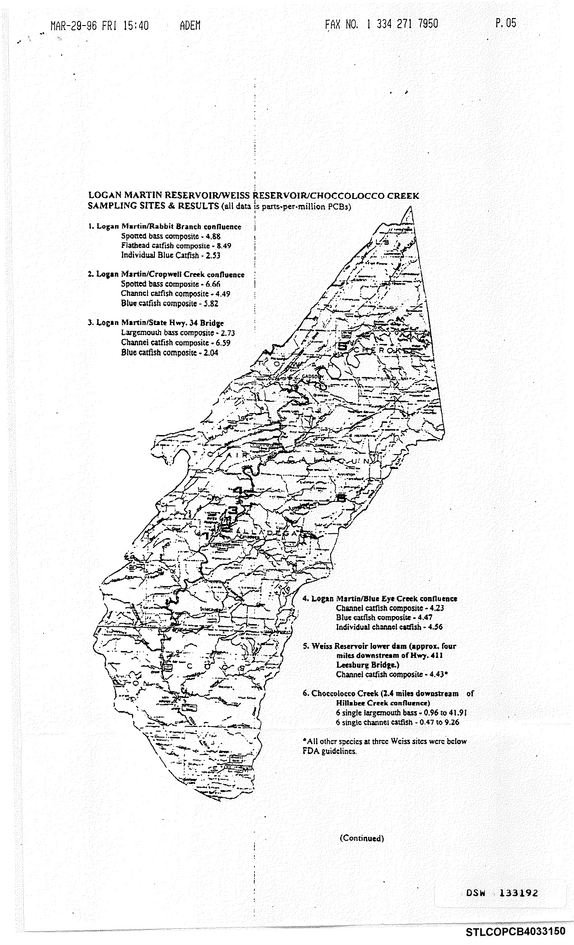
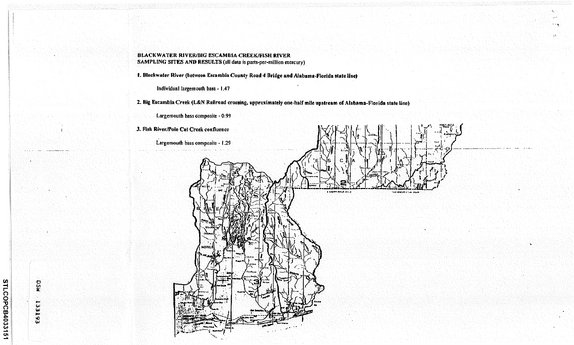
APRIL 1, 1996 j Concentrations of PCBs and mercury in fish exceed Food and Drug Administration (FDA) guidelines (the level at which certain precautions should be considered in regard to fish consumption) at eight of the approximately 25 sites sampled in 1995, according to data released by the Alabama Department of Environmental Management, Approximately 300 fish were collected from 20 waterbodies in the state (see 1995 Fish Tissue Monitoring Sites) last fall as part of an expanded fish tissue testing program initiated by ADEM in 1991.
refid# ev6vzBX82ag16rXEVo8v4V1544 pages
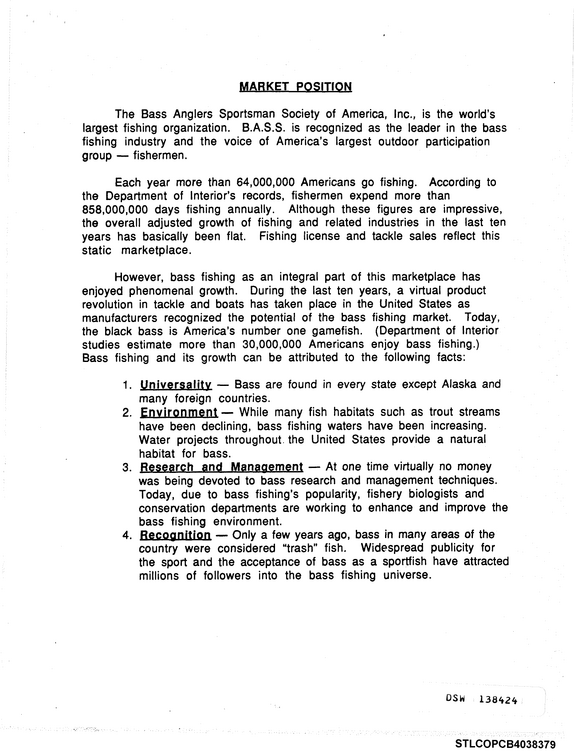
Environment -- While many fish habitats such as trout streams have been declining, bass fishing waters have been increasing.
refid# baMKwb81kKnZJrm7bYMvq1rDy16 pages
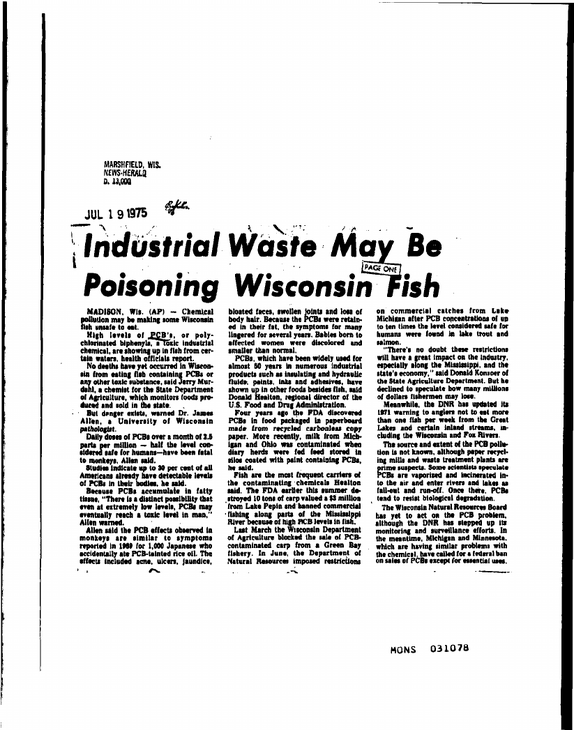
(AP) - Chemical pollution may bo making tome Wisconsin fish unsafe to oat.
refid# L6q3zmYvK6pxGd41jEr0yarg1 page
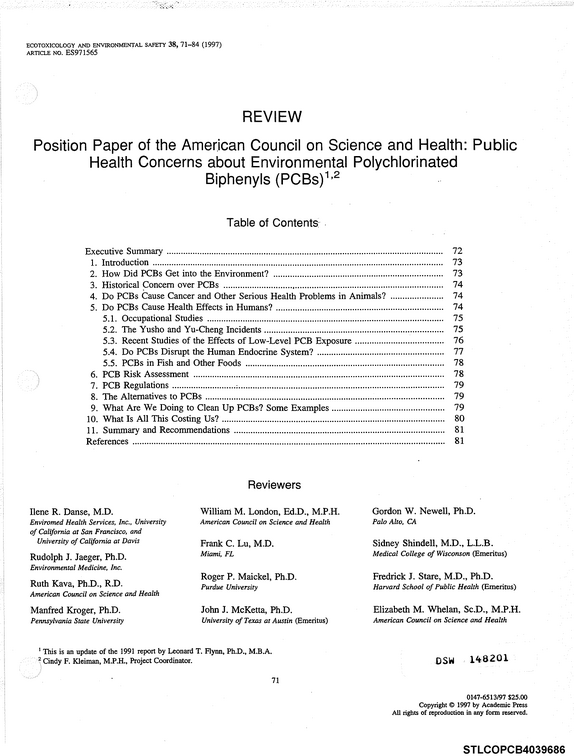
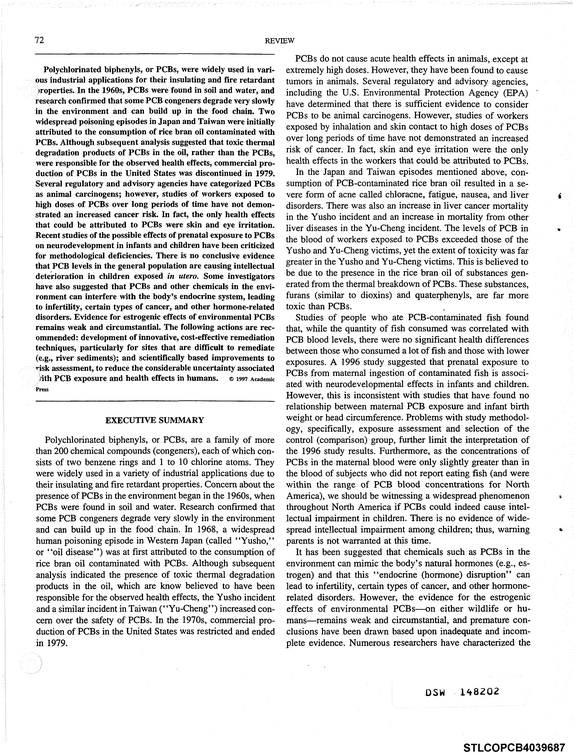
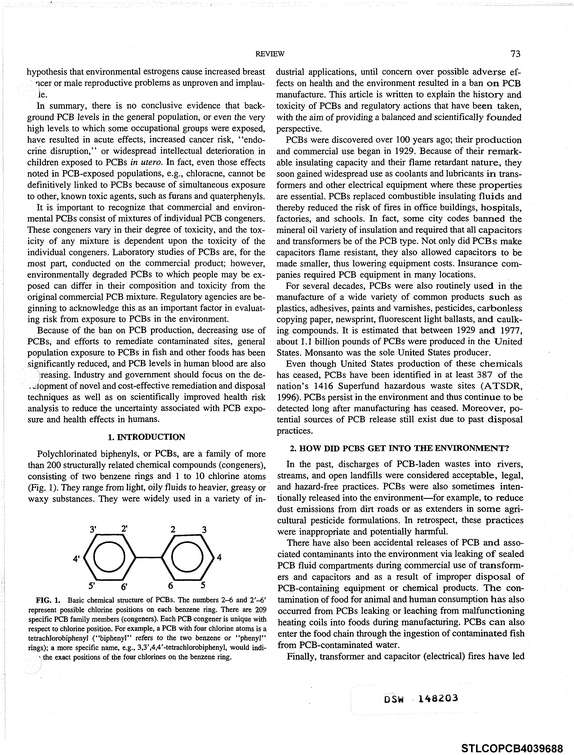
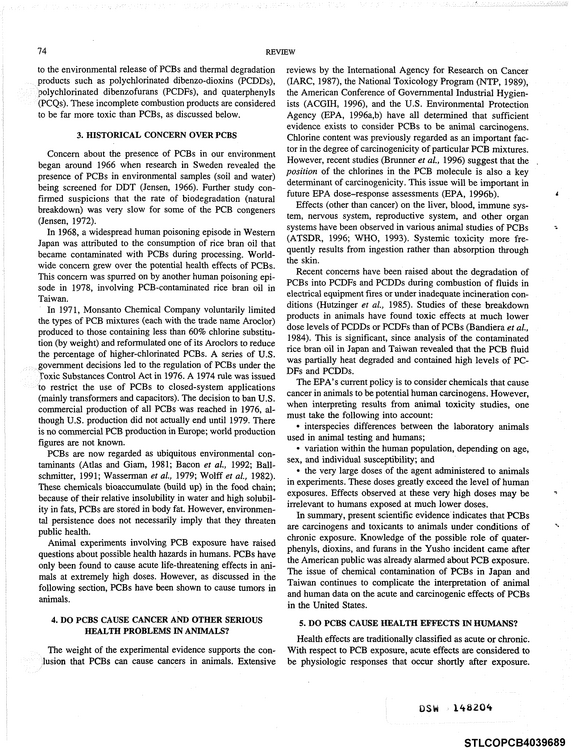
Studies of people who ate PCB-contaminated fish found that, while the quantity of fish consumed was correlated with PCB blood levels, there were no significant health differences between those who consumed a lot of fish and those with lower exposures.
refid# gDqgmnq01ezxKQ6EGO4wymQoG14 pages
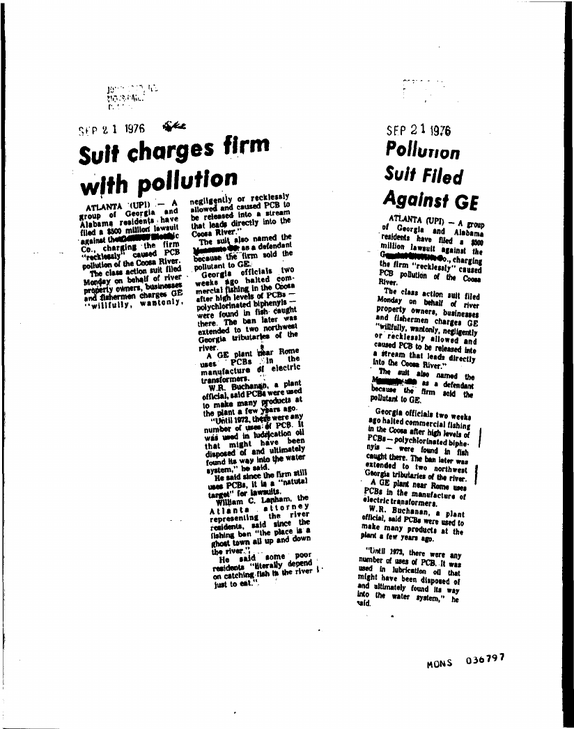
He said some poor residents "Uteraiiy depend on catching fish lb the river I' just to eat/1.
refid# 0d2bLQ9MnKZkwv9mmoJRrjvd1 page
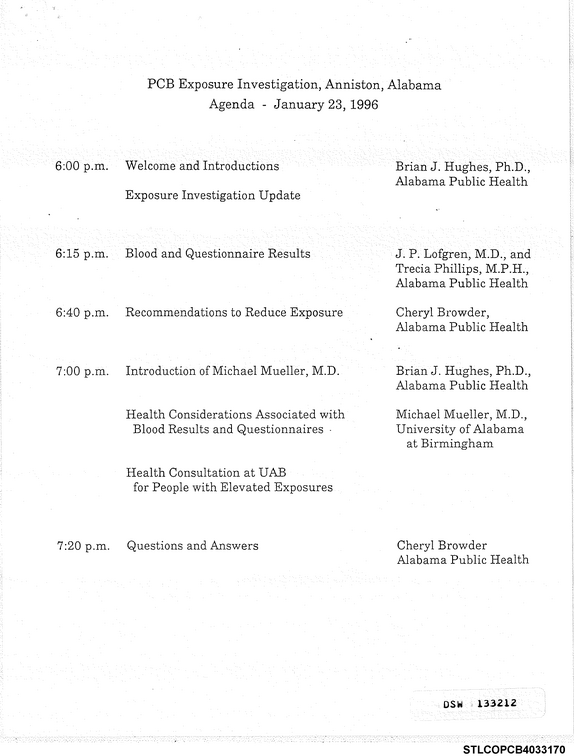
We recommend that no one eat fish caught there
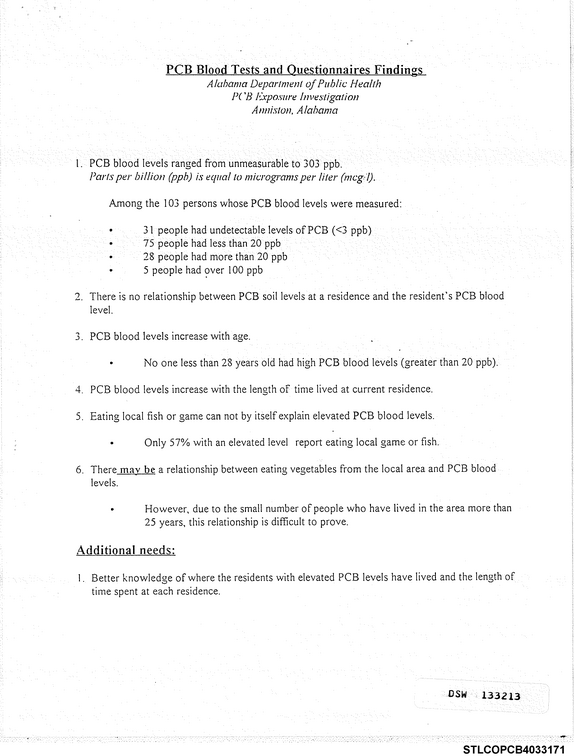
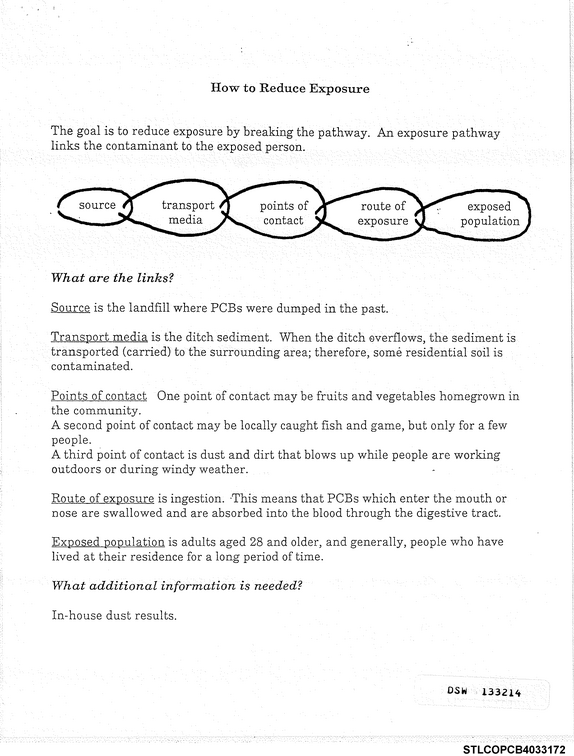
refid# jBr9BGe6mJEME3Rgb1GVoe8yN7 pages
a.r fato. fish, t.uwatemng tne $S-niiUion Lake KRailgia commercial fishery and tha $19*miUion sports fishing industry. .J Lake Michigan s mrt'ftoitermea are . .
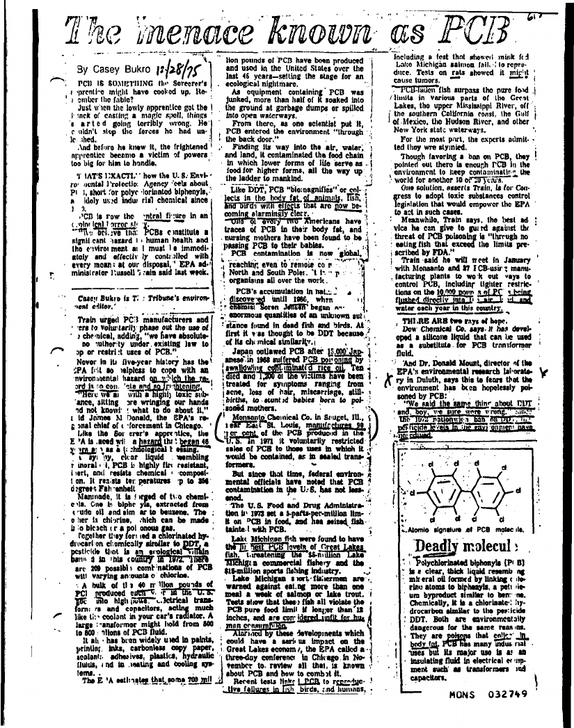
refid# MMaXO8kgjDXjQRDQZg9JjKyqV1 page
Extensive tests have found traces of PCBs in fish from Afeaey'i Assessment Also Hit every major U.S. watershed, Reed said Friday, Including such rivers as the Mississippi, Missouri, Merrtmae.
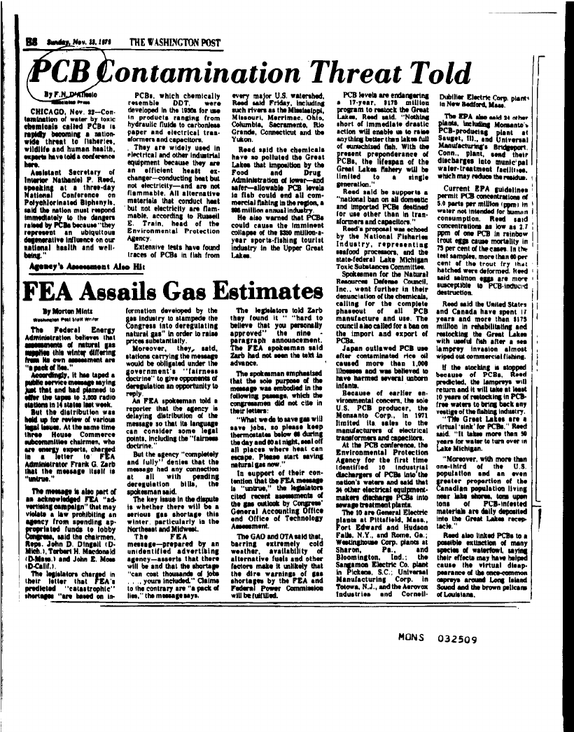
refid# kmx99GZQ75nOR9N0LrxkMNJXb1 page
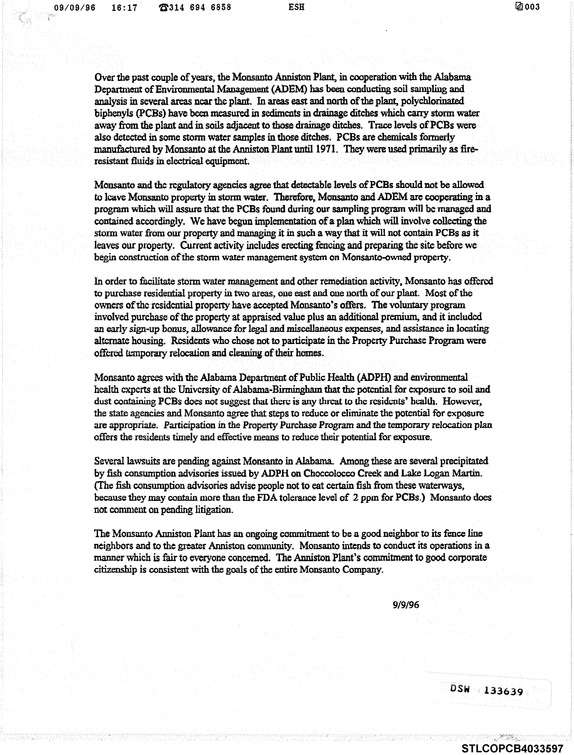
PCBs have also been detected in fish in Choccolocco Creek, Lake Logan Martin and Lay Lake.
refid# byQGv2eVEYjoy1NvbZv0rgXMg2 pages
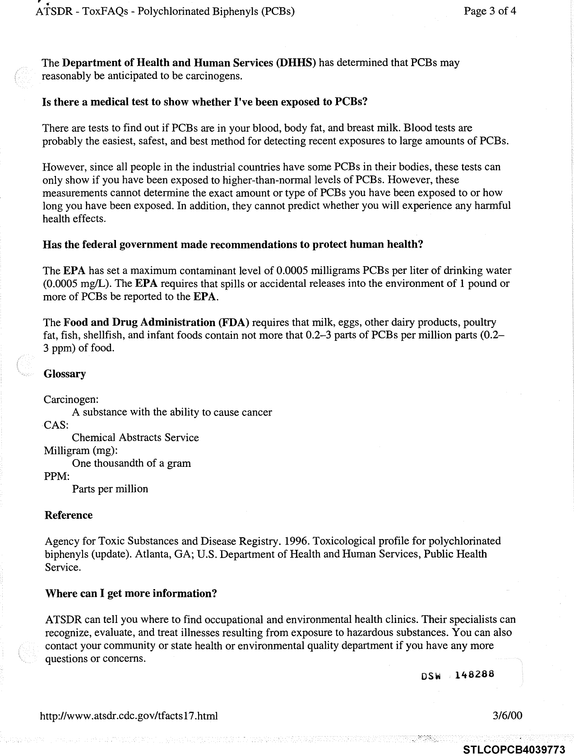
PCBs in water build up in fish and marine mammals and can reach levels thousands of times higher than the levels in water.
refid# npvknLq1yK7bQnar42mnj9aqX4 pages
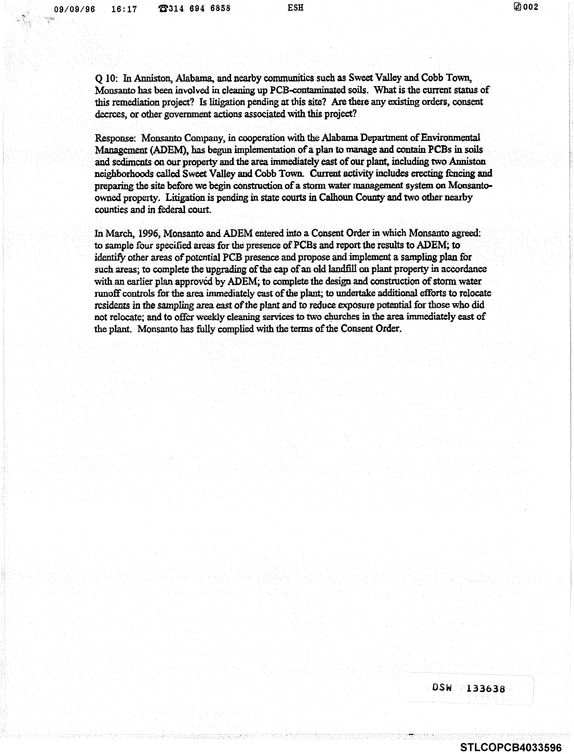
(The fish consumption advisories advise people not to eat certain fish from these waterways, because they may contain more than the FDA tolerance level of 2 ppm for PCBs.)
refid# 1004v3J2MwGDBymvaQXEg9M2K2 pages
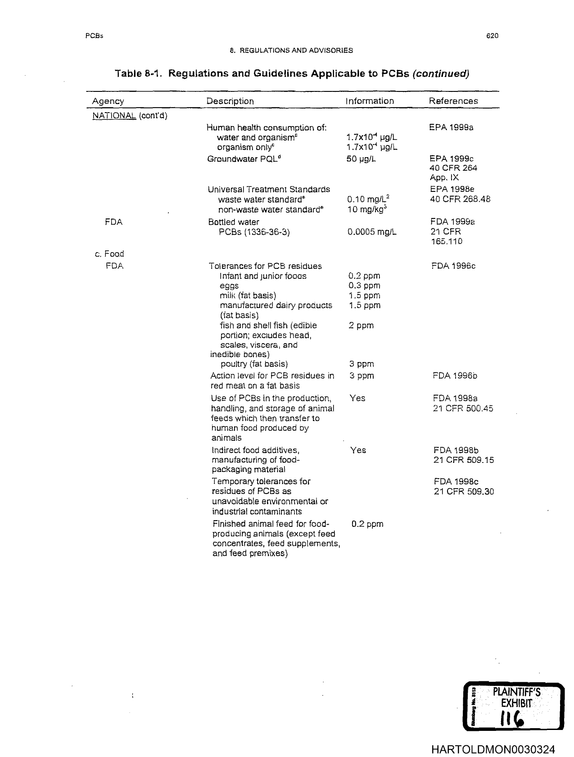
Food FDA Description Information Human health consumption of: water and organism^ organism onlyc Groundwater PQLd 1.7x10" pg/L 1.7x10" pg/L 50 pg/L Universal Treatment Standards waste water standard* non-waste water standard6 Bottled water PCBs (1336-36-3) 0.10 mg/L2 10 mg/kg 0.0005 mg/L Tolerances for PCB residues Infani and junior fooas eggs milk (fat basis) manufactured dairy products (fat basis) fish and shell fish (edible portion; excludes head, scales, viscera, and inedible bones) poultry (fat basis) Action level for PCB residues in red meat Dn a fat basis Use of PCBs in the production, handling, and storage of animal feeds which then transfer to human food produced Dy animals Indirect food additives, manufacturing of food packaging material Temporary tolerances for residues of PCBs as unavoidable environmental or industrial contaminants Finished animal feed for foodproducing animals (except feed concentrates, feed supplements, and feed premixes) 0.2 ppm 0.3 ppm 1.5 ppm 1.5 ppm 2 ppm 3 ppm 3 ppm Yes Yes 0.2 ppm References EPA 1999a EPA 1999c 40 CFR 264 App.
refid# LqNOw86Zgd0NpaNkrXVdO9631 page
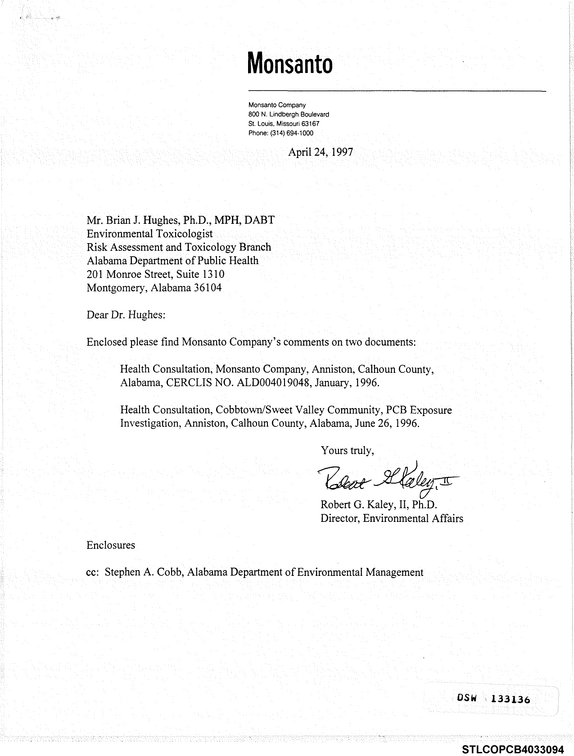
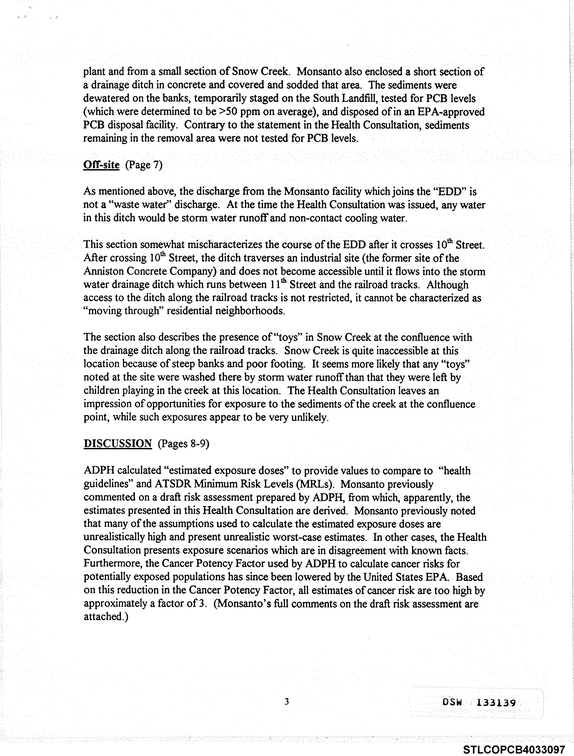
Monsanto Monsanto Company 800 N.
refid# qdp34Jeay3n1yXnE9JJJJVVv535 pages
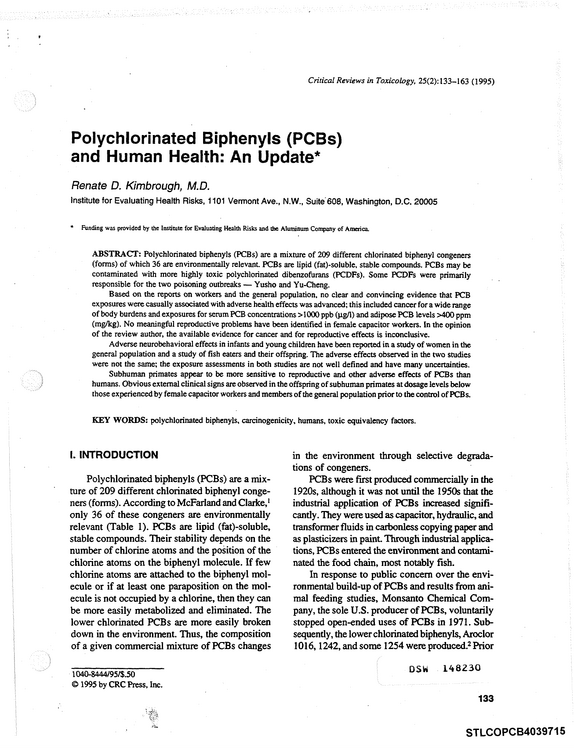
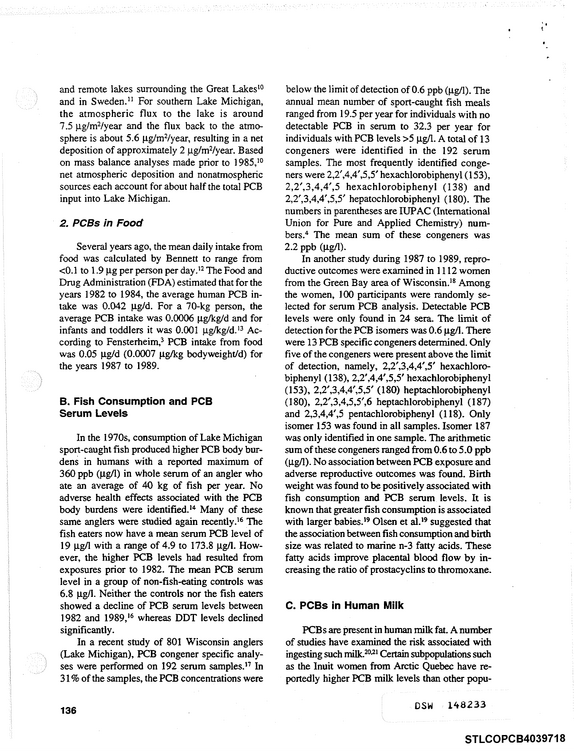
Adverse neurobehavioral effects in infants and young children have been reported in a study of women in the general population and a study of fish eaters and their offspring.
refid# jJ0Z3X6BvLpb6o7aqL8KppzO31 pages
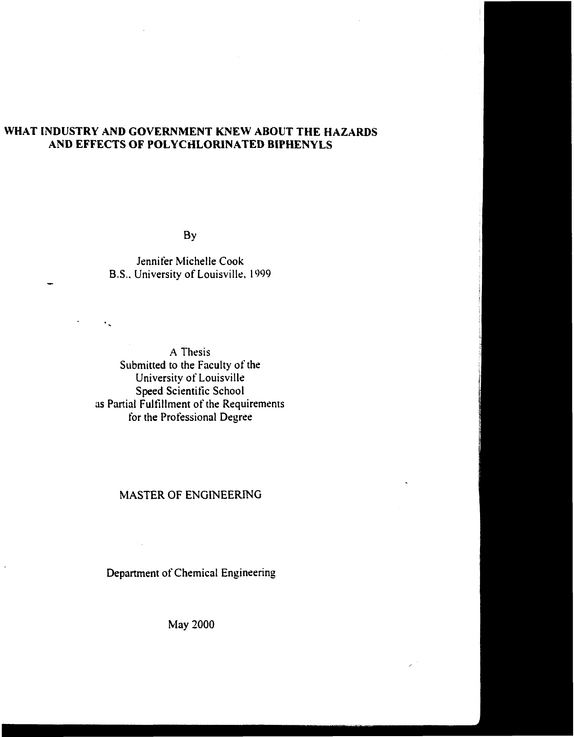
WHAT INDUSTRY AND GOVERNMENT KNEW ABOUT THE HAZARDS AND EFFECTS OF POLYCHLORINATED BIPHENYLS By Jennifer Michelle Cook B.S., University of Louisville, 1999 A Thesis Submitted to the Faculty of the University of Louisville Speed Scientific School as Partial Fulfillment of the Requirements for the Professional Degree MASTER OF ENGINEERING Department of Chemical Engineering May 2000 UMI Number: 1400435 UMI UMI Microform 1400435 Copyright 2000 by Bell & Howell Information and Learning Company.
refid# NekD5xG2nXDLQ4rdMwNyMQNm849 pages