Refine
Estimated Years 1970-1979Clear
27,937 results foundRefine Search
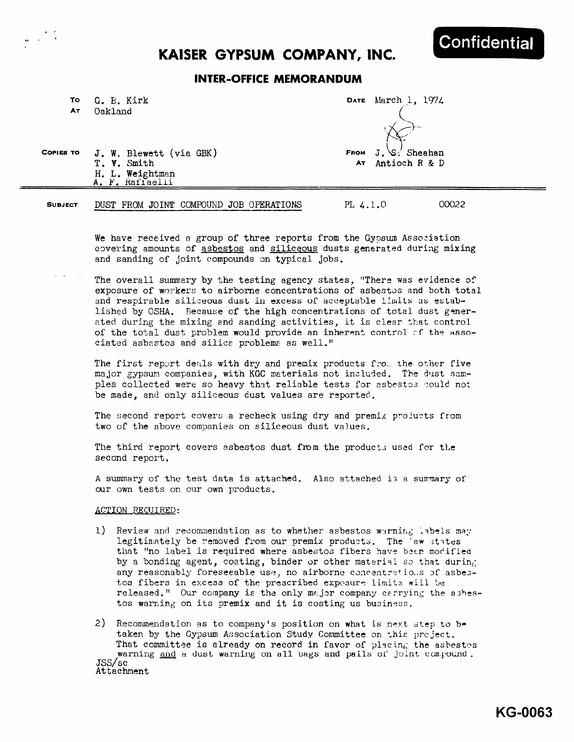
KAISER GYPSUM COMPANY, INC.
refid# 3Q5vBML52J1XXvLJ04bzQdXq65 pages
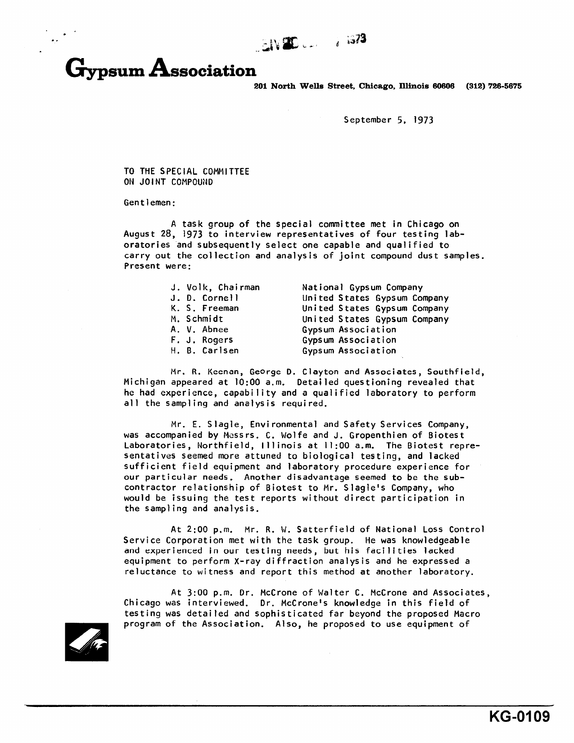
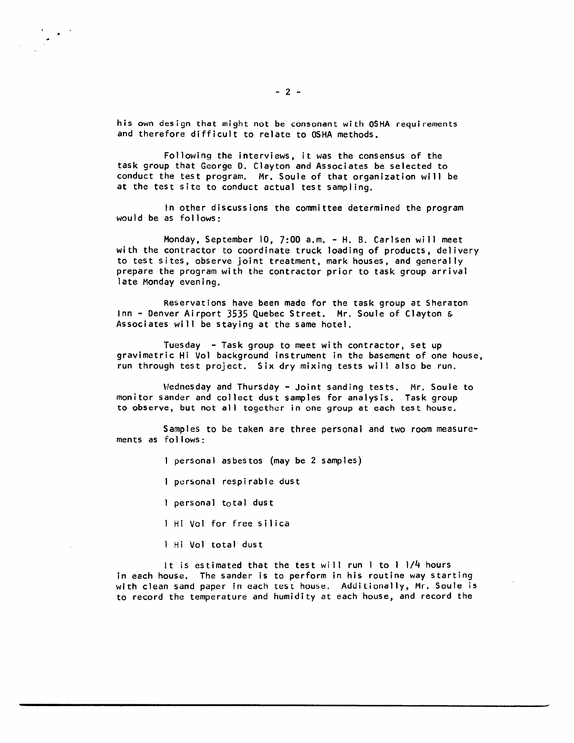
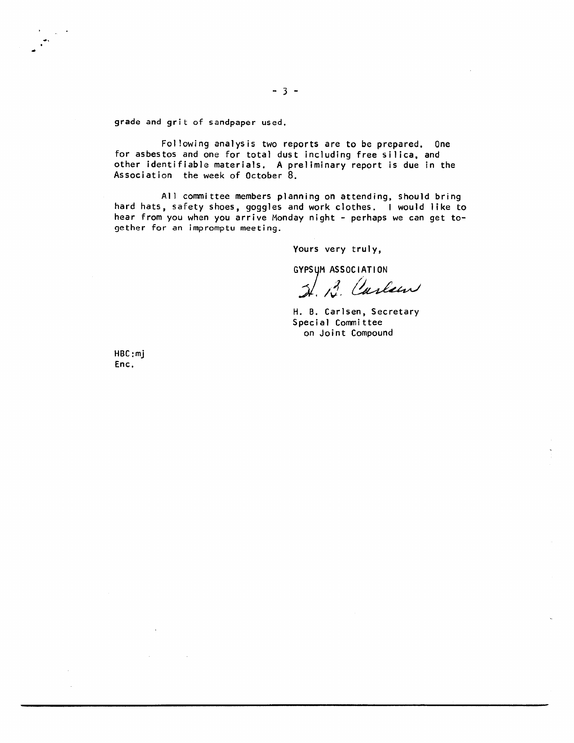
,1'i 3D- sum Association 201 North Wells Street, Chicago, Illinois 60606 (312) 726-5675 September 5, 1973 TO THE SPECIAL COMMITTEE ON JOINT COMPOUND Gentlemen: A task group of the special committee met in Chicago on August 28, 1973 to interview representatives of four testing lab oratories and subsequently select one capable and qualified to carry out the collection and analysis of joint compound dust samples.
refid# pE7yZ6YNXZ5o8Vzyb8JkXqQ63 pages
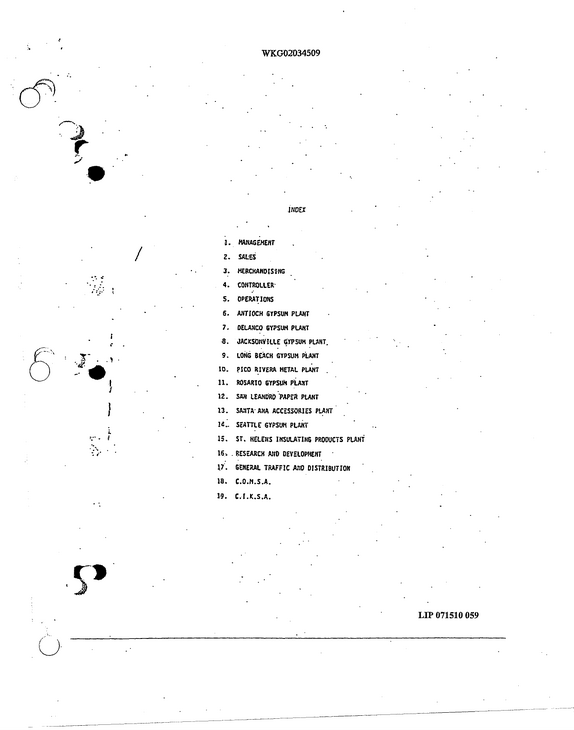
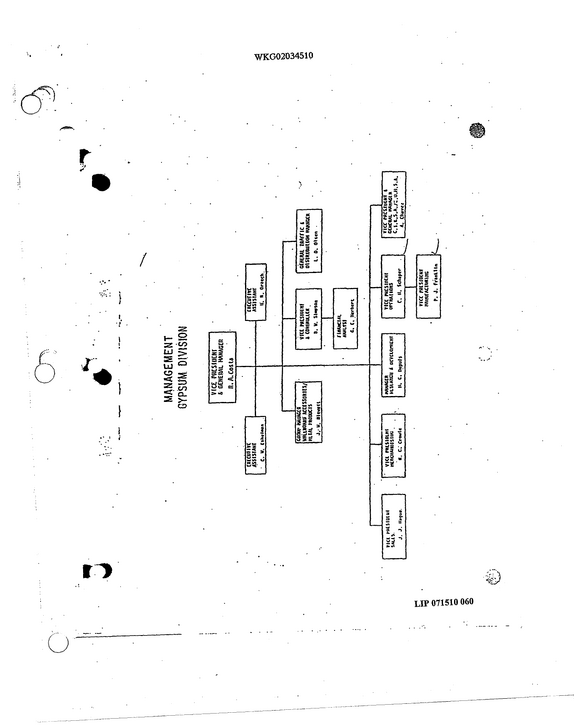
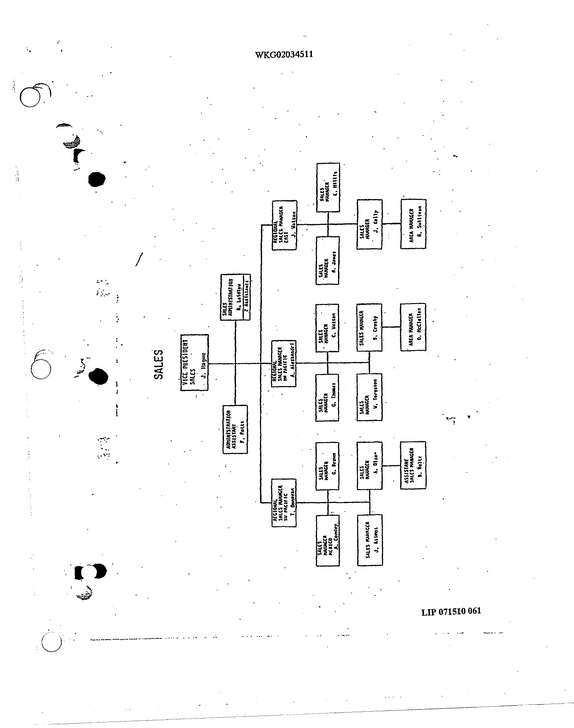
> V \ r / WKG02034508 -S2o Kaiser Cement & Gypsum Corporation GYPSUM OrVISION ORGANIZATIONAL CHARTS ' November 1, 1970 t DEPOSITION ar 1| EX_H_IB__IT_ S -I V LIP 071510 058 WKG02034509 / o INDEX 1.
refid# v1r4Br2M2O8LnmjELE0XwrZb620 pages
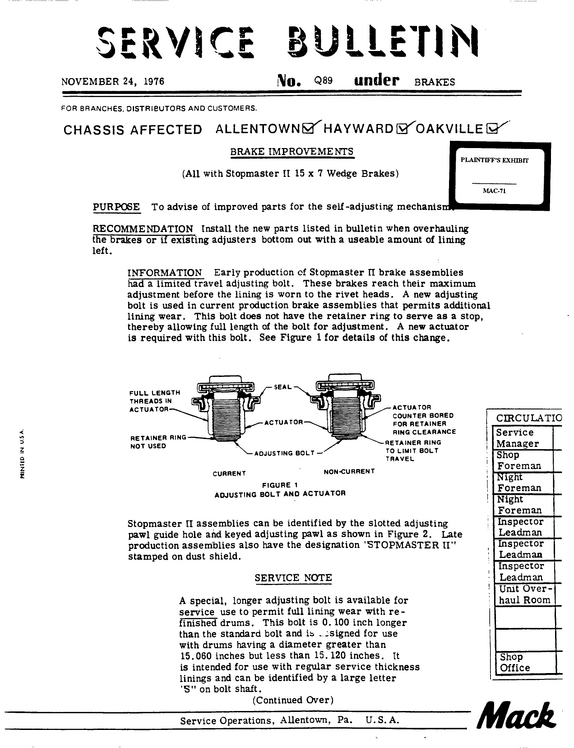
BULLETIN NOVEMBER 24, 1976 underi\0.
refid# 2Kp0Xn4BO3k2ggL9MLoR1V8g2 pages
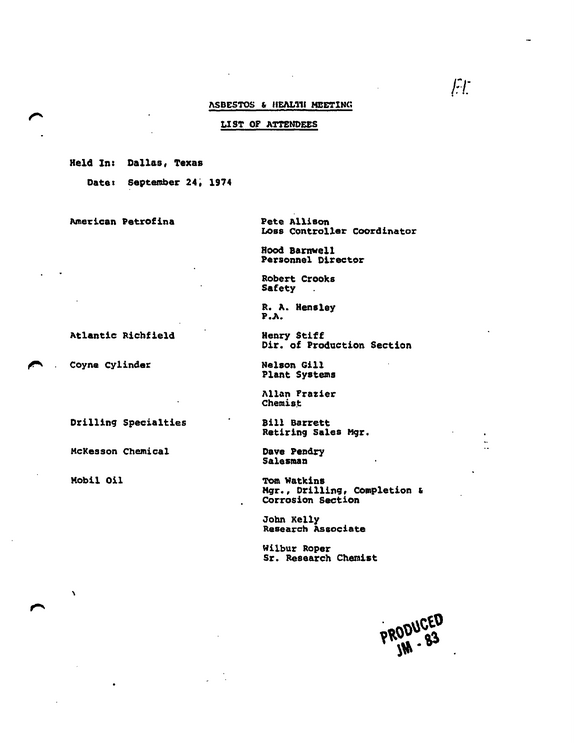
ASBESTOS 6 HEALTH MEETING LIST OF ATTENDEES Held In: Dallas* Texas Date: September 24* 1974 American Petrofina Atlantic Richfield Coyne Cylinder Drilling Specialties McKesson Chemical Mobil Oil Pete Allison Loss Controller Coordinator Hood Barnwell Personnel Director Robert Crooks Safety R.
refid# 93grr4Vkwkb8Eyq7xOaX6621L1 page
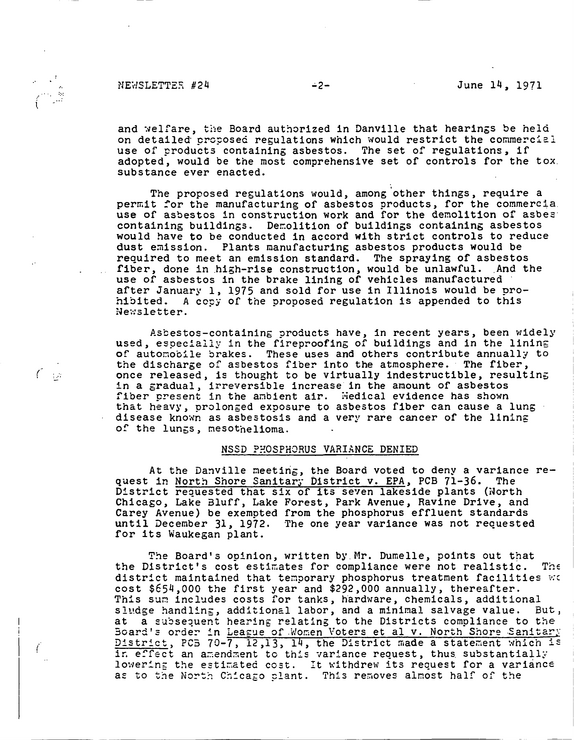
NEWSLETTER #24 2- - June 14, 1971 and welfare, the Board authorized in Danville that hearings be held on detailed proposed regulations which would restrict the commercial use of products containing asbestos.
refid# Y9eQQ3gYQxxDn4DxxVveewQ4D1 page
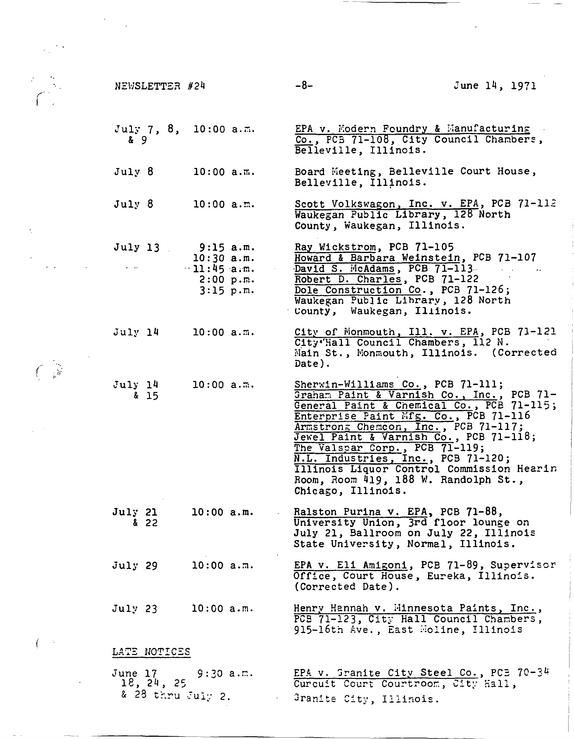
NEWSLETTER #24 July 7, 8, 10:00 a &9 July 8 10:00 a.m.
refid# jmoJbMQom022nDDD5MxVVxDqN1 page
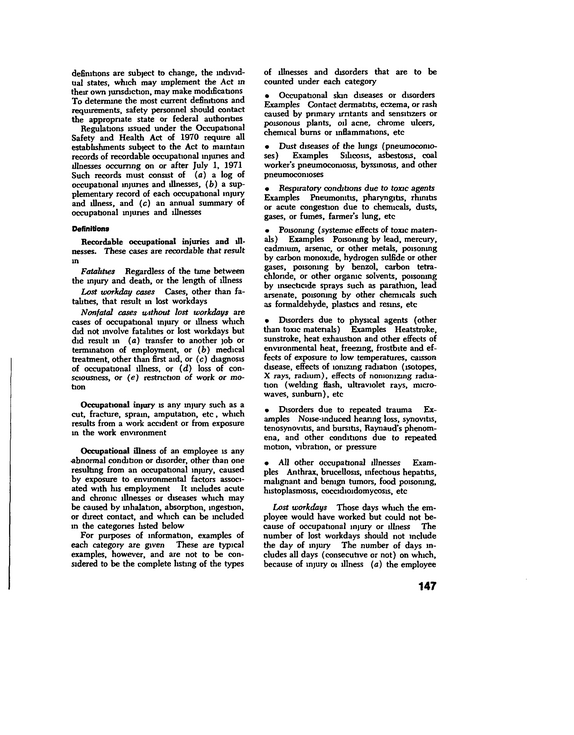
definitions are subject to change, the individ ual states, which may implement the Act in their own jurisdiction, may make modifications To determine the most current definitions and requirements, safety personnel should contact the appropriate state or federal authorities Regulations issued under the Occupational Safety and Health Act of 1970 require all establishments subject to the Act to maintain records of recordable occupational injuries and illnesses occurring on or after July 1, 1971 Such records must consist of (a) a log of occupational injuries and illnesses, (b) a sup plementary record of each occupational injury and illness, and (c) an annual summary of occupational injuries and illnesses Definitions Recordable occupational injuries and ill nesses.
refid# 8VBo5qN26XYpGkoVq06orGrQk1 page
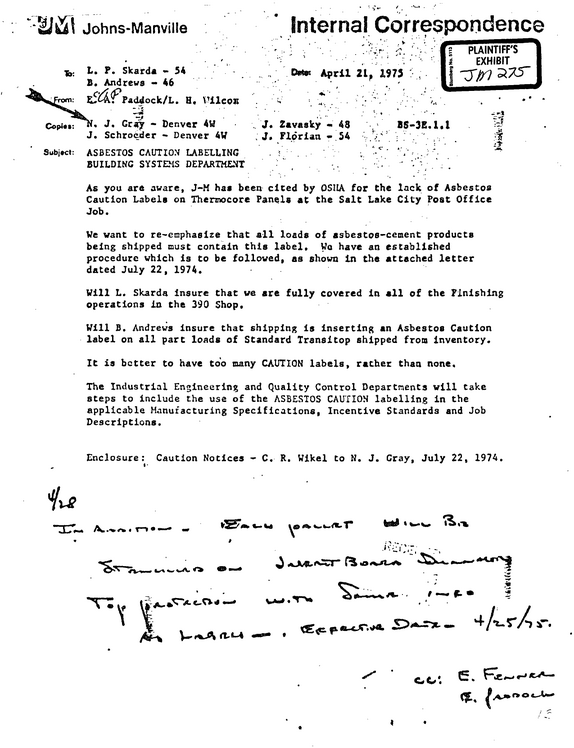
m\ Johns-Manville ' Internal Correspondence Efi^^P.ddock/L.
refid# ykpgEZ6B2B8GdEKwp0dE5E9Zd1 page
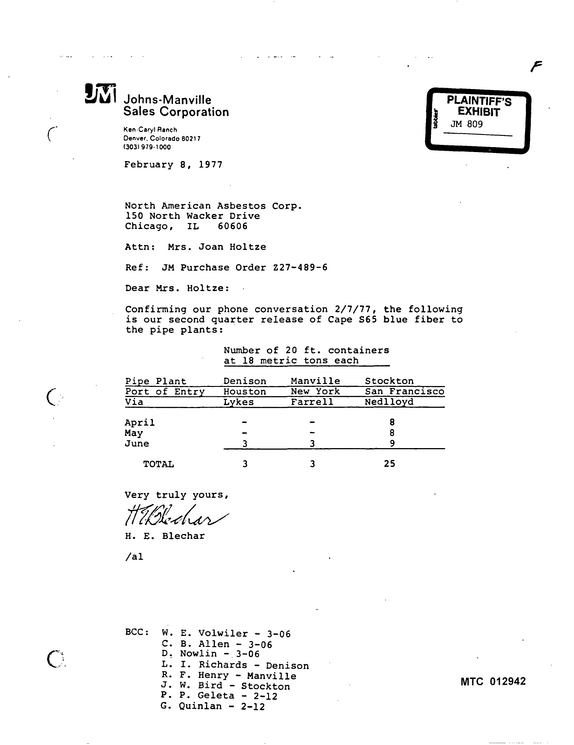
I/Si Johns-Manville Sales Corporation Ken Caryl Ranch Denver.
refid# vBk41ddN925b1mQV53XYYzM781 page
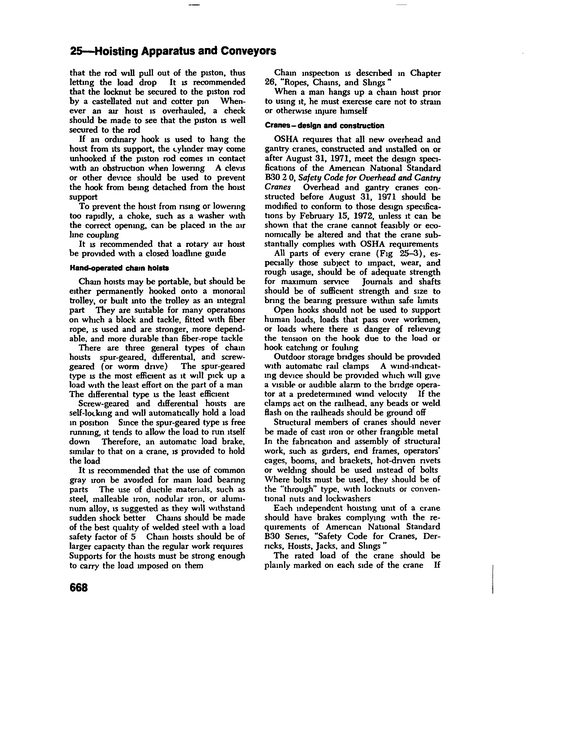
25--Hoisting Apparatus and Conveyors that the rod will pull out of the piston, thus letting the load drop It is recommended that the locknut be secured to the piston rod by a castellated nut and cotter pin When ever an air hoist is overhauled, a check should be made to see that the piston is well secured to the rod If an ordinary hook is used to hang the hoist from its support, the cylinder may come unhooked if the piston rod comes m contact with an obstruction when lowering A clevis or other device should be used to prevent the hook from being detached from the hoist support To prevent the hoist from rising or lowering too rapidly, a choke, such as a washer with the correct opening, can be placed m the air line coupling It is recommended that a rotary air hoist be provided with a closed loadline guide Hand-operated chain hoists Cham hoists may be portable, but should be either permanently hooked onto a monorail trolley, or built into the trolley as an integral part They are suitable for many operations on which a block and tackle, fitted with fiber rope, is used and are stronger, more depend able, and more durable than fiber-rope tackle There are three general types of chain hoists spur-geared, differential, and screwgeared (or worm drive) The spur-geared type is the most efficient as it will pick up a load with the least effort on the part of a man The differential type is the least efficient Screw-geared and differential hoists are self-locking and will automatically hold a load m position Since the spur-geared type is free running, it tends to allow the load to run itself down Therefore, an automatic load brake, similar to that on a crane, is provided to hold the load It is recommended that the use of common gray iron be avoided for mam load bearing parts The use of ductile materials, such as steel, malleable iron, nodular iron, or alumi num alloy, is suggested as they will withstand sudden shock better Chains should be made of the best quality of welded steel with a load safety factor of 5 Chain hoists should be of larger capacity than the regular work requires Supports for the hoists must be strong enough to carry the load imposed on them Chain inspection is described m Chapter 26, "Ropes, Chains, and Shngs " When a man hangs up a chain hoist prior to using it, he must exercise care not to strain or otherwise injure himself Cranes--design and construction OSHA requires that all new overhead and gantry cranes, constructed and installed on or after August 31, 1971, meet the design speci fications of the American National Standard B30 2 0, Safety Code for Overhead and Gantry Cranes Overhead and gantry cranes con structed before August 31, 1971 should be modified to conform to those design specifica tions by February 15, 1972, unless it can be shown that the crane cannot feasibly or eco nomically be altered and that the crane sub stantially complies with OSHA requirements All parts of every crane (Fig 25-3), es pecially those subject to impact, wear, and rough usage, should be of adequate strength for maximum service Journals and shafts should be of sufficient strength and size to bring the bearing pressure within safe limits Open hooks should not be used to support human loads, loads that pass over workmen, or loads where there is danger of relieving the tension on the hook due to the load or hook catching or fouling Outdoor storage bridges should be provided with automatic rail clamps A wind-indicat ing device should be provided which will give a visible or audible alarm to the bridge opera tor at a predetermined wind velocity If the clamps act on the railhead, any beads or weld flash on the railheads should be ground off Structural members of cranes should never be made of cast iron or other frangible metal In the fabrication and assembly of structural work, such as girders, end frames, operators' cages, booms, and brackets, hot-driven nvets or welding should be used instead of bolts Where bolts must be used, they should be of the "through" type, with locknuts or conven tional nuts and lockwashers Each independent hoisting unit of a crane should have brakes complying with the re quirements of American National Standard B30 Series, "Safety Code for Cranes, Der ricks, Hoists, Jacks, and Slings " The rated load of the crane should be plainly marked on each side of the crane If 668
refid# 8VKBQvwG49O8nO3YmgEDnbykK1 page
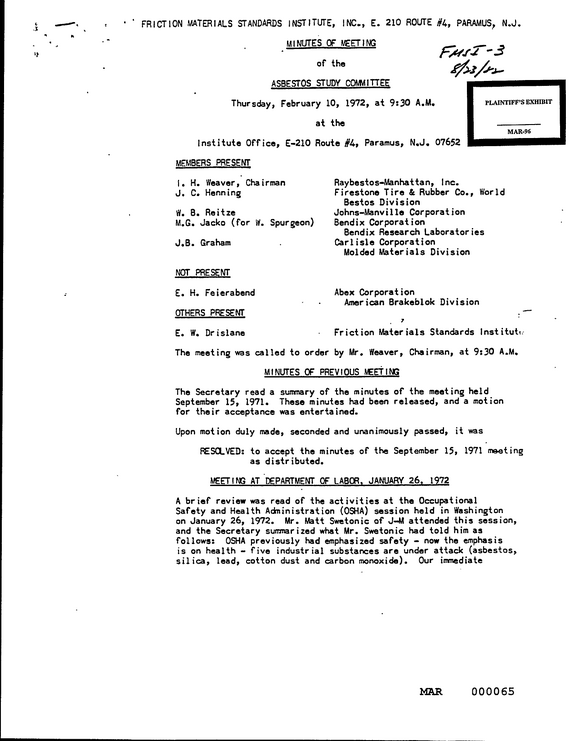
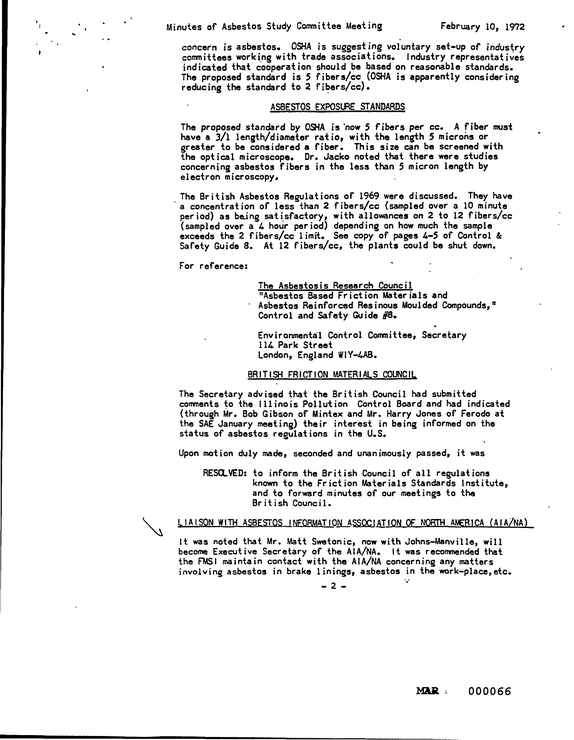
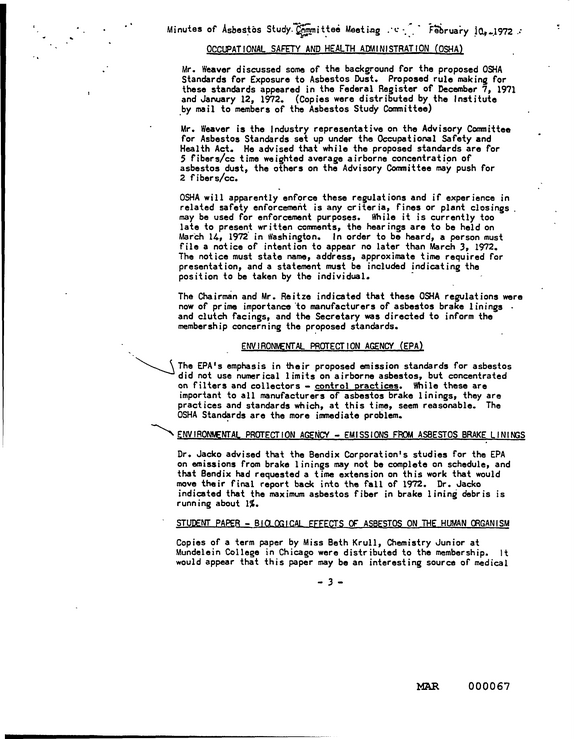
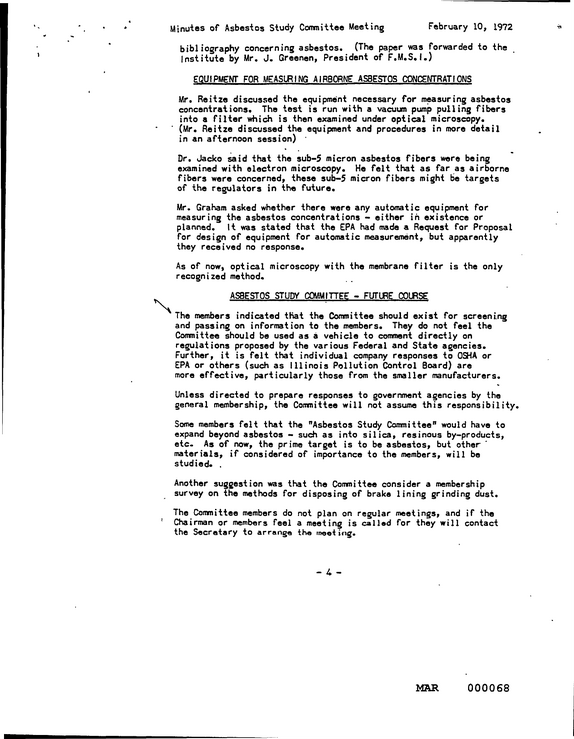
FRICTION .MATERIALS STANDARDS INSTITUTE, INC., E. 210 ROUTE #4, PARAMUS, N.J.
refid# 2j7Z4jbdLoYRkB2VaLabMvEg75 pages
u........ .
refid# wqJEzoMJMaMQ0g20EL8wKk4JB1 page
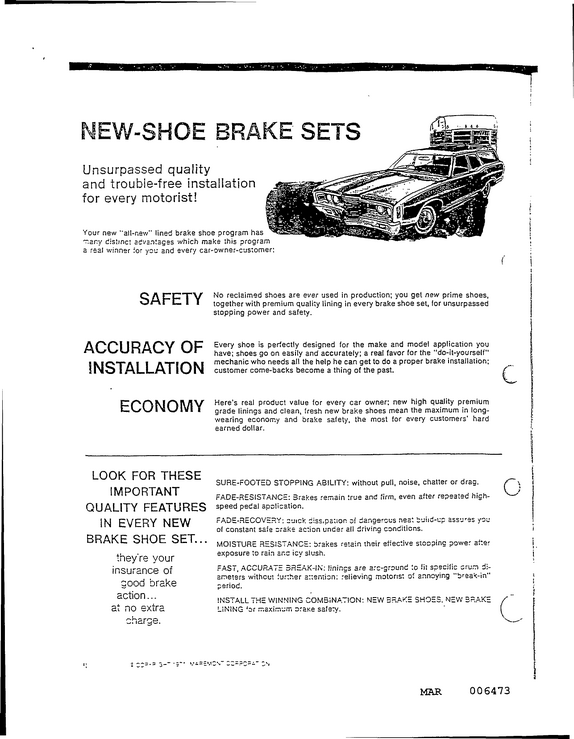
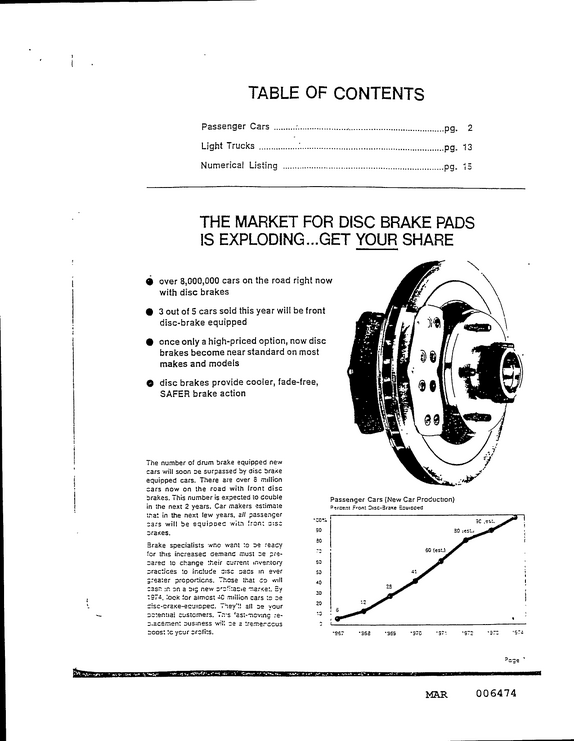
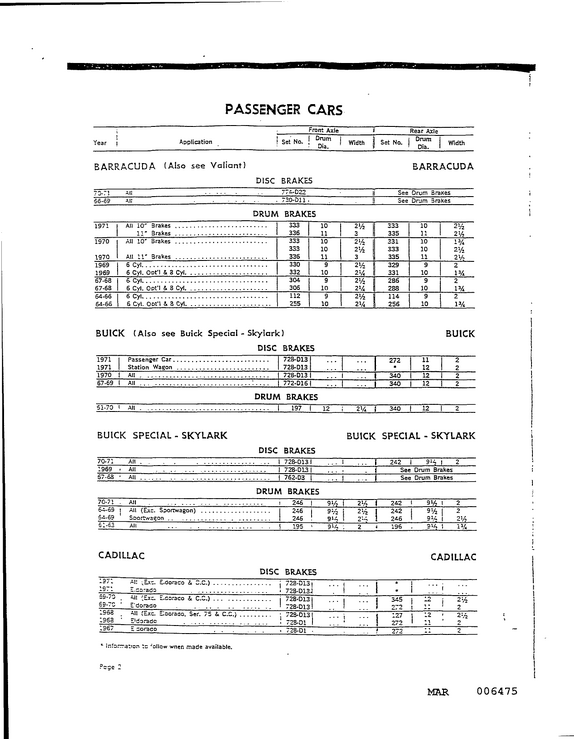
PLAINTIFF'S EXHIBIT WEATHERLY 120 FORM 712 MM 1971 C ATALOG Drum And Disc Brake Sets MAR 006472 EW-SHOE BRAKE Unsurpassed quality and troubie-free installation for every motorist!
refid# a1ZDGDye5x0Bny56k1zRQ9e1R20 pages
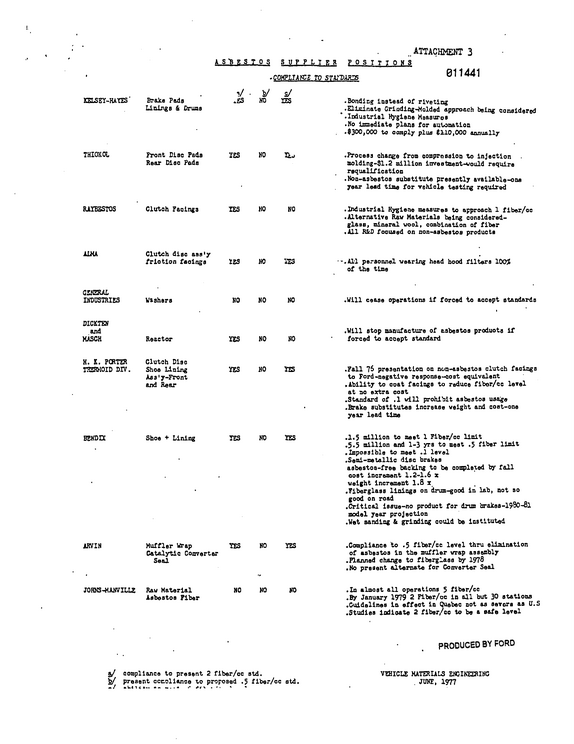
EELSEY-HAYES Brake Pads Linings & Oruas ..ATTACHMENT 3 ASBESTOS SUPPLIER P 0 s I T I O H 3 .COMPLIANCE TO STANDARDS 011441 ?
refid# b5ayBO6aRQpwy4J0o7787mZVk1 page