Refine
Estimated Years 1970-1979Clear
13,913 results foundRefine Search
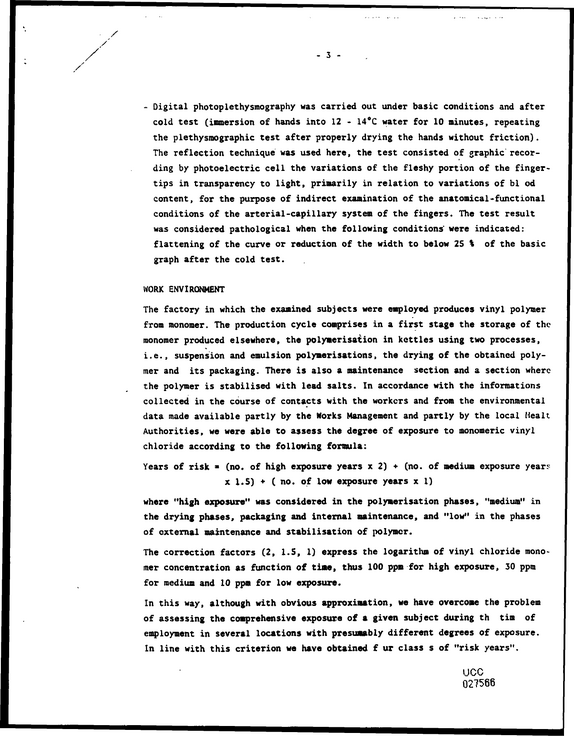
There is also a maintenance section and a section where the polymer is stabilised with lead salts.
refid# MEBVKpR7Ko23LgQ2Z3KrZVR712 pages
J PLAINTIFF'S O'.
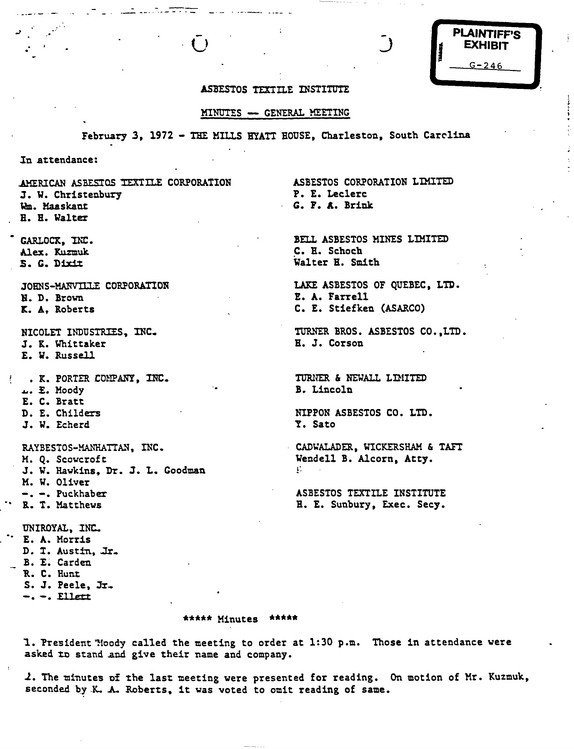
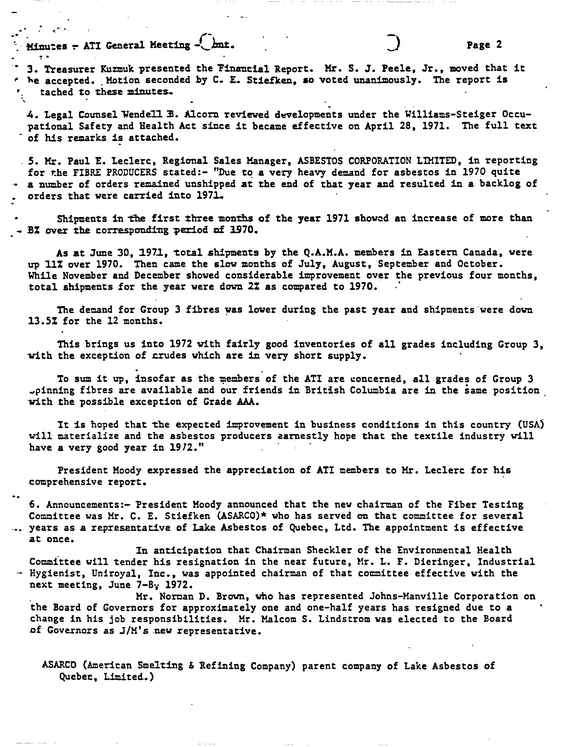
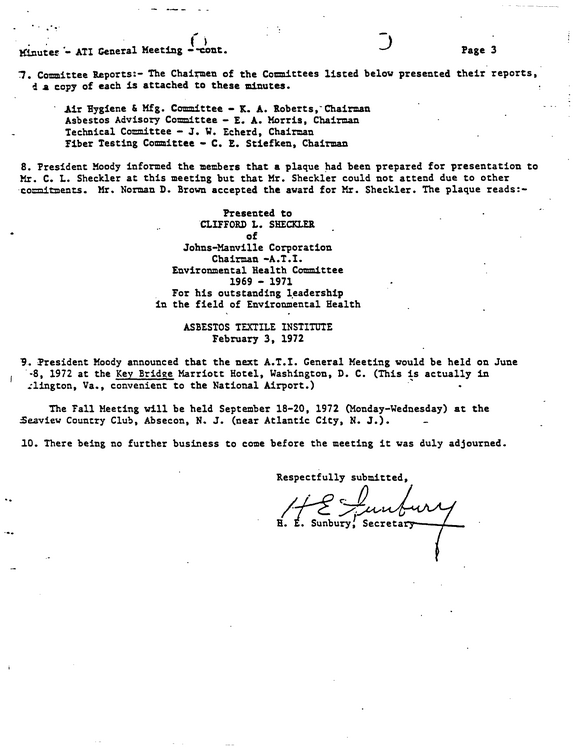
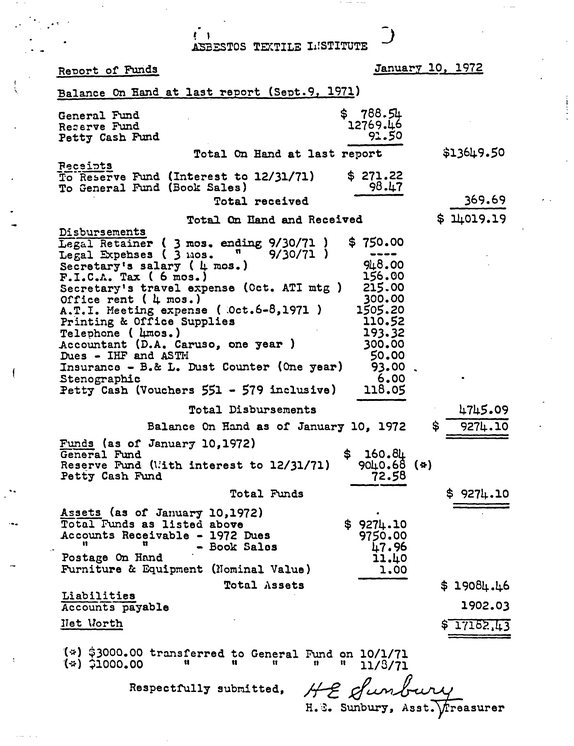
refid# 6woN15KQv03xjXkx8d4G2p23m12 pages
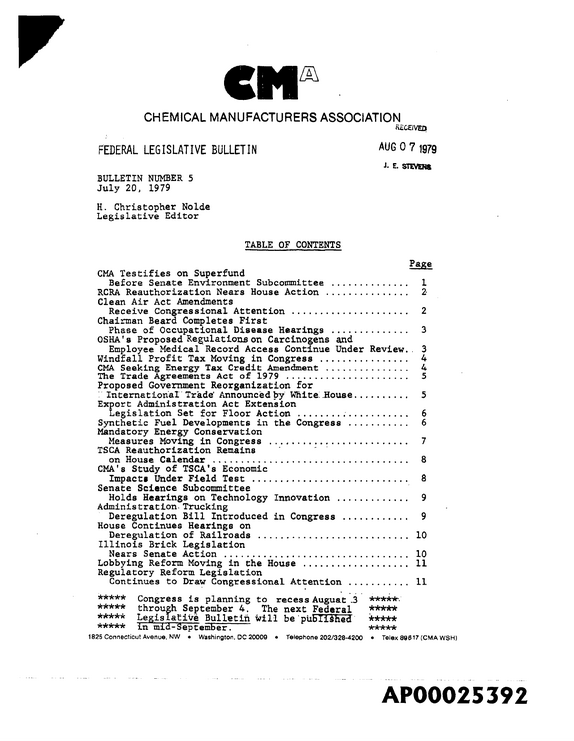
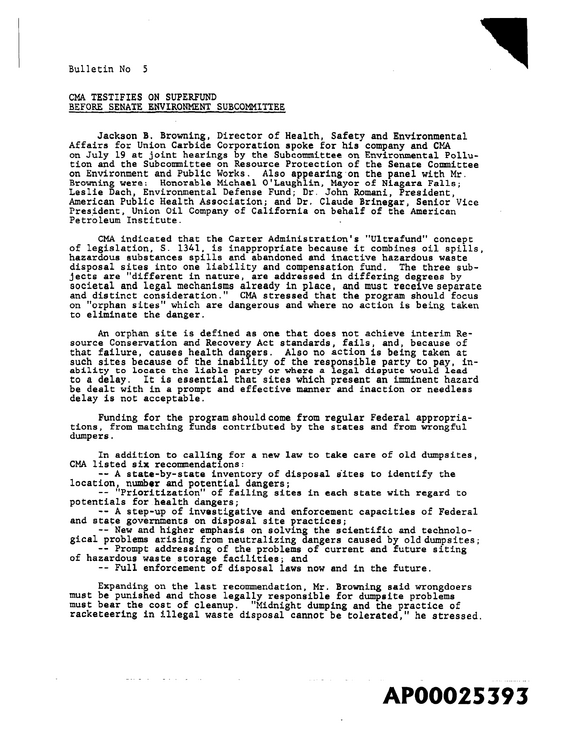
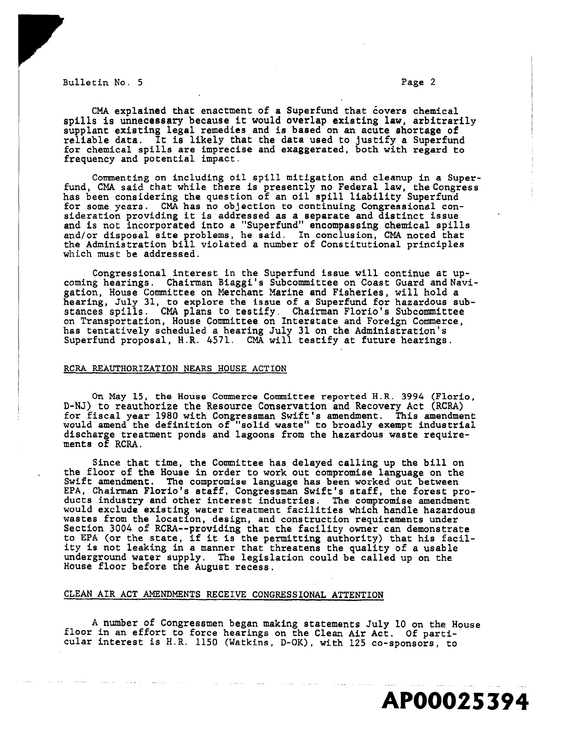
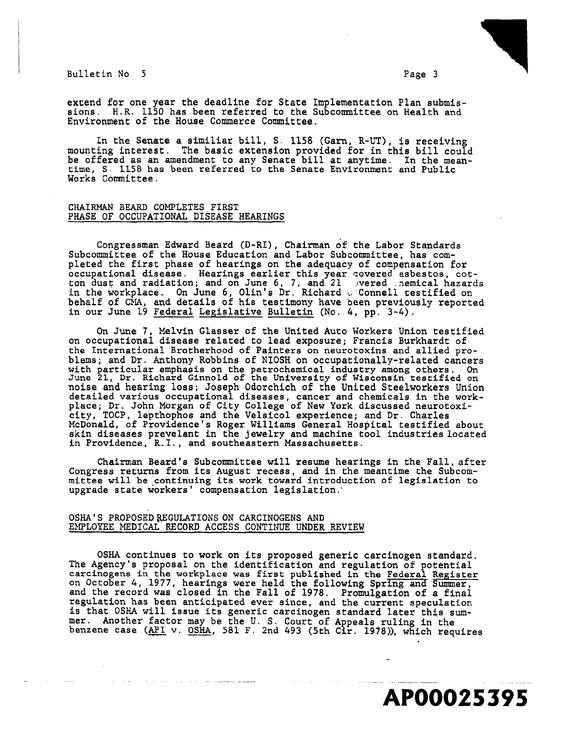
Also no action is being taken at such sites because of the inability of the responsible party to pay, in ability to locate the liable party or where a legal dispute would lead to a delay.
refid# N2w5nxqnm9kZy66daXekaJYQV12 pages
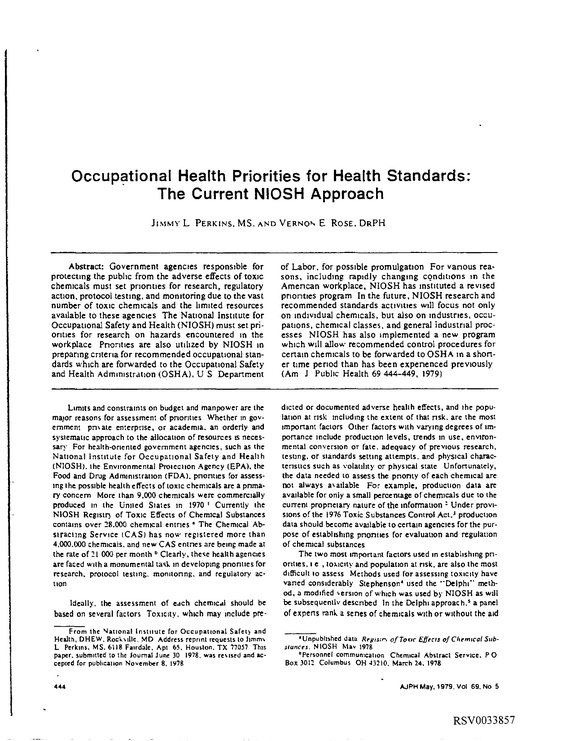
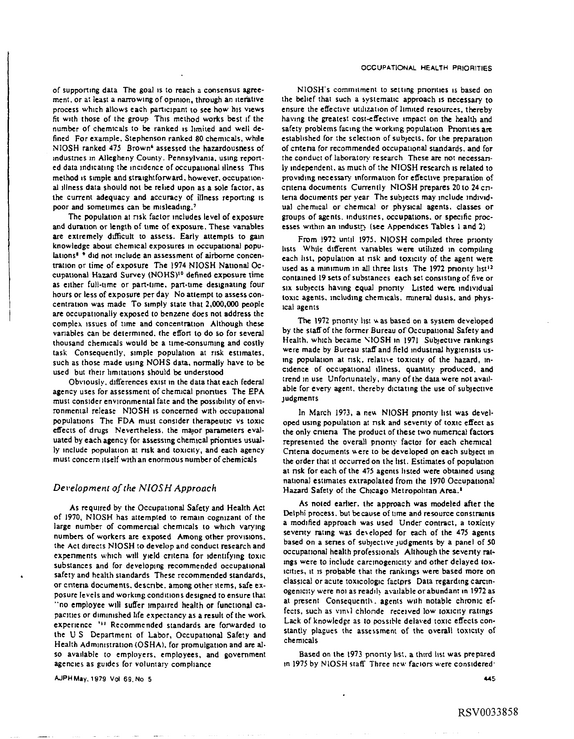
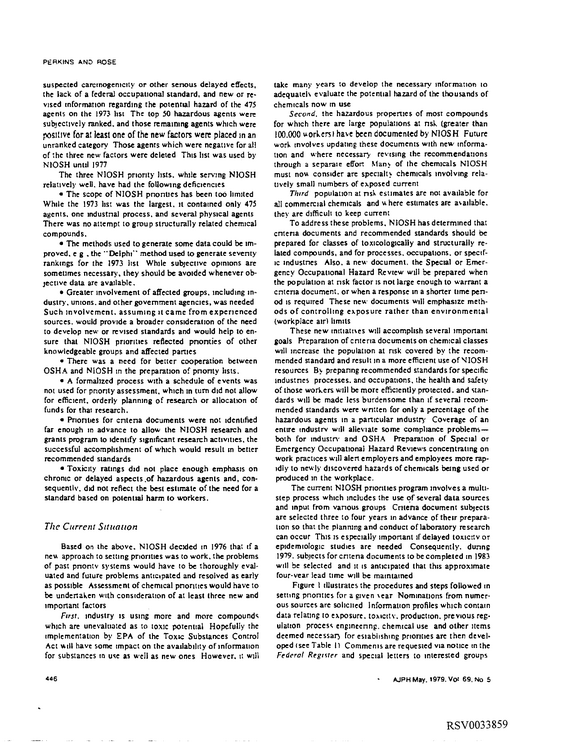
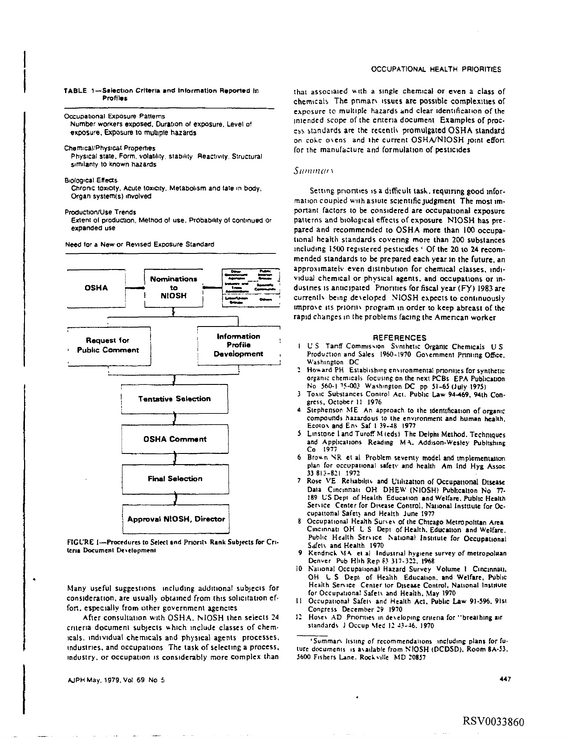
Occupational Health Priorities for Health Standards: The Current NIOSH Approach Jimmy L Perkins, MS. and Vernon E Rose, DrPH Abstract: Government agencies responsible for protecting the public from the adverse effects of toxic chemicals must set priorities for research, regulatory action, protocol testing, and monitoring due to the vast number of toxic chemicals and the limited resources available to these agencies The National Institute for Occupational Safety and Health (NIOSH) must set pri orities for research on hazards encountered m the workplace Priorities are also utilized by NIOSH m preparing criteria for recommended occupational stan dards which are forwarded to the Occupational Safety and Health Administration (OSHA), U S Department of Labor, for possible promulgation For various rea sons, including rapidly changing conditions in the American workplace, NIOSH has instituted a revised priorities program In the future, NIOSH research and recommended standards activities will focus not only on individual chemicals, but also on industries, occu pations, chemical classes, and general industrial proc esses NIOSH has also implemented a new program which will allow recommended control procedures for certain chemicals to be forwarded to OSHA in a short er time period than has been experienced previously (Am J Public Health 69 444-449, 1979) Limits and constraints on budget and manpower are the major reasons for assessment of priorities Whether in gov ernment private enterprise, or academia, an orderly and sysiematic approach to the allocation of resources is neces sary For health-oriented government agencies, such as the National Institute for Occupational Safely and Healih (NIOSH). lhe Environmental Proiecnon Agency (EPA), the Food and Drug Administration (FDA), priorities for assess ing the possible health effects of toxic chemicals are a prima ry concern More than 9.000 chemicals were commercially produced in the Umied Slates in 1970 1 Currently the NIOSH Registry of Toxic Effects of Chemical Substances contains over 28.000 chemical entries * The Chemical Absiracung Service (CAS) has now registered more than 4,000.000 chemicals, and new CAS entries are being made at the rate of 21 000 per month 0 Clearly, these health agencies are faced with a monumental task tn developing priorities for research, protocol testing, monitoring, and regulatory ac tion Ideally, the assessment of each chemical should be based on several factors Toxicity, which may include pre- From lhe National Institute for Occupational Safety and Health, DHEW, Rockville, MD Address reprint requests to Jimmv L Perkins, MS. <418 Fairdale, Apl 65.
refid# x1xJe28B22dMr60j6ExJyDZ5g5 pages
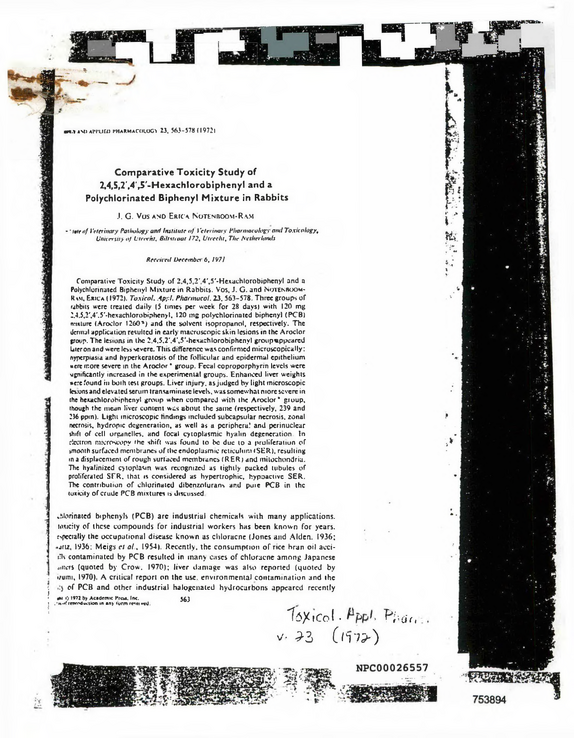
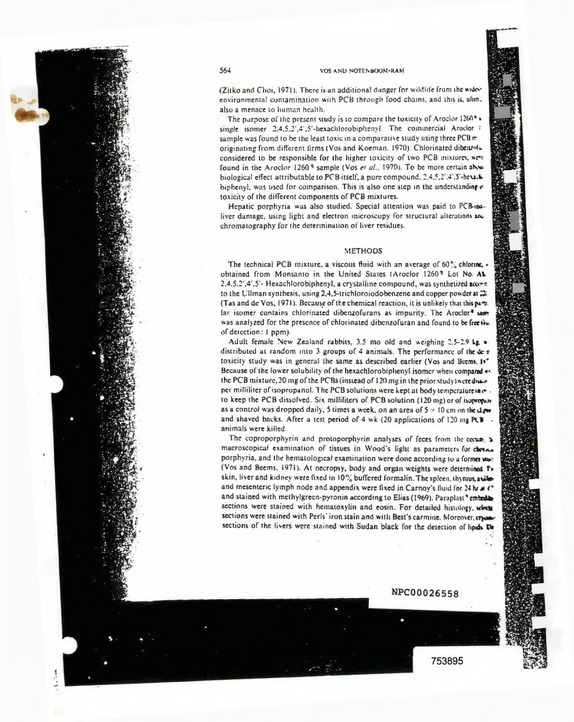
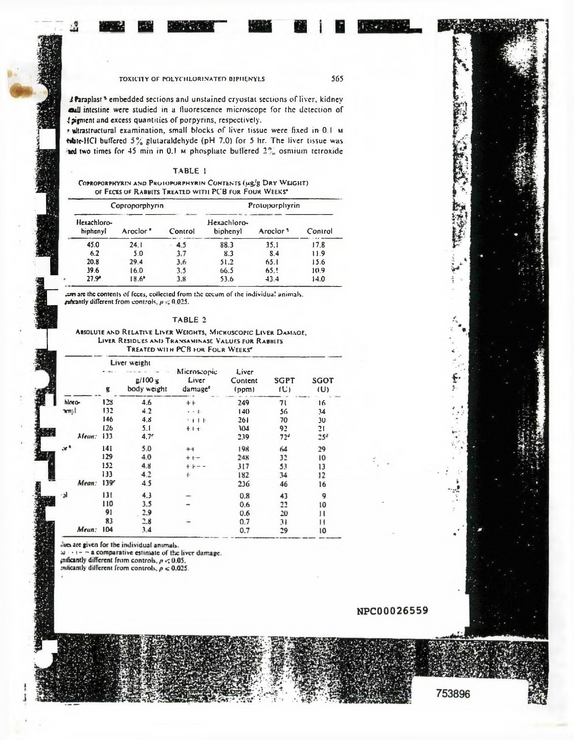
Ultrathin sections poststained with lead citrate were examined by imicroscopy (Philips EM 100*) at 40 kV. iPCB concentrations in the iivers were determined by gas chromatography, as Icarrier (Vos. et a 1971V The significance of difference between treated and groups was determined on a one-tail significance level, using the Wilcoxon [fcrivso unrelated samples (van der Waerden, 1957).
refid# gD4eXMz9pVQgEajEo9krwREJa16 pages
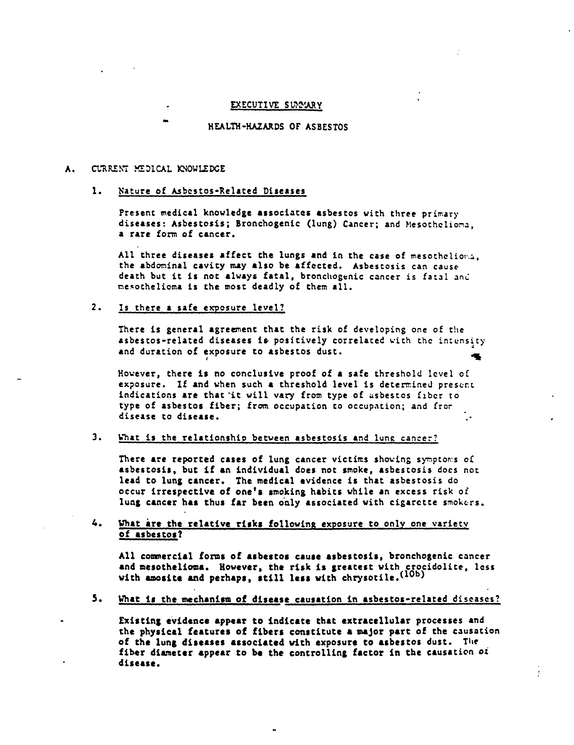
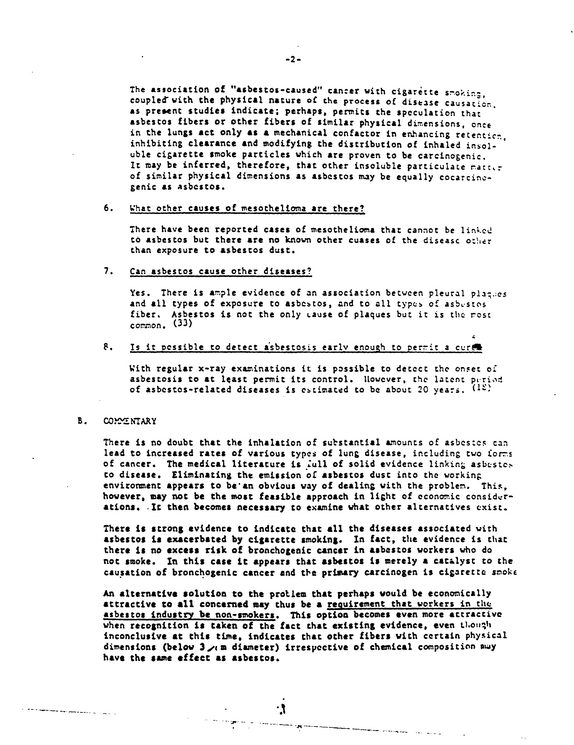
There are reported cases of lung cancer victims shoving symptoms of asbestosis, but if an Individual does not smoke, asbestosis docs not lead to lung cancer.
refid# zoxnb43g9YY4x0kLYEmZDJpDm18 pages
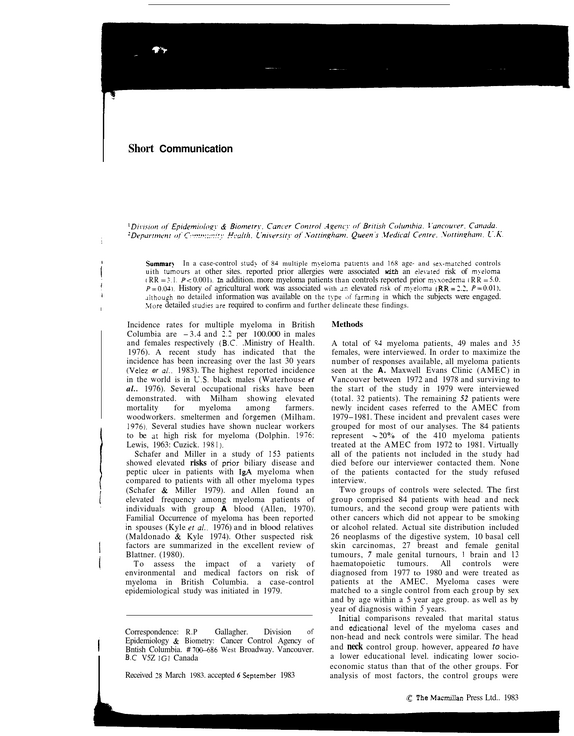
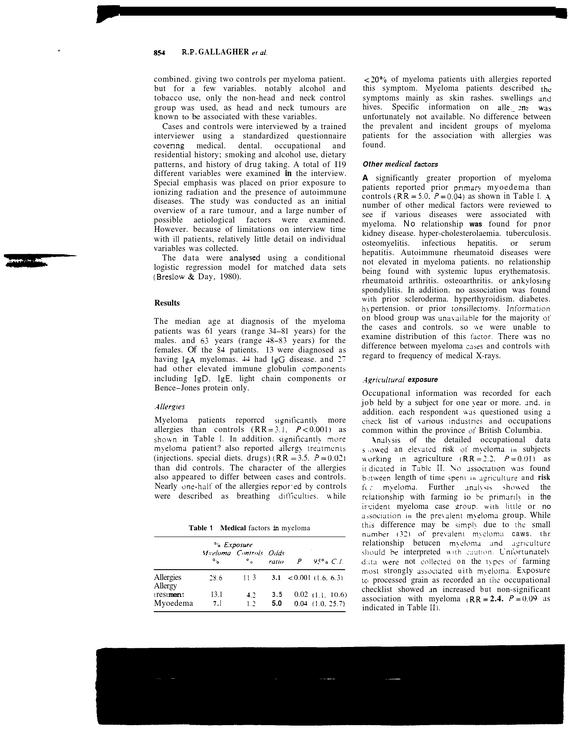
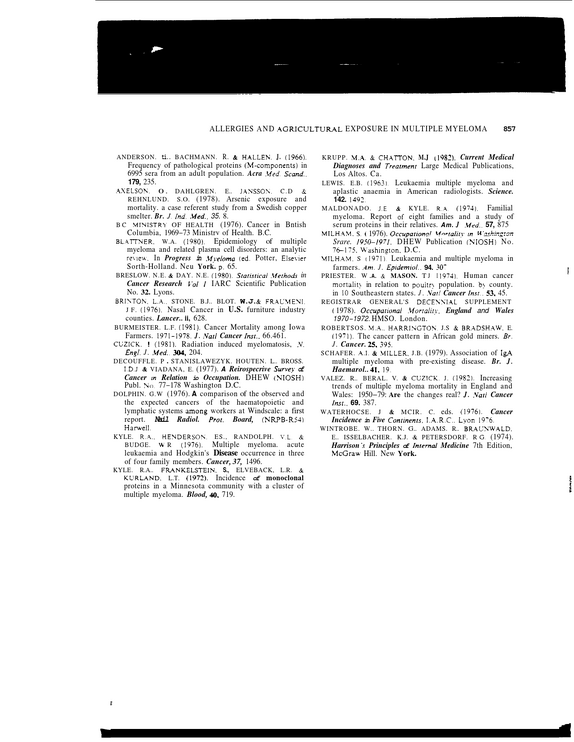
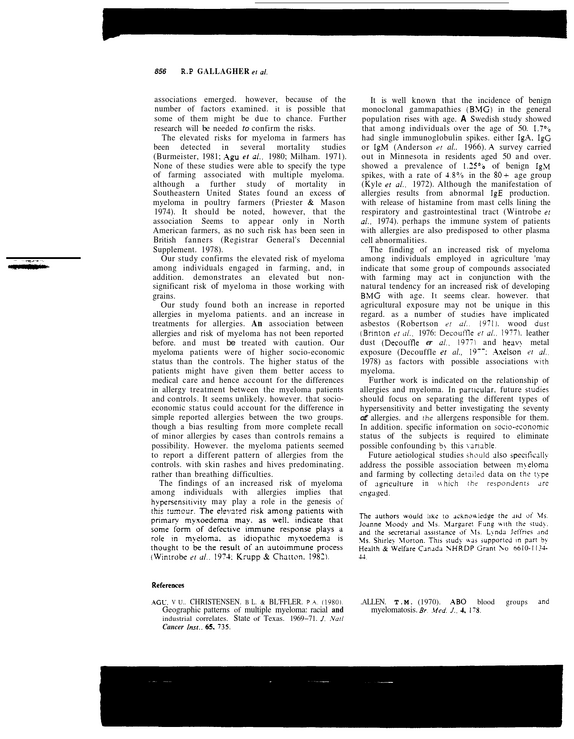
Short Communication I Summar) In a case-control stud\. of 8-1 multiple mkeioma patlents and 168 age- and sex-matched controls I uith turnours at other sites. reported prior allergies were associated with an elesated risk of m>eloma I RR = 3.
refid# djr2w4yMjeeKNOgV0yyONQEq7 pages
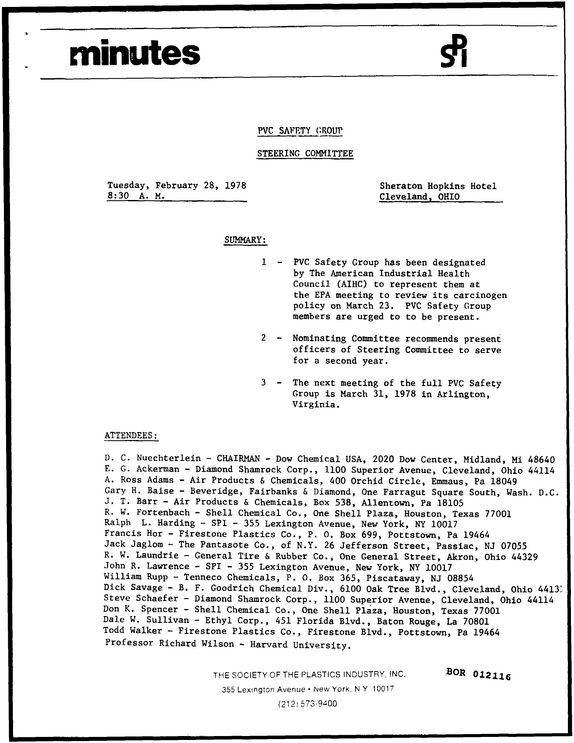
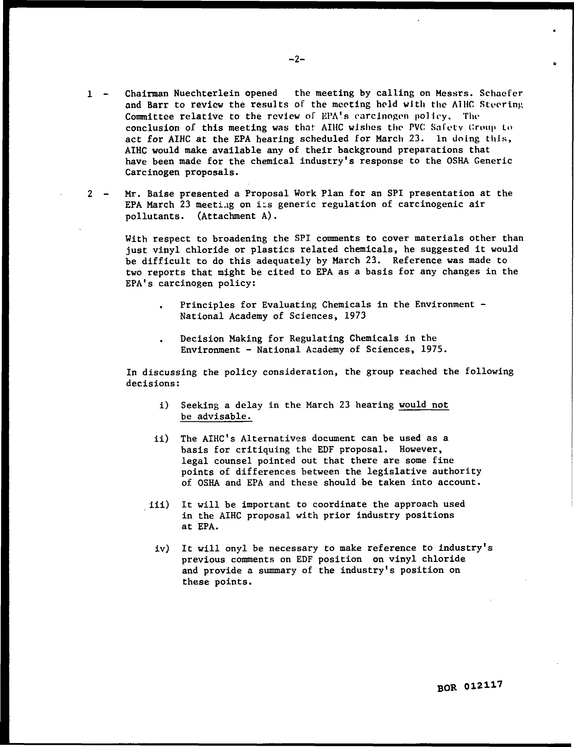
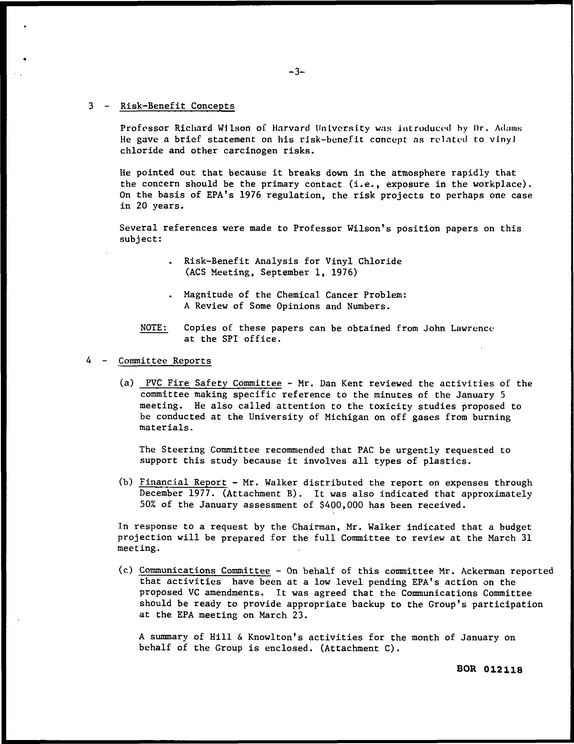
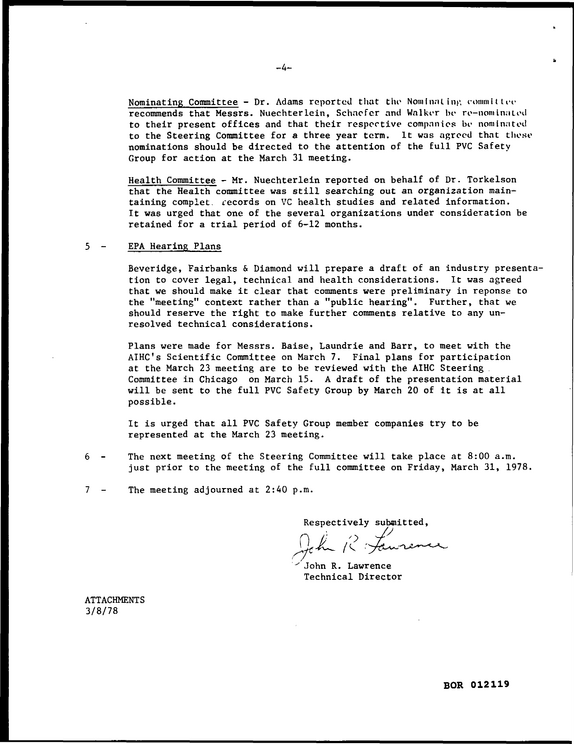
Overall Approach EPA has announced that it intends in its March 23 hearing to solicit recommendations leading to possible development of a proposed generic cancer policy for airborne carcinogens.
refid# Ne10djr56BYza1K8wDmJv9kbw20 pages
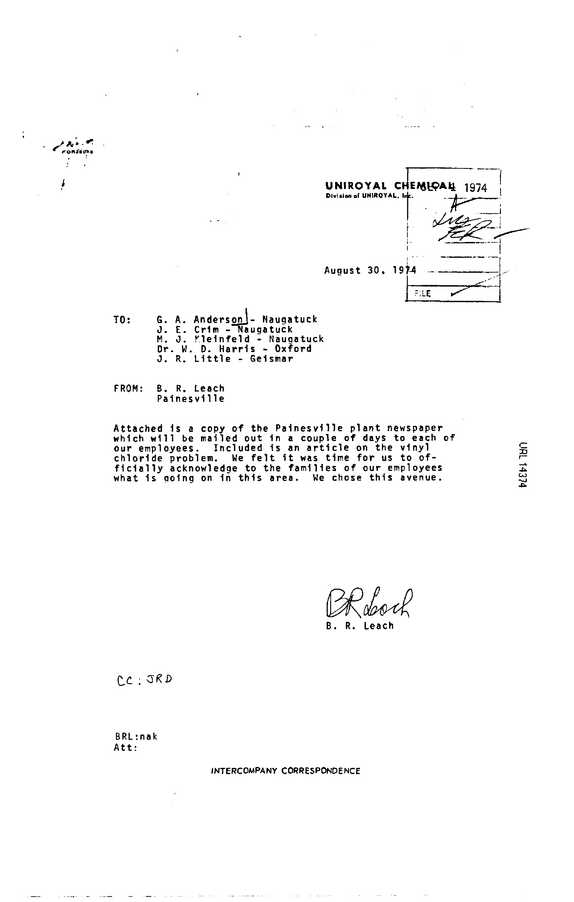
UNIROYAL CHEMtPAI^ 1974 Ir' August 30* 19f-4 TO: 6.
refid# vVkr719GZ4ZYZGbyVKrpZ445R11 pages
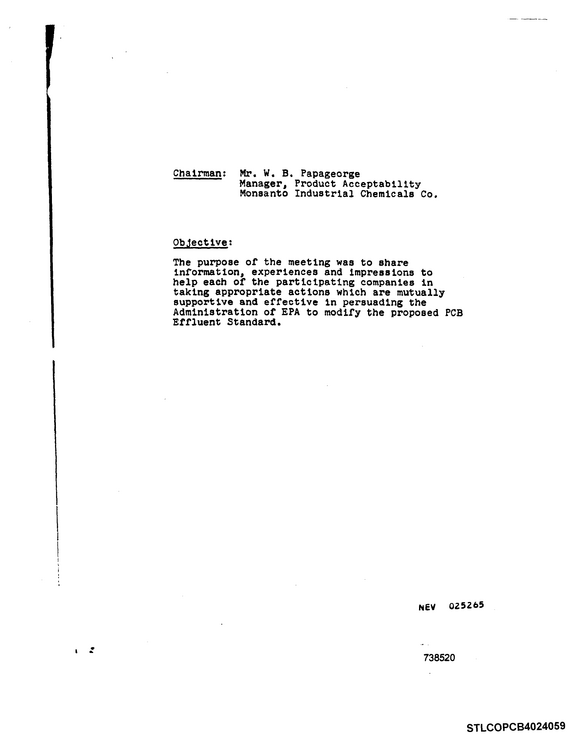
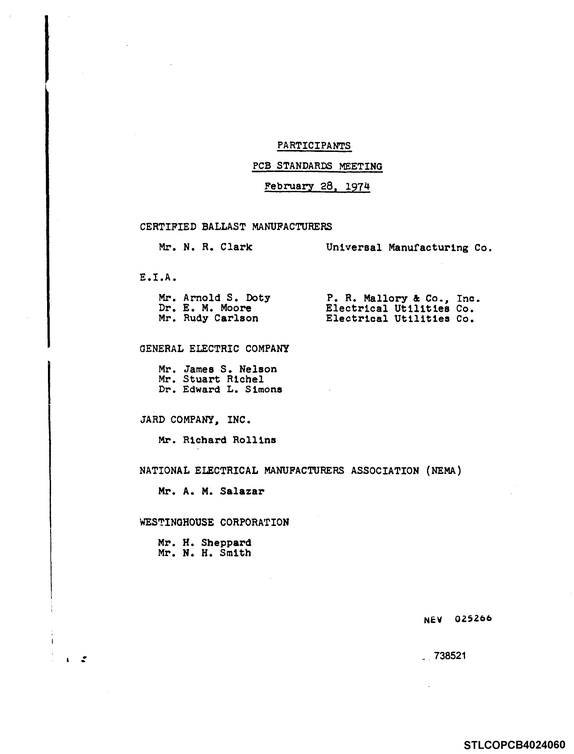
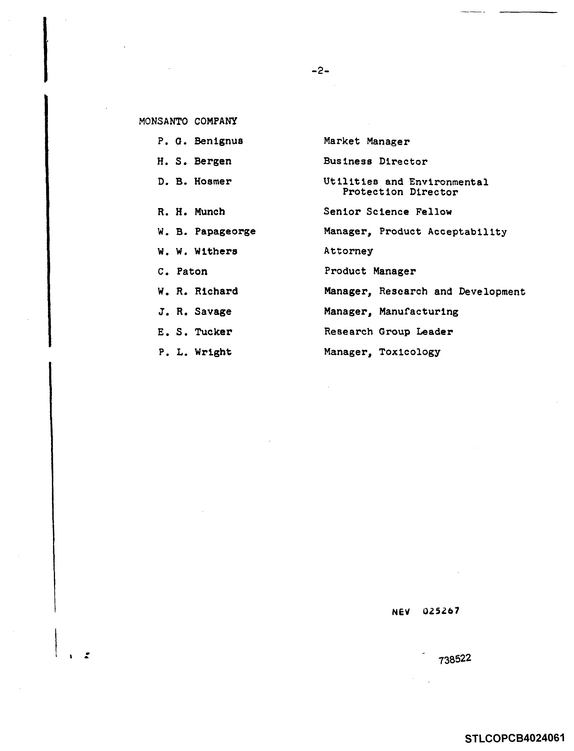
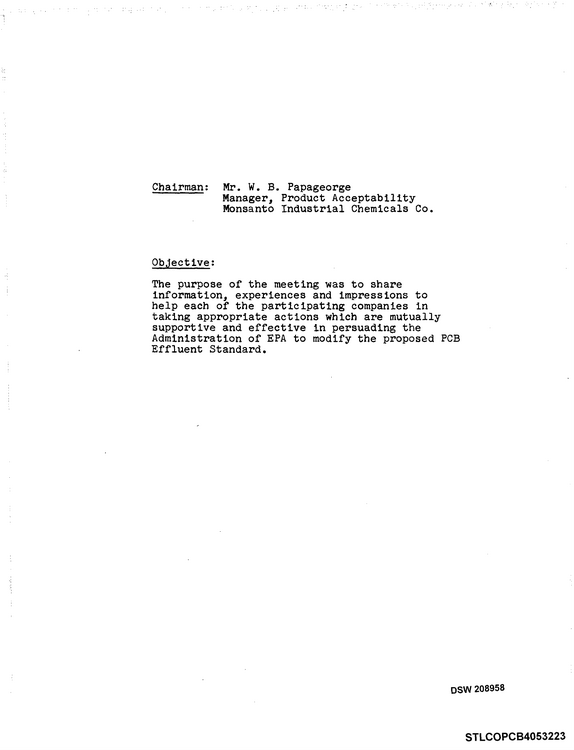
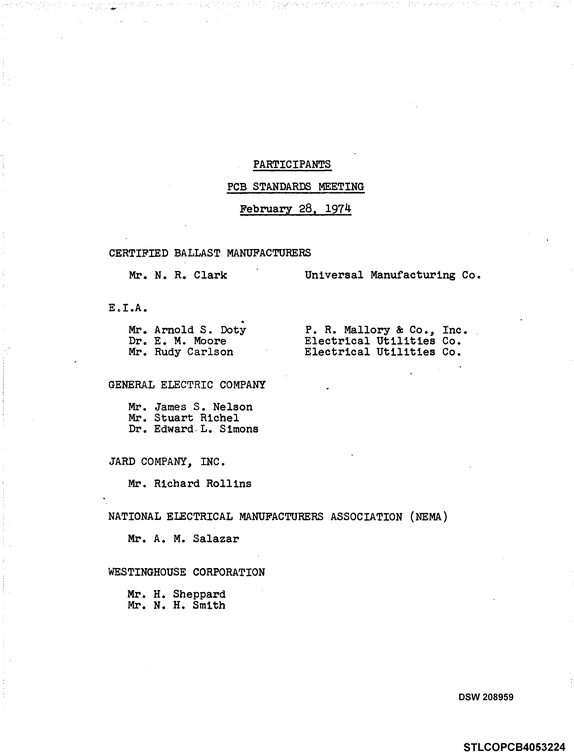
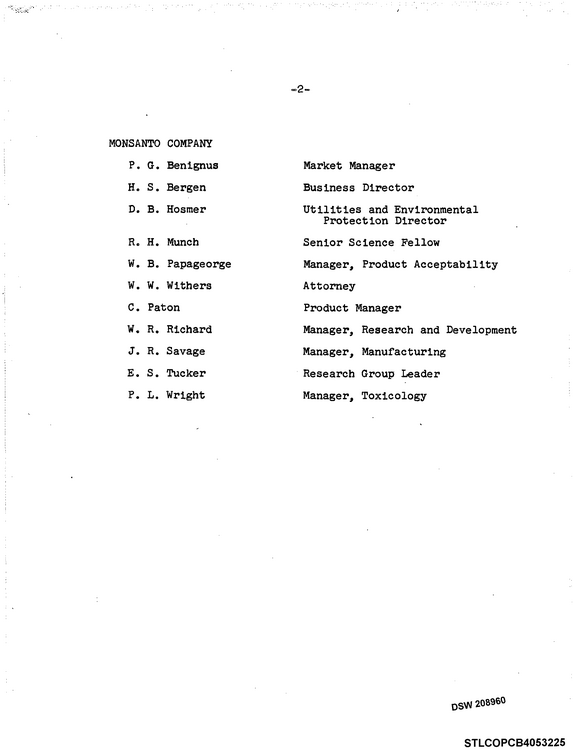
MINUTES OP MEETINO ON PROPOSED PCB EFFLUENT STANDARDS February 28, 1974 Monsanto Company St.
refid# pe1Qw9norqvrg29JDJY7mLKmX20 pages
With further drops, a person loses his muscular coordination for skilled movements, and muscular effort leads rapiidly to fatigue.
refid# bE42EakEE4wR1XjomLjOnmqZ17 pages
7^ 1PT--r--w rs f JANUARY 20,1978 i TETRACHLOROETHYLENE (perchloroethylene) U.
refid# QX3zr8vbGJn7Va9Zmw469L3YE19 pages
MINUTES OP MEETING ON PROPOSED PCB EFFLUENT STANDARDS February 28, 1974 Monsanto Company St.
refid# KzKV8g3dgxzoqm9xLmmkL0VgN20 pages
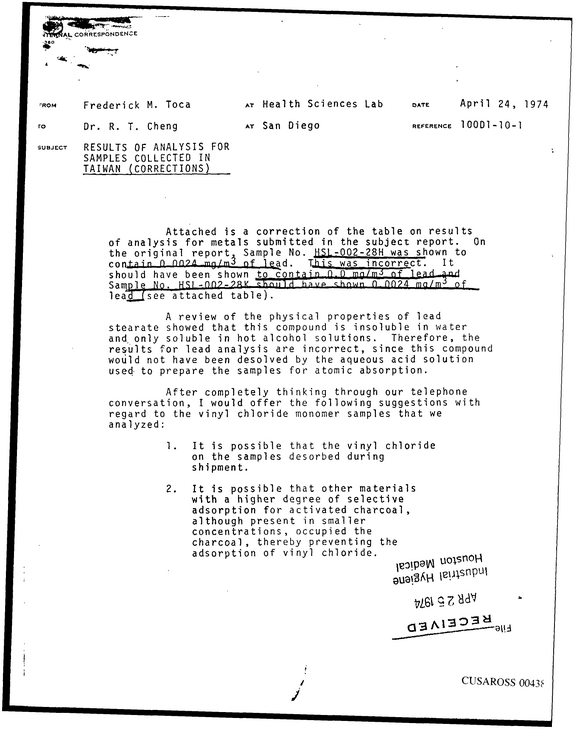
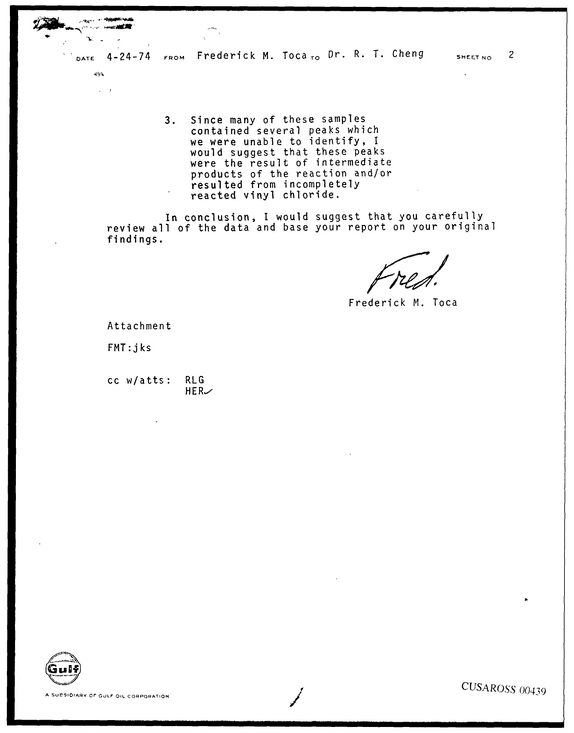
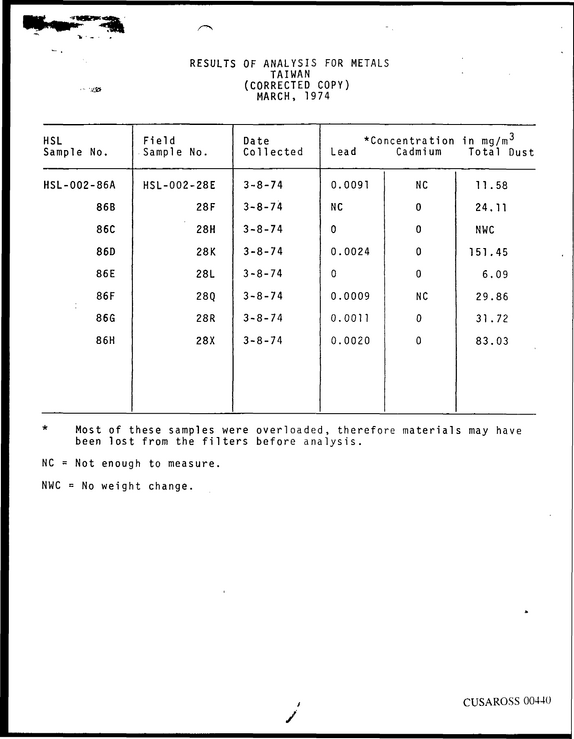
A review of the physical properties of lead stearate showed that this compound is insoluble in water and. only soluble in hot alcohol solutions.
refid# 71wQ7kwjbr371k5g5Z2m312kE7 pages
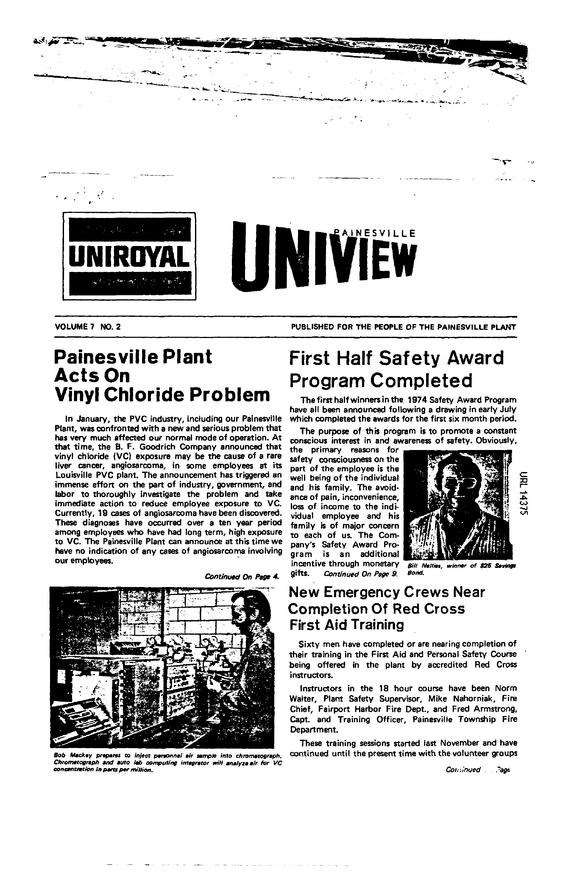
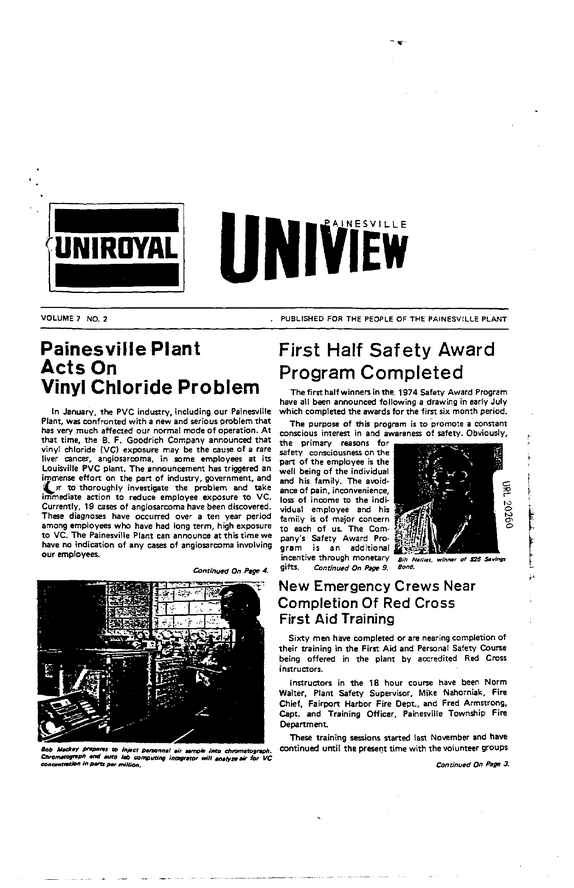
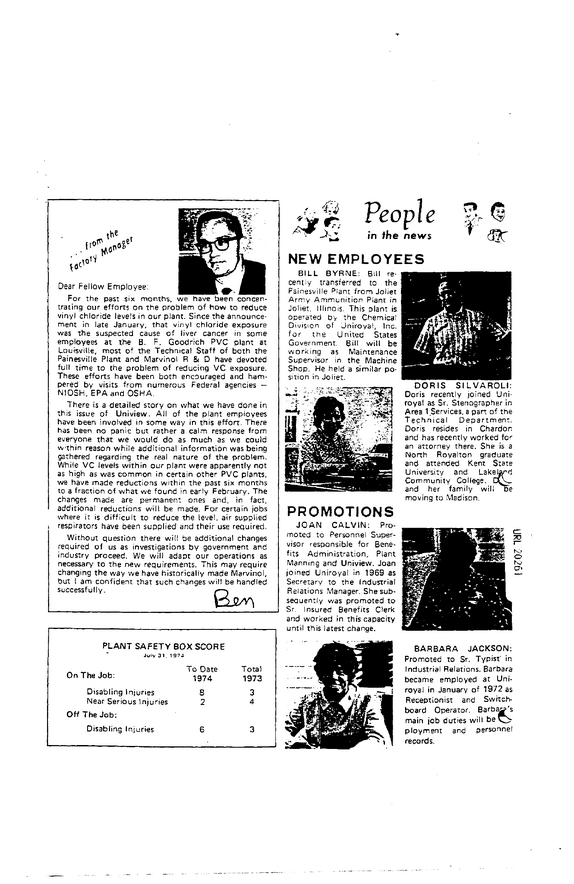
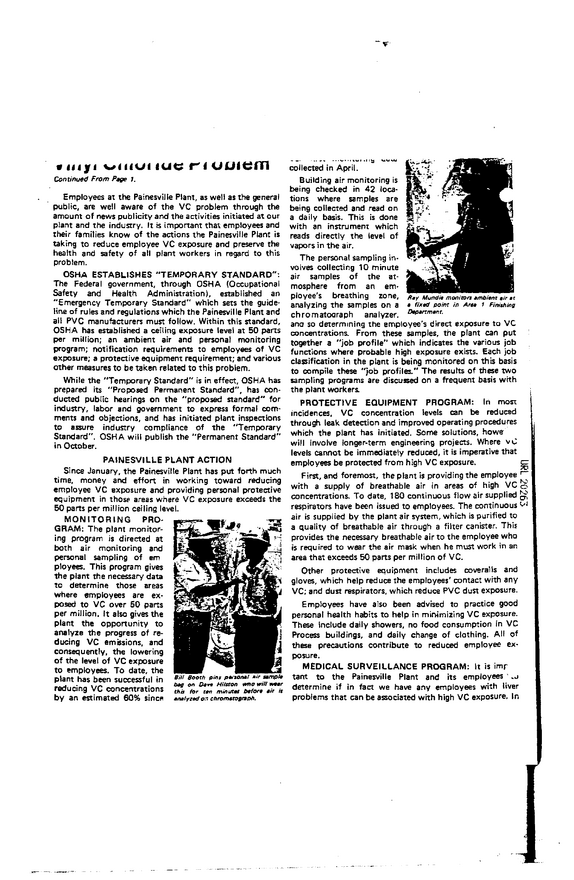
w UNIROYAL AIN E S V I L L E VOLUME 7 NO. 2 PUBLISHED FOR THE PEOPLE OF THE PAINESVILLE PLANT Painesville Plant Acts On Vinyl Chloride Problem In January, the PVC industry, including our Painesville Plant, was confronted with a new and serious problem that has very much affected our normal mode of operation.
refid# e7aENnzp4dJerM9ogRX748NRe11 pages