Refine
Estimated Years 1970-1979Clear
13,913 results foundRefine Search
This concept leads to a much more meaningful interpretation of the dose-response data and permits more meaningful extrapo lations of that data.
refid# 15x07GrMJoK0LMObjz54DjJmq40 pages
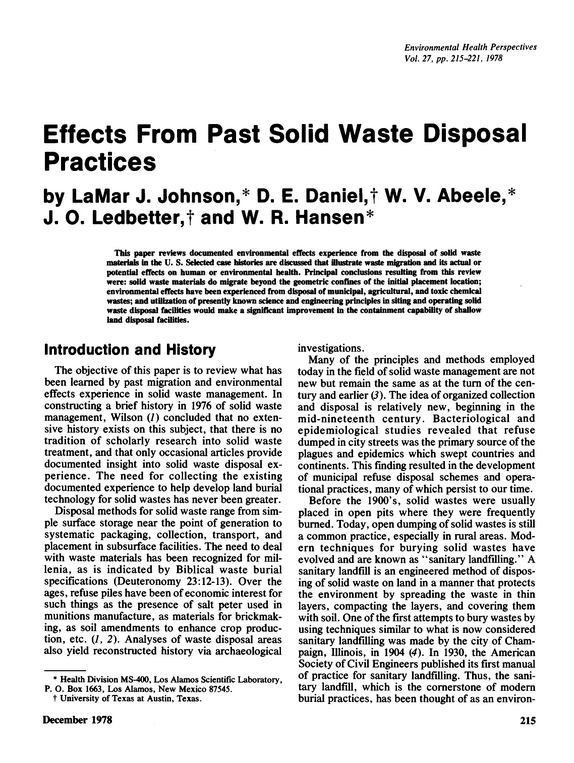
Uranium mill tailings containing uranium series radionuclides and poten tially toxic stable elements such as selenium, lead, cadmium, and molybdenum are mobilized by both air and surface water movement (11).
refid# 7OOv6kg7dygMKpaNn6e77qNje8 pages
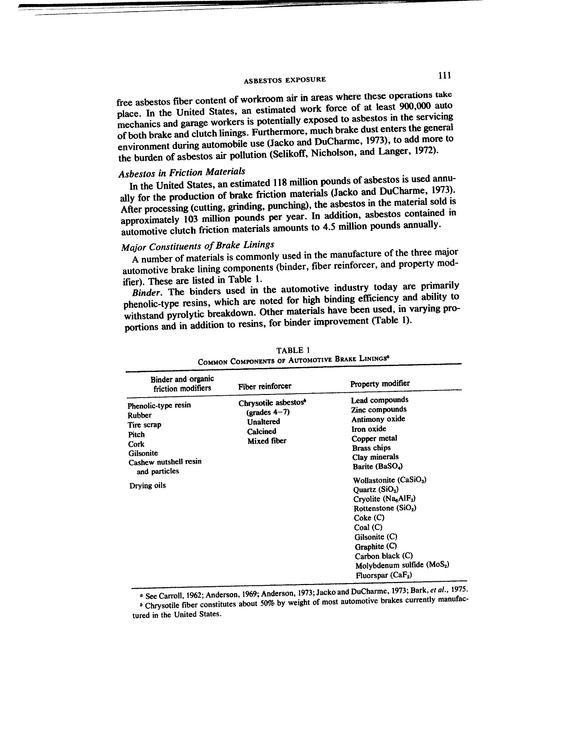
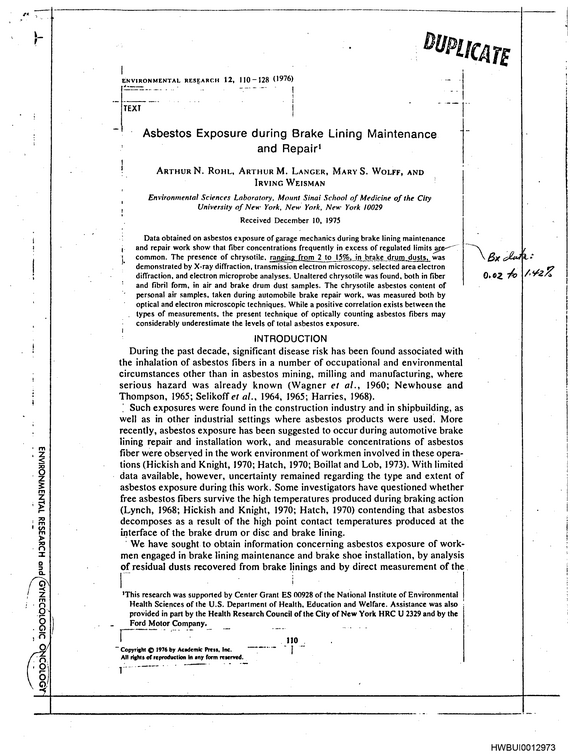
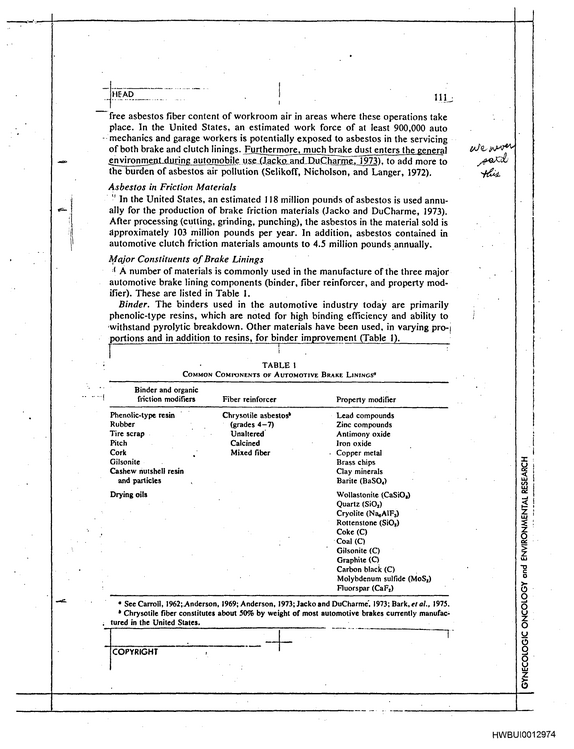
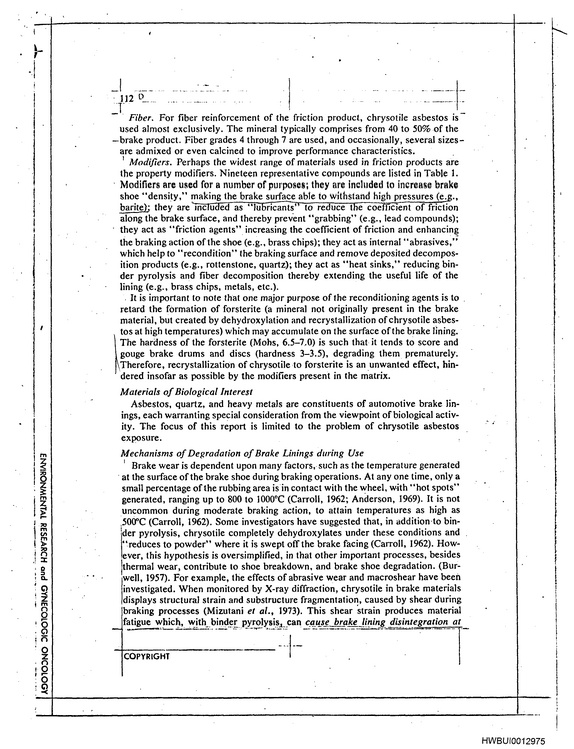
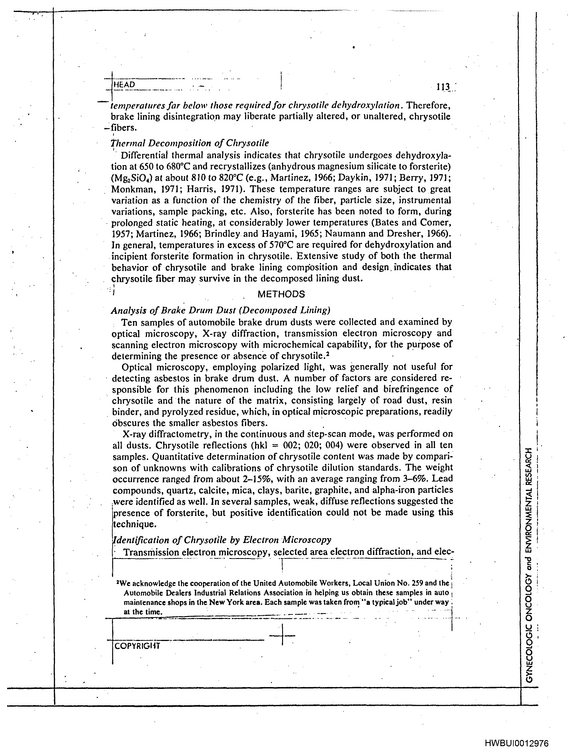
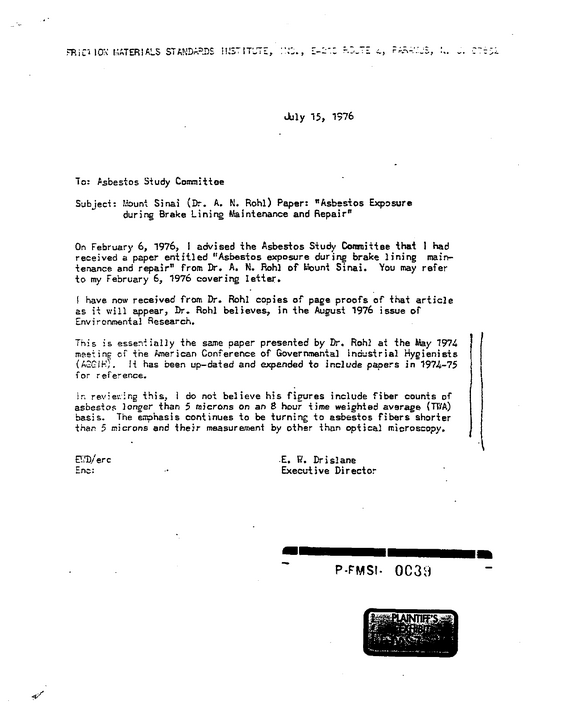
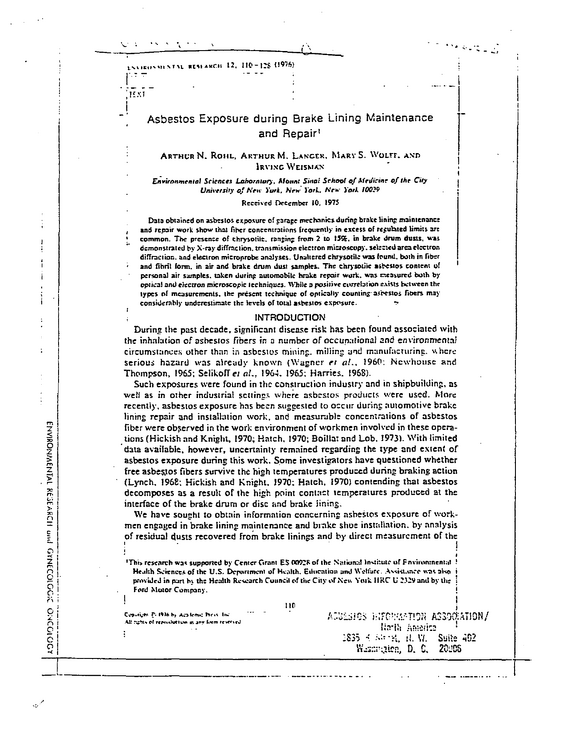
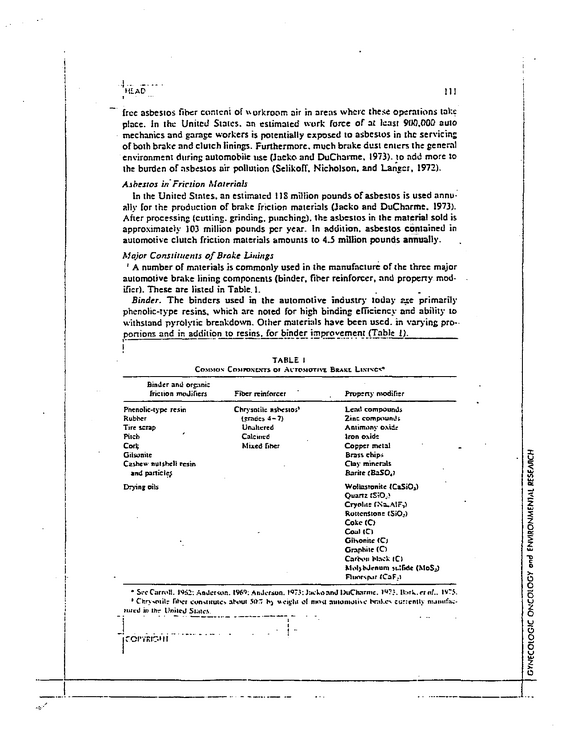
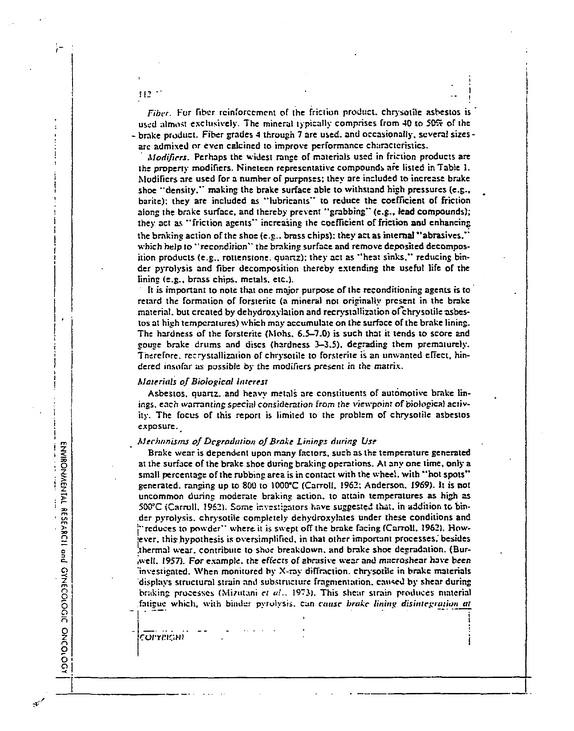
All rights of reproduction in any form reserved 110 ASBESTOS EXPOSURE 111 free asbestos fiber content of workroom air in areas where these operations take In the United States an estimated work force of at least 900,000 auto pmleaccheanics and garage workers is potentially exposed to asbestos in the servicing of both brake and clutch linings Furthermore much brake dust enters the general environment during automobile use Jacko and DuCharme 1973 to add more to the burden of asbestos air pollution Selikoff Nicholson and Langer 1972 Asbestos in Friction Materials In the United States an estimated 118 million pounds of asbestos is used annu- of brake friction materials Jacko and DuCharme 1973 ally for the production the asbestos in the material sold is After processing cutting grinding punching contained in approximately 103 million pounds per year In addition asbestos automotive clutch friction materials amounts to 4.5 million pounds annually Major Constituents of Brake Linings A number of materials is commonly used in the manufacture of the three major automotive brake lining components binder fiber reinforcer and property mod- ifier These are listed in Table 1 Binder The binders used in the automotive industry today are primarily resins which are noted for high binding efficiency and ability to phenolic materials have been used in varying pro- withstand pyrolytic breakdown Other portions and in addition to resins for binder improvement Table ) TABLE 1 COMMON COMPONENTS OF AUTOMOTIVE BRAKE LININGS Binder and organic friction modifiers Phenolic resin Rubber Tire scrap Pitch Cork Gilsonite Cashew nutshell resin and particles Drying oils Fiber reinforcer Chrysotile asbestos grades 4-7 Unaltered Calcined Mixed fiber Property modifier Lead compounds Zinc compounds Antimony oxide Iron oxide Copper metal Brass chips Clay minerals Barite BaSO4 Wollastonite CaSiO Quartz SiO2 Cryolite NaAIF Rottenstone SiO2 Coke C Coal C Gilsonite C Graphite C Carbon black C Molybdenum sulfide MoS2 Fluorspar CaF2 * See Carroll 1962 Anderson 1969 Anderson 1973 Jacko and DuCharme 1973 Bark et al 1975 b Chrysotile fiber constitutes about 50 by weight of most automotive brakes currently manufactured in the United States 112 ROHL ET AL Fiber For fiber reinforcement of the friction product chrysotile asbestos is used almost exclusively The mineral typically comprises from 40 to % of the brake product Fiber grades 4 through 7 are used and occasionally several sizes are admixed or even calcined to improve performance characteristics Modifiers Perhaps the widest range of materials used in friction products are the property modifiers Nineteen representative compounds are listed in Table 1 Modifiers are used for a number of purposes they are included to increase brake shoe density making the brake surface able to withstand high pressures e.g. barite they are included as lubricants to reduce the coefficient of friction along the brake surface and thereby prevent grabbing e.g. lead compounds they act as friction agents increasing the coefficient of friction and enhancing the braking action of the shoe e.g. brass chips they act as internal abrasives which help to recondition the braking surface and remove deposited decomposition products e.g. rottenstone quartz they act as heat sinks reducing binder pyrolysis and fiber decomposition thereby extending the useful life of the lining e.g. brass chips metals etc.
refid# 3QX1Gde6wQ5G4xqgzjp6b893a19 pages
Modifiers are used for a number of purposes; they are included to increase brake shoe "density," making the brake surface able to withstand high pressures (e.g., barite); they are included as "lubricants71 to reduce~the coefficient of friction along the brake surface, and thereby prevent "grabbing" (e.g., lead compounds); i they act as "friction agents" increasing the coefficient of friction and enhancing the braking action of the shoe (e.g., brass chips); they act as internal*`abrasives," which help to "recondition" the braking surface and remove deposited decompos ition products (e.g., rottenstone, quartz); they act as "heat sinks," reducing bin der pyrolysis and fiber decomposition thereby extending the useful life of the lining (e.g., brass chips, metals, etc.).
refid# VEDXpR0VBvLko5EG3pNzZbXj19 pages
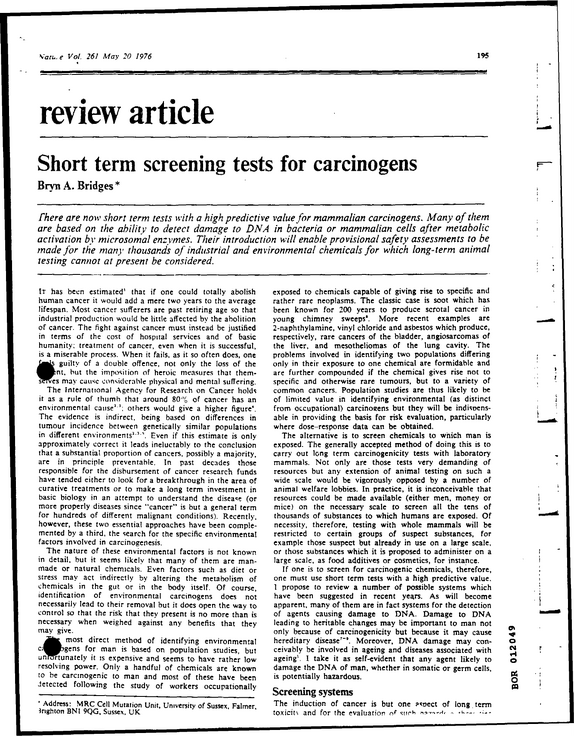
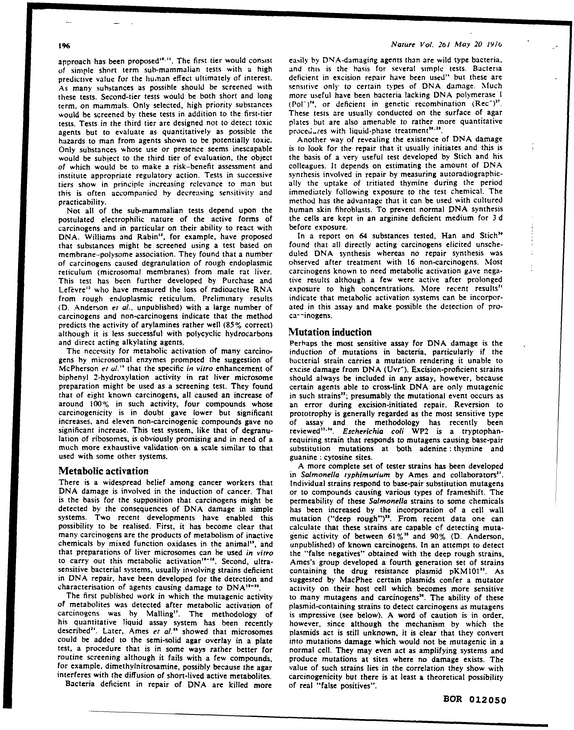
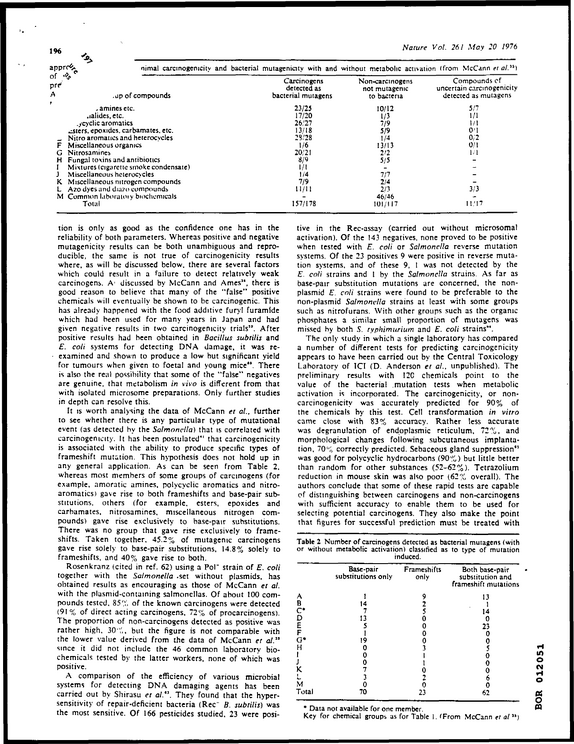
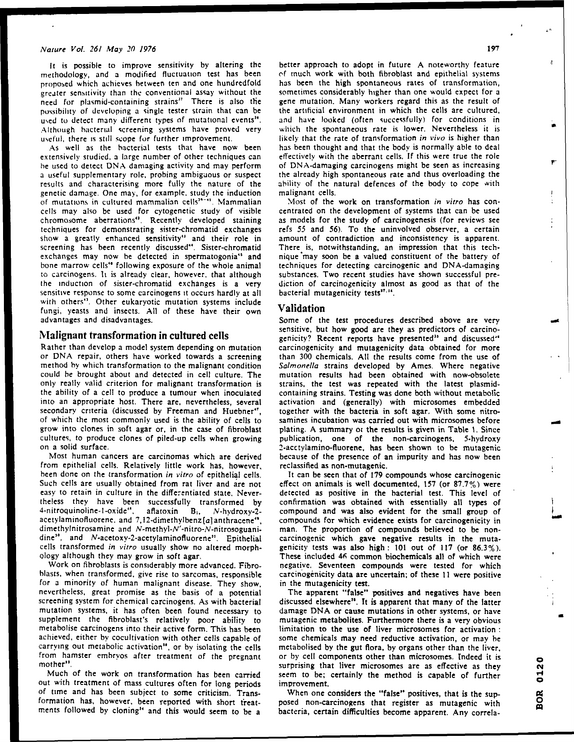
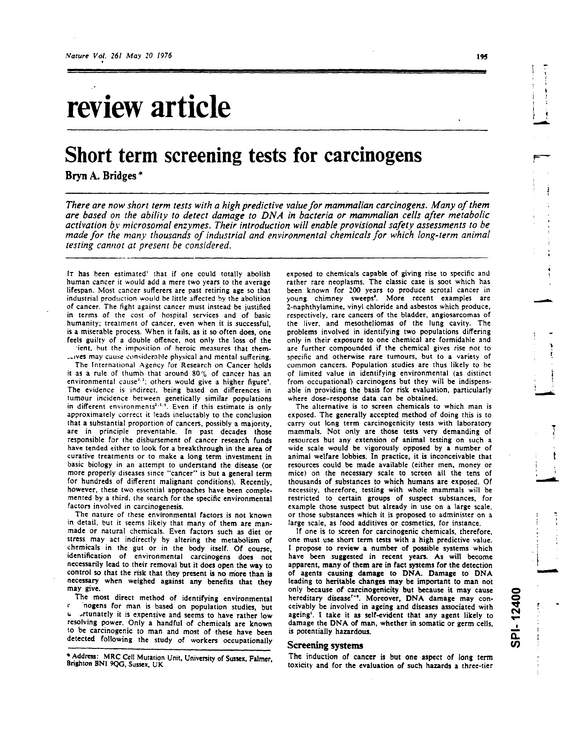
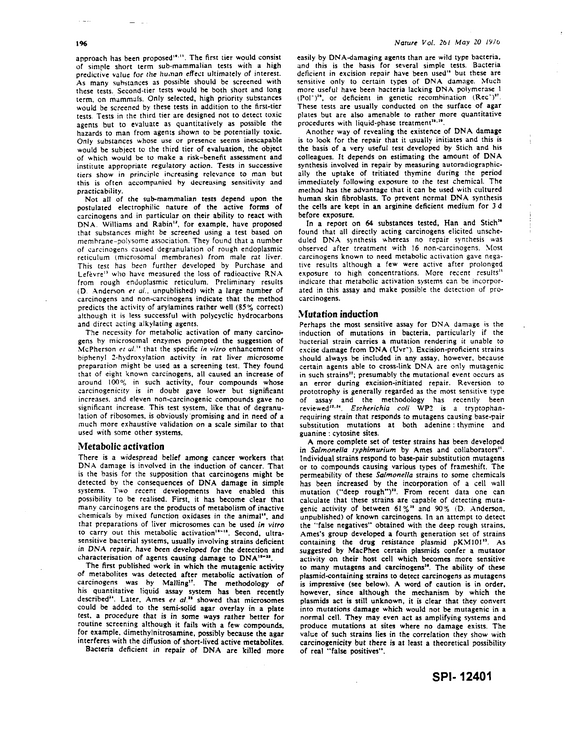
Damage to DNA necessary when weighed against any benefits that they leading to heritable changes may be important to man not may give.
refid# Yjg38bkYz1Q5Ray1vL4VmzxKn6 pages
Failure to consider this concept leads to unrealistic estimates of risk.
refid# 1yr9wObkzqxXqV4XdkjkBDMeq44 pages
Rowley, National Lead Company Jesse Werner, GAF Corporation John E.
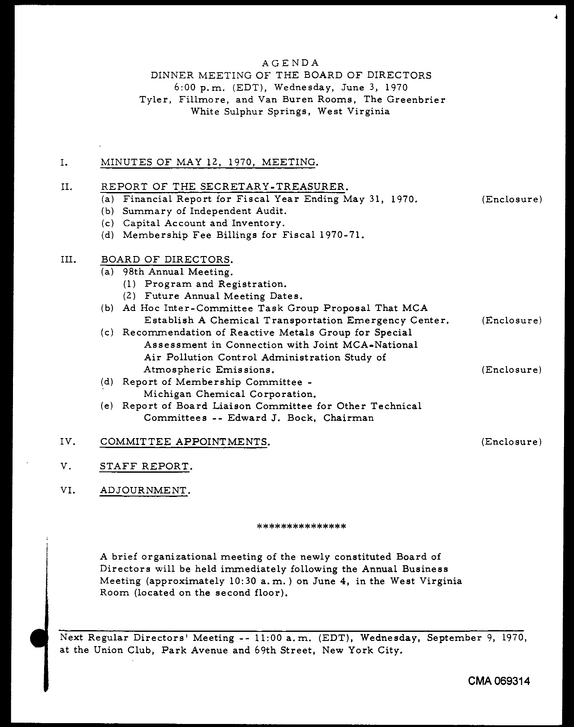
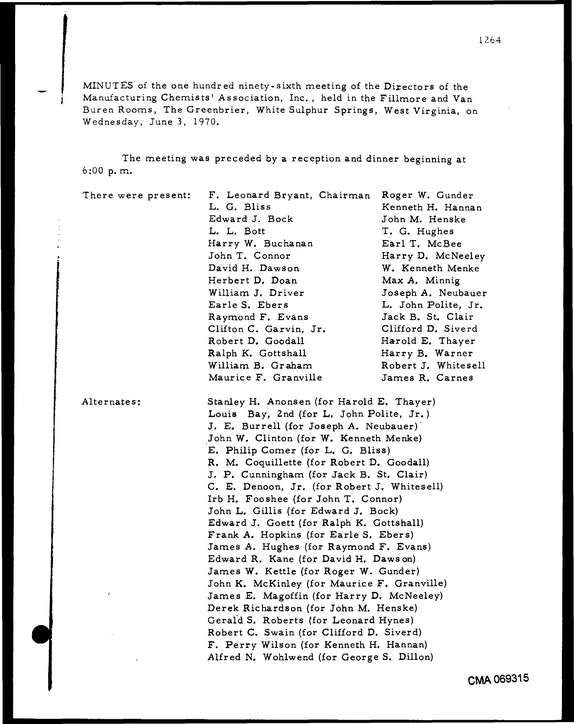
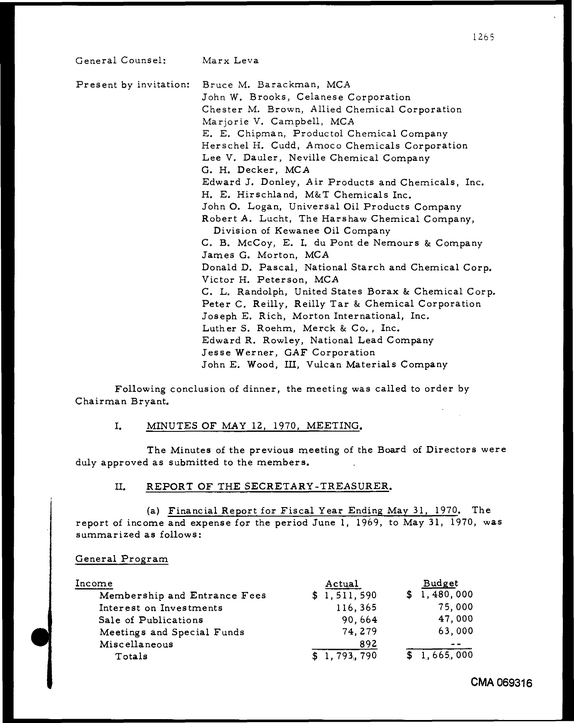
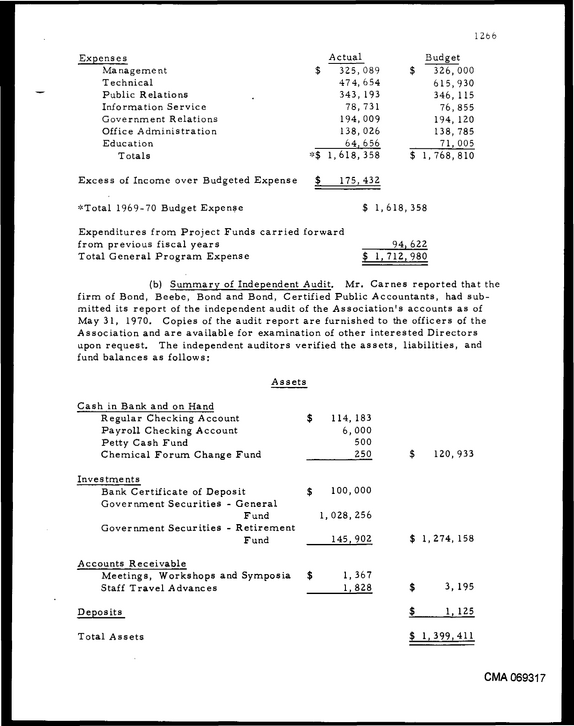
refid# EqgYZK8XYEyj2xrvMqoMGqgZb25 pages
EXECUTIVE SUMMARY OF PRELIMINARY ESTIMATES OF DIRECT COMPLIANCE COSTS AND OTHER ECONOMIC EFFECTS OF OSHA'S GENERIC CARCINOGEN PROPOSAL ON SUBSTANCE PRODUCING AND USING INDUSTRIES Prepared for: American Industrial Health Council 1075 Central Park Avenue Scarsdale, New York 10583 Prepared by: Booz, Allen & Hamilton Inc.
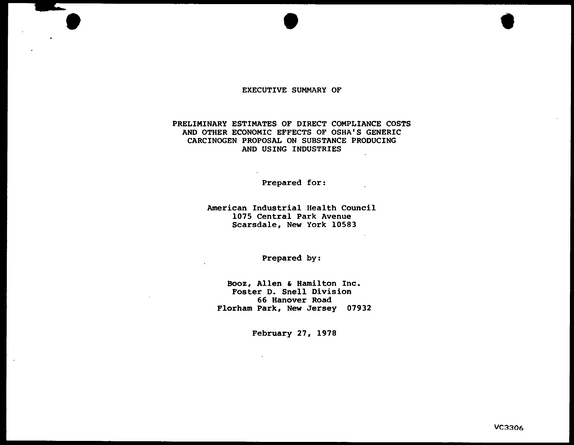
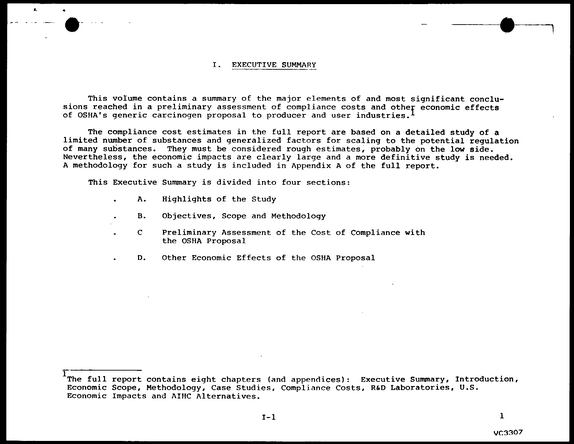

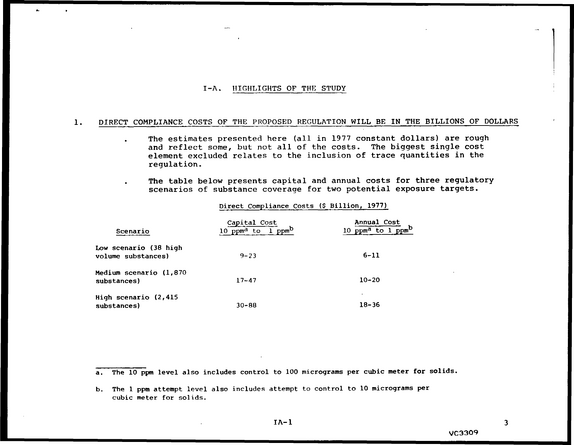
refid# 2qRZw70EZVdZn49Jzz302K5pp42 pages
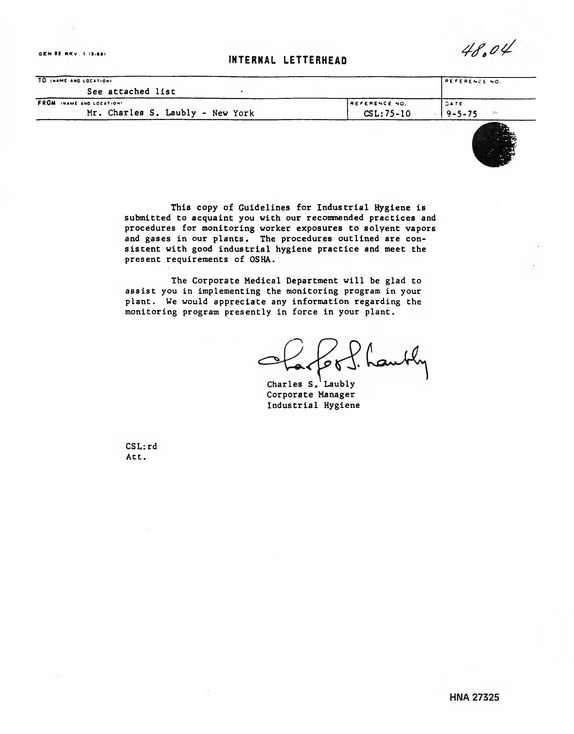
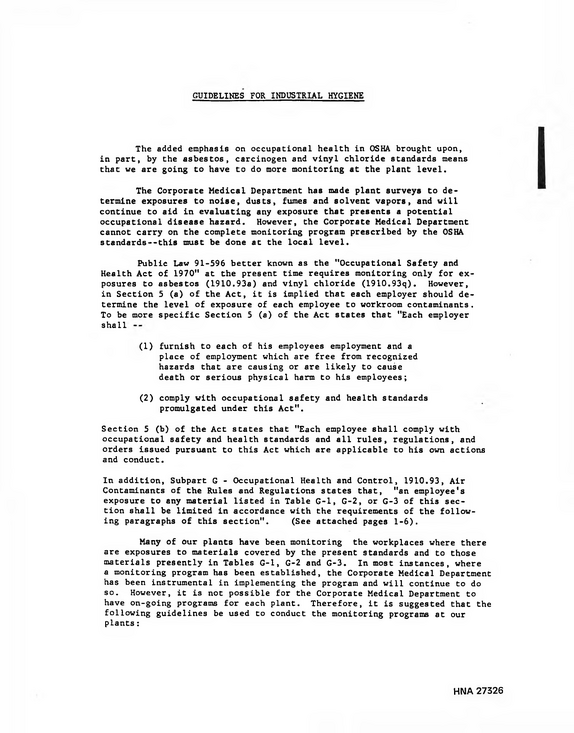
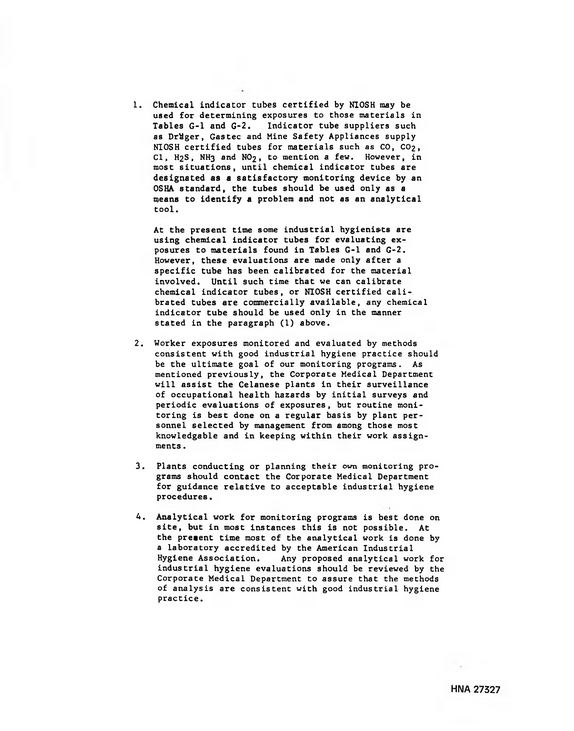
FILE NAME: Celanese (CEL) DATE: 1975 Sept 5 DOC#: CEL015 DOCUMENT DESCRIPTION: Company Guidelines for Industrial Hygiene G E N SB V . 1 0-601 INTERNAL LETTERHEAD TO I 1 A M C A N D L O C A T i O N I See attached list FROM 1N A M C AMO L O C A T I O N * Mr.

refid# LgakzoEj2K0mqNoR7N7p0zmQw12 pages
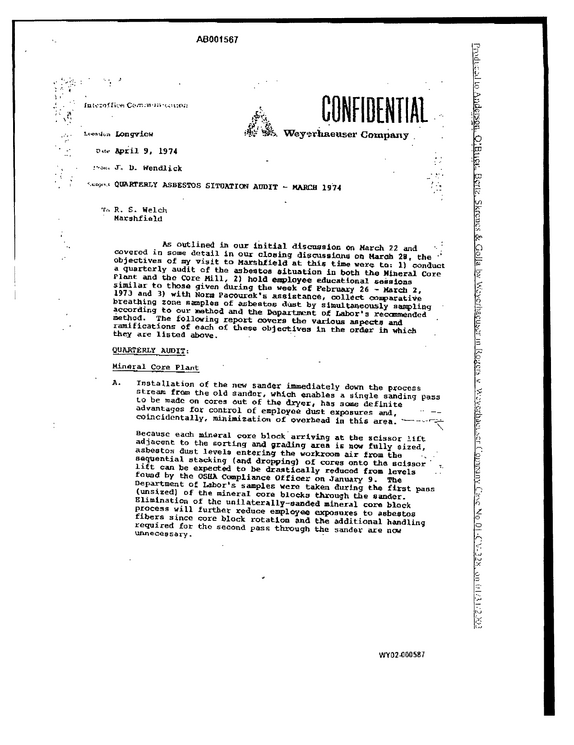
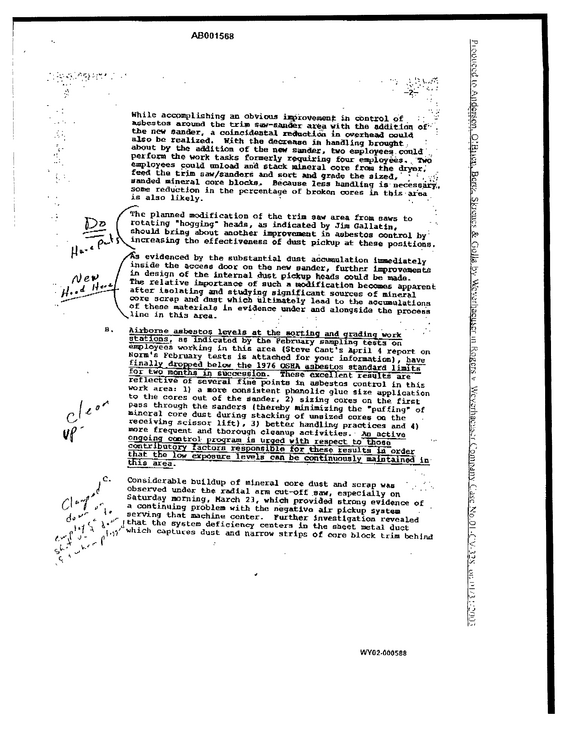
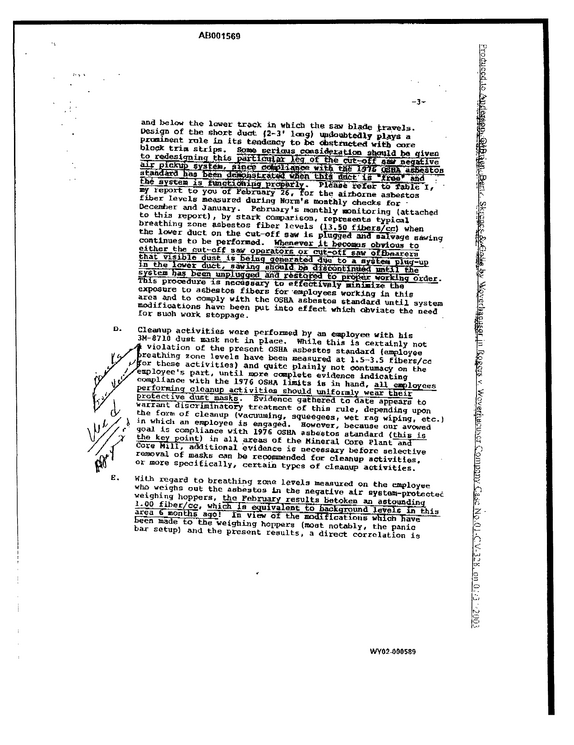
The relative importance of such a modification becomes apparent a*ter isolating and studying significant sources of mineral core scrap and duet which Ultimately lead to the accumulations of these materials in evidence under and alongside the process iinc in this ft-rea. . .
refid# g20gD9J6QbxOpYmB9vEKNd7Oq15 pages
G W e C O lO G IC O N 'C O tO G Y and ENVIRONMENTAL RESEARCH TABLE 1 Common Componcnts or Avtomotjve Brakl Linincn* Binder and organic friction modifiers Fiber reinforce/ Property modifier Phenolic-type resin Rubber Tire scrap Pitch CorJ> Gilsonile Cashew nutshell resin and panicle; Drying oils Chrysniile asbestos* (grades 4-7) Unaltered Calcined Mixed fiber - Lead compounds Zinc compounds Antimony- oxide Iron oxide Copper metal Brass chips Clay minerals Barite {BaSOU WoUasronite (CaSi03) Quartz fSiO.)
refid# ybpZ9yjY3pOMKznapk5DoRJKV20 pages
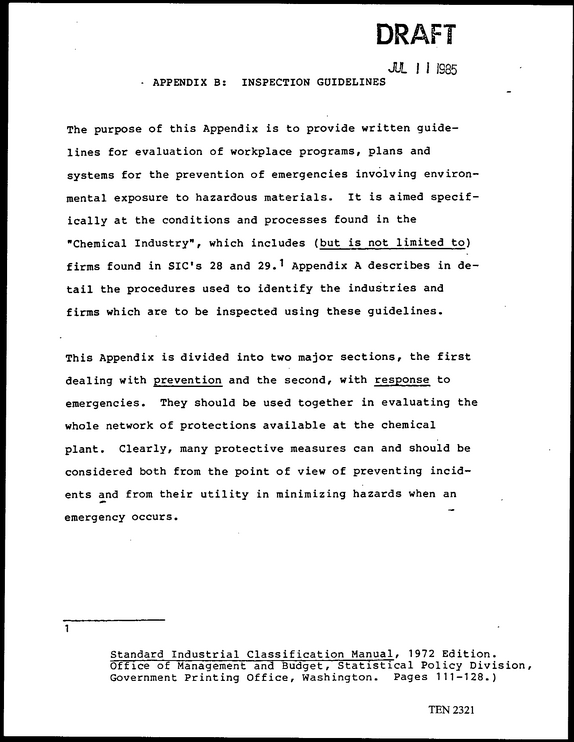
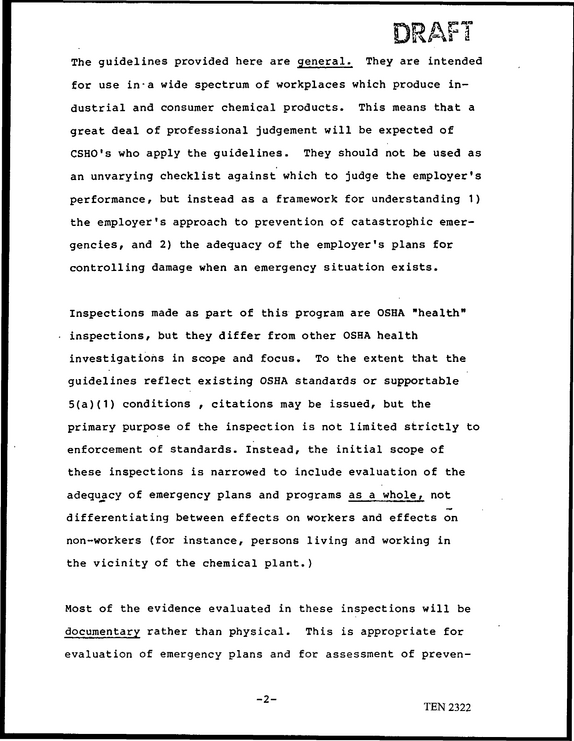
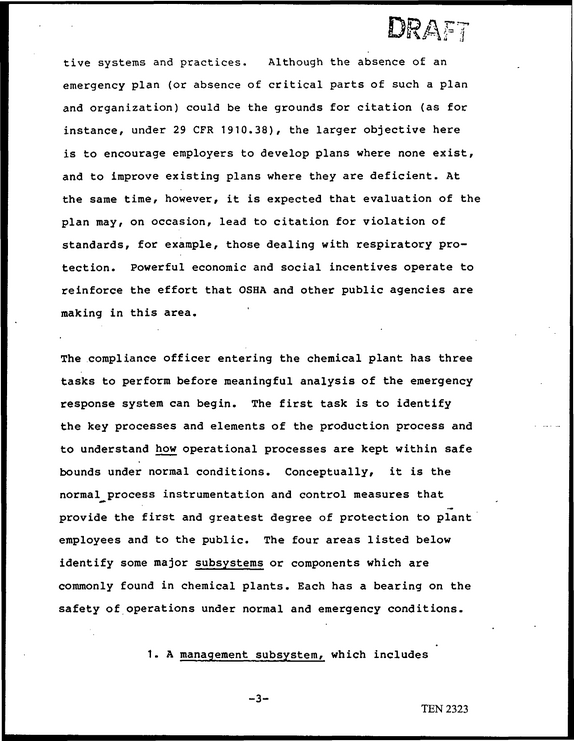
At the same time, however, it is expected that evaluation of the plan may, on occasion, lead to citation for violation of standards, for example, those dealing with respiratory pro tection.
refid# MJ1R9L5oMo67vvy427Xo58nVx48 pages
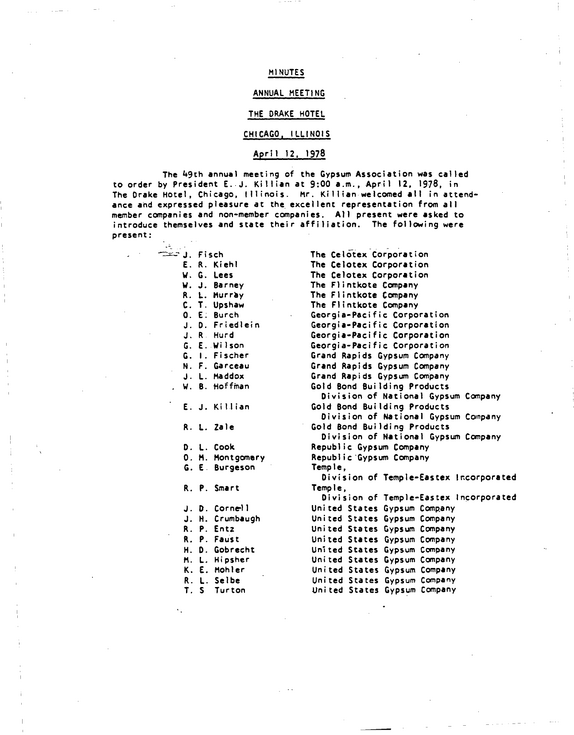
Gobrecht's opinion, this could lead to negotiation of rates, disruption of the entire system affecting service, afid.

refid# ZBGyRm7rRKRo2q4X3RX0xn5wJ22 pages
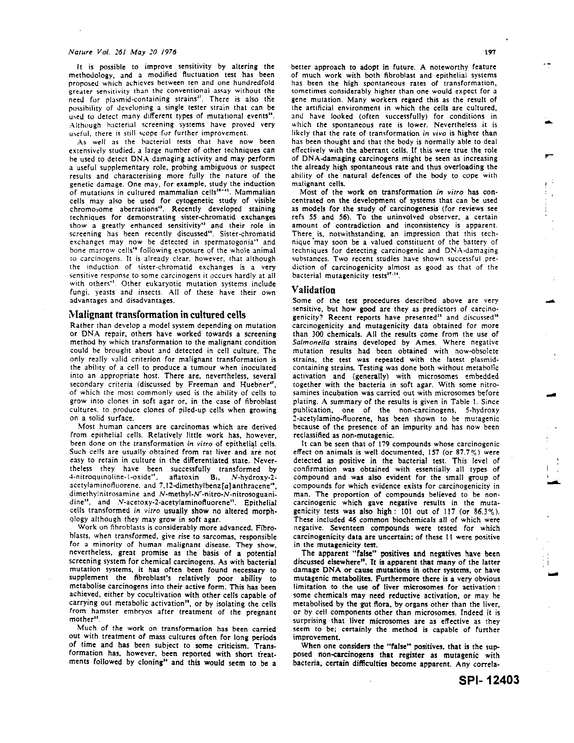
Damage to DNA leading to heritable changes may be important to man not only because of carcinogenicity but because it may cause hereditary disease''*.
refid# v19yjqy5VjbBeGa2Qv14qZZkZ6 pages
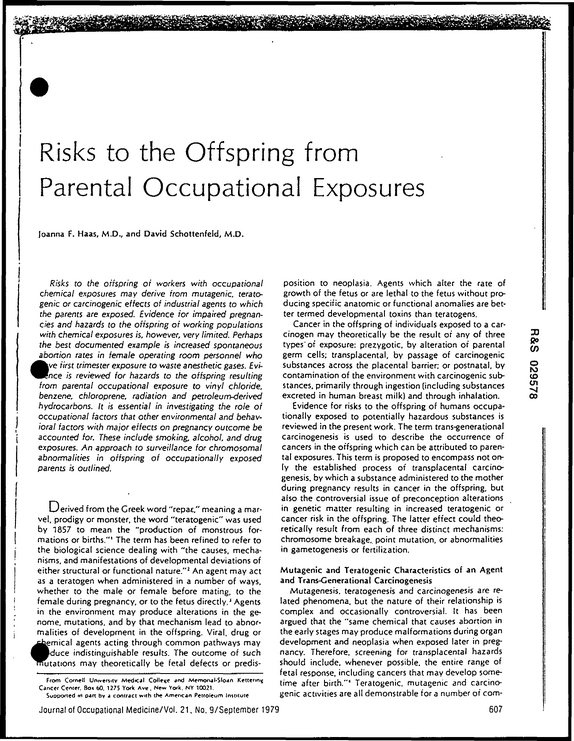
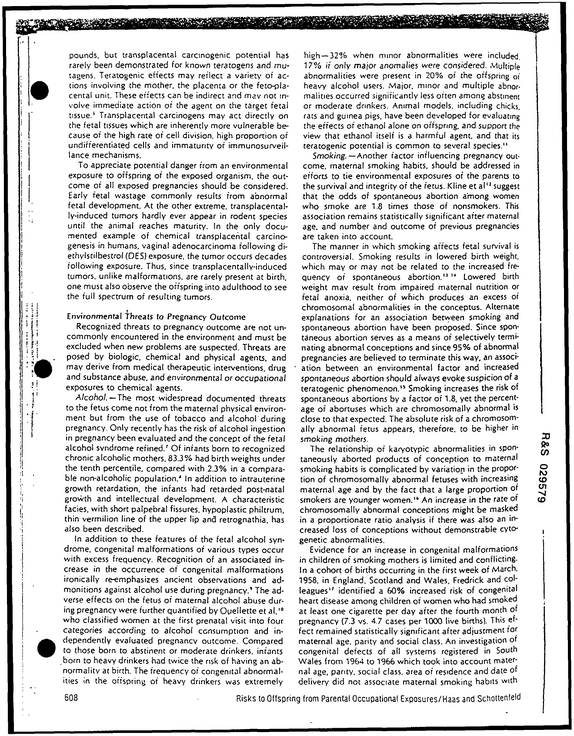
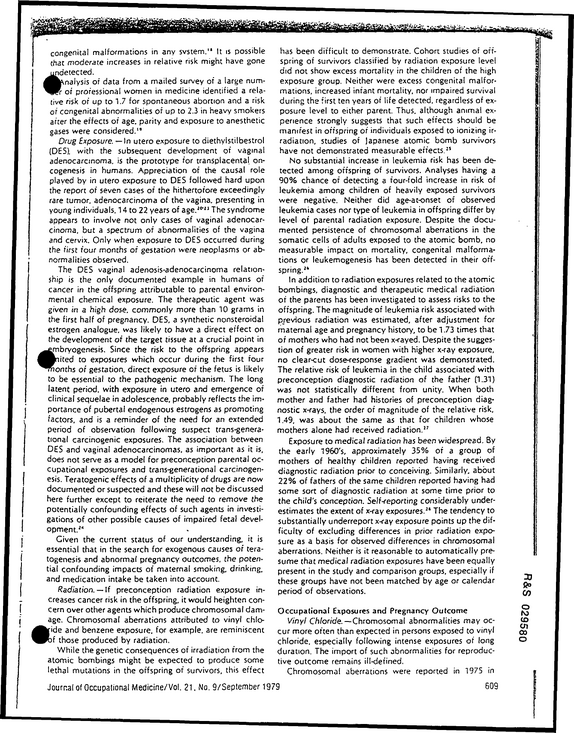
The term has been refined to refer to the biological science dealing with "the causes, mecha nisms, and manifestations of developmental deviations of either structural or functional nature."1 An agent may act as a teratogen when administered in a number of ways, whether to the male or female before mating, to the female during pregnancy, or to the fetus directly.1 Agents in the environment may produce alterations in the ge nome. mutations, and by that mechanism lead to abnor malities of development in the offspring.
refid# 0VVNyrkOdjGr1N2Rn19pYR6x7 pages