Refine
Estimated Years 1970-1979Clear
13,912 results foundRefine Search
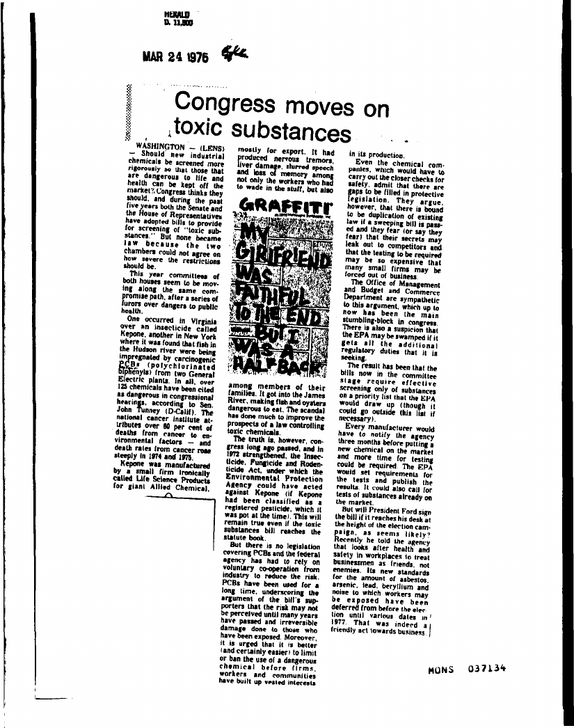
Us new standards for the amount of asbestos arsenic, lead, beryllium and noise to which workers may be exposed have been porters that the risk may not be perceived until many years have passed amt irreversible damage done to those who have been exposed.
refid# zzyRgJenQp8RxDjogm3LZax101 page
leaded for market.
refid# kD35JKvzQZ7kXR2rBO65eN5oO1 page
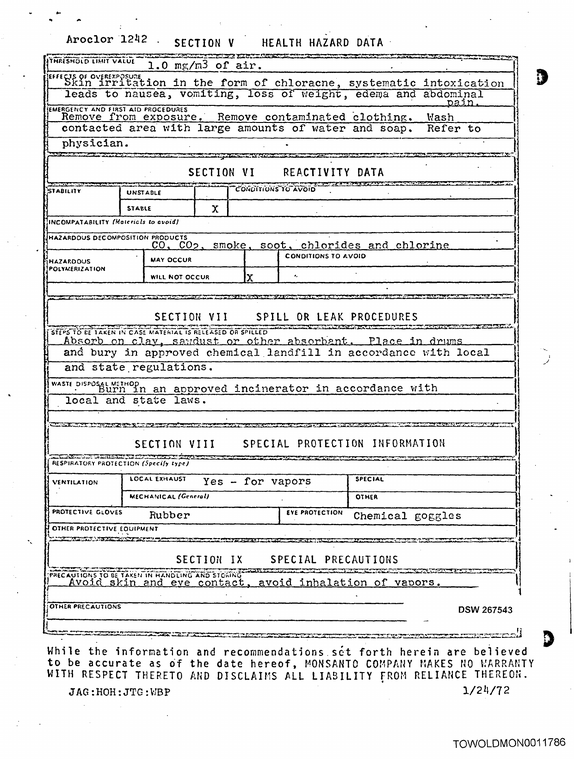
j Skin irritation in the form of chloracne, systematic leads to nausea, vomiting, loss of weight, edema and jEMERGENCY AND FIRST AID PROCEDURES j Remove from exposure.
refid# rpBzKZm8p8nxyLE7yndZqJzya2 pages
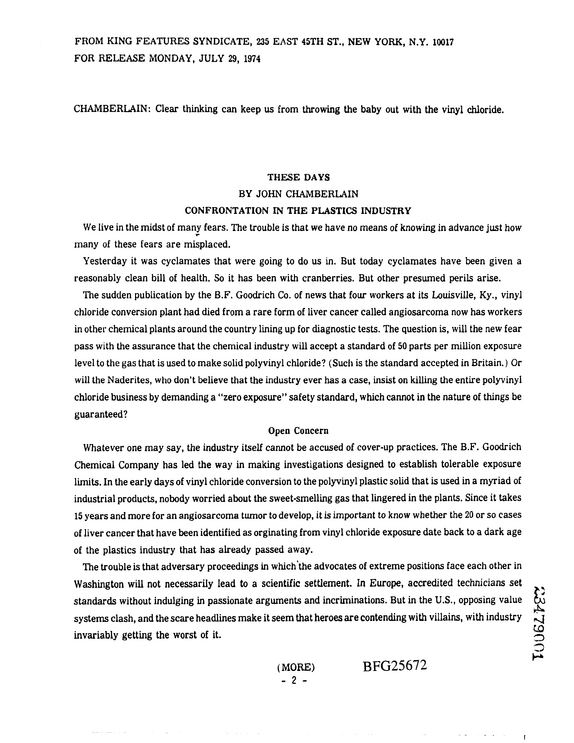
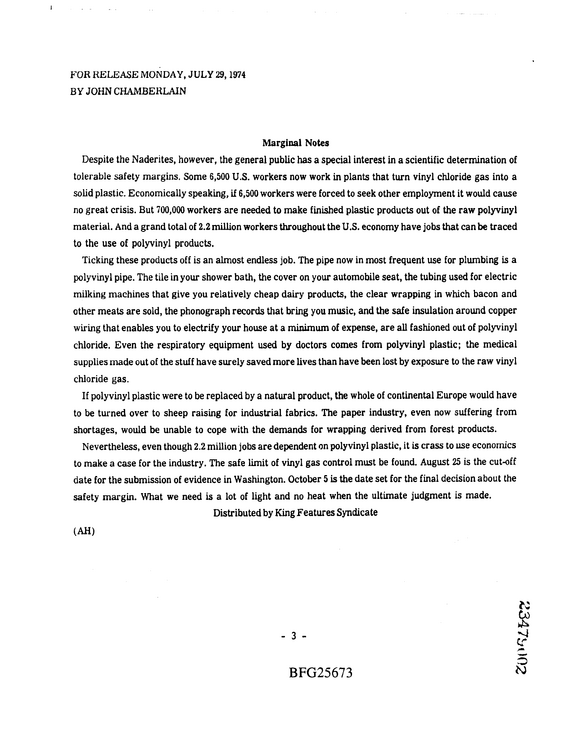
The trouble is that adversary proceedings in which the advocates of extreme positions face each other in Washington will not necessarily lead to a scientific settlement.
refid# yk8x667oZ3yYKXJVoYo6aZz222 pages
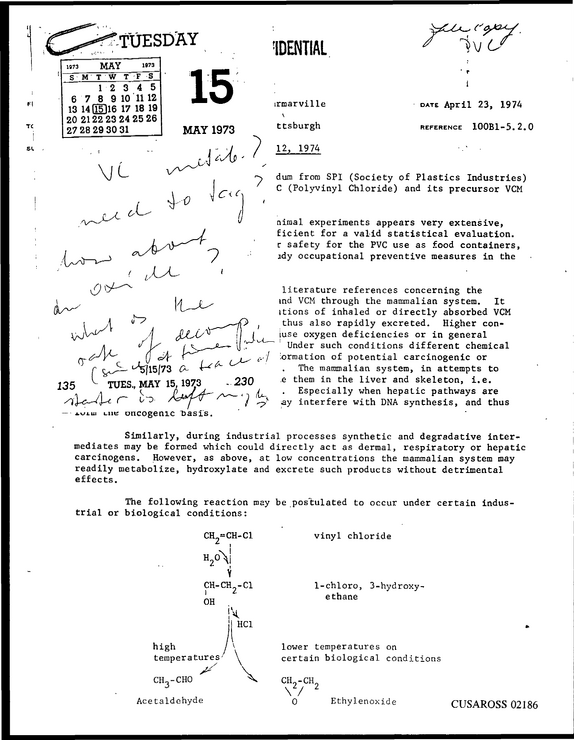
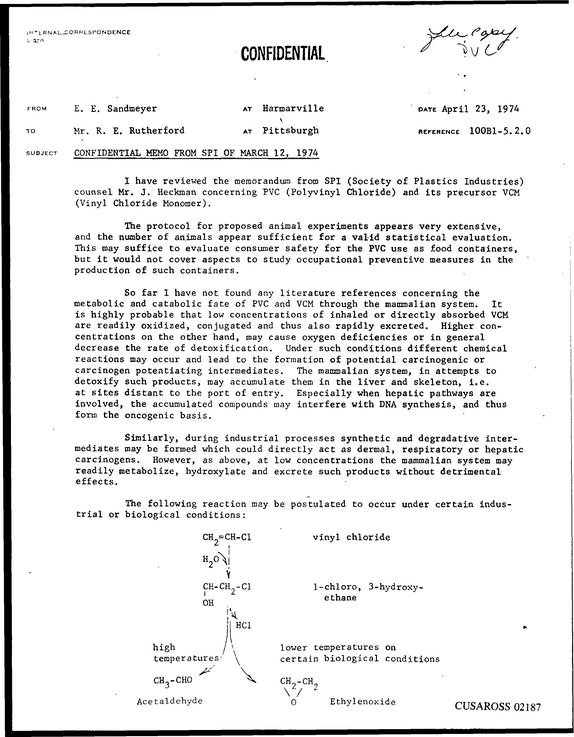
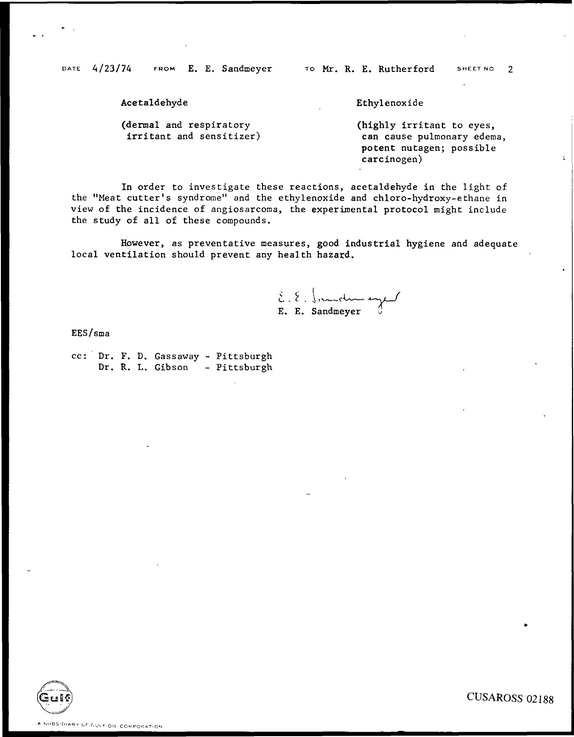
Under such conditions different chemical reactions may occur and lead to the formation of potential carcinogenic or carcinogen potentiating intermediates.
refid# rxQ6Y4X8ZVm2pXvVaY2dBgY3q3 pages
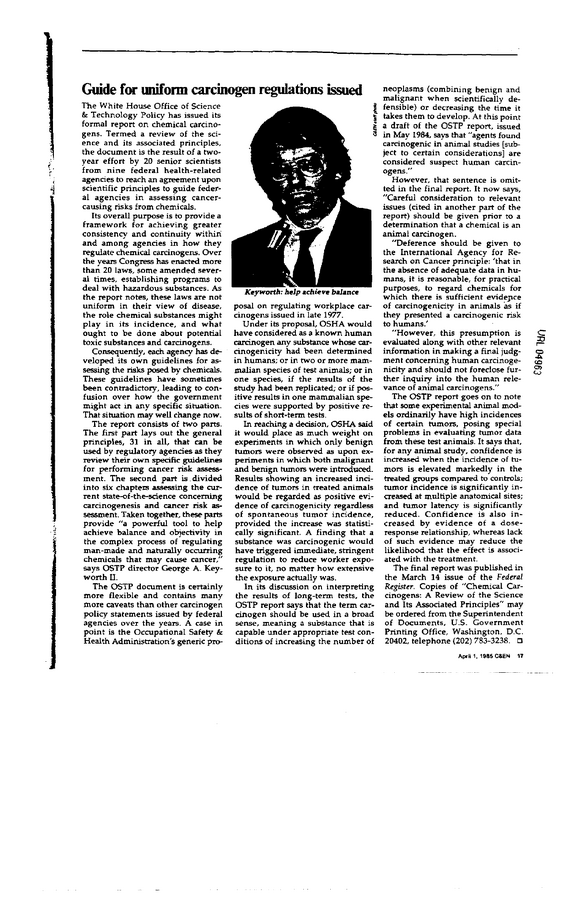
These guidelines have sometimes been contradictory, leading to con fusion over how the government might act in any specific situation.
refid# QX6wky9zEJ9jDMy84Z1dB4g7k1 page
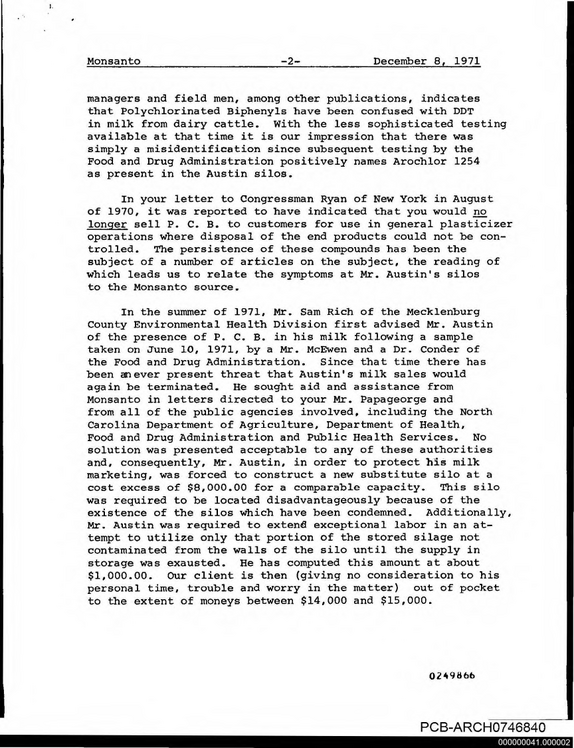
The persistence of these compounds has been the subject of a number of articles on the subject, the reading of which leads us to relate the symptoms at Mr.
refid# 82OexGeKdYEDZYVRR309LpjEk3 pages
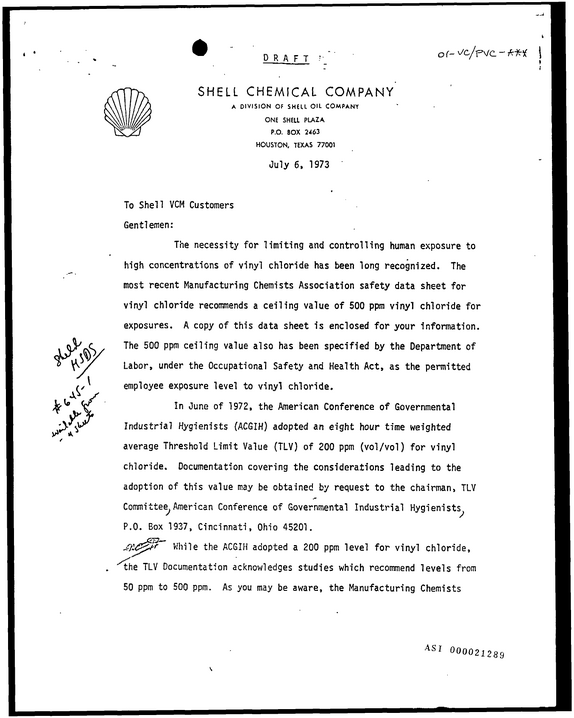
Documentation covering the considerations leading to the adoption of this value may be obtained by request to the chairman, TLV Committee^American Conference of Governmental Industrial Hygienists P.O.
refid# wrbNDQ0o72k3ymG7LJZO4B2jD3 pages
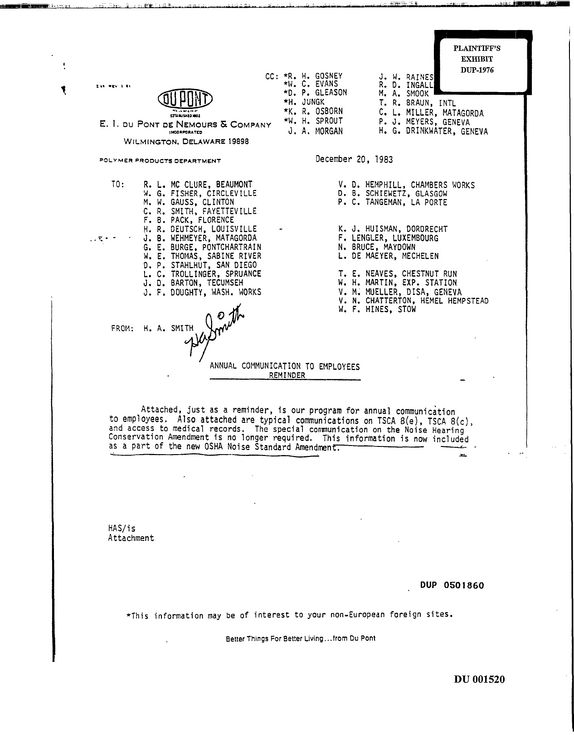
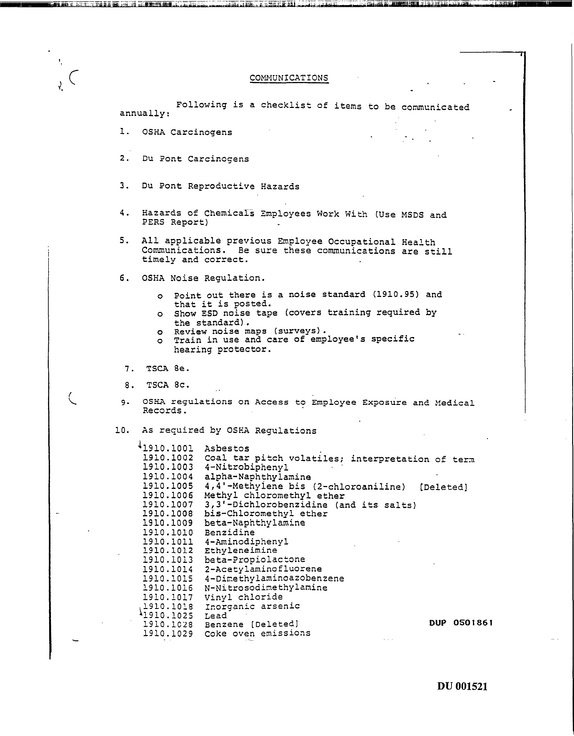
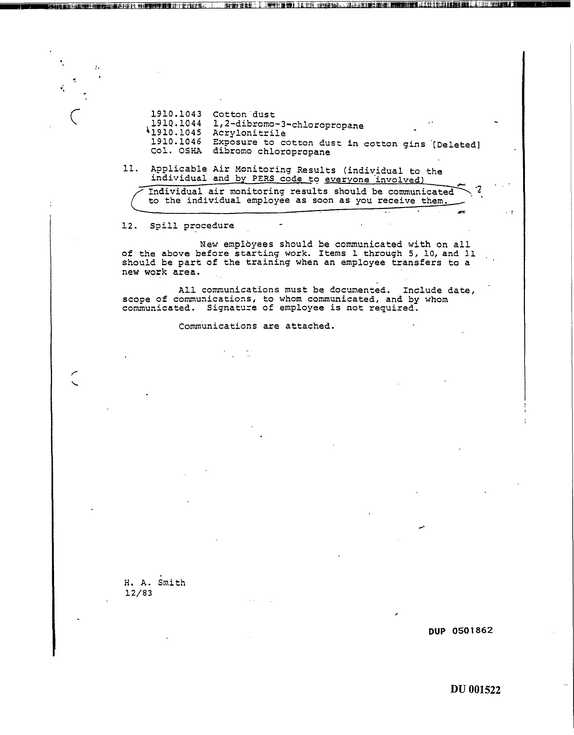
ropiolactone 2-Acetylaminofluorene 4-Dimethy1aminoazobenzene N-Nitrosodimethylanine Vinyl chloride Inorganic arsenic Lead Benzene [Deleted] DUP 0501861 Coke oven emissions DU 001521 c I 1910.1043 ,191Q.1044 '1910.1045 1910.1046 COl.
refid# 4JaJ1z9EVdVKXq8pp0xKZndRx3 pages
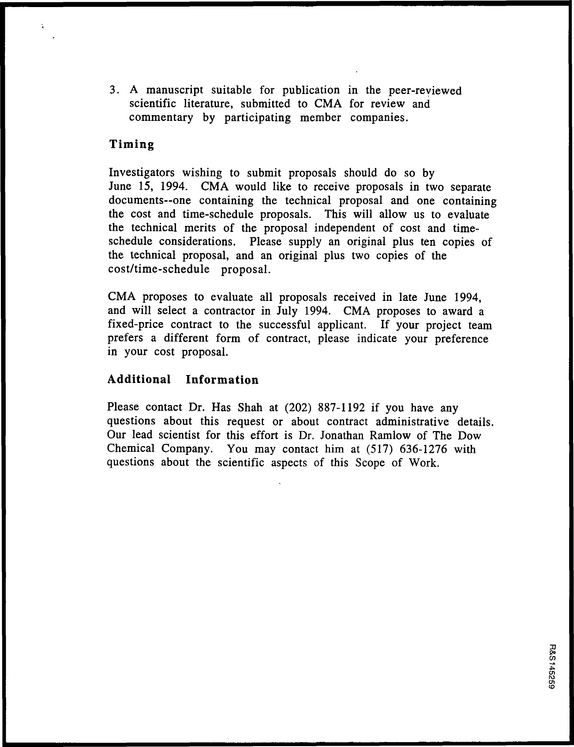
Our lead scientist for this effort is Dr.
refid# XRpk4jojvmOG72ddpE1QZEvmJ4 pages
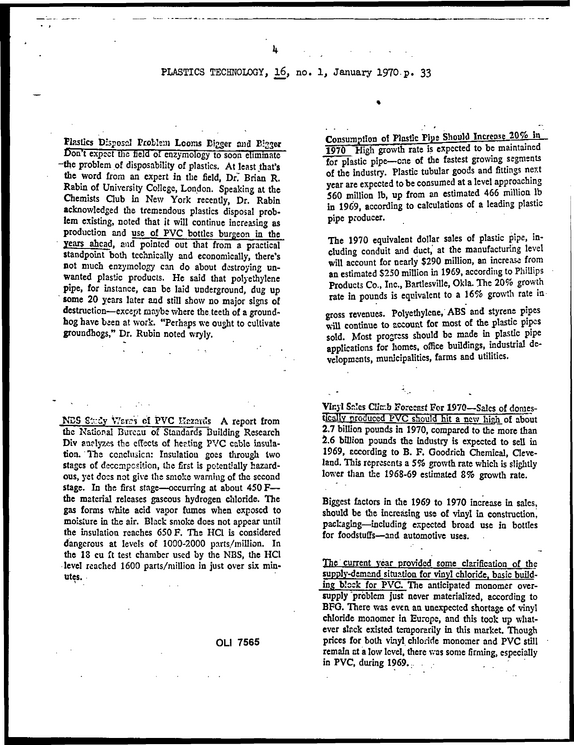
Plastic tubular goods and fittings next year are expected to be consumed at a level approaching 560 million lb, up from an estimated 466 million lb in 1969, according to calculations of a leading plastic pipe producer.
refid# qKXZw1Md0pyME45xka6KExax2 pages
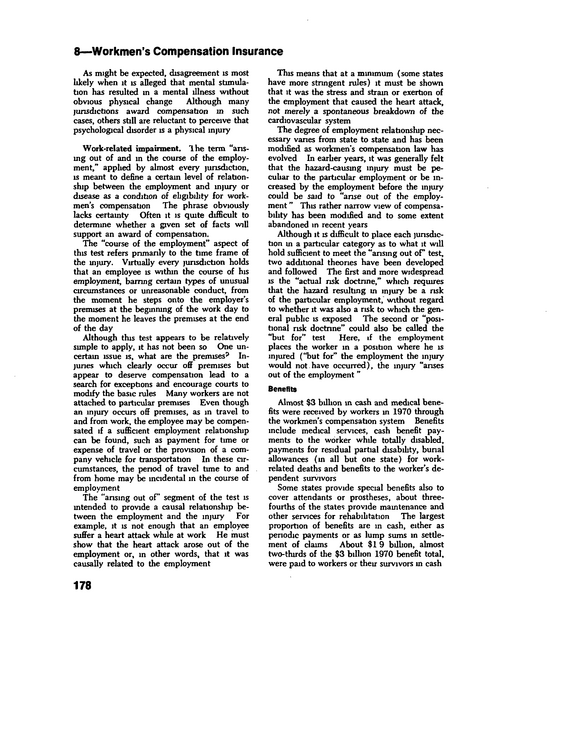
Virtually every jurisdiction holds that an employee is within the course of his employment, barring certain types of unusual circumstances or unreasonable conduct, from the moment he steps onto the employer's premises at the beginning of the work day to the moment he leaves the premises at the end of the day Although this test appears to be relatively simple to apply, it has not been so One un certain issue is, what are the premises'* In juries which clearly occur off premises but appear to deserve compensation lead to a search for exceptions and encourage courts to modify the basic rules Many workers are not attached to particular premises Even though an injury occurs off premises, as in travel to and from work, the employee may be compen sated if a sufficient employment relationship can be found, such as payment for time or expense of travel or the provision of a com pany vehicle for transportation In these cir cumstances, the period of travel time to and from home may be incidental m the course of employment The "arising out of" segment of the test is intended to provide a causal relationship be tween the employment and the injury For example, it is not enough that an employee suffer a heart attack while at work He must show that the heart attack arose out of the employment or, in other words, that it was causally related to the employment This means that at a minimum (some states have more stringent rules) it must be shown that it was the stress and strain or exertion of the employment that caused the heart attack, not merely a spontaneous breakdown of the cardiovascular system The degree of employment relationship nec essary vanes from state to state and has been modified as workmen's compensation law has evolved In earlier years, it was generally felt that the hazard-causing injury must be pe culiar to the particular employment or be in creased by the employment before the injury could be said to "anse out of the employ ment " This rather narrow view of compensa bility has been modified and to some extent abandoned m recent years Although it is difficult to place each junsdicbon in a particular category as to what it will hold sufficient to meet the "ansing out of" test, two additional theories have been developed and followed The first and more widespread is the "actual nsk doctrine," which requires that the hazard resulting in injury be a risk of the particular employment, without regard to whether it was also a risk to which the gen eral pubhc is exposed The second or "positional risk doctrine" could also be called the "but for" test Here, if the employment places the worker in a position where he is injured ("but for" the employment the injury would not.have occurred), the injury "arises out of the employment " Benefits Almost $3 billion in cash and medical bene fits were received by workers in 1970 through the workmen's compensabon system Benefits include medical services, cash benefit pay ments to the worker while totally disabled, payments for residual partial disability, burial allowances (in all but one state) for workrelated deaths and benefits to the worker's de pendent survivors Some states provide special benefits also to cover attendants or prostheses, about threefourths of the states provide maintenance and other services for rehabilitation The largest proportion of benefits are in cash, either as periodic payments or as lump sums in settle ment of claims About $19 billion, almost two-thirds of the $3 billion 1970 benefit total, were paid to workers or their survivors in cash 178
refid# gEQxeGE32m6OawadVV440wejN1 page
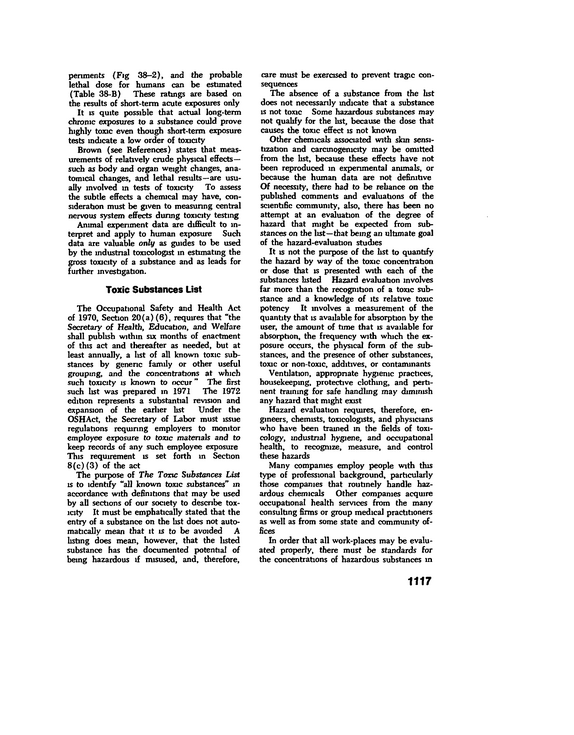
penments (Fig 38-2), and the probable lethal dose for humans can be estimated (Table 38-B) These ratings are based on the results of short-term acute exposures only It is quite possible that actual long-term chronic exposures to a substance could prove highly toxic even though short-term exposure tests indicate a low order of toxicity Brown (see References) states that meas urements of relatively crude physical effects-- such as body and organ weight changes, ana tomical changes, and lethal results--are usu ally involved in tests of toxicity To assess the subtle effects a chemical may have, con sideration must be given to measunng central nervous system effects during toxicity testing Animal experiment data are difficult to in terpret and apply to human exposure Such data are valuable only as guides to be used by the industrial toxicologist in estimating the gross toxicity of a substance and as leads for further investigation.
refid# 93wVo6kRL9xbqO7dKV5aDJNbq1 page
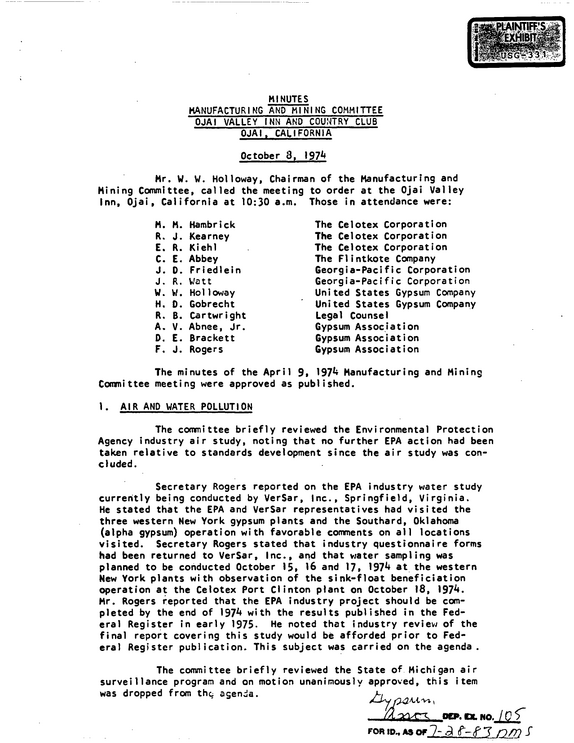
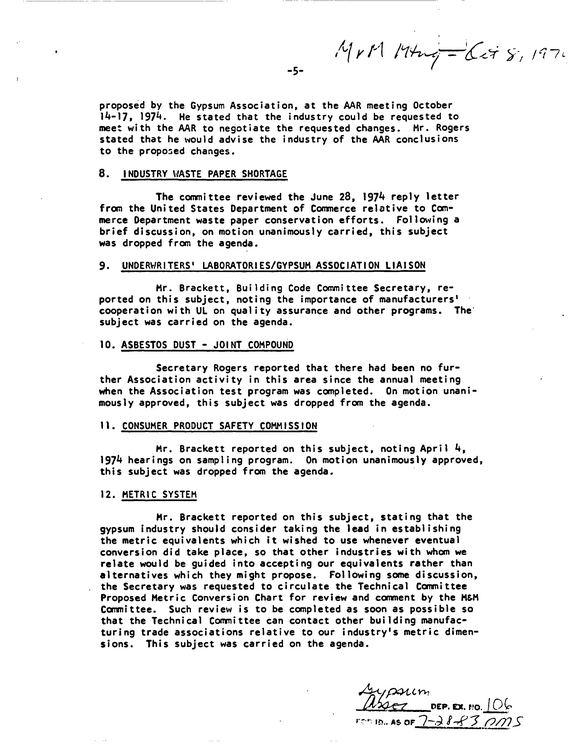
Brackett reported on this subject, stating that the gypsum industry should consider taking the lead in establishing the metric equivalents which it wished to use whenever eventual conversion did take place, so that other industries with whom we relate would be guided into accepting our equivalents rather than alternatives which they might propose.
refid# 37edNxD70x0z5QNwDR51R4zyx2 pages
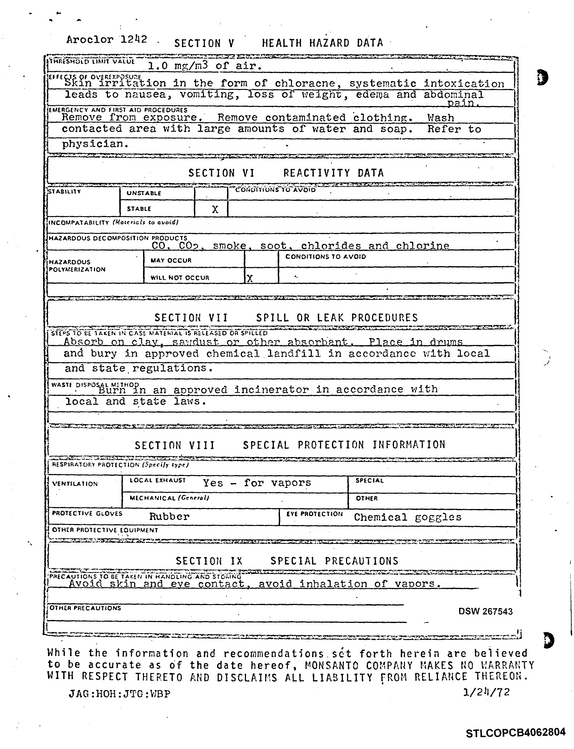
.'' - j DSW 267542 STLCOPCB4062803 Aroclor 12*12 SECTION V HEALTH HAZARD DATA jTHP.ESHLCHD LIMIT VALUE 1.0 mg/m3 of air. jEFFECJS QF OVfREXppsur.E on irritation in the form of chloracne, s ysterratic intoxicat-ion leads to nausea, vomiting, loss of~v;eight, edema and abdominal _____________________________________________________________________ :___________ pain.
refid# x1nenErgEB1kdm15LmarQ6Mry2 pages