Refine
Estimated Years 1970-1979Clear
177 results foundRefine Search
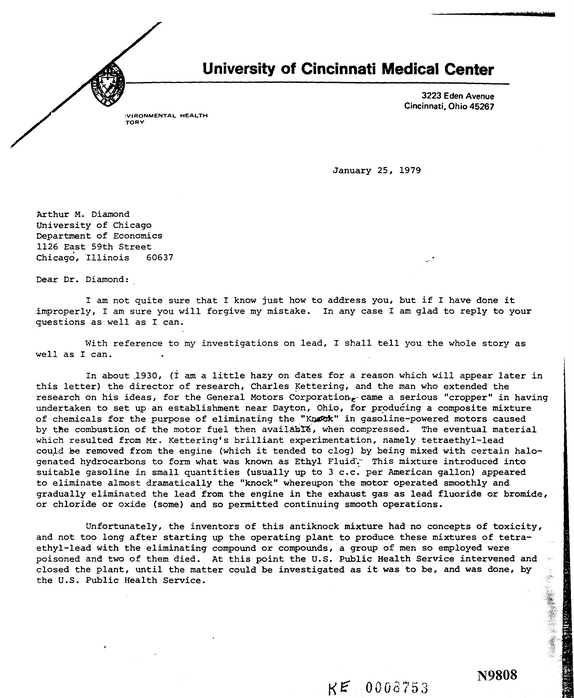
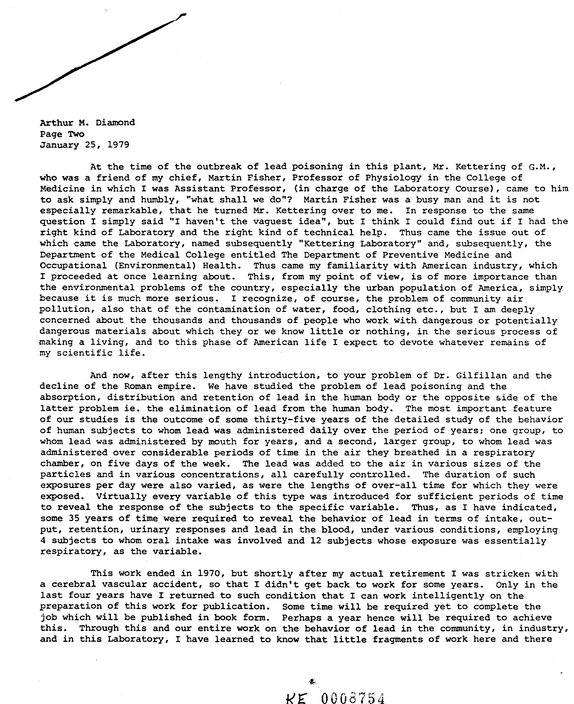
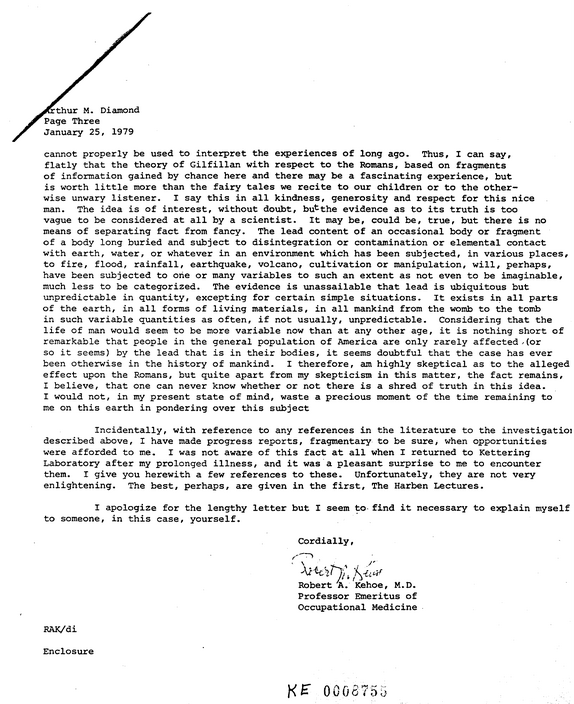
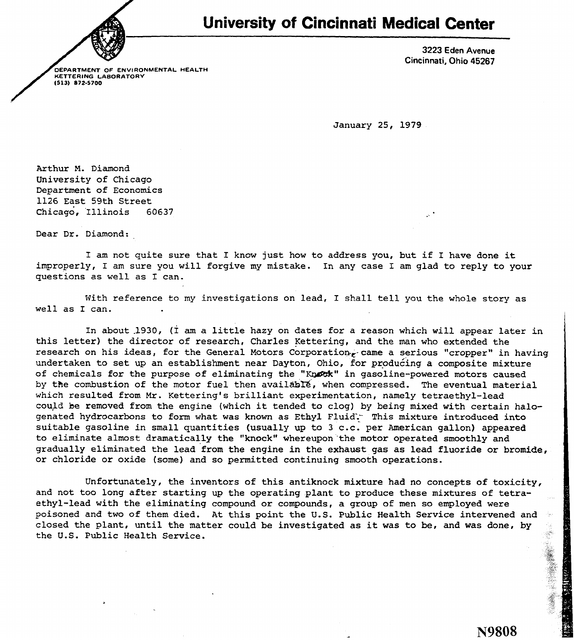
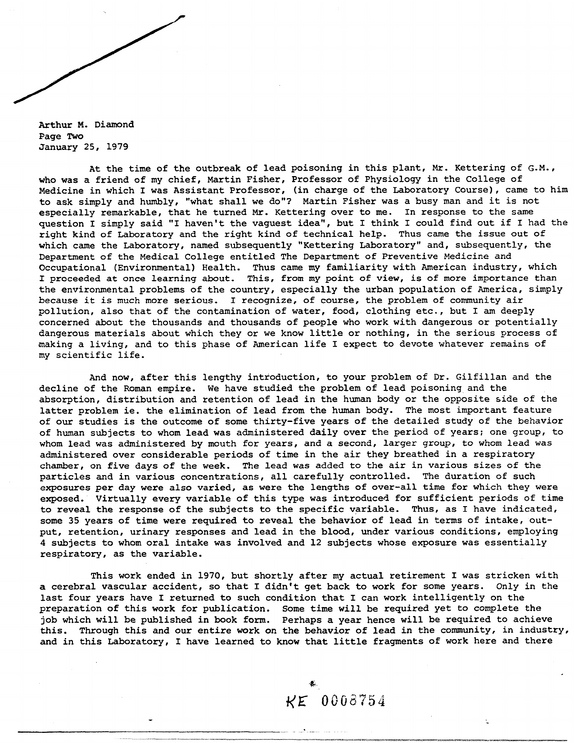
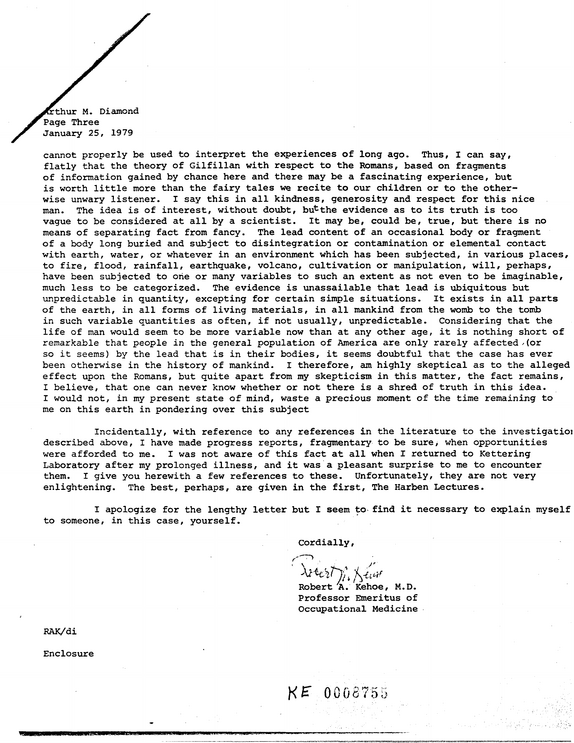
Kettering's brilliant experimentation, namely tetraethyl-lead could be removed from the engine (which it tended to clog) by being mixed with certain halogenated hydrocarbons to form what was known as Ethyl Fluid'."
refid# aB3XNbmV5QnLOaY6rD33oL5eY3 pages
Kettering's brilliant experimentation, namely tetraethyl-lead could be removed from the engine (which it tended to clog) by being mixed with certain halogenated hydrocarbons to form what was known as Ethyl Fluid'
refid# 1ywDowVBM4bVp31aOZBwMv6OX3 pages
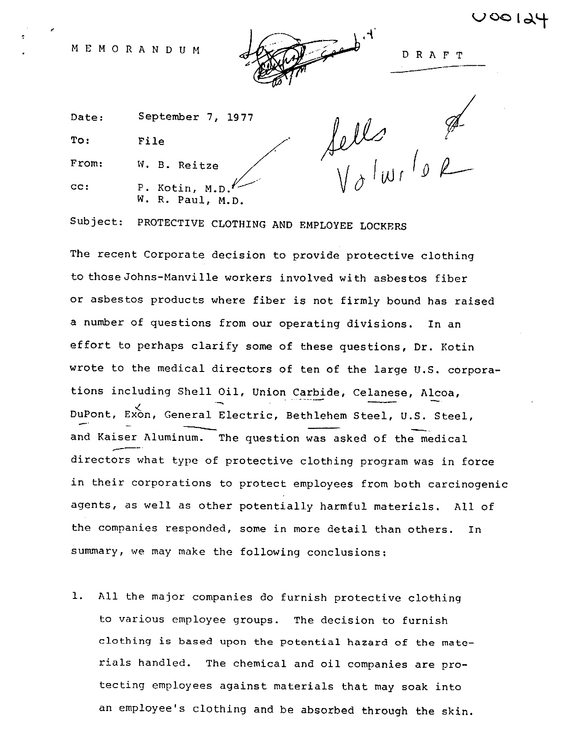
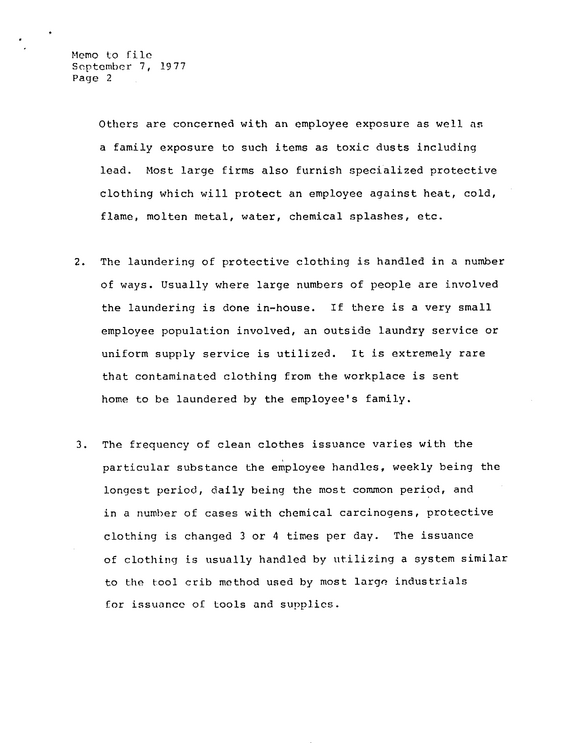
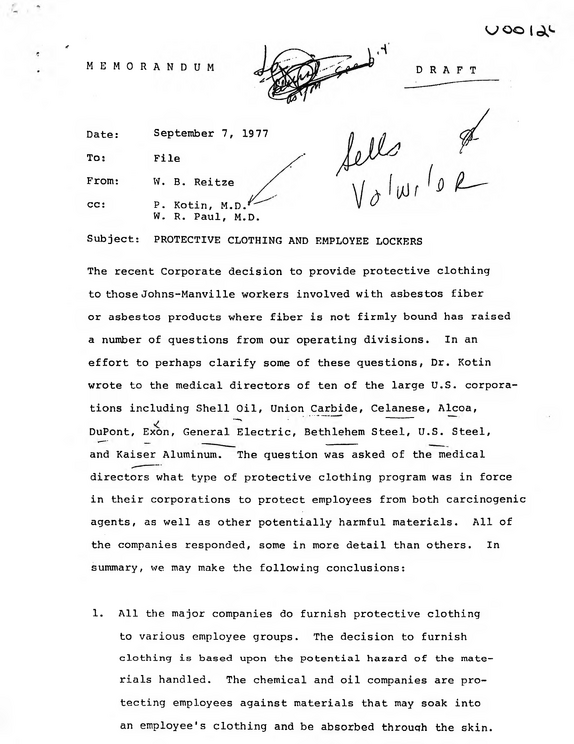
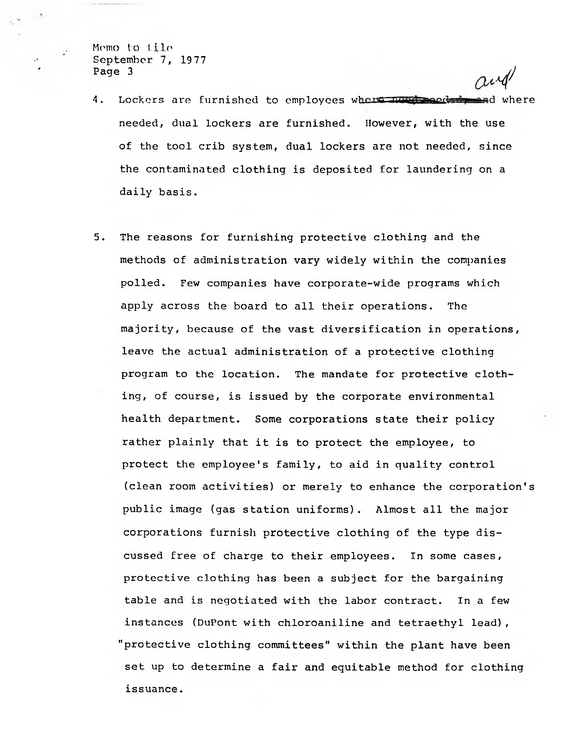
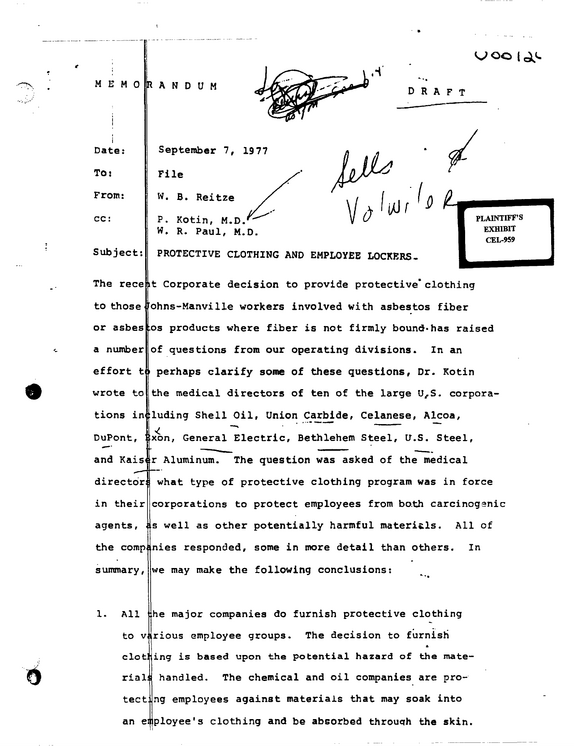
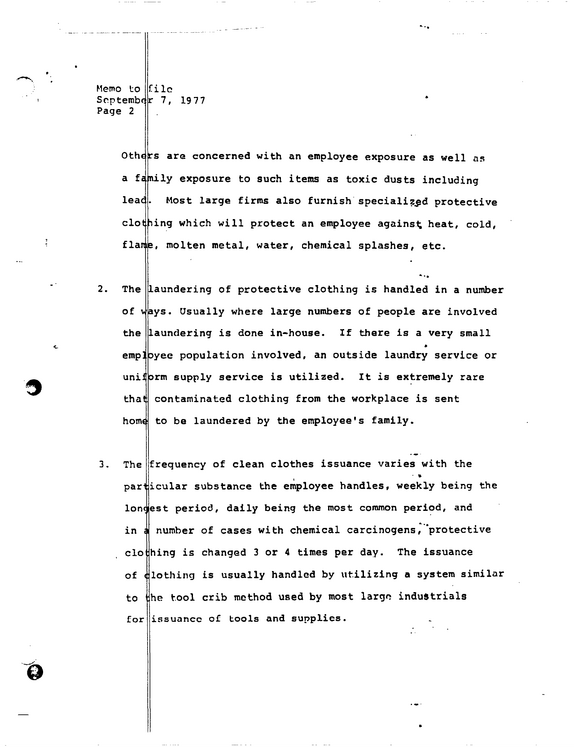
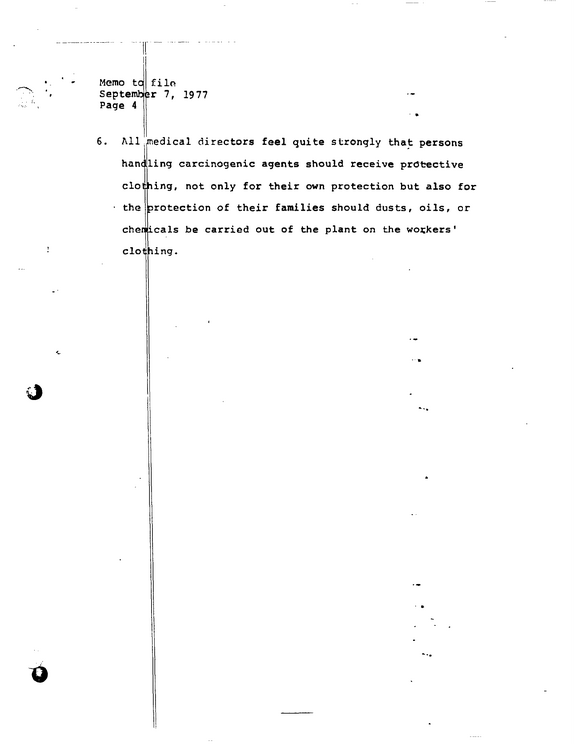
Steel and Kaiser Aluminum The question was asked of the medical directors what type of protective clothing program was in force in their corporations to protect employees from both carcinogenic agents as well as other potentially harmful materials All of the companies responded some in more detail than others In summary we may make the following conclusions 1 All the major companies do furnish protective clothing to various employee groups The decision to furnish clothing is based upon the potential hazard of the materials handled The chemical and oil companies are protecting employees against materials that may soak into an employee's clothing and be absorbed through the skin Memo to file September 7 Page 2 1977 Others are concerned with an employee exposure as well as a family exposure to such items as toxic dusts including lead Most large firms also furnish specialized protective clothing which will protect an employee against heat cold flame molten metal water chemical splashes etc.

refid# jgrDo5OVON0rLoGqy4oye1gpZ6 pages
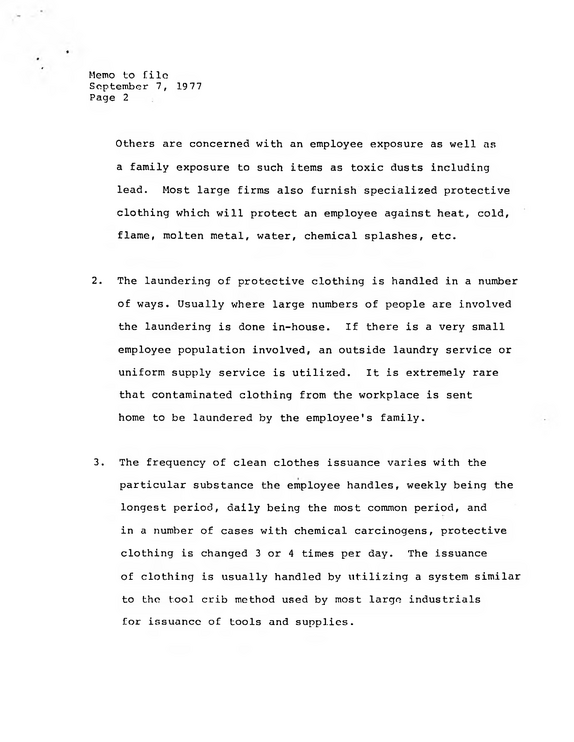
In a few instances (DuPont with chloroaniline and tetraethyl lead), "protective clothing committees" within the plant have been set up to determine a fair and equitable method for clothing issuance.
refid# 9LeVBL3V8M6nebyKXoxV3RwB75 pages
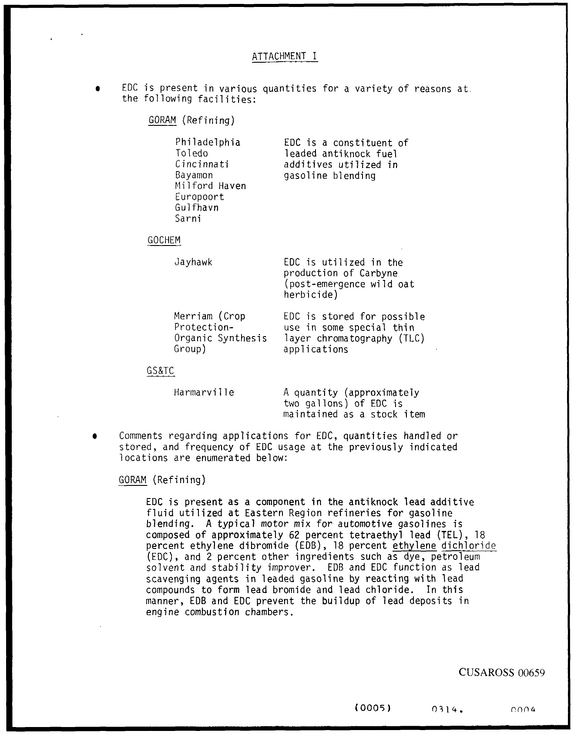
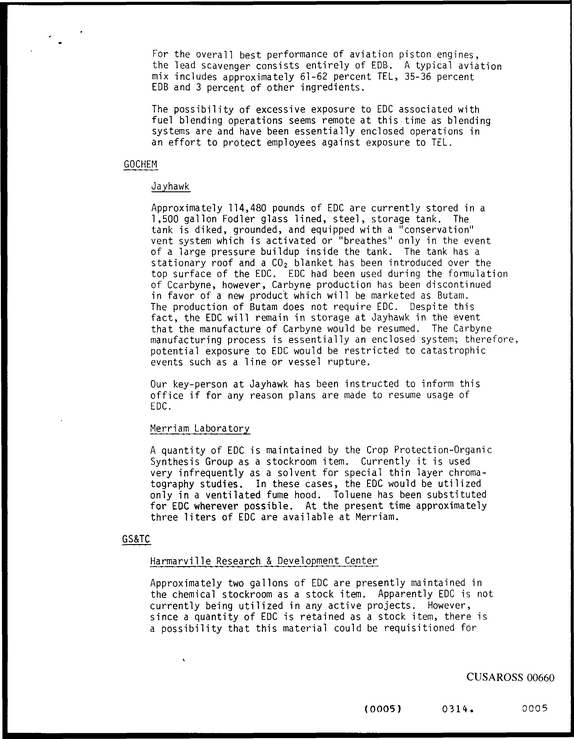
EDB and EDC function as lead scavenging agents in leaded gasoline by reacting with lead compounds to form lead bromide and lead chloride.
refid# MJgdvMGp6rQpx07g9LVJMjJk75 pages
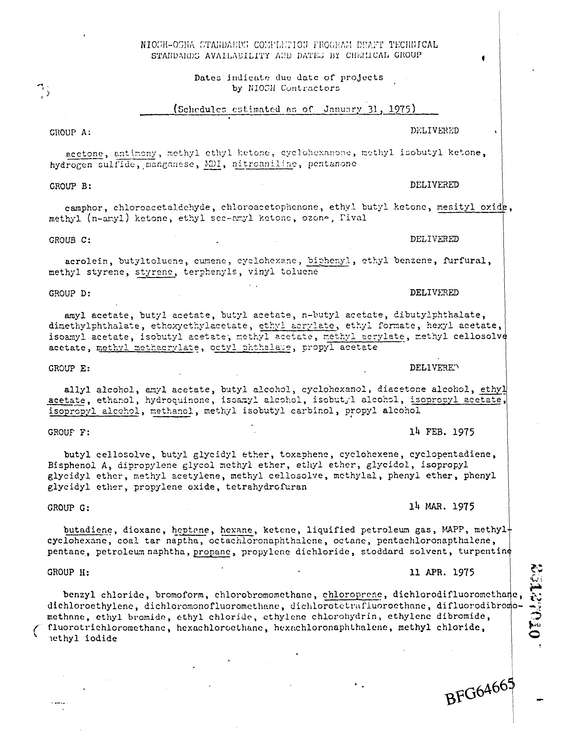
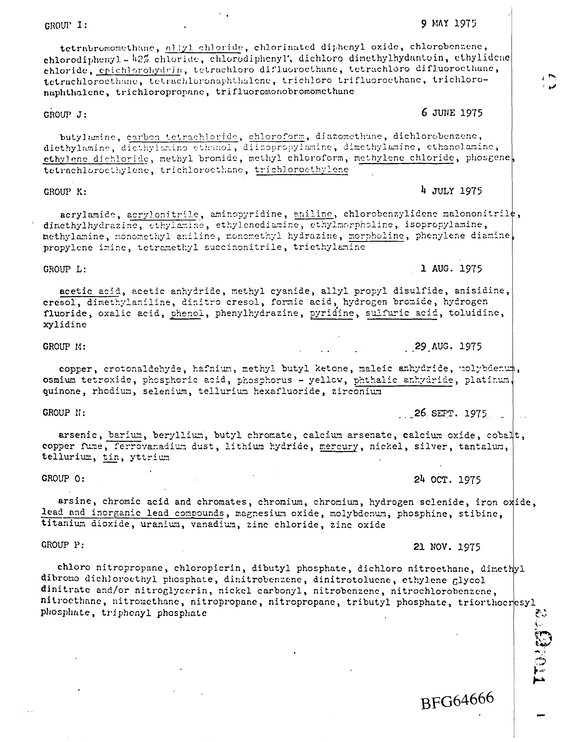
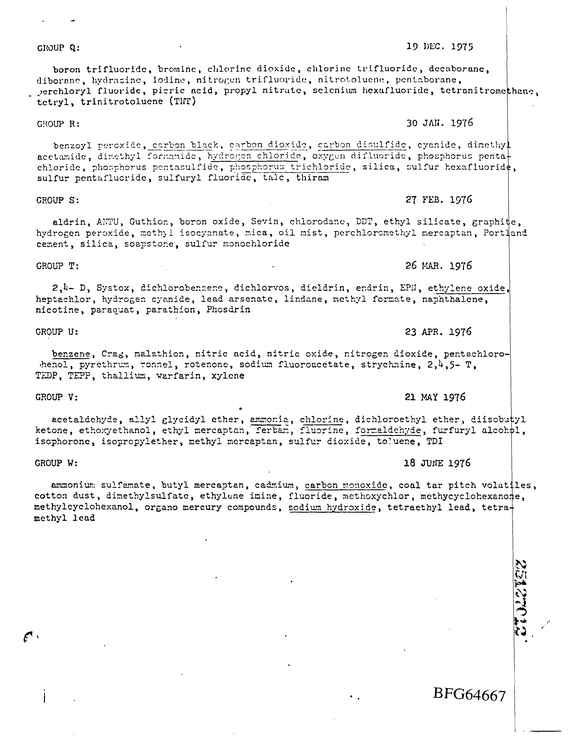
v fe) BFG64666 O HK* GROUP Q: 19 DEC. 1975 boron trifluoride, bromine, chlorine dioxide, chlorine tr.ifluoridc, decaboranc, dibornne, hydrazine, iodine, nitrogen trifluoride, nitrotoluene, pentaborane, yerchloryl fluoride, picric acid, propyl nitrate, selenium hexafluoride, tetranitrornefchane, tctryl, trinitrotoluene (TUT) GROUP R: 30 JAN. 1976 benzoyl peroxide, carbon black, carbon dioxide, carbon disulfide, cyanide, dimethyl acetamide, dimethyl fornanide, hydrogen chloride, oxygen dif.luoride, phosphorus penta-chloride, phosphorus pcr.tasulfide, phosphorus trichloride, silica, sulfur hexafluoride sulfur pentaflucride, sulfuryl fluoride, talc, thiram GROUP S: 27 FEB. 1976 aldrin, AiiTU, Guthior., boron oxide, Sevin, chlorodano, DDT, ethyl silicate, graphi e, hydrogen peroxide, methyl isocyanate, mica, oil mist, perchloromethyl mercaptan, Port land cement, silica, soapstone, sulfur monochloride GROUP T: 26 MAR. 1976 2,1- D, Systox, dichlorober.zer.e, dichlorvos, dieldrin, er.drin, EPii, ethylene oxide, heptachlor, hydrogen cyanide, lead arsenate, lindane, methyl formate, naphthalene, nicotine, paraquat, parathion, Phosdrin GROUP U: 23 APR. 1976 benzene, Crag, nalathion, nitric acid, nitric oxide, nitrogen dioxide, per.ta.chloroihenol, pyrethrum, ro.nnel, rotenone, sodium fluoroacetate, strychnine, 2,1,5- T, TEDP, TEPF, thallium, varfarin, xylene GROUP V: 21 MAY 1976 acetaldehyde, allyl glycidyl ether, ammonia, chlorine, dichloroethyl ether, diisobu tyl ketone, ethoxyethanol, ethyl mercaptan,' ferbam, fluorine, formaldehyde, furfuryl aleoh <>1, isephorone, isoprcpylether, methyl mercaptan, sulfur dioxide, toluene, TDI GROUP W: 18 JUNE 1976 ammonium: sulfamate, butyl mercaptan, cadmium, carbon monoxide, coal tar pitch volat les, cotton dust, dimethylsulfate, ethylene imine, fluoride, methoxychlor, methycyclohexanor|i methylcyclohexanol, organo mercury compounds, sodium hydroxide, tetraethyl lead, tetra methyl lead c/i 'p* ** ri BFG64667
refid# reYnBg7p1w865GDryo2EJ0L9J4 pages
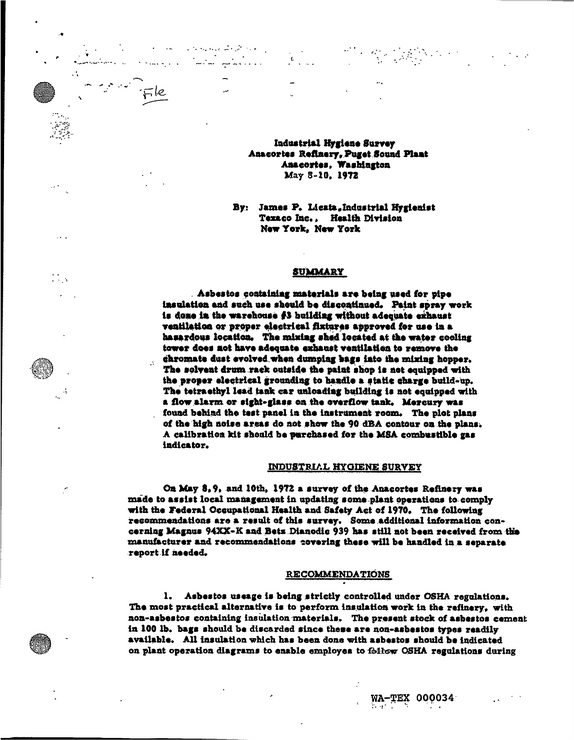
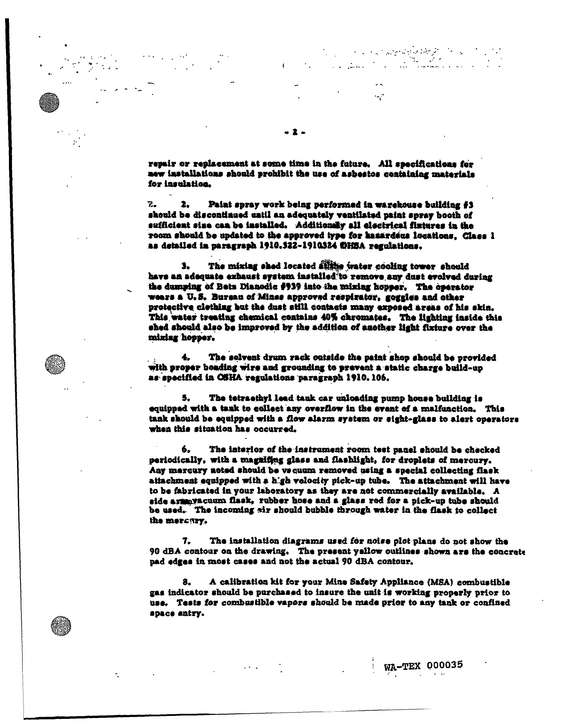
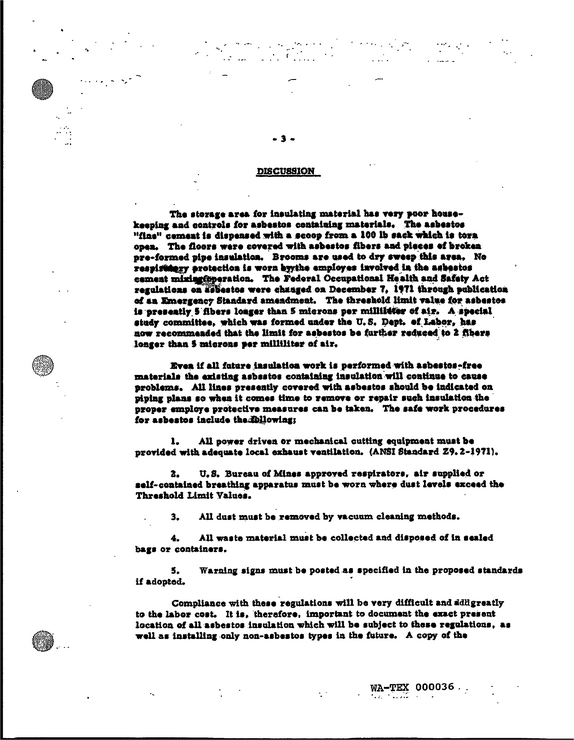
The tetraethyl lead tank car unloading baildfog it not equipped with a flow alarm or eight-glare on the overflow tank* Mercury waa found behind the teat panel ia the instrument room.
refid# byjN6doJqbv8mMgq17Lz87Jk05 pages
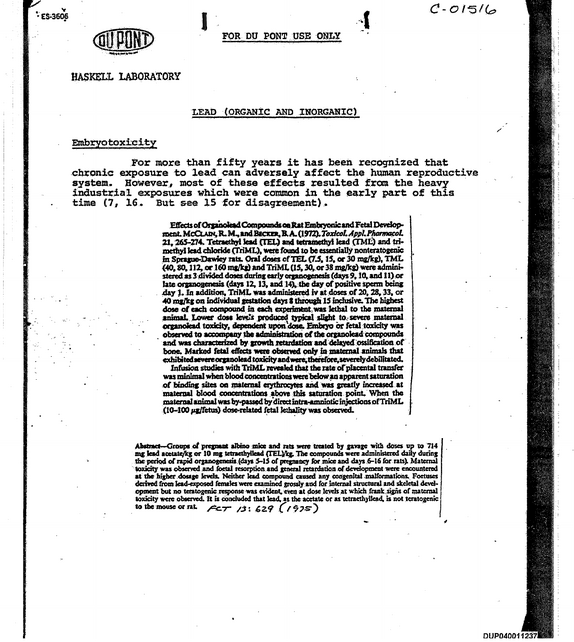
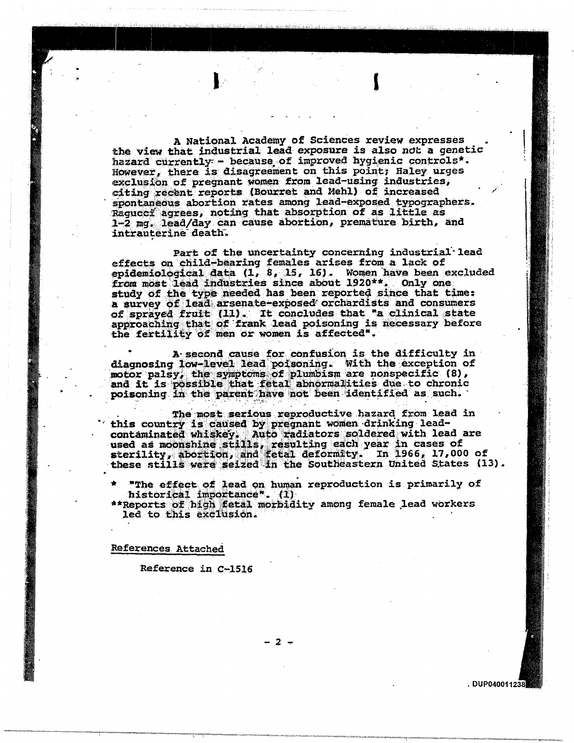
Tetraethyl lead CTRL) and tetrafaethyl lead (TML) and tri- roethyl leadchloride (TriML), were found to be essentially iwntewtbgeflSc fa Sprague-Dawley rats.
refid# b5NMvQD7X5Z01kj9yoGMNypVo5 pages
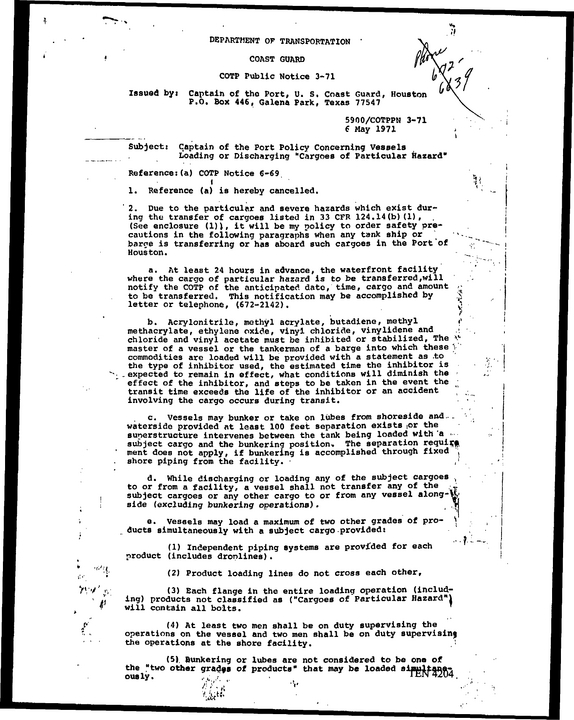
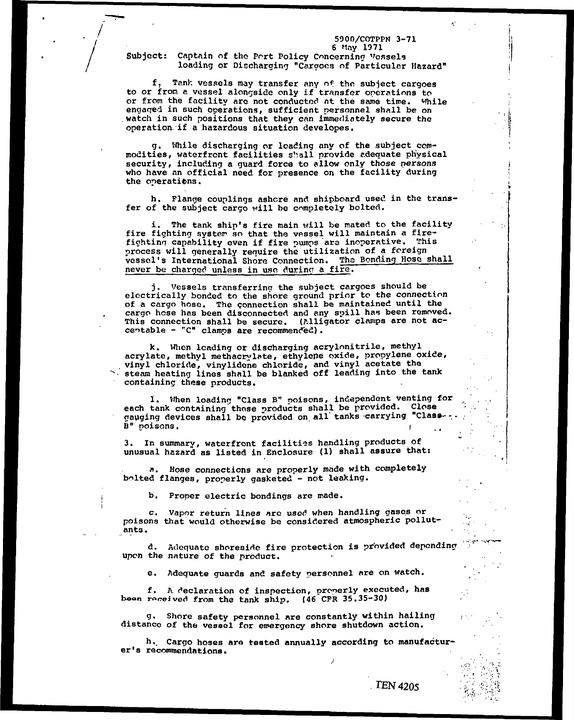
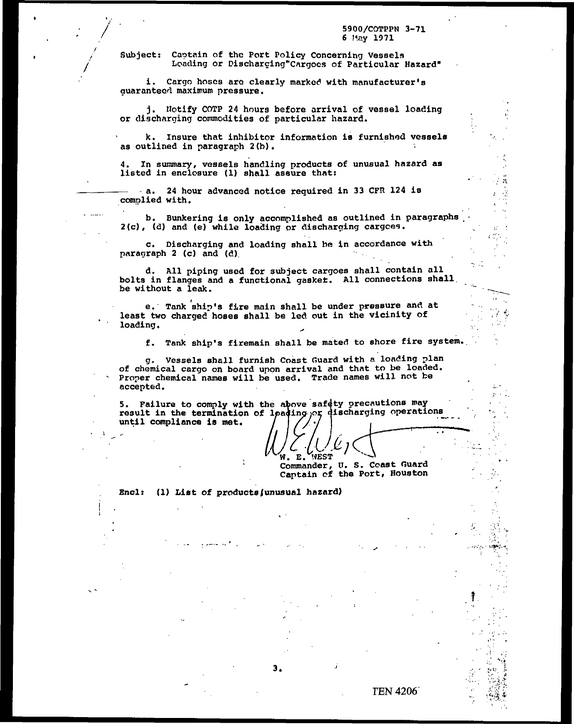
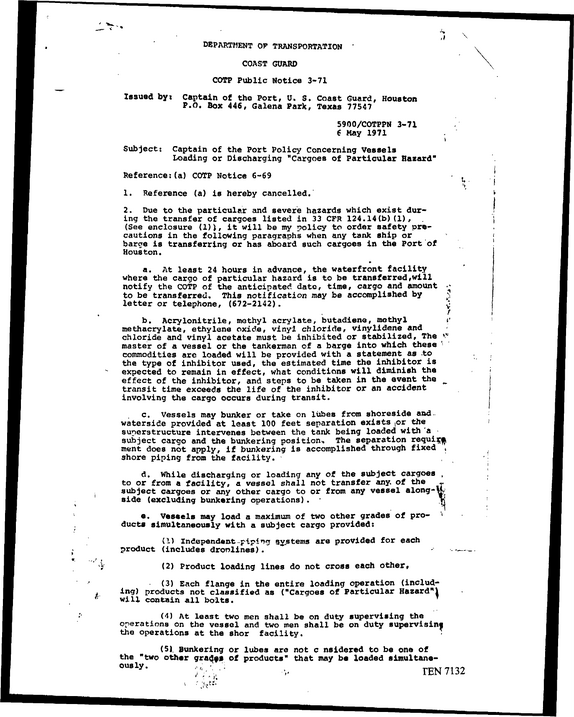
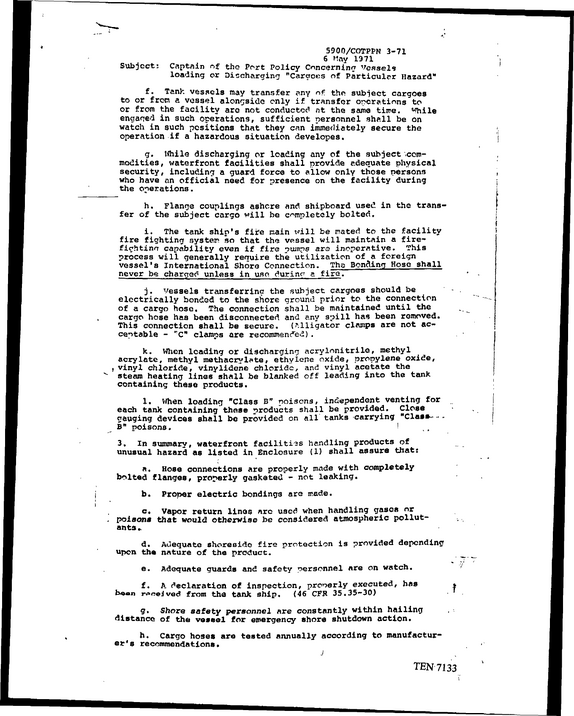
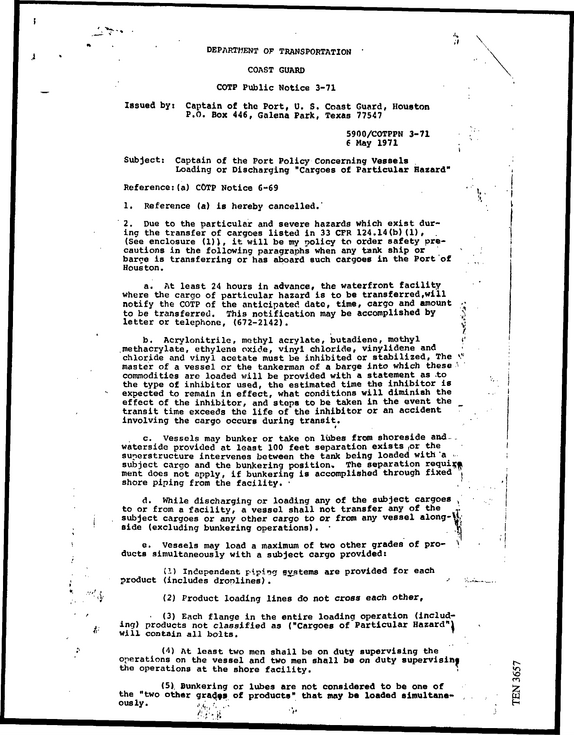
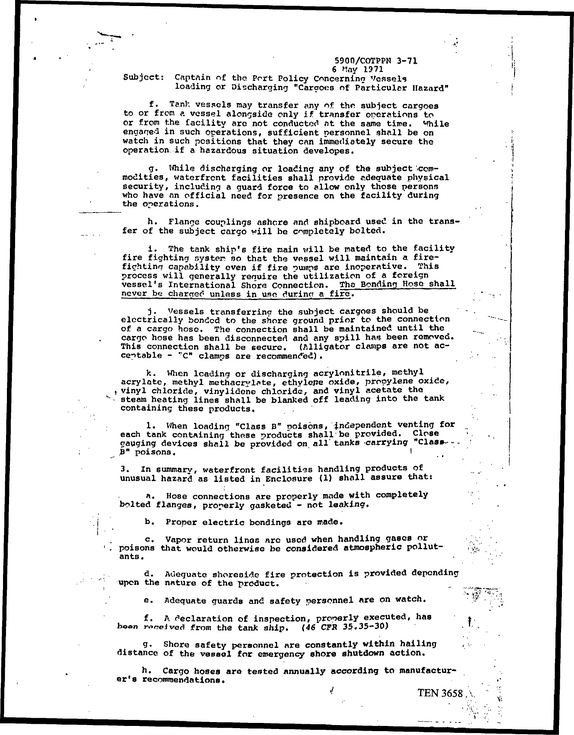
When leading or discharging acrylonitrile, methyl acrylate, methyl methacrylate, ethylepe oxide, propylene oxide, vinyl chloride, vinylidene chloride, and vinyl acetate the - steam heating lines shall be blanked off leading into the tank containing these products.
refid# wDVBzp3agvBnpb1r80D7yoNmD4 pages
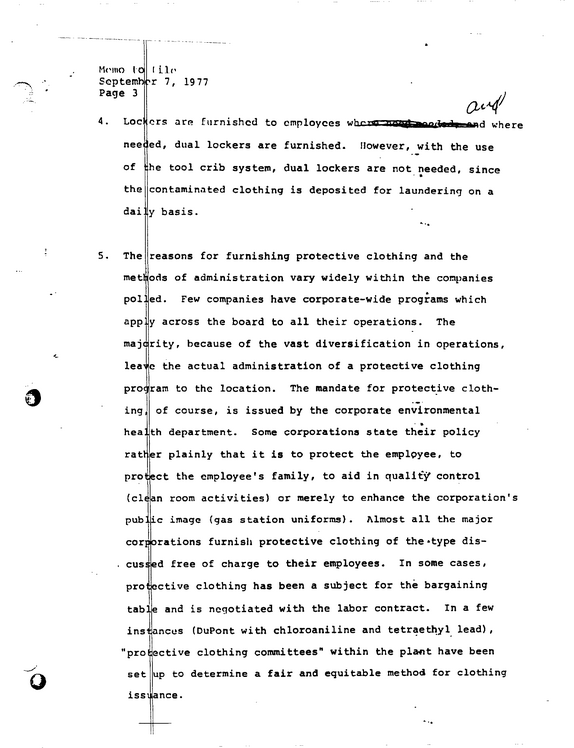
In a few instances (DuPont with chloroaniline and tetraethyl lead), "protective clothing committees" within the plant have been set up to determine a fair and equitable method for clothing issuance.
refid# kDJw21Kpdepq6Rj02xx3kYGbV4 pages
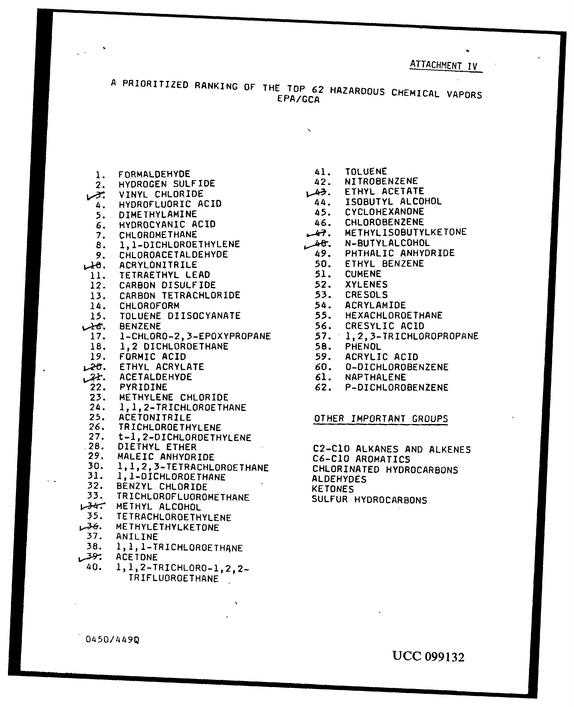
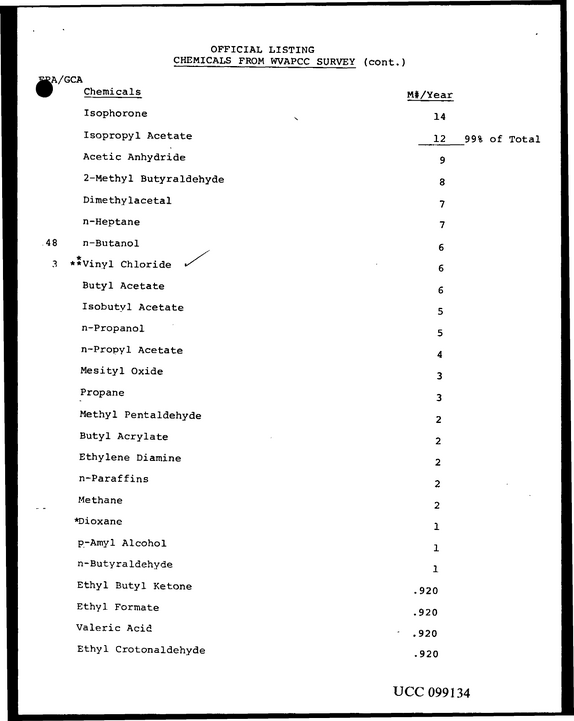
FORMALDEHYDE HYDROGEN SULFIDE VINYL CHLORIDE HYDROFLUORIC ACID DIMETHYLAMINE HYDROCYANIC ACID CHLOROMETHANE 1,1-DICHLOROETHYLENE CHLOROACETALDEHYDE ACRYLONITRILE TETRAETHYL LEAD CARBON DISULFIDE CARBON TETRACHLORIDE CHLOROFORM TOLUENE DIISOCYANATE BENZENE 1-CHL0R0-2,3-EPOXYPROPANE 1,2 DICHLOROETHANE FORMIC ACID ETHYL ACRYLATE ACETALDEHYDE PYRIDINE METHYLENE CHLORIDE 1,1,2-TRICHLORQETHANE ACETONITRILE TRICHLOROETHYLENE t-1,2-DICHL0R0ETHYLENE DIETHYL ETHER MALEIC ANHYDRIDE 1I,2,3-TETRACHL0R0ETHANE 1,1-DICHLOROETHANE BENZYL CHLORIDE TRICHLOROFLUOROMETHANE METHYL ALCOHOL TETRACHLOROETHYLENE METHYLETHYLKETONE ANILINE 1,1,1-TRICHLOROETHANE ACETONE 1,1,2~TRICHL0R0-1,2,2- TRIFLUOROETHANE 41. 42. 1^42. 44. 45. 46. ^46*. 49. 50. 51. 52. 53. 54. 55. 56. 57. 58. 59. 60. 61. 62.
refid# VGg6qD5nkyj0OeQ6Dez8Rvoe46 pages
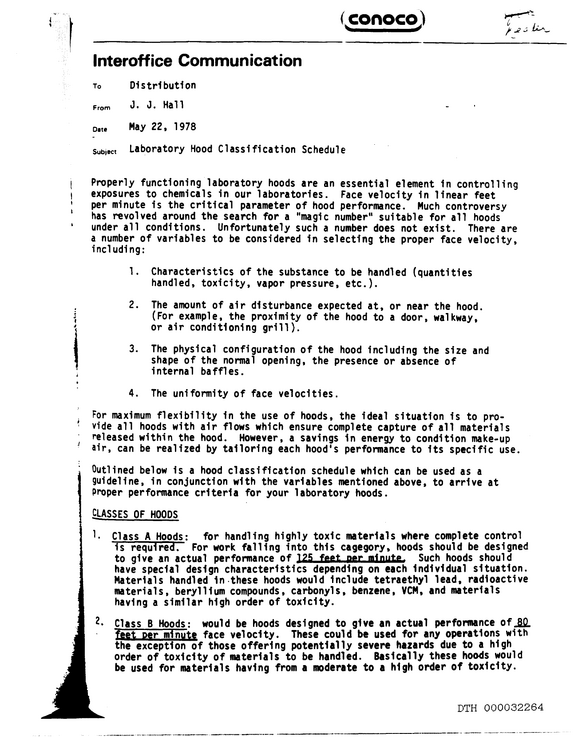
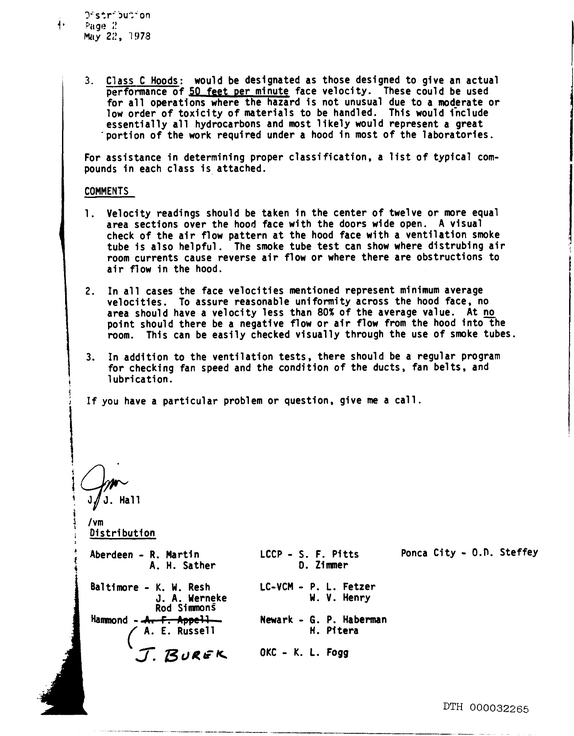
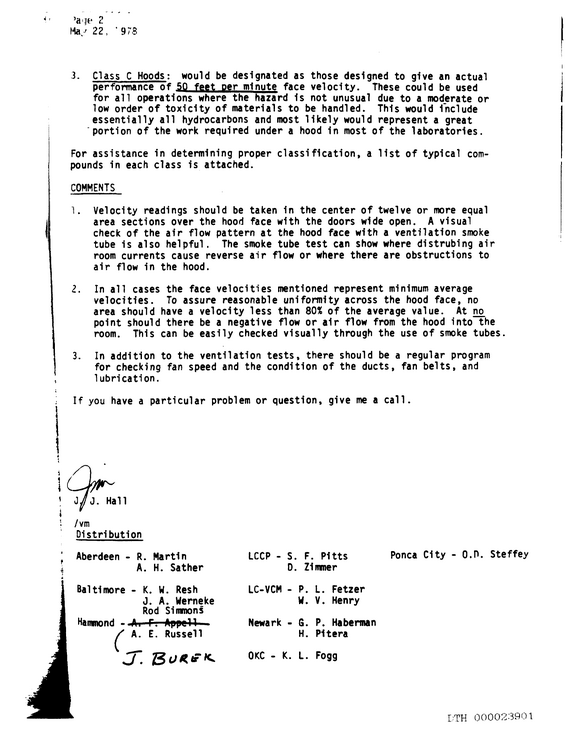
Materials handled in these hoods would Include tetraethyl lead, radioactive materials, beryllium compounds, carbonyls, benzene, VCM, and materials having a similar high order of toxicity.
refid# vB8Q1bXrB7rykYYpkb1vVyZvm2 pages
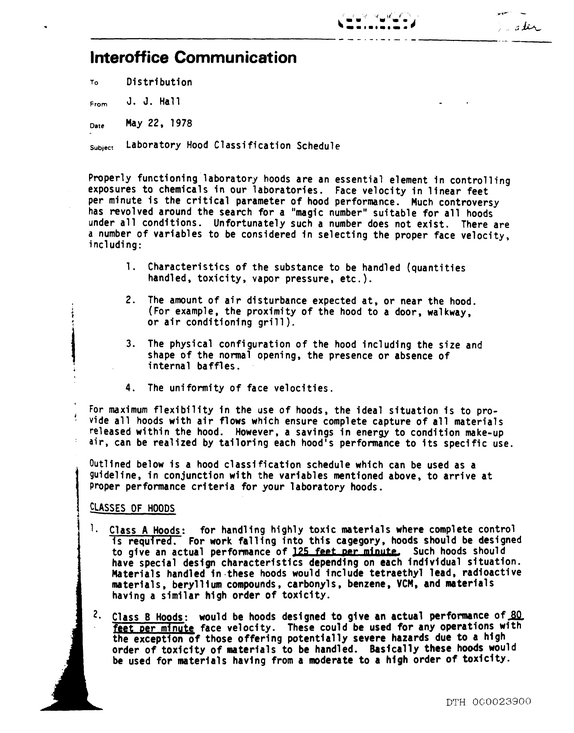
Materials handled In these hoods would Include tetraethyl lead, radioactive materials, beryllium compounds, carbonyls, benzene, VCM, and materials having a similar high order of toxicity.
refid# byBZqbq0kQY0v3MgeqD9kBoyZ2 pages
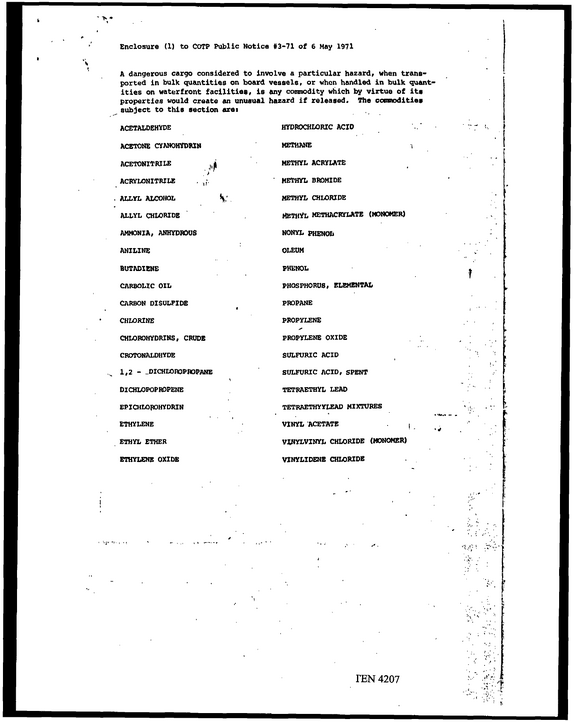
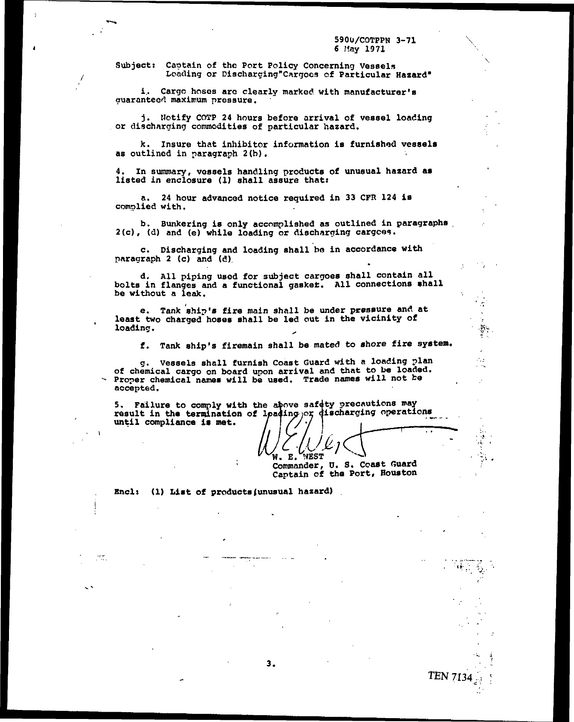
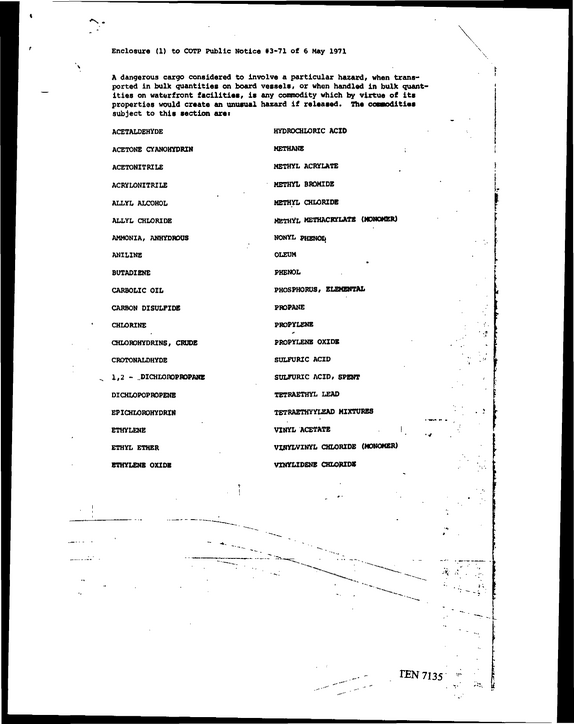
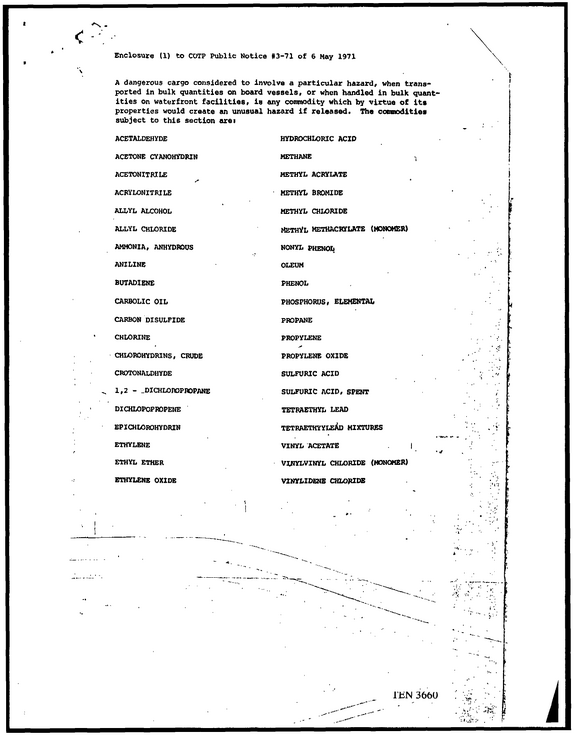
The ccsnodities subject to this section arei ACETALDEHYDE HYDROCHLORIC ACID ACETONE CYANOHYDRIN METHANE ACETONITRILE METHYL ACRYLATE ACRYLONITRILE METHYL BROMIDE ALLYL ALCOHOL METHYL CHLORIDE ALLYL CHLORIDE METHYL METHACRYLATE (MONOMER) AMMONIA, ANHYDROUS NONYL PHENOL ANILINE OLEUM BUTADIENE PHENOL CARBOLIC OIL PHOSPHORUS, ELEMENTAL CARBON DISULFIDE PROPANE CHLORINE PROPYLENE CHLOROHYDRINS, CRUDE PROPYLENE OXIDE CROTONALDHYDE SULFURIC ACID 1,2 - ..DICHEOROPRDPANE SULFURIC ACID, SPENT DICHLOPOPROPENE TETRAETHYL LEAD EPICHLOROHYDRIN TETRAETHYYLEAD MIXTURES ETHYLENE ETHYL ETHER VINYL ACETATE 1 VINYLVINYL CHLORIDE (MONOMER) 4 ETHYLENE OXIDE VXNYLIDENE CHLORIDE TEN 7135
refid# G5MqgbL7nj0pYGYY8mV1E88pq4 pages
When leading or discharging acrylonitrile, methyl acrylate, methyl methacrylate, ethylepe oxide, propylene oxide, i vinyl chloridie, vinylidene chloride, and vinyl acetate the steam heating lines shall be blanked off leading into the tank containing these products.
refid# GmnY9bb7zXem05596pOK0xw5x4 pages