Refine
Estimated Years 1970-1979Clear
27,937 results foundRefine Search
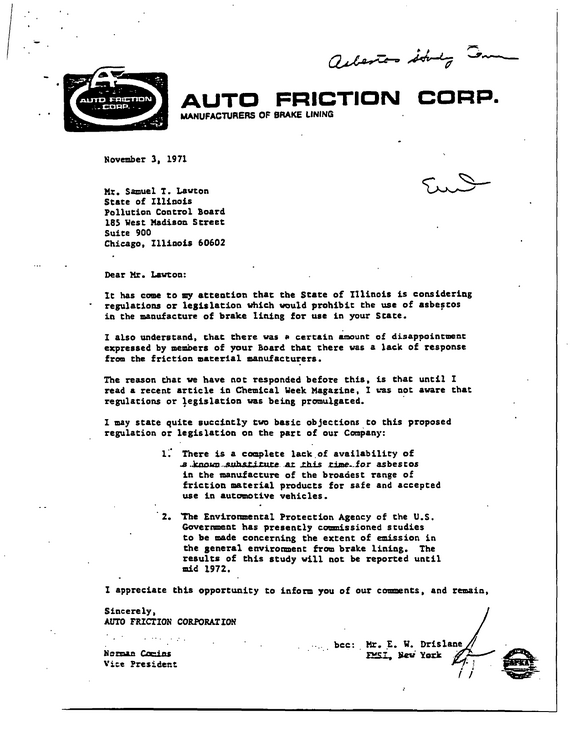
auto friction corp MANUFACTURERS OF BRAKE LINING November 3, 1971 Mr.
refid# qdBkpDdvxxpGGyNYaXYOkQa6k1 page
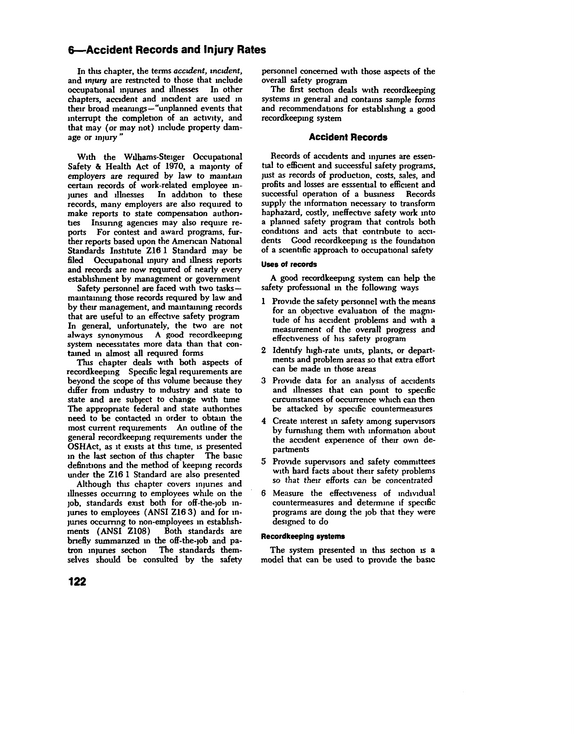
6--Accident Records and Injury Rates In this chapter, the terms accident, incident, and injury are restricted to those that include occupational injuries and illnesses In other chapters, accident and incident are used in their broad meanings--"unplanned events that interrupt the completion of an activity, and that may (or may not) include property dam age or injury " With the Wilhams-Steiger Occupational Safety & Health Act of 1970, a majority of employers are required by law to maintain certain records of work-related employee in juries and illnesses In addition to these records, many employers are also required to make reports to state compensation authori ties Insuring agencies may also require re ports For contest and award programs, fur ther reports based upon the American National Standards Institute Z16 1 Standard may be filed Occupational injury and illness reports and records are now required of nearly every establishment by management or government Safety personnel are faced with two tasks-- maintaining those records required by law and by their management, and maintaining records that are useful to an effective safety program In general, unfortunately, the two are not always synonymous A good recordkeeping system necessitates more data than that contamed m almost all required forms This chapter deals with both aspects of recordkeeping Specific legal requirements are beyond the scope of this volume because they differ from industry to industry and state to state and are subject to change with time The appropriate federal and state authorities need to be contacted m order to obtain the most current requirements An outline of the general recordkeeping requirements under the OSHAct, as it exists at this time, is presented m the last section of this chapter The basic definitions and the method of keeping records under the Z16 1 Standard are also presented Although this chapter covers injuries and illnesses occurring to employees while on the job, standards exist both for off-the-job in juries to employees (ANSI Z16 3) and for in juries occurring to non-employees in establish ments (ANSI Z108) Both standards are briefly summarized in the off-the-job and pa tron injuries secbon The standards them selves should be consulted by the safety personnel concerned with those aspects of the overall safety program The first section deals with recordkeeping systems in general and contains sample forms and recommendations for establishing a good recordkeeping system Accident Records Records of accidents and injuries are essen tial to efficient and successful safety programs, just as records of production, costs, sales, and profits and losses are esssential to efficient and successful operation of a business Records supply the information necessary to transform haphazard, costly, ineffective safety work into a planned safety program that controls both conditions and acts that contribute to acci dents Good recordkeeping is the foundation of a scientific approach to occupational safety Uses of records A good recordkeeping system can help the safety professional in the following ways 1 Provide the safety personnel with the means for an objective evaluation of the magni tude of his accident problems and with a measurement of the overall progress and effectiveness of his safety program 2 Identify high-rate units, plants, or depart ments and problem areas so that extra effort can be made m those areas 3 Provide data for an analysis of accidents and illnesses that can point to specific circumstances of occurrence which can then be attacked by specific countermeasures 4 Create interest m safety among supervisors by furnishing them with information about the accident experience of their own de partments 5 Provide supervisors and safety committees with hard facts about their safety problems so that their efforts can be concentrated 6 Measure the effectiveness of individual countermeasures and determine if specific programs are doing the job that they were designed to do Recordkeeping systems The system presented in this section is a model that can be used to provide the basic 122
refid# bayqedX5Z3xMbBew7vdJyp6nO1 page
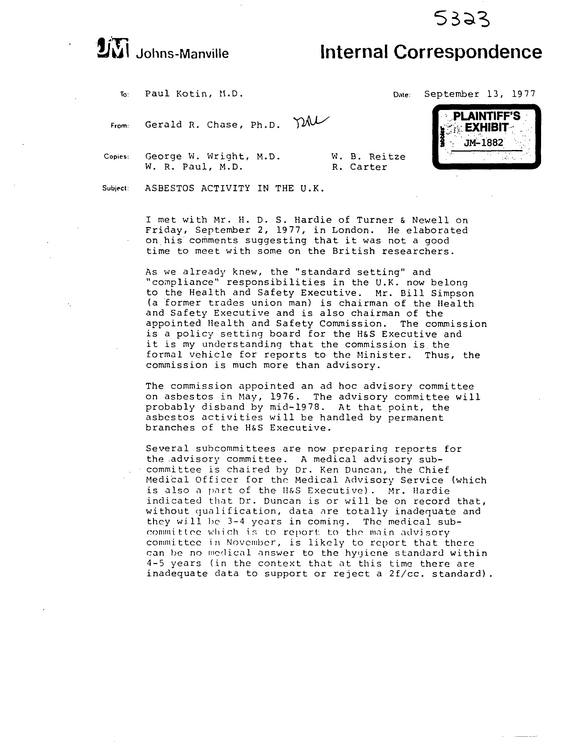
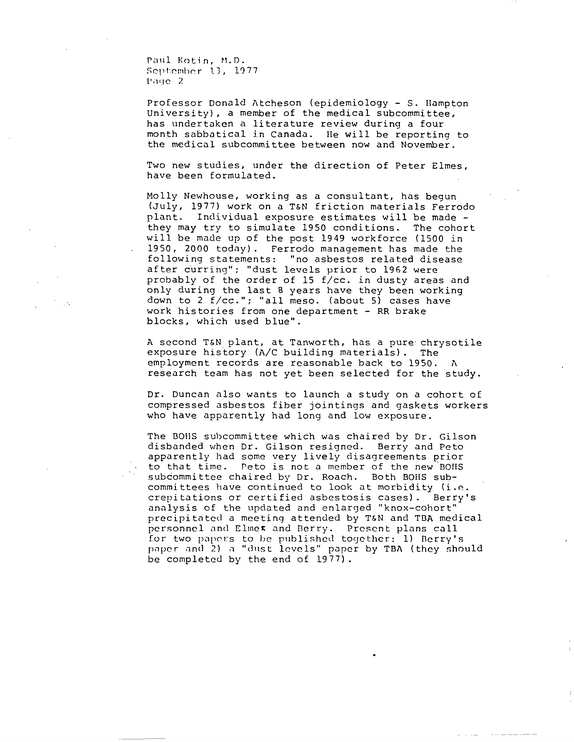
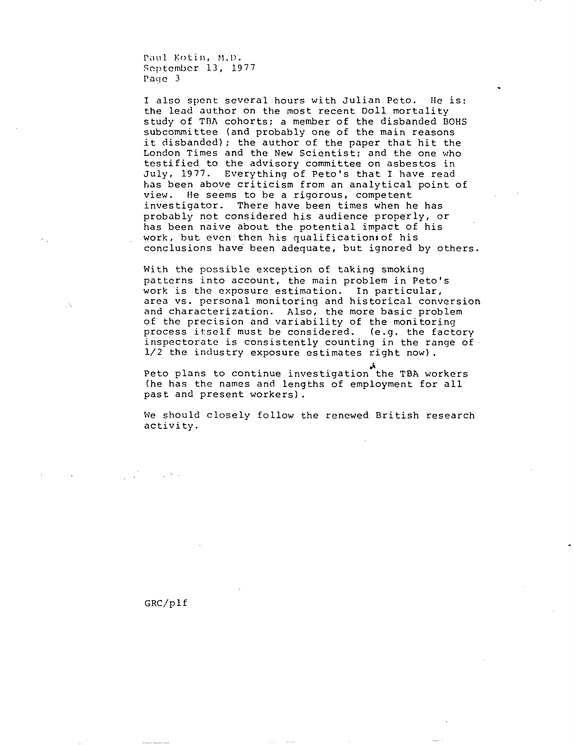
Iffii Johns-Manville 533^ Internal Correspondence To: Paul Kotin, M.D.
refid# n9zdewka9GKZrnKw1bKmv8rw13 pages
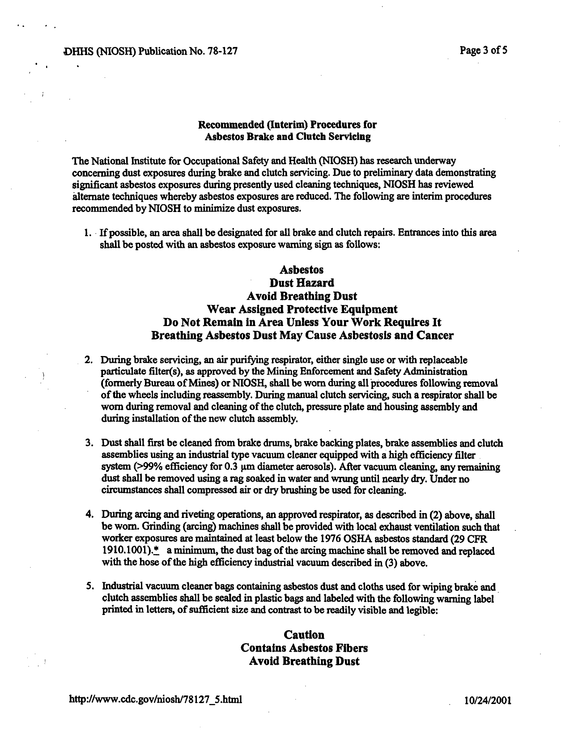
DHHS (NIOSH) Publication No. 7S-127 Page 3 of 5 Recommended (Interim) Procedures for Asbestos Brake and Clutch Servicing The National Institute for Occupational Safety and Health (NIOSH) has research underway concerning dust exposures during brake and clutch servicing.
refid# qkr88KKKx2MyNDBK3X2k9KzBM1 page
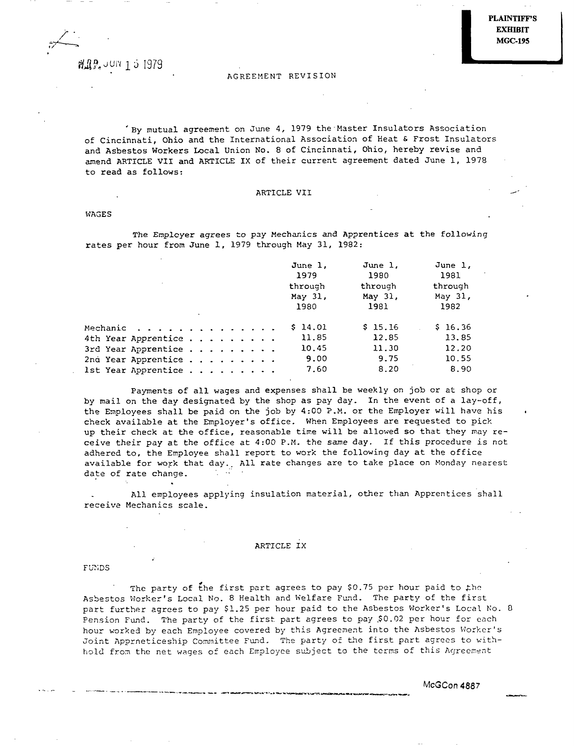
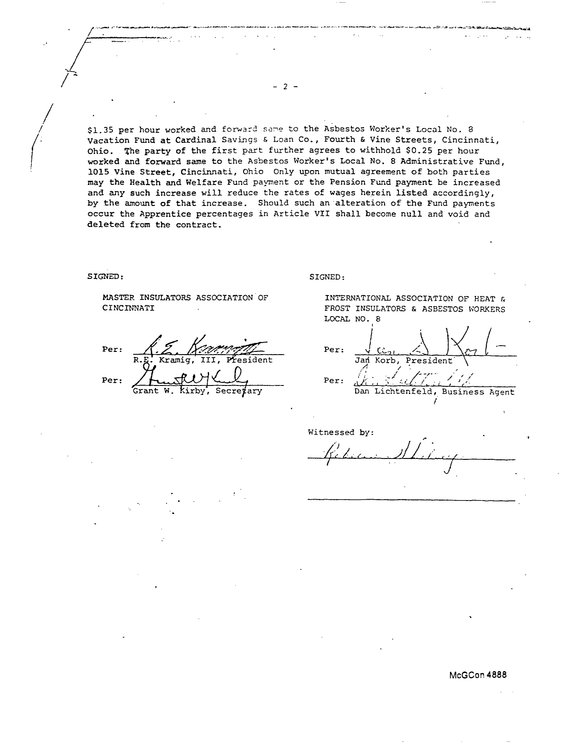
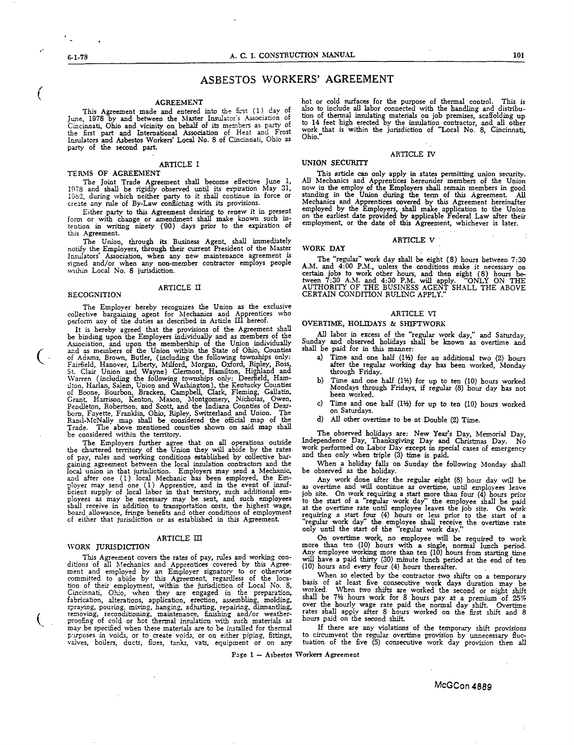
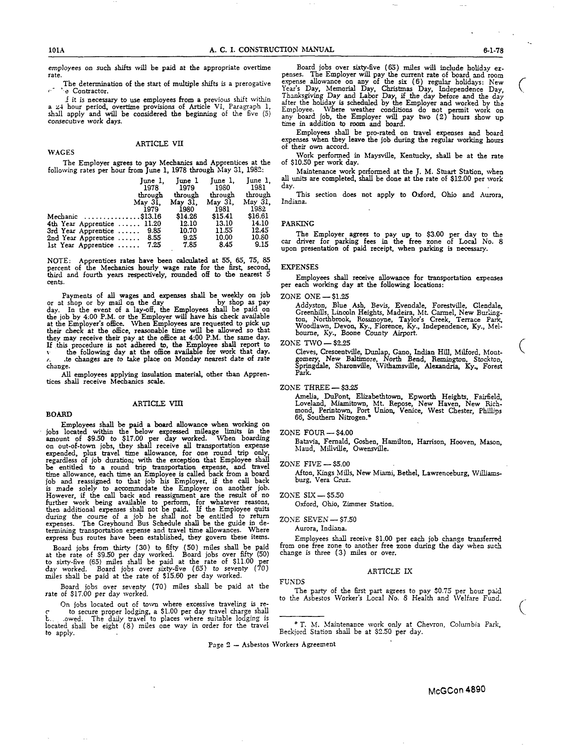
i 5 1979 AGREEMENT REVISION PLAINTIFF'S EXHIBIT MGC-195 A 'By mutual agreement on June 4, 1979 the Master Insulators Association of Cincinnati, Ohio and the International Association of Heat & Frost Insulators and Asbestos Workers Local Union No. 8 of Cincinnati, Ohio, hereby revise and amend ARTICLE VII and ARTICLE IX of their current agreement dated June 1, 1978 to read as follows: ARTICLE VII WAGES The Employer agrees to pay Mechanics and Apprentices at the following rates per hour from June 1, 1979 through May 31, 1982: June 1, 1979 through May 31, 1980 June 1, 1980 through May 31, 1981 June 1, 1981 through May 31, 1982 Mechanic .............................................. . . . . 4th Year Apprentice.......................... . . . 3rd Year Apprentice.................... ..... . . . 2nd Year Apprentice.......................... . . . 1st Year Apprentice
refid# X7rkJ9maZmVx7DzJO6XMo69b47 pages
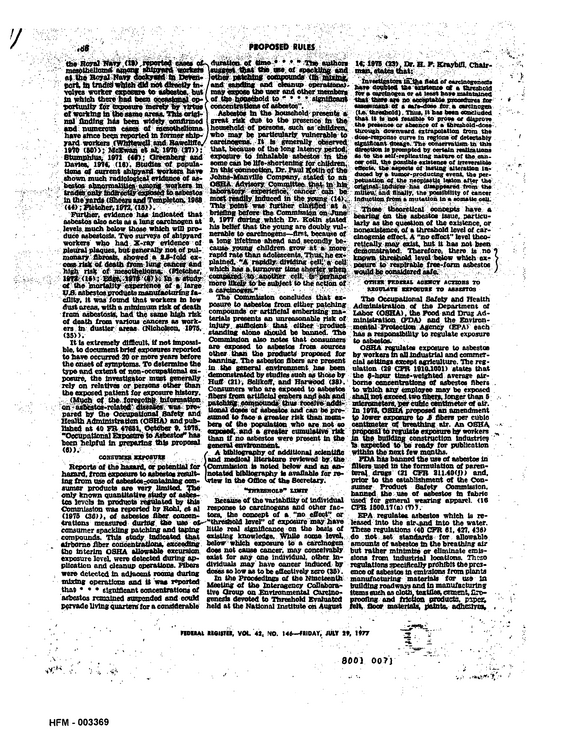
PROPOSED RULES .duhtlin tf time * * The authors Mb 1975 (23), Dr.
refid# RaJ16MRB7j9we2VQoNEN53bk71 page
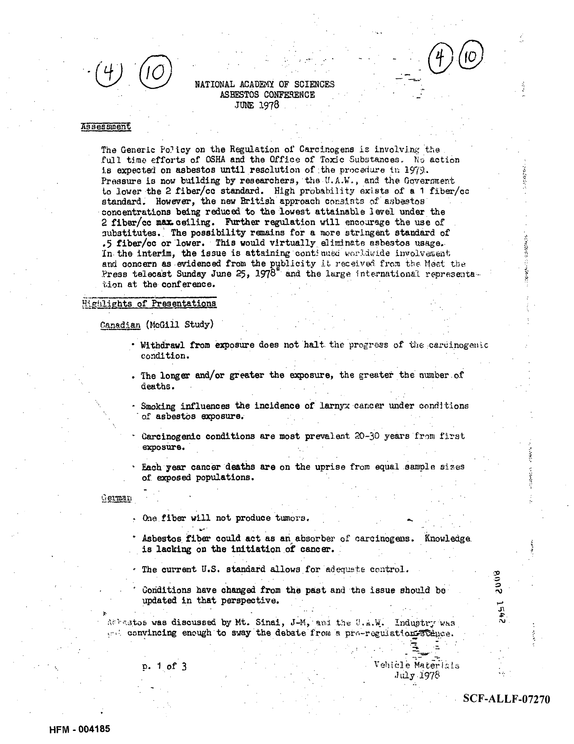
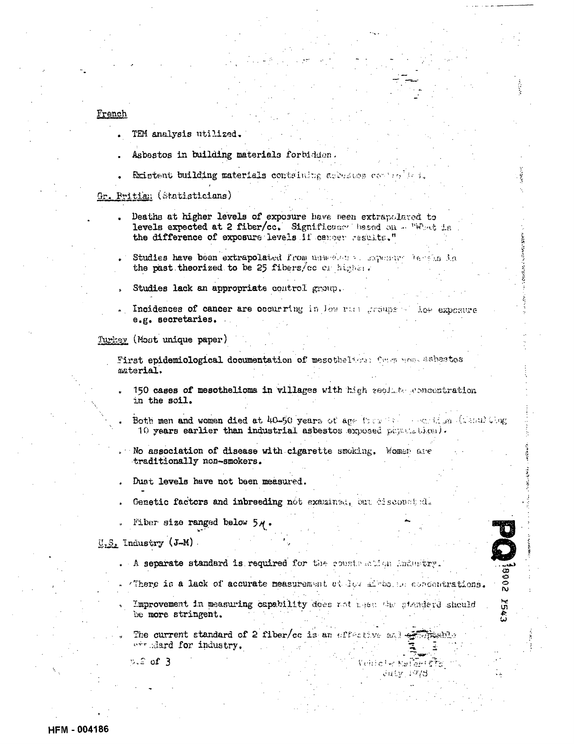
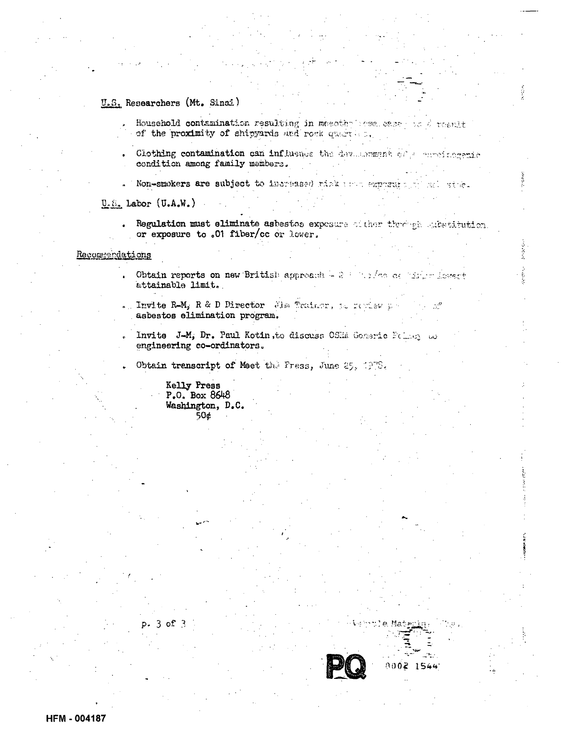
Assessment NATIONAL ACADEMY OF SCIENCES ASBESTOS CONFERENCE JUNE 1978 !
refid# jm5rbY3gv1meV61dxkv0dXnp53 pages
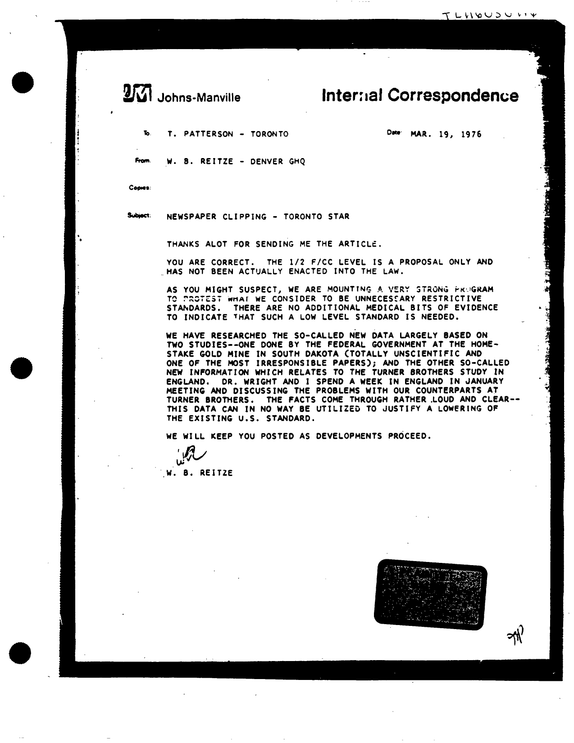
3/31 Johns-Manville Internal Correspondence V T.
refid# ypVjbxjp05z72ooRBvjr14xxX2 pages
I ri' DEPARTMENT OP NATURAL RESOURCES ENVIRONMENTAL SERVICES DIVISION HAZARDOUS WASTE MANACEKENT Filed with the Secretary of State on | Theae rule* take effect 15 daya after filing with Che Secretary of State i (By authority conferred on the director and the department of natural ' reaourcea by aectiona 18, 26, 27, 29, 30, 35, 36, 60, 61, 62, and 65 of Act No. 66 of the Public Acta of 1979, being SS299.518, 299.526, 299.527, 299.529, 299.530, 299.535, 299.536, 299.560, 299.561, 299.562, and 299.565 of the Michigan Compiled Lawa) PART 1.
refid# xjqk4mBJbN9j3j80aKxyZeZ6b1 page
m . ... , .
refid# VjYeMM6QLBkGxer3227BvowVN1 page
VULCAN MOLD IKON CO.
refid# 226kg9rd0V0204qdpB6jOv3R1 page
KOBLIN-Direct 91 1 manual?
refid# 6oMGVKGBEMg17G8vL1oo5vwo1 page
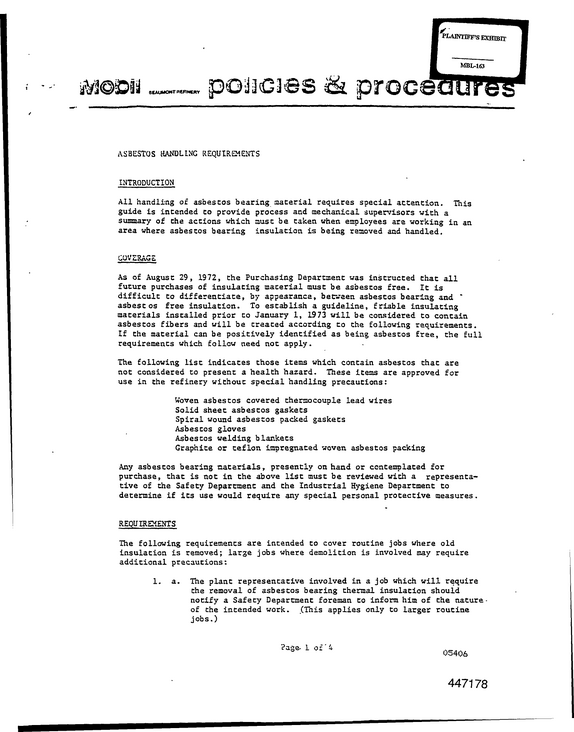
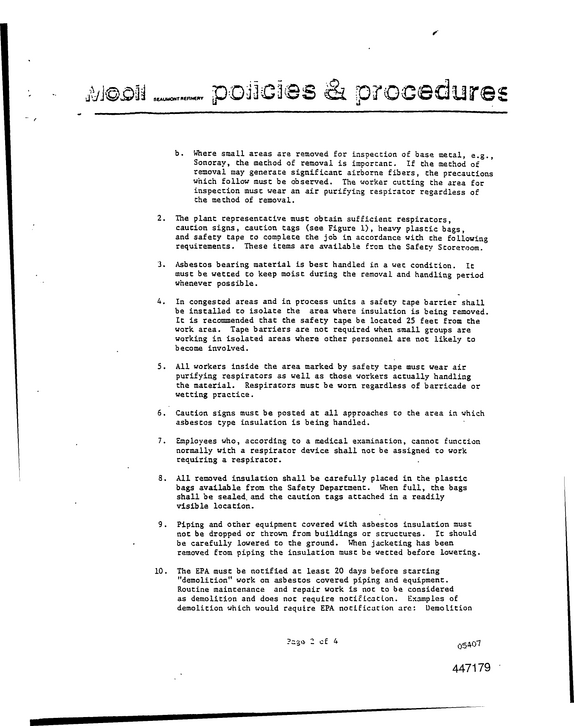
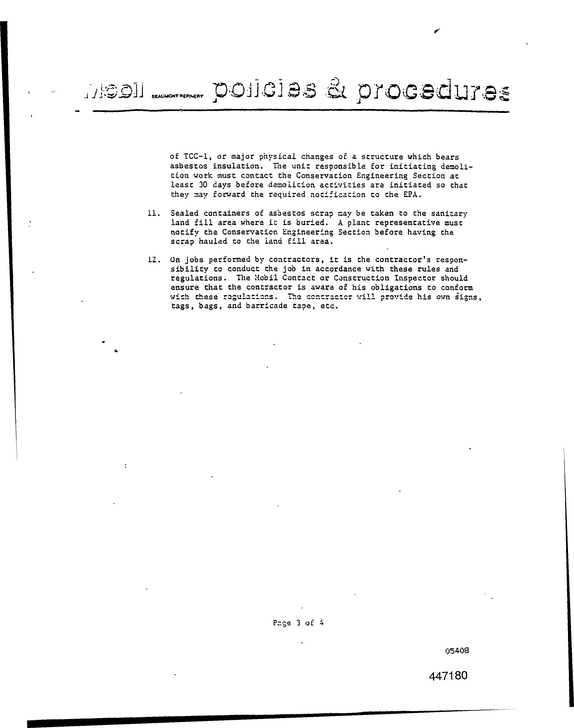
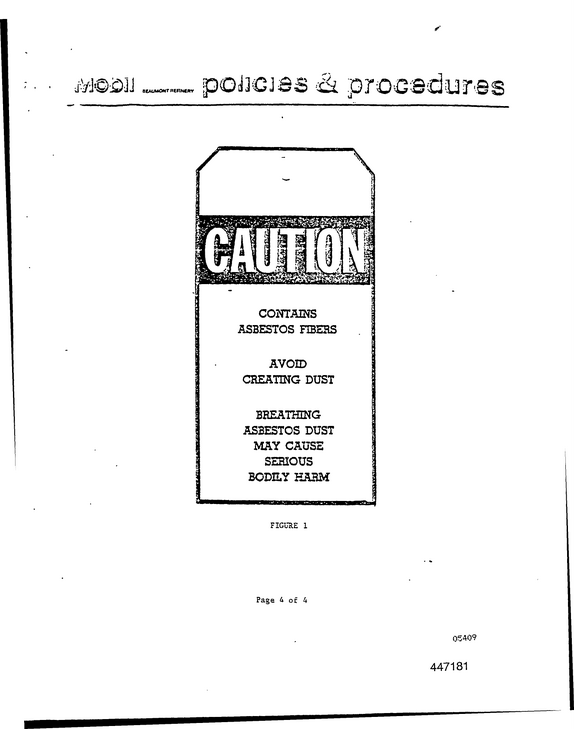
BEAUMONT REFINERY ASBESTOS HANDLING REQUIREMENTS INTRODUCTION All handling of asoescos bearing material requires special actention.
refid# 5Lom8ev3zyypgxgXrdG1VXYGe4 pages
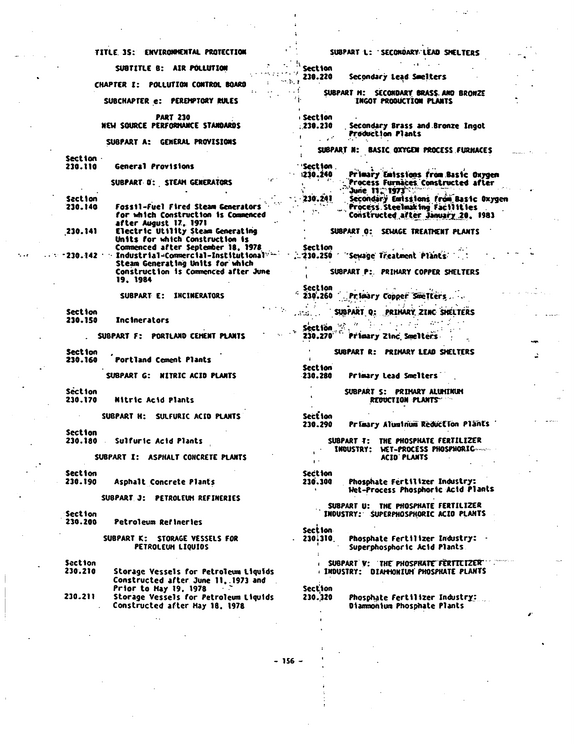
TITLE 35: ENVIRONMENTAL PROTECTION SUBTITLE B: AIR POLLUTION CHAPTER I: POLLUTION CONTROL BOARD SUBCHAPTER e: PEREMPTORY RULES PART 230 NEVI SOURCE PERFORMANCE STANOAROS SUBPART A: GENERAL PROVISIONS Section 230.110 General Provisions SUBPART 0 : STEAM GENERATORS Section 230.140 .230.141 `230.142 Fossil-Fuel Fired Steam Generators for Milch Construction Is Comnenced after August 17. 1971 Electric Utility Steam Generating Units for Milch Construction Is Coomenced after September 18. 1978. - Industrial-Commercial-Institutional Steam Generating Units for Milch Construction Is Commenced after June 19. 1984 SUBPART E: INCINERATORS Section 230.ISO Incinerators .
refid# oXdMGnp4gKRyvQ8K6E7vQEOD1 page
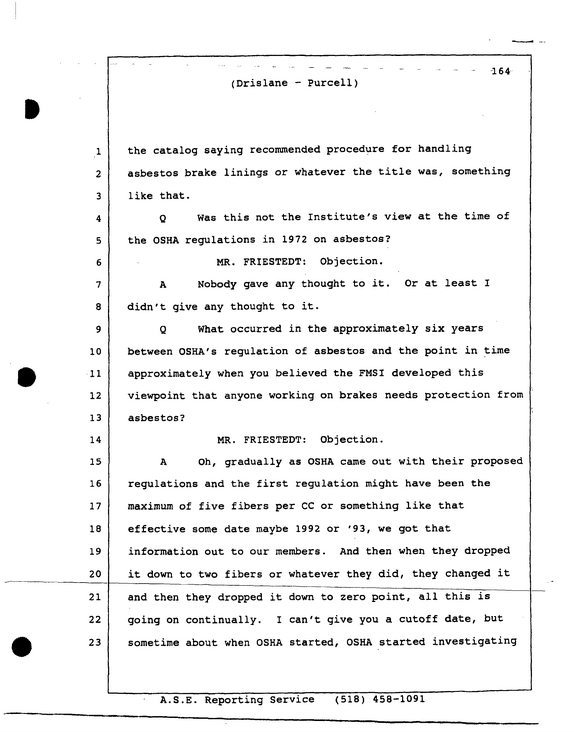
(Drislane - Purcell 164 1 the catalog saying recommended procedure for handling 2 asbestos brake linings or whatever the title was, something 3 like that. 4 Q Was this not the Institute's view at the time of 5 the OSHA regulations in 1972 on asbestos?
refid# dQ1LKzLbKr3Rr7yj92Q2opQLG1 page