Refine
Estimated Years 1970-1979Clear
320 results foundRefine Search
F 'Ml N E W B R U N S W I C K .
refid# 1QxX5VaLe208nmp4jbpQweZra43 pages
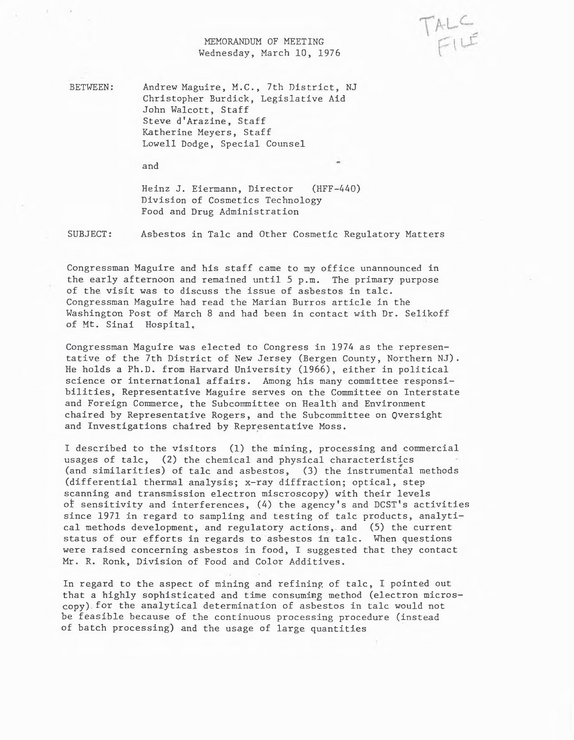
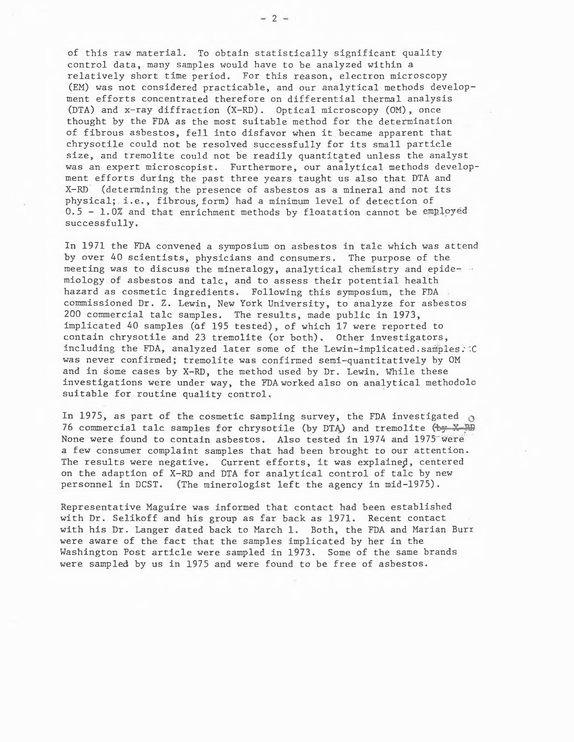
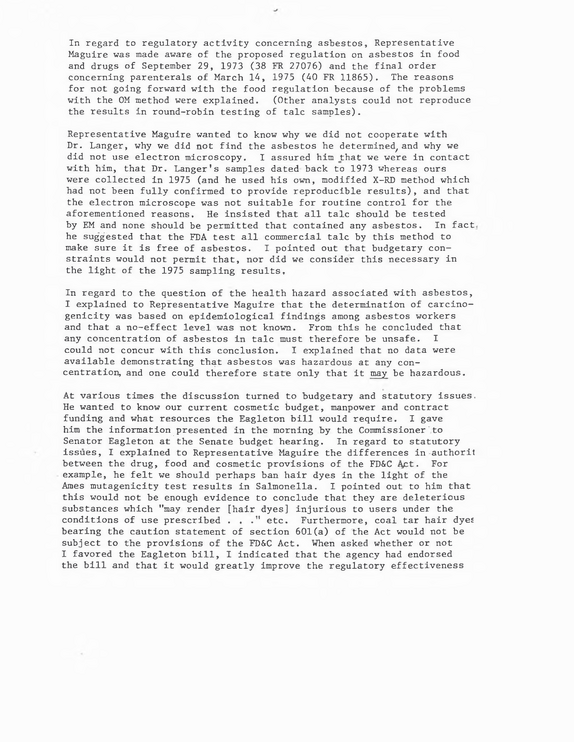
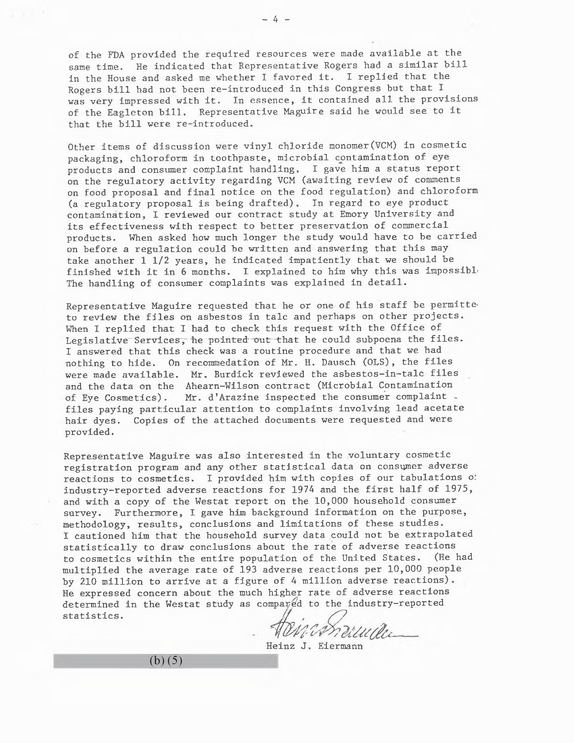
MEMORANDUM OF MEETING Wednesday, March 10, 1976 BETWEEN: SUBJECT: Andrew Maguire, M.C., 7th District, NJ Christopher Burdick, Legislative Aid John Walcott, Staff Steve d'Arazine, Staff Katherine Meyers, Staff Lowell Dodge, Special Counsel and Heinz J.
refid# RaLNp27nvZaXNM41wM4vJKjj74 pages
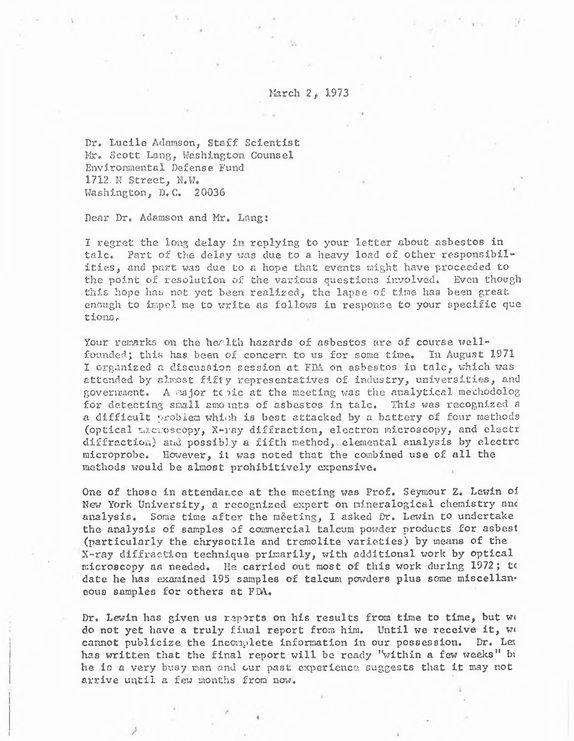
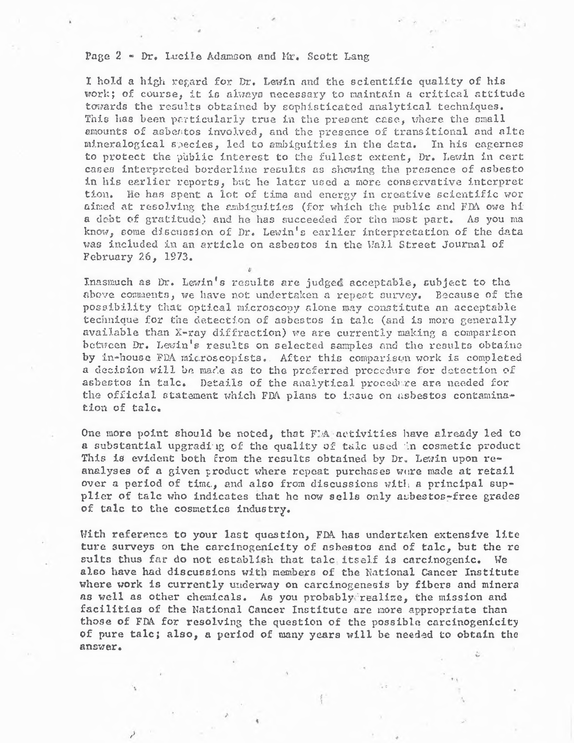
March 2 * 1973 Dr# Lucile Adamson, Staff Scientist Mr*.
refid# jgQ5Gdeeow3Xkyza3drY0YxG23 pages
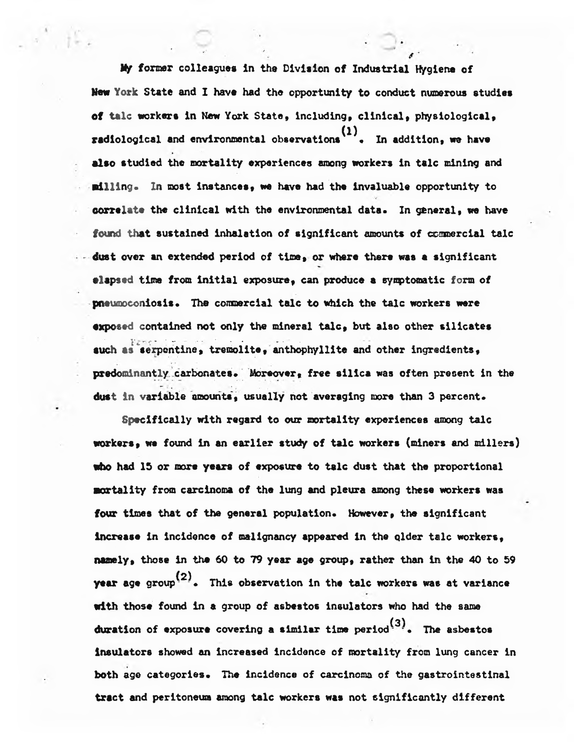
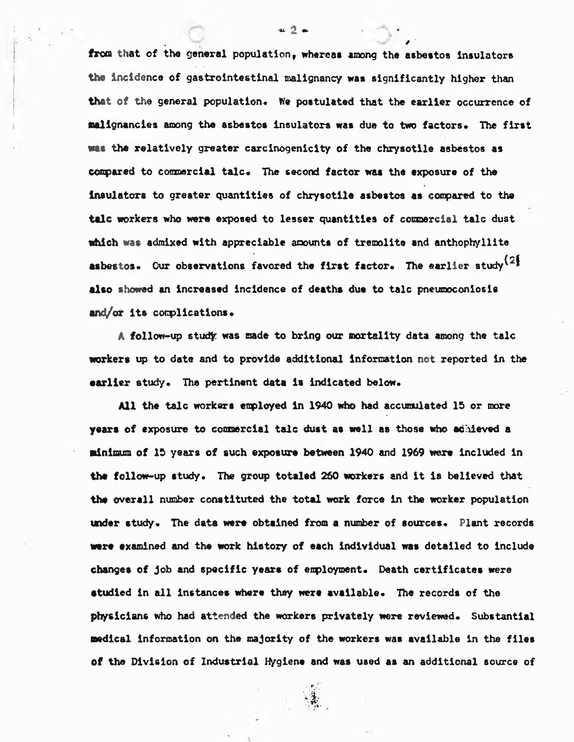
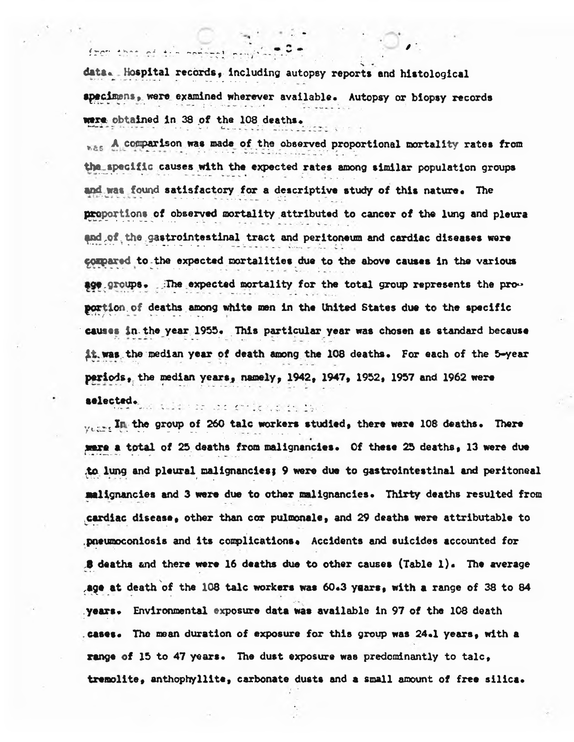
EXHIEIT V / best available copy J Paper Presented at the Metal and Nonmetallic Mine Health and 8aety Symposium on Talc Dust Hazards Held in Washington, D.C. on Tuesday, May 8, 1973 By Morris Kleinfeld, M.D., Formerly Director of the Division of Industrial Hygiene, New York State / i My former colleagues In the Division of Industrial Hygiene of Mew York State and I have had the opportunity to conduct numerous studies of talc workers in New York State, including, clinical, physiological, radiological and environmental observations^ In addition, we have also studied the mortality experiences among workers in talc mining and willing In most Instances, we have had the invaluable opportunity to correlate the clinical with the environmental data In general, we have found that sustained inhalation of significant amounts of commercial talc dust over an extended period of time, or where there was a significant lapsed time from initial exposure, can produce a synptomatic form of pneumoconiosis The commercial talc to which the talc workers were exposed contained not only the mineral talc, but also other silicates Vtrt' -- - - . ... . such as serpentine, tremolite, anthophylllte and other ingredients, predominantly carbonates* Moreover, free silica was often present in the dust in variable amounts', usually not averaging more than 3 percent Specifically with regard to our mortality experiences among talc workers, we found in an earlier study of talc workers (miners and millers) who had 15 or more years of exposure to talc dust that the proportional Mortality from carcinoma of the lung and pleura among these workers was four times that of the general population However, the significant increase In incidence of malignancy appeared in the older talc workers, namely, those in the 60 to 79 year age group, rather than in the 40 to 59 (2) year age group This observation in the talc workers was at variance with those found in a group of asbestos insulators who had the same (3) duration of exposure covering a similar time period The asbestos insulators showed an Increased incidence of mortality from lung cancer in both age categories The incidence of carcinoma of the gastrointestinal tract and peritoneum among talc workers was not significantly different Kb 2 * *% .. /' from that of the general population, whereat among the asbestos insulator* the incidence of gastrointestinal malignancy was significantly higher than that of the general population* We postulated that the earlier occurrence of malignancies among the asbestos insulators was due to two factors* The first was the relatively greater carcinogenicity of the chrysotlle asbestos as compared to commercial talc* The second factor was the exposure of the Insulators to greater quantities of chrysotile asbestos as compared to the talc workers who were exposed to lesser quantities of commercial talc dust which was admixed with appreciable amounts of tremolito and anthophyllite (2l asbestos* Our observations favored the first factor* The earlier studyv * also showed an increased incidence of deaths due to talc pneumoconiosis and/or its complications* A follow-up study was made to bring our mortality data among the talc workers up to date and to provide additional information not reported in the earlier study* The pertinent data is indicated below* All the talc workers employed in 1940 who had accumulated 15 or more years of exposure to comnereial talc dust as well as those who achieved a minimum of 15 years of such exposure between 1940 and 1969 were included in the follow-up study* The group totaled 260 workers and it is believed that the overall number constltilted the total work force in the worker population under study* The data were obtained from a number of sources* Plant records were examined and the work history of each individual was detailed to Include changes of Job and specific years of employment* Death certificates were studied in all Instances where they were available* The records of the physicians who had attended the workers privately were reviewed* Substantial medical information on the majority of the workers was available in the files of the Division of Industrial Hygiene and was used as an additional source of ITC" *-K*"* r *'~ ~n ^ / data* Hospital records, including autopsy reports end histological specimens, were examined wherever available Autopsy or biopsy records were obtained in 38 of the 108 deaths v ,r A comparison was made of the observed proportional mortality rates from the specific causes with the expected rates among similar population groups and was found satisfactory for a descriptive study of this nature The proportions of observed mortality attributed to cancer of the lung and pleura ffid,ofvthe gastrointestinal tract and peritoneum and cardiac diseases were Compared to the expected mortalities due to the above causes in the various .groups* The expected mortality for the total group represents the pro portion, of deaths among white men in the United States due to the specific causes in the year 1955 This particular year was chosen as standard because .was the median year of death among the 108 deaths For each of the 5-year periods, the median years, namely, 1942, 1947, 1952, 1957 and 1962 were selected* ........ . . . . . . ,, .
refid# pm5nOnR7ZZK92GxJNXEL0nwy615 pages
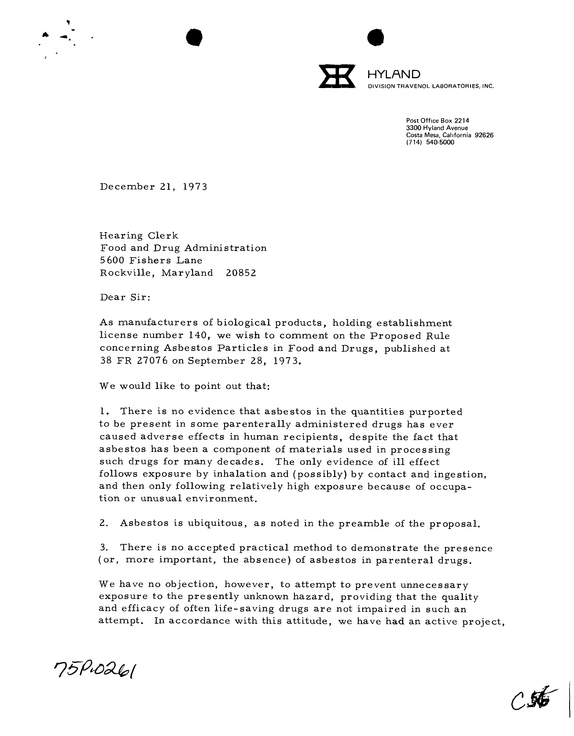
D ecem ber 21, 1973 1 HYLAND DIVISION T R A V E N O L L A B O R A T O R IE S, INC.
refid# NeY4RMrDVO6ongbLyOowMvBkE4 pages
MEMORANDUM OF MEETING March 11, 1976 BETWEEN: Heinz J.
refid# pBNvGVj9Ze72qZvGZYjE3wK9X3 pages
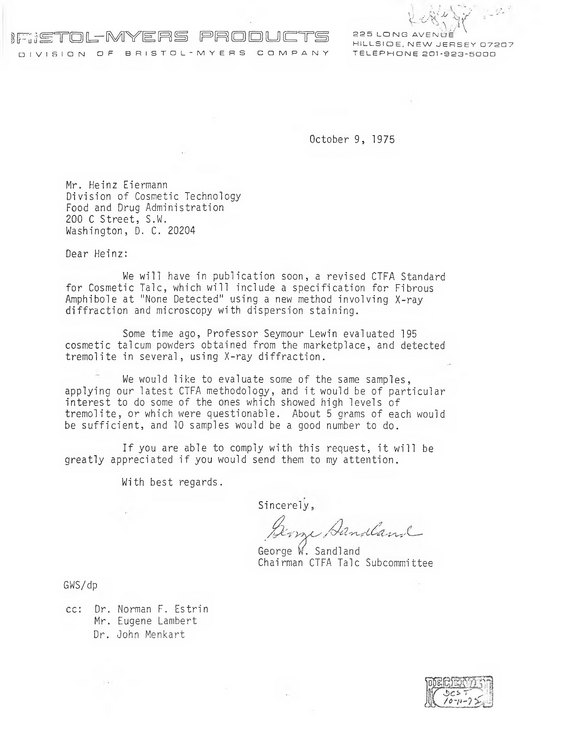
D I V I S I O N OF B R I S T O L - M Y E R S C O M P A N Y 2 2 5 LONG AVENfl'E X HILLSIDE, NEW JERSEY 07207 TELEPHONE 201-923-5000 October 9, 1975 Mr.
refid# 2qzeX5qRRLn8RpQzYZM6k6gLb2 pages
FILE NAME: Talc (TALC) DATE: 1973 DOC#: TALC075 DOCUMENT DESCRIPTION: Petition to the FDA to Regulate Putting Asbestos in Foods & Drugs BEFORE THE FOOD AND DRUG ADMINISTRATION U.S.

refid# 85wQqrRQErvQ3rw7jw3w2KOBZ27 pages
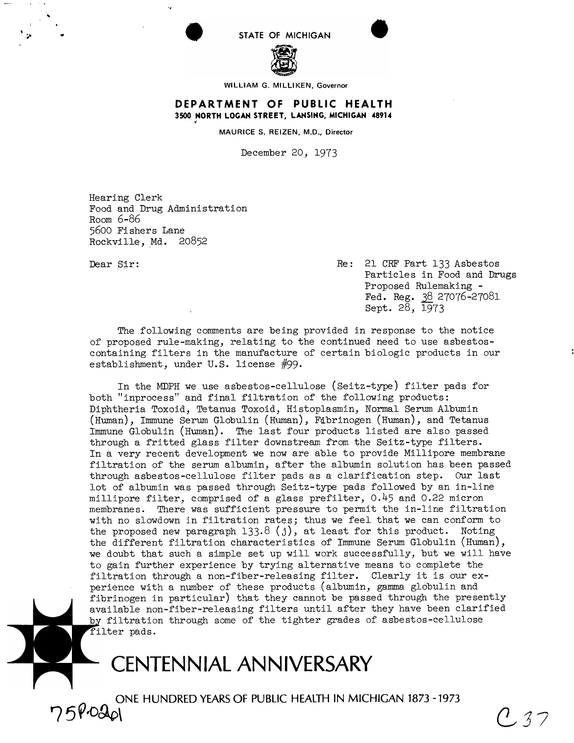
W ILLIAM G.
refid# 7MvzKpJ0O1gNvyDvXQjYEGrBo3 pages
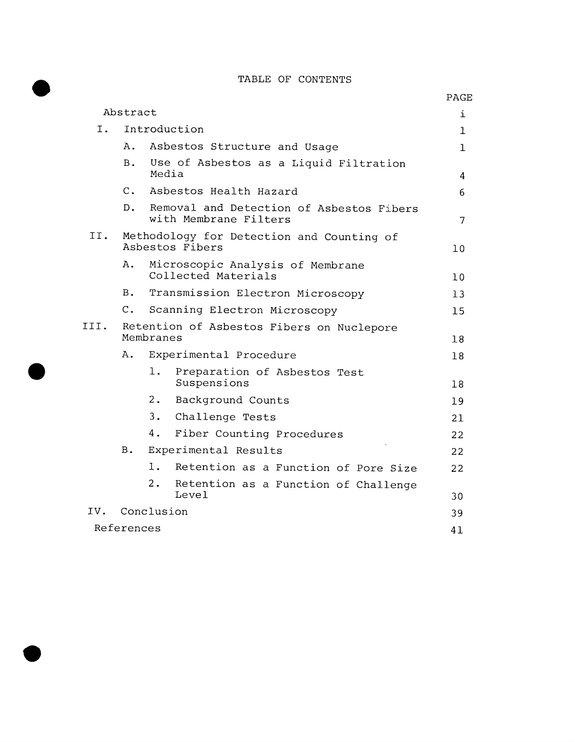
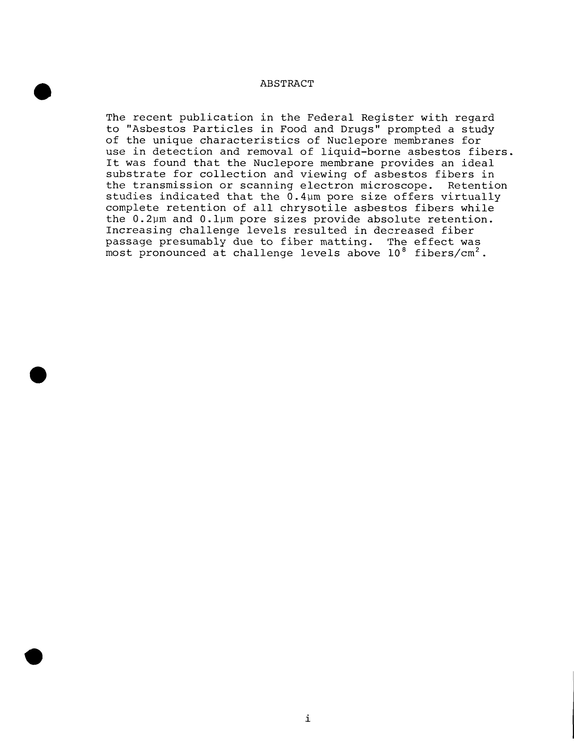
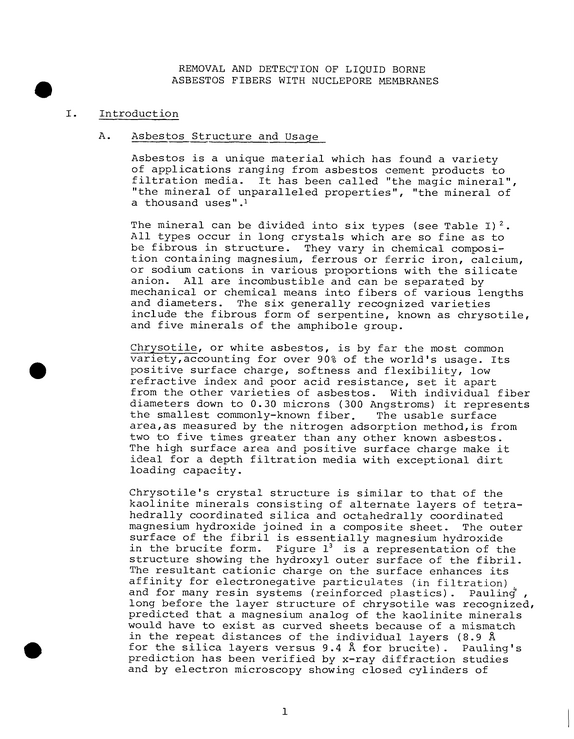
REMOVAL AND DETECTION OF LIQUID BORNE ASBESTOS FIBERS WITH NUCLEPORE MEMBRANES By Dr.
refid# RjDx346pQX6zR7XkqwVqbEnDB55 pages
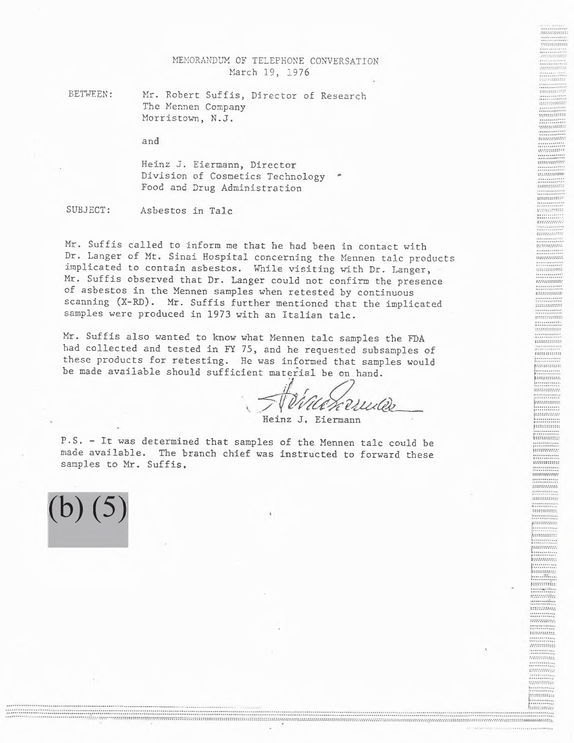
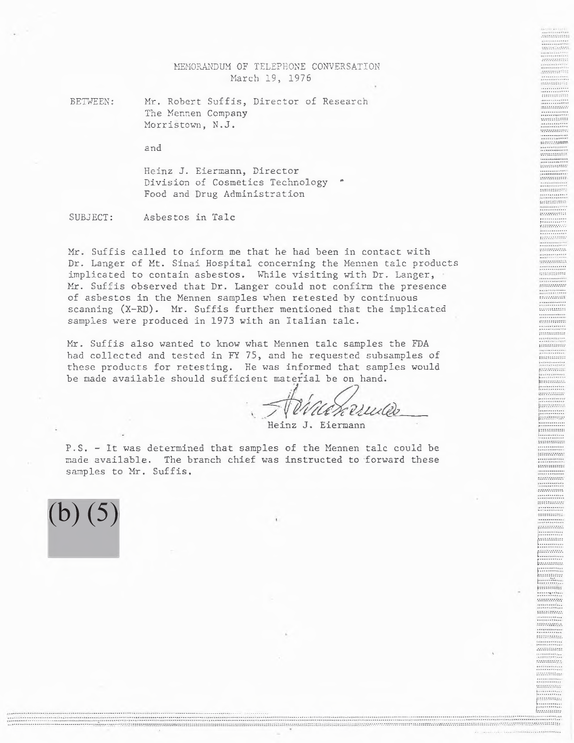
BETWEEN: SUBJECT: MEMORANDUM OF TELEPHONE CONVERSATION March 19, 1976 Mr.
refid# MGXdDMoanxb71bw3qKbJx5RpV2 pages
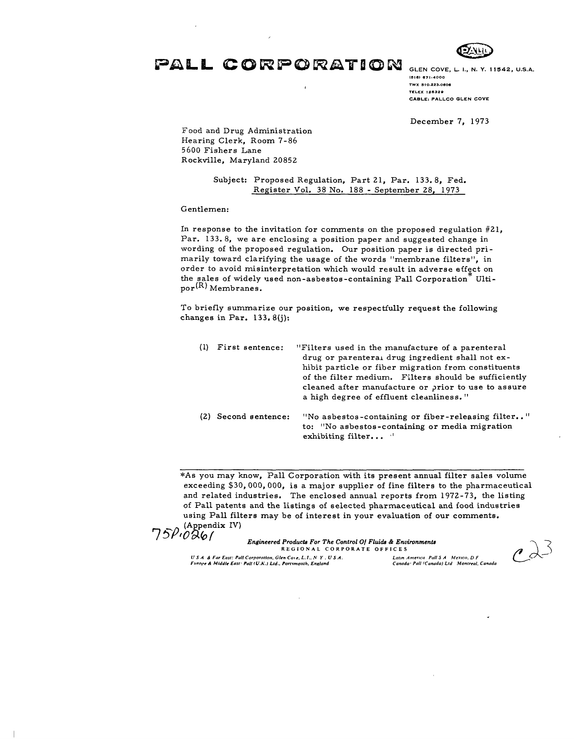
P A L .L .
refid# 6w7YLDRv9eLZkX7yZ3yVVb5R410 pages
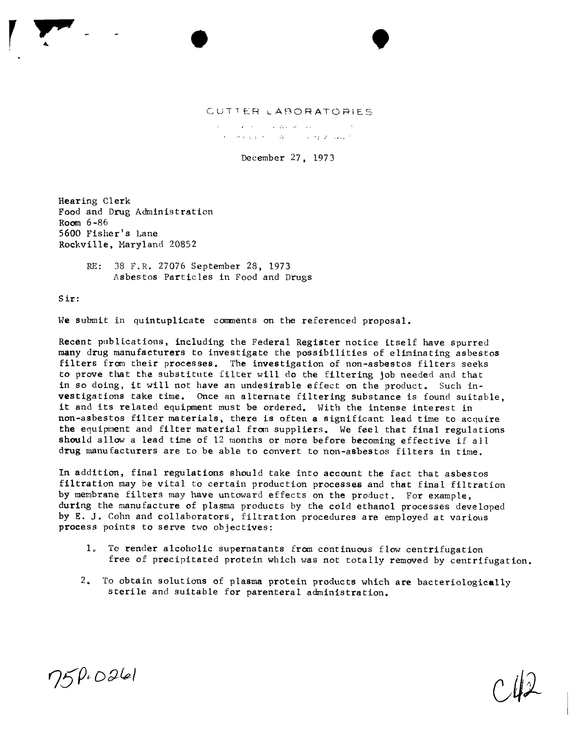
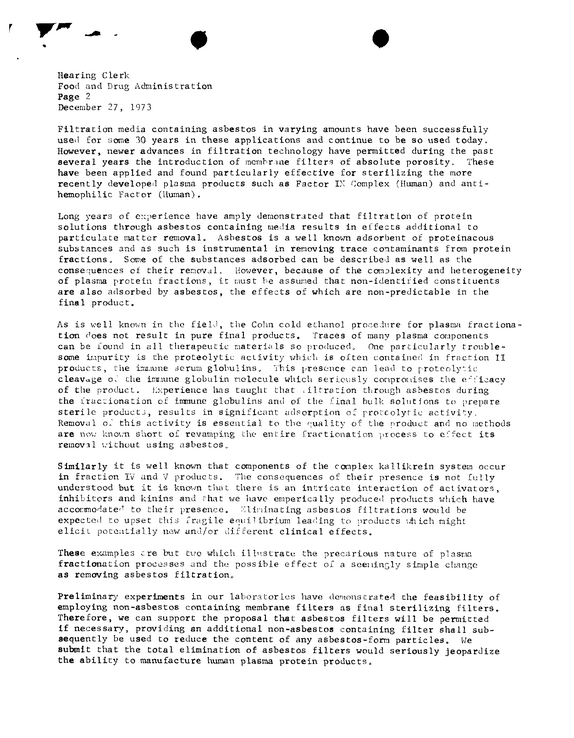
CUTTER LABORATORI ES December 27, 1973 HFoeoadrinangd CDlerurkg A d m i n i s t r a t i o n R5R6ooo0cm0k vF6i-il8sl6eh,e rM' sarLyalanned 20852 RE: 38 F.R. 27076 September 28, 1973 Asbestos P articles in Food and Drugs Sir: We subm it in q u i n t u p l i c a t e comments on the r e f e r e n c e d p r o p o s a l .
refid# YD1qxG4y2y6XRV3pb5NXbJxZ03 pages
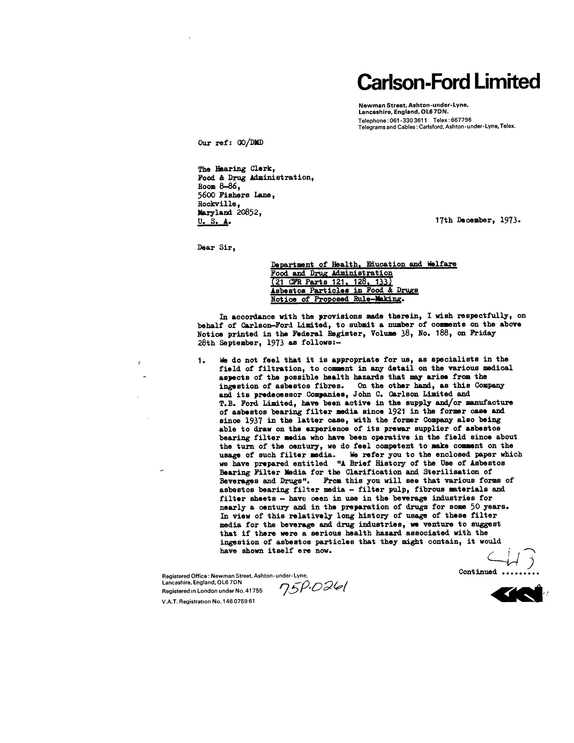
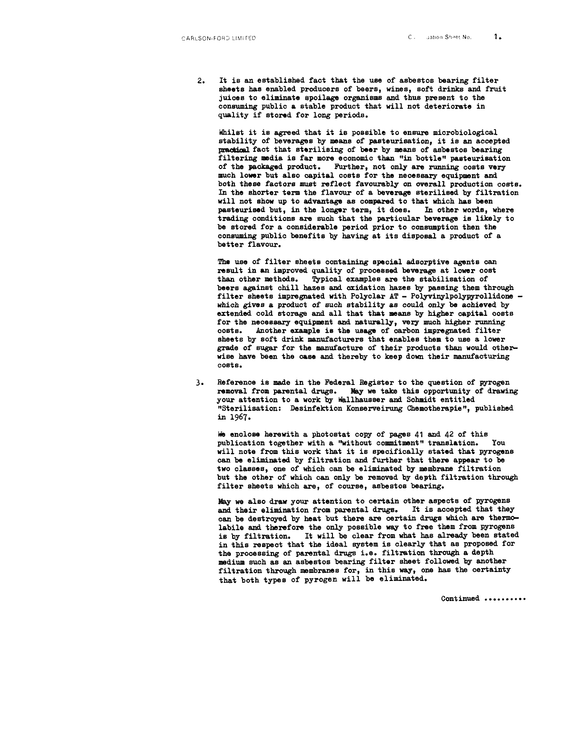
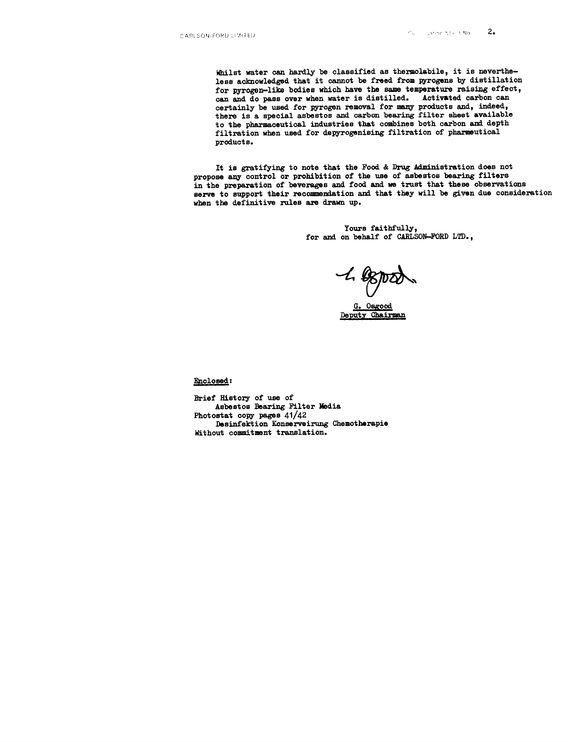
Carlson-Ford Limited Otir r e f : QO/DHD New m an Street.
refid# oZnpJaBwgm082Qn8KRv8XYE3 pages
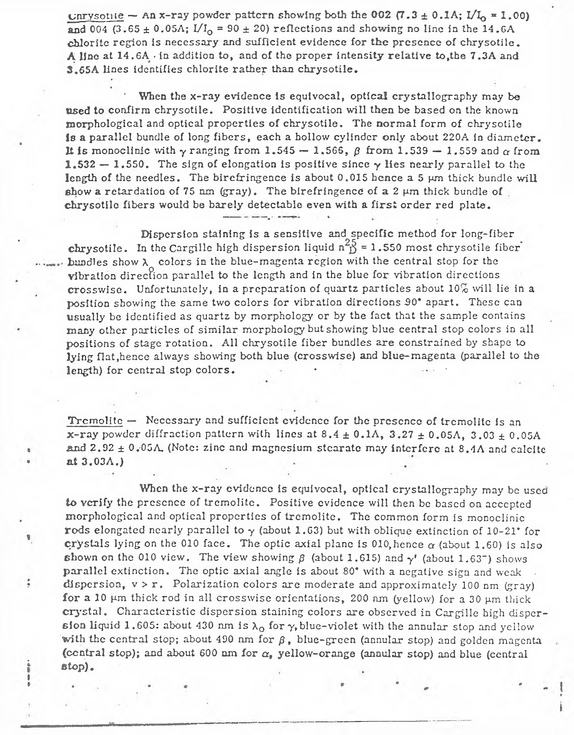
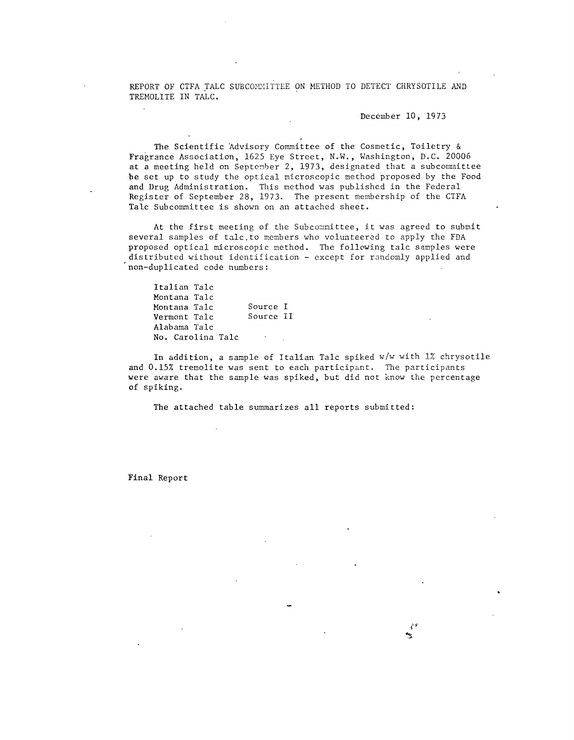
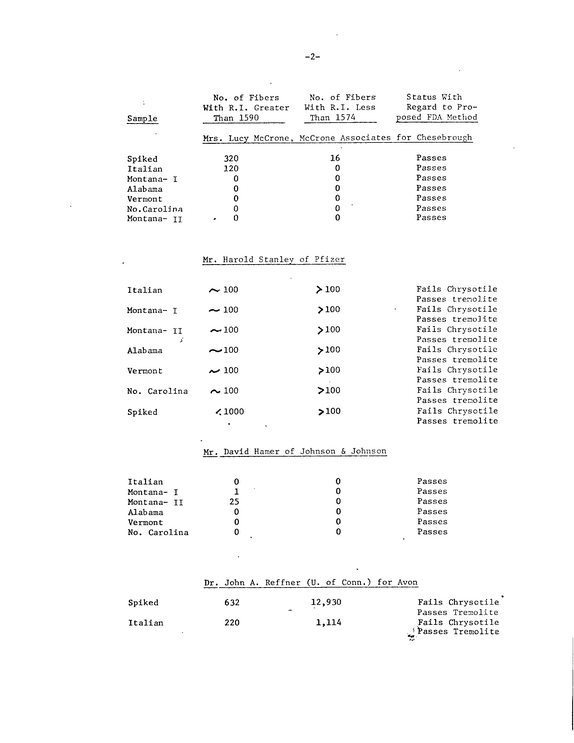
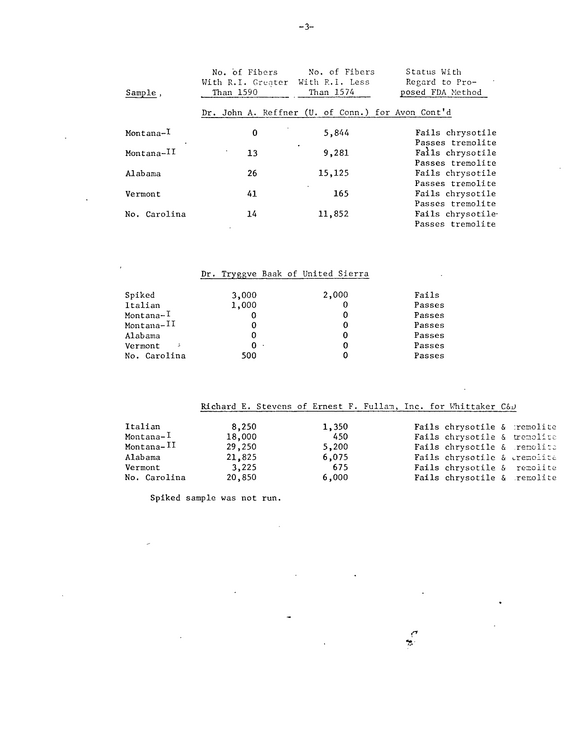
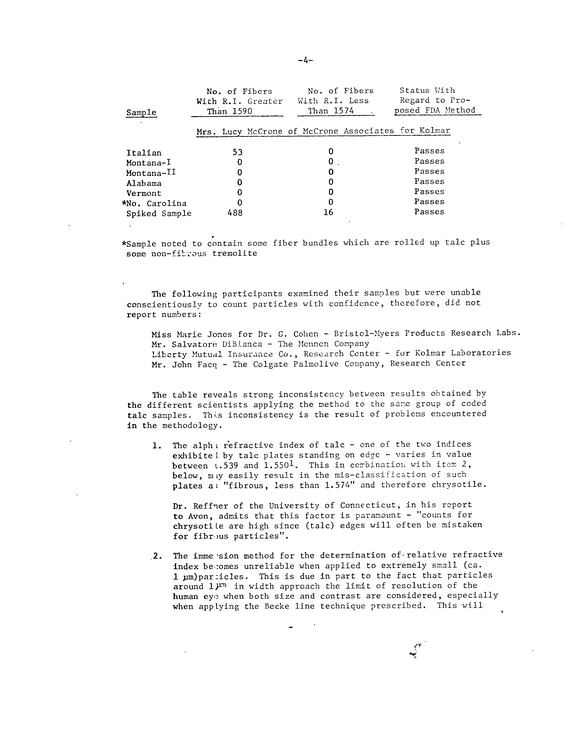
REPORT OF CTFA TALC SUBCOMMITTEE ON METHOD TO DETECT CHRYSOTILE AND TREMOLITE IN TALC
refid# By580NKq569YeJOEo3yvEx8km7 pages