Refine
Estimated Years 1960-1969Clear
16,810 results foundRefine Search
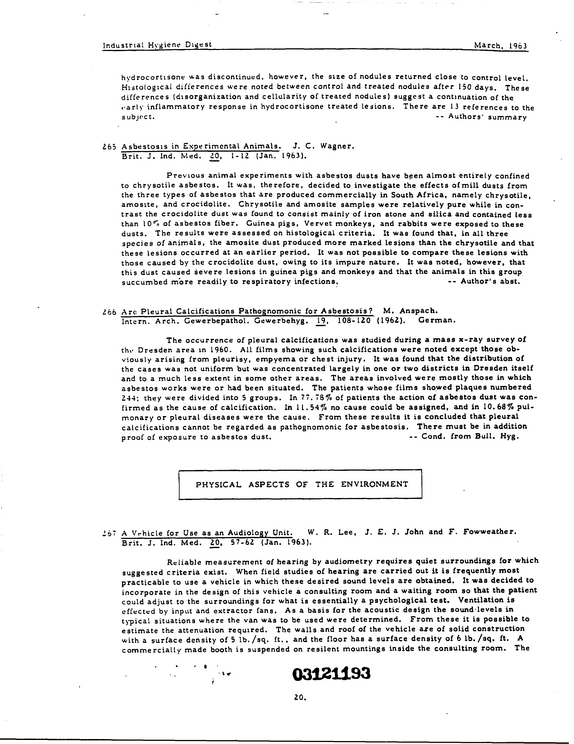
Industrial Hygiene Digest March. 1963 hydrocortisone was discontinued, however, the size of nodules returned close to control level.
refid# Qg7jzr8XYKqDDd74NX22q9nkv1 page
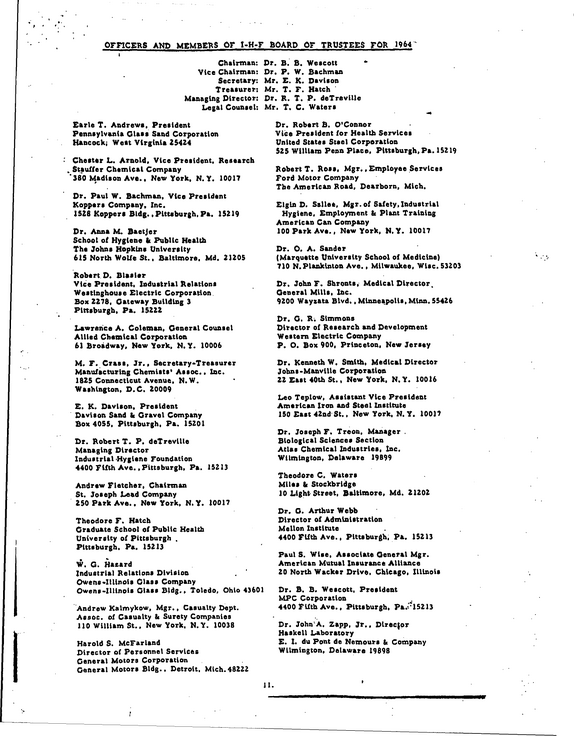
OFFICERS AND MEMBERS Of 1-H-F BOARD OF TRUSTEES FOR 1964 Chairman: Or.B.
refid# MMgKYZYME00rwbeJREOgovzO71 page
COPYRIGHT 1964 NATIONAL SAFETY COUNCIL All Rights Reserved No portion of this book may be reproduced by any pro cess without written permission of the National Safety Council, 425 North Michigan Avenue, Chicago, 111 60611 Libraiv of Congiess Catalog Caid Number 64-24124 25M106463 Punted mUSA Stock No 121 35
refid# ymZDjD12dLrewXb9B4M8QB0VE1 page
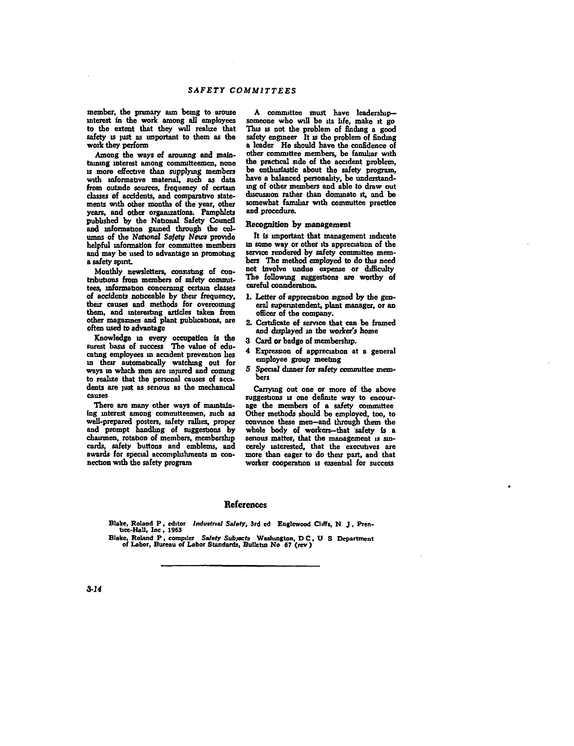
SAFETY COMMITTEES member, the primary aim being to arouse interest in the work among all employees to the extent that they will realize that safety is just as important to them as the work they jierform Among die ways of arousing and main taining interest among committeemen, none is more effective than supplying members with informative material, such as data from outside sources, frequency of certain classes of accidents, and comparative state ments with other months of the year, other years, and other organizations.
refid# yvNgyxpjxwgd7KYrm0206RJ31 page
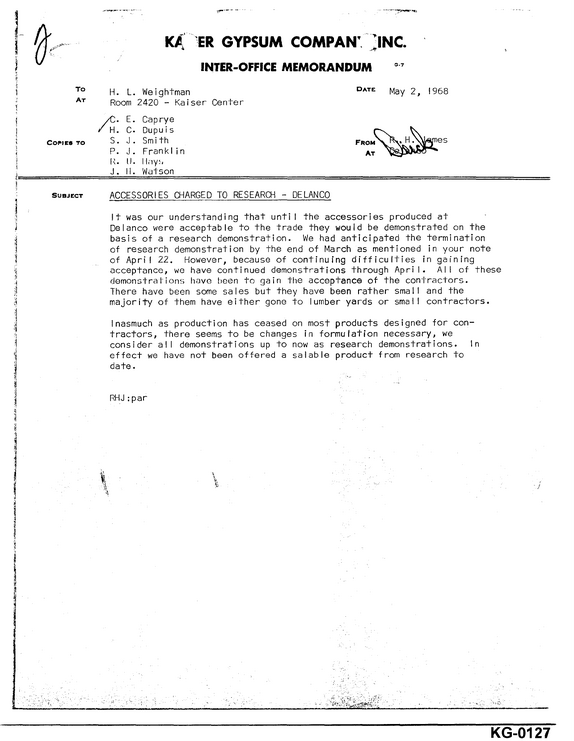
KA ER GYPSUM COMPAN* 'INC.
refid# rebg0NkNaQ7r8gxRQYj6kOEbe1 page
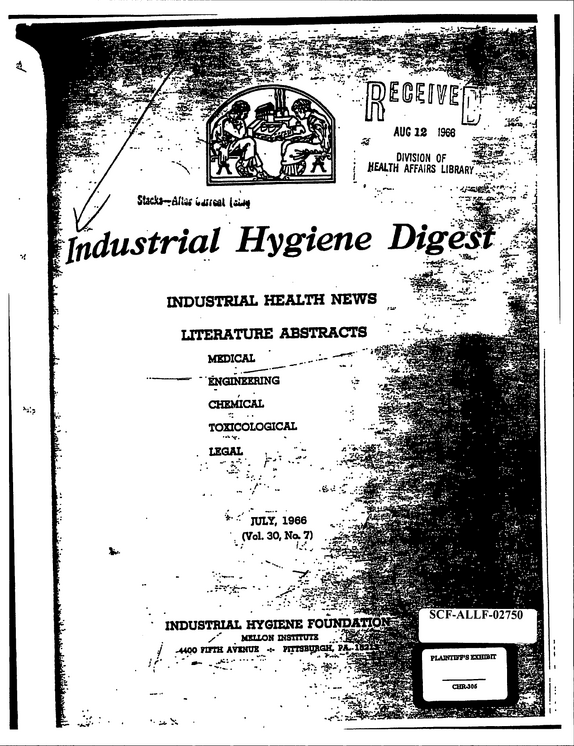
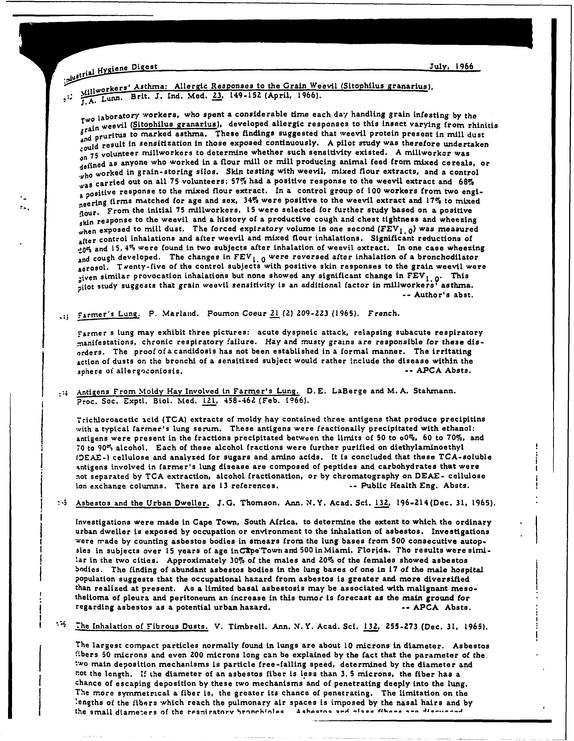
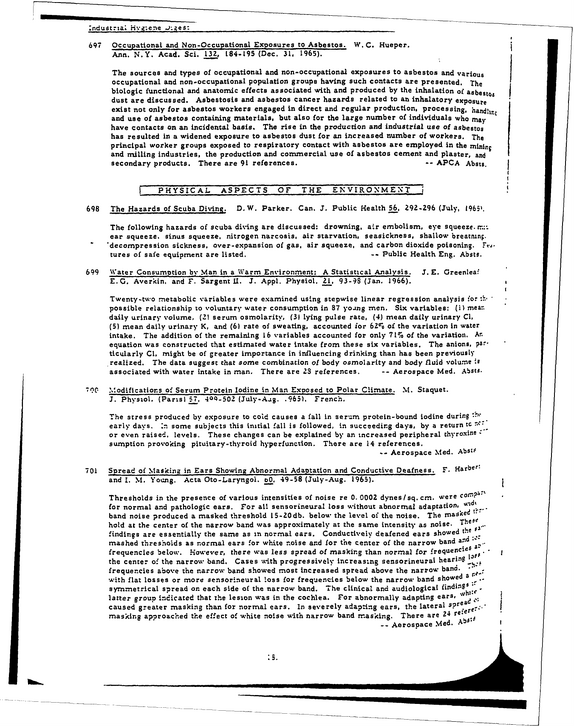
> * ;a6ger../.
refid# KJ0VRrRNj4rd1xg8zeyKrQyzX3 pages
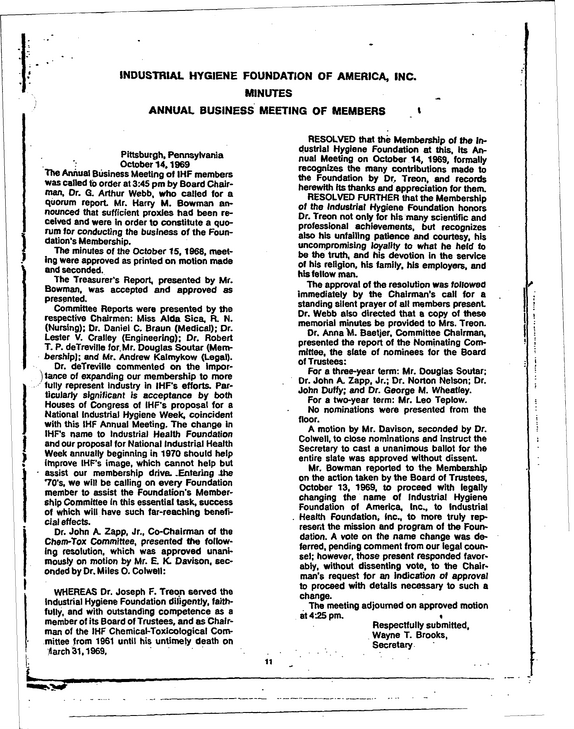
INDUSTRIAL HYGIENE FOUNDATION OF AMERICA, INC.
refid# XRqX84BmrJdj5XgyyO4Kb3oEK1 page
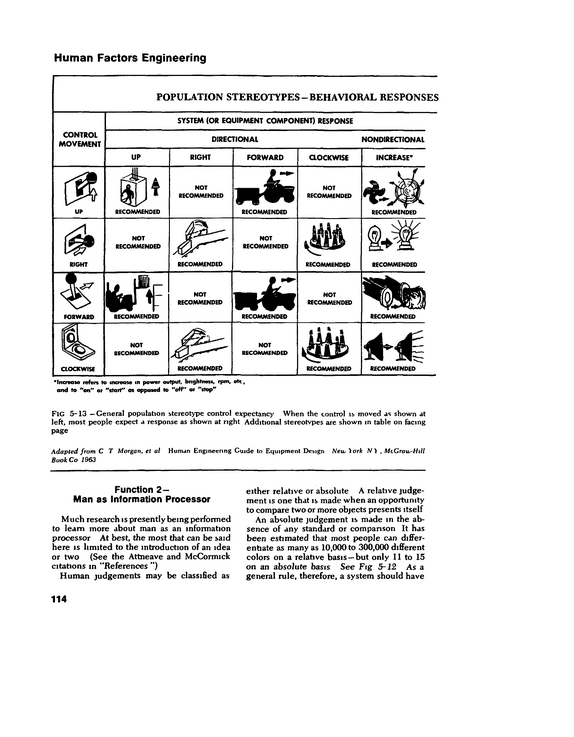
Human Factors Engineering POPULATION STEREOTYPES-BEHAVIORAL RESPONSES CONTROL MOVEMENT UP aUP 8 RECOMJMENDED SYSTEM (OR EQUIPMENT COMPONENT) RESPONSE DIRECTIONAL NONDIRECTIONAL RIGHT NOT RECOMMENDED FORWARD iti RECOMMENDED CLOCKWISE NOT RECOMMENDS) INCREASE* %Jlk RECOMMENDED NOT RECOMMENDED NOT RECOMMENDED RIGHT % FORWARD faff RECOMMENDED RECOMMENDED RECOMMENDED NOT RECOMMENDB3 nib RECOMMENDED NOT RECOMMENDS) - * .
refid# 71dybNbEpj4Vd96R6yJaDXMxE1 page
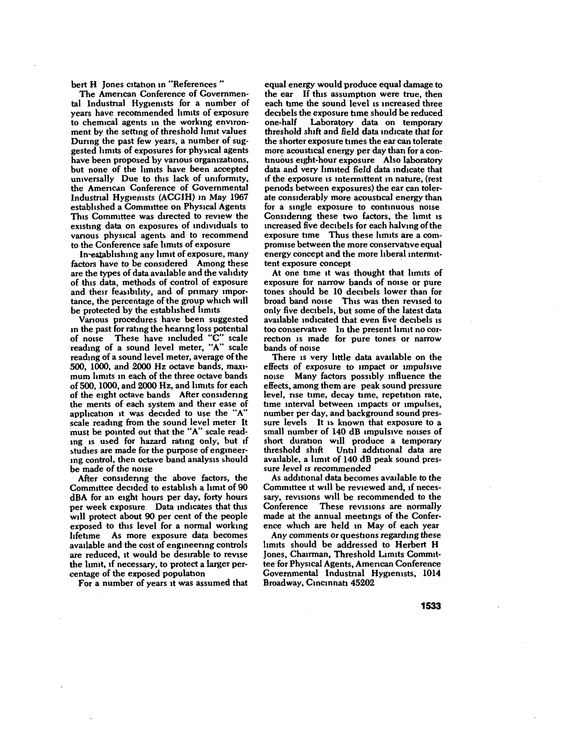
bert H Jones citation in "References " The American Conference of Governmen tal Industrial Hygienists for a number of years have recommended limits of exposure to chemical agents in the working environ ment by the setting of threshold limit values During the past few years, a number of sug gested limits of exposures for physical agents have been proposed by various organizations, but none of the limits have been accepted universally Due to this lack of uniformity, the American Conference of Governmental Industrial Hygienists (ACGIH) m May 1967 established a Committee on Physical Agents This Committee was directed to review the existing data on exposures of individuals to various physical agents and to recommend to the Conference safe limits of exposure In-establishing any limit of exposure, many factors have to be considered Among these are the types of data available and the validity of this data, methods of control of exposure and their feasibility, and of primary impor tance, the percentage of the group which will be protected by the established limits Various procedures have been suggested in the past for rating the hearing loss potential of noise These have included "C" scale reading of a sound level meter, "A" scale reading of a sound level meter, average of the 500, 1000, and 2000 Hz octave bands, maxi mum limits m each of the three octave bands of 500,1000, and 2000 Hz, and limits for each of the eight octave bands After considering the merits of each system and their ease of application it was decided to use the "A" scale reading from the sound level meter It must be pointed out that the "A" scale read ing is used for hazard rating only, but if studies are made for the purpose of engineer ing control, then octave band analysis should be made of the noise After considering the above factors, the Committee decided to establish a limit of 90 dBA for an eight hours per day, forty hours per week exposure Data indicates that this will protect about 90 per cent of the people exposed to this level for a normal working lifetime As more exposure data becomes available and the cost of engineering controls are reduced, it would be desirable to revise the limit, if necessary, to protect a larger per centage of the exposed population For a number of years it was assumed that equal energy would produce equal damage to the ear If this assumption were true, then each time the sound level is increased three decibels the exposure time should be reduced one-half Laboratory data on temporary threshold shift and field data indicate that for the shorter exposure times the ear can tolerate more acoustical energy per day than for a con tinuous eight-hour exposure Also laboratory data and very limited field data indicate that if the exposure is intermittent in nature, (rest penods between exposures) the ear can toler ate considerably more acoustical energy than for a single exposure to continuous noise Considering these two factors, the limit is increased five decibels for each halving ofthe exposure time Thus these limits are a com promise between the more conservative equal energy concept and the more liberal intermit tent exposure concept At one time it was thought that limits of exposure for narrow bands of noise or pure tones should be 10 decibels lower than for broad band noise This was then revised to only five decibels, but some of the latest data available indicated that even five decibels is too conservative In the present limit no cor rection is made for pure tones or narrow bands of noise There is very little data available on the effects of exposure to impact or impulsive noise Many factors possibly influence the effects, among them are peak sound pressure level, rise time, decay time, repetition rate, time interval between impacts or impulses, number per day, and background sound pres sure levels It is known that exposure to a small number of 140 dB impulsive noises of short duration will produce a temporary threshold shift Until additional data are available, a limit of 140 dB peak sound pres sure level is recommended As additional data becomes available to the Committee it will be reviewed and, if neces sary, revisions will be recommended to the Conference These revisions are normally made at the annual meetings of the Confer ence which are held in May of each year Any comments or questions regarding these limits should be addressed to Herbert H Jones, Chairman, Threshold Limits Commit tee for Physical Agents, American Conference Governmental Industrial Hygienists, 1014 Broadway, Cincinnati 45202 1533
refid# zdVG2N5g6NVMo8gqBypwDNeqz1 page
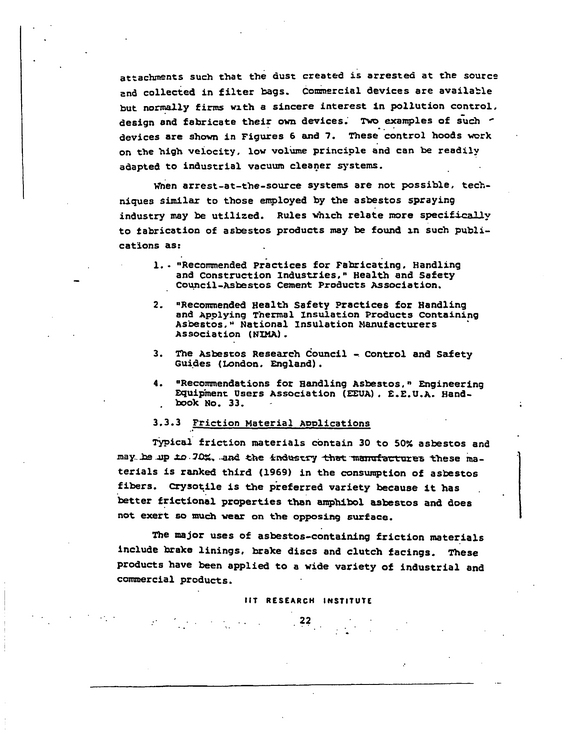
attachments such that the dust created is arrested at the source and collected in filter bags.
refid# aBkMd3g8qr8XZLx5vVkjO100N1 page
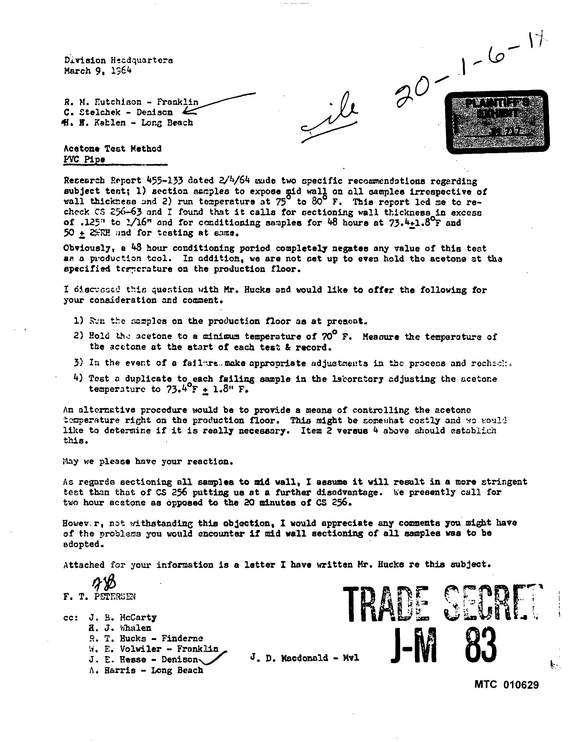
Division Headquarters March 9i 1964 R.
refid# LJyxyM6zvNz2axw3MKKwkLLBw2 pages
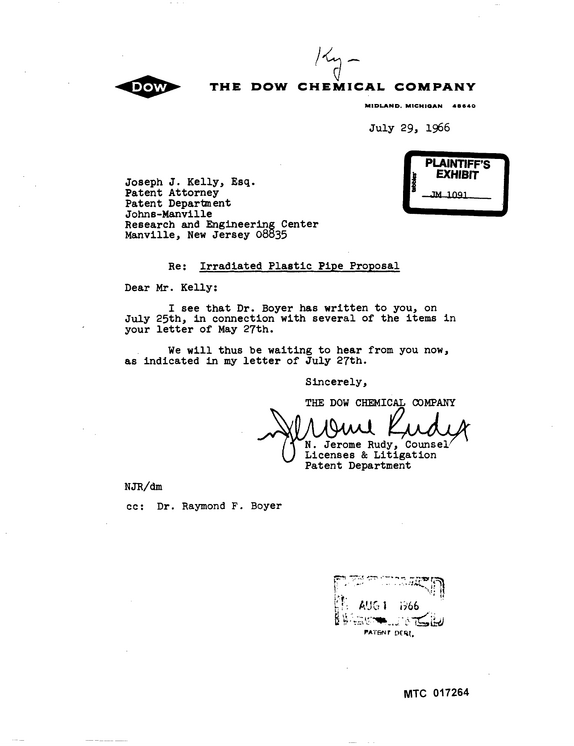
THE DOW CHEMICAL COMPANY MIDLAND.
refid# 06oD6Y72dXLG77ENNpjVNp9gV1 page
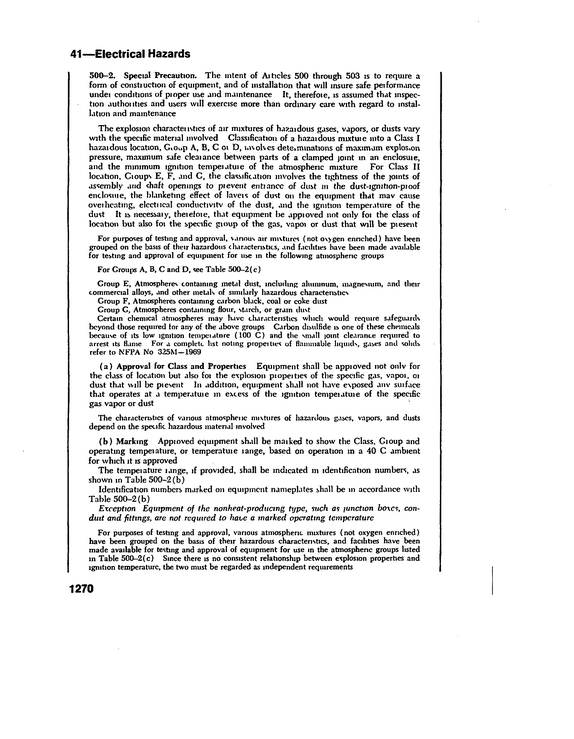
41--Electrical Hazards 500-2.
refid# QX5D76b004ZvJNwNrxX8zV3rE1 page
References American Automobile Association, 1712 G St NW, Washington, DC 20006 "Driver Training Equipment" (catalog) "Driving Skill Exercises with Check List and Score Sheet " "Road Test Check List for Passenger Car Drivers " "Road Test Check List for Truck Drivers " Sportsmanlike Driving (a textbook) American Trucking Associations, Inc , 1616 P St NW, Washington, D C 20036 The Motor Comer Safety Regulations, U S Dept of Transportation, Federal Highway Administra tion, Parts 390-397, Issued April 1968 (Pocketsize edition for issuing to drivers ) The Associated General Contractors of America, Inc, 1957 E St NW, Washington, D C 20006 Manual of Accident Prevention in Construction Association of Casualty and Surety Companies, 110 William St, New York, N Y 10038 Guide Book, Commercial Vehicle Drivers Truck and Bus Drivers Rule Book Evans Industries, Driver Trainer System, 9756 Wilshire Blvd, Beverly Hills, Calif 90210 Intext, Scranton, Pa 08575 Catalog of driver testing and training equipment National Association of Automotive Mutual Insurance Companies, 20 N Wacker Dnve, Chi cago, 111 60606 Code of the Road National Safety Council, 444 N Michigan Ave, Chicago, 111 60611 Alcohol and the Impaired Driver Aviation Ground Operations Safety Handbook Defensive Driving Program Materials Industrial Data Sheets Airport Vehicular Traffic, 539 Barricades and Warning Devices for Htghway Construction Work, 239 Diving in Construction Operations, 555 Falling or Sliding Rock in Quarries, 332 General Excavation, 482 Grounding Electric Shovels, Cranes, and Other Mobile Equipment, 287 Lead-Acid Storage Batteries, 635 Liquefied Petroleum Gases for Industrial Trucks, 479 Motor Graders, Bulldozers, and Scrapers, 256 Motor Trucks for Mines, Quarries, and Construction, 330 Mounting Heavy Duty Tires and Rims, 411 Ready-Mix Concrete Trucks, 617 Snow Removal and Ice Control, 638 Surface Surveying, 614 Tractor Operation and Roll-over Protective Structures, 622 Motor Fleet Safety Manual Motor Fleet Talk Topics Public Employee Safety Guides Refuse Collection Street and Highway Maintenance Vehicular Equipment Management Small Fleet Guide Study of Aertal Basket Accidents New York University Center for Safety Education, Washington Square, New York, N Y 10003 Publications list 1445
refid# 5D6qG5Qkow3pLp1k0wVEk2LpD1 page
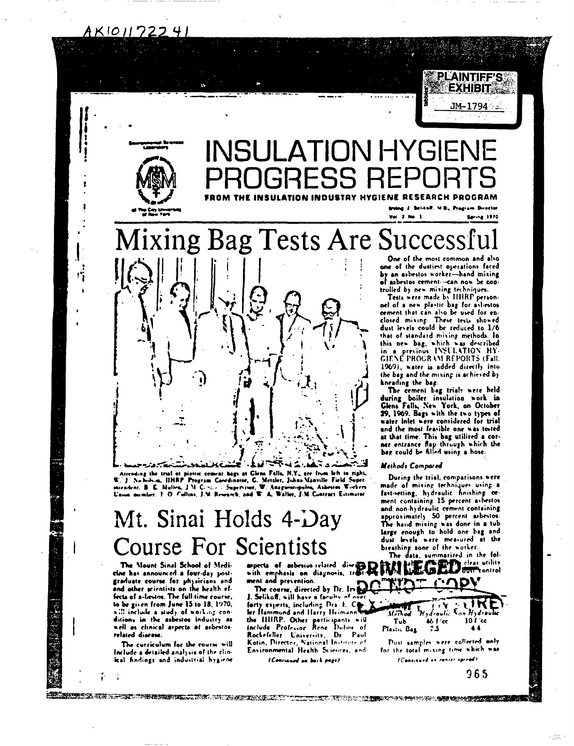
\o MLAlNTilFFSj^ i JM-1794 INSULATION HYGIENE PROGRESS REPORTS FROM THE INSULATION INDUSTRY HYGIENE RESEARCH PROGRAM Ipvtof | ****.
refid# 4vnyv19bqXZYJz99q1r0GQ5wR4 pages