Refine
Estimated Years 1960-1969Clear
7,161 results foundRefine Search
Instead of dealing vith a smaller nunber of larger firms performing a distribution function, ve now deal directly vith vide range of accounts formerly serviced by distributors, and this leads to increased losses end slower turnover.


refid# g24Nw98w4Jdnn4L9K6gg2Q9Q336 pages
COPif-D R!
refid# a4NM0nMqLgNbNGMQJaLwZxpY22 pages
('A' Ucjrvs'Ucr *.< *> . o A!
refid# gDXLMdL1xYXOoa1wVpMG83X8q8 pages
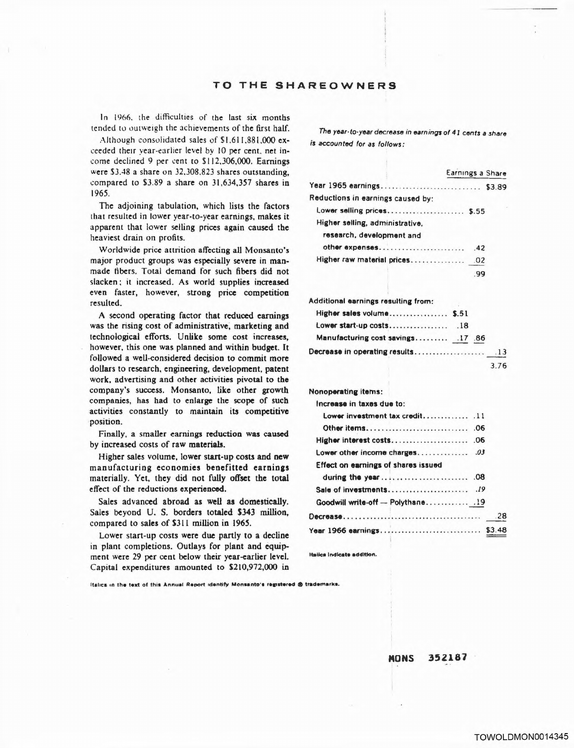
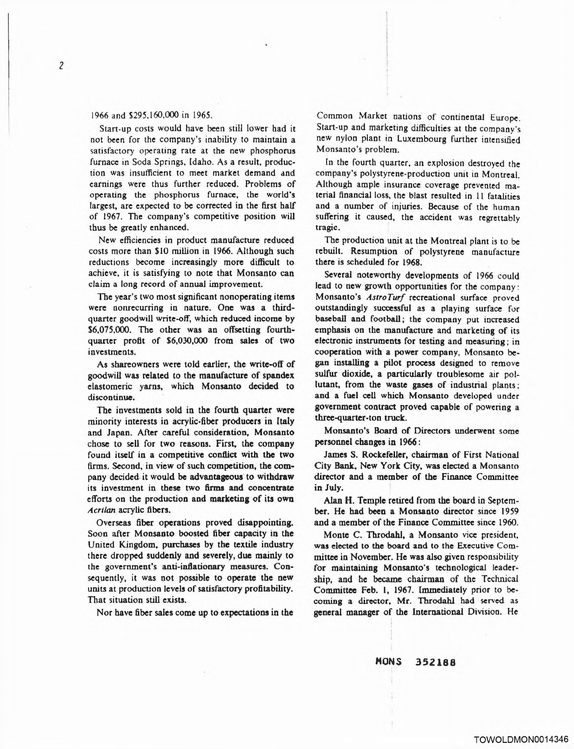
Several noteworthy developments of 1966 could lead to new growth opportunities for the company: Monsanto's AstroTurf recreational surface proved outstandingly successful as a playing surface for baseball and football; the company put increased emphasis on the manufacture and marketing of its electronic instruments for testing and measuring; in cooperation with a power company, Monsanto be gan installing a pilot process designed to remove sulfur dioxide, a particularly troublesome air pol lutant, from the waste gases of industrial plants; and a fuel cell which Monsanto developed under government contract proved capable of powering a three-quarter-ton truck.
refid# aDyeo3yEZbVQGdk5E0RmNepMb31 pages
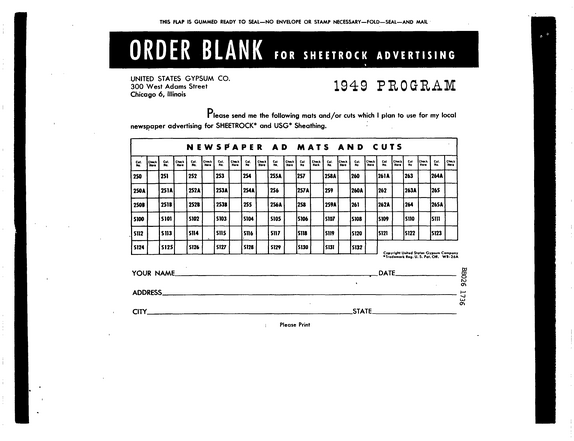
PLAINTIFF'S EXHIBIT USG-1969 Here is your jdEETROOK THE FIREPROOF GYPSUM WALLBOARD and USG Sheathing Advertising Guide for 1949 everything you need to help you ADVERTISE LOCALLY BB026 1734 *t m li c n,4 n*r here are Tell the Amazing SHEETROCK Story to your customers...


refid# 4EQnGn7jyv61bwme9m10nejV33 pages
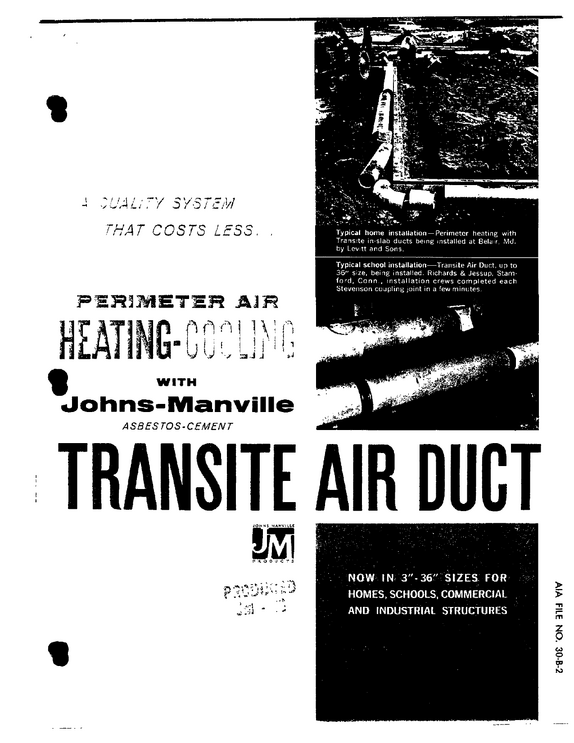
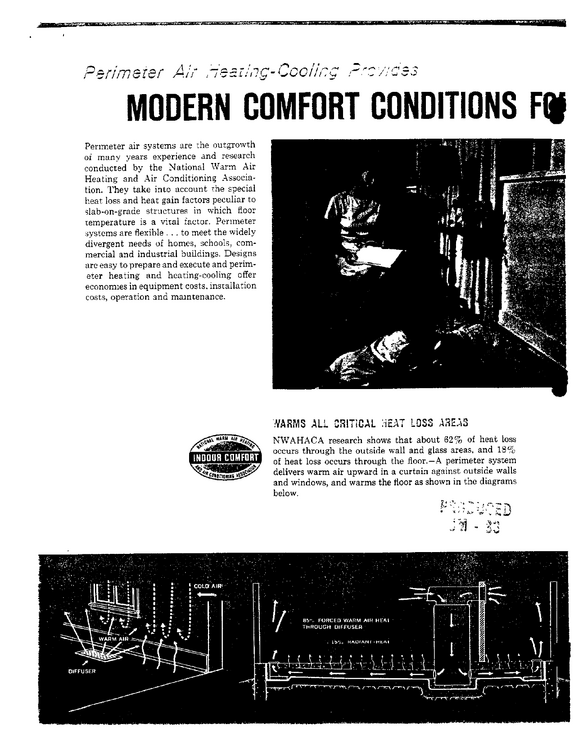
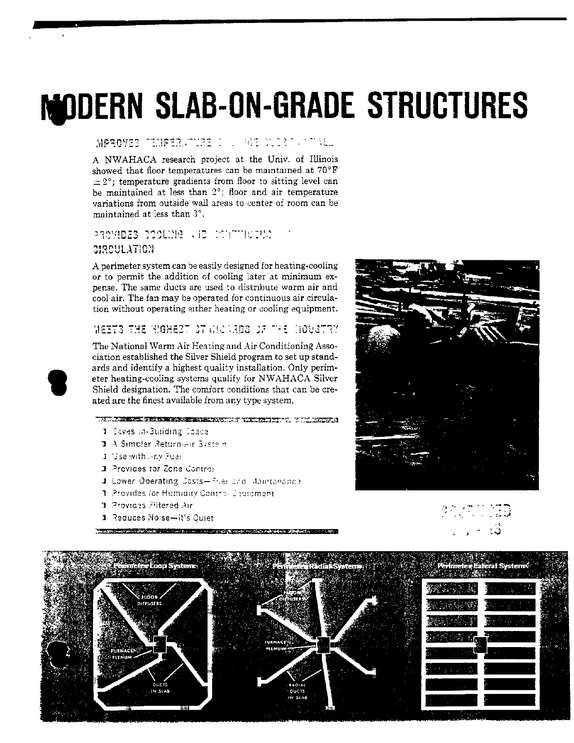
FILE NAME Manville JMA DATE 1964 DOC JMA013 DOCUMENT DESCRIPTION Asbestos Air Duct Brochure Product Literature A A SSUUAALLITIYTYSUALITY SUALITY SUALITY SUALITY SSY YS ST TEESYM STEMM THAT COSTS LESS .
refid# byD4x2xYqJpnEMaakbR5kEJjg21 pages
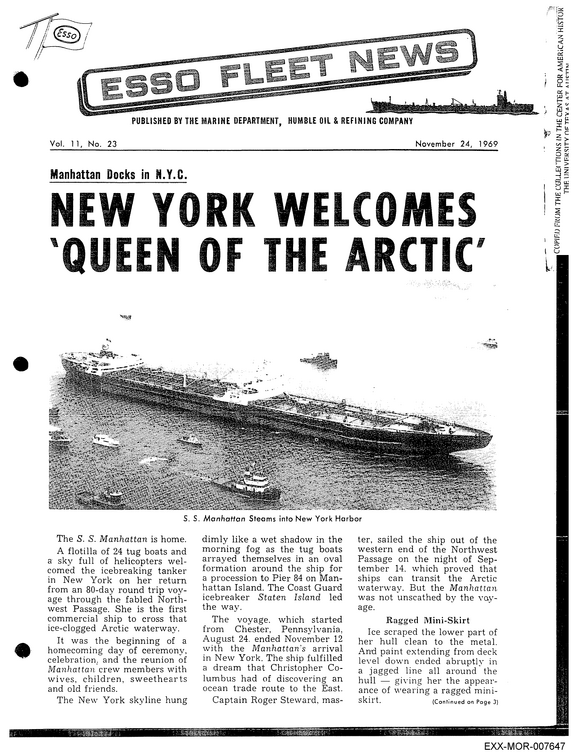
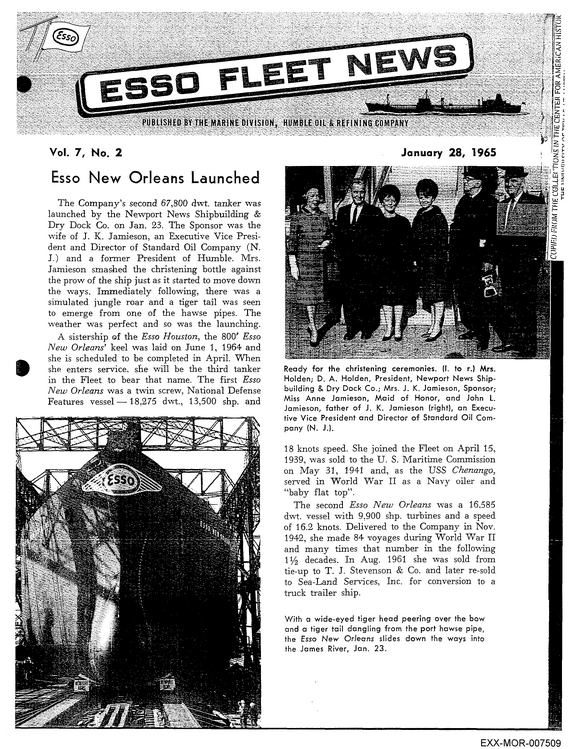
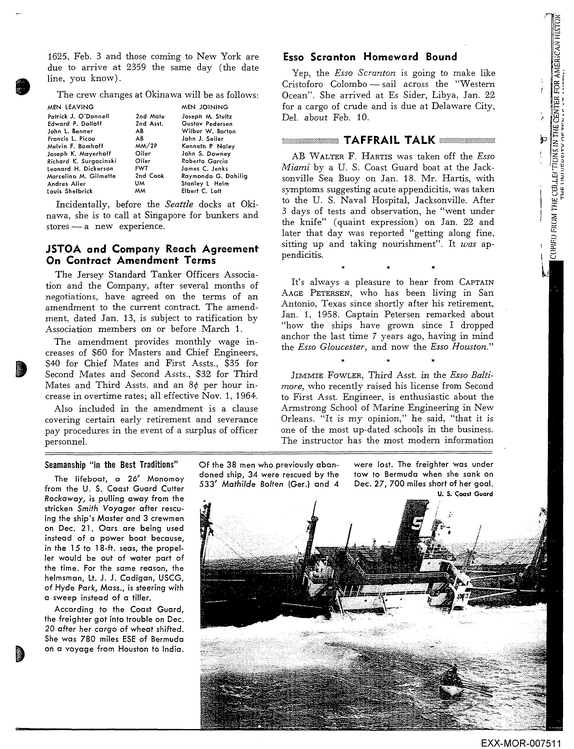
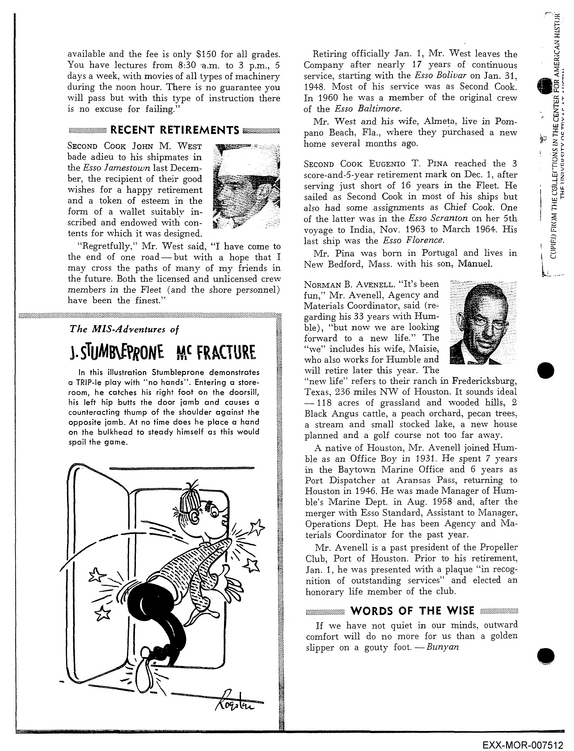
A M E R iC A N H U lm 1 FOR CENTER THE IN 'TIONS CGLLEI THE FROM COWIJ Vol. 7, No. 2 Esso New Orleans Launched The Company's second 67,800 dwt. tanker was launched by the Newport News Shipbuilding & Dry Dock Co. on Jan. 23.
refid# kmyyxzojRLByNNbEJGbXDzgMO12 pages
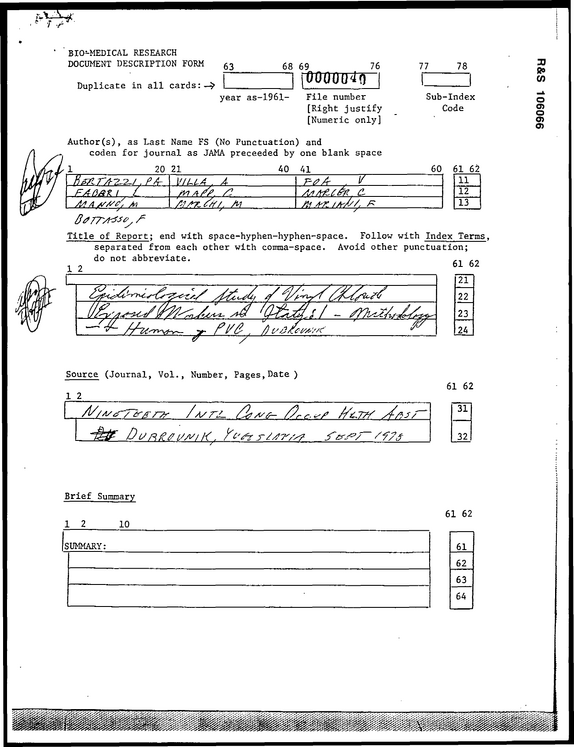
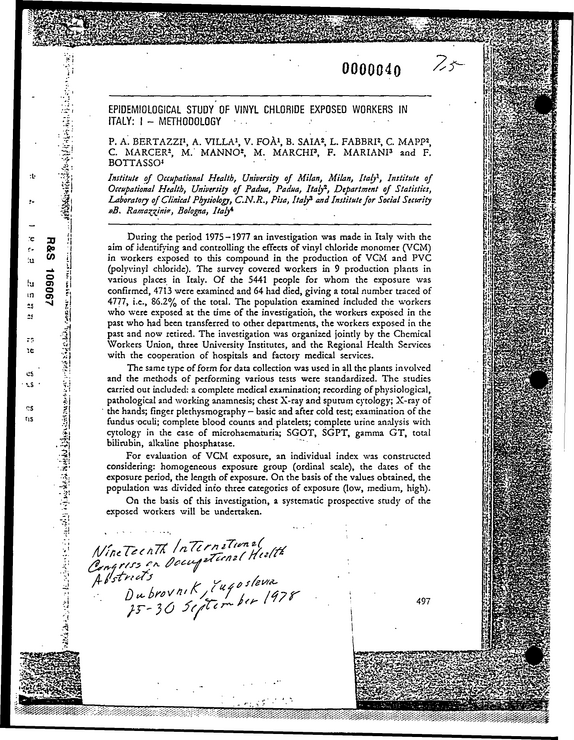
R&S 106066 *.vTl--7W*- ' BIO-MEDICAL RESEARCH DOCUMENT DESCRIPTION FORM 63 Duplicate in all cards:--> 68 69 76 1 jOOQOtHq- year as-1961- File number [Right justify [Numeric only] 77 78 Sub-Index Code Author(s), as Last Name FS (No Punctuation) and coden for journal as JAMA preceeded by one blank space 1 20 21 , pa- /L M AM VILLA .
refid# jNNzw9rwqOdjbzBxm1dryjgk43 pages
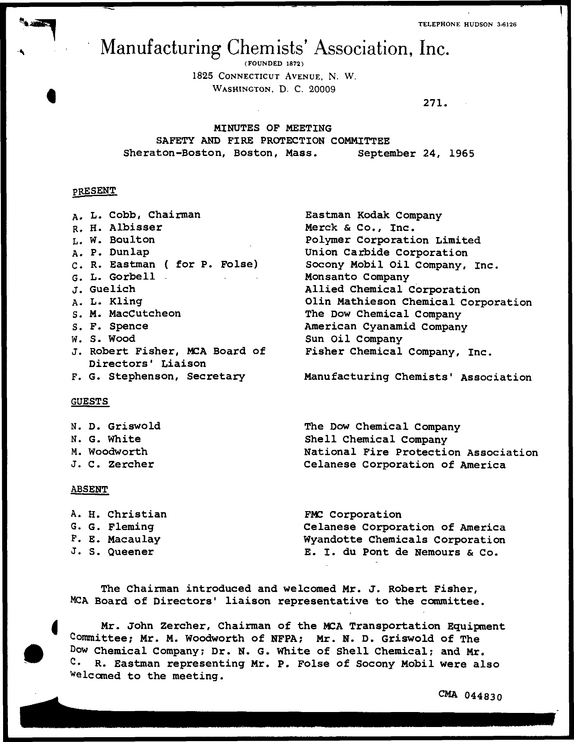
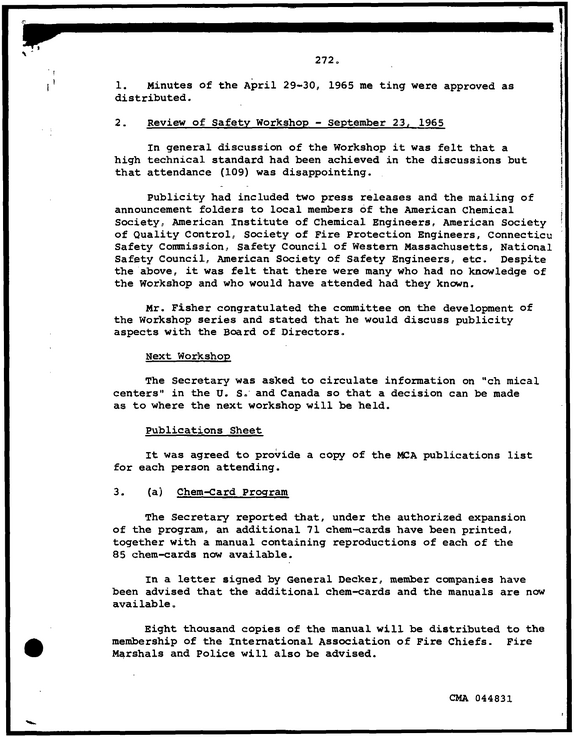
TELEPHONE HUDSON 3-8126 Manufacturing Chemists' Association, Inc.
refid# 6w8jewjM2rVwRZB2yp5kKKLRd33 pages
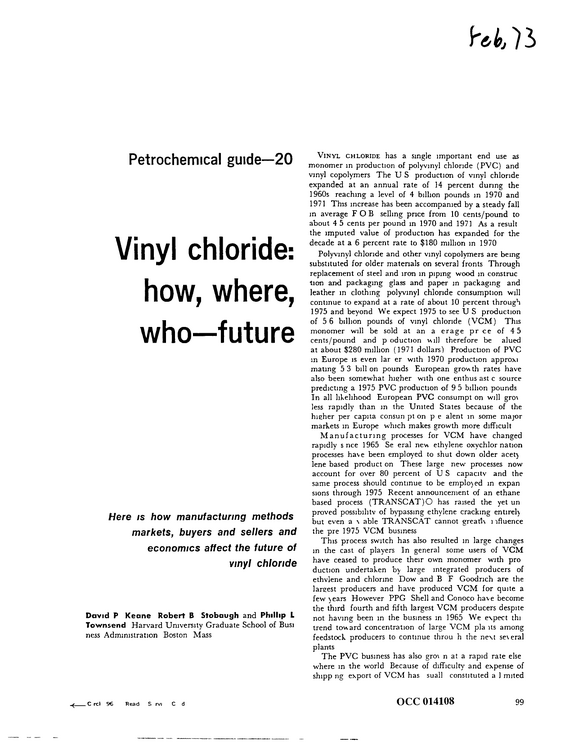
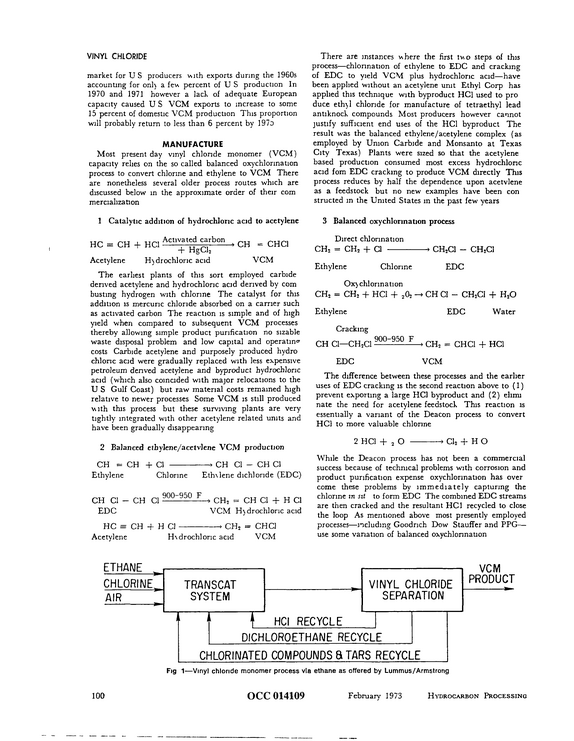
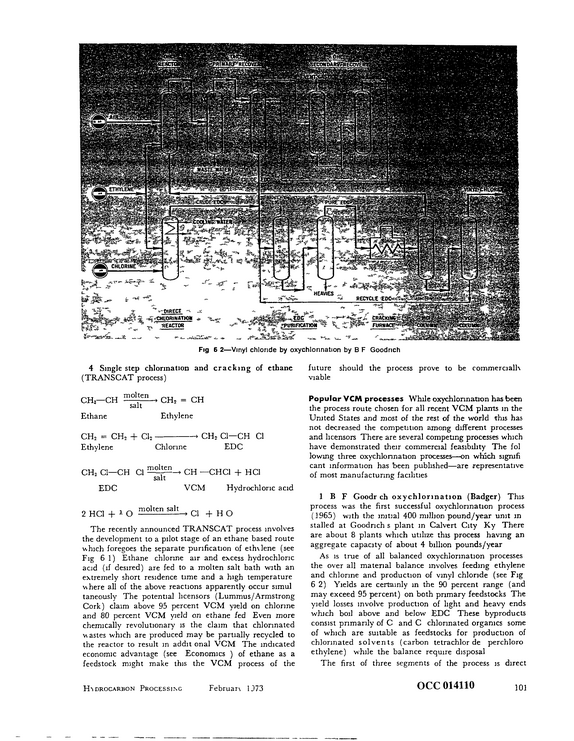
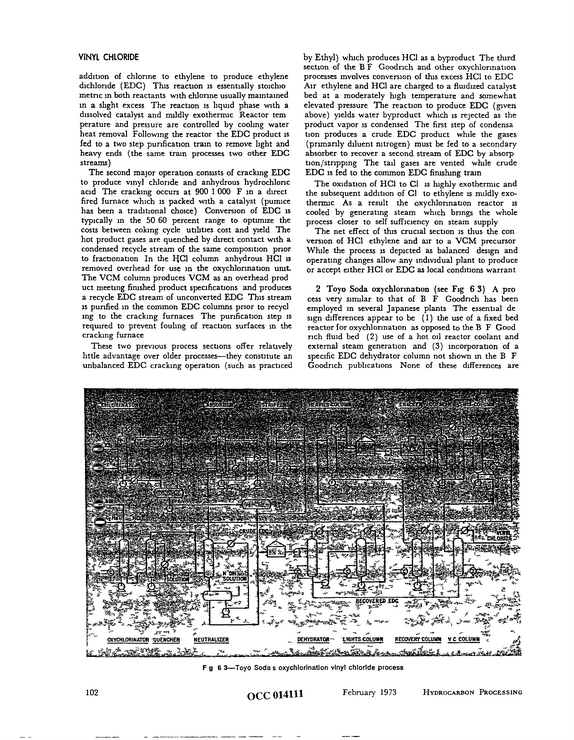
Production of PVC m Europe is even lar er with 1970 production approxi mating 5 3 bill on pounds European grow th rates have also been somewhat higher with one enthus ast c source predicting a 1975 PVC production of 9 5 billion pounds In all likelihood European PVC consumpt on will grot less rapidly than in the United States because of the higher per capita consun pt on p e alent in some major markets m Europe which makes growth more difficult Manufacturing processes for VCM have changed rapidly s nee 1965 Se eral new ethylene oxychlor nation processes have been employed to shut down older acety lene based product on These large new processes now account for over 80 percent of U S capacitv and the same process should continue to be employed in expan sions through 1975 Recent announcement of an ethane based process (TRANSCAT)O has raised the yet un proved possibility of bypassing ethylene cracking entirely but even a \ able TRANSCAT cannot greatb i tfluence the pre 1975 VCM business This process switch has also resulted in large changes in the cast of players In general some users of VCM have ceased to produce their own monomer with pro duction undertaken by large integrated producers of ethvlene and chlorine Dow and B F Goodrich are the largest producers and have produced VCM for quite a few years However PPG Shell and Conoco have become the third fourth and fifth largest VCM producers despite not having been in the business in 1965 We expect thi trend toward concentration of large VCM pla its among feedstock producers to continue throu h the next set eral plants The PVC business has also grot n at a rapid rate else where m the world Because of difficulty and expense of shipp ng export of VCM has suall constituted a 1 mited C rcl 96 Read S rvi C d OCC 014108 99 VINYL CHLORIDE market for U S producers with exports during the 1960s accounting for only a few percent of U S production In 1970 and 1971 however a lack of adequate European capacity caused U S VCM exports to increase to some 15 percent of domestic VCM production This proportion will probably return to less than 6 percent by 197d MANUFACTURE Most present day vinyl chloride monomer (VCM) capacity relies on the so called balanced oxychlonnation process to convert chlorine and ethylene to VCM There are nonetheless several older process routes which are discussed below in the approximate order of their com mercialization There are instances where the first two steps of this process--chlorination of ethylene to EDC and cracking of EDC to yield VCM plus hydrochloric acid--have been applied without an acetylene unit Ethyl Corp has applied this technique with byproduct HC1 used to pro duce ethyl chloride for manufacture of tetraethyl lead antiknock compounds Most producers however cannot justify sufficient end uses of the HC1 byproduct The result was the balanced ethylene/acetylene complex (as employed by Union Carbide and Monsanto at Texas City Texas) Plants were sized so that the acetylene based production consumed most excess hydrochloric acid fom EDC cracking to produce VCM directly This process reduces by half the dependence upon acetvlene as a feedstock but no new examples have been con structed in the United States m the past few years 1 Catalytic addition of hydrochloric acid to acetylene HC s CH + HC1 Ac^ated carbon + rigdj Acetylene Hydrochloric acid CH = CHC1 VCM The earliest plants of this sort employed carbide derived acetylene and hydrochloric acid derived by com busting hydrogen with chlorine The catalyst for this addition is mercuric chloride absorbed on a carrier such as activated carbon The reaction is simple and of high yield when compared to subsequent VCM processes thereby allowing simple product purification no sizable waste disposal problem and low capital and operating costs Carbide acetylene and purposely produced hydro chlonc acid were gradually replaced with less expensive petroleum derived acetylene and byproduct hydrochloric acid (which also coincided with major relocations to the U S Gulf Coast) but raw material costs remained high relative to newer processes Some VCM is still produced with this process but these surviving plants are very tightly integrated with other acetylene related units and have been gradually disappearing 2 Balanced ethylene/acetvlene VCM production CH = CH + Cl --------------- > CH Cl - CH Cl Ethylene Chlorine Etfnlene dichloride (EDC) qno-qiyo p CH Cl - CH Cl -> CH2 = CH Cl + H Cl EDC VCM Hydrochloric acid HC = CH + H Cl--------------- > CHs = CHC1 Acetylene Htdrochloric acid VCM 3 Balanced oxychlonnation process Direct chlorination CH2 = CHj + Cl --------------- > CHjCl - CH2C1 Ethylene Chlorine EDC Oxy chlorination CH2 = CH2 + HC1 + 202 -CH Cl - CH2C1 + H20 Ethylene EDC Water Cracking CH Cl--CH2C1 900-950 F > CH2 = CHC1 + HC1 EDC VCM The difference between these processes and the earlier uses of EDC cracking is the second reaction above to (1) prevent exporting a large HC1 byproduct and (2) elimi nate the need for acetylene feedstock This reaction is essentially a variant of the Deacon process to convert HC1 to more valuable chlorine 2 HC1 + 2 O ------------> Cl2 + H O While the Deacon process has not been a commercial success because of technical problems with corrosion and product purification expense oxychlonnation has over come these problems by immediately capturing the chlorine m sit to form EDC The combined EDC streams are then cracked and the resultant HC1 recycled to close the loop As mentioned above most presently employed processes--including Goodrich Dow Stauffer and PPG-- use some variation of balanced oxychlonnation Fig 1--Vinyl chloride monomer process via ethane as offered by Lummus/Armstrong 100 OCC 014109 February 1973 Hydrocarbon Processing Fig 6 2--Vinyl chloride by oxychlorination by B F Goodrich 4 Single step chlorination and cracking of ethane (TRANSCAT process) future should the process prove to be commercialh viable CH3--CH molten salt Ethane CH2 = CH Ethylene CH2 = CH2 + Cl2--------------- > CH2 Cl--CH Cl Ethylene Chlorine EDC CH2 Cl--CH Cl molten salt EDC CH --CHC1 + HC1 VCM Hydrochloric acid molten salt 2 HC1 + 1 O Cl + H O The recently announced TRANSCAT process involves the development to a pilot stage of an ethane based route which foregoes the separate purification of eth\lene (see Fig 6 1) Ethane chlorine air and excess hydrochloric acid (if desired) are fed to a molten salt bath with an extremely short residence time and a high temperature where all of the above reactions apparently occur simul taneously The potential licensors (Lummus/Armstrong Cork) claim above 95 percent VCM yield on chlorine and 80 percent VCM yield on ethane fed Even more chemically revolutionary is the claim that chlorinated wastes which are produced may be partially recycled to the reactor to result m addit onal VCM The indicated economic advantage (see Economics ) of ethane as a feedstock might make this the VCM process of the Popular VCM processes While oxychlonnation has been the process route chosen for all recent VCM plants in the United States and most of the rest of the world this has not decreased the competition among different processes and licensors There are several competing processes which have demonstrated their commercial feasibility The fol lowing three oxychlonnation processes--on which signifi cant information has been published--are representative of most manufacturing facilities 1 B F Goodr ch oxychlonnation (Badger) This process was the first successful oxychlonnation process (1965) with the initial 400 million pound/year unit m stalled at Goodrich s plant in Calvert City Ky There are about 8 plants which utilize this process having an aggregate capacity of about 4 billion pounds/year As is true of all balanced oxychlonnation processes the over all material balance involves feeding ethylene and chlorine and production of vinyl chloride (see Fig 6 2) Yields are certainly in the 90 percent range (and may exceed 95 percent) on both primary feedstocks The yield losses involve production of light and heavy ends which boil above and below EDC These byproducts consist primarily of C and C chlorinated organics some of which are suitable as feedstocks for production of chlorinated solvents (carbon tetrachlor de perchloro ethylene) while the balance require disposal The first of three segments of the process is direct Hydrocarbon Processing Februan 1J73 OCC 014110 101 VINYL CHLORIDE addition of chlonne to ethylene to produce e
refid# nzno96YKpZQ5KdNVwgVpEnOm12 pages
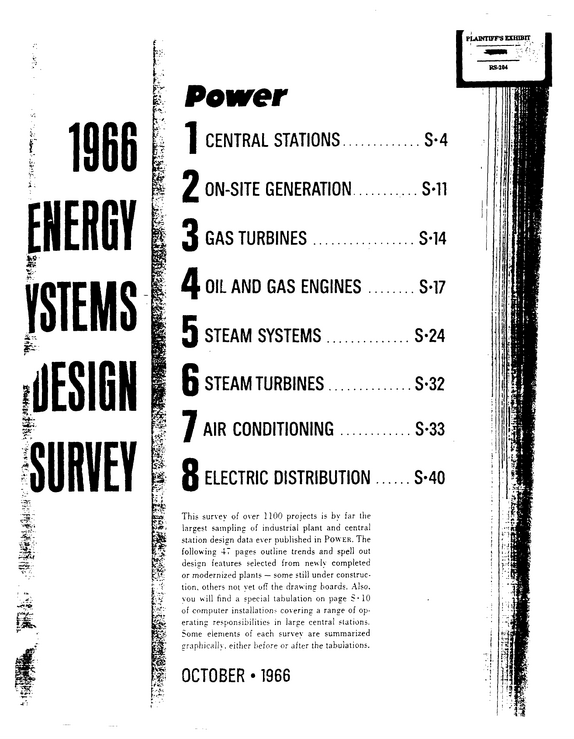
e Power a*. - 1 CENTRAL STATIONS...............
refid# jmrJ6dOxd4OXXQvmvK1RvN0yp12 pages
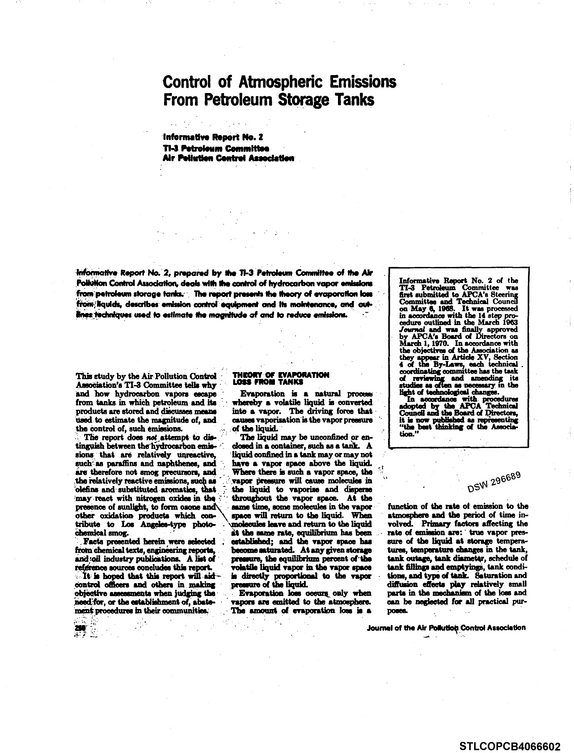
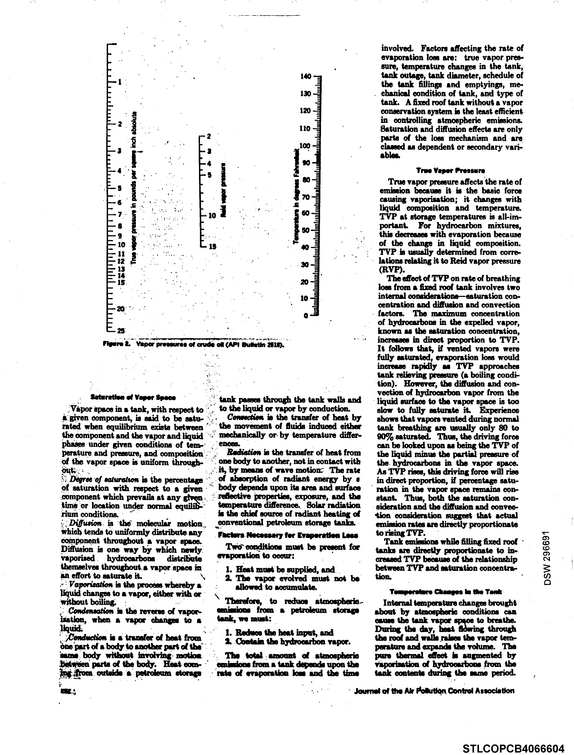
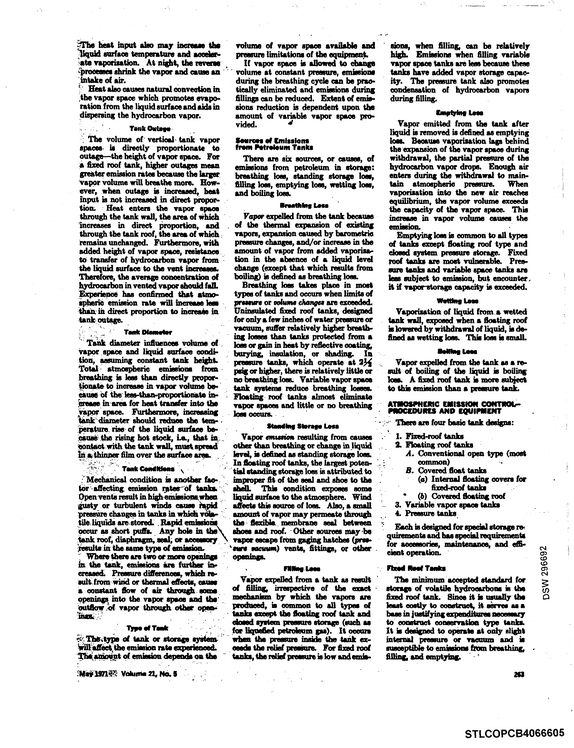
Control of Atmospheric Emissions From Petroleum Storage Tanks Informativu Report No. 2 TW Petroleum Comwltt-- Air PwUwtteH Control Anodotfon fcifeowotiv Report No. 2, prepared by Xw 71-3 Petroleum Committee of (tie Air .
refid# bV37DkVzJ165Zb8YEB237x3o9 pages
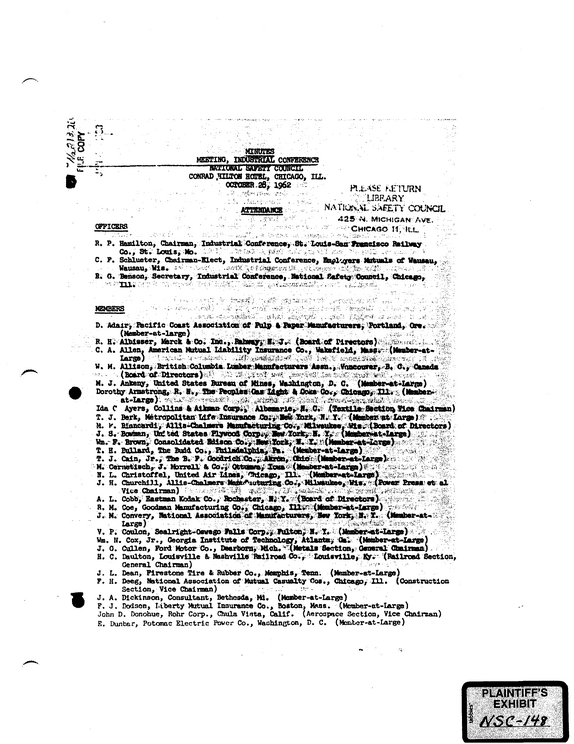
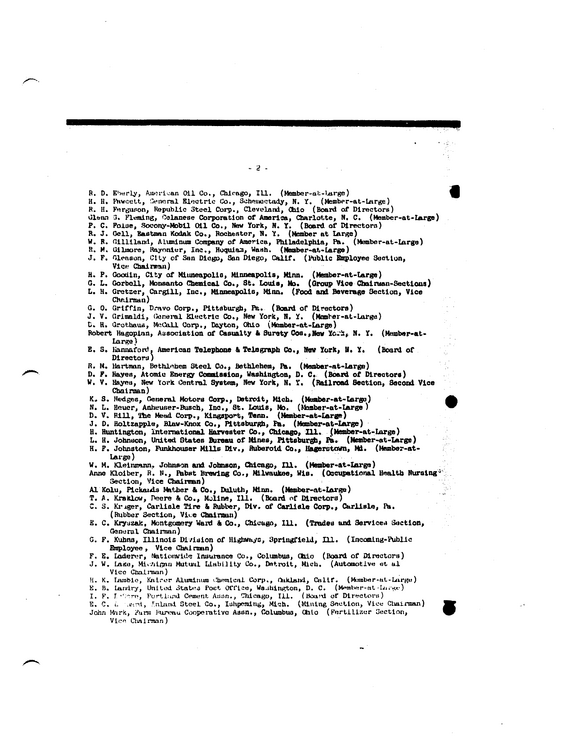
FILE NAME: National Safety Council (NSC) DATE: 1962 Oct 28 DOC#: NSC148 DOCUMENT DESCRIPTION: NSC Industrial Conference Meeting Minutes & Attendee List 1 3 5 2 - 19 5 3 rr s8 ft rj OFFICERS MINUTES .
refid# YDdgDbb5bKd6awj7oOEMnQXYK19 pages
ST0 0 I !
refid# 2RzxJZpy3gnGYQ3dEGkb14bGa15 pages
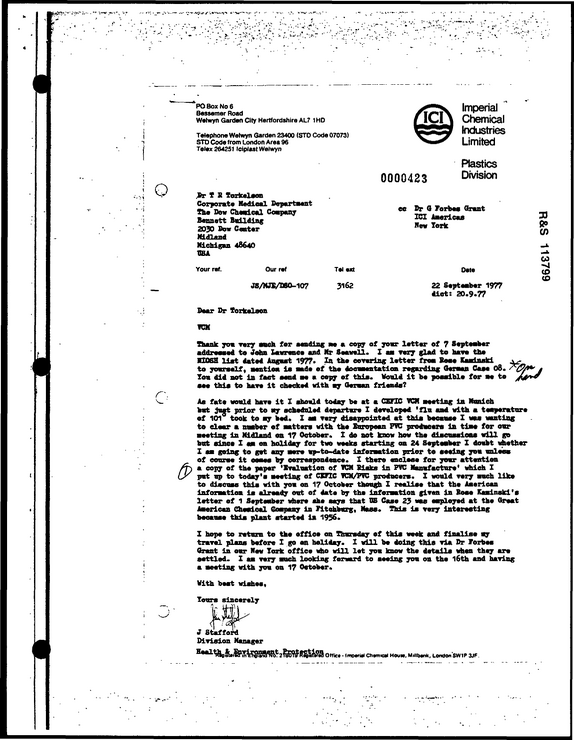
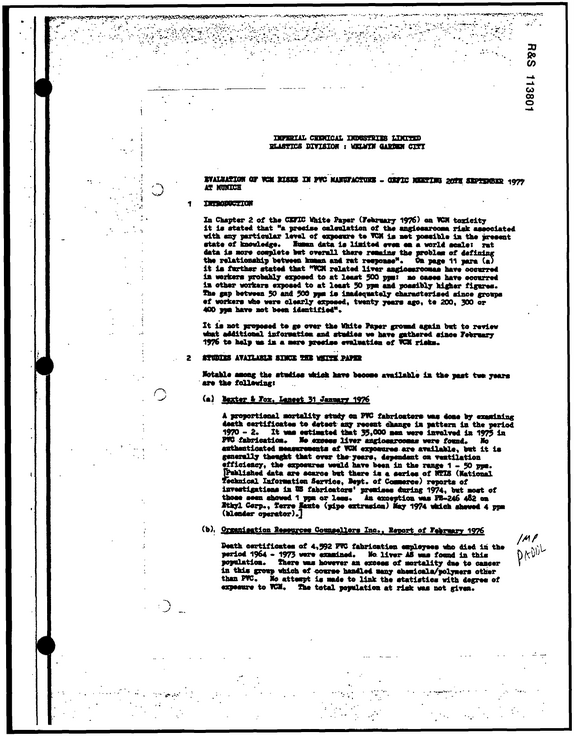
Miring at al predict an incidence of 0.01* liver AS in rata exposed to 4,6 ppe 1CM. theoretical extrapolation^ te Ban (allowances Bade ton body boss and aetabolle differences) leads _ ta the aaggaatioa of an ineldsnee of 1*5 par 10 after daily axpooura _/ for 8 bourn te 1 ppe VCM. .
refid# OEjJm2e1OYOYK17O3rZeJDJep28 pages