Refine
Estimated Years 1960-1969Clear
16,810 results foundRefine Search
The tradition that there should be no secrets in safety, no denial of help to a competitor m life-saving, is one of the great elements of strength in the safety movement Good will.
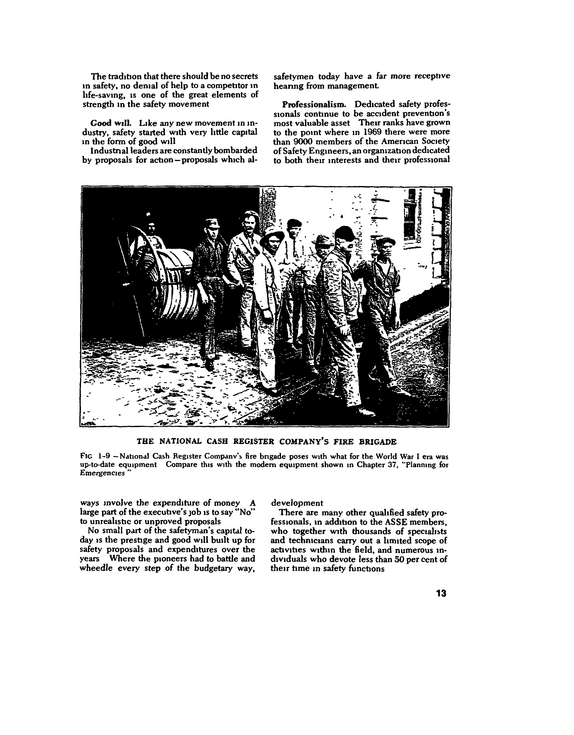
refid# g29V9MO9aL51r0e7rDwLGLRq31 page
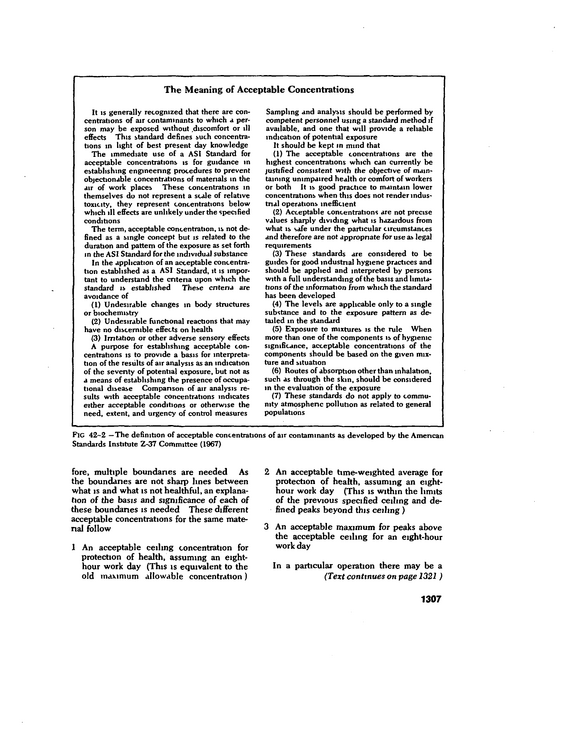
The Meaning of Acceptable Concentrations It is generally recognized that there are con centrations of air contaminants to which a per son may be exposed without .discomfort or ill effects This standard defines such concentra tions in light of best present day knowledge The immediate use of a ASI Standard for acceptable concentrations is for guidance in establishing engineering procedures to prevent objectionable concentrations of materials in the air of work places These concentrations in themselves do not represent a scale of relative toxicity, they represent concentrations below which ill effects are unlikely under the specified conditions The term, acceptable concentration, is not de fined as a single concept but is related to the duration and pattern of the exposure as set forth in the ASI Standard for the individual substance In the application of an acceptable concentra tion established as a ASI Standard, it is impor tant to understand the criteria upon which the standard is established These criteria are avoidance of (1) Undesirable changes in body structures or biochemistry (2) Undesirable functional reactions that may have no discernible effects on health (3) Irritation or other adverse sensory effects A purpose for establishing acceptable con centrations is to provide a basis for interpreta tion of the results of air analysis as an indication of the seventy of potential exposure, but not as a means of establishing the presence of occupa tional disease Companson of air analysis re sults with acceptable concentrations indicates either acceptable conditions or otherwise the need, extent, and urgency of control measures Sampling and analysis should be performed by competent personnel using a standard method if available, and one that will provide a reliable indication of potential exposure It should be kept in mind that (1) The acceptable concentrations are the highest concentrations which can currently be justified consistent with the objective of main taining unimpaired health or comfort of workers or both It is good practice to maintain lower concentrations when this does not render indus trial operations inefficient (2) Acceptable concentrations are not precise values sharply dividing what is hazardous from what is safe under the particular circumstances and therefore are not appropriate for use as legal requirements (3) These standards are considered to be guides for good industrial hygiene practices and should be applied and interpreted by persons with a full understanding of the basis and limita tions of the information from which the standard has been developed (4) The levels are applicable only to a single substance and to the exposure pattern as de tailed in the standard (5) Exposure to mixtures is the rule When more than one of the components is of hygienic significance, acceptable concentrations of the components should be based on the given mix ture and situation (6) Routes of absorption other than inhalation, such as through the skin, should be considered in the evaluation of the exposure (7) These standards do not apply to commu nity atmosphenc pollution as related to general populations Fig 42-2 --The definition of acceptable concentrations of air contaminants as developed by the American Standards Institute Z-37 Committee (1967) fore, multiple boundaries are needed As the boundanes are not sharp lines between what is and what is not healthful, an explana tion of the basis and significance of each of these boundanes is needed These different acceptable concentrations for the same matenal follow 1 An acceptable ceiling concentration for protection of health, assuming an eighthour work day (This is equivalent to the old maximum allowable concentration) 2 An acceptable time-weighted average for protection of health, assuming an eighthour work day (This is within the limits of the previous specified ceiling and de fined peaks beyond this ceiling) 3 An acceptable maximum for peaks above the acceptable ceiling for an eight-hour work day In a particular operation there may be a (Text conttnues on page 1321 ) 1307
refid# DGxg8kjz1NNOrzxV9rv2zbwbo1 page
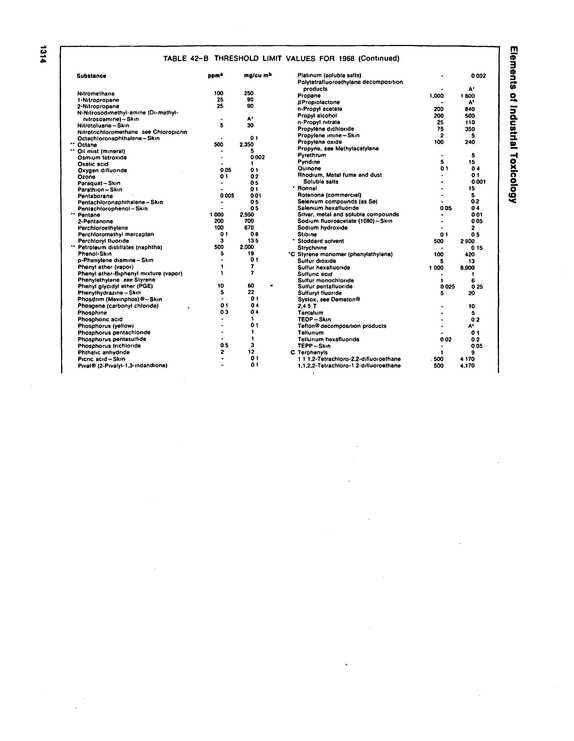
Elements of Industrial Toxicology 1314 TABLE 42-B THRESHOLD LIMIT VALUES FOR 1968 (Continued) Substance Nitromethane 1-Nitropropane 2-Nitropropane N-Nitrosodimethyl-amine (Di-methyl- nitrosoamine) - Skin Nitrotoluene-Skm Nitrotnchloromethane see Chloropicrm Octachloronaphthalene-- Skin ' Octane '* Oil mist (mineral) Osmium tetroxide Oxalic acid Oxygen difluonde Ozone Paraquat--Skin Parathion-Skm Pentaborane Pentachloronaphlhalene-Skm Pentachlorophenol - Skin Pentane 2-Pentanone Perchloroethytene Perchloromethyl mercaptan Perchloryl fluoride '* Petroleum distillates (naphtha) Phanol-Skin p-Phenylene diamine --Skin Phenyl ether (vapor) Phenyl ether-Biphenyl mixture (vapor) Phenylethylene see Styrene Phenyl glycidyl ether (PGE) Phenylhydrazine - Skin Phosdnm (Mevinphos)-Skin Phosgene (carbonyl chloride) , Phosphine Phosphonc acid Phosphorus (yellowl Phosphorus pentachloride Phosphorus pentasulfide Phosphorus trichloride Phthalic anhydride Picric acid --Skin Pival (2-PivalyM ,3-indandione) ppm mg/eu mb 100 250 25 90 25 90 - A* 5 30 - 500 - - 0 05 01 0 005 1 000 200 100 01 3 500 5 1 1 01 2.350 5 0002 1 01 02 05 01 001 05 05 2.950 700 670 08 135 2,000 19 01 7 7 10 60 5 22 - 01 01 04 03 04 -1 01 -1 *1 05 3 2 12 01 01 Platinum (soluble salts) Polytetrafluoroethylene decomposition products Propane /3Propiolactone n-Propyl acetate Propyl alcohol n-Propyl nitrate Propylene dichlonde Propylene imme-Skin Propylene oxide Propyne. see Methylacetylene Py rethrum Pyndine Quinone Rhodium.
refid# jgVaa1owOyEqOXL15GZov03kp1 page
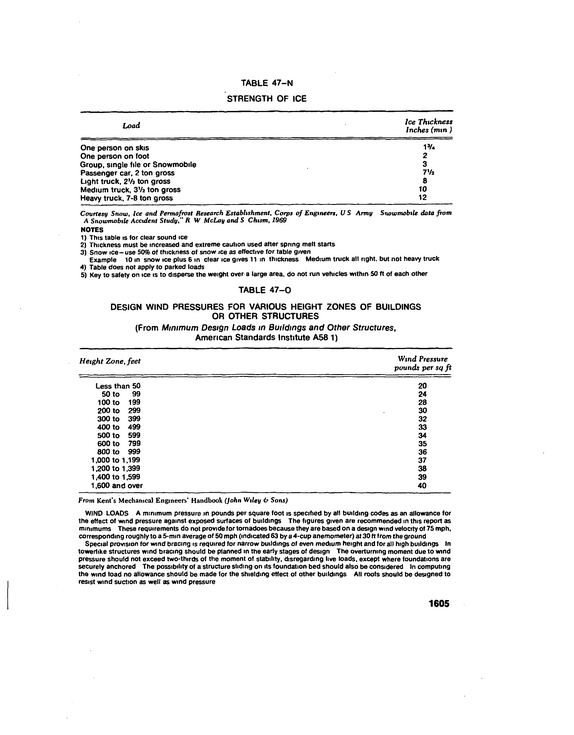
TABLE 47--N STRENGTH OF ICE Load Ice Thickness Inches (mm ) One person on skis One person on foot Group, single file or Snowmobile Passenger car, 2 ton gross Light truck, 2'h ton gross Medium truck, 3'/2 ton gross Heavy truck, 7-8 ton gross IV4 2 3 7>/a 8 10 12 Courtesy Snow, Ice and Permafrost Research Establishment, Corps of Engineers, U S Army Snowmobile data from A Snowmobile Accident Study," R W McLay and S Chism, 1969 NOTES 1) This table is for clear sound ice 2) Thickness must be increased and extreme caution used after spnng melt starts 3) Snow ice-use 50% of thickness of snow ice as effective for table given Example 10 in snow ice plus 6 in clear ice gives 11 in thickness Medium truck all right, but not heavy truck 4) Table does not apply to parked loads 5) Key to safety on ice is to disperse the weight over a large area, do not run vehicles within 50 ft of each other TABLE 47-0 DESIGN WIND PRESSURES FOR VARIOUS HEIGHT ZONES OF BUILDINGS OR OTHER STRUCTURES (From Minimum Design Loads in Buildings and Other Structures, American Standards Institute A58 1) Height Zone, feet Wind Pressure pounds per sq ft Less than 50 50 to 99 100 to 199 200 to 299 300 to 399 400 to 499 500 to 599 600 to 799 800 to 999 1.000 to 1,199 1,200 to 1,399 1,400 to 1,599 1,600 and over 20 24 28 30 32 33 34 35 36 37 38 39 40 From Kent's Mechanical Engineers' Handbook (John Wiley is Sons) WIND LOADS A minimum pressure in pounds per square foot is specified by all building codes as an allowance for the effect of wind pressure against exposed surfaces of buildings The figures given are recommended in this report as mimmums These requirements do not provide for tornadoes because they are based on a design wind velocity of 75 mph, corresponding roughly to a 5-min average of 50 mph (indicated 63 by a 4-cup anemometer) at 30 ft from the ground Special provision for wind bracing is required for narrow buildings of even medium height and for all high buildings In towertike structures wind bracing should be planned in the early stages of design The overturning moment due to wind pressure should not exceed two-thirds of the moment of stability, disregarding live loads, except where foundations are securely anchored The possibility of a structure sliding on its foundation bed should also be considered In computing the wind load no allowance should be made for the shielding effect of other buildings All roofs should be designed to resist wind suction as well as wind pressure 1605
refid# 8RmDGjkKJ04VzXZbVV6oKazBa1 page
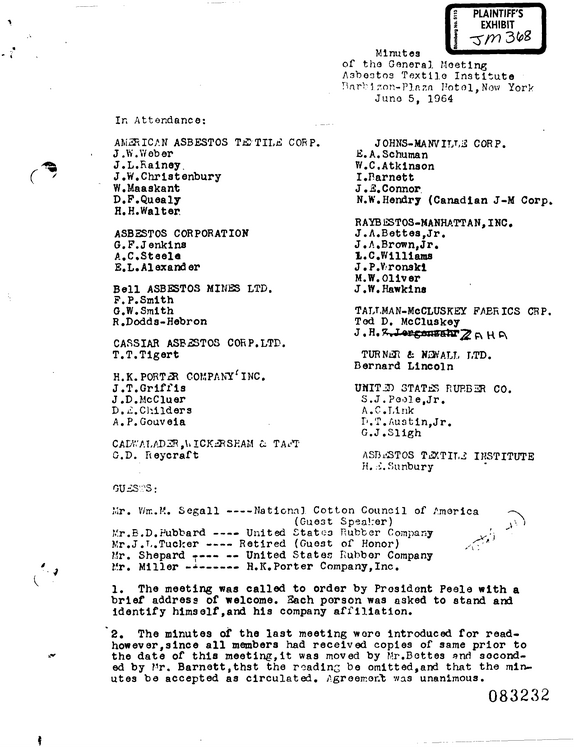
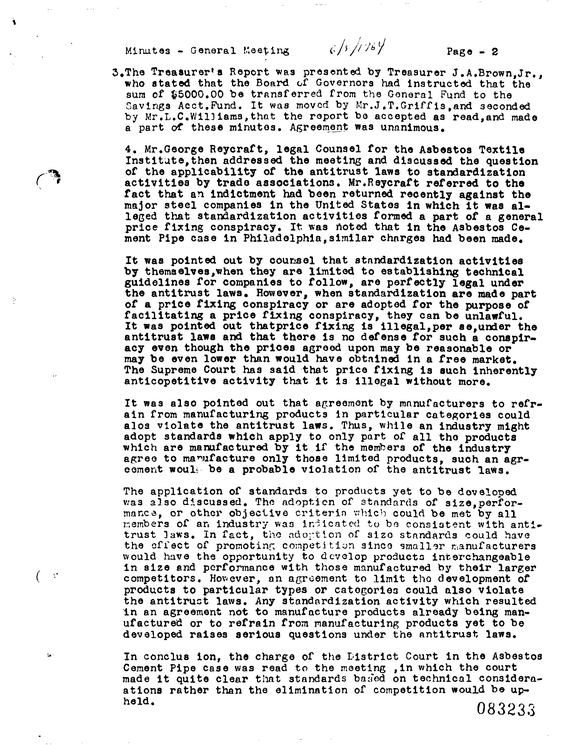
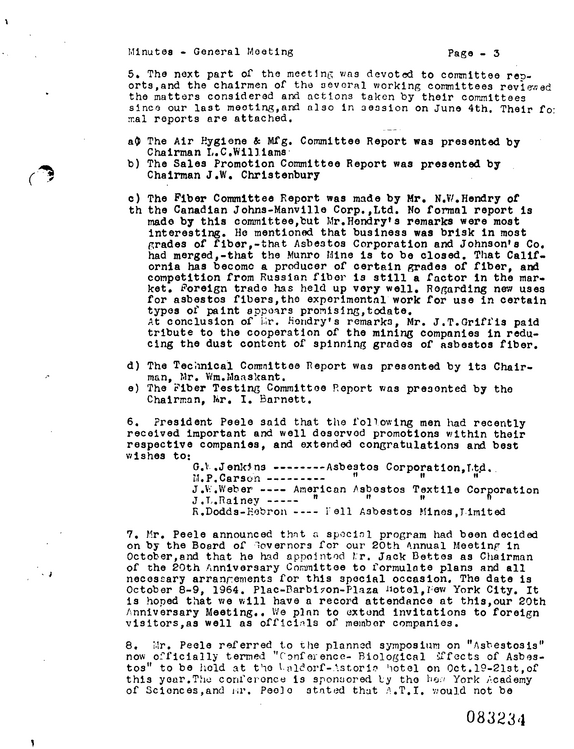
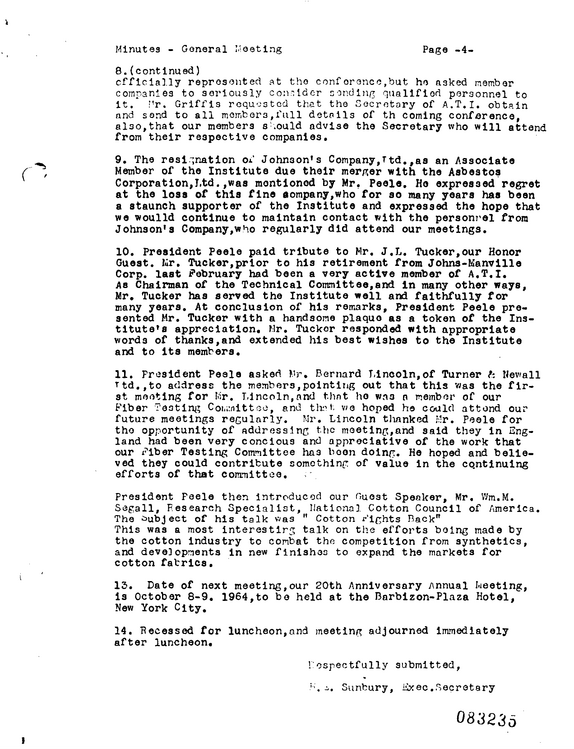
PLAINTIFF'S EXHIBIT J -3777 3^2 Minutes of the General Meeting A3boeto3 Textile Institute Herb Iron-Plaza Hotel,Now York Juno 5, 1964 In Attendance: AMERICAN ASBESTOS TEX TILE CORP.
refid# q3a9LgkVkZ5k9242J5XzmwzJR8 pages
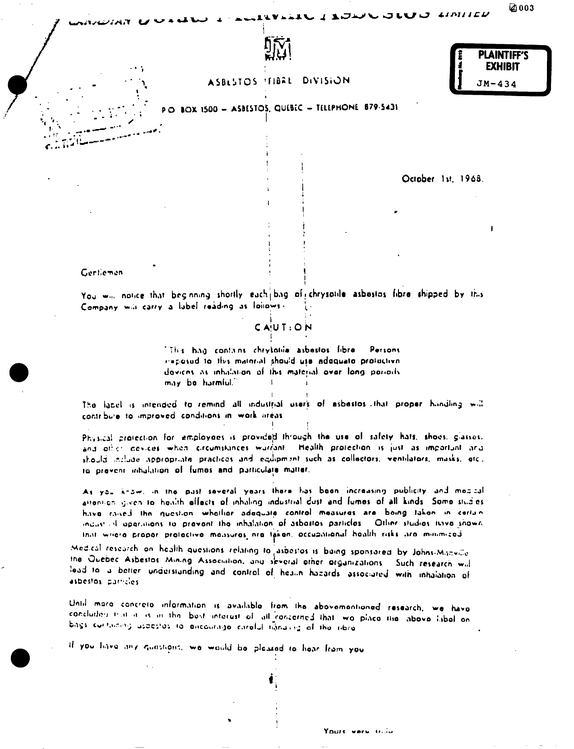
_, " ; @003 a 4 XO^OS.^ CJMJ l CIS Si ** I ' i 4 I ASDijTQS 'flBSL DiVlSiON I PO >OX 1500 - AS8ESTOS.
refid# O1Gz0BjqLyZ2RDjKz0BorENnM1 page
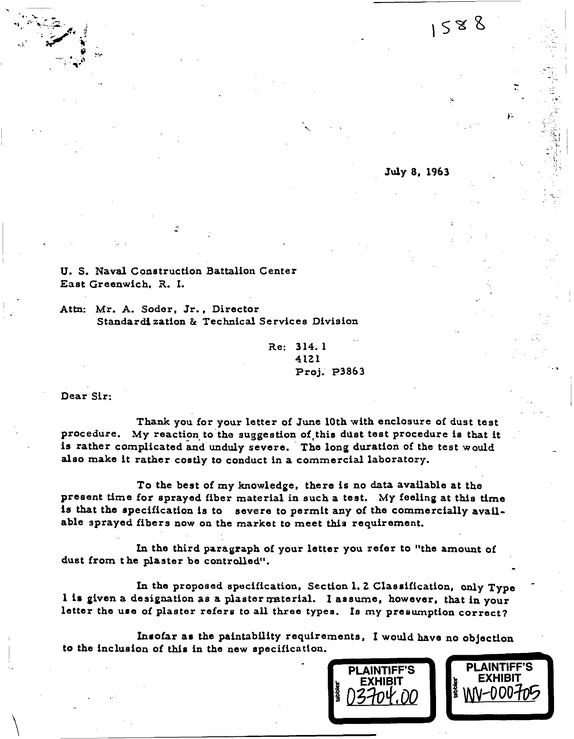
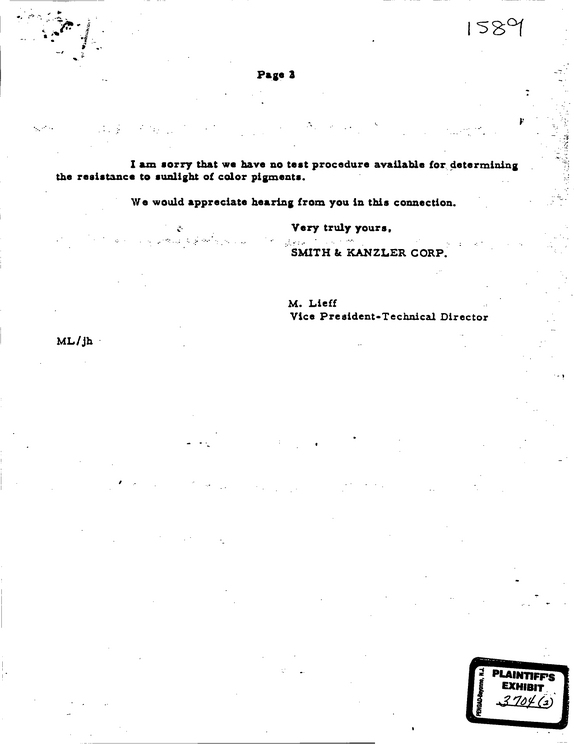
*1 Jt, ' "V I s* & V July 8. 1963 U.
refid# b5eyk7Y98mEgqekR0naYDo5g32 pages
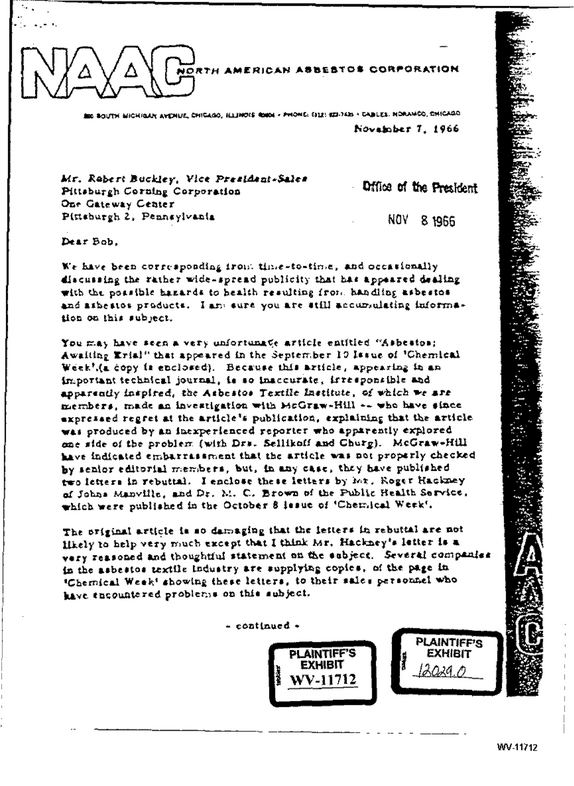
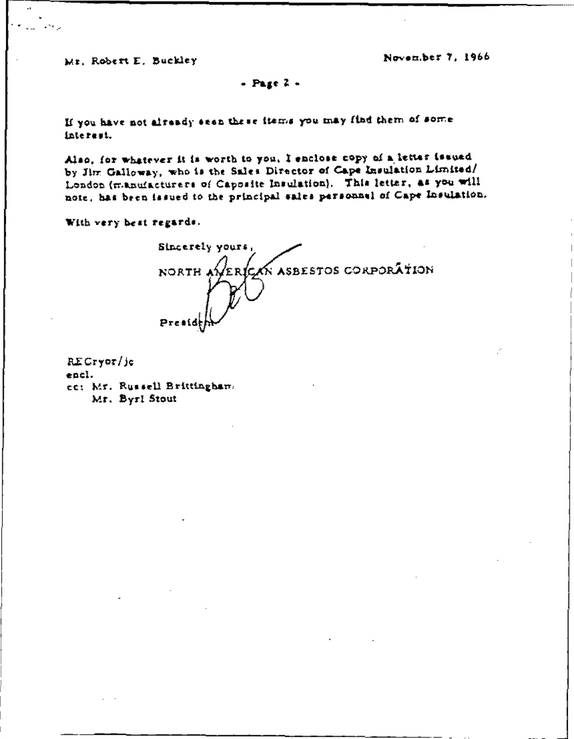
MORTH AMERICAN ASttEftTOl CORWORATIOH mt tow* wtcMioAn avcmul.
refid# wgbv8wZnmQORrN6dXQ2Y36MzQ2 pages
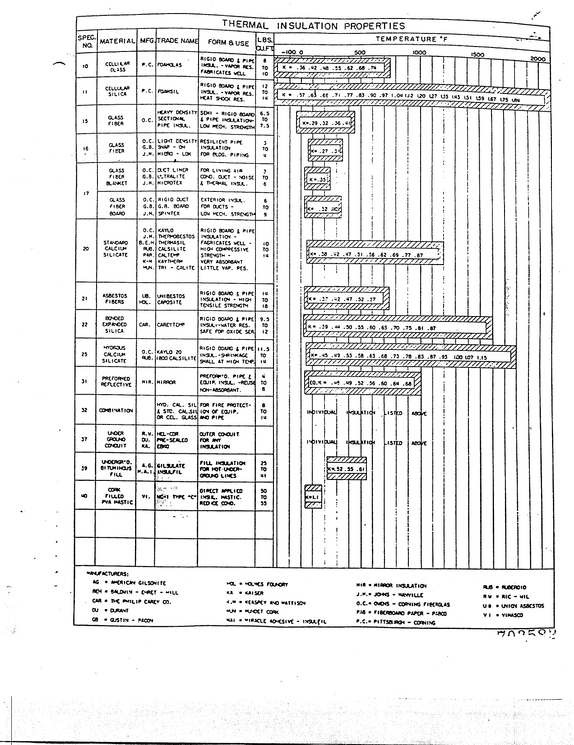
design and construction UNION CARBIDE CHEMICALS COMPANY Division of UNION CARBIDE CORPORATION SPECIFICATIONS For Thermal Insulation Material and Application July 1961 J.
refid# 37Da3825Nr82R2pZp31kx36132 pages
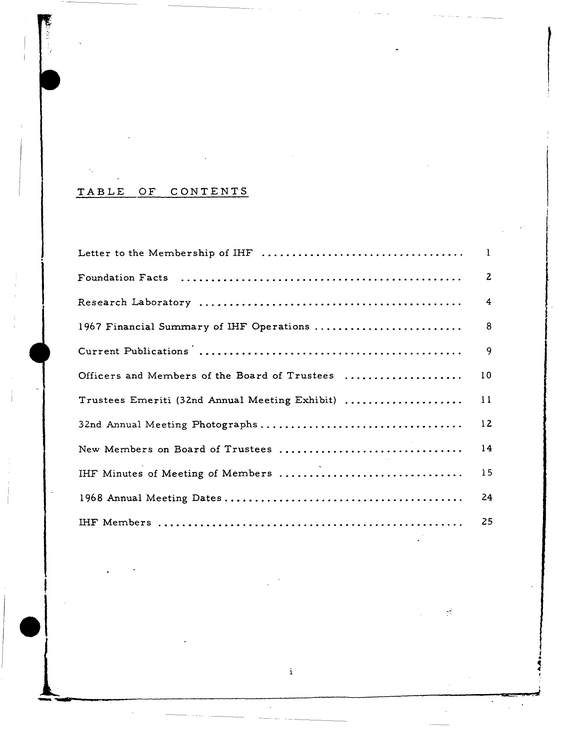
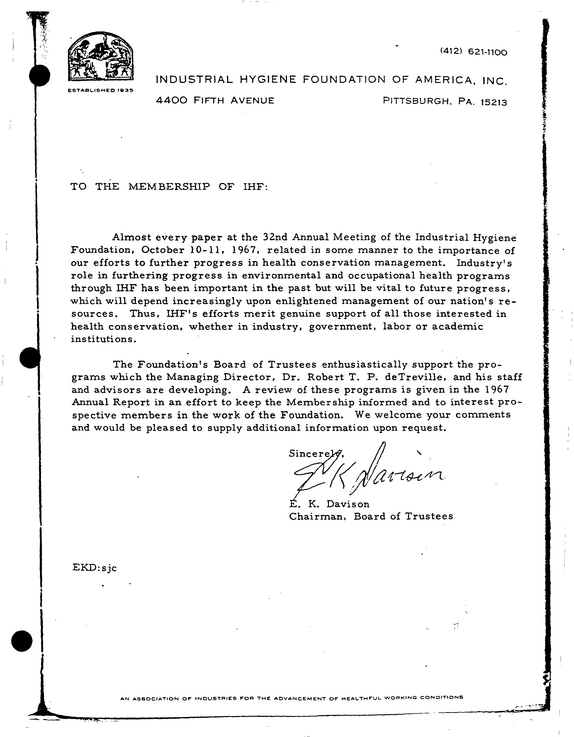
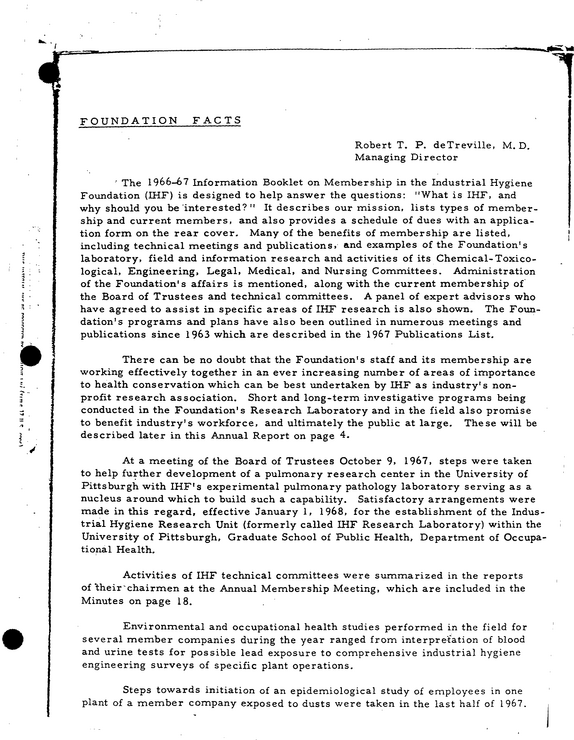
f 11 \ < -------- K N INDUSTRIAL HYGIENE FOUNDATION 1967 Annual Report L INDUSTRIAL HYGIENE FOUNDATION OF AMERICA 4400 FIFTH AVENUE PITTSBURGH, PA. 15213 PLAINTIFF'S J| EXHIBIT TABLE OF CONTENTS Letter to the Membership of IHF .............................................................................................. 1 Foundation Facts .................................................................................................................................... 2 Research Laboratory ........................................................................................................................... 4 1967 Financial Summary of IHF Operations.................................................................... 8 Current Publications ........................................................................................................................... 9 Officers and Members of the Board of Trustees ..................................................... 10 Trustees Emeriti (32nd Annual Meeting Exhibit) ................................................ 11 32nd Annual Meeting Photographs................................................................................................... 12 New Members on Board of Trustees ..................................................................................... 14 IHF Minutes of Meeting of Members .......................................................................................... 15 1968 Annual Meeting Dates................................................................................................................ 24 IHF Members............................................................................................................................... 25 i ESTABLISHED 1035 (412) 621-1100 INDUSTRIAL HYGIENE FOUNDATION OF AMERICA, INC. 4400 Fifth avenue Pittsburgh, Pa. 15213 TO THE MEMBERSHIP OF IHF: 1 Almost every paper at the 32nd Annual Meeting of the Industrial Hygiene Foundation, October 10-11, 1967, related in some manner to the importance of our efforts to further progress in health conservation management.
refid# NnykDrn6kmK84Y617wp05q8w29 pages
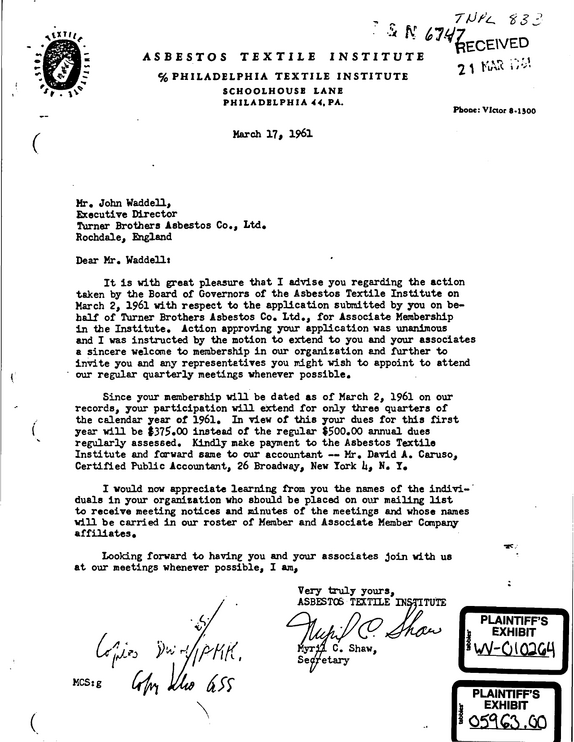
M J ,, ,, TPSc. 833 '> K ^Ieceived ASBESTOS TEXTILE INSTITUTE % PHILADELPHIA TEXTILE INSTITUTE 7 \ K/S.A \t`'% * SCHOOLHOUSE LANE PHILADELPHIA 44, PA.
refid# 5kK37BLKRb4GR3mk1N1Ljk5bV1 page
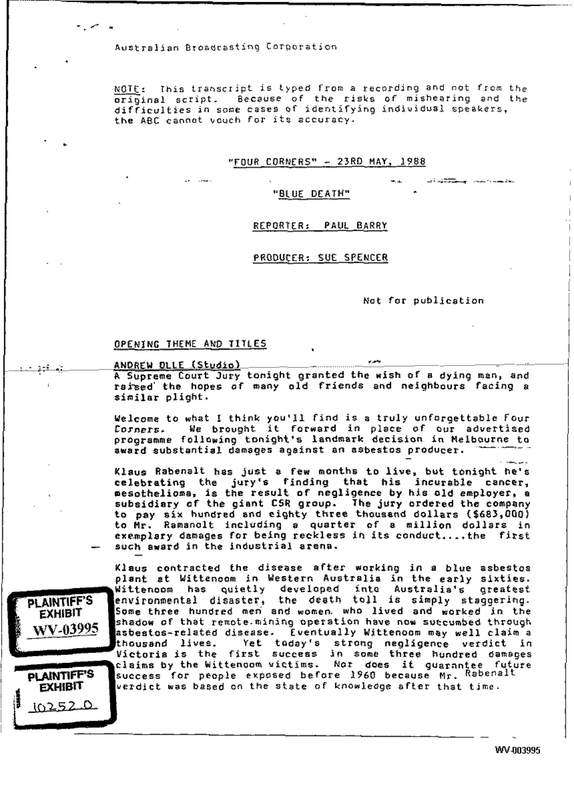
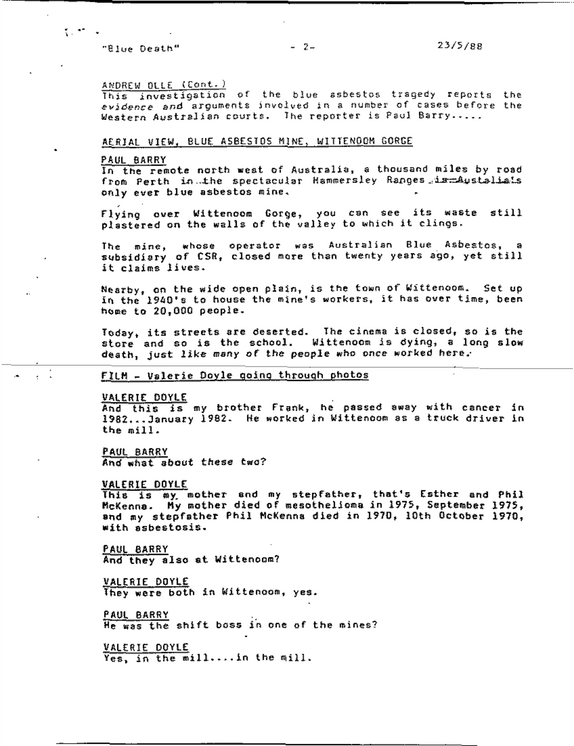
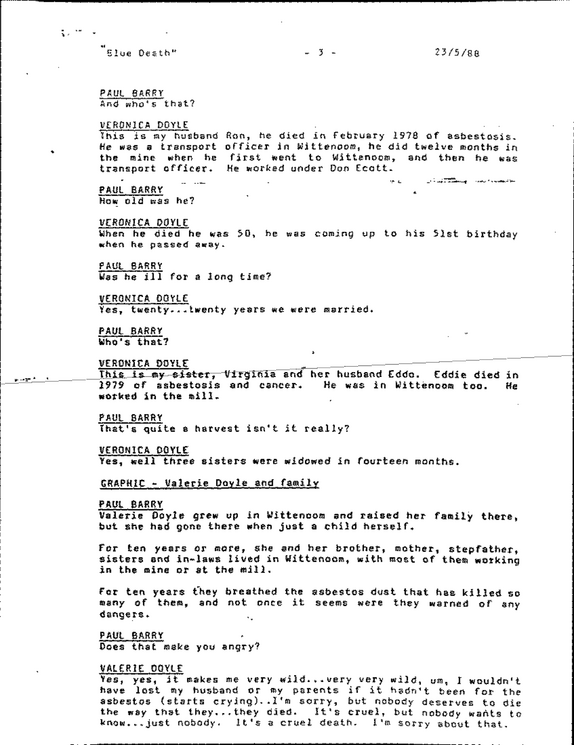
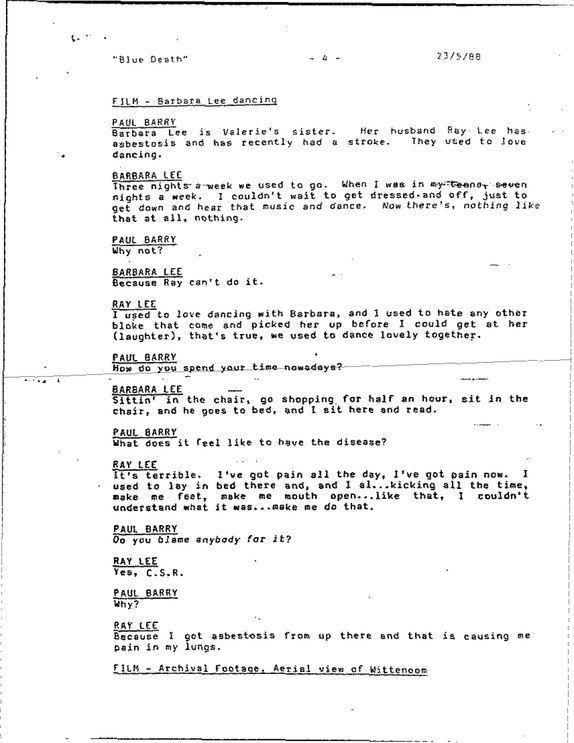
Australian Broadcasting Corooration NOTE: This transcript is typed from a recording and not from the original script. 8ecsuse of the risks of mishearing and the difficulties in some cases <?
refid# Qg7Dkr7rnJdbV4dLvRZMOb4YL21 pages
s_ '.-.
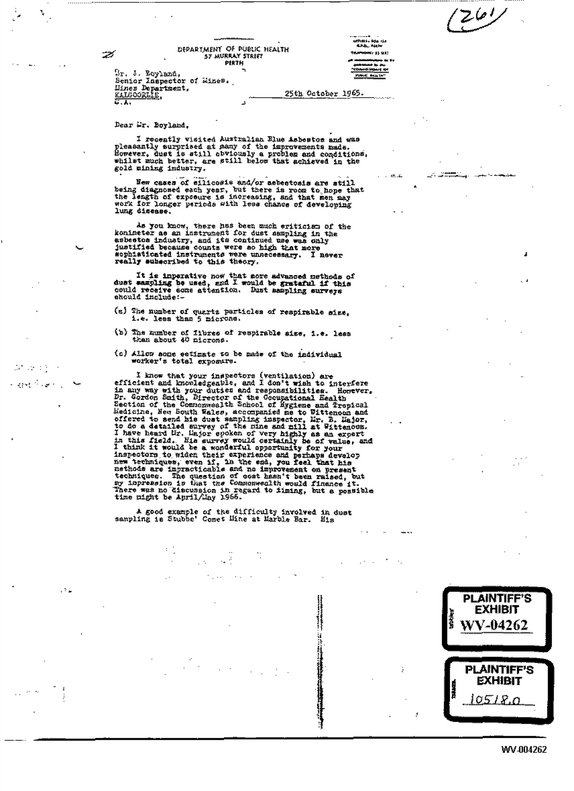
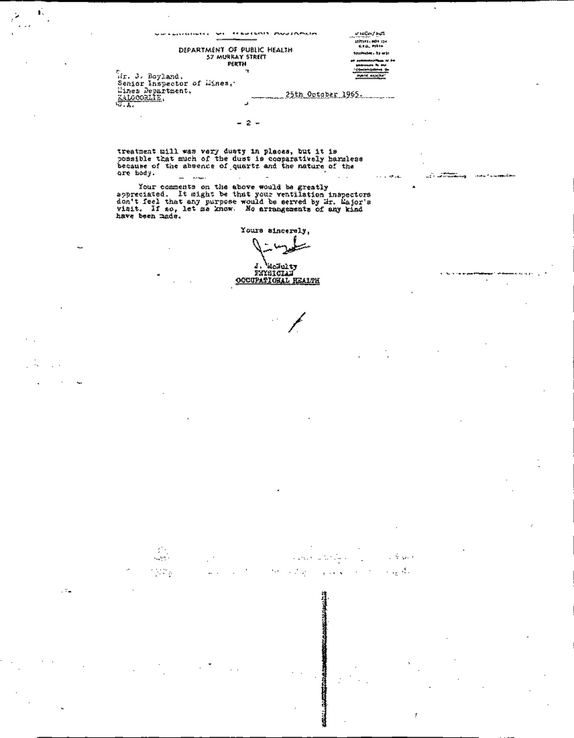
refid# n9RbD1gn7qeMpjLX6LJ36NgO12 pages
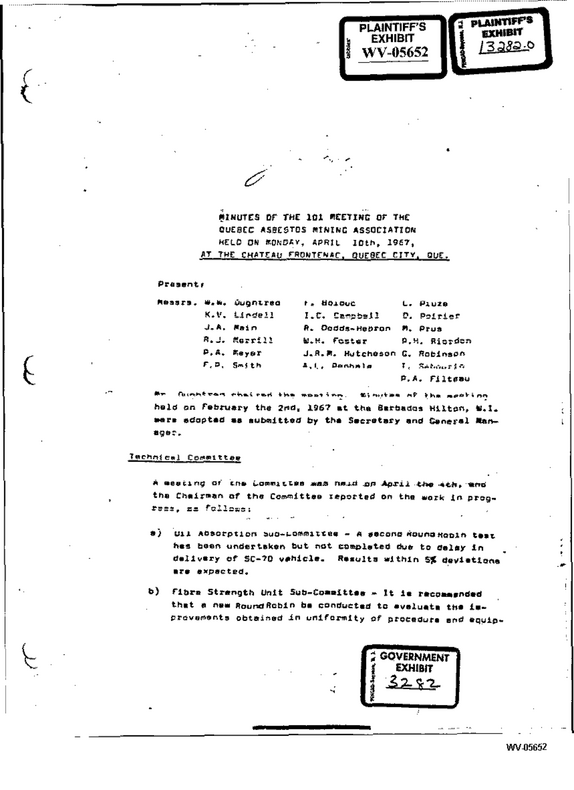
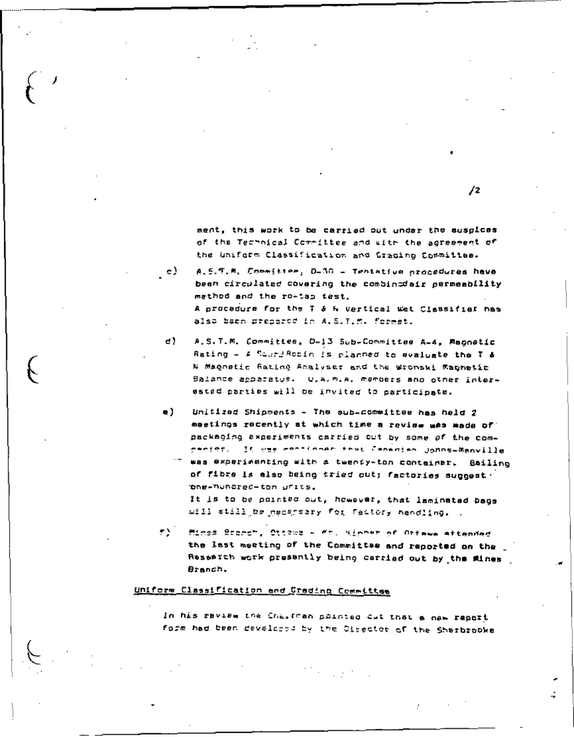
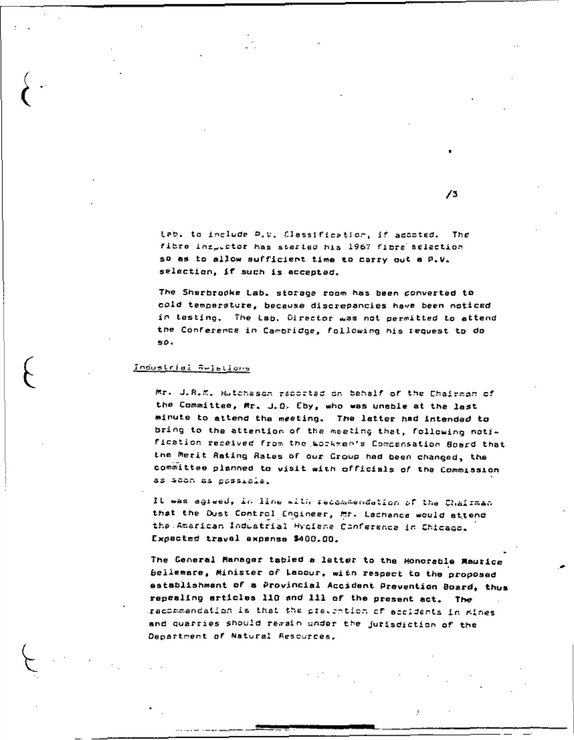
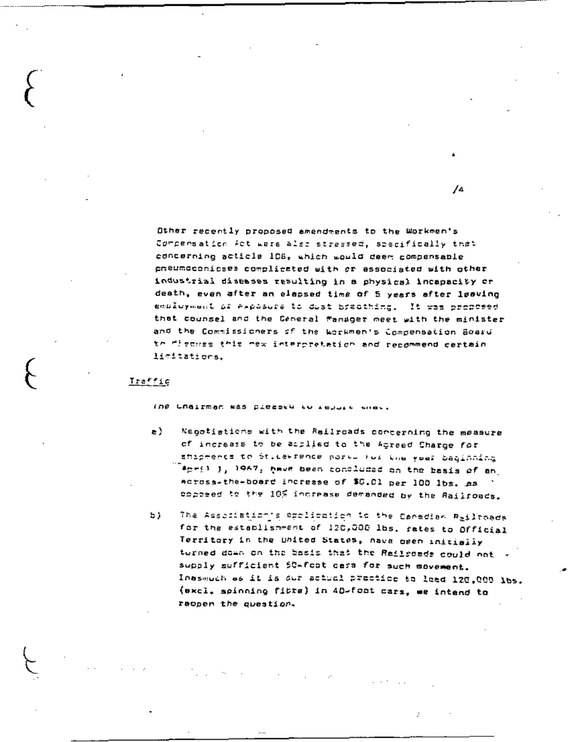
PLAINTIFFS * EXHIBIT I WV-05652 DrMINUTES THE IQt MEETING Of THE OUESCC ASBESTOS NtNXNC ASSOCIATION HELD ON KOKD*y, APRIL IDth, 1967, AT TWC CHATCAQ fftQWTfNAC.
refid# Znj4pQjYkY4YVvZgOLgKdxrq89 pages
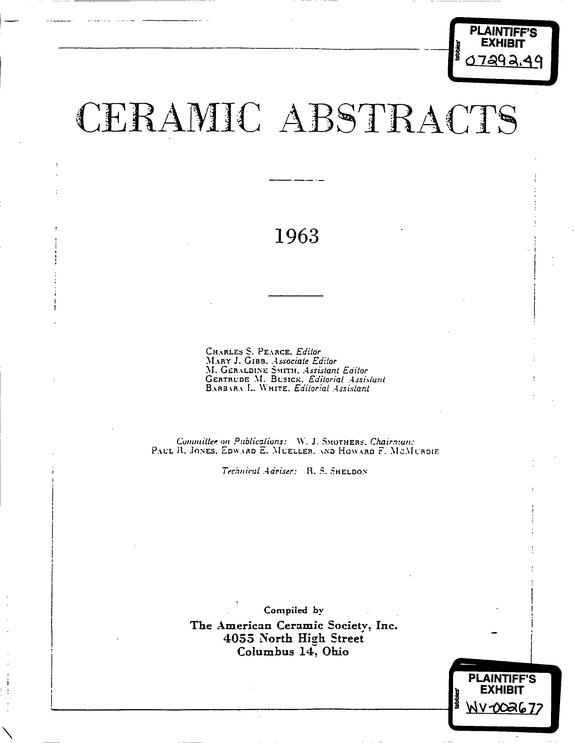
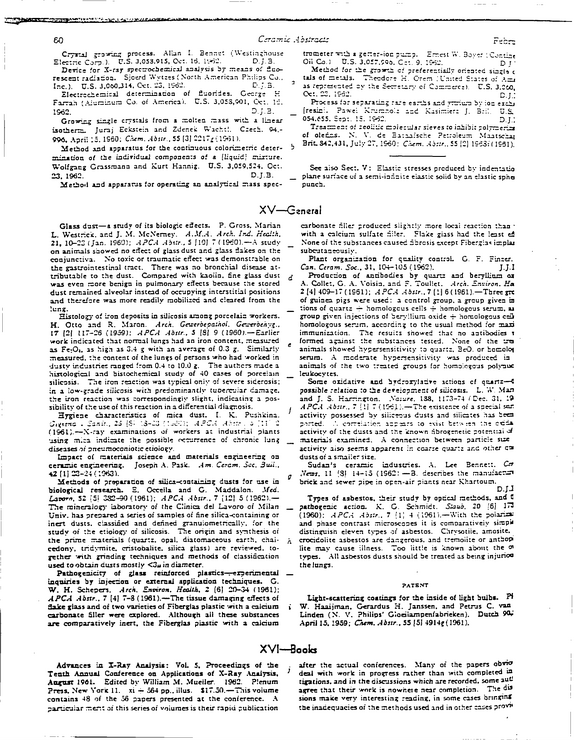
PLAINTIFFS EXHIBIT <37 aqsnq 1963 Charles S.
refid# Jr6bkqQLMN4NjKVNYeBV4rne3 pages