Refine
Estimated Years 1950-1959Clear
14,527 results foundRefine Search
596 CHAPTER 22 1957 Guide elimination of air through air valves or traps.
refid# nN9GaygOYMem3dZO8LR1QLarw1 page
768 CHAPTER 30 1957 Guide let velocity.
refid# 1bRrgBqoa6XgzOEL4De17GDZ1 page
876 CHAPTER 34 1957 Guide The selection of a proper water-cooling range depends upon: (1) type of service--refrigeration, internal-combustion engine, or steam condenser; (2) wet-bulb air temperature at which the equipment must operate; and (3) type of condenser or heat exchanger employed.
refid# 8OV2yO9a0wpBmnEv7E9b0GqLa1 page
i: I !!
refid# RjZG3dB061pDQNyJY786GmbyE1 page
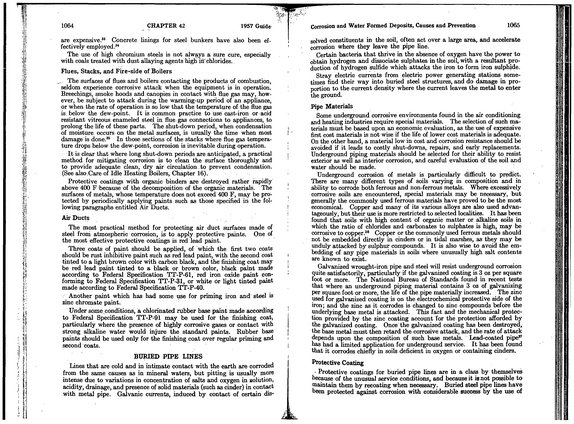
1064 CHAPTER 42 1957 Guide are expensive.33 Concrete linings for steel bunkers have also been ef fectively employed.34 The use of high chromium steels is not always a sure cure, especially with coals treated with dust allaying agents high in'chlorides.
refid# 2NonKn8oXJ4ojGrZDn5qwx0NL1 page
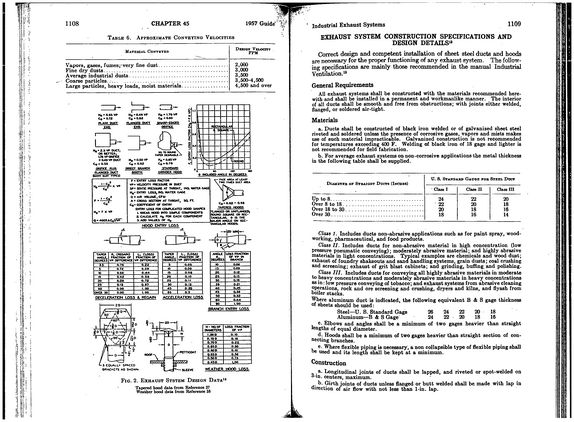
1108 CHAPTER 45 1957 Guide Table 6.
refid# wgE91VydD9NxJ1JaxZoo8wZ2J1 page
36 1957 Guide STOKERS, Mechanical, Anthra V.
refid# b5Vrz2p9wE20V7a3rdxdezkaD1 page
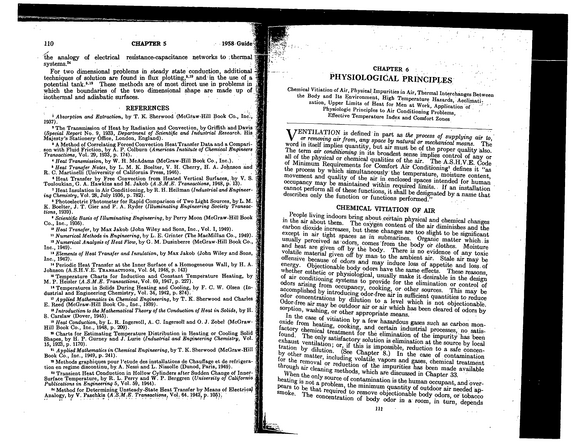
110 CHAPTER S 1958 Guide the analogy of electrical resistance-capacitance networks to ; thermal systems.24 For two dimensional problems in steady state conduction, additional techniques of solution are found in flux plotting,6-19 and in the use of ,a potential tank.6-19 These methods are of most direct use in problems in which the boundaries of the two dimensional shape are made up of isothermal and adiabatic surfaces.
refid# nkX7Vjp3JxGqLNxE2VKOGK5DR1 page
238 CHAPTER 10 1958 Guide Remedial Measures for Building Construction, by -L.
refid# MGONXeoXdyy4qgVxzmYZbYVyM1 page
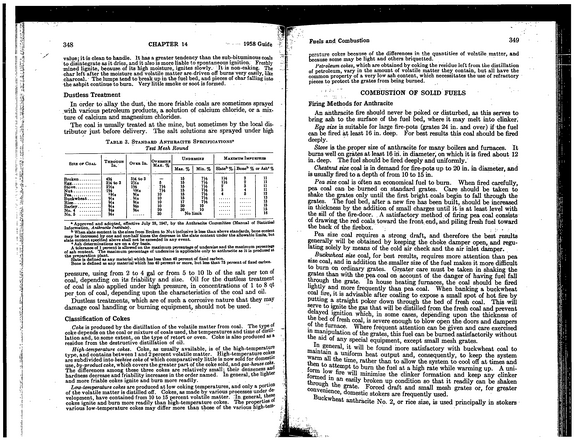
348 CHAPTER 14 1958 Guide value; it is clean to handle.
refid# pBxJa05aD4qNrdg5oj23Dk3dE1 page
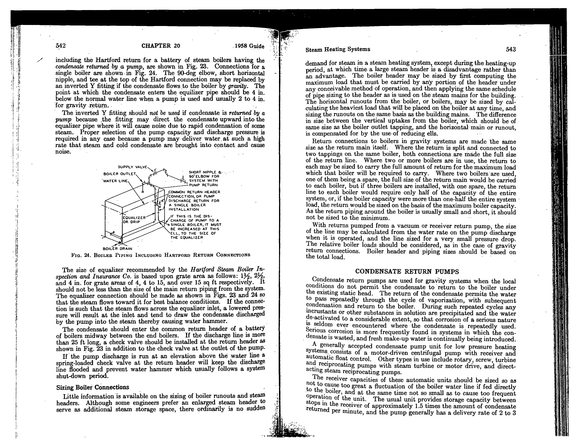
542 CHAPTER 20 . 1958 Guide including the Hartford return for a battery of steam boilers having the condensate returned by a pump, are shown in Fig. 23.
refid# VjMbNbkX1k2menn8vq4addDaq1 page
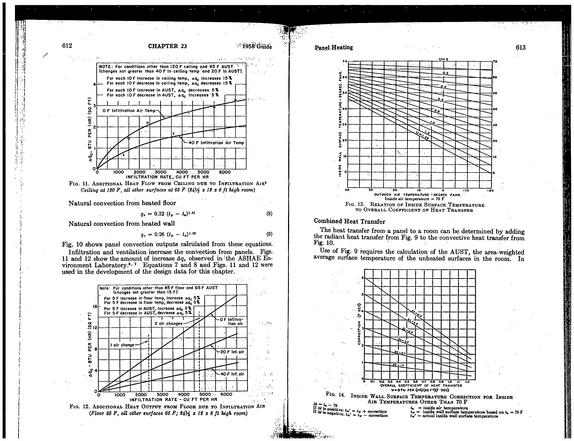
612 CHAPTER 23 'r; 1958sGuide NOTE: For conditions other thon 120 F ceiling ond 65 F AUST- :: (chonges not greater than 40.F In ceiling temp ond 20 F in AUiST), For eoch 10 F increose in ceiling temp, nqe increases 15% For each lOFdecrease in ceiling temp, nqe decreases 15% For each 10 F increase in AUST, Aqc decreases 5% i ii i i 0 F Infiltrotion Air Tempos o '"x X '''-40 F Infiltration Air Temp 0 1000 2000 3000 4000 . 5000 6000 INFILTRATION RATE, CU FT PER HR Fig. 11.
refid# b5nKGojdE6Ge3e7rgZGBDwZwg1 page
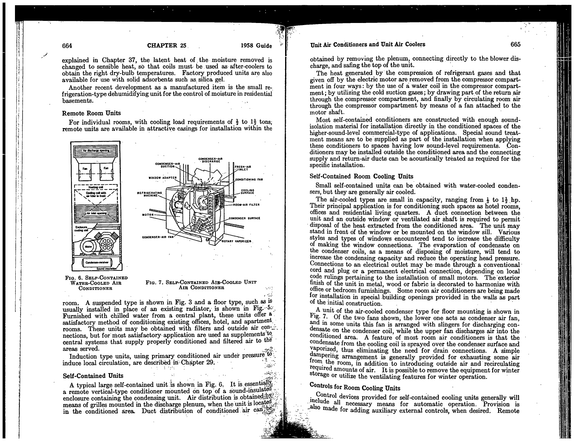
664 CHAPTER 25 1958 Guide explained in Chapter 37, the latent heat of.the moisture removed is changed to sensible heat, so that coils must be used as after-coolers to obtain the right dry-bulb temperatures.
refid# 6Rnde49evej4r50dqxgN0ORpE1 page
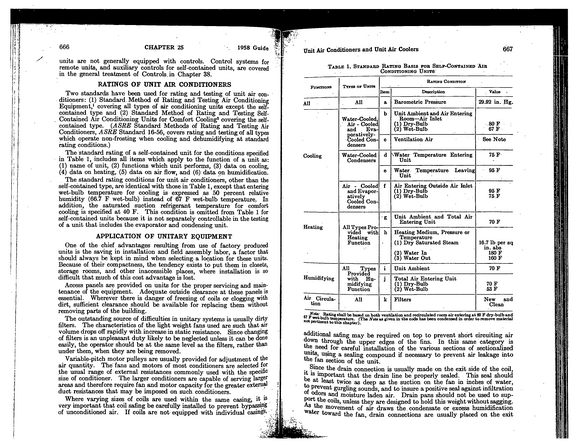
666 CHAPTER 25 1958 Guide units are not generally equipped with controls.
refid# JrX1n0v3kvwd3YNm8o4e25ke61 page
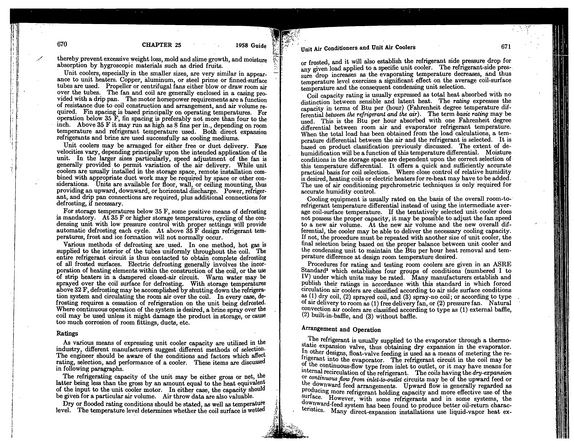
070 CHAPTER 25 1958 Guide / thereby prevent excessive weight loss, mold and slime growth, and moisture absorption by hygroscopic materials such as dried fruits.
refid# zoweam37y9zVNnjoE75VgwBp31 page