Refine
Estimated Years 1950-1959Clear
492 results foundRefine Search
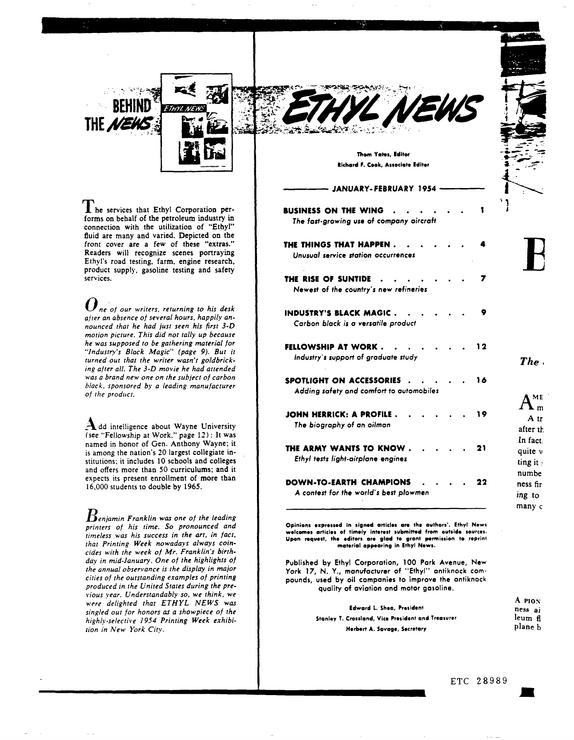
Tieniamin Franklin was one of the leading printers of his time.
refid# ZJq53D1ZrL7QwNvoqDNwKOOzL196 pages
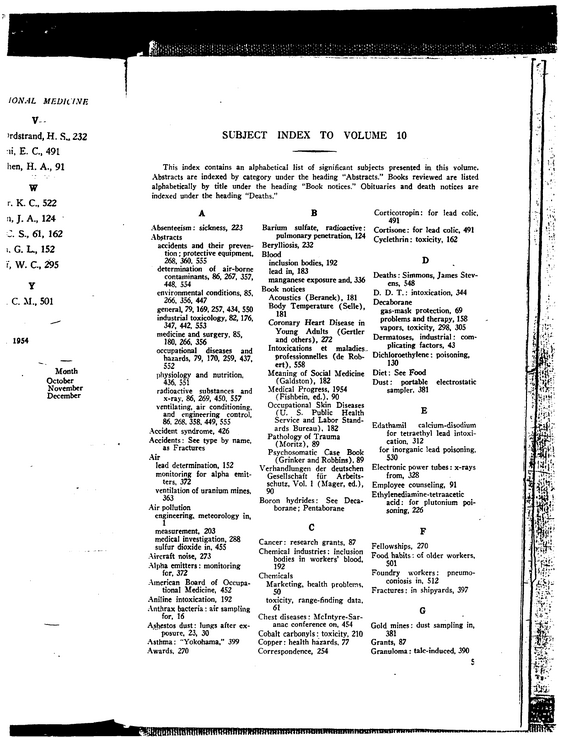
T .: intoxication, 344 Decaborane gas-mask protection, 69 problems and therapy, 158 vapors, toxicity, 298, 305 Dermatoses, industrial: com plicating factors, 43 Dichloroethylene: poisoning, 130 D iet: See Food D ust: portable electrostatic sampler, 381 E Edathamil calcium-disodium for tetraethyl lead intoxi cation, 312 for inorganic lead poisoning, 530 Electronic power tubes: x-rays from, 328 Employee counseling, 91 Ethylenediamine-tetraacetic acid: for plutonium poi soning, 226 F Fellowships, 270 Food habits: of older workers, 501 Foundry workers: pneumo coniosis in, 512 Fractures: in shipyards, 397 G Gold mines: dust sampling in, 381 Grants, 87 Granuloma: talc-induced, 390 A ' I \1V f \ nl PATIOXAL MEDICIXE * irax Infection in Industrial j nee to the Possibility of the -507, 1927; abstracted.
refid# VJ9xxZXmomVpZqY0J23LV1kV810 pages
He not only notes the information that should be gained in these sur- veys but also includes pertinent comments on proper con- duct within the plant on the part of the person making the survey Conditions to be watched for are described briefly in the following paragraphs Where such conditions are found the physician should become more completely informed through references such as are listed by the Council on Industrial Health of the American Medical Association.3 FREER EEE TERRE EEE EEEEE TERE EERE EEE EEE EERE EEE EEE EEE ey 39 POTENTIAL HEALTH HAZARDS Injurious Materials Dusts Pneumoconio.sTihse hazard presented by dust in an occupational environment is dependent on a number of factorIst is necessary first to know something of its composition Abrasive blasting may involve free silica in the form of quartz if a flint or sand abrasive is used In this case the dust exposure of the worker must be kept at a low level if silicosis is to be avoided On the other hand where steel abrasive is used to remove scale from steel forgings the dust contains no silica and consequently need not be kept under as meticulous control as in the former instance The maximum amount of dust that can be considered acceptable depends not only on its composition but also on its particle size and the duration of exposure Generally dusts present in work atmospheres include appreciable proportions sufficiently small to reach the alveoli The exceptions are rare In regard to duration of exposure not only to dusts but to other hazardous materials an operation may be observed to be brief but inquiry should be made as to whether it is repeated during the day and how often Where production involves a number of diverse operations it is well to inquire whether activity at other periods during the day or week may involve exposures greater than those observed The dusts most likely to produce disabling pulmonary involvement are those containing free silica that is silicon dioxide not chemically combined with other elements Such dusts occur frequently in industry Inquiry should be specific in regard to this component especially since the presence of free silica may not be readily apparent For example soapstone powder widely used to keep layers of unvulcanized rubber from sticking together may contain from 0 to 17 of free silica depending on its source The most common form of free silica is quartz which occurs widely in nature Natural materials widely used in industry that should be regarded as potentially productive of silicosis because of their high silica content are granite flint sandstone sand tripoli and diatomaceous earth Dusts containing asbestos should also be noted because prolonged exposure to asbestos dust in excessive concentration may result in a type of pneumoconiosis known as asbestosis which may be disabling In coal mining and handling attention should be given to the possible development of coal workers pneumoconiosis a recently recognized but incompletely explored clinical condition due to exposure to coal dust per se as well as to the possibility of silicosis from exposure to free silica in the rock associated with the coal in certain areas Metals and Their Compounds large number of metals and their compounds are used throughout industry As a potential industrial health hazard the most prominent of PEER ERE IER 40 these is lead which may be present alone or in a wide variety of compounds The chief mode of entry is inhalation of dust or fume Percutaneous absorption of metallic lead and inorganic lead compounds is insignificant but tetraethyl lead and a few other organic compounds of lead may be absorbed through the skin under suitable conditions Molten lead ordinarily does not present a hazard unless its temperature is well above its melting point Special attention should be given to operations where lead may be s

refid# v113Y1YrZJbzBL19005aG5DG610 pages
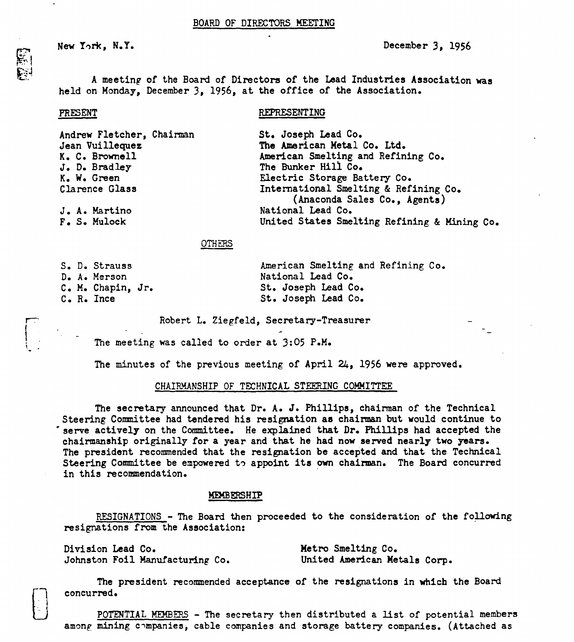
Joseph Lead Co.
refid# zKV7n90aZk7Y2vjJV1Dj0Vaz25 pages
"Tetraethyl Lead" by J.
refid# p2mNxp4GJexxkrBV1KpDv36Q622 pages
"Tetraethyl Lead" by J.
refid# Zo4xkbqwBj08Ed38q1V5rM7Z22 pages
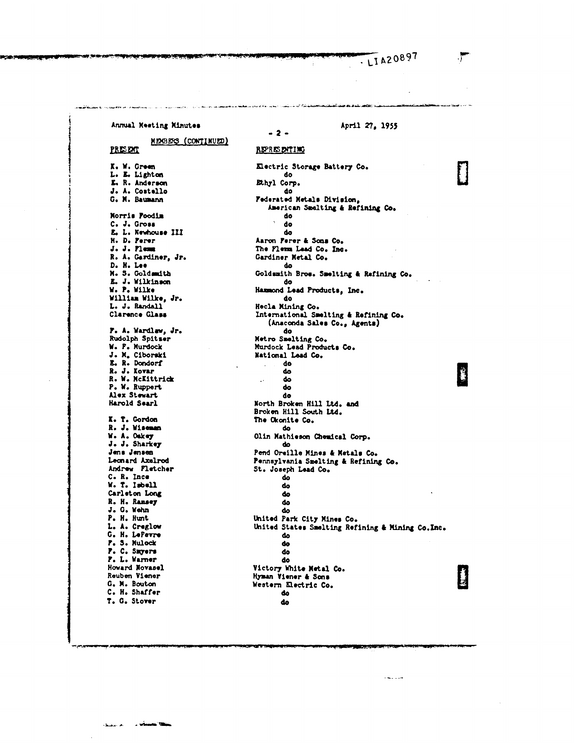
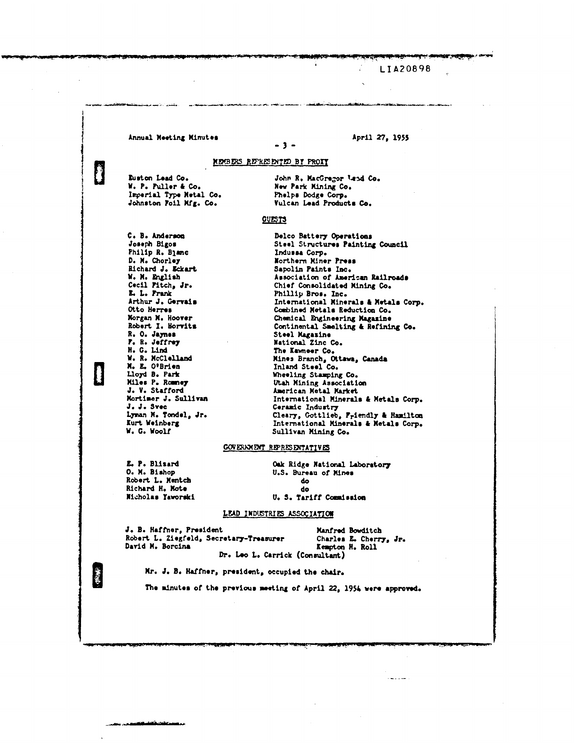
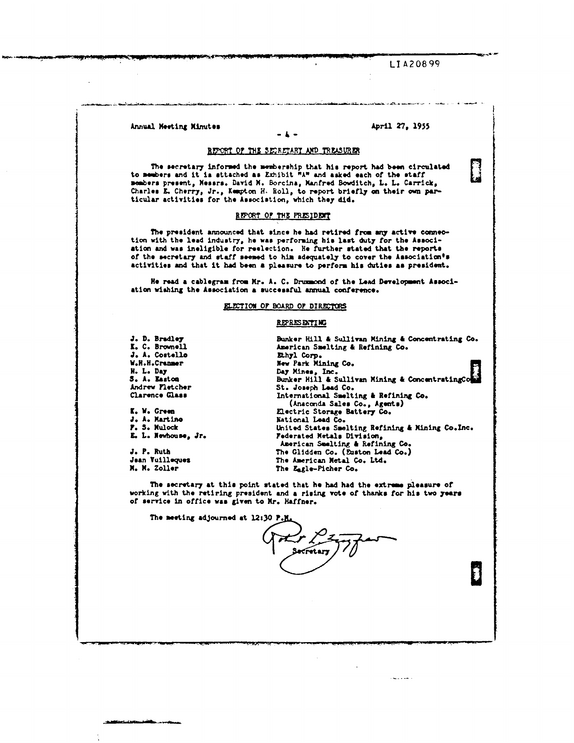
Division Lead Co.
refid# gY35xjZn15OO96N5JV9z8mDe21 pages
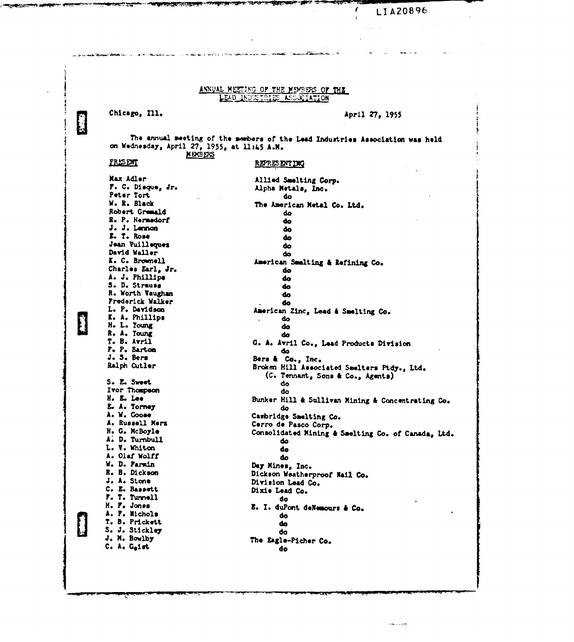
Division Lead Co.
refid# Raxa9JBgybrGLrD5J13EzKLx821 pages
Division Lead Co.
refid# yr0GdXRvwe0X0k6kVq8g8QYYD21 pages
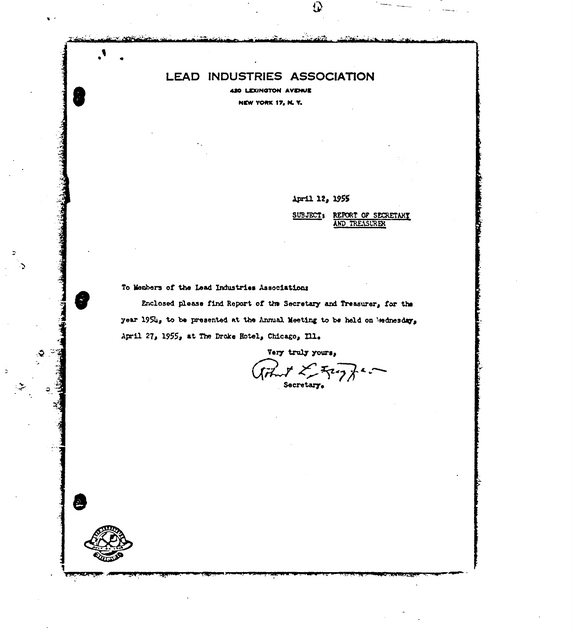
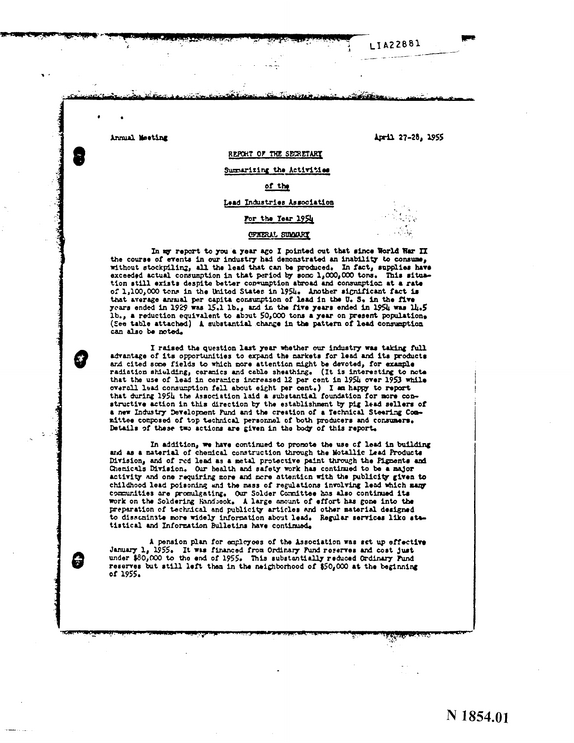
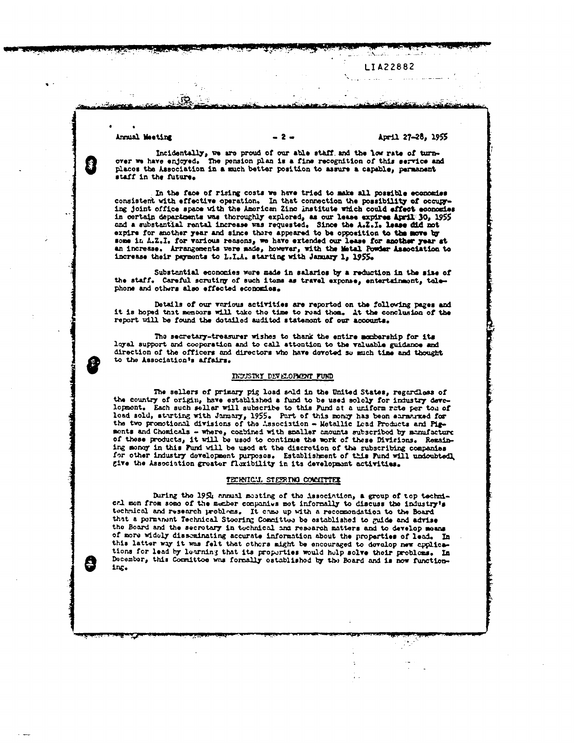
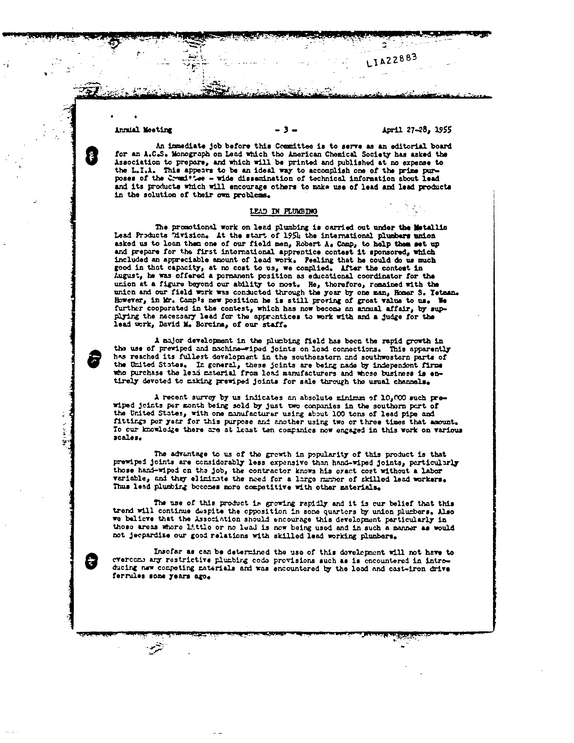
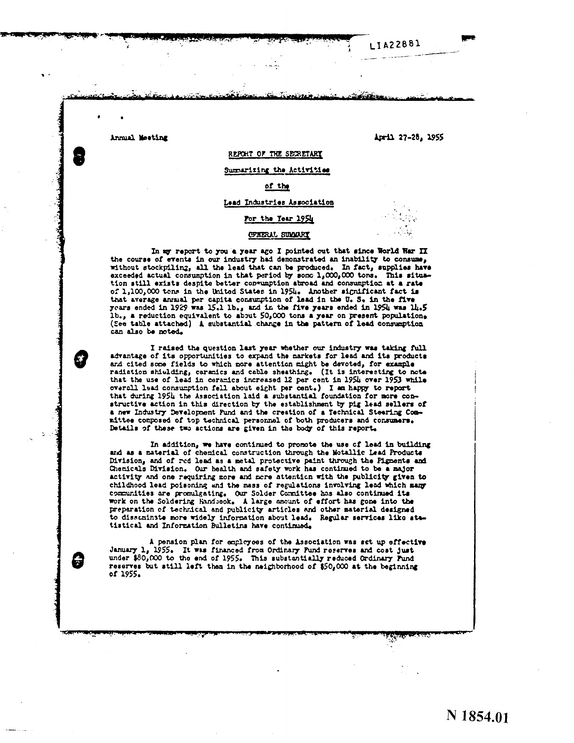
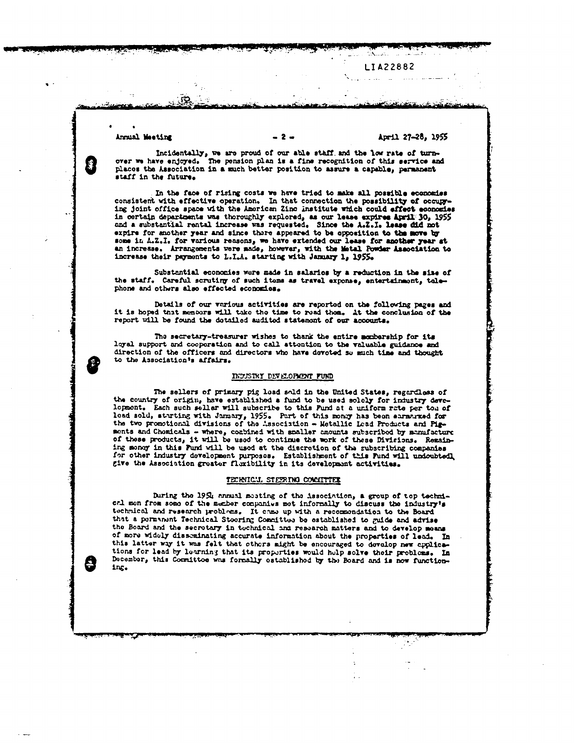
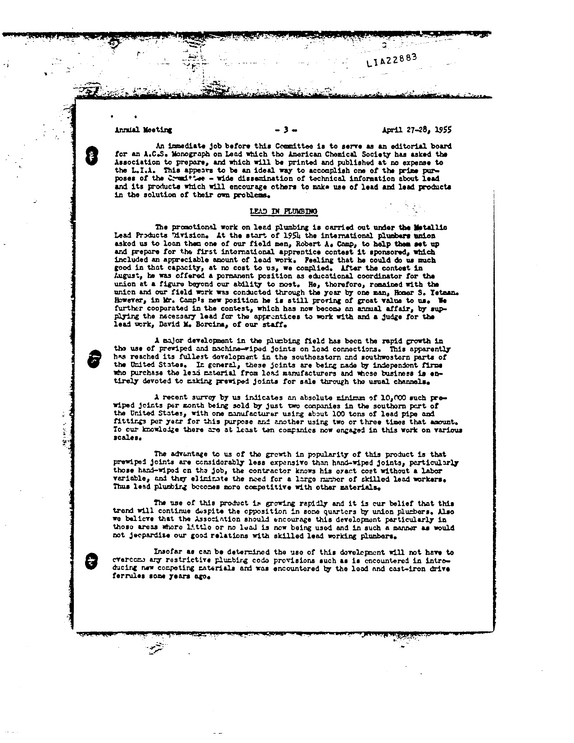
- ""-rr Q aUUL LEAD INDUSTRIES ASSOCIATION 4t0 LXXINOTOM AVCNUK NEW vomc 17, K.
refid# rpDbE2d6JyQm69d3deZVXNz2v17 pages
- ""-rr Q aUUL LEAD INDUSTRIES ASSOCIATION 4t0 LXXINOTOM AVCNUK NEW vomc 17, K.
refid# 1gqV5bZebDpJgLYN589EbqL7q17 pages
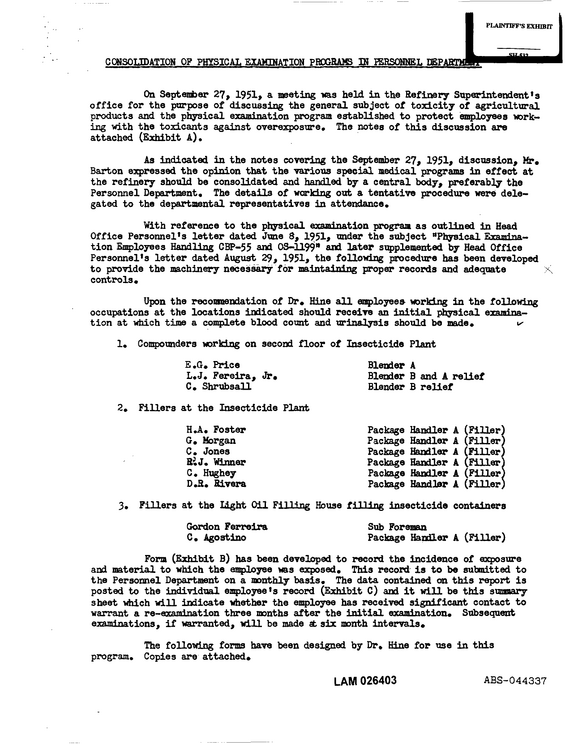
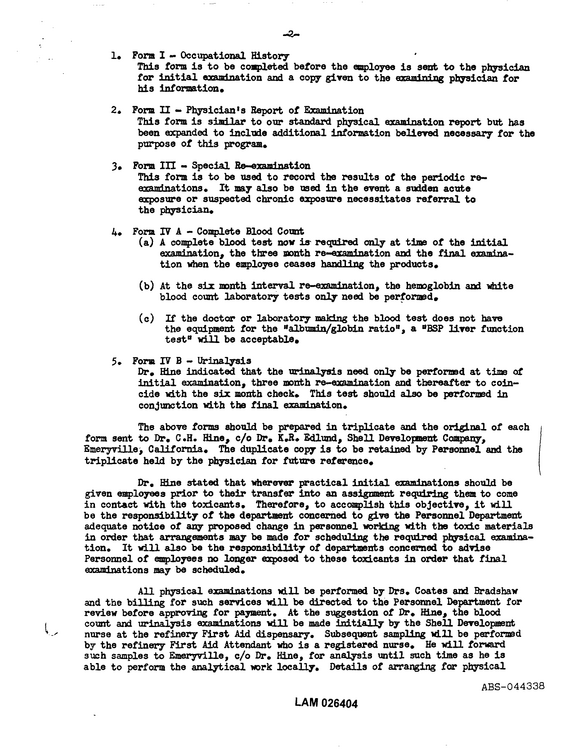
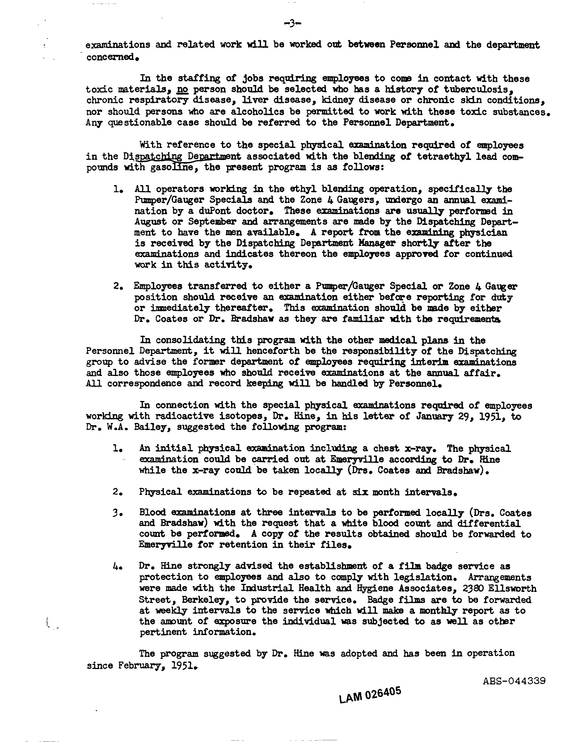
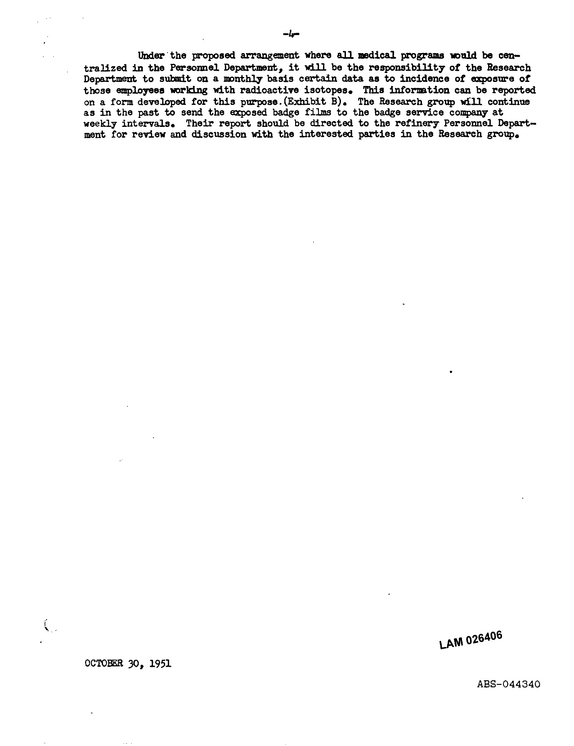
With reference to the special physical examination required of employees in the Piapatching Department associated with the blending of tetraethyl lead com pounds with gasoline^ the present program is as follows: 1.
refid# Y2YKOj3k13p8KMRmn9gBVbvN25 pages
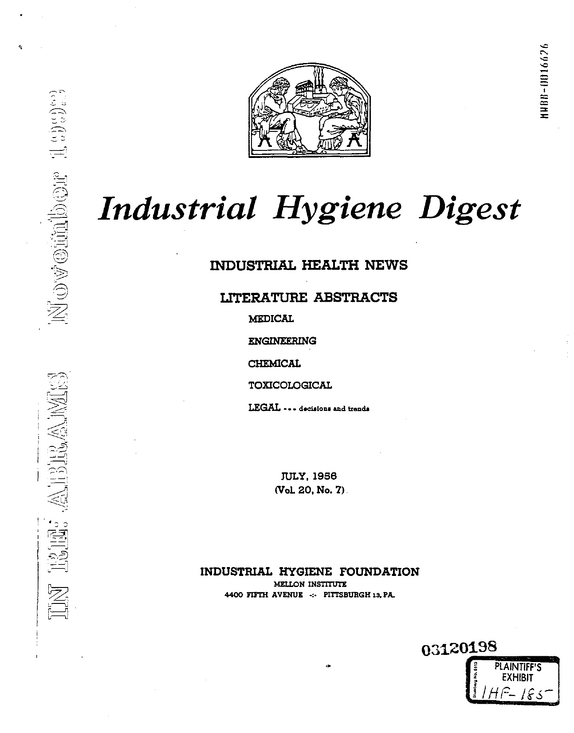
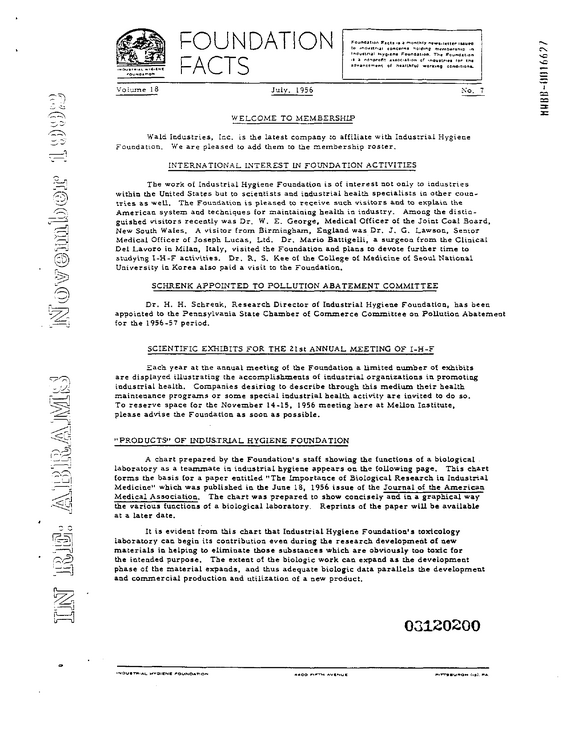
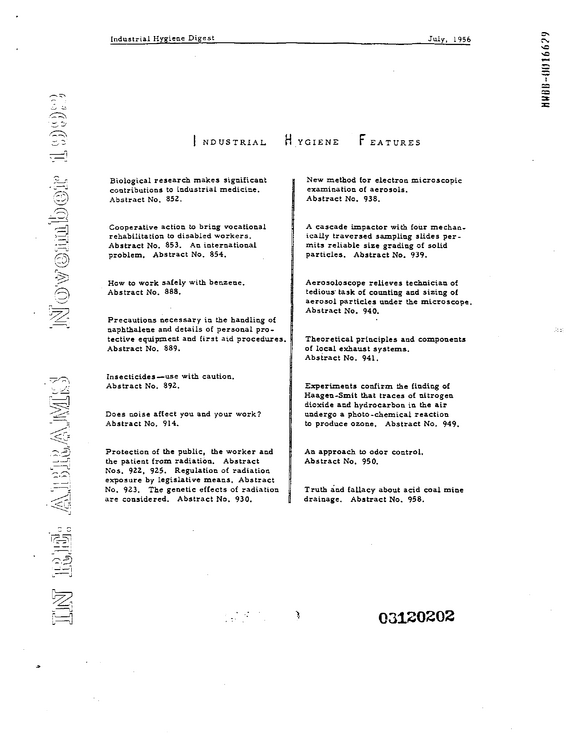
MMBIMJ016676 <1 I Industrial Hygiene Digest .>-- INDUSTRIAL HEALTH NEWS LITERATURE ABSTRACTS MEDICAL ENGINEERING CHEMICAL TOXICOLOGICAL LEGAL decisions and trends JULY, 1956 (VoL 20, No. 7) INDUSTRIAL HYGIENE FOUNDATION MELLON INSTITUTE 4400 FIFTH AVENUE PITTSBUBGH 13.
refid# RJ8eg6rwQeEann2Y3QkNXo1wV38 pages
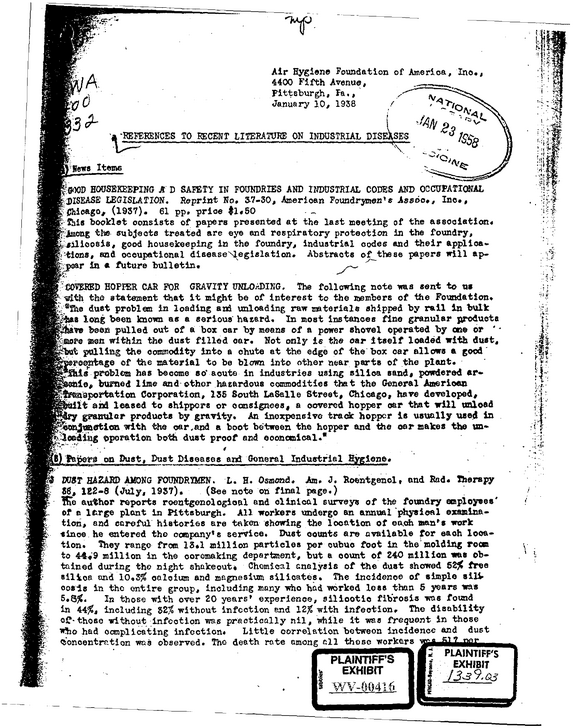
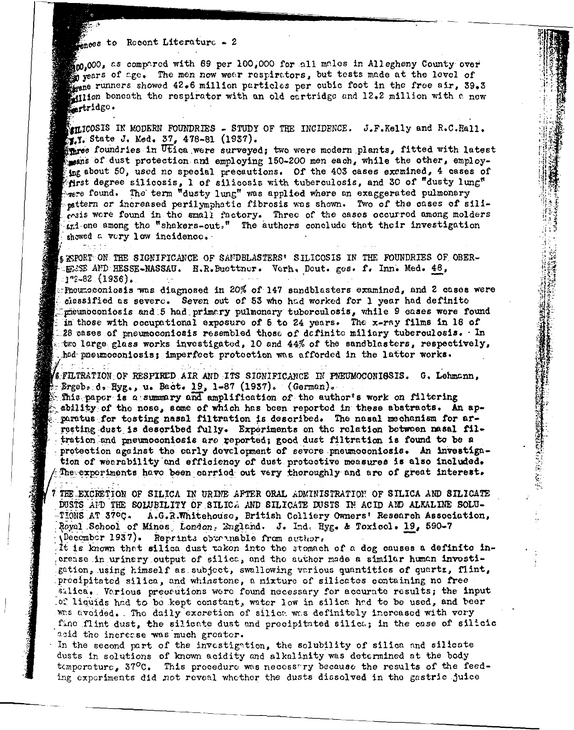
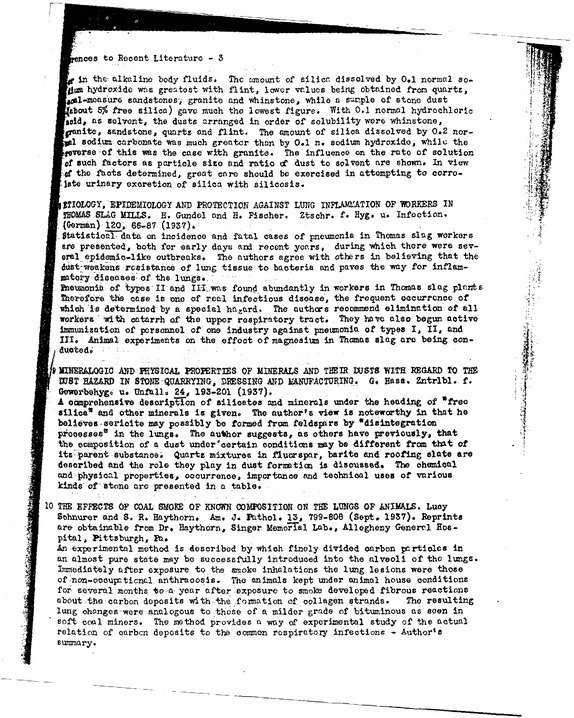
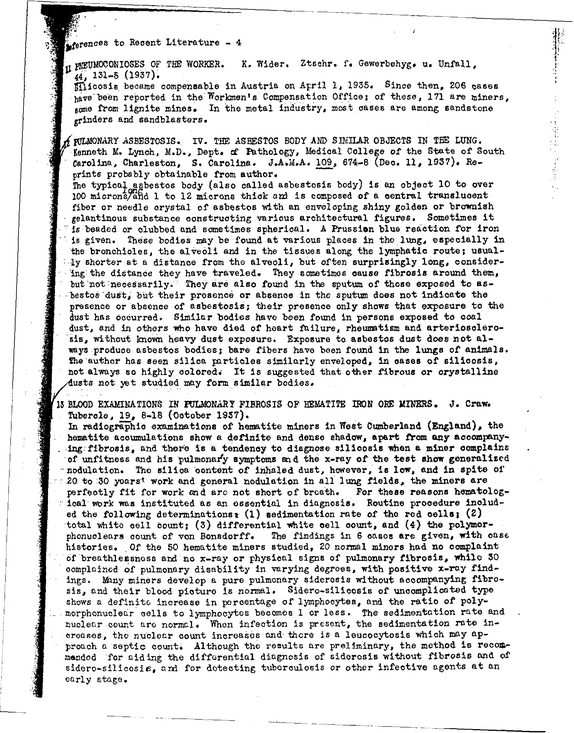
Air Hygiene Foundation of America, Ine,, 4400 Fifth Avenue, Pittsburgh, Fa,, ^ January 10, 1958 / l REFERENCES TO RECENT LITERATURE ON INDUSTRIAL DIS:[EASES "X - 2a J f(J00D HOUSEKEEPING X D SAFETY IN FOUNDRIES AND INDUSTRIAL CODES AND OCCUPATIONAL ^DISEASE LEGISLATION.
refid# zboRXRDeYOQKjLaY3pXmGZpja21 pages
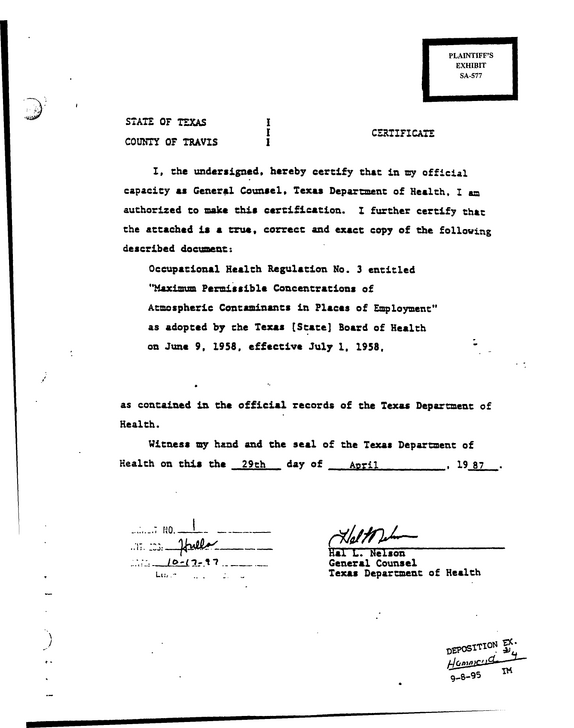
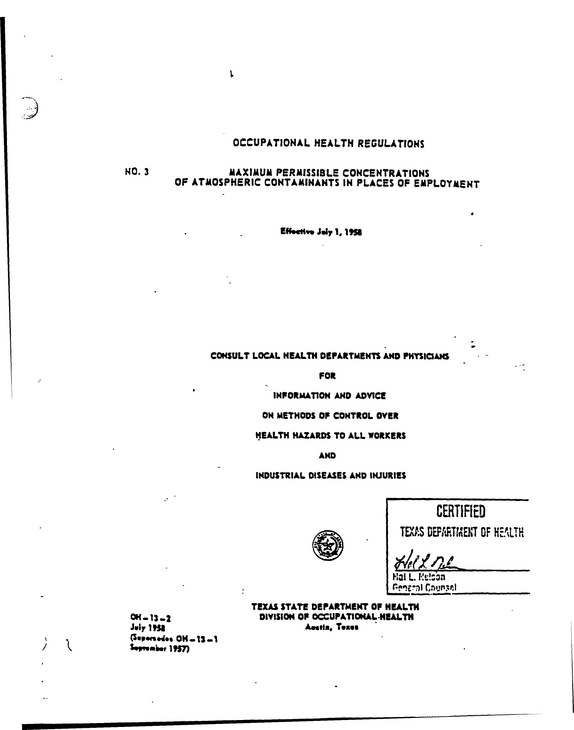
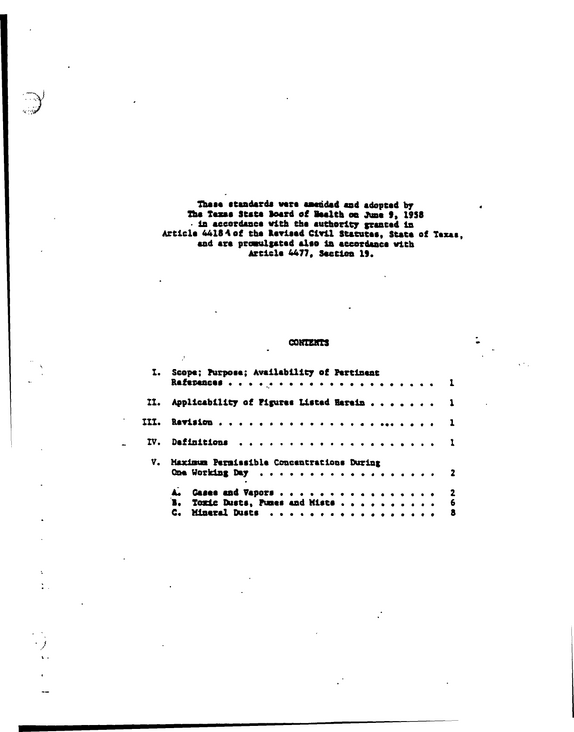
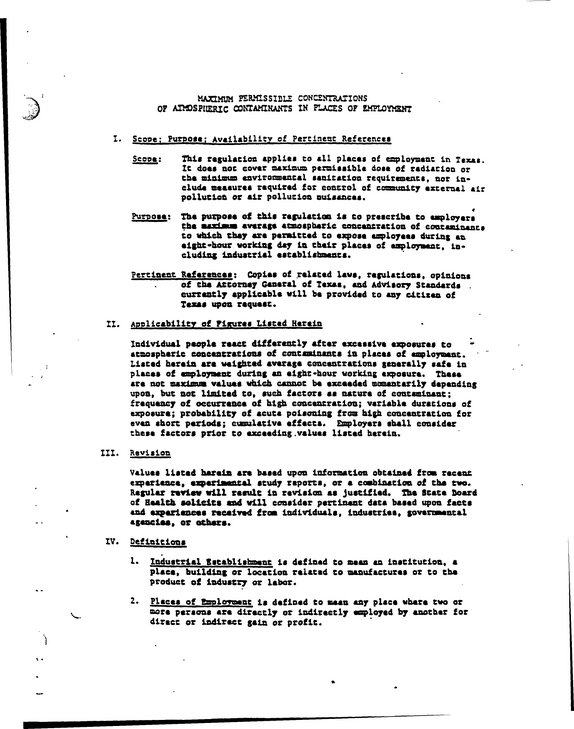
STATE OF TEXAS COUNTY OF TRAVIS I I I CERTIFICATE I, che undersigned, hereby certify that in my official capacity as General Counsel, Texas Department of Health, I am authorized to make this certification. 1 further certify that the attached is a true, correct and exact copy of the following described document: Occupational Health Regulation No. 3 entitled "Maximum Permissible Concentrations of Atmospheric Contaminants in Places of Employment" as adopted by che Texas [State] Board of Health on June 9, 1958, effective July 1, 1958, ", *' as contained in che official records of the Texas Department of Health.
refid# MGQr662aQg2455mb4yM8ay8qa11 pages