Refine
Estimated Years 1940-1949Clear
11,527 results foundRefine Search
Conkjldio.ti.au.
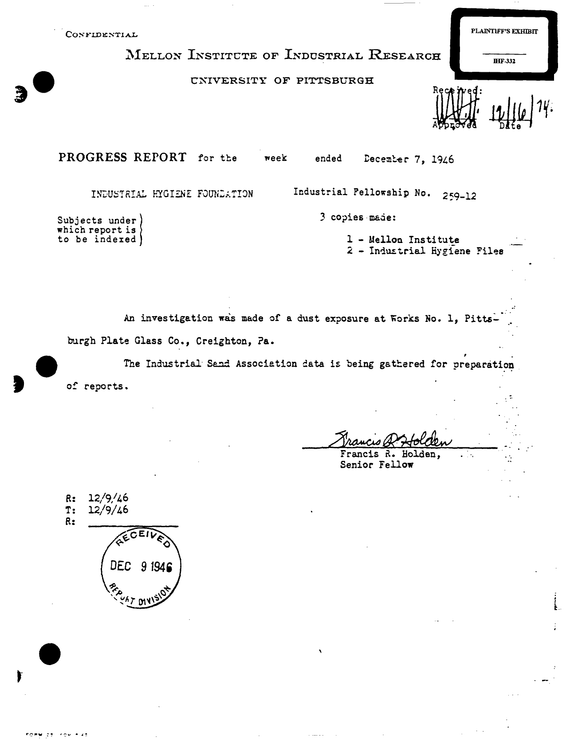
refid# zdODD243pk8gg2rMkLv6q1xq31 page
Preliminary Dust Survey for Asbestos Textile Institute Juno, 1947 H.
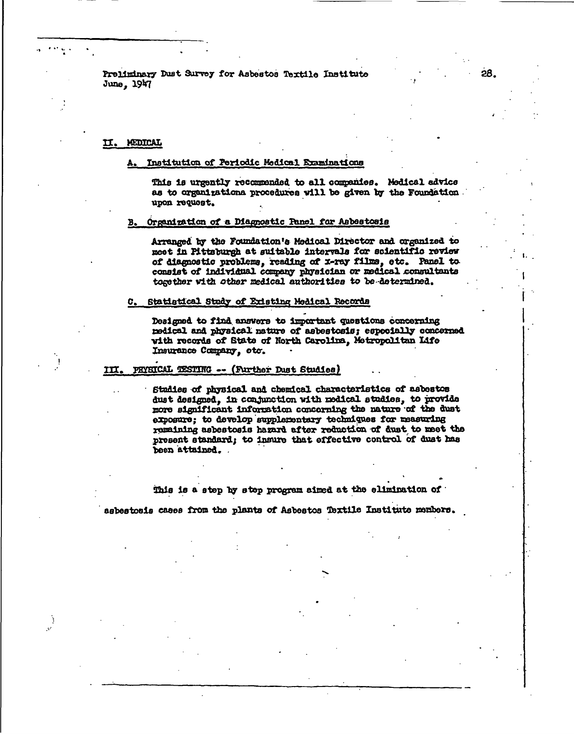
refid# zQXqXVepGVVBYpyy69rDm19w01 page
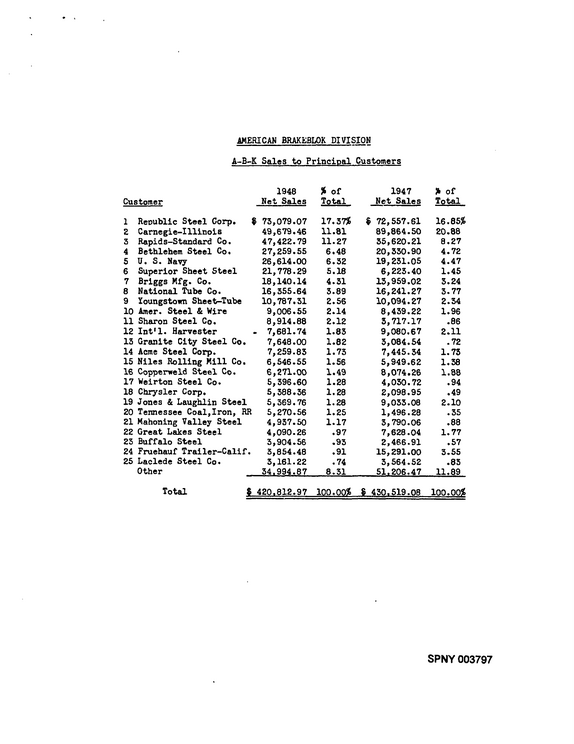
AMERICAN BRAKEBLOK DIVISION A-B-K Sales to Principal Customers Customer 1948 $ of Net Sales Total 1947 $ of Net Sales Total 1 Republic Steel Corp. $ 73,079.07 2 Carnegie-Illinois 49,679.46 3 Rapids-Standard Co. 47,422.79 4 Bethlehem Steel Co. 27,259.55 5 U.
refid# bynboR53z9nrjeQ5gbjNgv7Dy1 page
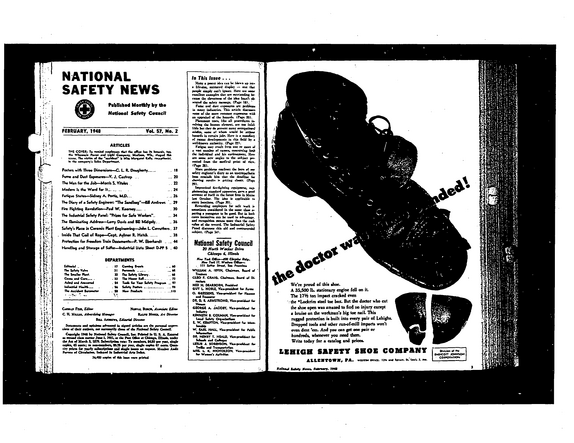
NATIONAL SAFETY NEWS Pabflibtd Monthly by the Notfoeal Safety Council FEBRUARY, 1948 VoL $7.
refid# KzbZXpkEVevOGwjB2n6z5Ge1X1 page
I ,t^rft4*aeMawivt .........
refid# jeMR11j6Ym1M2NvNdY0JMgZ91 page
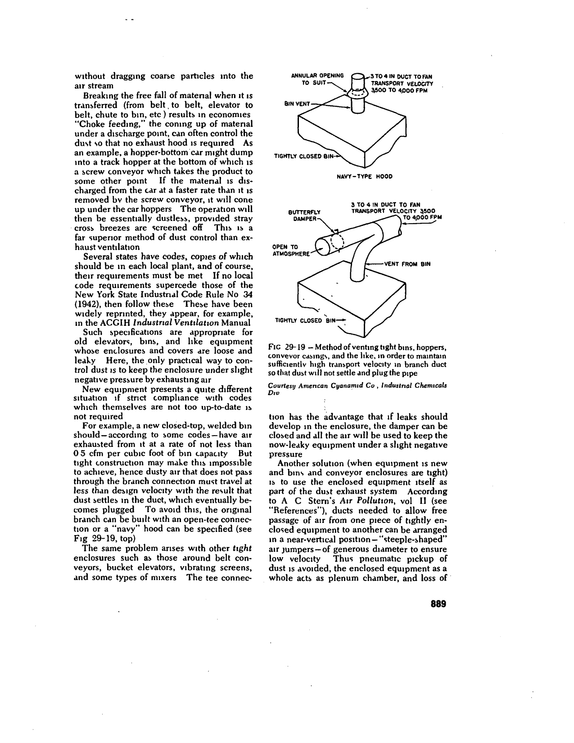
without dragging coarse particles into the air stream Breaking the free fall of material when it is transferred (from belt, to belt, elevator to belt, chute to bin, etc ) results in economies "Choke feeding," the coning up of material under a discharge point, can often control the dust so that no exhaust hood is required As an example, a hopper-bottom car might dump into a track hopper at the bottom of which is a screw conveyor which takes the product to some other point If the material is dis charged from the car at a faster rate than it is removed bv the screw conveyor, it will cone up under the car hoppers The operation will then be essentially dustless, provided stray cross breezes are screened off This is a far superior method of dust control than ex haust ventilation Several states have codes, copies of which should be in each local plant, and of course, their requirements must be met If no local code requirements supercede those of the New York State Industrial Code Rule No 34 (1942), then follow these These have been widely reprinted, they appear, for example, m the ACGIH Industrial Ventilation Manual Such specifications are appropriate for old elevators, bins, and like equipment whose enclosures and covers are loose and leaky Here, the only practical way to con trol dust is to keep the enclosure under slight negative pressure by exhausting air New equipment presents a quite different situation if strict compliance with codes which themselves are not too up-to-date is not required For example, a new closed-top, welded bin should --according to some codes --have air exhausted from it at a rate of not less than 0 5 cfm per cubic foot of bin capacity But tight construction may make this impossible to achieve, hence dusty air that does not pass through the branch connection must travel at less than design velocity with the result that dust settles in the duct, which eventually be comes plugged To avoid this, the original branch can be built with an open-tee connec tion or a "navy" hood can be specified (see Fig 29-19, top) The same problem arises with other tight enclosures such as those around belt con veyors, bucket elevators, vibrating screens, and some types of mixers The tee connec- butterfly 3 TO 4 IN DUCT TO FAN transport velocity 3500 Fic 29-19 -- Method of venting tight bins, hoppers, convevor casings, and the like, in order to maintain sufficiently high transport velocity in branch duct so that dust will not settle and plug the pipe Courtesy American Cyanamtd Co , Industrial Chemicals Dio tion has the advantage that if leaks should develop in the enclosure, the damper can be closed and all the air will be used to keep the now-leaky equipment under a slight negative pressure Another solution (when equipment is new and bins and conveyor enclosures are tight) is to use the enclosed equipment itself as part of the dust exhaust system According to A C Stem's Atr Pollution, vol II (see "References"), ducts needed to allow free passage of air from one piece of tightly en closed equipment to another can be arranged in a near-vertical position --"steeple-shaped" air jumpers --of generous diameter to ensure low velocity Thus pneumatic pickup of dust is avoided, the enclosed equipment as a whole acts as plenum chamber, and loss of 889
refid# aJLzeyvyYpnjDNNzZVonNn92R1 page
*/ .
refid# Lpw4Ek4qrZKNyOwawkvEZvxp51 page
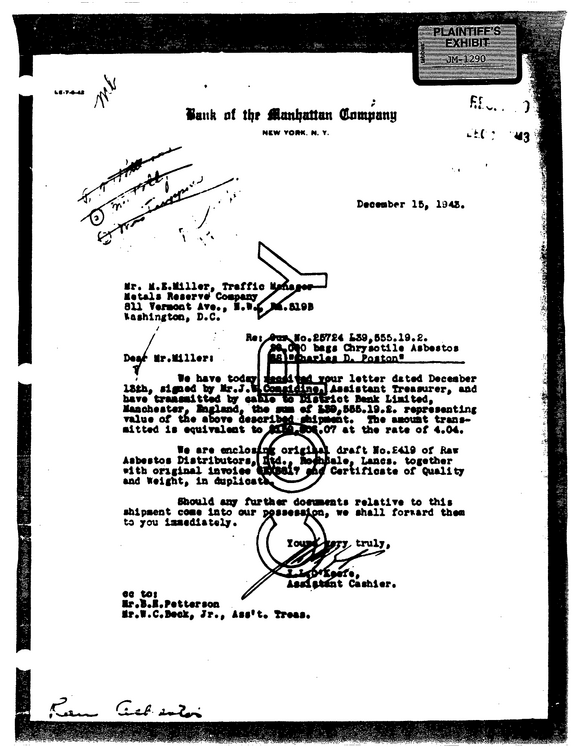
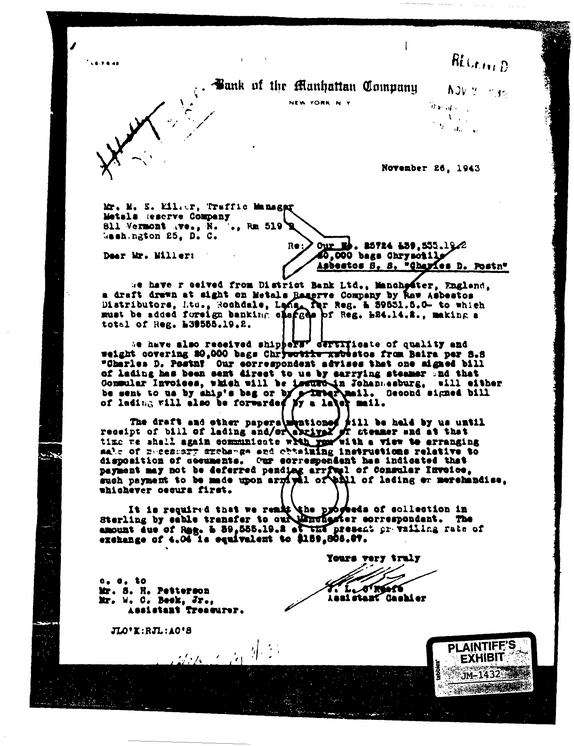
Bank of tip AanJpttan <&mtt|iting NCW VOKK.
refid# kmoroG6XBnXKZ39O8ndJ8ovry1 page
1 f I 4 ..
refid# YD9a2dqkB6gEYD32KxXw5XqrO2 pages
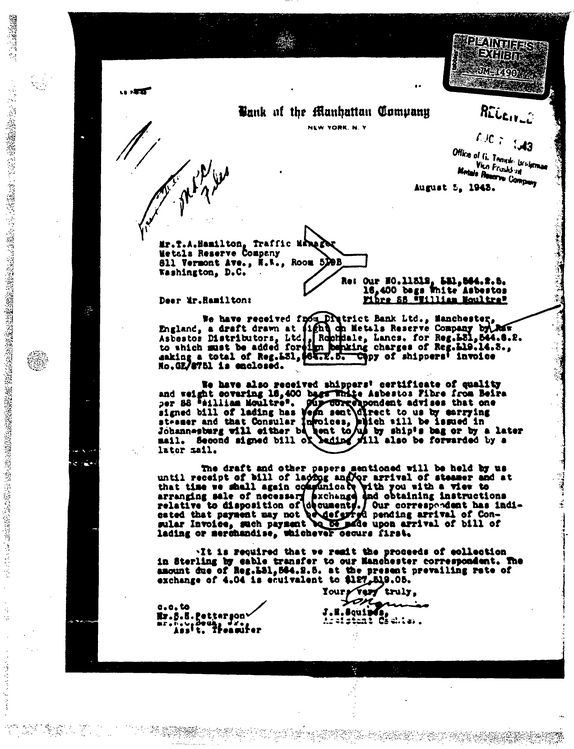
Sank nf tljr Ittunljattan (Camyany NfcW TOWK N.
refid# per6NM4bLGKY4npVMjB3y0ROB2 pages
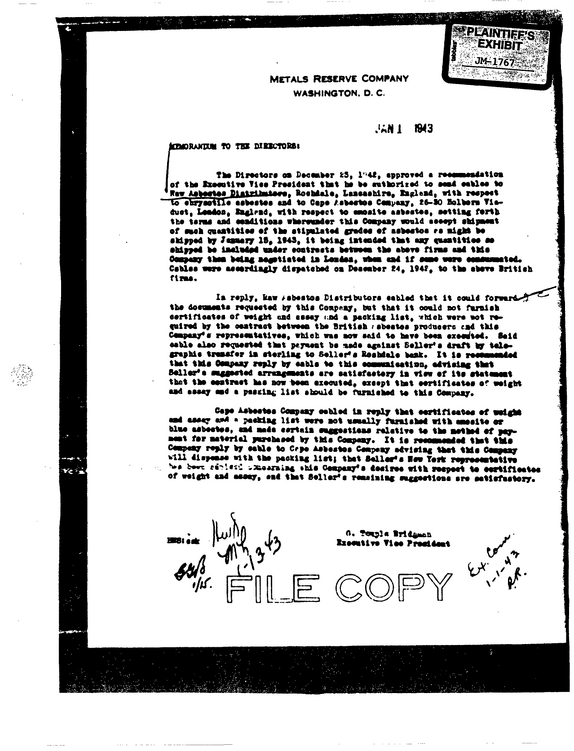
metals Reserve company WASHINGTON.
refid# mm60j86dg513Q8yoErJzJGa6O1 page
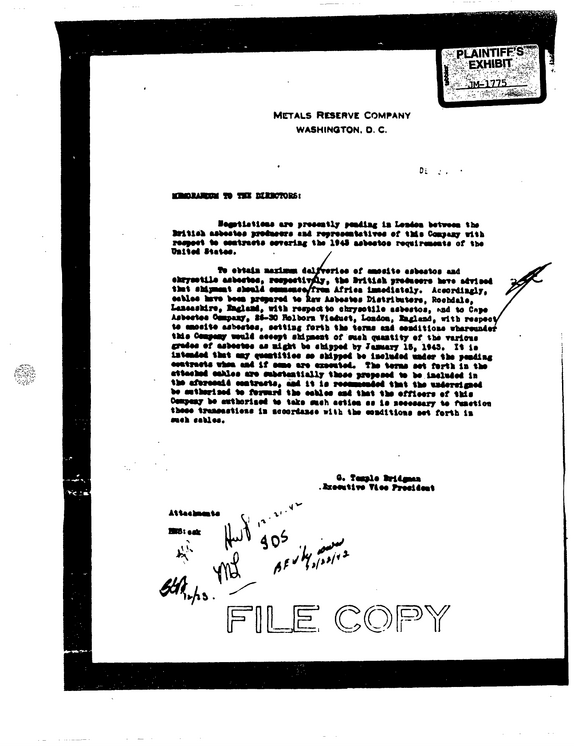
hUttMi aro proomtly y<ti| la Lnln titwa tho MUik ukMUl iwHwi ill NfrtNitetiiM of tUi Coapoay with ^MtiMti wtirlii tho 1941 aohootoa nqilMMti of tbo Uaitod ftatoo.
refid# dnZwmJq84By3kjB4Ex1xpQ9251 page
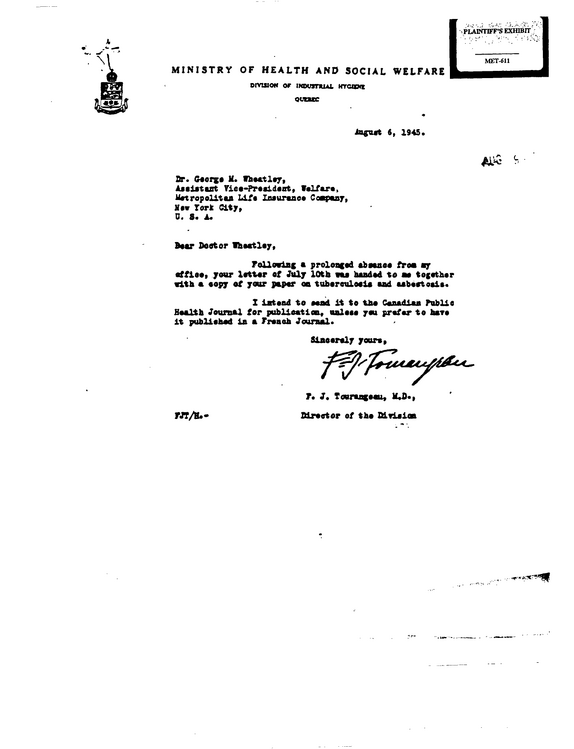
MINISTRY OF HEALTH AND SOCIAL WELFARE OIVUIOM OF INOUSTXUl KTCOWI qmuc Jaguet 6, 1945.
refid# byY3OQ6eQzG1Xq2Y6vk8KZeNk1 page
'\ iiirv.
refid# V3J1J9QpavddV7RwE380VKvXN14 pages
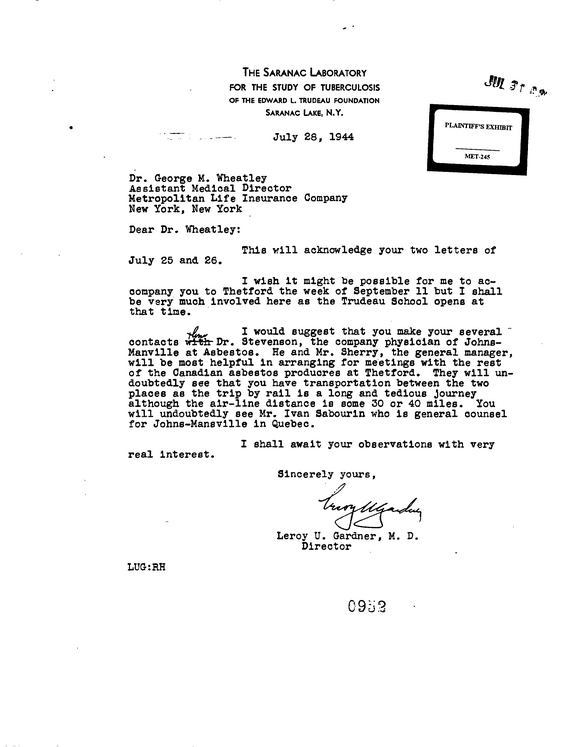
The Saranac Laboratory FOR THE STUDY OF TUBERCULOSIS OF THE EDWARD L.
refid# 2RX3agGkgnLo5DQ7QLKb626L72 pages