Refine
Estimated Years 1930-1939Clear
8,921 results foundRefine Search
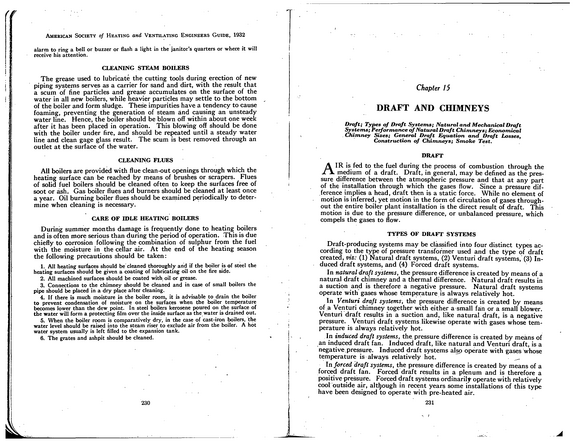
American Society of Heating and Ventilating Engineers Guide, 1932 alarm to ring a bell or buzzer or flash a light in the janitor's quarters or where it will receive his attention.
refid# K4x1MrrwmGYpMRv8ZYb6yerN1 page
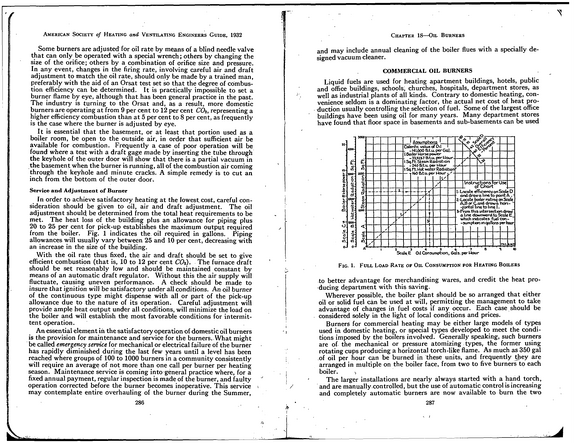
American Society of Heating and Ventilating Engineers Guide, 1932 Some burners are adjusted for oil rate by means of a blind needle valve that can only be operated with a special wrench; others by changing the size of the orifice; others by a combination of orifice size and pressure.
refid# 6BQqXdyGnygyGz0EbQvbLqz1o1 page
1932American Society of Heating and Ventilating Engineers Guide, EELLS, Henry B.
refid# mV7LXDJbvGd1jpGmq880zqB41 page
American Society of Heating- and Ventilating Engineers Guide, 1932 GABY, F.
refid# EdbZYwNKBxYEBrNN06YBzKZrj1 page
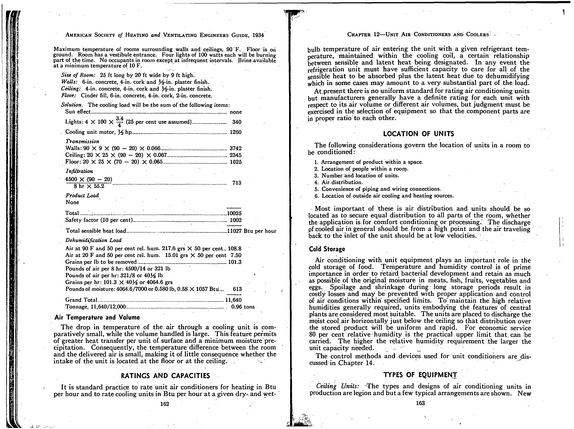
American Society of Heating and Ventilating Engineers Guide, 1934 Maximum temperature of rooms surrounding walls and ceilings, 90 F.
refid# XObpoNLrkxGv82ELg28ewGqyG1 page
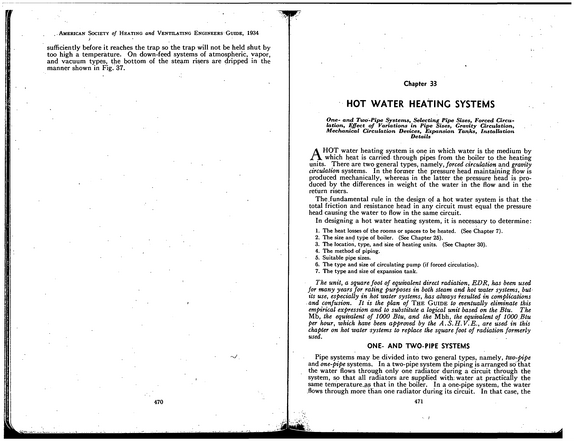
..American Society of Heating and Ventilating Engineers Guide, 1934 l sufficiently before it reaches the trap so the trap will not be held shut by too high a temperature.
refid# G59oQ4zX04r4poJzzOz9qjQaq1 page
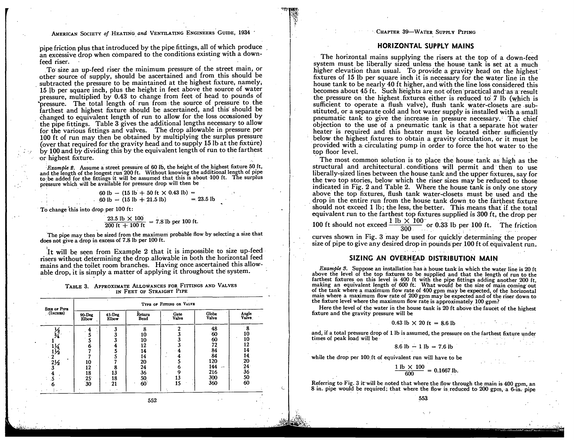
American Society of Heating and Ventilating Engineers Guide, 1934 pipe friction plus that introduced by the pipe fittings, all of which produce an excessive drop when compared to the conditions existing with a down- feed riser.
refid# JJbzE8Z9yQM79gRO4rgGN2xze1 page
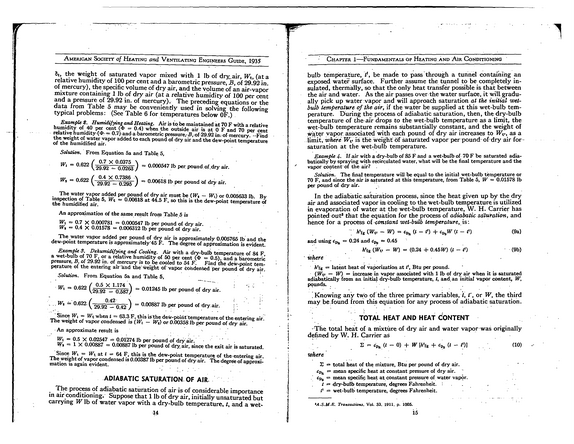
American Society of Heating and Ventilating Engineers Guide, 1935 St, the weight of saturated vapor mixed with 1 lb of dry_air, Wt, (at a relative humidity of 100 per cent and a barometric pressure, B, of 29.92 in. of mercury), the specific volume of dry air, and the volume of an air-vapor mixture containing 1 lb of dry air (at a relative humidity of 100 per cent and a pressure of 29.92 in. of mercury).
refid# K58N2jML9Q6Rk5Jk01Xp86DK1 page
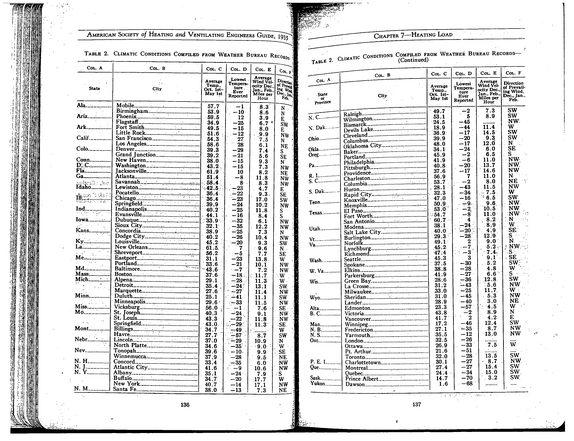
American Society of Heating and Ventilating Engineers Guide, 1935' Table 2.
refid# 4agJRra00M2qDBw1beL300yqe1 page
American Society of.
refid# 7Ooy52oVrBRVQgQxXDNLeRDea1 page
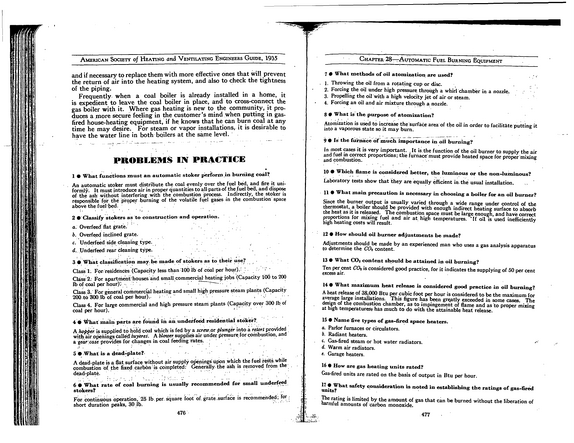
American Society of Heating and Ventilating Engineers Guide, 1935 and if necessary to replace them with more effective ones that will prevent the return of air into the heating system, and also to check the tightness of the piping.
refid# rx3rJOj0Xx3BGN1bx87r0xYXJ1 page
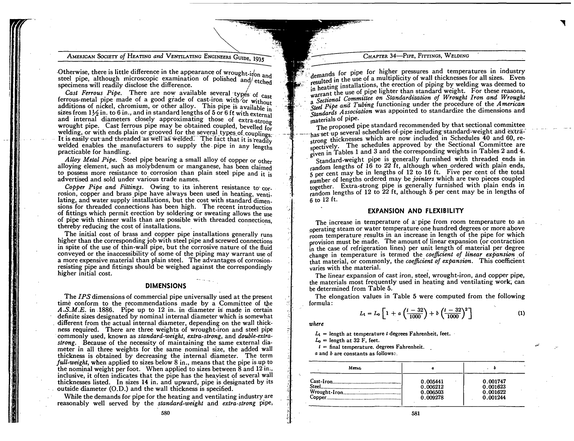
American Society of Heating and Ventilating Engineers Guide, 1935 Otherwise, there is little difference in the appearance of wrought-iron steel pipe, although microscopic examination of polished and/ etched specimens will readily disclose the difference. /^ Cast Ferrous Pipe.
refid# 7Op6YNbVy207Q1e99yOJjOVKV1 page
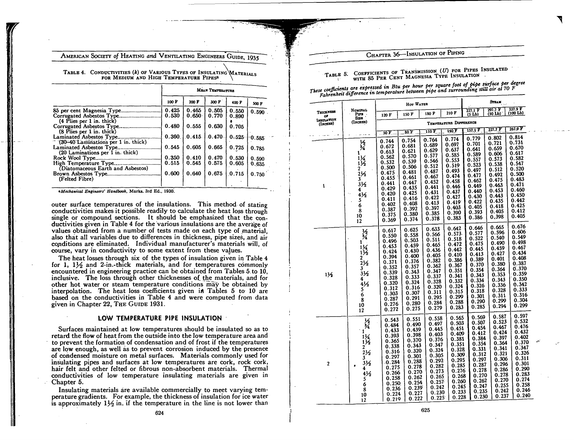
American Society 0/ Heating and Ventilating Engineers Guide, 1935 Table 4.
refid# v1V1M73abybjEXV7Zb0eQRD1w1 page
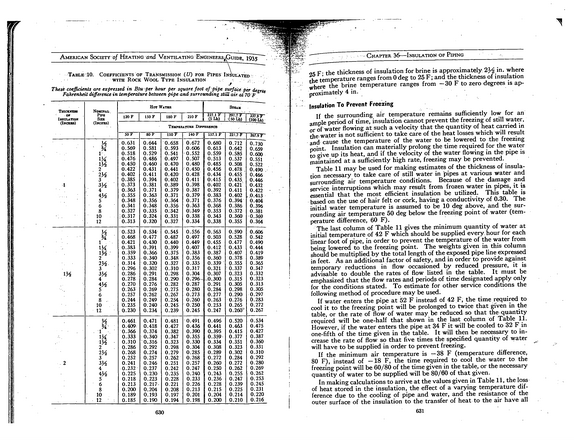
American Society of Heating and Ventilating Engineers^CJuide, 1935 Table 10.
refid# qmzB7Z0gdxjm265xvJDjrgB2k1 page
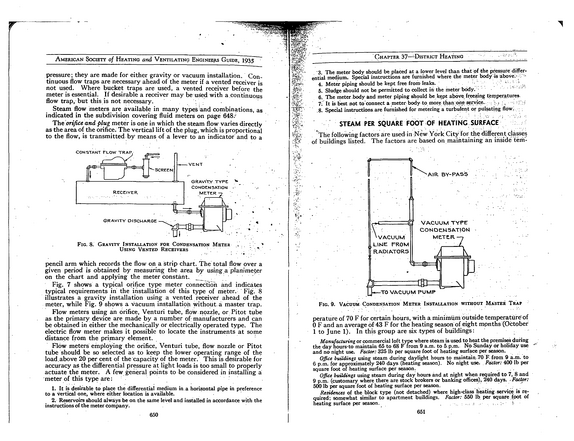
American Society of Heating and Ventilating Engineers Guide, 1935 pressure; they are made for either gravity or vacuum installation.
refid# 6RmbqmZOaYgEbxVwkO7a0YeRE1 page