Refine
Estimated Years 1930-1939Clear
8,921 results foundRefine Search
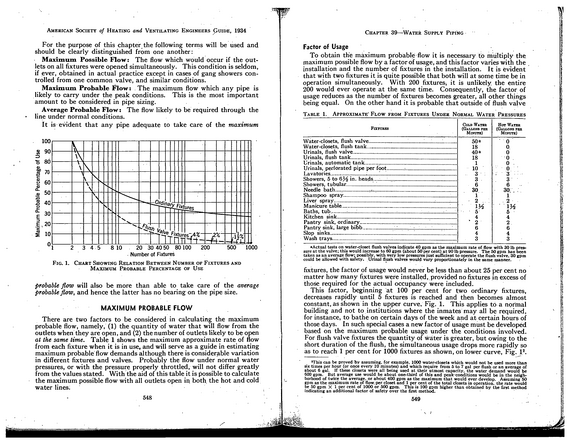
American Society of Heating and Ventilating Engineers Guide, 1934 For the purpose of this chapter the following terms will be used and should be clearly distinguished from one another: Maximum Possible Flow: The flow which would occur if the putlets on all fixtures were opened simultaneously.
refid# zbzkYrKyEvrM1rvGrng3jnm131 page
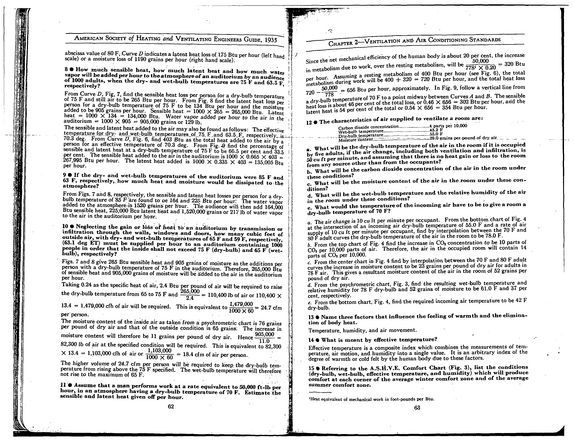
American Society of Heating and Ventilating Engineers Guide, 1935 abscissa value of 80 F, Curve D indicates a latent heat loss of. 175 Btu per hour (left hand scale) or a moisture loss of 1190 grains per hour (right hand scale): 8 How much sensible heat, how much latent heat and how much water vapor will be added per hour to the atmosphere of an auditorium by an audience of 1000 adults, when the dry- and wet-bulb temperatures are 75 F and 63.5 F, respectively?
refid# GmZK0NO666xgE9y9qq6OR7MVn1 page
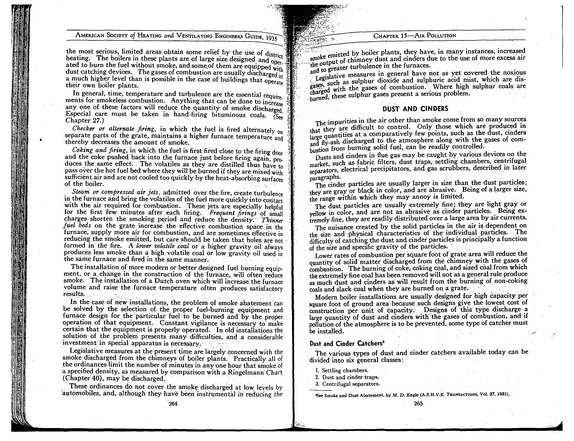
American Society of Heating and Ventilating Engineers Guide, 1935 the most serious, limited areas obtain some relief by the use of district heating.
refid# 4g3GKkRY4X0vGvZaDyr0Re3a1 page
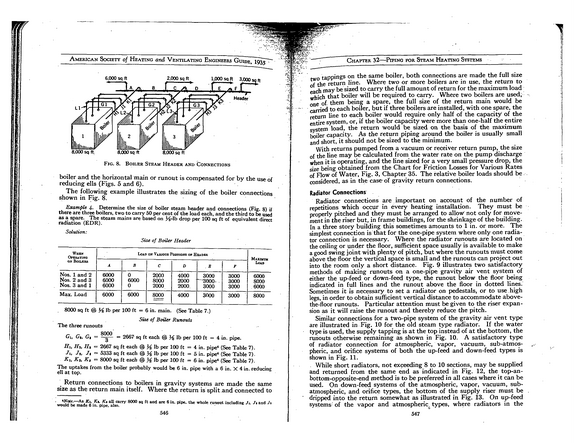
American Society of Heating and Ventilating Engineers Guide, 1935~ boiler and the horizontal main or runout is compensated for by the use of reducing ells (Figs. 5 and 6).
refid# rxKNjkwkeBVORoqo8GZqDJ2mr1 page
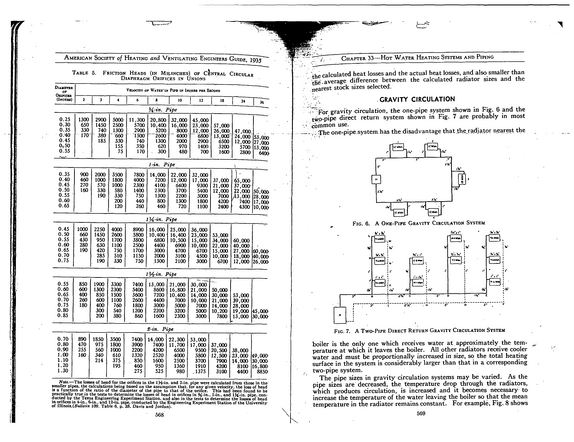
American Society of Heating and Ventilating Engineers Guide, 1935 Table 5.
refid# 2JXvO0nkgO46O45G7XpeaVobN1 page
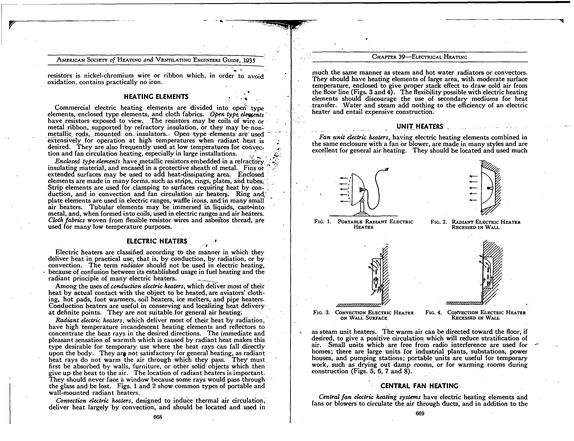
American Society of Heating and Ventilating Engineers Guide, .1935 resistors is nickel-chromium wire or ribbon which, in order to avoid oxidation, contains practically no iron.
refid# dQz27LDMr5K9L9Kxk2Lqdza9q1 page
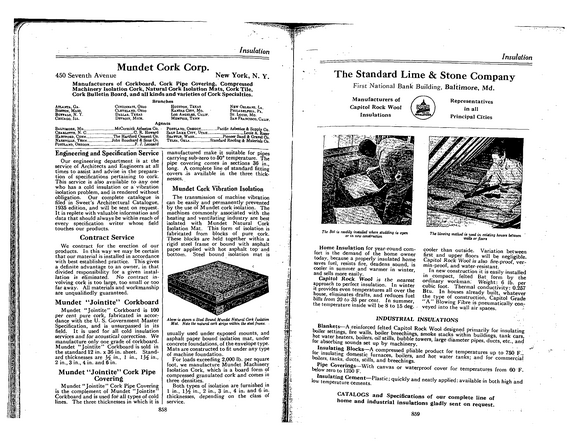
Insulation Mundet Cork Corp. 450 Seventh Avenue New York, N.
refid# x1ObooxMdvBy00Gb5zmqxnB6Q1 page
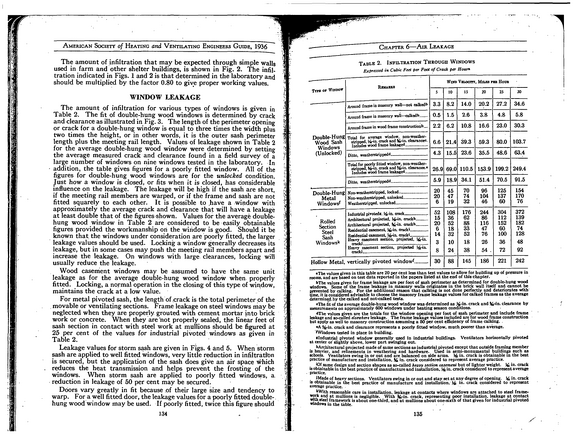
American Society of Heating and Ventilating Engineers Guide, 1936 The amount of infiltration that may be expected through simple walls used in farm and other shelter buildings, is shown in Fig. 2.
refid# dY1MnERmjnGm3YxZXDxGO9gRq1 page
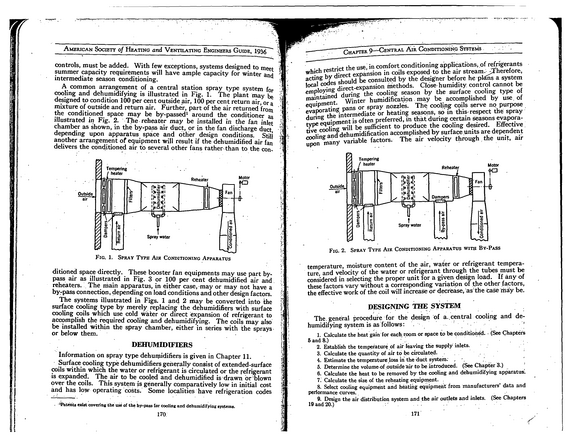
American Society of Heating and Ventilating Engineers Guide, 1935 controls, must be added.
refid# O1xaRG8yea8XXN5gaX2z5np2w1 page
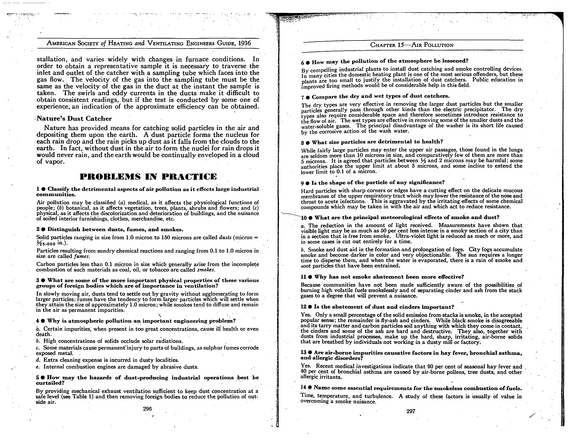
American Society of Heating and Ventilating Engineers Guide, 1936 stallation, and varies. widely with changes in furnace conditions.
refid# rB7boK6yqq94VKe2xxvz2YzLq1 page
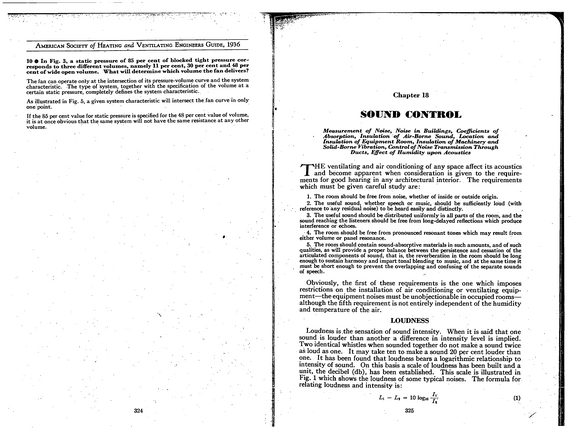
American Society of Heating and Ventilating Engineers Guide, 1936 10 O In Fig. 3, a static pressure of 85 per cent of blocked tight pressure cor responds to three different volumes, namely 11 per cent, 30 per cent and 48 per cent of wide open volume.
refid# oEnj2pB8zjoywB2BmOg33OQR1 page
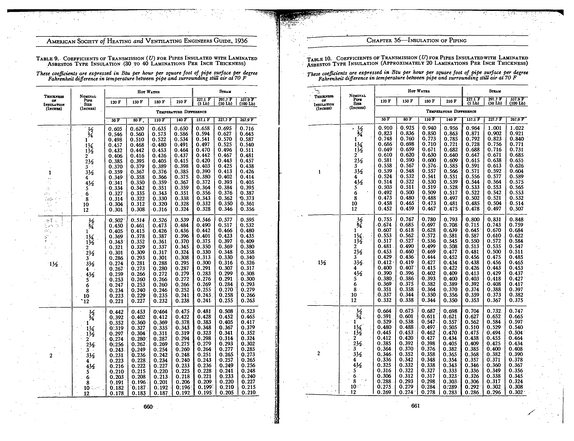
American Society of Heating and Ventilating Engineers Guide, 1936 Table 9.
refid# aDe5emw5K4LgzGRkp4LEpORVB1 page
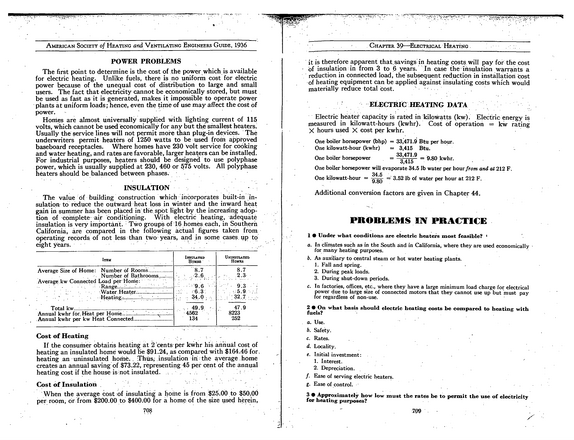
American Society of Heating and Ventilating Engineers Guide, 1936 POWER PROBLEMS The first point to determine is the cost of the power which is available for electric heating.
refid# 3eRpBqEk7La0Xrr4brg924rqE1 page
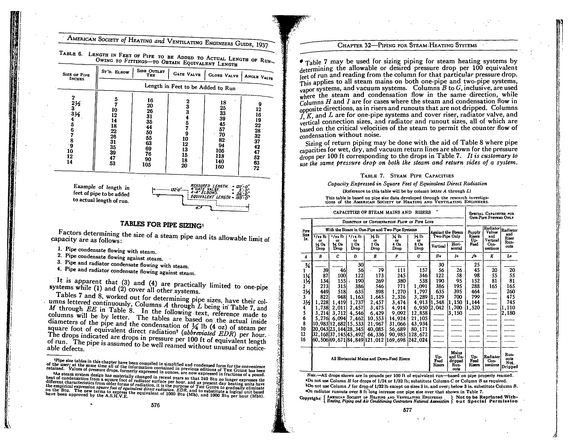
American Society of Heating and Ventilating Engineers Guide, 1937 Table 6.
refid# qaZ3Ra1o61JdMwjbNK8L3DqDk1 page
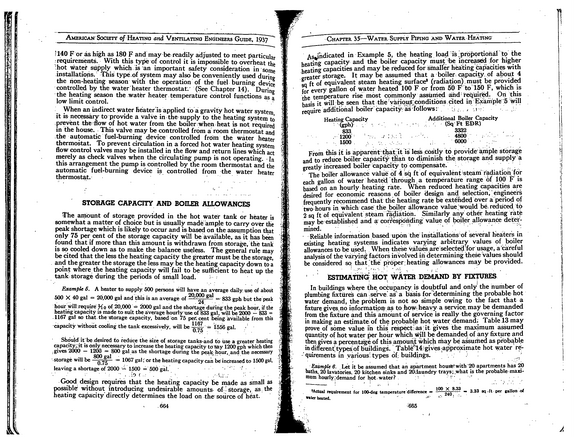
American' Society of Heating and Ventilating Engineers Guide, 1937 f l40 F or as high as 180 F and may be readily adjusted to meet particular requirements.
refid# K66eJn4oGLamjmKzp01QzK9xN1 page