Refine
Estimated Years 1930-1939Clear
8,921 results foundRefine Search
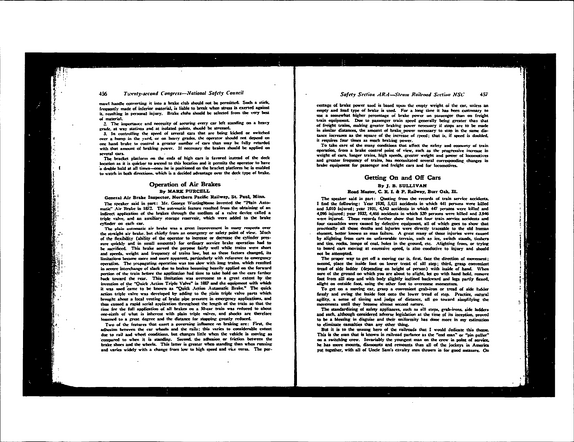
456 Txcenty-second Congress--National Safety Council na*| handle converting rt into a brake dab should not be perwilled.
refid# Evd5DgxXKgk86KBBVN8g0x4eL1 page
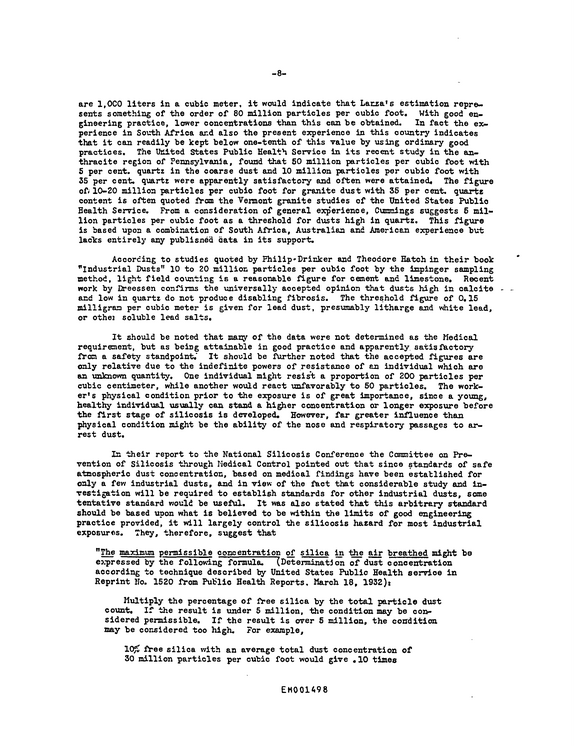
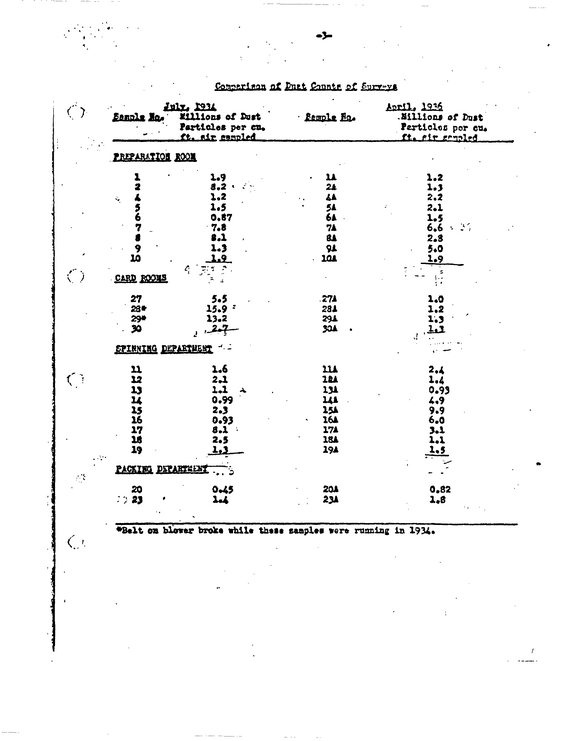
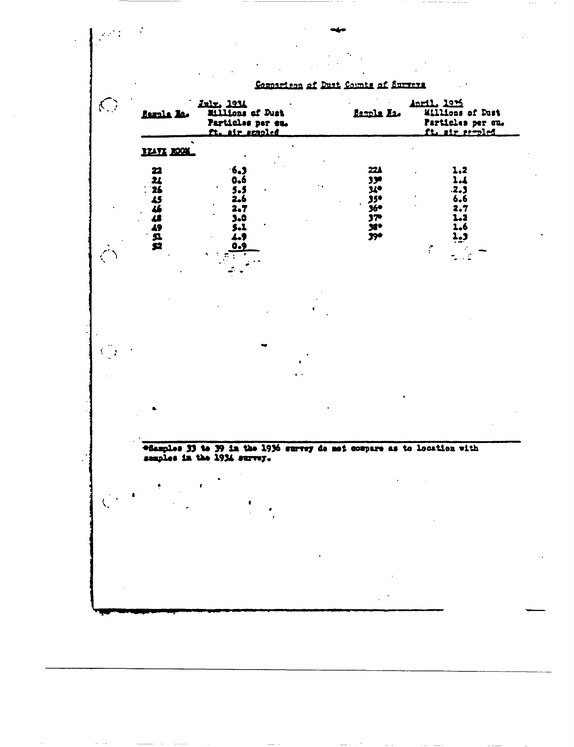
-8- are 1,0C0 liters in a cubic meter, it would indicate that Lanza's estimation repre sents something of the order of 80 million particles per oubic foot.
refid# M8v04Yk7yV1XxRodxz7qO4jy1 page
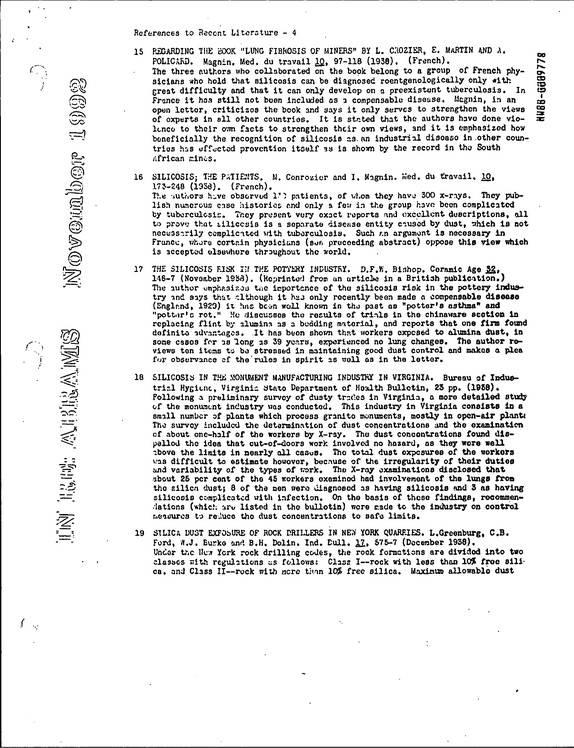
v=$ &J. a References to Recent Literature - 4 15 REGARDING THE BOOK "LUNG FIBROSIS OF MINERS" BY L.
refid# mpdV33axyjObrq35R4gKwZZmk1 page
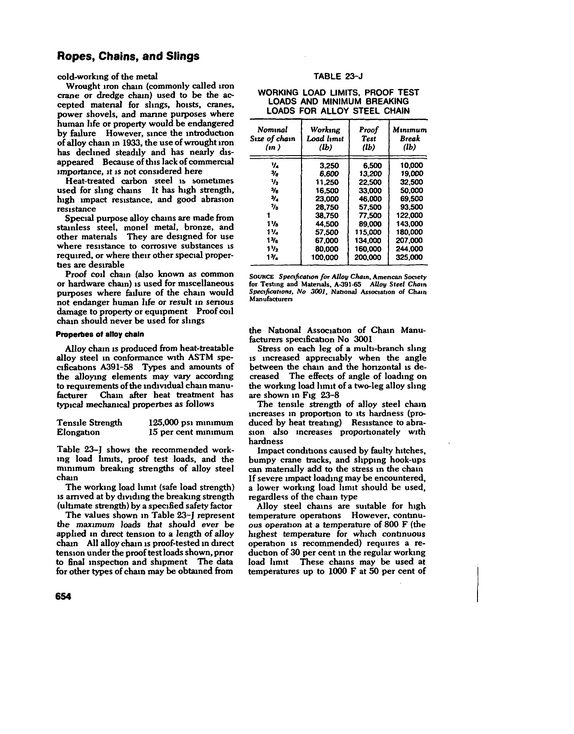
Ropes, Chains, and Slings cold-working of the metal Wrought iron chain (commonly called iron crane or dredge chain) used to be the ac cepted material for slings, hoists, cranes, power shovels, and marine purposes where human life or property would be endangered by failure However, since the introduction of alloy chain m 1933, the use of wrought iron has declined steadily and has nearly dis appeared Because of this lack of commercial importance, it is not considered here Heat-treated carbon steel is sometimes used for sling chains It has high strength, high impact resistance, and good abrasion resistance Special purpose alloy chains are made from stainless steel, monel metal, bronze, and other materials They are designed for use where resistance to corrosive substances is required, or where their other special proper ties are desirable Proof coil chain (also known as common or hardware chain) is used for miscellaneous purposes where failure of the chain would not endanger human life or result m senous damage to property or equipment Proof coil chain should never be used for slings Properties of alloy chain Alloy chain is produced from heat-treatable alloy steel in conformance with ASTM spe cifications A391-58 Types and amounts of the alloying elements may vary according to requirements of die individual chain manu facturer Chain after heat treatment has typical mechanical properties as follows Tensile Strength Elongation 125,000 psi minimum 15 per cent minimum Table 23-] shows the recommended work ing load limits, proof test loads, and the minimum breaking strengths of alloy steel chain The working load limit (safe load strength) is arrived at by dividing the breaking strength (ultimate strength) by a specified safety factor The values shown in Table 23-J represent the maximum loads that should ever be applied m direct tension to a length of alloy chain All alloy chain is proof-tested m direct tension under the proof test loads shown, pnor to final inspection and shipment The data for other types of chain may be obtained from TABLE 23-J WORKING LOAD LIMITS, PROOF TEST LOADS AND MINIMUM BREAKING LOADS FOR ALLOY STEEL CHAIN Nominal Size of chain (in ) Working Load limit (lb) Proof Test (lb) Minimum Break (lb) V. 3.250 6,500 10,000 Ve 6,600 13,200 19,000 V, 11.250 22,500 32,500 Ve 16,500 33,000 50,000 V, 23,000 46.000 69,500 7/e 28,750 57,500 93,500 1 38,750 77,500 122,000 1 Ve 44,500 89,000 143,000 IV. 57,500 115,000 180,000 1Ye 67,000 134,000 207,000 IV, 80,000 160,000 244,000 IV. 100,000 200,000 325,000 Source Specification for Alloy Cham, American Society for Testing and Materials, A-391-65 AUoy Steel Cham Specifications, No 3001, Natrona!
refid# VKEm0rXxxe6NpJ27jwry6nkY41 page
iVfcO PLAINTIFF' EXHIBIT jm-1937; I * * +*'% h t^SlSl# il3ist?.
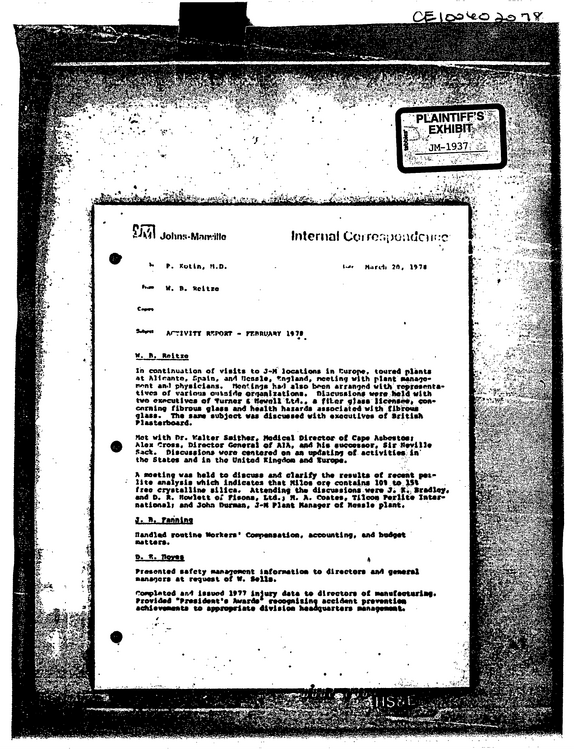
refid# 7EDqRX29gL7yGwVaRJD2q7XE2 pages
; < t* %' v * 0- .
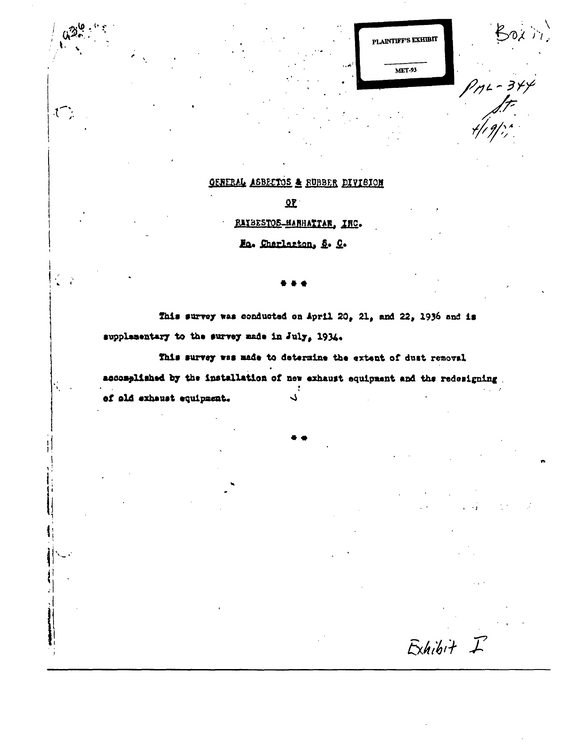
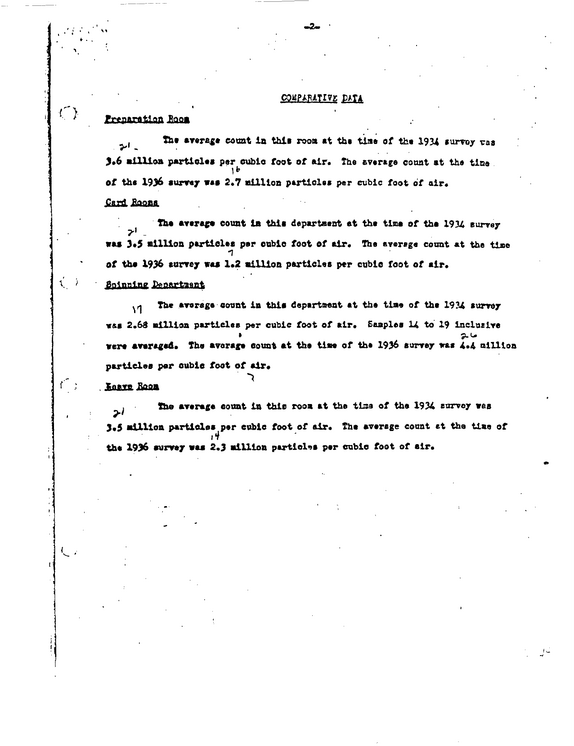
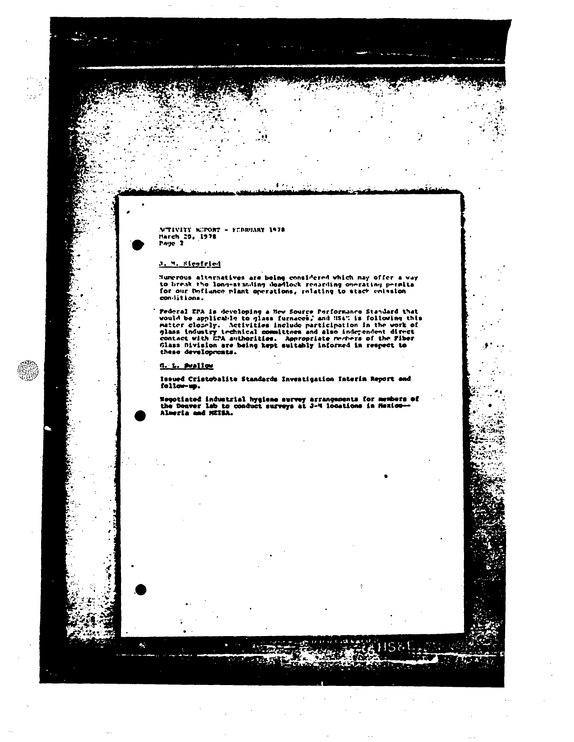
refid# vVyg71Mqkz76qZdBpKge6Dqd923 pages
/ DR.
refid# oeGan8mLyDyzzRwXB2YEXJXGr12 pages
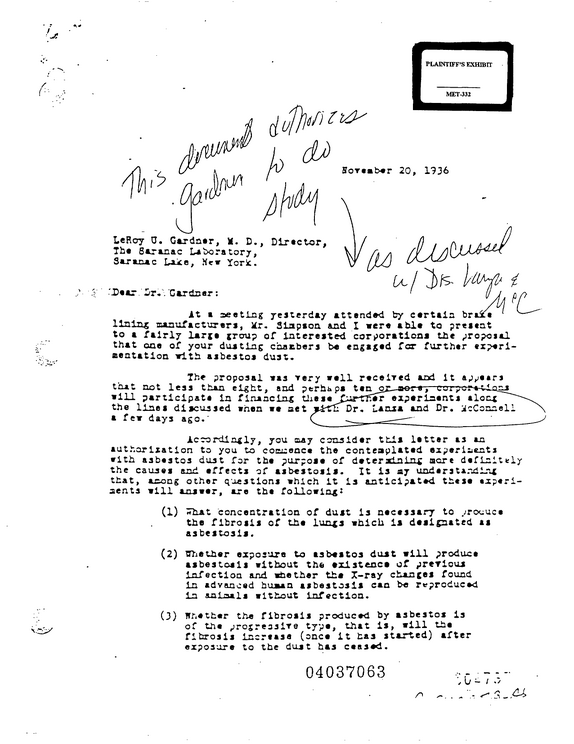
PLAINTIFF'S EXHIBIT ffovewb-er 20, 1936 LeRoy U.
refid# Z4EmgdXy50KLdEvN7nX0K8ag82 pages
I I U 9 U K e 9 I!
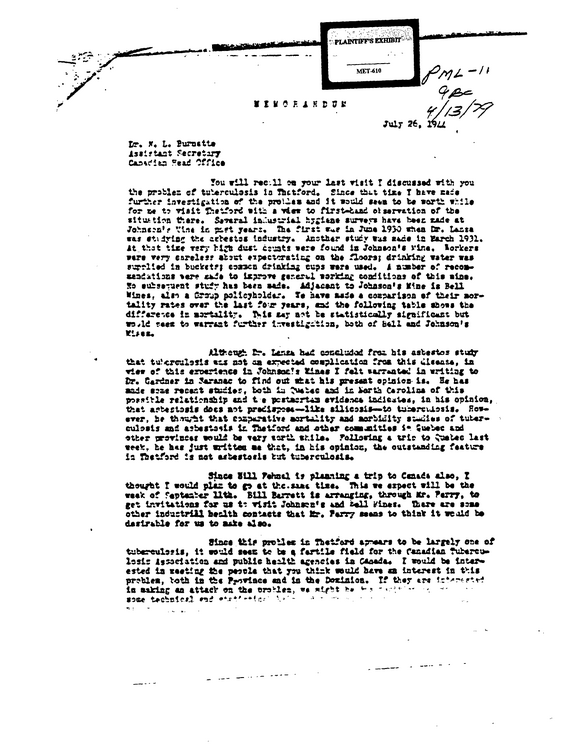
refid# zozMnkrGw0gbO5kgG4JBZvxw02 pages
PLAINTIFF'S EXHIBIT MET-302 Potential Jleattk Jfafondi the Jd&atlteA.
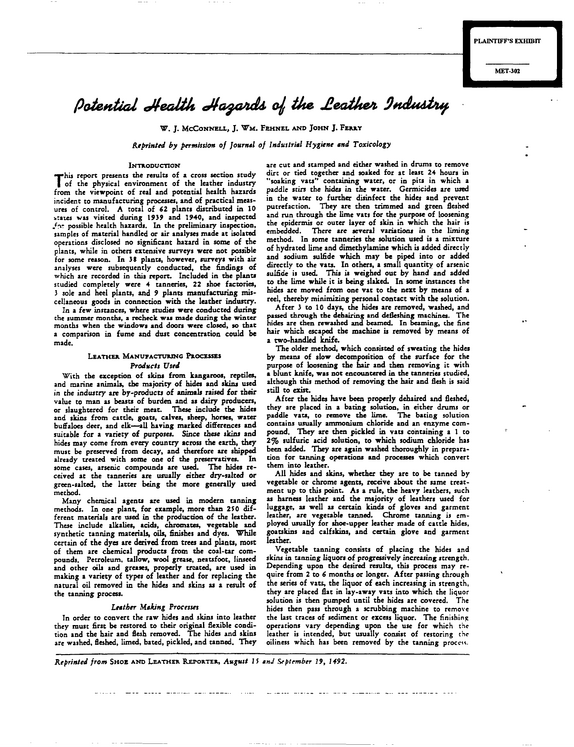
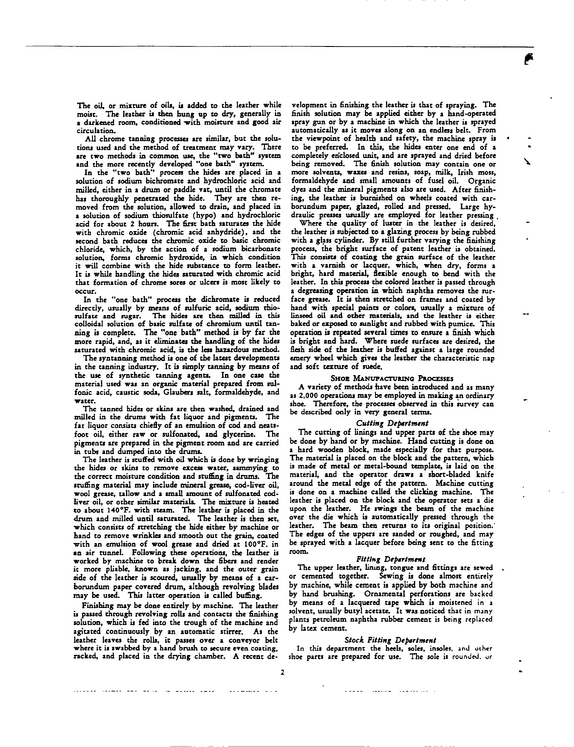
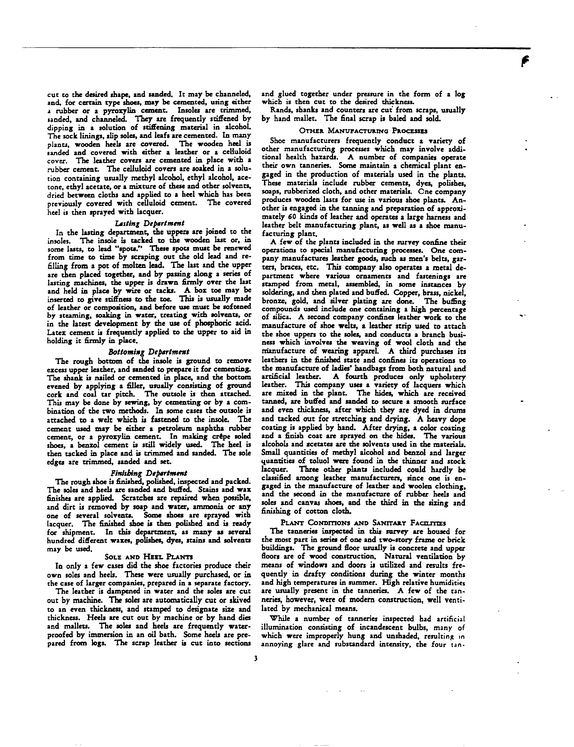
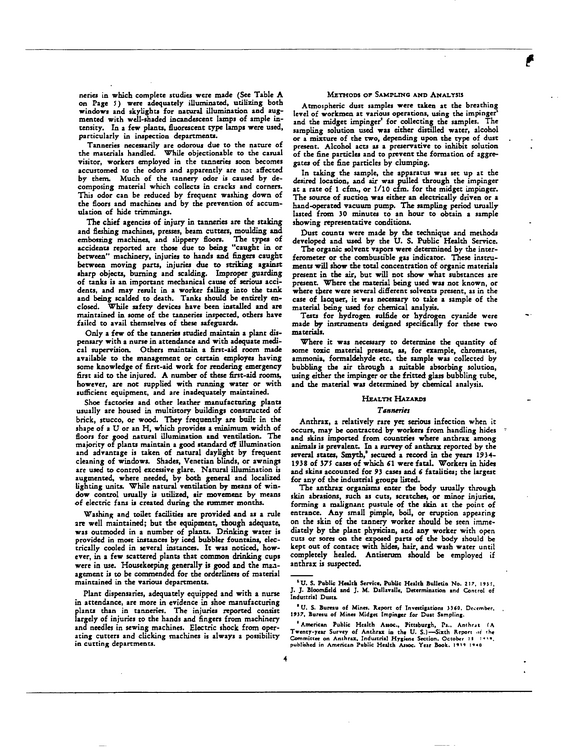
refid# qm9gnqEpd4Mw5Gxp2evawKvm511 pages
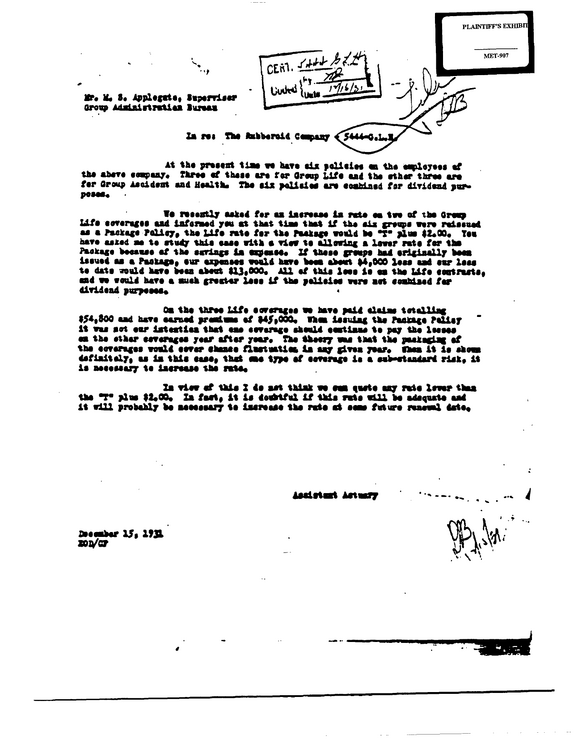
PLAINTIFF'S EXHIB1 At the prtMrt tin it htTi tlx ytllilN m tht of th* tbw* inpiar* fton of thass arc for droop Ufa uj tha othar tkna ua far Oroup Aaoldast aad Hsalth.
refid# o9N5eVjjvOe5onBNdwEyjMoBo1 page
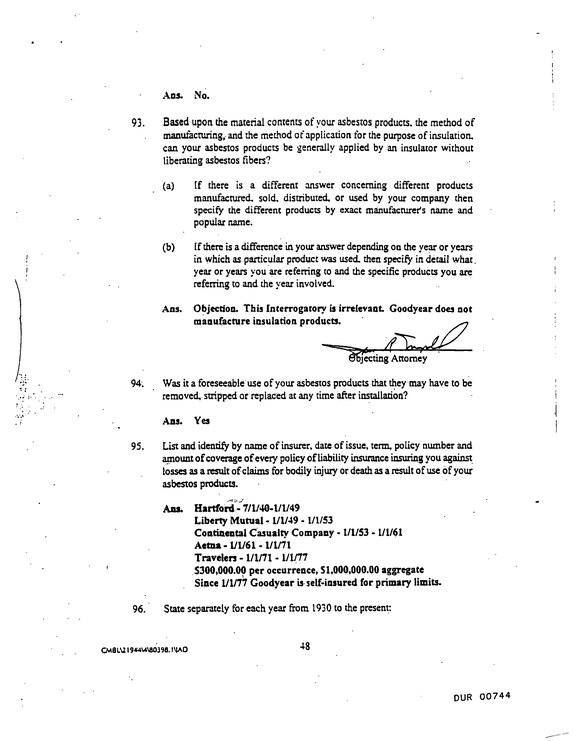
Ans.
refid# VjVvekaMQLQV5xwdjJDYy7YBj1 page
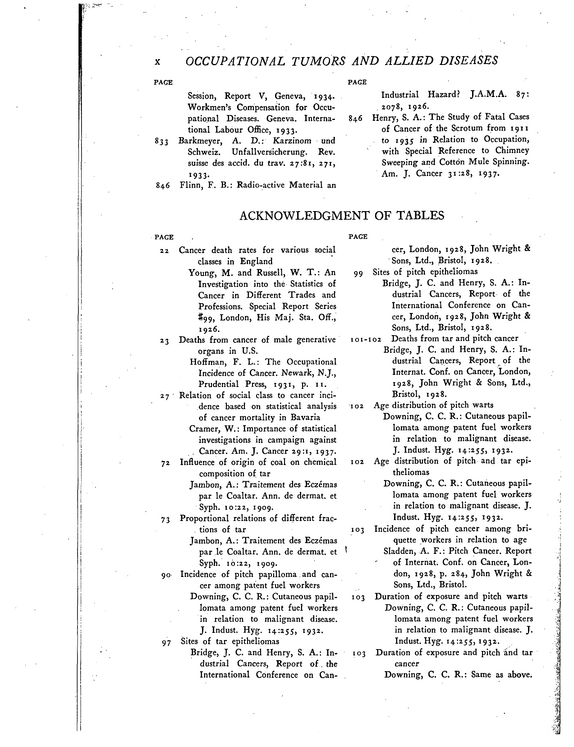
X OCCUPATIONAL TUMORS AND ALLIED DISEASES PACE Session, Report V, Geneva, 1934.
refid# zbjQKM4vERgZVZ8yDy52g7J631 page
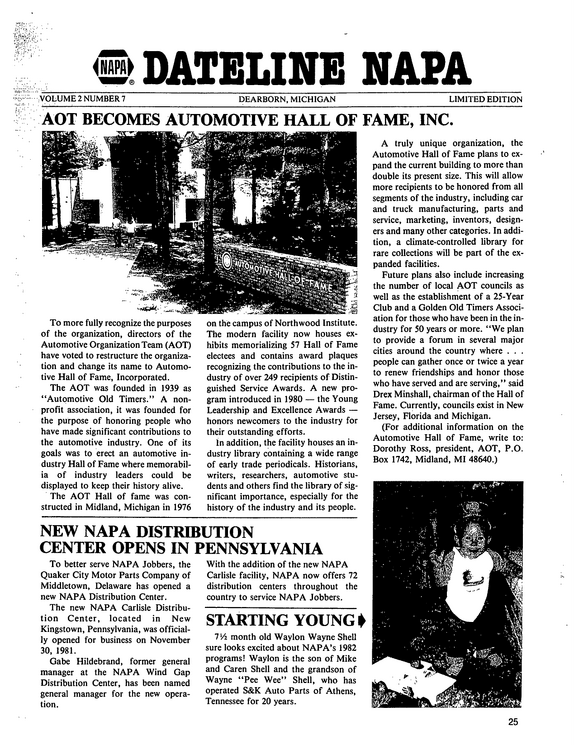
DATELINE NAPA VOLUME 2 NUMBER 7 DEARBORN, MICHIGAN LIMITED EDITION AOT BECOMES AUTOMOTIVE HALL OF FAME, INC.
refid# kDGz1BZ1xpd4r6noEJ9Xyon3J1 page
PRODUCED BY FORD I 4 < i i .1 j i i I Ai \ 1 I * j . { 1 1 1t oo o o #w Ul CJ 2as It. \ Urdtrr: .

refid# dYkb4DQZE7O3gBa4rG8KDr5e1 page