Refine
Estimated Years 1930-1939Clear
8,921 results foundRefine Search
HMBB-fUU I Industrial Hygiene Digest INDUSTRIAL HEALTH NEWS C5 LITERATURE ABSTRACTS W- MEDICAL ENGINEERING CHEMICAL TOXICOLOGICAL LEGAL - - - ddion and traada r^si 1 - :i OCTOBER, 1931 (VoL IS, No. 10) INDUSTRIAL HYGIENE FOUNDATION MELLON INSTITUTE 4400 FIFTH AVENUE PITTSBURGH 13.
refid# om7GavXn9Mvep83DKRwjVr4oD49 pages
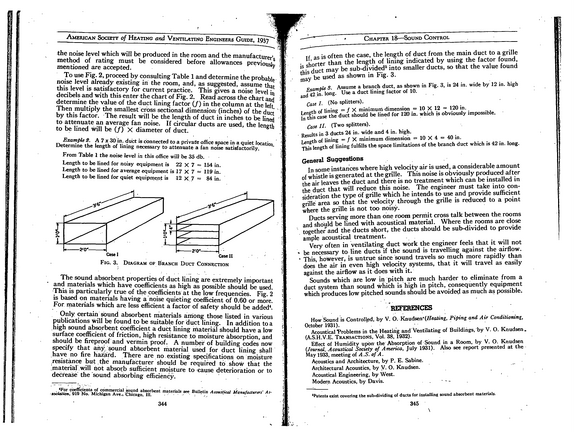
American Society of Heating and Ventilating Engineers Guide, 1937 the noise level which will be produced in the room and the manufacturer's method of rating must be considered before allowances previously mentioned are accepted.
refid# XzKvNbB4d0MbnyejNm7BbepQg1 page
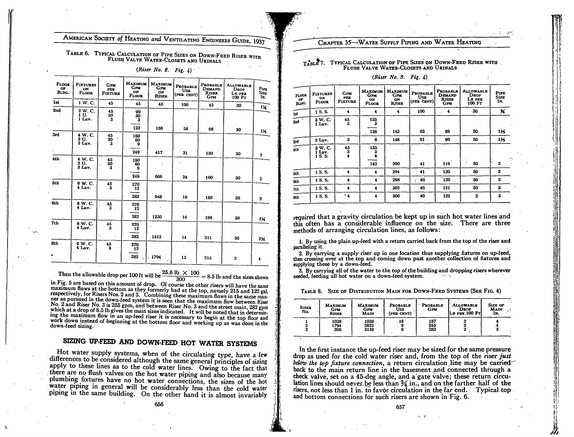
u/ American Society of Heating and Ventilating Engineers Guide, 1937 Table 6.
refid# KRmyqbp6yYryLaxQbBVxQrX121 page
7~7 Heating Ventilating Air Conditioning Guide 1938 Air conditioning (continued) fundamentals of, 1 hospital, 597 with ice. 496 industrial, 621 apparatus for, 503 automatic control, 683 exhaust systems, 633 operation of, 485 process conditions, 621 unit coolers, 449 objective of, 1 physical factors, 51 recirculation, 77, 411, 417, 447 symbols, 836 units, 451 Algae formations, 514 Allergic disorders, 604 classification of, 604 treatment of, apparatus for, 604 limitations in, 605 Alternating current motor, 705 Altitude, 183 Alumina system of adsorption, 39, 491 Aluminum foil, 94 Aluminum oxide, 39 Ammonia, 35. 36, 511 Anemometer, 812, 820 ----"" Anesthesia, 597 apparatus, 597 effect of, 598 inflammability, 598 Anthracite, 165, 169, (see also Coal) stokers, 205 Apartment houses, hot water supply to, 797 steam consumption, 234 stokers suitable for, 206 Appendicitis, 599 Artheritis, 607 A.S.H.V.E.
refid# EwwMkmONBk469nwdGoYqXNaL1 page
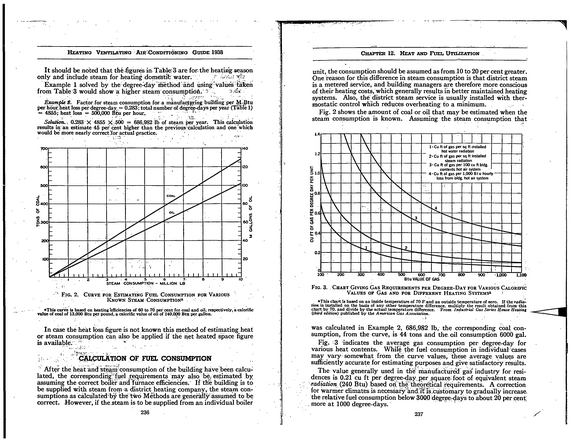
Heating Ventilating Air'-Conditioning Guide 1938 It should be noted that the-figures in Table d are for the heating season only and include steam for heating dome&tlfc water
refid# 4vpBKKzzq8VjJnVYGVnJoD8dN1 page
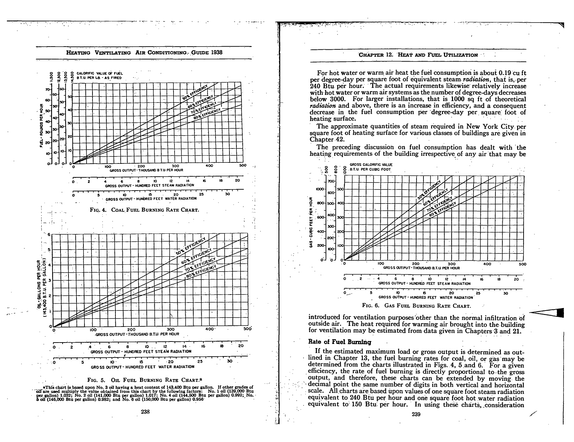
Heating Ventilating Air Conditioning; Guide 1938 GROSS OUTPUT - HUNDRED FEET STEAM RADIATION r--j--|ii--i--i--i--i--i--i--i--i--i--i--l--i--i--i--i--i--l--l--i--I--I--I--1--' i""r O5 10 15 .20 25 50 GROSS OUTPUT- HUNORED FEET WATER RAOIATION Fig. 4.
refid# 8VoJzXLn85GK7n9dvqpLLQmVe1 page
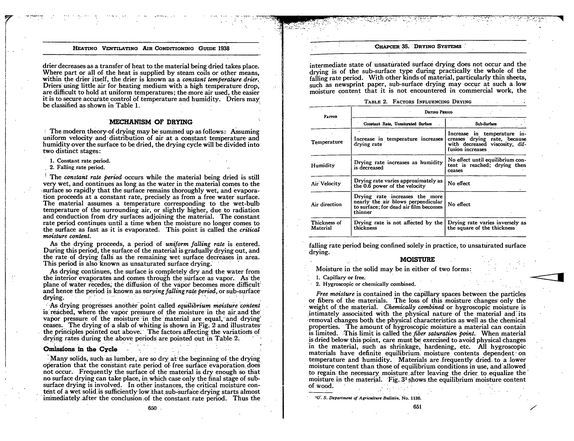
Heating Ventilating Air Conditioning Guide 1938 drier decreases as a transfer of heat to the material being dried takes place.
refid# Rg0RM2oY1VMbb5pggvG9J5Ja1 page
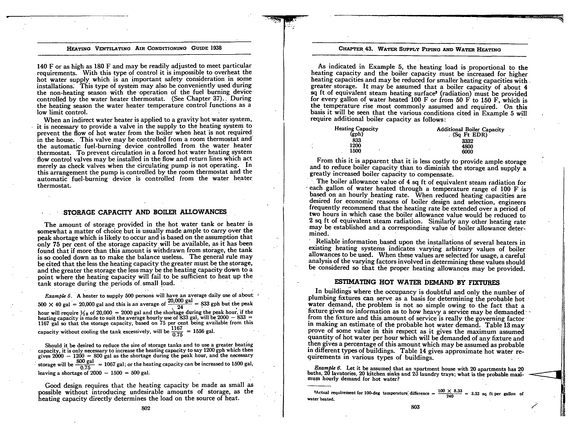
Heating Ventilating Air Conditioning Guide 1938 140 F or as high as 180 F and may be readily adjusted to meet particular requirements.
refid# gaBM6RRnXBGJkZENo5K4DgLjJ1 page
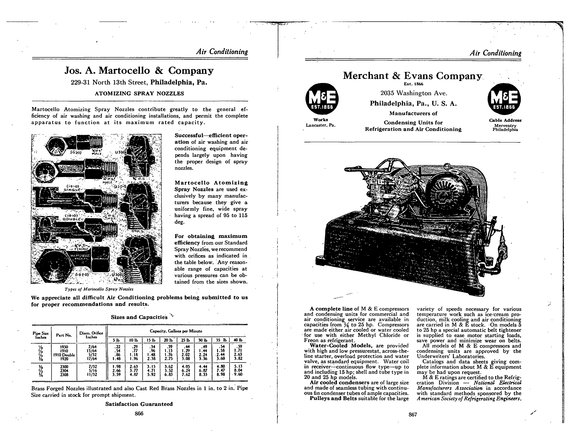
Air Conditioning Jos.
refid# LJXKROnKoN1p1kY2NkoaJXEyg1 page
COPYRIGHT 1939 BY THE American Society of Heating and Ventilating Engineers AND BY IT Dedicated To the Advancement of The Profession and Its Allied Industries text and illustrations are fully pro tected BY COPYRIGHT AND NOTHING THAT APPEARS MAY BE REPRINTED EITHER WHOLLY OR IN PART WITHOUT SPECIAL PERMISSION. >: : 7 " : `v printed and Bound by The Horn-Shafer Company BALTIMORE MARYLAND 6 PREFACE TO THE 17th EDITION THE 1939 edition of the Heating, Ventilating, Air Conditioning Guide contains the largest Technical Data Section of any of the annual reference volumes published by the American Society of Heating and Ventilating Engineers to serve the profession and industry.
refid# ZBLmynwn7Ewzbbzd7zd9xoL0V1 page
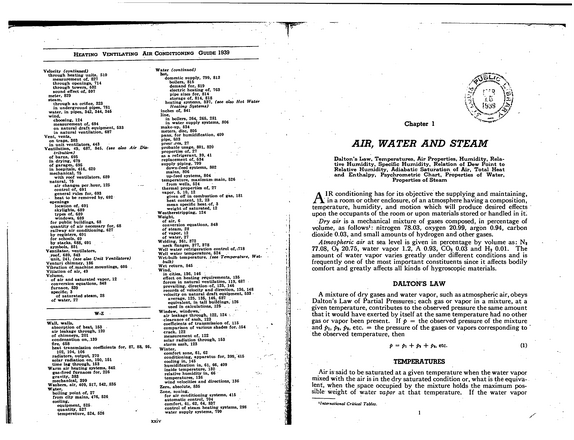
1939Heating Ventilating Air Conditioning Guide Velocity (continued) through heating units, 610 measurement of, 827 through openings, 714 through towers,. 632 sound effect of, 697 meter, 829 steam, through an orifice, 823 in underground pipes, 781 water, in pipes, 342, 344, 346 wind, choosing, 124 measurement of, 694 on natural draft equipment, 533 in natural ventilation, 687 Vent, vents, on traps, 303 in unit ventilators, 443 .
refid# Rjrzw6DEvd5g7v0NOQ8kGE9Lk1 page
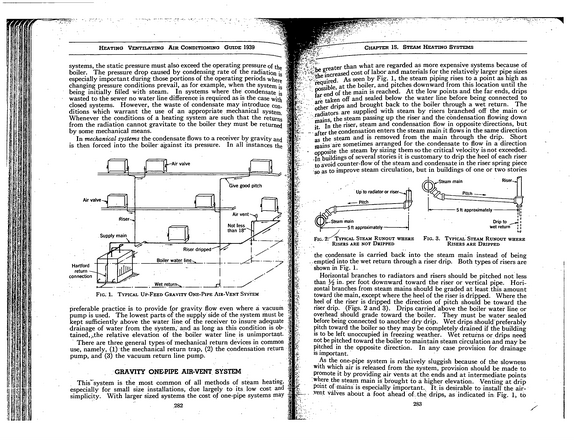
Heating Ventilating Air Conditioning Guide 1939 systems, the static pressure must also exceed the operating pressure of the boiler.
refid# LJ9a21OyZOoJa2qKEDqn9aKV71 page
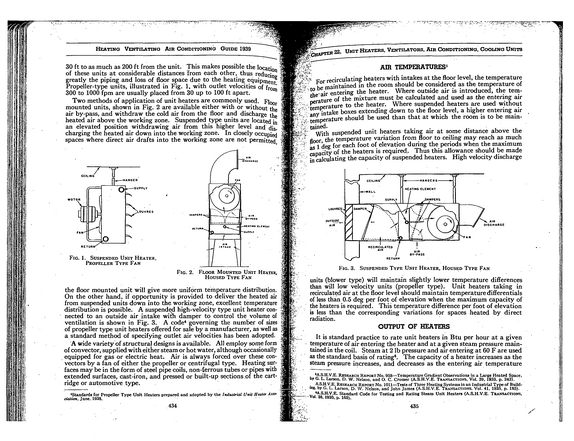
Heating Ventilating Air Conditioning Guide 1939 30 ft to as much as 200 ft from the unit.
refid# peg5p6MddDJrXk91XyGkzddzd1 page
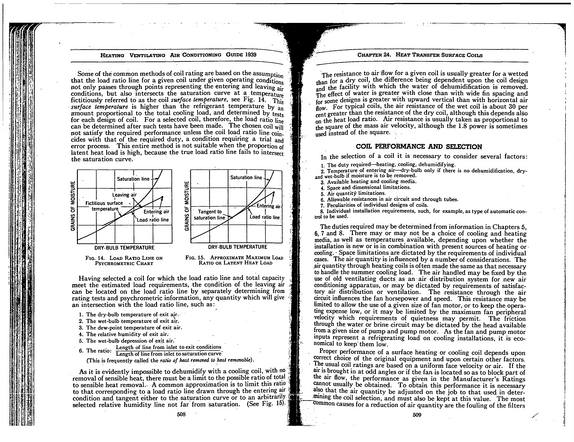
Heating Ventilating Air Conditioning Guide 1939 Some of the common methods of coil rating are based on the assumption that the load ratio line for a given coil under given operating conditions not only passes through points representing the entering and leaving air conditions, but also intersects the saturation curve at a temperature fictitiously referred to as the coil surface temperature, see Fig. 14.
refid# zo3Zm7Z2OdYDJK1xJRrm9Z8671 page
si am k ifI.; 11 ii b wIV*- j it- !
refid# N2Oqa0MVyL615ron8D286Rvmw1 page