Refine
Estimated Years 1930-1939Clear
8,921 results foundRefine Search
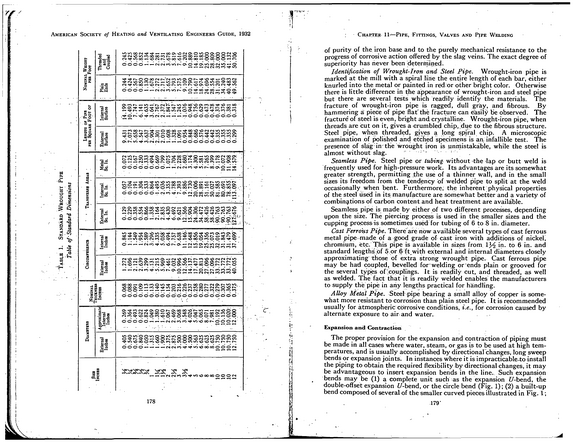
American Society of Heating and Ventilating Engineers Guide, 1932 : Threaded | and C oupled T a b l e 1.
refid# qjVMzJMyZ2k0Z5819oOe1JqG1 page
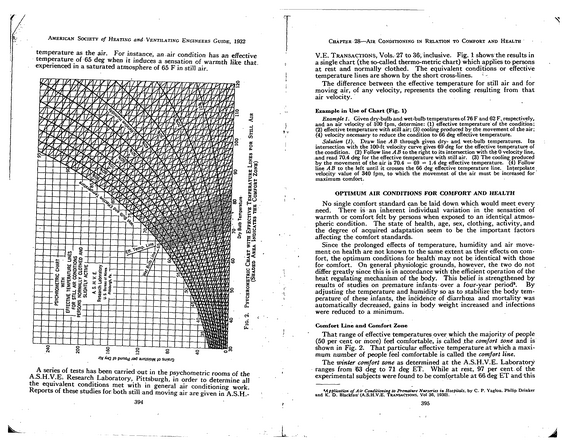
American Society of Heating and Ventilating Engineers Guide, 1932 temperature as the air.
refid# 7OzdE0ebQmvJjqke0eE4D02Va1 page
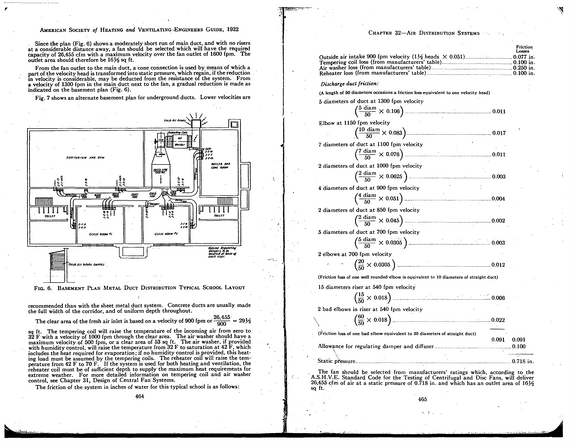
American Society of Heating and Ventilating-Engineers Guide, 1932 .
refid# rppgJwmGVwzbbLD6j0YQbJ8Oq1 page
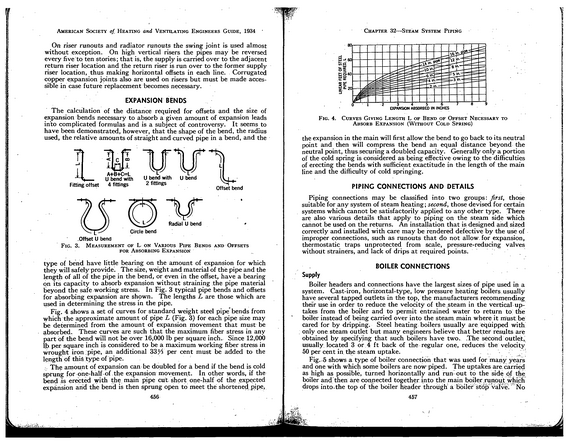
American Society of.
refid# 5bDDgyvazzyXXdREjKav5vJwD1 page
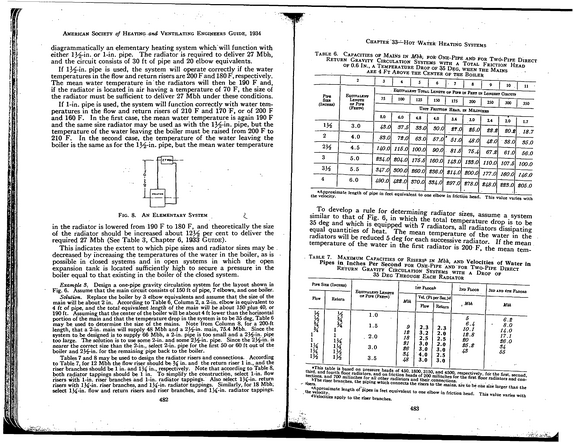
American Society of Heating and Ventilating Engineers Guide, 1934 diagrammatically an elementary heating system which'will function with either or 1-in. pipe.
refid# YjkMzk0xppVX3wa08bGB2xO7k1 page
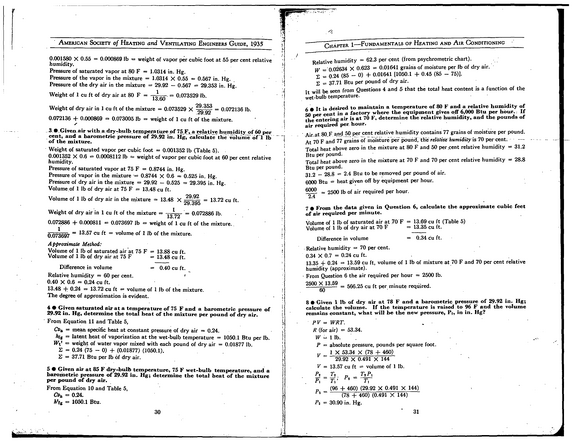
American Society of Heating and Ventilating Engineers Guide, 1935 0.001580 X 0.55 = 0.000869 lb = weight of vapor per cubic foot at 55 per cent relative humidity.
refid# mB3Go7MXwjO9z48K0Vbz9gjyO1 page
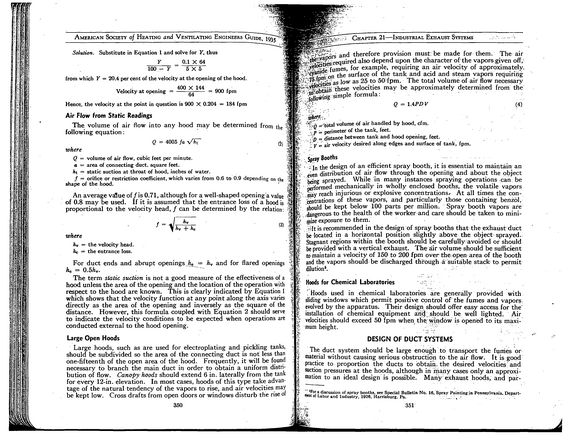
American Society of Heating and Ventilating Engineers Guide, 1935"^ Chapter 21--Industrial Exhaust Systems Solution.
refid# 17mxGK4rN49zqOK1Ez76L1zd1 page
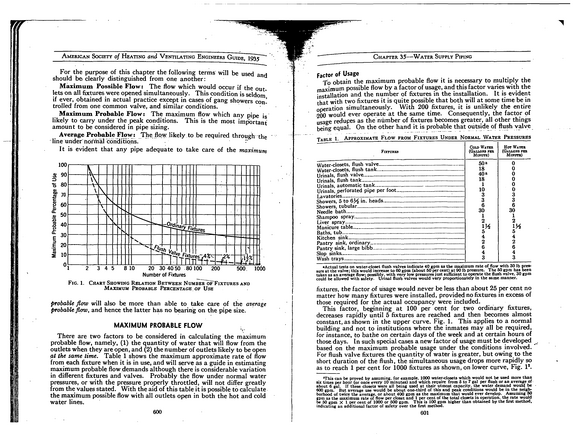
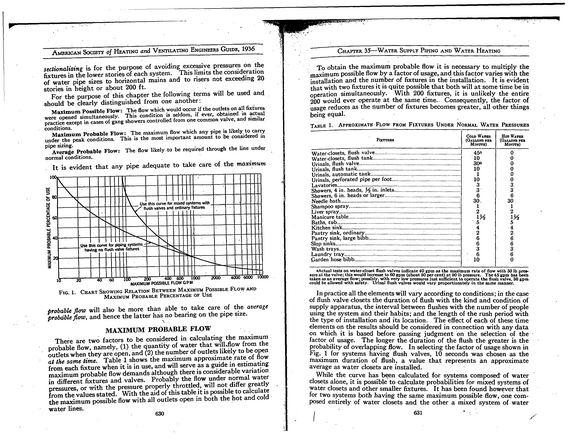
American Society of Heating and Ventilating Engineers Guide, 1935 For the purpose of this chapter the following terms will be used and should be clearly distinguished from one another: a Maximum Possible Flow: The flow which would occur if the out lets on all fixtures were opened simultaneously.
refid# KJO4E4bQN9B6pkMemnyYr16bN1 page
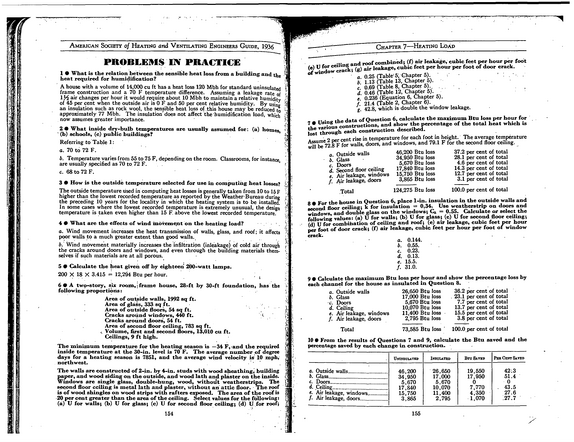
American Society of Heating and Ventilating Engineers Guide, 1935 PROBLEMS IN PRACTICE 1 9 What is the relation between the sensible heat loss from a building and the heat required for humidification?
refid# QXJBzRnKweoRVNQN9mg6R2wx81 page
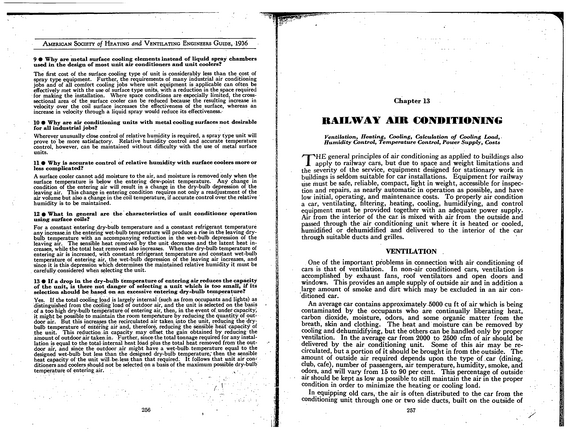
American Society of Heating and Ventilating Engineers Guide, 1936 9 Why are metal surface cooling elements instead of liquid spray chambers used in the design of most unit air conditioners and unit coolers?
refid# aJX2mxBvyDrVbkm3j3pM2r8Nb1 page
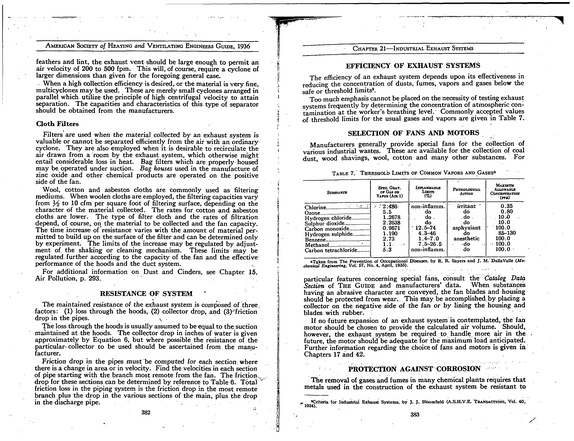
American Society of Heating and Ventilating Engineers Guide, 1936 feathers and lint, the exhaust vent should be large enough to permit an air velocity of 200 to 500 fpm.
refid# zd1XkaEdkxxKgJ443KkgR953a1 page
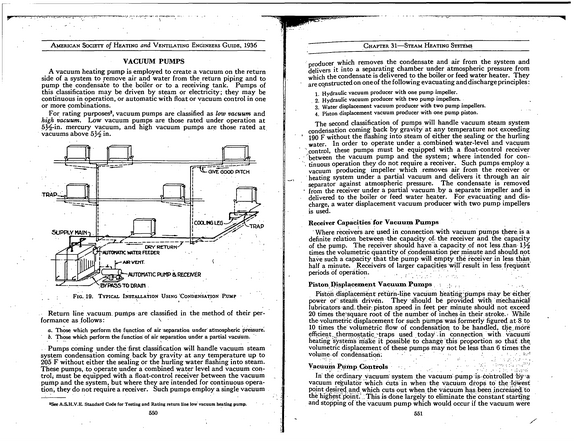
American Society of Heating and Ventilating Engineers Guide, 1936 VACUUM PUMPS A vacuum heating pump is employed to create a vacuum on the return side of a system to remove air and water from the return piping and to pump the condensate to the boiler or to a receiving tank.
refid# EdqagEm8R9JEMyo9aeMB3Vw8b1 page
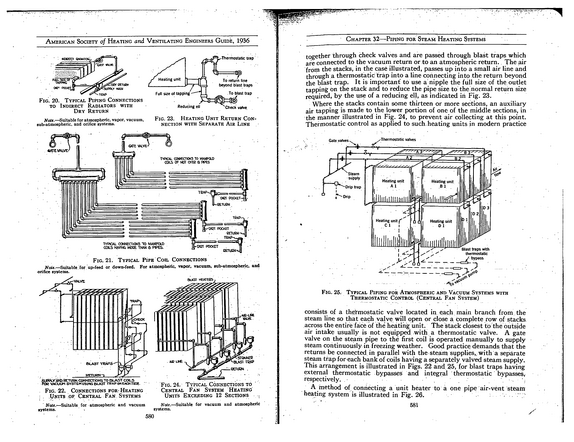
American Society of Heating and Ventilating Engineers Guide, 1936 Thermostatic trap' Fig. 20.
refid# 4jQkegjMVj8xe7oE9Z8Brmwe1 page
American Society of Heating and Ventilating Engineers Guidb, 1936 sectionalizing is for the purpose of avoiding excessive pressures on the fixtures in the lower stories of each system.
refid# gDrq3x7yw7mvVV2EjQgwopXr91 page
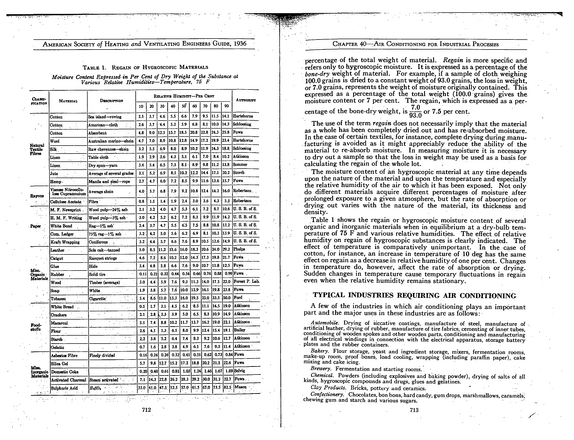
American Society of Heating and Ventilating Engineers Guide, 1936 Table 1.
refid# KJQpxLbE5YaYGgD8YDx9y3ON21 page