Refine
Estimated Years 1930-1939Clear
4,625 results foundRefine Search
office,', if.your own investigations -`lead you to conclude (that the statements mad e 'in .this report are v: erroneous, I';earnestly.
refid# QJmzmmENYEbGm7DMBn8BqKXpk15 pages
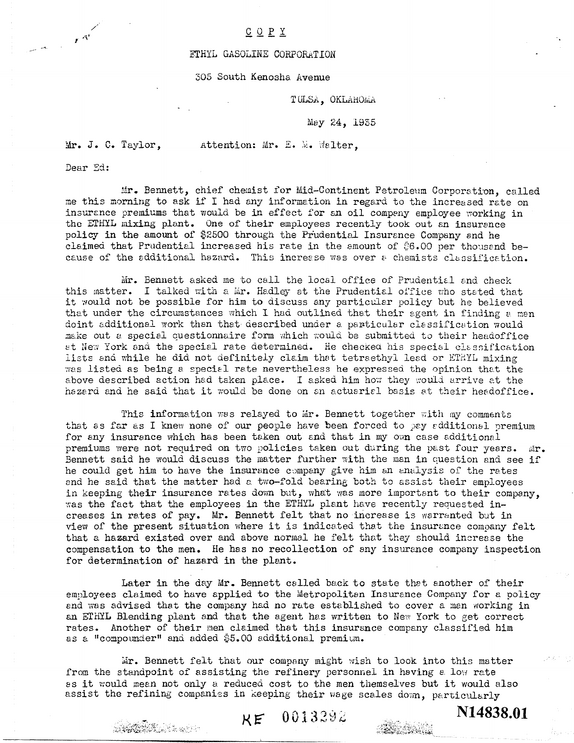
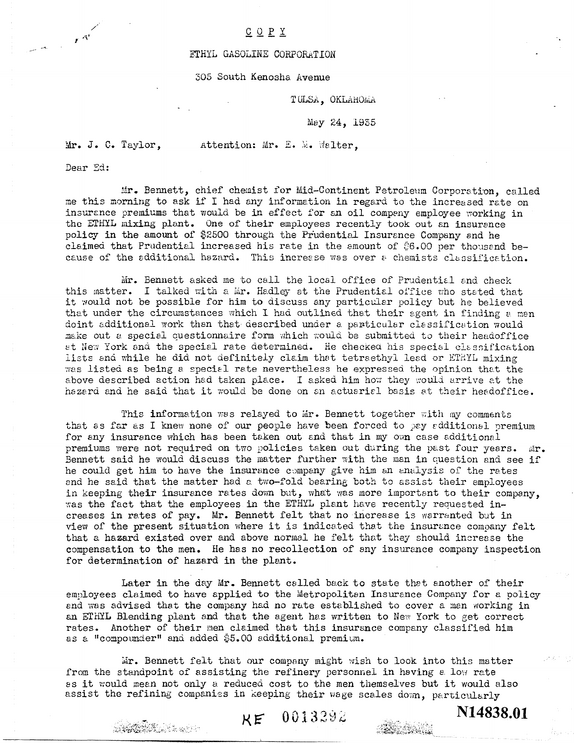
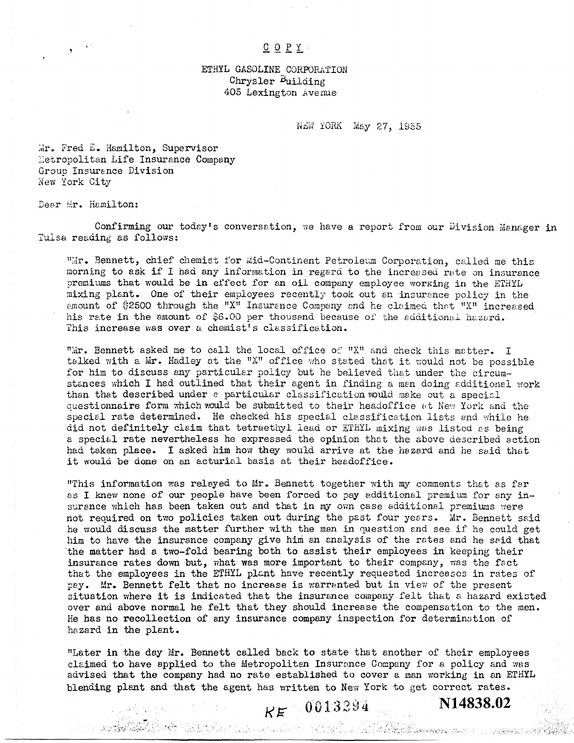
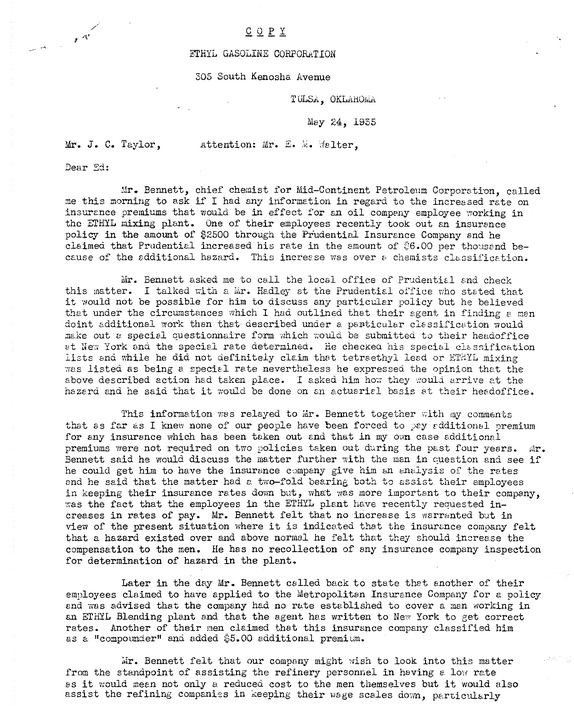
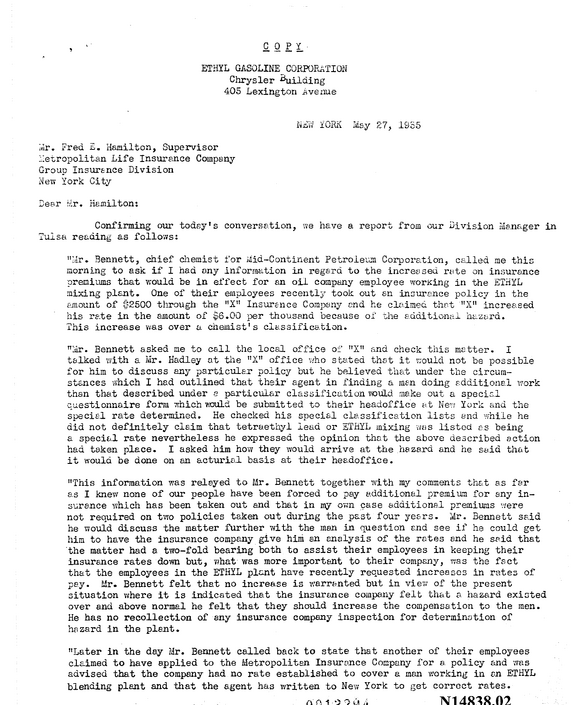
He checked his special classification lists ana while he did not definitely claim that tetraethyl lead or ETHYL mixing nos listed as being a special rate nevertheless he expressed the opinion that the above described action had taken pla.ce.
refid# mB0K6Yd0bqD3LEEr00nr7dbyg8 pages
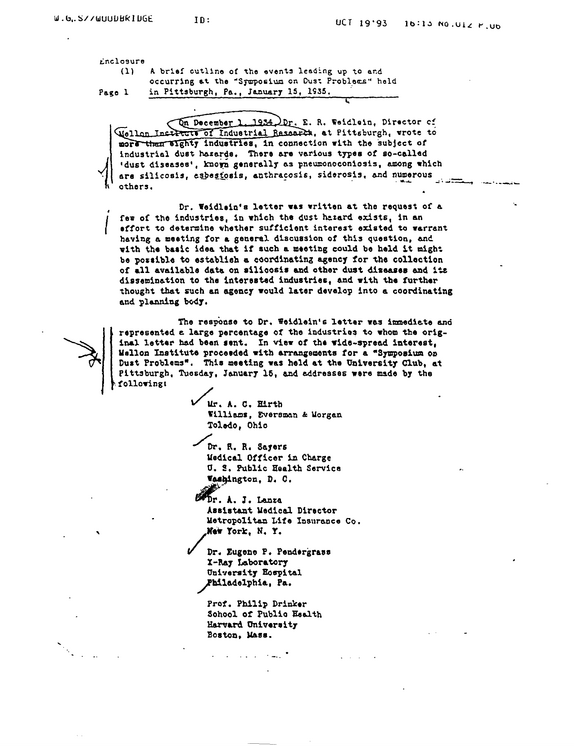
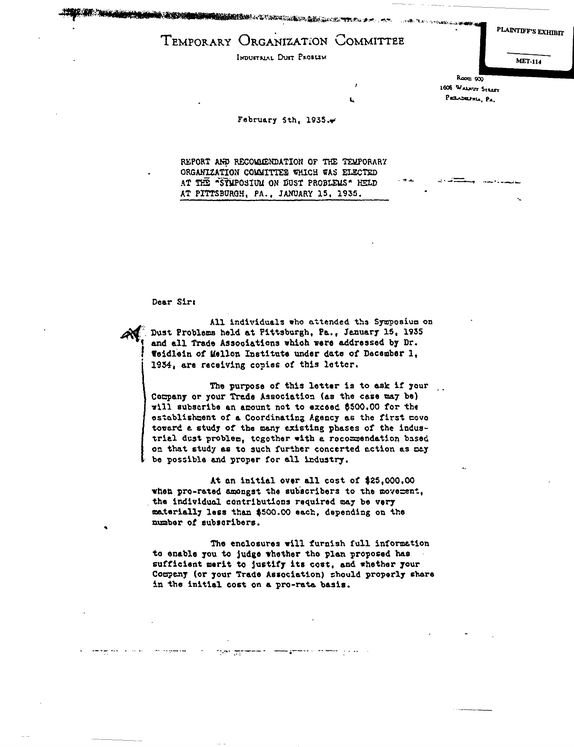
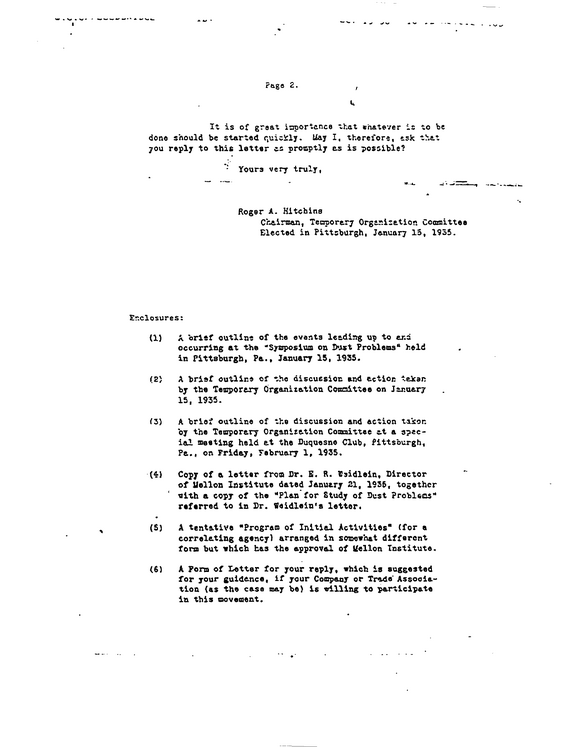
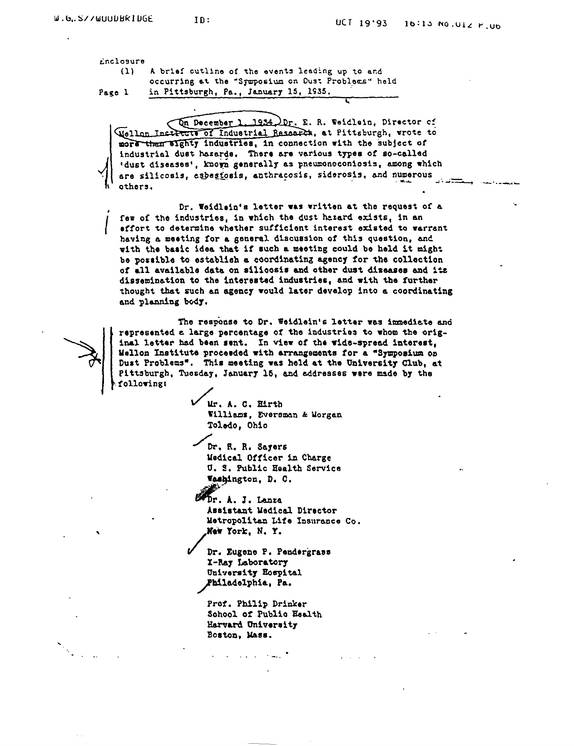
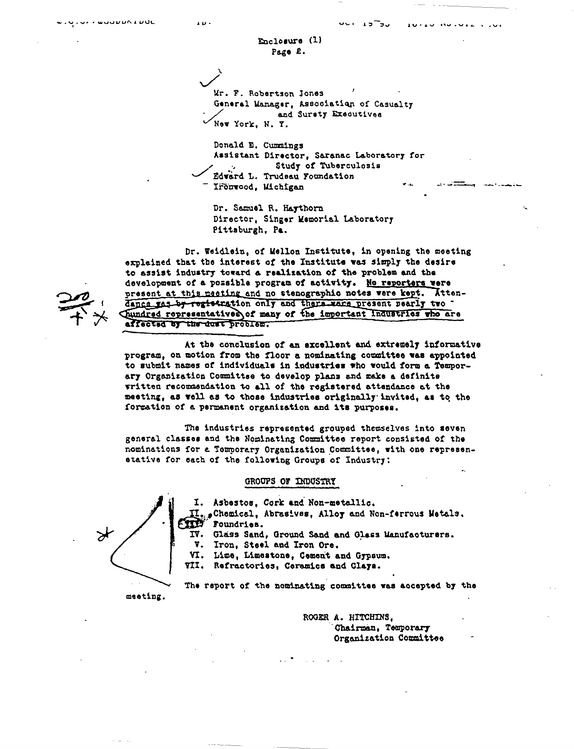
IjJ .b,.S//UUUDbkI D6E ID: UCT 19*93 lb: 1J no K Ub Enclosure (1) A brief cutline of the events leading up to and occurring at the "Symposium on Dust Problems" hold Page 1 in Pittsburgh, Pa., January 15, 1S35. j- in December 1 E.
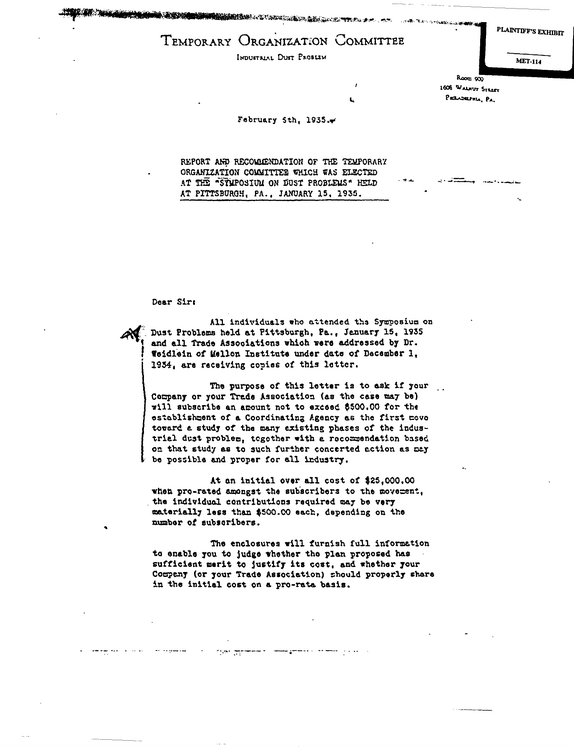
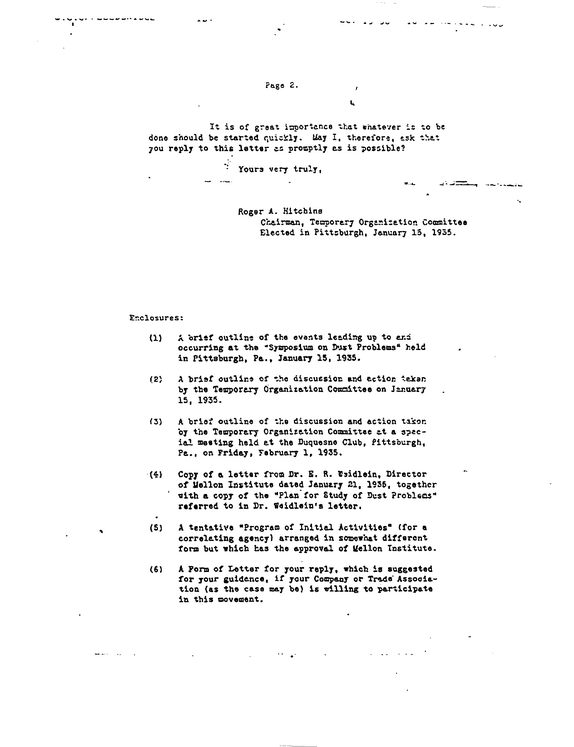
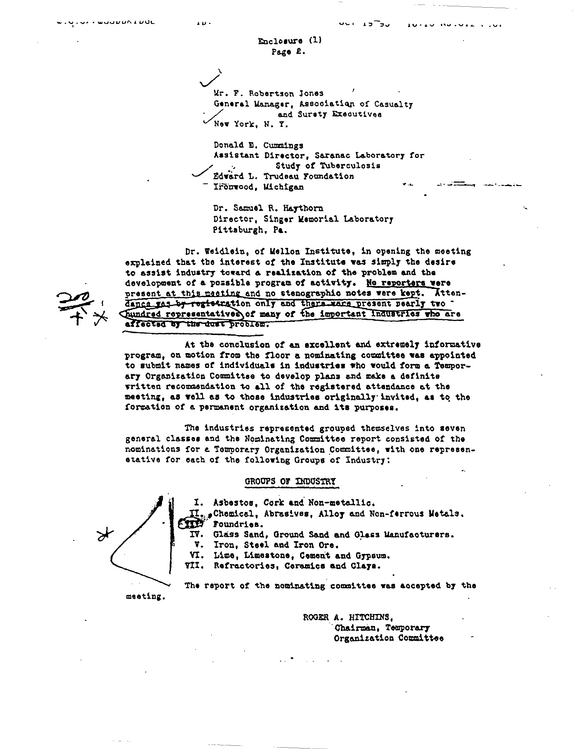
refid# x1kmrr6X7a3NdO46K7QyO59Ly13 pages
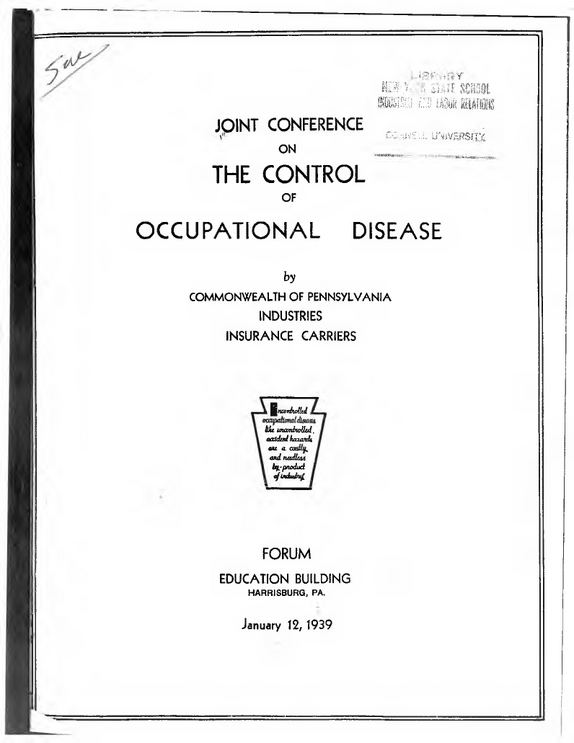
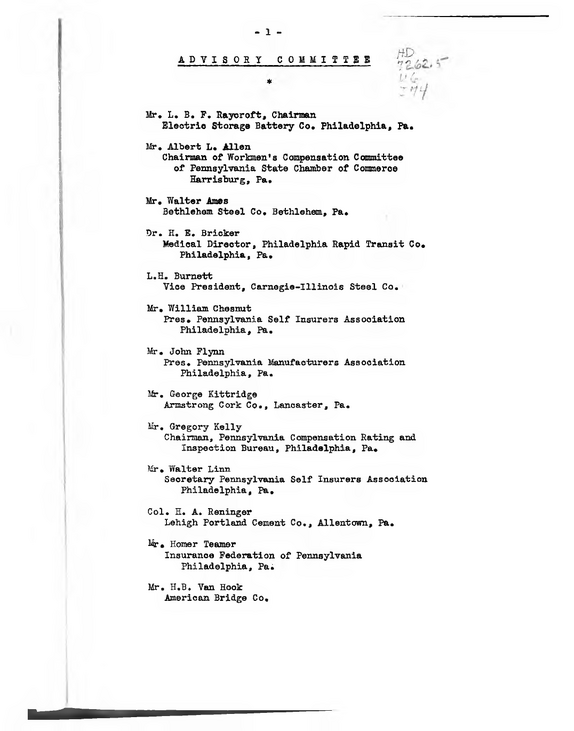
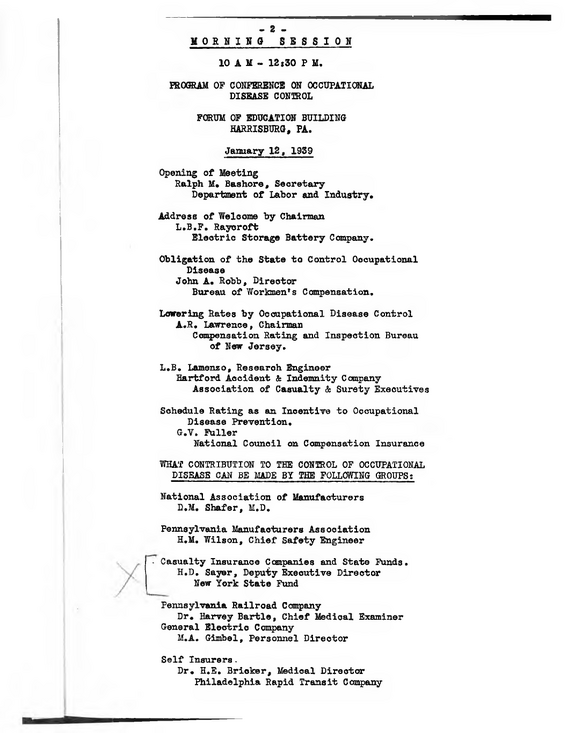
FILE NAME: Pennsylvania (PA) DATE: 1939 Jan 12 DOC#: PA007 DOCUMENT DESCRIPTION: PA Conference on The Control of Occupational Disease JOINT CONFERENCE ON THE CONTROL OF na suit scum wmx3 m m\m C C -;N :..!
refid# qmmqd9wn0gGKza06E1dyLLoEj17 pages
' XXSOLTHD that tha capacity af tha Xuston Lead Company plant


refid# Eq1n9gV7qV9Rew7ygOR8ye7gn9 pages
He checked his special classification lists ana while he did not definitely claim that tetraethyl lead or ETHYL mixing nos listed as being a special rate nevertheless he expressed the opinion that the above described action had taken pla.ce.
refid# 9JrrvVRVDpOm6D5zMV31VBpjV8 pages
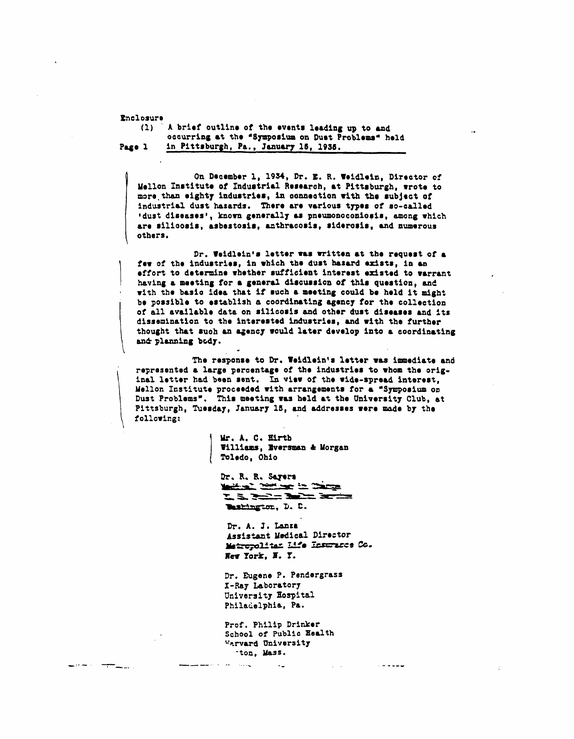
Enclosure (1) A brief outline of the events leading up to and occurring at the "Symposium on Duet Problems" held Page 1 in Pittsburgh, Pa., January 18, 1938 On December 1, 1934, Dr.
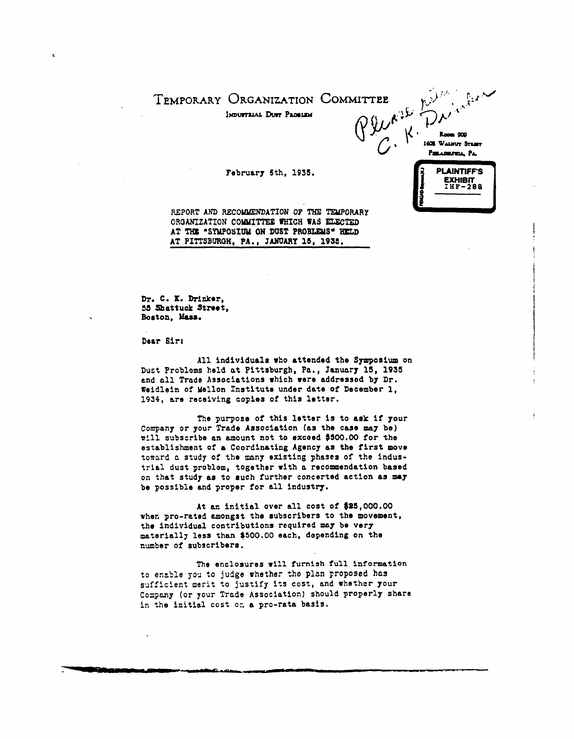
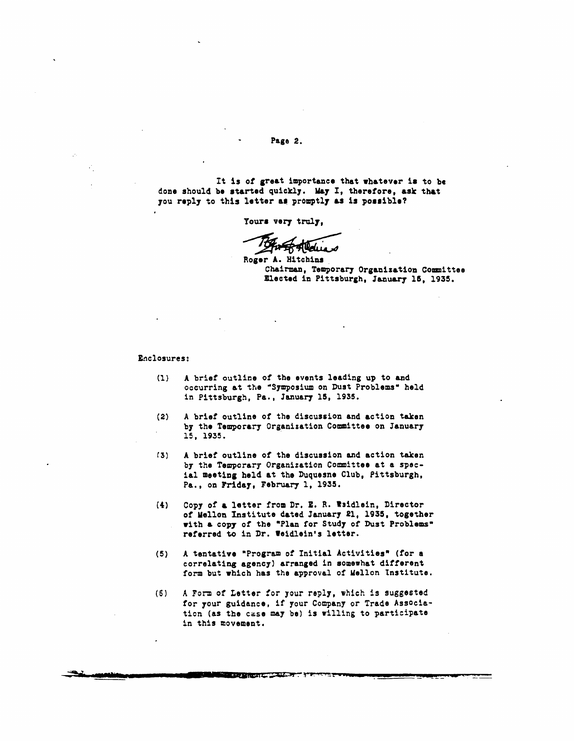
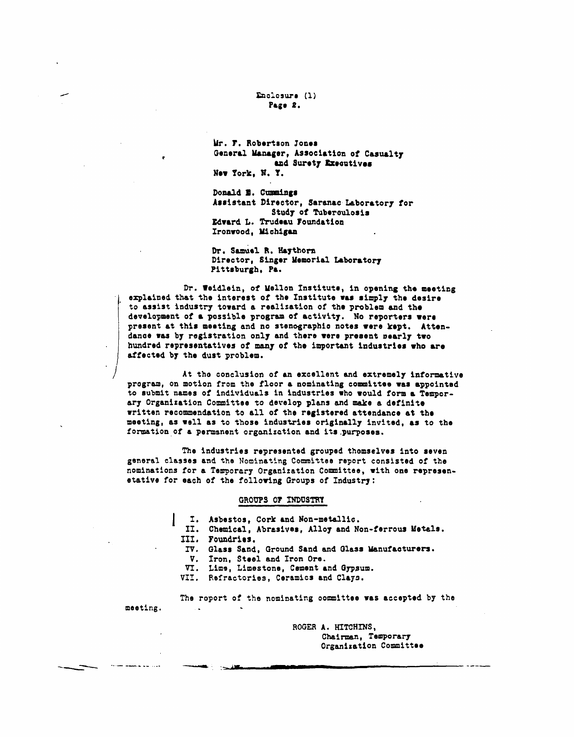
refid# g2Rvg1gp5dV7VzVO8450a2K1q13 pages
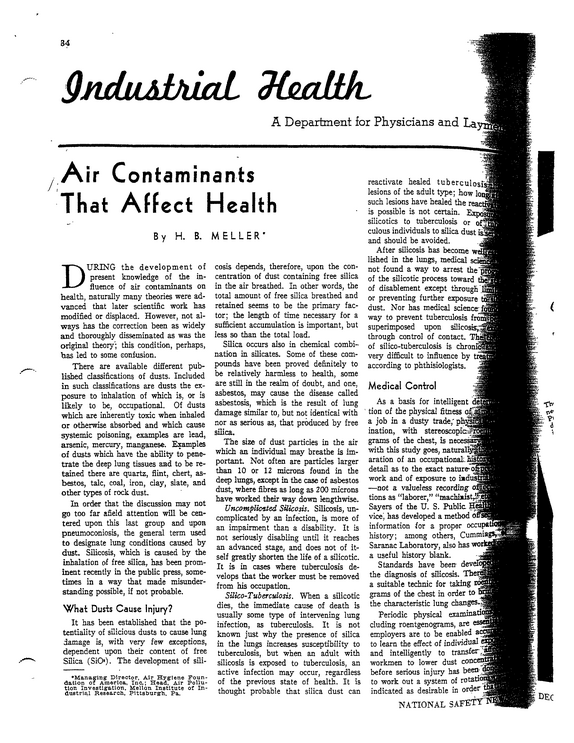
Of dusts which are inherently toxic when inhaled or otherwise absorbed and which cause systemic poisoning, examples are lead, arsenic, mercury, manganese.

refid# 50rMoZ54G2Kdo0N5gzQm30ME55 pages
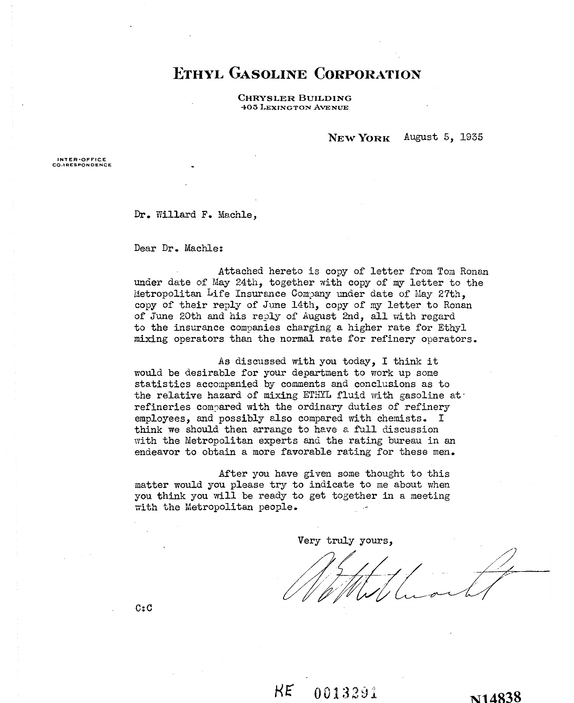
He checked his special classification lists and while he did not definitely claim that tetraethyl lead or ETHYL mixing nos listed as being a special rate nevertheless he expressed the opinion that the above described action had taken pls.ce.
refid# baeZZngjLOZzdXBGRJqz3bG68 pages
IjJ .b,.S//UUUDbkI D6E ID: UCT 19*93 lb: 1J no K Ub Enclosure (1) A brief cutline of the events leading up to and occurring at the "Symposium on Dust Problems" hold Page 1 in Pittsburgh, Pa., January 15, 1S35. j- in December 1 E.
refid# GKa01k5EZDqqpVQ3B3LxL5Vjm13 pages
' XXSOLTHD that tha capacity af tha Xuston Lead Company plant


refid# 3QEJ6wExqkDV1wLxe16gLVdxJ9 pages
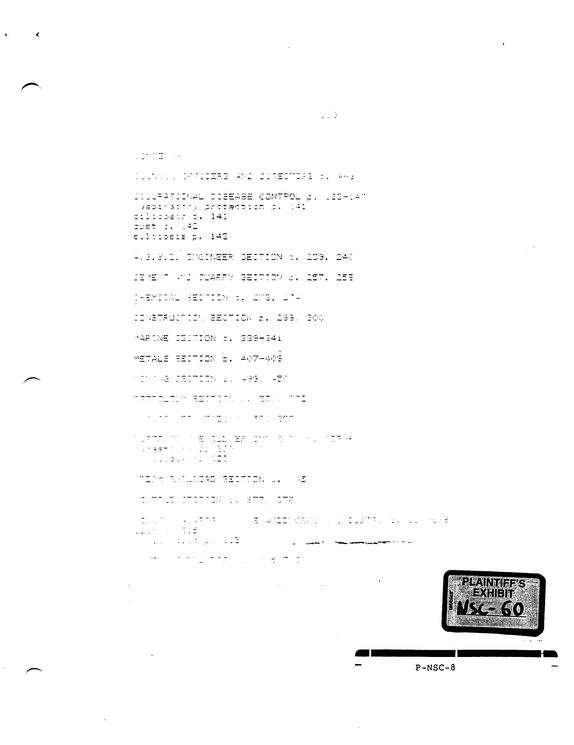
FILE NAME: National Safety Council (NSC) DATE: 1939 Oct DOC#: NSC066 DOCUMENT DESCRIPTION: Transactions of the NSC - 28th National Safety Congress 141 143 P-NSC-8 tabbies' ) ) 1326596 331 .2 W215 rft' II8, lit.t .1 Safety Congress i Council, October i.

refid# 0JgnZnVeJ3yE6VxZqOvve3LBV60 pages
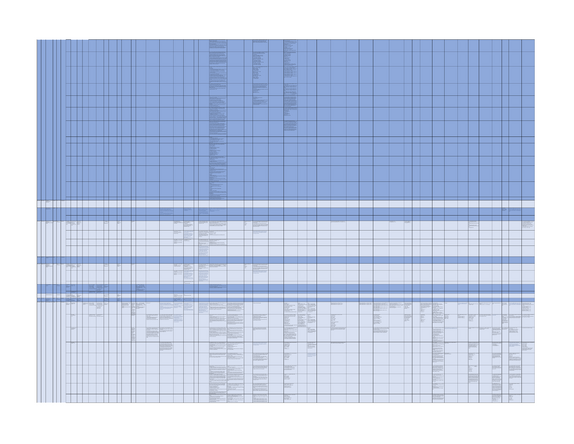
EC Number CAS Number Substance Name (ECHA's Acronym Chain length Registration log Kaw logKow logKlipw Critical micelle Water solubility Vapor pressure logKoa Volatilization pKa Relations with pH logKoc Other physicochemical properties Interactions with organic matter Fate dissem.site) concentration (CMC) 207-021-6 422-64-0 Pentafluoropropionic acid PFPrA C3 Pre-registered Degradability Persistence BCF/BMF/BAF Bioaccumulation Toxicity [63] Perfluoroalkyl and perfluoroether moieties are highly persistent under natural conditions => Even though some PFASs may partially degrade in the environment and biota, they will all ultimately transform into highly stable end products, wich are usually perfluoroalkyl or perfluoroalkyl(poly)ether acids such as PFCAs, PFSAs, PFECAs and PFESAs [63] the high solubility and proteinbinding characteristics of ionic PFAAs challenge the conventional assessment of bioaccumulation potential that is through either bioconcentration factor in aquatic species (usually fish) or models based on octanol-water partition coefficients (Kow) => even when PFAAs are not characterized as bioaccumulative under the current regulatory frameworks, the accumulation of these PFAAs in the environment will lead to increasing external exposure Reproductional/developmental toxicity PBT Exposure Elimination from body Toxicological information [63] the very high persistence of PFAAs leads to poorly reversible exposure to these substances in the global environment and some local/regional environments including groundwater Blood concentrations Other concentrations (semen, Accumulation in tissues Elimination via urine, feces, liver Elimination half-life T1/2 Volumes of distribution Vd Elimination rate constant ke Clearance Cl AUC urine,



refid# 6ROK8RXwwJ7EjmqjG1XZk6Y0d24 pages
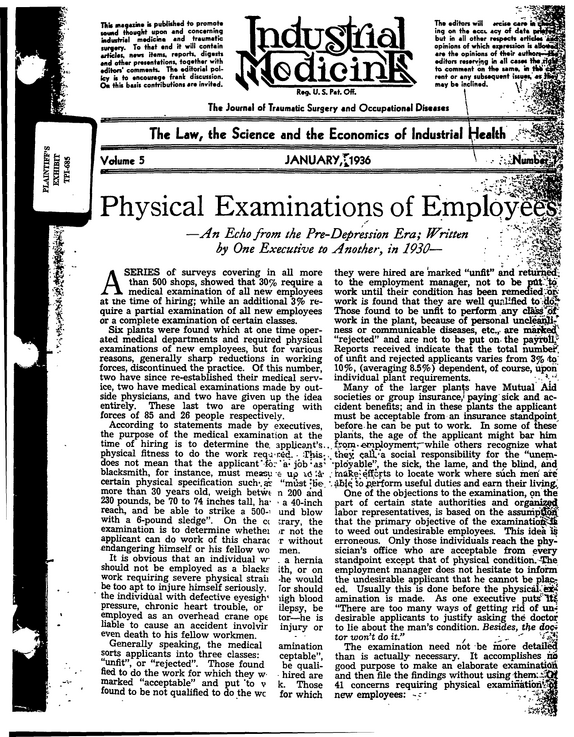
This m9*zin it pubiitiiad to promsit tomd Hiouqlrt upon and eoncaminq industrial madicina and traumatic surqary.
refid# rpQkxDvnQzBRLedG6DK8RRvMG65 pages
This m9*zin it pubiitiiad to promsit tomd Hiouqlrt upon and eoncaminq industrial madicina and traumatic surqary.
refid# reka3oMZrg2DV1KYrEeQL861V65 pages