Refine
Estimated Years 1930-1939Clear
14,210 results foundRefine Search
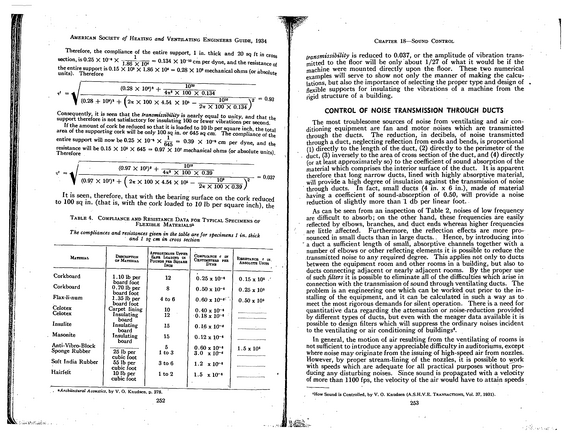
American Society of Heating and Ventilating Engineers Guide, 1934 Therefore, the compliance of the entire support, 1 in. thick and 20 sq ft in cross section, is 0.25 X 10"* X ~j~gg ^ = 0-134 X 10"" cm per dyne, and the resistance of the entire support is 0.15 X 10s X 1.86 X 104 = 0.28 X 10⁹ mechanical ohms (or absolute units).
refid# b5mq4EajDmeJx7R2zwBQvQeQZ1 page
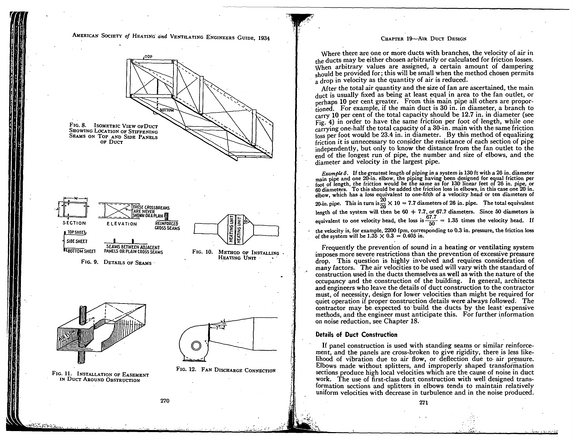
of andAmerican Society Heating Ventilating Engineers Guide, 1934 SECTION I TOP SHELL ' SIDE SHEET Bottom sheet these crossbreaks ' ARE NEVER = .
refid# Em0XznXxZ7BzkOzn4aKV0X2pV1 page
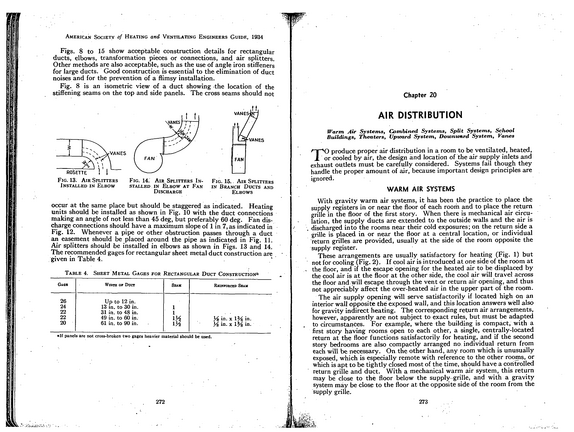
American Society of Heating and Ventilating Engineers Guide, 1934 Figs. 8 to 15 show acceptable construction details for rectangular ducts, elbows, transformation pieces or connections, and air splitters.
refid# 91ZgDwYaqZjExMxDk083Z3JEV1 page
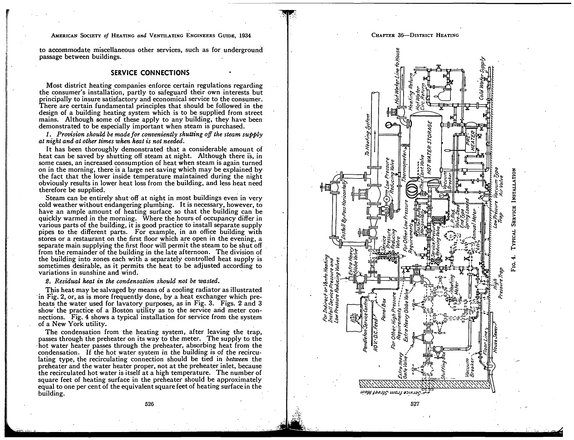
American Society of Heating and Ventilating Engineers Guide, 1934 to accommodate miscellaneous other services, such as for underground passage between buildings.
refid# 71J7Bqp8ZO3Vaz32G4V4LbEQa1 page
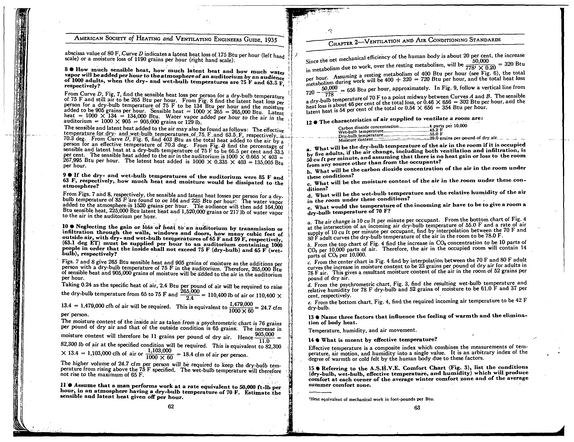
American Society of Heating and Ventilating Engineers Guide, 1935 abscissa value of 80 F, Curve D indicates a latent heat loss of. 175 Btu per hour (left hand scale) or a moisture loss of 1190 grains per hour (right hand scale): 8 How much sensible heat, how much latent heat and how much water vapor will be added per hour to the atmosphere of an auditorium by an audience of 1000 adults, when the dry- and wet-bulb temperatures are 75 F and 63.5 F, respectively?
refid# GmZK0NO666xgE9y9qq6OR7MVn1 page
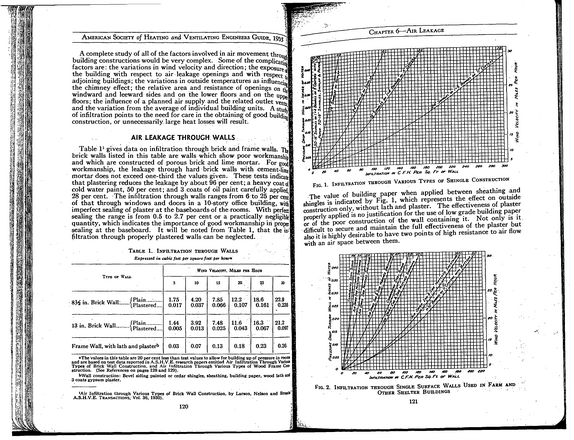
American Society of Heating and Ventilating Engineers Guide, I935U A complete study of all of the factors involved in air movement thri building constructions would be very complex.
refid# 4JzxpnX5a0Z4026zmmK2q0JaQ1 page
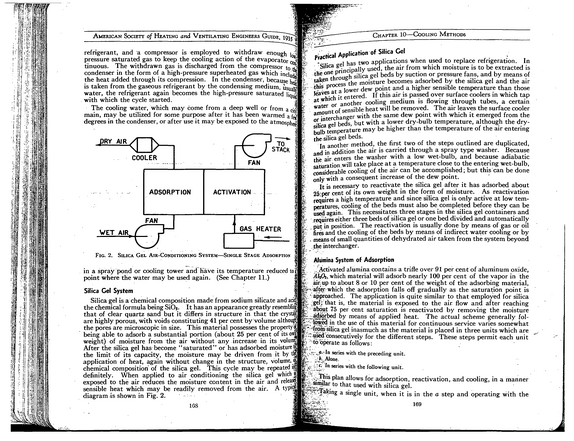
American Society of Heating and Ventilating Engineers Guide, 1935^ Chapter 10--Cooling Methods refrigerant, and a compressor is employed to withdraw enough |rJ pressure saturated gas to keep the cooling action of the evaporator nJ tinuous.
refid# M461Lzeav0oRG65G9mE6wK4bM1 page
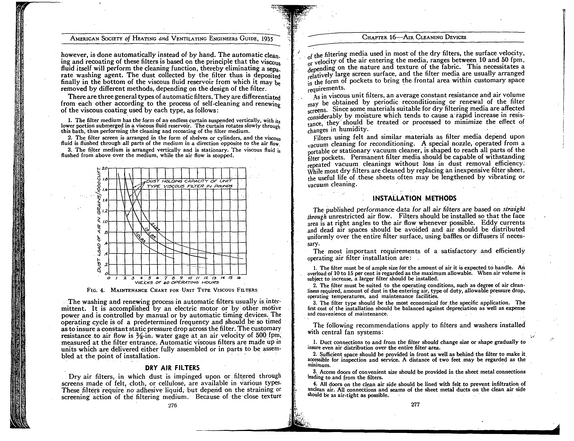
American Society of Heating and Ventilating Engineers Guide, 1935 however, is done automatically instead of by hand.
refid# e7Gj4qg9nBOYw1vvx2vDGe93E1 page
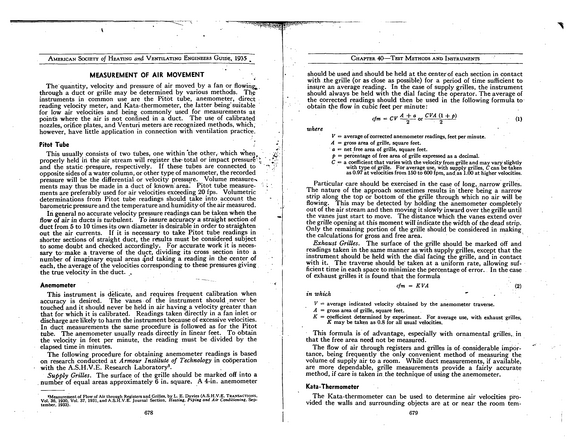
American Society of Heating and Ventilating Engineers Guide, 1935 , MEASUREMENT OF AIR MOVEMENT The quantity, velocity and pressure of air moved by a fan or flowing^ through a duct or grille may be determined by various methods.
refid# EdK63jNbM3e5kYqV317EmLNwx1 page
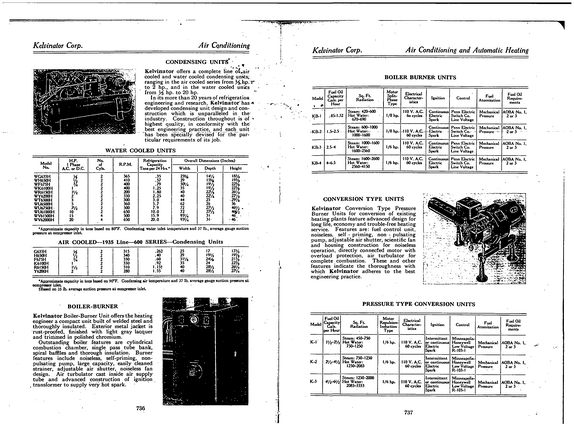
Keloinator Corp.
refid# 71x4Rm1Jppj3k3J52GQvjwq8e1 page
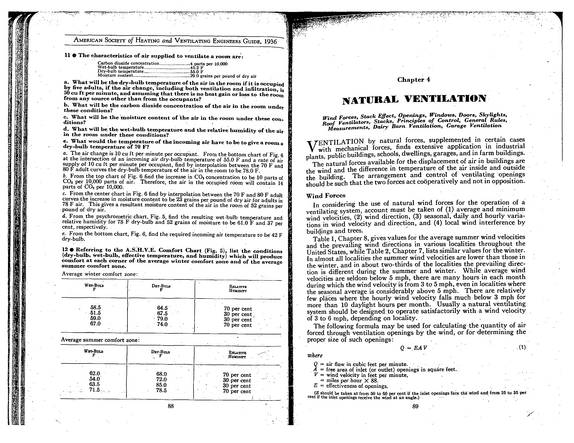
American Society of Heating and Ventilating Engineers Guide, 1936 11 The characteristics of air supplied to ventilate a room are: Carbon dioxide concentration........... .. ........... _4 parts per 10.000 Wet-bulb temperature................ ..... .................. .45.2 F Dry-bulb temperature-- -..................... --55.0 F Moisture content ...................__.............--29.0 grains per pound of dry air a.
refid# 1Q9wgrp8j0GL8Kdrm7yOdK1LX1 page
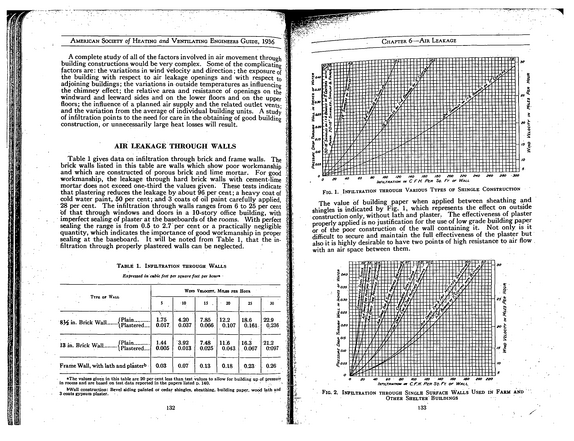
American Society of Heating and Ventilating Engineers Guide, 1936 A complete study of all of the factors involved in air movement through I : building constructions would be very complex.
refid# GKYmZNO5QzpdVYwBZbn5yxdON1 page
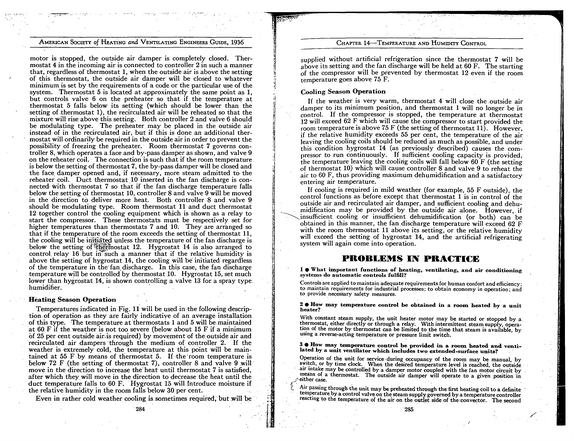
American Society of Heating and Ventilating Engineers Guide, 1936 motor is stopped, the outside air damper is completely closed.
refid# zz6NKxwzgz1gGXN7wzkXVVYXm1 page
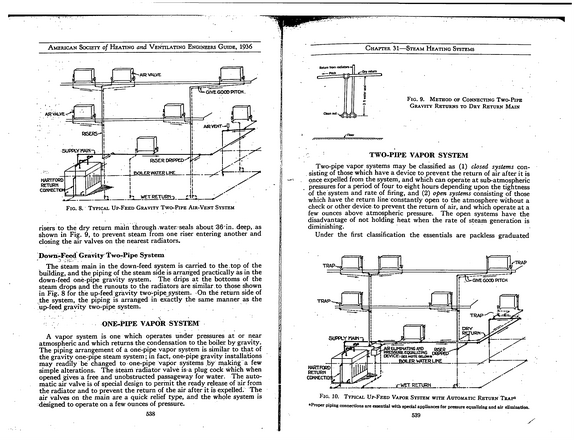
of and 1936American Society Heating Ventilating Engineers Guide, 31--Chapter Steam Heating Systems risers to the dry return main through-water seals about :36 in. deep, as shown in Fig. 9, to prevent steam from one riser entering another and closing the air valves on the nearest radiators.
refid# 44bB3Gq8vGpvQq9xzJGy064Oa1 page
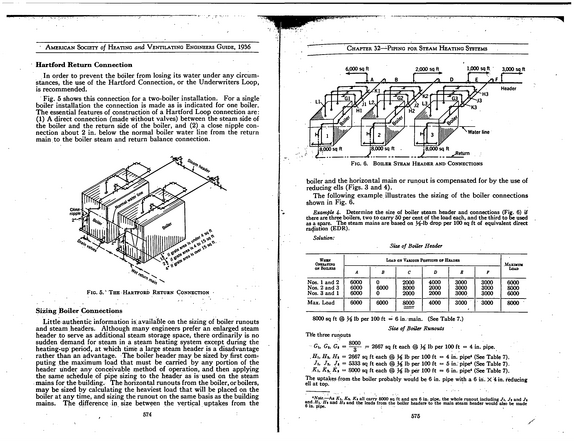
' American Society of Heating and Ventilating Engineers Guide, 1936 Hartford Return Connection In order to prevent the boiler from losing its water under any circum stances, the use of the Hartford Connection, or the Underwriters Loop, is recommended.
refid# wqqbmJnrmneZyzMaBNEjwMRkQ1 page