r>h- ffia' mud 0, arm "0#" ViUlSM.
refid# 5LrQbgVge0347R8knbEwwwGeV11 pages
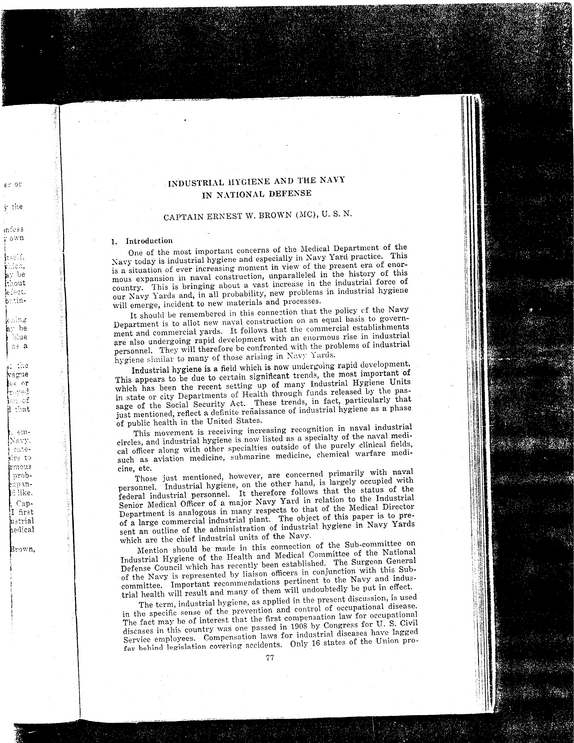
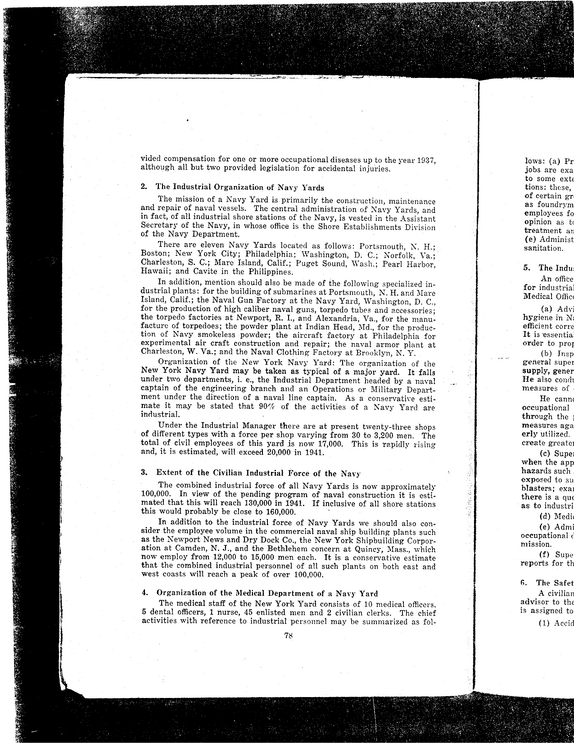
FILE NAME Industrial Hygiene Foundation IHF DATE 1940 Nov DOC IHF066 DOCUMENT DESCRIPTION AHFA Conference Proceedings - Article - Industrial Hygiene and the Navy in National Defense .I4P9 1940 AIR HYGIENE FOUNDATION OF AMERICA Inc.

refid# oMkvzY6LOOjq45RJ5ov7axoyX10 pages
FILE NAME Industrial Hygiene Foundation IHF DATE 1995 DOC IHF035 DOCUMENT DESCRIPTION Journal Article - Workers Industry and the Control of Information Silicosis and the Industrial Hygiene Foundation Workers Industry and the Control of Information Silicosis and the Industrial Hygiene Foundation DAVID ROSNER and GERALD MARKOWITZ GWOTOGW N January 1933 Donald Cummings a research sci- entist at the Saranac Laboratory an independent re- search facility in upper New York State received a letter from M.
refid# B86jk05vOg4xGQN3vyeybgbQ431 pages
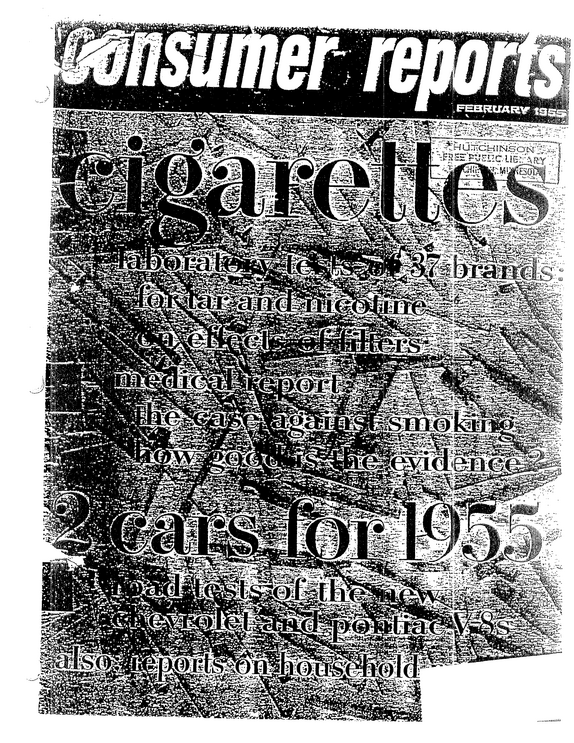
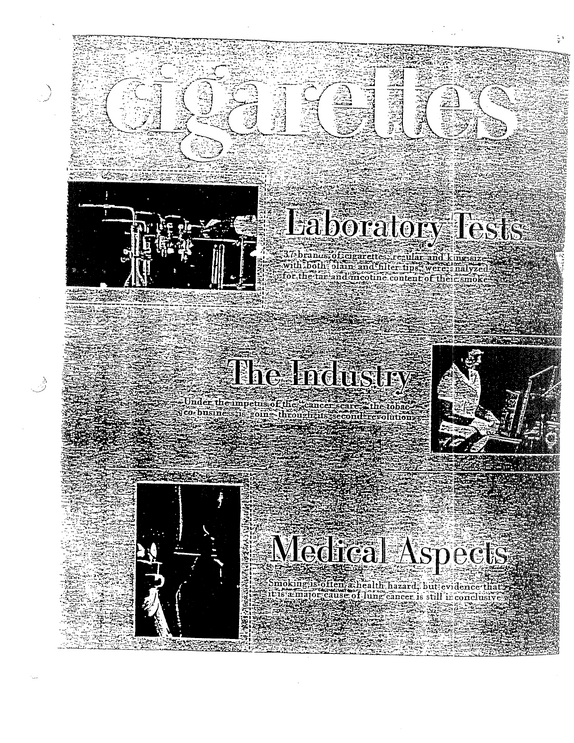
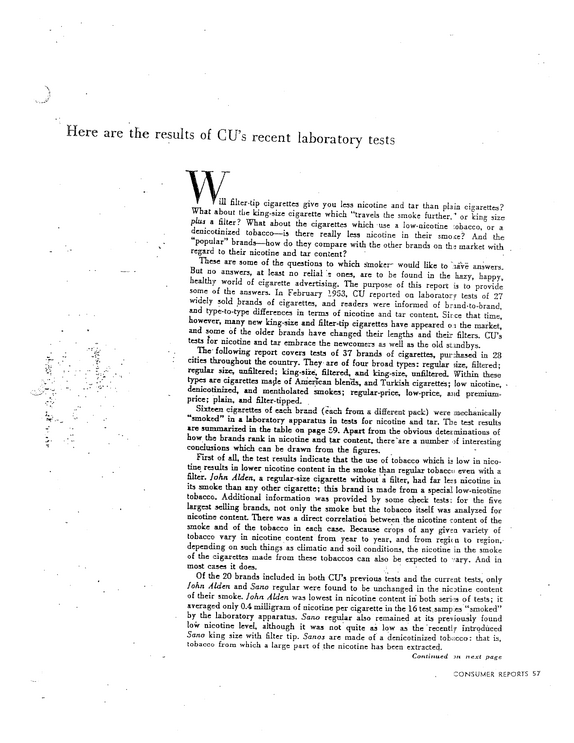
FILE NAME Newspaper & Magazine Articles NMA DATE 1955 DOC NMA002 DOCUMENT DESCRIPTION Cigarettes HUTCHINHUSTCOHINNSON FUSIC Cicarelles FUSIC CicarellesLIETARY Here are the results of CU's recent laboratory tests ae ae v .

refid# XRjD3JRb3G46vgDpoG77N0nNJ20 pages
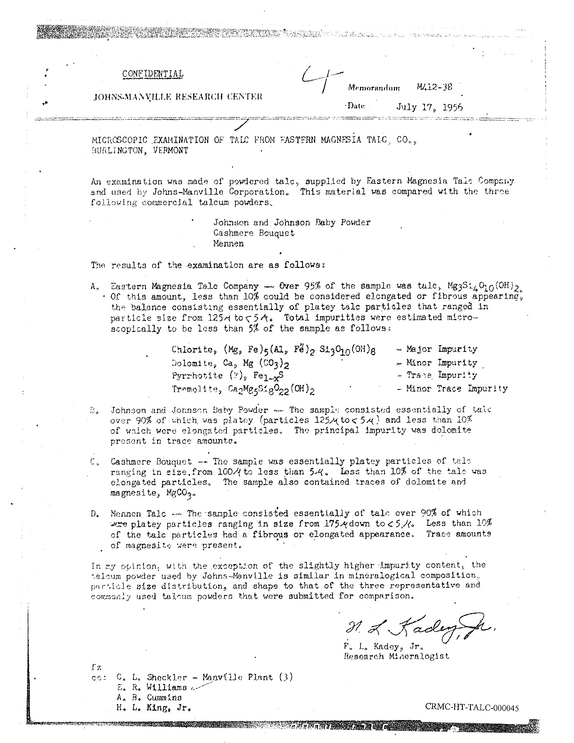
FILE NAME Talc TALC DATE 1956 July 17 DOC TALC407 DOCUMENT DESCRIPTION Confidential Memo from M Research Center - Micro Examination of Talc CONFIDENTIAL Memorandum MA12-38 : MANVILLE RESEARCH CENTER Pied Date Btalsae July 17 1956 rome ie slinaae seen MOTTO RTI MICROSCOPIC EXAMINATION OF TALC FROM FASTERN MAGNESIA TALC CO BURLINGTON VERMONT An examination was made of powdered talc supplied by Eastern Magnesia Tais Company and used by Manville Corporation This material was compared with the three following commercial talcum powders Johnson and Johnson Cashmere Bouquet Mennen o Baby Powder The results of the examination are as follows | A.

refid# wr4wR7DeMXxd6aNYj0eeRJjxE2 pages
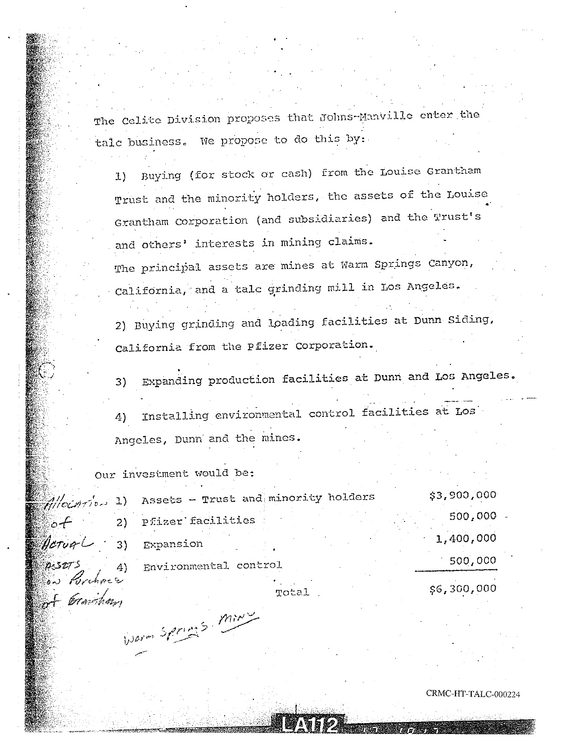
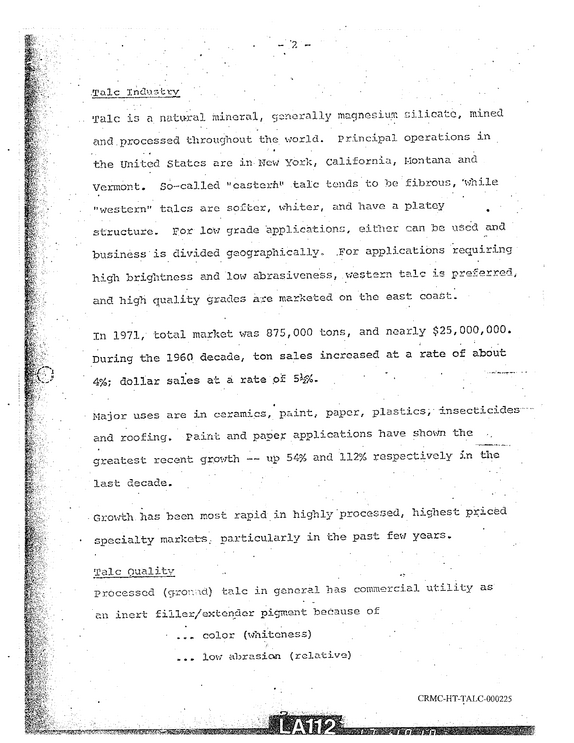
FILE NAME Talc TALC DATE 1972 Jan DOC TALC432 DOCUMENT DESCRIPTION Grantham Proposition * _ GRANTHAM PROPOSITION Prepared by Celite Division Manville Products Corporation a wn sen De January 1972 co .

refid# G6RMX4bw6jgvXDJmLx2p2dEVv15 pages
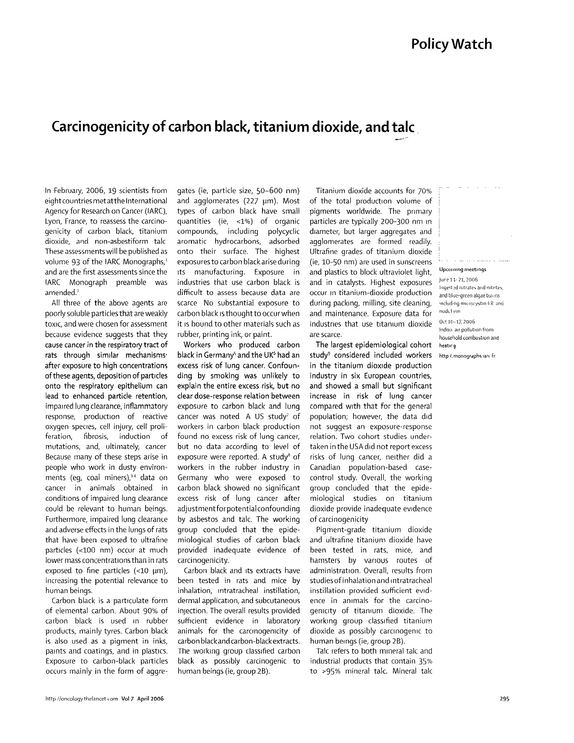
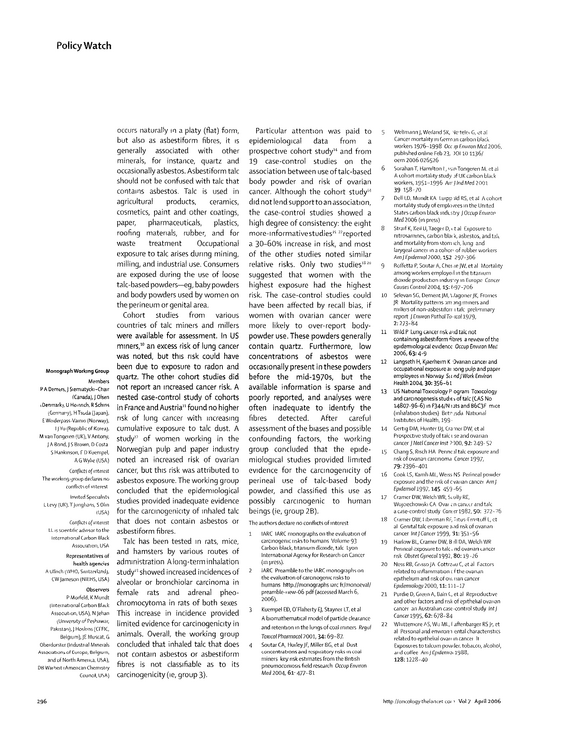
FILE NAME Talc TALC DATE 2006 Apr DOC TALC057 DOCUMENT DESCRIPTION Journal Article - Carcinogenicity of Carbon Black Titanium Dioxide and Talc Policy Watch Carcinogenicity of carbon black titanium dioxide and talc In February 2006 19 scientists from eight countries attheInternational Agency for Research on Cancer IARC Lyon France to reassess the carcinogenicity of carbon black titanium dioxide and asbestiform talc These assessments will be published as volume 93 of the IARC Monographs and are the first assessments since the IARC Monograph amended preamble was gates ie particle size 50-600 nm and agglomerates 227 mMost types of carbon black have small quantities ie % of organic compounds including polycyclic aromatic hydrocarbons adsorbed onto their surface The highest exposures to carbon black arise during its manufacturing Exposure in industries that use carbon black is difficult to assess because data are All three of the above agents are poorly soluble particles that are weakly toxic and were chosen for assessment scarce No substantial exposure to carbon black is thought to occur when it is bound to other materials such as because evidence suggests that they rubber printing ink or paint cause cancer in the respiratory tract of Workers who produced carbon rats through similar mechanisms black in Germany and the UK had an after exposure to high concentrations excess risk of lung cancer Confoun- of these agents deposition of particles ding by smoking was unlikely to onto the respiratory epithelium can explain the entire excess risk but no lead to enhanced particle retention clear response relation between impaired lung clearance inflammatory exposure to carbon black and lung response production of reactive cancer was noted A US study of oxygen species cell injury cell proli- workers in carbon black production feration fibrosis induction of found no excess risk of lung cancer mutations and ultimately cancer but no data according to level of Because many of these steps arise in exposure were reported A study of people who work in dusty environ- workers in the rubber industry in ments eg coal miners data on Germany who were exposed to cancer in animals obtained in carbon black showed no significant conditions of impaired lung clearance excess risk of lung cancer after could be relevant to human beings Furthermore impaired lung clearance conffoo r pou tenn tialdcoi nfon undg ing by asbestos and talc The working and adverse effects in the lungs of rats group concluded that the epide- that have been exposed to ultrafine miological studies of carbon black particles 100 nm occur at much provided inadequate evidence of lower mass concentrations than in rats carcinogenicity exposed to fine particles 10 m Carbon black and its extracts have increasing the potential relevance to been tested in rats and mice by human beings inhalation intratracheal instillation Carbon black is a particulate form dermal application and subcutaneous of elemental carbon About 90 of injection The overall results provided carbon black is used in rubber sufficient evidence in laboratory products mainly tyres Carbon black animals for the carcinogenicity of is also used as a pigment in inks carbon black and carbon extracts paints and coatings and in plastics The working group classified carbon Exposure to carbon particles black as possibly carcinogenic to occurs mainly in the form of aggre- human beings ie group 2B Titanium dioxide accounts for 70 of the total production volume of pigments worldwide The primary particles are typically 200-300 nm in diameter but larger aggregates and agglomerates are formed readily Ultrafine grades of titanium dioxide ie 10-50 nm are used in sunscreens and plastics to block ultraviolet light and in catalysts Highest exposures occur in titanium production during packing milling site cleaning and maintenance Exposure data for industries that use titanium dioxide are scarce The largest epidemiological cohort study considered included workers in the titanium dioxide production industry in six European countries and showed a small but significant increase in risk of lung cancer compared with that for the general population however the data did not suggest an response relation Two cohort studies under- taken the USA did not report excess risks of lung cancer neither did a Canadian population casecontrol study Overall the working group concluded that the epide- miological studies on titanium dioxide provide inadequate evidence of carcinogenicity Pigment titanium dioxide and ultrafine titanium dioxide have been tested in rats mice and hamsters by various routes of administration Overall results from studies of and intratriantcrahtre aca hel al instillation provided sufficient evid- ence in animals for the carcino- genicity of titanium dioxide The working group classified titanium dioxide as possibly carcinogenic to human beings ie group 2B Talc refers to both mineral talc and industrial products that contain 35 to 95 mineral talc Mineral talc | Upcoming meetings Jure 14-21 2006 Ingested nitrates and nitrites and green algae toxins including microcystin IR and nodulinn nodulinn Oct 10-17 2006 Indon air pollution from household combustion and heating http / monographs can fr http oncology thelancet.com thelancet.com Vol April 2006 Policy Watch Monograph Working Group Members PA Demers} Siemiatycki CanadaJOlsen JOlsen Denmark U Heinrich R Schins Germany H Tsuda Japan E Weiderpass Norway ) Yu Republic of Korea M van Tongeren UK V Antony JA Bond JS Brown D Costa S Hankinson FD FD Kuempel AG Wylie USA Conflicts of interest The working group declares no conflicts of interest Invited Specialists L Levy TJunTJunghans TgJhunaghnanss S Olin USA Conflicts of interest LL scientific advisor to the International Carbon Black Association USA Representatives of health agencies A Ullrich WHO Switzerland CW Jameson NIEHS USA Observers P Morfeld K Mundt International Carbon Black Association USA N Jehan University of Peshawar } Pakistan Hoskins CFFIC BelgiumJE Muscat G Oberdorster Industrial Minerals Associations of Europe Belgium and of North America USA DB Warheit American Chemistry Council USA occurs naturally in a platy flat form but also as asbestiform fibres it is generally associated with other minerals for instance quartz and occasionally asbestos Asbestiform talc should not be confused with talc that contains asbestos Talc is used in agricultural products c_eramics cosmetics paint and other coatings paper pharmaceuticals __ plastics roofing materials rubber and for waste _ _treatment Occupational exposure to talc arises during mining milling and industrial use Consumers are exposed during the use of loose based powders baby powders and body powders used by women on the perineum or genital area Cohort studies from various countries of talc miners and millers were available for assessment In US miners an excess risk of lung cancer was noted but this risk could have been due to exposure to radon and quartz The other cohort studies did not report an increased cancer risk A nested control study of cohorts in France and Austria found no higher risk of lung cancer with increasing cumulative exposure to talc dust A study of women working in the Norwegian pulp and paper industry noted an increased risk of ovarian cancer but this risk was attributed to asbestos exposure The working group concluded that the epidemiological studies provided inadequate evidence for the carcinogenicity of inhaled talc that does not contain asbestos or asbestiform fibres Talc has been tested in rats mice and hamsters by various routes of administration inhalation study showed increased incidences of alveolar or bronchiolar carcinoma in female rats and adrenal pheochromocytoma in rats of both sexes This increase in incidence provided limited evidence for carcinogenicity in animals Overall the working group concluded that inhaled talc that does not contain asbestos or asbestiform fibres is not classifiable as to its carcinogenicity ie group 3 Particular attention was paid to epidemiological data from a prospective cohort study and from 19 control studies on the association between use ofbased body powder and risk of ovarian cancer Although the cohort study did not lend support to an association the control studies showed a high degree of consistency the eight informative reported a 30-60 increase in risk and most of the other studies noted similar relative risks Only two studies suggested that women with the highest exposure had the highest risk The control studies could have been affected by recall bias if women with ovarian cancer were more likely to report bodypowder use These powders generally contain quartz Furthermore low concentrations of asbestos were occasionally present in these powders before the 1970s but the available information is sparse and poorly reported and analyses were often inadequate to identify the fibres detected After careful assessment of the biases and possible confounding factors the working group concluded that the epidemiological studies provided limited evidence for the carcinogenicity of perineal use of based body powder and classified this use as possibly carcinogenic to human beings ie group 2B The authors declare no conflicts of interest 1 IARC IARC monographs on the evaluation of carcinogenic risks to humans Volume 93 Carbon black titanium dioxide talc Lyon International Agency for Research on Cancer in press 2 IARC Preamble to the IARC monographs on the evaluation of carcinogenic risks to humans monographs larc monoeval preamble pdf accessed March 6 2006 3 Kuempel ED O'Flaherty EJ Stayner LT et al A biomathematical model of particle clearance and retention in the lungs of coal miners Regul Toxicol Pharmacol 2001 34 69-87 4 Soutar CA HurleJyFMiller BG et Dust concentrations and respiratory risks in coal miners key risk estimates from the Br
refid# jy6e6VYnb2yKGzg8Enqjd7O493 pages
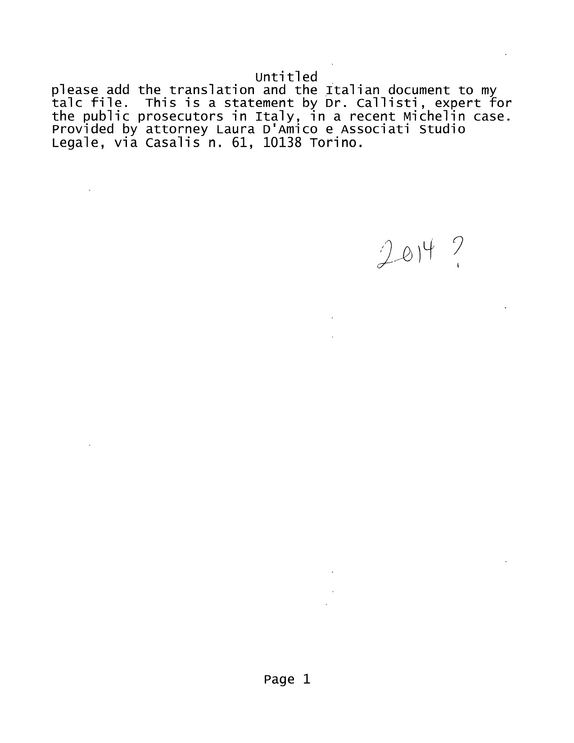
FILE NAME Talc TALC DATE 2014 DOC TALC117 DOCUMENT DESCRIPTION Italian Article Excerpt with Translation Untitled please add the translation and the Italian document to my talc file This is a statement by Dr.

refid# J3g04ry13rVqjkg4ye83Dd7RB6 pages
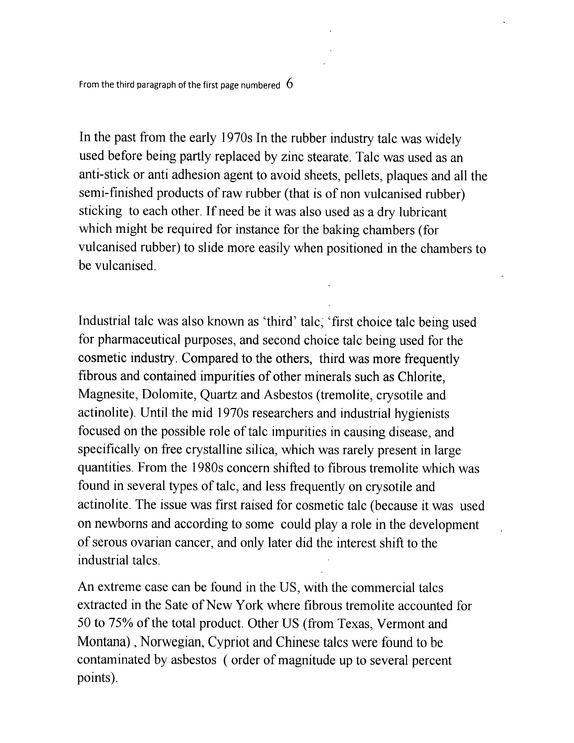
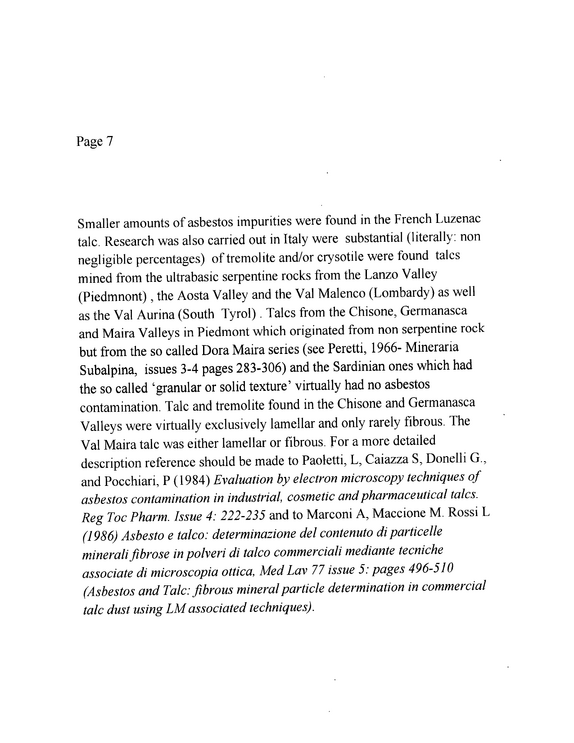
FILE NAME Talc TALC DATE 2013 Apr 16 DOC TALC162 DOCUMENT DESCRIPTION Journal Article - Nature and Range of Mineral Dusts in the Environment Downloaded from rsta royalsocietypublishing org on April 16 2013 Phil Trans R.
refid# rp4ZEMVJ3ZdXVDwoDyqb2MK6025 pages
FILE NAME: Asbestos Cement Pipe and Sheet (ACPS) DATE: 2000 Dec 4 DOC#: ACPS130 DOCUMENT DESCRIPTION: Legal - Declaration of Ernest H.
refid# ppGXd7VN09Bg28YQ3Dvm8GE4E33 pages
FILE NAME: Asbestos Cement Pipe and Sheet (ACPS) DATE: 1948 May 21 DOC#: ACPS060 DOCUMENT DESCRIPTION: Letter Re Worker's Comp Our R e f: rn/BW L.O .

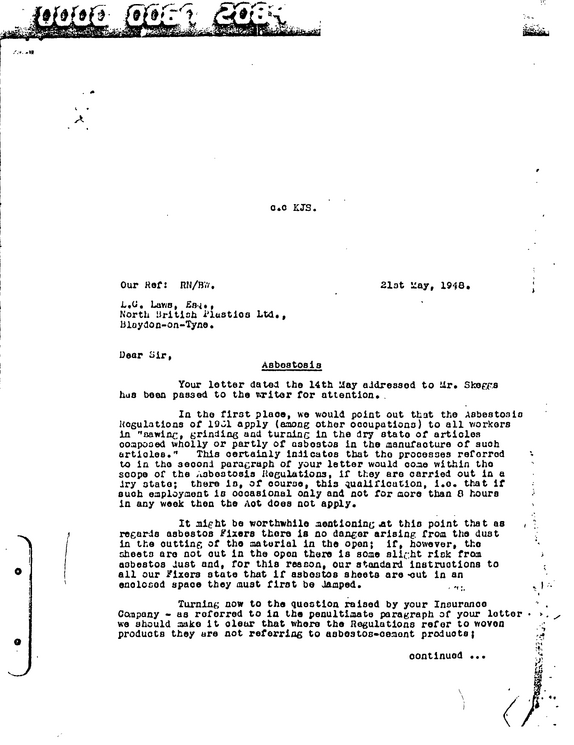
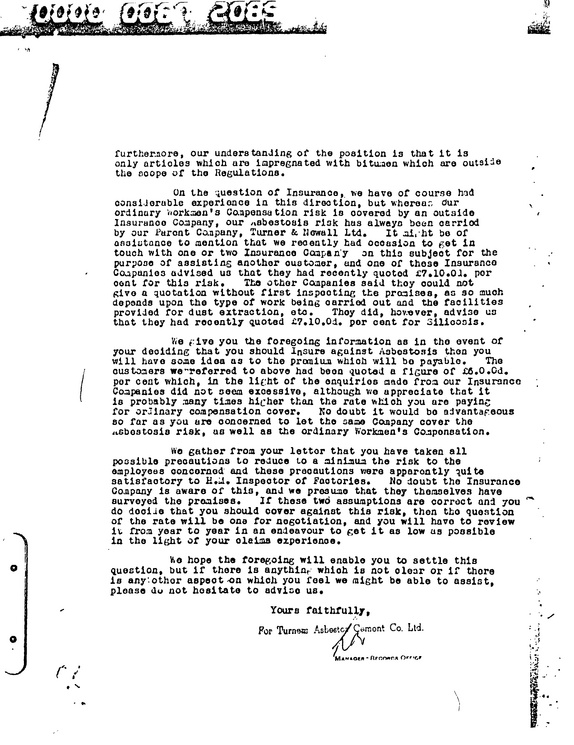
refid# ro1ez5neXROqZpyRq3wv4K2a3 pages
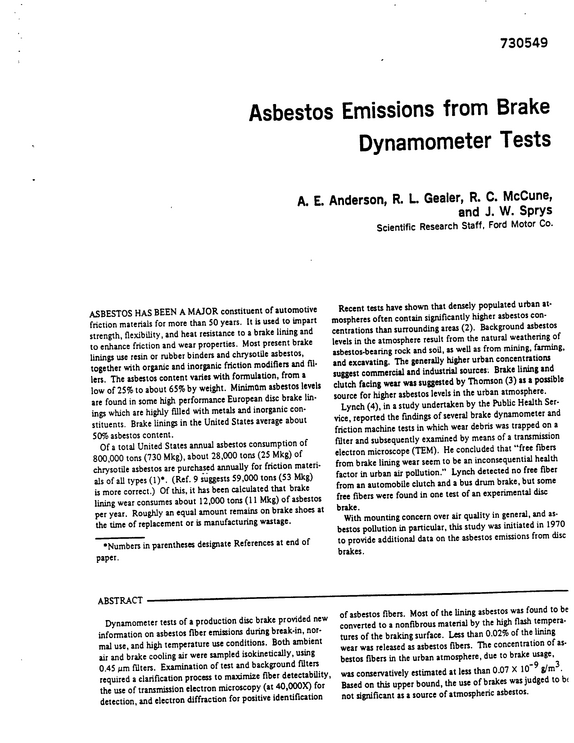
FILE NAME Brakes BRK DATE 1973 May DOC BRK041 DOCUMENT DESCRIPTION Report - Meeting of The Society of Automotive Engineers - Asbestos Emissions from Brake Dynamometer Tests TOEH Code No 3915 2 ' 74 80 SOCIETY OF AUTOMOTIVE ENGINEERS INC ~ _.

refid# LpDN4wgRm96Ry7q4Gq1Qv8DOz13 pages
FILE NAME Brakes BRK DATE 1989 Aug DOC BRK131 DOCUMENT DESCRIPTION NIOSH Report - Control of Asbestos Exposure During Brake Drum Service CONTROL OF ASBESTOS EXPOSURE DURING BRAKE DRUM SERVICE John W.

refid# b5LxJrOYKE3V3Xko43eKqkQdg79 pages
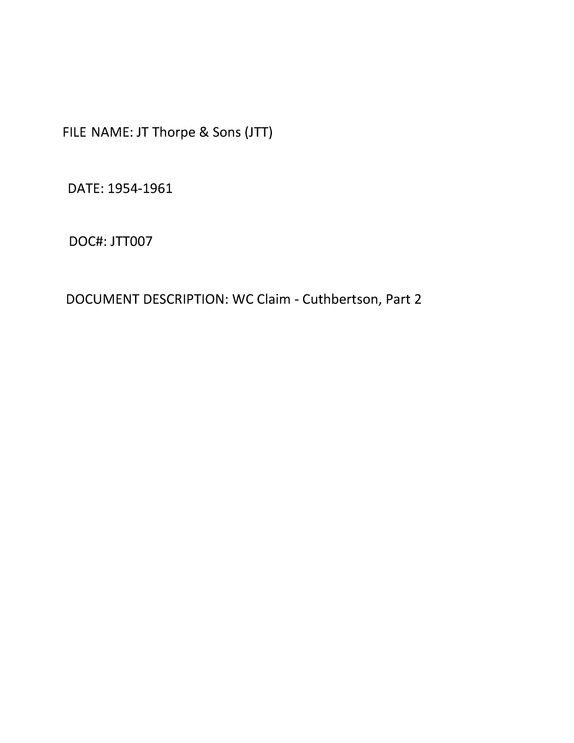
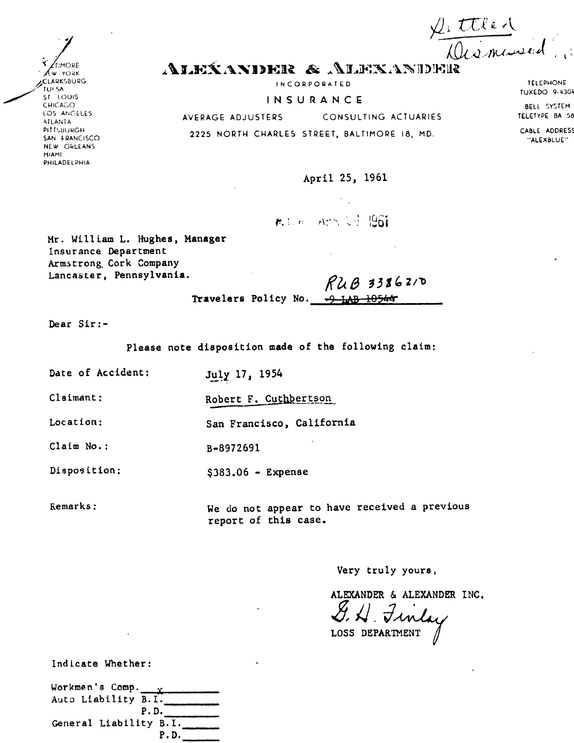
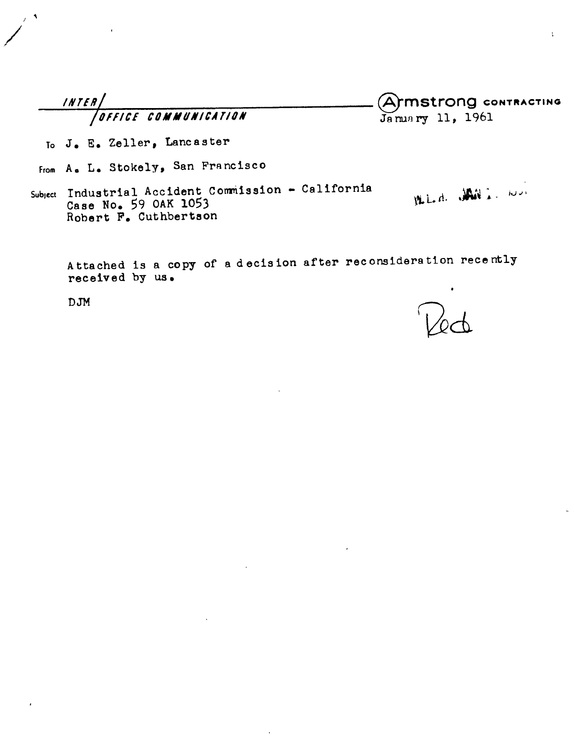
FILE NAME JT Thorpe & Sons JTT DATE 1954-1961 DOC JTT007 DOCUMENT DESCRIPTION WC Claim - Cuthbertson Part 2 _ CLARKSBURG TU SA ST LOUIS CHICAGO LOS ANGELES ATLANTA PITTSBURGH SAN FRANCISCO NEW ORLEANS MIAMI PHILADELPHIA PitP tlediPtitttlleded Dismissed ALEXANDER & ALEXANDERALEXANDER Dismissed INCORPORATED INSURANCE TELEPHONE TUXEDO 9.4304 BELL SYSTEM AVERAGE ADJUSTERS CONSULTING ACTUARIES TELETYPE BA 58- 2225 NORTH CHARLES STREET BALTIMORE 18 MD CABLE ADDRESS ALEXBLUE April 25 1961 r A U2 119691 61 Mr.

refid# mqdGNDJRydeZZ94BGzRmbRa4J102 pages
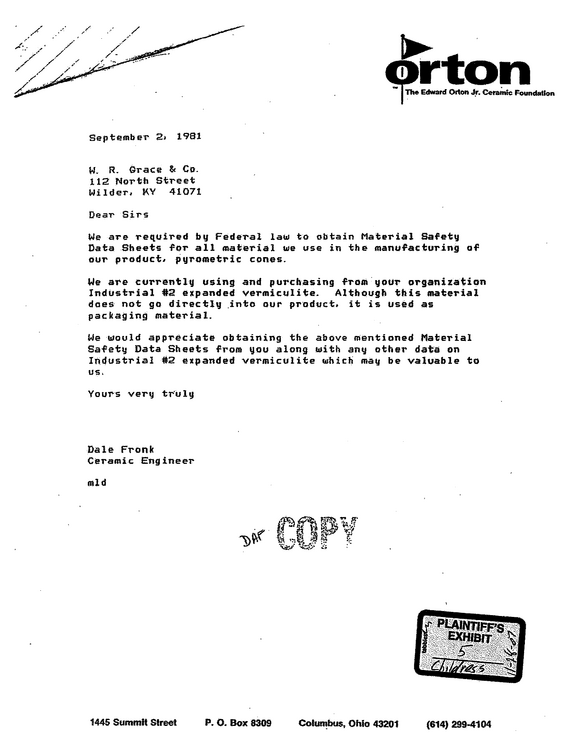
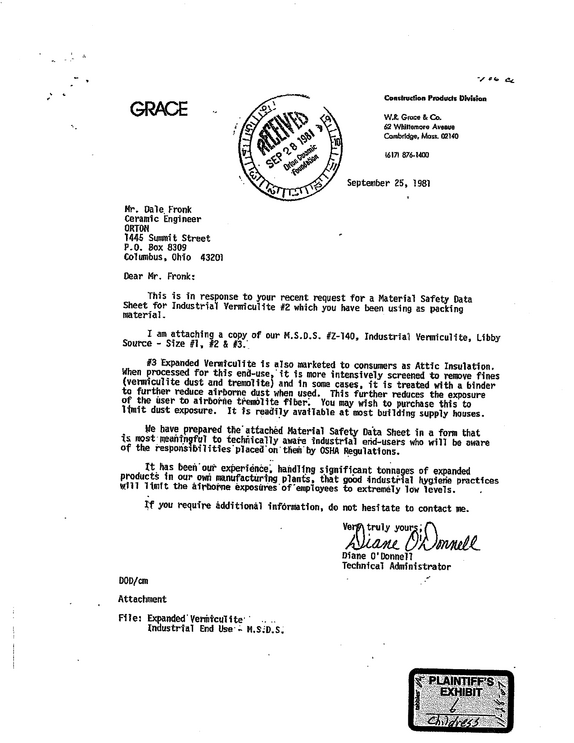
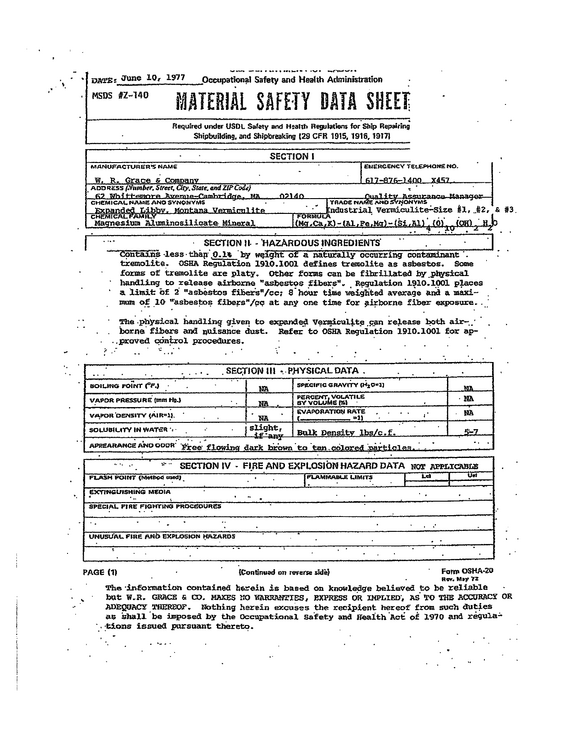
FILE NAME Orton ORT DATE 1981 Sept 2 DOC ORT001 DOCUMENT DESCRIPTION Letter with Material Safety Data Sheet September 2 1981 orton Edward Orton Jr.

refid# k6w7q0b1k2jg650xq33bOpbrJ5 pages