Refine
Estimated Years 2000-2009Clear
135 results foundRefine Search
U.S.


refid# 1QJbmO78qDVyMebEzJzEqNmo52 pages
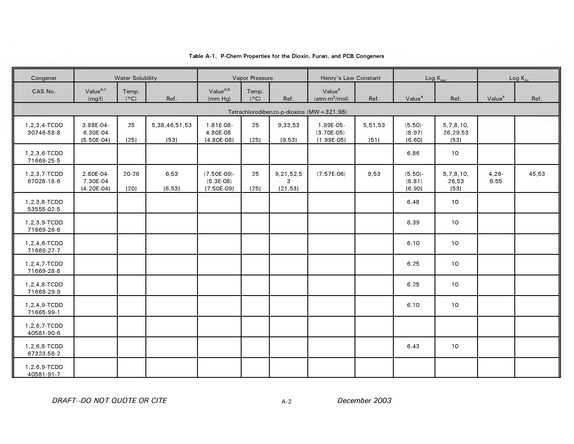
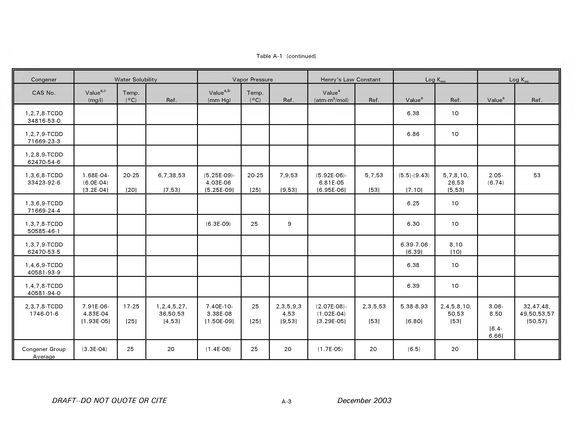
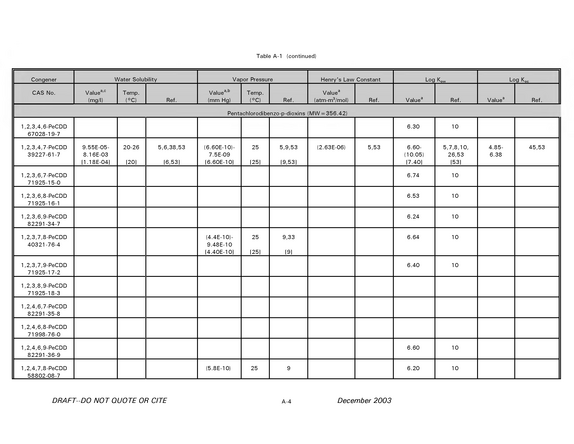
APPENDIX A.
refid# 22m9Ly21k7j1D27aqBXKmv7R21 pages
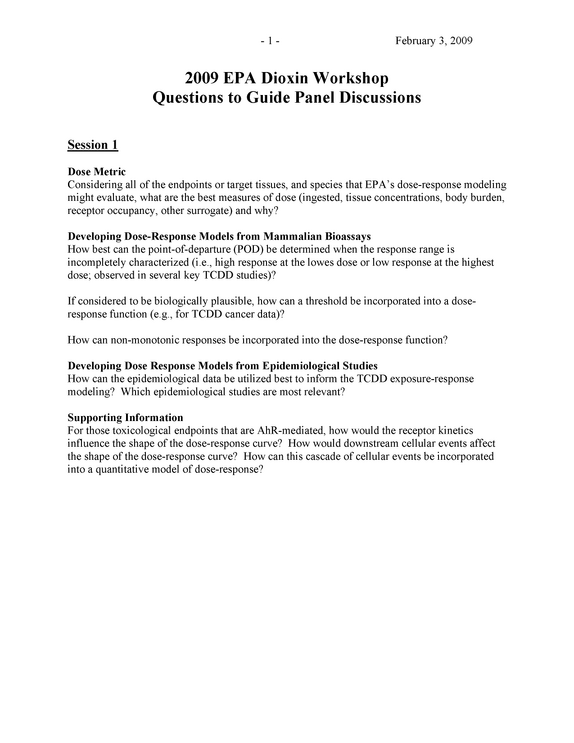
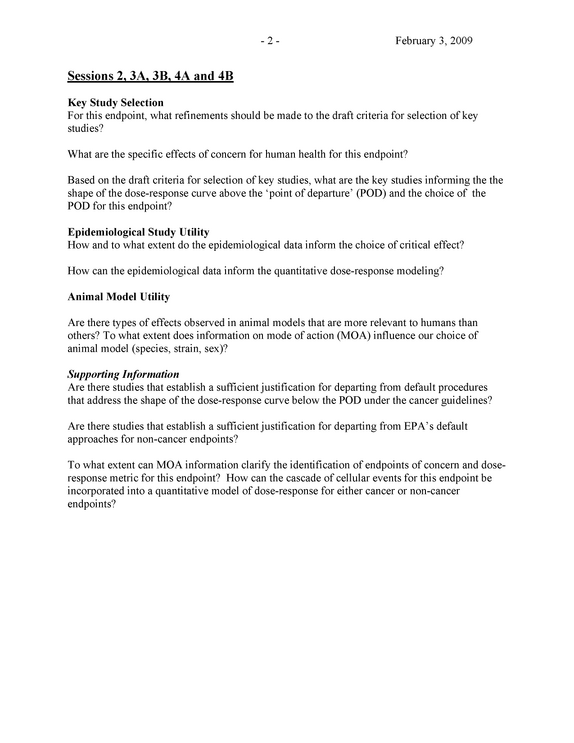
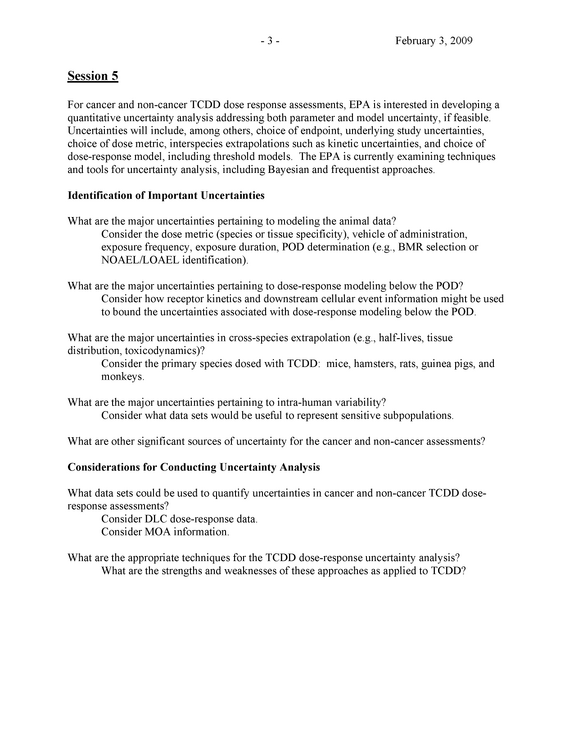
- 1 - February 3, 2009 2009 EPA Dioxin Workshop Questions to Guide Panel Discussions Session 1 Dose Metric Considering all of the endpoints or target tissues, and species that EPA's dose-response modeling might evaluate, what are the best measures of dose (ingested, tissue concentrations, body burden, receptor occupancy, other surrogate) and why?
refid# KJaOqyOq2e2Dx8Lz84YKMjRxK3 pages
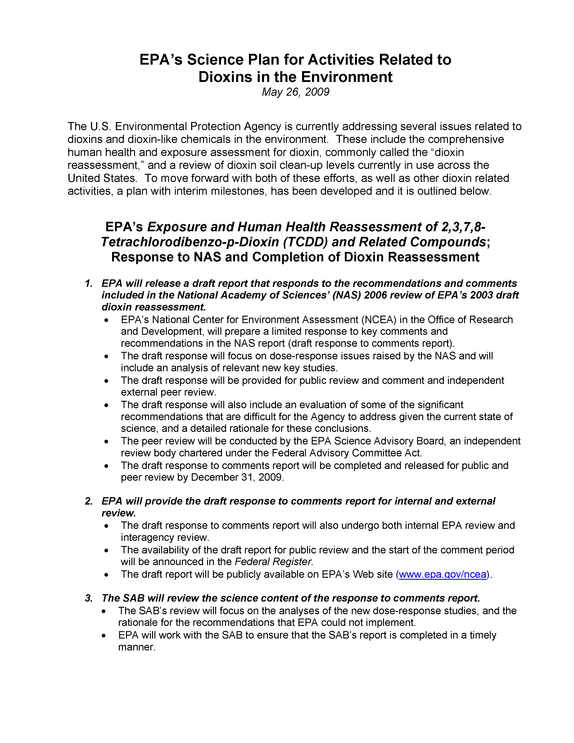
EPA's Science Plan for Activities Related to Dioxins in the Environment May 26, 2009 The U.S.
refid# kmkvZ62ZyQQVpekOwx5KdBdVB2 pages
Cable Viewer Viewing cable 08LAHORE291, BT COTTON WILL NOT BE QUICK FIX FOR PUNJAB'S TEXTILES, WHICH If you are new to these pages, please read an introduction on the structure of a cable as well as how to discuss them with others.


refid# 37y6y46y5xOBB2XDxYDeqMOnE4 pages
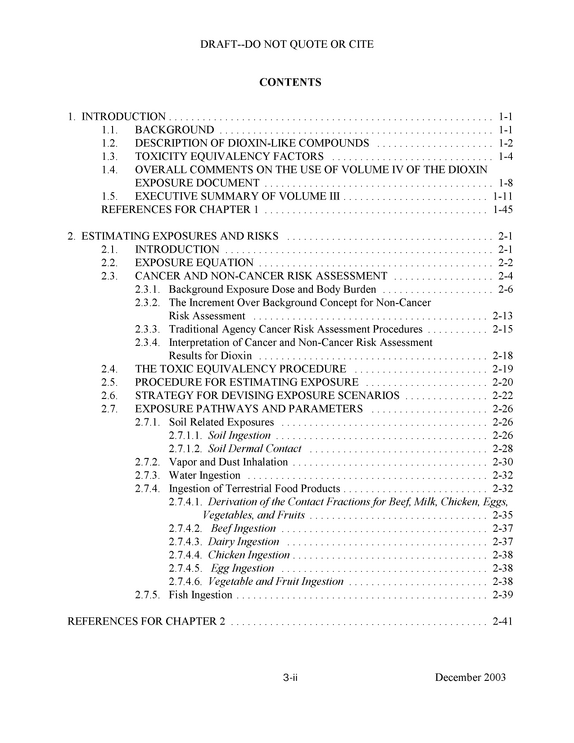
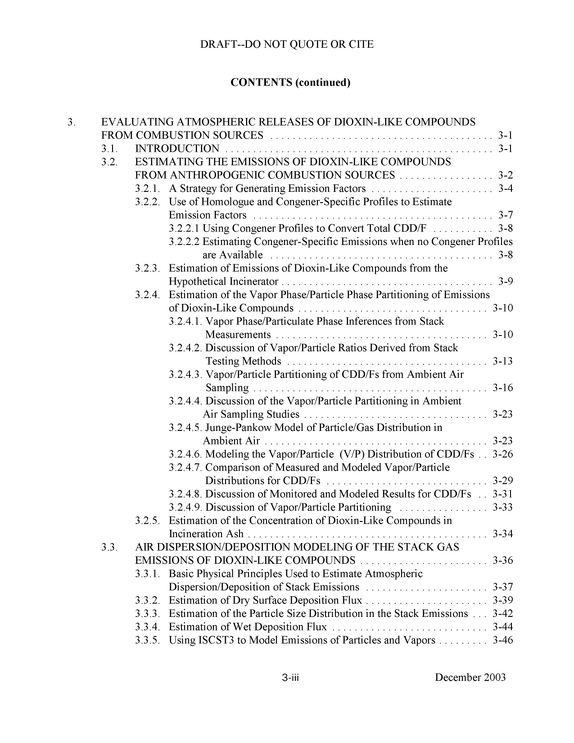
DRAFT DO NOT CITE OR QUOTE December 2003 NAS Review Draft www.epa.gov/ncea/dioxin Exposure and Human Health Reassessment of 2,3,7,8-Tetrachlorodibenzo-p-Dioxin (TCDD) and Related Compounds Part I: Estimating Exposure to Dioxin-Like Compounds Volume 3: Site-Specific Assessment Procedures Exposure Assessment and Risk Characterization Group National Center for Environmental Assessment - Washington Office Office of Research and Development U.S.

refid# RDkeLNBZnnp3vNj4jk1D0Qv15 pages
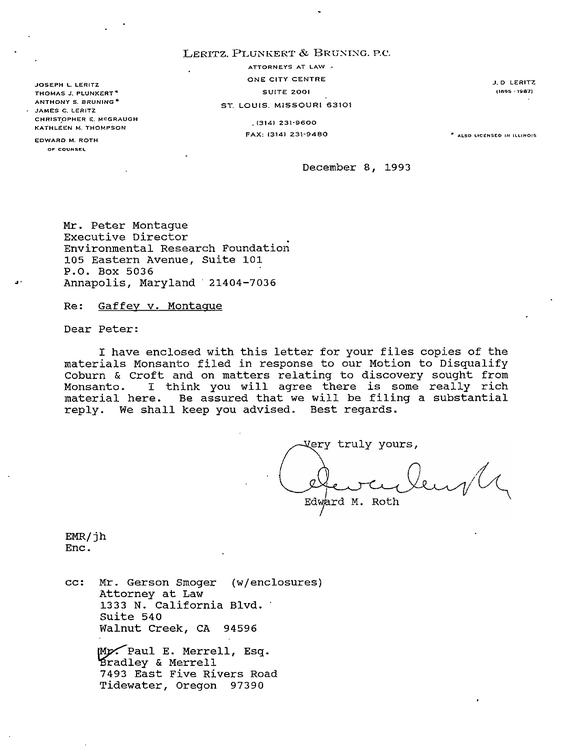
J O S E P H L.
refid# QXJy29EdvLBRRmNwgje07q9gR1 page
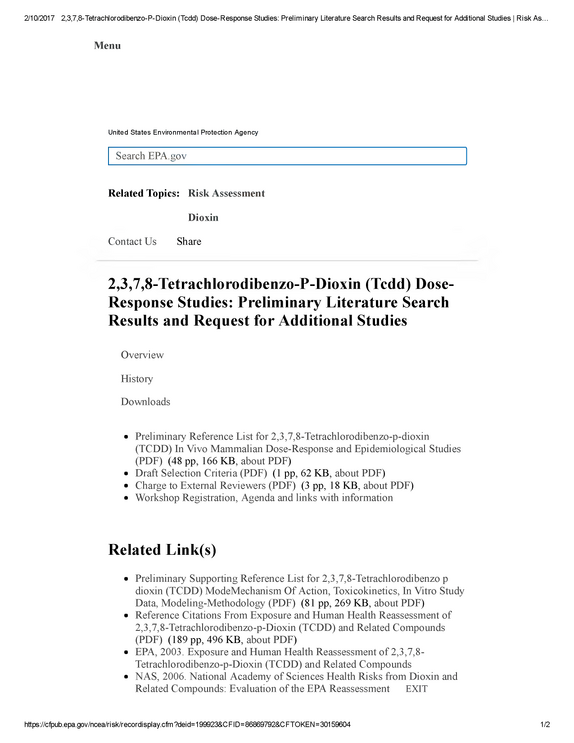
2/10/2017 2,3,7,8-Tetrachlorodibenzo-P-Dioxin (Tcdd) Dose-Response Studies: Prelim inary Literature Search Results and Request for Additional Studies | Risk As...
refid# QJyBBnqrKQ8qN4pQGvkrV130L2 pages
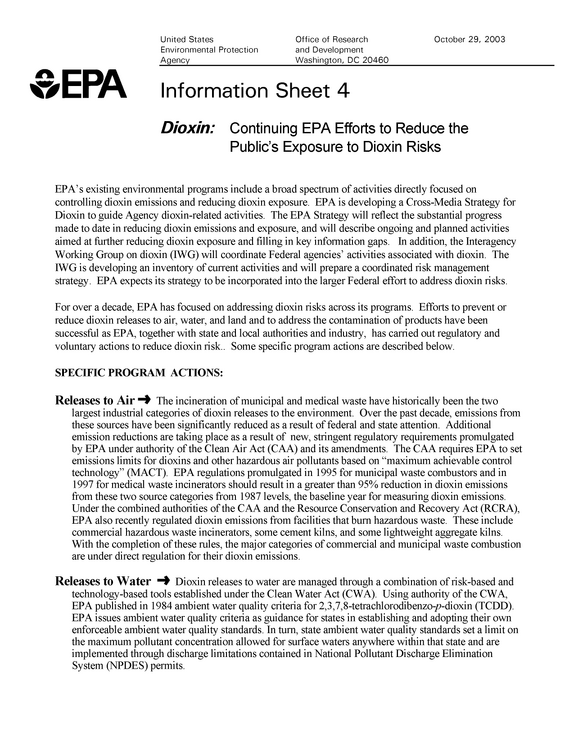
United States Environmental Protection Agency______________ Office of Research and Development Washington, DC 20460 Information Sheet 4 October 29, 2003 D ioxin: Continuing EPA Efforts to Reduce the Public's Exposure to Dioxin Risks EPA's existing environmental programs include a broad spectrum of activities directly focused on controlling dioxin emissions and reducing dioxin exposure.
refid# jgw91OmxbQxJOL1XQnZ9qEy4y3 pages
DRAFT DO NOT CITE OR QUOTE EPA/600/P-00/001Cb December 2003 NAS Review Draft www.epa.gov/ncea Exposure and Human Health Reassessment of 2,3,7,8-Tetrachlorodibenzo-p-Dioxin (TCDD) and Related Compounds Part I: Estimating Exposure to Dioxin-Like Compounds Volume 1: Sources of Dioxin-Like Compounds in the United States Exposure Assessment and Risk Characterization Group National Center for Environmental Assessment - Washington Office Office of Research and Development U.S.

refid# kajLRRwQ2ZD2eqB0aqpEzgrBq23 pages
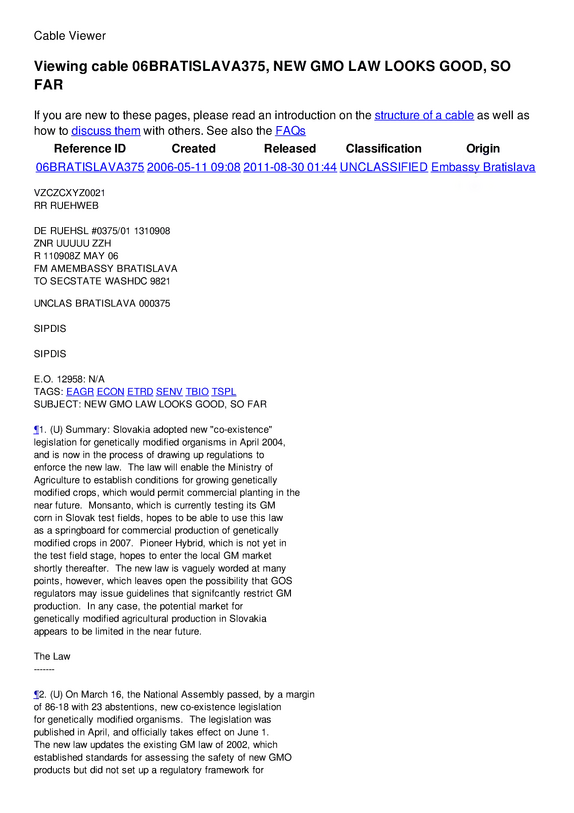
Cable Viewer Viewing cable 06BRATISLAVA375, NEW GMO LAW LOOKS GOOD, SO FAR If you are new to these pages, please read an introduction on the structure of a cable as well as how to discuss them with others.

refid# NNE48ymBzj7o1y7rwMbj2jnoQ4 pages
UNITED STATES DISTRICT COURT EASTERN DISTRICT OF NEW YORK x In Re : "AGENT ORANGE" PRODUCT LIABILITY LITIGATION FILED IN CLERK'S OFFICE MDL 381 J.
refid# 1Q0g8En9dq8qNXa7NdMoXKzvE671 pages
2/10/2017 Chemical Contaminants > DIOXINS: FDA Strategy for Monitoring, Method Development, and Reducing Human Exposure DIOXINS: FDA Strategy for Monitoring, Method Development, and Reducing Human Exposure February 7, 2002 GOALS: 1) Expand FDA's m onitoring program fo r determ ining dioxins in the U.S. food and animal feed supply 2) Effectively manage the risks to humans from dioxins and identify opportunities to reduce human exposure BACKGROUND Environmental Contamination Dioxins, a collective term for a group of environmental contaminants that includes certain dioxin, furan, and dioxin-like PCB (polychlorinated biphenyl) congeners, are found throughout the world.
refid# qkMOoeY6ZxzyO6QEOpX697voq3 pages
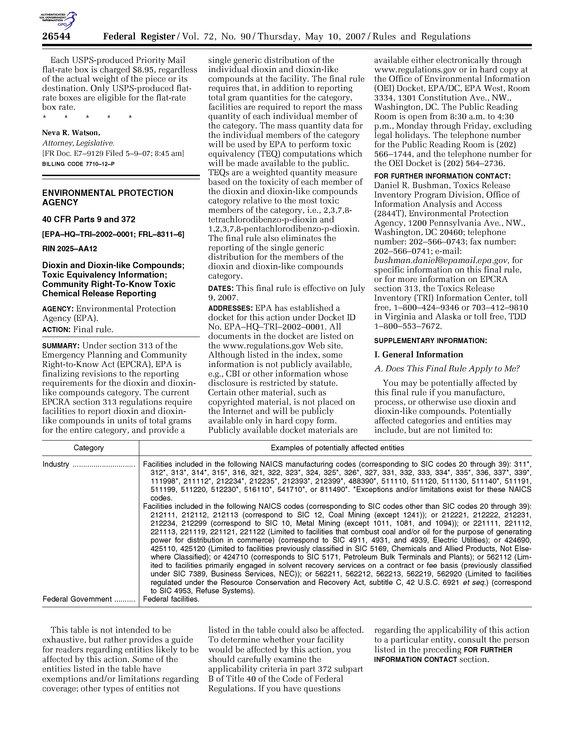
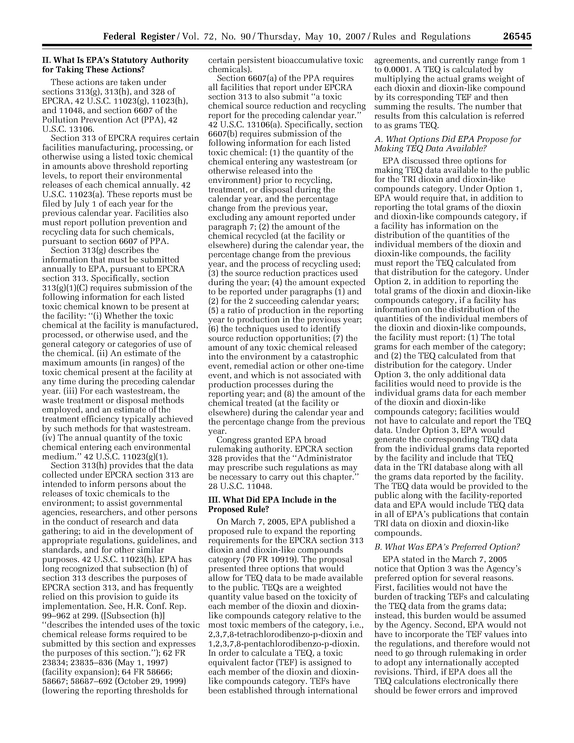
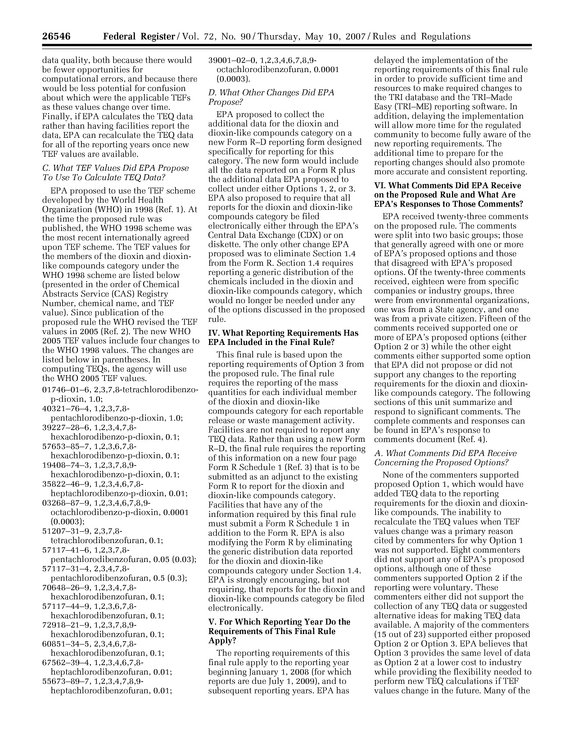
26544 Federal Register /Vol. 72, No. 90/Thursday, May 10, 2007/Rules and Regulations Each USPS-produced Priority Mail flat-rate box is charged $8.95, regardless of the actual weight of the piece or its destination.
refid# pBaMNRYpoNapjdBV6Ep4paYmD11 pages
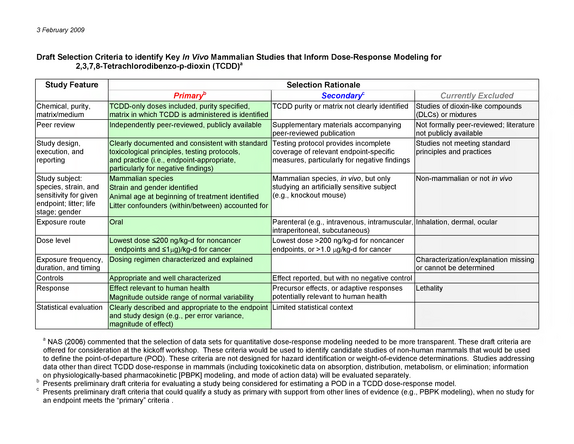
3 February 2009 Draft Selection Criteria to identify Key In Vivo Mammalian Studies that Inform Dose-Response Modeling for 2,3,7,8-Tetrachlorodibenzo-p-dioxin (TCDD)a Study Feature Chemical, purity, matrix/medium Peer review Study design, execution, and reporting Study subject: species, strain, and sensitivity for given endpoint; litter; life stage; gender Exposure route Dose level Exposure frequency, duration, and timing Controls Response Statistical evaluation Selection Rationale Primary*3 Secondary^ TCDD-only doses included, purity specified, TCDD purity or matrix not clearly identified matrix in which TCDD is administered is identified Independently peer-reviewed, publicly available Supplementary materials accompanying peer-reviewed publication Clearly documented and consistent with standard Testing protocol provides incomplete toxicological principles, testing protocols, coverage of relevant endpoint-specific and practice (i.e., endpoint-appropriate, measures, particularly for negative findings particularly for negative findings) Mammalian species Mammalian species, in vivo, but only Strain and gender identified studying an artificially sensitive subject Animal age at beginning of treatment identified (e.g., knockout mouse) Litter confounders (within/between) accounted for Currently Excluded Studies of dioxin-like compounds (DLCs) or mixtures Not formally peer-reviewed; literature not publicly available Studies not meeting standard principles and practices Non-mammalian or not in vivo Oral Parenteral (e.g., intravenous, intramuscular, Inhalation, dermal, ocular intraperitoneal, subcutaneous) Lowest dose <200 ng/kg-d for noncancer endpoints and <1 ^g)/kg-d for cancer Lowest dose >200 ng/kg-d for noncancer endpoints, or >1.0 ^.g/kg-d for cancer Dosing regimen characterized and explained Characterization/explanation missing or cannot be determined Appropriate and well characterized Effect reported, but with no negative control Effect relevant to human health Magnitude outside range of normal variability Precursor effects, or adaptive responses Lethality potentially relevant to human health Clearly described and appropriate to the endpoint Limited statistical context and study design (e.g., per error variance, magnitude of effect) a NAS (2006) commented that the selection of data sets for quantitative dose-response modeling needed to be more transparent.
refid# 2jX0y4evm2vnv3NGgNGoyzg7R1 page