refid# 6wvBywkVOvqNNgeX45XeQe51R1 page
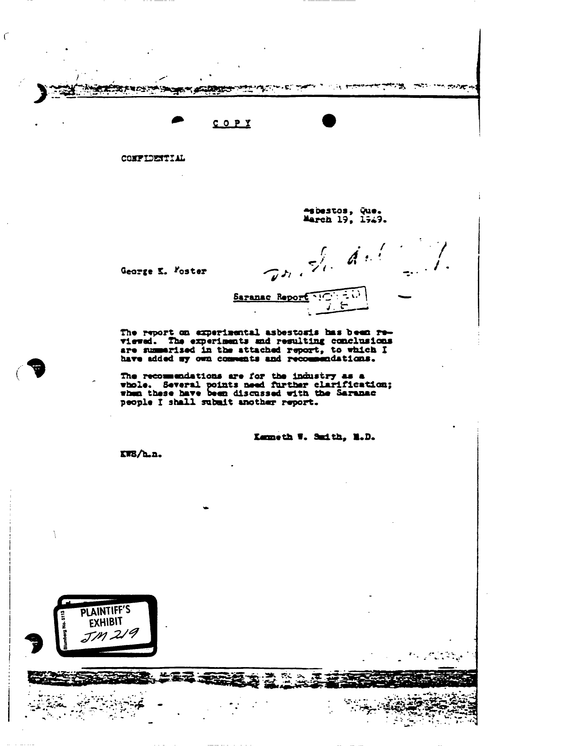
COPY COXFIDETTIAL George K.
refid# QJaG4Np7OZD5d3MMwREOJ1VZL1 page
. - ^ > -- ^ - _*, -f?
refid# pomQKYwvmR7Z6XK9NNbdwpkD1 page
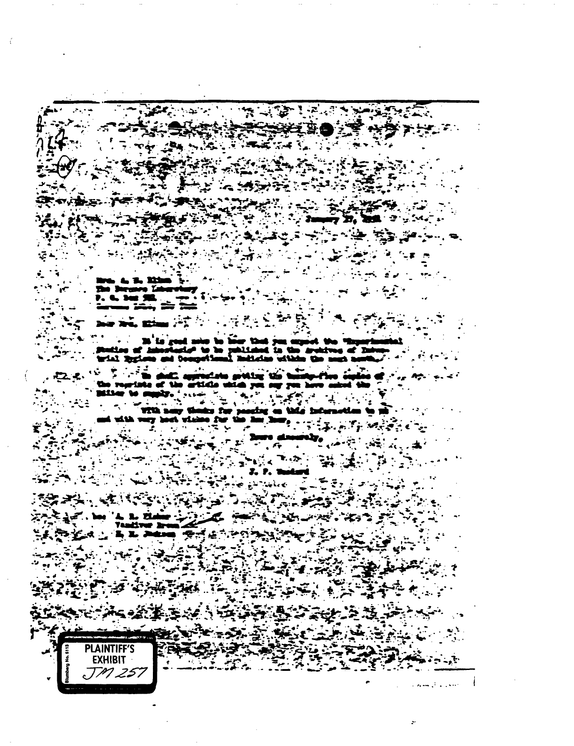
TKe Detroit News D. 702.591 SUN. 953,929 OCT 9 1969 (CCause of'-cancer Yn l J W to what you bream*3 t GATLINBURG.
refid# Z46ed5O6xd3QQ4G2rLQyx1vbL1 page
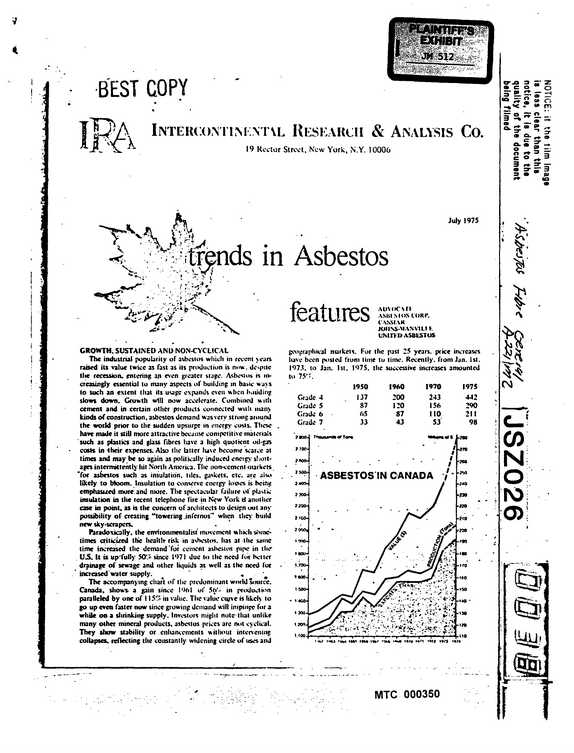
BEST COPY ,n : ' Intercontinental Research & Analysis Co. 19 Rector Street, New York, N.Y. 10006 in Asbestos July I97S GROWTH.
refid# rpZ63K8B3Vb5GwOae9LdQ66Za6 pages
( 'A > ?
refid# 50r38mGRbRjG8017x8aE2Zz4R11 pages
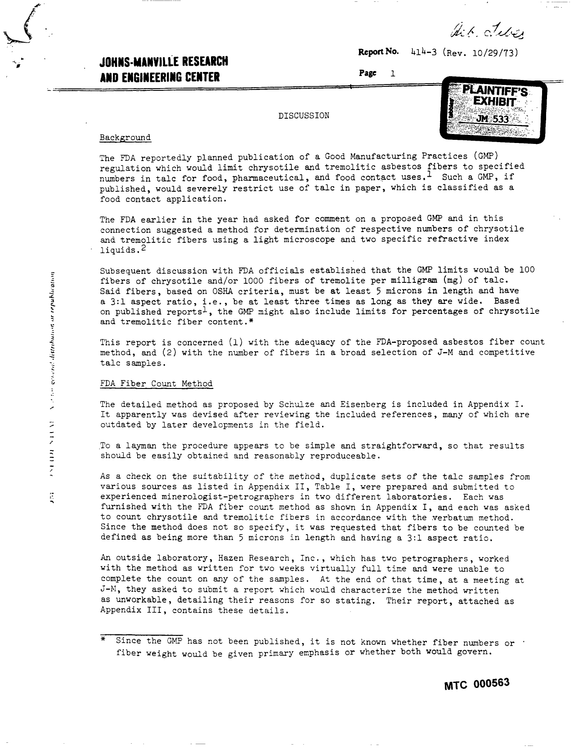
JOHNS MANVILLE RESEARCH AND ENGINEERING CENTER ReportNo. klk-3 (Rev. 10/29/73) Page i or republu attot\ DISCUSSION Background The FDA reportedly planned publication of a Good Manufacturing Practices (GMP) regulation which would limit chrysotile and tremolitic asbestos fibers to specified numbers in talc for food, pharmaceutical, and food contact uses.1 Such a GMP, if published, would severely restrict use of talc in paper, which is classified as a food contact application.
refid# XOboJ1z8YjvdXjXz1pZ9XrEXJ29 pages
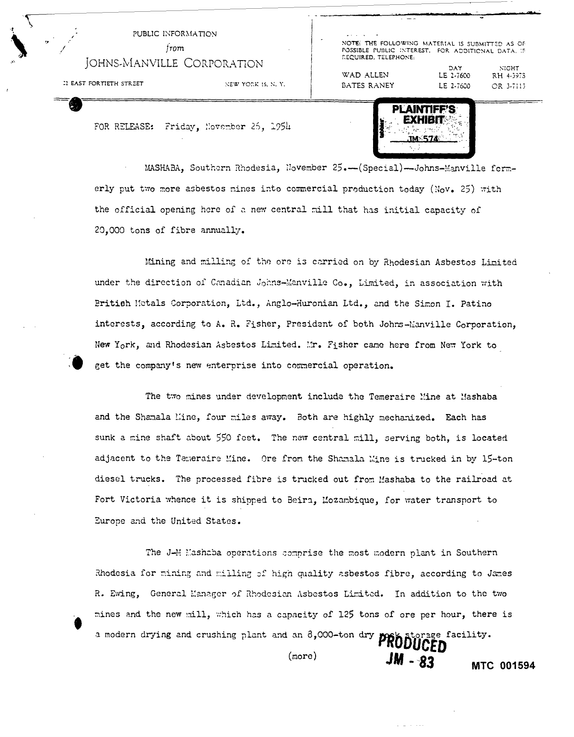
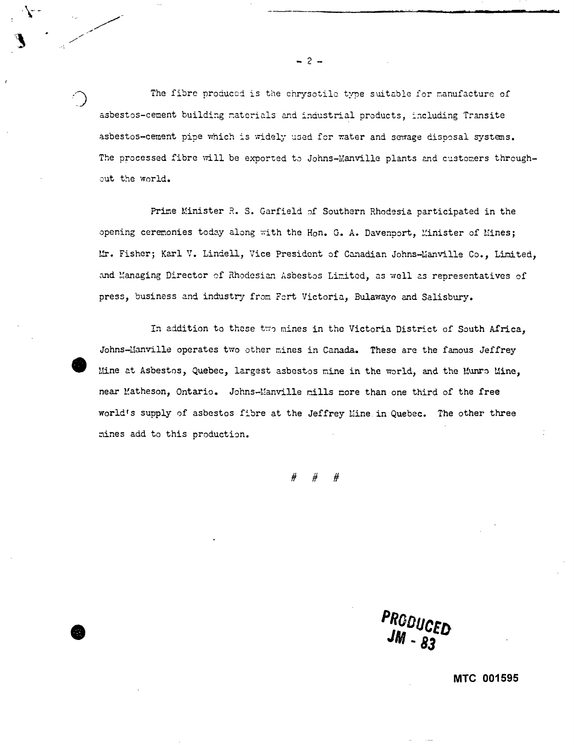
PUBLIC INFORMATION from Johns-Manville Corporation EAST FORTIETH STREET KEW YORK IS, N.
refid# KGz0vKqDjQ2OVNbk5J4nZK5xx2 pages
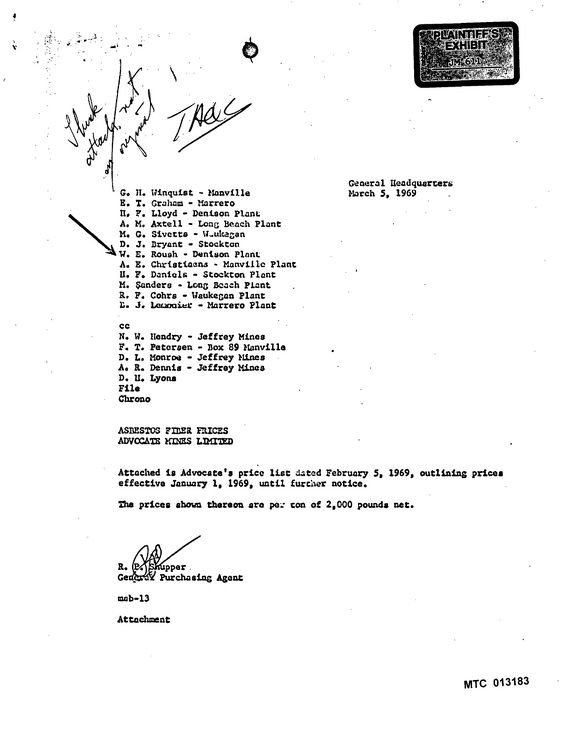
f V 1 Ga Ha Winquist - Manvllle Ba T.
refid# v3xK2vzyqnMzE4OoRxw71q5Y2 pages
COVER SHEET FOR B-LEVEL DOCUMENTS REMOVED IN PRIVILEGE REVIEW ORIGINAL B-LEVEL BOX NO._________________________________ _ PRODUCTION BOX NO.
refid# G46D61Bad1BB4bo9G86Kn17N10 pages
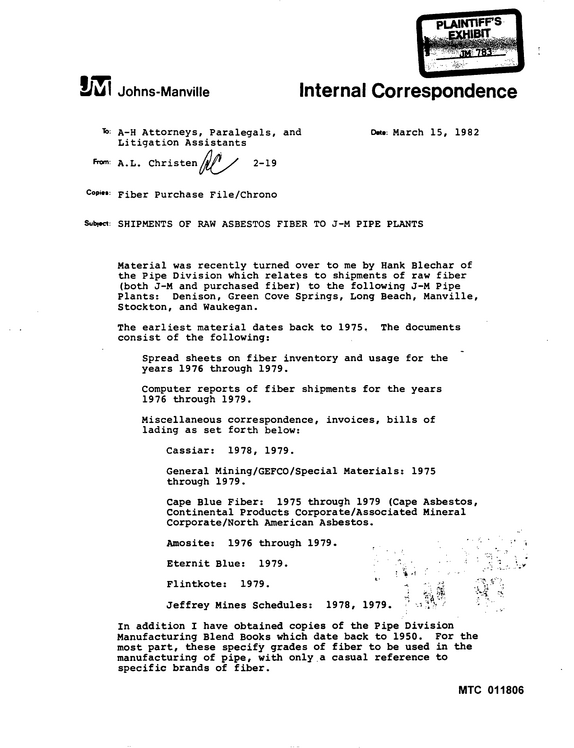
I Johns-Manville Internal Correspondence A-H Attorneys, Paralegals, and Litigation Assistants ksFrom: A.L.
refid# 65ydyJjqZzrvDkoMy0XG27Y1o2 pages
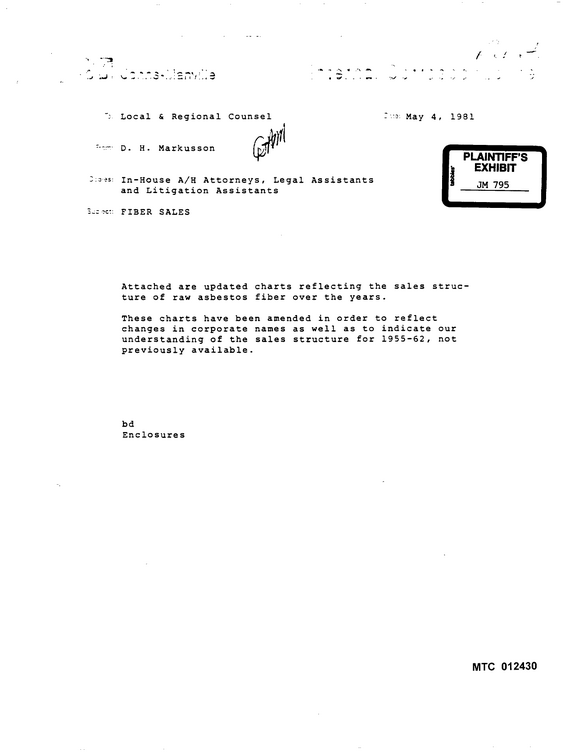
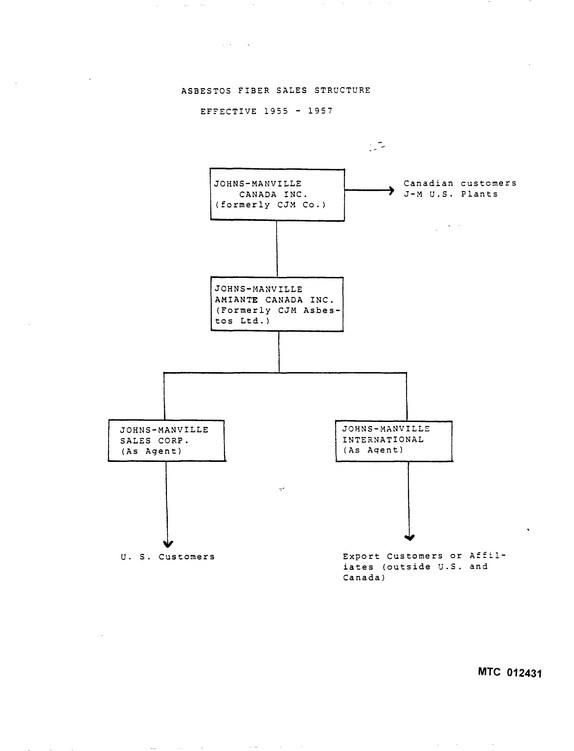
.J : f Local & Regional Counsel r-.:~ D.
refid# xz2X6wJnr1eBakn84ZdNvX8OQ11 pages
22--Non-Employee Accident Prevention mediately dispatch a representative to investi gate the trouble and notify proper representa tives of the property tinder surveillance If central station tie-in is not available.
refid# mq0gOwR4QM3npMb0zj37Da9yk1 page
hazardous substances Contest and awards Safety meeting subject material Speakers for safety meetings Posters or other promotional material Industrial hygiene services, often in their own laboratones Statistical information Compensation and claims information Consultation Professional Societies American Society of Safety Engineers 850 Busse Highway, Park Ridge, Hi, 60068 The Amencan Society of Safety Engineers is the only organization of individual safety professionals dedicated to the advancement of the safety profession and to foster the well being and professional development of its members In fulfilling its purpose, the Society has the following objectives Promote the growth and development of the profession Establish and maintain standards for the pro fession Develop and disseminate material which will carry out the purpose of the Society Promote and develop educational programs for obtaining the knowledge requited to perform the functions of a safety profes sional Promote and conduct lesearch in areas which further the purpose and objectives of the Society Provide forums for the interchange of profes sional knowledge among its members Provide for liaison with related disciplines The Society has vice piesidents elected by and representing each of its twelve regions In addition, there are appointed vice presi dents responsible foi professional develop ment, conferences, professional affairs, com munications, and research and technical development Special committees aie estab lished each year as the need arises An an nual professional conference is conducted for members The Society is actively pursuing its Pro fessional Development Programs including the development of curricula for safety profes sionals, accreditation of degree programs, member education courses, additional publica tions, and defining research needs and com munications to keep safety practitioners cur rent In addition, the Society has increased its participation and activity in national gov ernment affairs The Society has established a separate re search corporation, the American Society for Safety Research, because of its concern for the need for greater research efforts in the prevention of accidents and injuries The So ciety believes that increased research will im prove accident and injury control techniques, thus will serve the interests of its members as well as contributing to the economy of our nation and to the health and welfare of all persons The Society was also instrumental in estab lishing a separate corporation to develop a certification program for safety professionals This corporation, known as Board of Certified Safety Professionals of America (BCSP) is now accepting applications (See BCSP later in this chapter ) The membeis of the Society leceive the monthly Professional Safety as part of their membership (Non-members may also sub scribe ) Articles on new developments in the technology of accident prevention are in cluded, as well as information on the activi ties of the Society, its chapters and members The Society also publishes other technical or specialized information, such as "A Selected Bibliography of Reference Materials in Safety Engineering and Related Fields," a glossary of teims used in the safety profession, and a series of Monographs In 1971, the Society observed its 60th An niversary as the oldest National Safety or ganization m the United States Founded m 1911 as the United Association of Casualty Inspectors, it grew from the original enroll ment of 35 to more than 1000 members by 1930 In 1947, the membership reached 4500, m 1973, there were more than 12,000 membeis internationally The Society was onginally chartered in New York in 1915 and incorporated in Illinois in 1962 In 1924, the Society merged with 603
refid# MG0V1rpjE9ee65GO1Yj3rKNVj1 page
24--Materials Handling and Storage installed inside bins and processing equip ment containing combustible materials Where water is undesirable, either because of reaction with or damage to the material, piotection can be provided by inert gas extin guishers If a paiticularly hazaidous mateual like metal powder is being handled, the apparatus may be completely enclosed and flooded with an inert gas hke carbon dioxide, nitrogen, or helium to remove or reduce the oxygen con tent and, thus, prevent ignition The area should be explosion-vented, pref erably by windows and skylights which swing out on friction catches If other means are not available, the wmdows may be scored with a diamond so that they will easily break outward in case of explosion Portable containers.
refid# dYqEKLQ2BxVkzbzzg7Rpq6QJb1 page