Redd;,-:-: or poly chlorinated biphenyls have Ixvn widely found it. tissues of fish and wildlife (1-4).
refid# zo0bEMyjOJJmRG6Z1aMBXb1E05 pages
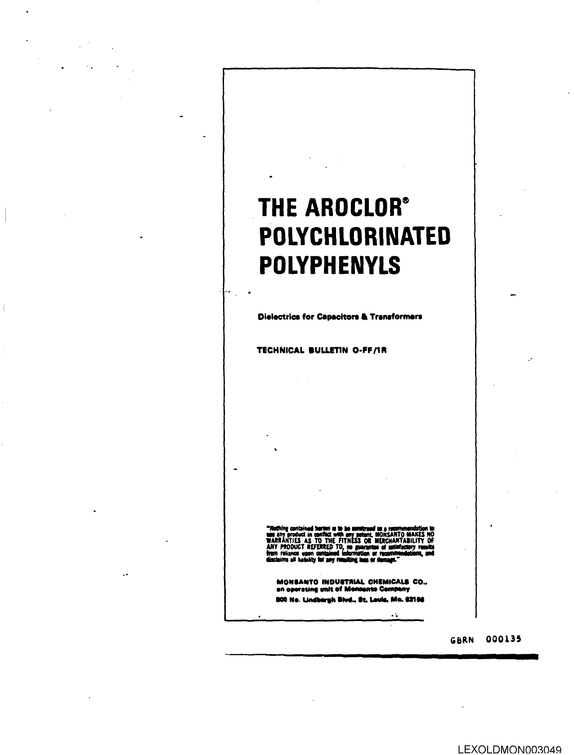
THE AROCLOR* POLYCHLORINATED POLYPHENYLS Dialectics for Capacitors B Transformer* TECHNICAL BULLETIN 0-FF/1R "NNMni contained tom m I* wmml n ncsMntndobon to HO on product in conflict wit* anv pttont.
refid# zzMR0Ymvb3pkqq1VpbwKY11oB21 pages
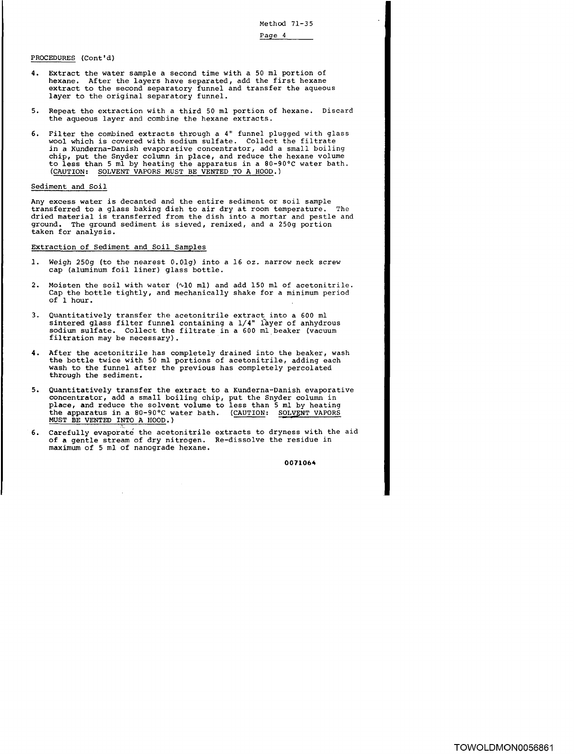
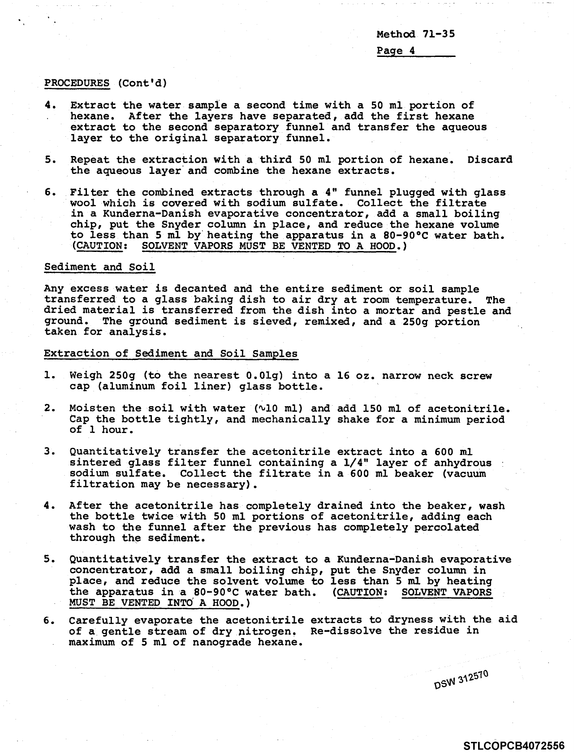
Re-dissolve the residue in maximum of 5 ml of nanograde hexane. 0071064 Method 71-35 Page 5 PROCEDURES (Cont'd) Whole Animal, Poultry and Fish and Individual Tissue (Muscle, Liver, Fat, Kidney, Heart, Spleen, Lungs, Fat, Etc.)
refid# reKed1qM4MwqZ1gderMJZLbRV14 pages
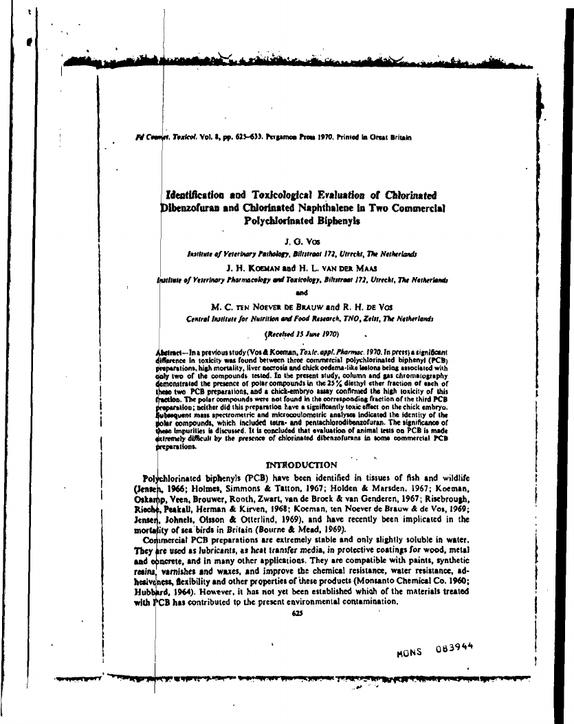
[ INTRODUCTION Polychlorinated biphenyls (PCB) have been identified in tissues of fish and wildlife (Jensch, 1966; Holmes, Simmons & Tatton, 1967; Holden St Marsden. 1967; Koeman, Oskarjtp, Veen, Brouwer, Rooth, Zwart, van de Broek A van Genderen, 1967; Risebrough, Riocre, PeakaU, Herman A Ktrven, 1968; Koeman, ten Nocvcr de Brauw A de Vos, 1969; Jensen, Johnels, Olsson A Ottcrlind, 1969), and have recently been implicated in the mortality of sea birds in Britain (Bourne A Mead, 1969).
refid# dQnmjjDVJ9ob1vJ593QjK1wa59 pages
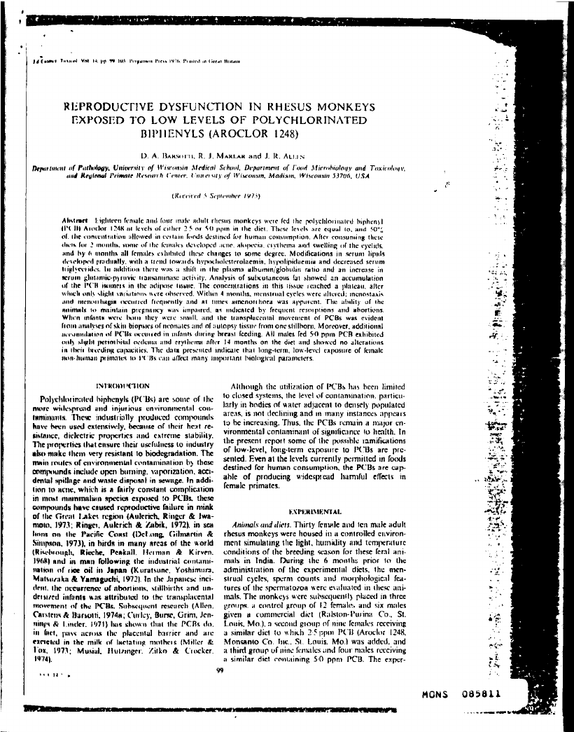
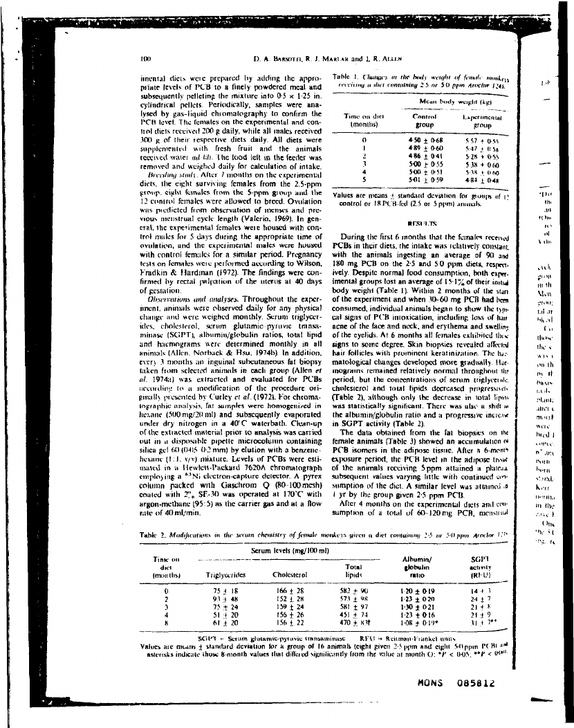
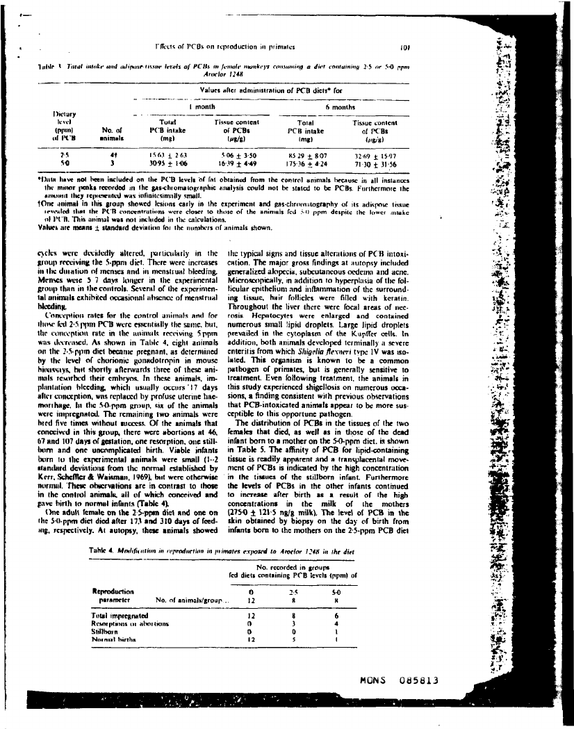
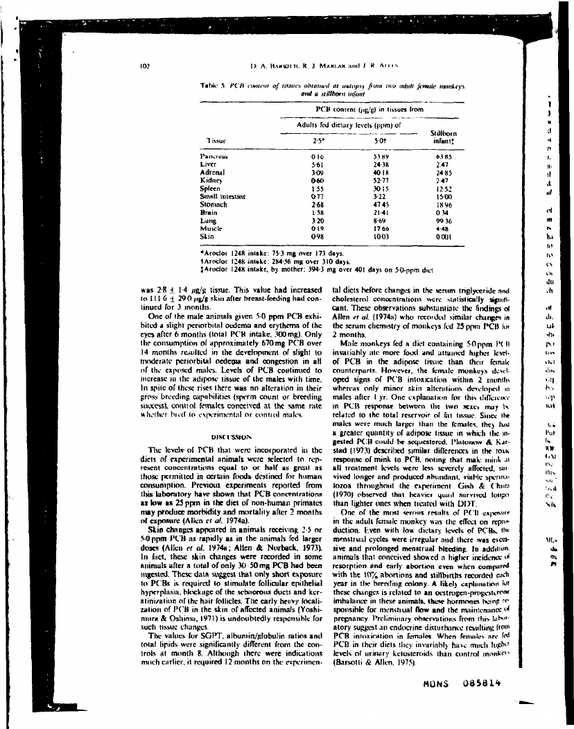
REPRODUCTIVE DYSFUNCTION IN RHESUS MONKEYS EXPOSED TO LOW LEVELS OF POLYCHLORINATED DIPHENYLS (AROCLOR 1248) IX A.
refid# LKeOq9nZ3d9X8GqBg5vJrmj3X5 pages
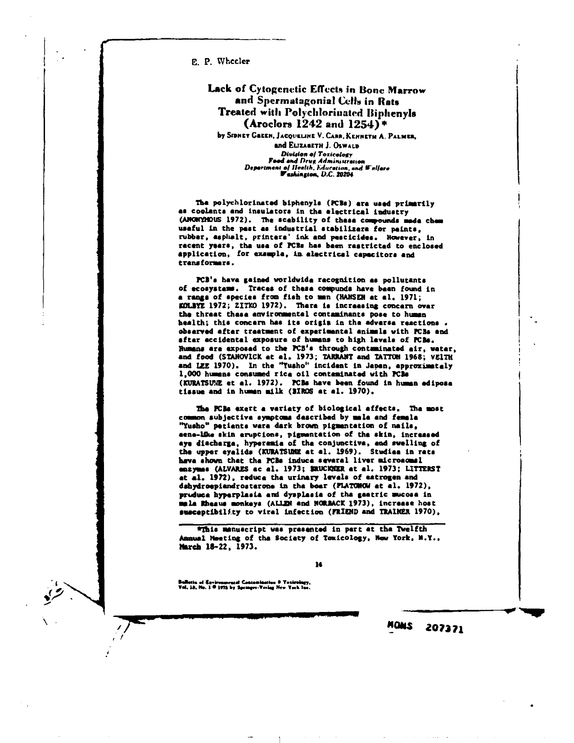
KB's have gained worldwide recognition as pollutants of ecosystems, Traces of these conpunda have bean fond In a rang* of species from fish to aan (HANSEH at al, 1971; KOLBYT 1972; ZITKO 1972).
refid# rx7j3JGXK1e9K5jzKQkjebYda11 pages
Degradation of polychlorinated biphenyls by two species of Achromobacter1 M.
refid# k9VEpM7dKRN3GXYEMKJdXGe0D6 pages
TECHNICAL BULLETIN THE AROCLOr POLYCHLORINATED POLYPHENYLS Dielectric* for Capacitor* & Transformers TECHNICAL BULLETIN 0-FF/1R V.
refid# jB15jKXEEprMpQg89k4dEdDEk22 pages
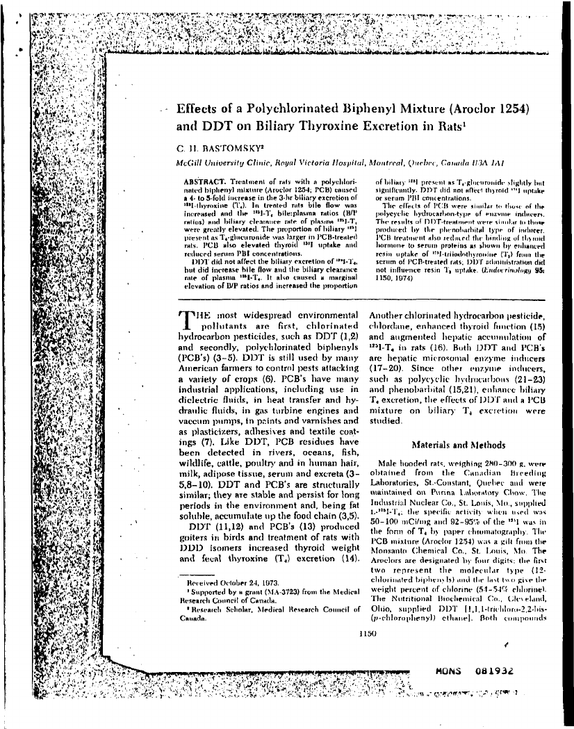
Like DDT, PCB residues have been detected in rivers, oceans, fish, Materials and Methods wildlife, cattle, poultry and in human hair, Male hooded rats, weighing 2M0-3OO g, were milk, adipose tissue, serum and excreta (3 obtained from the Canadian Bleeding 5,8-10).
refid# eOmmxG9OmVBLM59X9Bw7aOrp6 pages
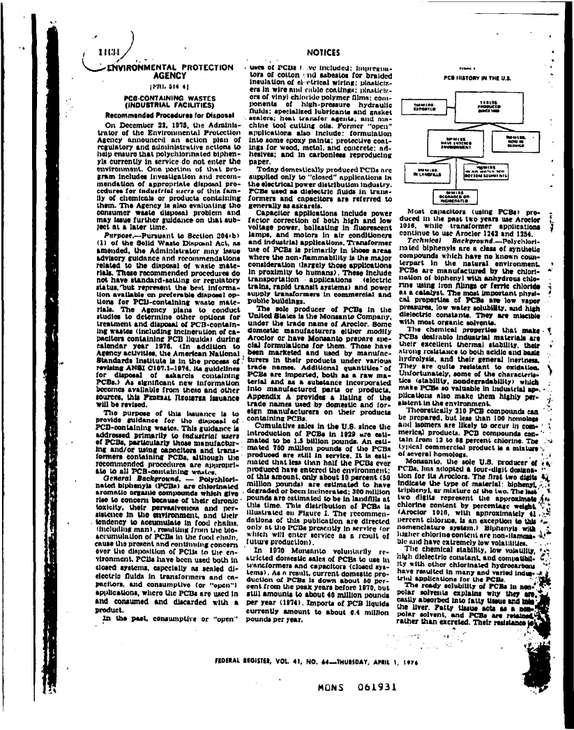
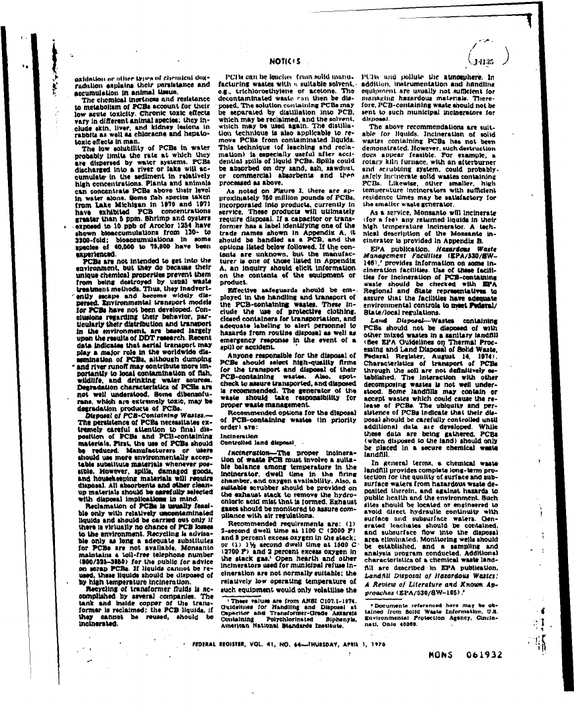
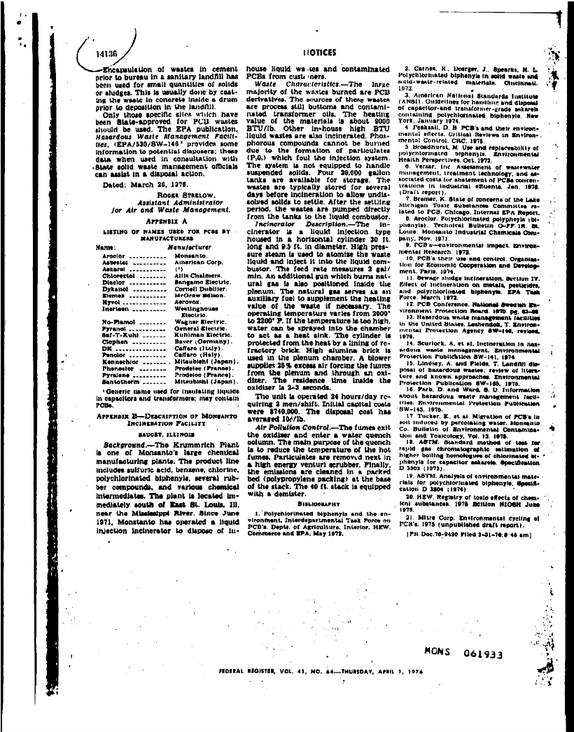
o THURSDAY, APRIL 1, 1976 (A *o> 0 g Ano 0 PART V: ENVIRONMENTAL PROTECTION AGENCY POLYCHLORINATED BIPHENYL-CONTAINING WASTES Disposal Procedures MQNS 0*193 i ih:j NOTICES VIRONMCNTAL PROTECTION Uses of PCBs I vc Included: JtnprcMim- AGENCY tors of cotton nd asbestos for braided insulation of ol rtrical wiring: plasticiz res HISTORY IN THE U.S.
refid# mgz3n11OBDwkgnBwgMXmGGBQ4 pages
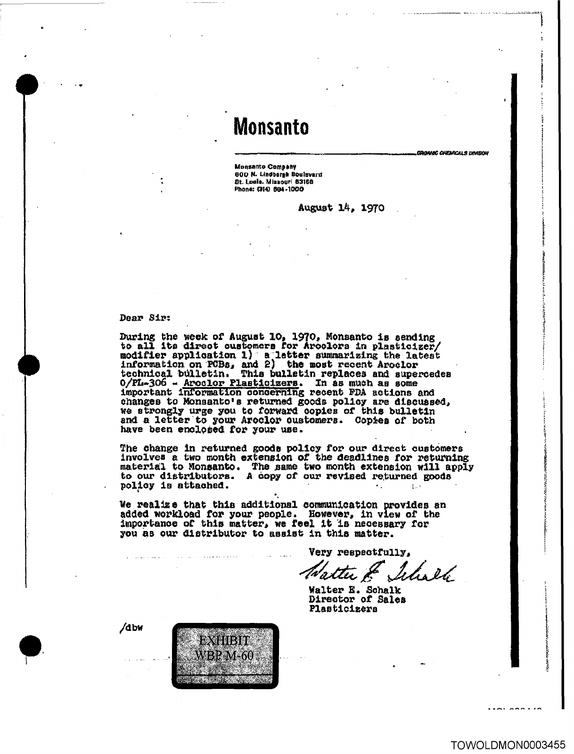
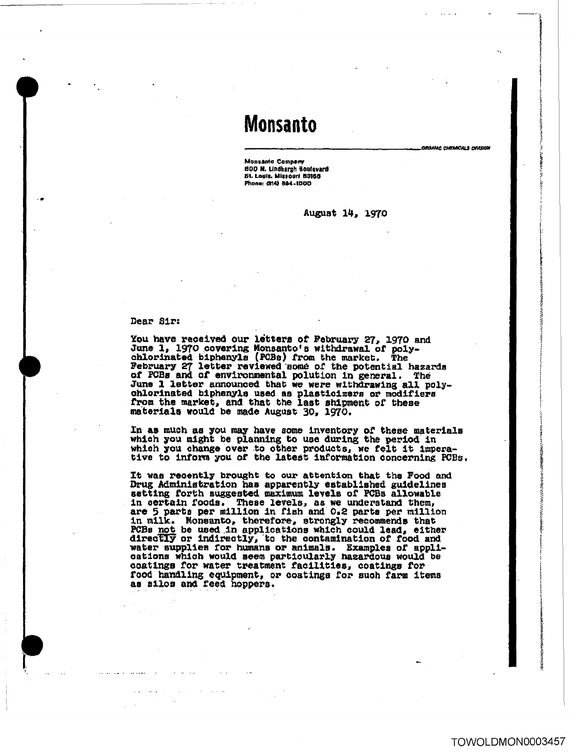
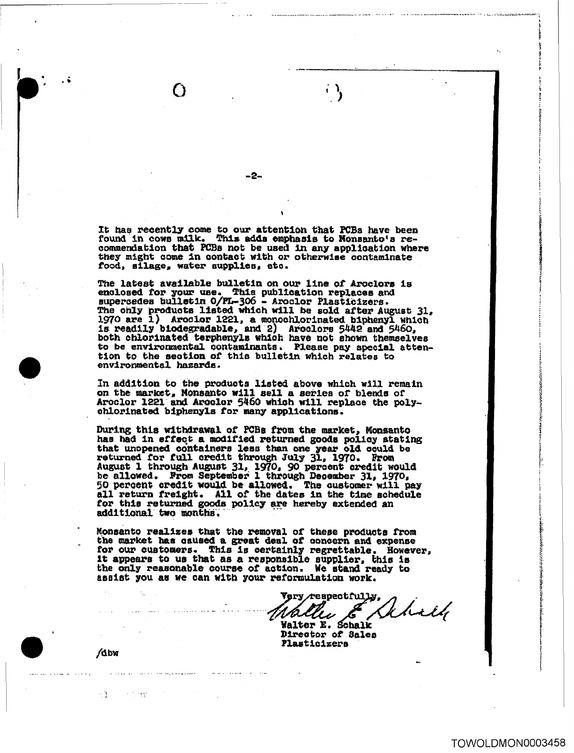
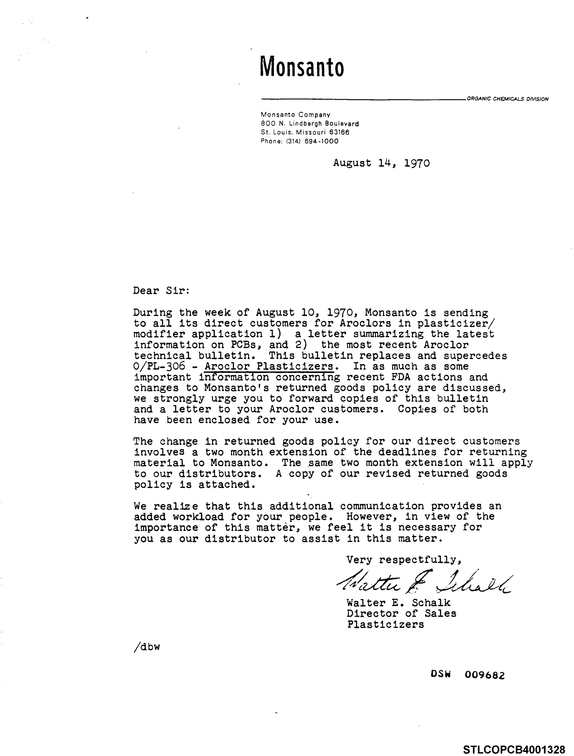
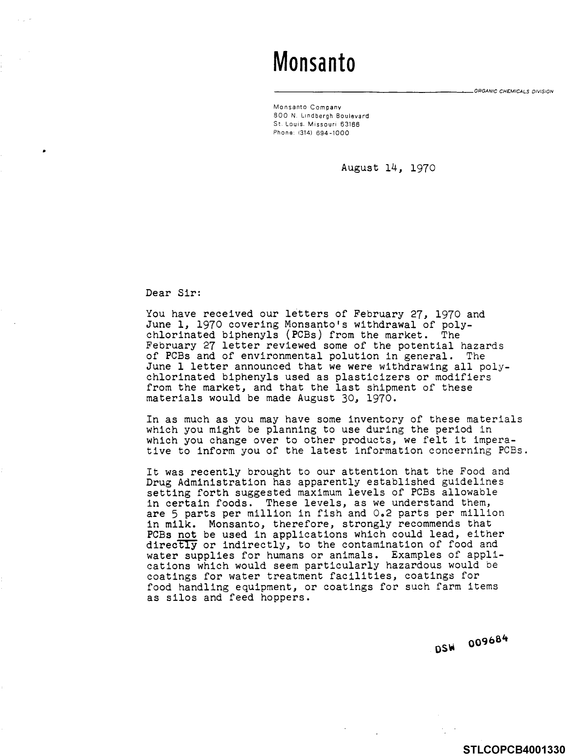
These levels, as we understand them, are 5 parts per million in fish and 0.2 parts per million in milk..
refid# ByxYa7qQZ493M1VVw6y8yN0QL26 pages
Bodied fish oils or vegetable oils and the plasticizers, such as tricresyl phosphate or dibutyl phthalate, may be used successfully.
refid# NNd2220Zy2670zmXOwBRqVz9D17 pages
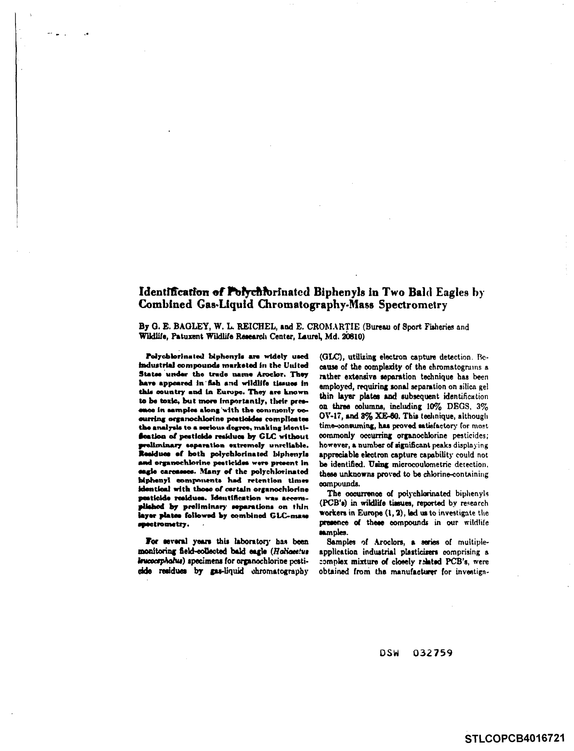
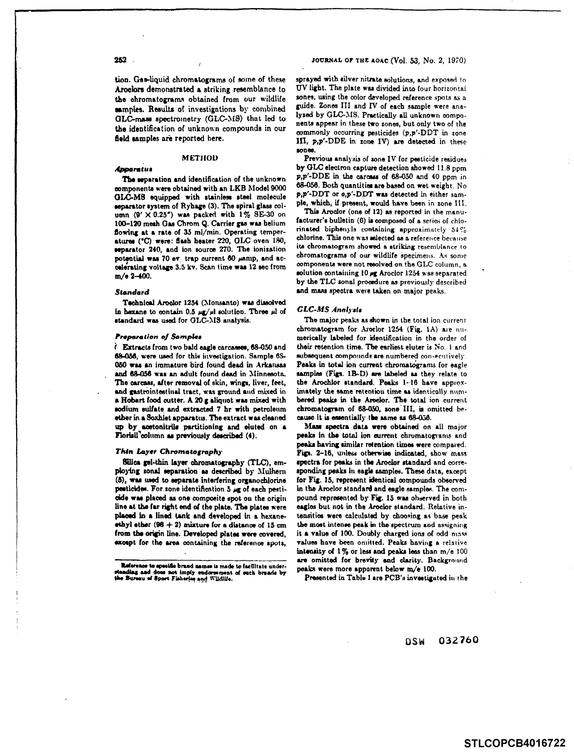
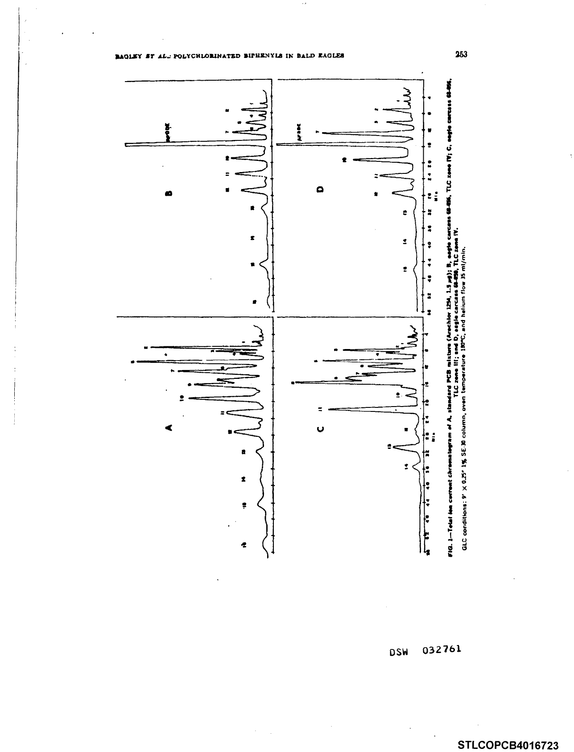
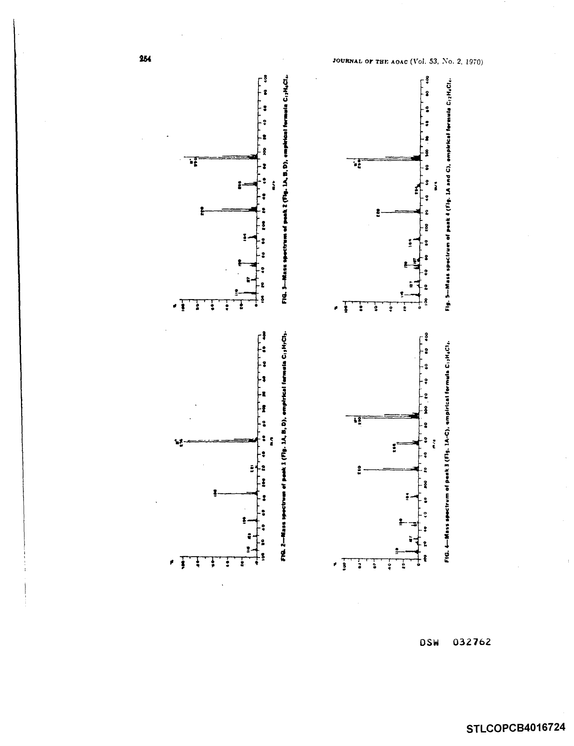
Identfffcatibn f Mycfttorfnated Biphenyls in Two Bald Eagles by Combined Gas-Liquid Chromatography-Mass Spectrometry By 0.
refid# peYjNvpx5m8v1DVkBY19D5x7E11 pages
Re-dissolve the residue in maximum of 5 ml of nanograde hexane. 3^261 qSNN STLCOPCB4072556 Method 71-35 Page 5 PROCEDURES (Cont'd) Whole Animal, Poultry and Fish and Individual Tissue (Muscle, Liver, Fat, Kidney, Heart, Spleen, Lungs, Fat, Etc.)
refid# DvMyDNBjz0Vx7r3LYdYanjkpM36 pages
These levels, as we understand them, are 5 parts per million in fish and 0.2 parts per million in milk.
refid# DGy19an7kj96kR3gp58bkxOL521 pages