2006 SUMMER I mRegistrationBegins....................................................................................................................................March 13 New student orientation, college placement testing, academic advising, and counseling for Spring.
refid# 93YLNBdp12D2Oyxxq1N3jp9J51 page
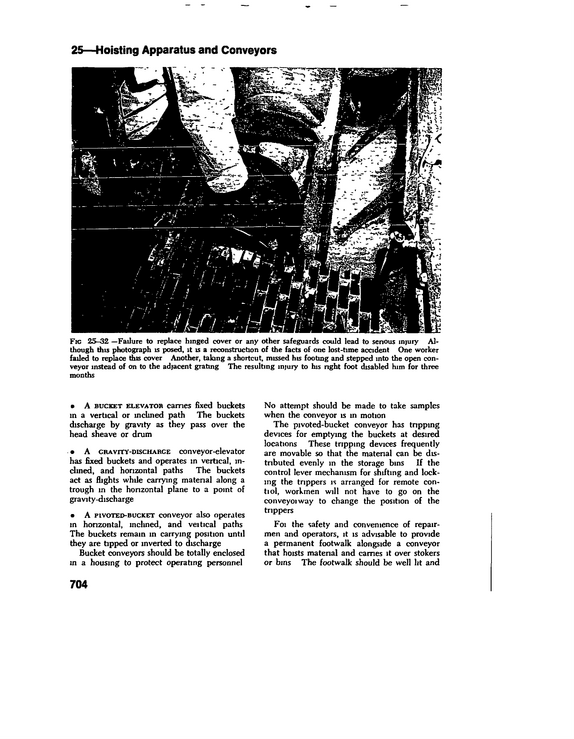
25--Hoisting Apparatus and Conveyors Fic 25-32 --Failure to replace hinged cover or any other safeguards could lead to serious injury Al though this photograph is posed, it is a reconstruction of the facts of one lost-time accident One worker failed to replace this cover Another, taking a shortcut, missed his footing and stepped into the open con veyor instead of on to the adjacent grating The resulting injury to his right foot disabled him for three months A bucket elevator carries fixed buckets m a vertical or inclined path The buckets discharge by gravity as they pass over the head sheave or drum A cravity-discharce conveyor-elevator has fixed buckets and operates m vertical, in clined, and horizontal paths The buckets act as flights while carrying matenal along a trough m the horizontal plane to a point of gravity-discharge A pivoted-bucket conveyor also operates m horizontal, inclined, and veitical paths The buckets remain in carrying position until they are tipped or inverted to discharge Bucket conveyors should be totally enclosed m a housing to protect operating personnel 704 No attempt should be made to take samples when the conveyor is m motion The pivoted-bucket conveyor has tripping devices for emptying the buckets at desired locations These tripping devices frequently are movable so that the material can be dis tributed evenly m the storage bins If the control lever mechanism for shifting and lock ing the tnppers is arranged for remote contiol, workmen will not have to go on the conveyoiway to change the position of the tnppers Foi the safety and convenience of repair men and operators, it is advisable to provide a permanent footwalk alongside a conveyor that hoists material and cames it over stokers or bins The footwalk should be well lit and
refid# dnxqDNyy075Mm82Xxxo6gJKD61 page
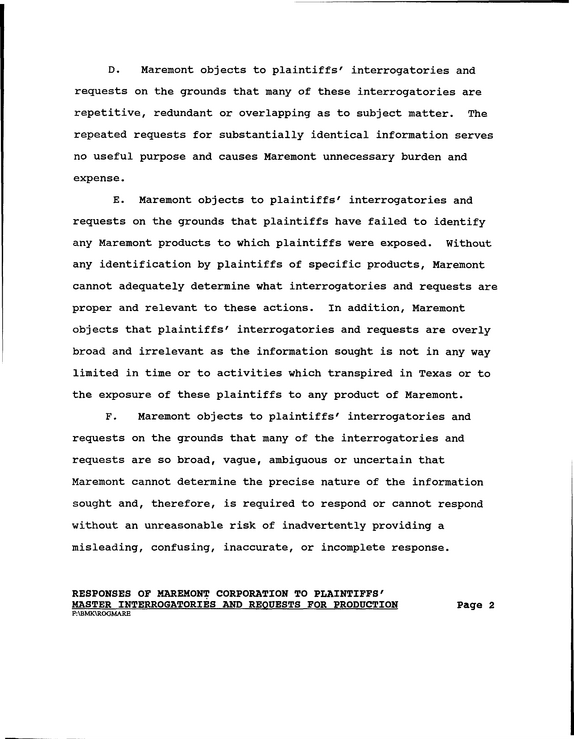
IN RE: ASBESTOS LITIGATION IN THE DISTRICT COURTS OF DALLAS COUNTY, TEXAS DEFENDANT MAREMOUNT CORPORATION'S OBJECTIONS AND RESPONSES TO PLAINTIFFS' MASTER INTERROGATORIES AND REQUESTS FOR PRODUCTION OF DOCUMENTS COMES NOW, Defendant Maremount Corporation, and makes and files its Objections and Responses to Plaintiff's Master Interrogatories and Requests for Production of Documents.

refid# 8Vj1K3VBndLaZD199r8oLQN2a54 pages
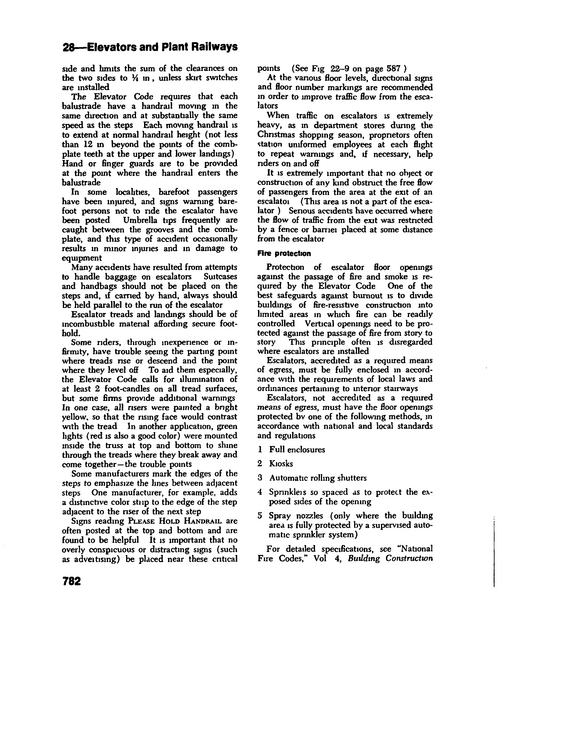
28--Elevators and Plant Railways side and limits the sum of the clearances on the two sides to M in, unless skirt switches are installed The Elevator Code requires that each balustrade have a handrail moving m the same direction and at substantially the same speed as the steps Each moving handrail is to extend at normal handrail height (not less than 12 in beyond the points of the combplate teeth at the upper and lower landings) Hand or finger guards are to be provided at the point where the handrail enters the balustrade In some localities, barefoot passengers have been injured, and signs warning bare foot persons not to ride the escalator have been posted Umbrella tips frequently are caught between the grooves and the combplate, and this type of accident occasionally results in minor injuries and in damage to equipment Many accidents have resulted from attempts to handle baggage on escalators Suitcases and handbags should not be placed on the steps and, if earned by hand, always should be held parallel to the run of the escalator Escalator treads and landings should be of incombustible material affording secure foot hold.
refid# 4V2jR53aX70pG5zRaZKV2BpR1 page
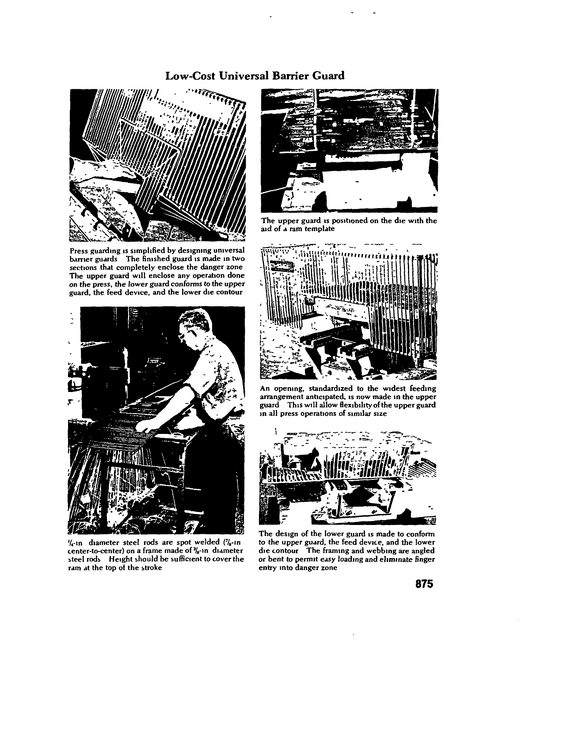
Low-Cost Universal Barrier Guard The upper guard is positioned on the die with the aid of a ram template Press guarding is simplified by designing universal barrier guards The finished guard is made in two sections that completely enclose the danger zone The upper guard will enclose any operation done on the press, the lower guard conforms to the upper guard, the feed device, and the lower die contour An opening, standardized to the widest feeding arrangement anticipated, is now made in the upper guard This will allow flexibility of the upper guard in all press operations of similar size '/,-in diameter steel rods are spot welded (7/-in center-to-center) on a frame made of 3/a-in diameter steel rods Height should be sufficient to cover the ram at the top of the stroke The design of the lower guard is made to conform to the upper guard, the feed device, and the lower die contour The framing and webbing are angled or bent to permit easy loading and eliminate finger entry into danger zone 875
refid# 3NQ1bXa42JppVrkOGxJbjvwR31 page
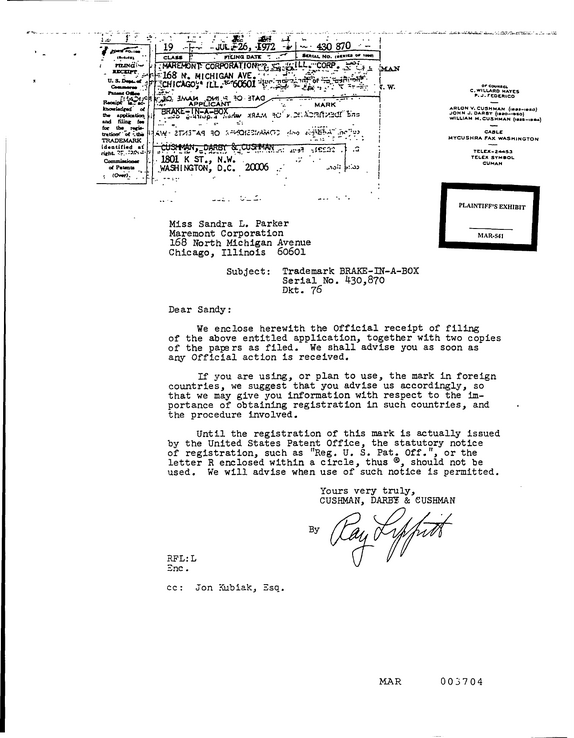
at Pstnti * (Ov*r), _ or CCHIKSCJ.
refid# 10v6YaG9DDKNLaVLZVkVNxD9d12 pages
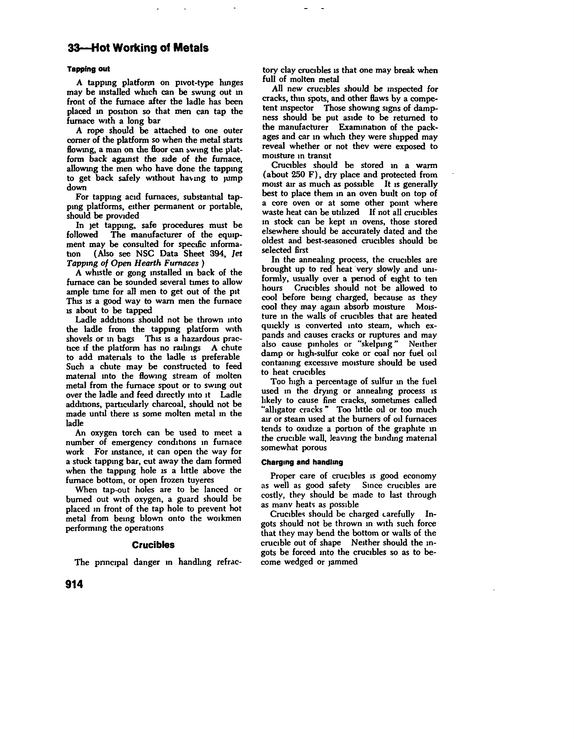
33--Hot Working of Metals Tapping out A tapping platform on pivot-type hinges may be installed which can be swung out m front of the furnace after the ladle has been placed in position so that men can tap the furnace with a long bar A rope should be attached to one outer comer of the platform so when the metal starts flowing, a man on rhe floor can swing the plat form back against the side of the furnace, allowing the men who have done the tapping to get back safely without havmg to jump down For tapping acid furnaces, substantial tap ping platforms, either permanent or portable, should be provided In jet tapping, safe procedures must be followed The manufacturer of the equip ment may be consulted for specific informa tion (Also see NSC Data Sheet 394, Jet Tapping of Open Hearth Furnaces ) A whistle or gong installed in back of the furnace can be sounded several times to allow ample time for all men to get out of the pit This is a good way to warn men the furnace is about to be tapped Ladle additions should not be thrown into the ladle from the tapping platform with shovels or in bags This is a hazardous prac tice if the platform has no railings A chute to add matenals to the ladle is preferable Such a chute may be constructed to feed material into the flowing stream of molten metal from the furnace spout or to swing out over the ladle and feed directly into it Ladle additions, particularly charcoal, should not be made until there is some molten metal m the ladle An oxygen torch can be used to meet a number of emergency conditions in furnace work For instance, it can open the way for a stuck tapping bar, cut away the dam formed when the tapping hole is a little above the furnace bottom, or open frozen tuyeres When tap-out holes are to be lanced or burned out with oxygen, a guard should be placed m front of the tap hole to prevent hot metal from being blown onto the woikmen performing the operations Crucibles The principal danger in handling refrac 914 tory clay crumbles is that one may break when full of molten metal All new crucibles should be inspected for cracks, thin spots, and other flaws by a compe tent inspector Those showmg signs of damp ness should be put aside to be returned to the manufacturer Examination of the pack ages and car in which they were shipped may reveal whether or not thev were exposed to moisture m transit Crucibles should be stored in a warm (about 250 F), dry place and protected from moist air as much as possible It is generally best to place them in an oven built on top of a core oven or at some other point where waste heat can be utilized If not all crucibles m stock can be kept in ovens, those stored elsewhere should be accurately dated and the oldest and best-seasoned crucibles should be selected first In the annealing process, the crucibles are brought up to red heat very slowly and uni formly, usually over a period of eight to ten hours Crucibles should not be allowed to cool before being charged, because as they cool they may again absorb moisture Mois ture in the walls of crucibles that are heated quickly is converted into steam, which ex pands and causes cracks or ruptures and may also cause pinholes or "skelping " Neither damp or high-sulfur coke or coal nor fuel oil containing excessive moisture should be used to heat crucibles Too high a percentage of sulfur in the fuel used m the drying or annealing process is likely to cause fine cracks, sometimes called "alligator cracks " Too little oil or too much air or steam used at the burners of oil furnaces tends to oxidize a portion of the graphite m the crucible wall, leaving the binding material somewhat porous Charging and handling Proper care of crucibles is good economy as well as good safety Since crucibles are costly, they should be made to last through as manv heats as possible Crucibles should be charged carefully In gots should not be thrown m with such force that they may bend the bottom or walls of the crucible out of shape Neither should the in gots be forced into the crucibles so as to be come wedged or jammed
refid# 854mrxQD2wVVVVOKqM51GJLze1 page
distributed Proper working clearance must be main tained to facibtate correct location for un loading If possible, cold trimmers should be designed to work on guide pins for proper ahgnment Padding, bending, or straightening equip ment is sometimes required to complete a forging This equipment can be made from a good grade of wear-resistant carbon, nickel steel Hot pad dies are usually made with an opening between the die faces so that the hot forging acts as a cushion Additional clearance should be provided in a hot pad or restnke die because the forging is con stantly cooling and shrinking Cold coin dies are made from high carbon, high chrome steels hardened to 62 to 64 Rock well C hardness The forging is corned cold For best result, either interlocking dies or dies with guide pins are used Additional safety measures such as magazine type load ers are sometimes made an integral part of the die for the operator's convenience The faces of the coining dies should be ground as smooth as possible No lubricant should be used because it may cause the forg ing to stick to one die face The opening between the dies is sometimes limited me chanically so that no more than one forging can be loaded at a time Bulldozers.
refid# 2JzYjr5Bq4mrmoj93Y5joknJ71 page
34--Welding and Culling obtained from a single cylinder.
refid# a4Ky9d0Kxz37X99Z2BZrvZMLB1 page
X ' ^ v M P Q J<\) I i li i l t 1V/ITC 013621 MTC 013622 FILE NUMBER COVER SHEET 7 l 0^3623 nvtc FILE NUMBER COVER SHEET V PRODUCTION BOX NUMBER Ot^ -/o 0 MTC 013630 INTER-OFFICE CHARGE dD CREDIT 3* To_ bBUISOtJIssued By_ NAc EXPLANATION (see Systems 1531 for instructions) to CAtictu APomSC MAfi&tiiM'CLtUVA/J AVC 7i S'-'M/vgr AMOUNT r\ }l7 --- - EASE F IL L IN 15 RESP OR DIVISION ACCOUNT NUMBER PLT RESP CODE i-iaic PLT EXP CODE 6//02- 070 ANALYSIS CODE JOB ORDER NUMBER OUANTITY OR FRT NUMBER DEBIT ?

refid# N2K55nnR2q0NMV0ORrDzXad8w11 pages
YV?

refid# ymnvRxLzNMv2B0OBzQnkyBmLd7 pages
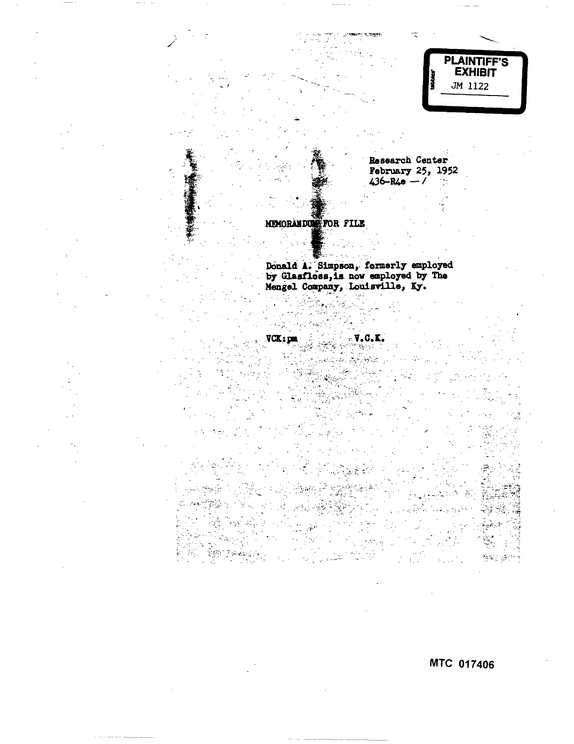
V Research Center February 25, 1952 436-R4* -- / ; HatORiSoApR FILE Donald A.
refid# ZBGRVQJOqjYzvrVpwB20KdGG019 pages
DOCUMENT THE FOLLOWING DOCUMENTS) IS ILLEGIBLE OR OF POOR LEGIBILITY IN THE ORIGINAL THIS IS THE BEST COPY AVAILABLE.

refid# NEQ4EV84KGzyqvQ8dNEep1KMw8 pages
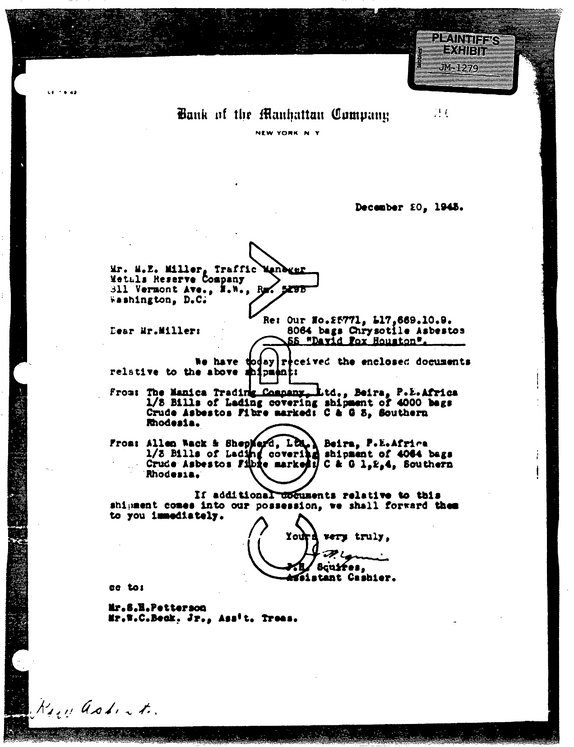
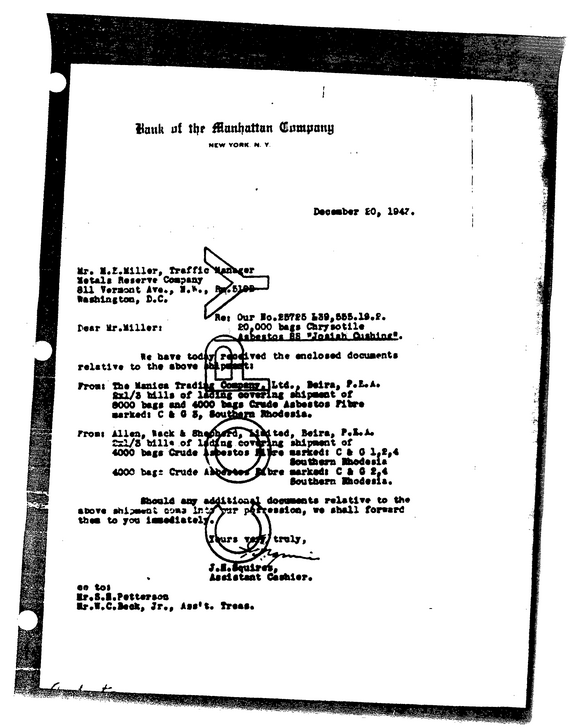
Bank nf llir iHanhattau (Cumyaiu; NIW YORK N Y Deceaber 0, 1*41.
refid# v5zvnRK6Mv9BzRdVZGrVyOGZ2 pages
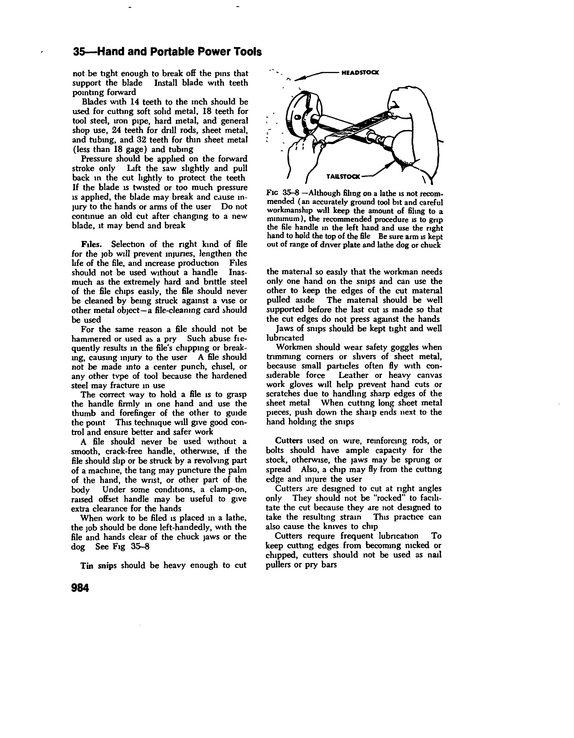
35--Hand and Portable Power Tools not be tight enough to break off the pins that support the blade Install blade with teeth pointing forward Blades with 14 teeth to the inch should be used for cutting soft solid metal, 18 teeth for tool steel, iron pipe, hard metal, and general shop use, 24 teeth for drill rods, sheet metal, and tubing, and 32 teeth for thin sheet metal (less than 18 gage) and tubing Pressure should be applied on the forward stroke only Lift the saw slightly and pull back in the cut lightly to protect the teeth If the blade is twisted or too much pressure is applied, the blade may break and cause in jury to the hands or arms of the user Do not continue an old cut after changing to a new blade, it may bend and break Files.
refid# j19JQQRBdxo1Q6MaNnD8GrdO1 page