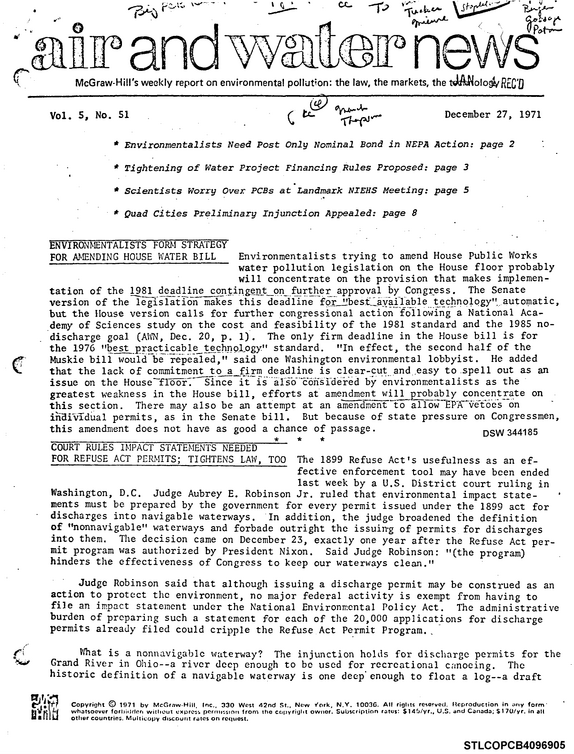
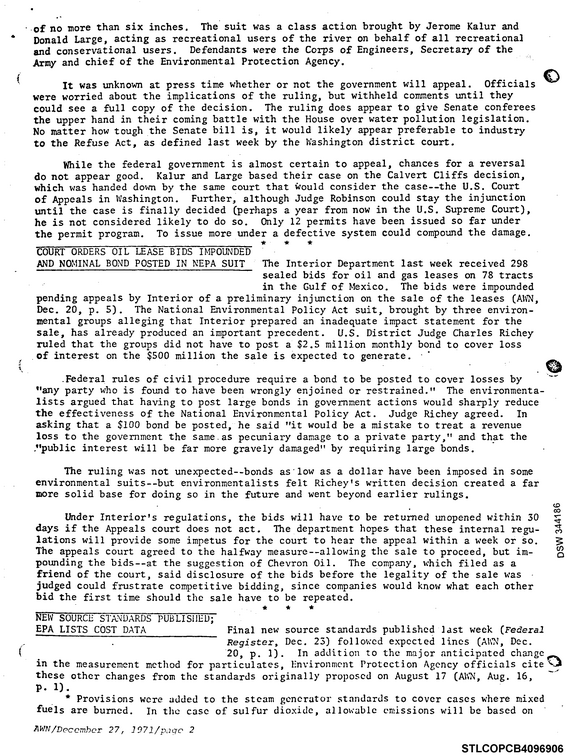
r a i ^ vv*7 McGraw-Hill's weekly report on environmental pollution: the law, the markets, the Vol. 5, No. 51 ^ ixr^ December 27, 1971 * Environmentalists Need Post Only Nominal Bond in NEPA Action: page 2 * Tightening of Water Project Financing Rules Proposed: page 3 * Scientists Worry Over PCBs at Landmark NIEHS Meeting: page 5 * Quad Cities Preliminary Injunction Appealed: page 8 ENVIRONMENTALISTS FORM STRATEGY FOR AMENDING HOUSE WATER BILL Environmentalists trying to amend House Public Works ~ water pollution legislation on the House floor probably will concentrate on the provision that makes implemen tation of the 1981 d^adlinecontingent_on_ further approval by Congress.
refid# 0Lg9B1EYgwMxY1qen80k7vZLJ8 pages
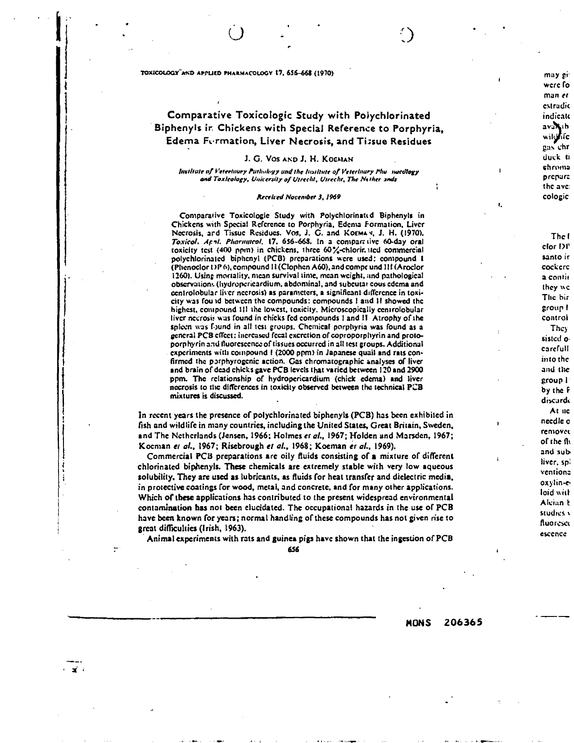
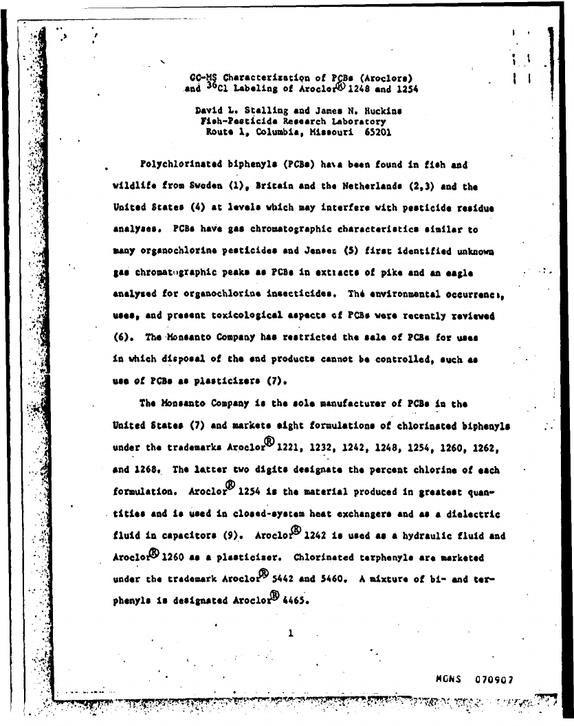
clor Of santo ir cockcrc a contii they uc The bir group I control They sisted O' carcfull into the and the group 1 by the f discards In recent years the presence of polychlorinated biphenyls (PCB) has been exhibited in fish and wildlife in many countries, including the United States, Great Britain, Sweden, and The Netherlands (Jensen, 1966; Holmes eta!.
refid# Y23xOz1Jw0VvgQMDxayyXjd013 pages
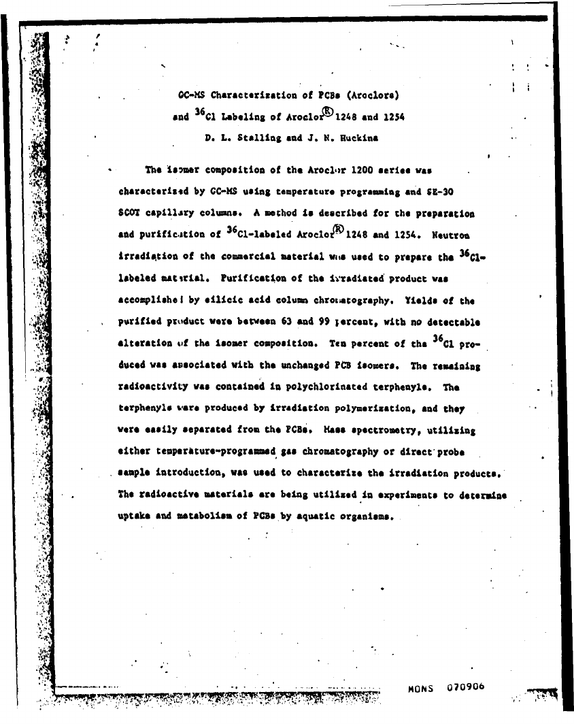
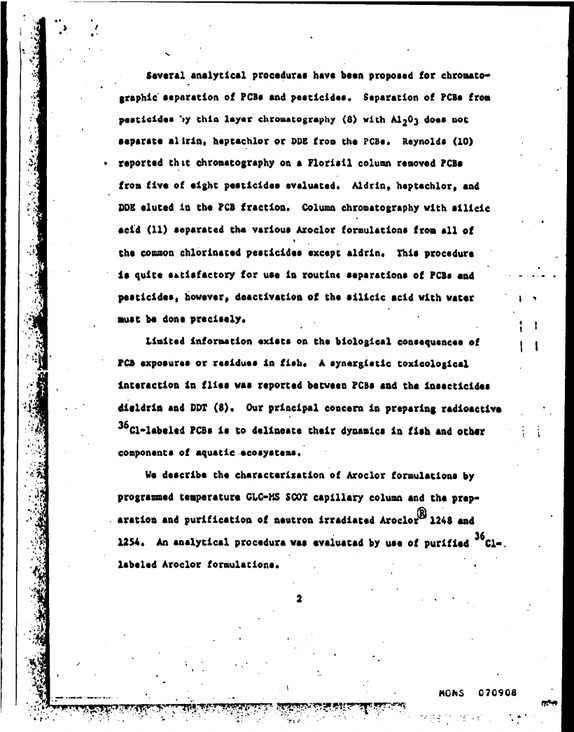
Our principal concern In preparing radioactive Cl-labeled PCBs Is to delineate their dynamics In fish and other ; components of aquatic ecosystems.
refid# zdEEKvzY0p70BwEbeRVryj5Zg28 pages
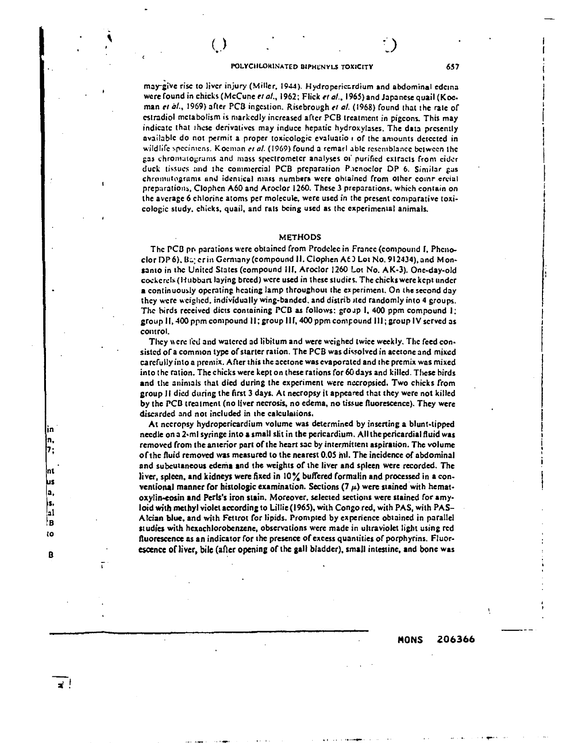
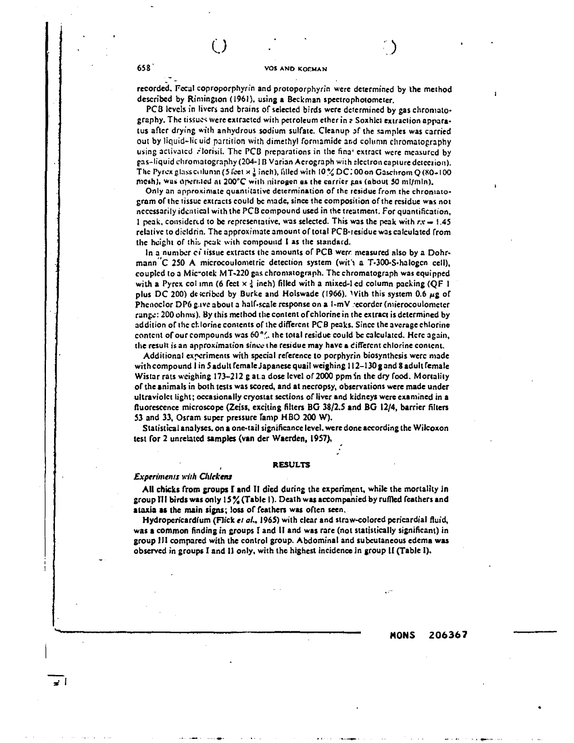
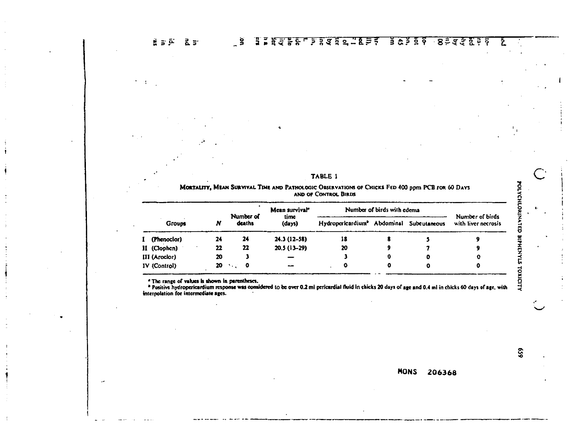
Fecal copro porphyrin and protoporphyrin excretion was increased. ychlorinated biphenyls (PCB) have been identified in tissues of fish and wildlife in ay countries (Jensen, 1966; Holmes et al., 1967; Holden and Marsden, 1967; Koc tet a/., 1967; Risebrough et al., 1968; Koeman et a/., 1969; Jensen era/., 1969; Duke al., 1970; Prestt et al., 1970).
refid# 6R1YKQQJ6er9ww03vaB1gqGvo6 pages
Polychlorinated biphenyls in blood plasma among Swedish female fish con sumers in relation to low birth weight.
refid# BvDMqm2JQMRndY7ML1BzqG9eJ4 pages
pCB-t Organochlorine Pollutants in Peregrines and Merlins Migrating through Wisconsin Robert W.
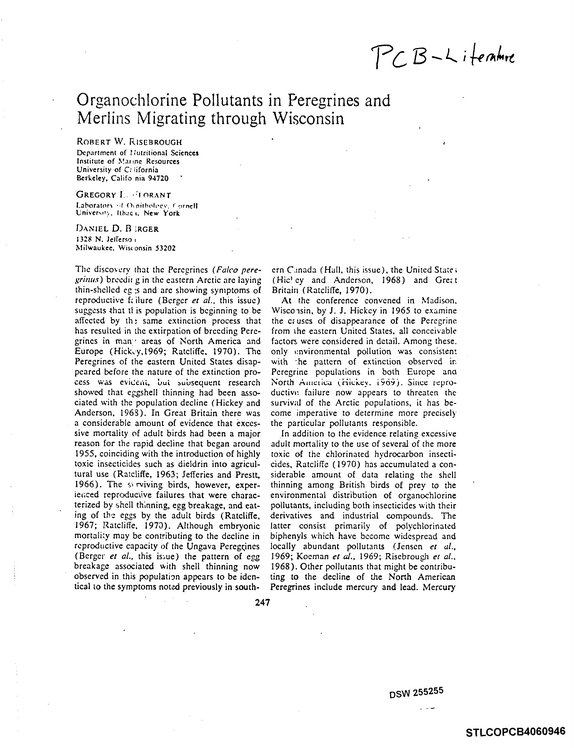
refid# q5b7Nb5v683XNZwmwJaX8rxM7 pages
1 ' ; l\ A i .i k vi ;44 -vi Adenofibrosis in the Rat Liver With Persistence of Polychlorinated Biphenyls in Adipose Tissue Rcnatc I).
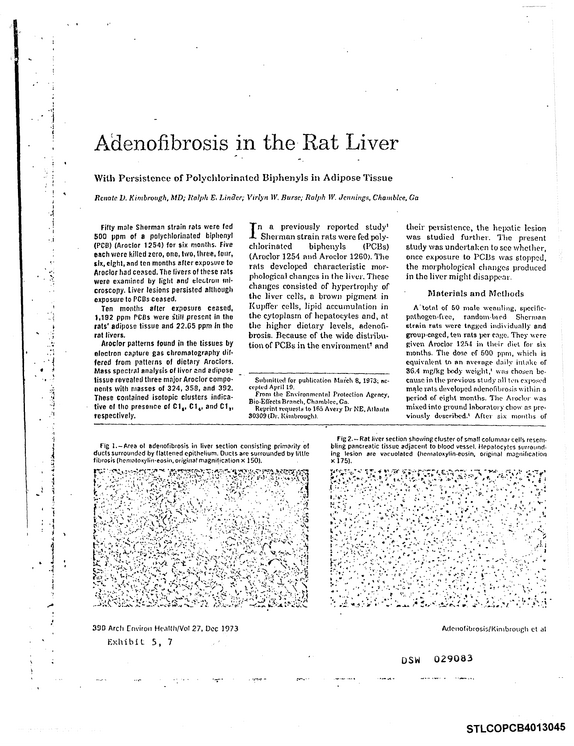
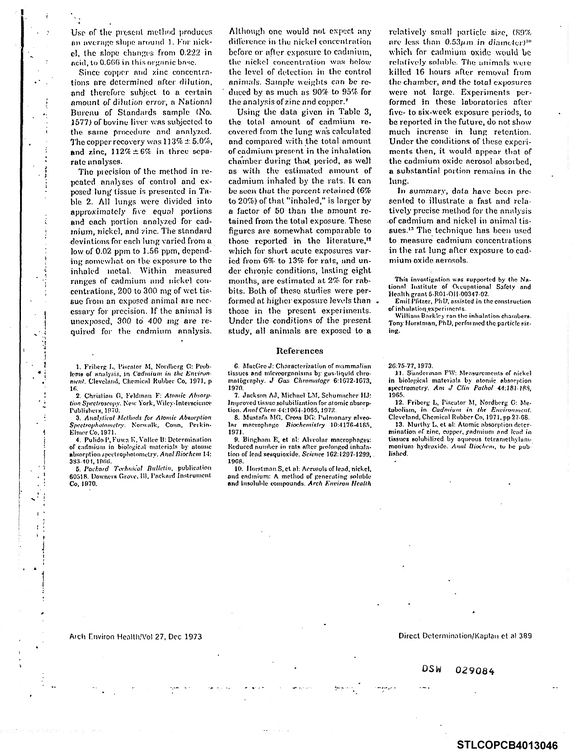
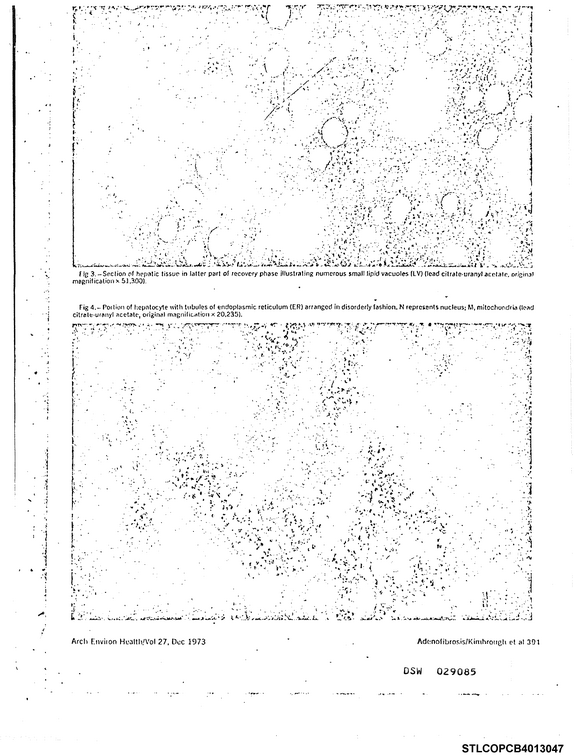
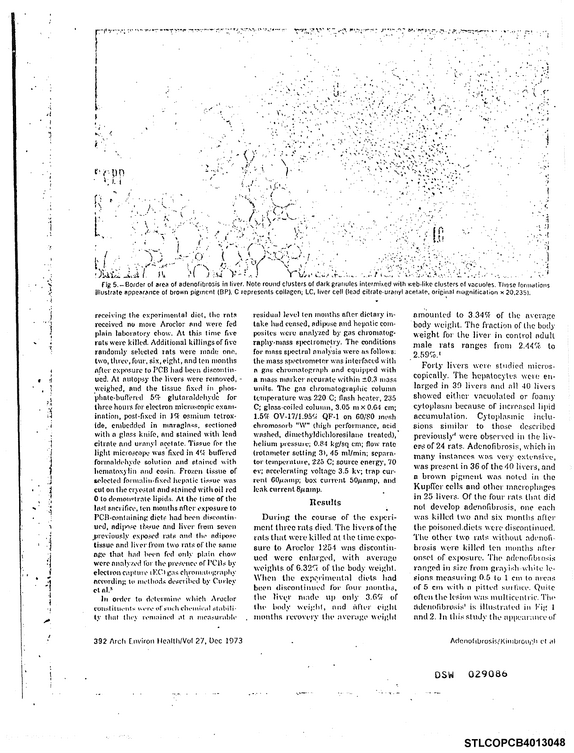
refid# GK83bq45JZVVm6dGJVoD6nMDx7 pages
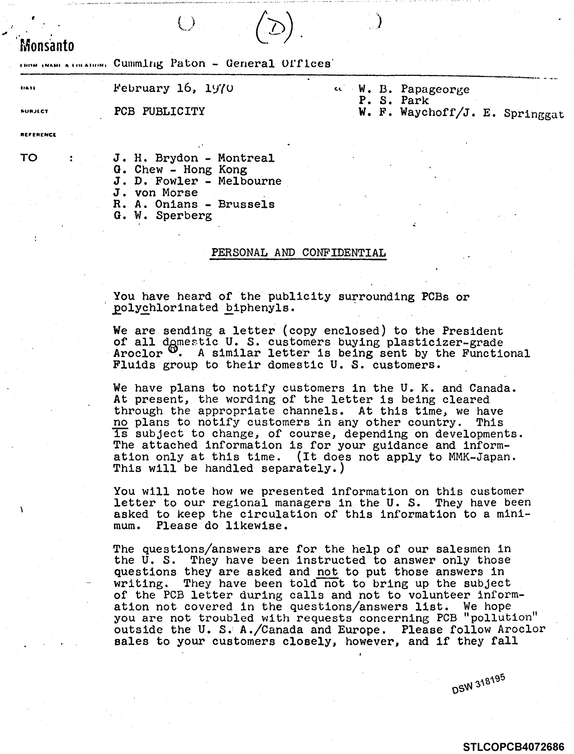
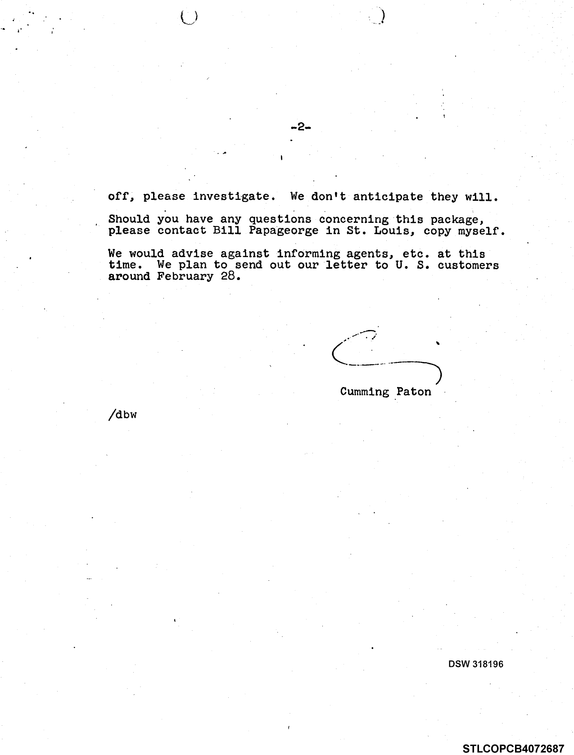
r) Monsanto u>NtI HOM f NAMI A I MC A I Cummlng Pa ton - General Offices OAU ftURJtCT February 16, lyyo PCB PUBLICITY ' w.
refid# 47e4EQ6GBVNxj8ewBnO8j1xx27 pages
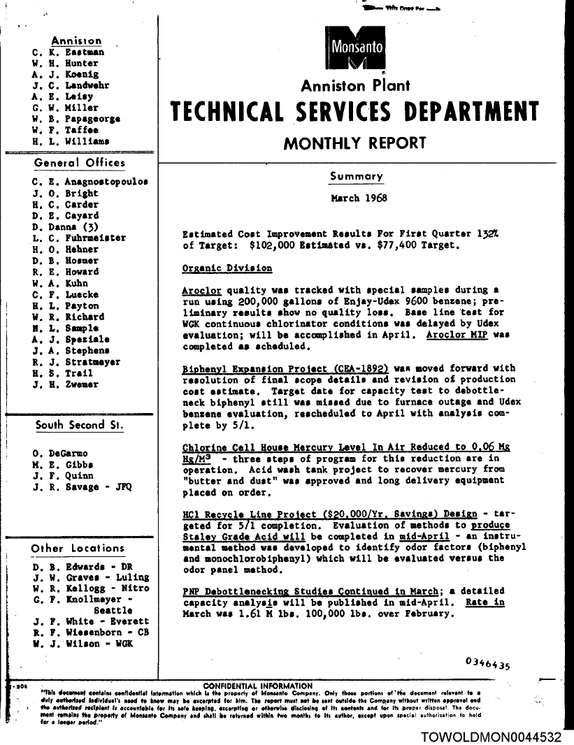
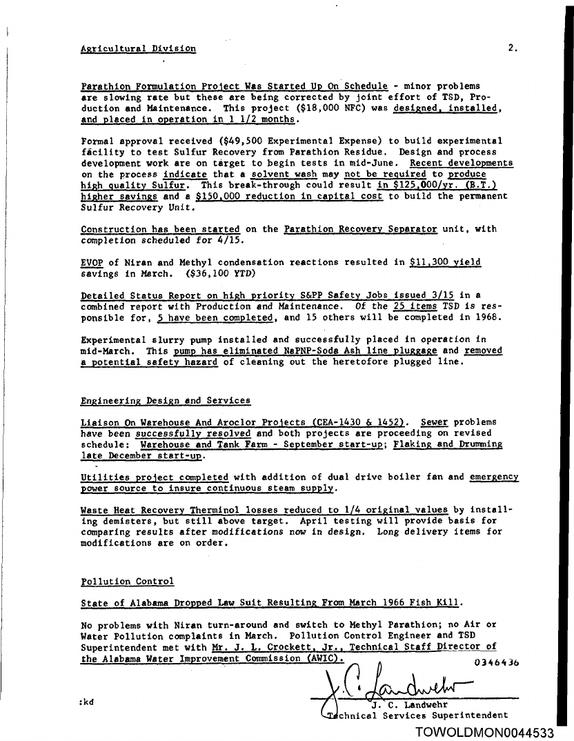
Pollution Control State of Alabama Dropped Law Suit Resulting From March 1966 Fish Kill.
refid# zd9NX3arNEg1KKJEpXkgjzgR318 pages
., 1070; and a fish (Lmgodcm r&omtader) -- ILuistv et al., 1071.
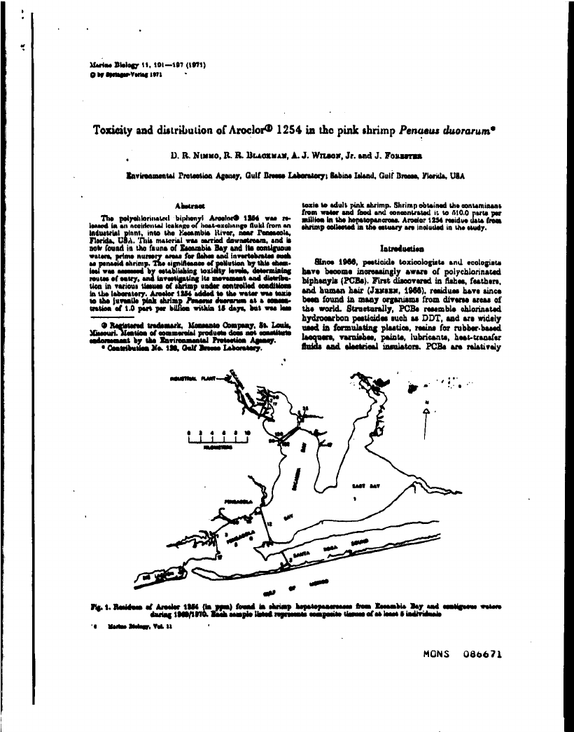
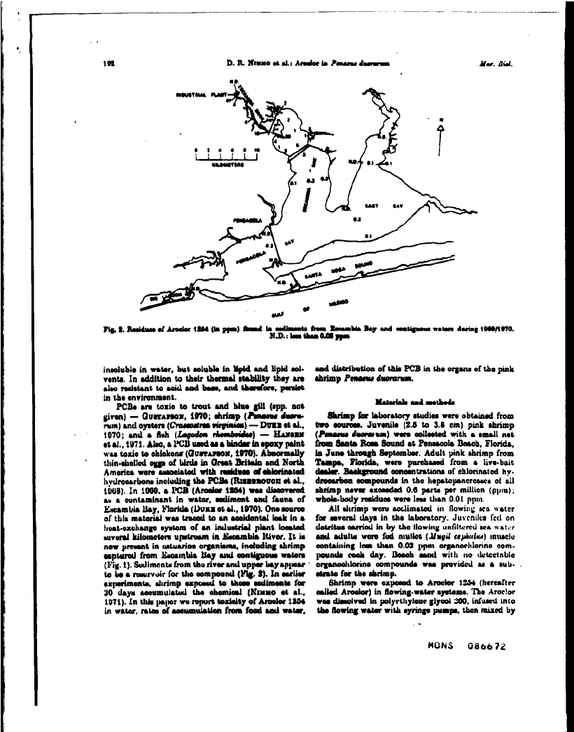
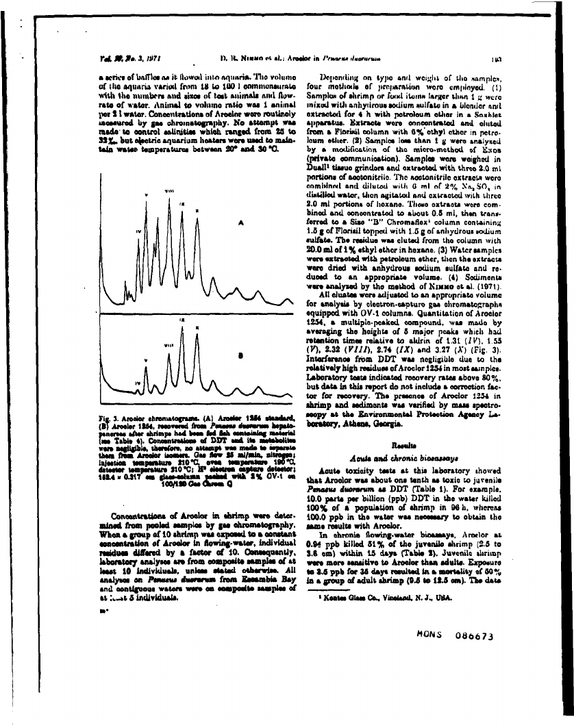
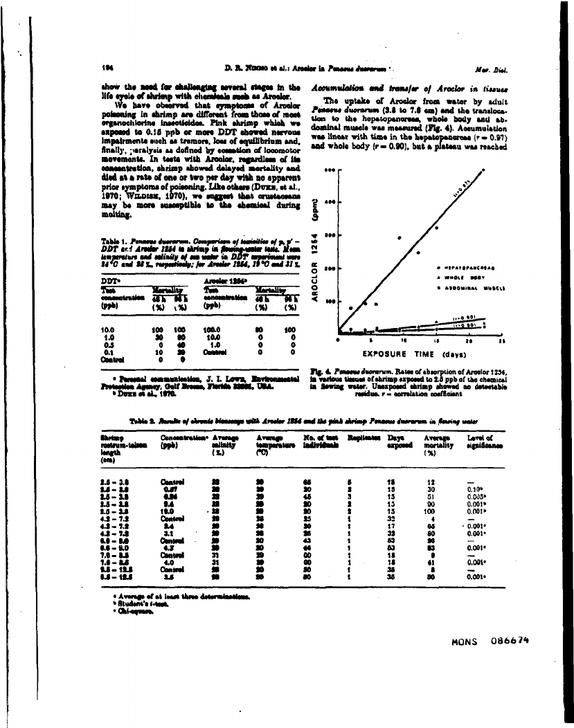
refid# 6BrQ8qKRJV96QxzoVOeXn1xJd7 pages
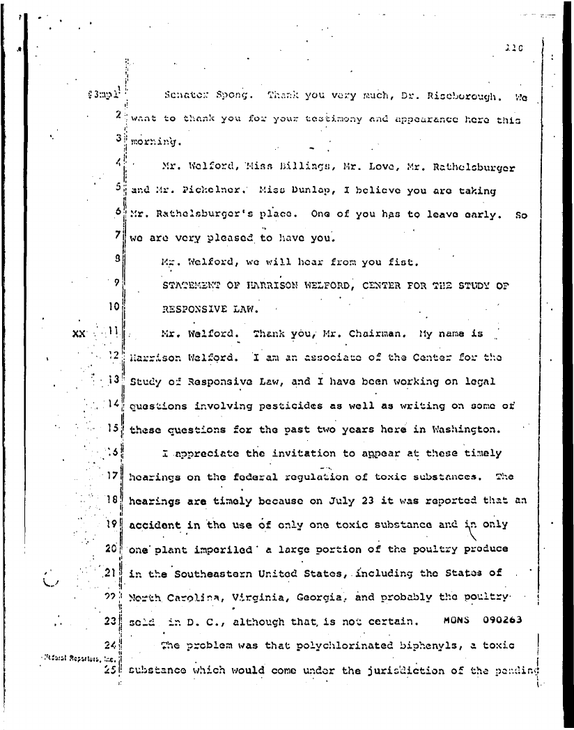
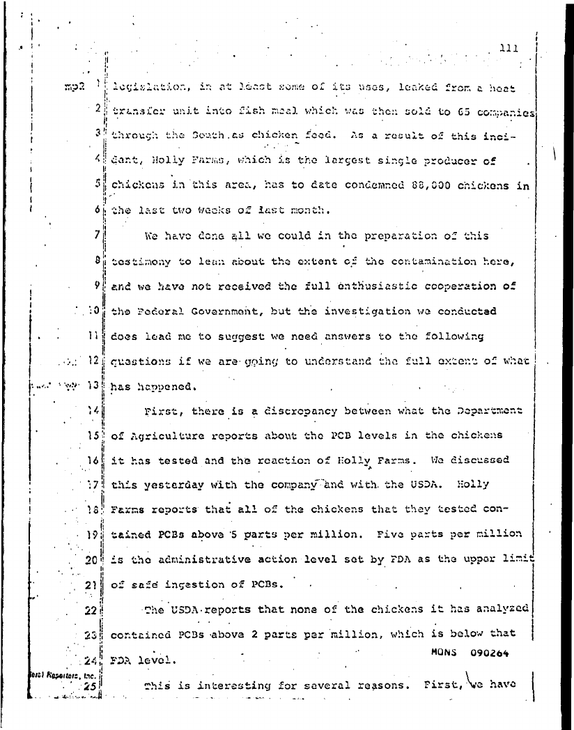
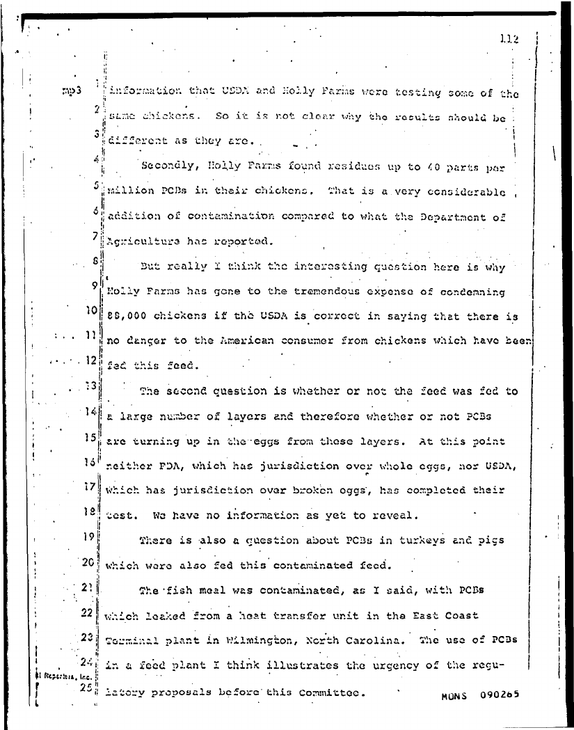
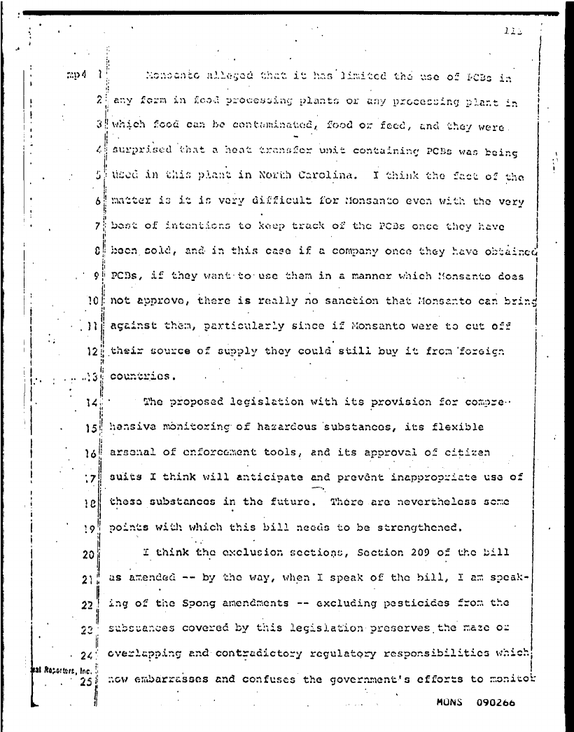
cracked eggs, FDA for PCBs in fish meal, A?
refid# gbbrqvapb4JeakvLVbwD0mxZL18 pages
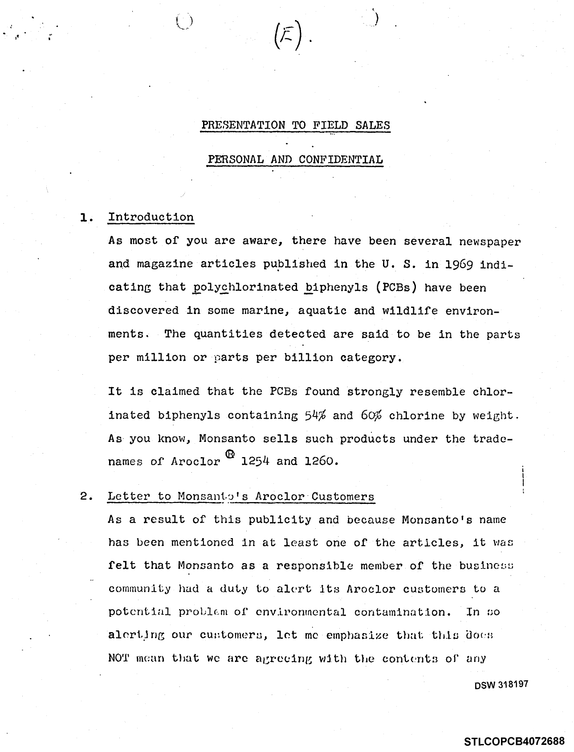
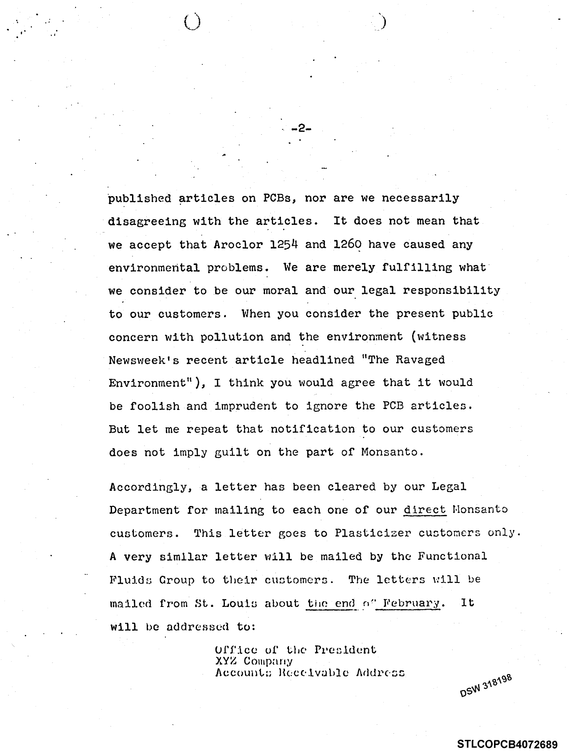
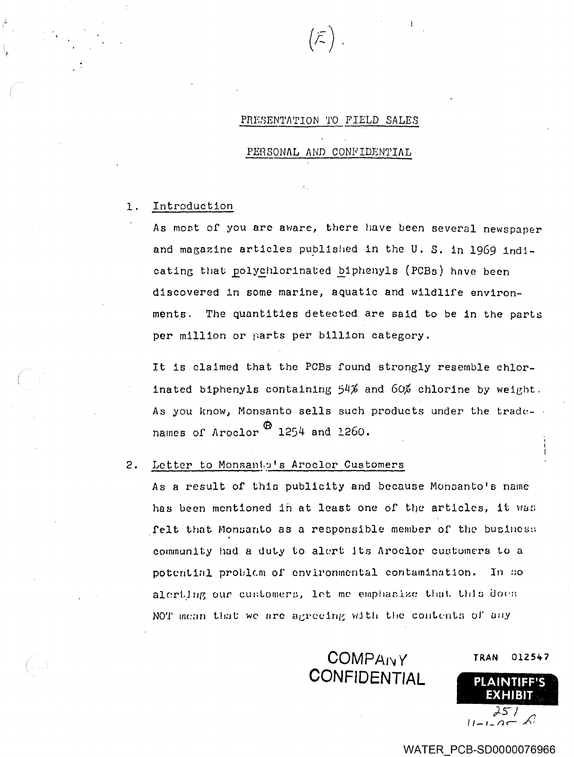
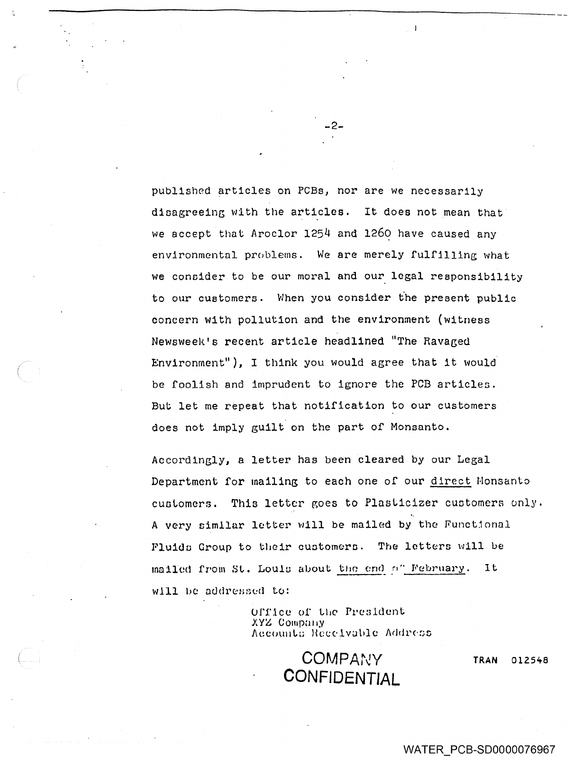
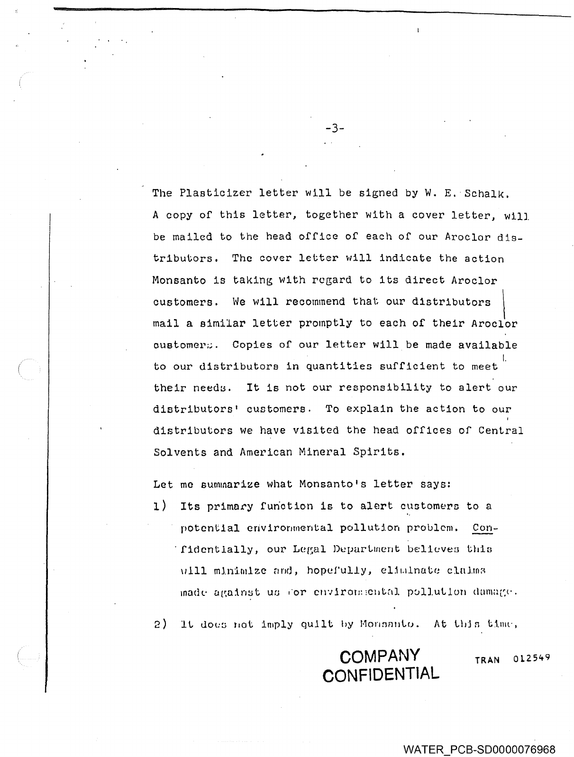
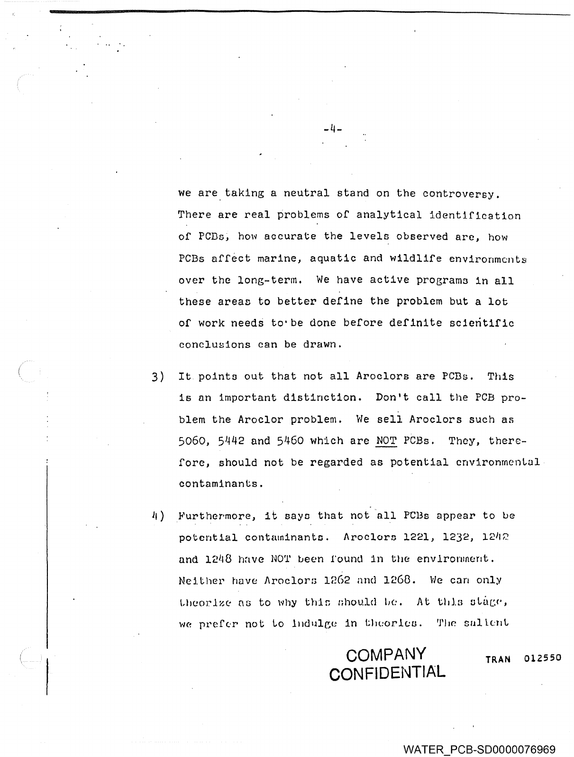
PRESENTATION TO FIELD SALES PERSONAL AND CONFIDENTIAL 1.
refid# VjqRa64QYoOj1rrVoz1O1exgo25 pages
Perhaps the most obvious effect of the PCBs on the wildlife population occurred in fish-eating birds that resided near heavily populated coastal areas.
refid# 4QJg59k2vyJeJL7w225z1o7je12 pages
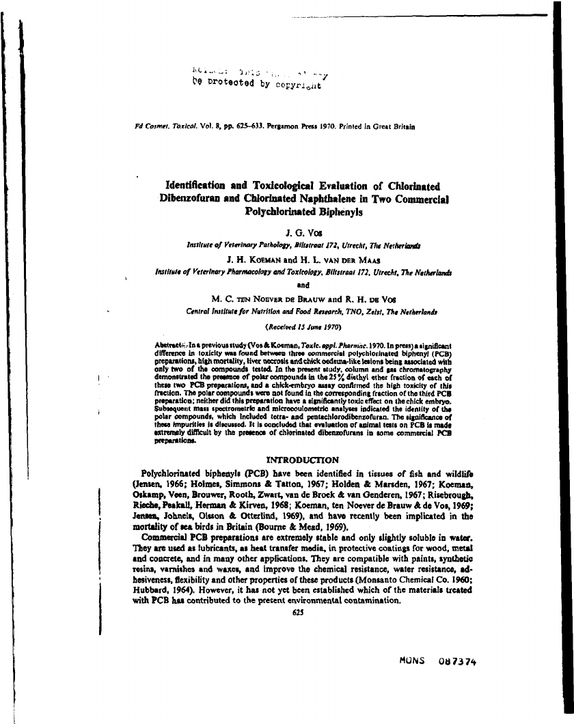
INTRODUCTION Polychlorinated biphenyls (PCB) have been identified in tissues of fish and wildlife (Jensen* 1966; Holmes, Simmons A Tatton, 1967; Holden A Marsden, 1967; Koeman, Oskamp, Veen, Brouwer, Rooth, Zwart, van de Broek A van Oendercn, 1967; Risebrough, Rieche, PeakaU, Herman A Kirven, 1968; Koeman, ten Noever de Brauw A de Vos, 1969; Jensen, Johnels, Olsson A Otterlind, 1969), and have recently been implicated in the mortality of sea birds in Britain (Bourne A Mead, 1969).
refid# bBzwb32y3MDn3zn8e21bBv0DD9 pages
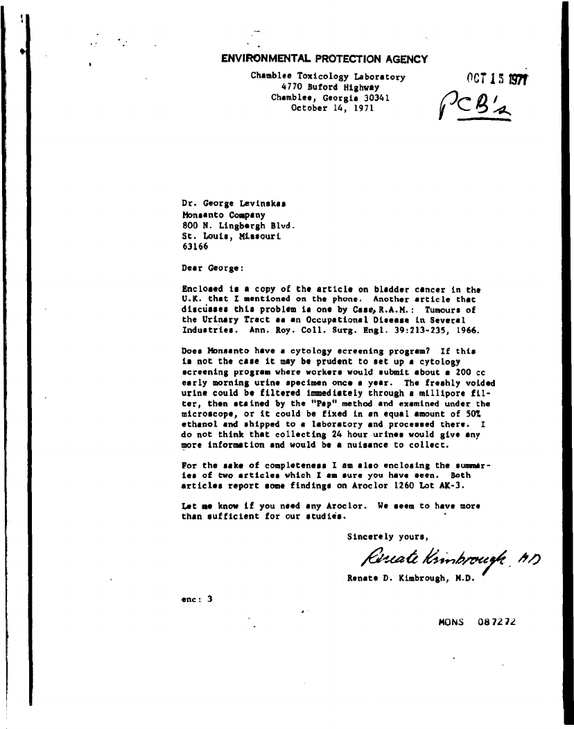
ENVIRONMENTAL PROTECTION AGENCY Chamblce Toxicology Laboratory 4770 Buford Highway Chamblee, Georgia 30341 October 14, 1971 OCT 15 m PS- Dr.
refid# 82mYwNyNbqEGRwXQ7eOae1Gyd7 pages