Depart ment of the interior Fish and Wildlife Service.
refid# jyqZVevgGN6dnk2Yw5yj60Rak30 pages
U7 jpnewsl!
refid# pe98bvD71m4YZoaybBp2g16568 pages
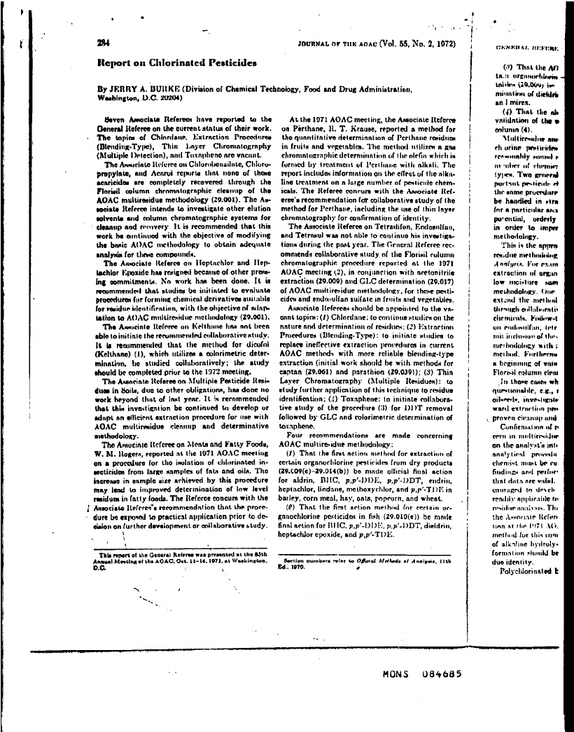
That the first action method for certain or- ganochlorine pesticides in fish (29.010(e)) be made final action for BHC. p,p'-DDE, p.p'-DDT, dieidrio, hcptachlor epoxide, and p,p'Tl)E.
refid# mmqK7Jmq9yaKQa2OEZg8D90kJ4 pages
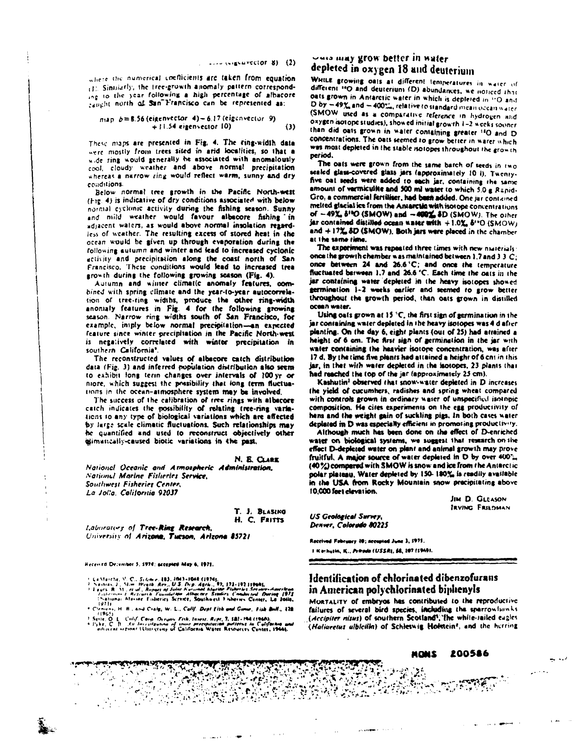
Sunny and mild weather would favour albaoore fishing ' in adjacent waters, as would above normal insolation regardJess of weather.
refid# J3YZM8Vjre5843dyy95eddRM23 pages
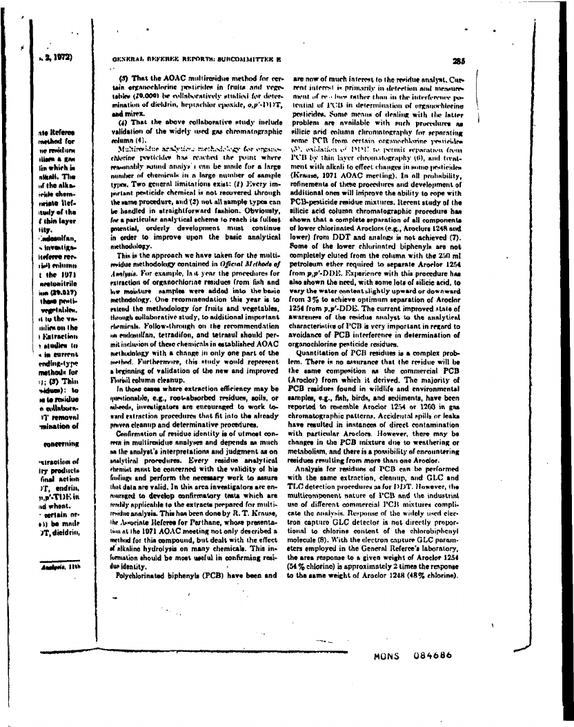
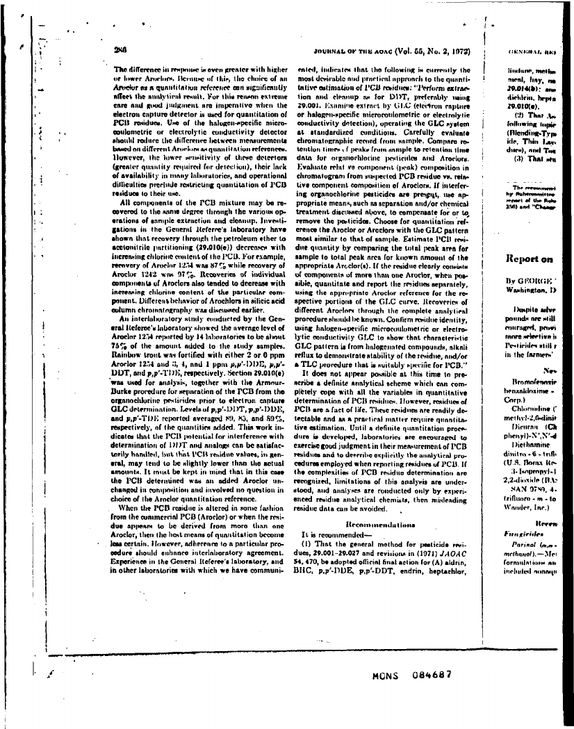
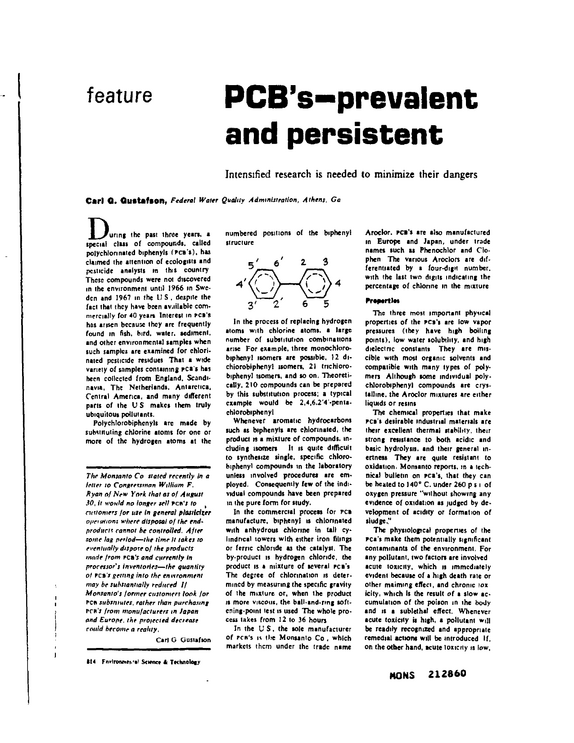
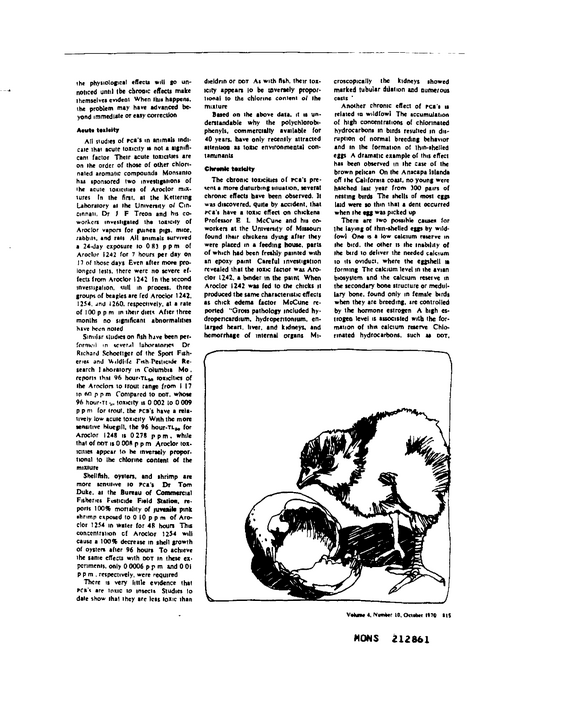
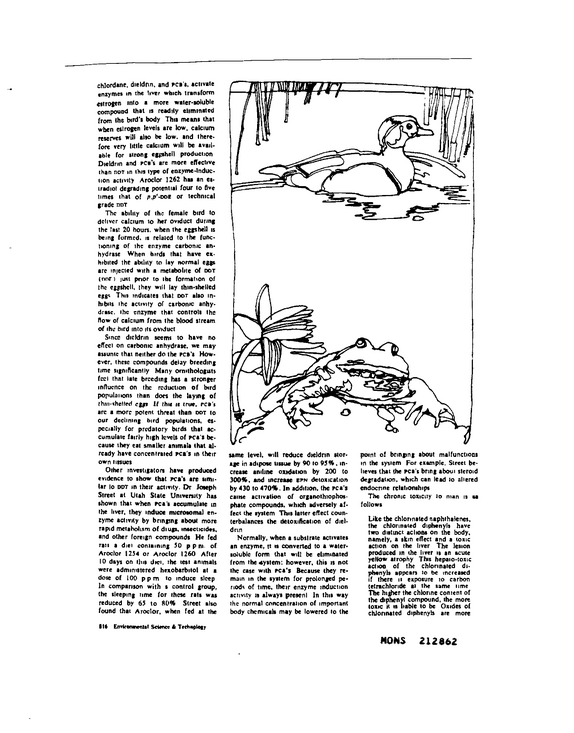
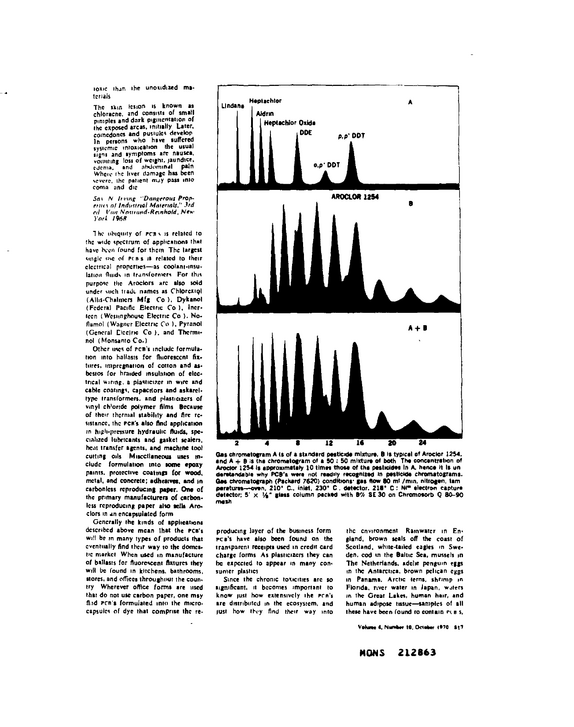
, called polychlorinated biphenyls (res'*), has claimed the attention of ecologists and pesticide analysts in (his country These compounds were not discovered in the environment until 1966 in Swe den and 1967 in the U S . despite the fact that they have been available com mercially for 40 years Interest m pea's has arisen because they arc frequently found in fish, bird, water, sediment, and other environmental samples when such samples are examined for chlori nated pesticide residues That a wide variety of samples containing peas has been collected from England.
refid# zzbJYmnbw1vke45aV08KrZ0206 pages
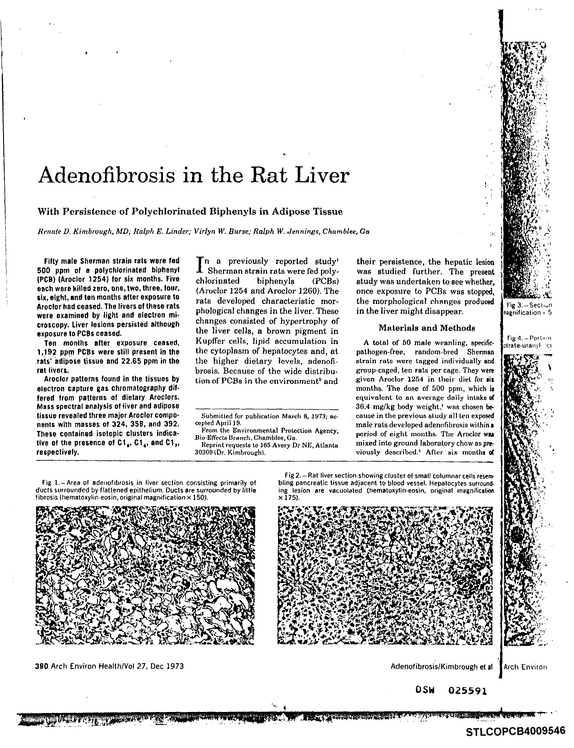
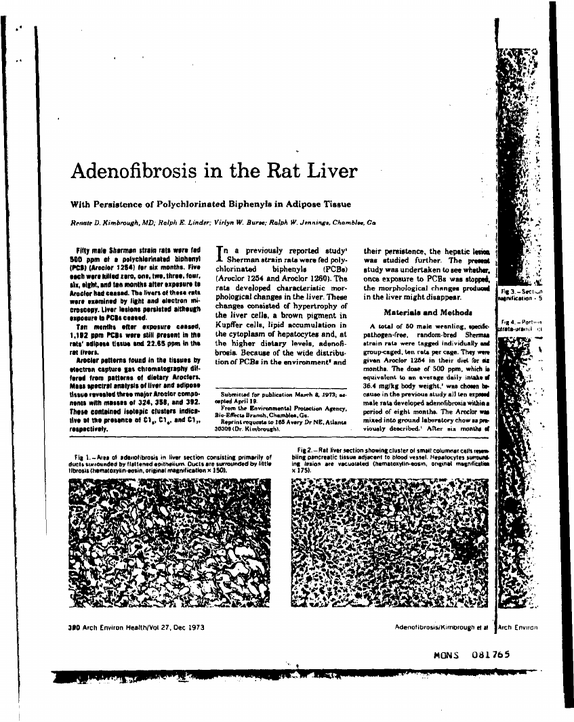
Adenofibrosis in the Rat Liver With Persistence of Polychlorinated Biphenyls in Adipose Tissue Rcnatc I).
refid# Vj5EbBo0YMkBmZKKy0xy8NB8g6 pages
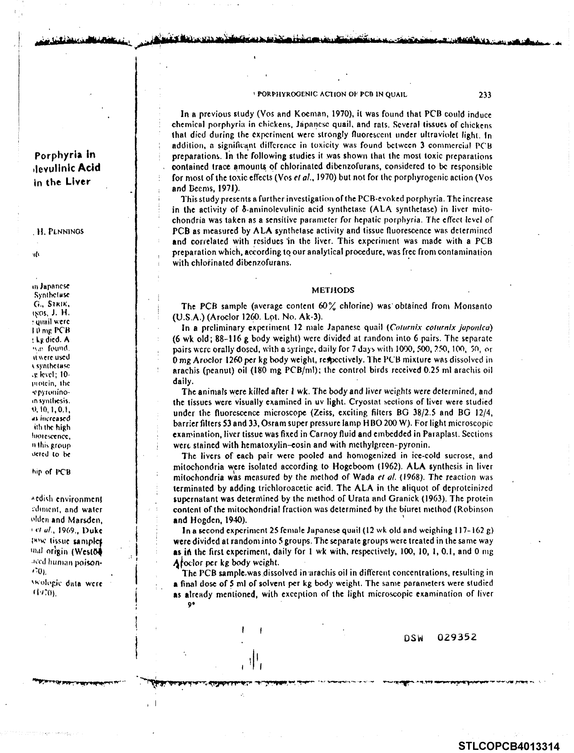
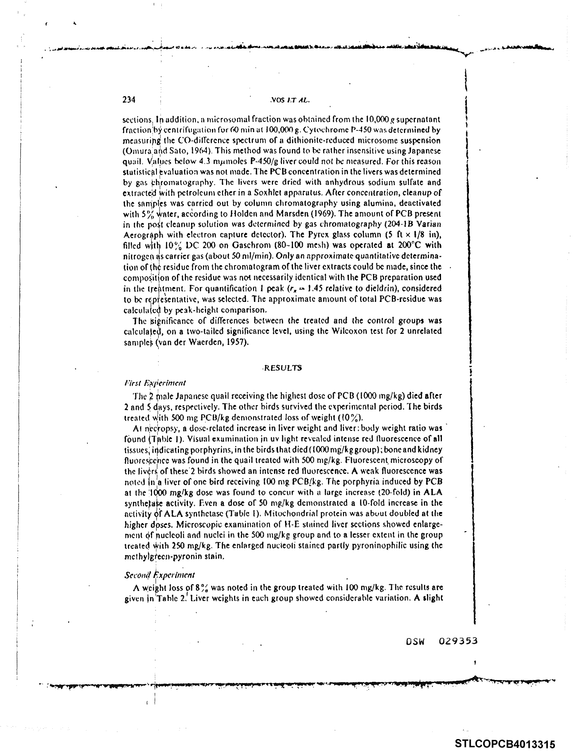
. ^` * i t * 4 X i i Since Ihf discovery of polychlorinated biphenyls (I'CB) in the Swedish environment (Jensen,'19(56). a wide variety of samples including hirJs, fish, sediment, and water were found io lie contaminated with PCB (Holmes cl a!..
refid# nkJyVZm02Z2Q1jgd35B7kKXk19 pages
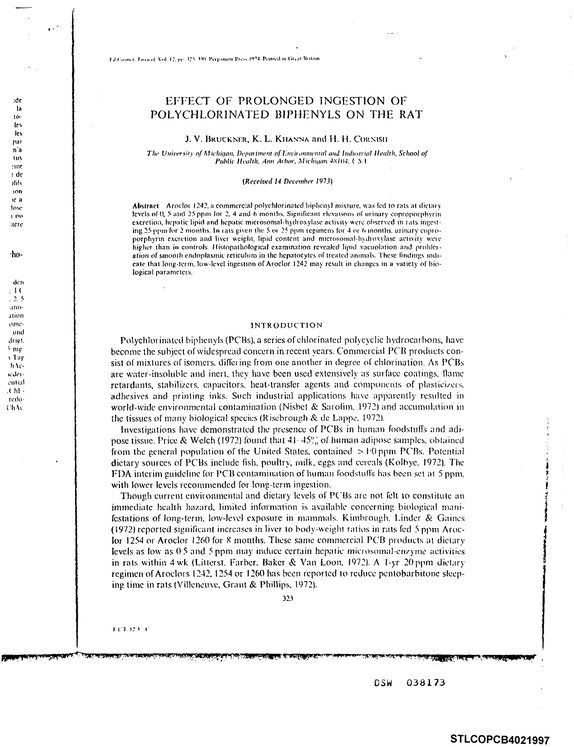
Potential : dietary sources of PCBs include fish, poultry, milk, eggs and cereals (Kolbyc, 1972).
refid# KG5g5Xb8MkyZqrKdkyGaN3v6o9 pages
W.
refid# jNm7KD5VNXGy7EyGyaKp9g5LR5 pages
INTRODUCTION Polychlorinated biphenyls (PCB) have been identified in tissues of fish and wildlife (Jensen, 1966; Holmes, Simmons & Tatton, 1967; Holden & Marsden, 1967; Koeman, Oskamp, Veen, Brouwer, Rooth, Zwart, van de Broek & van Genderen, 1967; Risebrough, Ricche, Peakall, Herman & Kirven, 1968; Koeman, ten Noever de Brauw & de Vos, 1969; Jensen, Johnels, Olsson & Otterlind, 1969), and have recently been implicated in the mortality of sea birds in Britain (Bourne & Mead, 1969).
refid# mNX9m2yemRXwrVkgemLnBMB9 pages
Microorganisms and plants take in traces of PCBs from the environment These microorganisms and plants provide the food for small fish and other animals which are in turn eaten by higher forms of animal life.
refid# 4a0G1No1NJmQ9qx8LaZadMJbR14 pages
Adenofibrosis in the Rat Liver With Persistence of Polychlorinated Biphenyls in Adipose Tissue Rrnatr D.
refid# 6bGEnqRm8YpvgZMvxDEkxVzRm6 pages
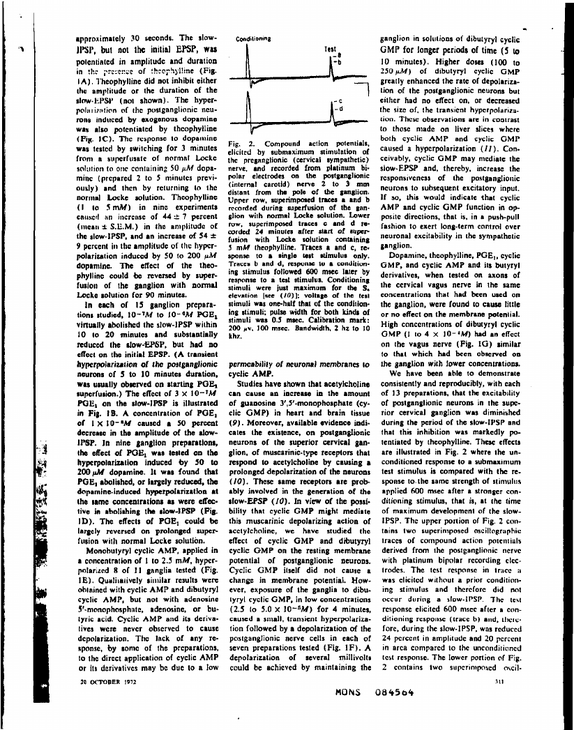
lographic traces of compound action potentials obtained under experimental conditions identical to those of the up* per portion of Fig. 2, except that the ganglion had been superfused for 24 minutes with 5 vnM theophylline.
refid# 06OJaEaQGmaEER9mZjE2n3wM4 pages
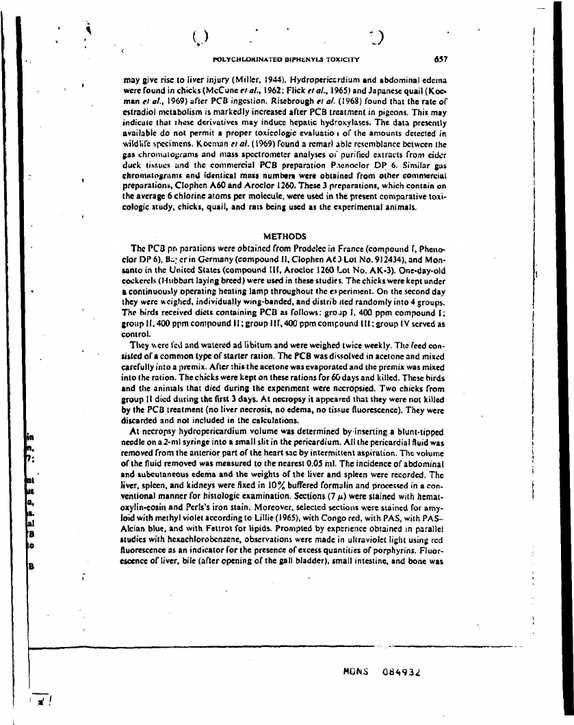
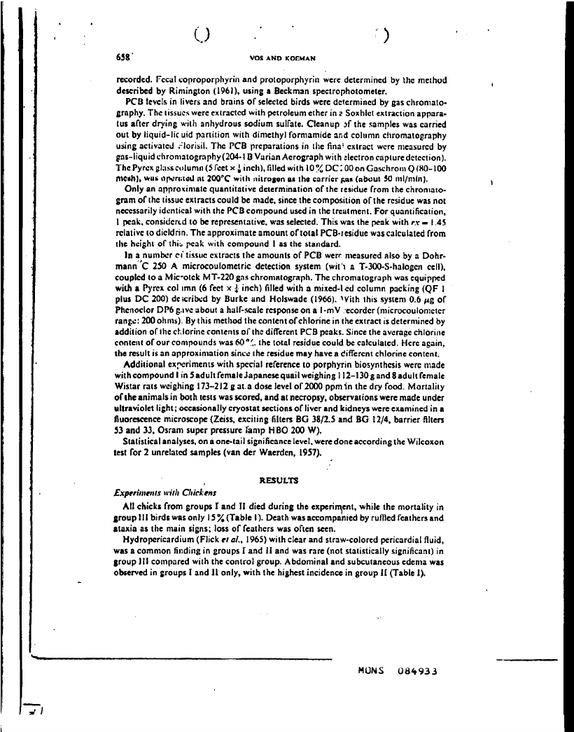
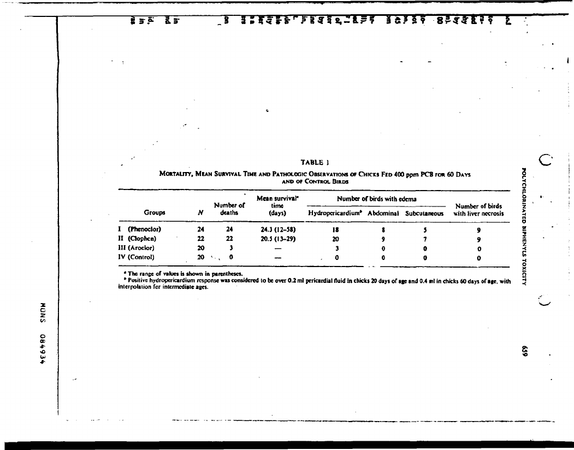
The relationship of hydropericardium (chick edema) and liver necrosis to the differences in toxicity observed between the technical PCB mixtures is discussed. )n recent years the presence of polychlorinated biphenyls (PCB) has been exhibited in fish and wildlife in many countries, including the United States, Great Britain, Sweden, and The Netherlands (Jensen, 1966; Holmes et al., 1967; Holden and Marsdcn, 1967; Kocman el al, 1967; Risebrough et al.t 1968; Koeman et al., 1969).
refid# gDw2rNRZ2Ke7n3O09gw4bJ99a13 pages
These microorganisms and plants provide the food for small fish and other animals which are in turn eaten by higher forms of animal life.
refid# nw2jx0DeGKLn3jpL5r6ymKdm24 pages