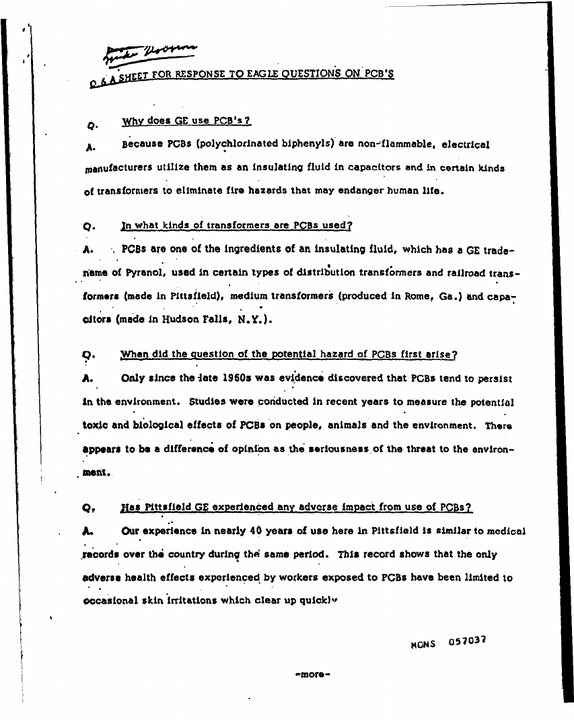
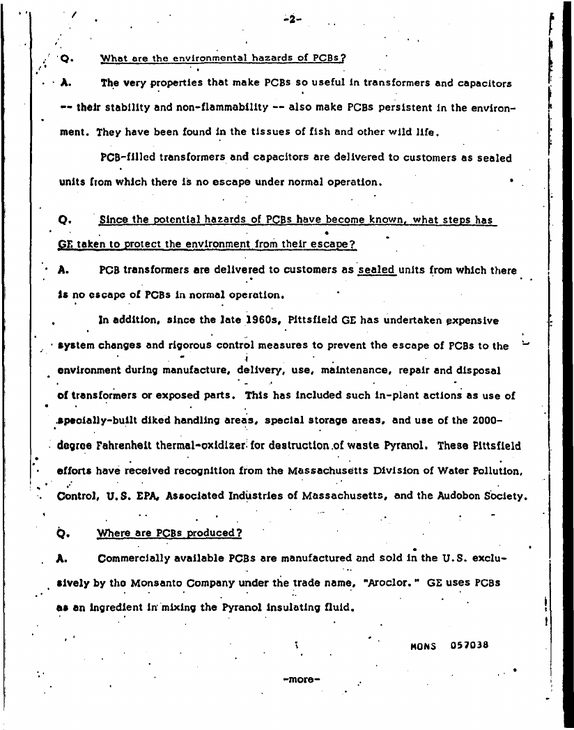
They have been found In the tissues of fish and other wild life.
refid# reENkb5OBkva5n7gEmjBGb4VG5 pages
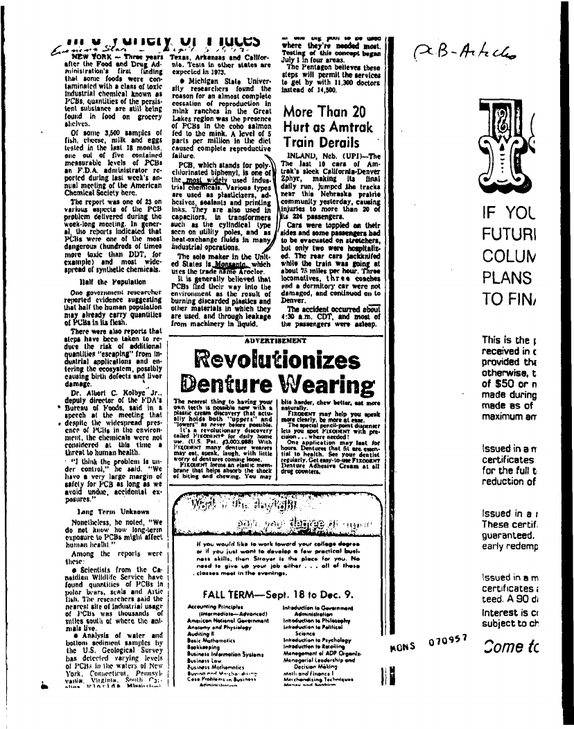
A level of S fish, I'k-csc, milk and eggs tested in the last 18 months, one out of five contained parts per million in Utc diet caused complete reproductive failure.
refid# QJkO6MOrXKvbYK9DNX9Boa8xE1 page
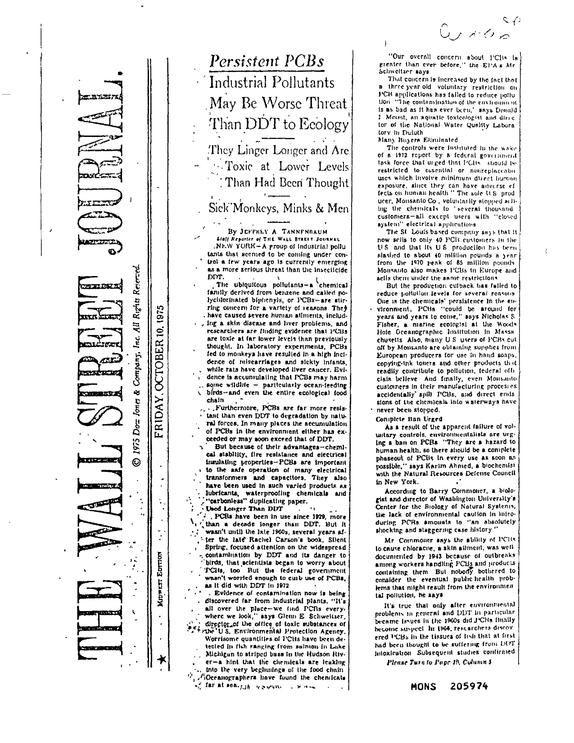
Worrisome quantities of 1'CHs lisvc been de- tecled In fish ranging from sulmon In Luke * . .
refid# bBN5dgEoOLng4oZeJ8DLgkd361 page
Hardy, I thank you for your tetter of 3rd November, 1967 which indicates that we nro both concerned with ttw very similar problems, I suggested that there was possible contamination of the river Witham because of the occurrence of the P.C.B's in the eggs of herons feeding on fish which come from the Witham Catchment area.
refid# QJREa545qpjVLeBkqmx5Nr2X55 pages
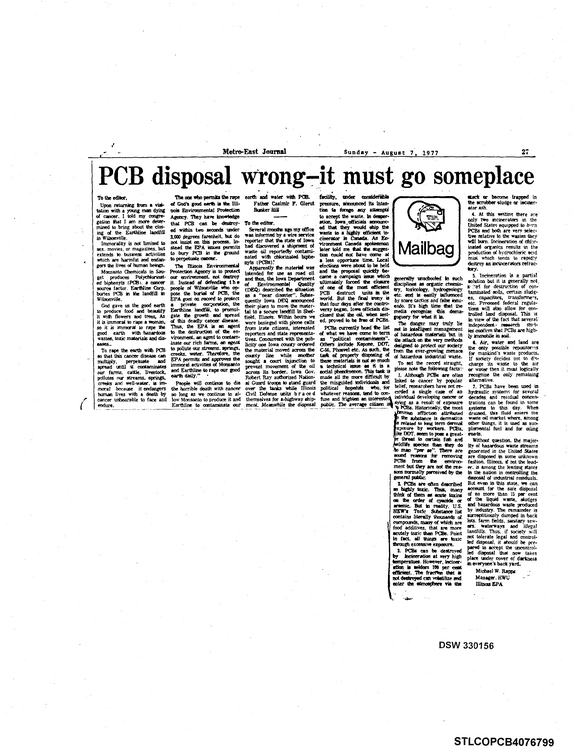
threat to certain fish and TMiltfe species than they do ho man "pa* ae".
refid# 8Vow73nvY9NMMvK5eEQz5L7zm1 page
Include mailing In- [Fish and Oam* will run th# Officials now _ estimate It will why GE even now has a special!
refid# oeaYZaZgXyxqEj87bdbGwp01E1 page
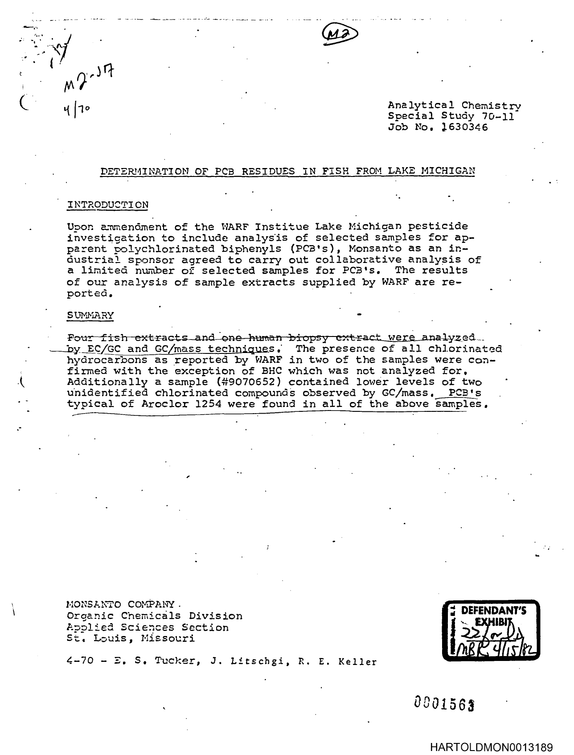
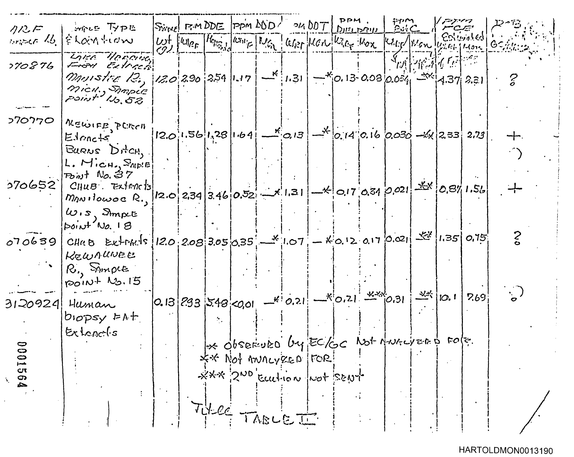
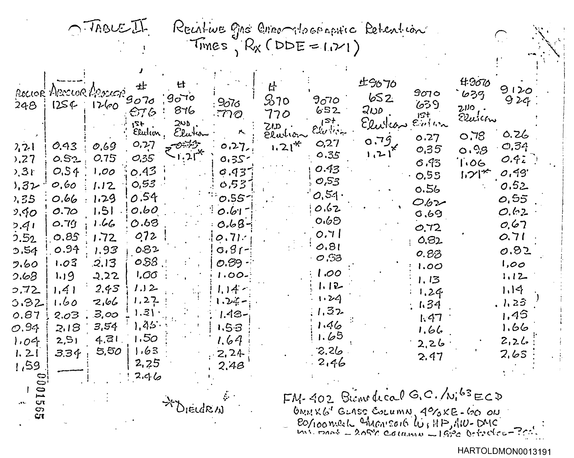
. * HARTOLDMON0013188 Analytical Chemistry Special Study 70-ll" Job No. 1630346 DETERMINATION OF PC3 RESIDUES IN FISH FROM LAKE MICHIGAN INTRODUCTION ' Upon ammenament of the WARF Institue Lake Michigan pesticide investigation to include analysis of selected samples for ap parent polychlorinated biphenyls (PC3*s), Monsanto as an in dustrial sponsor agreed to carry out collaborative analysis of a limited number of selected samples for PC3*s.
refid# DvOdNmLyrOX11vVKwjdBnQjgM5 pages
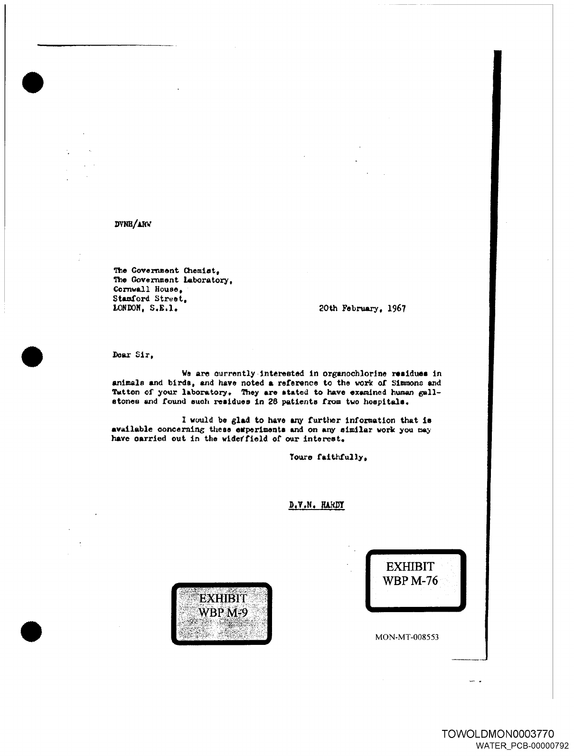
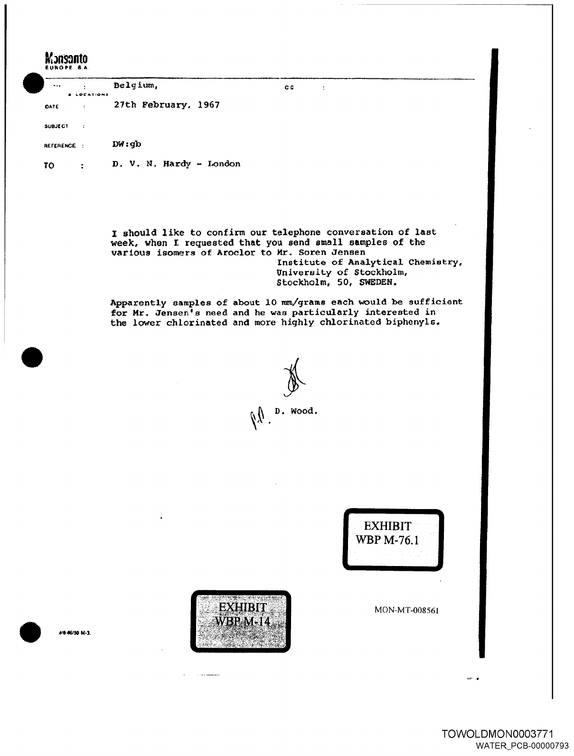
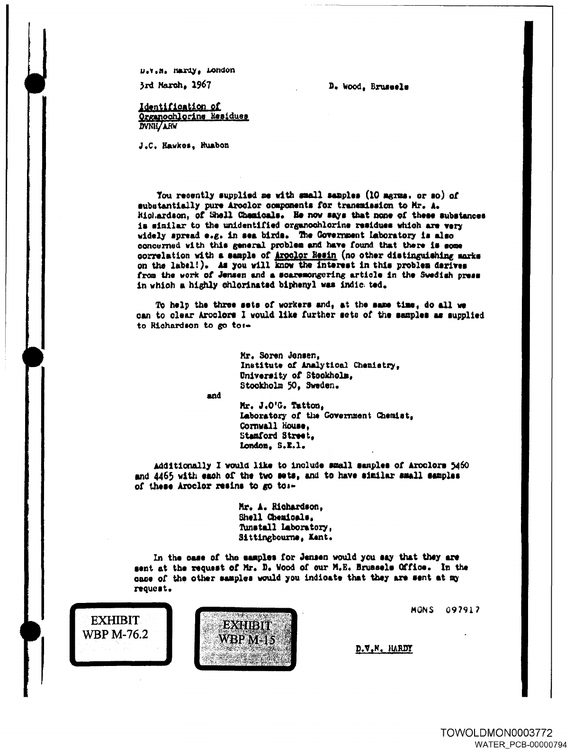
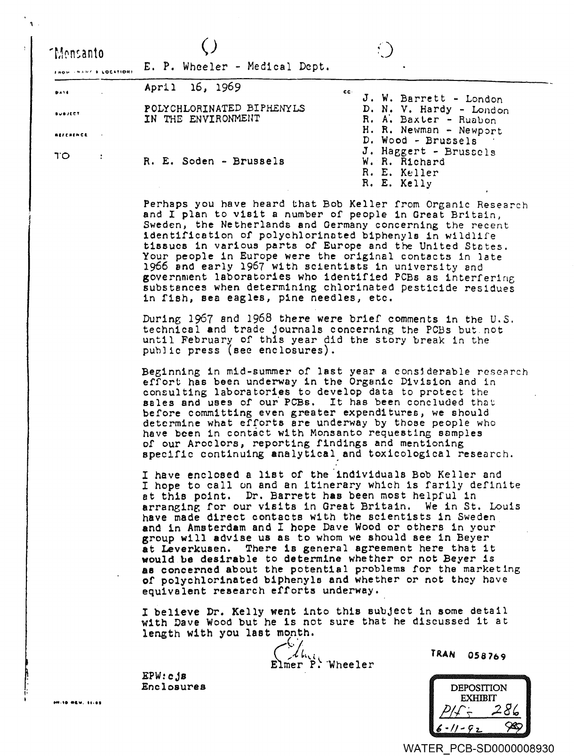
Your people in Europe were the original contacts in late 1966 and early 1967 with scientists in university and government laboratories who identified PCBs as interfering substances when determining chlorinated pesticide residues in fish, sea eagles, pine needles, etc.
refid# oDjYd91qRmOX4MDVYZx66q18w4 pages
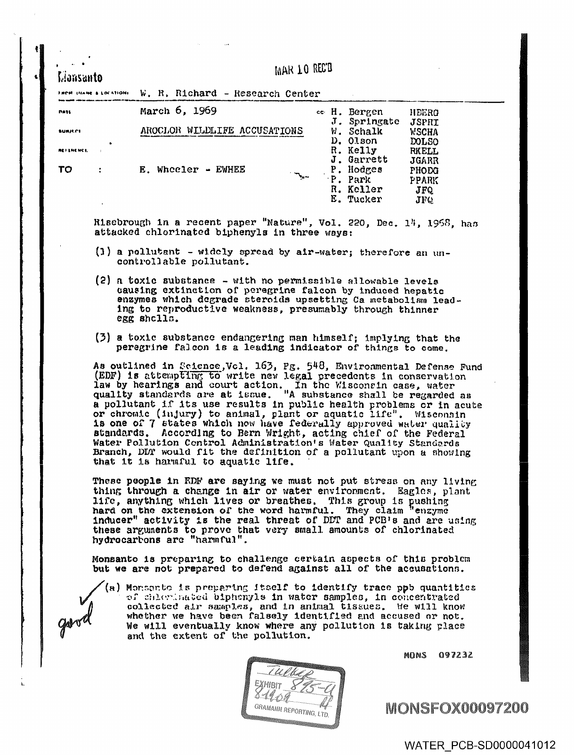
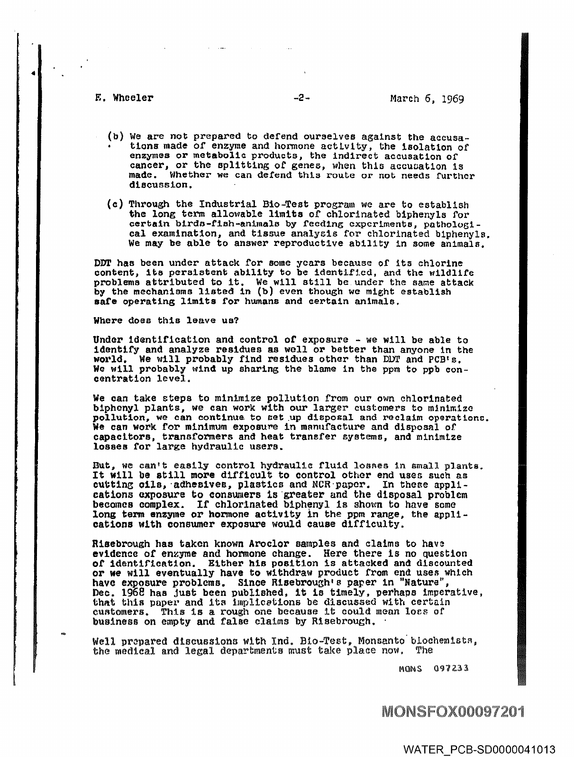
(c) Through the Industrial Bio-Test program we are to establish the long term allowable limits of chlorinated biphenyls for certain btrdo-fish-animals by feeding experiments, pathologi cal examination, and tissue analysis for chlorinated biphenyls.
refid# 2NbXYLVM2B7pnyJ2YeeVrBXYr3 pages
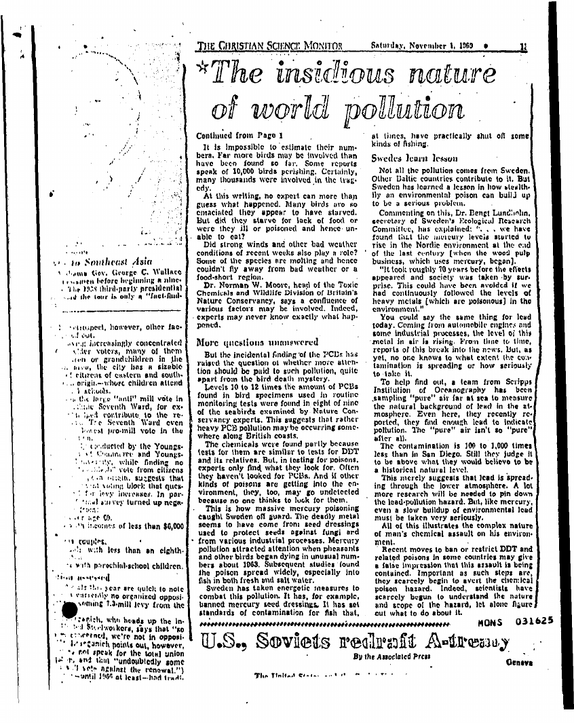
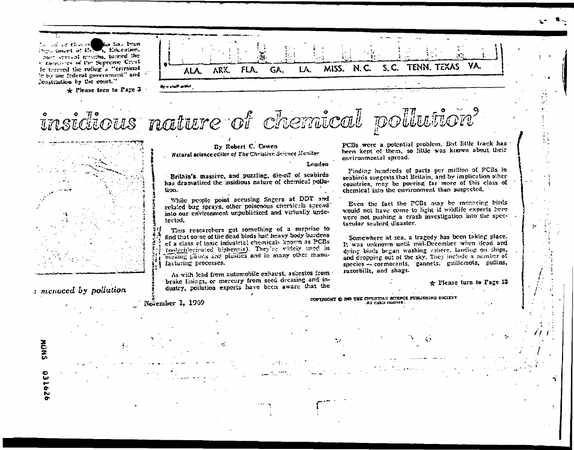
Important as such steps arc, fish in both fresh end salt water.
refid# wyRBYY3M51VDrGqxXwVBy8kD2 pages
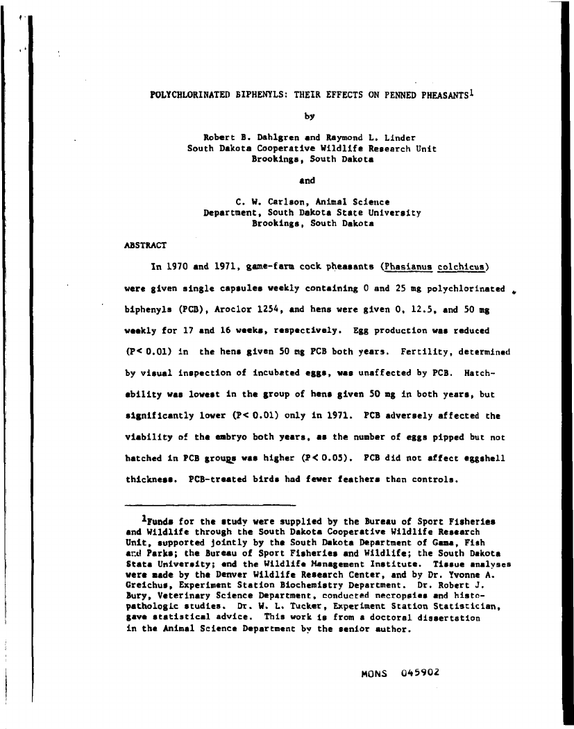
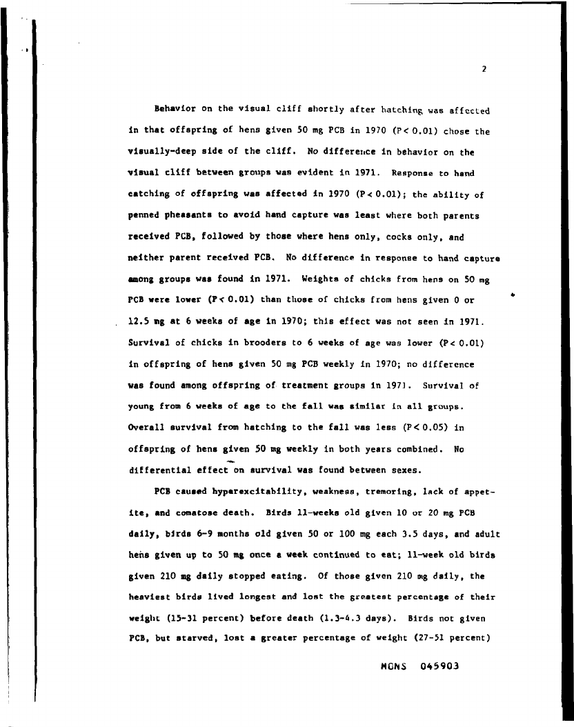
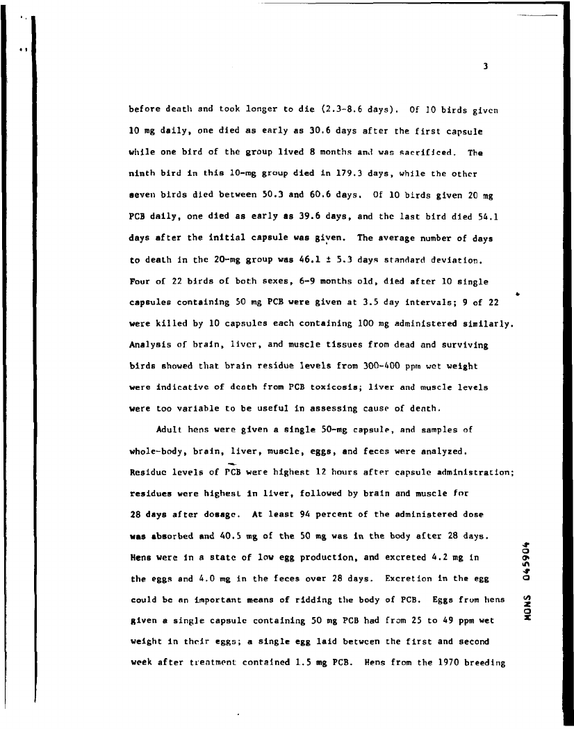
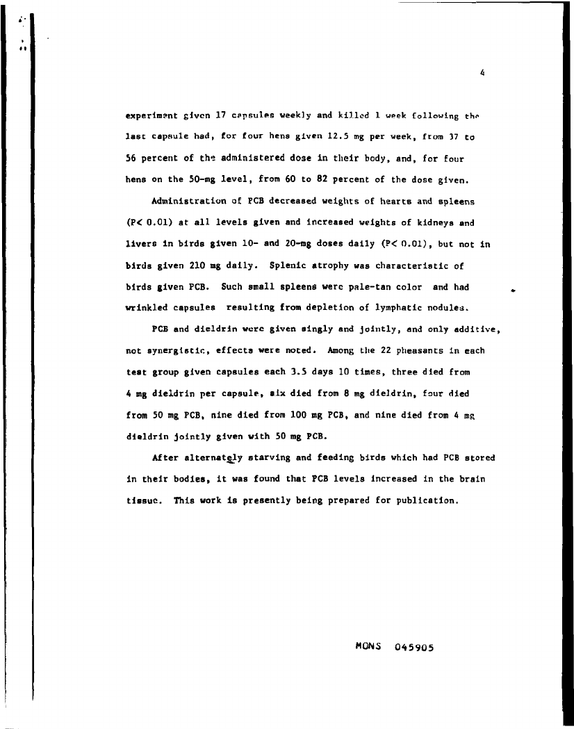
^Funds for the study were supplied by the Bureau of Sport Fisheries and Wildlife through the South Dakota Cooperative Wildlife Research Unit, supported jointly by tha South Dakota Department of Gama, Fish and Parks; the Bureau of Sport Fisheries and Wildlife; the South Dakota Stata University; end the Wildlife Management Institute.
refid# 1yD1z9RpRGxg3b5oBXXvBpQoa4 pages
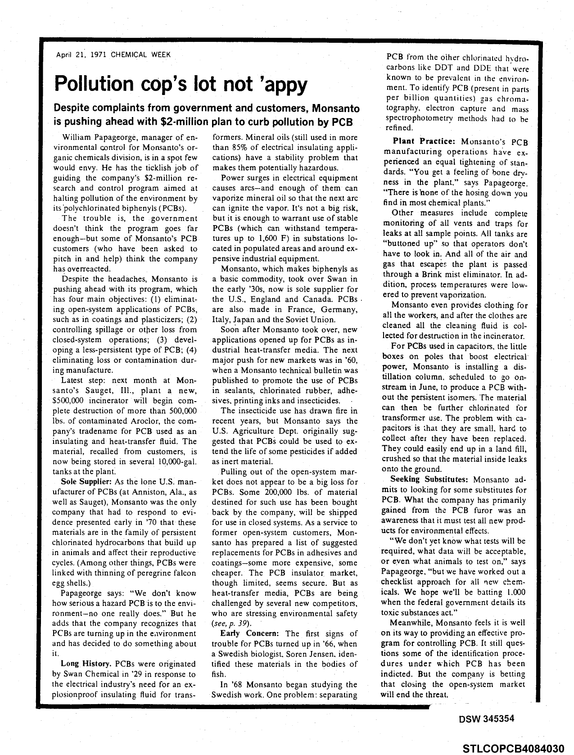
Early Concern: The first signs of trouble for PCBs turned up in '66, when a Swedish biologist, Soren Jensen, iden tified these materials in the bodies of fish.
refid# BR93RazVkbn8mDj28QvxR9mB41 page
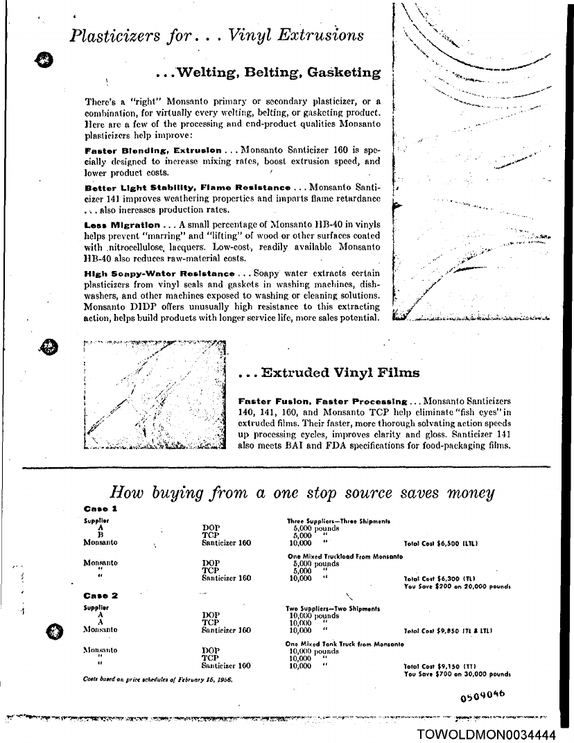
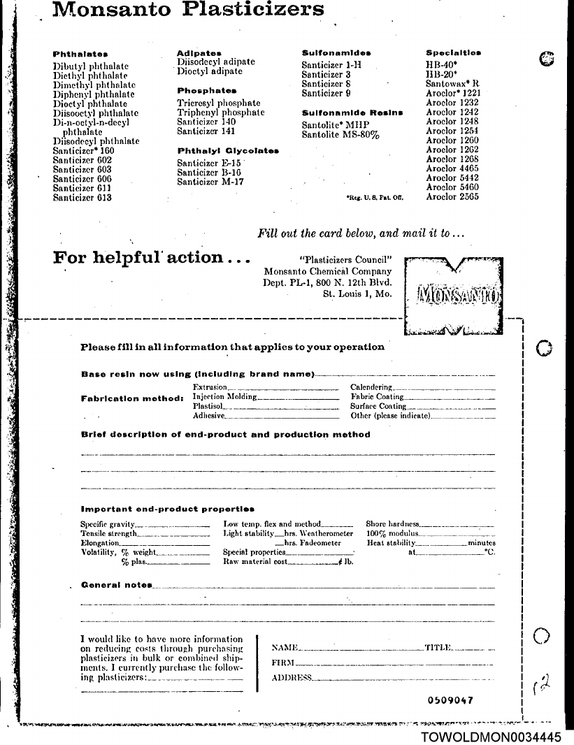
Monsanto Santicizers 140, 141, 160, and Monsanto TCP help eliminate "fish eyes" in extruded films.

refid# 4v2OnGvK5yg93YnLb0g6YxrkG4 pages
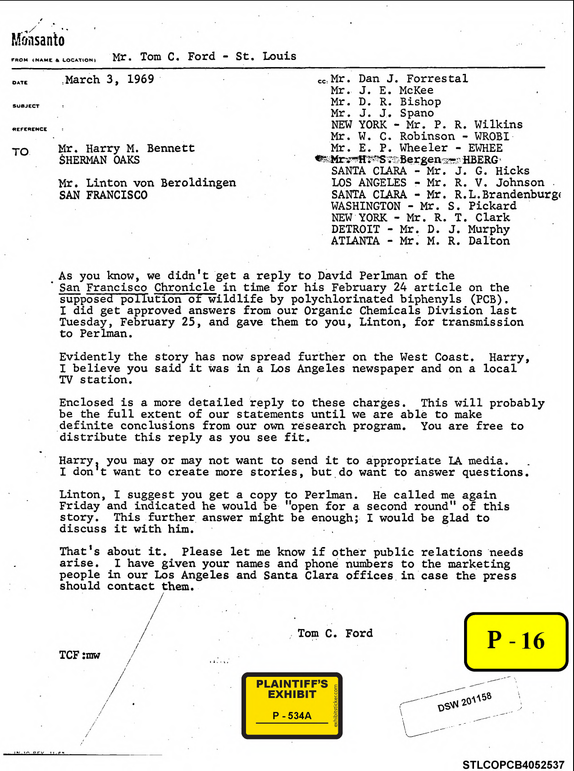
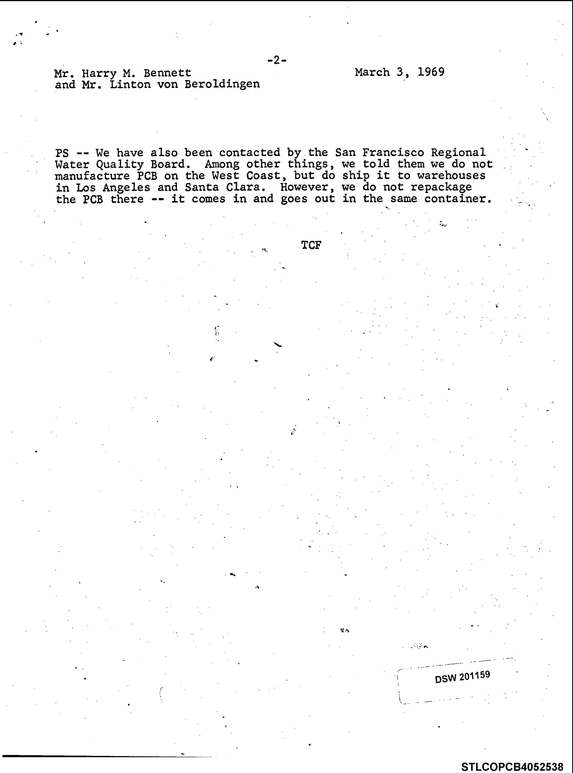
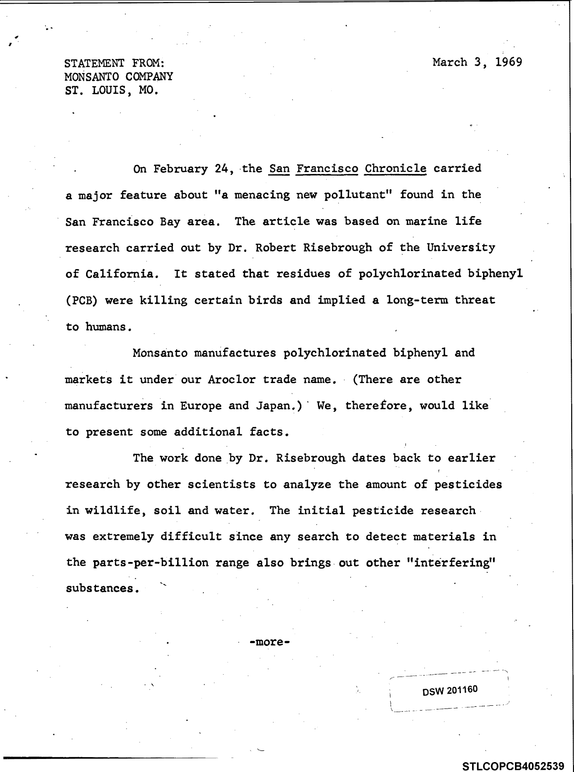
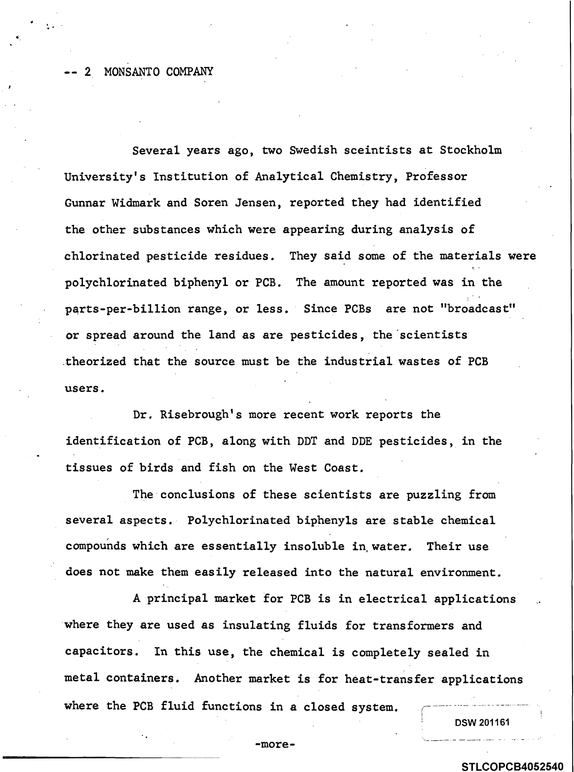
Risebrough's more recent work reports the identification of PCB, along with DDT and DDE pesticides, in the tissues of birds and fish on the West Coast.
refid# 71Ea7bNmJ411d2Nz9KJz5k2y86 pages
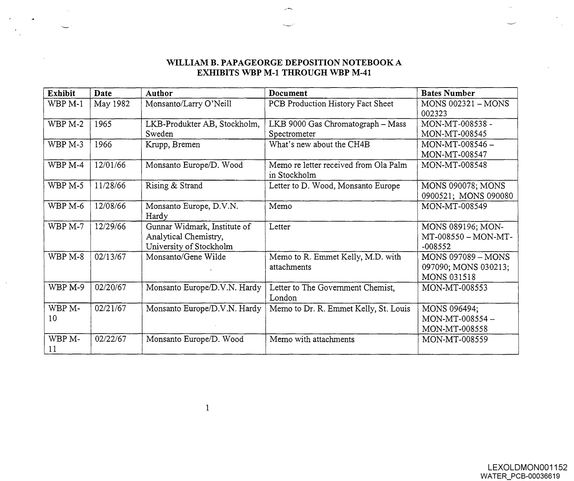
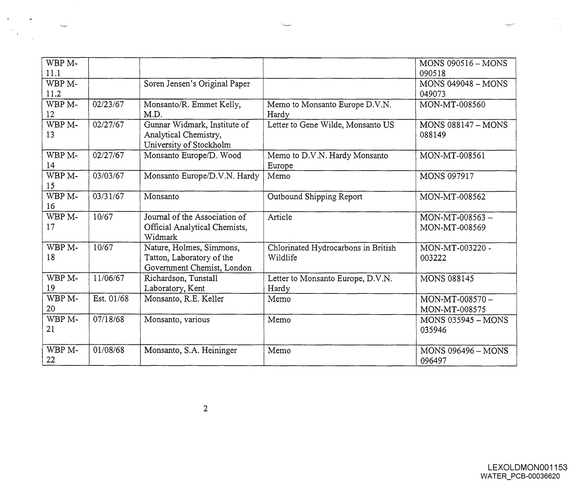
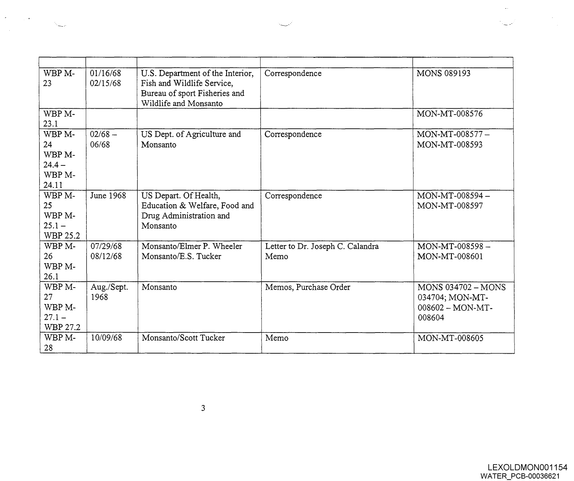
Department of the Interior, Fish and Wildlife Service, Bureau of sport Fisheries and Wildlife and Monsanto Correspondence US Dept, of Agriculture and Monsanto Correspondence US Depart.
refid# rgL29KnzJYYyK513J9vN9nJa5 pages