"Animal" shall mean any animal, mammal, reptile, bird, or fish used in connection with any study.
refid# LJRbbXYnGoEBbKJNp3L4RmRw8 pages
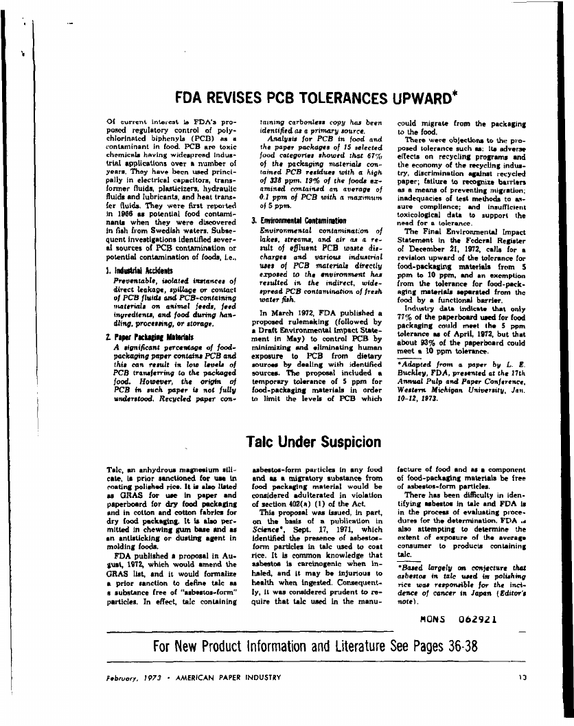
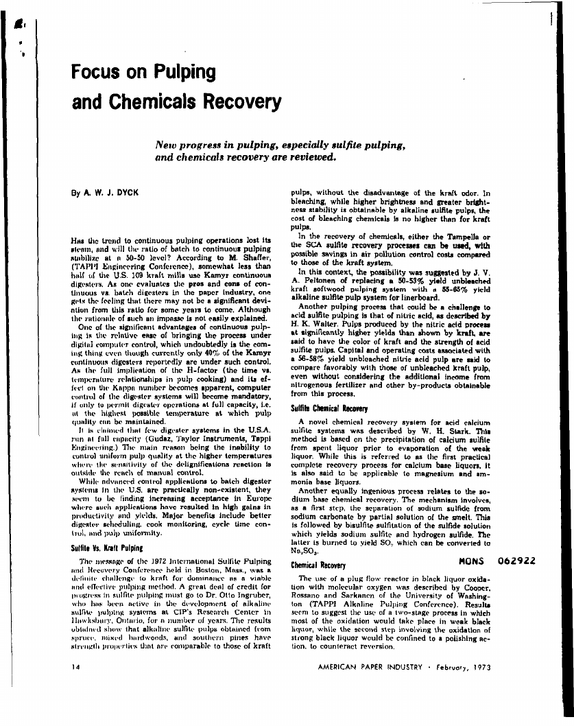
They were first reported in 1906 as potential food contami nants when they were discovered in fish from Swedish waters.
refid# zdDndj84kX2V6VDKnBvax69kn2 pages
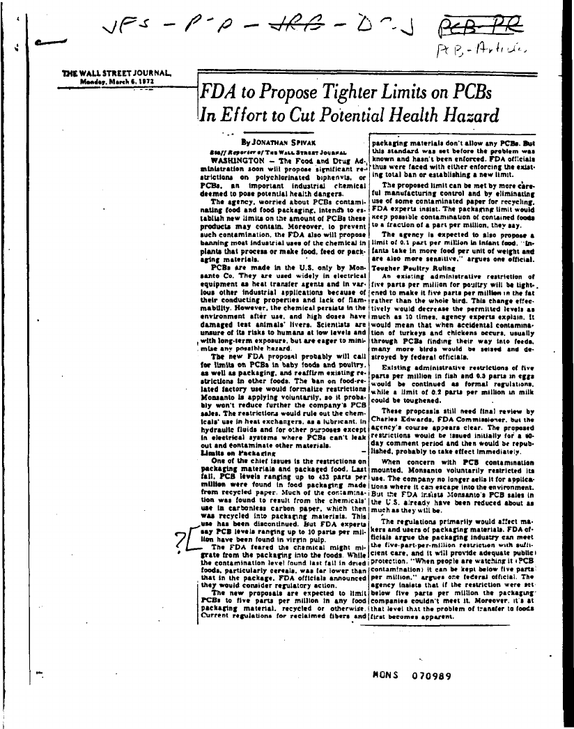
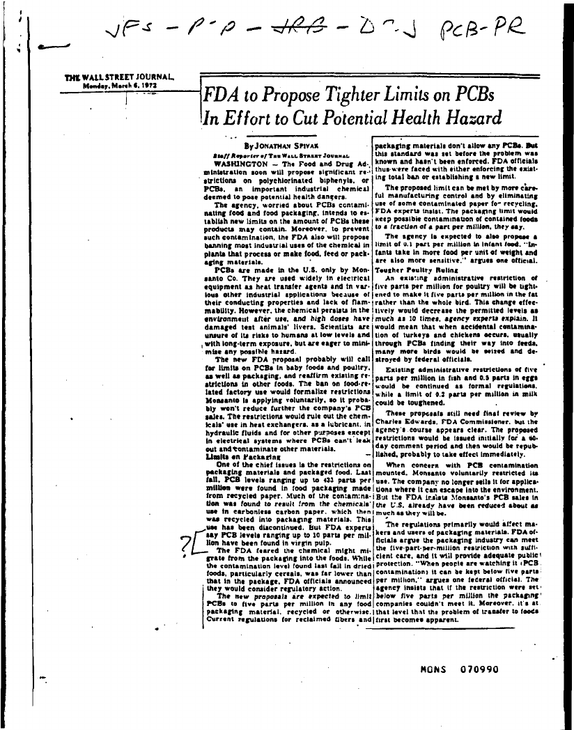
tor Umlts on PCBs in baby foods and poultry, Existing administrative restrictions of five as well as packaging, and reaffirm existing re pans per million In fish and 0.3 parts in eggs strictions in other foods.
refid# bk91dpGqwGk25qO4m9VkjddZ2 pages
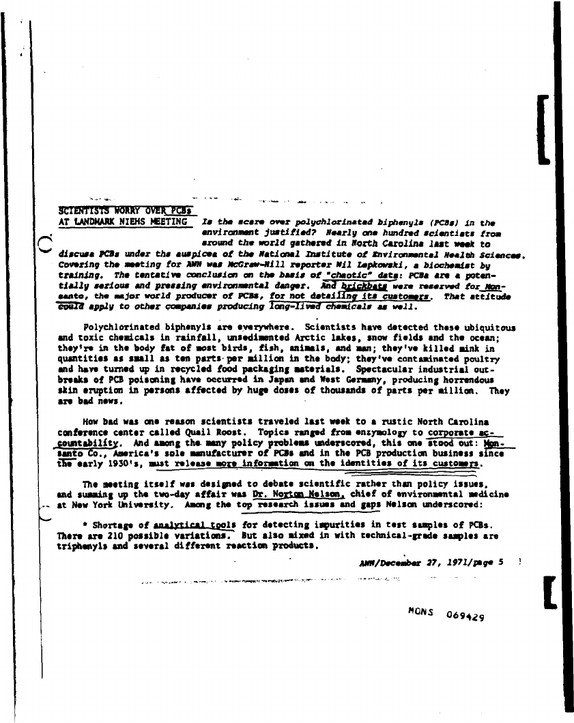
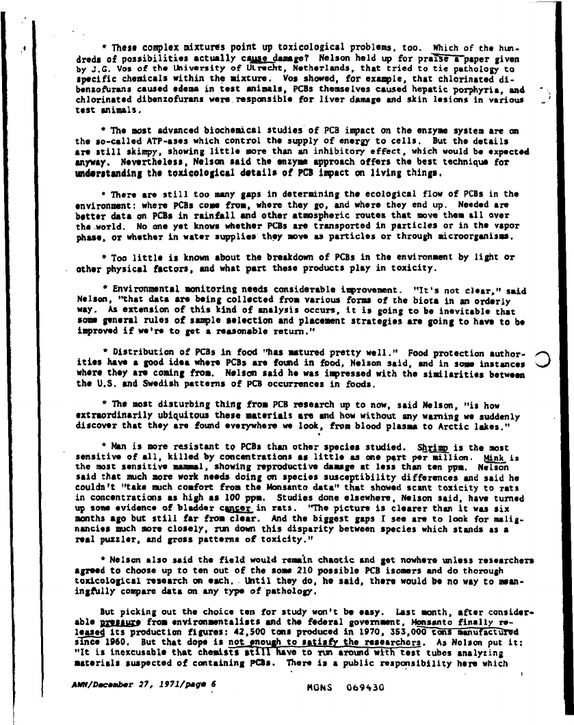
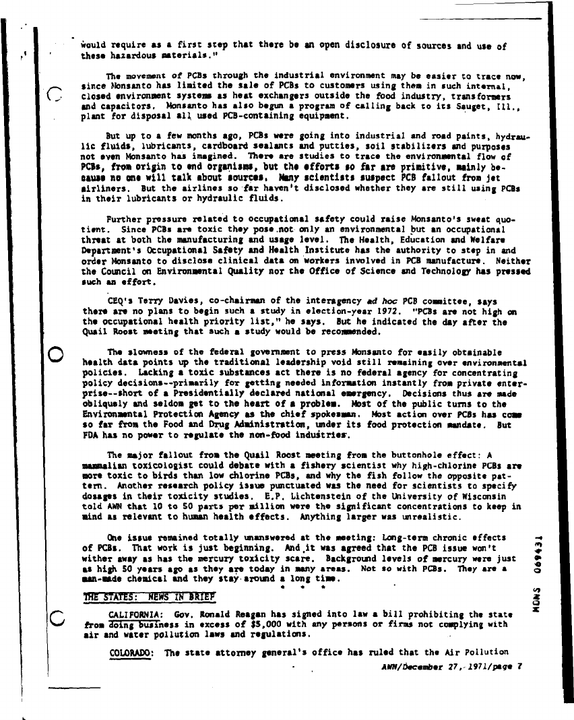
The major fallout from the Quail Roost meeting from the buttonhole effect: A mammalian toxicologist could debate with a fishery scientist why high-chlorine PCBs are more toxic to birds than low chlorine PCBs, and why the fish follow the opposite pat tern.
refid# NNKd81pdzDG24KzXLjpDaZOMQ3 pages
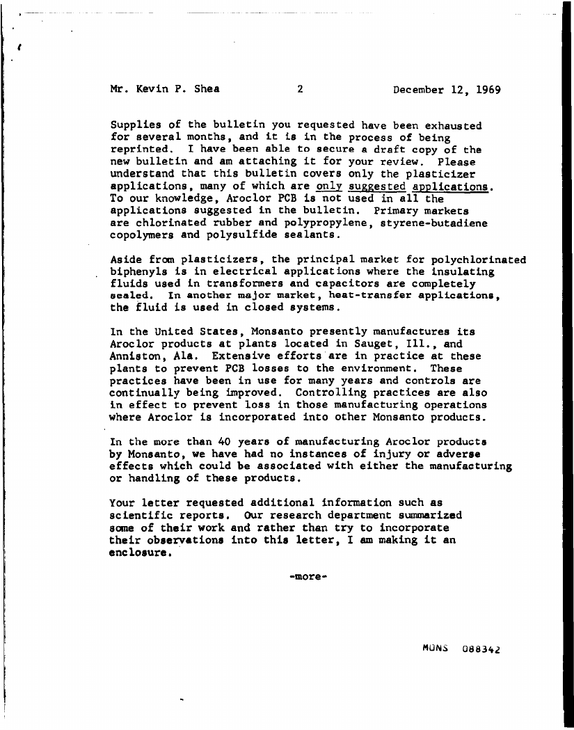
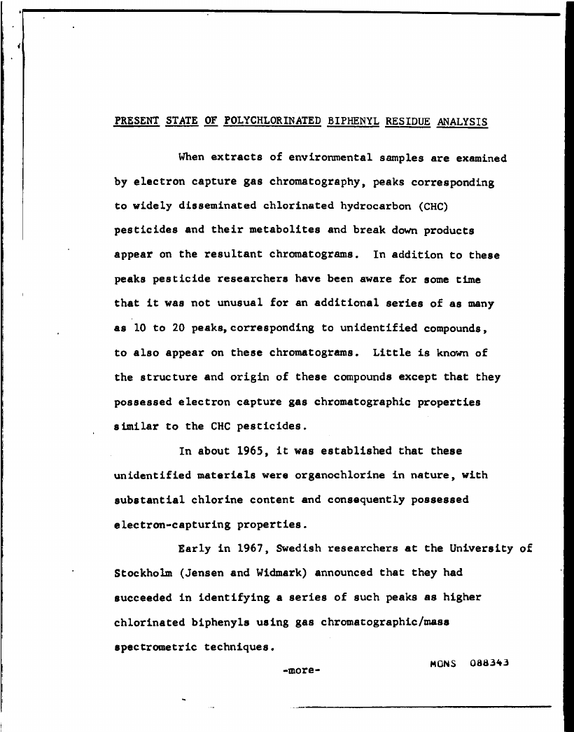
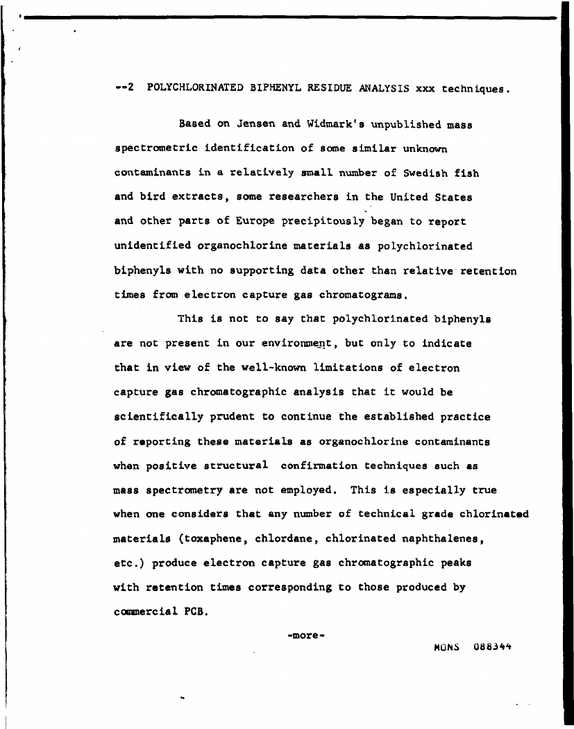
Based on Jensen and Widmark's unpublished mass spectrometrlc Identification of some similar unknown contaminants in a relatively small number of Swedish fish and bird extracts, some researchers in the United States and other parts of Europe precipitously began to report unidentified organochlorine materials as polychlorinated biphenyls with no supporting data other than relative retention times from electron capture gas chromatograms.
refid# jBx8OekE3xYOG0X3GwwLz1g3R11 pages
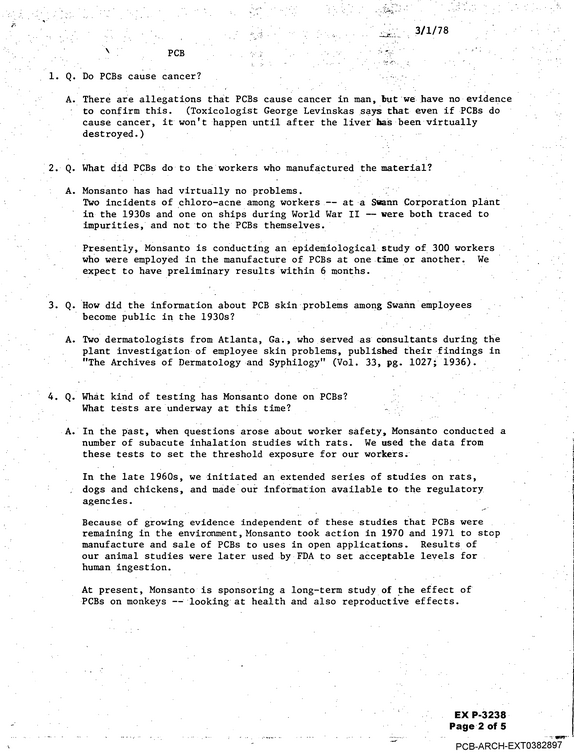
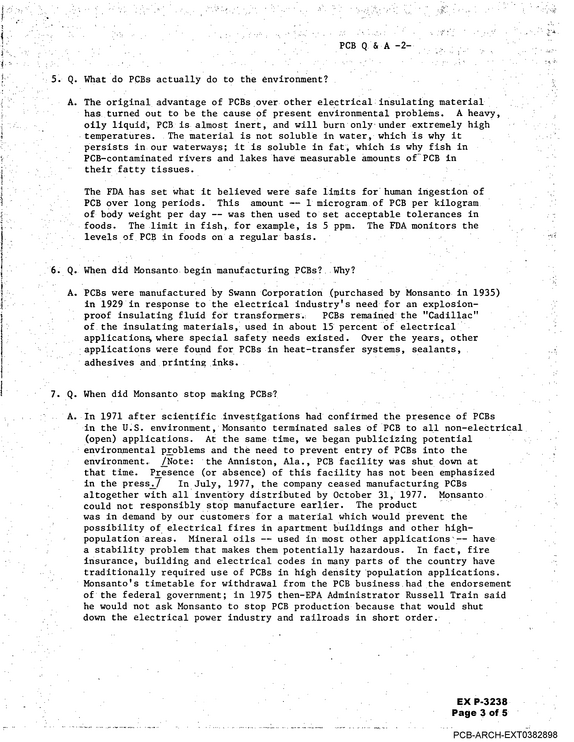
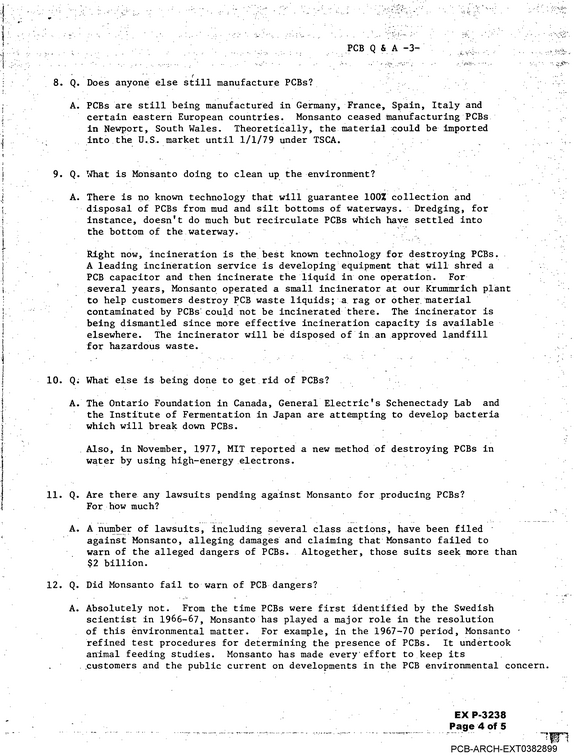
The limit in fish, for example, is 5 ppm.
refid# LgYE8oOKRjLpBM96oDr6gNdN35 pages
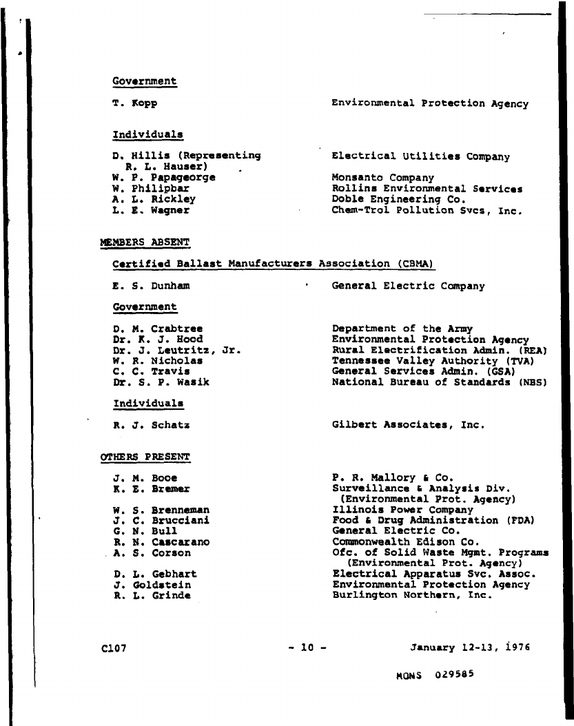
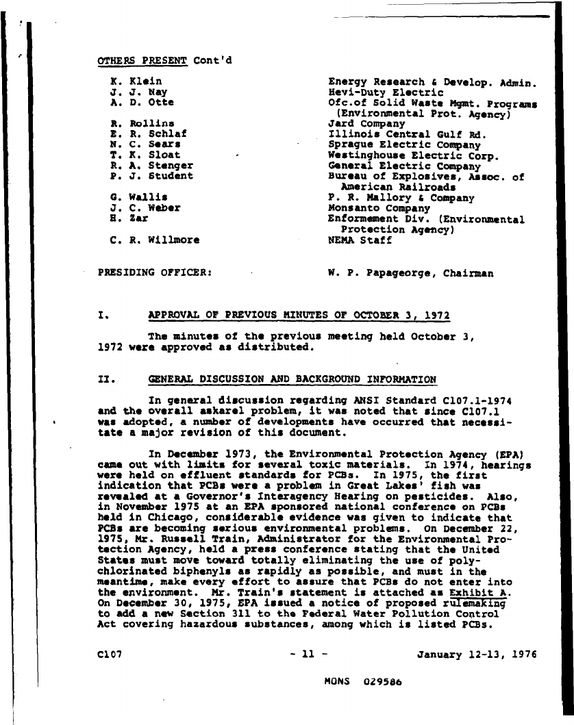
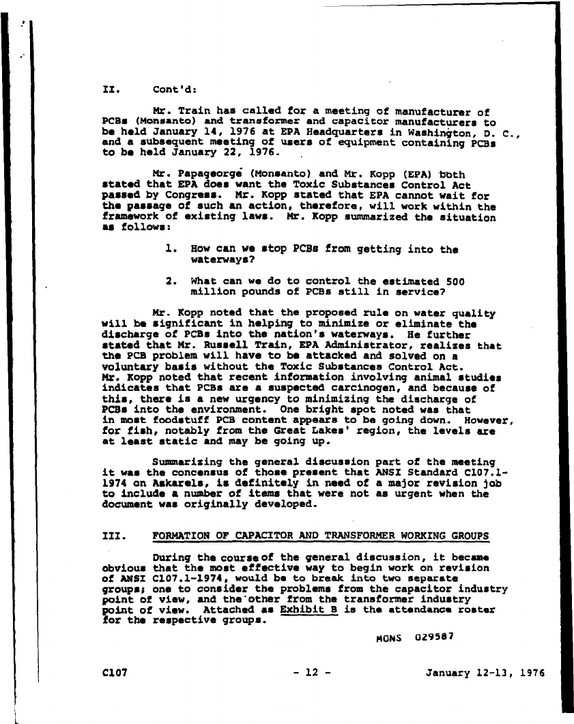
However, for fish, notably from the Great Lakes' region, the levels are at least static and may be going up.
refid# 8VdarjRRxq5004RrzrkjODpjk7 pages
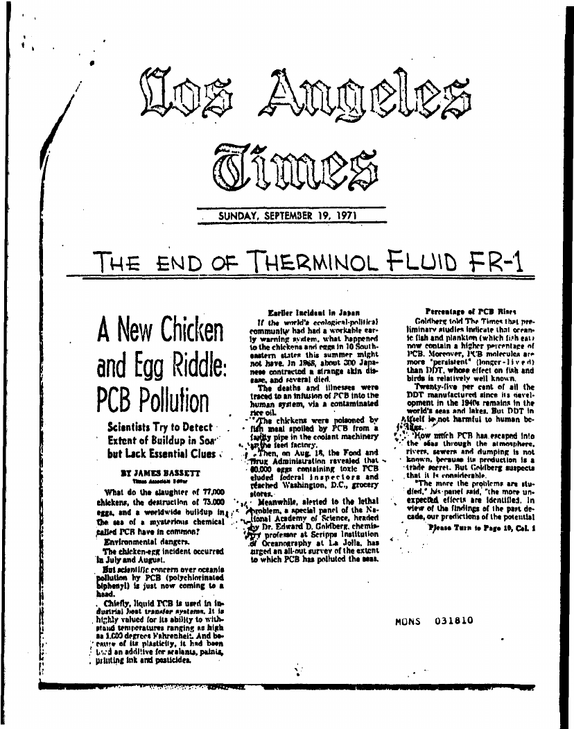
Moreover, K*B molecules ar* more 'persHutnl* {longer-1 ived) than DDT, whose effret on fish and birds it relatively well known.
refid# x1k4r5aJaQVDvNE06jdgGK06E2 pages
Fish Mill from East Coast Terminal Central Soya of Athens Canton, Ga.
refid# 1yw51E3nwr9RGvVv1g99NrKo6 pages
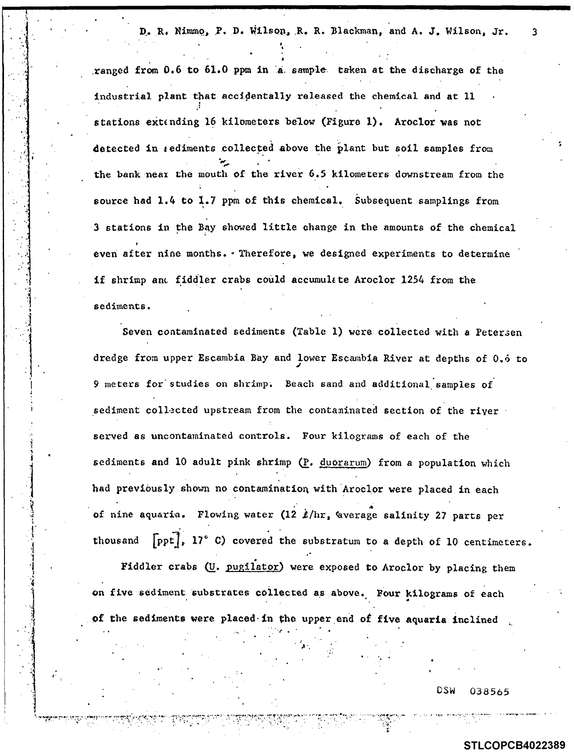
Both shrimp and > crabs were fei fish containing <0.03 ppm Aroclor 1254 each day.
refid# pBRe0Gz27KGVmNwYkk54QLpyE9 pages
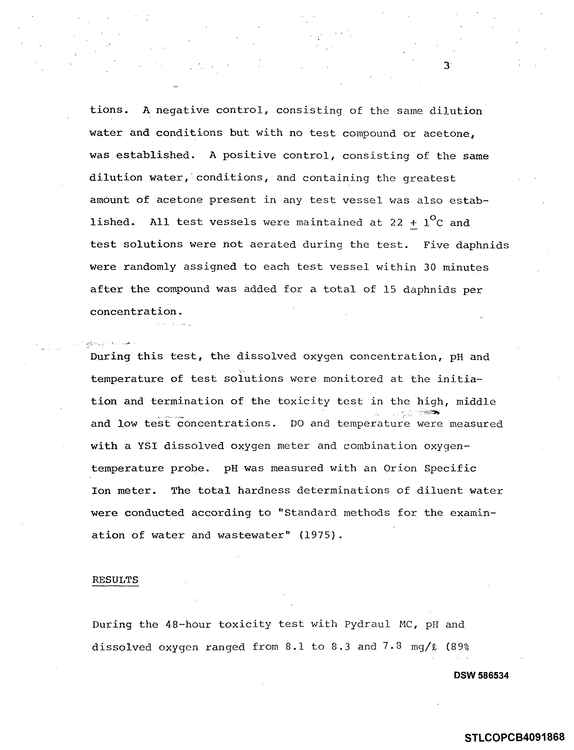
Methods for acute toxicity tests with _ fish, macroinvertebrates, and amphibians.
refid# gadrXoqykKOEB5G9OYaqqExoN13 pages
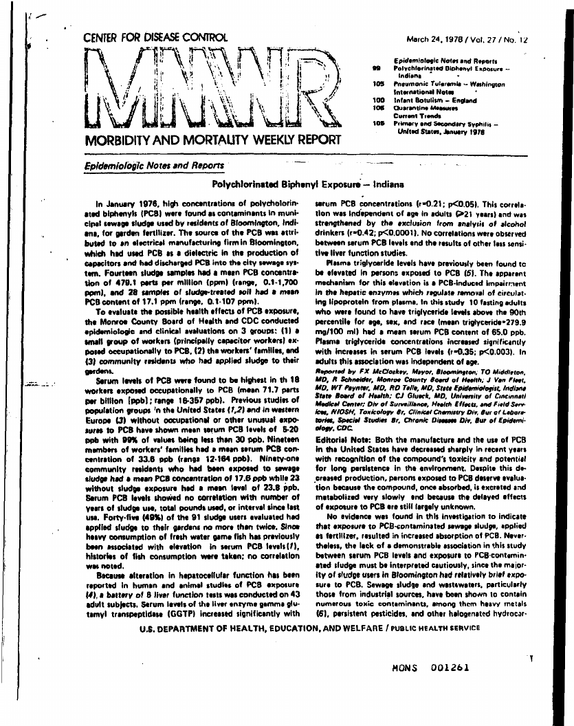
/), histories of fish consumption were taken; no correlation was noted.
refid# rxK0j7DeMaeV1jnjZn06zbyer2 pages
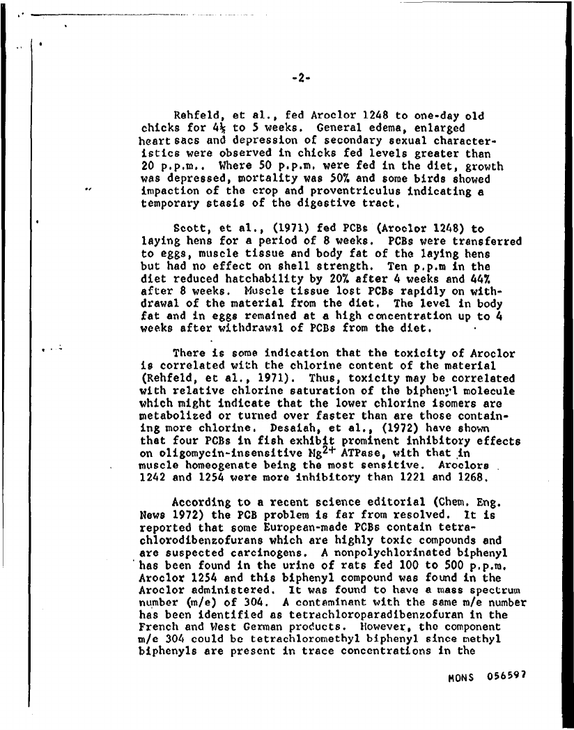
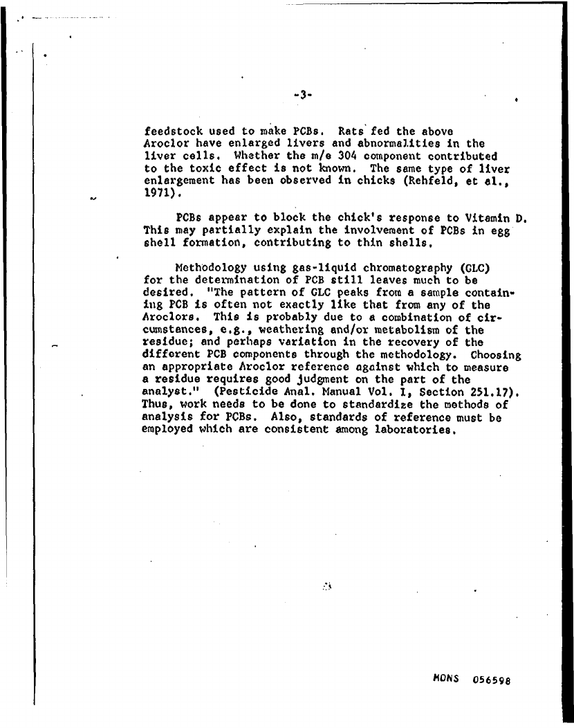
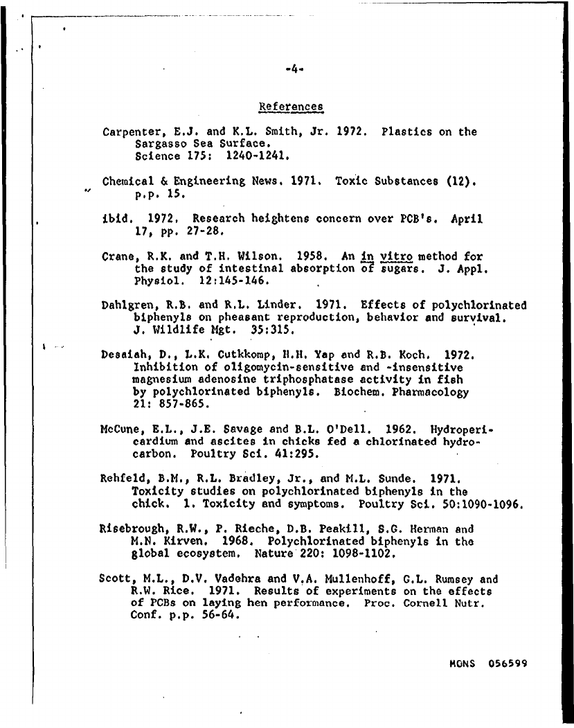
Inhibition of oligomycin-sensitive and -insensitive magnesium adenosine triphosphatase activity in fish by polychlorinated biphenyls.
refid# M4LL0m7YQM6X305Oe4E0zrDo78 pages
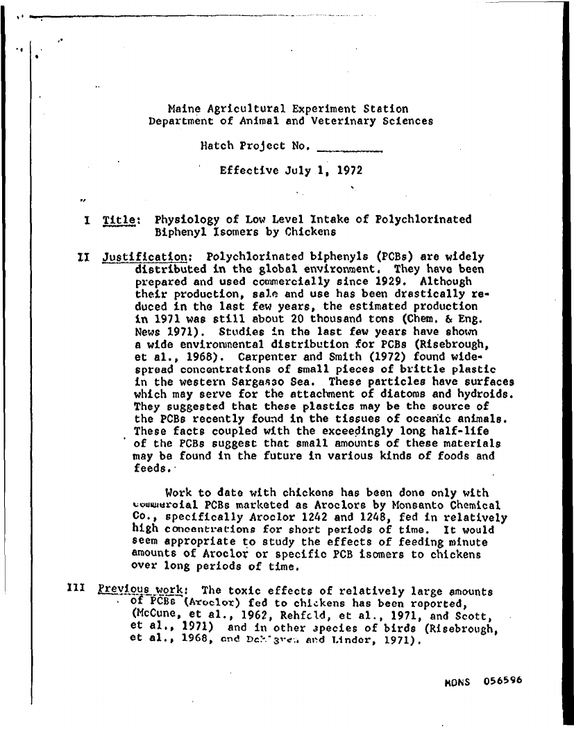
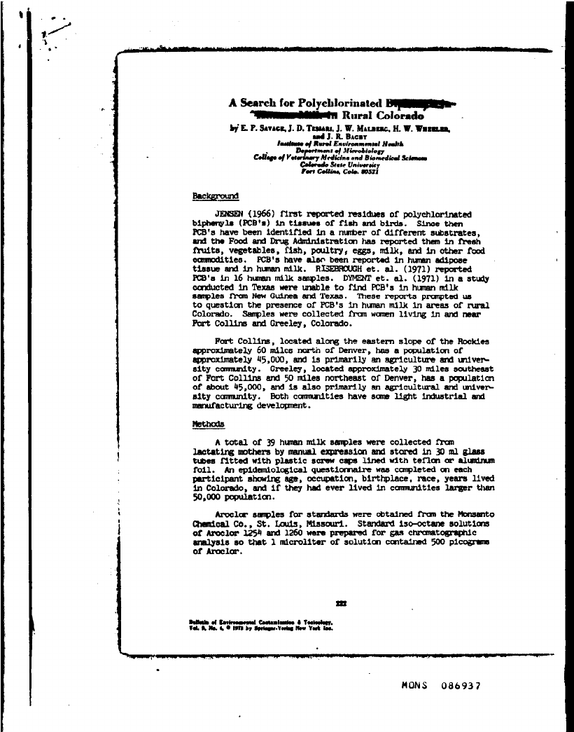
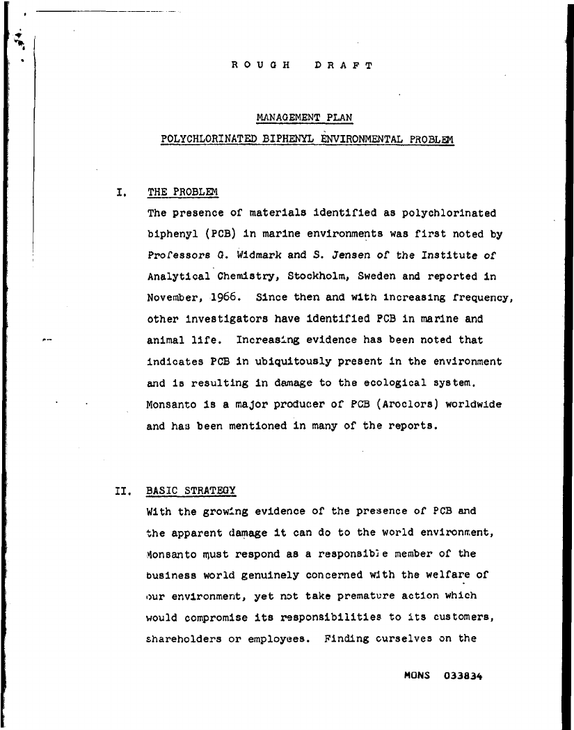
S9572 Background JENSEN <1966) first reported residues of polychlorinated biphenyls (PCB's) In tissues of fish and birds.
refid# 06b0XYLkjmmmEkeaN8N04MRYR5 pages
Studies on fish were attempted, but were discontinued
refid# Z4M5qLQLo5ggqOBnanakQmmdY12 pages