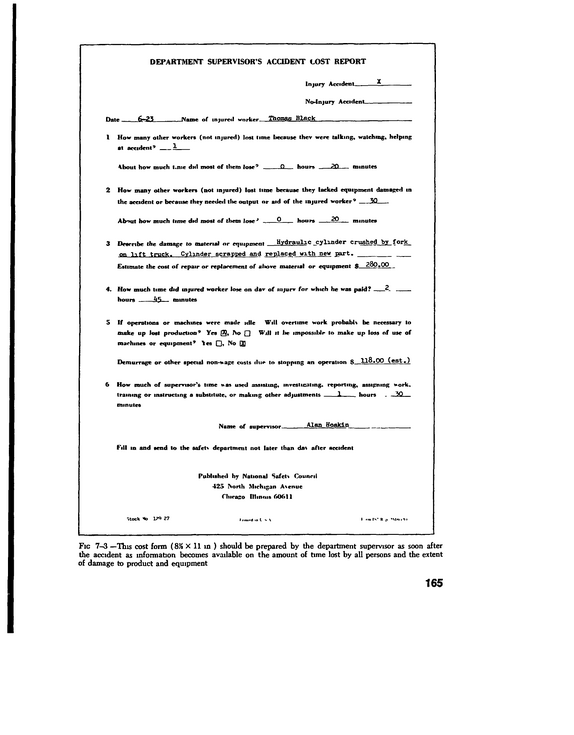
DEPARTMENT SUPERVISOR'S ACCIDENT COST REPORT Date -- 6-23Name of injurcil wnrLir Thomas Black Injury Accident_________*-------------------No-Injury Accident------------------------------- 1 How many other workers (not injured) lost time liecause thev were talking, watching, helping at accident9 _____1______ 20About how much I.me did most of them lose9 _______D___ hours -- ------ minutes 2 How many other workers (not injured) lost lime because they lacked equipment damaged in the accident or because they needed the output nr aid of the injured worker9 3Q------- About bow much time did most of them lose9 . .
refid# 914O4j7wEKdXa10mq1xeXpNpq1 page
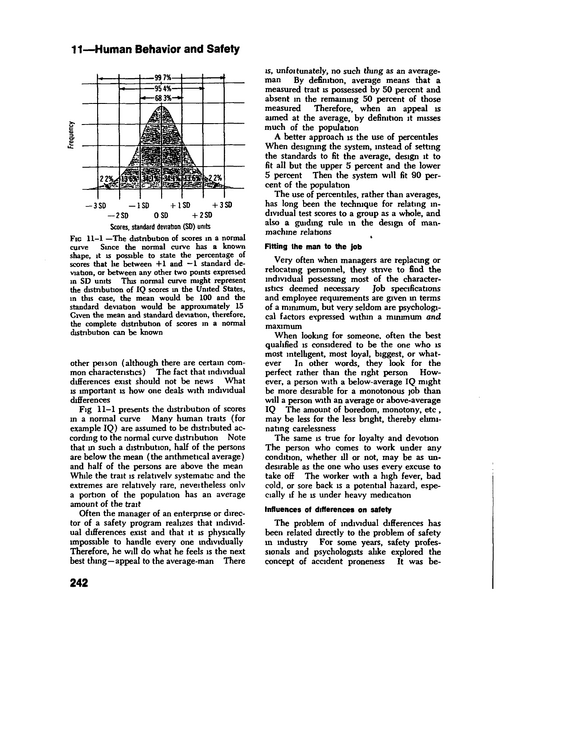
11--Human Behavior and Safety ------ 39 7%-- JJ ---68 3%--* M M liR mt 811 -- 3SD --1SD +1SD +3SD --2S0 OSD +2SD Scores, standard deviation (SD) units Fic 11--1 --The distribution of scores in a normal curve Since the normal curve has a known shape, it is possible to state the percentage of scores that lie between +1 and --1 standard de viation, or between any other two points expressed in SD units This normal curve might represent the distribution of IQ scores in the United States, m this case, the mean would be 100 and the standard deviahon would be approximately 15 Given the mean and standard deviation, therefore, the complete distnbuhon of scores in a normal distribution can be known other peison (although there are certain com mon characteristics) The fact that individual differences exist should not be news What is important is how one deals with individual differences Fig 11-1 presents the distribution of scores in a normal curve Many human traits (for example IQ) are assumed to be distributed ac cording to the normal curve distribution Note that in such a distribution, half of the persons are below the mean (the anthmetical average) and half of the persons are above the mean While the trait is relatively systematic and the extremes are relatively rare, neveitheless onlv a portion of the population has an average amount of the trait Often the manager of an enterprise or direc tor of a safety program realizes that individ ual differences exist and that it is physically impossible to handle every one individually Therefore, he will do what he feels is the next best thing--appeal to the average-man There 242 is, unfoitunately, no such thing as an average- man By definition, average means that a measured trait is possessed by 50 percent and absent in the remaining 50 percent of those measured Therefore, when an appeal is aimed at the average, by definition it misses much of the population A better approach is the use of percentiles When designing the system, instead of setting the standards to fit the average, design it to fit all but the upper 5 percent and the lower 5 percent Then the system will fit 90 per cent of the population The use of percentiles, rather than averages, has long been the technique for relating in dividual test scores to a group as a whole, and also a guiding rule m the design of man- machine relabons k Fitting the man to the job Very often when managers are replacing or relocating personnel, they strive to find the individual possessing most of the character istics deemed necessary Job specifications and employee requirements are given in terms of a minimum, but very seldom are psychologi cal factors expressed within a minimum and maximum When looking for someone, often the best qualified is considered to be the one who is most intelligent, most loyal, biggest, or what ever In other words, they look for the perfect rather than the right person How ever, a person with a below-average IQ might be more desirable for a monotonous )ob than will a person with an average or above-average IQ The amount of boredom, monotony, etc , may be less for the less bright, thereby elimi nating carelessness The same is true for loyalty and devotion The person who comes to work under any condition, whether ill or not, may be as un desirable as the one who uses every excuse to take off The worker with a high fever, bad cold, or sore back is a potential hazard, espe cially if he is under heavy medication Influences of differences on safety The problem of individual differences has been related directly to the problem of safety m industry For some years, safety profes sionals and psychologists alike explored the concept of accident proneness It was be-
refid# VkazoGvnB54pQB8LZ9eXryv41 page
by blocking out from consciousness those cognitive associations that are disturbing It is an unrealistic form of behavior because it implies that the problem will simply go away if one does not think about it Withdrawal.
refid# XzzXYeamegB63b57beBn2gBkd1 page
be expected to do everything For example, it can 1 Help develop safe work habits and safe attitudes, but it cannot compensate for unsafe conditions and unsafe procedures 2 Focus attention on specific causes of acci dents, although by itself it cannot eliminate them 3 Supplement safety training, yet it cannot be considered a substitute for a good train ing program 4 Give employees a chance to participate in accident prevention activities, such as sug gesting safety improvements in job pro cedures 5 Provide a channel of communication be tween workers and management, because accident prevention is certainly a common meeting ground 6 Improve employee, customer, and public relations, because it is evidence of man agement's sincerity with regard to accident prevention (See Fig 12-1) The ultimate objective of a program to mamtarn interest m safety is to prevent ac cidents Usually, though, it is as difficult to determine the degree of success achieved by an interest-maintaining program as it is to isolate the effectiveness of an advertising cam paign separate from the entire marketing pro gram The reason is that generally companies with such programs also have sound basic safety programs working conditions are safe, employees are well trained and safety minded, and supervision is of a high cahber ' However, one prominent company that al ready had a good basic program attributed a reduction in its work injury rate to a stepped-up program to maintain interest The program was based on an idea submitted by an employee Each month candy bars were dis tributed to injury-free employees Wrapped with some of the candy bars were shps that could be traded for free pans of safety shoes Another company gave each employee who had an injury during the month a package of gum with the slogan "Something to chew on" and a friendly safety message and wishes for an injury-free future A meat-packing firm also was able to assess the value of its program to maintain interest Several safety bulletin boards were installed, and posters and safety contest reports were displayed on them These displays were credited with an impressive cut m the num ber of injuries and with a workmen's compen sation insurance refund of more than $1200 Selection of Program Activities Safety directors frequently undertake pro motional activities with no preliminary plan ning or determining of objectives Some men are prone to use, for example, films or posters for no other reason than that they happen to be available at low cost All too often, safety professionals spend a disproportionate amount of time on commit tee work, contests, or "homemade" visual aids because of their bosses' or their own per sonal interests Sometimes these activities are substituted for a sound, well rounded program based on supervisoiy responsibility Basis for the program To be effective, a program for maintaining interest m safety must be based on needs Select activities so they yield the desired results, not just because they will be popular To develop suitable activities and promo tional material, the needs of supervisors and employees must be known To determine what the employees really thought of the safety program and just how interested they were, one company inaugu rated a safety inventory plan Each year after the regular stock inventory had been taken, safety inventory cards were distributed to all employees--salaried workers as well as hourly The cards were distributed by foremen or supervisors, who asked each employee to take stock of his job and environment with regard to safety The following year's safety program was planned on the basis of the ques tionnaire returns, which ran better than 90 percent Many suggestions for improvement of the safety program were received and sub sequently put into practice Factors to be considered Company policy and experience.
refid# 3BX01VGGqnLBOnBrVaGEq2D1 page
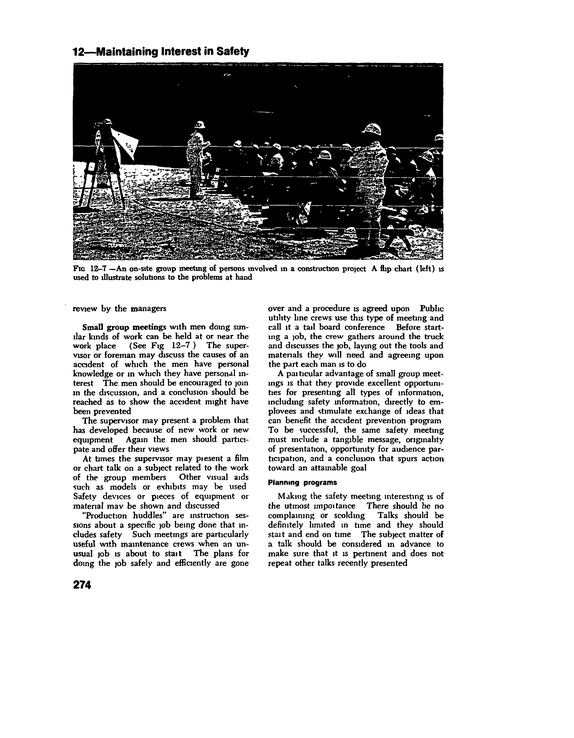
12--Maintaining Interest in Safety Fic 12-7 --An on-site group meeting of persons involved m a construction project A flip chart (left) is used to illustrate solutions to the problems at hand review by the managers Small group meetings with men doing sim ilar kinds of work can be held at or near the work place (See Fig 12--7 ) The super visor or foreman may discuss the causes of an accident of which the men have personal knowledge or in which they have personal in terest The men should be encouraged to join m the discussion, and a conclusion should be reached as to show the accident might have been prevented The supervisor may present a problem that has developed because of new work or new equipment Again the men should partici pate and offer their views At times the supervisor may piesent a film or chart talk on a subject related to the work of the group members Other visual aids such as models or exhibits may be used Safety devices or pieces of equipment or material may be shown and discussed "Production huddles" are instruction ses sions about a specific job being done that in cludes safety Such meetings are particularly useful with maintenance crews when an un usual job is about to stait The plans for doing the job safely and efficiently are gone 274 over and a procedure is agreed upon Public utility line crews use this type of meeting and call it a tail board conference Before start ing a job, the crew gathers around the truck and discusses the job, laying out the tools and materials they will need and agreeing upon the part each man is to do A pai ticular advantage of small group meet ings is that they provide excellent opportuni ties for presenting all types of information, including safety information, directly to em ployees and stimulate exchange of ideas that can benefit the accident prevention program To be successful, the same safety meeting must include a tangible message, originality of presentation, opportunity for audience par ticipation, and a conclusion that spurs action toward an attainable goal Planning programs Making the safety meeting interesting is of the utmost impoitance There should be no complaining or scolding Talks should be definitely limited in time and they should stait and end on time The subject matter of a talk should be considered m advance to make sure that it is pertinent and does not repeat other talks recently presented
refid# 446KdXvznV814RvqKJwaDya1p1 page
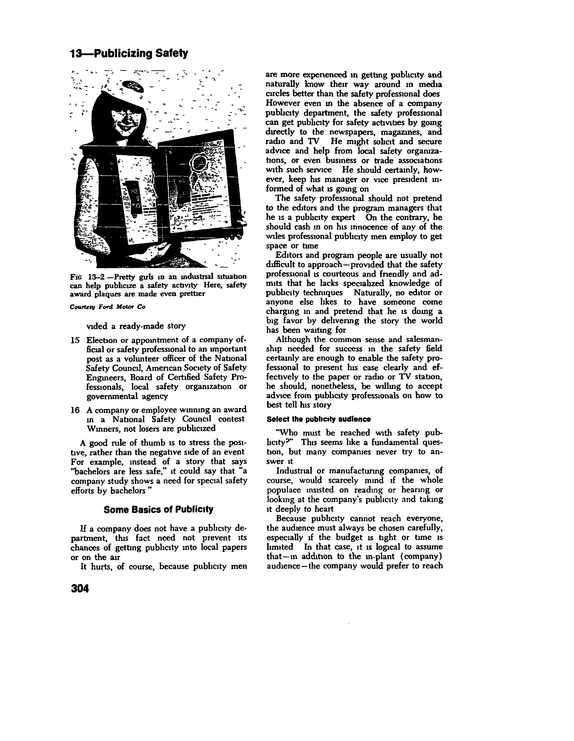
13--Publicizing Safety Fic 13-2 --Pretty girls in an industrial situation can help publicize a safety activity Here, safety award plaques are made even prettier Courtesy Ford Motor Co vided a ready-made story 15 Election or appointment of a company of ficial or safety professional to an important post as a volunteer officer of the National Safety Council, American Society of Safety Engineers, Board of Certified Safety Pro fessionals, local safety organization or governmental agency 16 A company or employee winning an award in a National Safety Council contest Winners, not losers are publicized A good rule of thumb is to stress the posi tive, rather than the negative side of an event For example, instead of a story that says "bachelors are less safe," it could say that "a company study shows a need for special safety efforts by bachelors " Some Basics of Publicity If a company does not have a publicity de partment, this fact need not prevent its chances of getbng publicity into local papers or on the air It hurts, of course, because publicity men 304 are more experienced m getting publicity and naturally know their way around in media circles better than the safety professional does However even in the absence of a company publicity department, the safety professional can get publicity for safety activities by going directly to the newspapers, magazines, and radio and TV He might solicit and secure advice and help from local safety organiza tions, or even business or trade associations with such service He should certainly, how ever, keep his manager or vice president in formed of what is going on The safety professional should not pretend to the editors and the program managers that he is a publicity expert On the contrary, he should cash m on his innocence of any of the wiles professional publicity men employ to get space or tune Editors and program people are usually not difficult to approach--provided that the safety professional is courteous and friendly and ad mits that he lacks specialized knowledge of publicity techniques Naturally, no editor or anyone else likes to have someone come charging in and pretend that he is doing a big favor by delivering the story the world has been waiting for Although the common sense and salesman ship needed for success in the safety field certainly are enough to enable the safety pro fessional to present his case clearly and ef fectively to the paper or radio or TV station, he should, nonetheless, be willing to accept advice from publicity professionals on how to best tell his story Select the publicity audience "Who must be reached with safety pub licity'*" This seems like a fundamental ques tion, but many companies never try to an swer it Industrial or manufacturing companies, of course, would scarcely mind if the whole populace insisted on reading or hearing or looking at the company's publicity and taking it deeply to heart Because publicity cannot reach everyone, the audience must always be chosen carefully, especially if the budget is tight or time is limited In that case, it is logical to assume that--in addition to the m-plant (company) audience--the company would prefer to reach
refid# Jro9mXmMQO0mok647XM1n8E9O1 page
made of thermal shock-resistant glass Light output is practically unaffected by surround ing temperatures, except for a few types made with only a single envelope Like fluorescent lamps, mercury lamps also require devices that limit the current Mercury lamps for general lighting are available with either "clear" or phosphorcoated bulbs, of various sizes and shapes, from 75 to 1000 watts There is also a 3000 watt clear mercury lamp Typical efficiencies range from 40 to 60 lumens per watt, not in cluding 10 to 20 percent power loss in the ballast.
refid# xL1epx7DdOqprz95VbR1YX8b1 page
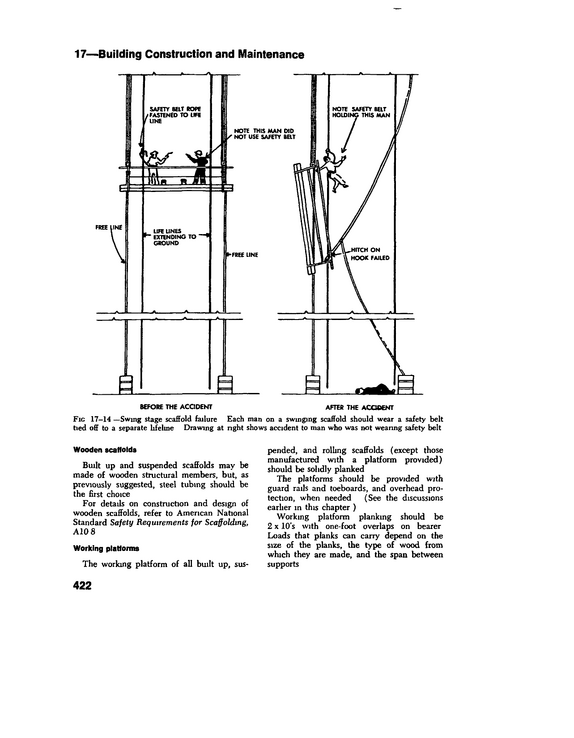
17--Building Construction and Maintenance Fic 17-14 --Swing stage scaffold failure Each man on a swinging scaffold should wear a safety belt tied off to a separate lifeline Drawing at nght shows accident to man who was not wearing safety belt Wooden scaffolds Built up and suspended scaffolds may be made of wooden structural members, but, as previously suggested, steel tubing should be the first choice For details on construction and design of wooden scaffolds, refer to American National Standard Safety Requirements for Scaffolding, A10 8 Working platforms The working platform of all built up, sus 422 pended, and rolling scaffolds (except those manufactured with a platform provided) should be solidly planked The platforms should be provided with guard rails and toeboards, and overhead pro tection, when needed (See the discussions earlier m this chapter ) Working platform planking should be 2 x 10's with one-foot overlaps on bearer Loads that planks can carry depend on the size of the planks, the type of wood from which they are made, and the span between supports
refid# 8VXrw5kOgRoyKz623nM9RjVyB1 page
18--Planning for Emergencies a safeguard fails?
refid# zz2Oaag4q4yrY1waVwg4y5Zgz1 page
PLAINTIFFS EXHIBIT JM 660 MTC 007827 Location.

refid# MGQwppKKJYBb90gXYdLOLxD8y710 pages
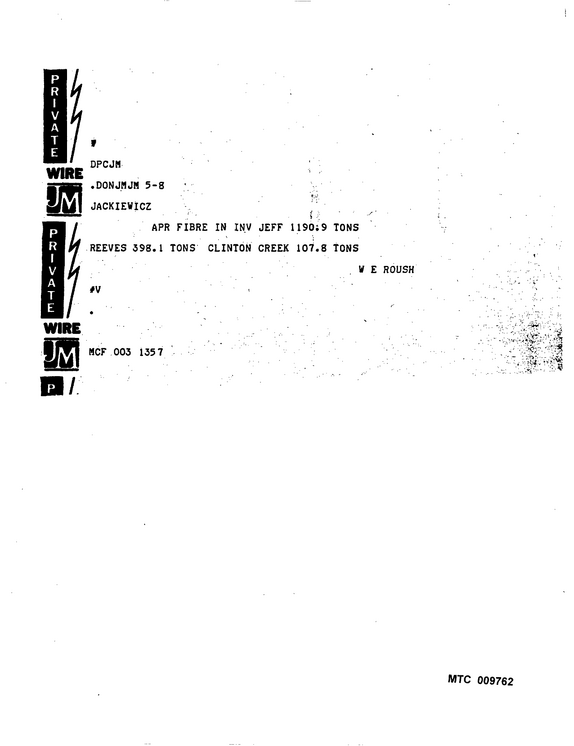
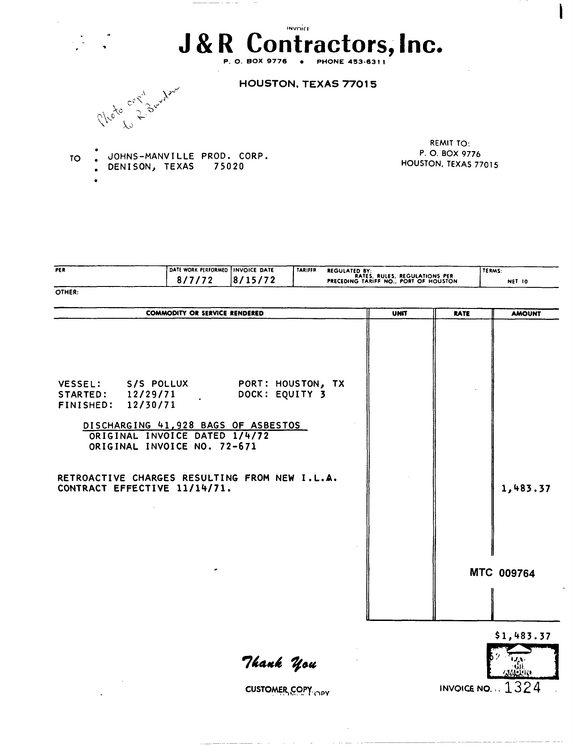
MTC 009761 r -FIBRE INFORMATION 1972 I / I \ DPCJM .DONJMJM 5-8 ' JACKIEWICZ - ' - ..y . ' J\ >- APR FIBRE IN INV JEFF 1190;9 TONS REEVES 398.1 TONS CLINTON CREEK 107.8 TONS V E ROUSH #V MCF 003 135 7 MTC 009762 MTC 009763 Nvoin J&R Contractors,Inc.
refid# K6e1QKKBdQndp5nvVvqRp200X29 pages
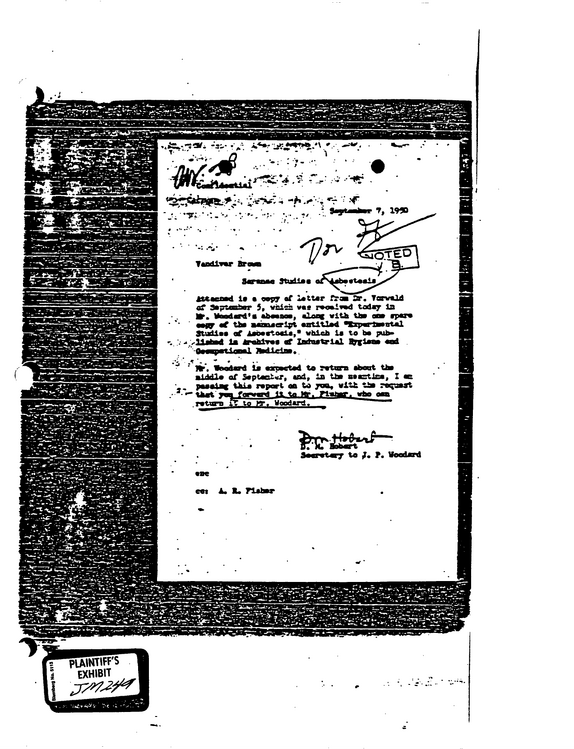
t**-*^ la oopy af lottar fra* Sr.
refid# 10M6X9OxxeBjgO5qmX2jJoYGq1 page
* >/ J J.'
refid# zzq35gVznQ4m1n9KwNoggbVEg1 page
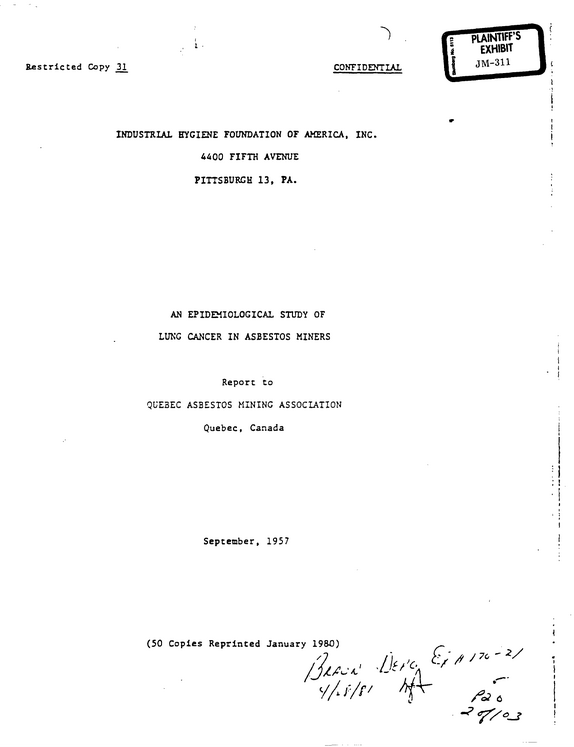
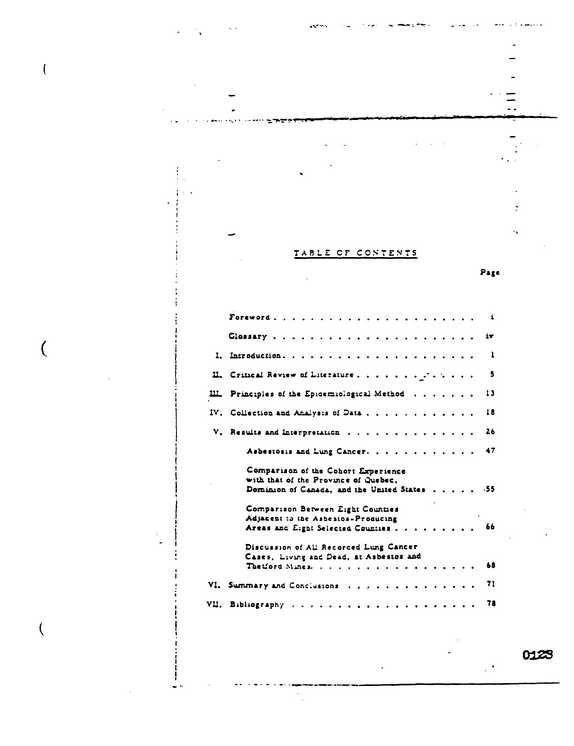
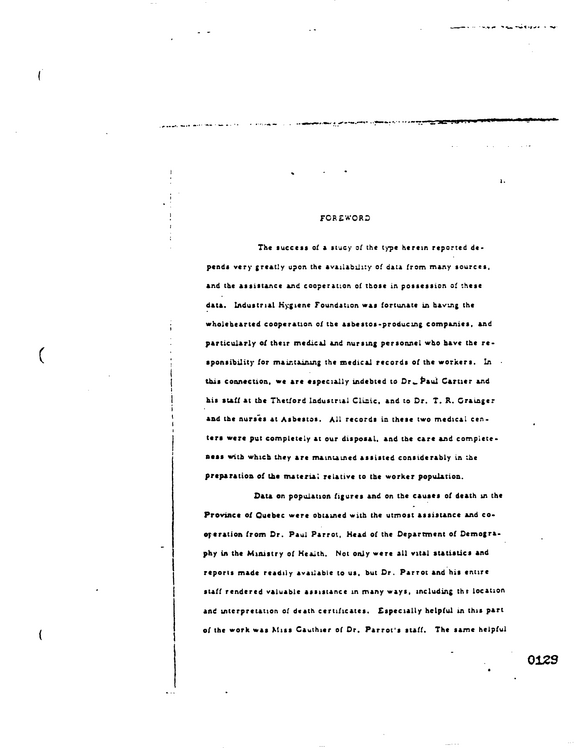
Restricted Copy 31 CONFIDENTIAL INDUSTRIAL HYGIENE FOUNDATION OF AMERICA, INC. 4400 FIFTH AVENUE PITTSBURGH 13, PA.
refid# 4v3wxkZD0r3Ov1gp2m438qx7x102 pages
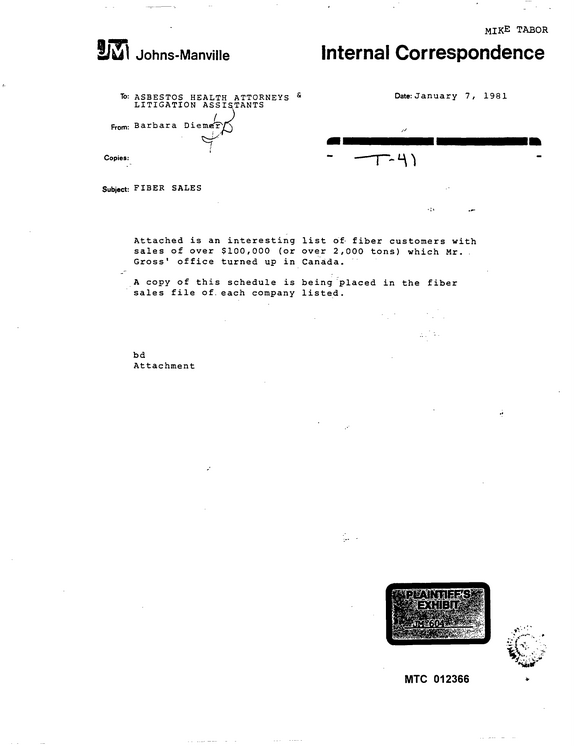
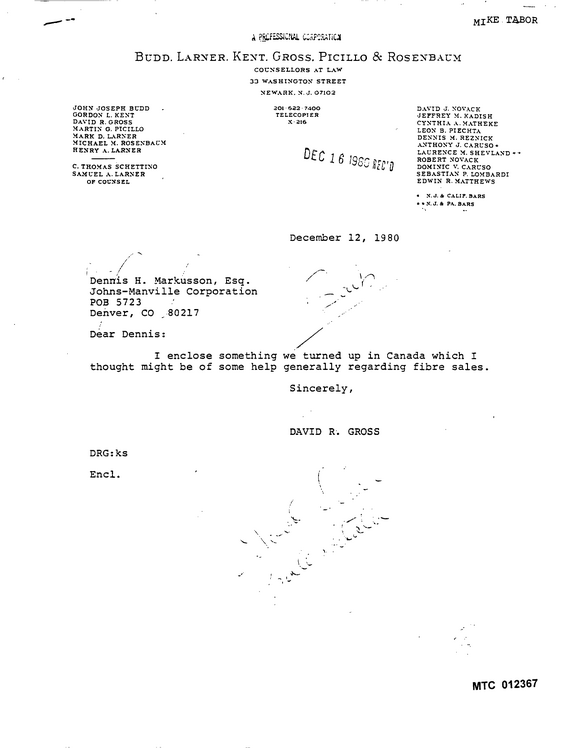
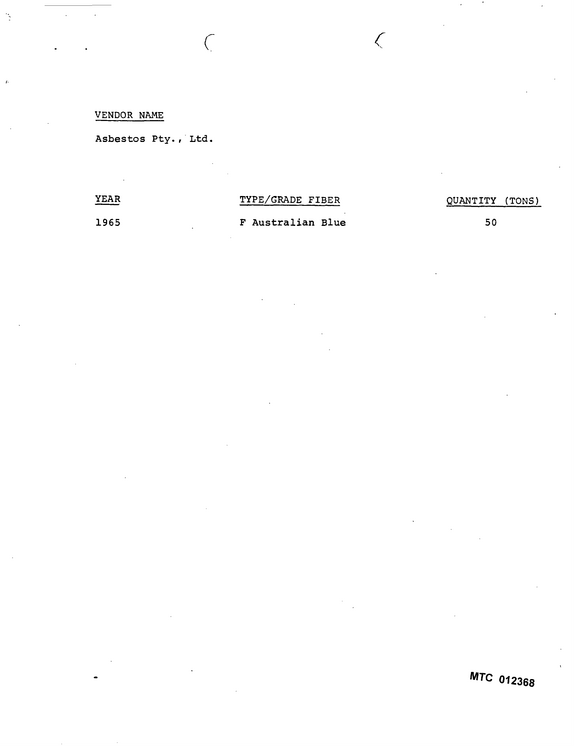
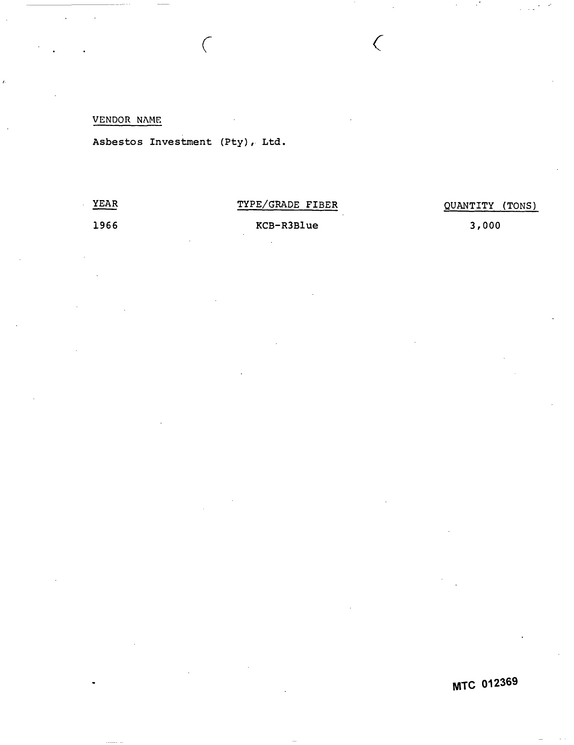
Johns-Manviile MIKE tabor Internal Correspondence To: ASBESTOS HEALTH ATTORNEYS & LITIGATION ASSISTANTS From: Barbara DiemeSrV ^ Copies: Subject: FIBER SALES Date: January 7, 1981 H'l Attached is an interesting list of- fiber customers with sales of over $100,000 (or over 2,000 tons) which Mr. .
refid# 3J5rGEmedwbEnDeD5Lp1Ga83x53 pages