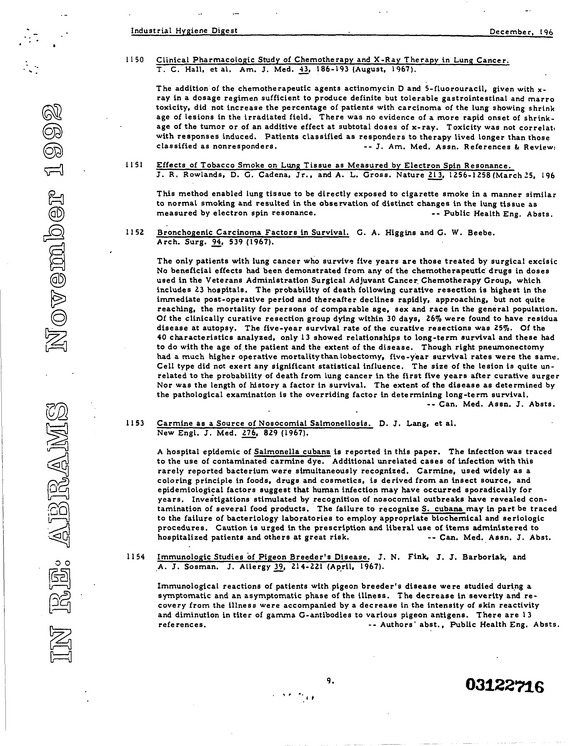
OO C={] Industrial Hygiene Digest December, 196 11 50 Clinical Pharmacologic Study of Chemotherapy and X-Ray Therapy in Lung Cancer.
refid# Ner1x9vN691kJwrRbDwDDDqoy1 page
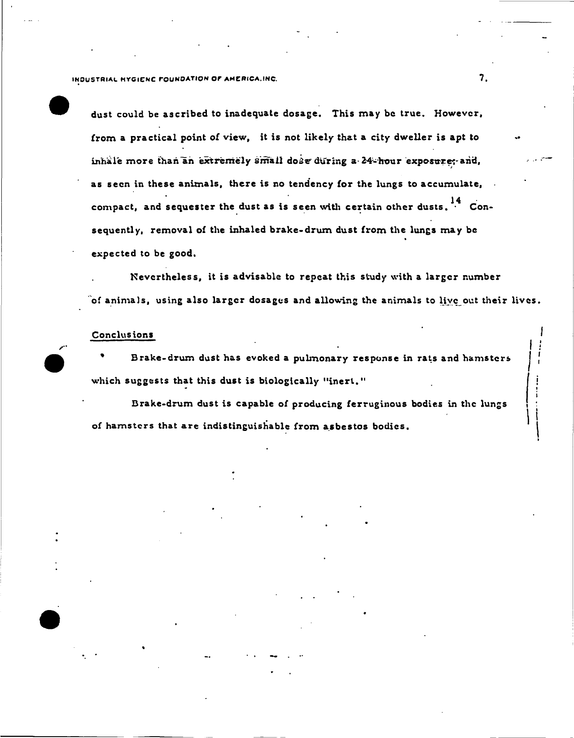
orINDUSTRIAL MTCICNC roUNDATION ahcrica.inc. 7.
refid# MJQ3MgrxqazGJ94q9JNXVexBz1 page
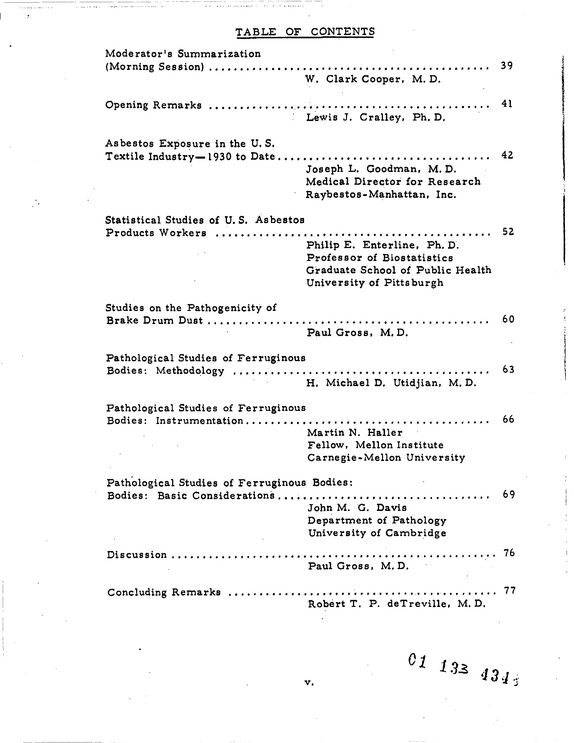
TABLE OF CONTENTS Moderator's Summarization (Morning Session) ......................................................................................
refid# ZJN5p57a17Yy9ZvDOvB5Dw4Bp1 page
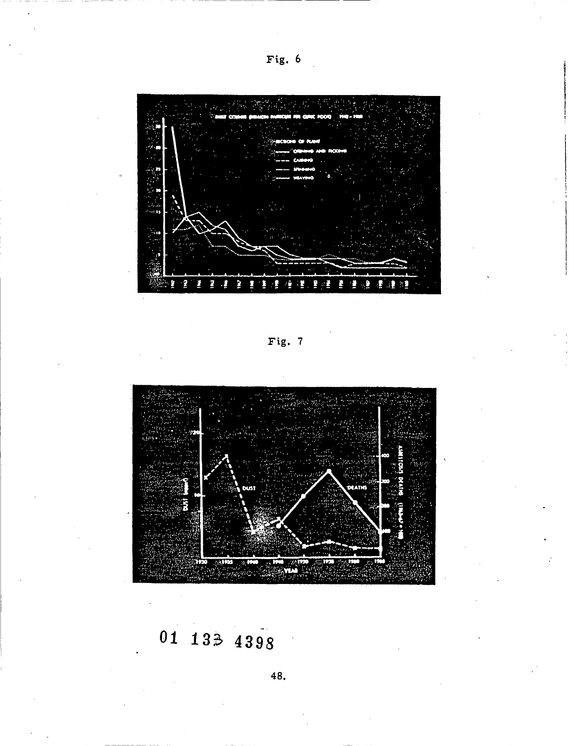
Fig. 6 Fig. 7 48.
refid# zbxjLxGdMKXkZL05vYLO1KYLn1 page
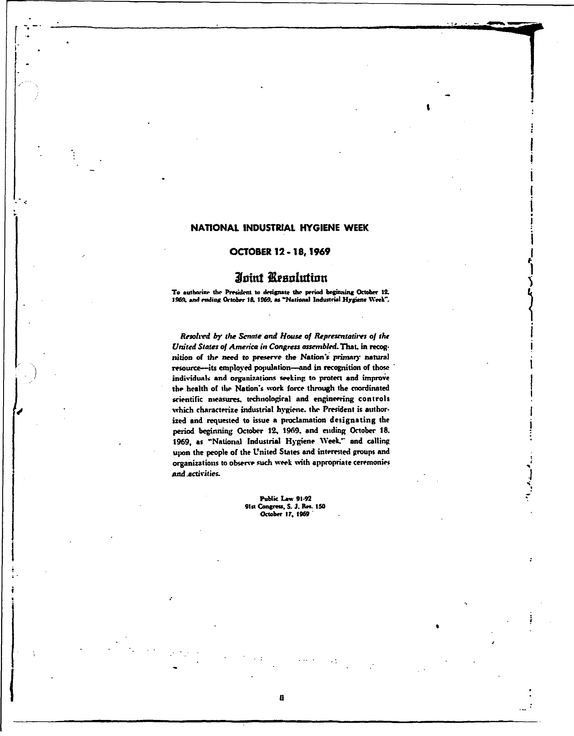
NATIONAL INDUSTRIAL HYGIENE WEEK OCTOBER 12-18,1969 itetnt Skaolutum To authorize the Pmntatt to derignatc the period beginning October 12. 1969. and radio* Ortobrr 18.1969. at "National Industrial Hygiene Week".
refid# 80bJVdgReLdE3VwQwJnM5DvK1 page
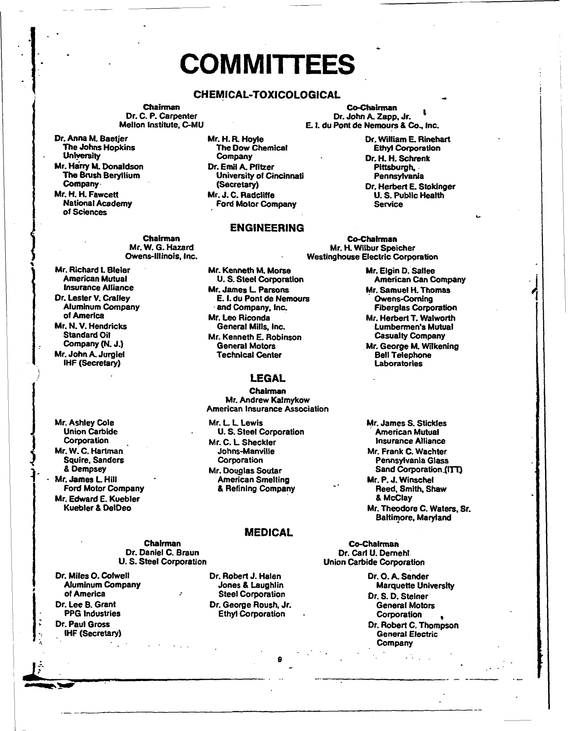
COMMITTEES CHEMICAL-TOXICOLOGICAL Chairman Dr.
refid# jyED45wVGrkE5ng6goJ3ENaEZ1 page
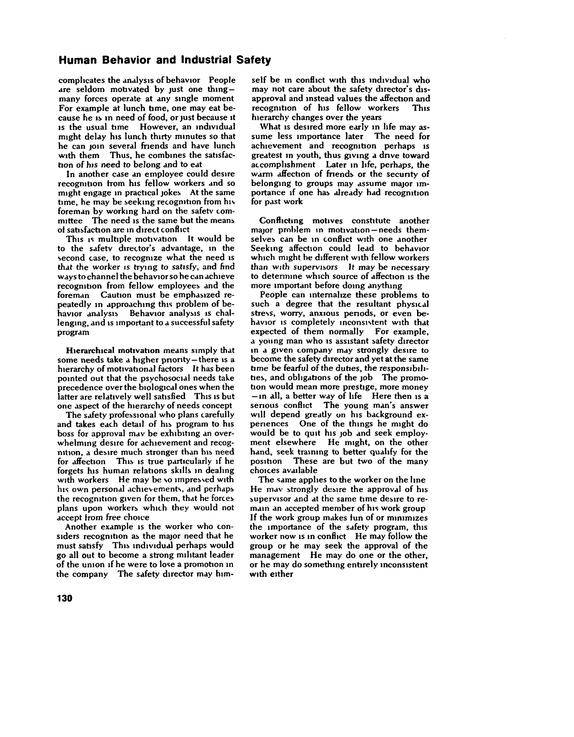
Human Behavior and Industrial Safety complicates the analysis of behavior People are seldom mobvated by just one thing-- many forces operate at any single moment For example at lunch bme, one may eat be cause he is in need of food, or just because it is the usual bme However, an individual might delay his lunch thirty minutes so that he can join several friends and have lunch with them Thus, he combines the satisfacbon of his need to belong and to eat In another case an employee could desire recognition from his fellow workers and so might engage m practical jokes At the same time, he may be seeking recognibon from his foreman by working hard on the safety com mittee The need is the same but the means of sabsfacbon are in direct conflict This is mulbple motivation It would be to the safety director's advantage, m the second case, to recognize what the need is that the worker is trying to satisfy, and find ways to channel the behavior so he can achieve recognition from fellow employees and the foreman Caution must be emphasized re peatedly in approaching this problem of be havior analysis Behavior analysis is chal lenging, and is important to a successful safety program Hierarchical motivabon means simply that some needs take a higher priority--there is a hierarchy of motivabonal factors It has been pointed out that the psychosocial needs take precedence over the biological ones when the latter are relatively well satisfied This is but one aspect of the hierarchy of needs concept The safety professional who plans carefully and takes each detail of his program to his boss for approval mav be exhibiting an over whelming desire for achievement and recog nition, a desire much stronger than his need for affection This is true particularly if he forgets his human relations skills m dealing with workers He may be so impressed with his own personal achievements, and perhaps the recognition given for them, that he forces plans upon workers which they would not accept from free choice Another example is the worker who con siders recognition as the major need that he must satisfy This individual perhaps would go all out to become a strong militant leader of the union if he were to lose a promobon in the company The safety director may him self be in conflict with this individual who may not care about the safety director's dis approval and instead values the affecbon and recognition of his fellow workers This hierarchy changes over the years What is desired more early m life may as sume less importance later The need for achievement and recognibon perhaps is greatest in youth, thus giving a dnve toward accomplishment Later in life, perhaps, the warm affecbon of friends or the security of belonging to groups may assume major im portance if one has already had recognition for past work Conflicting motives constitute another major problem m motivation --needs them selves can be m conflict with one another Seeking affection could lead to behavior which might be different with fellow workers than with supervisors It may be necessary to determine which source of affection is the more important before doing anything People can internalize these problems to such a degree that the resultant physical stress, worry, anxious periods, or even be havior is completely inconsistent with that expected of them normally For example, a young man who is assistant safety director in a given company may strongly desire to become the safety director and yet at the same bme be fearful of the dubes, the responsibilibes, and obligabons of the job The promo bon would mean more prestige, more money -- in all, a better way of life Here then is a serious conflict The young man's answer will depend greatly on his background ex periences One of the things he might do would be to quit his job and seek employ ment elsewhere He might, on the other hand, seek training to better qualify for the posibon These are but two of the many choices available The same applies to the worker on the line He mav strongly desire the approval of his supervisor and at the same bme desire to re main an accepted member of his work group If the work group makes fun of or minimizes the importance of the safety program, this worker now is in conflict He may follow the group or he may seek the approval of the management He may do one or the other, or he may do something enhrely inconsistent with either 130
refid# QXbm8LrerG10OMa8vRzrBnXx51 page
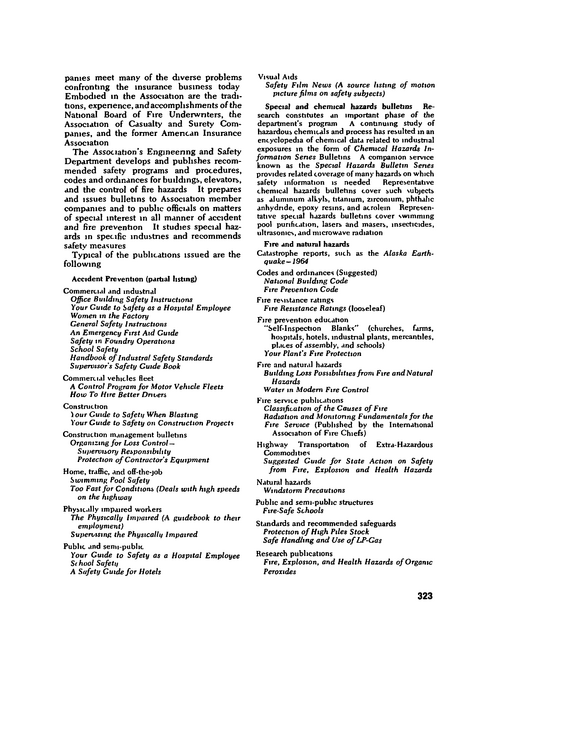
panies meet many of the diverse problems confronting the insurance business today Embodied in the Association are the tradi tions, experience, and accomplishments of the National Board of Fire Underwriters, the Association of Casualty and Surety Com panies, and the former Amencan Insurance Association The Association's Engineering and Safety Department develops and publishes recom mended safety programs and procedures, codes and ordinances for buildings, elevators, and the control of (ire hazards It prepares and issues bulletins to Association member companies and to public officials on matters of special interest m all manner of accident and fire prevention It studies special haz ards in specific industries and recommends safety measures Typical of the publications issued are the following Accident Prevention (partial listing) Commercial and industrial Office Building Safety Instructions Your Guide to Safety as a Hospital Employee Women in the Factory General Safety Instructions An Emergency First Aid Guide Safety in Foundry Operations School Safety Handbook of Industral Safety Standards Supervisor's Safety Guide Book Commercial vehicles fleet A Control Program for Motor Vehicle Fleets How To Hire Better Drivers Construction lour Cuide to Safety When Blasting Your Guide to Safety on Construction Projects Construction management bulletins Organizing for Loss Control -- Supervisory Responsibility Protection of Contractor's Equipment Home, traffic, and off-the-job Swimming Pool Safety Too Fast for Conditions (Deals with high speeds on the highway Physically impaired workers The Physically Impaired (A guidebook to their employment) Supervising the Physically Impaired Public and senu-public Your Guide to Safety as a Hospital Employee School Safety A Safety Guide for Hotels Visual Aids Safety Film News (A source listing of motion picture films on safety subjects) Special and chemical hazards bulletins Re search constitutes an important phase of the department's program A continuing study of hazardous chemicals and process has resulted in an encyclopedia of chemical data related to industrial exposures m the form of Chemical Hazards In formation Senes Bulletins A companion service known as the Special Hazards Bulletin Senes provides related coverage of many hazards on which safety information is needed Representative chemical hazards bulletins cover such subjects as aluminum alkyls, titanium, zirconium, phthalic anhydnde, epoxy resins, and acrolein Represen tative special hazards bulletins cover swimming pool purification, lasers and masers, insecticides, ultrasonics, and microwave radiation Fire and natural hazards Catastrophe reports, such as the Alaska Earth quake-1964 Codes and ordinances (Suggested) National Building Code Fire Prevention Code Fire resistance ratings Fire Resistance Ratings (looseleaf) Fire prevention education "Self-Inspection Blanks'' (churches, farms, hospitals, hotels, industrial plants, mercantiles, places of assembly, and schools) Your Plant's Fire Protection Fire and natural hazards Building Loss Possibilities from Fire and Natural Hazards Water in Modem Fire Control Fire service publications Classification of the Causes of Fire Radiation and Monitoring Fundamentals for the Fire Service (Published by the International Association of Fire Chiefs) Highway Transportation of Extra-Hazardous Commodities Suggested Guide for State Action on Safety from Fire, Explosion and Health Hazards Natural hazards Windstorm Precautions Public and semi-public structures Fire-Safe Schools Standards and recommended safeguards Protection of High Piles Stock Safe Handling and Use ofLP-Gas Research publications Fire, Explosion, and Health Hazards of Organic Peroxides 323
refid# aM8yGYamLkwaL7oZMNrJ9bey1 page
Sources of Help Federal Mediation and Conciliation Service 14th St and Constitution Ave NW Washington, D C 20427 National Labor Relations Board 1717 Pennsylvania Ave NW Washington, D C 20570 Railroad Retirement Board 844 Rush Sr Chicago, 111 60611 Boards, committees, and commissions Federal Safety Council, Room 407, Railway Labor Building, First and D Sts , NW , Wash ington, D C 20210 The Council was re established by executive order in 1962 to ad vise the Secretary of Labor (a) concerning development and maintenance of safety organizations and programs in federal depart ments and agencies, and (b) about criteria, standards, and procedures designed to elimi nate work hazards and health risks and to prevent injuries and accidents in federal employment National Research Council, 2101 Constitu tion Ave , Washington, D C , 20418 The National Research Council does not main tain laboratories of its own but seeks to stimulate and support the work of individual scientists and engineers and to coordinate investigations dealing with broad problems in research both nationally and interna tionally These purposes are carried out through a wide variety of means, including conferences, technical committees, surveys, collection and collation of scientific and tech nical data, the sponsorship of scientific and technical publications and research organiza tions, and the administration of public and private funds for research projects and fellow ships The National Research Council provides unique means for organizing attacks on scien tific and engineering problems which involve many specialized fields and for obtaining disinterested and objective assessments of problems for groups representing dissimilar or conflicting interests Its effectiveness is dependent on the personal participation of thousands of American scientists and engi neers who collaborate m these undertakings, giving generously of their time and effort without financial compensation The organization directly administers several million dollars annually of funds provided by contributions, grants, and con tracts from federal and state agencies, private industries and foundations, scientific socie ties, and individuals for support of its com mittees and conferences, research projects and fellowships--a small portion of which is used to supplement endowment income and gifts in meeting general expenses The council's Advisory Center on Toxi cology is a central repository for toxicological information President's Committee on Consumer In terests, 100 Executive Office Bldg, Washing ton, D C 20506 Established by a 1964 exec utive order, this committee considers (a) federal policies and programs of primary importance to consumers or the unmet con sumer needs which can appropriately be met through federal action, (b) the aspects of federal policies, programs, and operations concerning which the views of consumers should be available to federal officials, and (c) the manner in which consumer views can be communicated to appropriate federal de partments and agencies President's Conference on Occupational Safety This conference was first called by the President of the United States in March of 1949 Conferences have been held m 1950, 1952, 1954, 1956,1958, 1960,1962, and 1964 At the conferences have been repre sentatives of management, labor, insurance companies, educational institutions, and safety organizations The purpose of the conference is to foster a common effort to expand the use of safe practices and the estab lishment of safe conditions for employed per sons Special attention is given to the needs of the smaller plant The Federal Government's role in indus trial safety, as recommended by the con ference is to Make national comparative statistical studies.
refid# EvGrK63r23E3eBQLDJKKzBLMV1 page
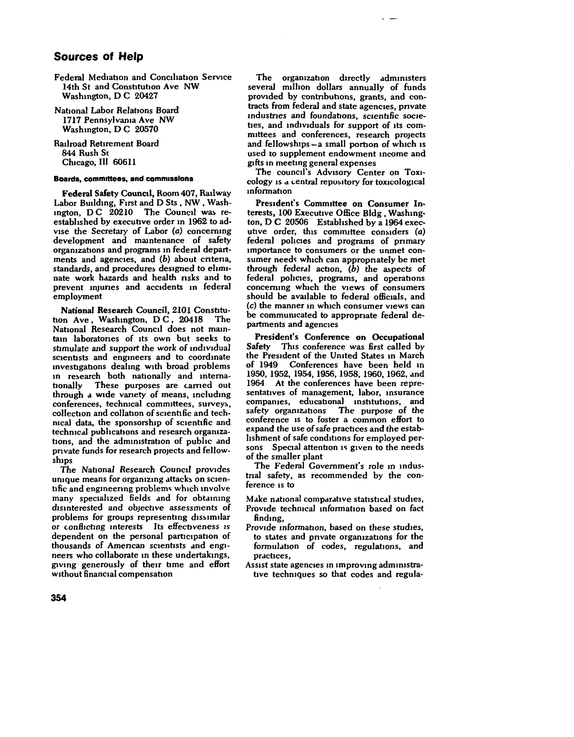
Fig 17-20 -- Heavy pipe and angle railing extend about 18 in from the floor to prevent damage to door jambs, walls, and building columns Stand ard 3- or 4-inth black iron pipe is welded to angle iron and fastened to the floor with heavy strap iron brackets Courtesy Kraft Foods Company repair Unusual sag should be investigated immediately and corrected If sag is found in a suspended ceiling, hangers and fastenings should be checked However, the sag may be the result of excessive loading of the floor above, which should be corrected Floors Accidents due to inadequate maintenance of floors are a major source of injuries in many plants Slippery conditions, particularly, ac count for numerous falls by workers Holes and other irregularities in wood and concrete floors, both inside and outside plant build ings, result in frequent injuries from stum bling and falling and, m addition, cause many truck accidents Repair procedures Wood flooring should be inspected for rot, wear, and unusual stress as indicated by sag In many cases, a section of wood flooring may need to be replaced New flooring should be installed flush with the existing flooring Badly worn or loose wood block flooring should be replaced by anchored wood blocks To anchor loose wood finish flooring, holes are drilled at an angle through the finished floor into the subfloor and flooring nails larger than the holes then are driven into the sub floor For concrete floors, the damaged area should be chipped out, cleaned thoroughly, and wet down Cement mortar (1 part portland cement and 3 sand) is troweled in Min imum patch thickness is 1 in Patches 2 in thick or more may require wire mesh or rein forcing steel For finishing, a wood float gives a less slippery surface than does a steel trowel For proper curing, traffic should be kept off the patch for at least three days, unless a quick-setting cement has been used If mixed and applied properly, epoxy resin repair materials give excellent results A thickness of as little as Vk to 3/i8 in will give an extremely tough wearing surface Be sure to take adequate precautions when using these mixes (See National Safety Council's Epoxy Restn Systems, Data Sheet 533 ) Maintenance procedures.
refid# gDr8eaL4NaYOJ0D1KdwKNr74a1 page
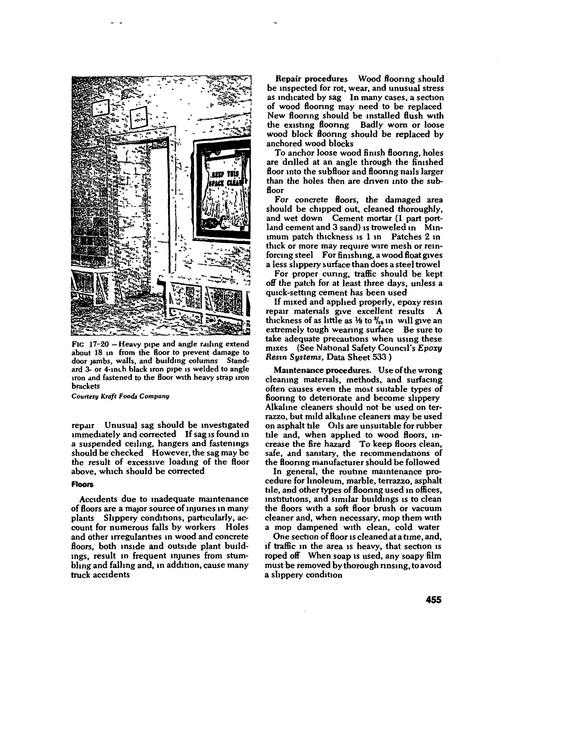
Building Construction and Maintenance Ordinary wax for polishing wood, tile, and similar floor surfaces is unsuitable because of its inherently slippery nature However, ac cording to the manufacturers, floor oils and waxes can be used to surface various types of floors without adding unduly to their slippenness, provided that instructions regarding their application are followed Oils and greases, water, paper, sawdust, and numerous other foreign materials on floors create slipping hazards Leaks of oil horn machines and of water and other liquids from pipelines and spillage from processing equip ment often can be eliminated by good main tenance of the equipment, such as promptly tightening loose connections Pans and absorbent materials can be used when leakage cannot be readily eliminated at the source However, a study of such sources often reveals ways ofkeepmg slippery materials from getting on the floors, such as the installation of splash guards on machines using cutting oils Slippery materials spilled on floors should be cleaned up promptly To remove gTease and oils, the area can be covered with airslaked lime to a depth of about V* in After two or three hours, the lime then is removed with a scraper or stiff brush Sand and various commercial cleaners also can be used Even as innocuous a substance as coffee can cause an accident if spilled m a high traffic area In National Safety Council offices, cups containing beverages must either be covered or be on a tray ifearned to an employee's desk Aisles should be kept clear of machinery, equipment, raw and manufactured matenals In many cases, the allowable floor loading has been figured on clear aisle space with no allowance made for power trucks using aisles It is advisable for efficient, safe operation to determine whether floors and aisles are capa ble of sustaining loads of power trucks Lines to indicate aisle width should be well main tained Overloading of floors, which may be caused by the installation of heavy equipment, ex cessive weight and unequal distribution of stored raw and finished matenals, and heavy truck transportation, is particularly hazardous Signs stating allowable floor loads and honzontal lines showing the maximum height to which matenals may be piled should be painted on the walls (Fig 17-21) FlC 17-21 --Where the same type of material is stored regularly, a line can be marked on the wall to indicate the height to which matenal can be piled without exceeding the allowable floor load In addition to safe floor load limit signs, a warning sign reading Do Not Pile Above Line can also be placed on the wall Strength and load determinations.
refid# reZYd94n6pk0O1vj5eop9eGJa1 page
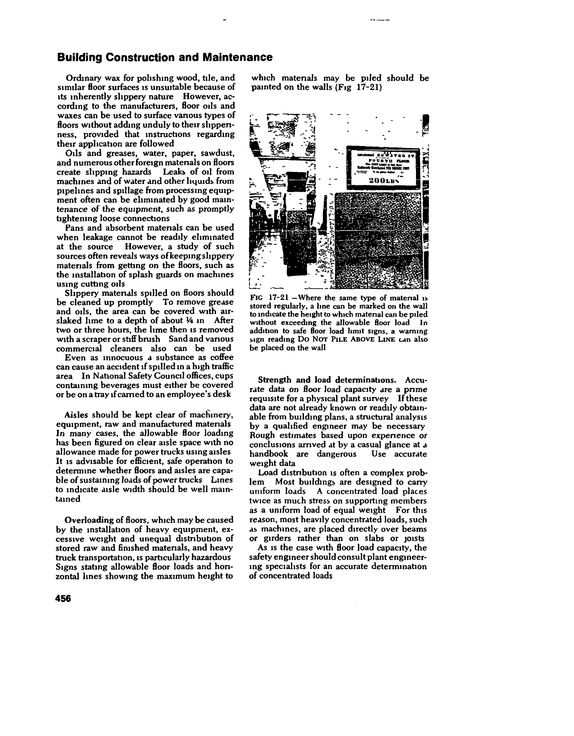
Principles of Materials Handling and Storing chines are tilted Spillage of residual oil should be wiped up immediately When a jack develops any defect, it should be repaired by qualified workmen and tested under load before being returned to service Handtrucks, dollies, and wheelbarrows Many t>pes of handtrucks and dollies are available, such as two-wheeled, flat, platform, fox, special racks or dollies, and lift trucks Trucks can be purchased or designed for ob jects of various sizes and kinds Operators should wear gloves and safety shoes Two-wheeled trucks and wheelbarrows should be equipped with knuckle guards to protect against the jamming of hands against door frames or other obstructions Two-wheeled trucks should have brakes Fig 19-7 --Foot brake keeps wheels from slipping while truck is being loaded Springs (arrow) hold brake away from wheels when it is not needed (Fig 19-7) so that the worker need not hold the truck with a foot on the wheel or axle The latter practice causes manv injuries To decrease hazards to toes and feet, wheels should be as far under the truck as possible Wheel guards can be installed on manv types of trucks Tongues of flat trucks should be provided with counterweights, springs, or hooks to hold them vertical when not m use If this is not possible, workers should be trained to leave handles in such a position that they will not be a tripping hazard Equipment should be inspected daily and kept in good repair Repair and maintenance records should be kept to show the condition of each piece of equipment Axles should be kept well-greased The type of truck most suitable for the work at hand should be used No one truck is right for handling all types of material Two-wheeled trucks look as though they should be easy to handle, but there are safe procedures that must be followed 1 Keep the center of gravity of the load as low as possible Place heavy objects below lighter objects When loading trucks, truckers and loaders should keep their feet clear of the wheels 2 Place the load well forward so the weight will be carried by the axle, not by the handles 3 Place the load so it will not slip, shift, or fall Load only to a height that will allow a clear view ahead 4 When a two-wheeled truck or wheelbarrow is loaded in a horizontal position, raise it to traveling position by lifting with the leg muscles and keeping the back straight Ob serve the same principle in setting a loaded truck or wheelbarrow down--the leg mus cles should do the work 5 Let the truck carry the load The operator should only balance and push 6 Never walk backwards with a hand truck 7 When going down an incline, keep truck ahead When going up, keep truck be hind (This advice applies to 4-wheeled as well as 2-wheeled trucks ) 8 Move trucks at a safe speed Do not run Keep truck constantly under control Four-wheeled truck operation follows rules similar to those for two-wheeled trucks Extra emphasis should be placed on proper loading, however Four-wheeled trucks should be evenlv loaded to prevent their tipping Four-wheeled trucks should be pushed rather than pulled, except for a truck that has a fifth wheel and a handle for pulling Trucks should not be loaded so high that operators cannot see where they are going If there are high racks on the truck, two men should move the vehicle --one to guide the front end, the other to guide the back end Handles should be placed at protected places 512
refid# a4JazOxXXNNmmOmJzGX9Ga5V91 page
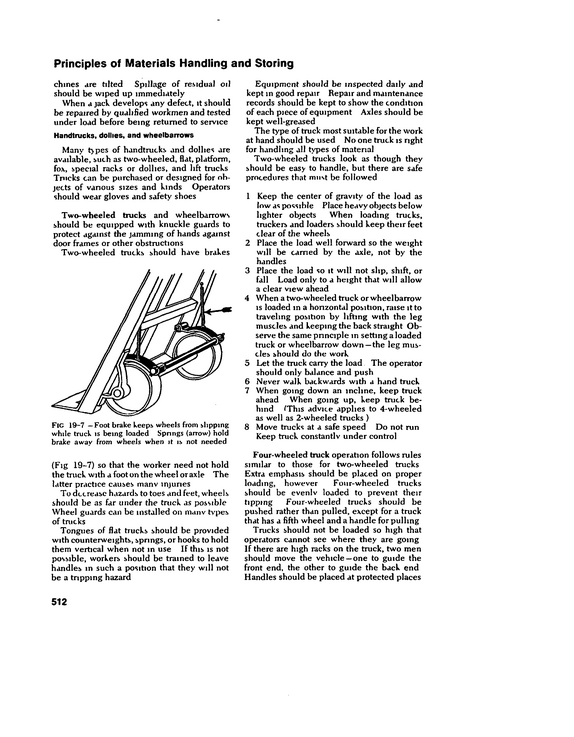
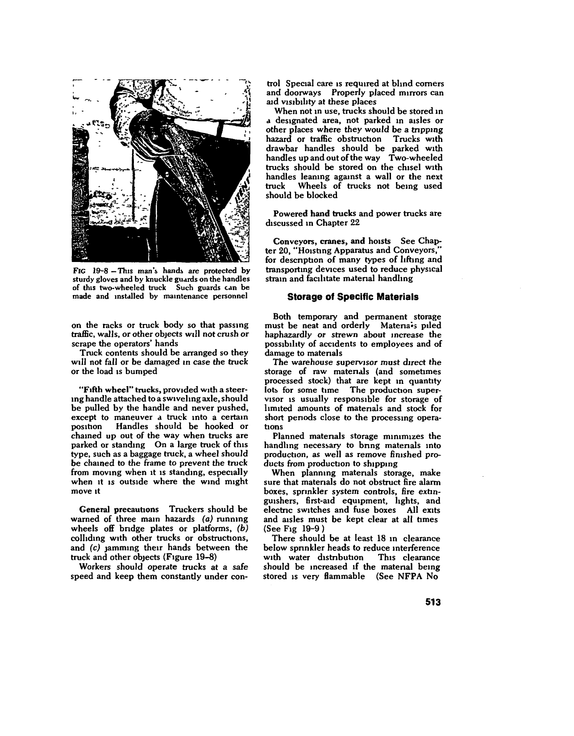
trol Special care is required at blind comers and doorways Properly placed mirrors can aid visibility at these places When not in use, trucks should be stored in a designated area, not parked in aisles or other places where they would be a tripping hazard or traffic obstruction Trucks with drawbar handles should be parked with handles up and out ofthe way Two-wheeled trucks should be stored on the chisel with handles leaning against a wall or the next truck Wheels of trucks not being used should be blocked Powered hand trucks and power bucks are discussed in Chapter 22 FlC 19-8 -- This man's hands are protected by sturdy gloves and by knuckle guards on the handles of this two-wheeled truck Such guards can be made and installed by maintenance personnel Conveyors, cranes, and hoists See Chap ter 20, "Hoishng Apparatus and Conveyors," for descnpbon of many types of lifting and transporting devices used to reduce physical strain and facilitate material handling Storage of Specific Materials on the racks or truck body so that passing traffic, walls, or other objects will not crush or scrape the operators' hands Truck contents should be arranged so they will not fall or be damaged in case the truck or the load is bumped "Fifth wheel" trucks, provided with a steer ing handle attached to a swiveling axle, should be pulled by the handle and never pushed, except to maneuver a truck into a certain position Handles should be hooked or chained up out of the way when trucks are parked or standing On a large truck of this type, such as a baggage truck, a wheel should be chained to the frame to prevent the truck from moving when it is standing, especially when it is outside where the wind might move it General precautions Truckers should be warned of three main hazards (a) running wheels off bndge plates or platforms, (b) colliding with other trucks or obstructions, and (c) jamming their hands between the truck and other objects (Figure 19-8) Workers should operate trucks at a safe speed and keep them constandy under con Both temporary and permanent storage must be neat and orderly Materials piled haphazardly or strewn about increase the possibility of accidents to employees and of damage to materials The warehouse supervisor must direct the storage of raw materials (and somebmes processed stock) that are kept in quanbty lots for some time The production super visor is usually responsible for storage of limited amounts of materials and stock for short periods close to the processing operabons Planned materials storage minimizes the handling necessary to bring materials into production, as well as remove finished pro ducts from production to shipping When planning materials storage, make sure that materials do not obstruct fire alarm boxes, sprinkler system controls, fire exbnguishers, first-aid equipment, lights, and electric switches and fuse boxes All exits and aisles must be kept clear at all times (See Fig 19-9) There should be at least 18 in clearance below spnnkler heads to reduce interference with water distnbubon This clearance should be increased if the material being stored is very flammable (See NFPA No 513
refid# K6Gwyzp5XxnKyEe6om8kkXED01 page
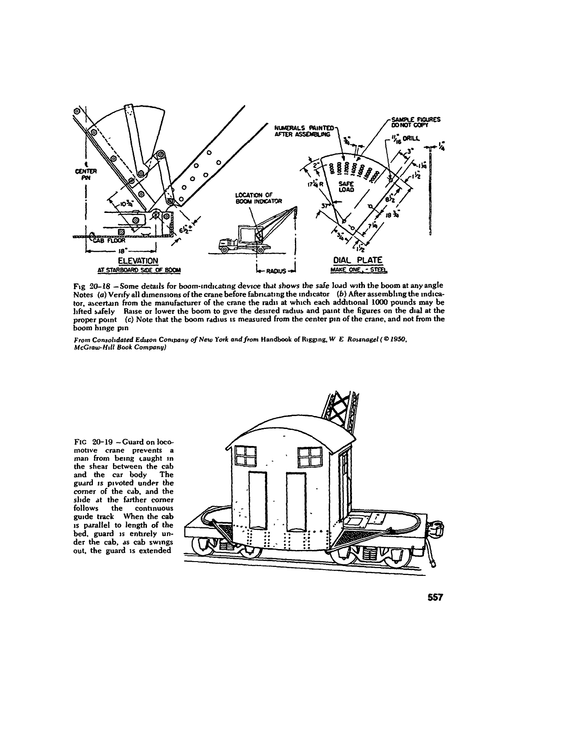
Fig 20-18 --Some details for boom-indicating device that shows the safe load with the boom at any angle Notes (a) Verify all dimensions of the crane before fabricating the indicator (h) After assembling the indica tor, ascertain from the manufacturer of the crane the radii at which each additional 1000 pounds may be lifted safely Raise or lower the boom to give the desired radius and paint the figures on the dial at the proper point (c) Note that the boom radius is measured from the center pin of the crane, and not from the boom hinge pin From Consolidated Edison Company of New York andfrom Handbook of Rigging, W E Rossnagel ( 1950, McGraw-Hill Book Company) FlC 20-19 --Guard on loco motive crane prevents a man from being caught in the shear between the cab and the car body The guard is pivoted under the corner of the cab, and the slide at the farther comer follows the continuous guide track When the cab is parallel to length of the bed, guard is entirely un der the cab, as cab swings out, the guard is extended 557
refid# jy9ReqgXkmb96k2z6NN7BxBqN1 page
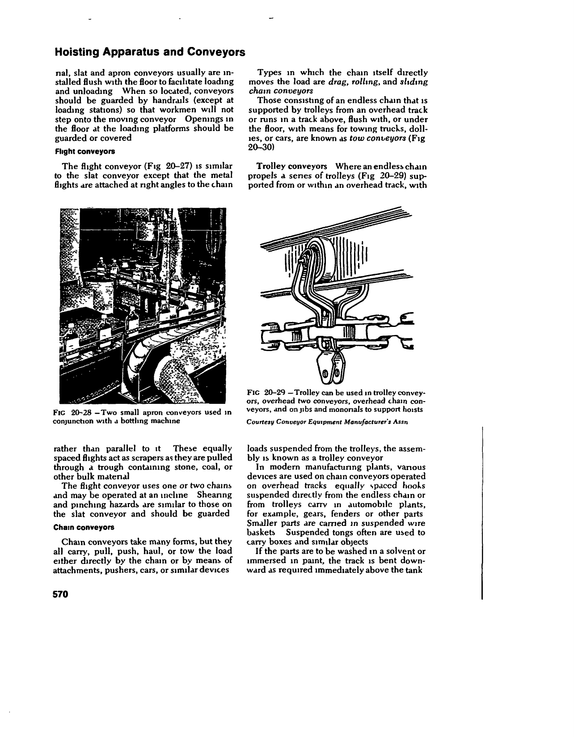
Hoisting Apparatus and Conveyors nal, slat and apron conveyors usually are in stalled flush with the floor to facilitate loading and unloading When so located, conveyors should be guarded by handrails (except at loading stations) so that workmen will not step onto the moving conveyor Openings in the floor at the loading platforms should be guarded or covered Flight conveyors The flight conveyor (Fig 20-27) is similar to the slat conveyor except that the metal flights are attached at right angles to the chain Types in which the chain itself directly moves the load are drag, rolling, and sliding chain conveyors Those consisting of an endless chain that is supported by trolleys from an overhead track or runs m a track above, flush with, or under the floor, with means for towing trucks, doll ies, or cars, are known as tow conveyors (Fig 20-30) Trolley conveyors Where an endless chain propels a senes of trolleys (Fig 20-29) sup ported from or within an overhead track, with FlC 20-28 --Two small apron conveyors used in conjunction with a bottling machine FlC 20-29 --Trolley can be used in trolley convey ors, overhead two conveyors, overhead chain con veyors, and on jibs and mononals to support hoists Courtesy Conveyor Equipment Manufacturer's Assn rather than parallel to it These equally spaced flights act as scrapers as they are pulled through a trough containing stone, coal, or other bulk material The flight conveyor uses one or two chains and may be operated at an incline Shearing and pinching hazards are similar to those on the slat conveyor and should be guarded Chain conveyors Cham conveyors take many forms, but they all carry, pull, push, haul, or tow the load either directly by the chain or by means of attachments, pushers, cars, or similar devices loads suspended from the trolleys, the assem bly is known as a trolley conveyor In modem manufactunng plants, vanous devices are used on chain conveyors operated on overhead tracks equally spaced hooks suspended directly from the endless chain or from trolleys carrv in automobile plants, for example, gears, fenders or other parts Smaller parts are earned m suspended wire baskets Suspended tongs often are used to carry boxes and similar objects If the parts are to be washed in a solvent or immersed in paint, the track is bent down ward as required immediately above the tank 570
refid# gdmaO25GqRY5wGYeg2gYK61e1 page