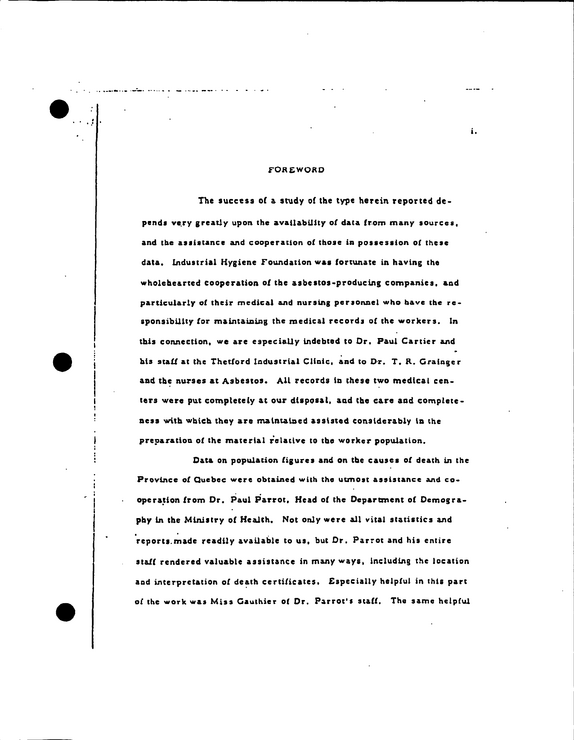
i.
refid# ZMnXrXe6ORJKKdokQg8XY7bY1 page
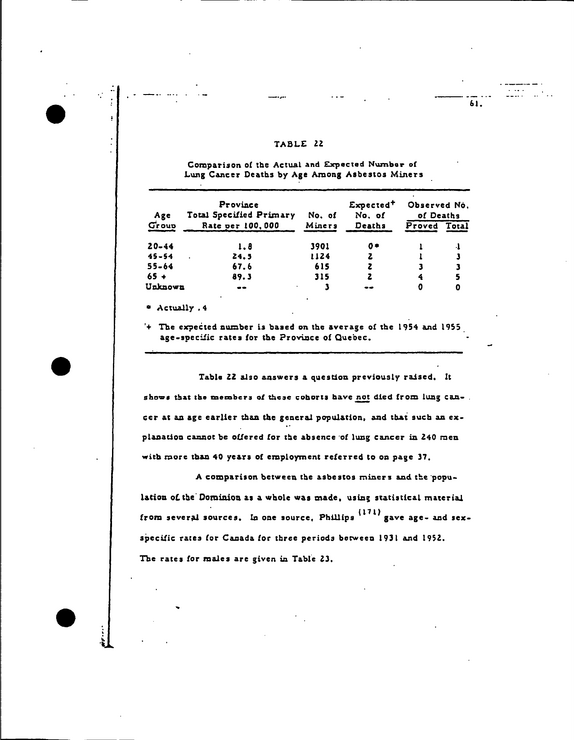
61 TABLE 22 Comparison of the Actual and expected Number of Lung Cancer Deaths by Age Among Asbestos Miners Age Crouo Province Total Specified Primary Rate oer 100,000 No. of Miners Expected* No. of Deaths Observed No, of Deaths Proved Total 20-44 45-54 55-64 65 4 Unknown 1.8 24.3 67.6 89.3 3901 1124 615 315 3 0* 2 2 2 11 13 33 45 00 * Actually . 4 '+ The expected number is based on the average of the 1954 and 1955 age-specific rates for the Province of Quebec.
refid# q5a1Qw7n5yO2ZqYNJg1ew65M1 page
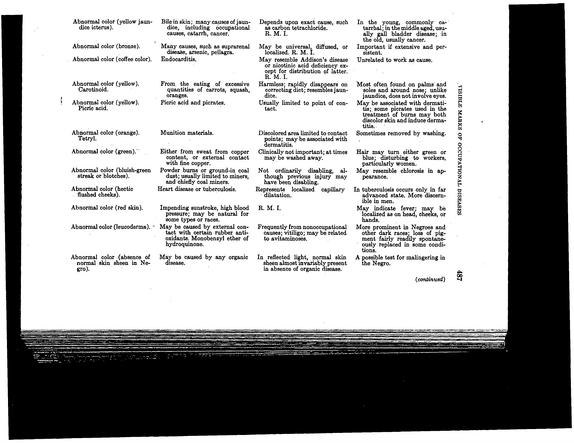
Abnormal color (yellow jaun dice icterus).
refid# JJBwJOrQm81096eVnqNqLmvv21 page
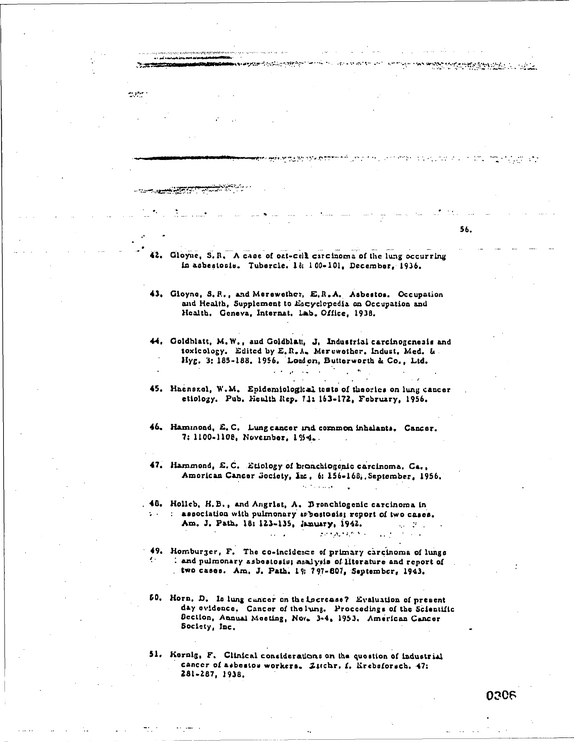
56. 42.
refid# QgLpqXbk5969MZd7dzr4G0R681 page
Industrial Hygiene Digest October, I960 of an automatic spot evaluator which can read approximately 12 samples per minute.
refid# b5YBYaGwqEpp1ZYa4LBw2DYDk1 page
1961 Xational Safety Congress of union men and women.
refid# zzEgJw332KBMRpekZ1EJxL8Vn1 page
National Safety Congress Transactions VOL. 14 MARINE INDUSTRIES NATIONAL SAFETY COUNCIL 425 North Michigan Avenue Chicago 11, Illinois .
refid# gDVzNN2G476JaqX7qnL5Qe5xG2 pages
National Safety Council (Board of Directors, continued) I Stanley W.
refid# Yjyxg4qONnoG57E4B7N5NKGZn1 page
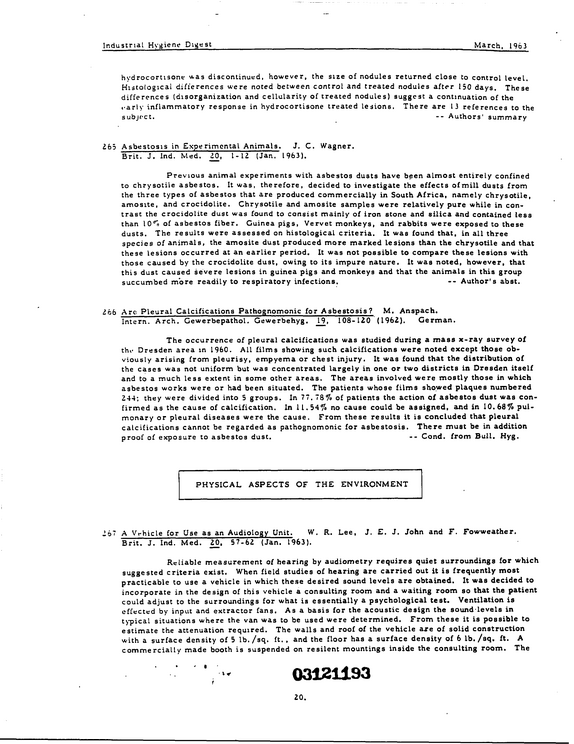
Industrial Hygiene Digest March. 1963 hydrocortisone was discontinued, however, the size of nodules returned close to control level.
refid# Qg7jzr8XYKqDDd74NX22q9nkv1 page
Industrial Hygiene Duett May. 1063 471 Heatstroke.
refid# MMp0oYXRBKOLr5e1pqVeYwBDx1 page
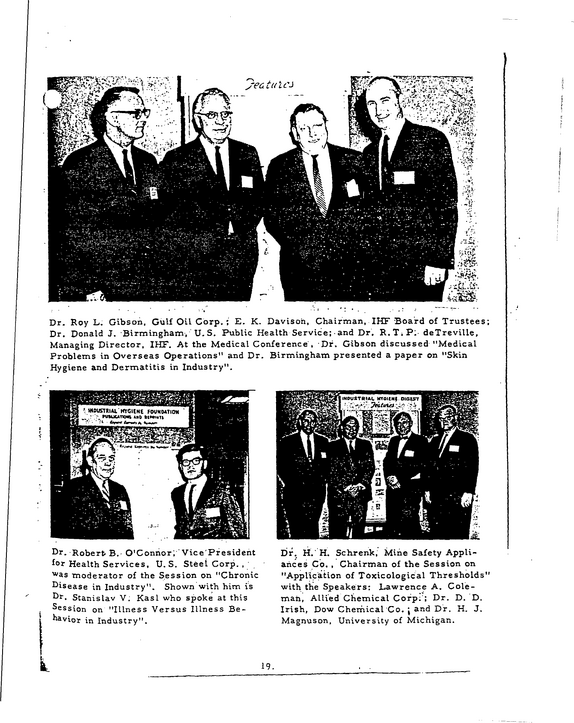
Dr.
refid# Ne8eOdZoonoK2DrOmoMKv6G7g1 page
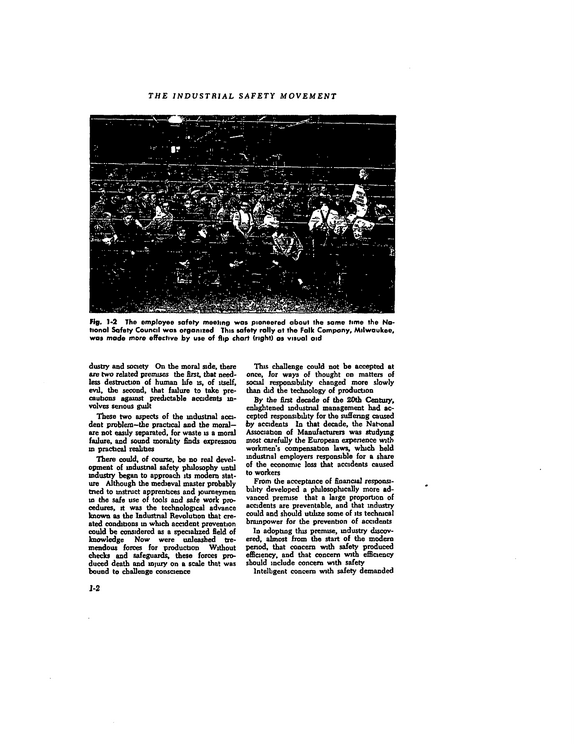
THE INDUSTRIAL SAFETY MOVEMENT Fig. 1*2 The employee safety meeting was pioneered about the same time the Na tional Safety Council was organized This safety rally at the Falk Company, Milwaukee, was mode more effective by use of flip chart (right) os visual aid dustry and society On the moral side, there are two related premises the first, that need less destruction of human life is, of itself, evil, the second, that failure to take pre cautions against predictable accidents in volves senous guilt These two aspects of the industrial acci dent problem--the practical and the moralare not easily separated, for waste is a moral failure, and sound morality finds expression in practical realities There could, of course, be no real devel opment of industrial safety philosophy until industry began to approach its modem stat ure Although the medieval master probably tried to instruct apprentices and journeymen in the safe use of tools and safe work pro cedures, it was the technological advance known as the Industrial Revolution that cre ated conditions m which accident prevention could be considered as a specialized field of knowledge Now were unleashed tre mendous forces for production Without checks and safeguards, these forces pro duced death and injury on a scale that was bound to challenge conscience This challenge could not be accepted at once, for ways of thought on matters of social responsibility changed more slowly than did the technology of production By the first decade of the 20th Century, enlightened industrial management had ac cepted responsibility for the suffering caused by accidents In that decade, the National Association of Manufacturers was studying most carefully the European experience with workmen's compensation laws, which held industrial employers responsible for a share of the economic loss that accidents caused to workers From the acceptance of financial responsi bility developed a philosophically more ad vanced premise that a large proportion of accidents are preventable, and that industry could and should utilize some of its technical brainpower for the prevention of accidents In adopting this premise, industry discov ered, almost from the start of the modern period, that concern with safety produced efficiency, and that concern with efficiency should include concern with safety Intelligent concern with safety demanded 1-2
refid# oe546BmXMrzxQ8g0Y48py4Owr1 page
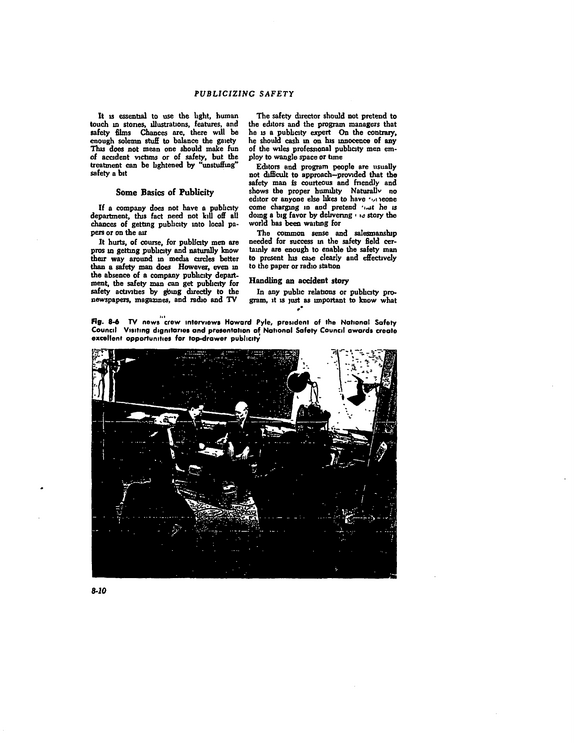
PUBLICIZING SAFETY It is essential to use the light, human touch in stones, illustrations, features, and safety films Chances are, there will be enough solemn stuff to balance the gaiety This does not mean one should make fun of accident victims or of safety, but the treatment can be bghtened by "unstuffing" safety a bit Some Basics of Publicity If a company does not have a publicity department, this fact need not kill off all chances of getting publicity into local pa pers or on the air It hurts, of course, for publicity men are pros in getting publicity and naturally know their way around in media circles better than a safety man does However, even in the absence of a company publicity depart ment, the safety man can get publicity for safety activities by gbing directly to the newspapers, magazines, and radio and TV The safety director should not pretend to the editors and the program managers that he is a publicity expert On the contrary, he should cash in on his innocence of any of the wiles professional publicity men em ploy to wangle space or tune Editois and program people are usually not difficult to approach--provided that the safety man is courteous and friendly and shows the proper humility Naturallv no editor or anyone else likes to have 'vtieone come charging in and pretend 'i.at he is doing a big favor by delivering i<s story the world has been waiting for The common sense and salesmanship needed for success m the safety field cer tainly are enough to enable the safety man to present his case clearly and effectively to the paper or radio station Handling an accident story In any public relations or publicity pro gram, it is just as important to know what Fig- 8-6 TV news crew interviews Howord Pyle, president of the Notional Safety Council Visiting dignitaries and presentation of Nationol Safety Council awards create excellent opportunities for top-drawer publicity 8-10
refid# NG6YeVerx42v5dzYrr4aBxEng1 page
SOURCES OF HELP FOR THE SAFETY MAN offices st 703 Market St, San Francisco, Calif. 04103, and at 270 Madison Ave, New York City 10016 Recognizing the fact that industry's safe ty problems often require specialized treat ment, the Council has divided its industrial effort into sections, each administered by its own executive committee, nominated and elected from the mcmberslup within that in dustry Each executive committee consists of a general chairman, a vice-chairman, a newsletter editor, and such other officers as may be needed to head the functional com mittees of the section The industrial membership of the Coun cil is organized according to the following industries Some sections are subdivided into specialized operations or interests AEROSPACE SECTION Am TRANSPORT SECTION AUTOMOTIVE AND MACHINE SHOP SECTION CEMENT, QUARRY, AND MINERAL ACCRBCATES SECTION CHEMICAL SECTION COAL MININC SECTION Labor Mine Operators Bureau of Mines Mine Inspectors Institute State Mine Inspectors CONSTRUCTION SECTION Heavy Highway Building Home Building Specialty ELECTRICAL EQUIPMENT SECTION FERTILIZER SECTION FOOD AND BEVERACE SECTION Cram Handling and Processing Processors and Canners Dairy Products Brewers Distillers Bakers Confectioners Agriculture Soft Dnnk CLASS AND CERAMICS SECTION MARINE SECTION Regional Atlantic Gulf Coast Pacific Great Lakes Operations Inland Waterways PasseDger and Cargo Services Tankers Shipbuilding Stevedoring MEAT PACKING, TANNING AND LEATHER products section METALS SECTION Steel Nonferrous Steel Service Fabrication Foundry MININC (EXCEPT coal) SECTION Hygiene and Ventilation PETROLEUM SECTION Regional Atlantic Great Lakes Mid-Continent Pacific Gulf Coast Operations Production Drilling and Exploration Pipe Lues Manufacturing Marketmg POWER PRESS AND PORCINO SECTION Forging Metal Stamping PRINTING AND PUBLISHING SECTION Newspapers PUBLIC EMPLOYEE SECTION Divisions State County Municipal PUBLIC UTILITIES SECTION Electric Cas Water Communications PULP AND PAPER SECTION Pulpwood Logging Pulp Manufacturing Paper Manufacturing ' Bag Manufacturing ShippingContamer.FoldmgCarton Roofing Manufacturing Insulation Manufacturing Specialties Manufacturing RAILROAD SECTION Railroad Transportation Highway Railway Traffic Safety RUBBER SECTION Mechanical Goods Laboratories Reclaim Manufacture 12-3
refid# aBar3JEJLOYRynkVbm8yrm71M1 page
BUILDING CONSTRUCTION AND MAINTENANCE hons if at oil possible Barricades, fences, and guard rails should be set up One type of horse barricade is shown in Fig 15-2 When a construction job is being done in a part of the plant that must be kept in op eration, a sheeted bulkhead can be erected to keep out dust and dirt and to isolate the operation as much as possible Studs are put up from floor to ceding or to the un derside of the roof, then sheeted with plain lumber, wallboard panels, tarpaulins, or oth er material to make the bulkhead dusttight Flame-retardant materials may be required in some cases When construction operations are to be done where flammable vapors and liquids may be present or in other hazardous areas, the contractor's men should be subjected to the same rigid requirements that apply to the plant employees Before cutting, burn ing, or welding is done by men employed by the contractor, a clearance should be ob tained from the plant engineer or safety de partment to assure that the necessary fire and safety precautions have been taken The usual requirements for ventilation and health protection also should be observed * In an area where no flame is permitted, either the manufacturing process will have to be shut down while welding and cutting are done, or screwed or bolted fittings will have to be used instead of welded connec tions Night bghtrag should be provided where necessary, especially in plant areas where open trenches or ditches create hazards m aisles and roadways The contractor and plant management should cooperate closely at all tunes in or der to determine what precautions are nec essary to prevent accidents Particularly close liaison should be maintained during tie-in of new piping or equipment to exist ing lines and equipment to ensure the safe ty of subsequent operation The contractor should maintain all his work in an orderly, well-kept manner Trucking Contractors working either inside or out side the industrial plant should take great care to prevent trucks from colliding with pipelines, power lmes, and equipment, to avoid interruption of plant processes The method for handling trucks within the plant area should be agreed upon and protective measures taken Here again, the importance of proper placement of barri cades, fences, and guard rails cannot be minimized When trucks, bulldozers, powered wheel barrows, and other mechanized construction equipment are to be operated within a plant, it is a good idea for the contractor and the plant management to agree upon the lines of traffic flow so that the areas in which the construction equipment will be operated will be known When such agreement is reached, drawings of the areas can be made available to both the contractor's key personnel and the plant personnel affected It may be necessary to haul men m trucks from one location to another within the work area, and, unless controlled, this op eration can become a major source of seri ous injuries Men should not be allowed to stand on the running board or bed of a truck.
refid# Rrqo4pLprYLJwX462x2VJa9v1 page