The levels found in fillets from these fish ranged from 0.2 ppm to as high as 8 to 9 PPm total PCB's.
refid# a48xzDB6x54Ngx08YzRq1Okn911 pages
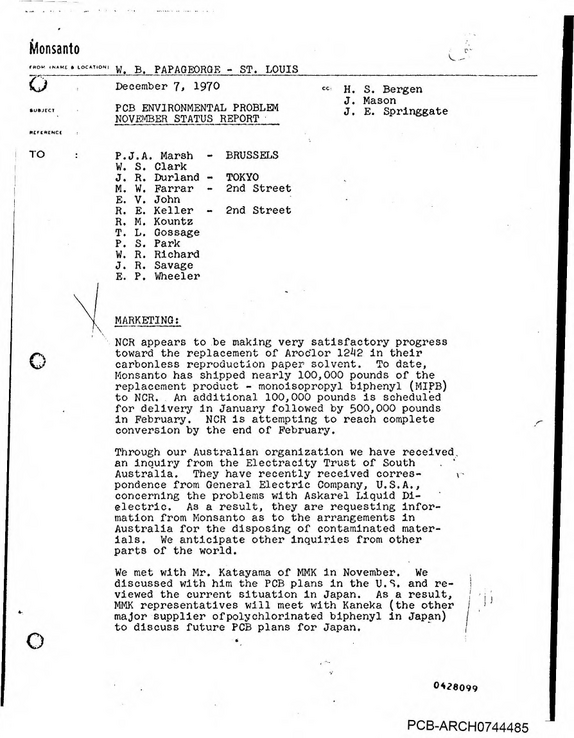
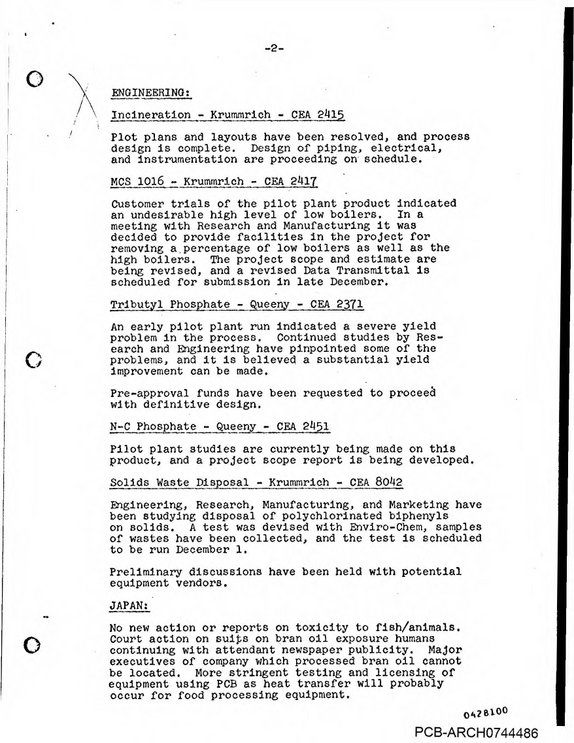
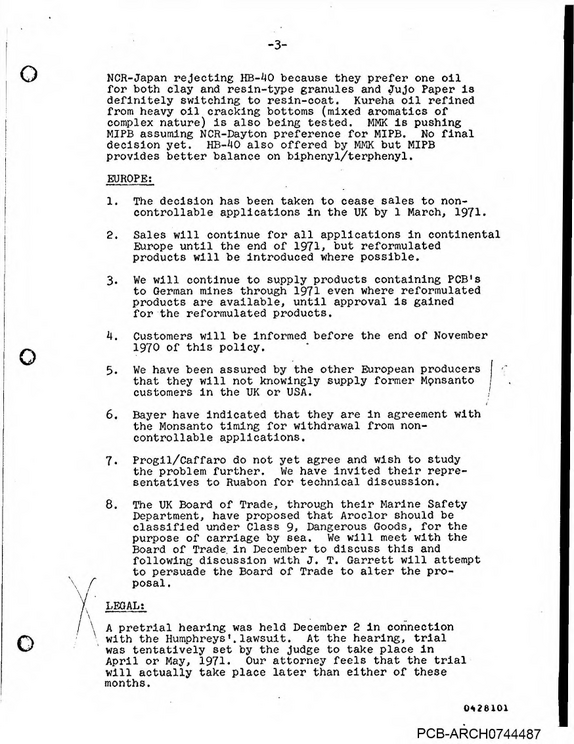
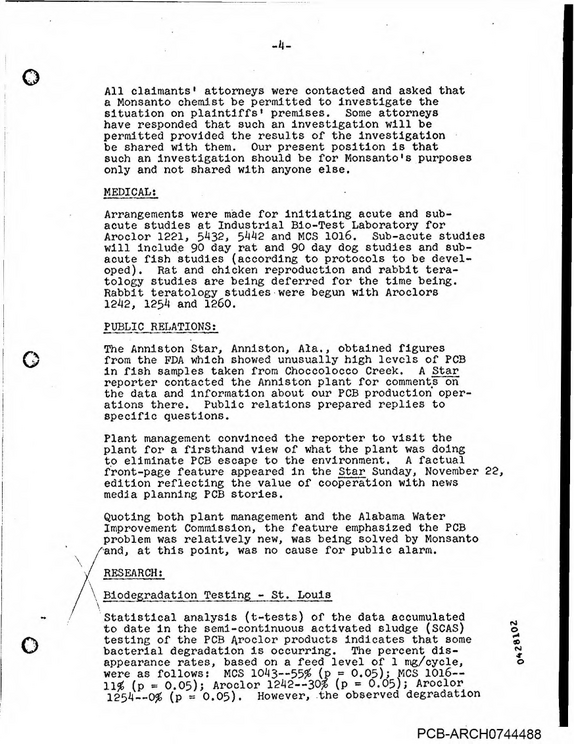
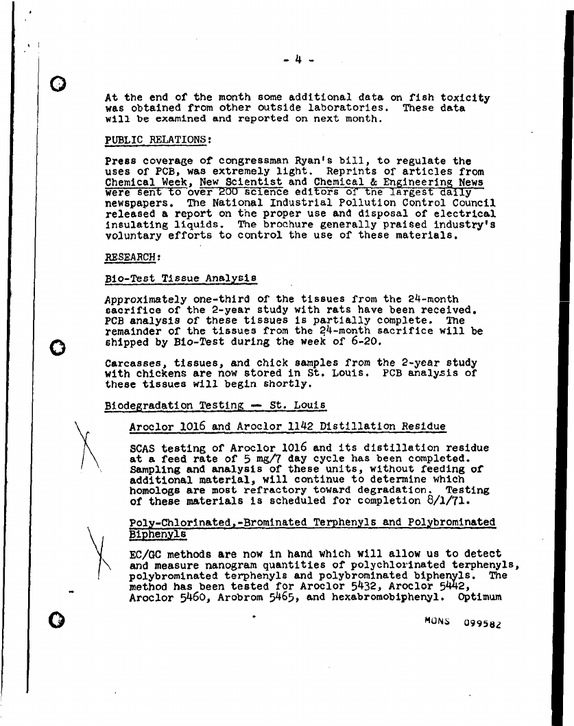
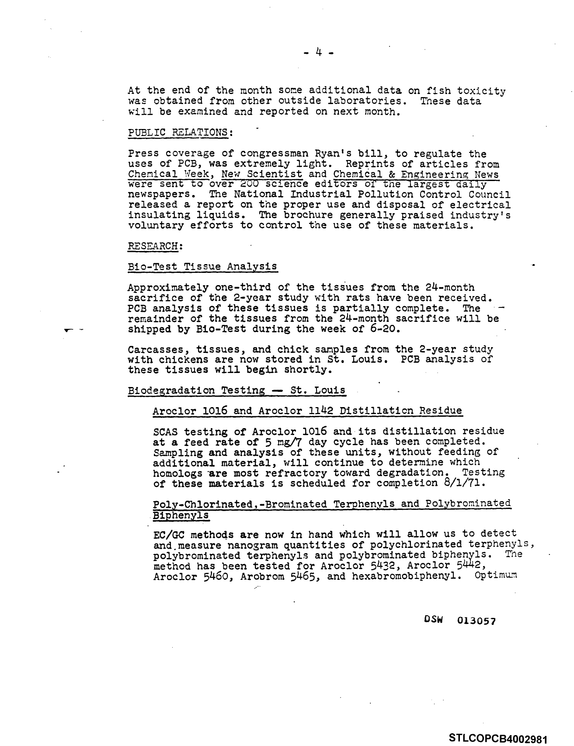
* - MOMS 099581 i Q O o -4 - At the end of the month some additional data on fish toxicity was obtained from other outside laboratories.
refid# ep8q5yyqX9v53KDdzdkJ49BM9 pages
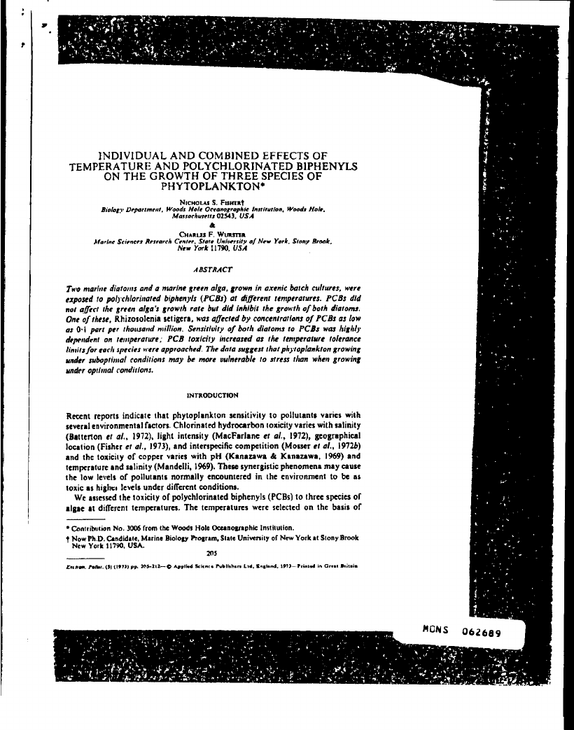
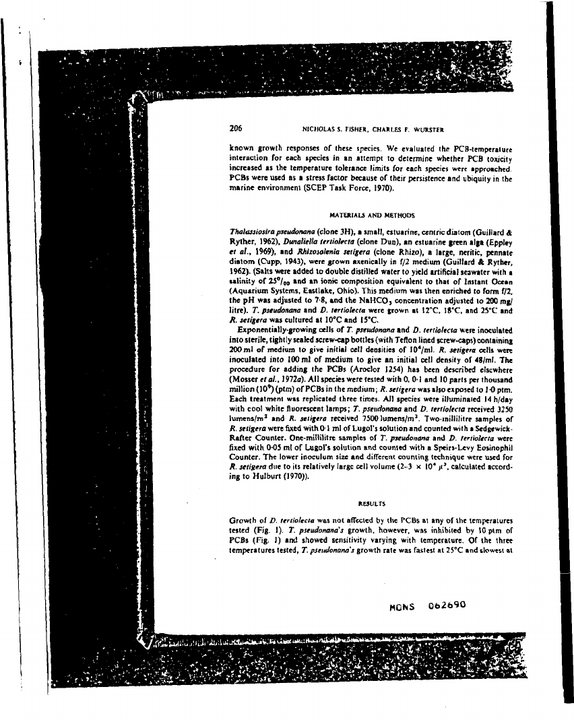
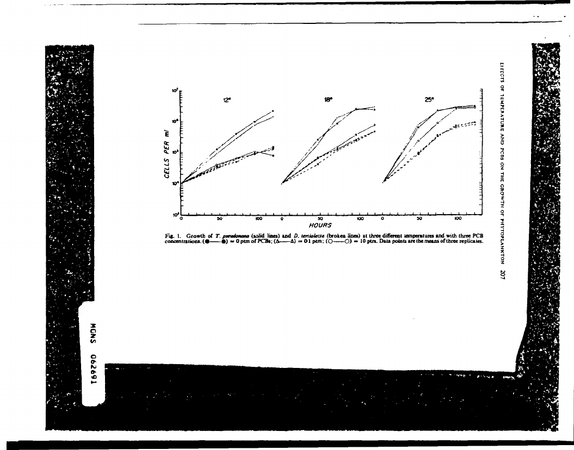
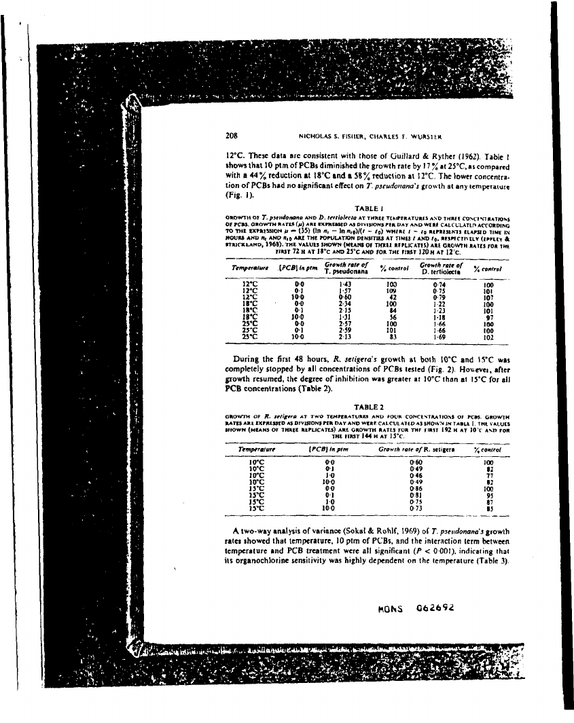
INDIVIDUAL AND COMBINED EFFECTS OF TEMPERATURE AND POLYCHLORINATED BIPHENYLS ON THE GROWTH OF THREE SPECIES OF PHYTOPLANKTON* Nicholas S.
refid# GmGQJkQ0dgam54vR8rX15204r8 pages
A 1976 report Indicated that fish, cheese, eggs, and contaminated animal feed were the aejor U.S. commodities In *d1ch PCBs were found.
refid# X755reKq1zzj37n3ybKydyra411 pages
n & ;:l ?
refid# 99v8mZozNd76BnBpoaD49aKaR6 pages
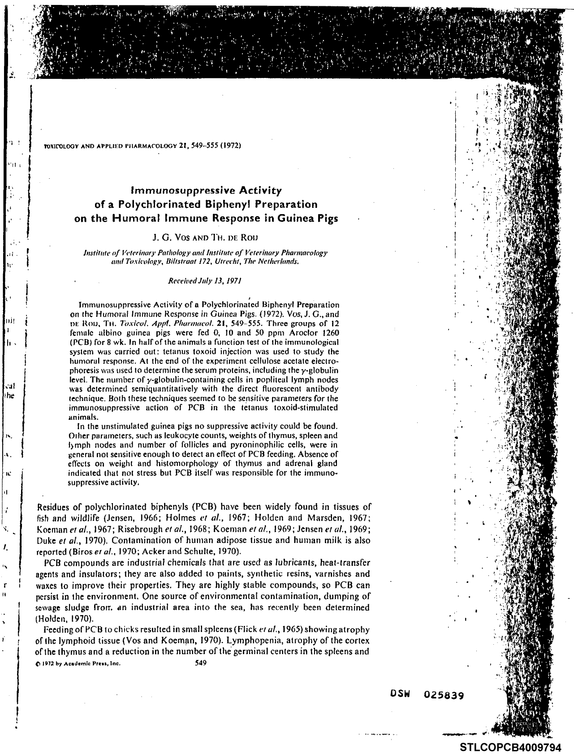
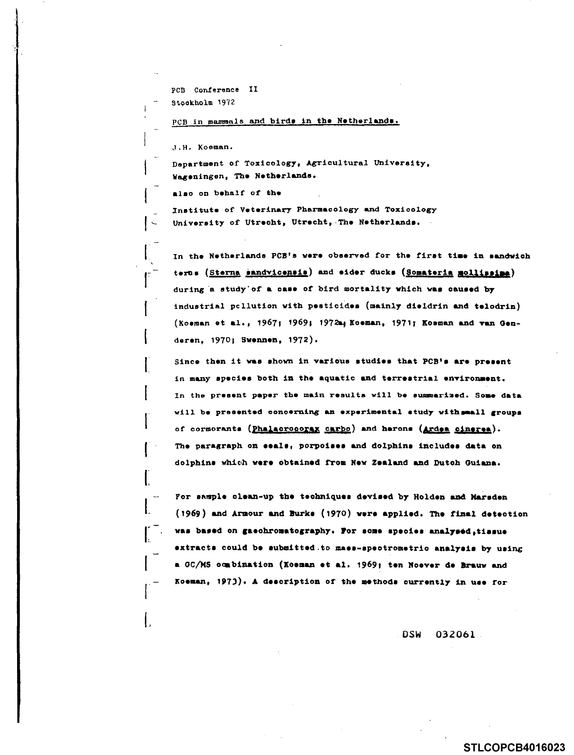
Absence of effects on weight and histomorphology of thymus and adrenal gland indicated that not stress but PCB itself was responsible for the immuno suppressive activity, Residues of polychlorinated biphenyls (PCB) have been widely found in tissues of fish and wildlife (Jensen, 1966; Holmes et al., 1967; Holden and Marsden, 1967; Koeman el al., 1967; Risebrough el a!.
refid# byqY44BbworOz1Kkv7L0D3akk7 pages
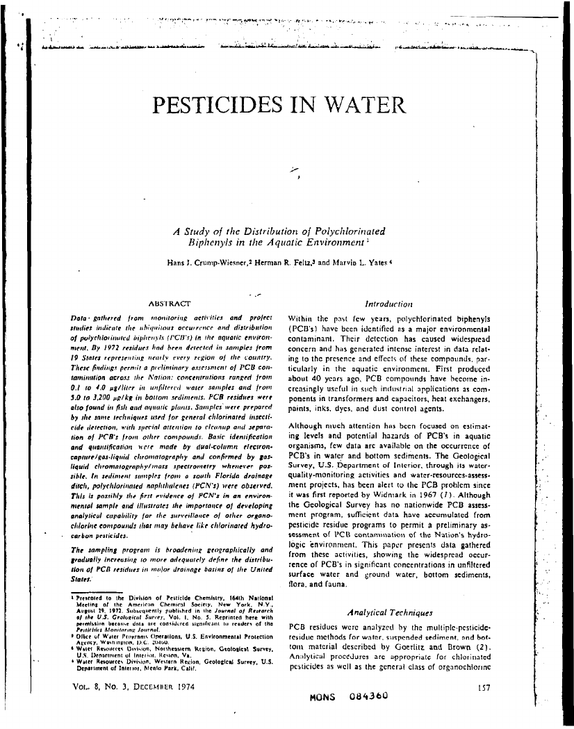
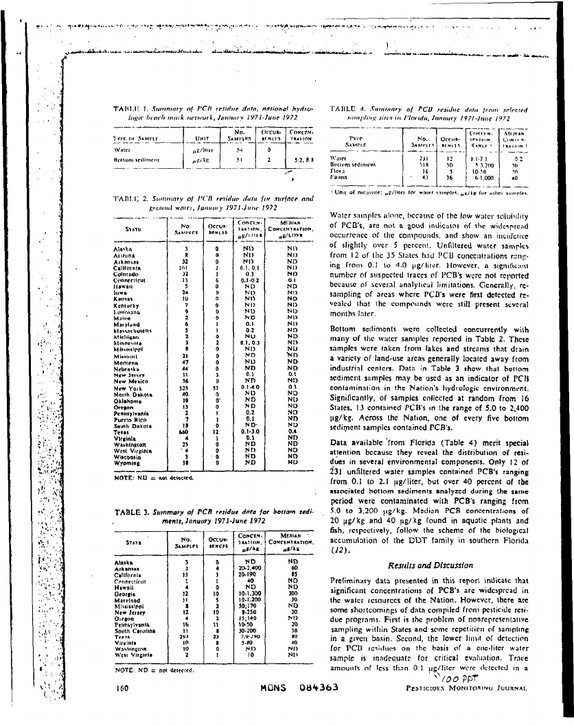
PCB residues were also found in fish and aquatic plants.
refid# 2NRjx7nLXBNOmYL0ambQLewON5 pages
Dustman, Director Department of the Interior Fish and Wildlife Service Patuxent Wildlife Research Center Laurel, Maryland 20810 Dear Dr.
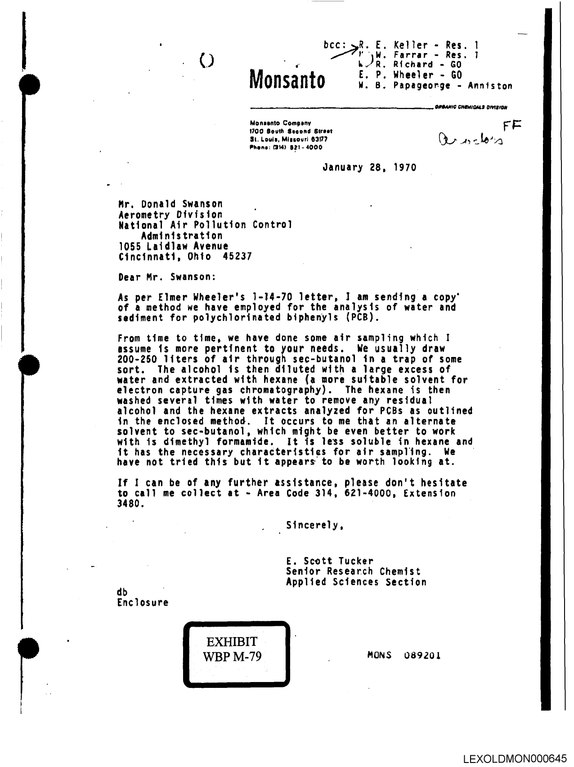
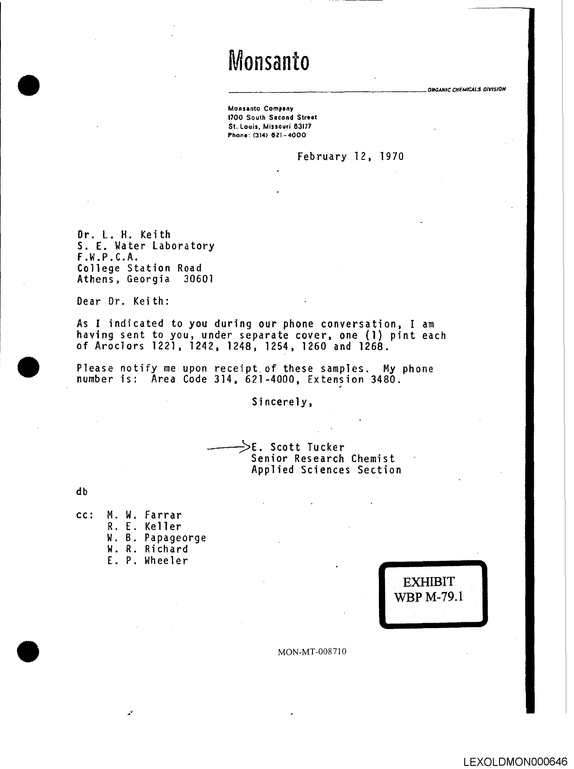
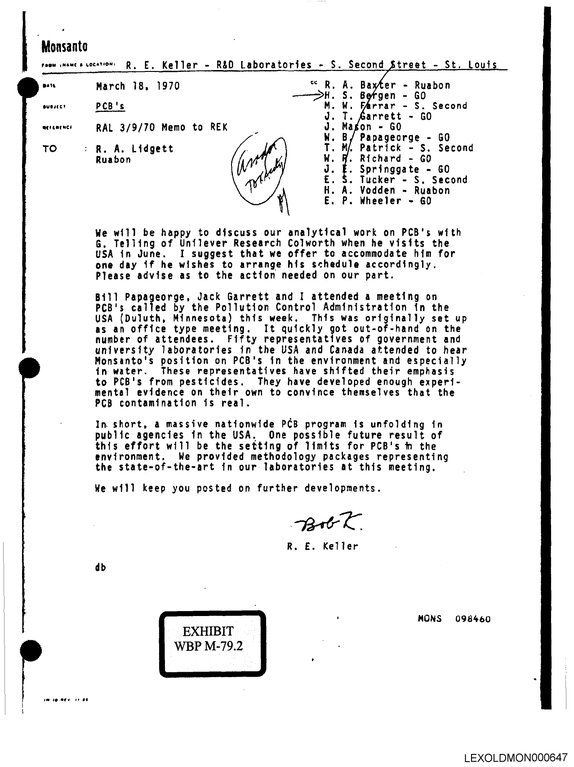
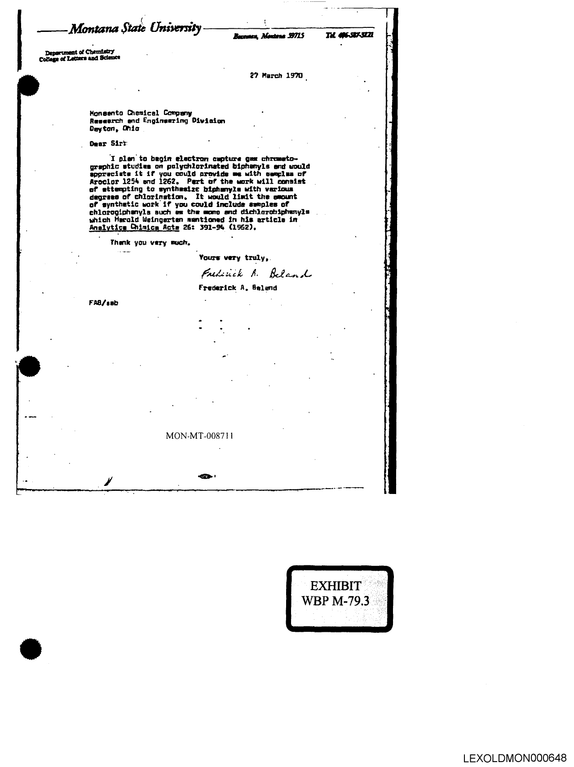
refid# O1KVBkkjpjRwGgw8YjDoZ89je14 pages
It is toxic to and accumulated by shrimp, oysters and fishes (5, 8, 12).
refid# 7v8eEdD63BJYaLXz0EJqVb684 pages
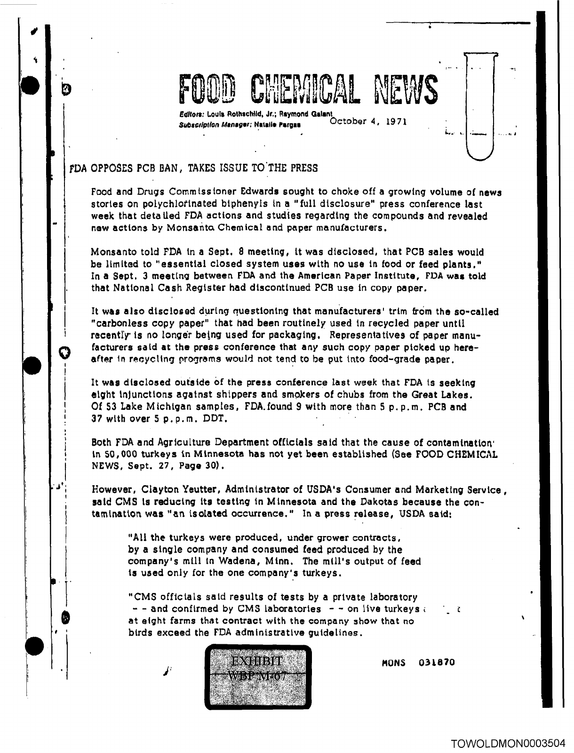
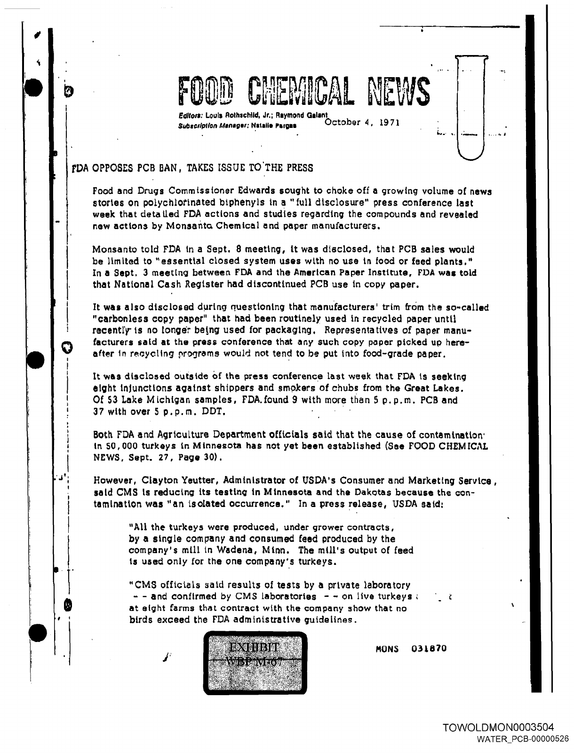
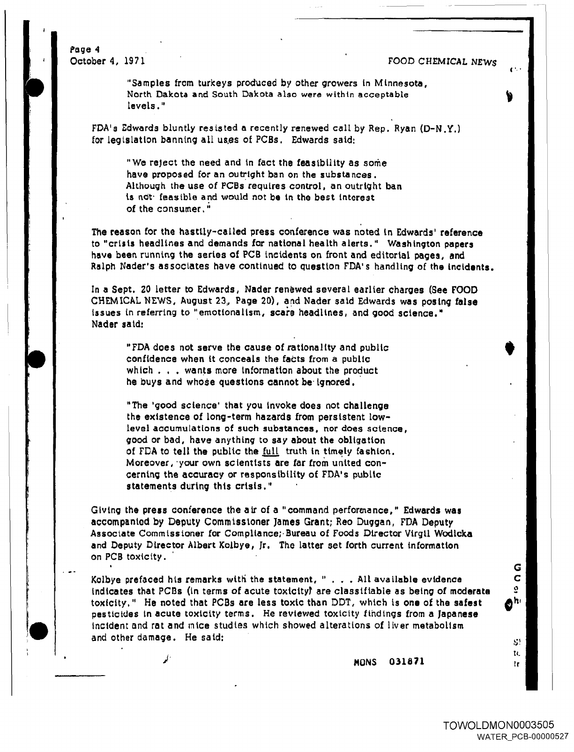
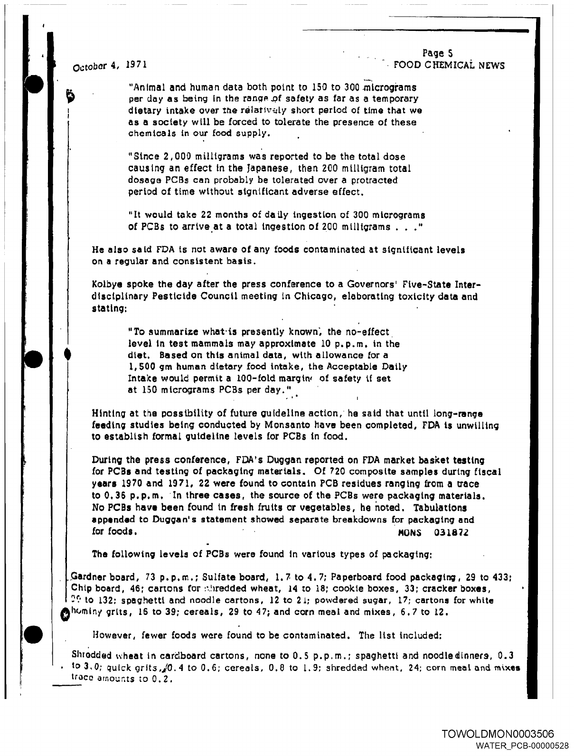
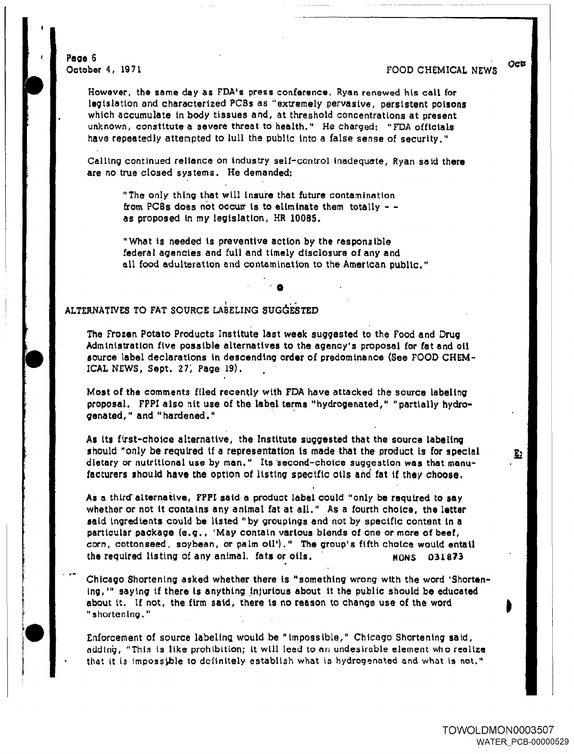
------- - nn;:l t, m Editors: Louis ftolhschIJd, Jr.; Raymond Qalant Subscription Natali* P*rgaa October 4 # 1971 u FDA OPPOSES PCB BAN, TAKES ISSUE TO'THE PRESS Food and Drugs Commissioner Edwards sought to choke off a growing volume of news stories on polychlorinated biphenyls In a "full disclosure" press conference last week that detailed FDA actions and studies regarding the compounds and revealed new actions by Monsanto Chemical and paper manufacturers.
refid# 6B6YYpVqEbJqmwxYp0VkYb0dd6 pages
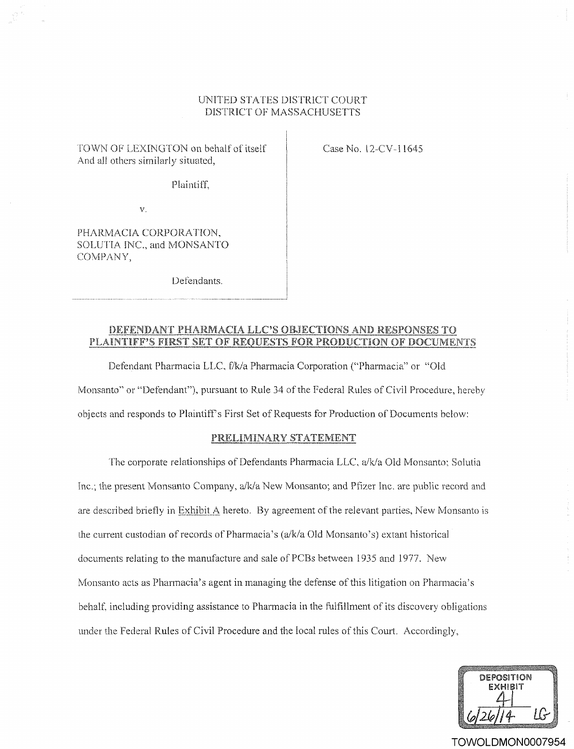
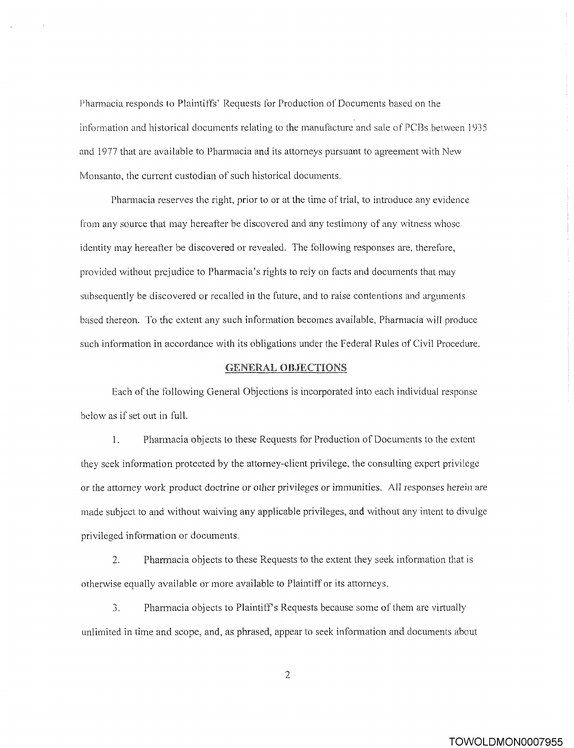
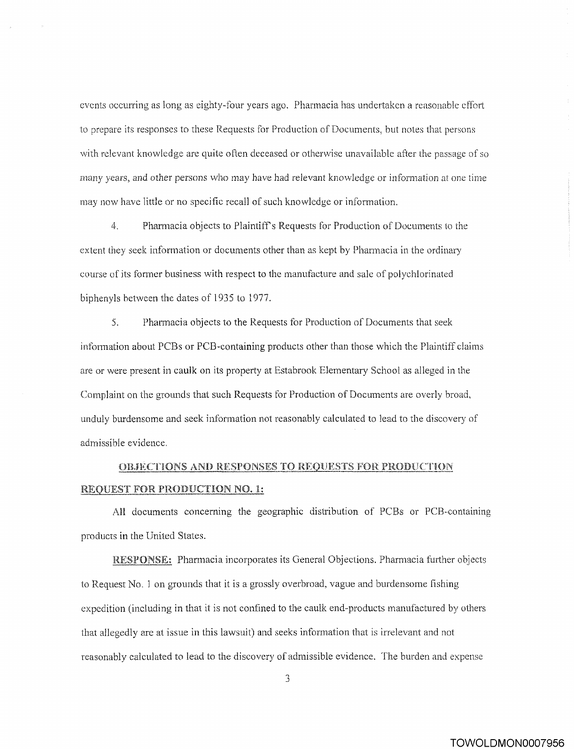
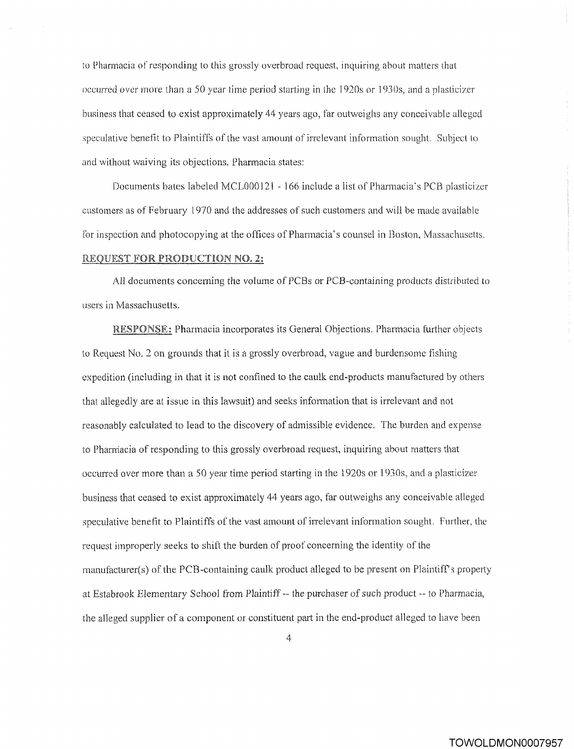
Pharmacia further objects to Request No. 3 on grounds that it is an overbroad, vague and burdensome fishing expedition and seeks information that is irrelevant and not reasonably calculated to lead to the discovery of admissible evidence.
refid# ZBQ1DmVZ9K6dqoen2bRg674Z17 pages
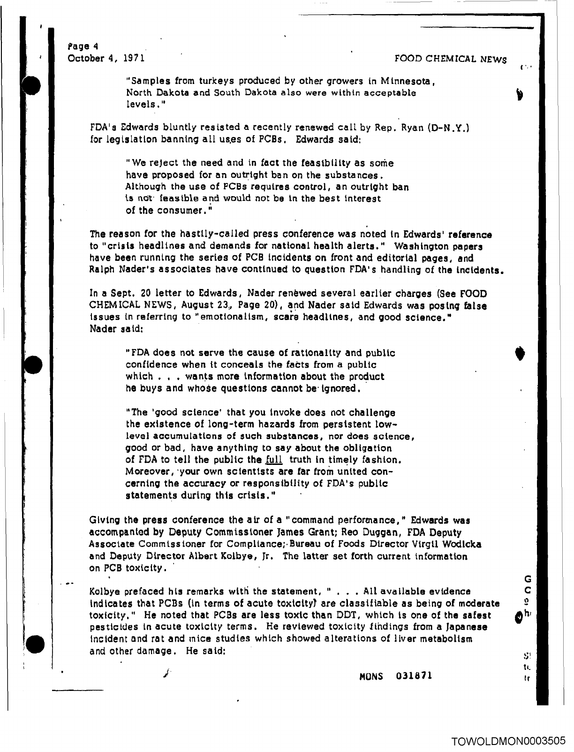
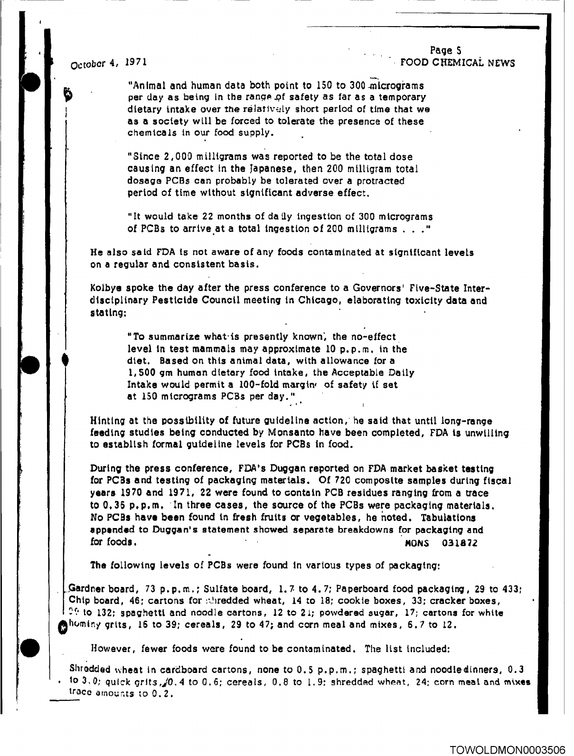
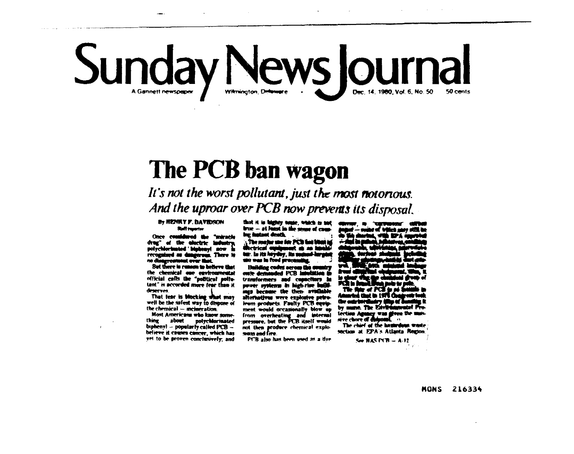
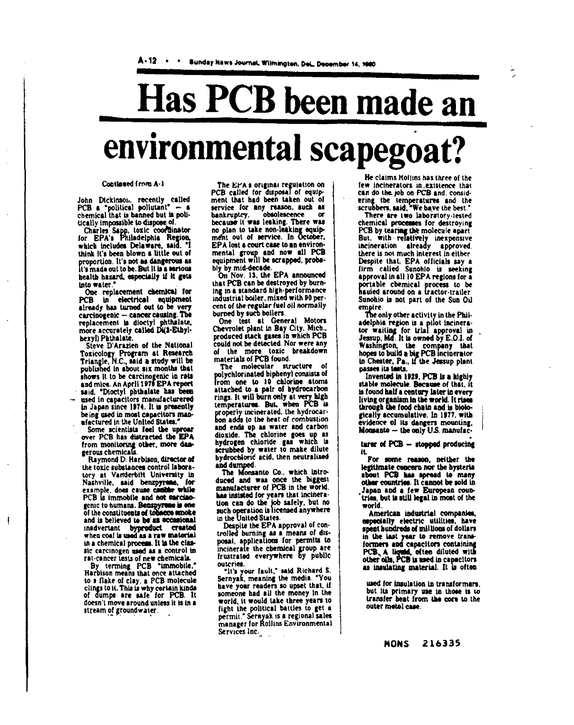
., said tbe concern about PCB conies because It doesn't break down into simpler and less harmful chemicals in tbe environment Practically all PCB consumed by mammals or fishes it retained in tissues and Midi iq> to levels that may be harmful Sapp of EPAs Philadelphia Region agrees that tbe biggest problem is that PCB doesn't break down, but savs this Is also whv it is not nearly aa poisonous as tbe public believes.
refid# V3XyEXbE72XKERO4xEm4vQGK86 pages
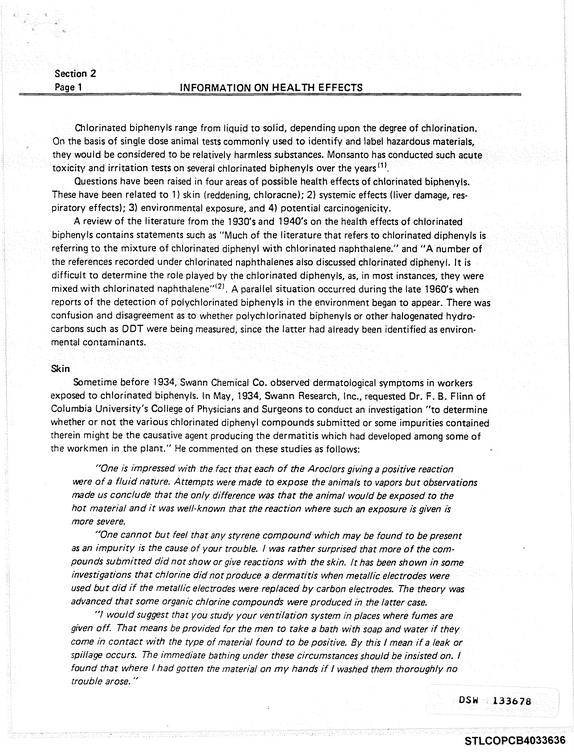
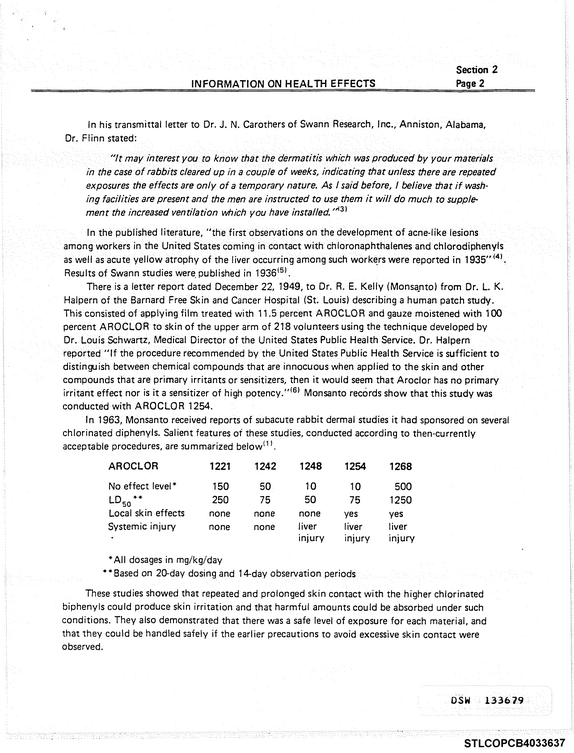
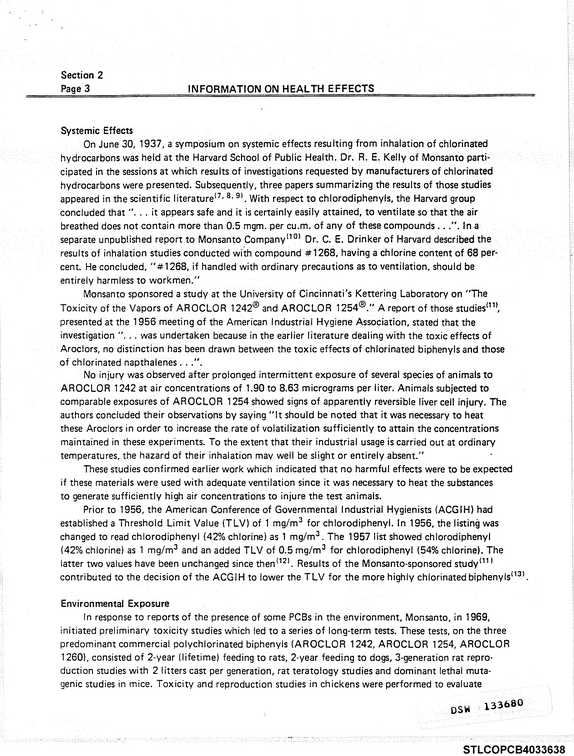
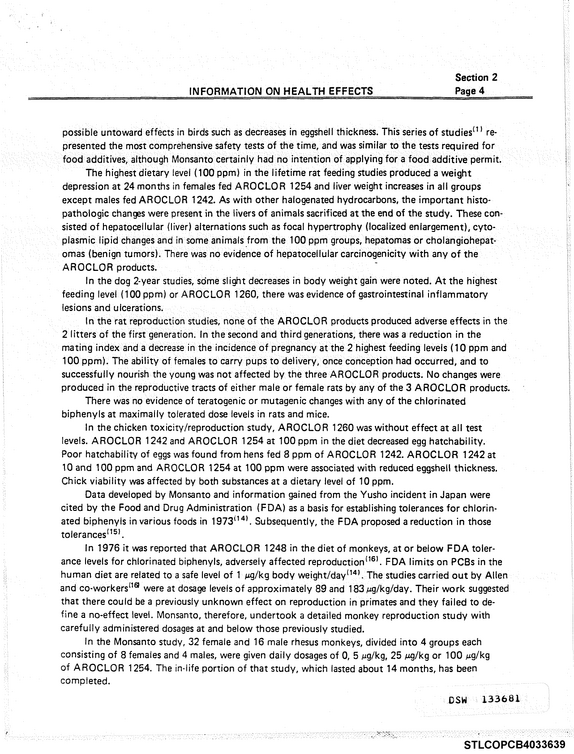
Section 2 Page 1_____________________ INFORMATION ON HEALTH EFFECTS Chlorinated biphenyls range from liquid to solid, depending upon the degree of chlorination.
refid# yboLBpyw2BkjaBzy1VKzkZ9j47 pages
DSW 013056 STLCOPCB4002980 - 4- At the end of the month some additional data on fish toxicity was obtained from other outside laboratories.
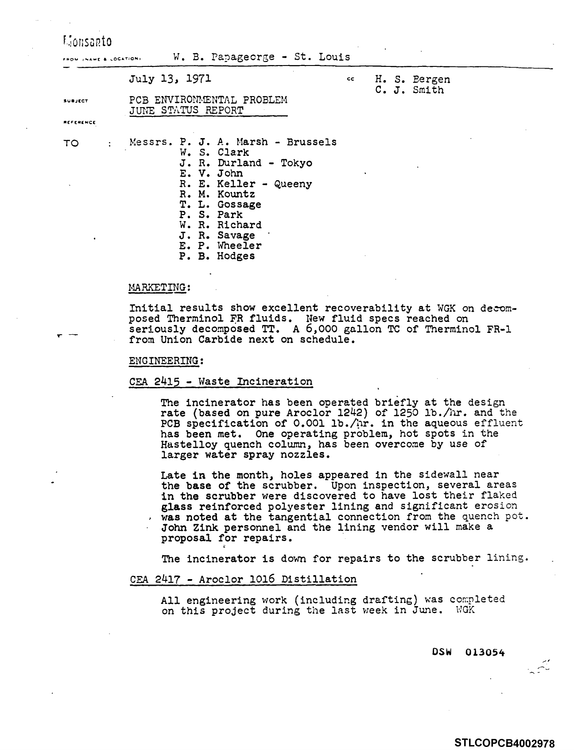
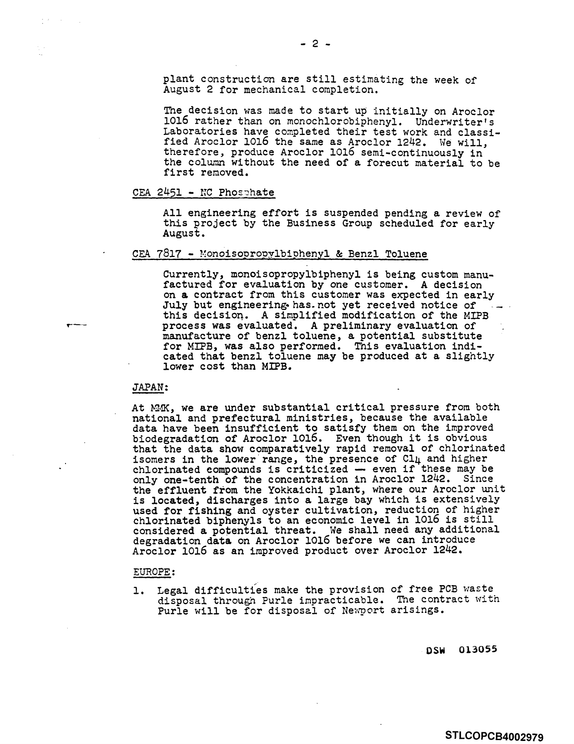
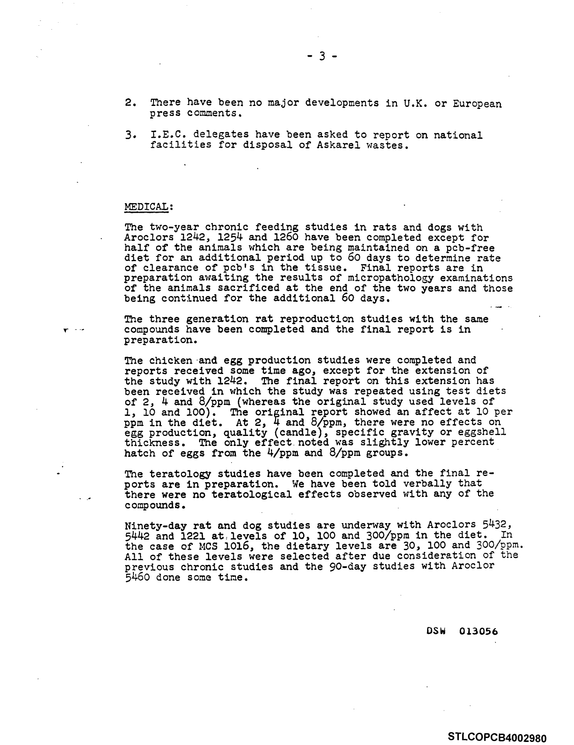
refid# ZJD9wGNo4YMQobgg6Z8m0rObJ9 pages
Tho dose rate at tho beginning of the experiment vas 100 ppm calculated on an amount of about 250 g fish vhioh vas administered to each oormorant every day.
refid# ZBEqEBgqGD7qJmVd479XJDVwZ14 pages